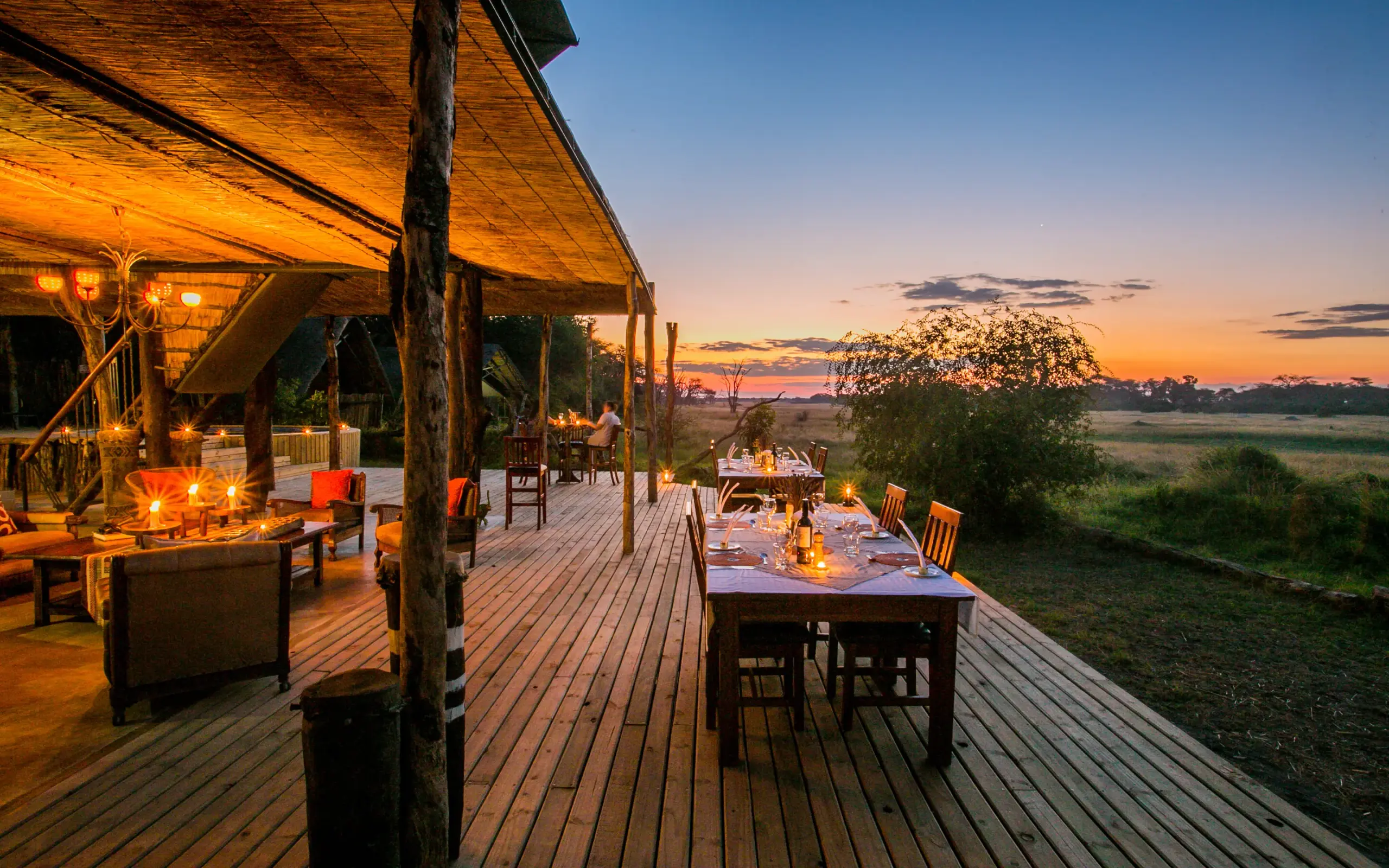
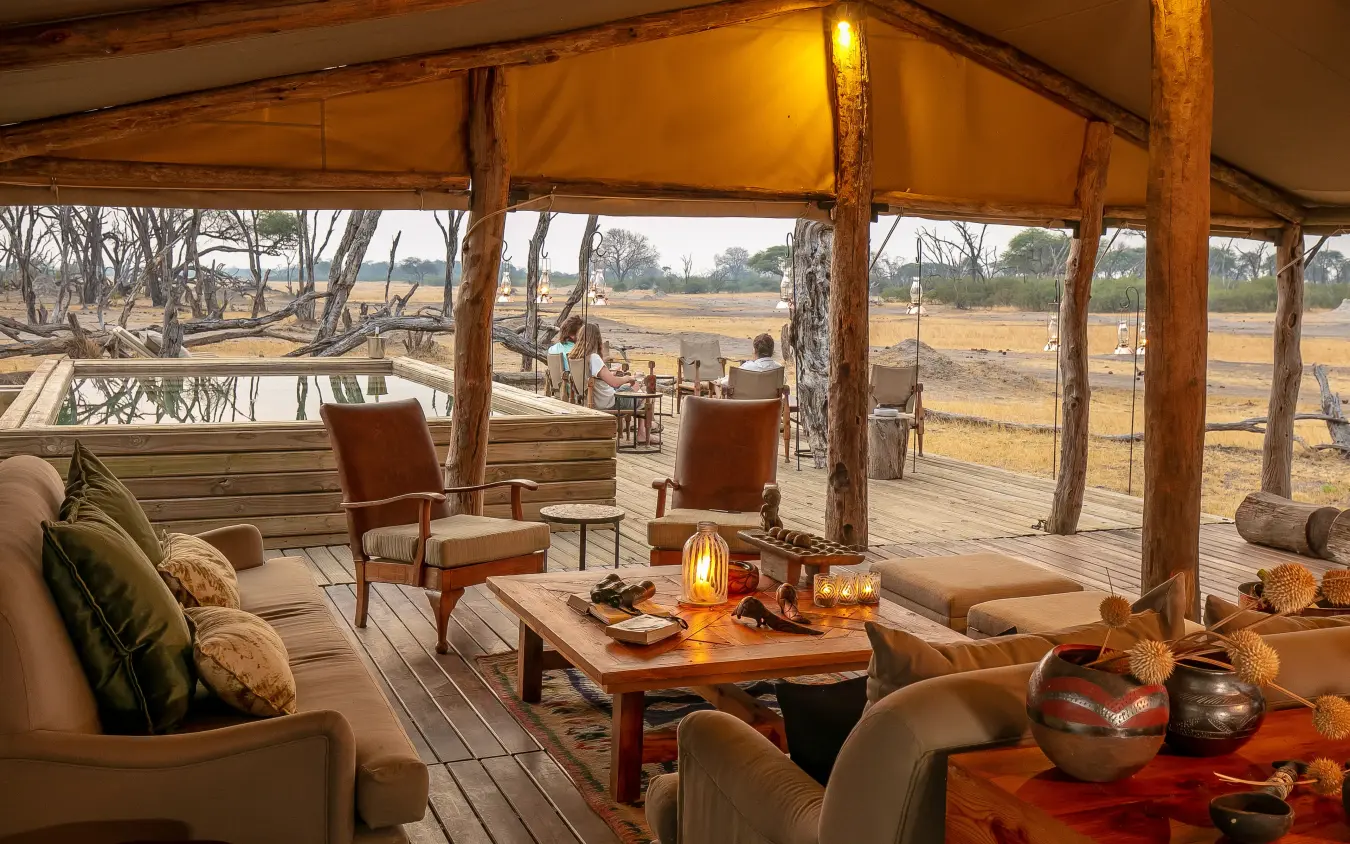
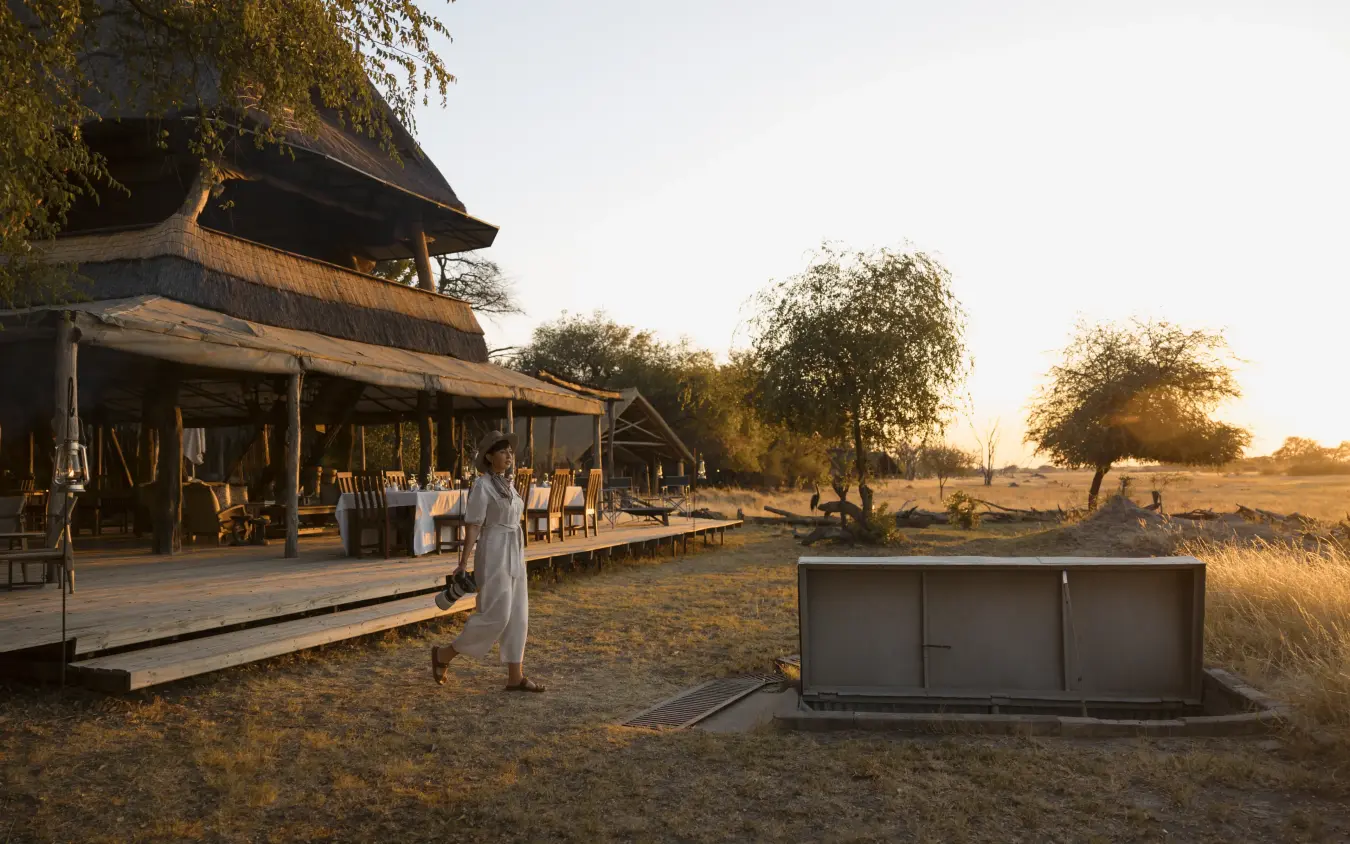
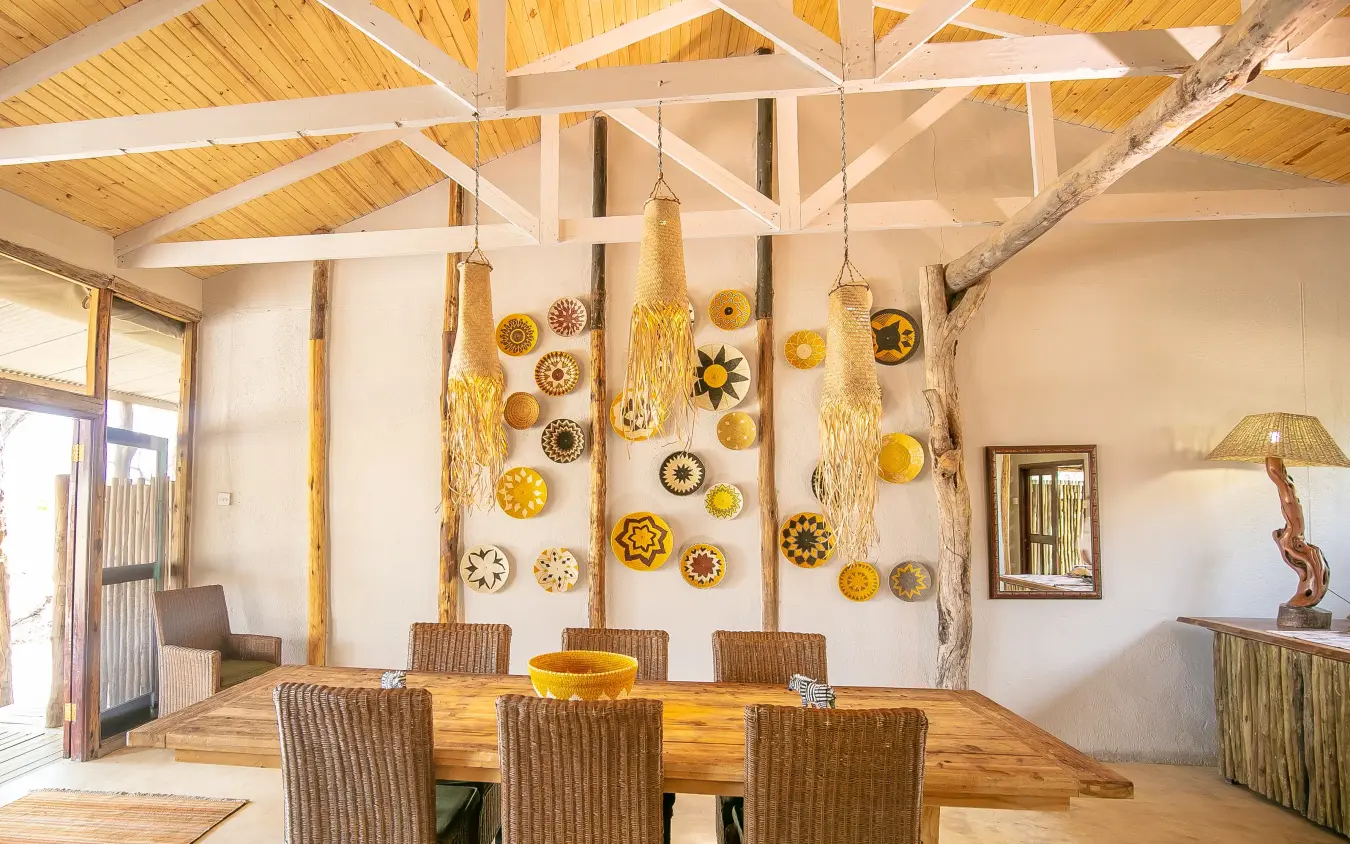
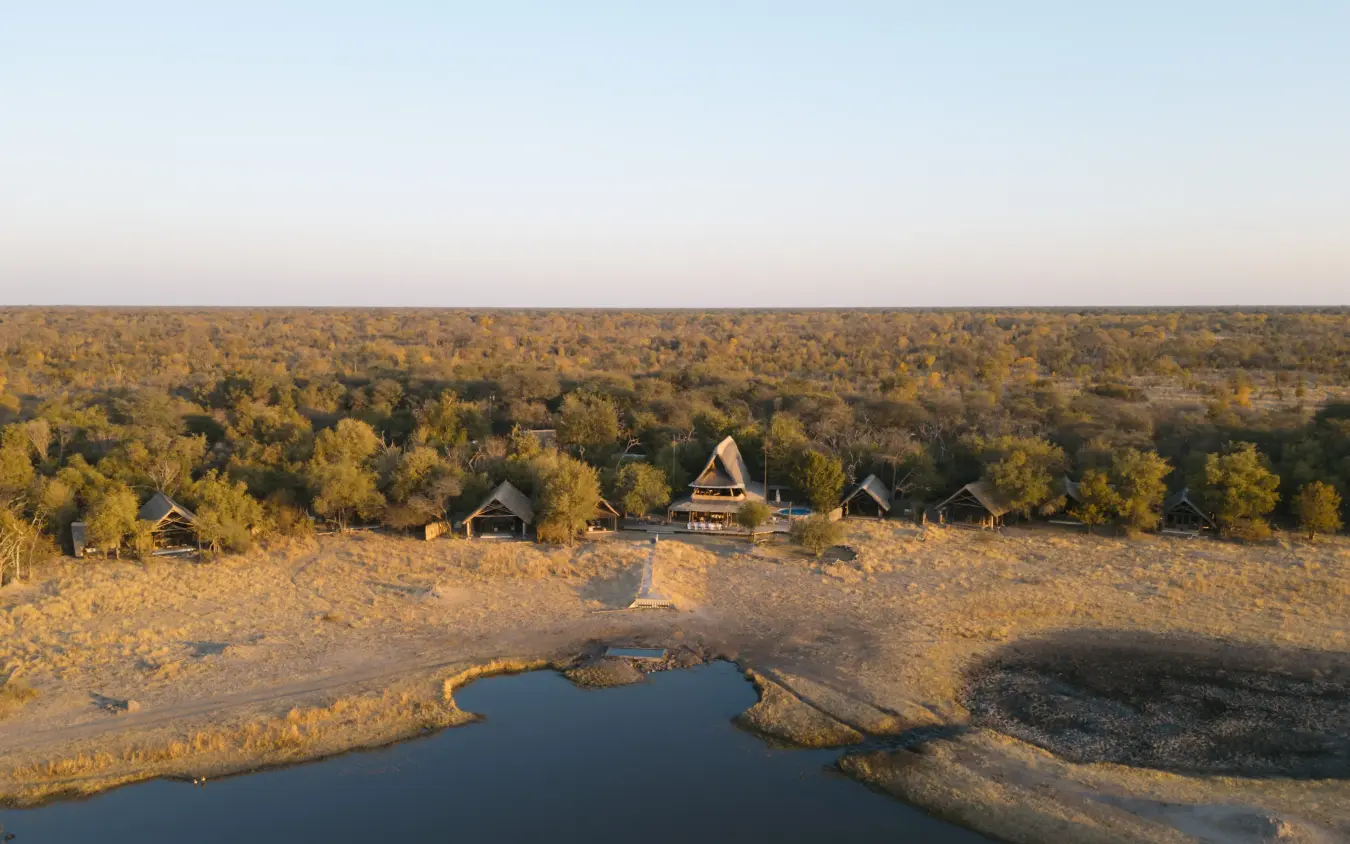
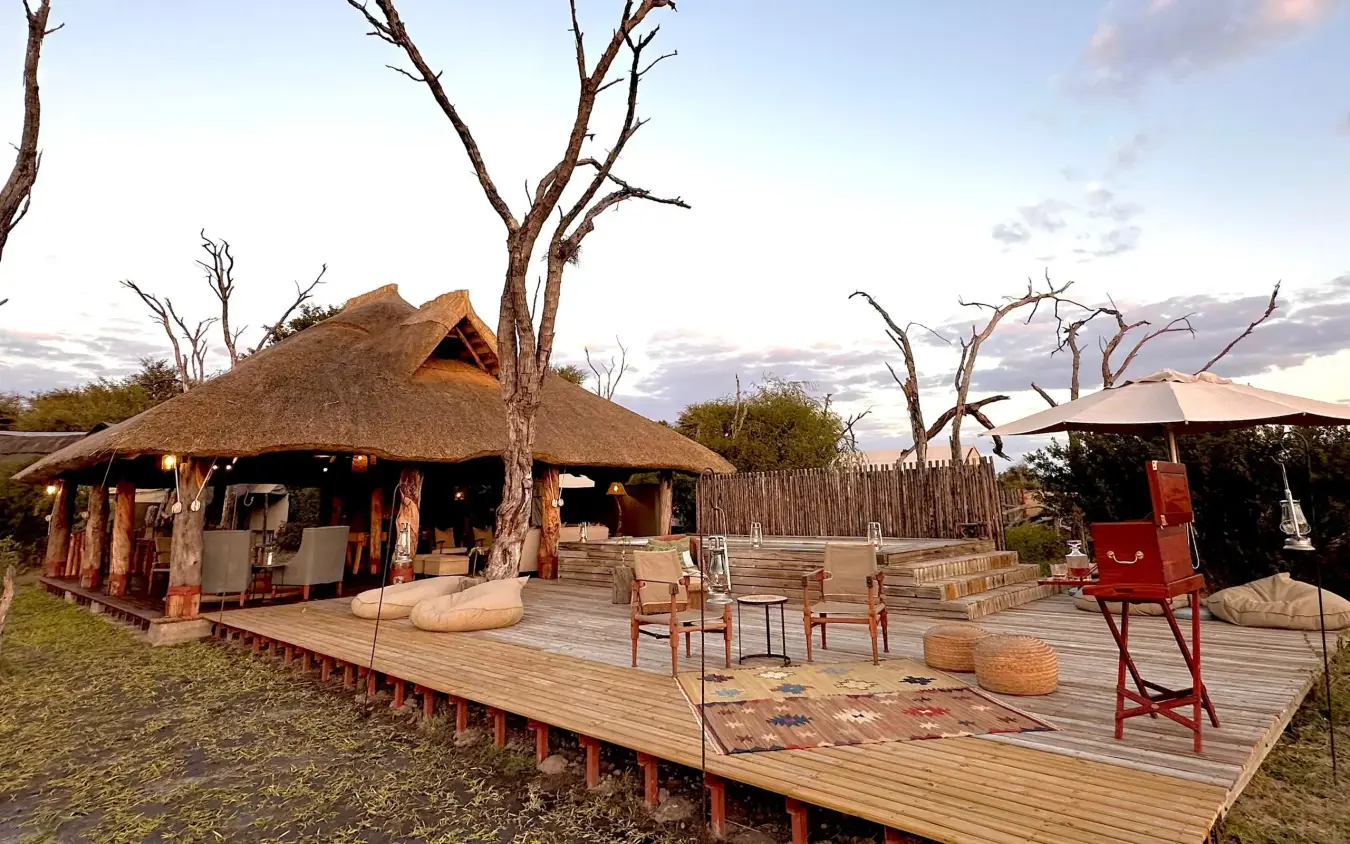
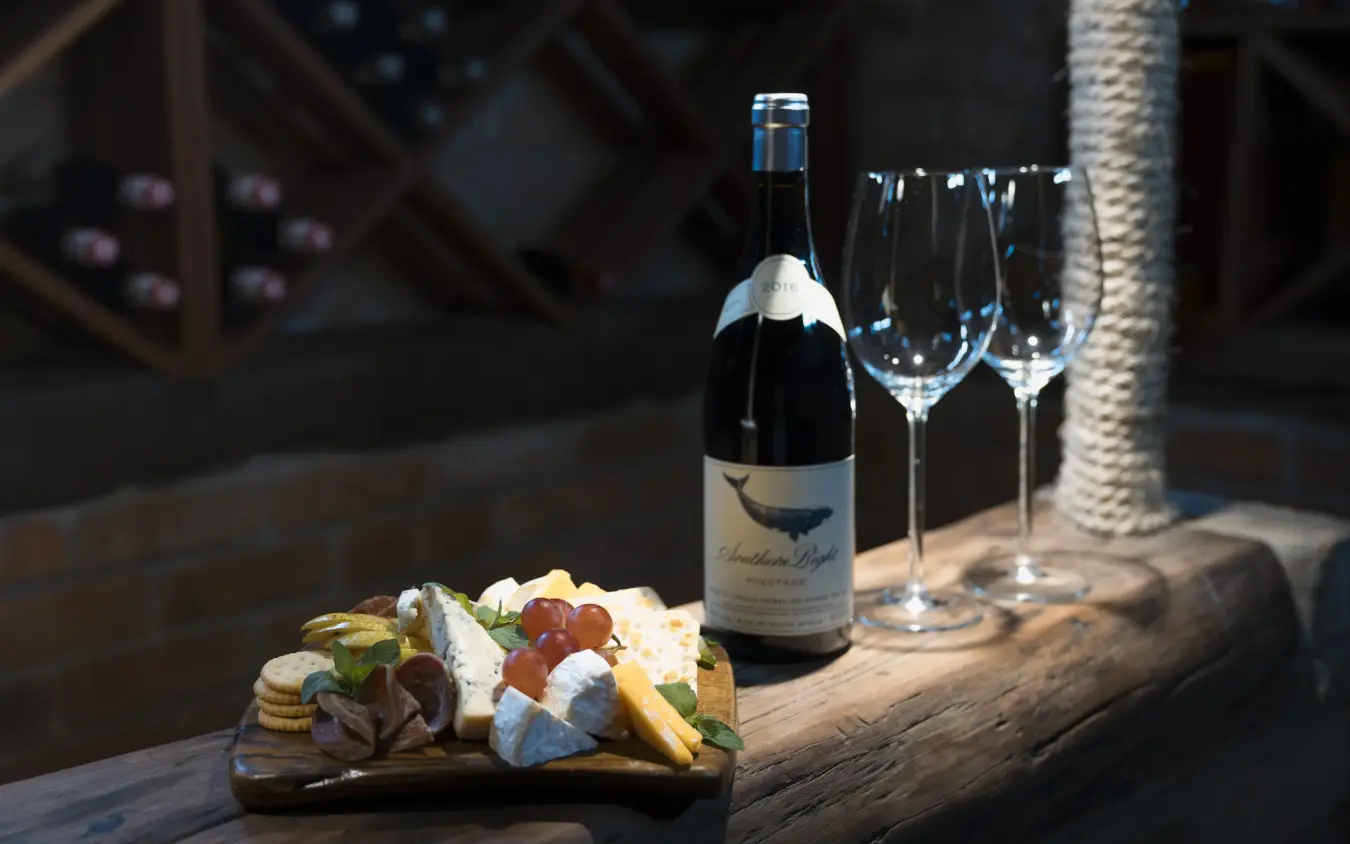
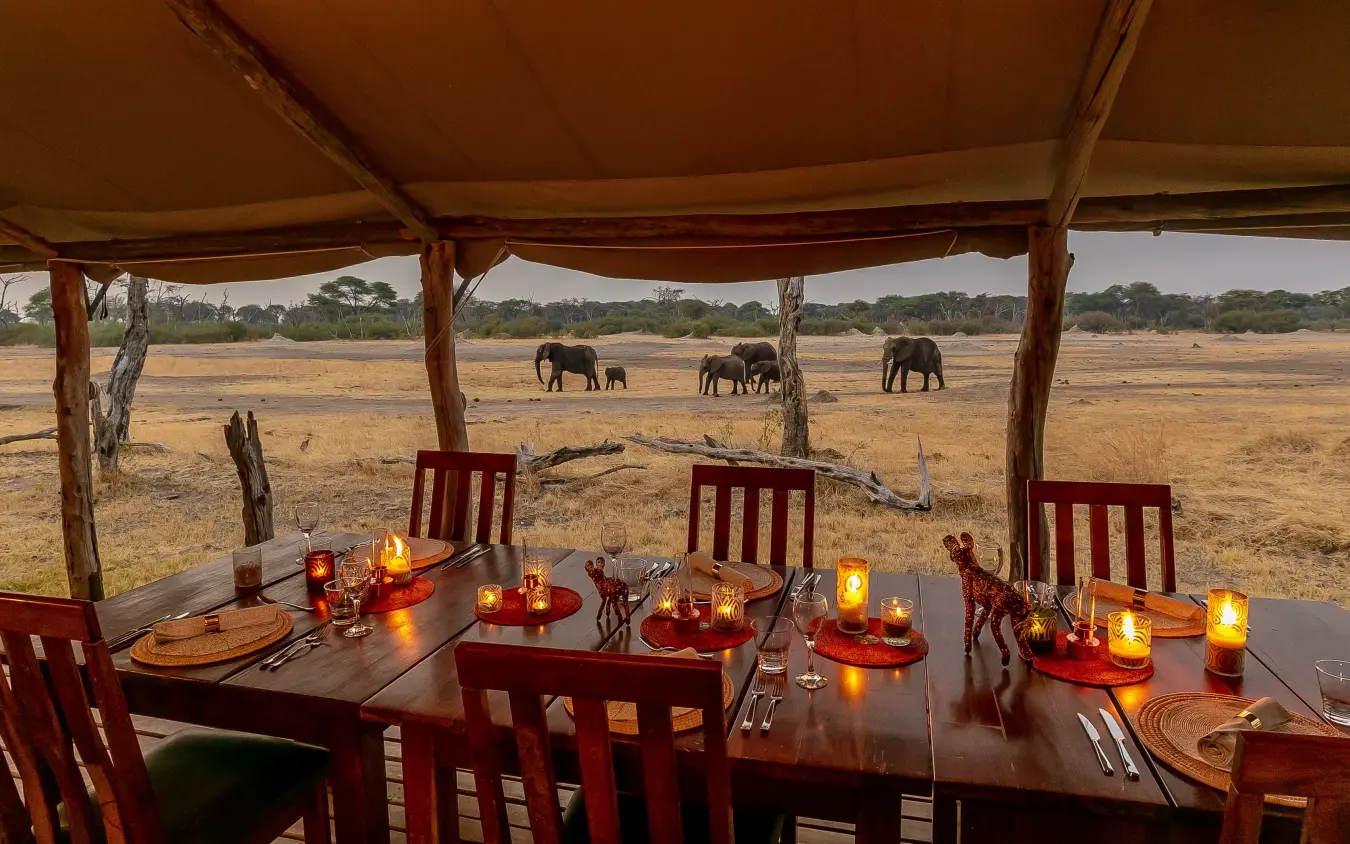
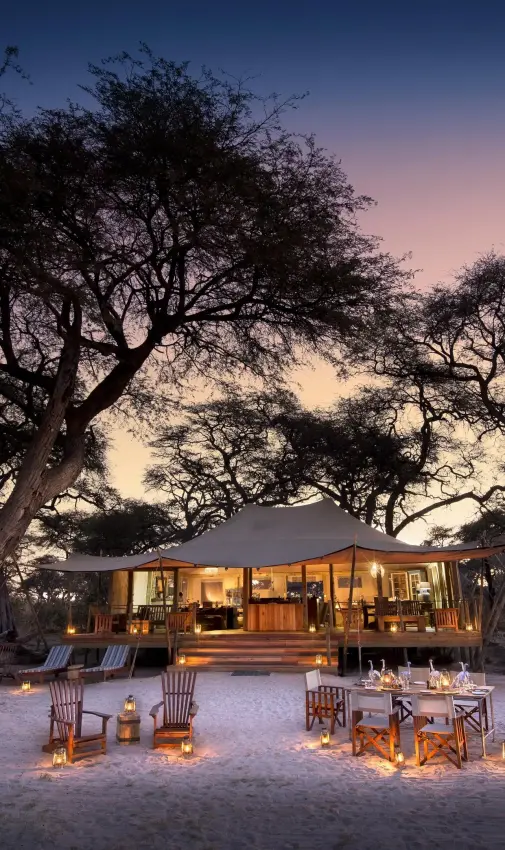
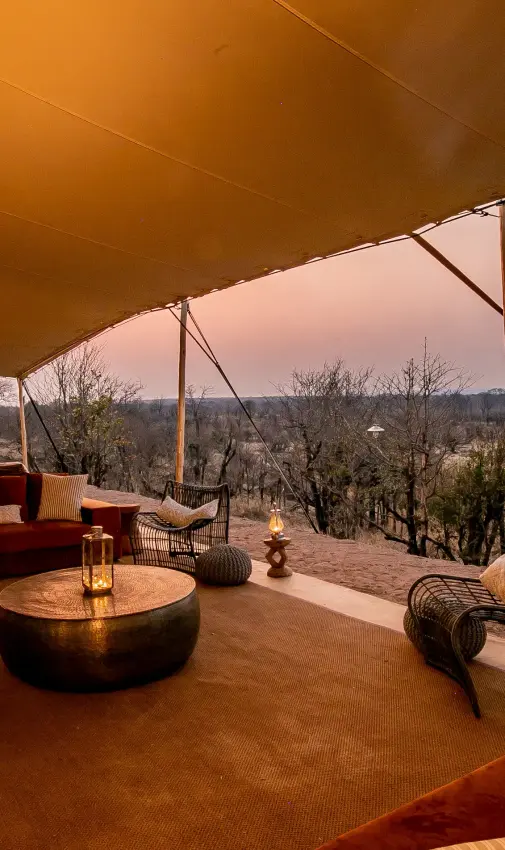
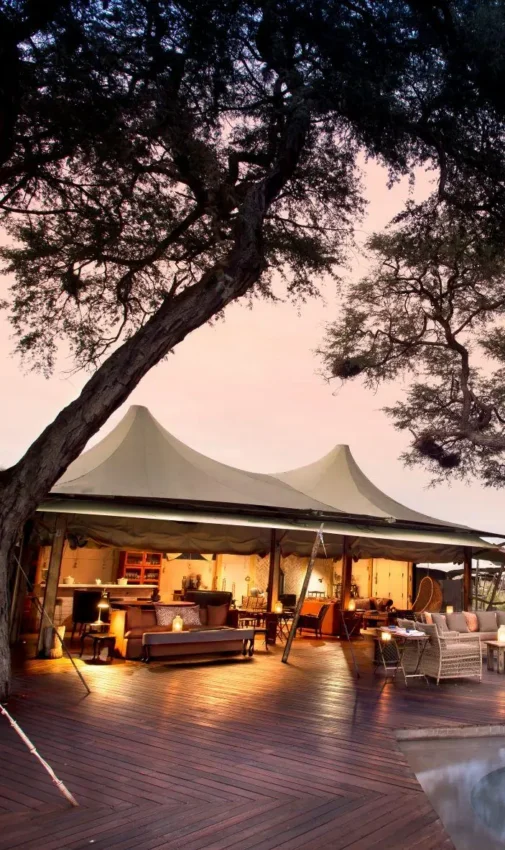
The focal building is a double-storey open-sided A-frame in timber and thatch. Downstairs holds the dining room, a sun lounge and a small library, while the upper level opens to a viewing deck over the vlei. Built into the tunnel wall is a temperature-controlled cellar of international wines, so guests can lift a bottle from a lit recess on their way down to the hide. The cooking leans toward hearty farmhouse fare, drawn partly from the camp’s own organic garden and served communally around a teak table, or al fresco beneath the acacias.
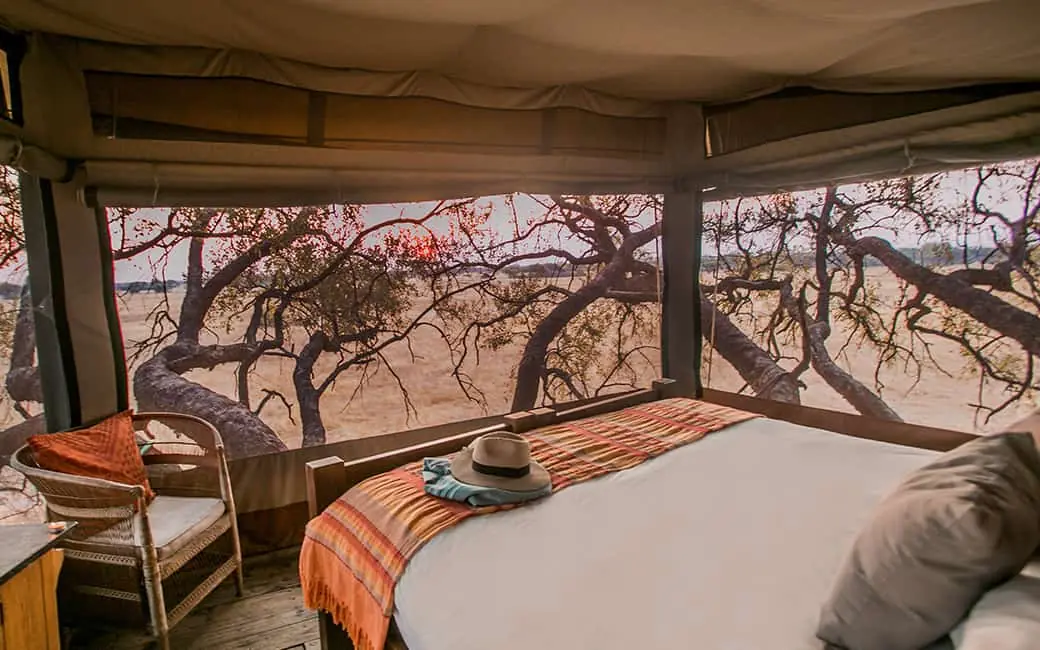
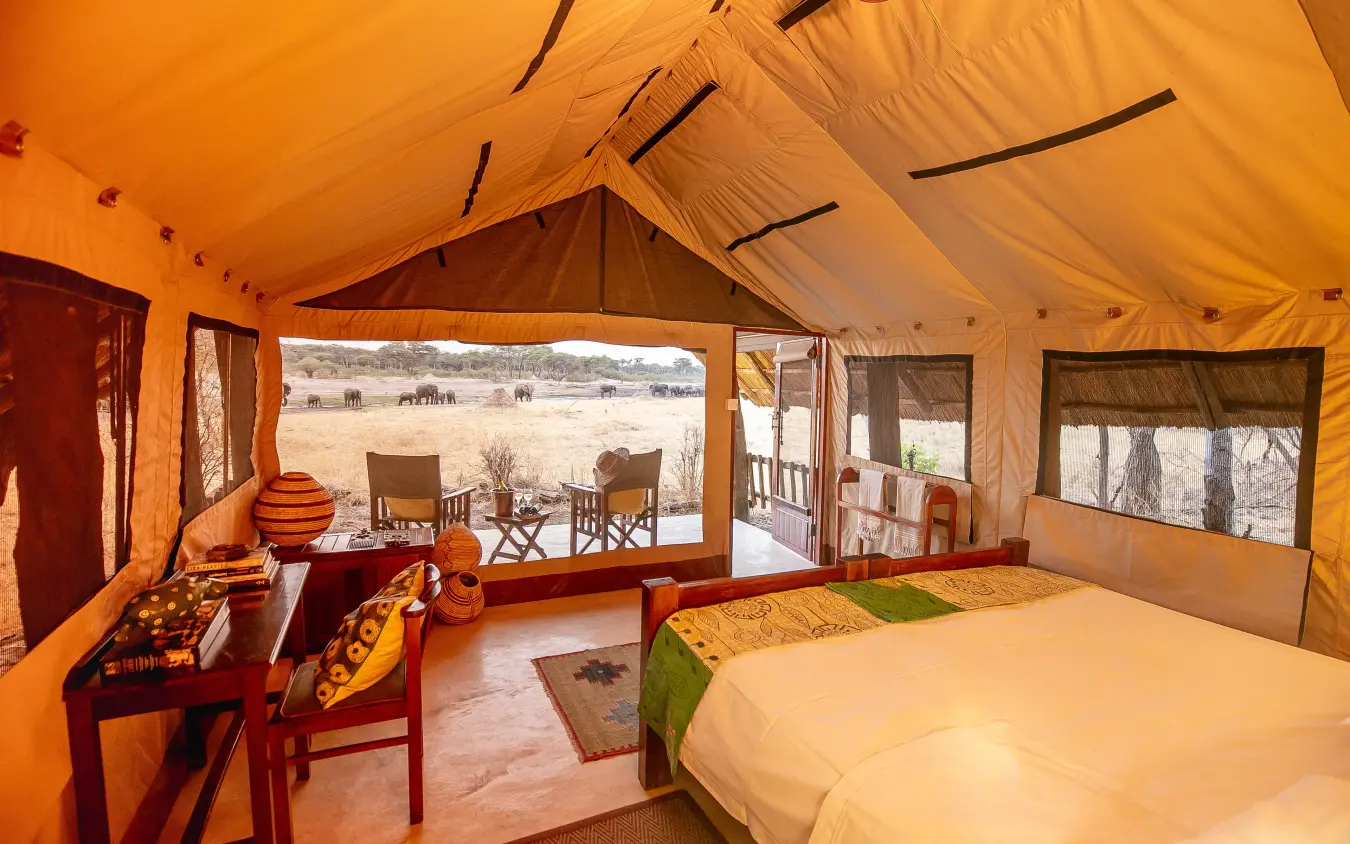
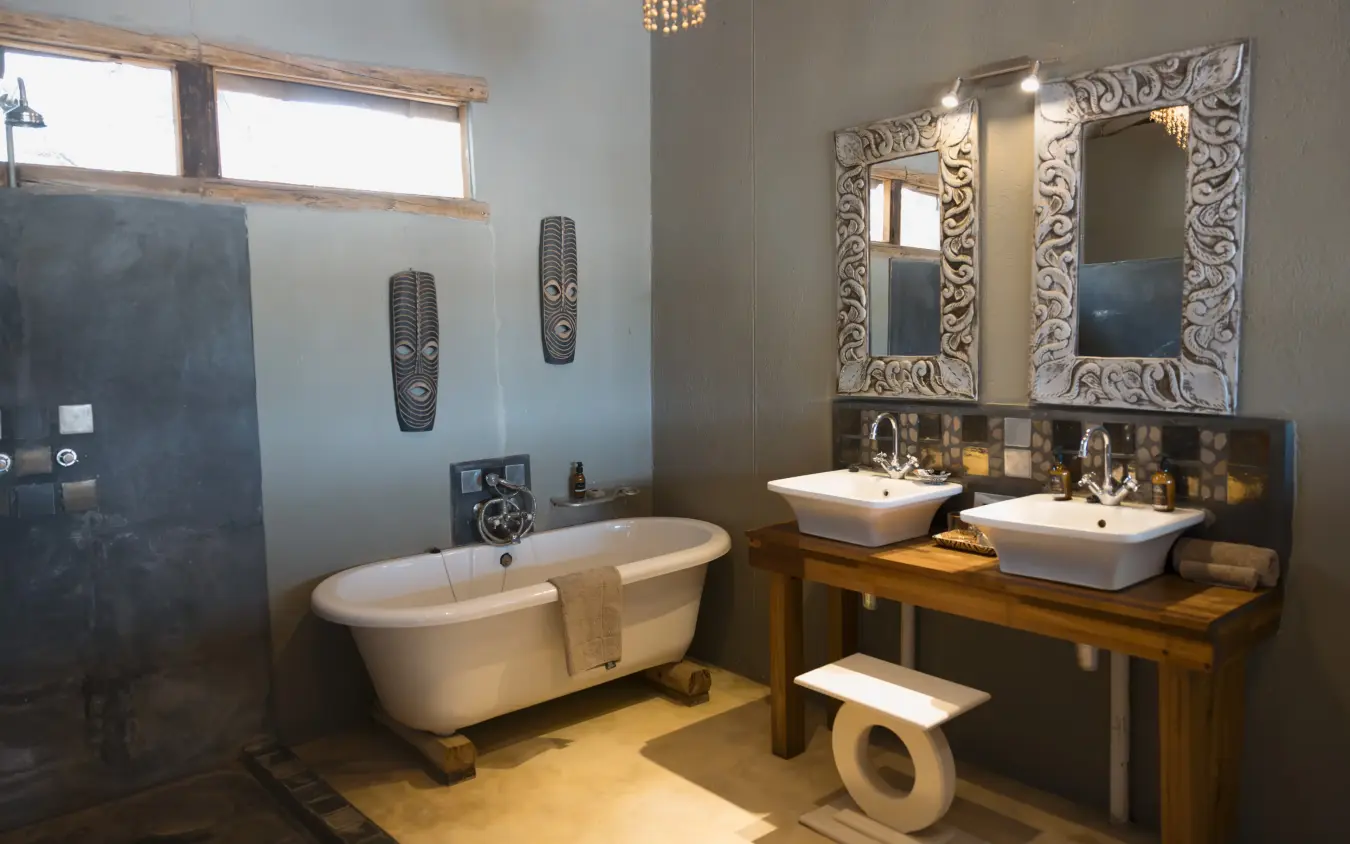
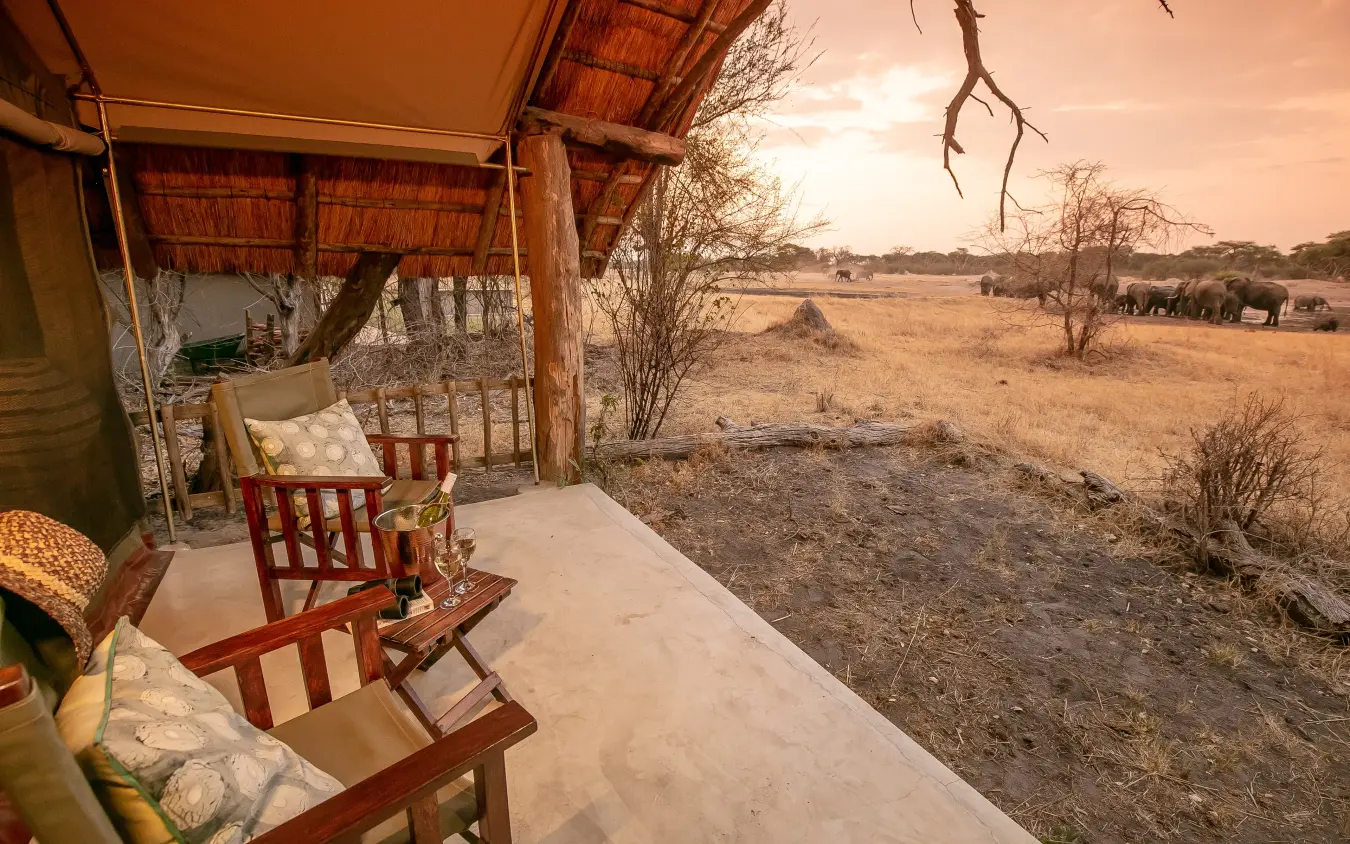
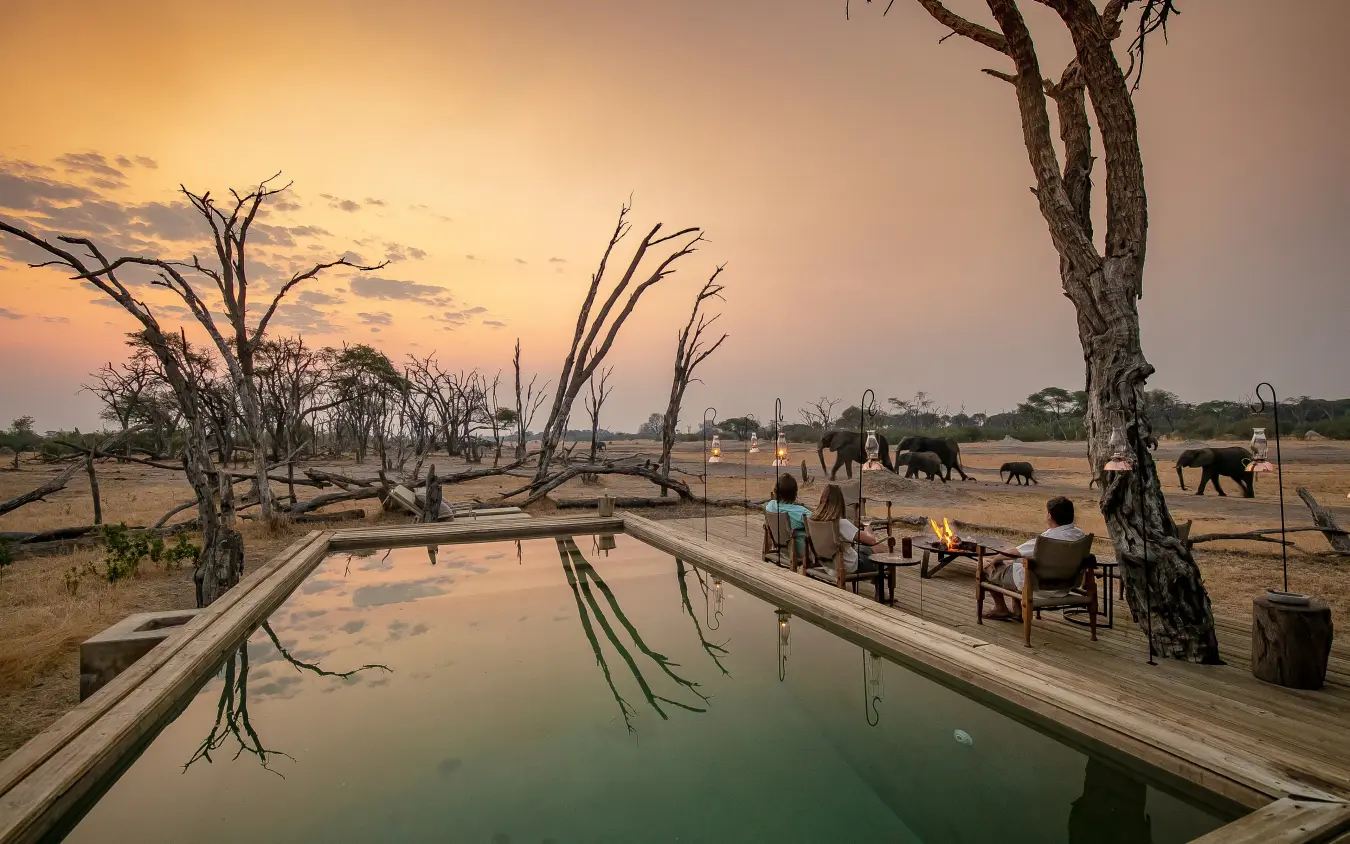
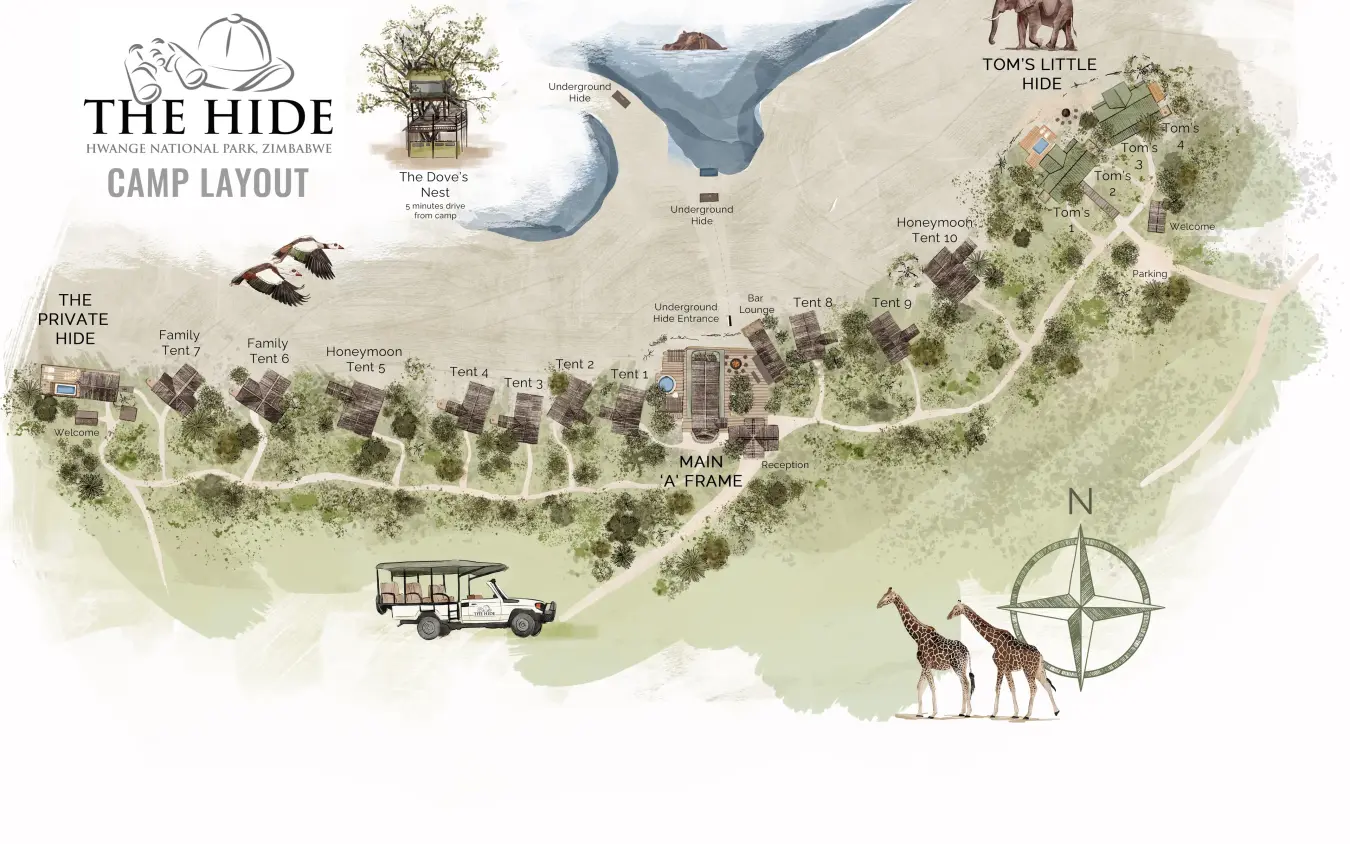
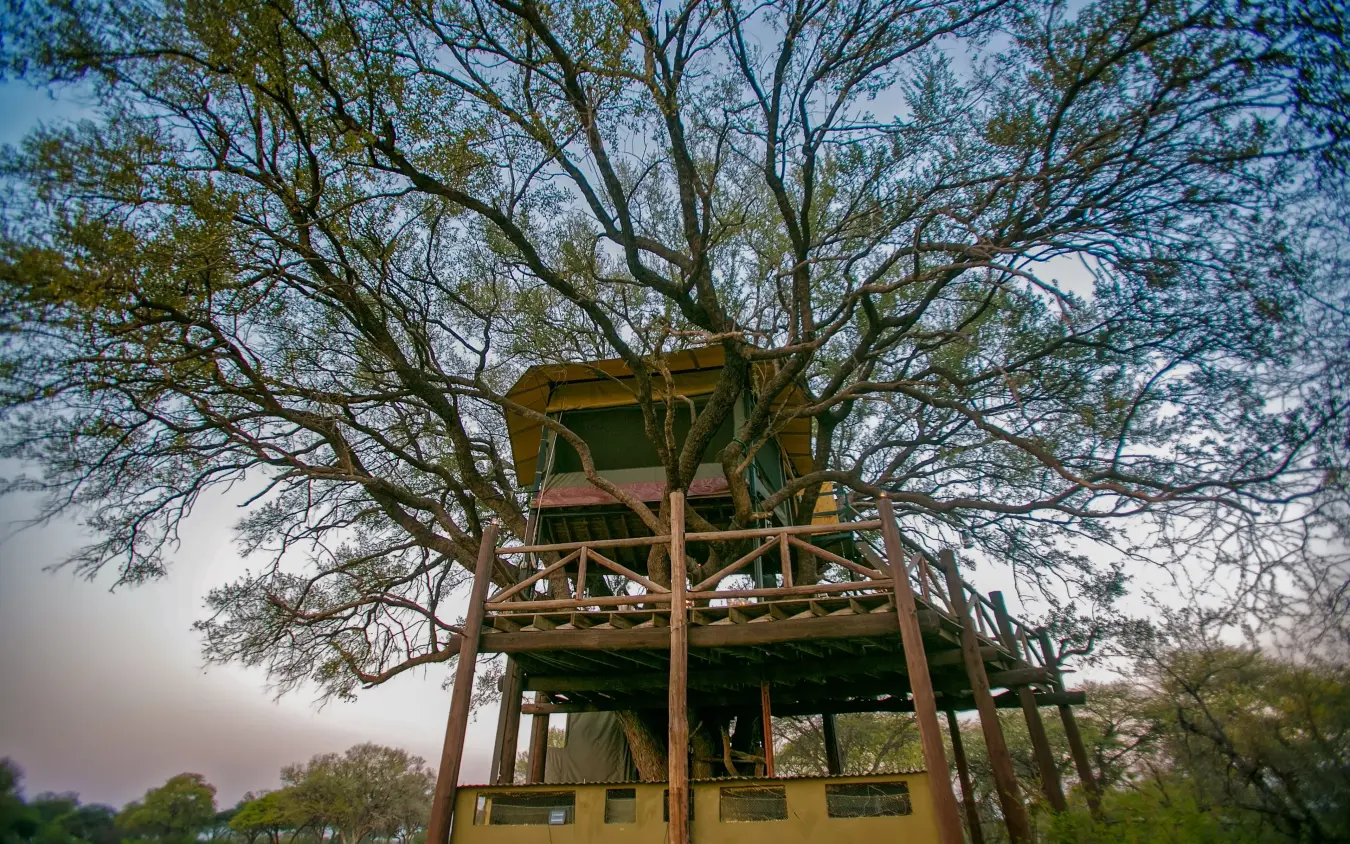
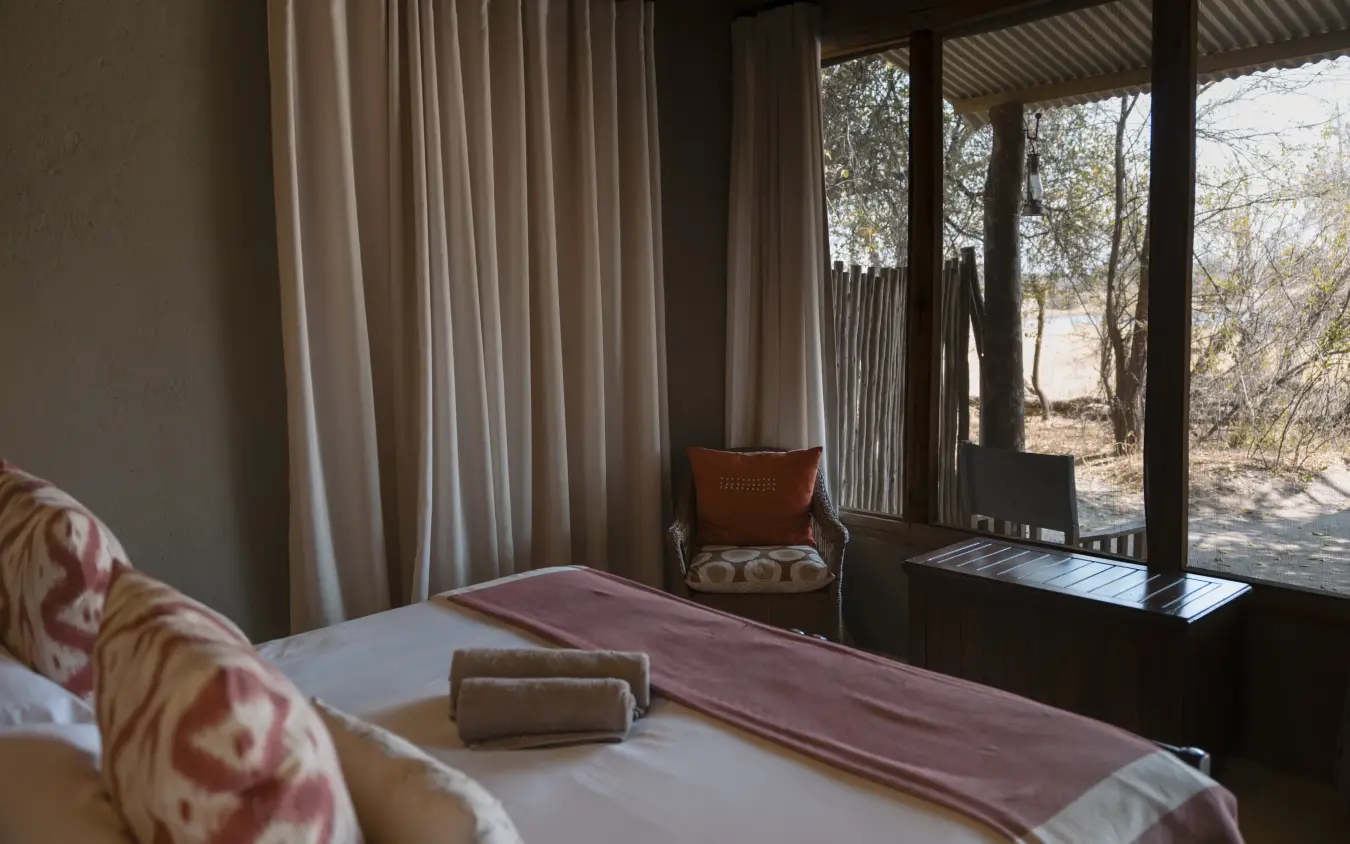
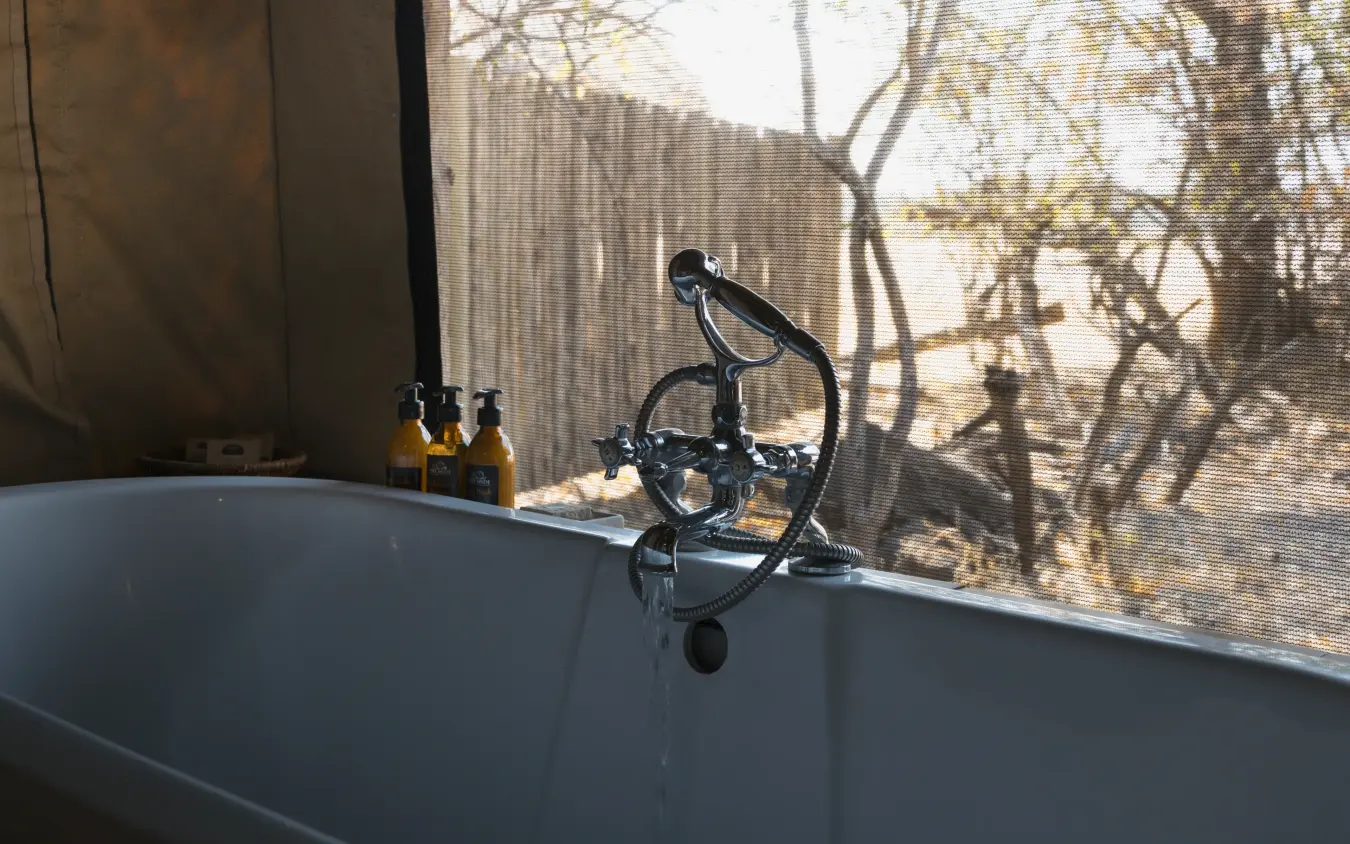
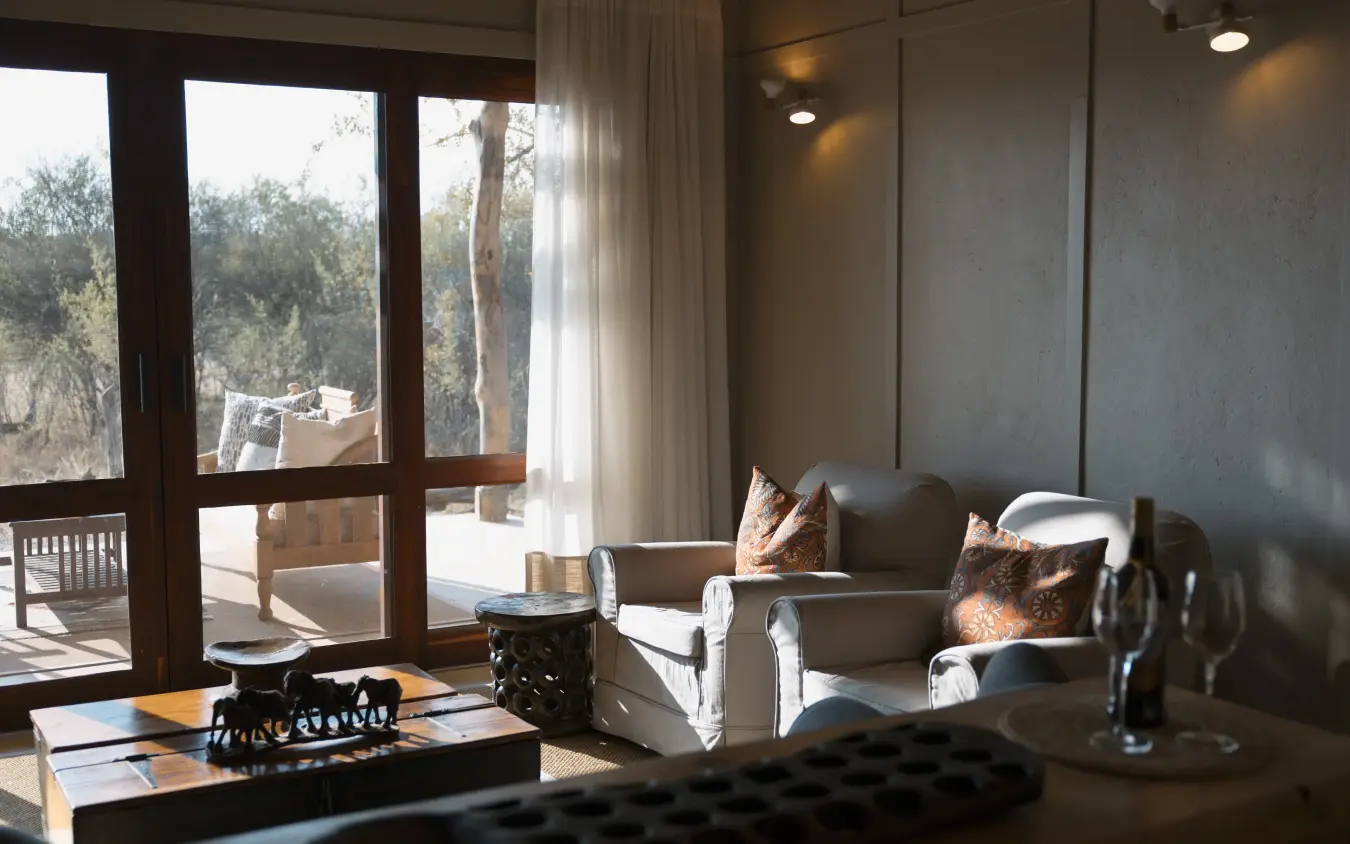
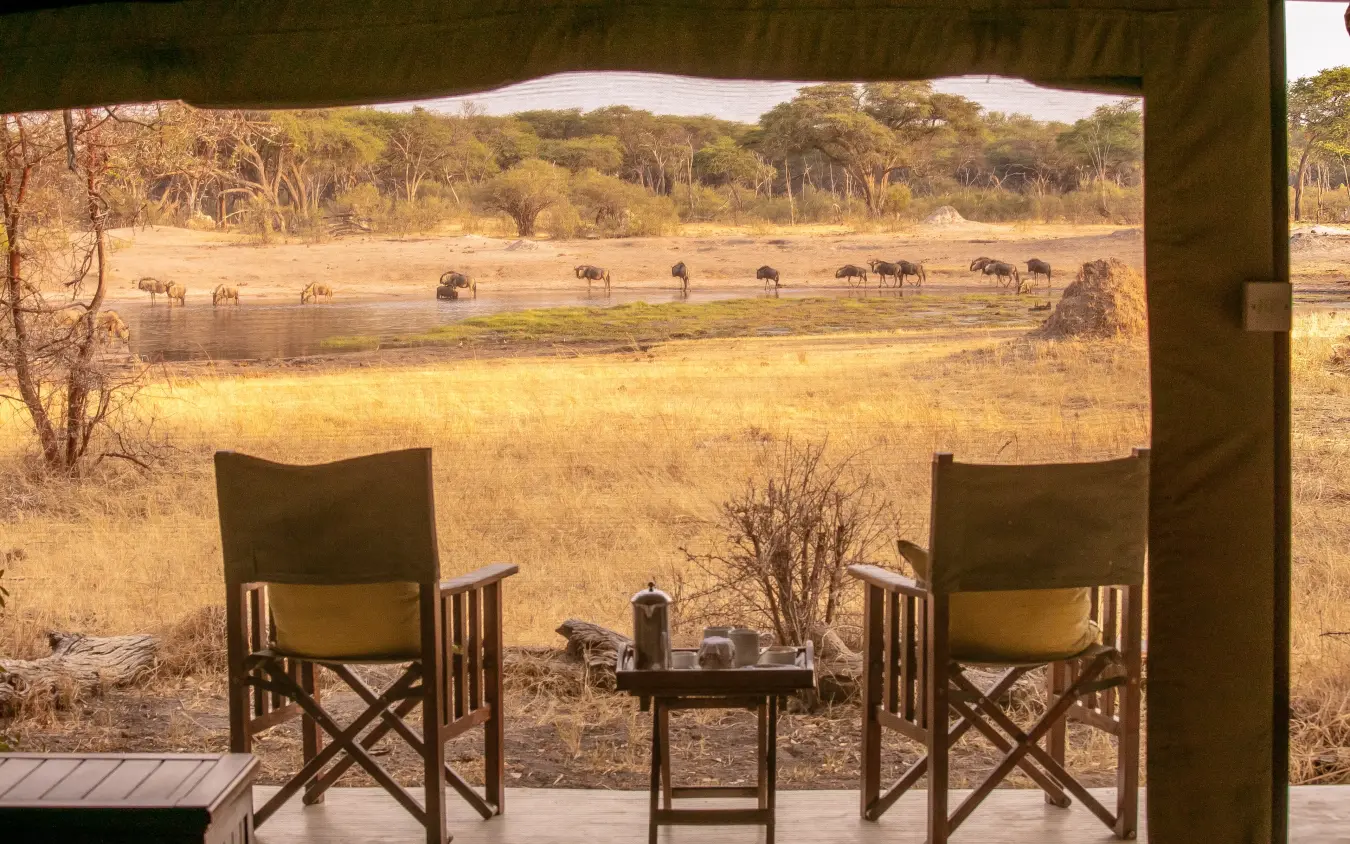
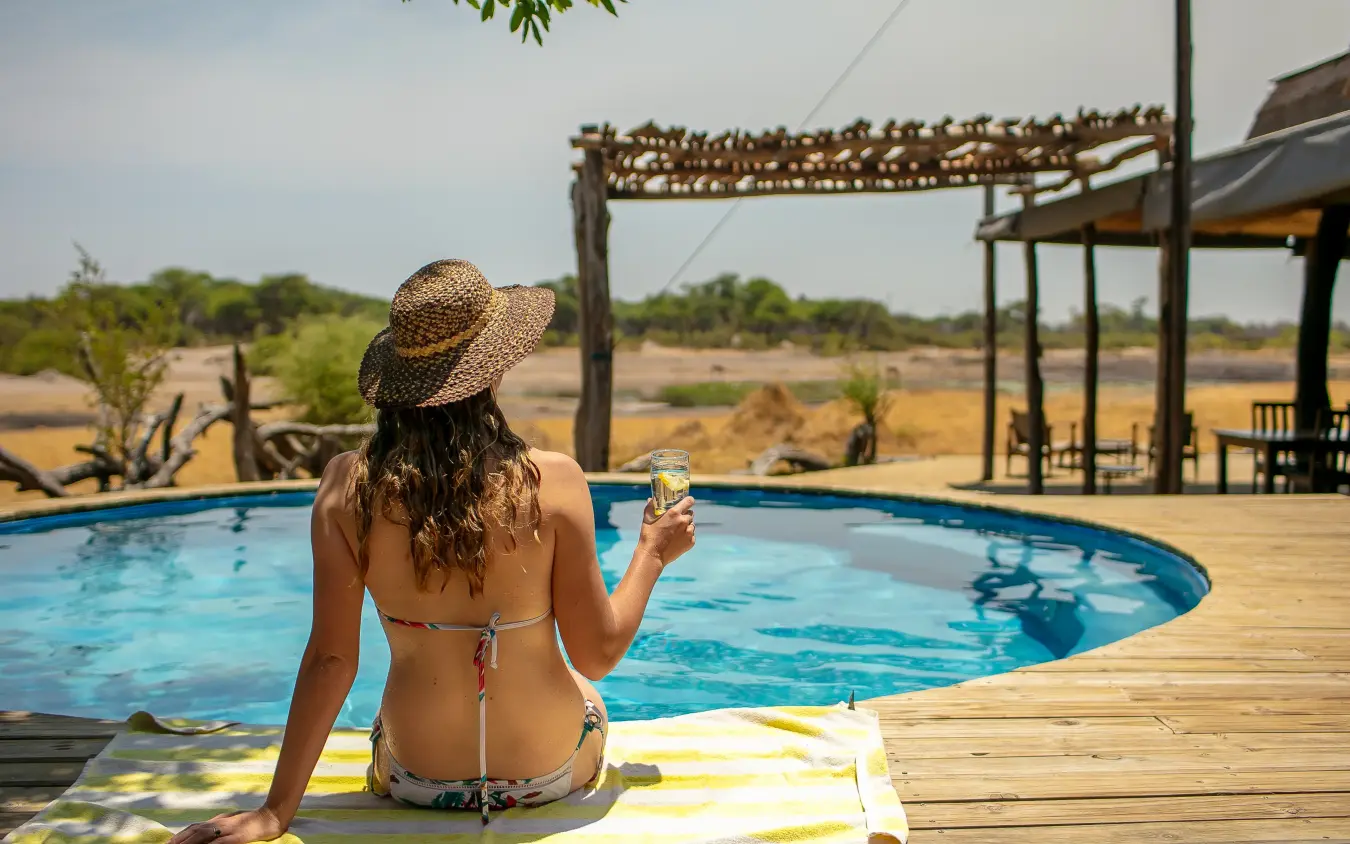
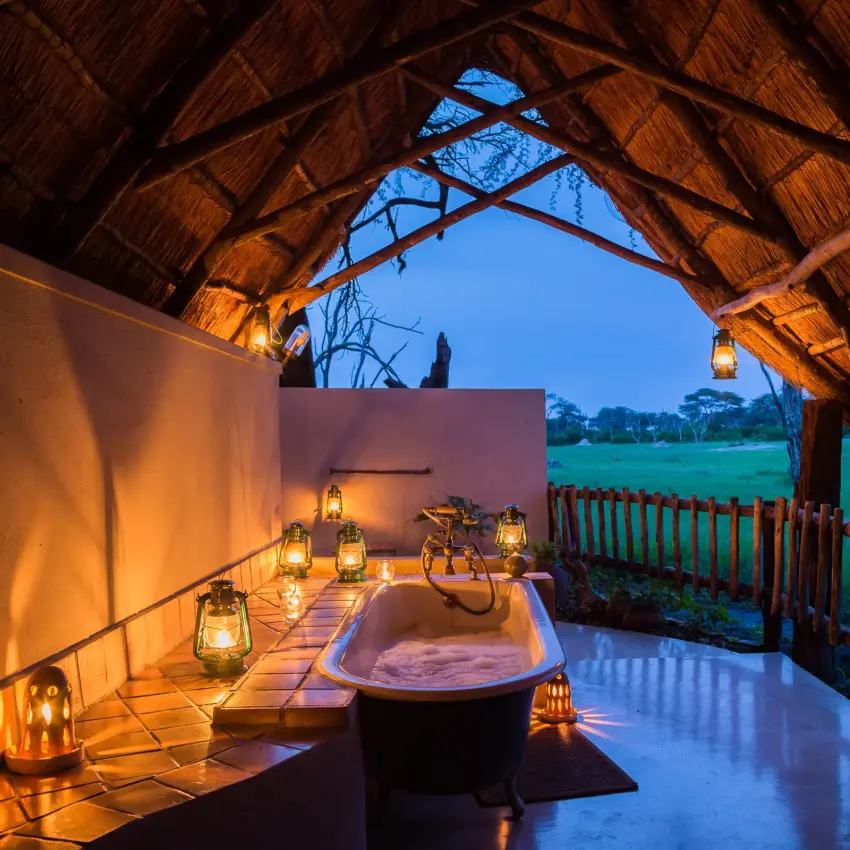
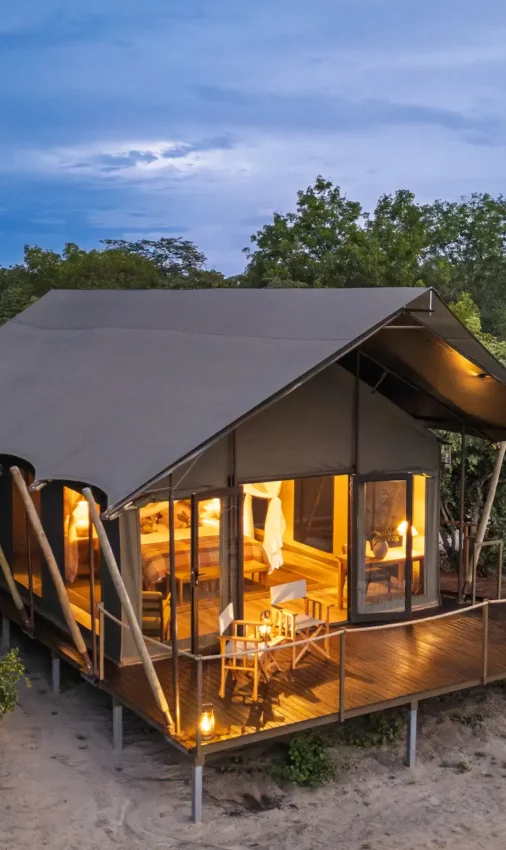
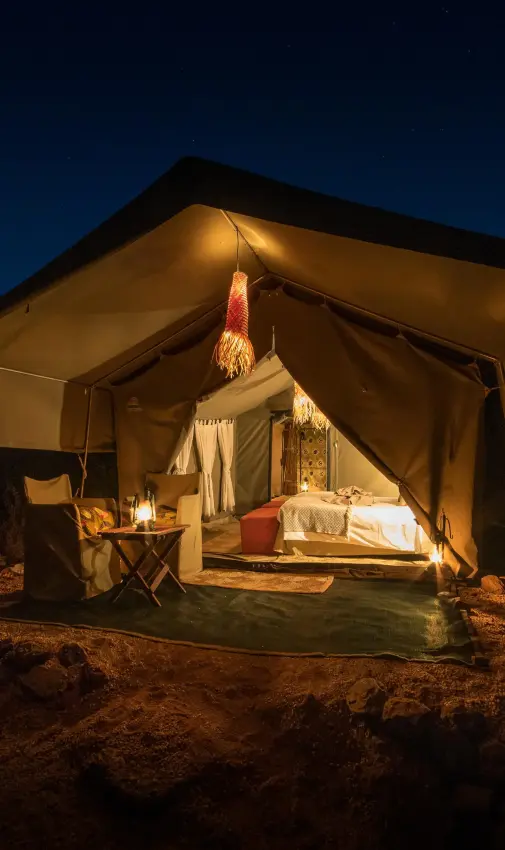
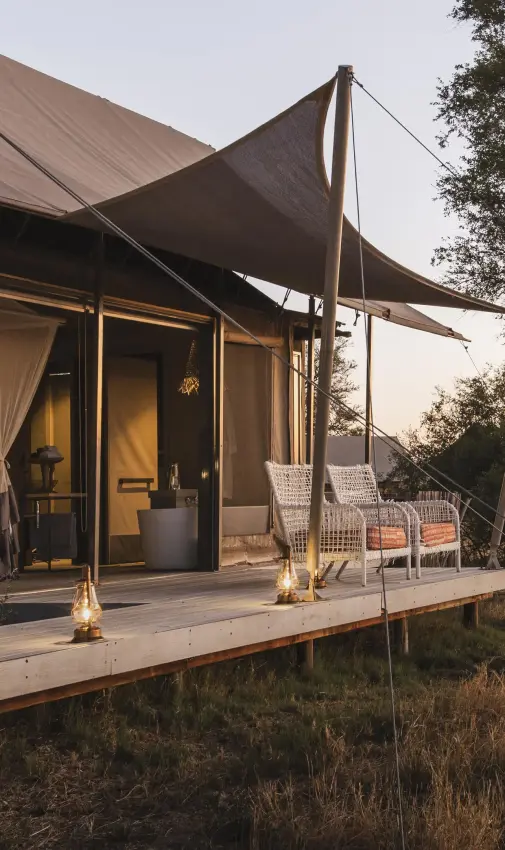
Ten canvas-and-thatch tents stand on raised decks, each turned to face the waterhole, with teak dressing tables, mosquito netting and en-suite bathrooms of indoor and outdoor tubs and showers. Two exclusive-use options sit within the concession. Tom’s Little Hide comes with its own pool, chef, guide and vehicle, while The Private Hide draws together adjacent main-camp tents into a self-contained camp with its own dining room, lounge and pool. A short walk away, the Dove’s Nest treehouse sleep-out is reached by a wooden stairway through a trapdoor, set high over a tree-lined vlei where elephants and giraffes pass below.
Lions hunt and drink at the pan after dark, leopards move through the teak forest
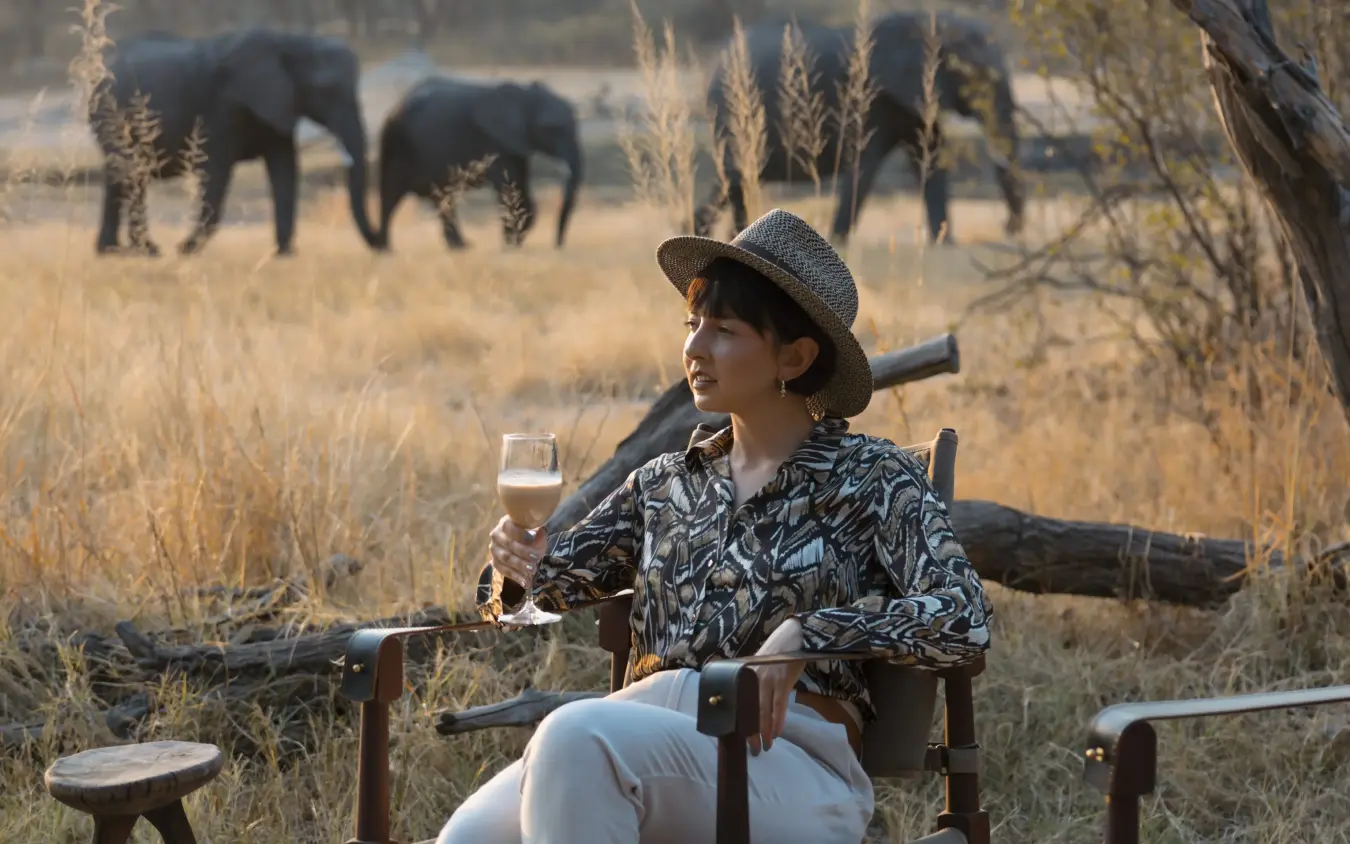
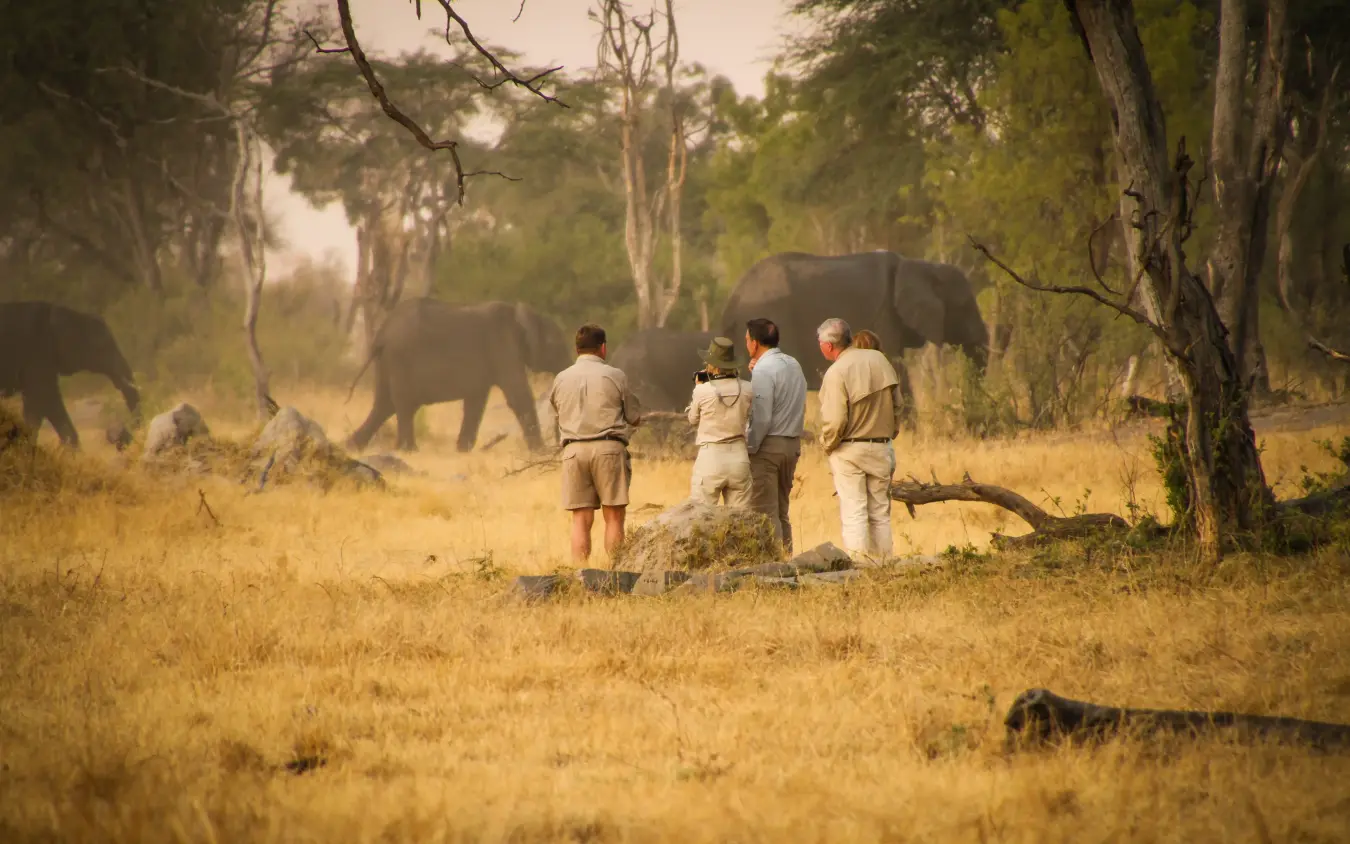
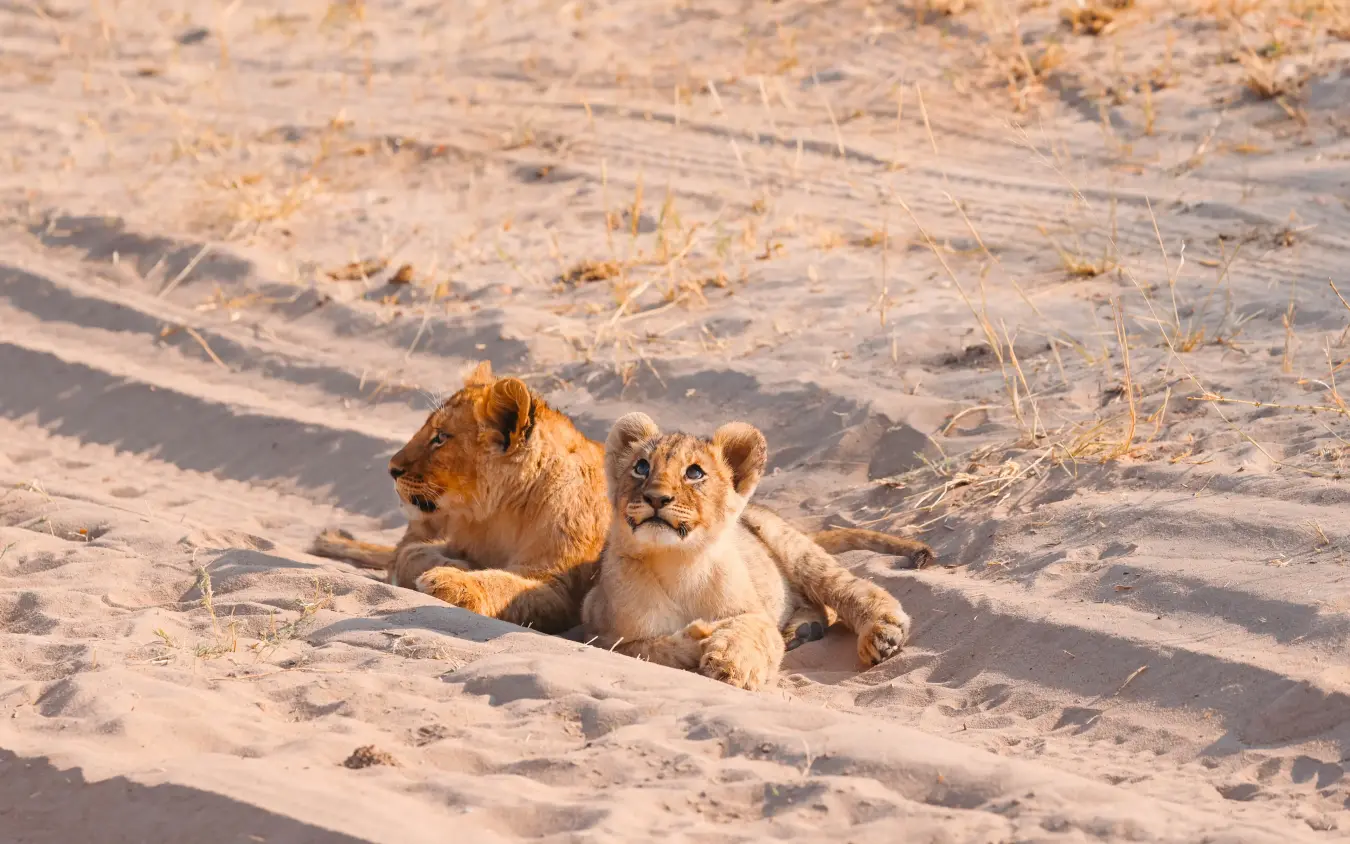
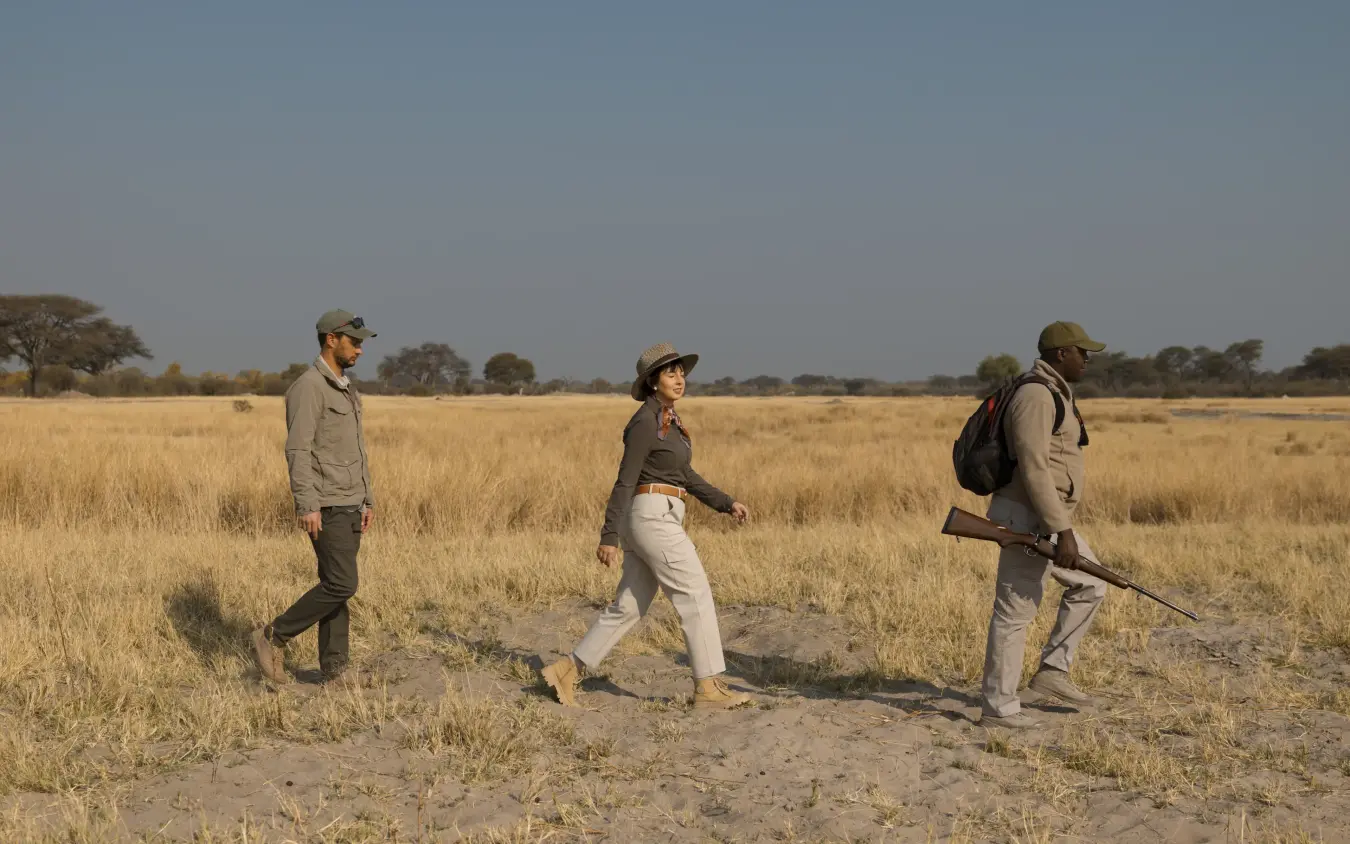
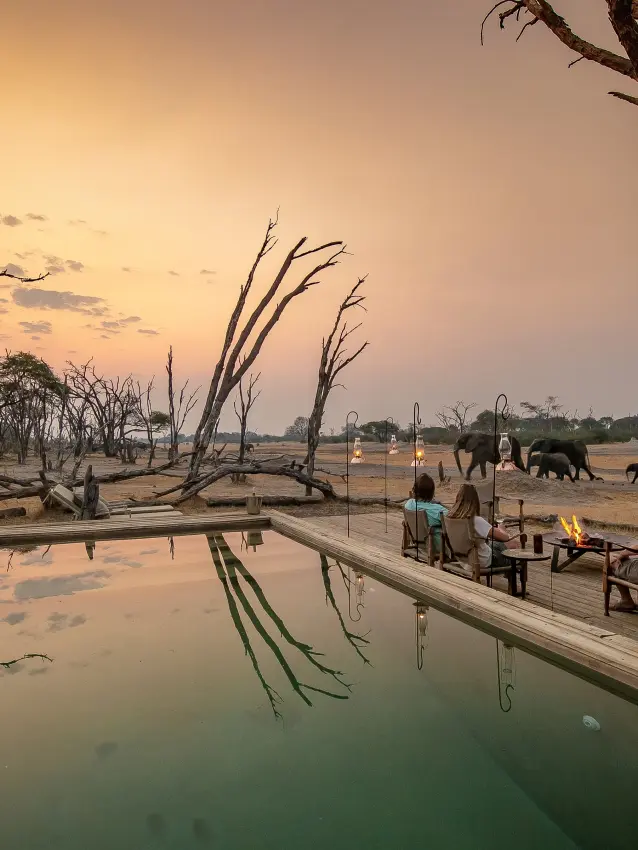
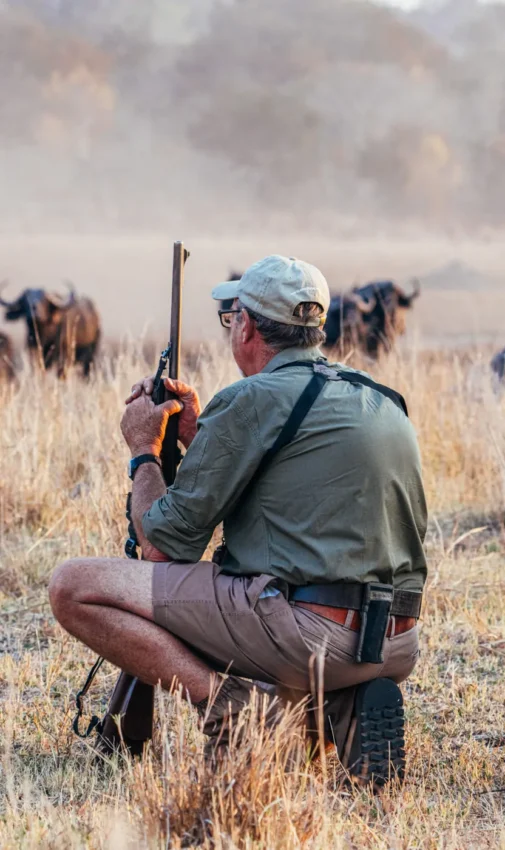
The waterhole is the constant. Kudu, giraffe, zebra, waterbuck and impala come daily, and the dry season brings great gatherings of buffalo and elephant to Hwange’s eastern sector. Lions hunt and drink at the pan after dark, leopards move through the teak forest, and cheetah and African wild dogs range the wider concession. The birdlife runs to more than 400 species. Mornings begin with tea brought to the tent and a chorus of hornbills and francolins, and the nights carry the rumble of elephants at the water.
The Hide operates under a conservation, community, culture and commerce framework and belongs to The Long Run. It was a founding member of the Conservation & Wildlife Fund, which coordinates protection across the Hwange ecosystem, and of Friends of Hwange, which converts the park’s critical boreholes to solar power. On its own land, an indigenous tree nursery propagates more than a thousand seedlings, with beehive fences protecting the saplings from elephant damage. The Hide Community Trust supports Chezhou Primary School and the Shantani Women’s Group, work that ties the camp’s future to the communities along the park boundary.