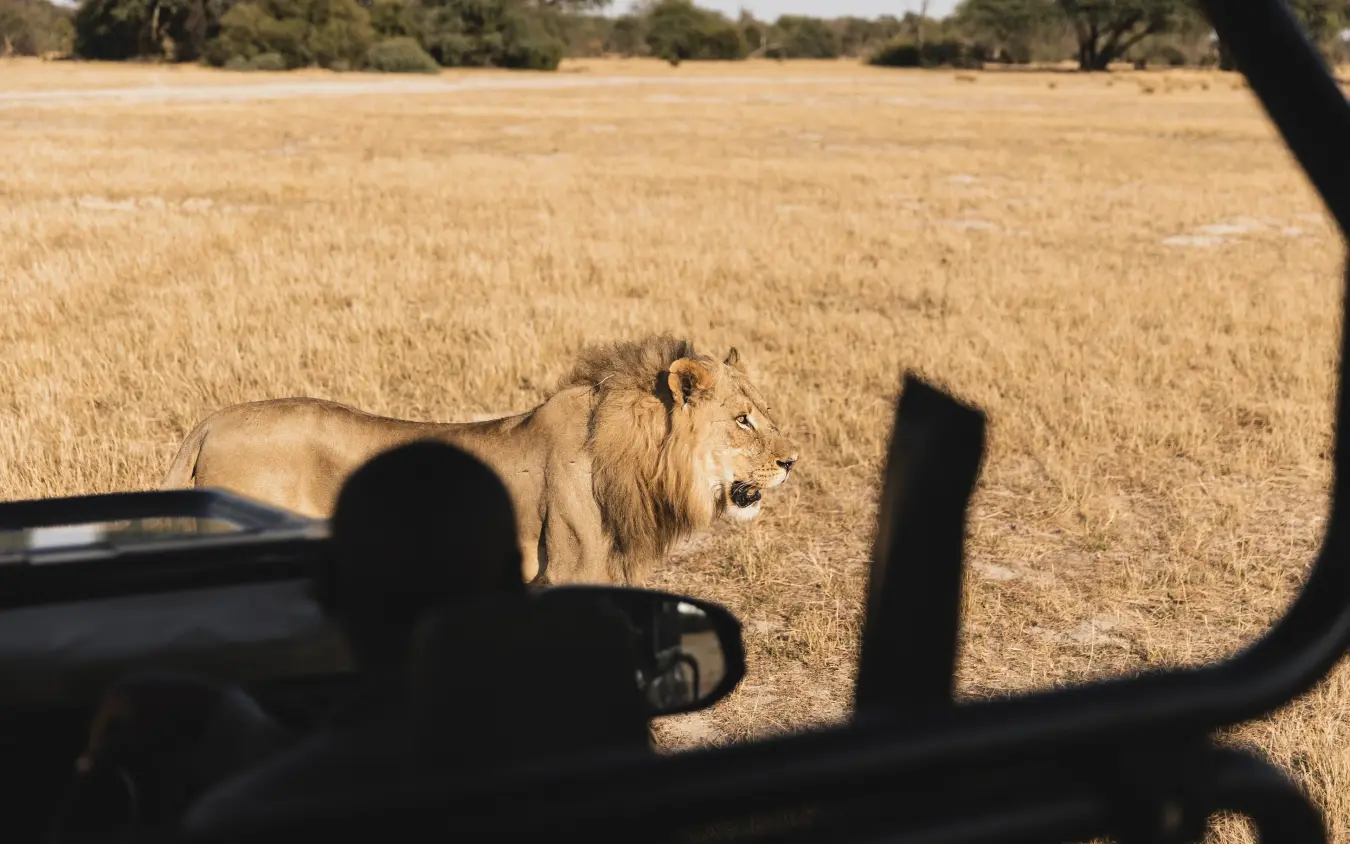
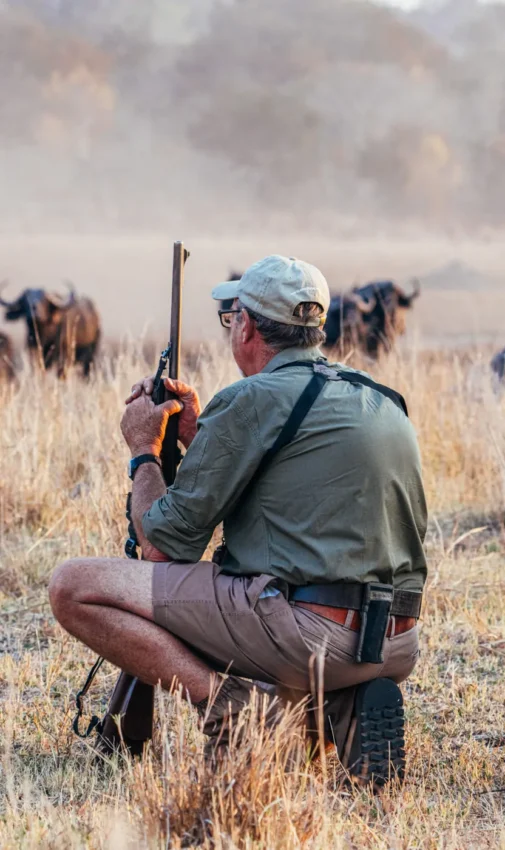
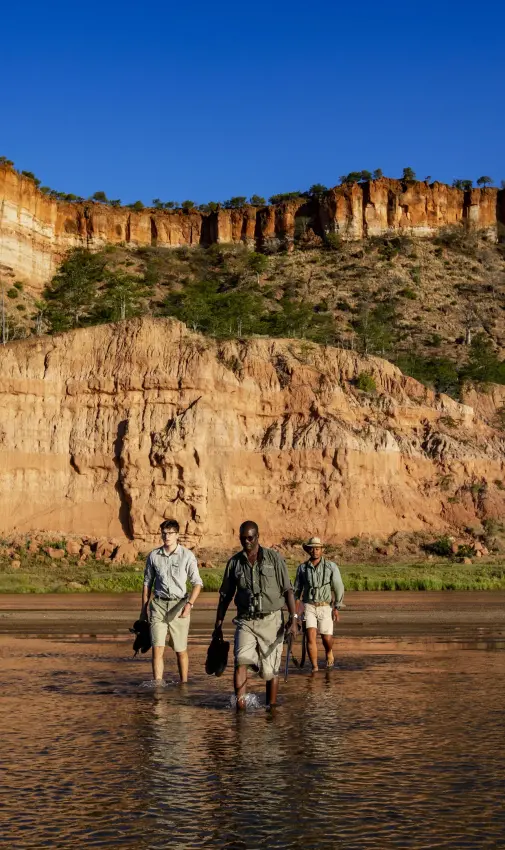
Because Little Makalolo lies within a private concession inside the national park, off-road driving is not permitted, but night drives are, and they open up a whole other Hwange. Spotted hyena, honey badger, porcupine, springhare and the occasional caracal are picked out by spotlight. By day the walking comes into its own. Led by professional Zimbabwean guides, morning walks trace game paths across Kalahari sand, reading fresh spoor and turning attention to tracks, botany and the smaller creatures a vehicle passes without noticing.
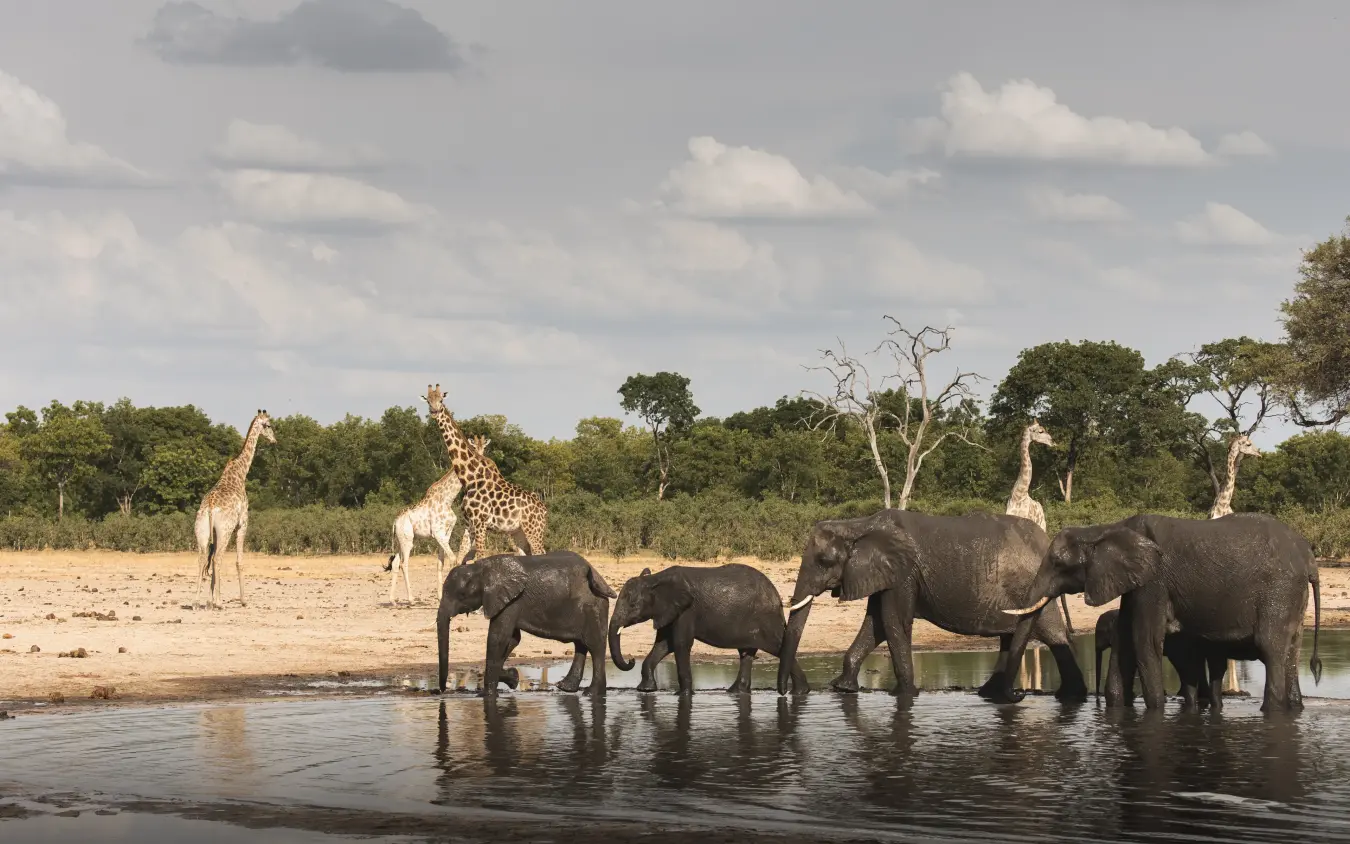
The log-pile hide rewards patience more than any other spot in camp. Guides encourage spending the midday siesta here, when heat shimmers off the pan and the animals queue at the water. Cape buffalo, giraffe, zebra and the far scarcer sable and roan file through, and from a few feet away you come eye to eye with drinking elephants. Lion and leopard work the wider concession, along with African wild dogs, so the hours that most camps give over to rest can be the richest of the day here.
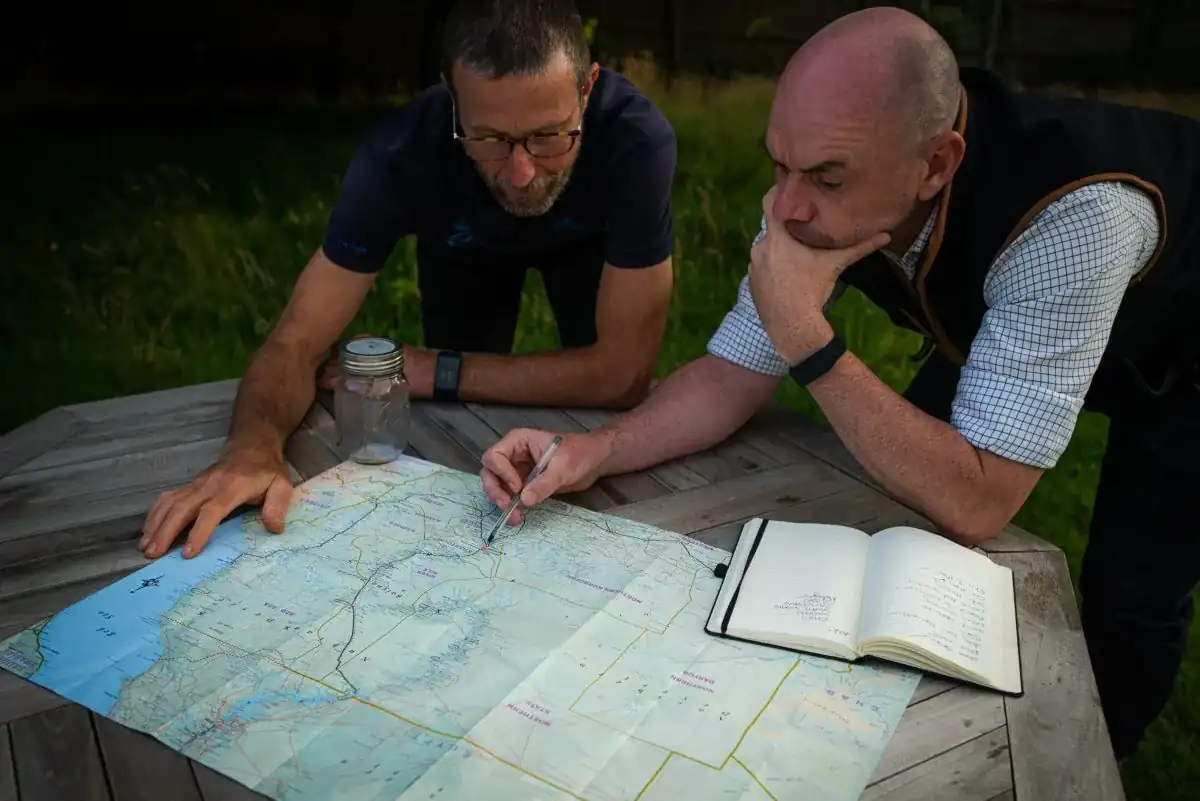
Led by professional Zimbabwean guides, morning walks trace game paths across Kalahari sand
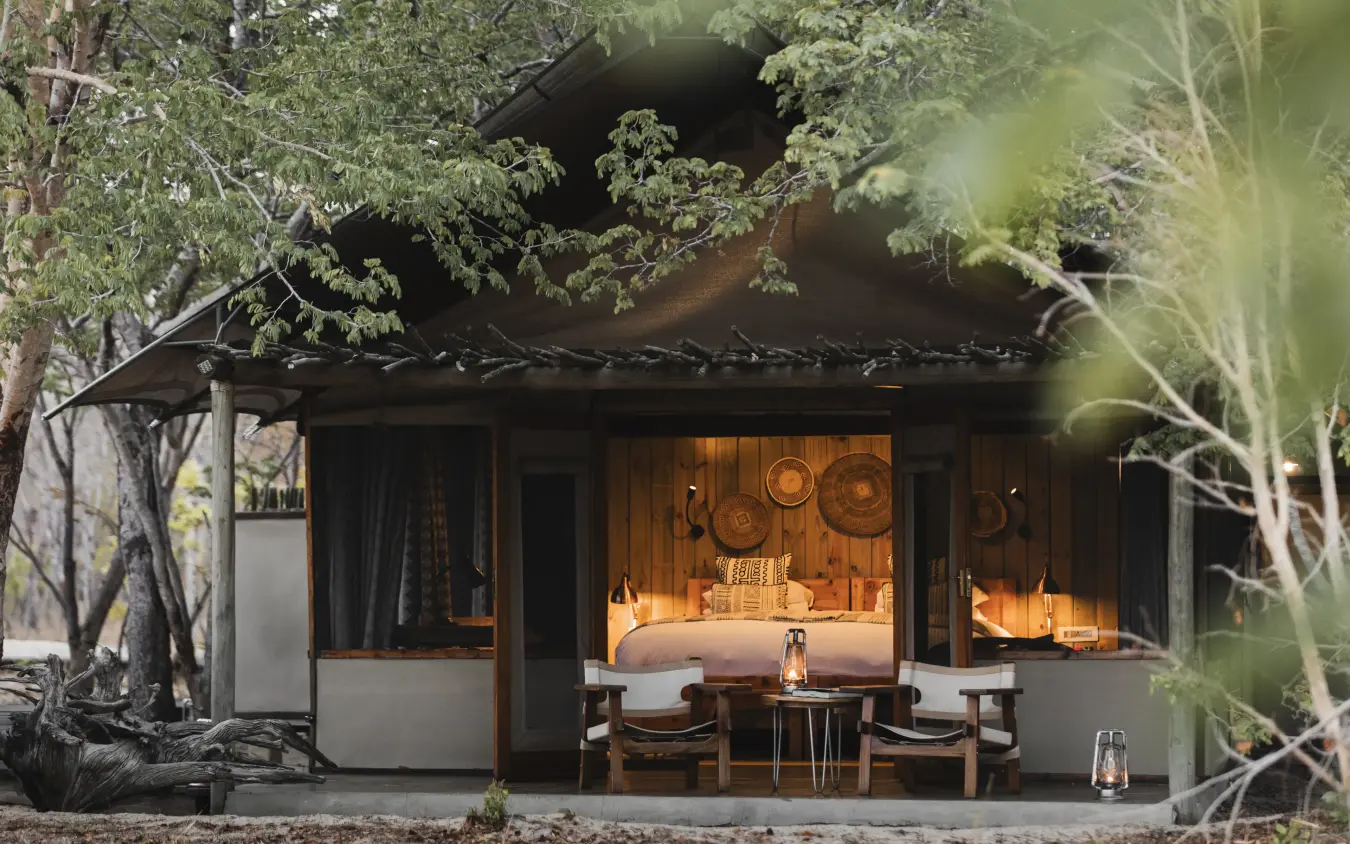
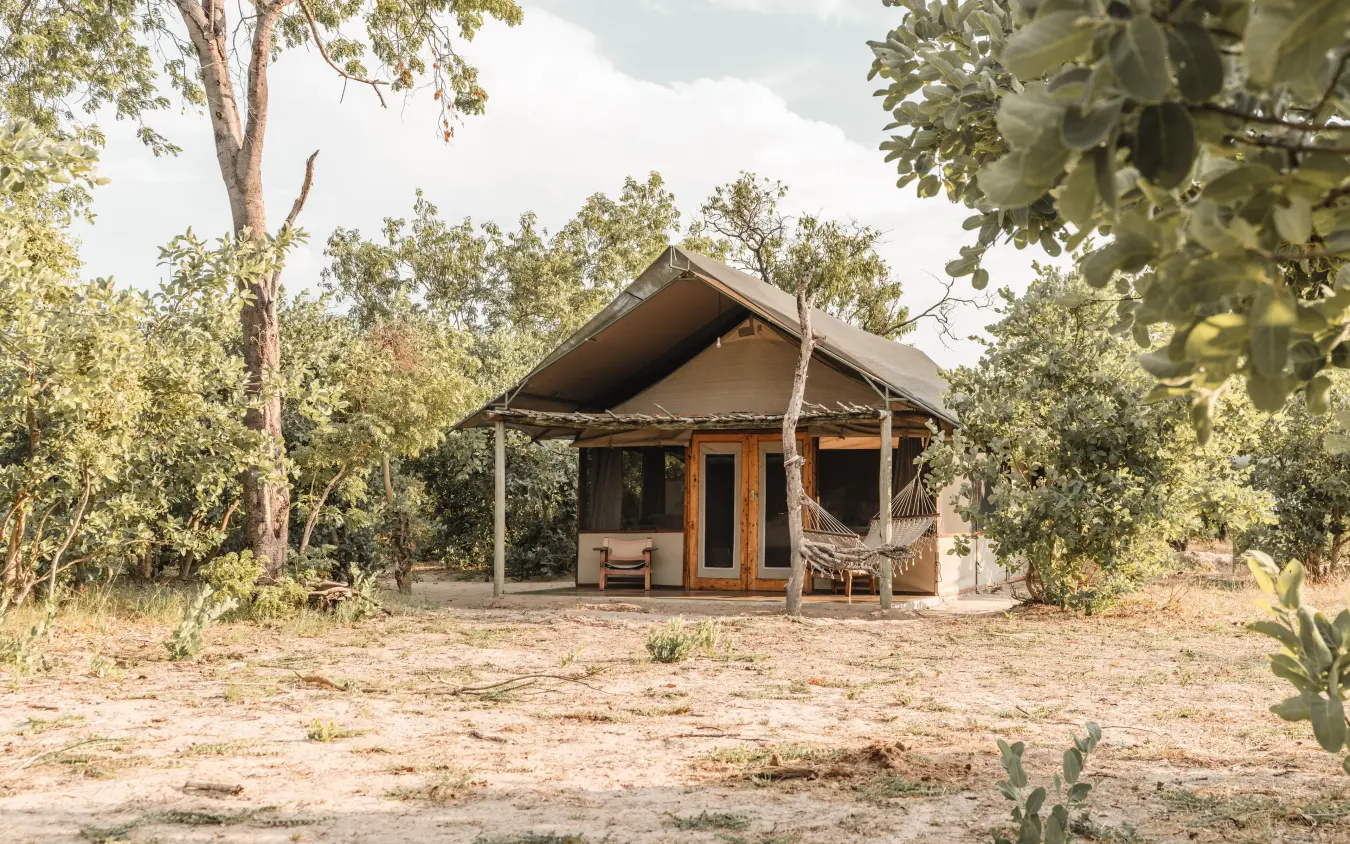
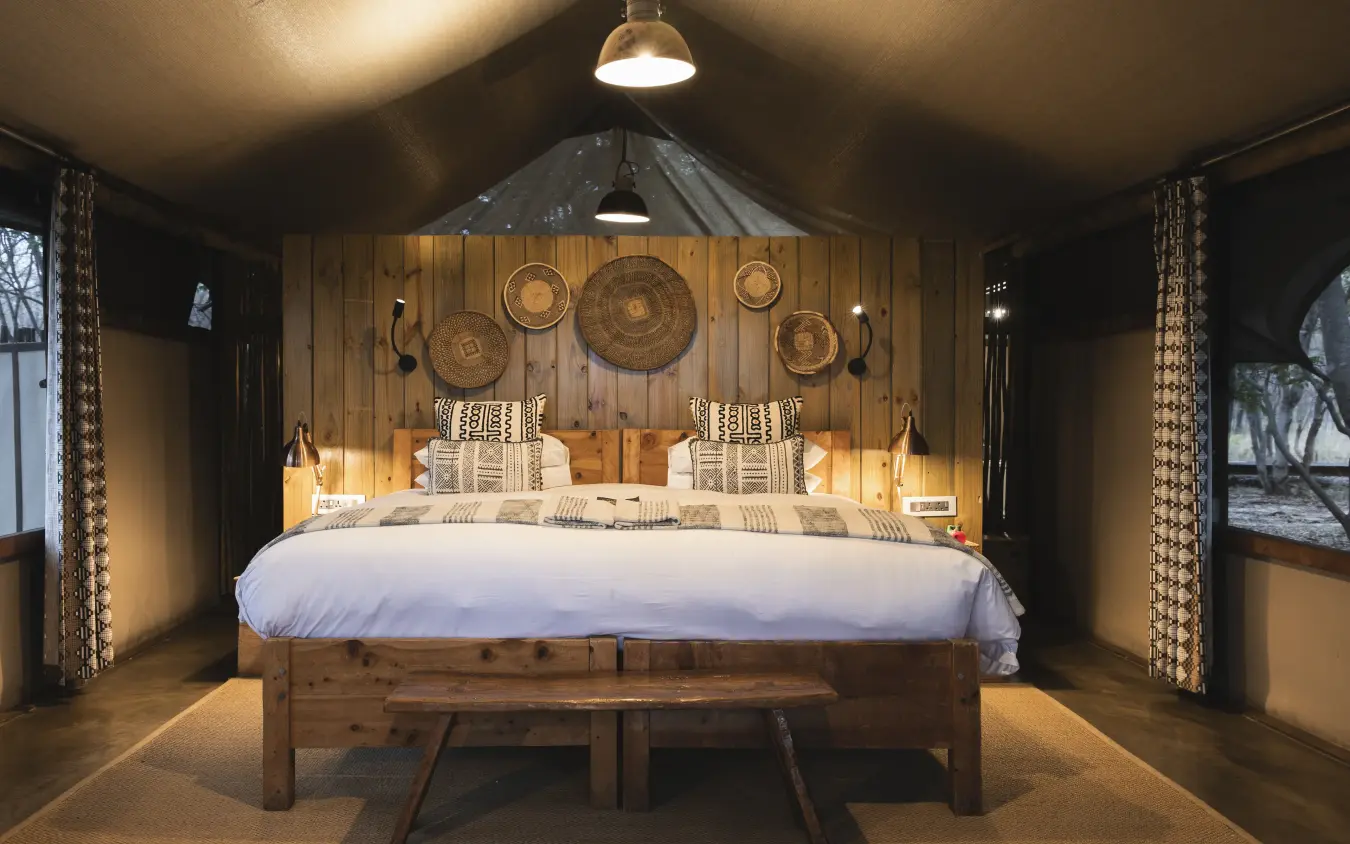
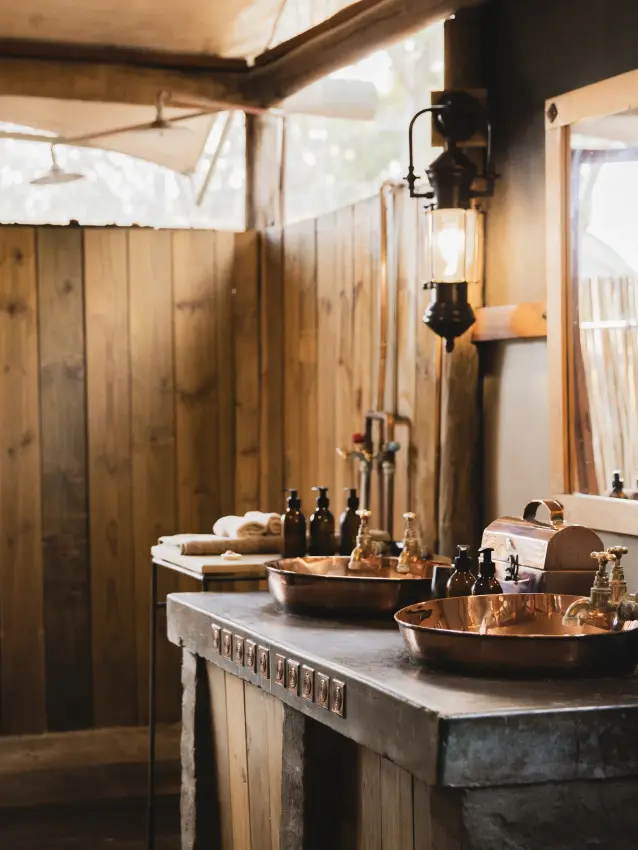
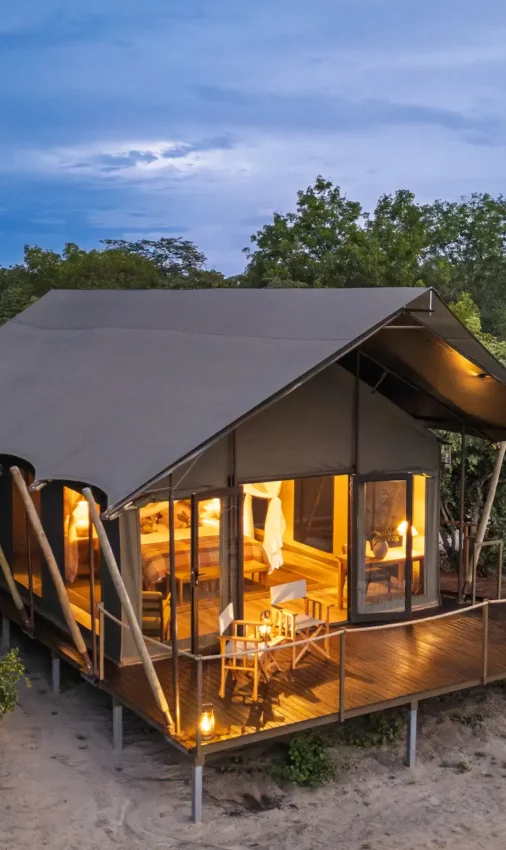
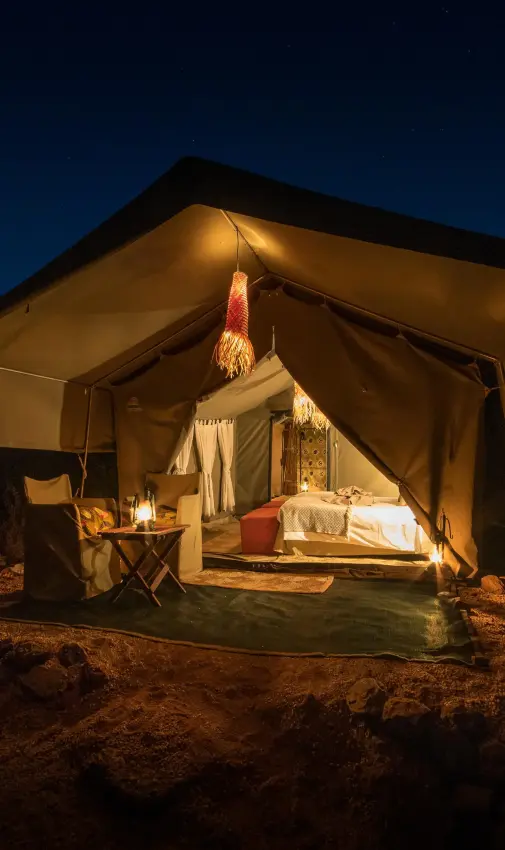
A short drive from camp, the Madison Pan star bed offers a raised platform for sleeping out under open sky. A private chef fires pizzas at a wood-fired oven, then leaves you to the sound of distant lions and the wide arc of the Milky Way. Back in camp, the interiors carry their own quiet detail. Behind each bed hangs a display of hand-woven baskets from the Lupane Women’s Centre, a cooperative of rural craftswomen, bringing local clay and earth tones into the canvas suites.
The conservation work here is practical and local. Wilderness fuels and maintains a network of solar-hybrid boreholes across the concession, lifting water from deep underground to sustain game through the dry season when no natural surface water remains. A collaborative anti-poaching patrol clears wire snares along Hwange’s southern boundary, and Children in the Wilderness runs eco-clubs and scholarships in neighbouring villages. Visits to nearby Ngamo village and its school are led by a local guide, an exchange rather than a scheduled stop on an itinerary.