Timing your trip
best time to visit hwange national park
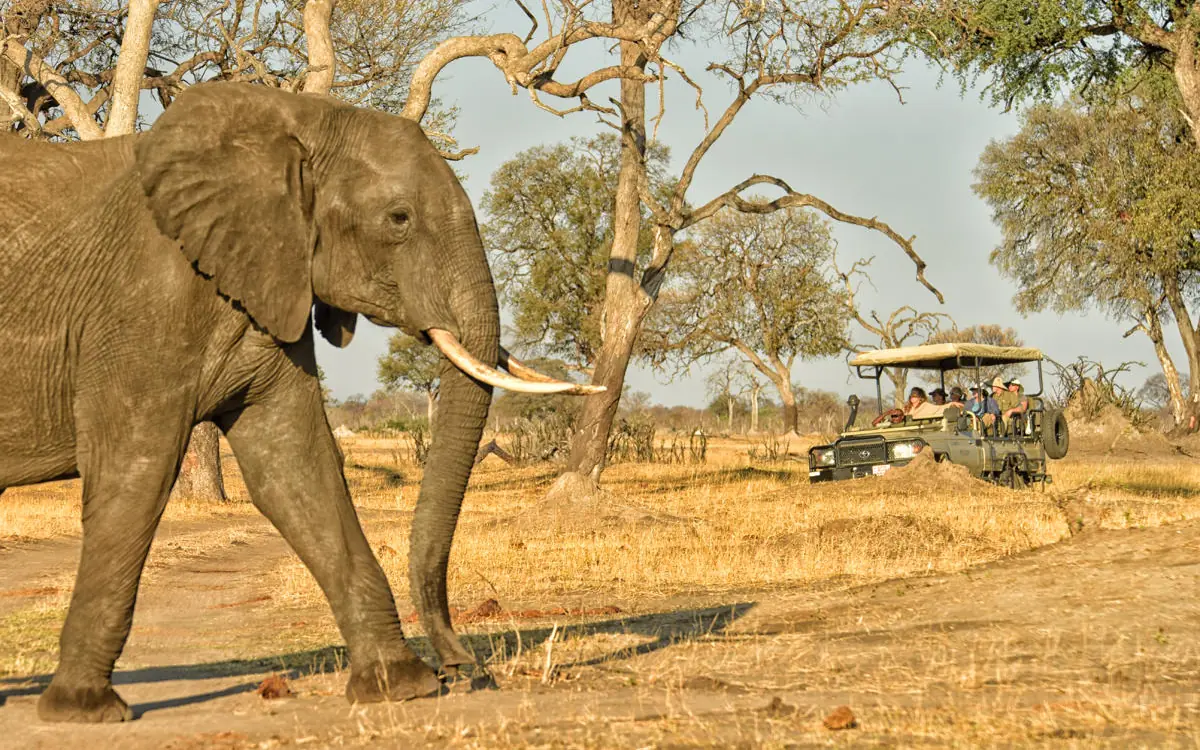
In Hwange, water and its absence decide everything. Through the dry months, pumped waterholes draw some of Africa’s largest elephant gatherings into the open. When you come decides whether you see that spectacle or the green, bird-rich quiet that follows the rains.
seasonal guide to hwange national park
For Hwange's elephant super-herds at the pumped waterholes, come between July and October, when the dry bush and vanishing water pull wildlife into the open in remarkable numbers. August and September are the comfortable core; October is densest but the hottest month. The green season from December to April brings birding and newborns, though the rains disperse the game.
month by month details
January sits in the middle of Hwange's summer rains, with afternoon storms and game spread thin across a green park. Natural pans fill, so animals no longer depend on the pumped waterholes that make the park's dry-season viewing so reliable. Long grass and dense cover make big mammals harder to find, and predator sightings come down to a guide's skill and luck.
Birding is the real reward now. Migratory species are in, resident birds are breeding, and many antelope drop their young. Some camps close for the period and sandy tracks can be slow after heavy rain, so this is a month for travellers who want green scenery, birds and quiet over guaranteed elephant herds.
February remains firmly in the green season, with significant rainfall, tall grass and widely dispersed wildlife. As in January, water lies everywhere, so the great waterhole gatherings do not happen and general game viewing is unpredictable. The light after a storm is excellent for photography, but you work harder for each large-mammal sighting.
This is one of the best months for birds, with migrants present and resident species in breeding plumage. Predators take advantage of the season's young herbivores, though they hunt in thick cover. Expect few other vehicles, lower rates and some lodges still closed.
March sees the rains begin to taper, though the park stays green and the grass stays long. Water remains widely available, so animals are still not tied to the pumped waterholes and big-game viewing is patchy compared with the dry months ahead. Cover is dense and sightings take effort.
Birding continues to be very good while migrants linger, and the scenery is at its greenest. A few lodges remain shut into March. This is a month for green-season interests rather than the concentrated wildlife Hwange is known for.
April is the turn toward the dry season, with rain becoming rare, humidity dropping and the bush starting to thin. Visibility improves week by week and animals begin to draw back toward permanent water, though they are not yet concentrated at the pumped waterholes. Days are comfortable and nights are cooling.
Game viewing is on the rise without the crowds or prices of high season, and the landscape still holds green colour. Malaria risk is lower than in the wet months. It is a sound choice for travellers who want pleasant weather and improving sightings rather than peak density.
May settles into the dry season, with cool nights, mild days and almost no rain. The bush continues to open up and wildlife grows more dependent on the pumped waterholes as natural pans recede. Visibility is good and walking conditions are at their best, while visitor numbers stay well below the August peak.
Game is not yet at its maximum concentration, but predators and plains game are increasingly easy to find around water and open ground. The climate is comfortable and the malaria risk is low. A strong shoulder month for those who value space over the busiest waterhole scenes.
June brings classic dry-winter conditions, with cold early mornings, pleasant days and effectively no rain. The natural pans are drying fast and animals are tied more closely to the pumped waterholes, so game viewing is strong and elephant herds begin to build at water. Visibility is excellent as the bush keeps thinning.
It is quieter than the August-to-October crush and the malaria risk is low, though early game drives can be genuinely cold and dust is starting to gather. For travellers who want the dry-season experience before the high-season numbers arrive, June rewards an early start under blankets.
July opens Hwange's peak dry season, with cool, clear weather and animals concentrating heavily at the pumped waterholes. Natural water has all but gone, the bush is sparse, and the great gatherings of elephant, buffalo and plains game that define the park are in full swing. Predator sightings improve as prey clusters around the few water sources.
Temperatures are comfortable by day and cold before dawn, with low malaria risk and reliable viewing. The busier areas near Main Camp start to fill, but the wildlife density more than justifies it. This is the start of the months Hwange is built for.
August is one of Hwange's finest months, when hundreds of elephants can gather at a single waterhole in a morning. Water is scarce, the bush is bare and animals congregate at the pumped pans in numbers that few parks in Africa can match. Predators are easy to locate around concentrated prey, and lion, leopard and painted dog are all in play near water.
Days are bright and warm, nights still cold, and the malaria risk is low. This is high season, so the popular waterholes and camps are busy and rates are at their top, but the photography and sheer density of game are the trade-off most travellers come for.
September delivers Hwange's largest waterhole gatherings, with elephant super-herds the defining sight of the month. The park is at its driest, prey is pinned to the remaining water and predator activity is high. The annual game count usually falls now, a measure of just how concentrated the wildlife has become.
Temperatures are rising into the low thirties Celsius by day and the air is dusty, but the viewing is as good as Hwange gets. It is the busiest part of high season. For the classic elephant spectacle in comfortable-to-warm weather, September is hard to better.
October is the hottest month, and the last water draws extraordinary numbers of elephants and predators to the pumped pans. Natural water is at its lowest, so the few active waterholes become the focus of the whole ecosystem, with intense predator-prey activity through the day. Sightings are spectacular and dust-laden afternoons make for dramatic light.
Heat is the honest caveat, with afternoon temperatures often pushing into the high thirties and beyond. Travellers sensitive to heat are better suited to July through September. First storms can arrive late in the month, but for raw game concentration October remains a prime time to be here.
November is a month of two halves, opening with near-peak waterhole game and turning green as the rains break. Early in the month the dry-season concentrations hold and viewing is still excellent, often with slightly fewer visitors than October. As showers build, water spreads across the park and animals begin to move away from the pumped pans.
The later weeks bring fresh growth, the first migrant birds and the start of the calving season, with dramatic predator-prey moments among the young. Weather grows hotter and more unpredictable. Time an early-November trip for the tail of the dry-season spectacle.
December moves fully into the summer rains, hot and humid, with a green landscape and game dispersed across abundant water. The waterhole gatherings that make Hwange's reputation are over for the season, and big-mammal viewing is less predictable as animals scatter through long grass and thick cover.
Birding is excellent, with migrants in and many young animals about, and the post-storm light is good for photography. Crowds are light and rates lower, but some lodges are closed, tracks are softer and insects are more active. A month for green-season travellers rather than those chasing the elephant herds.
Plan your perfect zimbabwe safari
Tell us a little about what you have in mind and one of our specialists will be in touch.
frequently asked questions
August to October, and it is the reason to come.
By then the seasonal pans have gone and the game depends on the springs and the pumped waterholes, so elephant arrive in herds of hundreds through the afternoon. September and October are the peak, and the hottest.
July opens the window as the bush thins. June is cold at dawn but already good.
If this is what you are coming for, book a camp with its own pan and a hide, and give it three nights.
For birds, yes. For the elephant spectacle, no.
From December to March the rains fill pans across the park, the game spreads out and the waterhole drama stops. What replaces it is birding at its peak, newborn plains game and green country at a fraction of the price.
January and February are the wettest and the quietest.
For a first visit we would send you in the dry season. For a birder, or a returning guest who wants the park to themselves, the green months are a genuine option.
Cold enough to need a proper jacket, which surprises people.
June and July bring clear, dry days and sharp nights, and a dawn drive in an open vehicle is bitter for the first hour. By mid-morning you are peeling layers off.
October is the opposite: the hottest month of the year, when the afternoons are hard work and the animals do not move until the light goes.
Pack layers, neutral colours, a warm hat for the dawns and strong sun protection for the middle of the day.
The dry months, from about July to October.
The grass is down, the ground is firm and the game is predictable around water, which is what makes a walk worth doing. Zimbabwe's guides are among the best trained in Africa and the walking here is a serious part of the experience, not a stroll.
In the green season the grass is high, the visibility poor and the walking far less rewarding.
Walking carries minimum ages that vary by camp, so tell us who is coming.
August or September, and the two work beautifully together.
That is when Hwange's waterholes are at their best, and when the Falls have dropped enough to show the rock face and open Devil's Pool and the low-water rafting.
If you want the Falls at full power instead, come in April or May, and accept that Hwange will be greener and the game more spread out.
The flight between them is twenty to thirty minutes, so there is no travel penalty either way.
Some of the seasonal camps do, and access changes.
The wettest months, January to March, make the sand roads heavy and the seasonal camps in the remoter parts of the park generally shut. The permanent lodges stay open all year, and Shumba airstrip operates throughout.
What that means in practice is fewer choices rather than no choices.
We will tell you which camps are genuinely open for your dates, and which of those are worth having.
rated five stars by our clients

our approach
remote, exclusive
& personal
Every journey starts with a conversation. We take the time to understand your vision before we start planning.
Whether by phone or in person, we work with you directly to shape something that is considered, personal, and expertly delivered.
Every journey starts with a conversation. We favour a direct, personal approach: understanding your vision before anything else.
Whether by phone or in person, we work with you directly to shape a journey that is both thoughtfully considered and expertly delivered.
Get in touch to start planning yours.