





botswana
by helicopter to walk the delta
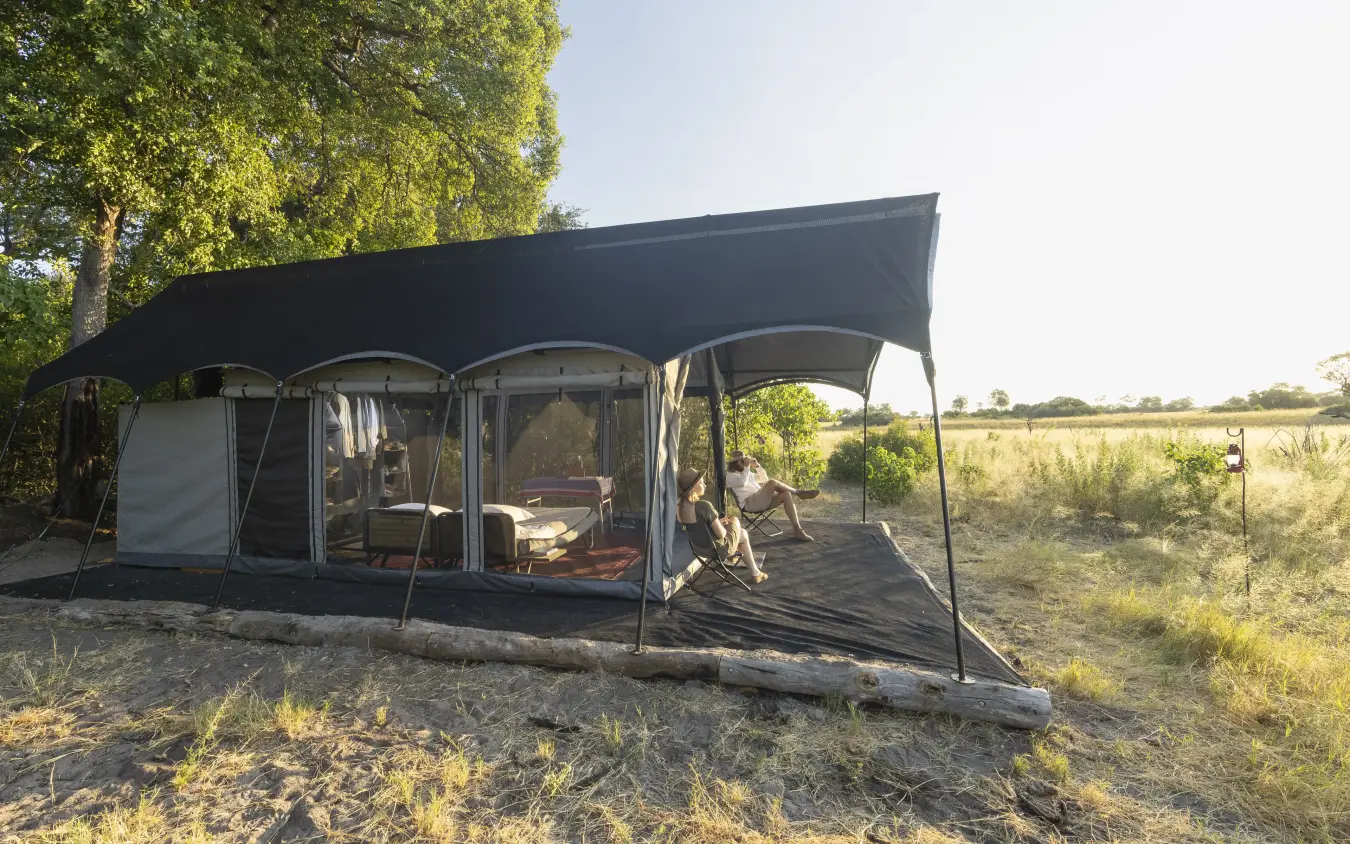
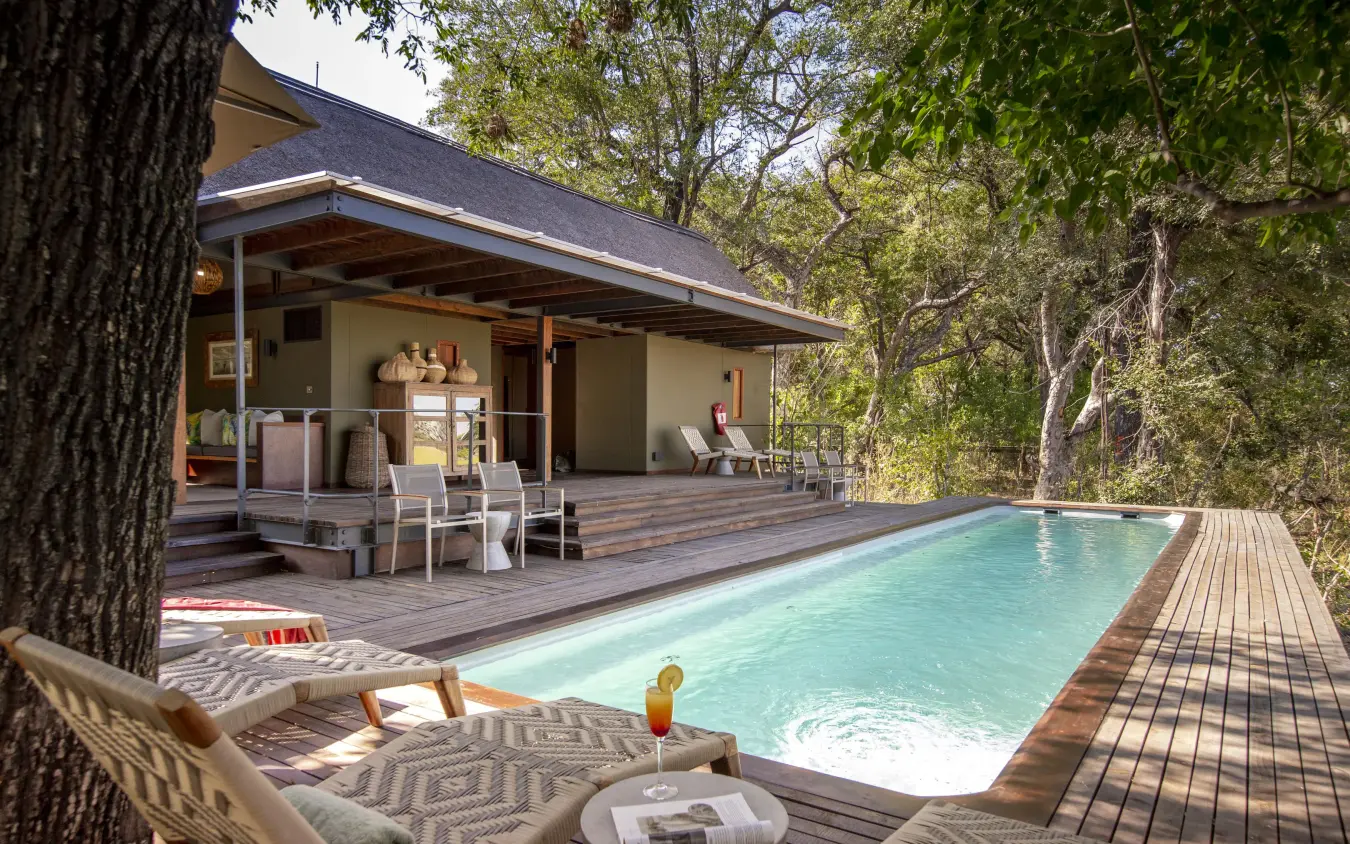
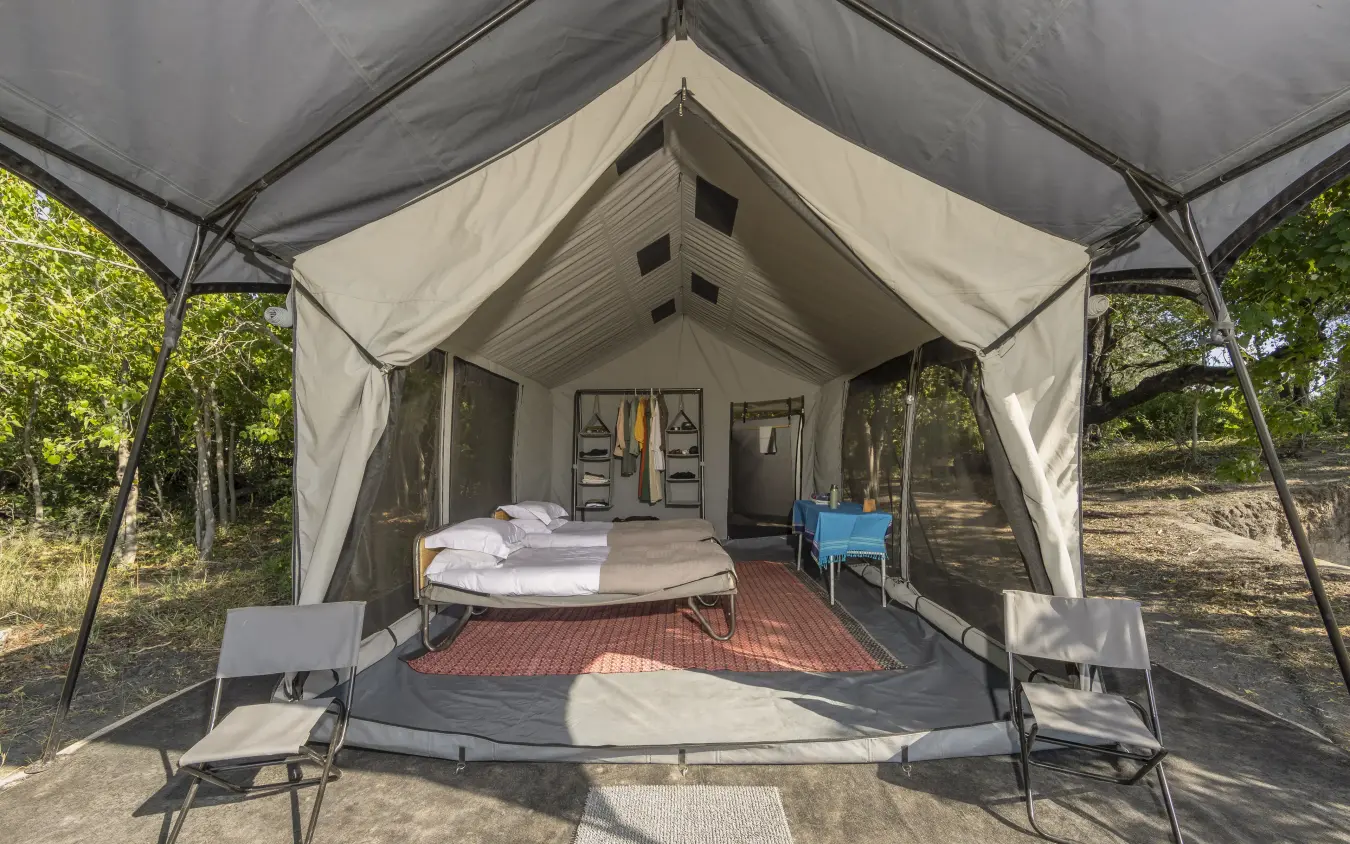
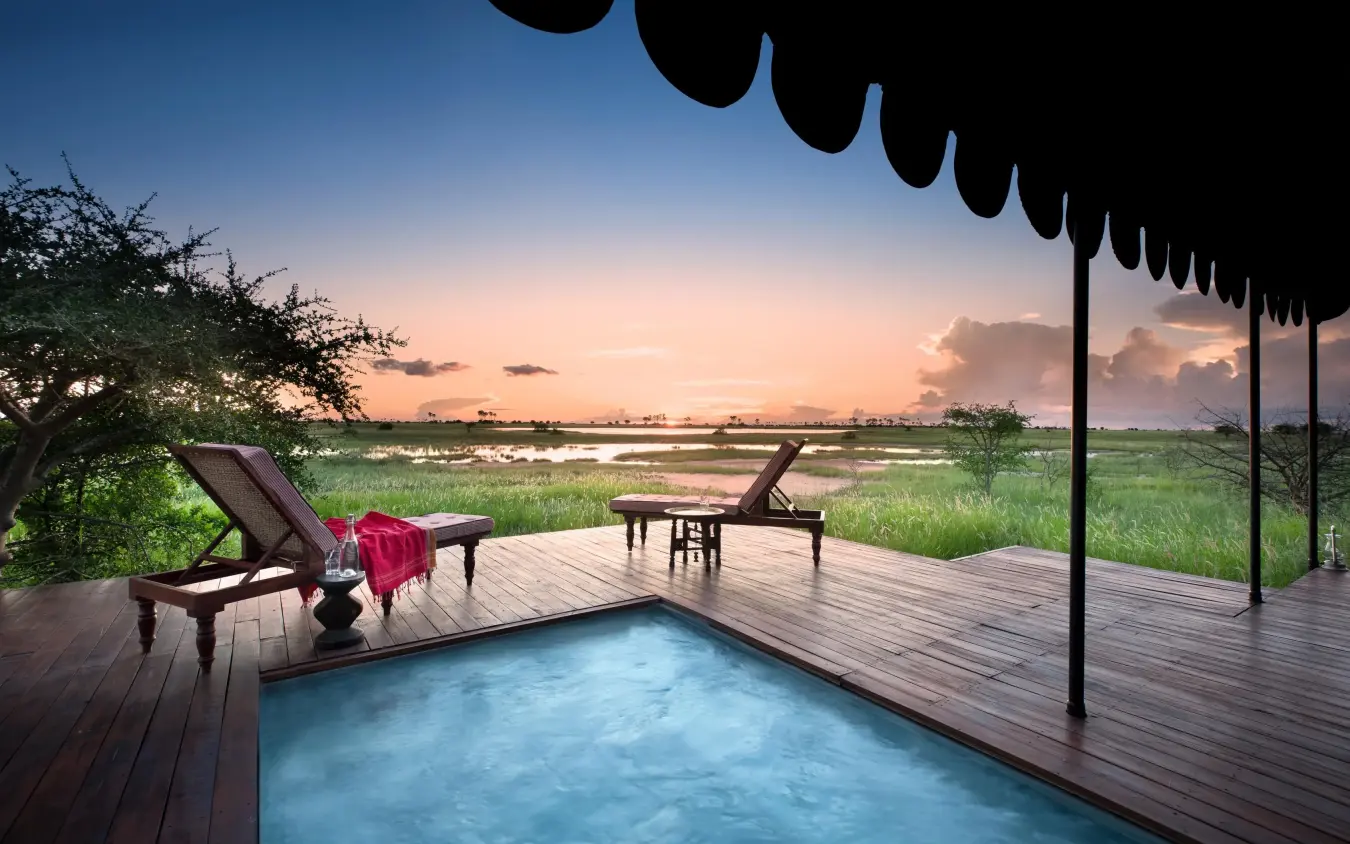
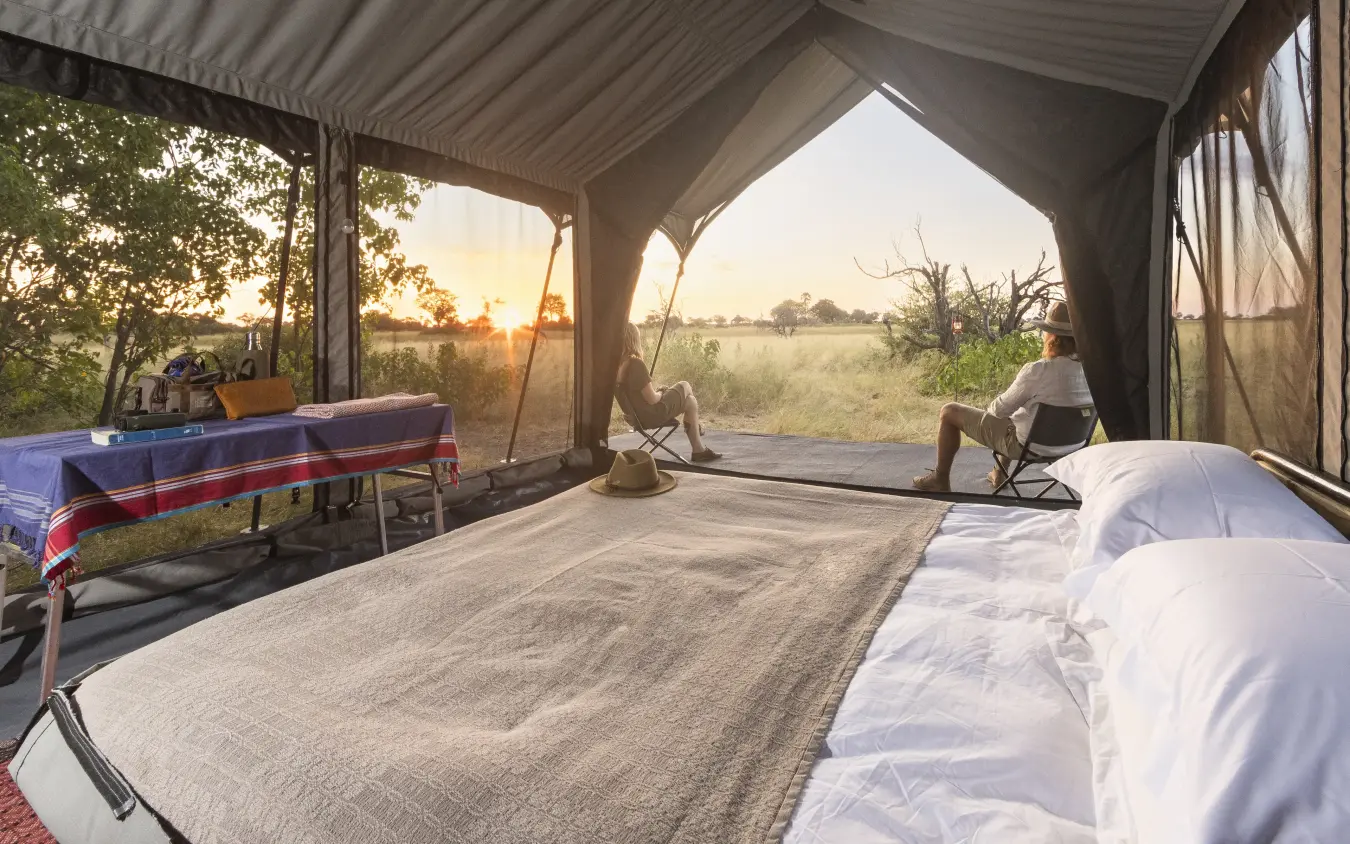
Thirteen nights linking two sides of the Okavango Delta to the salt flats of the Makgadikgadi, by drive, mokoro, boat and on foot.
- Private Safari
- From $16,100 pp
- 4 guests
- 13 nights
The route runs across Zimbabwe and Botswana over 15 nights. It opens at Victoria Falls, where the Zambezi drops into the Batoka Gorge, then moves to the walking country of northern Hwange and the granite hills of Matobo, where rhino are tracked on foot. Crossing into Botswana, it reaches the salt pans of the Makgadikgadi at Nxai Pan, two stays in the Okavango Delta, and ends on the Chobe escarpment above the river.
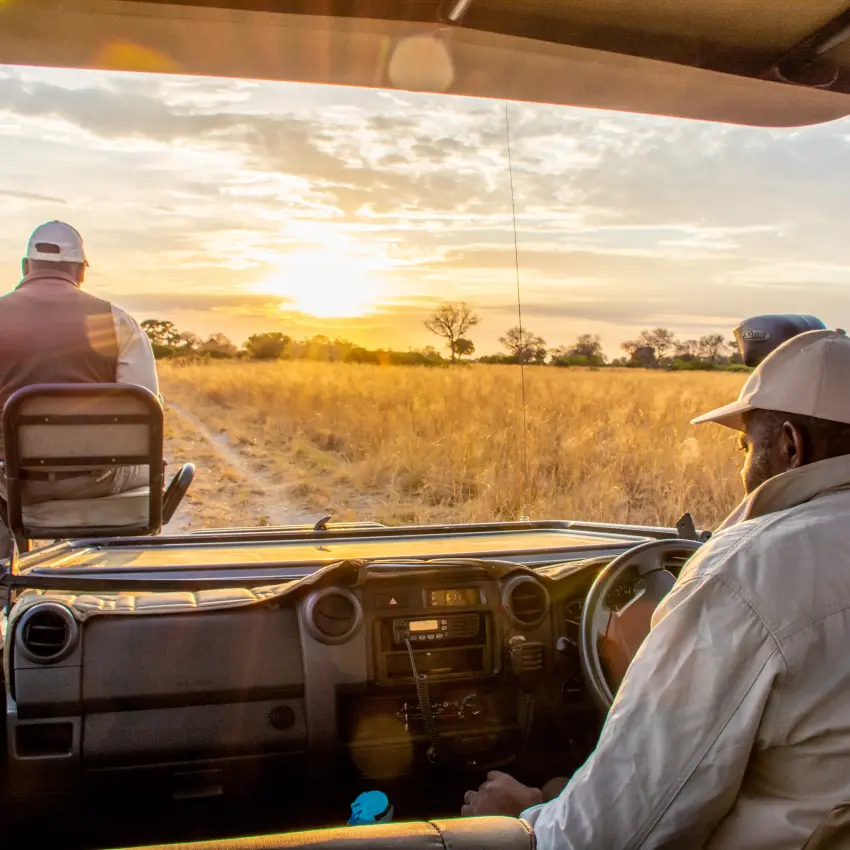
You travel by light aircraft and road between camps, with game drives, walking safaris and, where the water allows, mokoro and boating. Days follow the wildlife on private concessions that permit night drives and off-road tracking. The accommodation runs from the closest hotel to the falls to thatched chalets and tented camps set on waterholes, lagoons and rivers, each small and led by resident guides.
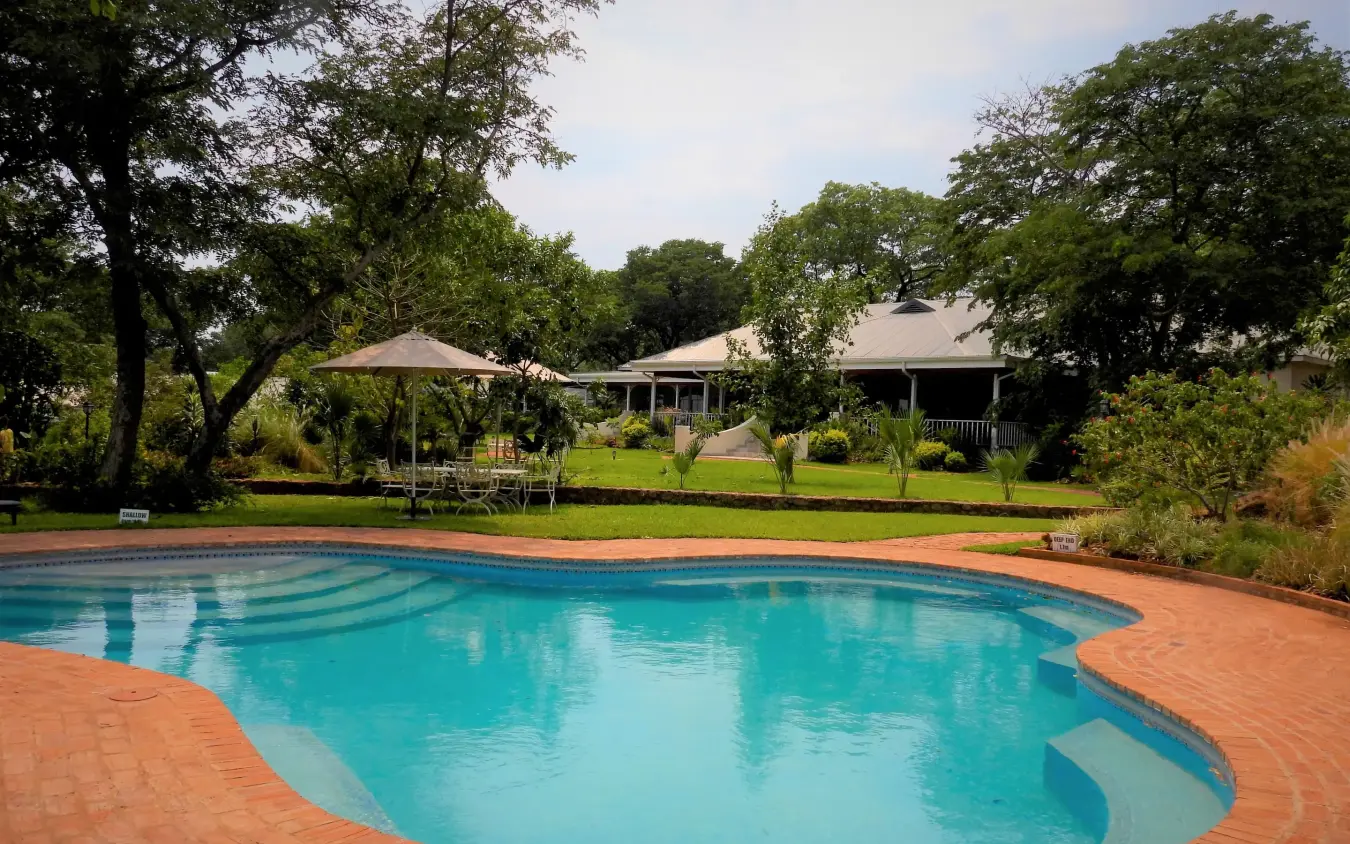
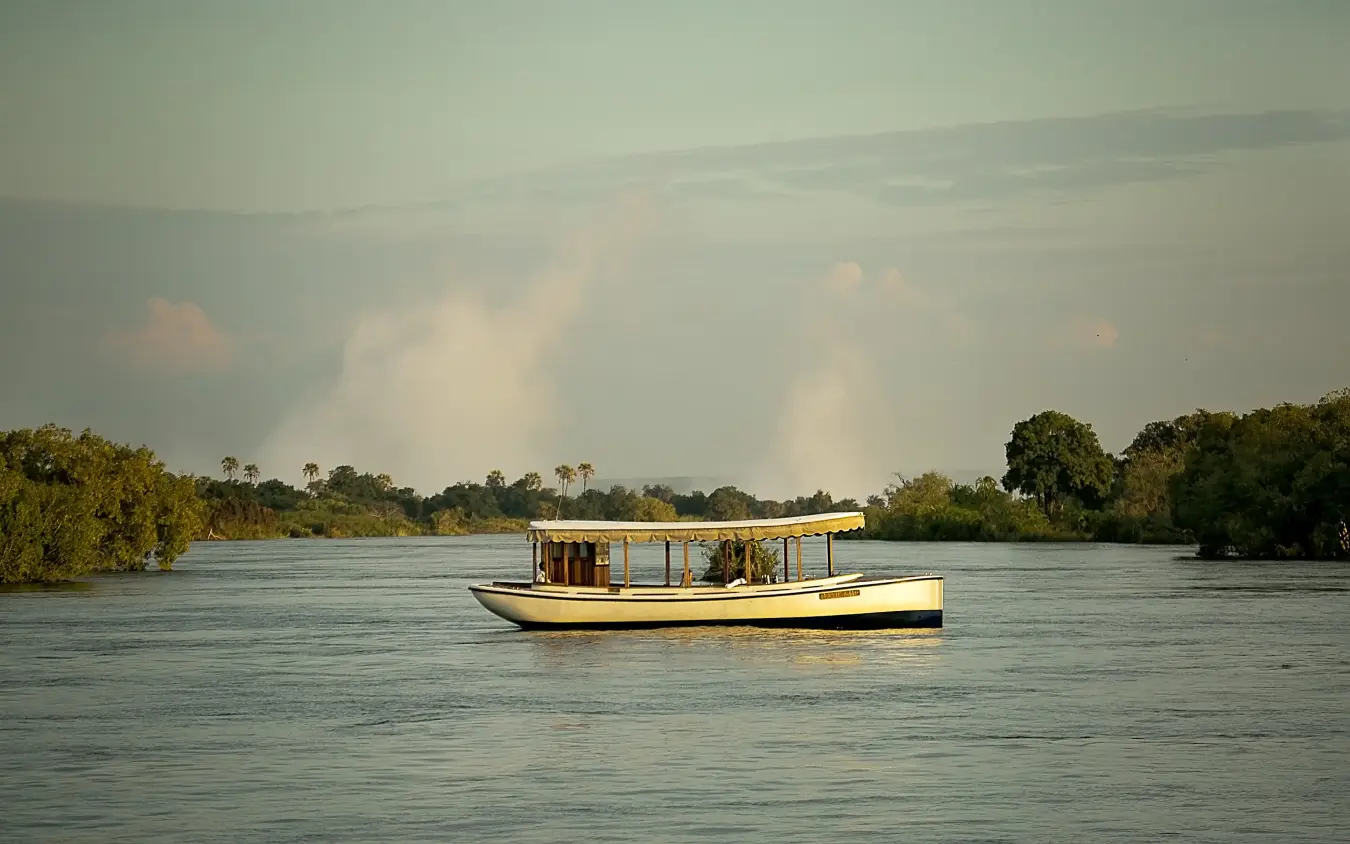
You arrive at Victoria Falls, where the Zambezi drops into the Batoka Gorge along a curtain of falling water nearly 1.7 kilometres across; from August to October the flow is lower and the views of the individual cataracts are sharpest. Footpaths thread the rim rainforest to a run of viewpoints, and above the falls the river runs calm for cruises past hippos and crocodiles. The closest hotel to the falls on the Zimbabwean side, Ilala Lodge sits an eight-minute walk from the rainforest gate, its lawns bordering the national park where warthogs graze and elephants walk in to feed. It keeps its own Ra-Ikane cruise boats.
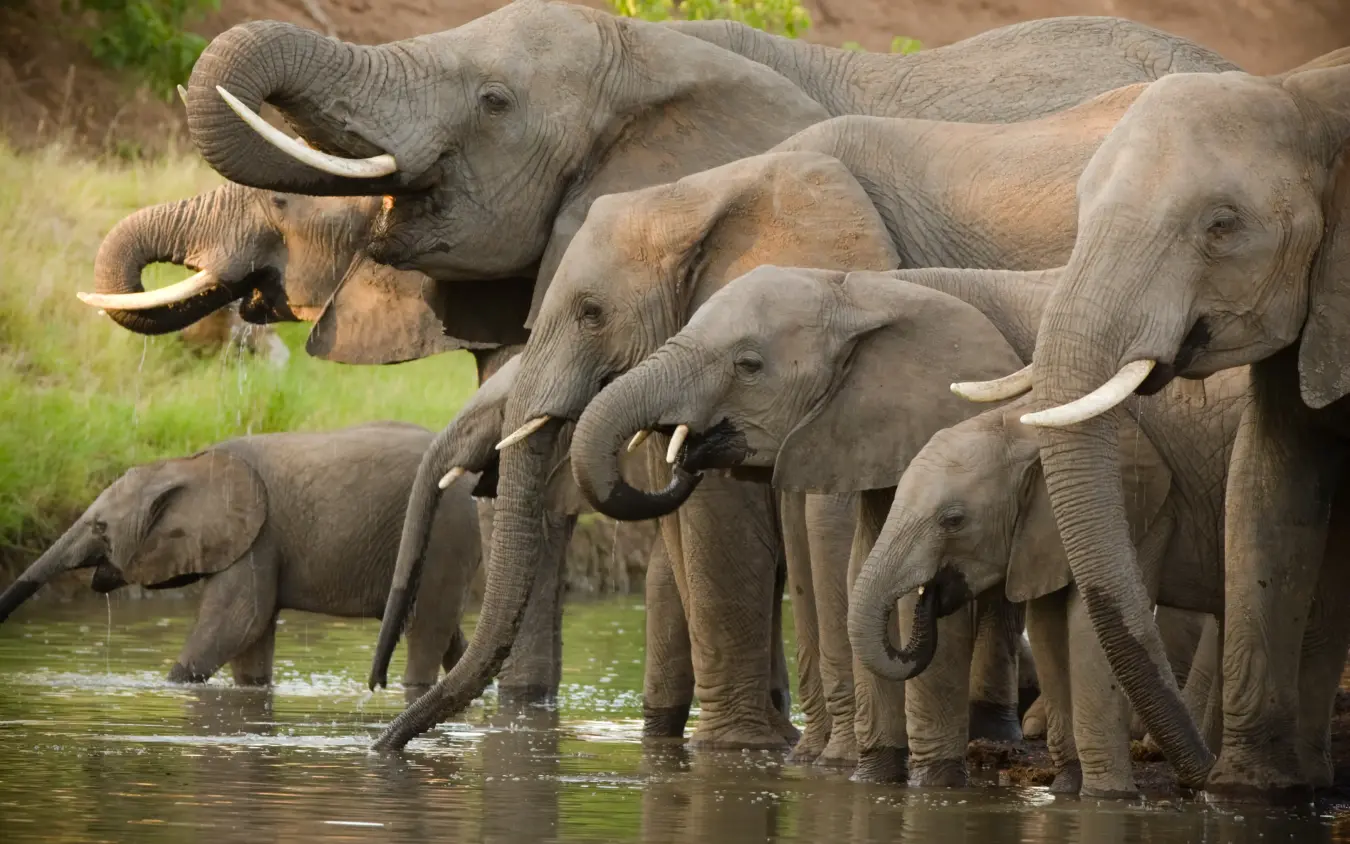
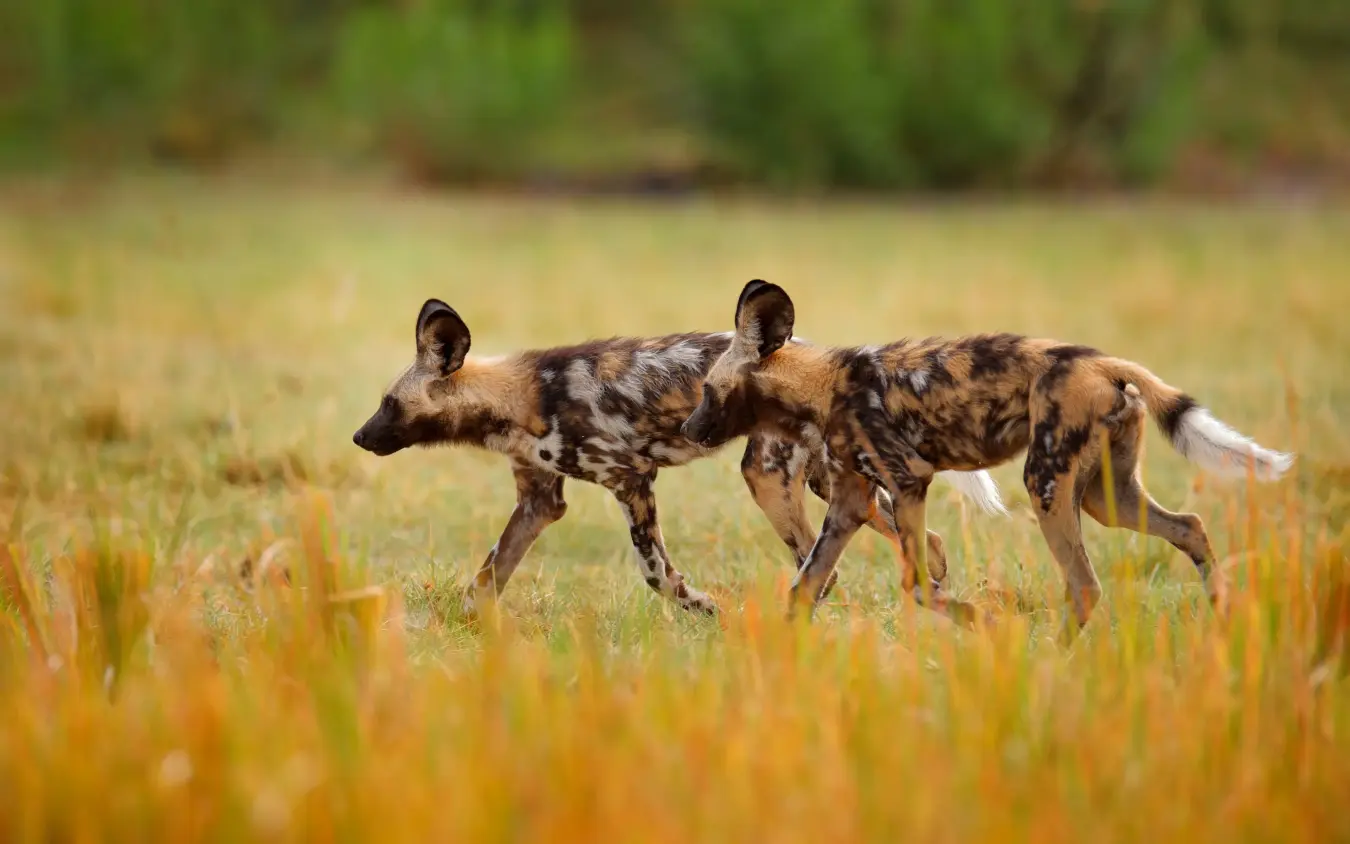
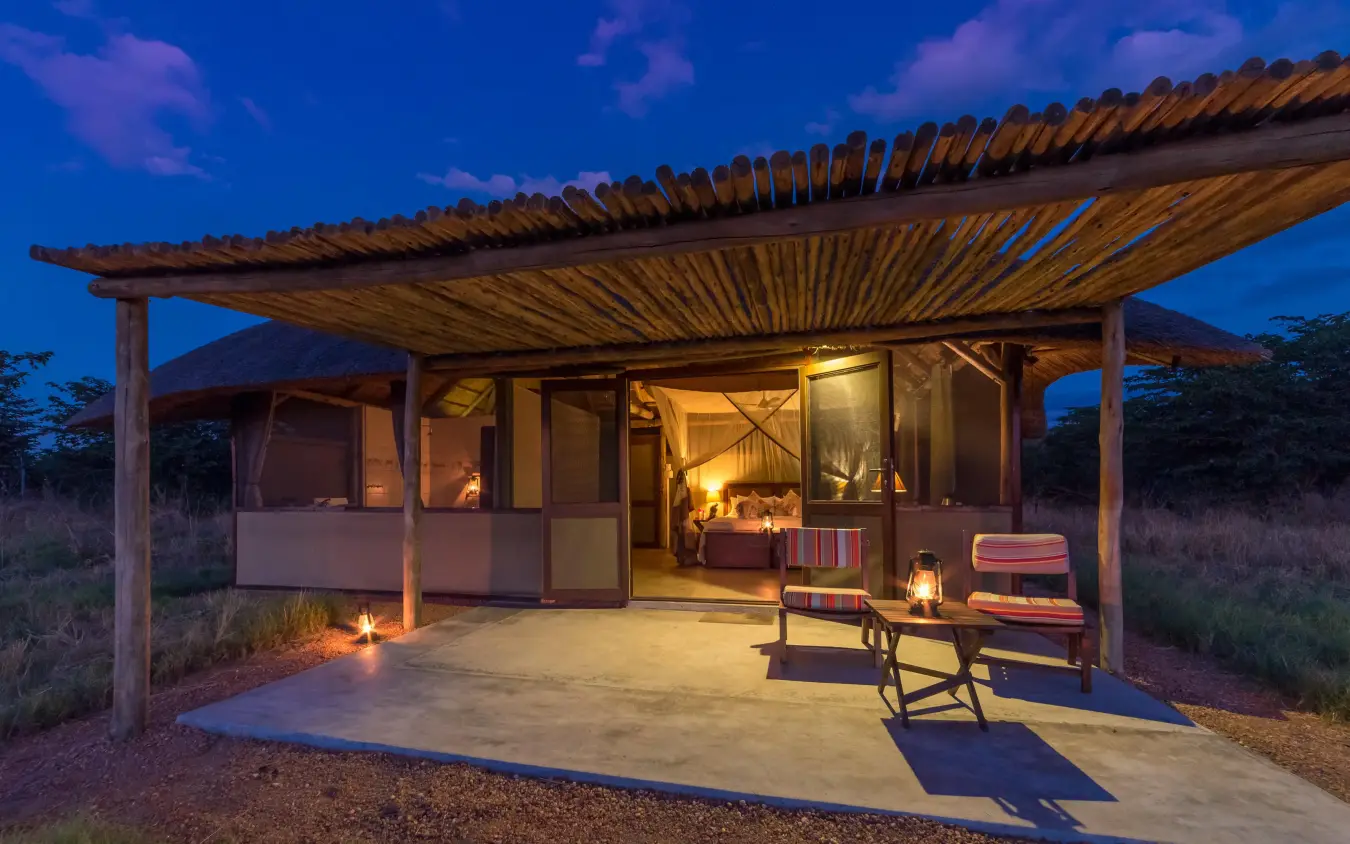
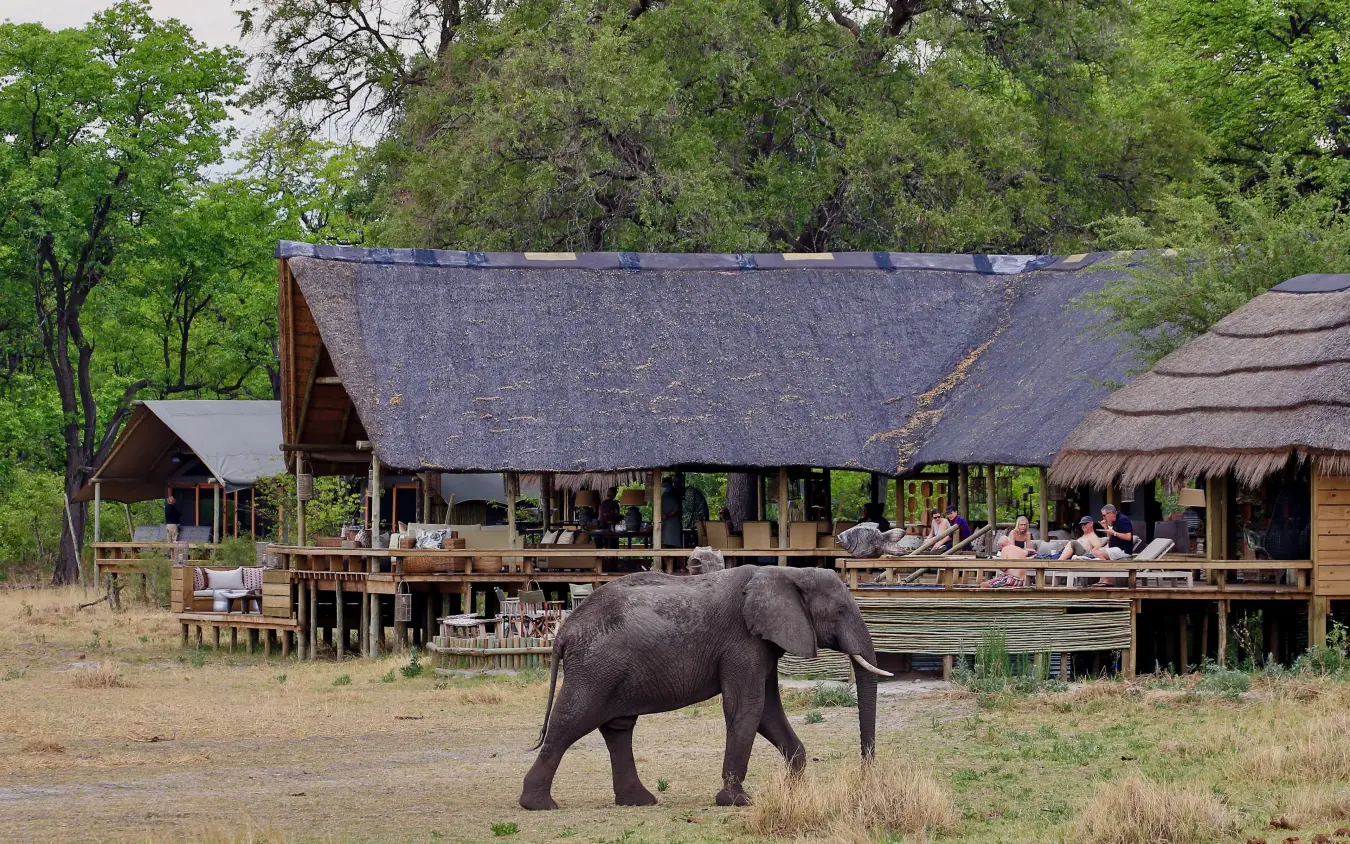
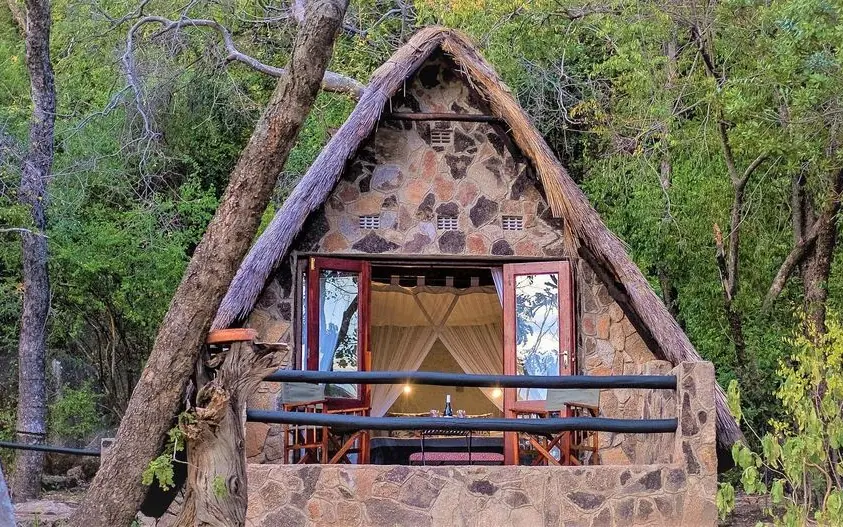
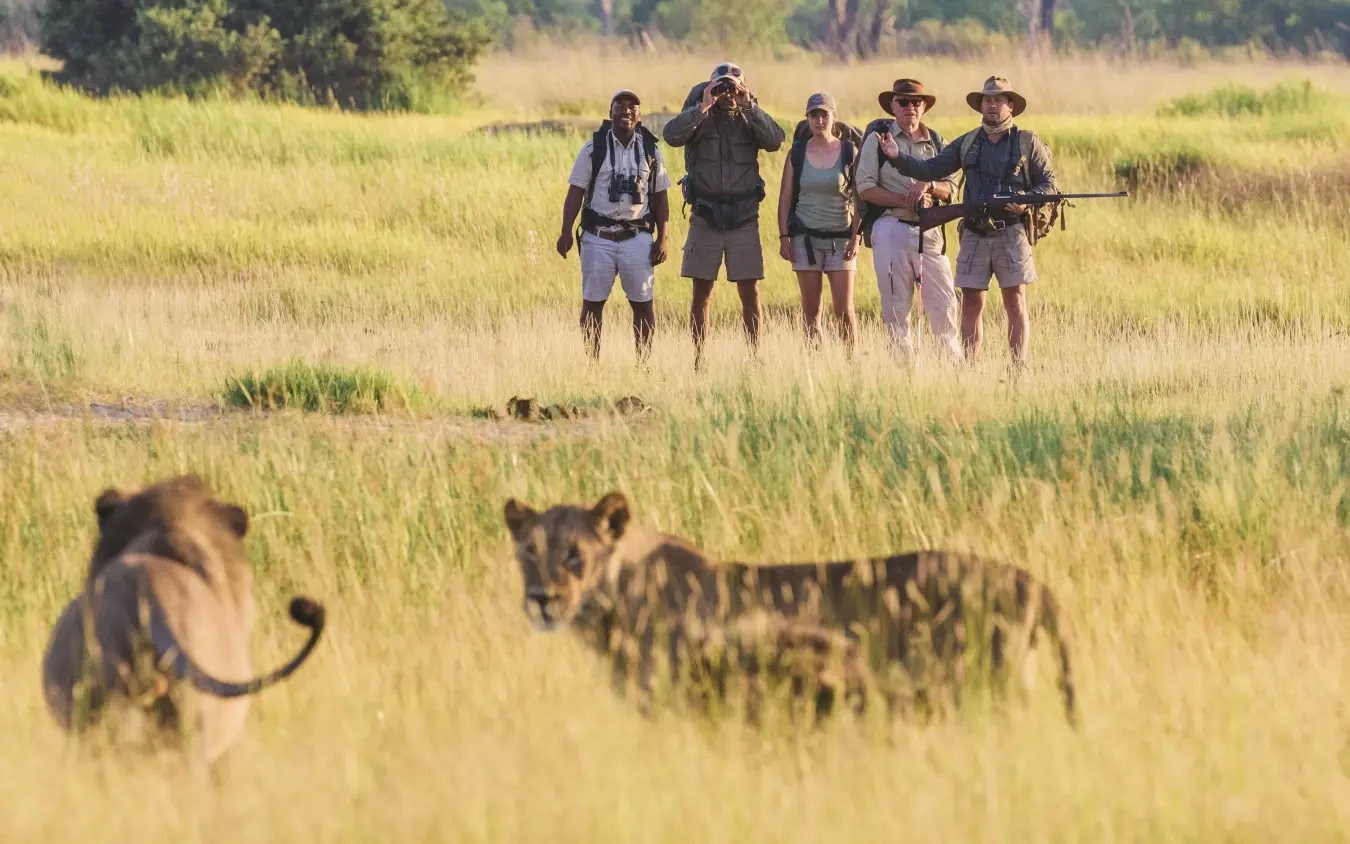
From Victoria Falls you move into northern Hwange, to a private concession where the safari is led on foot. Days follow the wildlife rather than the clock, tracking game and sitting with it, and night drives, forbidden inside the national park, run here. From July to October hundreds of elephants gather at the waterhole in front of camp, joined by buffalo, kudu and zebra, with a resident lion pride, leopard, cheetah, wild dog, roan and sable across the area. A mopane-log hide sits at the water's edge. Camp Hwange keeps eight thatched chalets and stays deliberately plain, the work of Zimbabwean guide Dave Carson.
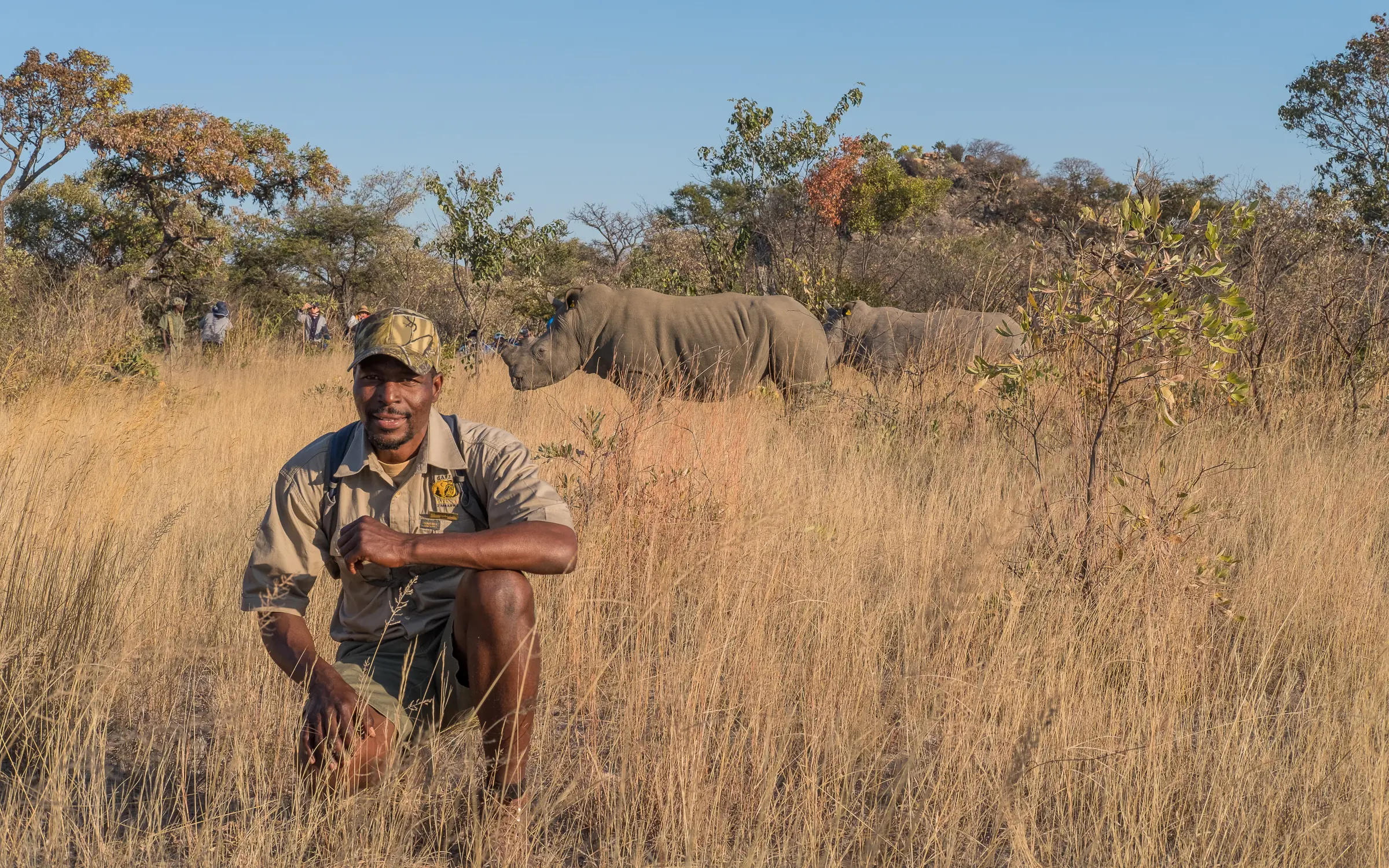
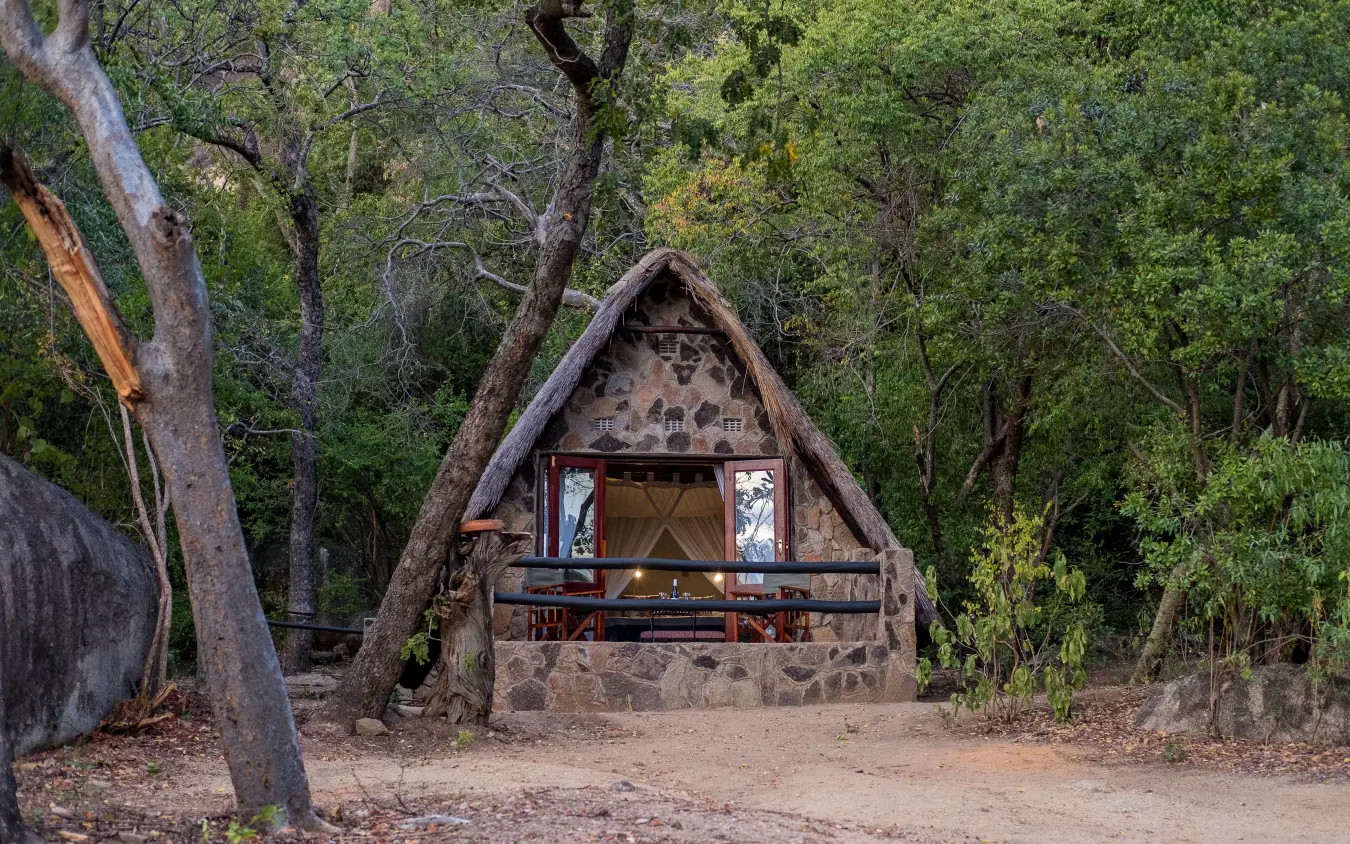
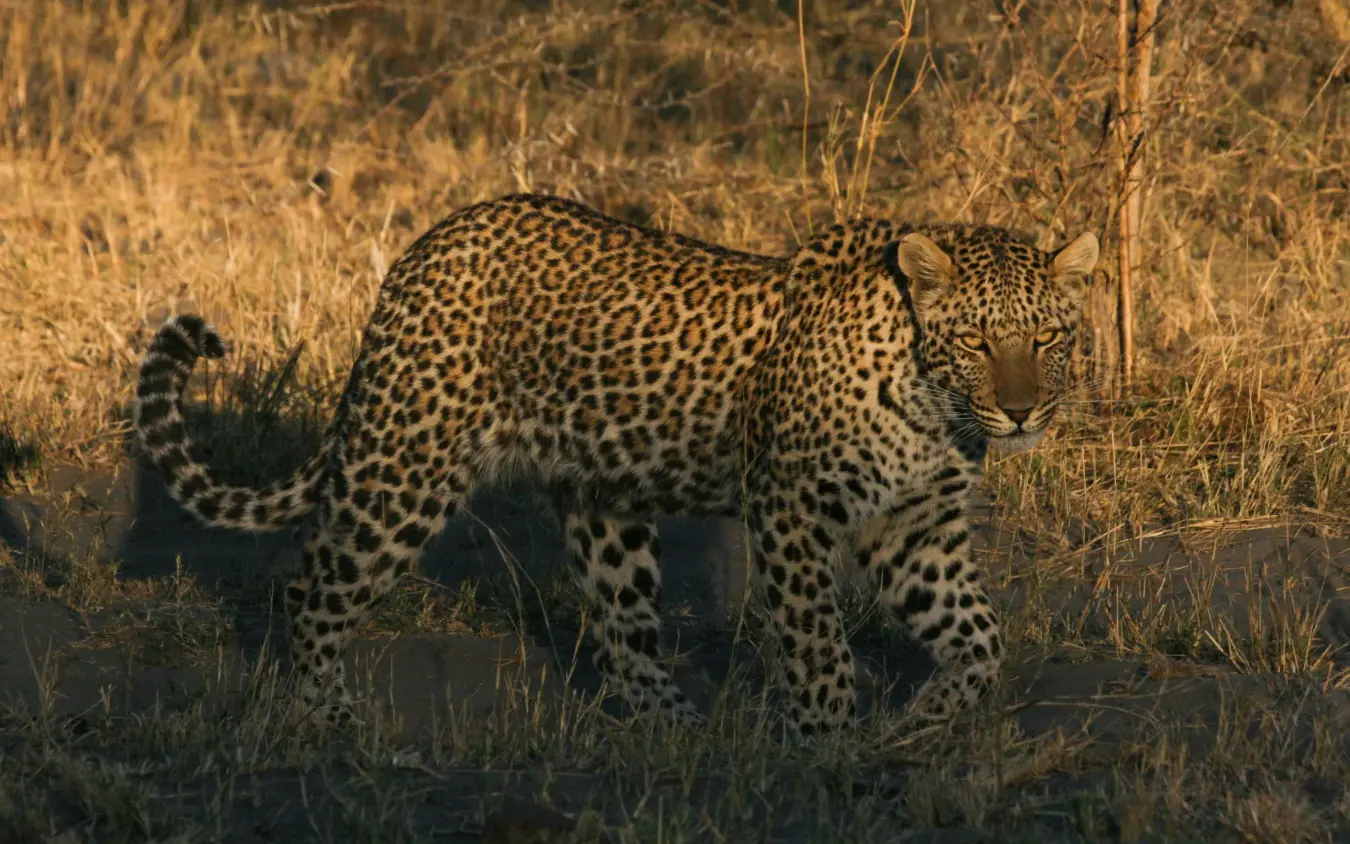
A drive south of Bulawayo brings you into the Matobo Hills, granite whalebacks and balancing boulders worn from a 2.65-billion-year-old batholith. Mornings go to tracking white rhino on foot, at walking pace, alongside armed guides in the Whovi game area; afternoons turn to San rock art on private ground, and night drives run on the estate, where leopards hunt the granite ridges. Set on a granite whaleback with boulders forming the walls of the lounge, Big Cave Camp has ten thatched chalets across the rock. Cyril Waddy bought the estate in 1947 and his family runs it still.
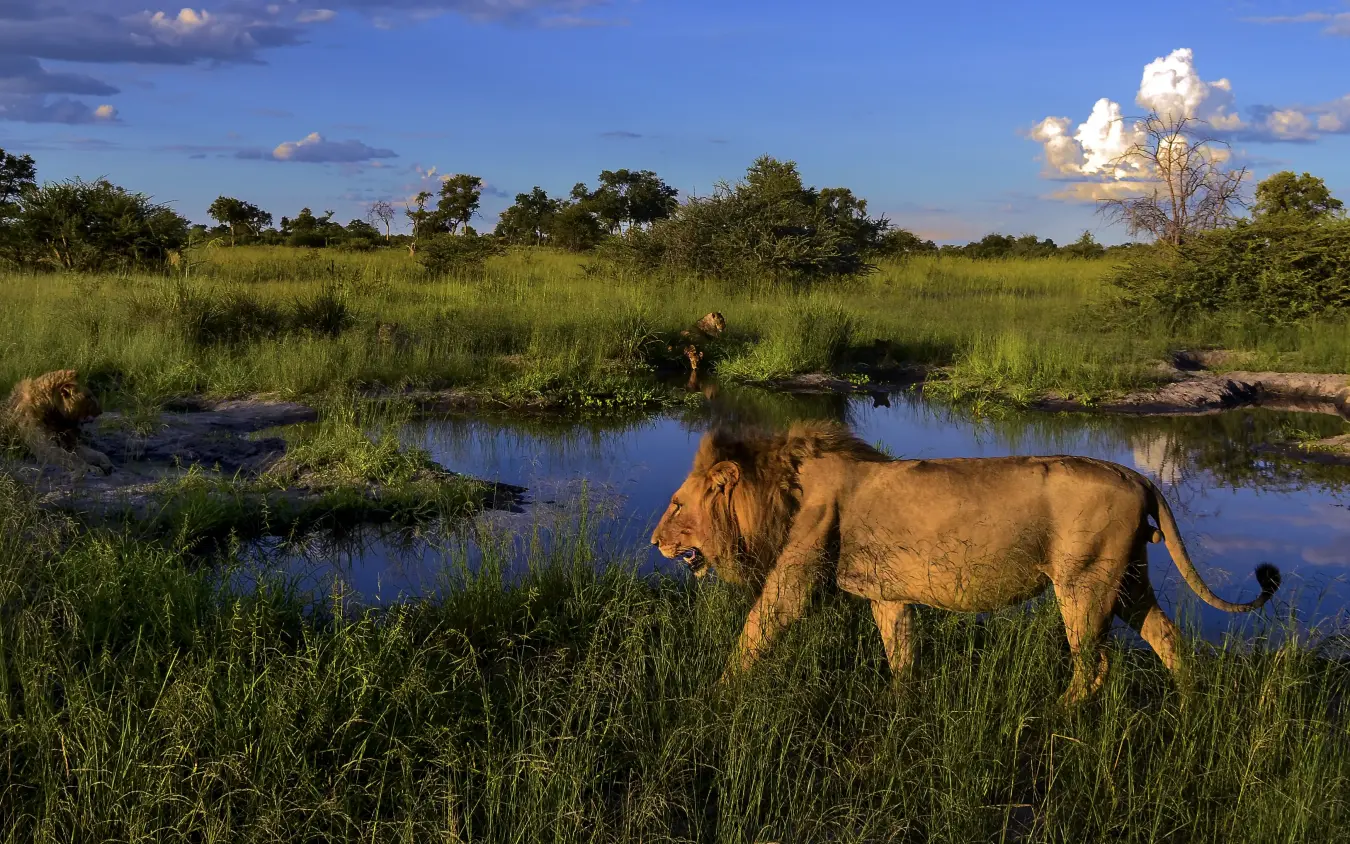
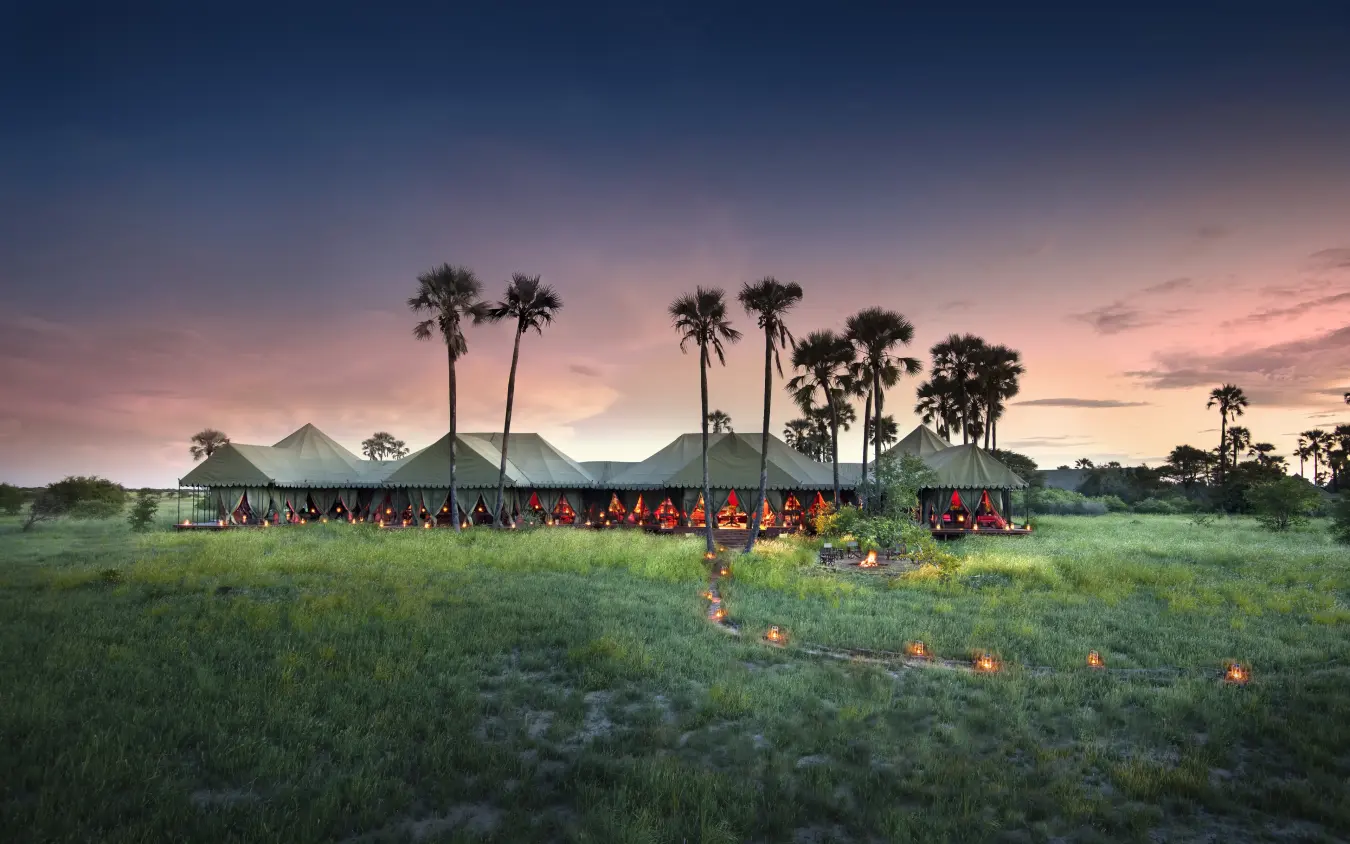
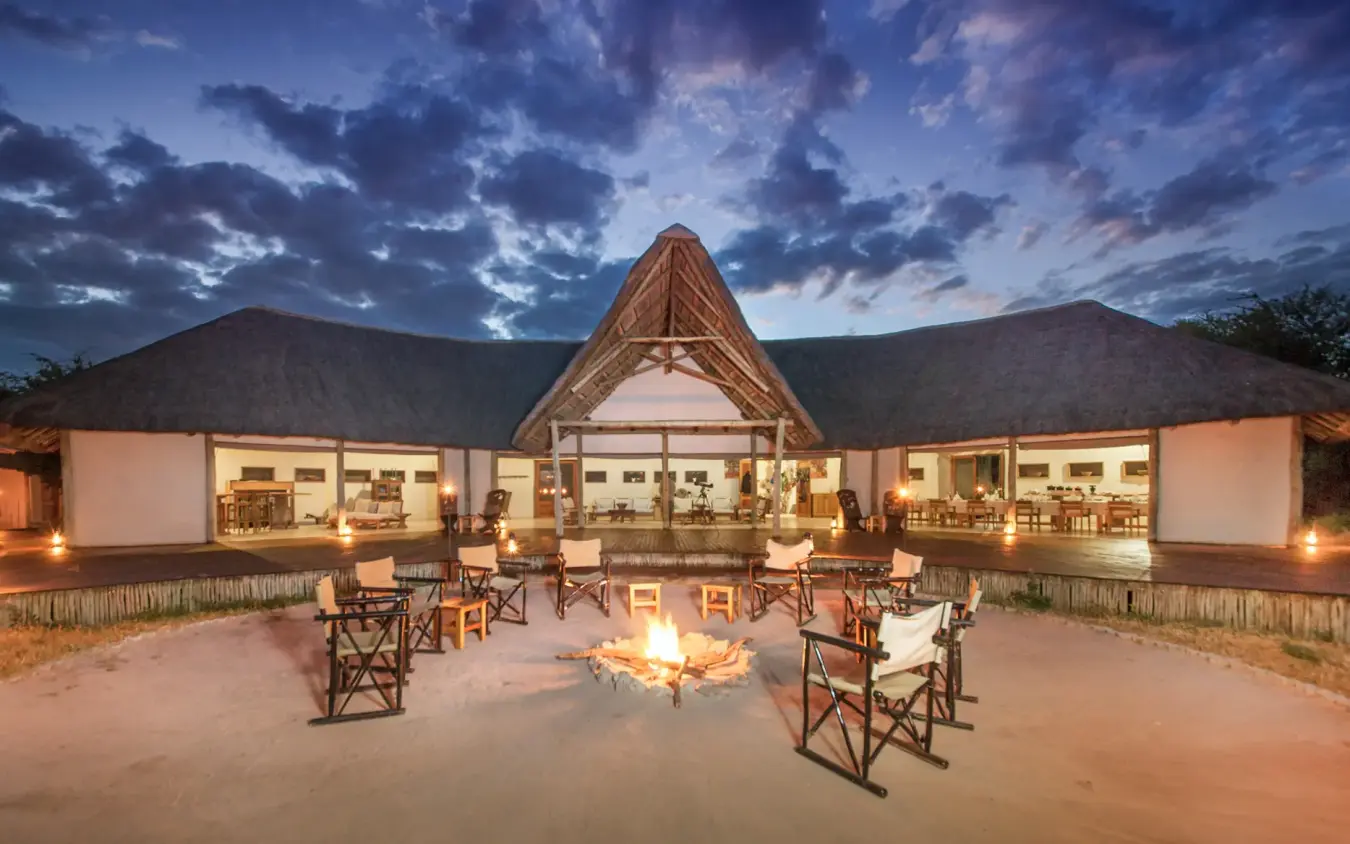
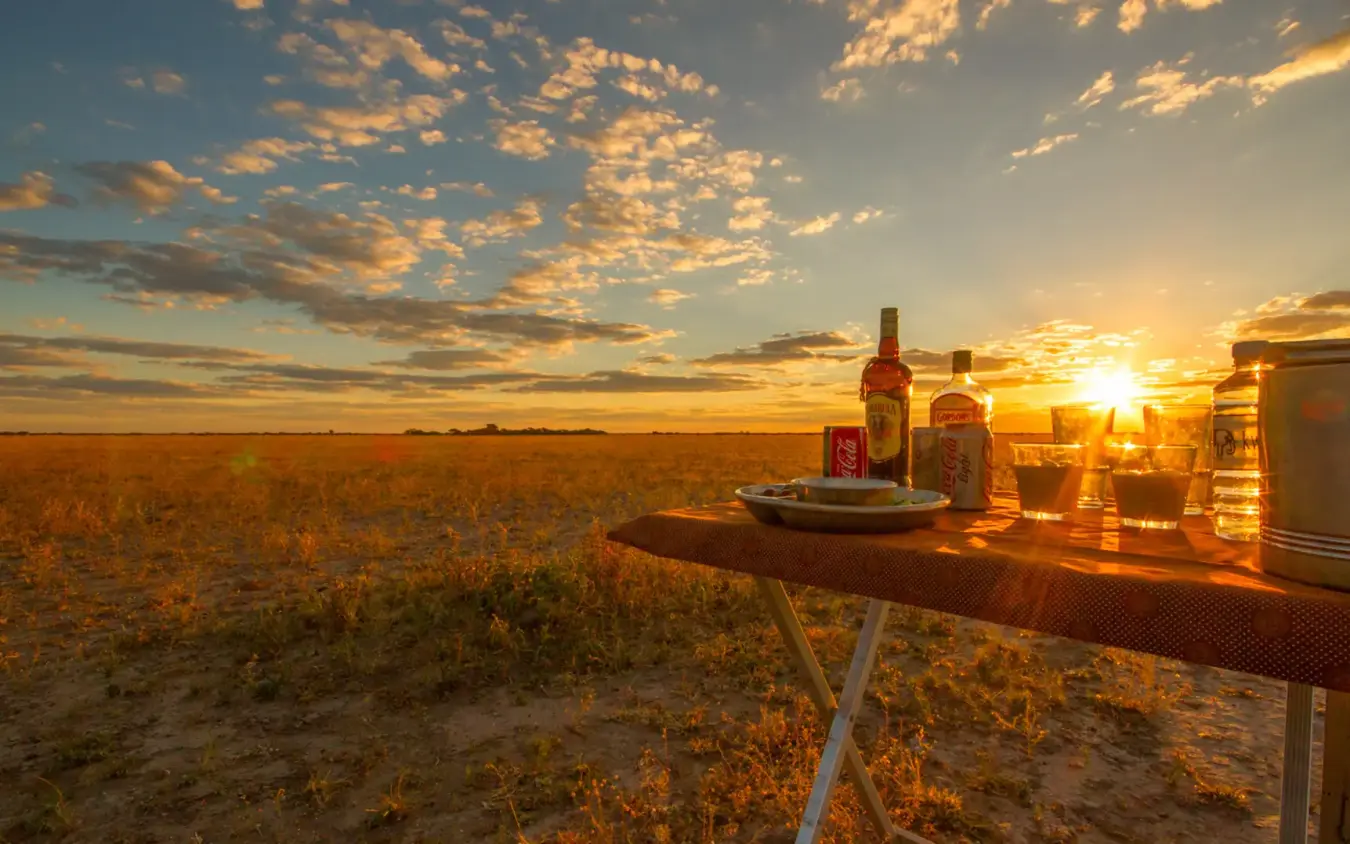
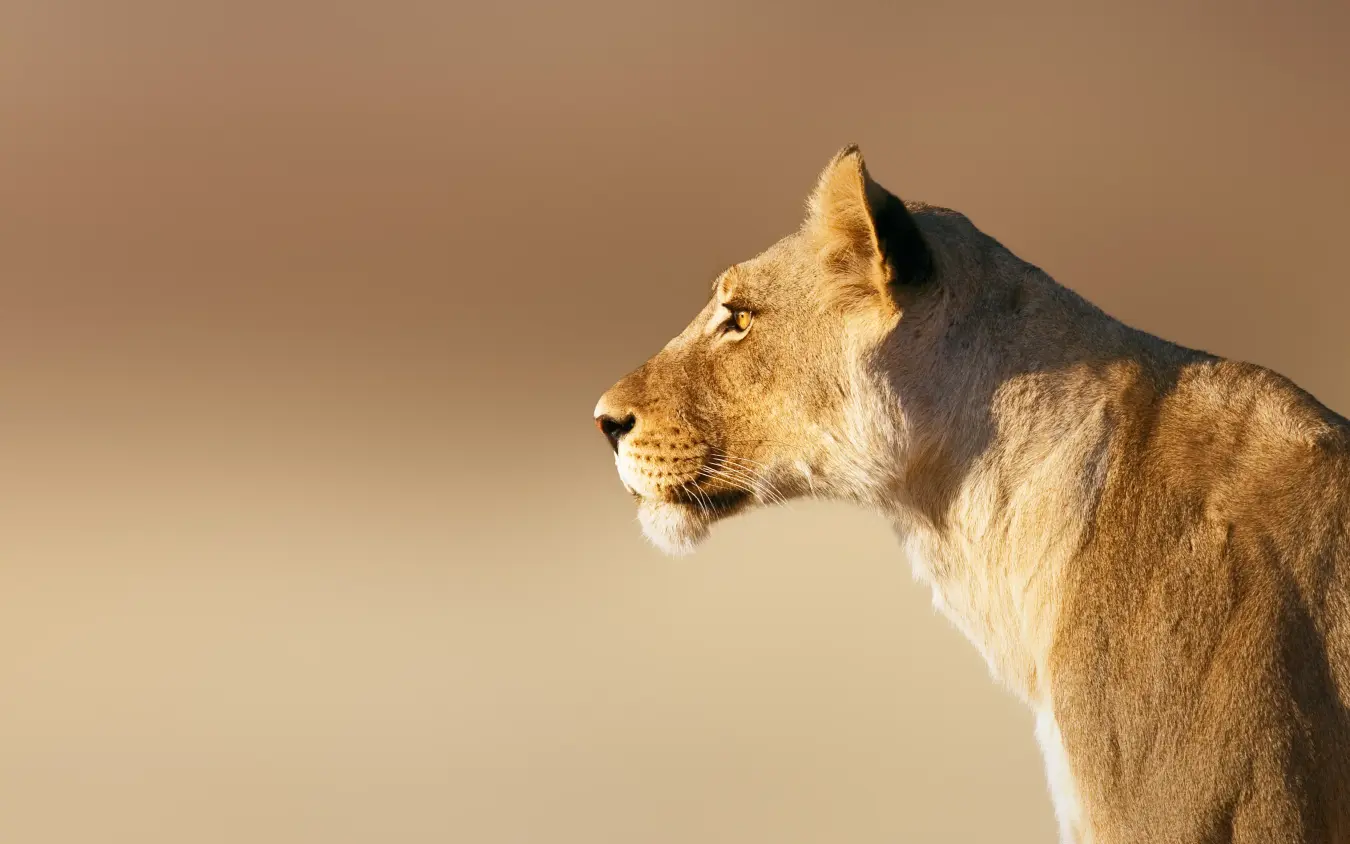
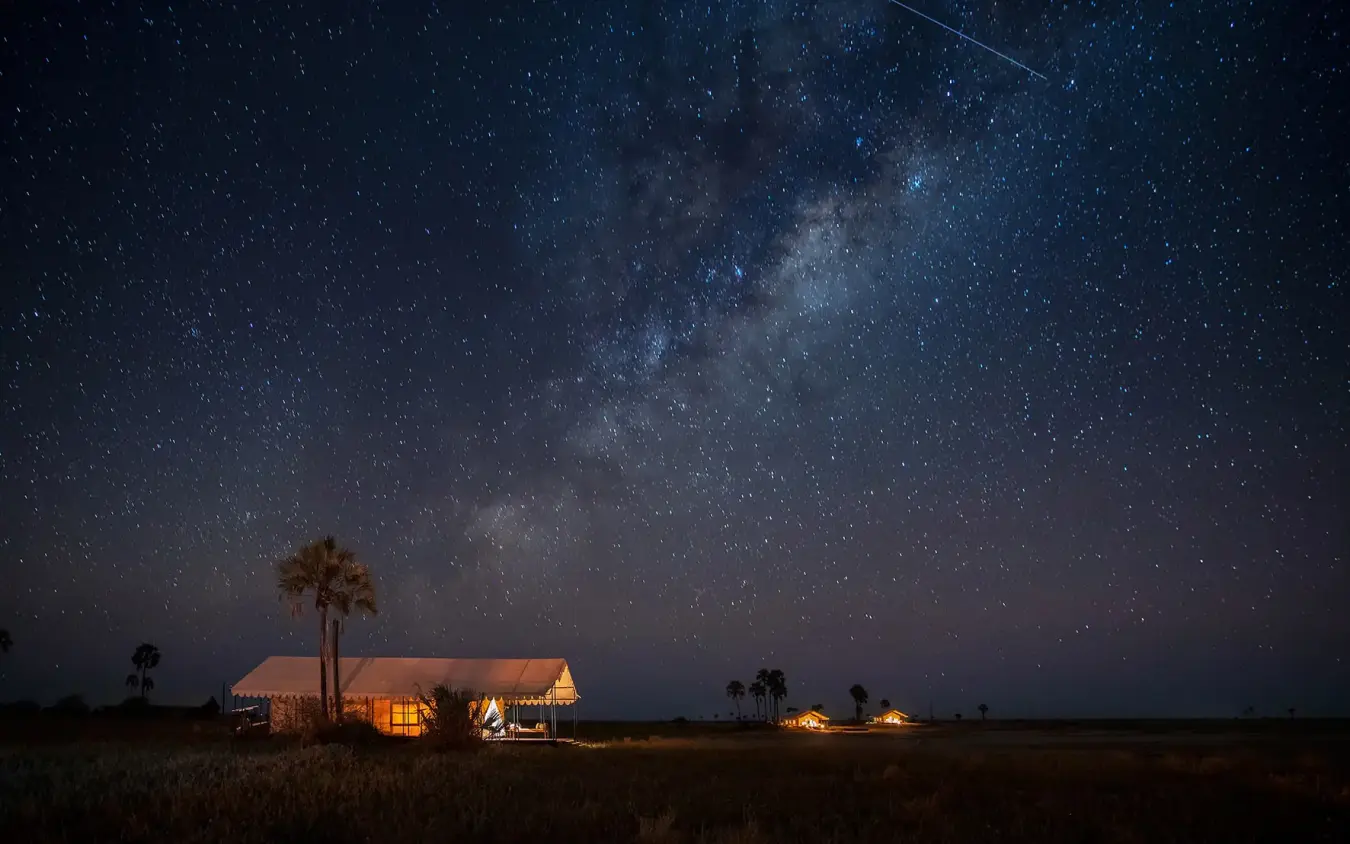
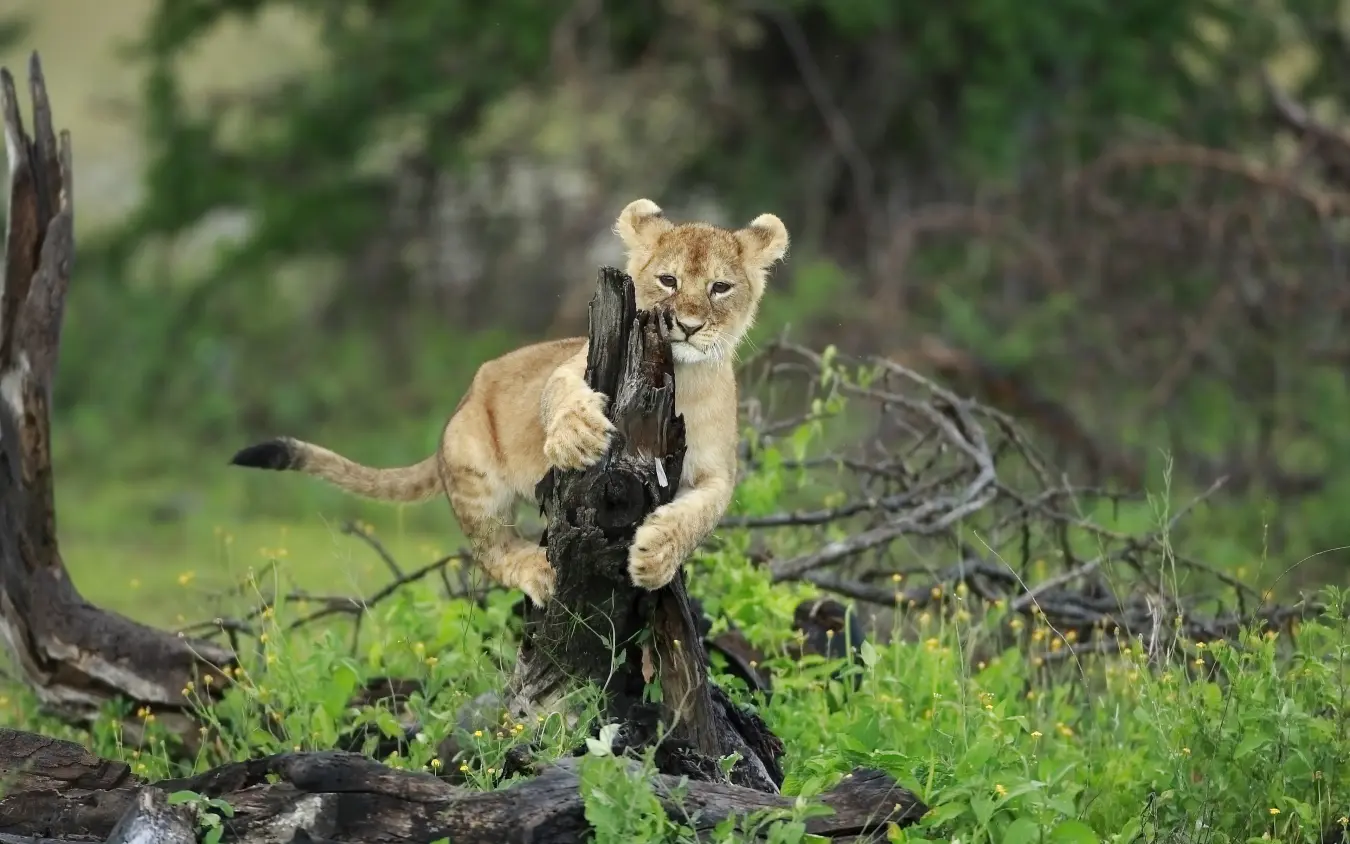
Crossing into Botswana, you reach Nxai Pan, part of the Makgadikgadi system, where a single pumped waterhole pulls wildlife in year-round. Giraffe gather at sunset with springbok, gemsbok and wildebeest, and a resident pride of lionesses and black-maned males works the water's edge, much of it seen from a chalet deck. Between November and April summer rain greens the fossil lake bed and thousands of zebra and blue wildebeest move in to graze and calve. Kwando Nxai Pan Camp is the only permanent lodge inside the park, nine thatched chalets facing the water, opened in 2009.
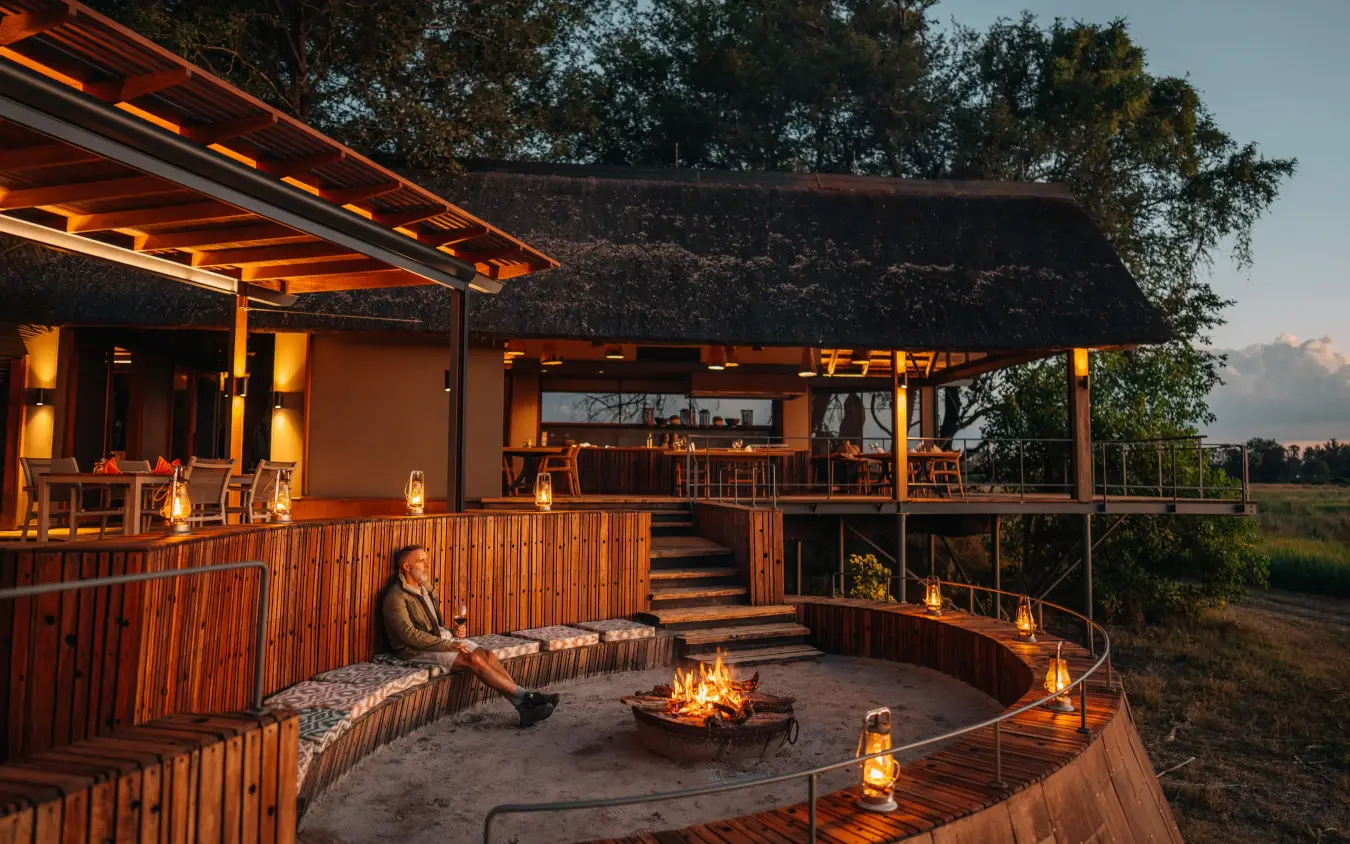
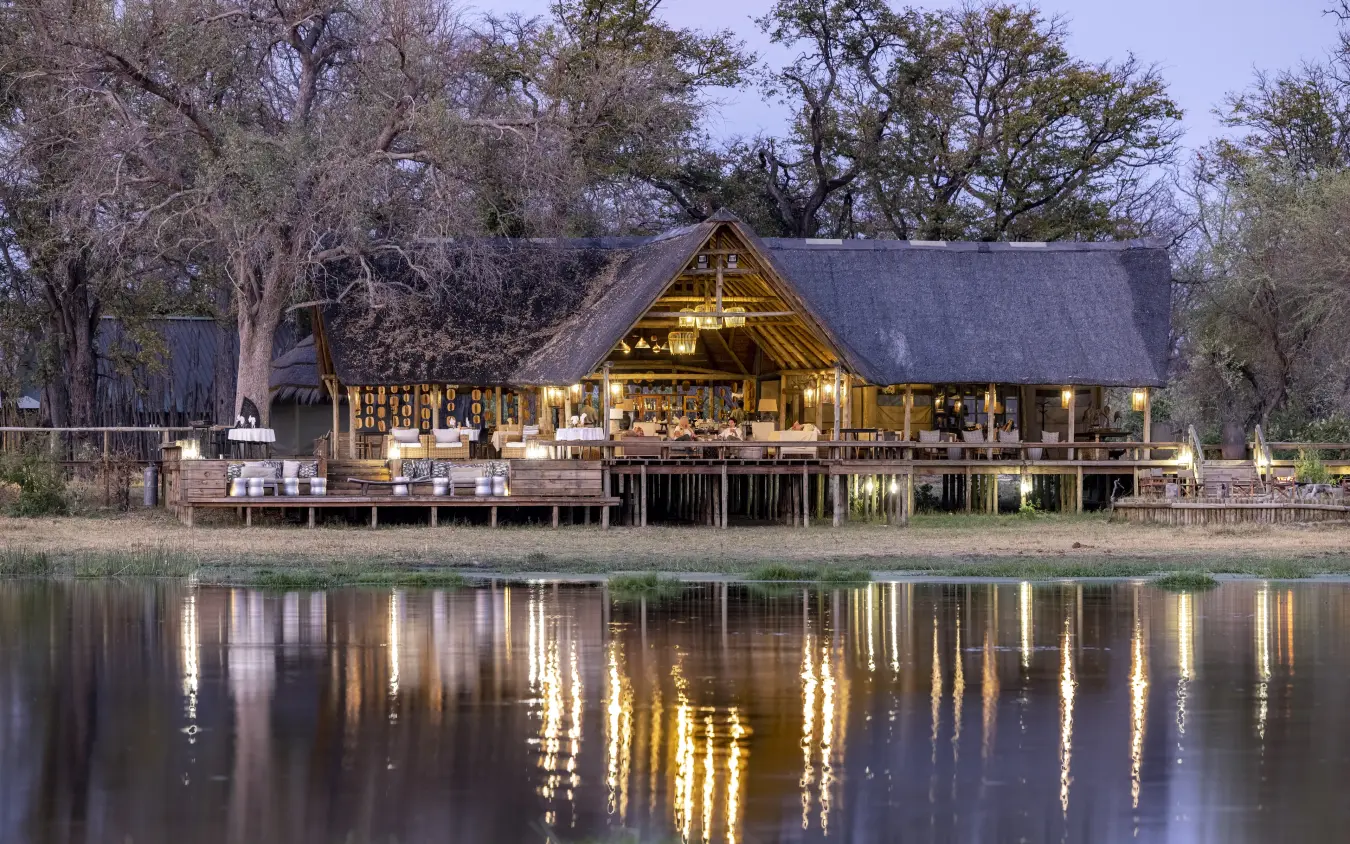
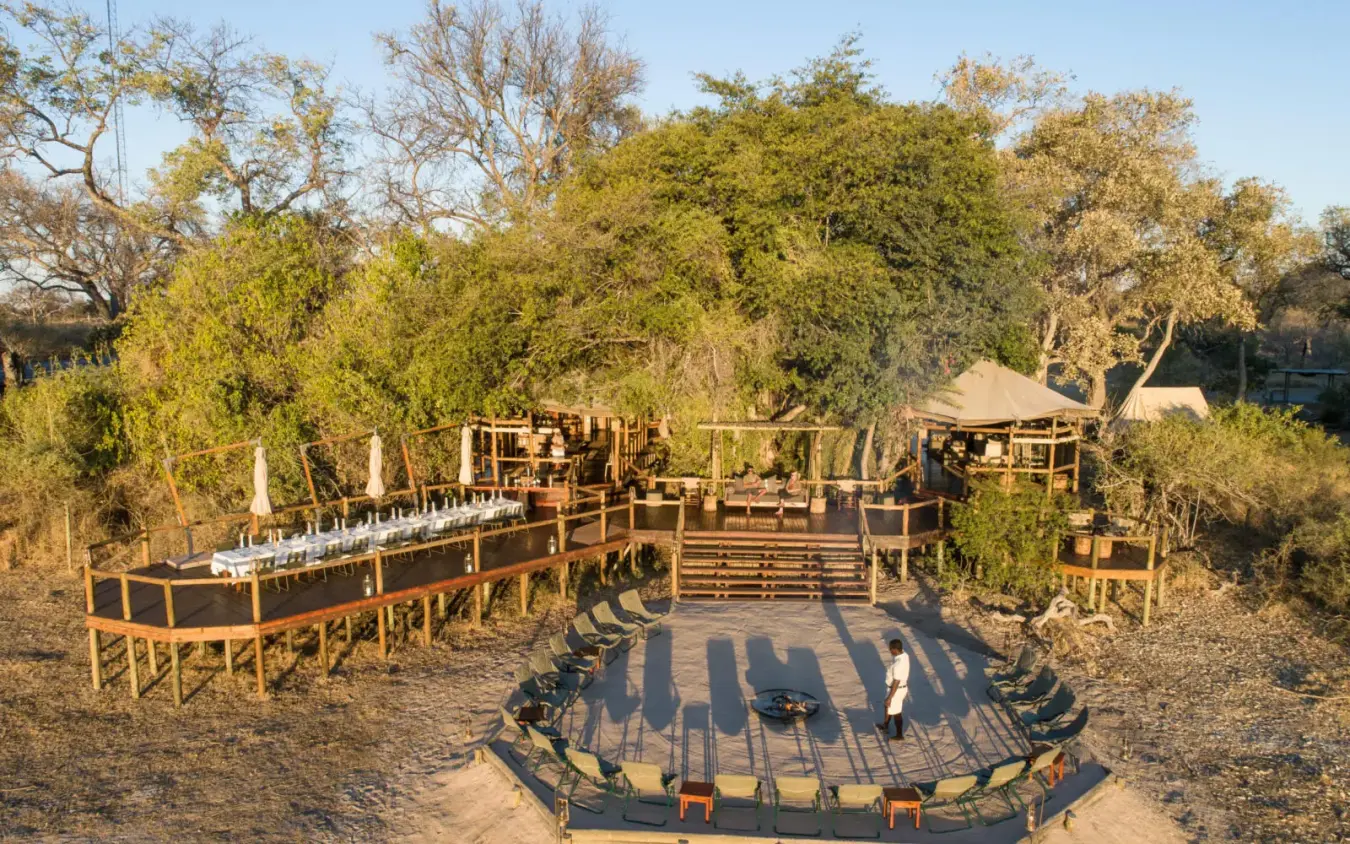
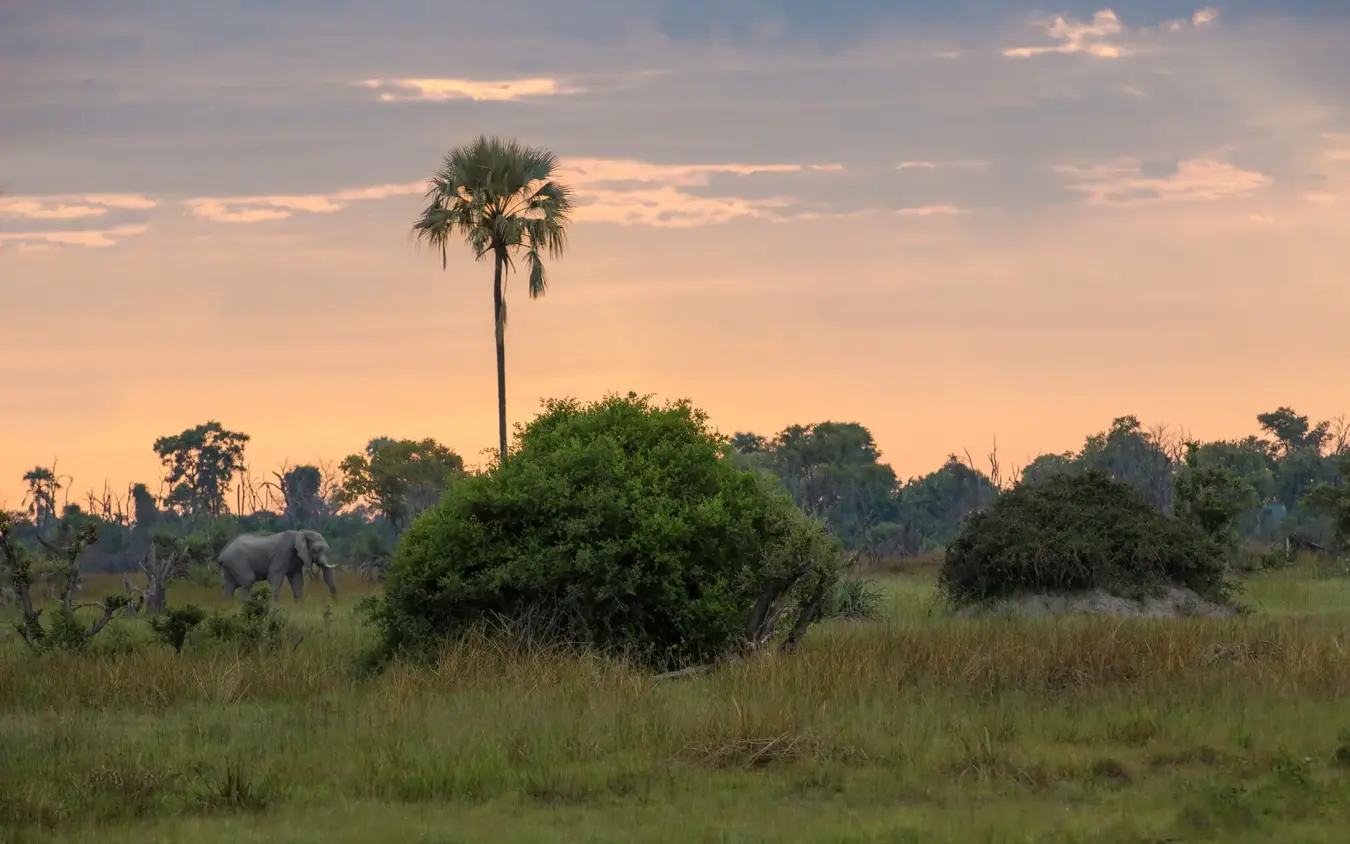
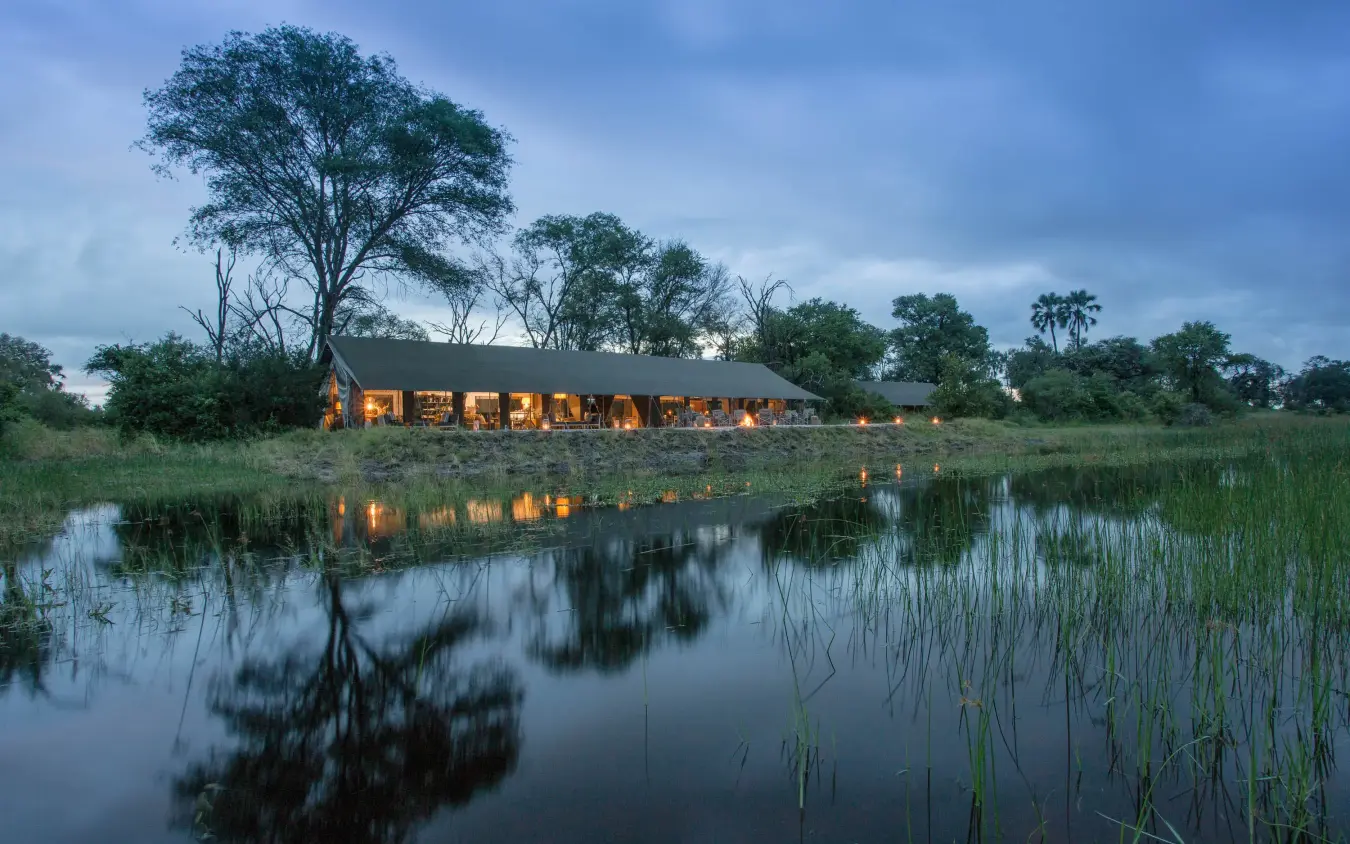
On into the Okavango Delta, to the Khwai Private Reserve on its north-eastern edge, where permanent water keeps the wildlife close. A resident pod of around thirty hippos holds the lily-covered lagoon in front of camp, and elephants, buffalo and lechwe work its edges. Private-concession status permits night drives, walking and off-road driving, so a leopard or serval can be followed rather than lost, and when the Delta fills mokoro and boating open the channels. Sable Alley is a contemporary tented camp on the lagoon, one of only a handful of camps in the 200,000-hectare reserve.
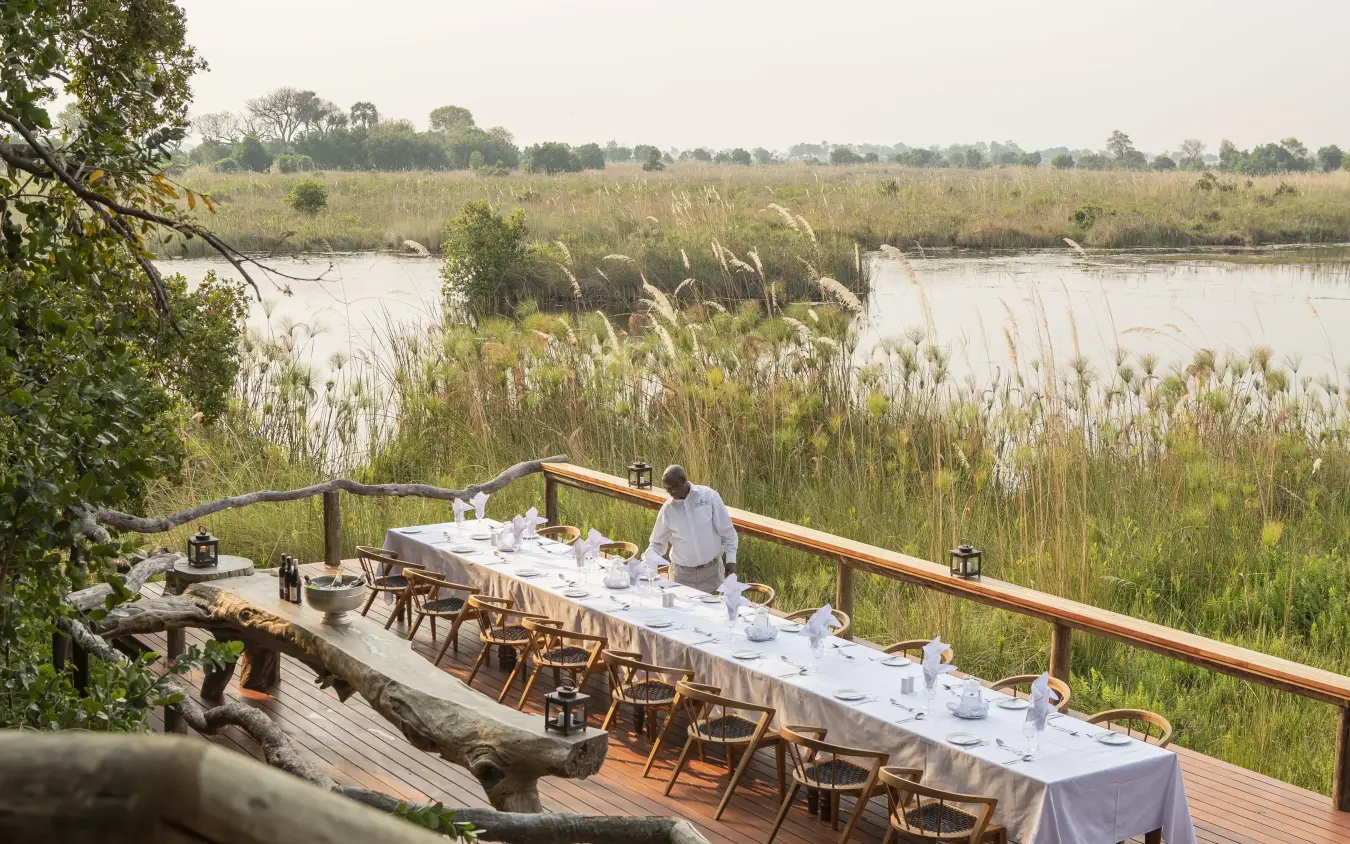
You stay in the Delta, moving to the Xudum River in the southwest, where the annual flood from the Angolan highlands sets the terms of the day. Outside park rules, guides leave the road, run night drives and walk out on foot; lion, leopard and wild dog hunt this ground, and elephant, red lechwe and hippo move through across the year. From July to December a heronry fills the flooded trees, and Pel's fishing owl turns up here often. Rebuilt in early 2025, Kanana holds five-star status, its open-sided lounge raised around an ancient fig tree above the floodplain.
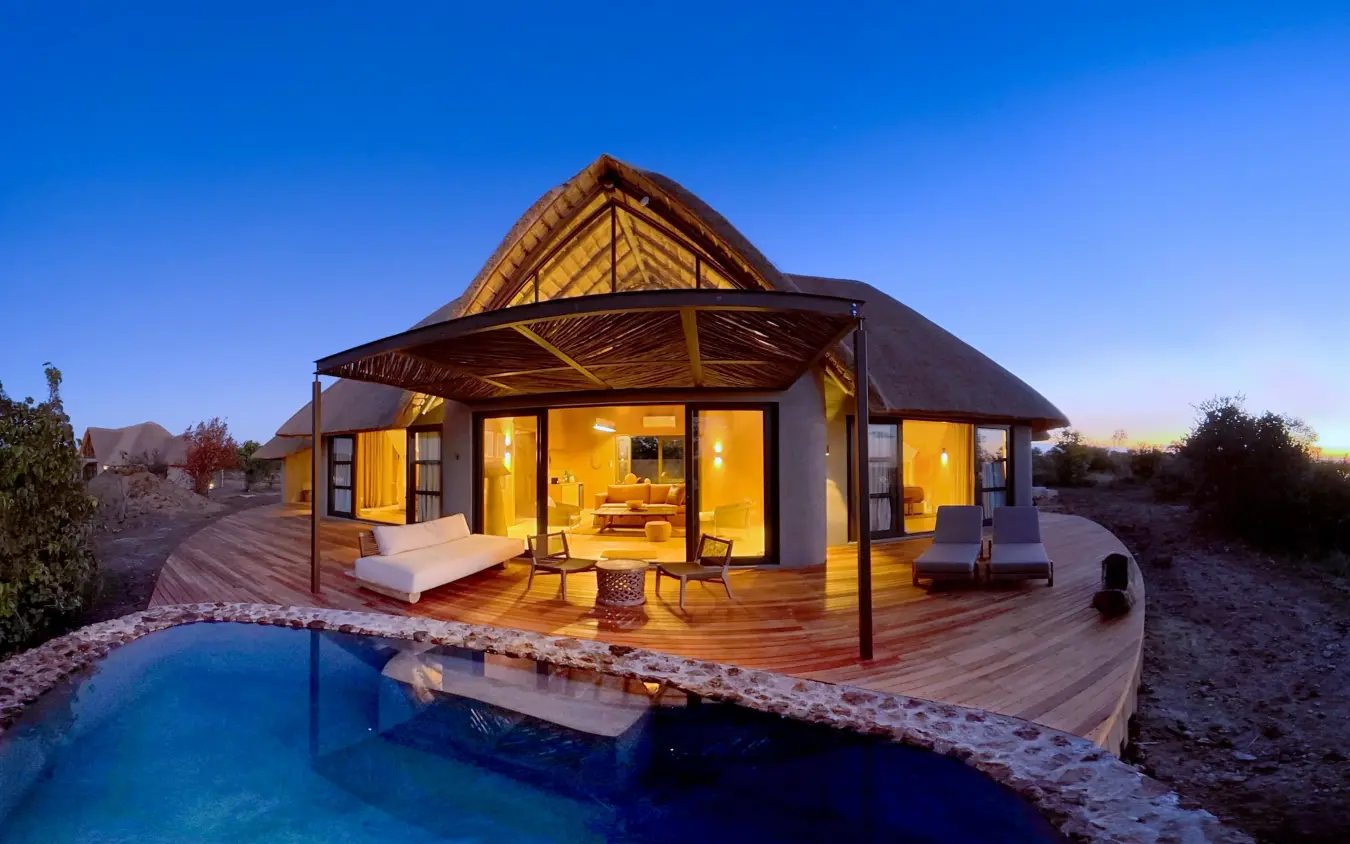
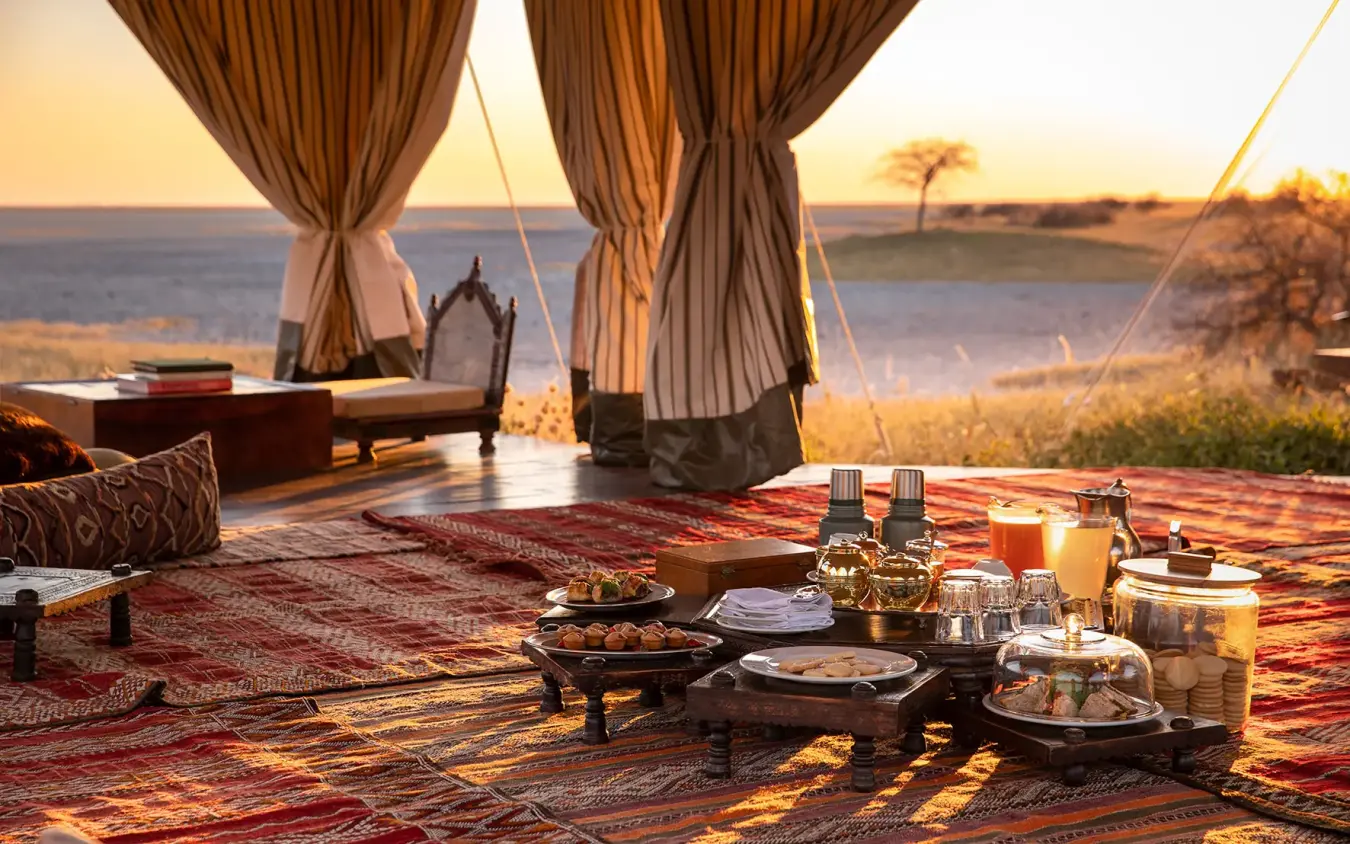
The last stage moves north to the Chobe Forest Reserve, on a rocky escarpment above the river and the Caprivi floodplains. From May to October elephants come down to the water in large numbers, with buffalo, giraffe, kudu and impala, and sable and roan along the margins. Because the concession lies outside the national park, you walk in the morning and drive after dark; the signature outing is a full day of morning drive, riverbank picnic and an afternoon on the water among hippos and swimming elephants. Ngoma Safari Lodge has eight suites along the ridge, each with a plunge pool, opened in 2011 with the Chobe Enclave Conservation Trust.
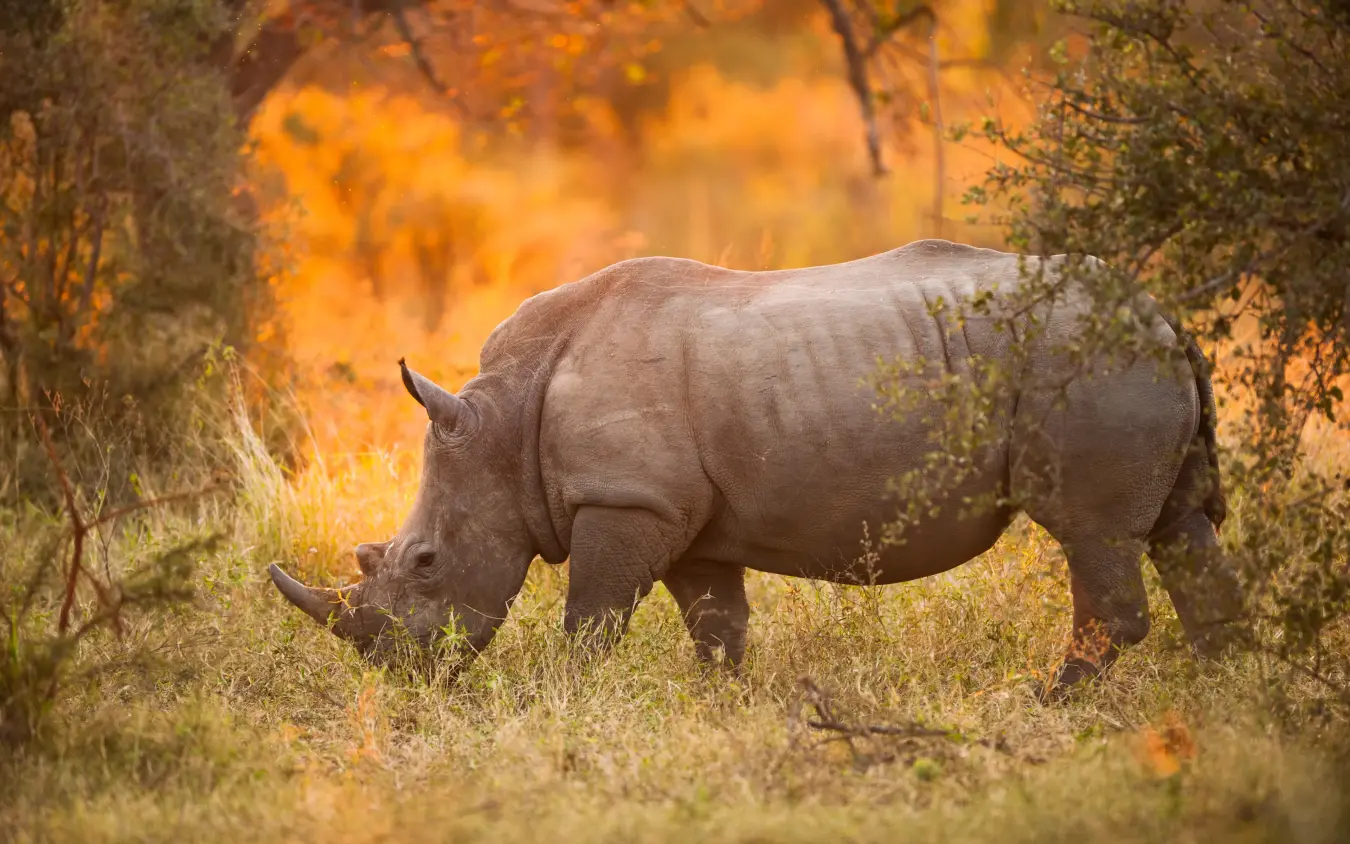
Expect white rhino and hope for black, and treat neither as promised.
We rate Matobo one of the best places in Zimbabwe to see white rhino, and it is one of the few places in the country where you can track them on foot.
The tracking happens in and around Whovi, the fenced game park inside the national park, and your camp's guide works alongside the park's own anti-poaching scouts, the people who guard these animals. That is a large part of why the chances are good.
Black rhino share the same ground, but they are rare, and one experienced safari writer records his first ever sighting of one here as an event.
So go for the white rhino, on foot and at close quarters, and treat a black rhino as a bonus. The camp's activity is tracking white rhino.
Neither is a route march.
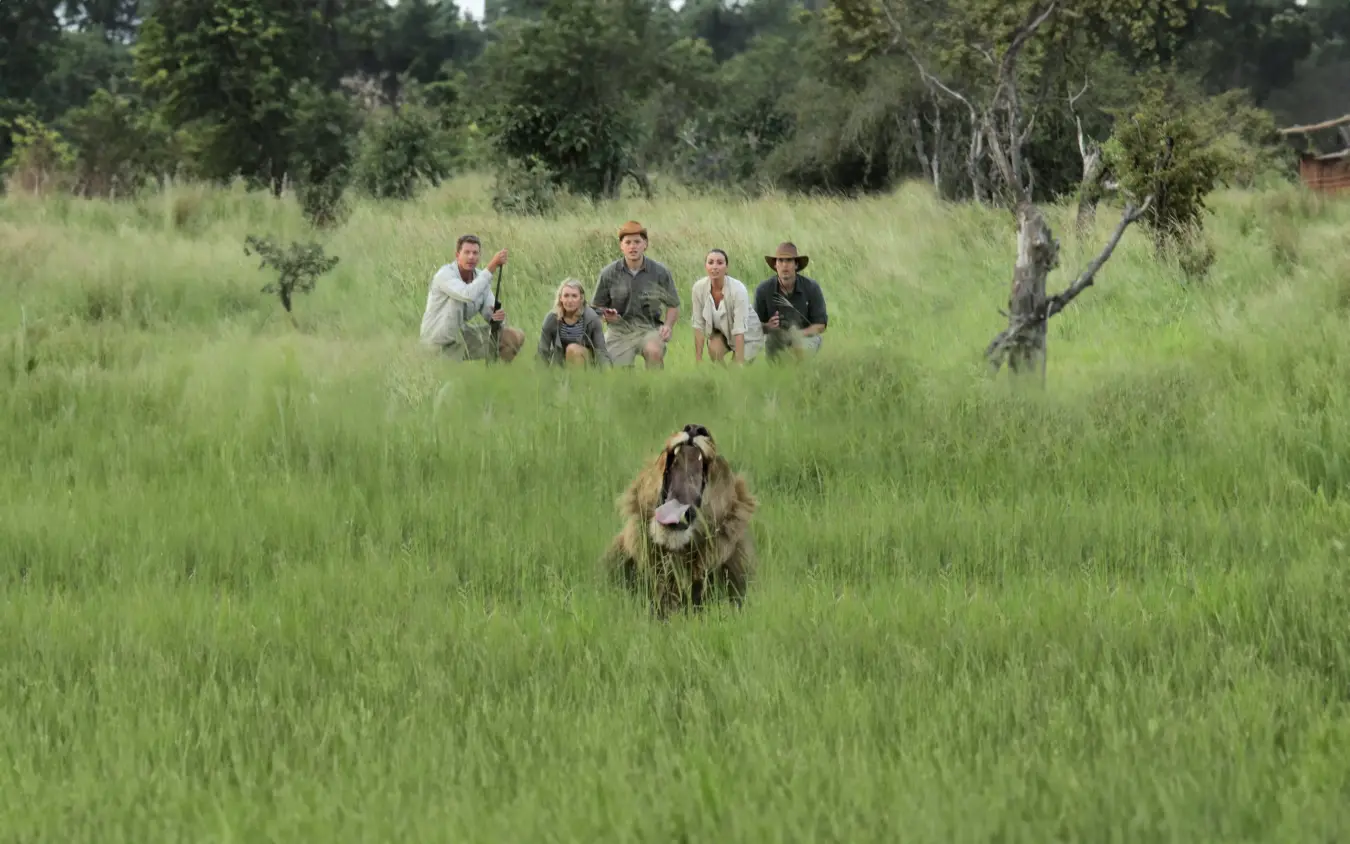
Walking safaris move slowly, cover a few kilometres and stop often over tracks, so what you need is steady feet and patience for several hours outdoors, not speed. At Camp Hwange you might leave the vehicle to follow fresh lion or elephant tracks on foot, or walk out to the log hide at the waterhole.
We put rhino tracking in Matobo at three to five hours, in granite country where the ground can be uneven, and how long it takes depends on where the rhino are that morning.
The best reason to walk in Zimbabwe is the guides. A full professional guide's licence there takes a minimum of two years to earn and ends with a practical exam lasting seven days, and licensed guides walk armed.
Camp Hwange takes walkers from the age of twelve, at the guide's discretion, and children from eight in camp, so tell us the ages of anyone younger than sixteen.
Only if you travel in the rains.
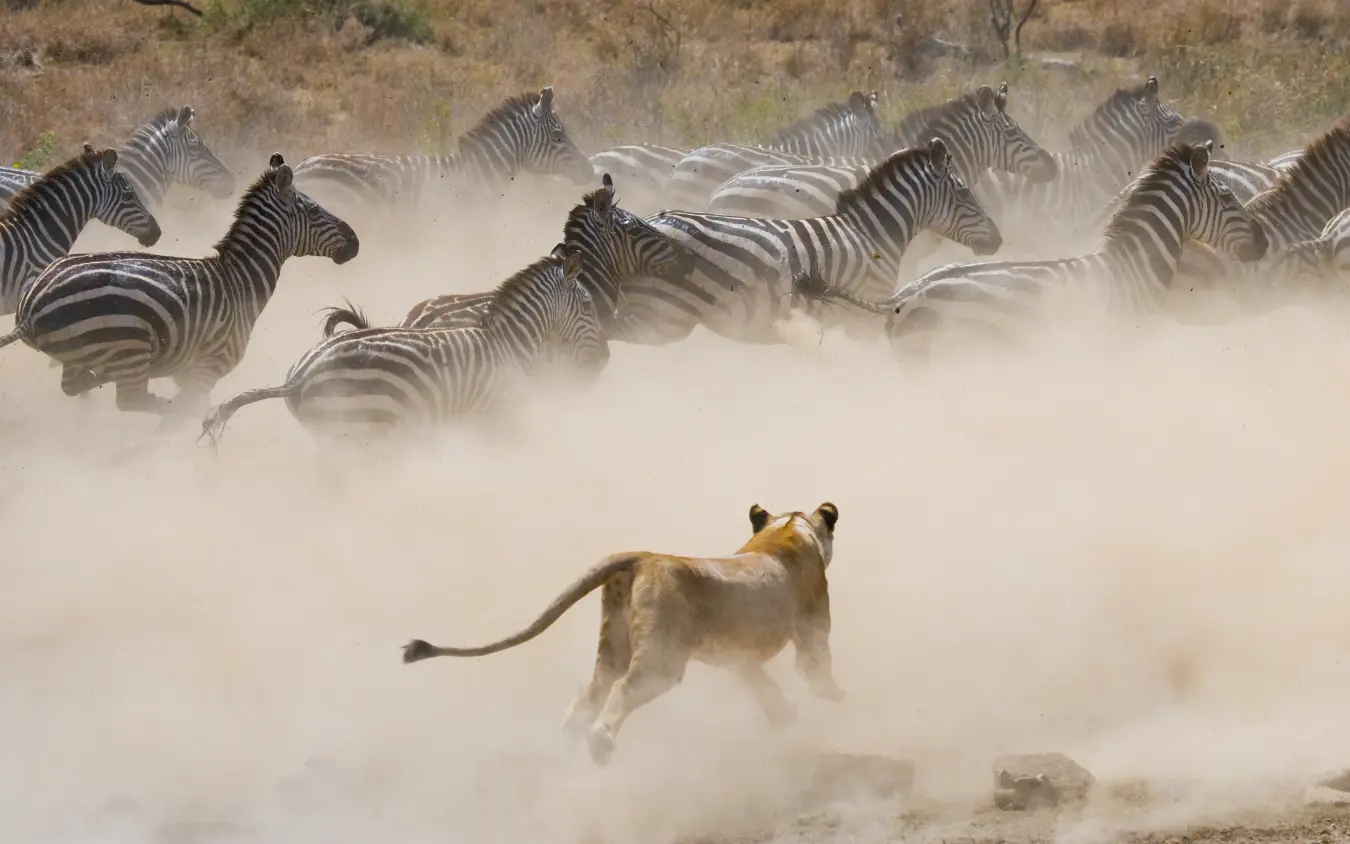
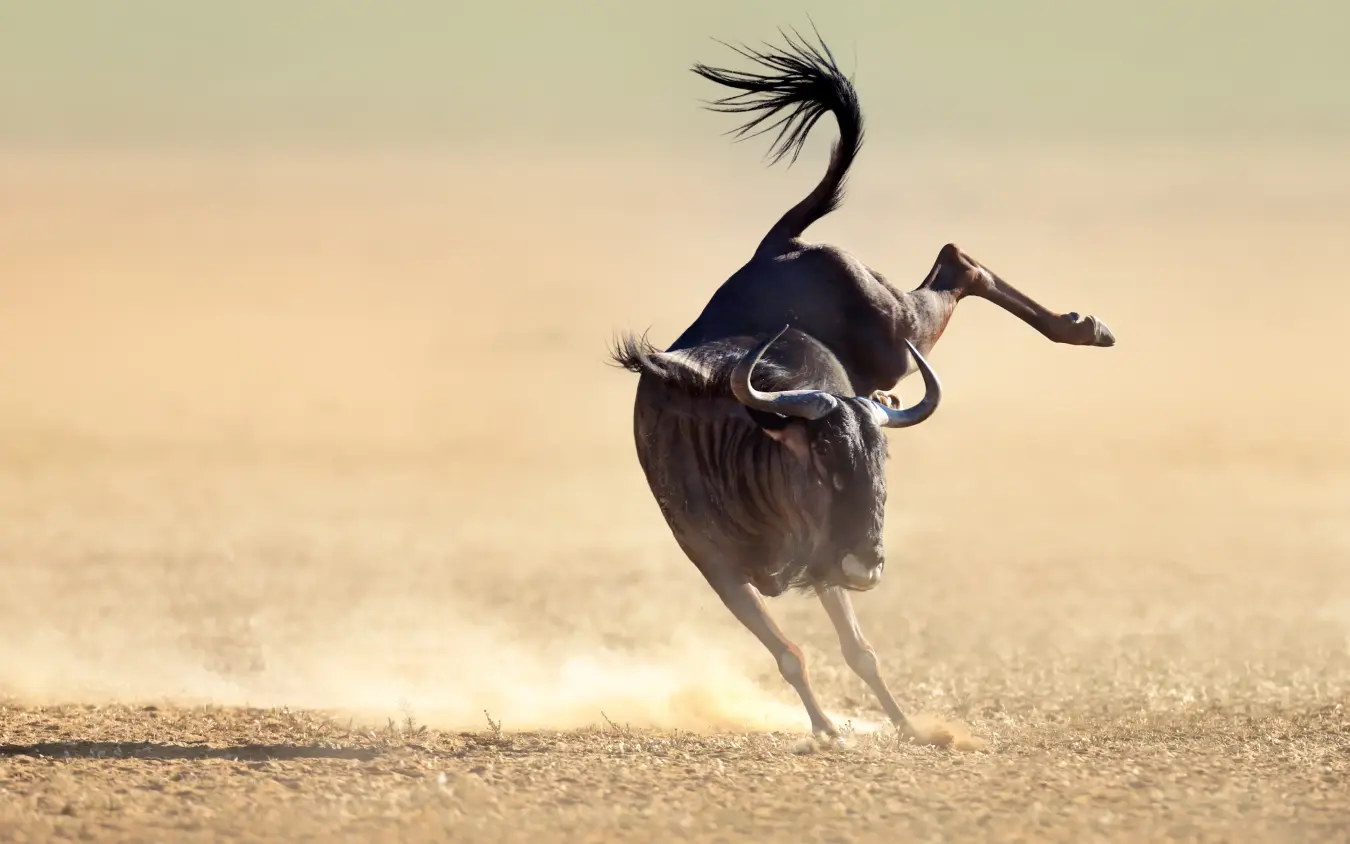
The zebra and wildebeest come to Nxai Pan's grasslands when summer rain turns them green: the peak is December to March, and the wider Makgadikgadi herds keep their wet-weather range from about November to May.
That is the opposite calendar to the rest of this route, which we rate highest from July to September, when the elephants crowd Hwange's waterholes and the Okavango's flood is in. So there is a choice to make.
In the dry months Nxai Pan is about the pumped waterhole in front of camp, where springbok, gemsbok, wildebeest and giraffe come to drink and the resident lions wait for them, much of it watched from your own deck.
If the zebra are the point of the journey, tell us, and we will build it around December to March instead, accepting that Hwange and the Delta are then hot, wet and far quieter for game.
For all seven stops at once, only July, August and September carry our recommended rating.
They are dry and clear, cool enough for rhino tracking and walking in Hwange to be a pleasure, the elephants are gathering at Hwange's waterholes and along the Chobe, the falls have dropped enough for clear views, and the Delta's flood is in for the mokoro at Khwai and on the Xudum. June runs them close.
October brings the greatest numbers of elephant but also real heat, 40 degrees in places, which is hard work on foot on Matobo's bare granite.
May and November are quieter shoulder months; with November's first storms come the migrant birds and the first young antelope, and the zebra begin to return to Nxai Pan.
Most of this route is rated challenging from December to March, though Matobo and Nxai Pan are at their greenest then.
By a mix of road and light aircraft, with some long days to know about.
Victoria Falls to Camp Hwange is four to five hours by road, the last two of them a game drive through the park; in the dry months you can instead fly to the Giraffe Springs airstrip in about 25 minutes and drive for an hour.
Hwange to Matobo is a long drive south through Bulawayo, with the camp about 46 kilometres beyond the city.
The leg from Matobo to Nxai Pan crosses into Botswana and is the longest of the trip; we plan it with you, either by road and a connecting light aircraft or by private charter, typically a Pilatus PC-12 or a Cessna Caravan.
After that you fly: Nxai Pan is about 40 minutes from Maun, and the Delta camps and Chobe are linked by light aircraft. Every one of these flights holds you to 20 kilograms, carry-on included, and the bags must be soft.
Enough to see the falls, not enough to do much else.
Ilala Lodge is an eight-minute walk from the rainforest gate, so with an afternoon arrival you can walk the viewpoints that day, or early the next morning before the drive to Hwange, and still fit in a cruise on the upper river at sunset.
What one night will not cover is the list of activities that makes people stay longer:
If any of those matter to you, add a night, which is simple to do at the start of the trip.
Bear in mind that the falls change through the year: fullest around March and April, when spray can hide them, and lowest around November and December, when parts of the rock face run dry.
Ed Charles, BBC Producer
Fitzroy are true specialists in accessing the wilderness. They know where to go and importantly, when to go there. Highly recommended.
botswana
Thirteen nights linking two sides of the Okavango Delta to the salt flats of the Makgadikgadi, by drive, mokoro, boat and on foot.
botswana
Cross Botswana's wild north from Victoria Falls to the Okavango, tracking wild dog and leopard with a private mobile camp.
botswana
Wild dog country at Chitabe, a walking safari in the western Delta and the Makgadikgadi salt pans over 11 nights.
rated five stars by our clients

our approach
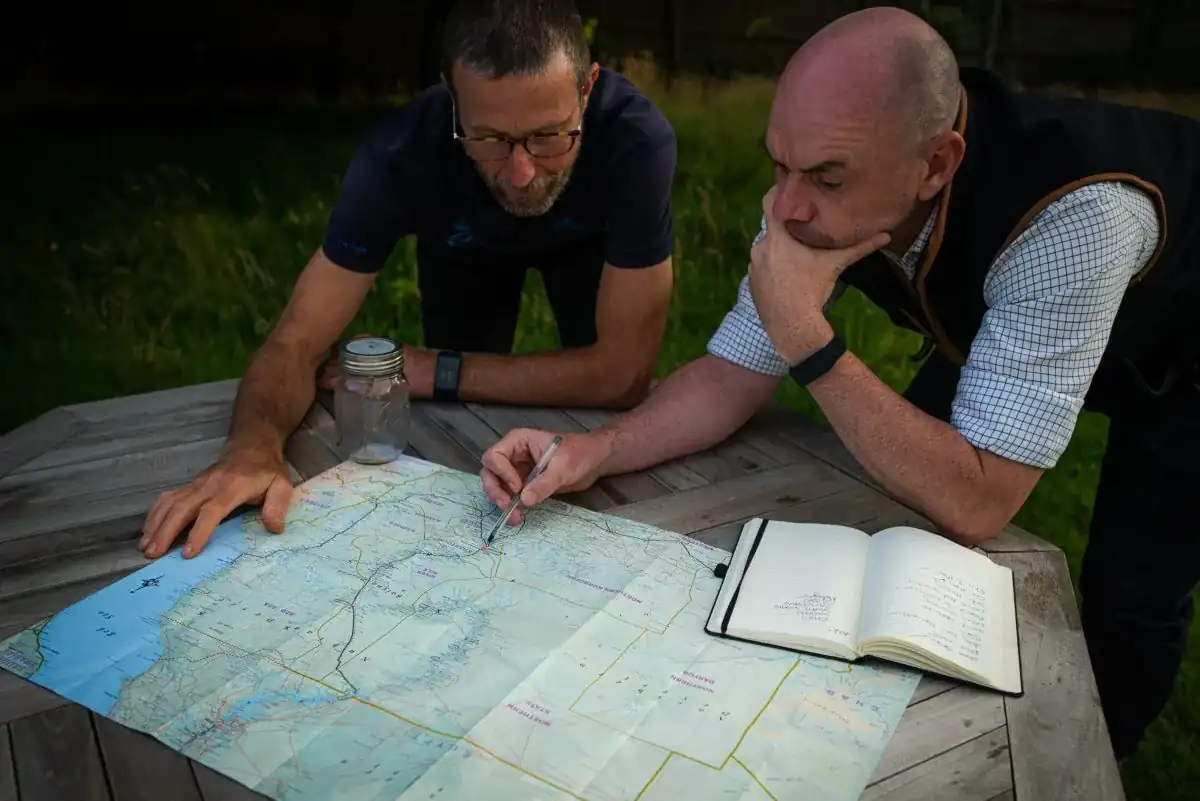
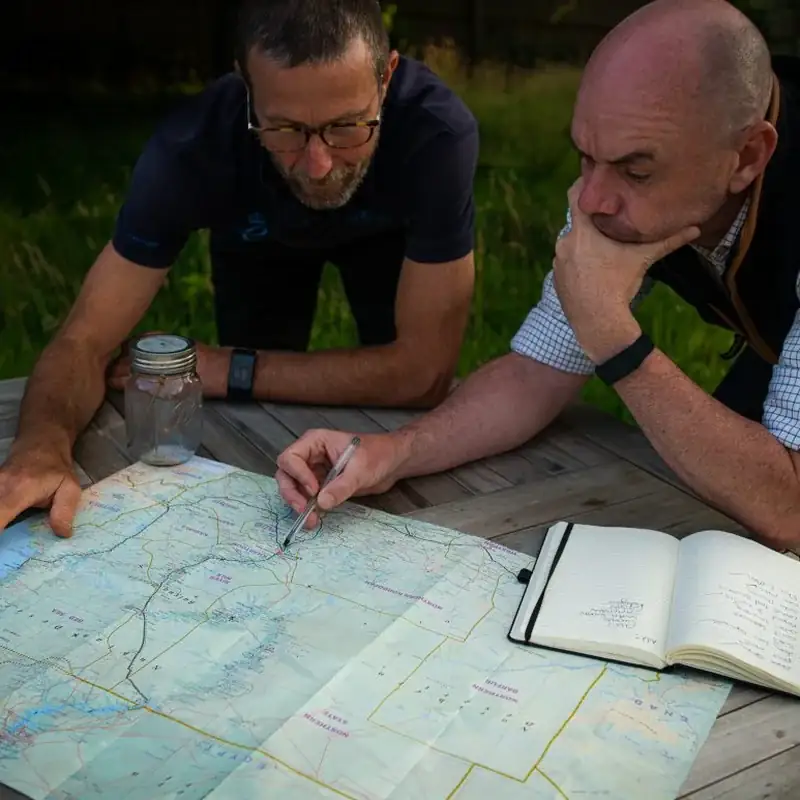
Every journey starts with a conversation. We take the time to understand your vision before we start planning.
Whether by phone or in person, we work with you directly to shape something that is considered, personal, and expertly delivered.
Every journey starts with a conversation. We favour a direct, personal approach: understanding your vision before anything else.
Whether by phone or in person, we work with you directly to shape a journey that is both thoughtfully considered and expertly delivered.
Get in touch to start planning yours.