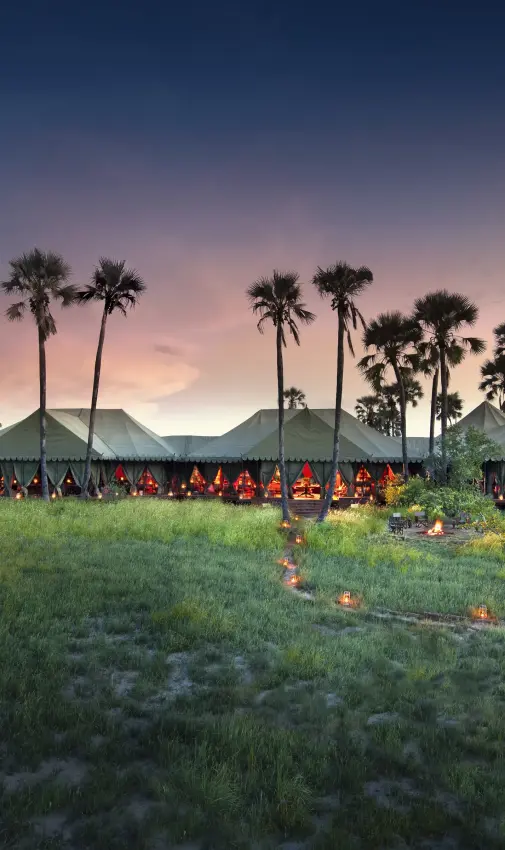
The camp opened in 2009, the first permanent lodge built inside Nxai Pan National Park. The company was founded in 1997 by Kevin Leo-Smith and the Botswana businessman John Mynhardt. Leo-Smith left the company in 2006, and Kwando is now citizen-owned in Botswana, with Mynhardt overseeing the portfolio. It was among the first safari operators in the country to staff its camps entirely with Batswana.
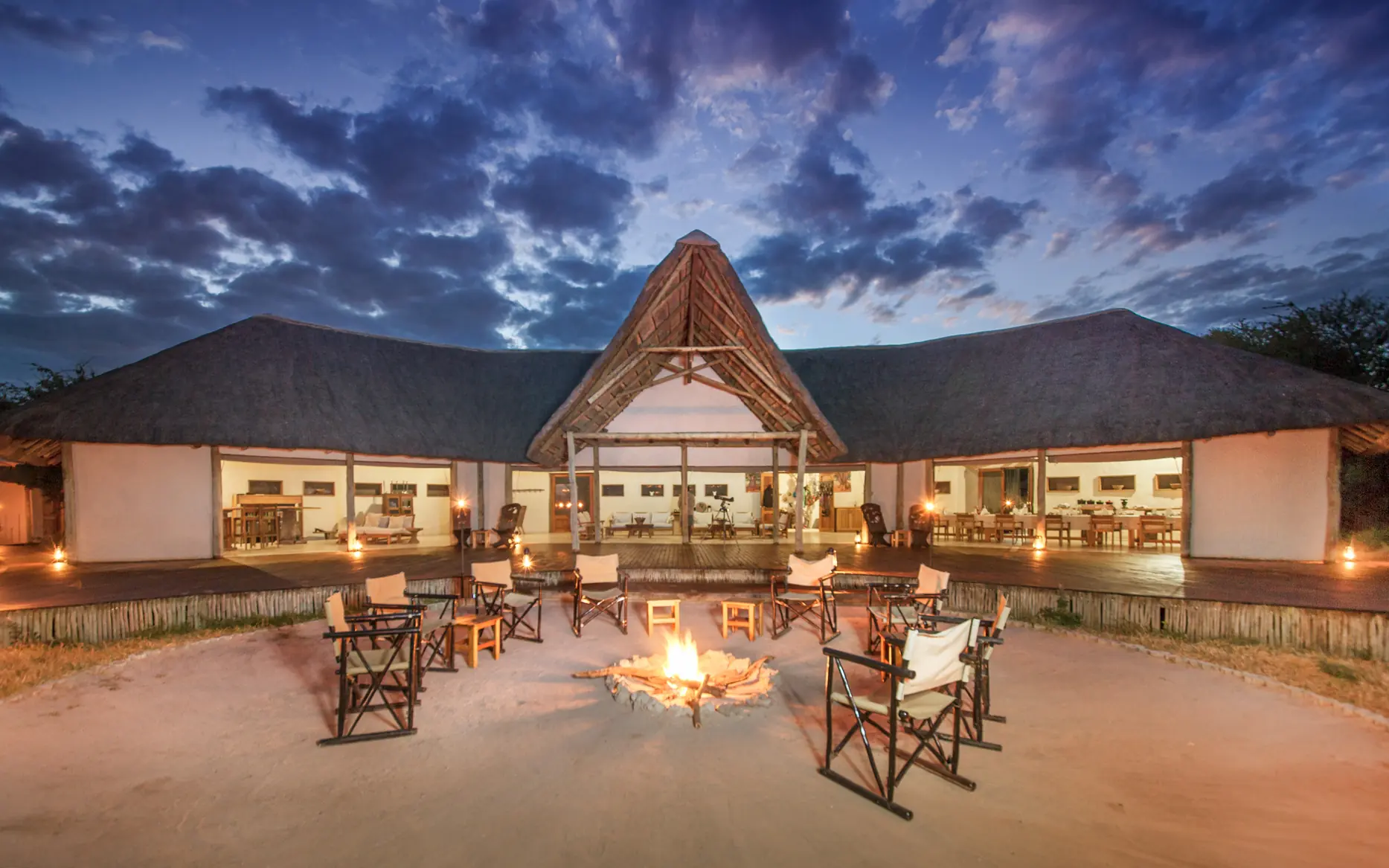
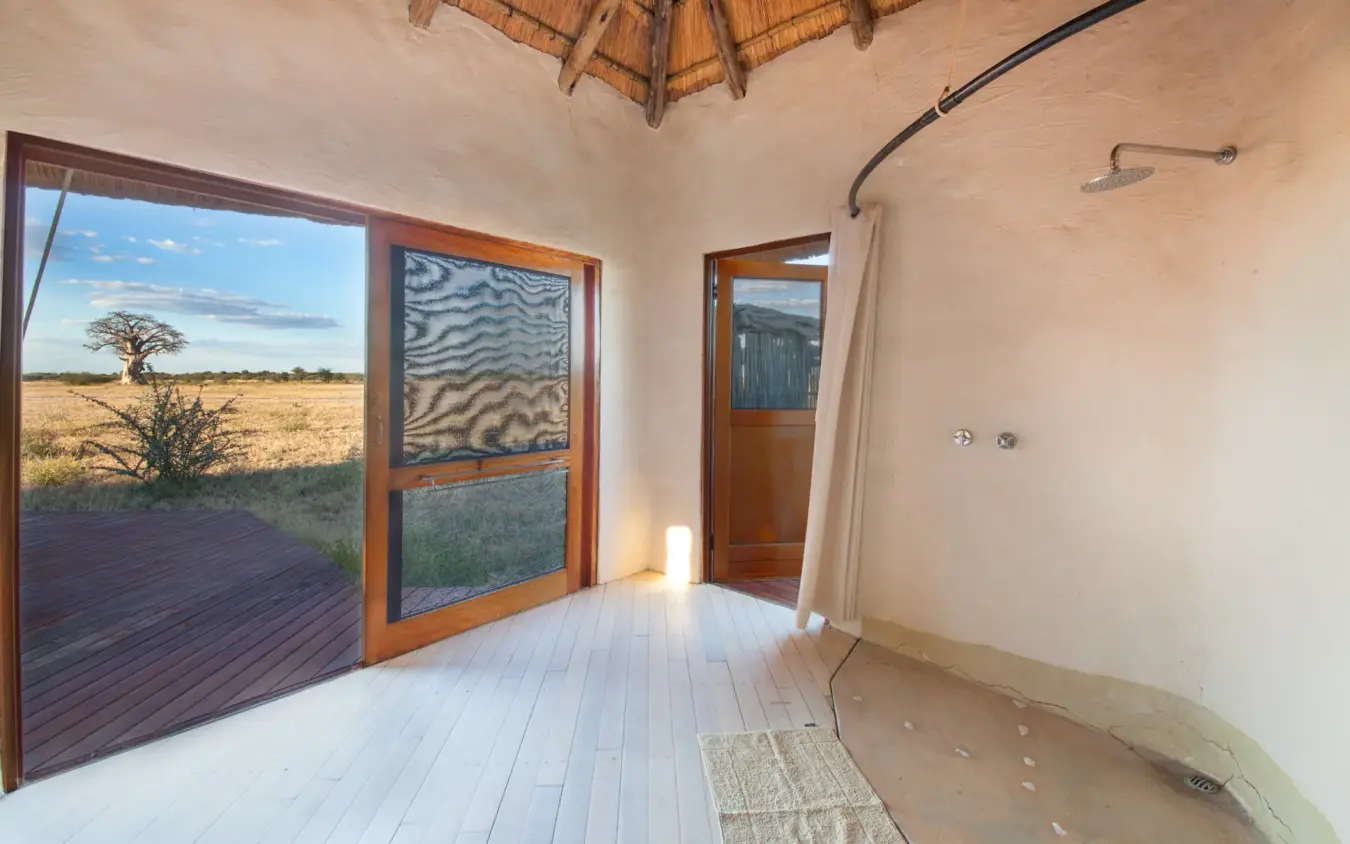
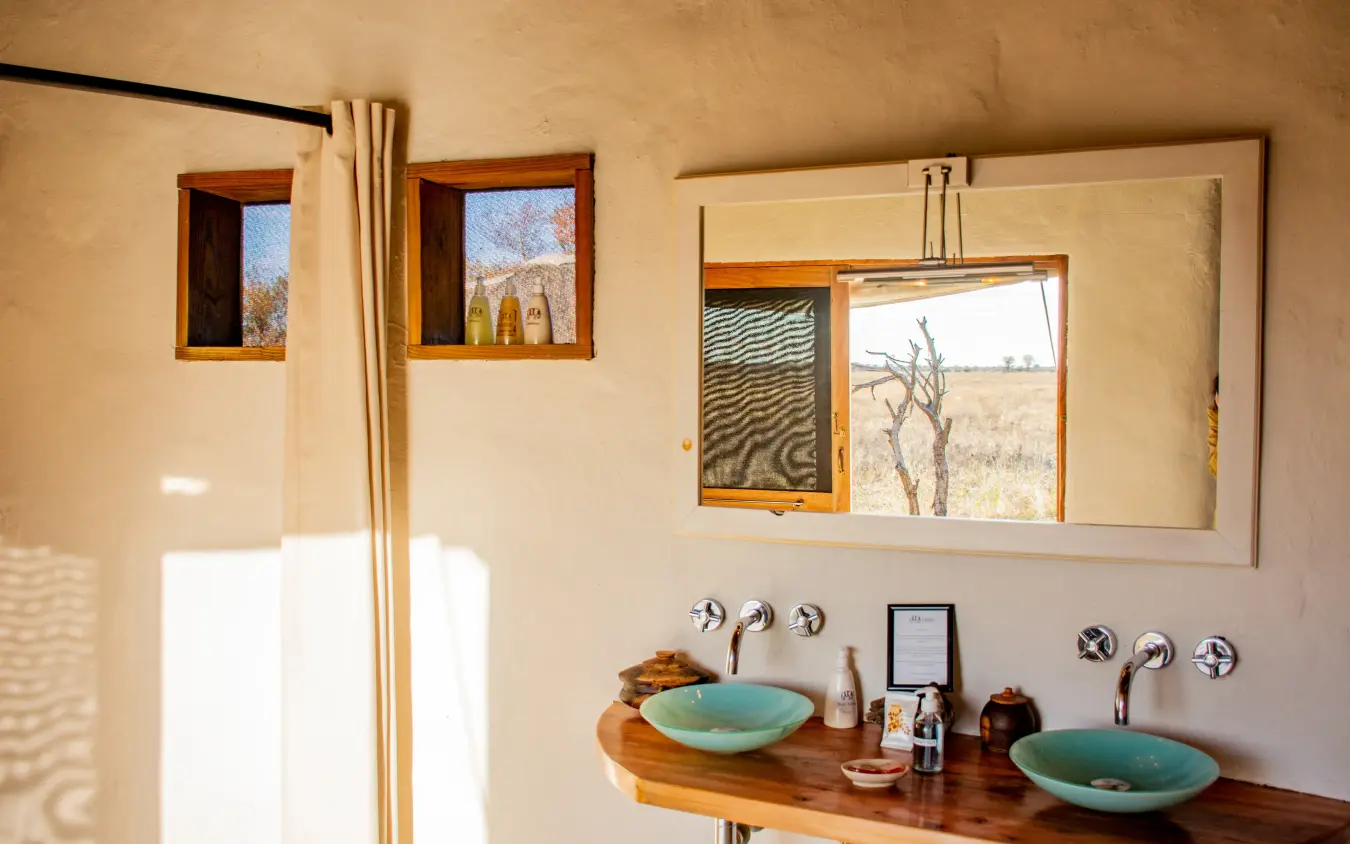
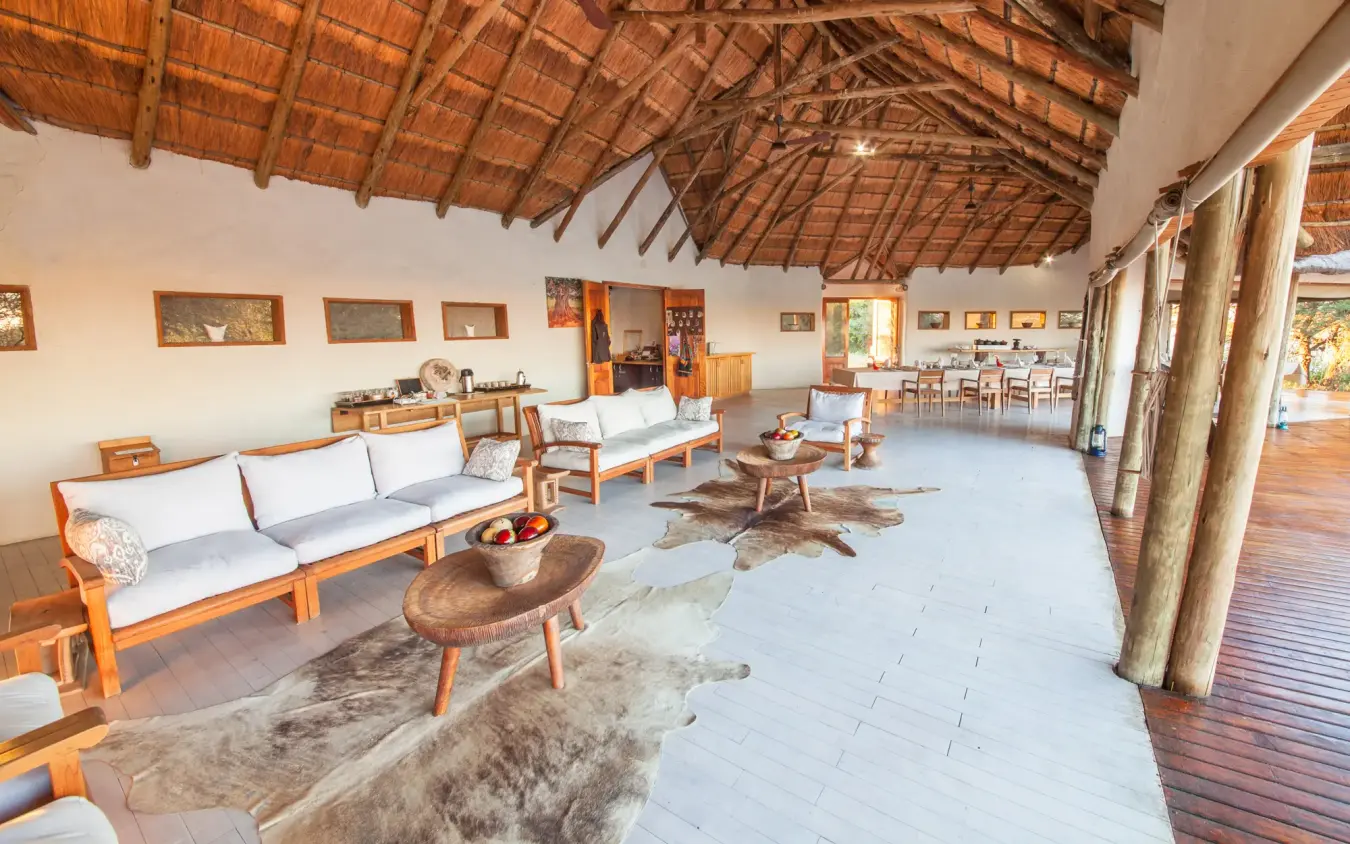
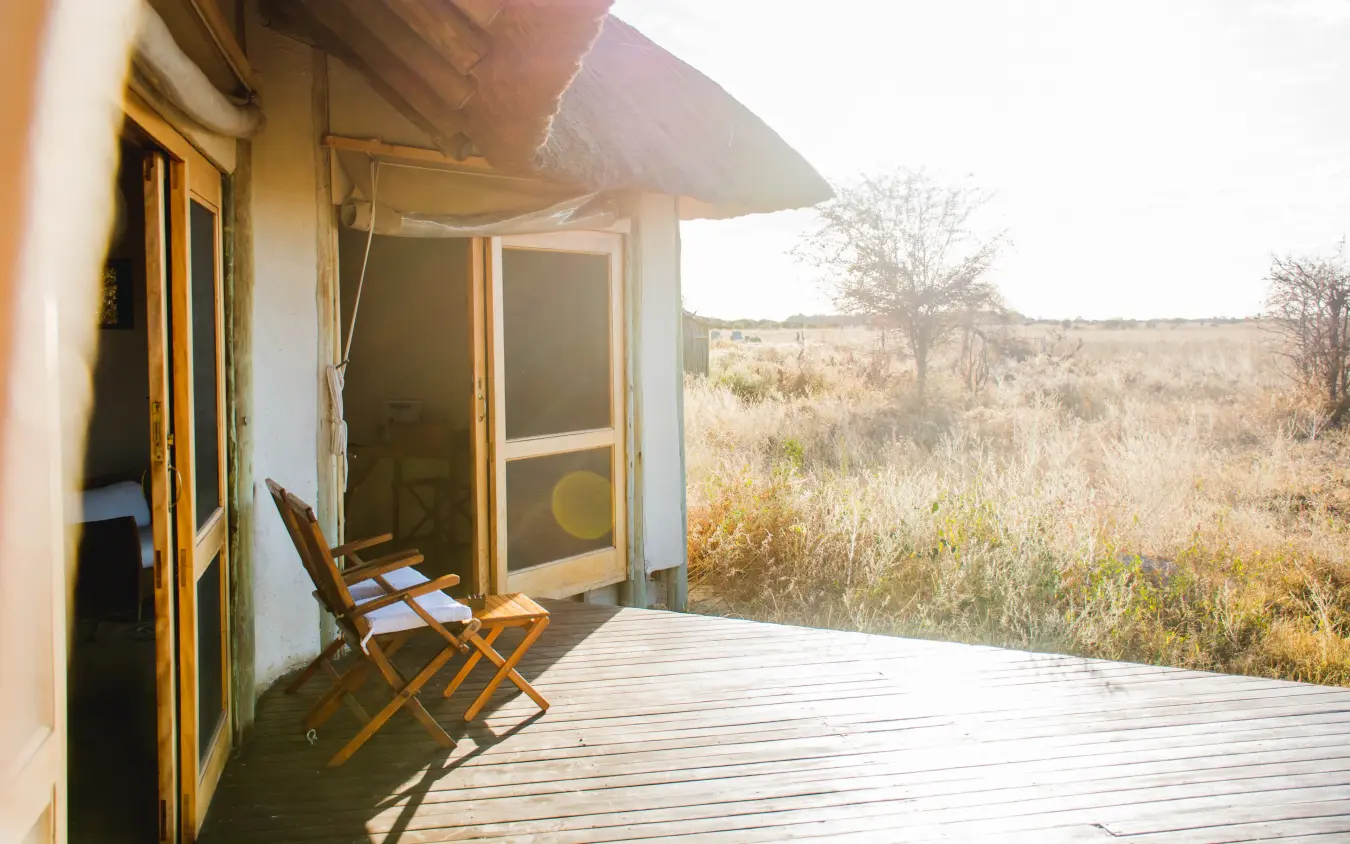
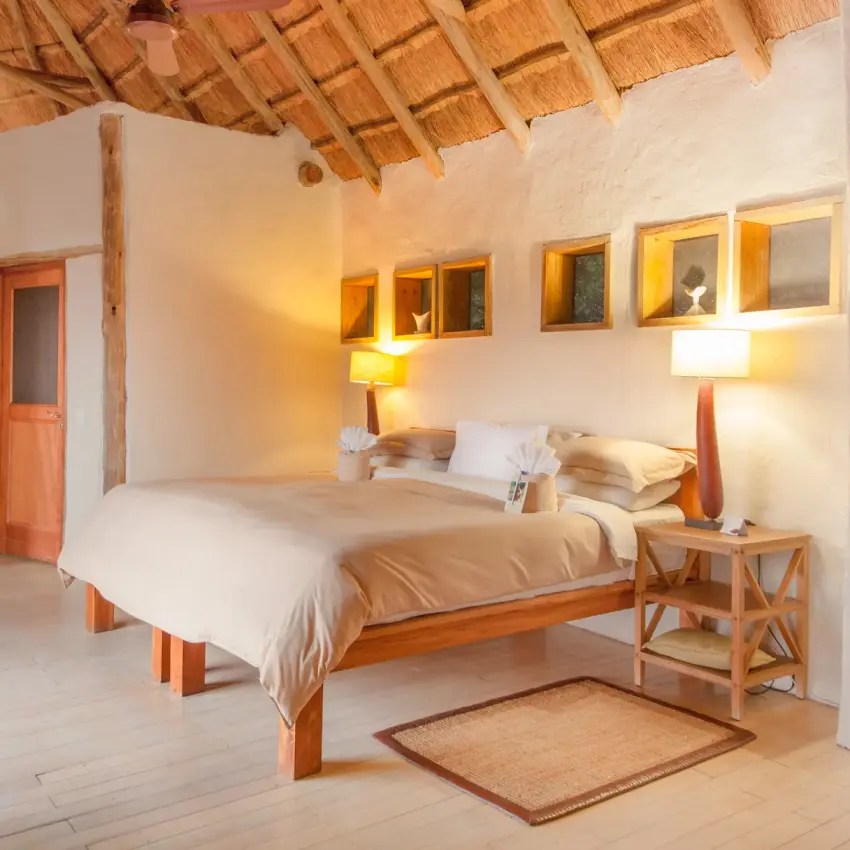
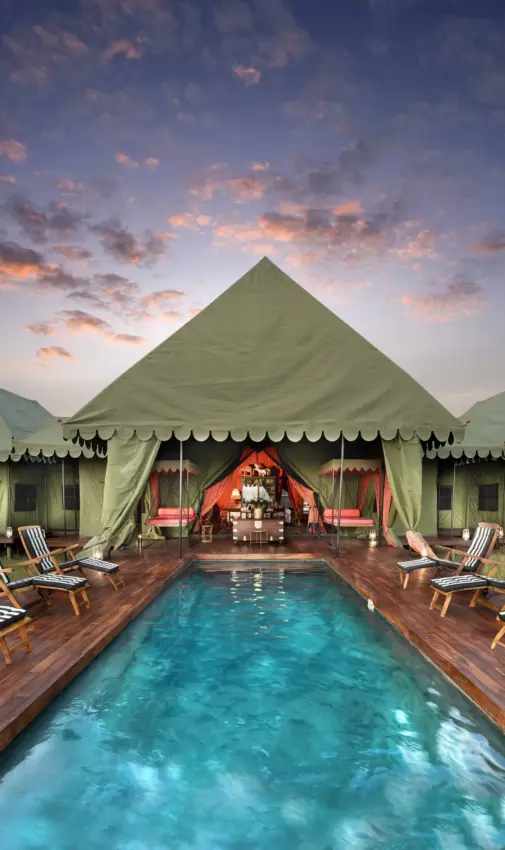
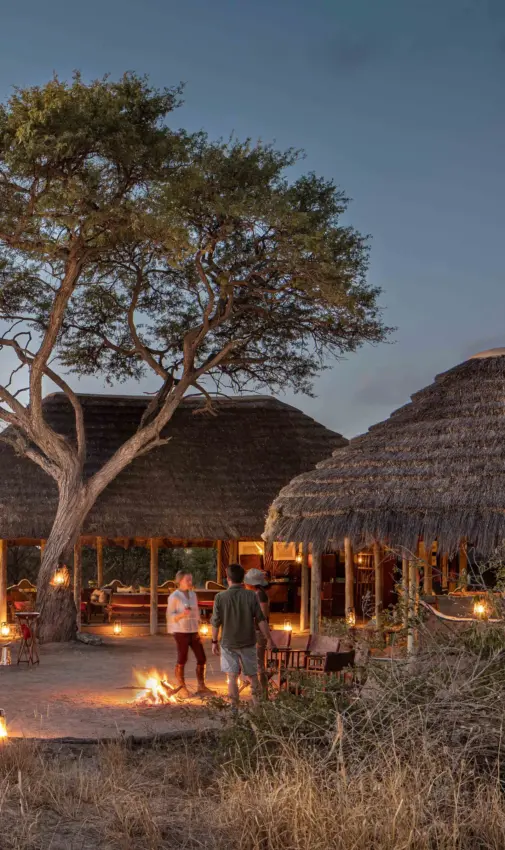
The chalets are built to work with the desert rather than fight it. Thatched roofs and thick, insulated walls hold the rooms cool through the summer heat and warm on freezing winter nights, in a pale sand-and-white palette drawn from the pans themselves. Each has a lounge, a writing desk, indoor and outdoor showers, and a private deck facing the waterhole. The main lodge curves in a long crescent around a sunken firepit, its open front looking east across the grass.
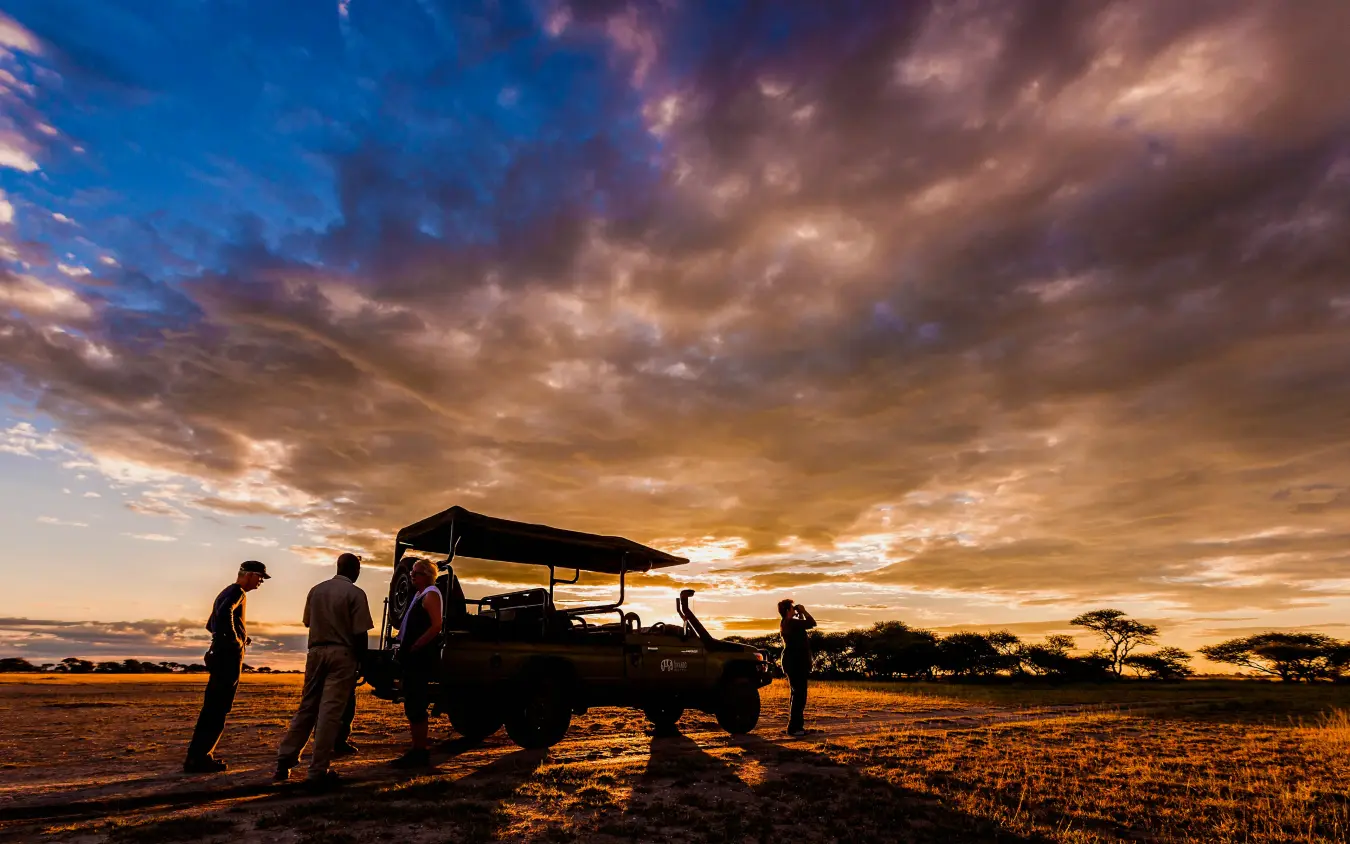
San trackers lead guided walks that read the desert as a source of water, food and medicine.
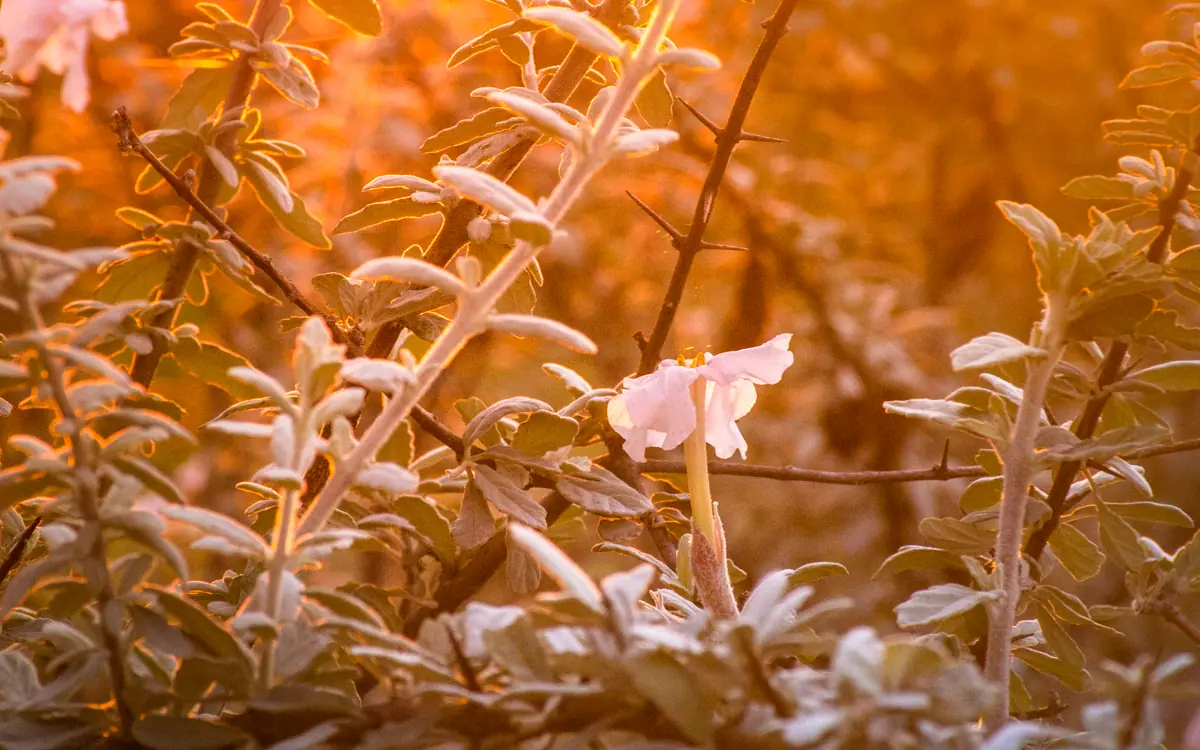
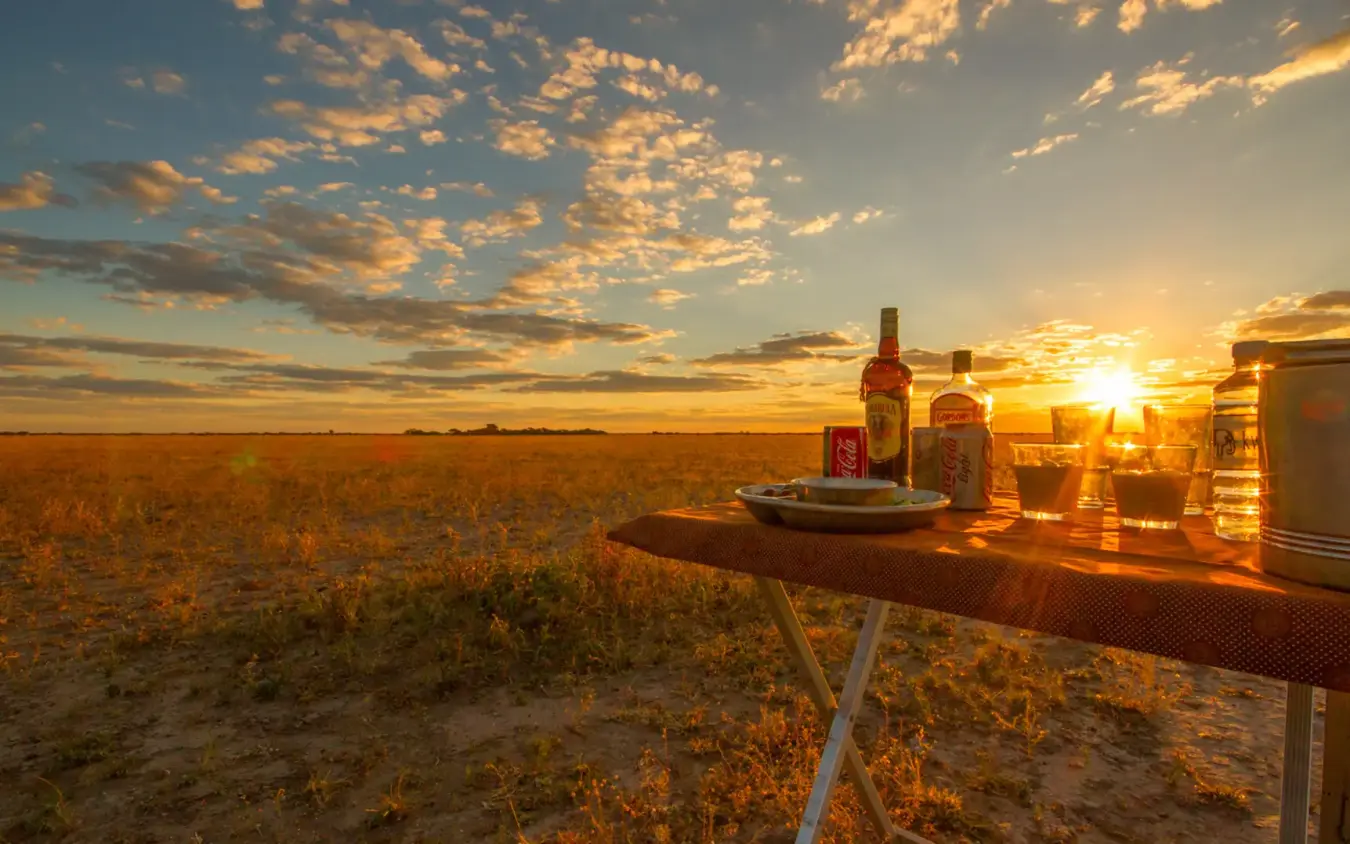
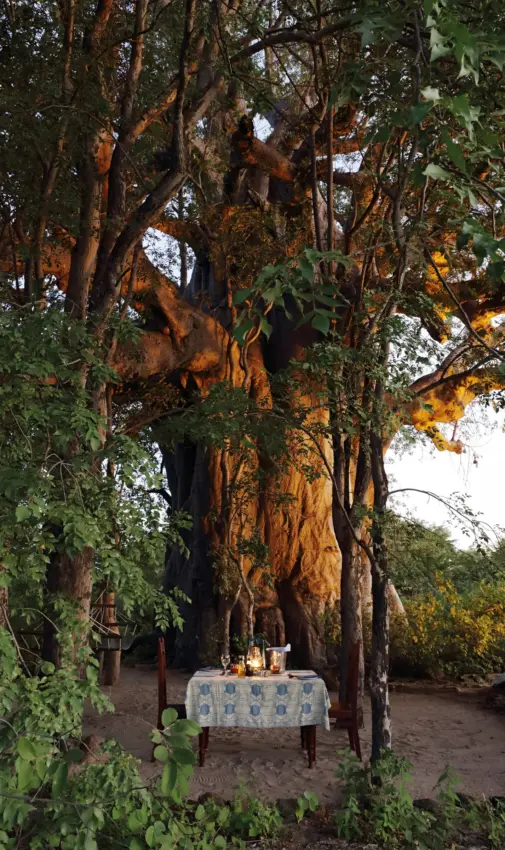
San trackers lead guided walks that read the desert as a source of water, food and medicine, pointing out wild sage and corkwood and the roots that hold moisture through the dry months. A full day can be given to Baines’ Baobabs at Kudiakam Pan, the cluster of trees Thomas Baines painted in 1862 and still standing largely unchanged, with lunch laid out beneath them. For those who want the scale of the landscape from above, helicopter flights over the pans can be arranged.
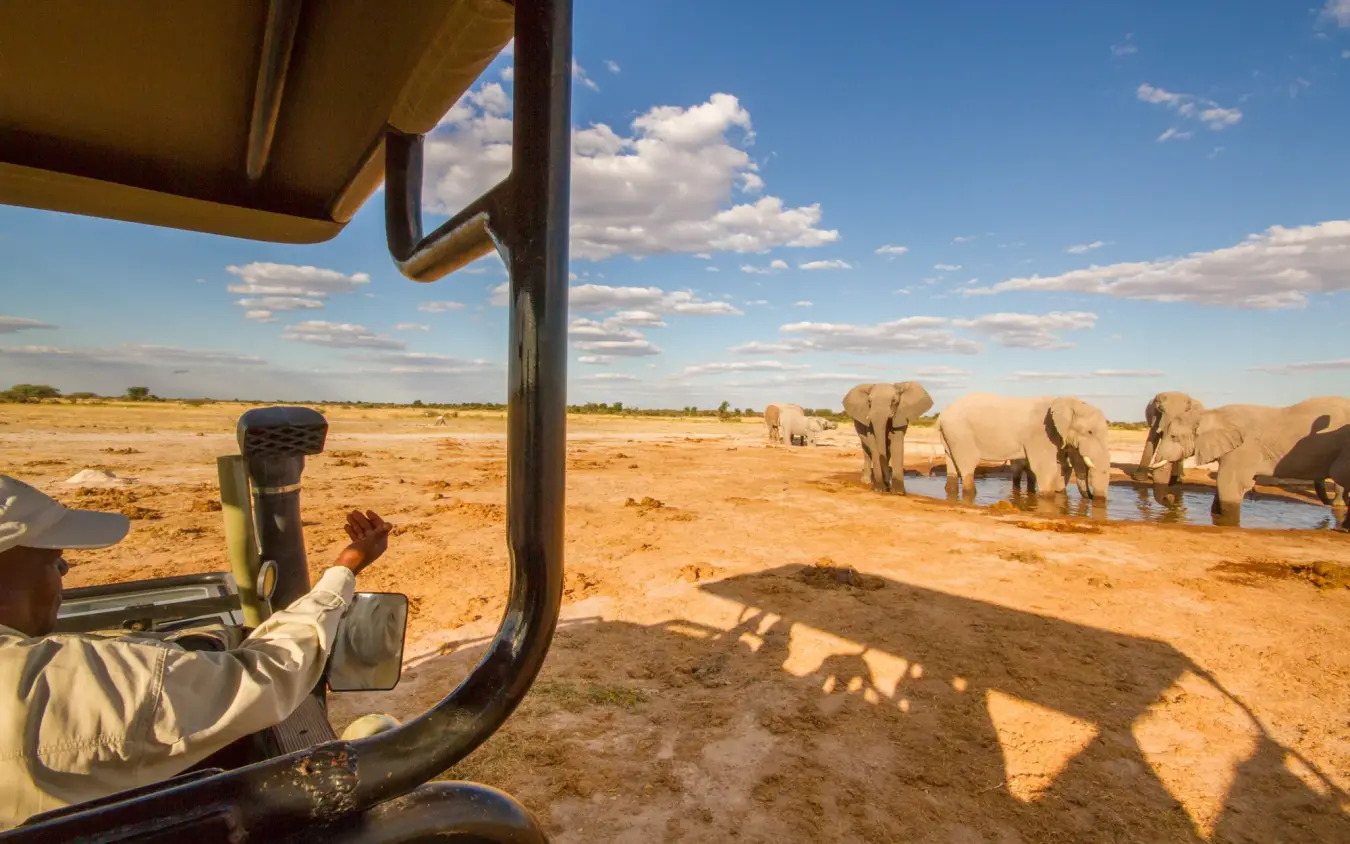
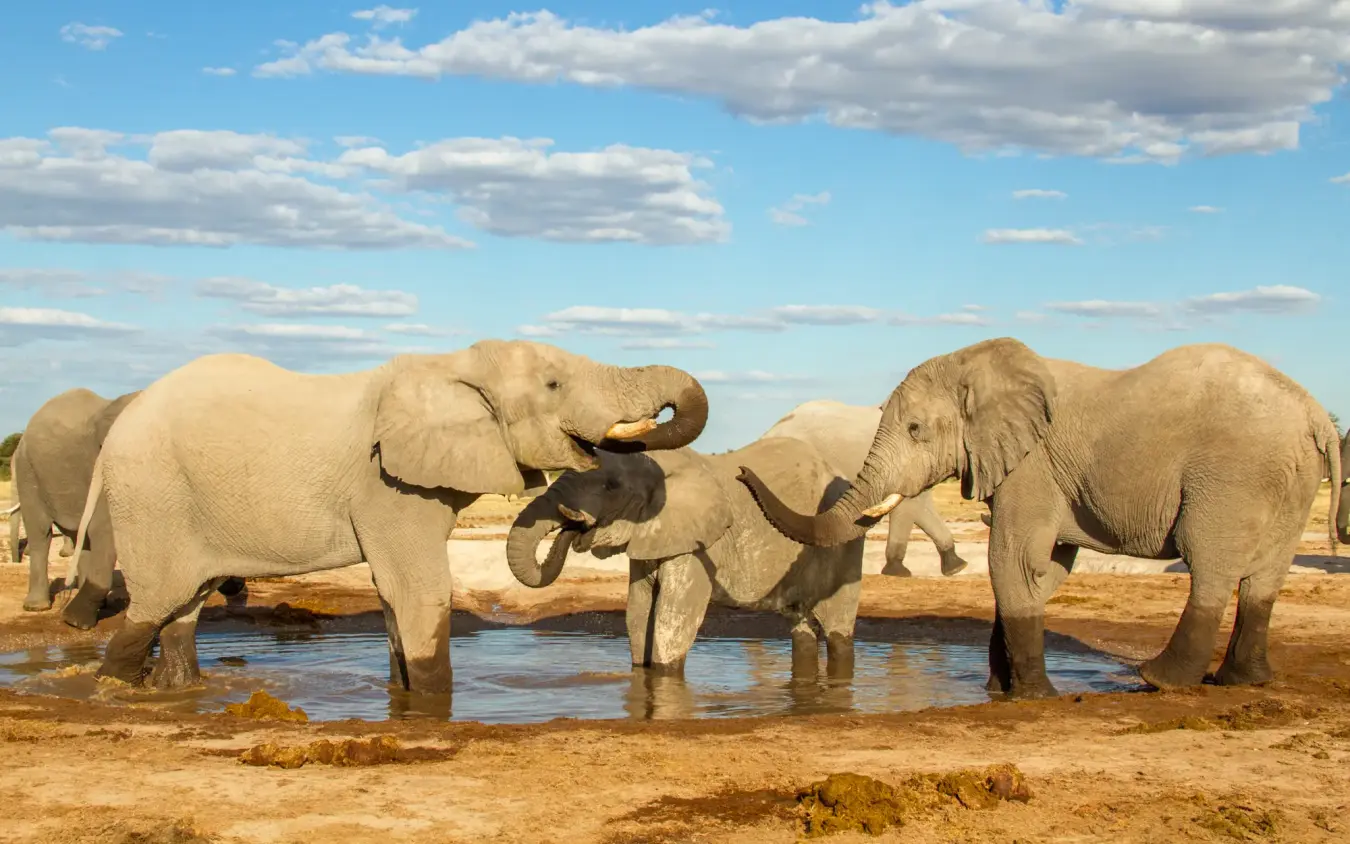
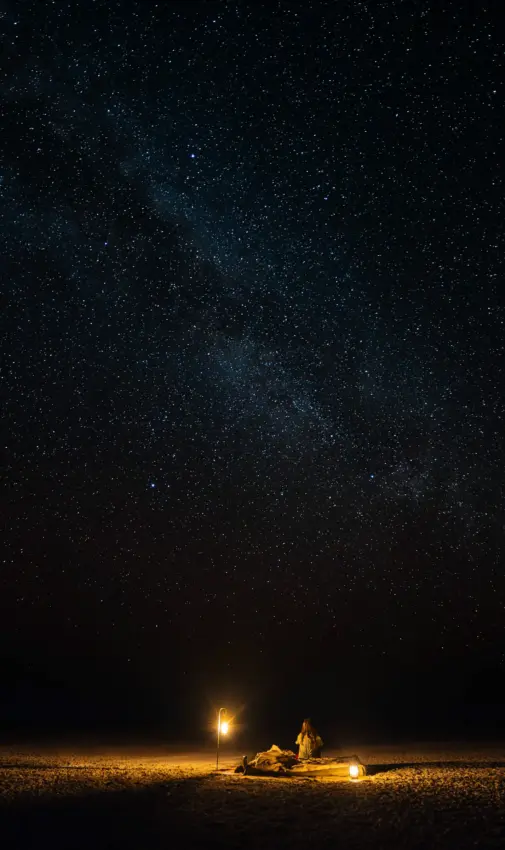
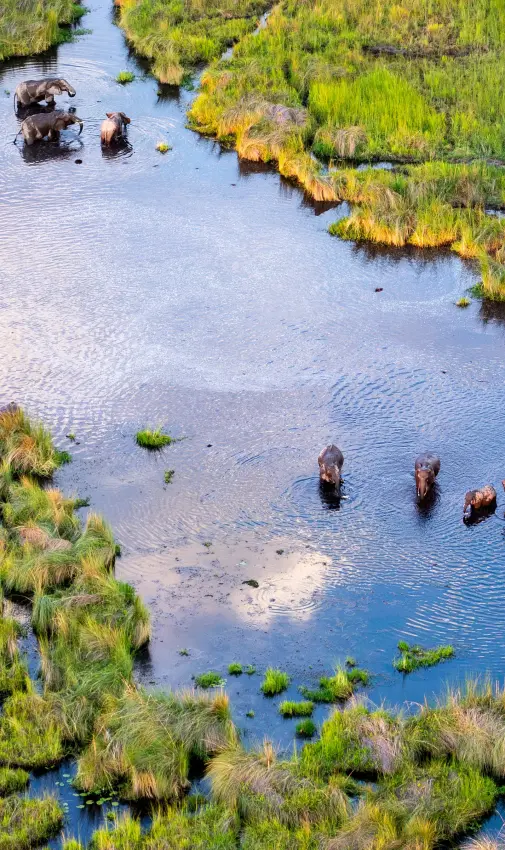
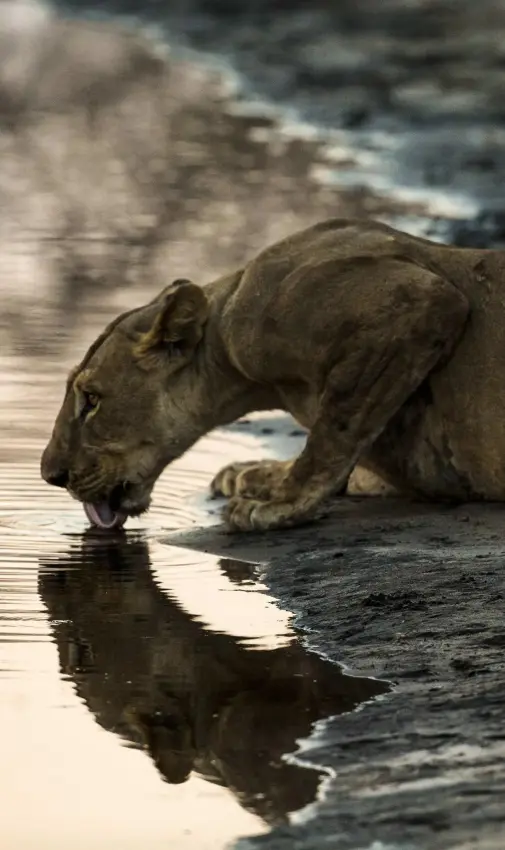
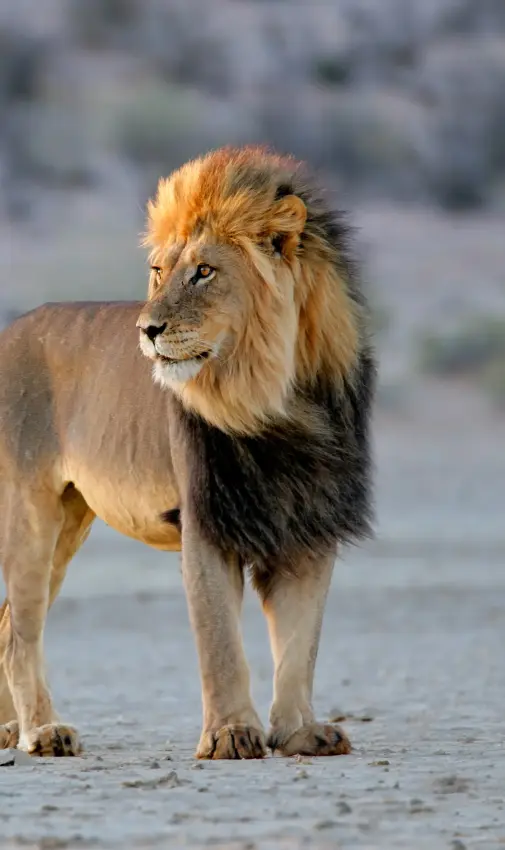
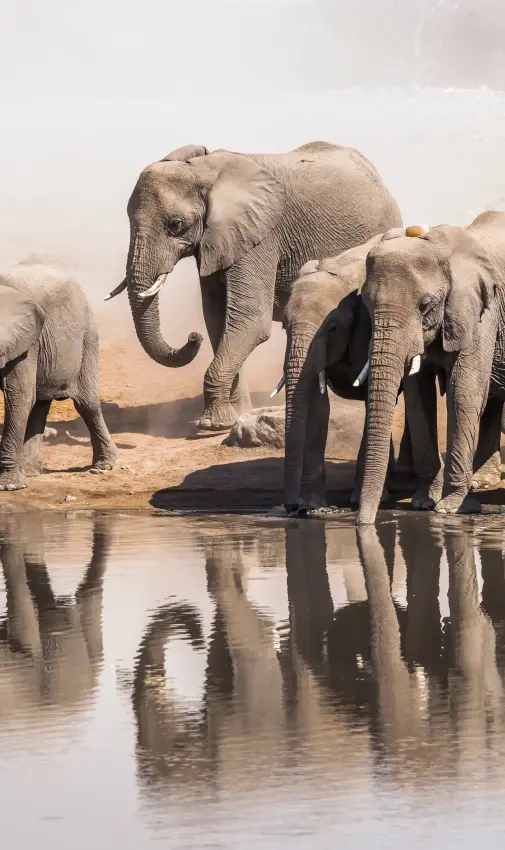
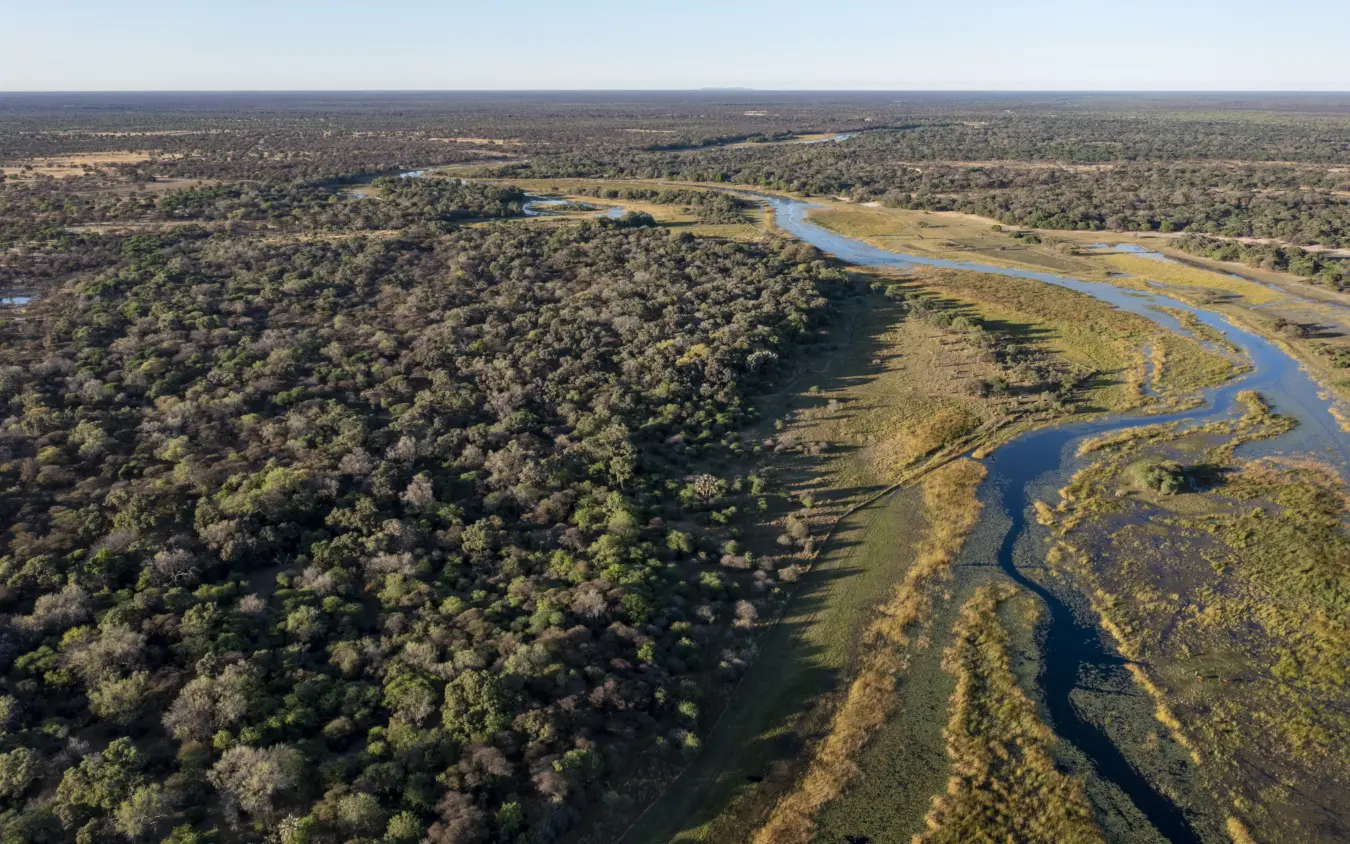
The camp runs largely on solar power, a necessity in an ecosystem this sensitive. Connectivity is limited, and the nights bring some of the clearest skies in the region, the Southern Cross and Scorpio sharp overhead. The quiet is broken mainly by lions calling across the plain, or the splash of elephants at the water after dark, a dry-country counterpoint to the Okavango’s waterways further north.