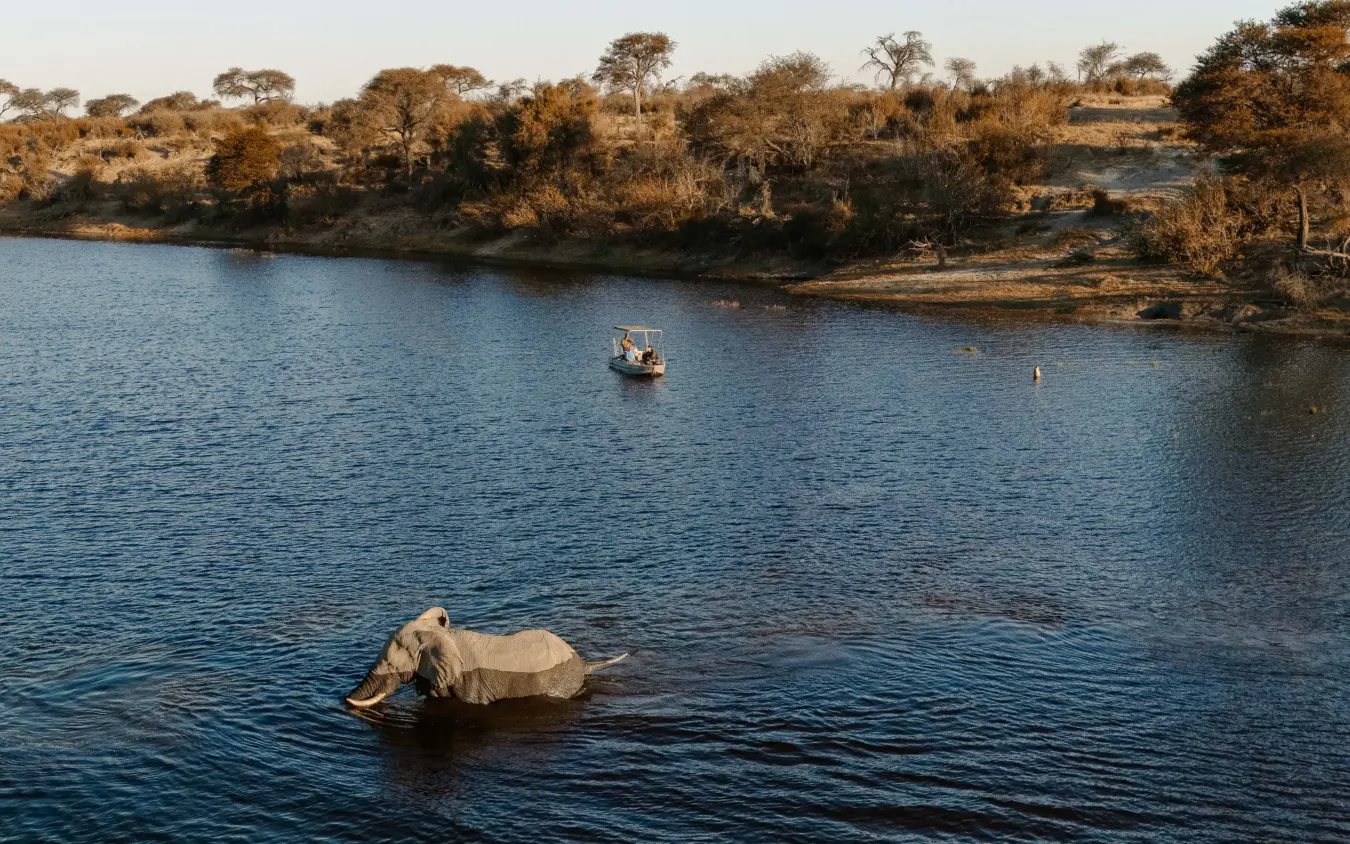
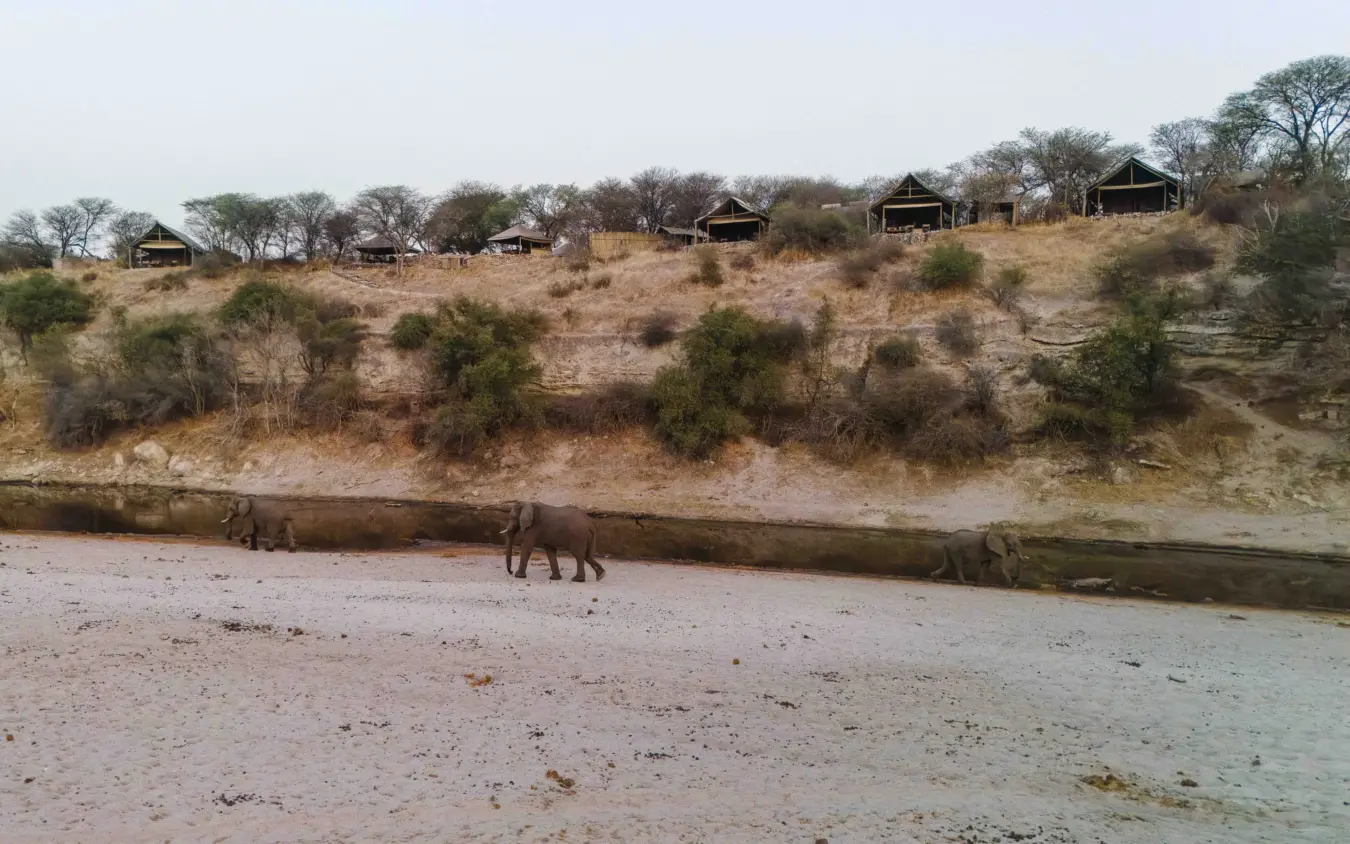
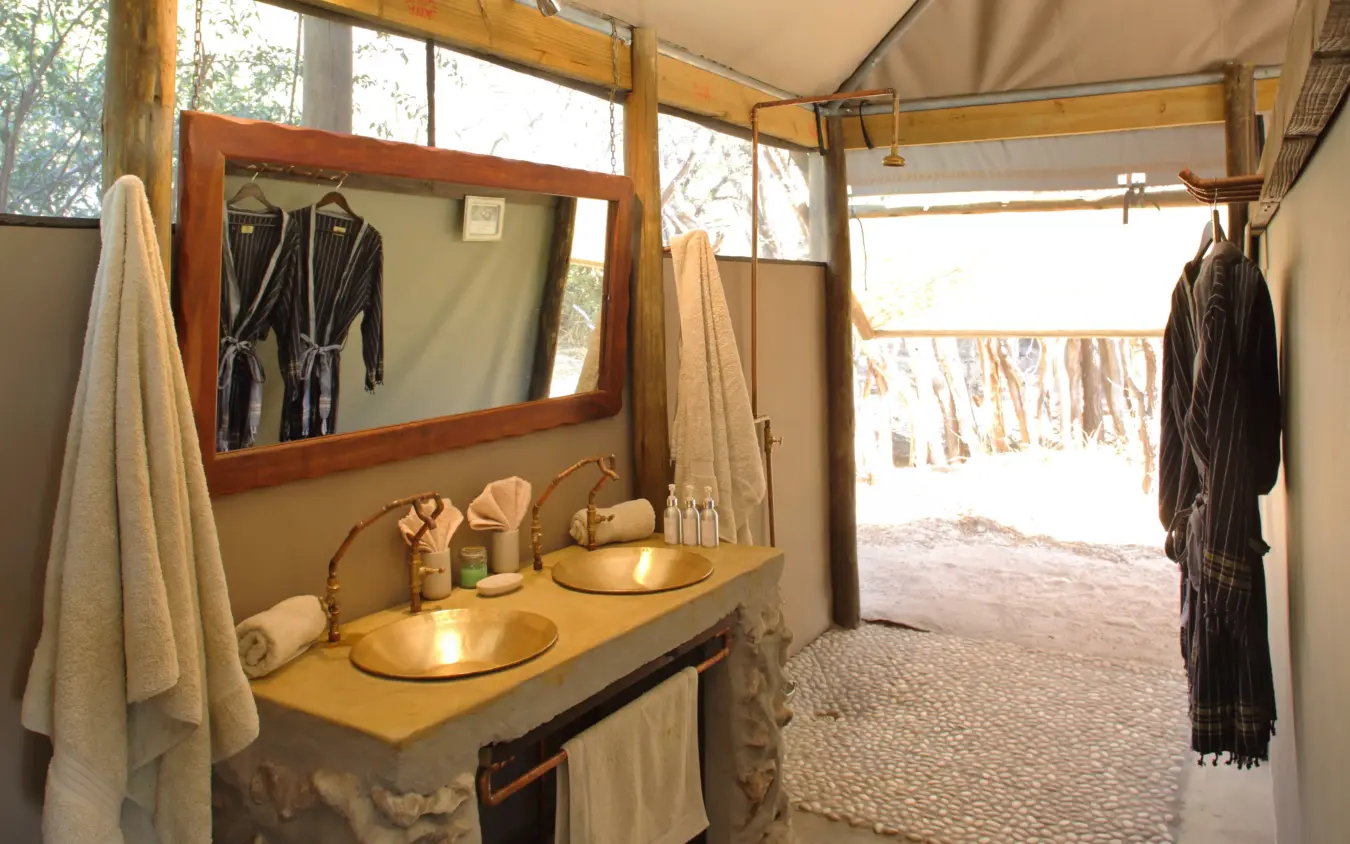
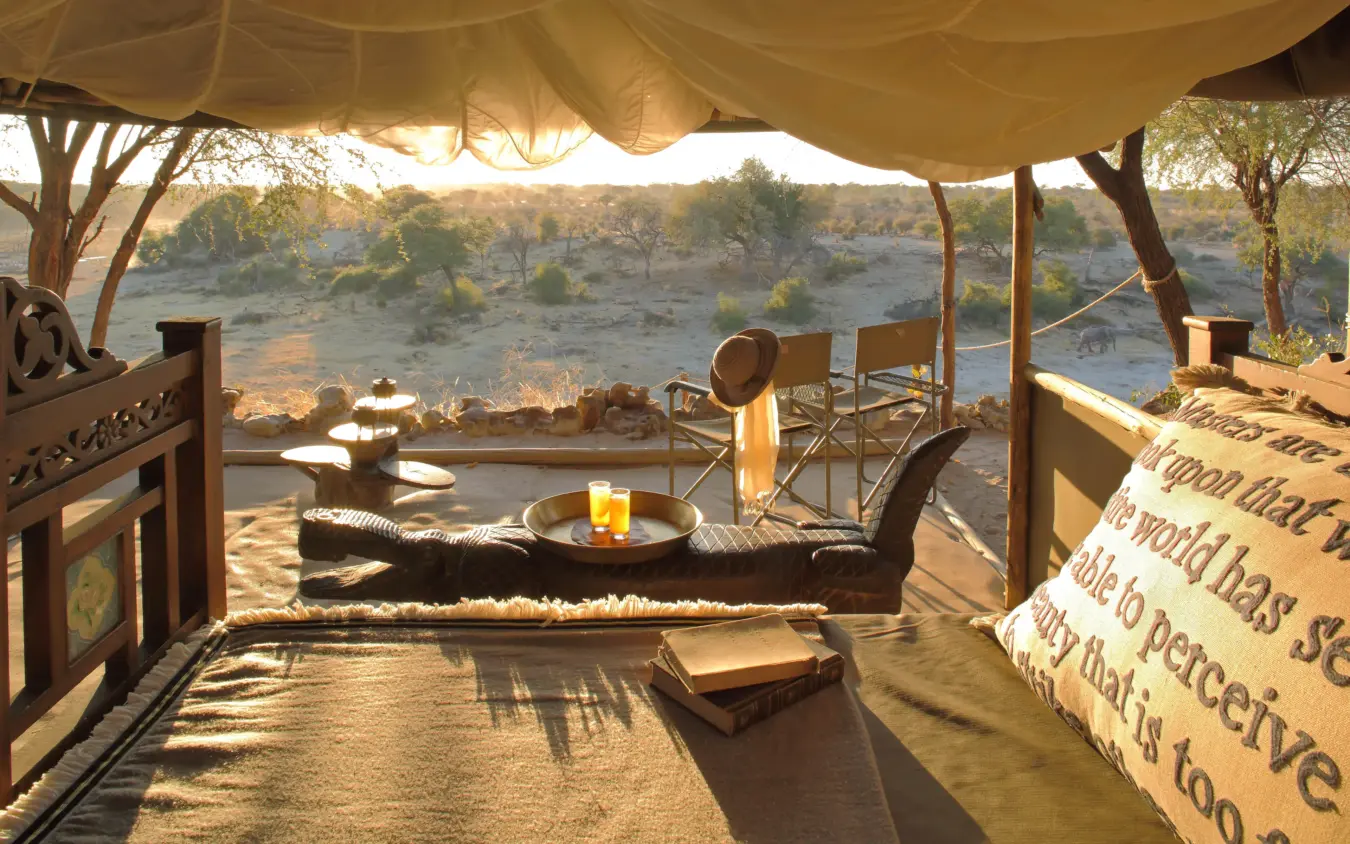
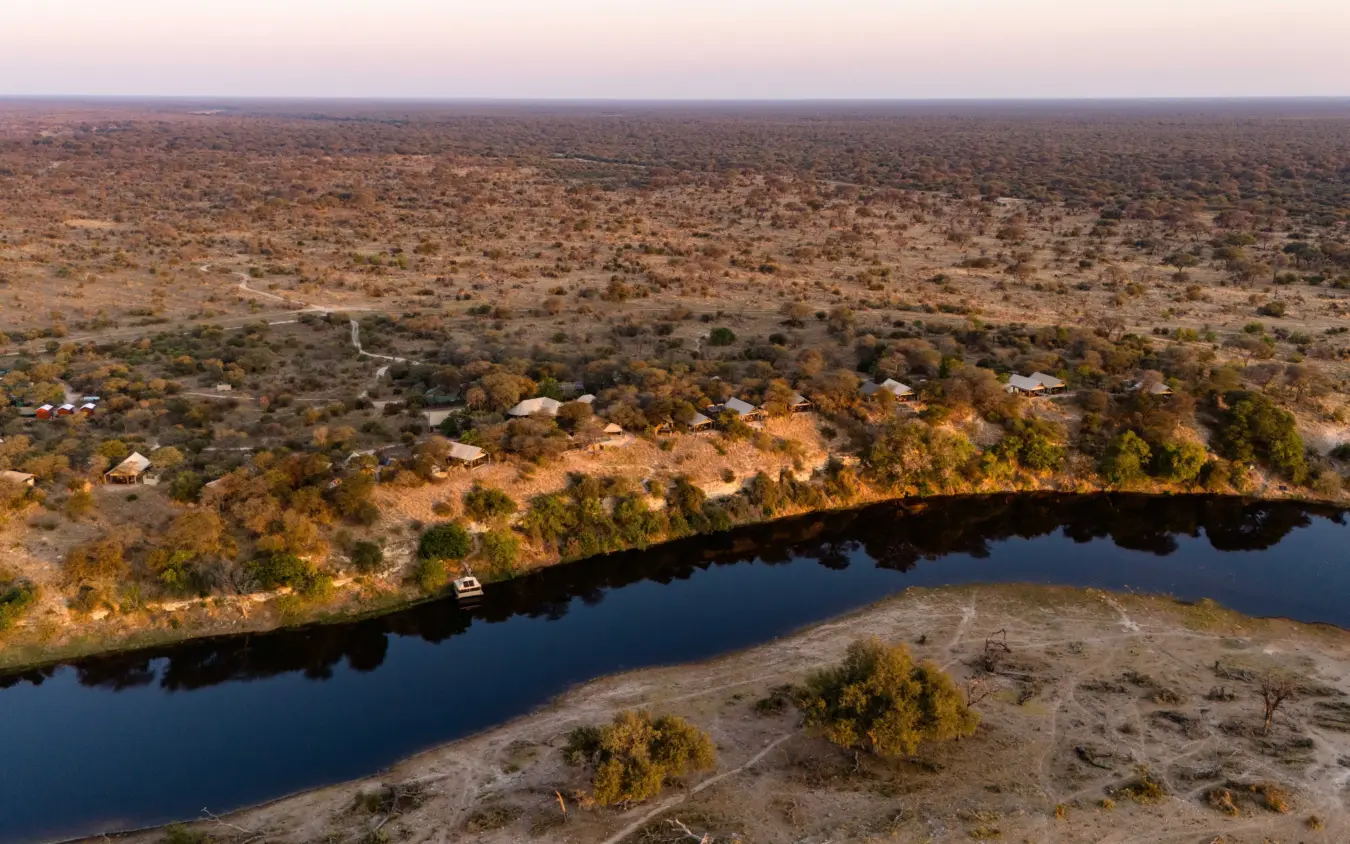
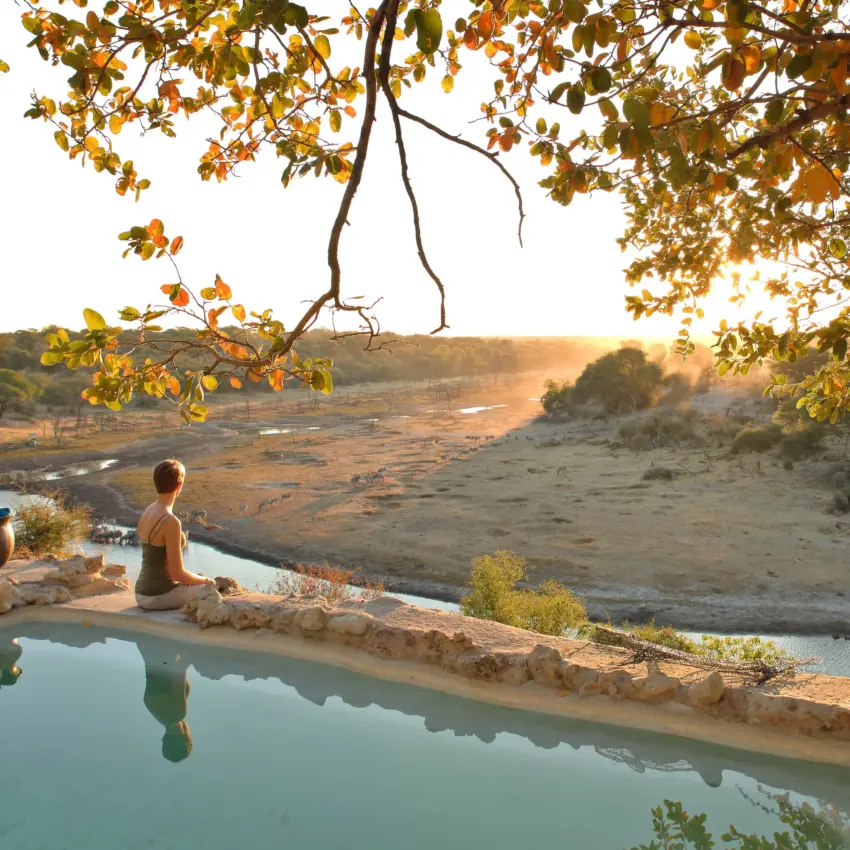
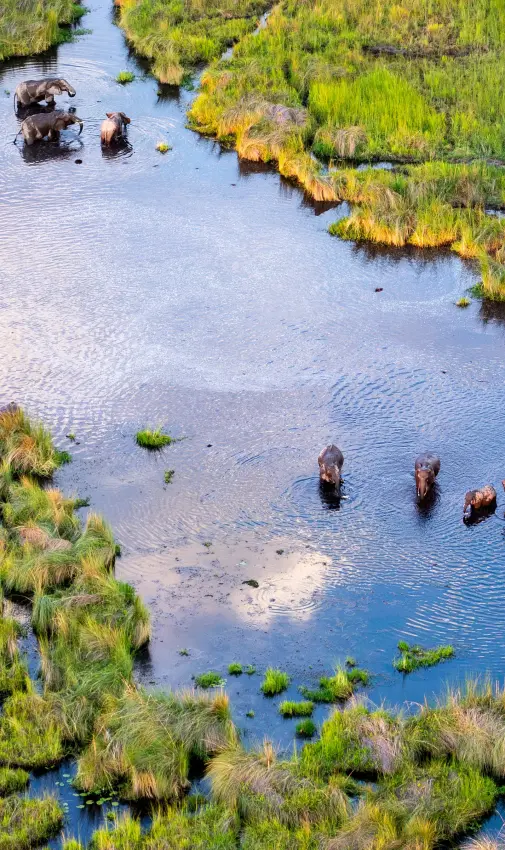
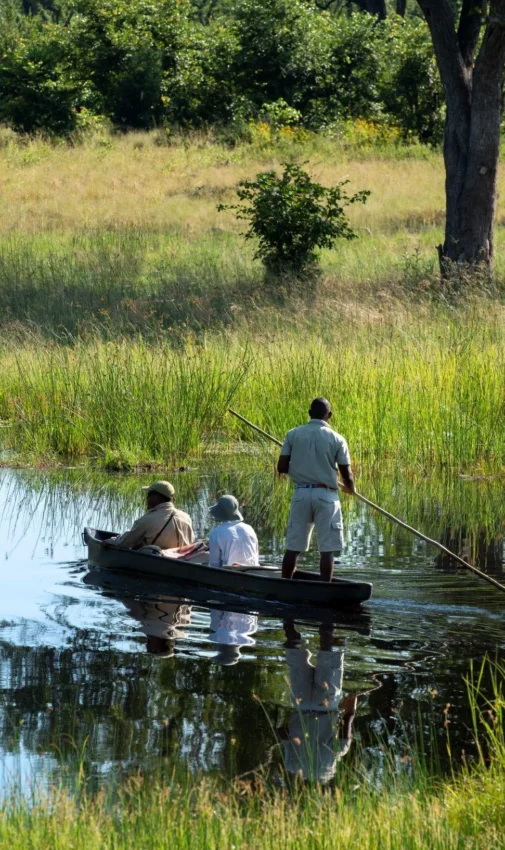
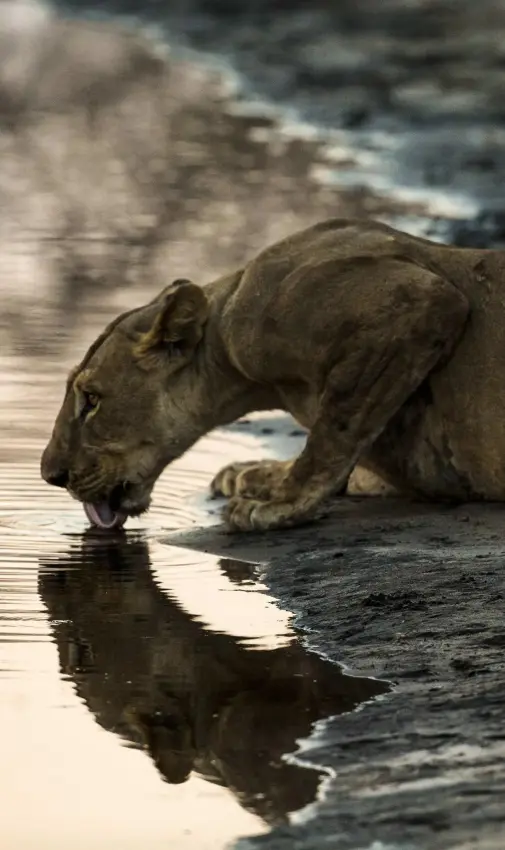
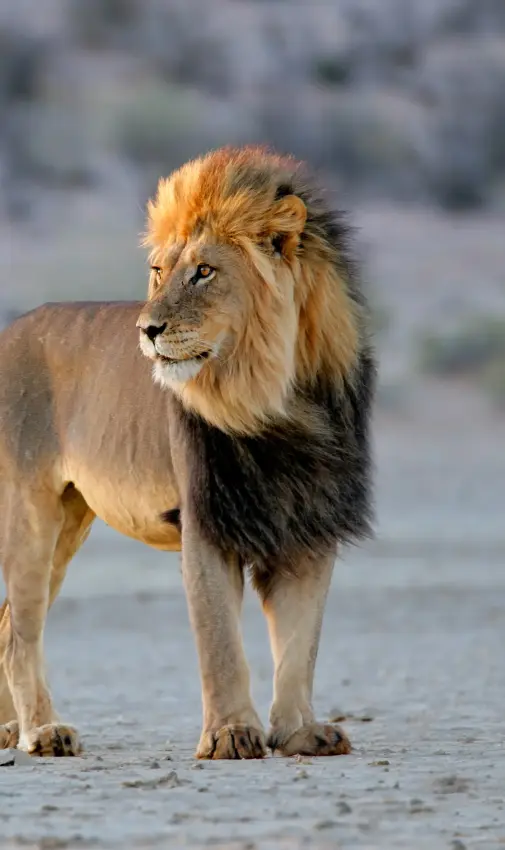
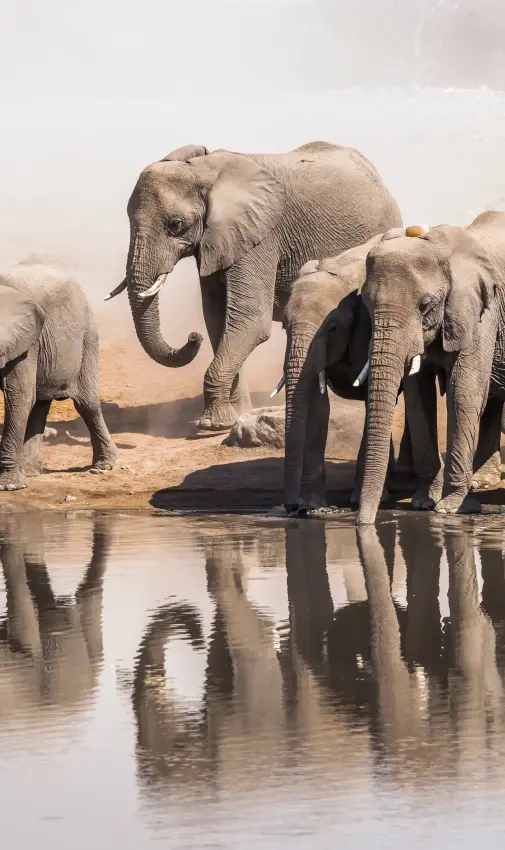
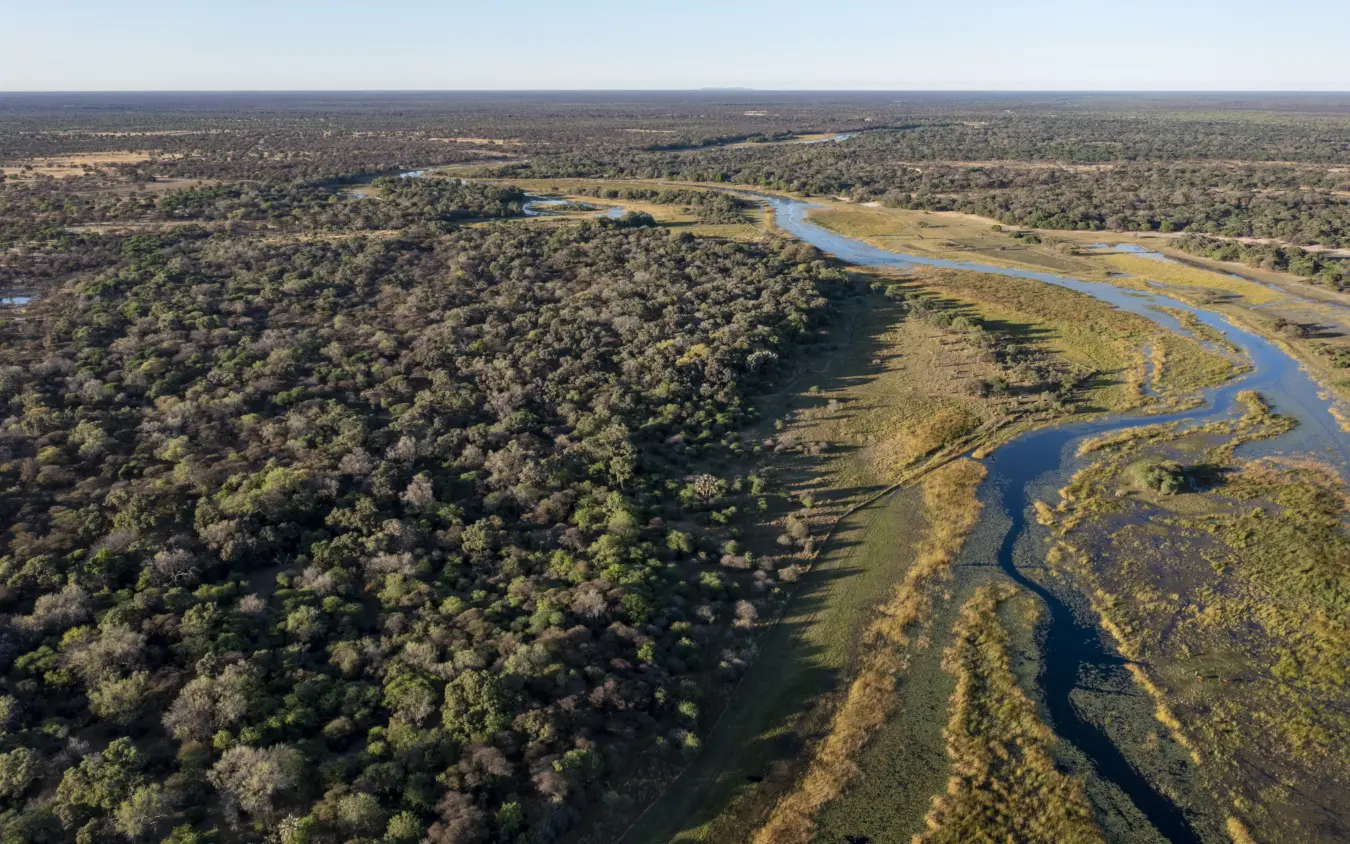
The cliff above the Boteti served as a camping spot for explorers and crocodile hunters. The camp’s Setswana name, teeth of the crocodile, comes from that history. The river ran dry from the mid-1990s and began flowing again in late 2008, and its level still depends on flood pulses arriving from the Okavango. In low-flood years the herds gather around deep pools left in the riverbed rather than a running channel, and the animals arrive either way.
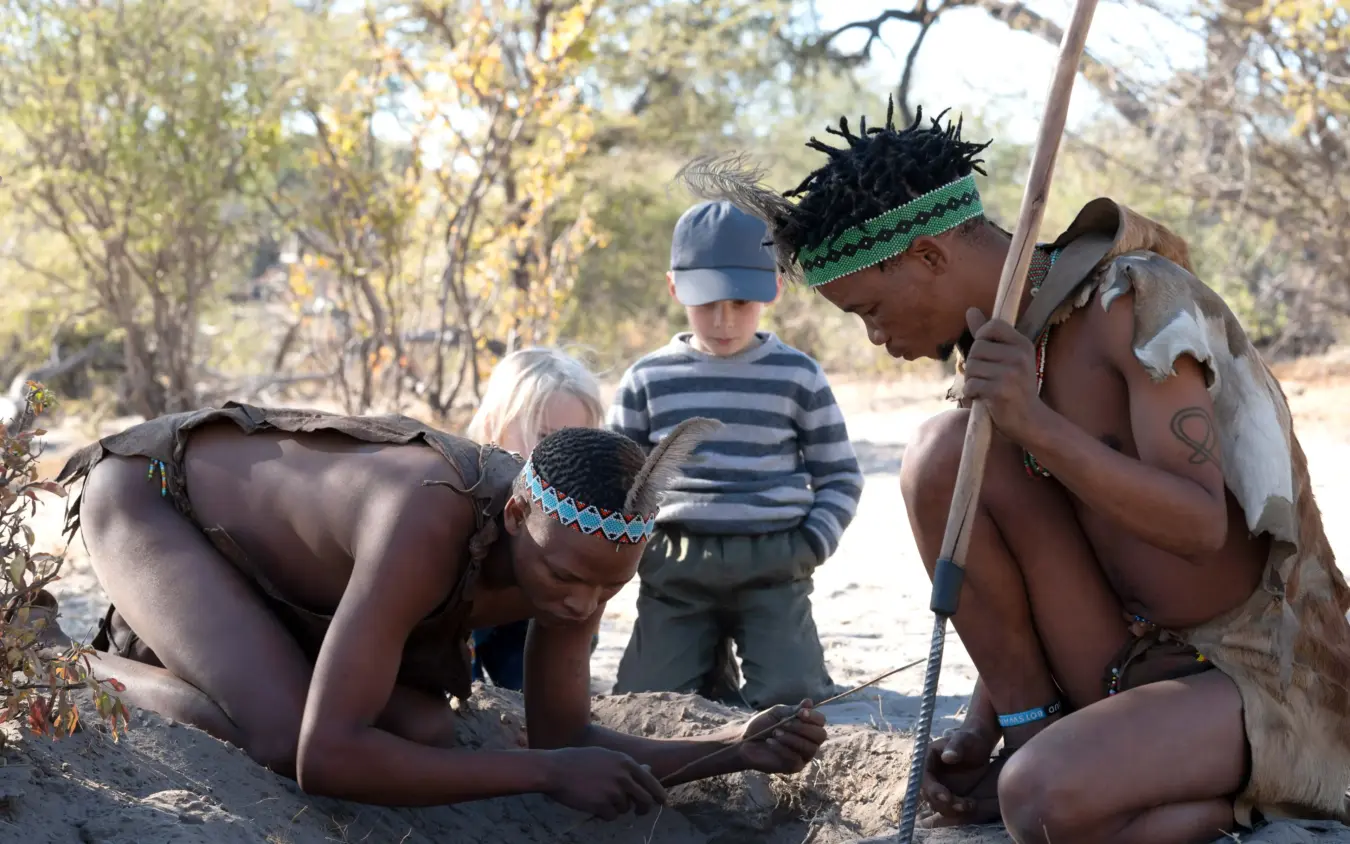
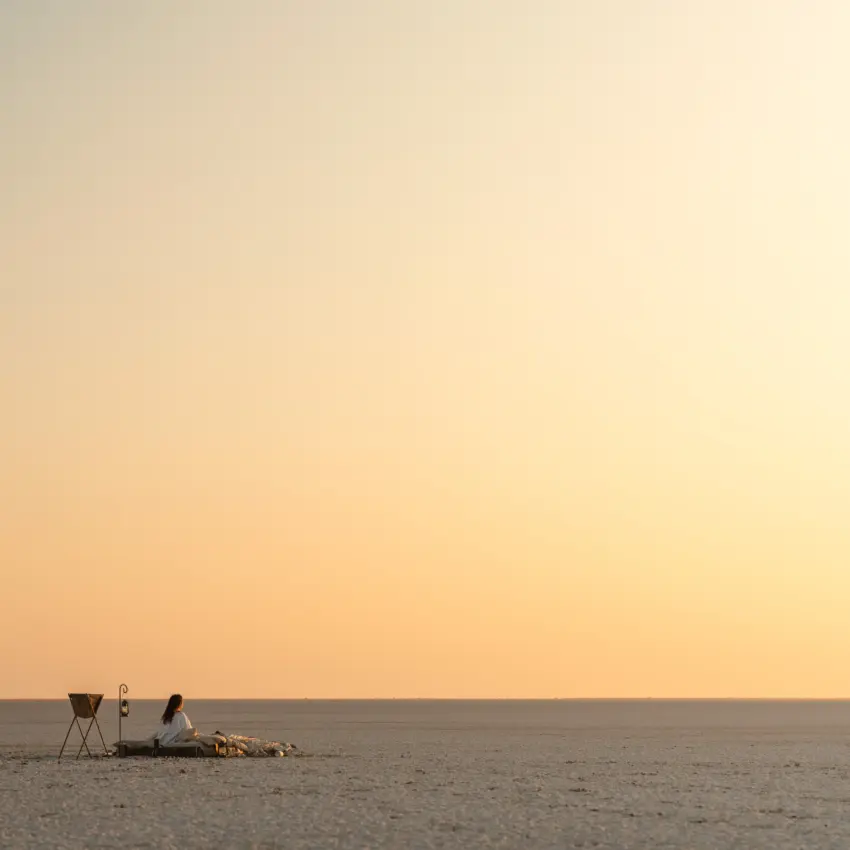
Game drives cross into Makgadikgadi Pans National Park, with picnic lunches along the riverbank, and longer days reach Nxai Pan and its baobabs. Because the camp occupies communal land outside the park, walking is possible straight from the tents. Walks with Ju/’hoansi Bushmen cover tracking, plant use and finding water, at a pace that suits children as readily as adults. Sleep-outs on the salt pans run in the dry season and require a stay of at least three nights.
Owls, including Verreaux’s eagle owl, hunt around the tents after dark
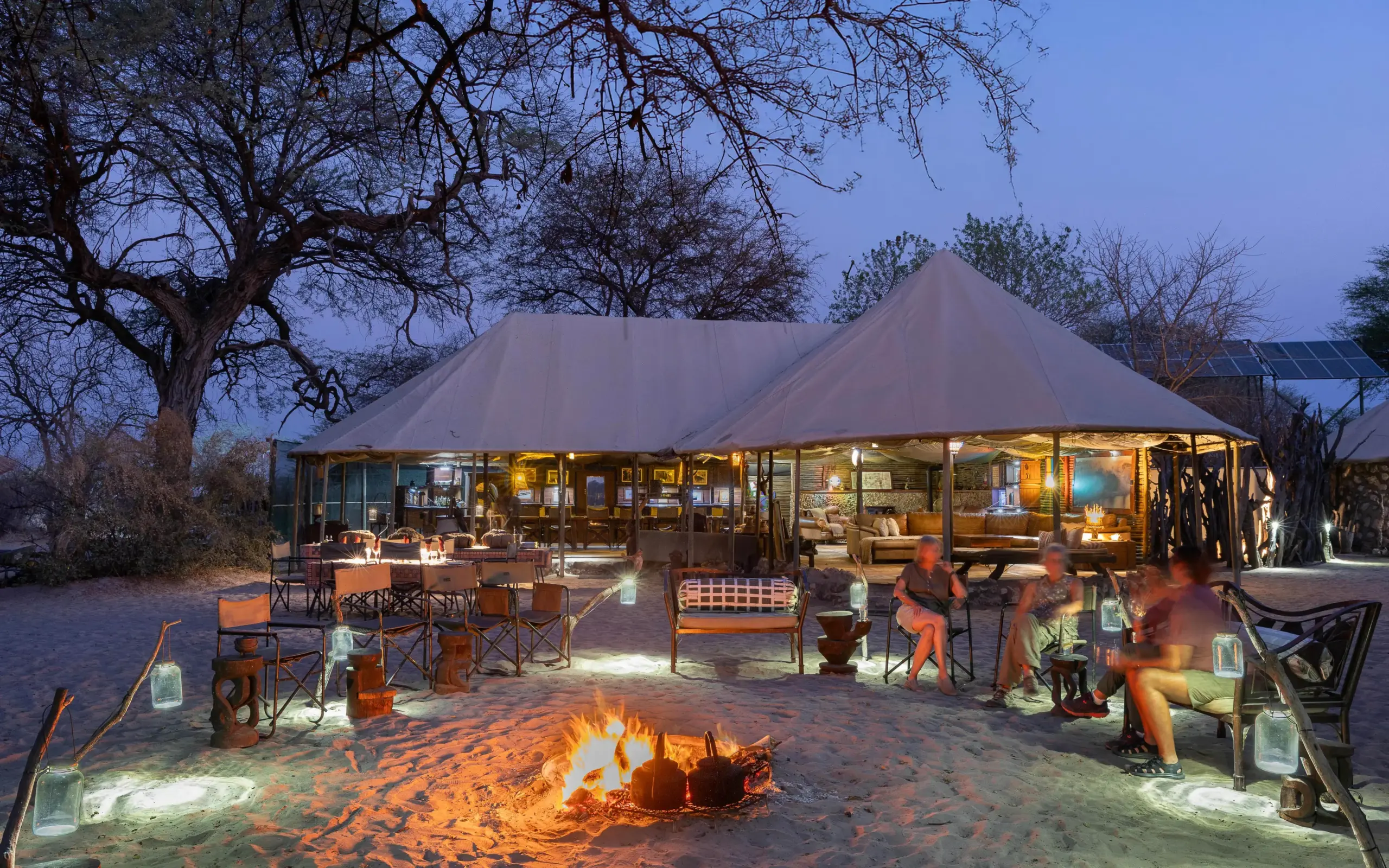
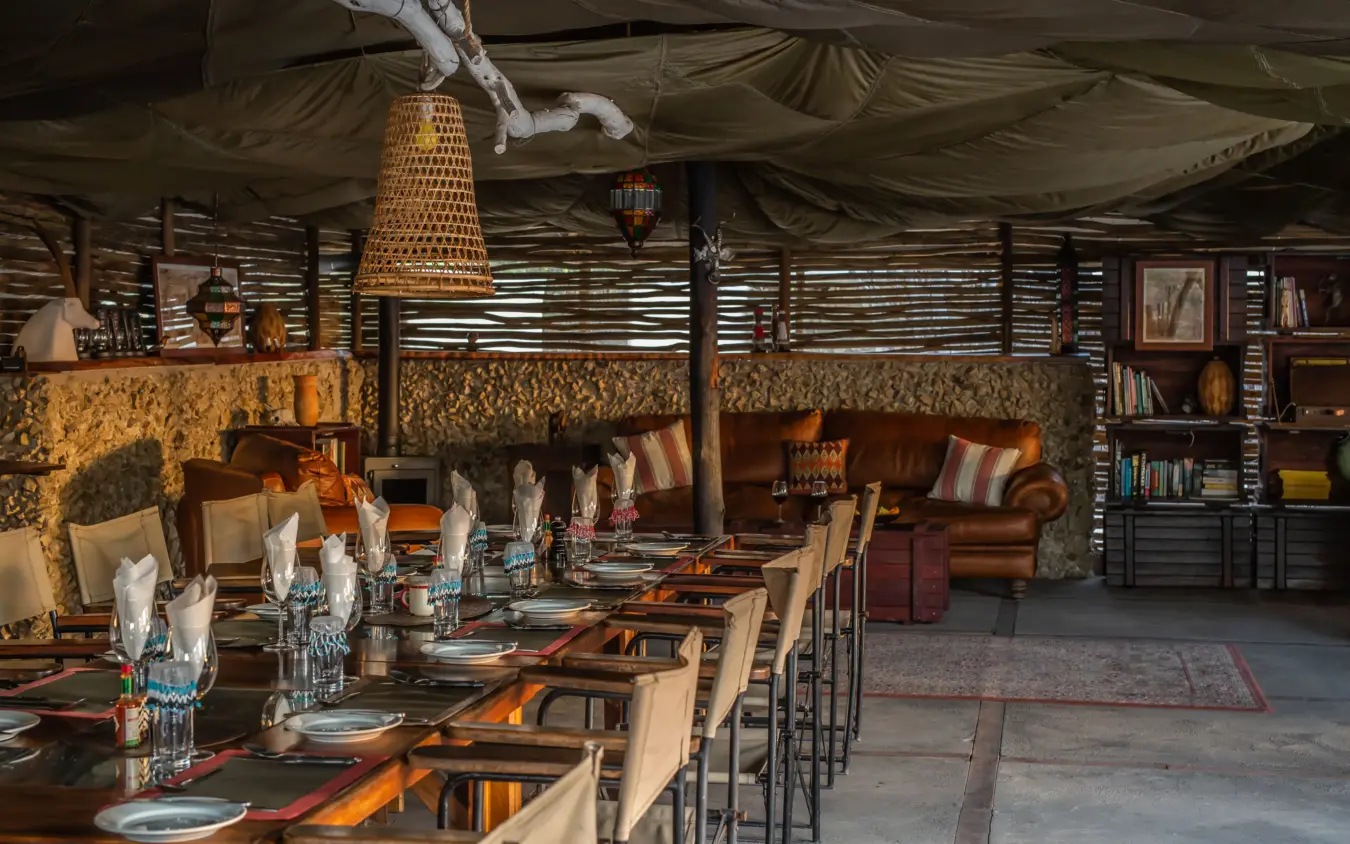
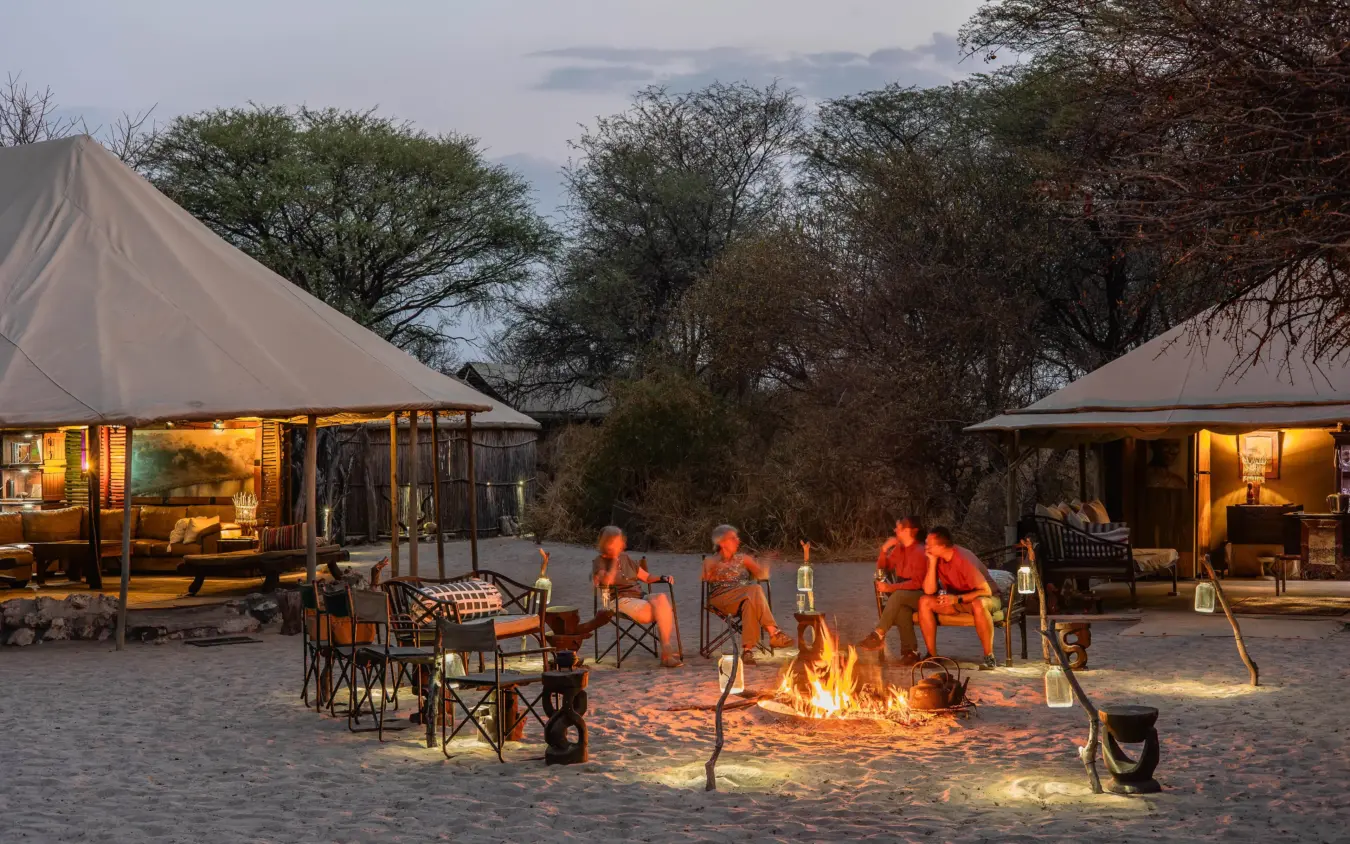
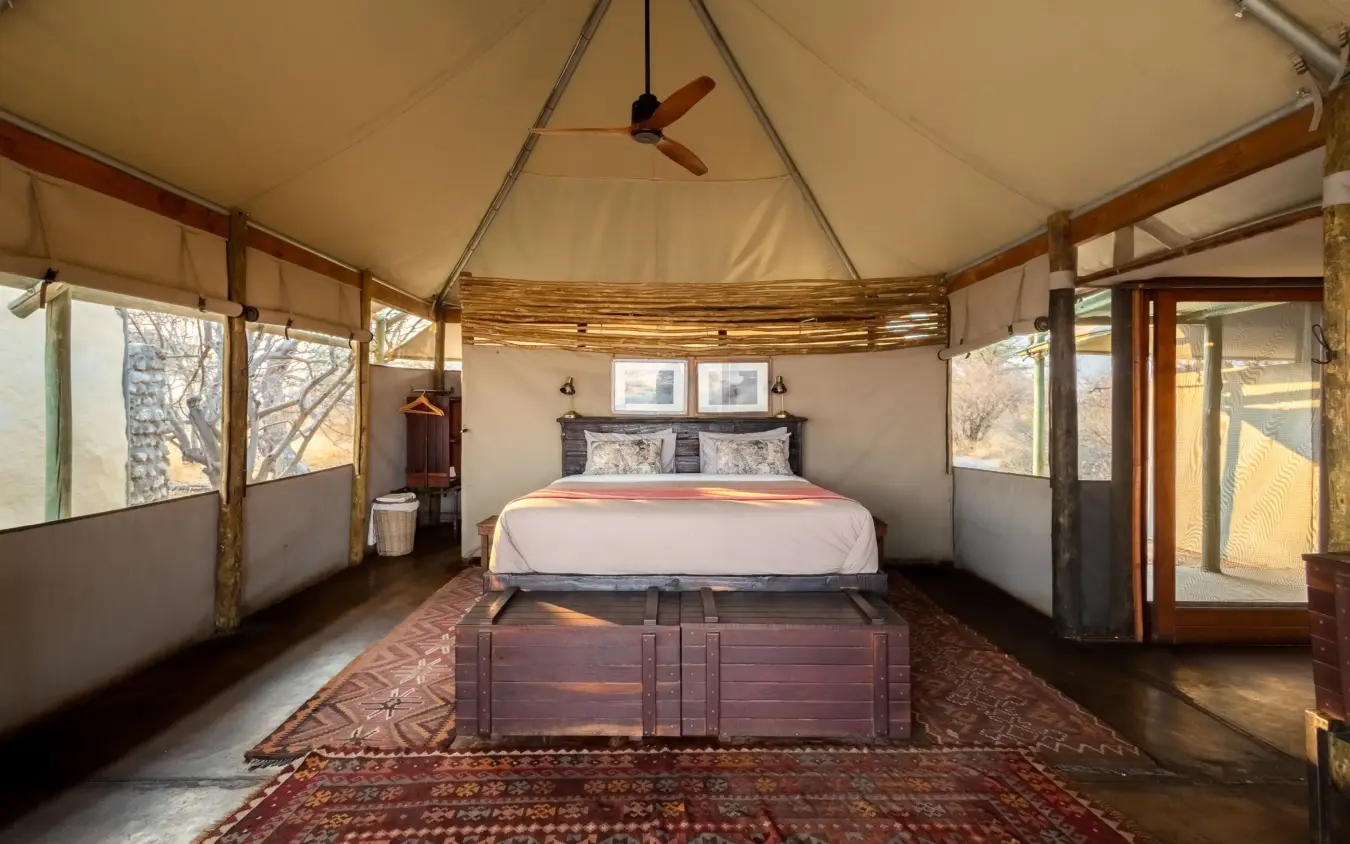
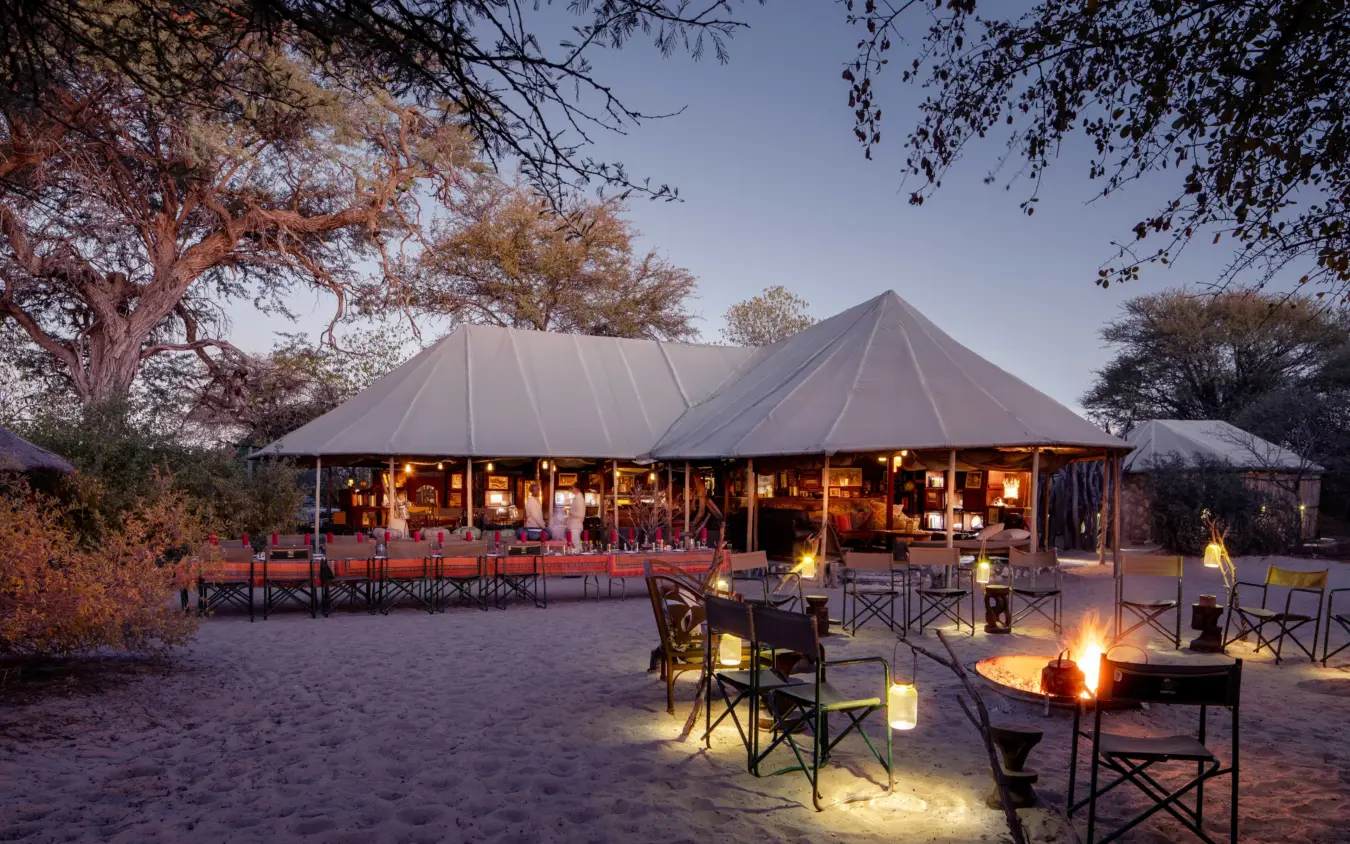
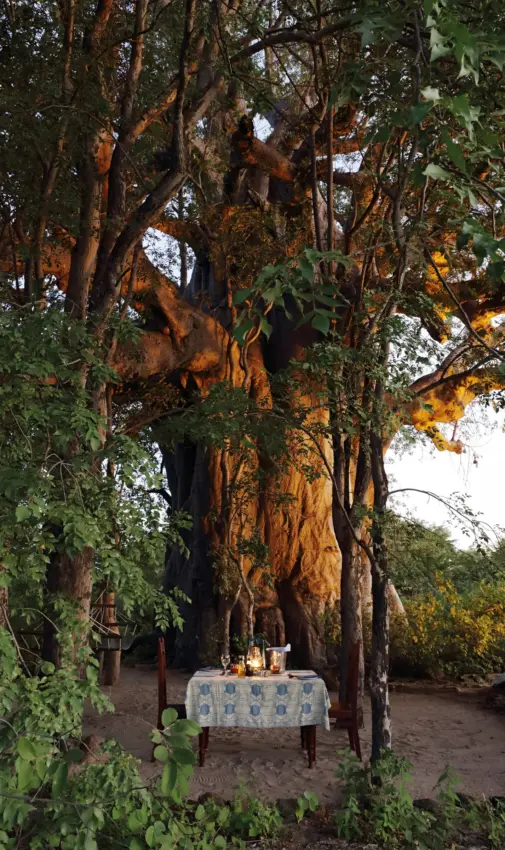
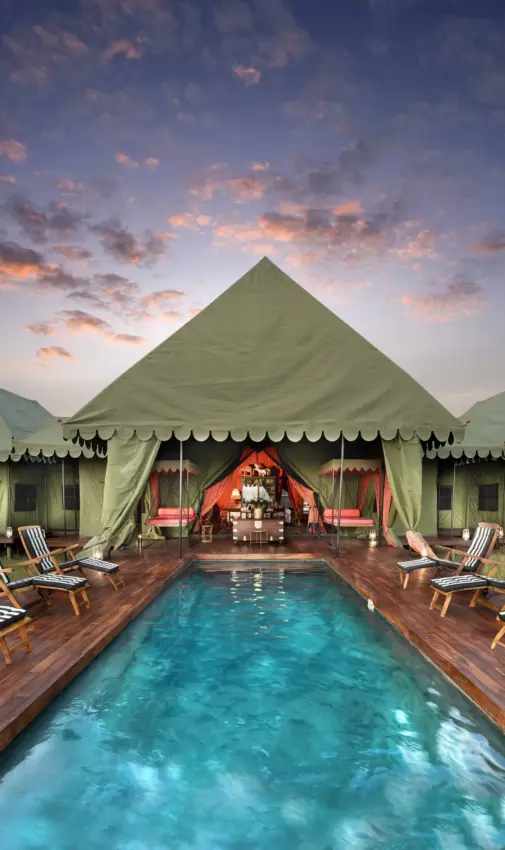
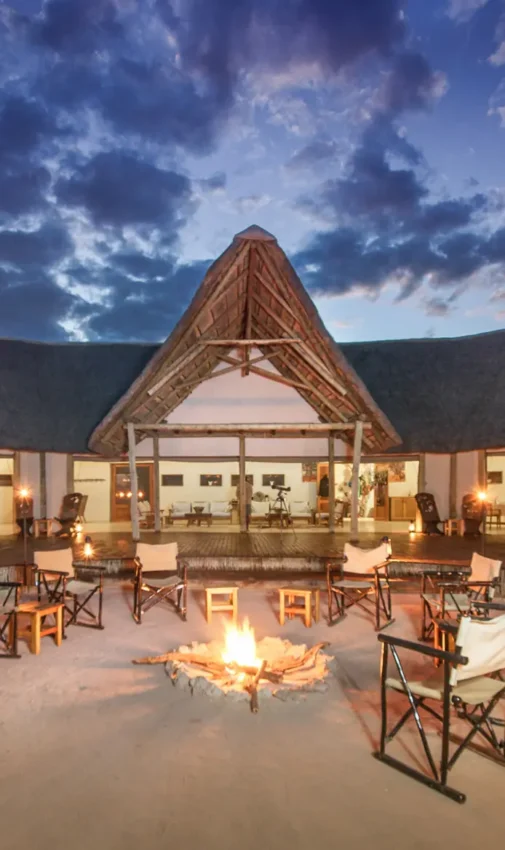
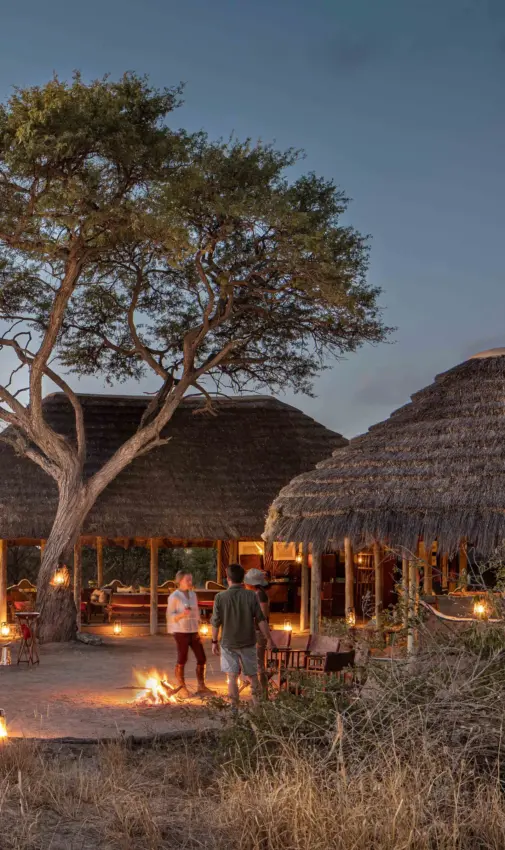
Bread and cakes come out of tins set in mopane coals, and dinner runs to three courses at one long table by lantern light, or beside the fire under open sky. Eating together suits solo travellers as much as families. Owls, including Verreaux’s eagle owl, hunt around the tents after dark. Mornings often begin with elephants below, splashing and low rumbles carrying up the cliff face. Children of any age are welcome, two of the ten tents are laid out for families, and the rock pool at the cliff edge occupies them between drives.
Between the Okavango Delta and the drier Kalahari to the south, Meno a Kwena makes a useful change of pace after days spent on water in the Delta. The dry months from April to October bring the zebras and the predators that follow them, and are the best months for travelling out onto the pans. Village visits to Moreamaoto are possible on request. Solar panels power the camp, set above the Boteti, the same river that draws the herds.