Timing your trip
best time to visit makgadikgadi pans
Two parks in one. White salt flats and quad bikes in the dry months, then rain turns the pans to shallow lakes and Africa’s second-largest zebra migration arrives.
seasonal guide to makgadikgadi pans
Makgadikgadi has two prime windows. The dry season from June to September sets the pans hard and white for quad biking and sleep-outs, with easy meerkats and game along the Boteti River. The green season from December to March floods the pans, when the zebra and wildebeest migration arrives and flamingos gather on Sua Pan. October is the hottest month, and several camps close from mid-October.
month by month details
January is the wettest, greenest month, with the zebra and wildebeest migration spread across the new grass. Afternoon storms are frequent and the pans hold shallow water, so game viewing concentrates on the surrounding grasslands where the herds and their predators have gathered.
Birding is at its peak as migrants arrive and waterbirds work the flooded basins. The trade-offs are real: roads turn muddy and can become impassable, quad biking on the soft pans stops, and the heat and humidity are at their highest. Fly-in access is the sensible way in, and a number of camps are closed.
February stays firmly in the green season, with large zebra and wildebeest herds on the plains and strong birdlife. The pans remain full of water in most years, and greater flamingos and other waterbirds feed where the flooding suits them.
This is good wet-season game viewing rather than a classic pans visit. Quad biking is not on offer, the salt crust is too soft and muddy, and the same access difficulties as January apply. Travellers who want the open white pans and desert activities should choose another month.
March eases the rains while the migration herds are often at their largest and most concentrated. Showers become more sporadic, the grass is mature, and several specialists rate early to mid-March among the best windows for the zebra spectacle as roads begin to improve.
The pans still hold water in many years, which keeps the flamingos and waterbirds around, and Sua Pan can hold breeding greater flamingos. Quad biking remains limited while the crust firms up, so this is a month for game drives and birding rather than pans activities.
April is the turn between green and dry, with water receding and the migration starting to shift west toward the Boteti River. Days are comfortable and nights begin to cool. The herds are still moving through but no longer at their peak on the pans.
Where water lasts, flamingos and waterbirds can still be good on Sua Pan, and desert species begin to come to the fore as the grasslands dry. Late in the month some operators resume limited quad biking where the surface is firm enough. San Camp typically reopens around now.
May is the turn out of the rains, with the wet weather largely over but the pans not yet reliably hard. Days are warm and nights are cooling toward the winter chill. The salt crust is drying through the month, so quad biking and sleep-outs can resume where the surface allows, though soft and damp patches still linger early on.
The big migratory herds are leaving the central pans for the Boteti and other dry-season water, so the focus shifts to desert-adapted wildlife: brown hyena, the habituated meerkats, ostrich, springbok and jackal on the surrounding grasslands. A pleasant shoulder month, but the classic firm white pans come into their own from June.
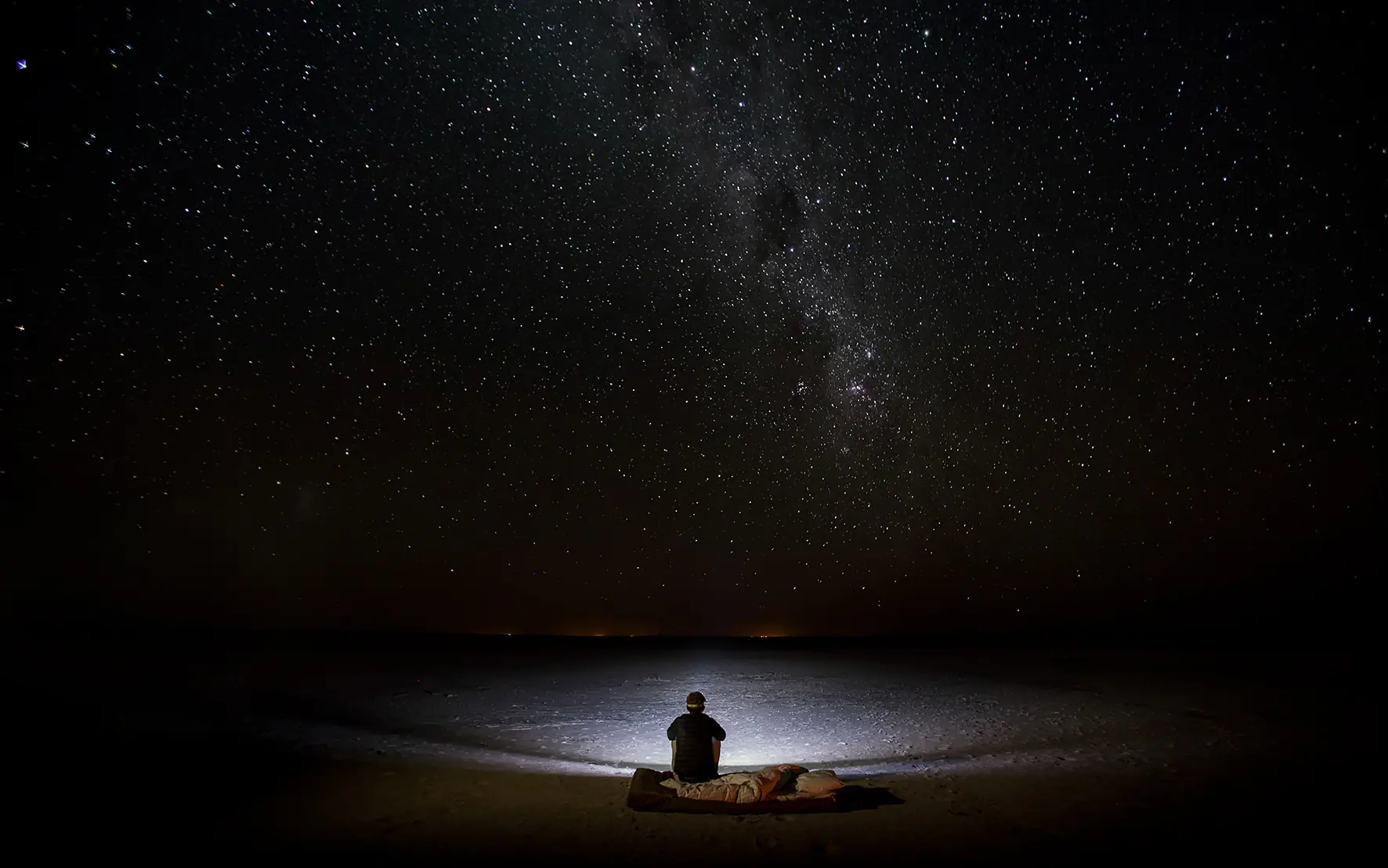
June is cool, dry winter and prime for the pans, meerkats and brown hyena. Days are mild and sunny, the salt flats are hard and expansive, and quad biking and sleep-outs under clear skies are at their best. Nights on the open pans drop to near freezing, so warm layers matter.
The migratory herds are mostly gone from the pans, gathered instead along the Boteti River, so game is centred on desert species and the resident antelope. The short, dry grass makes the habituated meerkat colonies easy to find and watch closely.
July holds the cool, dry pattern with crisp clear days and very cold nights. The pans are firm and the stargazing on sleep-outs is exceptional. Wildlife concentrates along the Boteti, where large numbers of zebra mass at the only permanent water, giving reliable river viewing.
On the grasslands the focus is desert-adapted species: brown hyena, meerkats, ostrich and the smaller predators, with tracks easy to read on hard ground. Quad biking and walks with the San are at their most comfortable. A poor month only if your priority is the flooded pans or wet-season herds.
August keeps the firm dry pans and adds warming days as winter eases. Quad biking, sleep-outs and meerkat viewing are all at their best, and the Boteti continues to hold concentrated game as the dry season deepens.
Wind picks up from August onward and can carry dust across the open salt, which is dramatic but not to everyone's taste. Nights are still cool. This remains a strong month for the desert experience, with the migratory herds away at dry-season water rather than on the pans.
September keeps the pans dry and accessible while the heat and wind build. Midday temperatures climb and the wind continues, but the salt flats, photography and sleep-outs are all reliable, and quad biking is best taken early or late in the day.
Wildlife pressure around the Boteti is high as water stress grows, and the desert species hold on the grasslands. This is still a prime month for the dry-season experience, though heat-sensitive travellers may prefer June to August. It is not a month for green-season birding or flooded pans.
October brings the pans at their most stark alongside the hottest weather of the year. Days can be punishing, with dust and wind, and quad biking is comfortable only in the early morning and late afternoon. The concentration of zebra and wildebeest at the Boteti is at its peak as they mass at the last water.
The pans themselves are fully accessible and the desert game is reliable, but heat is the deciding factor. Many camps, San Camp among them, close around mid-October for the wet season, so anyone sensitive to heat is better suited to the cooler dry months.
November is the hot, unpredictable break of the rains, when the first storms begin to fill the pans. The intense heat starts to ease as cloud builds, and early in the month the pans can still be dry enough for quad biking before the rain shuts it down.
The zebra migration begins to move back as the new grass sprouts, usually from late November, and the first waterbirds appear on fresh standing water. It is a variable month that can deliver both the late dry pans and the start of the green-season movement, but expect heat and scattered storms.
December settles into the green season, with the migration on the pans and the first big bird gatherings. Afternoon thunderstorms are regular and the landscape turns green and vivid. Large zebra and wildebeest herds graze the new grass with predators in tow, part of Africa's second-largest migration.
The flooding pans draw waterbirds and, where levels suit, greater flamingos on the larger basins such as Sua. Quad biking on the central pans is largely off as the surface softens, so the experience moves to game drives and walks. A rewarding wet-season month, but not one for the classic dry salt-pan trip.
Plan your perfect botswana safari
Tell us a little about what you have in mind and one of our specialists will be in touch.
frequently asked questions
The dry months, roughly May to October.
The crust has to be hard and dry before anything can drive or sleep on it, so quad biking and the night out on the salt run only in those months. In the wet season the surface turns to mud and the activity stops.
The grasslands are still open in the green months, and the camps run other days.
If sleeping out on the pans is the reason you are coming, book the dry season and say so.
The green season, roughly December to April.
The rains bring grass to the pans and the zebra come out of the Boteti with their foals, which is one of the largest zebra movements in Africa and almost nobody sees it. Predators follow.
In the dry months the same herds concentrate on the Boteti River instead, which is a different and equally good spectacle.
So there is no wrong month for the zebra, only a choice between the two halves of their year.
More than in most of Botswana, because the pans change completely.
From December to April the salt holds water, flamingos arrive in good years, the grass comes up and the zebra move in with their young. Rates are lower and the camps are quiet.
What you lose is the salt activities, which need dry ground.
For the landscape and the migration, the green months. For quad bikes and a night on the crust, the dry ones.
Very hot in October, and cold at dawn in June and July.
October is the hottest month by some distance, with the pans throwing heat back at you and the afternoons hard work. Winter nights on open ground are genuinely cold, which matters if you are sleeping out.
There is no shade anywhere on the salt, so the sun is relentless in any month.
Pack layers, a proper hat, sun cream and a warm jacket for the nights.
All year, and the mornings are the time.
The habituated families forage every day whatever the season, so this is the one activity that does not depend on the weather. They emerge to warm up shortly after sunrise, which is when the sitting is best.
Winter mornings are cold and they are slower to come out, which usually makes for a longer visit.
It is the single most reliable thing we book anywhere in Botswana.
June to October, when both are at their peak.
The delta is flooded and concentrated, the pans are dry enough for the salt activities, and the flight between them is twenty minutes. That is the classic Botswana pairing.
In the green season the delta weakens while the pans come alive, so the balance flips.
Tell us your dates and we will weight the nights towards whichever of the two is having the better season.
rated five stars by our clients

our approach
remote, exclusive
& personal
Every journey starts with a conversation. We take the time to understand your vision before we start planning.
Whether by phone or in person, we work with you directly to shape something that is considered, personal, and expertly delivered.
Every journey starts with a conversation. We favour a direct, personal approach: understanding your vision before anything else.
Whether by phone or in person, we work with you directly to shape a journey that is both thoughtfully considered and expertly delivered.
Get in touch to start planning yours.