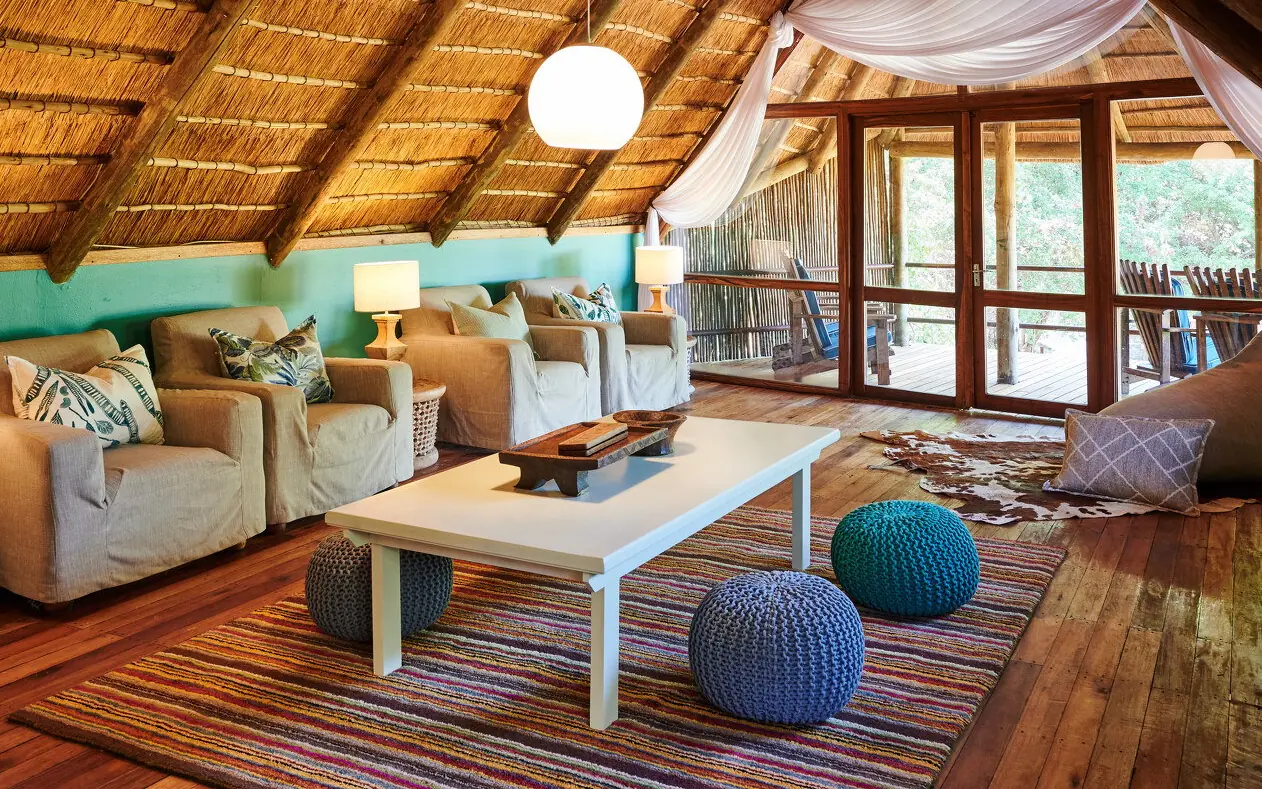
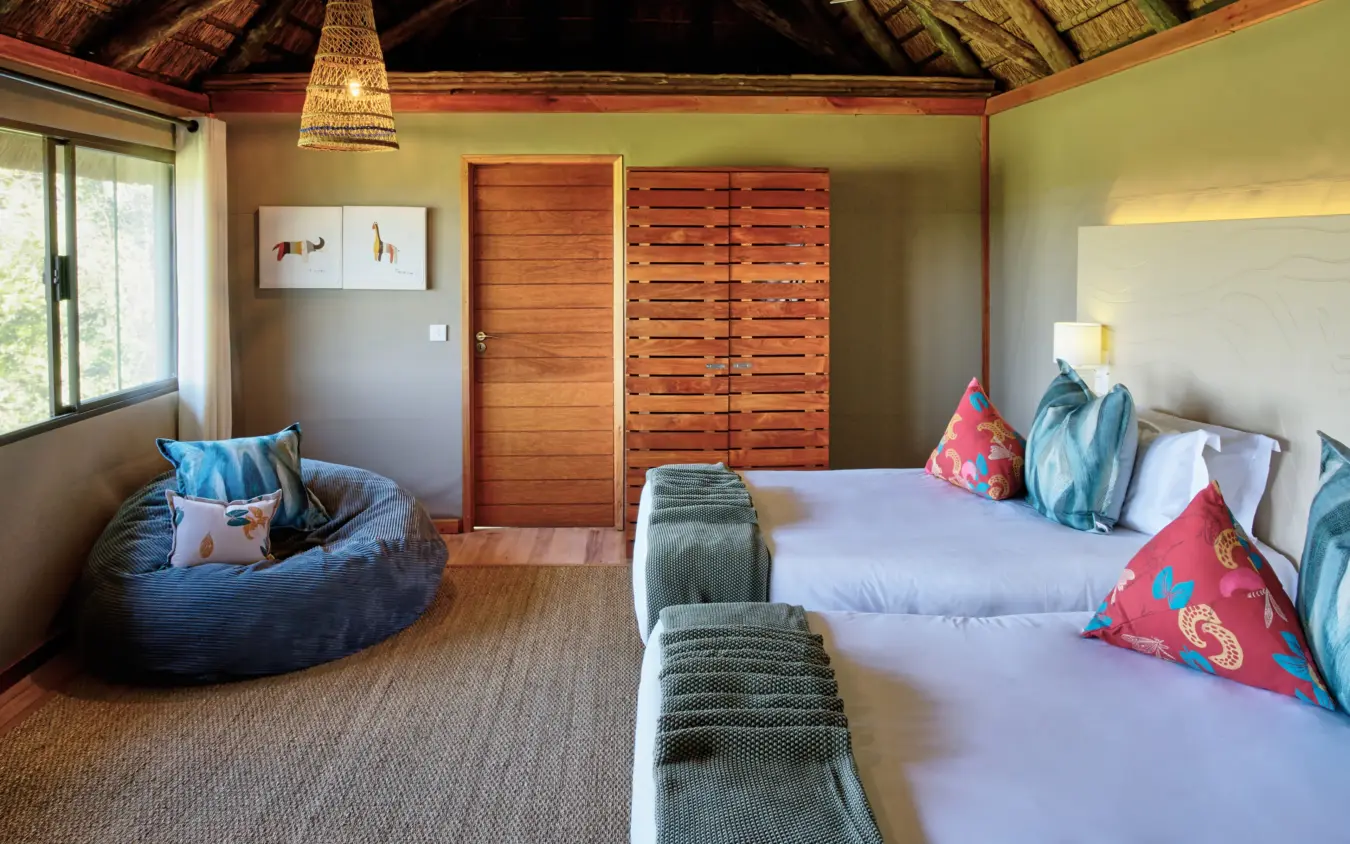
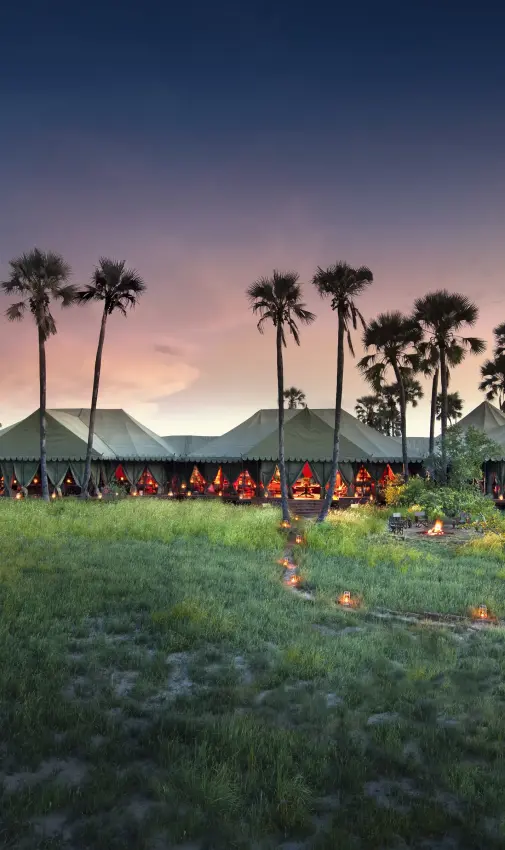
Twelve thatched suites are spaced apart along the cliff on raised timber platforms, each glass-fronted and opening onto a private deck with a wide view over the river valley. One is a family suite with two en-suite bedrooms, and children are welcome from the age of six. The 2023 refurbishment took its colours from the landscape outside: rust and earthy browns from the desert, cool blues and greens from the sky and the water. Fans move the air in place of air conditioning, and the wi-fi in the rooms runs on a satellite link that drops out from time to time.
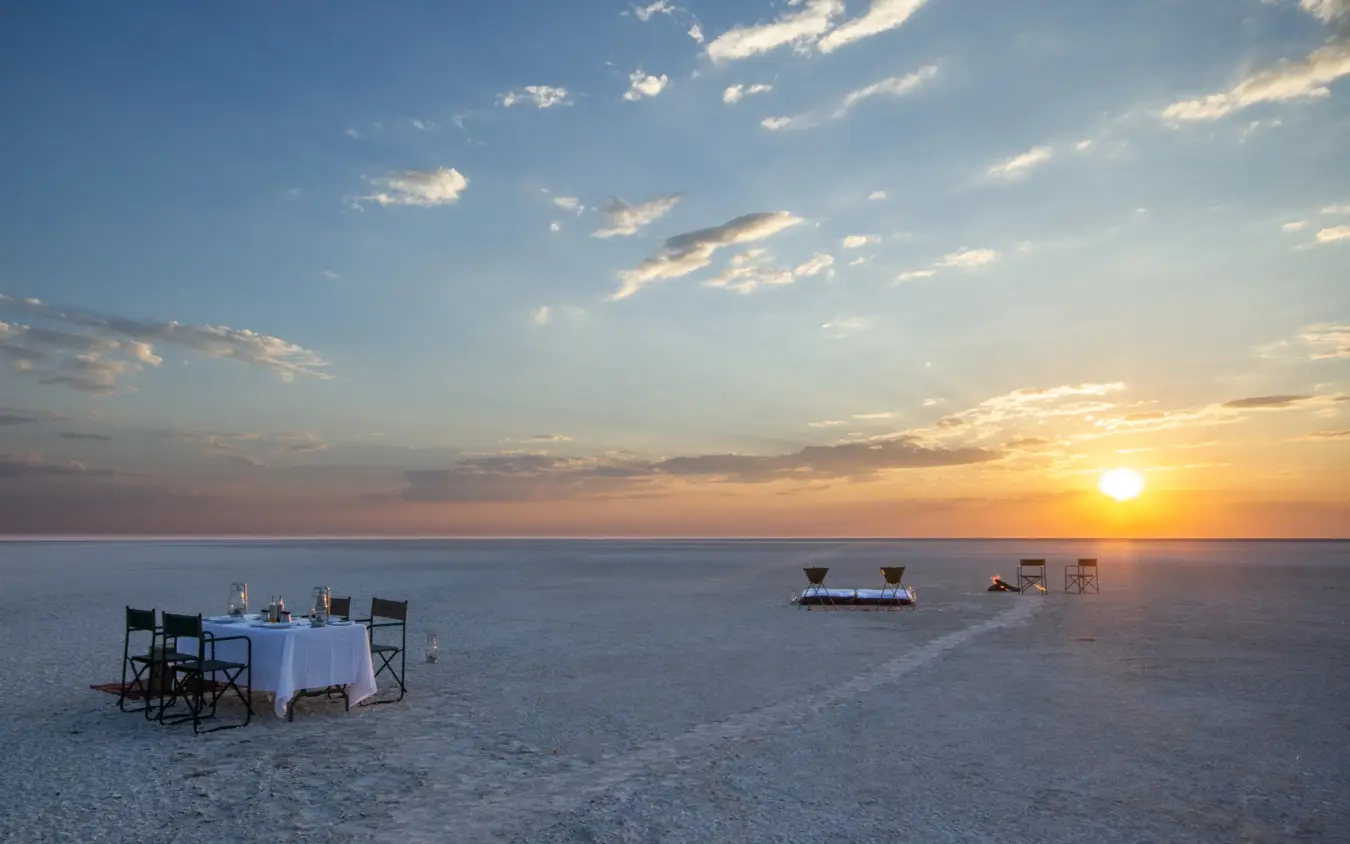
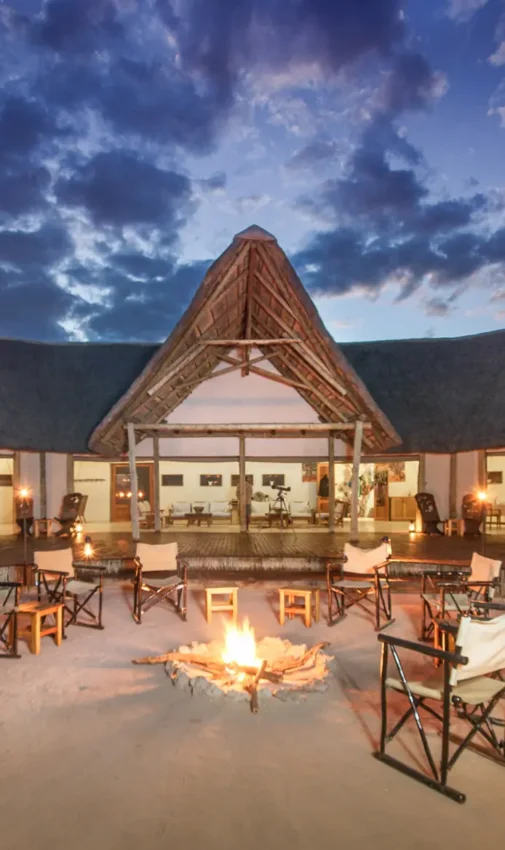
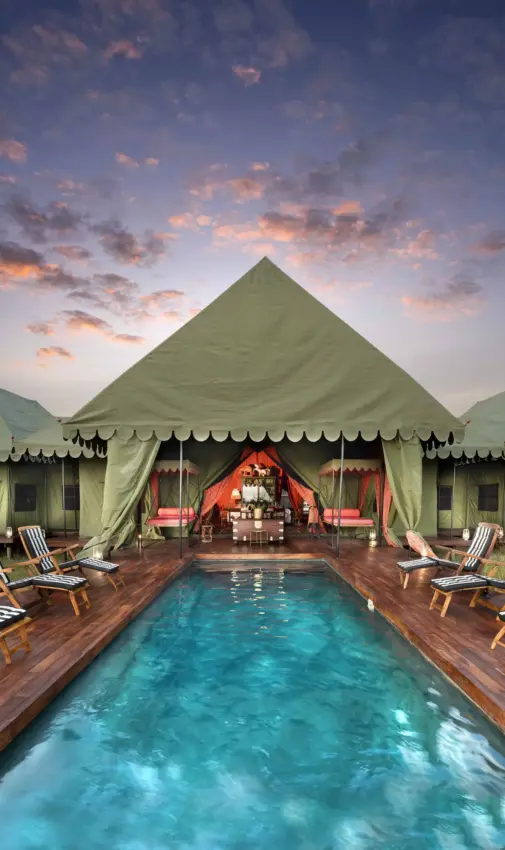
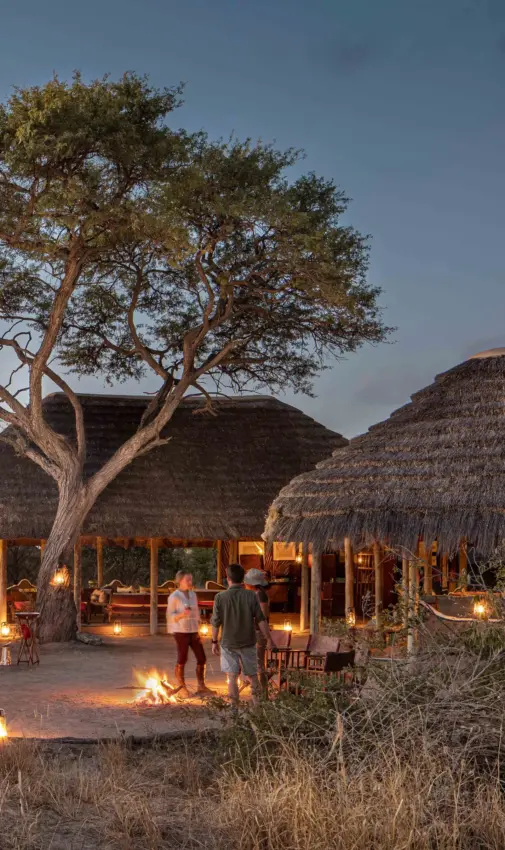
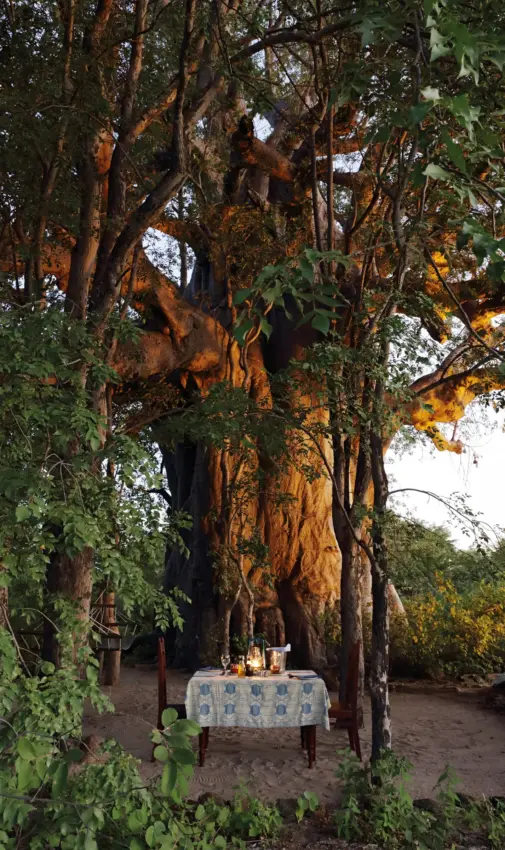
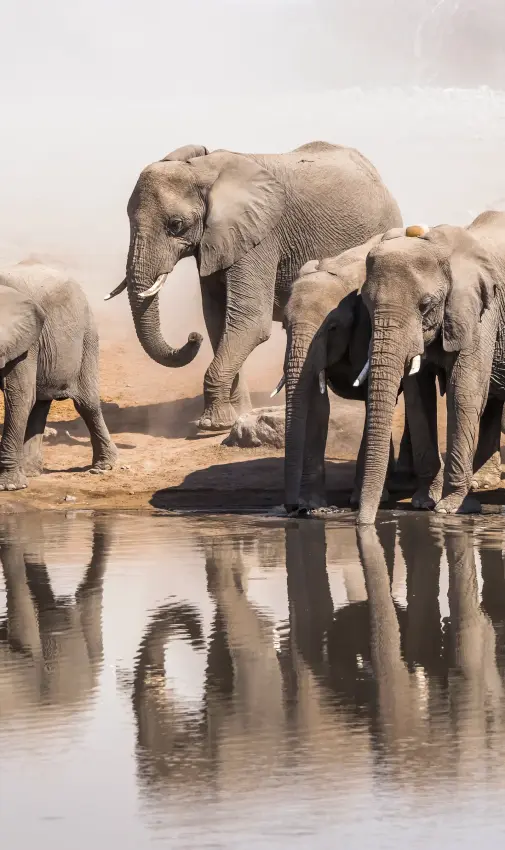
Timber and thatch frame the main lounge, dining area and bar, which look across the valley into the park. The pool overlooks the river, and as the light goes, guests drift out to a fire pit on the cliff edge beside the boma. In the late afternoon the low light catches the dust that hooves raise on the far bank. Dinner is served indoors or out, and some evenings it leaves the lodge altogether for a table set out in the bush.
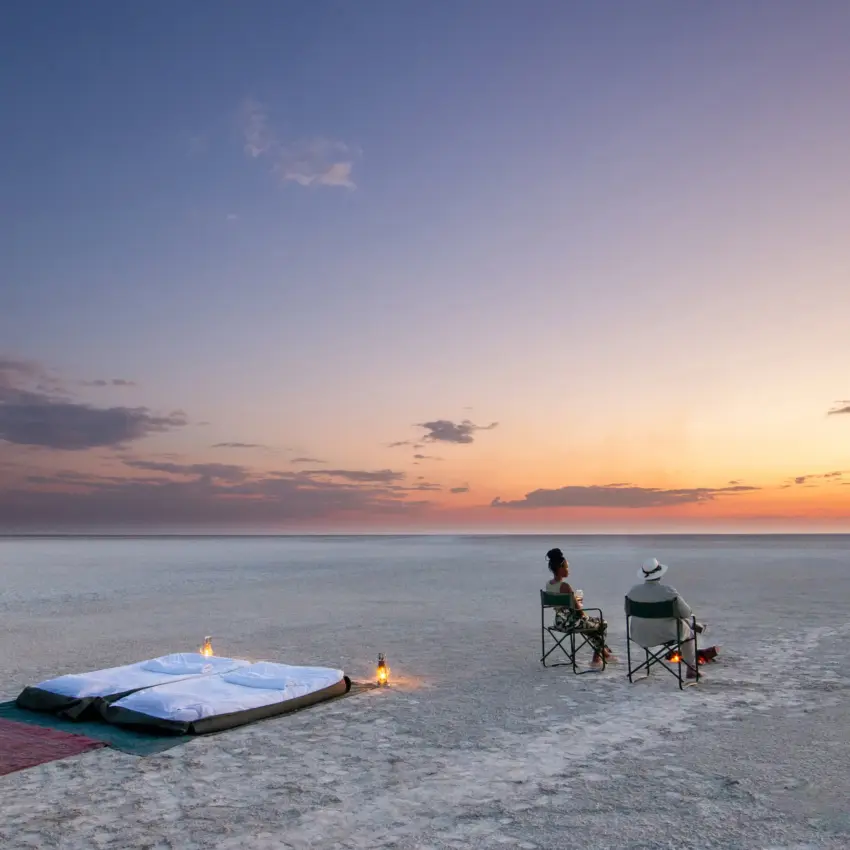
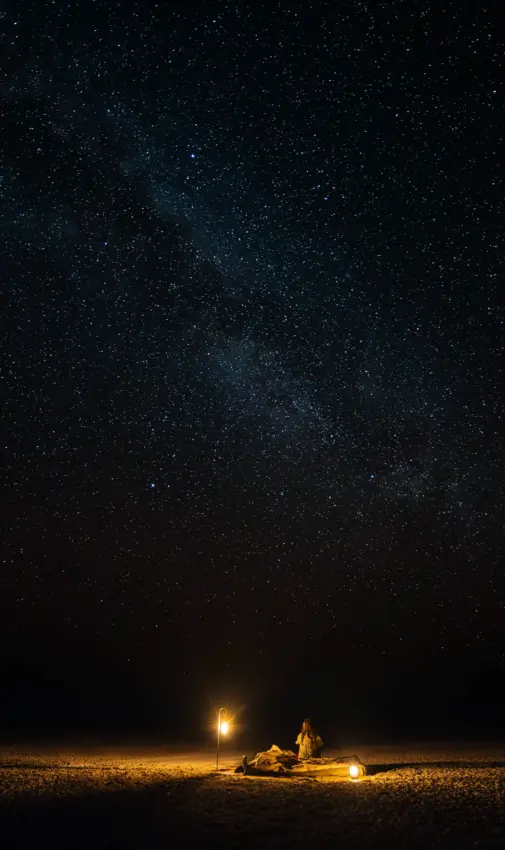
On the pan, flat white salt runs to the horizon, with no artificial light and almost no sound.
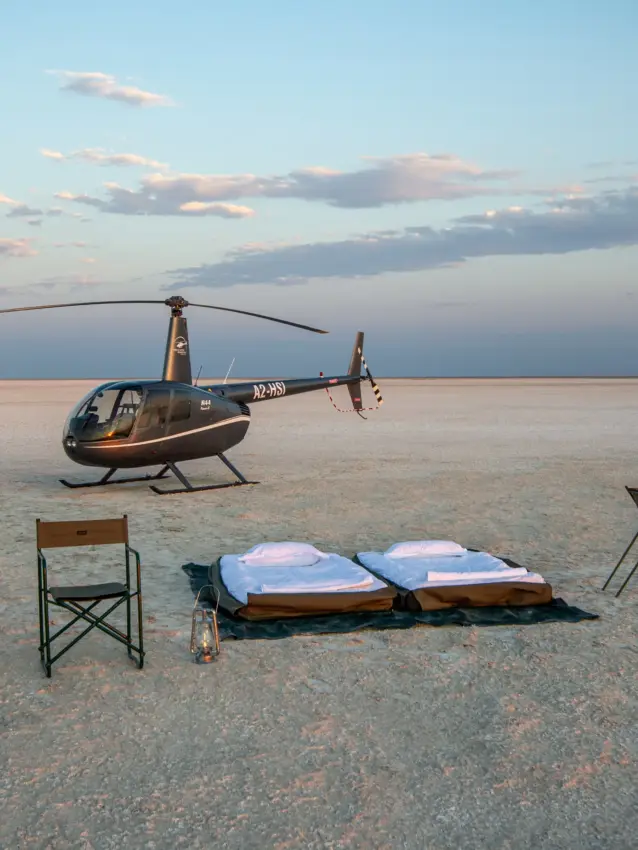
The Makgadikgadi Pans themselves are too remote for the daily activity schedule, but stays of three nights bring them within reach. From mid-June to October, a guided sleep-out takes guests onto the flats, where bedrolls are laid out under the open sky and dinner is cooked over a campfire. On the pan, flat white salt runs to the horizon, with no artificial light and almost no sound. The same three-night stay also opens up a day trip to Nxai Pan and Baines’ Baobabs.
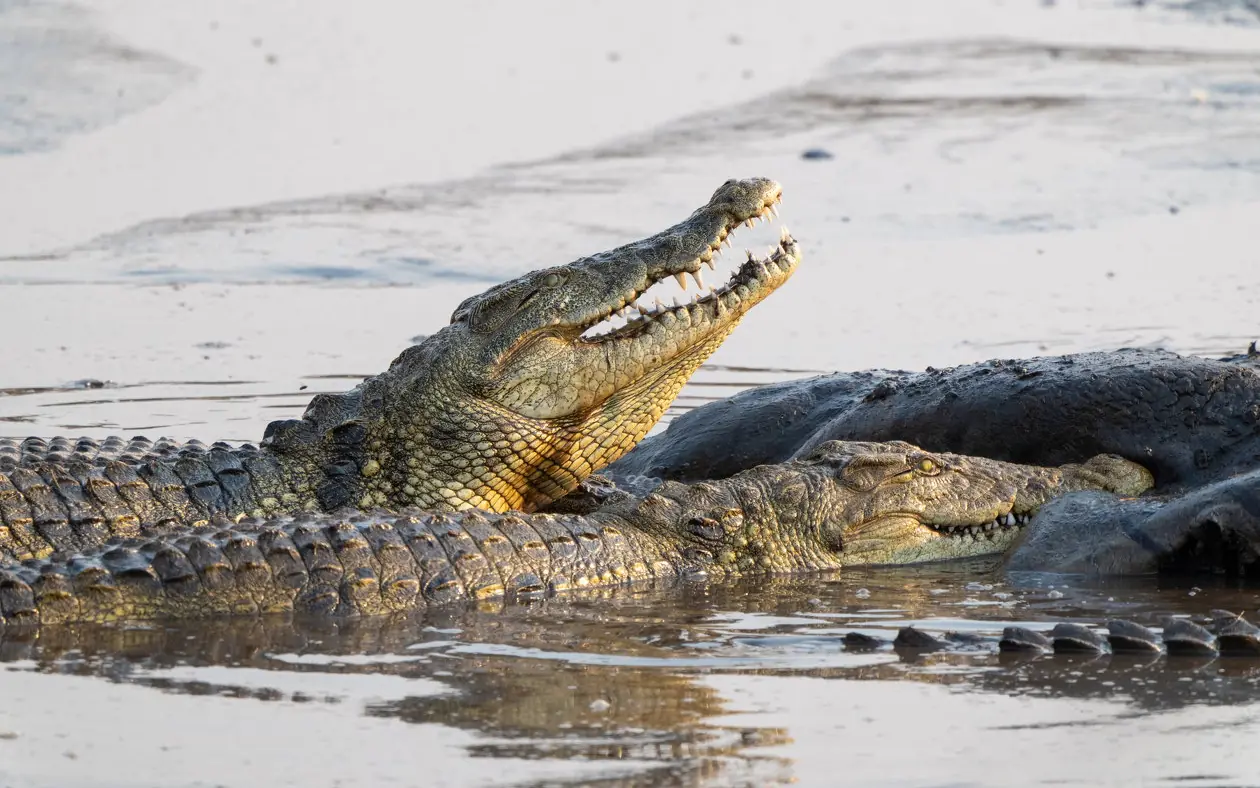
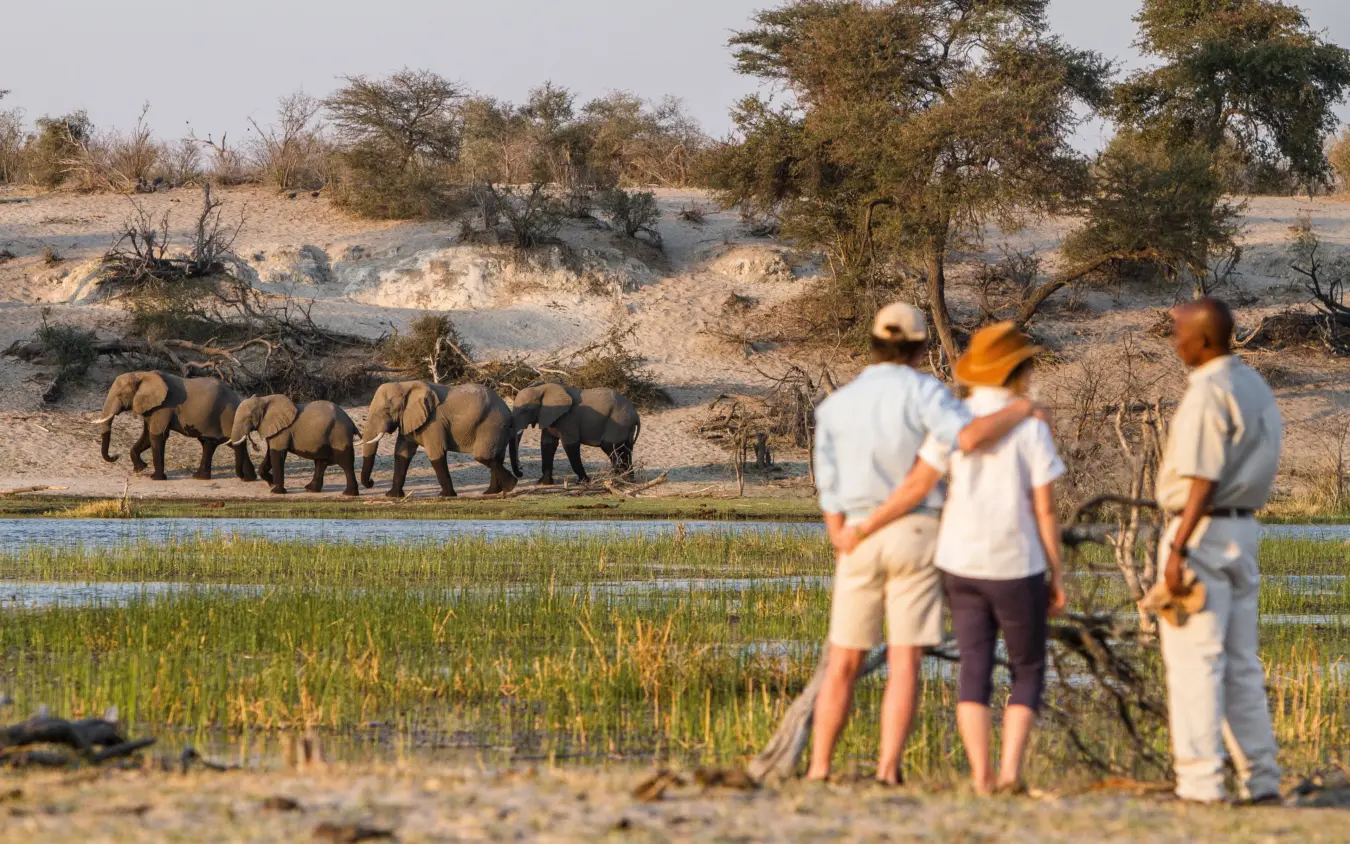
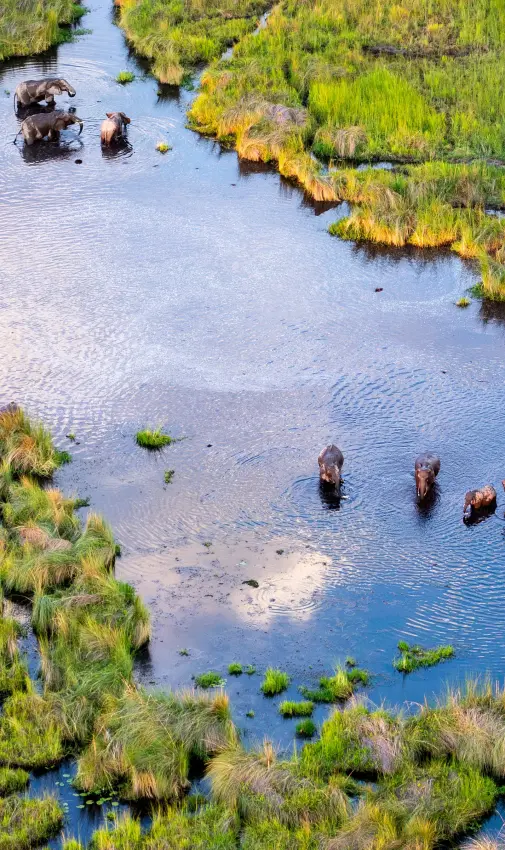
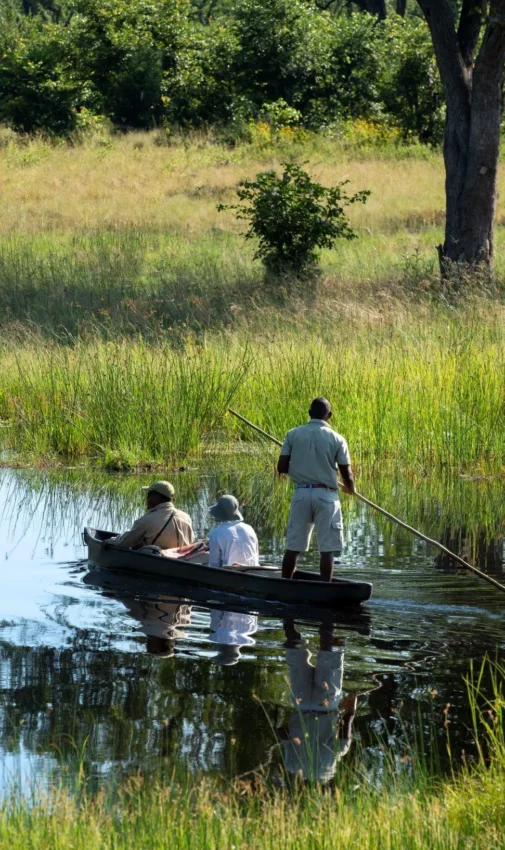
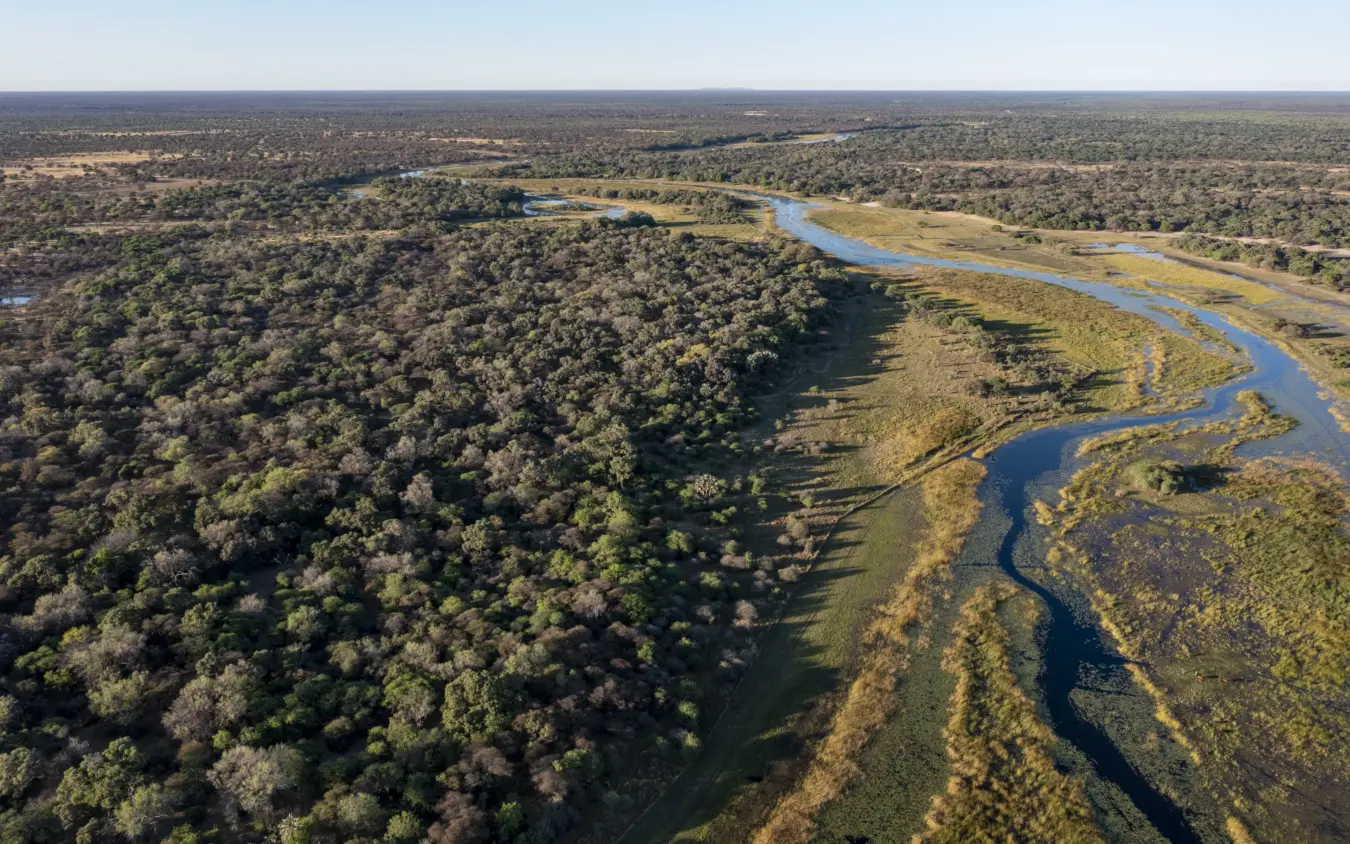
The water flowing below the cliffs has come out of the Okavango Delta. The Boteti is the Delta’s main outflow, leaving the Maun area and running south-east towards Lake Xau and the pans. Its level below the lodge rises and falls with each year’s flood, which is why the record flood of 2009 could bring it back past the cliffs after two decades away. Nearby is Khumaga village, and guests can arrange a visit there.