Camp

Camp Kalahari

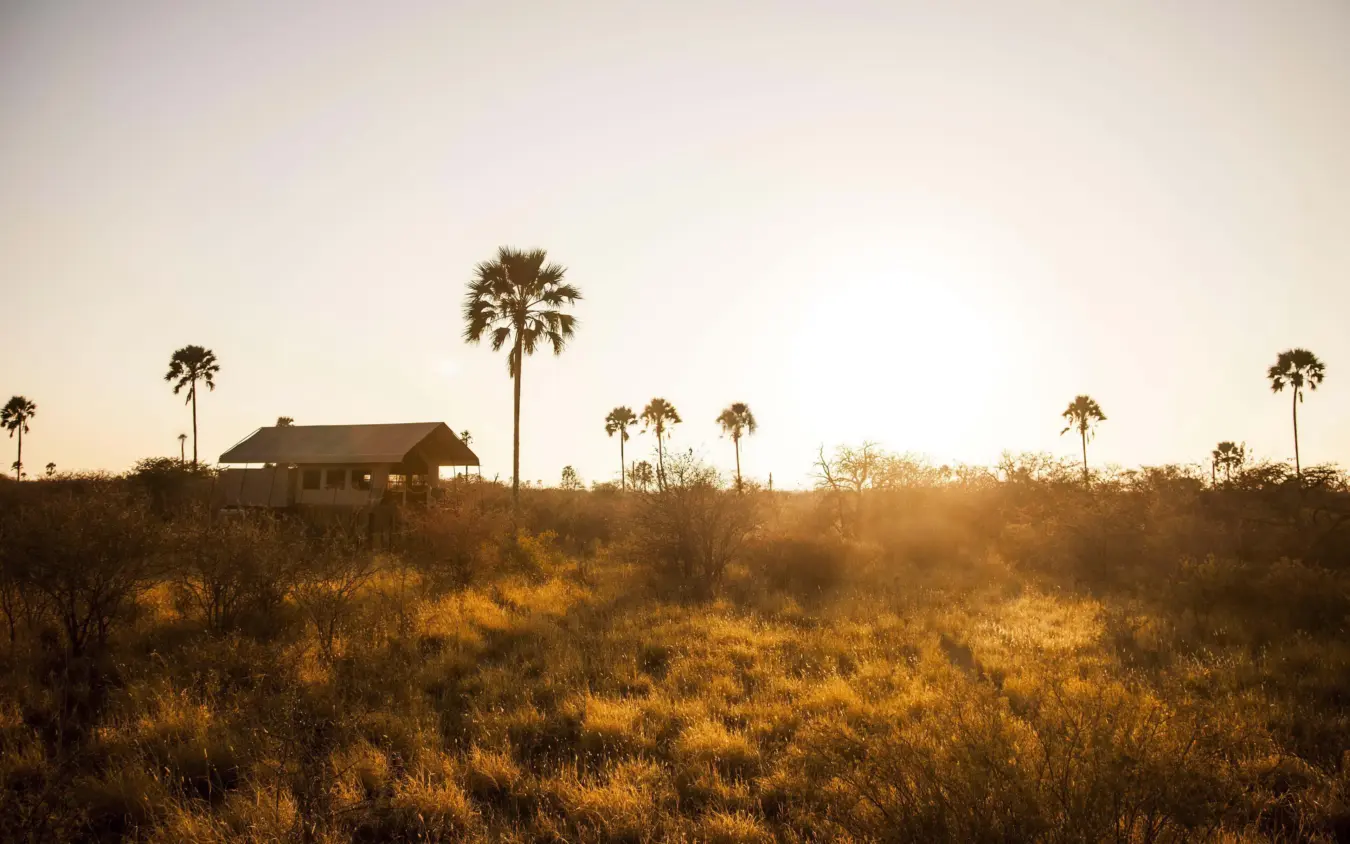
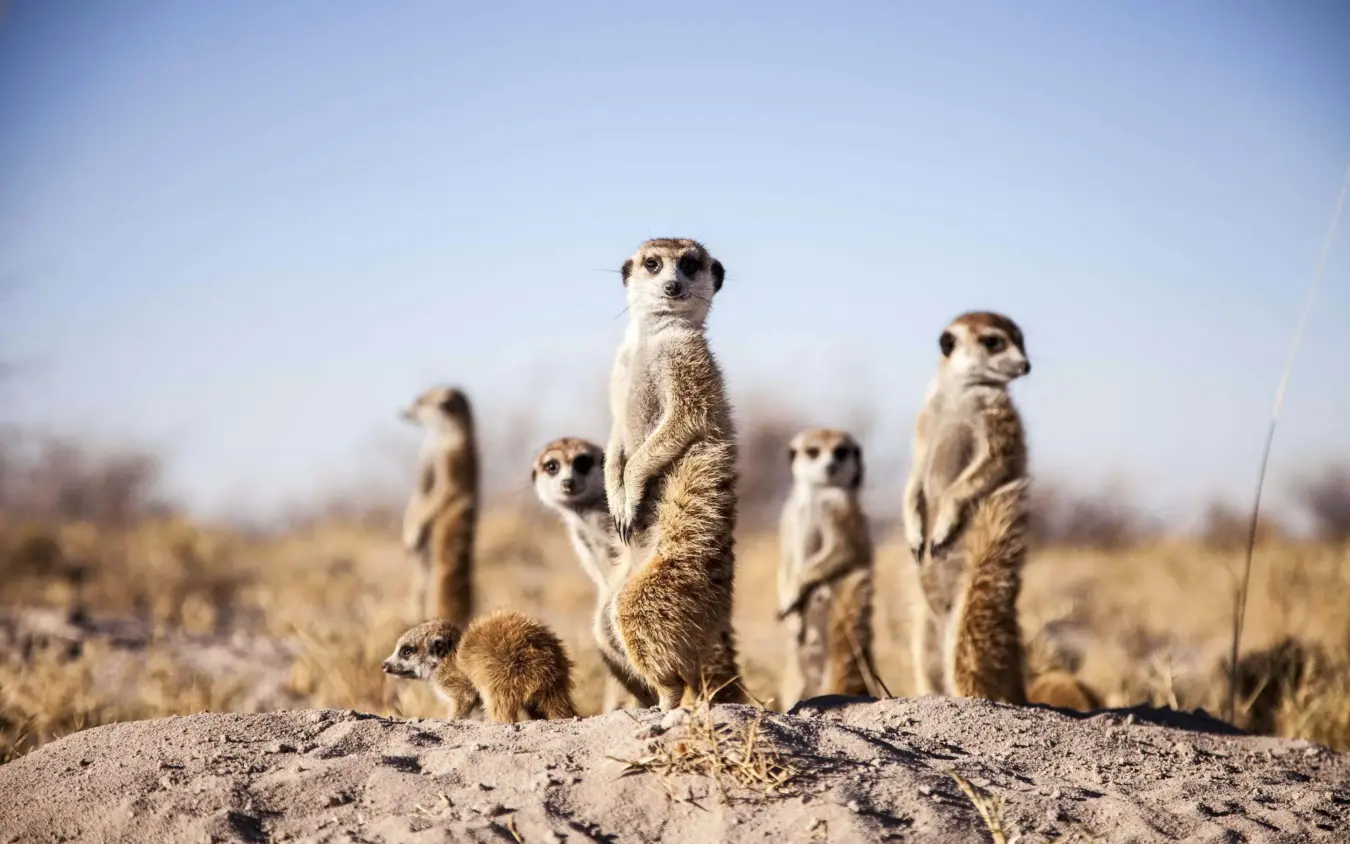
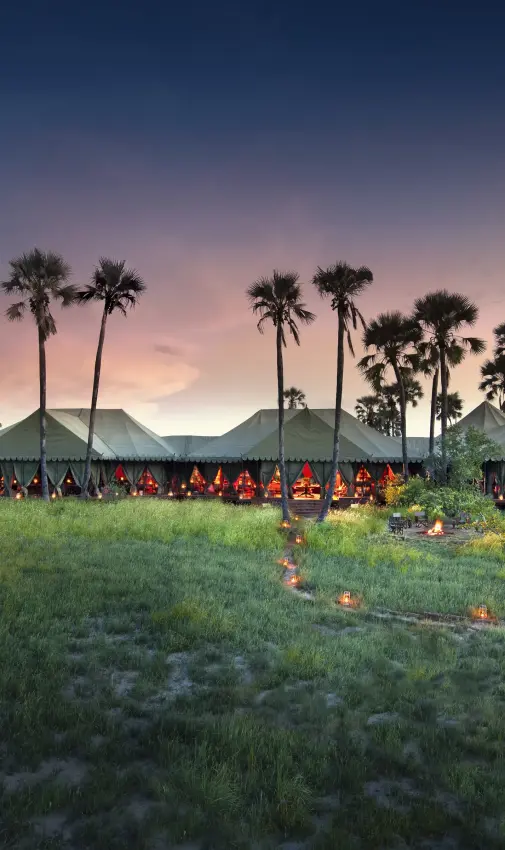
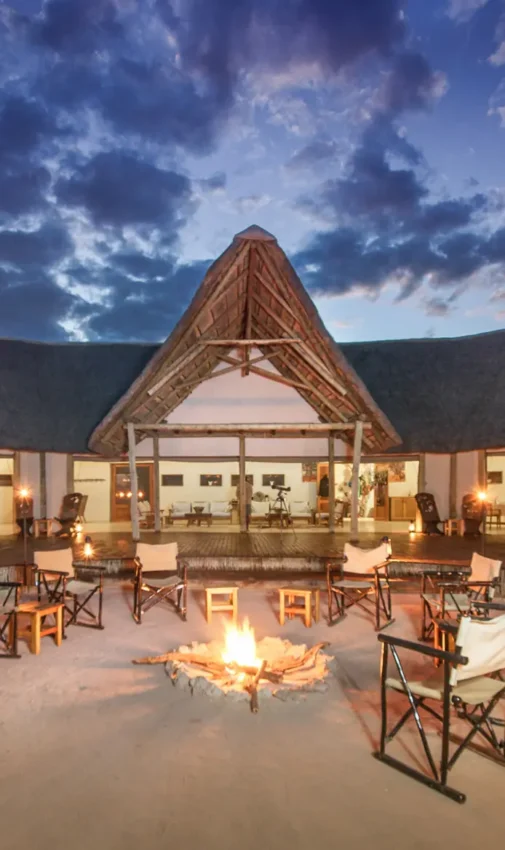
Twelve Meru tents beneath the palms of a low island at the edge of Botswana’s Makgadikgadi Pans, home to habituated meerkats.

Country: Botswana
Location: Brown Hyena Island, Makgadikgadi Pans
Number of rooms: 12

Where the meerkats climb your shoulder

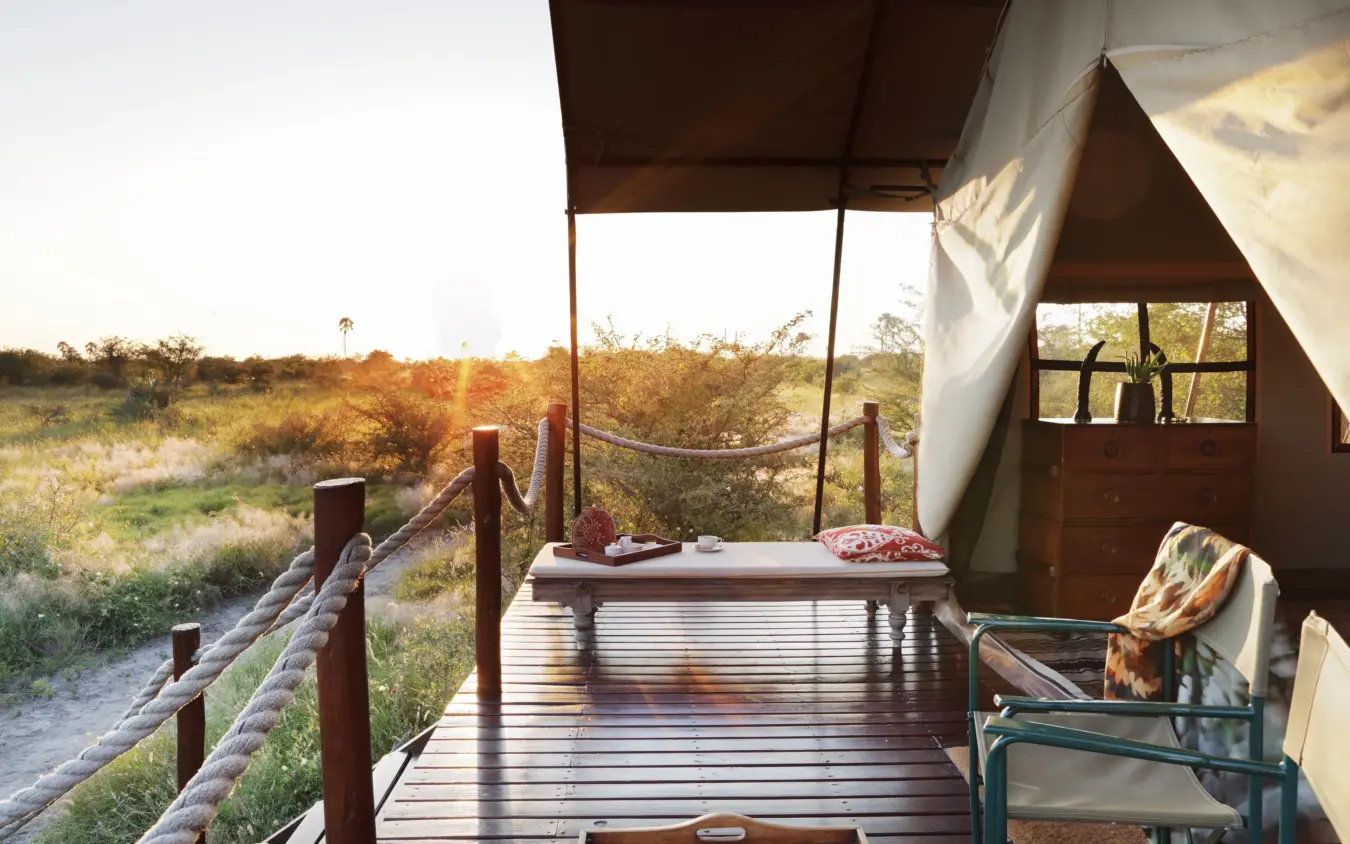
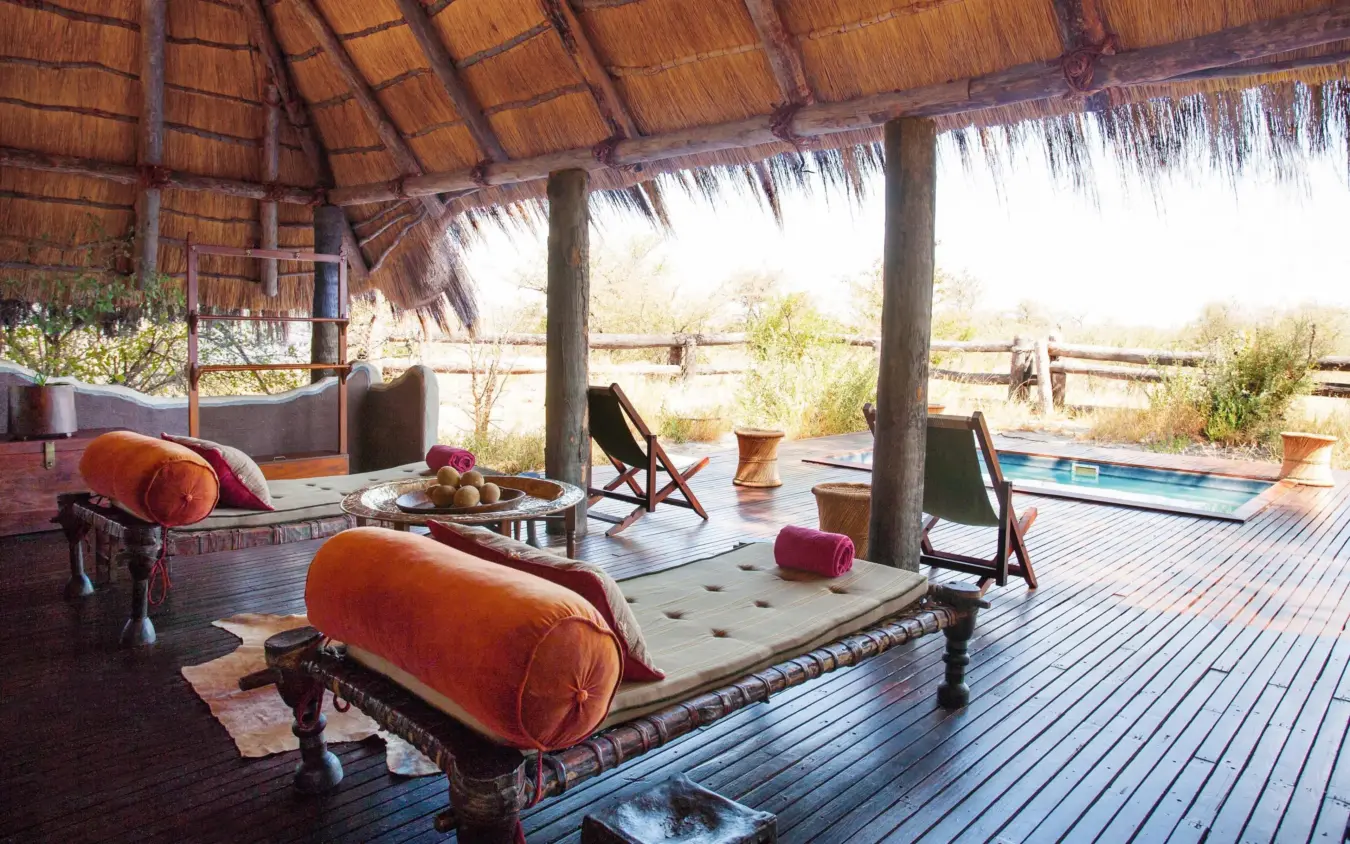
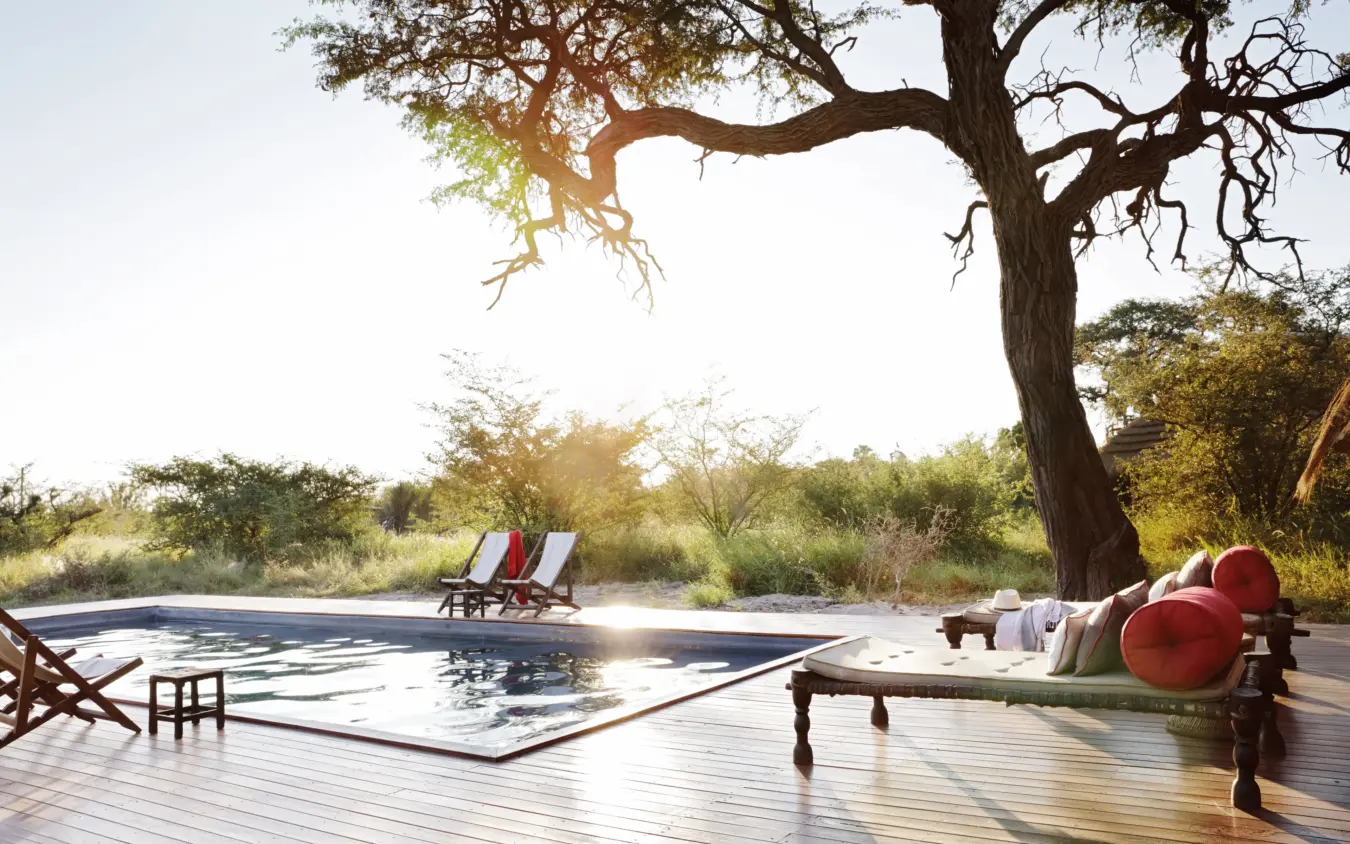
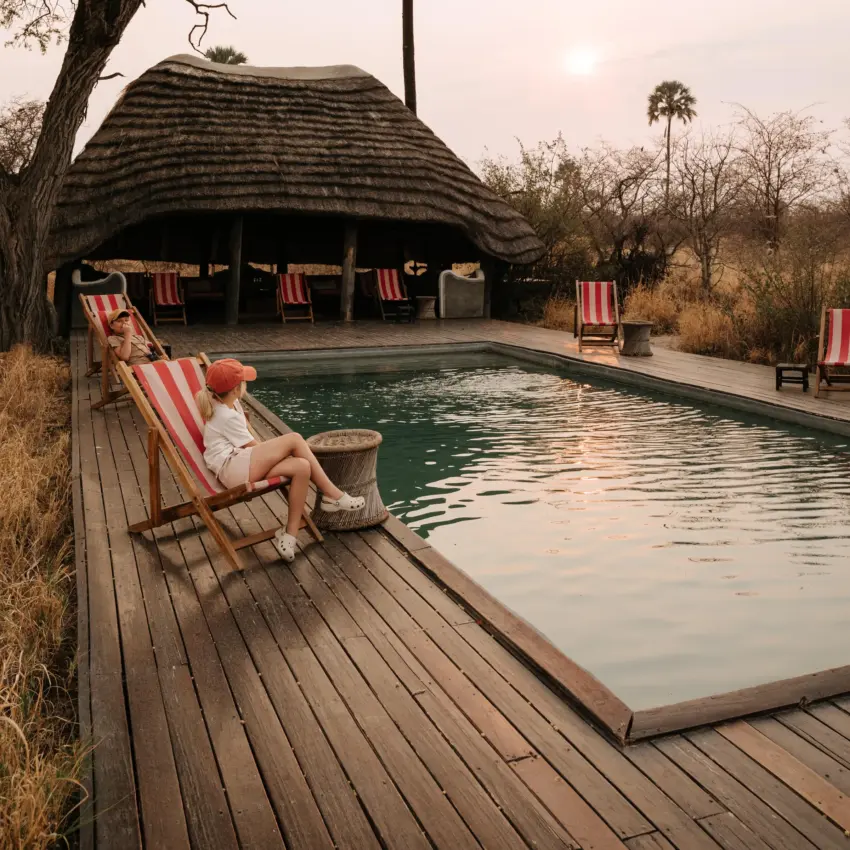
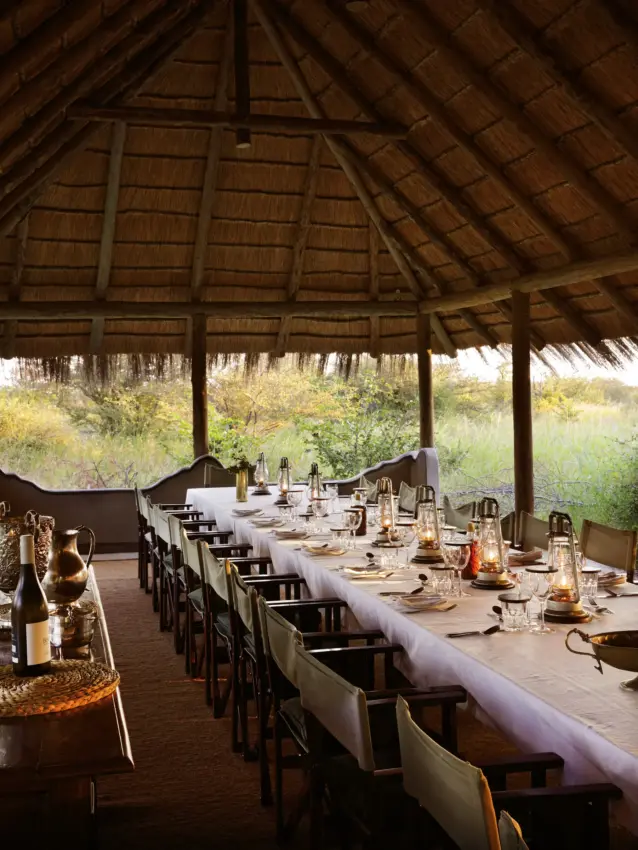
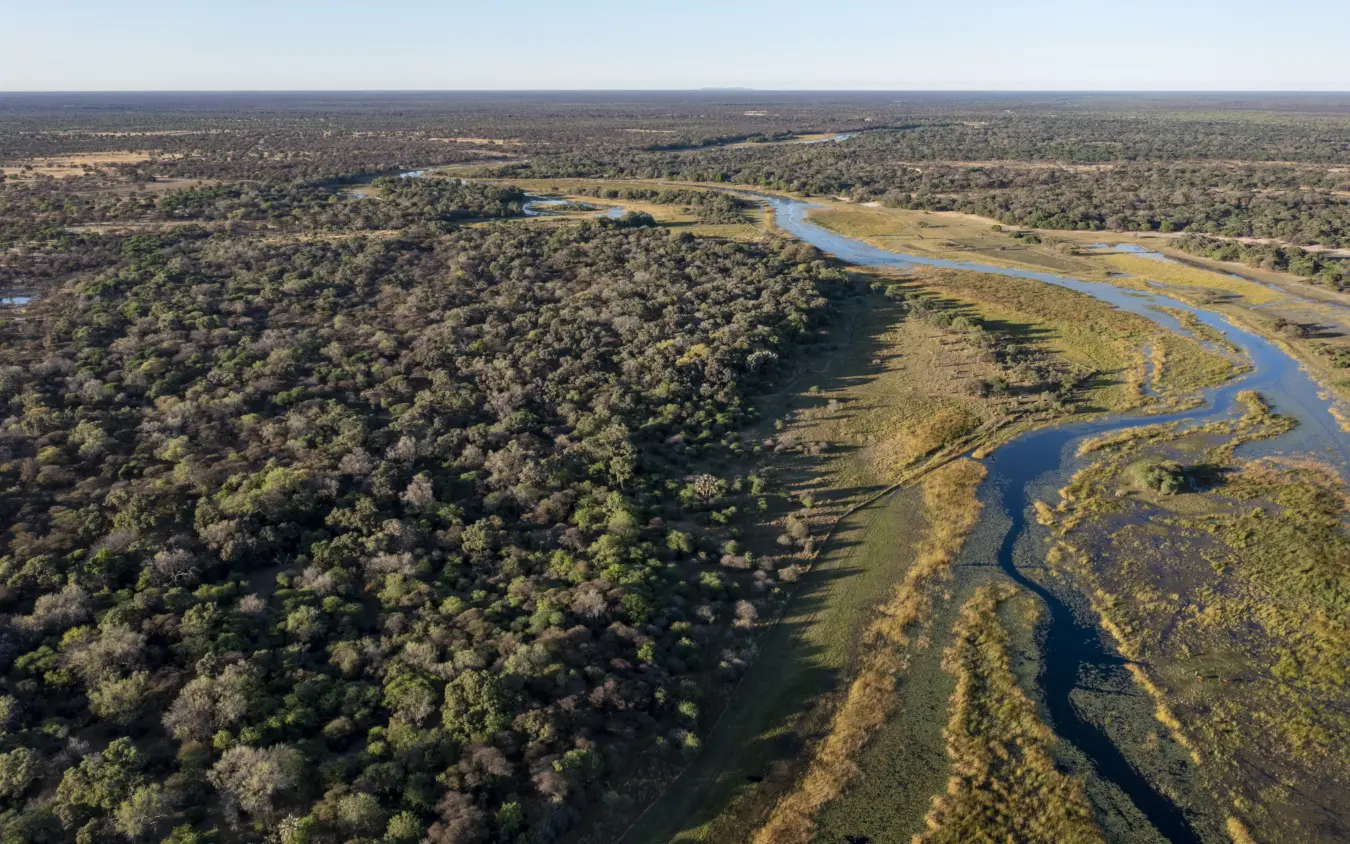
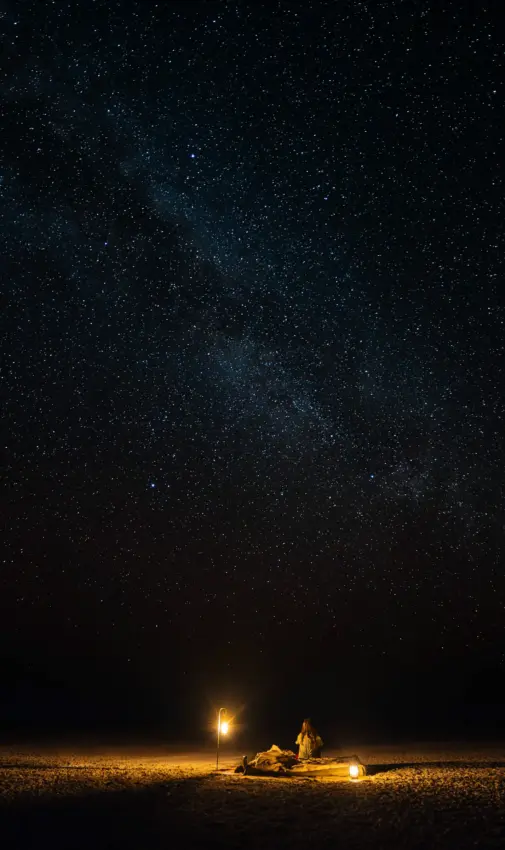
A low island of mokolwane palms and acacia rises from the edge of Ntwetwe Pan, known as Brown Hyena Island. The pan itself is vegetation-free, salt-baked and almost featureless. Twelve Meru-style canvas tents stand beneath the trees, lit by paraffin lanterns once the sun has gone. Nothing about the camp is grand, and nothing needs to be.

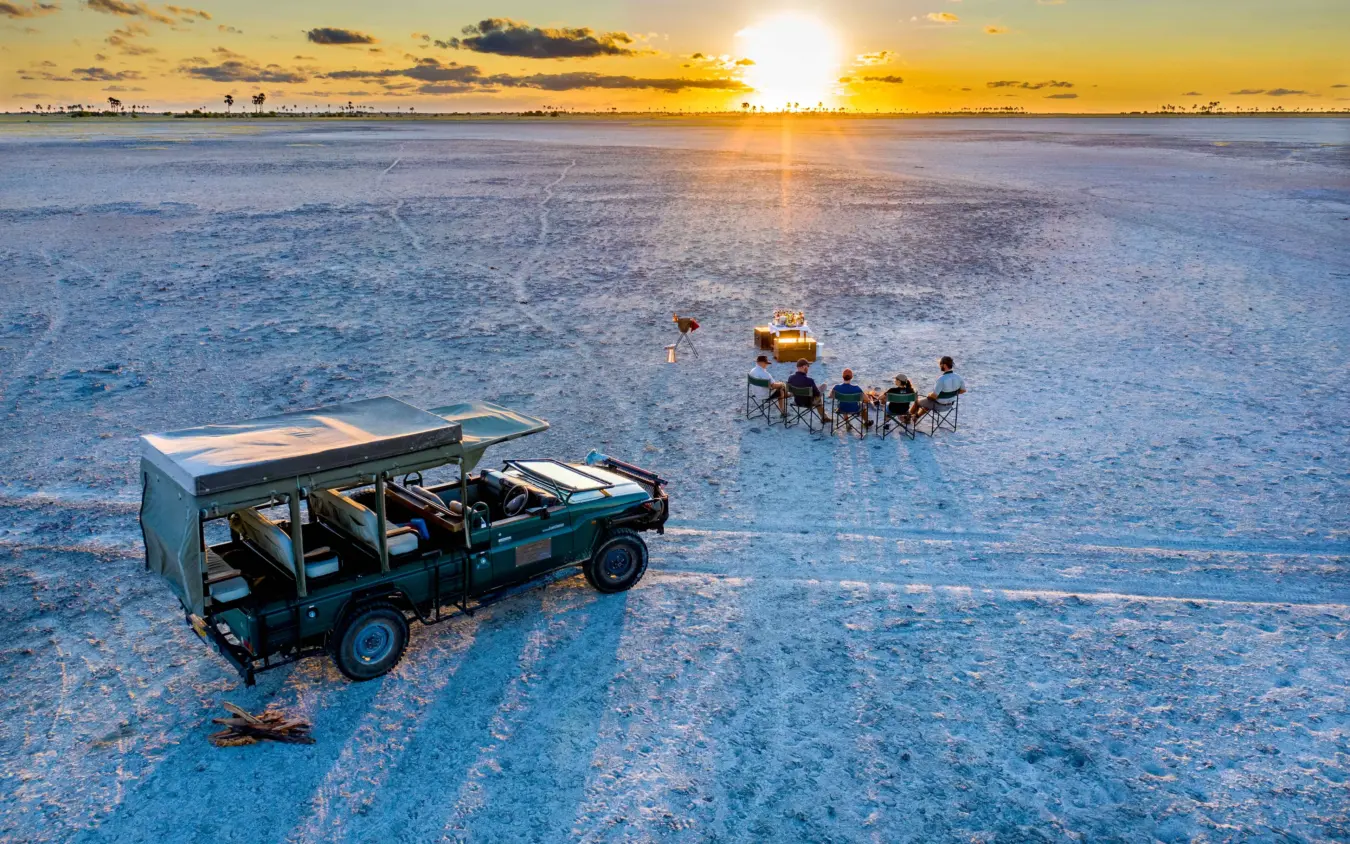
The pan itself is vegetation-free, salt-baked and almost featureless.

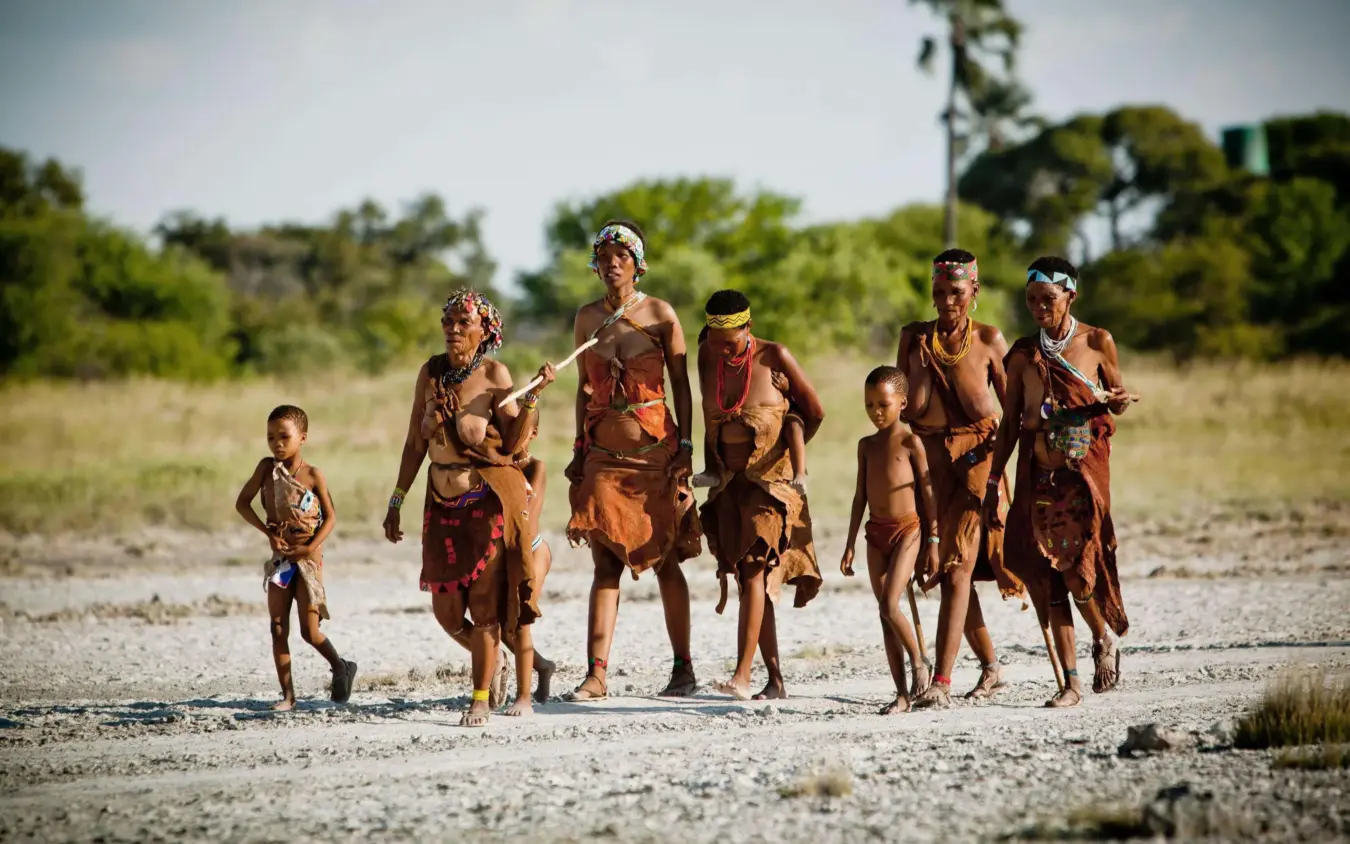
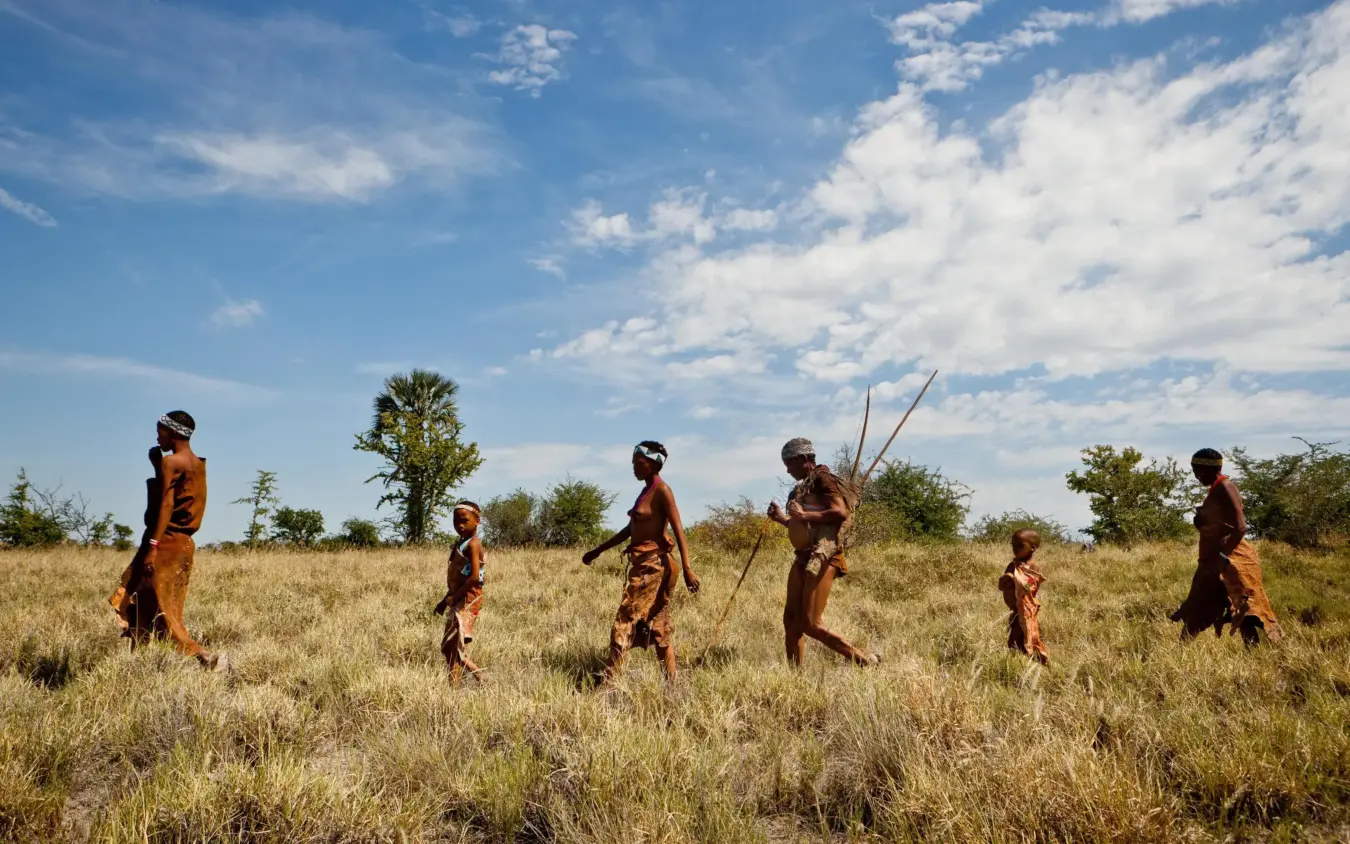
People come here for the meerkats, for the quad bikes out onto the pans, and for the walk with Zu/’hoasi Bushmen guides. Two better-known camps share the same private concession, and this is the plainer, easier of the three: the same guides, the same habituated meerkat families, the same salt horizons, less polish. Children of all ages are welcome, and two of the twelve tents interconnect, sharing a bathroom.

The meerkat families are wild but unbothered by people, and a seated guest is simply the highest point around: they will climb a shoulder or a hat to scan the sky for raptors, usually in the first hour or two after sunrise. In the dry months quad bikes run out onto Ntwetwe Pan, on set tracks because the crust is fragile, some trips carrying bedrolls as far as Kubu Island.

The silence out on the open pan is close to total.

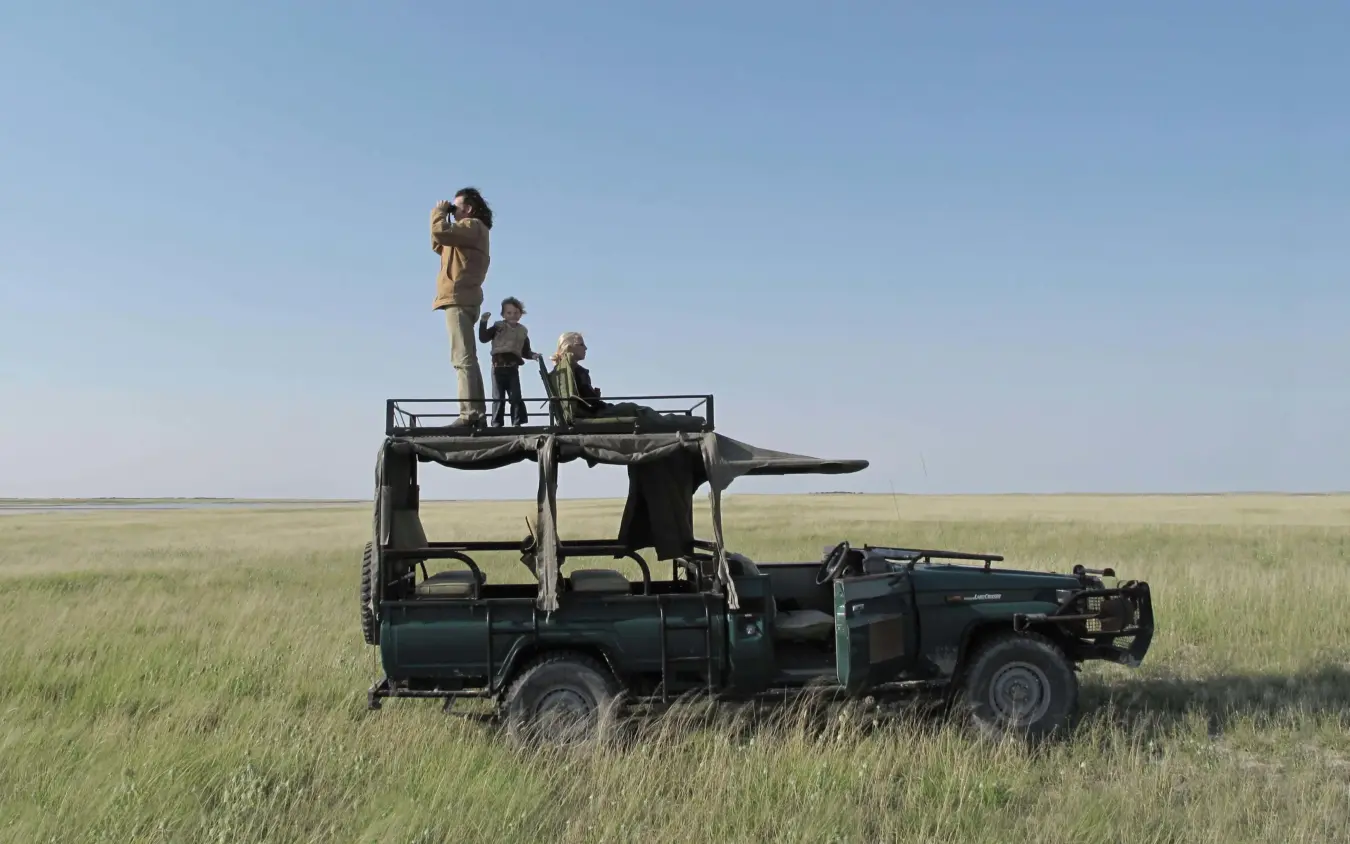
Walks with the Zu/’hoasi guides cover tracking, foraging, medicinal plants and fire, at their pace rather than a schedule. The silence out on the open pan is close to total. Drives stay on the private concession, outside Makgadikgadi Pans National Park, so they can go off-road and continue after dark with a spotlight, picking up aardwolf, bat-eared fox and, with luck, brown hyena. Horses are stabled beside camp.

01

accommodation

Twelve Meru-style Canvas Tents with Four-posters

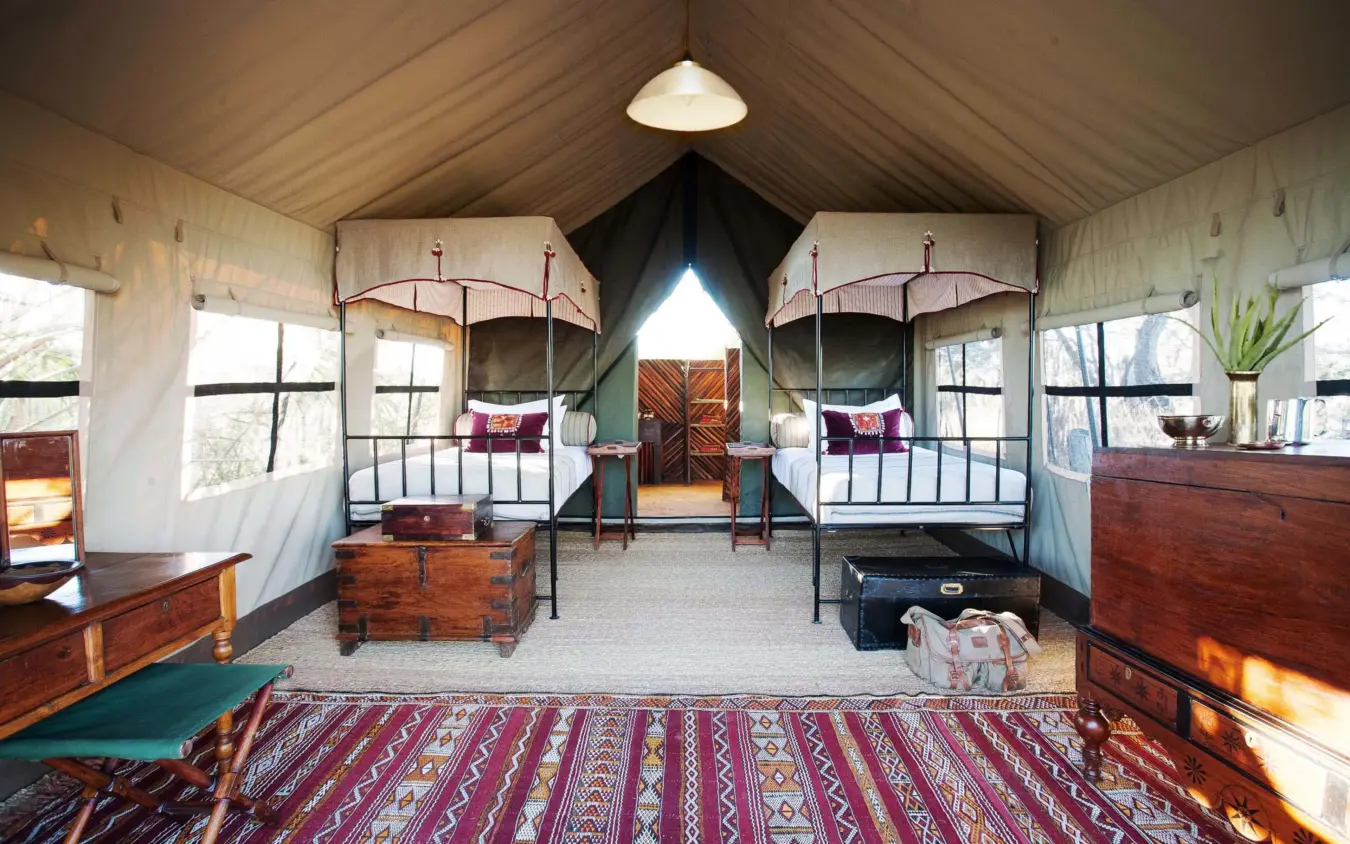
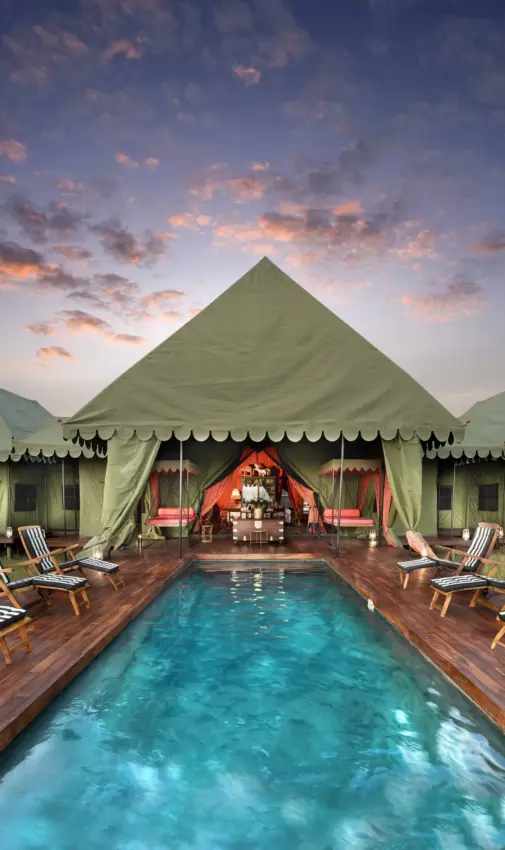
Twelve Meru-style canvas tents: six twins, four doubles and two family units where a twin and a double share a bathroom. Four-poster beds under mosquito netting, sisal matting, dark campaign furniture and kilim rugs, with open-air en-suite bathrooms screened by wooden palisades. Some of the tents are raised on platforms.

02

activities

Meerkats, Quad Bikes and Ntwetwe Pan

Meerkat mornings, quad biking across Ntwetwe Pan between May and October, walks with Zu/'hoasi guides, and day and night game drives on the private concession, where off-road driving and spotlighting are permitted. Horseback rides suit beginners and experienced riders, with multi-day expeditions for the latter.

03

conservation

Elephants For Africa Collaring and Conflict Fencing

Elephants For Africa receives support for elephant collaring and for community farming with elephant-proof fencing, reducing conflict. The Aardvark Project uses camera traps and anthill counts, and a Makgadikgadi migration study maps corridors. Wild Shots Outreach runs photography workshops for local young adults.

ready to get started?

Get in touch and let’s start the conversation. An initial consultation helps us understand what you’re looking for, whether that’s specific experiences, luxury touches, or marking a special occasion, and from there we’ll guide you through what’s possible so you can decide if we’re the right fit.

Alternative accommodation in makgadikgadi pans

frequently asked questions

By light aircraft from Maun into the airstrip on the reserve, then a short drive in to the island. The transfer is part of the nightly rate; the flight is not, and we price it separately in your quote.

The Makgadikgadi sits away from the Delta circuit, so the flight is usually its own leg rather than a hop between camps, and that suits it: this is a different Botswana, dry and open, and it reads better as a contrast to the water than as an afterthought at the end. If you would rather fix your own timings we can arrange a private charter, typically a Cessna Caravan or a Pilatus PC-12. Soft bags, because the aircraft are small.

There is risk, and it is lower here than in the Delta. TravelHealthPro, the UK's official travel health service, treats the northern half of Botswana as high risk from October to May, recommending antimalarial tablets for those months, and low risk for the rest of the year, when it advises awareness and bite avoidance. The CDC lists Boteti among the districts where it recommends prescription medicine to prevent malaria.

We plan safaris rather than give medical advice, so the decision belongs with you and your doctor or a travel clinic, and it is worth checking again close to departure because both sources revise their guidance. In practical terms this is dry country with no permanent water beside the camp, so there are fewer mosquitoes than on a floodplain, but the rains from November change that and the same long sleeves and repellent apply once the sun goes.

Yes, at any age, which is unusual in Botswana and makes this one of the few genuinely young family camps in the country. Two of the twelve tents are family units.

It earns that reputation. The habituated meerkats will use a child's head as a lookout post, the pans are safe open ground to walk on, and the days are short and varied rather than long hours in a vehicle. Children of six to eighteen sharing with an adult are charged at a child rate; under six there is no charge at the camps in this region, which we confirm for your dates. The quad bikes carry a minimum age and a weight limit and the horse riding starts at eight, so tell us the ages when you enquire and we will build the days around what your children can actually do.

Yes, and it is covered by the nightly rate rather than charged on top. The tents are lit by paraffin lantern once the sun goes, so this is not a place to plan an evening of video calls, but messages, email and photographs are straightforward.

Mobile coverage out on the pans is another matter, and we would rather confirm the current position with the camp than promise you bars. If someone in your party has to be reachable at set times, say so before you book. For everyone else, download what you want to read or listen to before you leave Maun.

The camp is open all year and the two halves of the year offer completely different things. From November the rain turns the pans green and brings the zebra and wildebeest migration, tens of thousands of animals with the predators behind them, which is the spectacle to come for. From May to October the water is gone, the pans are salt and horizon, and the days turn to meerkats, walks with the San guides and quad bikes out onto the crust, with sleepouts on the salt at their best.

Pack for a wide swing in temperature: winter afternoons in the middle twenties but mornings near five or six degrees, colder still on an open pan before dawn, so a warm windproof jacket, hat and gloves are not optional from June to August. October afternoons run into the middle thirties. Add neutral colours, closed shoes, strong sun cream, a wide brimmed hat, and sunglasses that cope with glare, because the salt throws light back at you all day.

Three. Two of them go to the things this place does that nowhere else does, the meerkats and the pans, and the third covers the weather or a slow morning without wrecking the plan. If the migration is the reason you are coming, four is better, because the herds move and one bad day costs you half the trip otherwise.

The rate is fully inclusive: the tent, all meals, drinks other than premium brands, the daily activities and guiding, the transfer between the airstrip and camp, wifi, guest laundry, park entry fees and tax. Outside it sit the flights, premium spirits and wines, gratuities, comprehensive travel insurance, the horse riding and the scenic helicopter flights, a private vehicle where one is wanted, and a community, conservation and reserve fee charged per person per night that applies to everyone aged six and over. Six or seven nights, or eight and more, taken across this camp and its sister camps in Botswana and Namibia, earn a long stay discount.

rated five stars by our clients

other areas in botswana

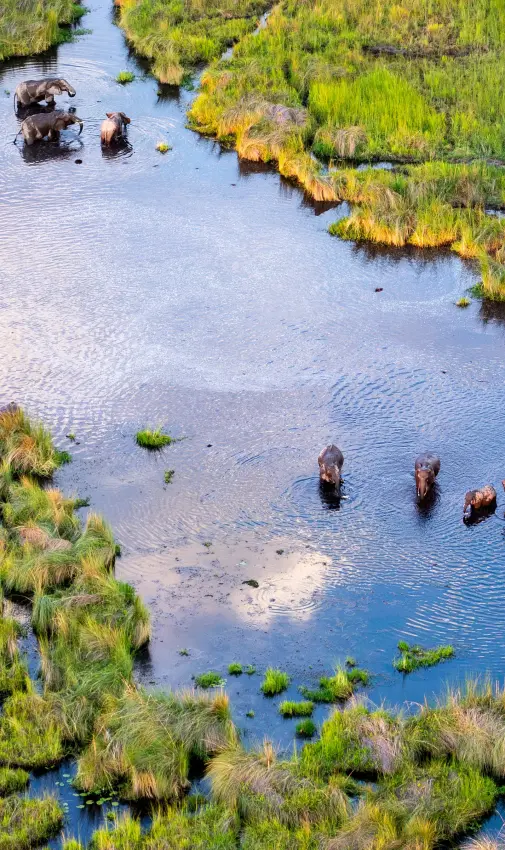
Aerial view of elephants wading in shallow water surrounded by vegetation 01

The Okavango Delta

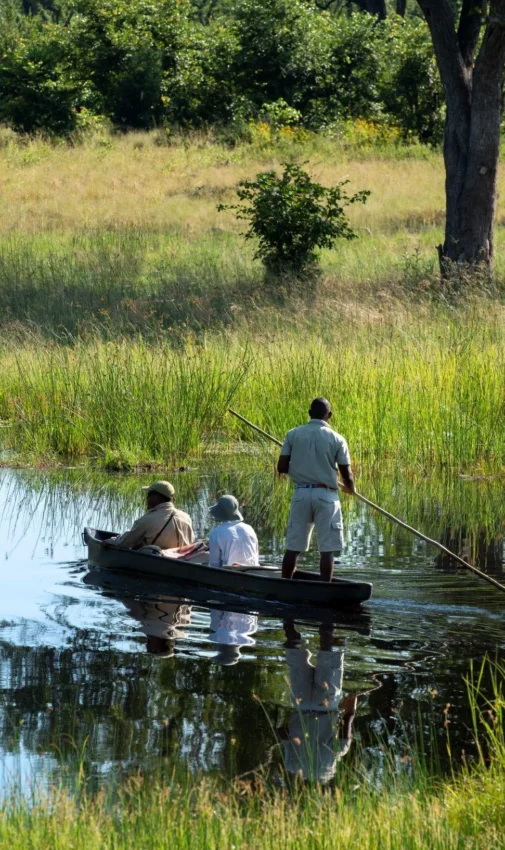
Guests poling traditional boat through wetland waterway, Linyanti Wildlife Reserve, Botswana 02

Linyanti Wildlife Reserve

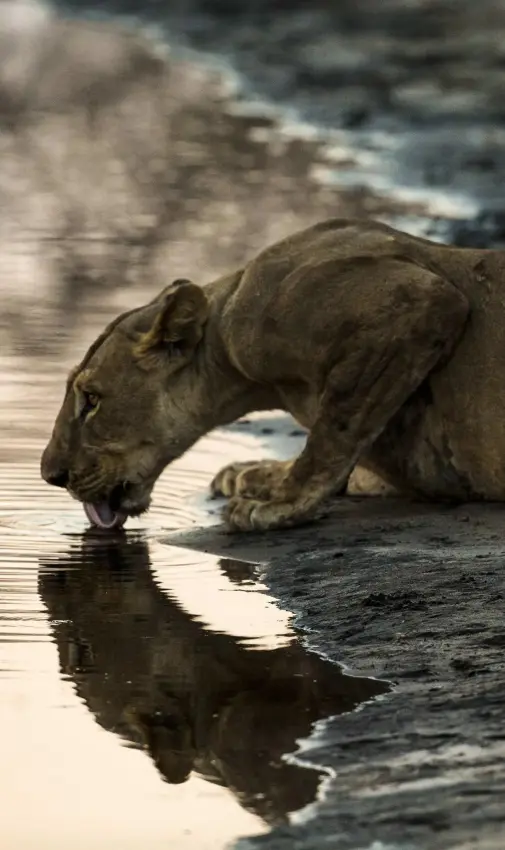
Lion drinking from water's edge at sunset, Selinda Reserve, Botswana 03

Selinda Reserve

Male lion standing on sandy ground in natural habitat 04

Central Kalahari

Herd of elephants drinking at waterhole with reflections 05

Chobe

06

Maun

Planning a journey together

our approach

remote, exclusive
& personal

Every journey starts with a conversation. We take the time to understand your vision before we start planning.
Whether by phone or in person, we work with you directly to shape something that is considered, personal, and expertly delivered.
get in touch
destinations ideas & inspiration our process about us contact us