Lodge

Planet Baobab

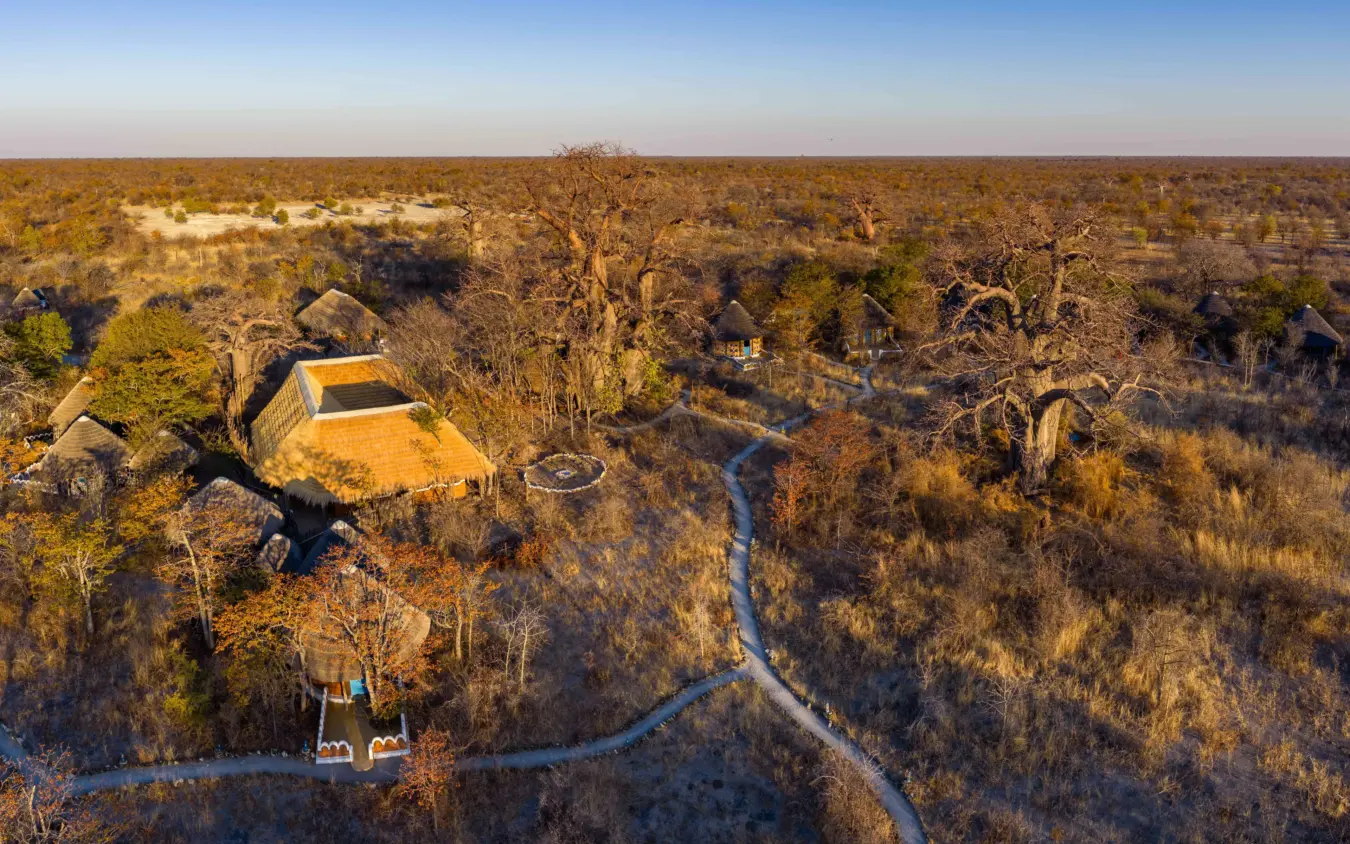
Painted mud-and-thatch huts among giant baobabs on the edge of Botswana’s Makgadikgadi Pans, near Gweta

Country: Botswana
Location: Near Gweta, Makgadikgadi Pans
Number of rooms: 18

Beer-bottle chandeliers and baobabs

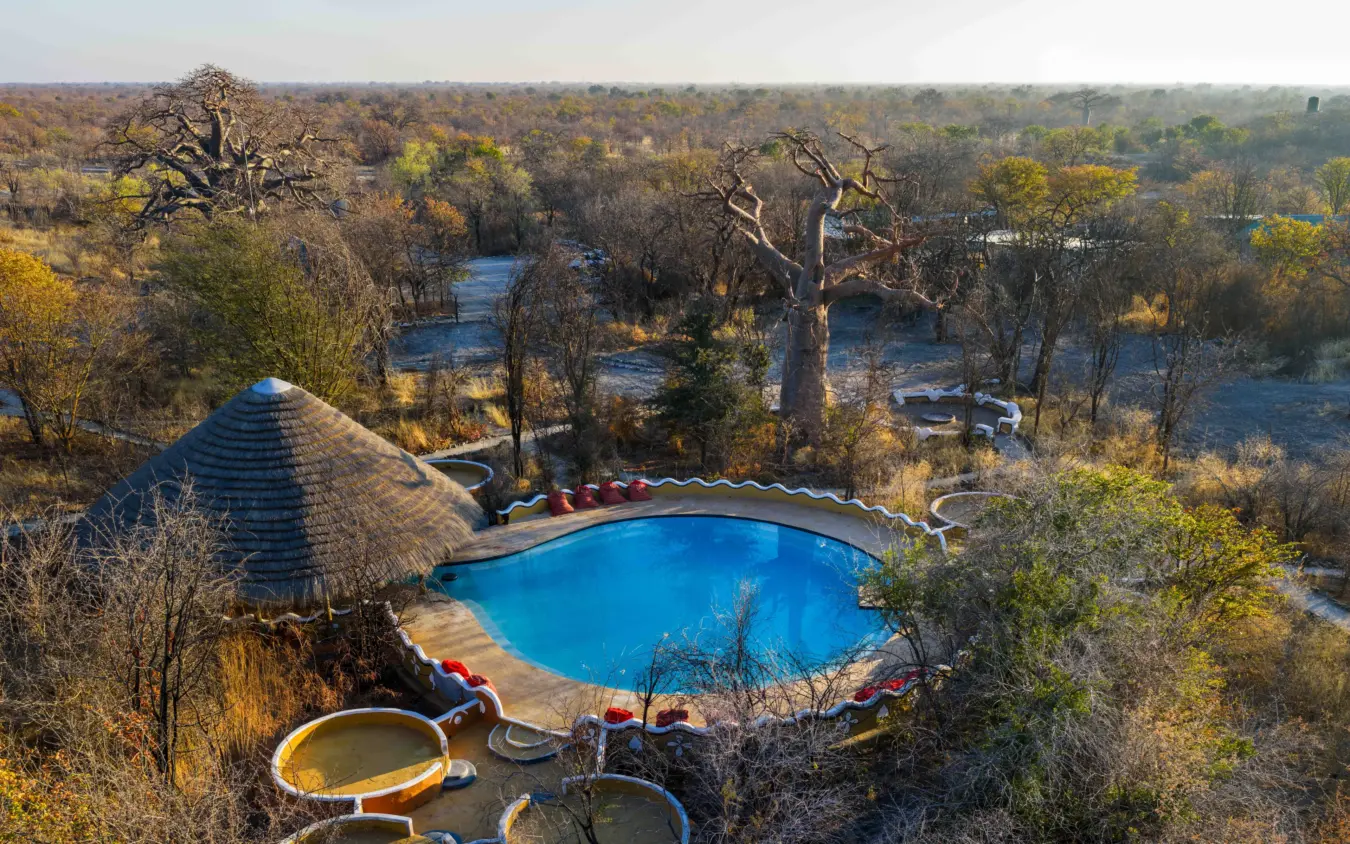
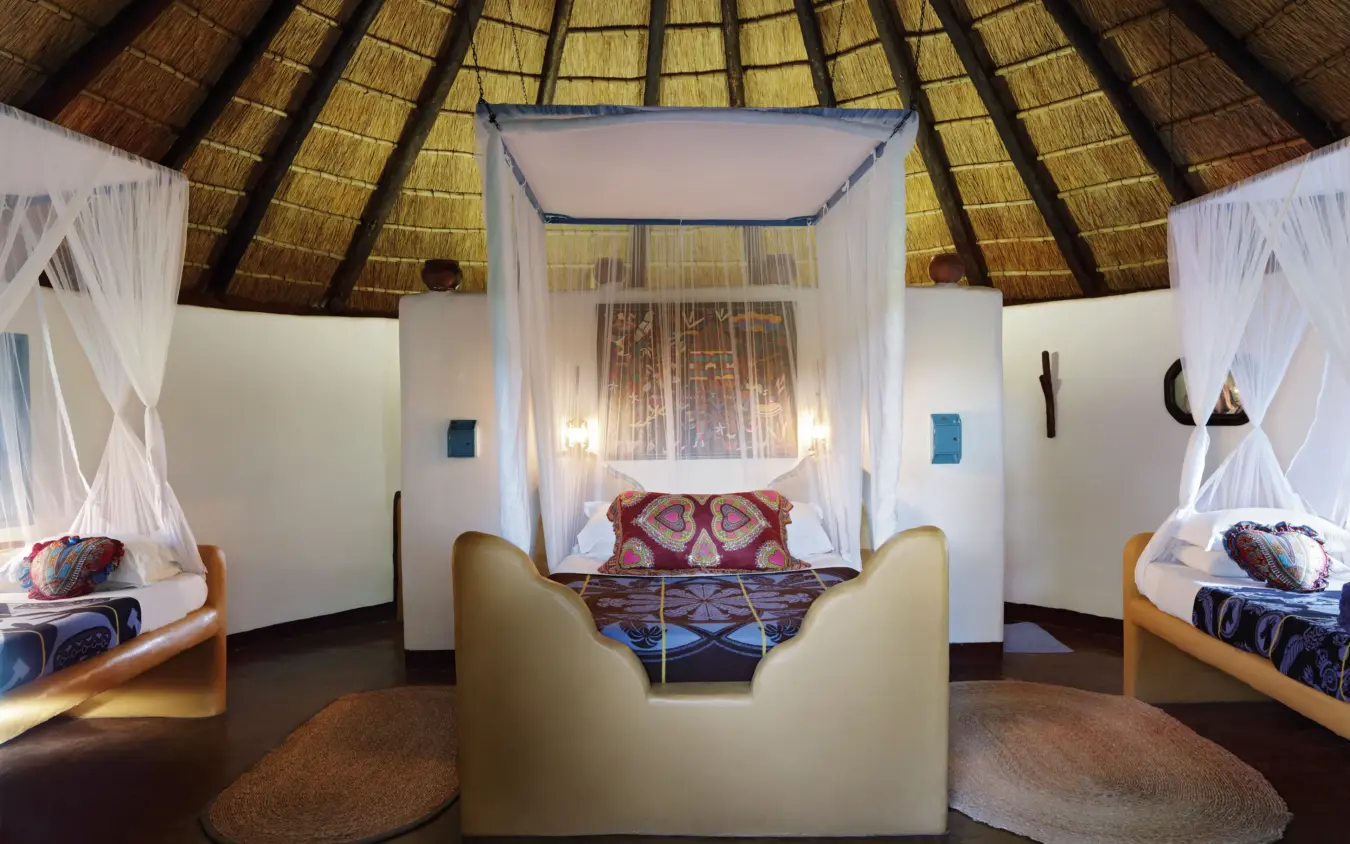
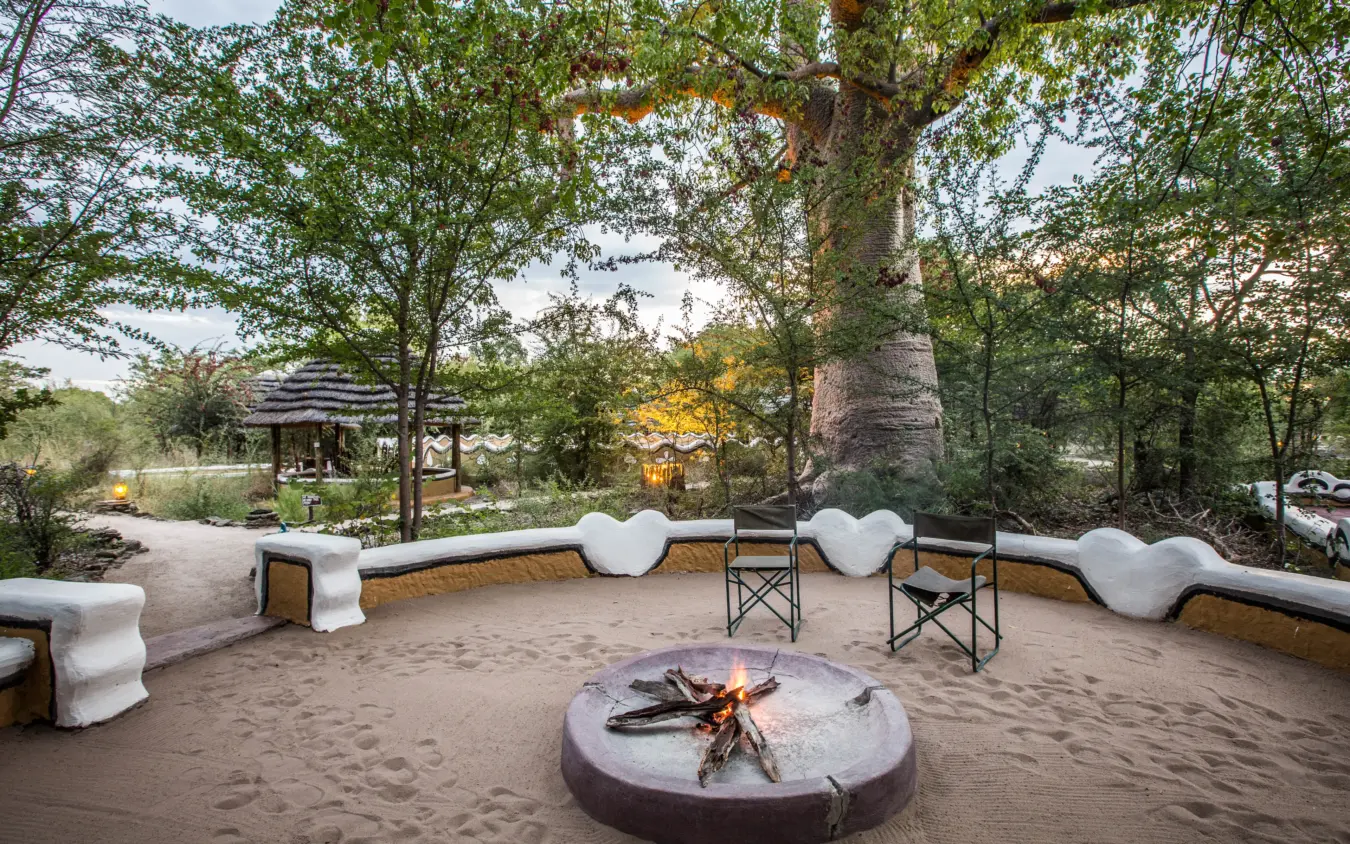
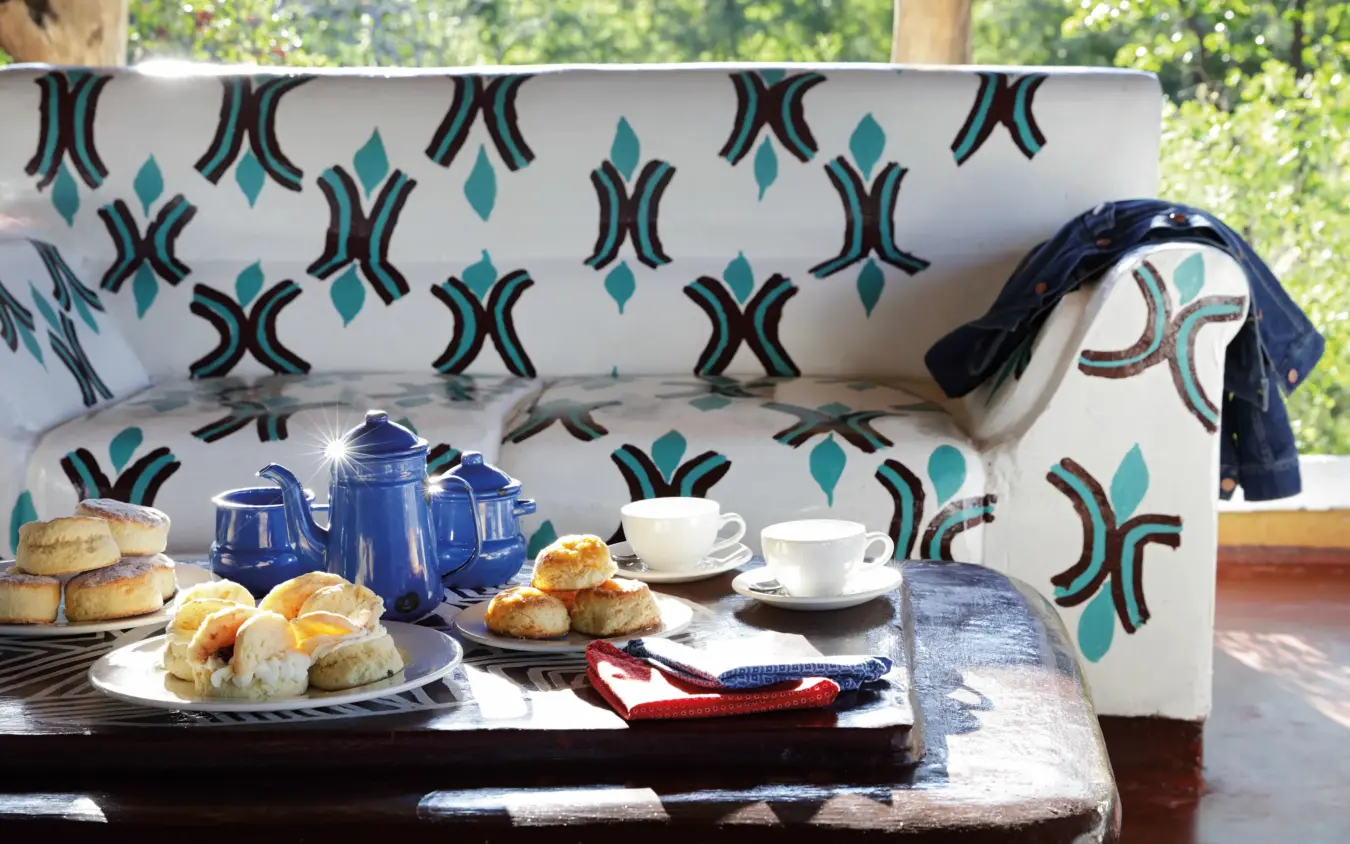
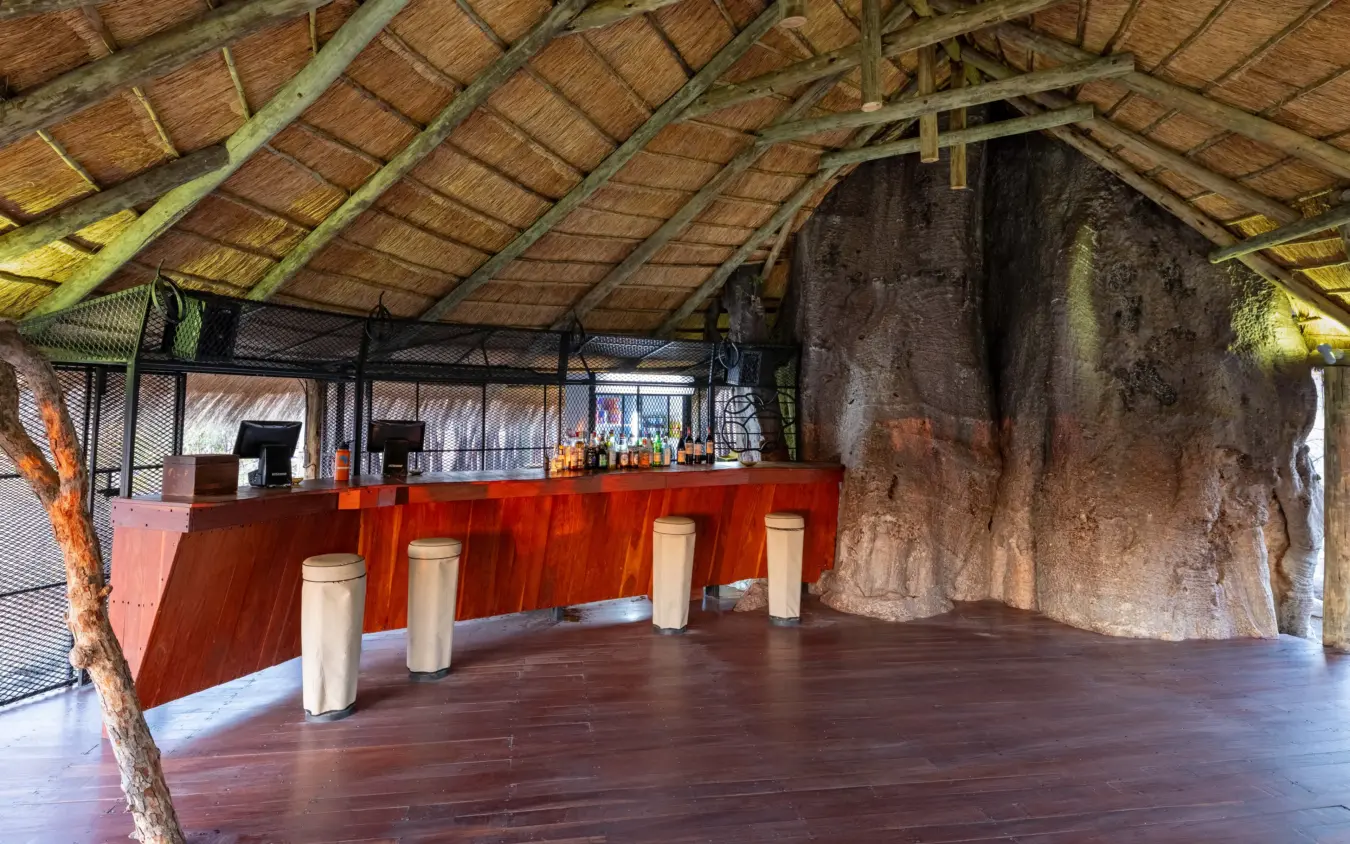
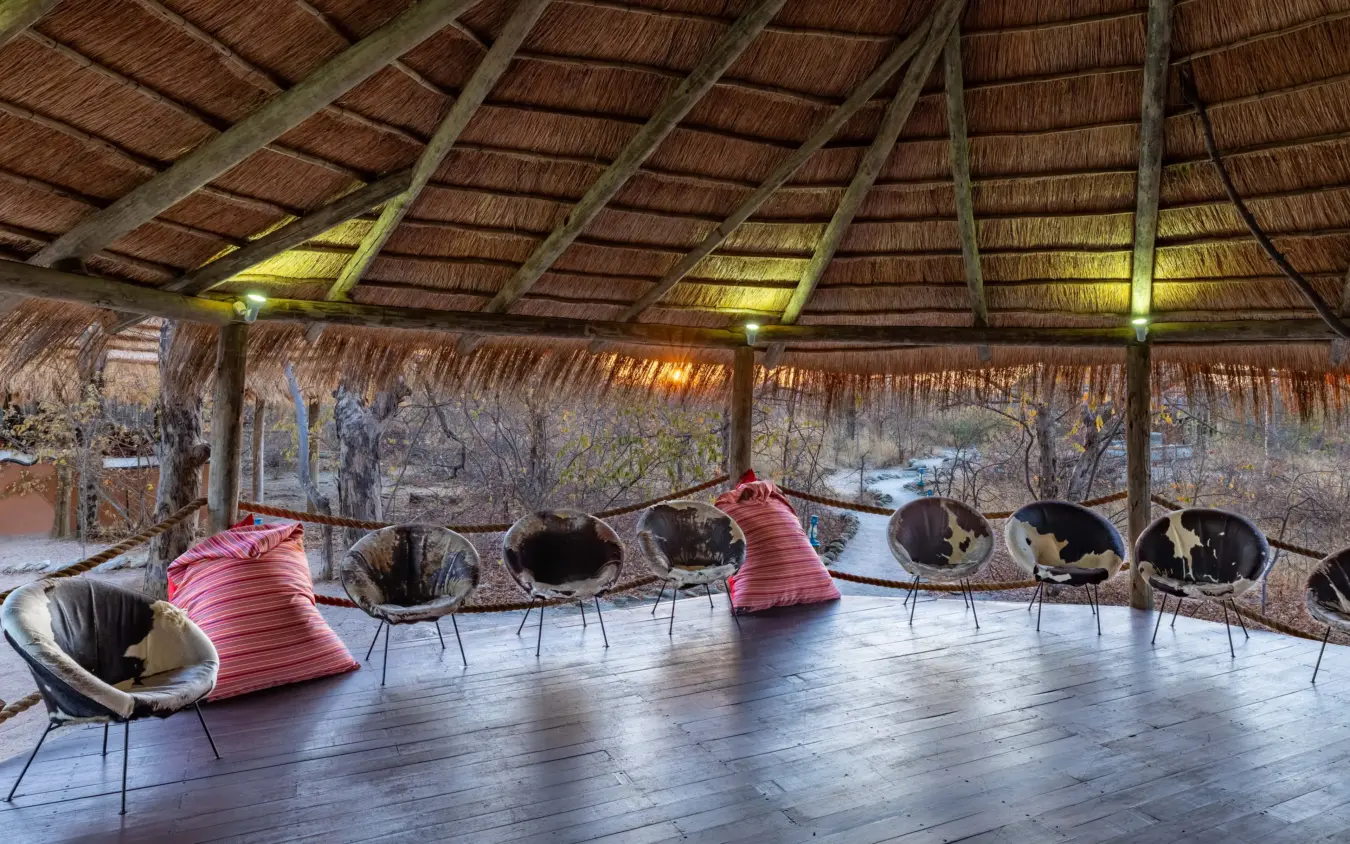
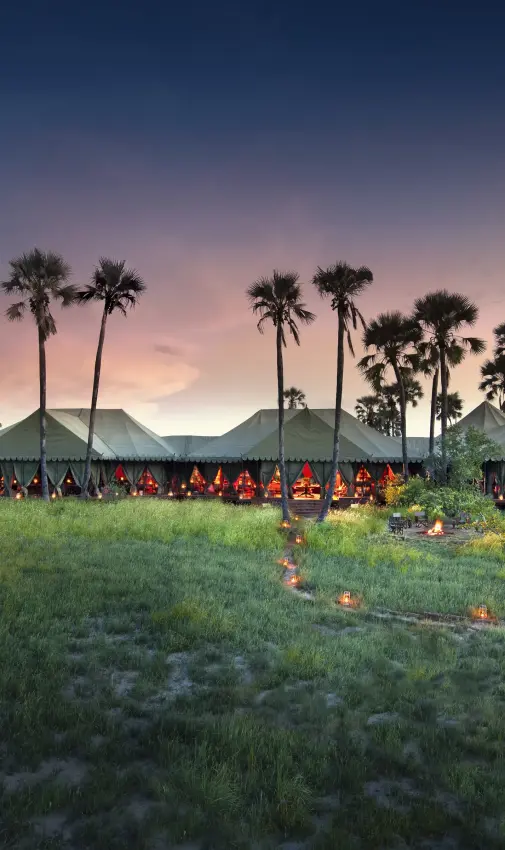
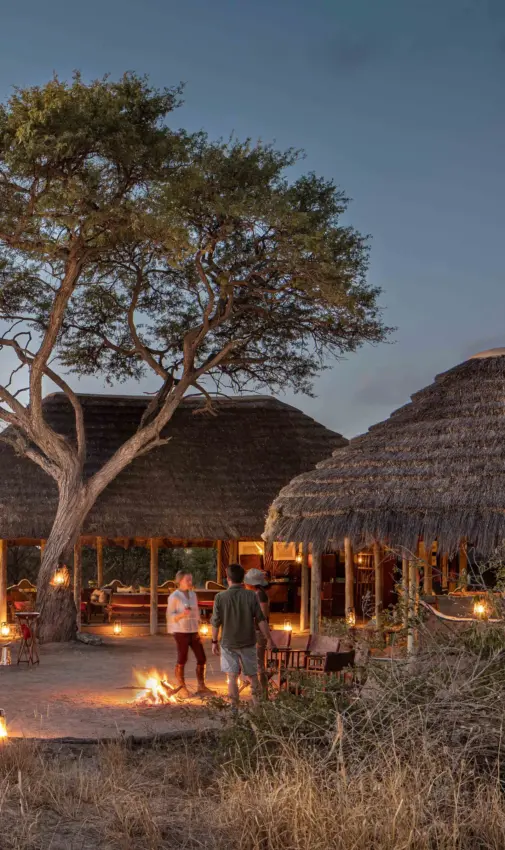
A concrete aardvark marks the turnoff from the Maun road, and behind it a grove of giant baobabs closes around the camp outside the village of Gweta, 200 kilometres east of Maun. The thatched huts wear hand-painted murals in place of the muted tones of smarter safari camps, and in the bar cowhide chairs sit beneath chandeliers made from recycled beer and wine bottles.

Out there the horizon curves visibly across the salt.

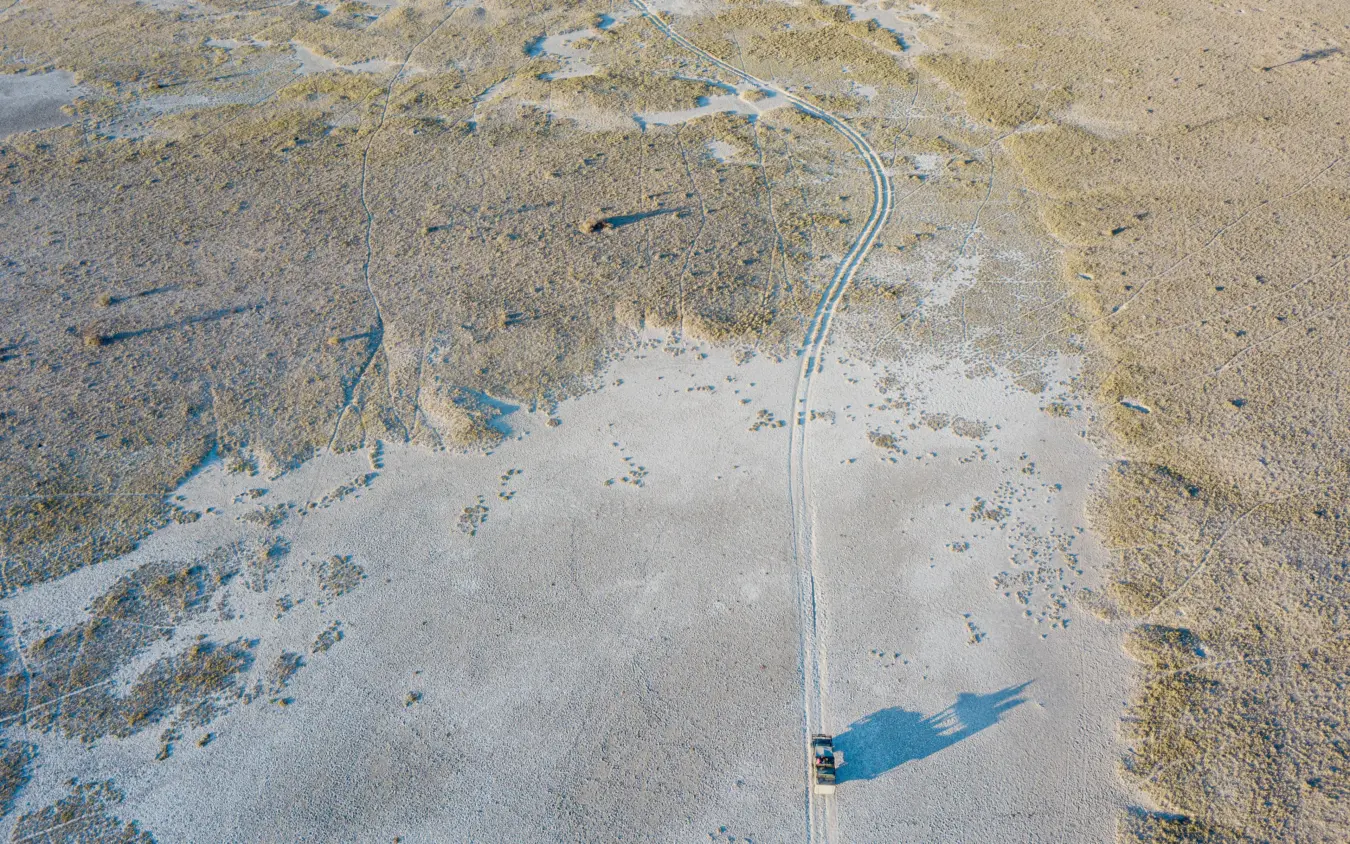
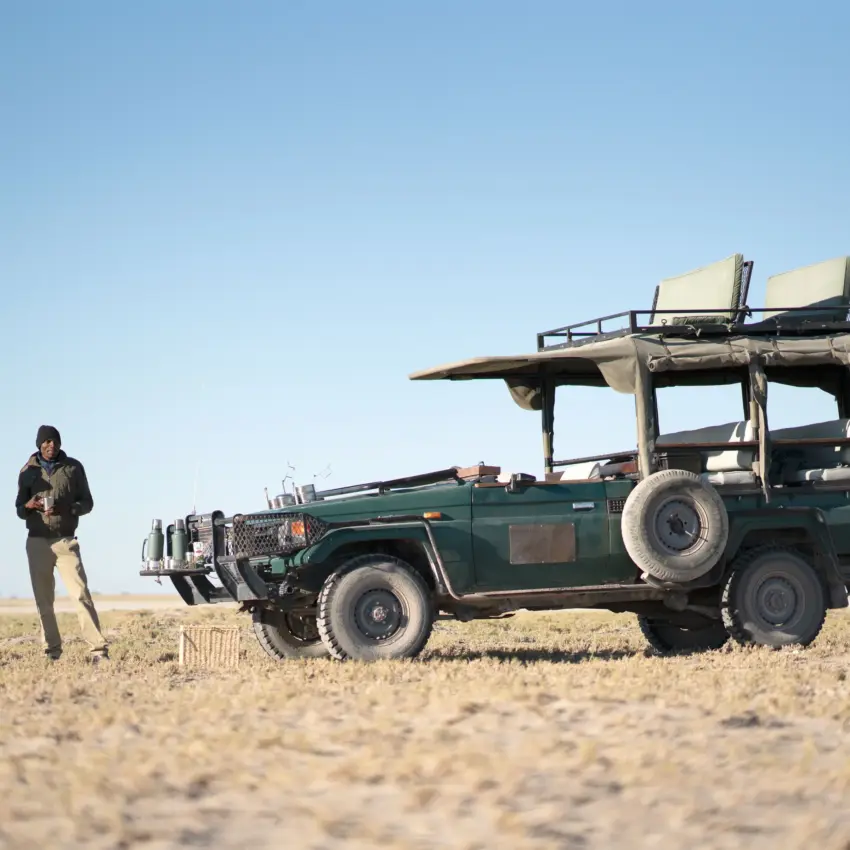
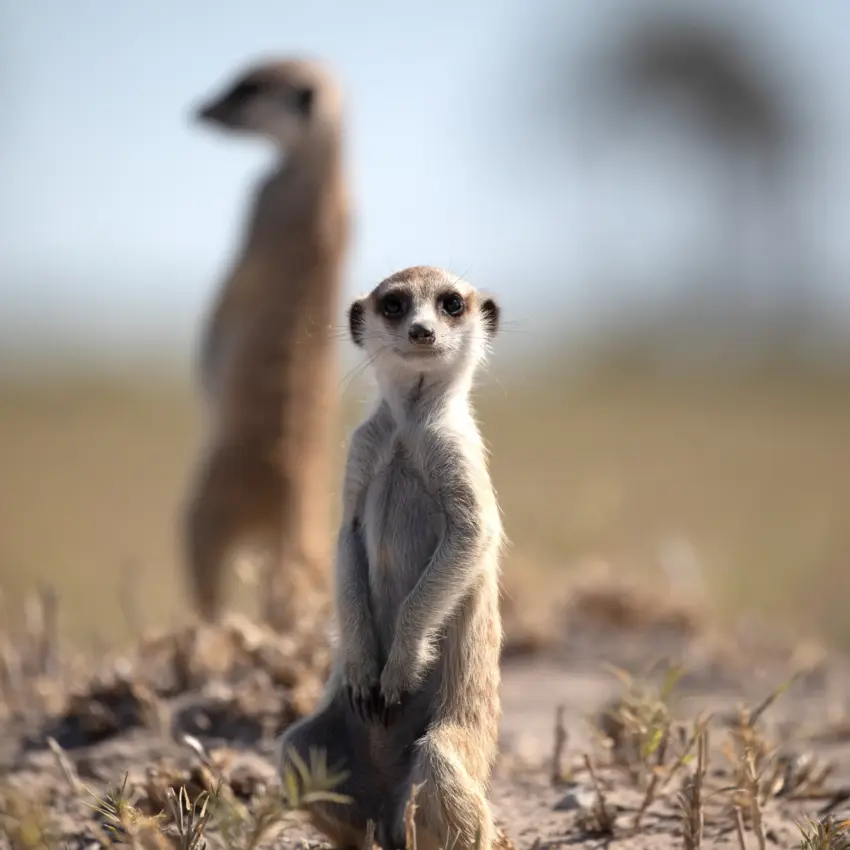
The pans themselves lie roughly 40 kilometres out, a fossil lake bed once compared in scale to Switzerland. Quad bikes run onto the white crust of Ntwetwe, the larger of the two. Out there the horizon curves visibly across the salt. Meerkats forage along the fringes and largely ignore seated guests. Bat-eared foxes, springbok and kori bustards work the open ground beyond the treeline, and brown hyenas cross the flats after dark.
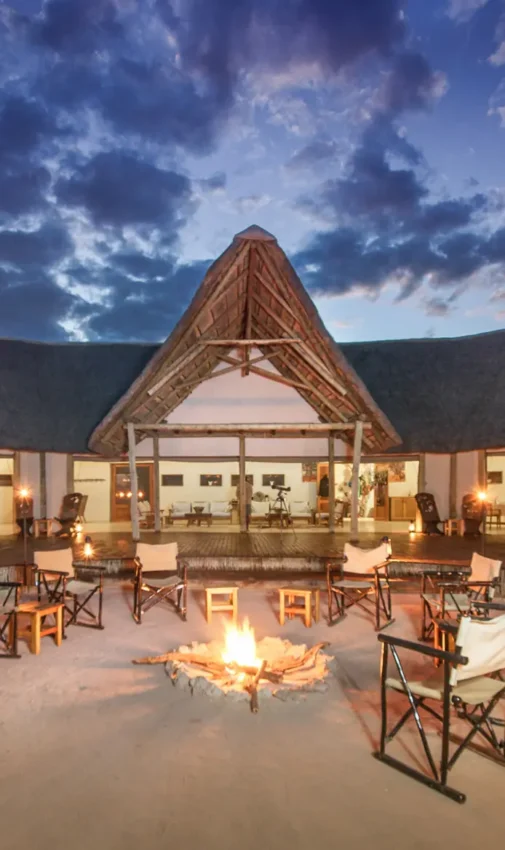
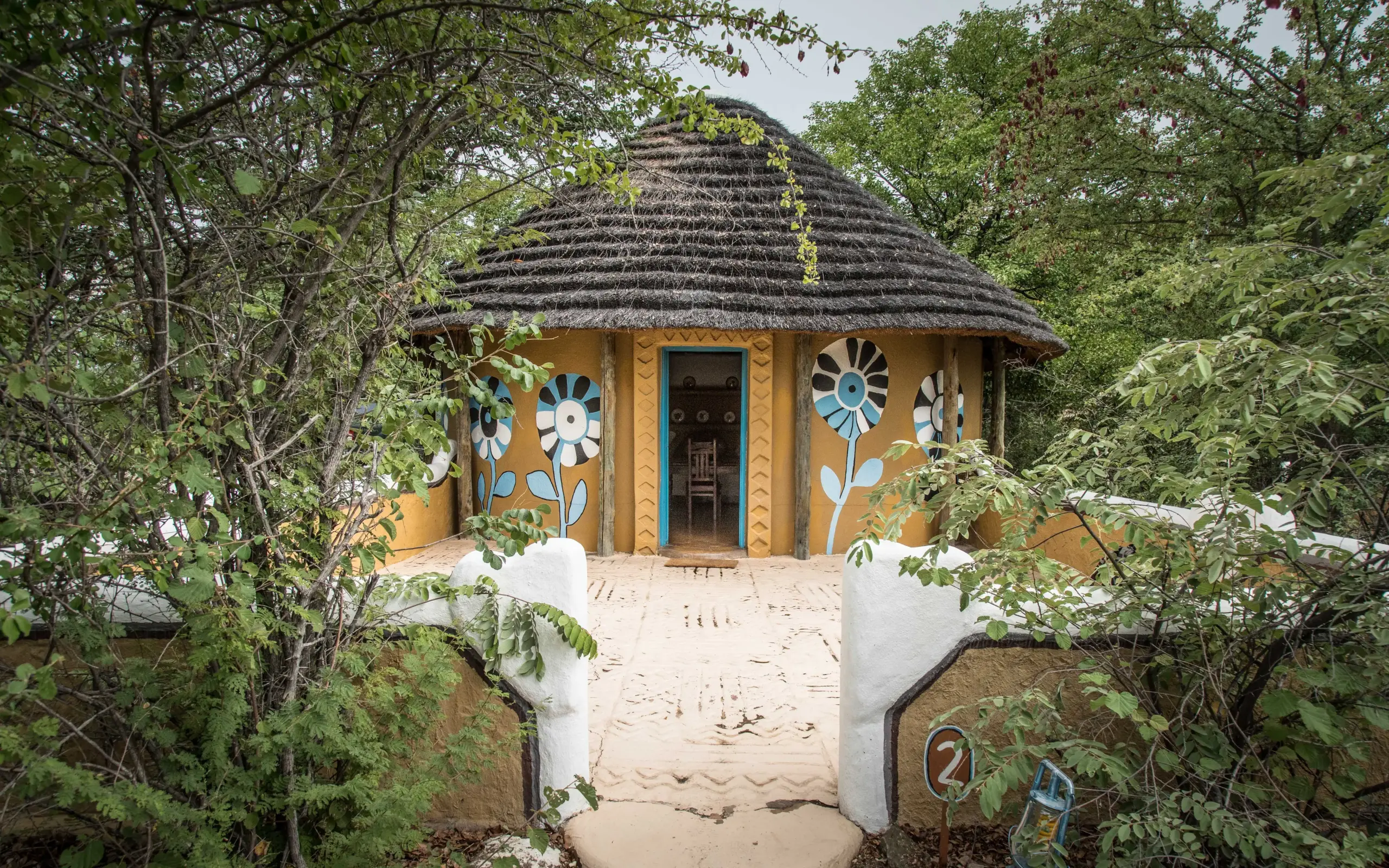
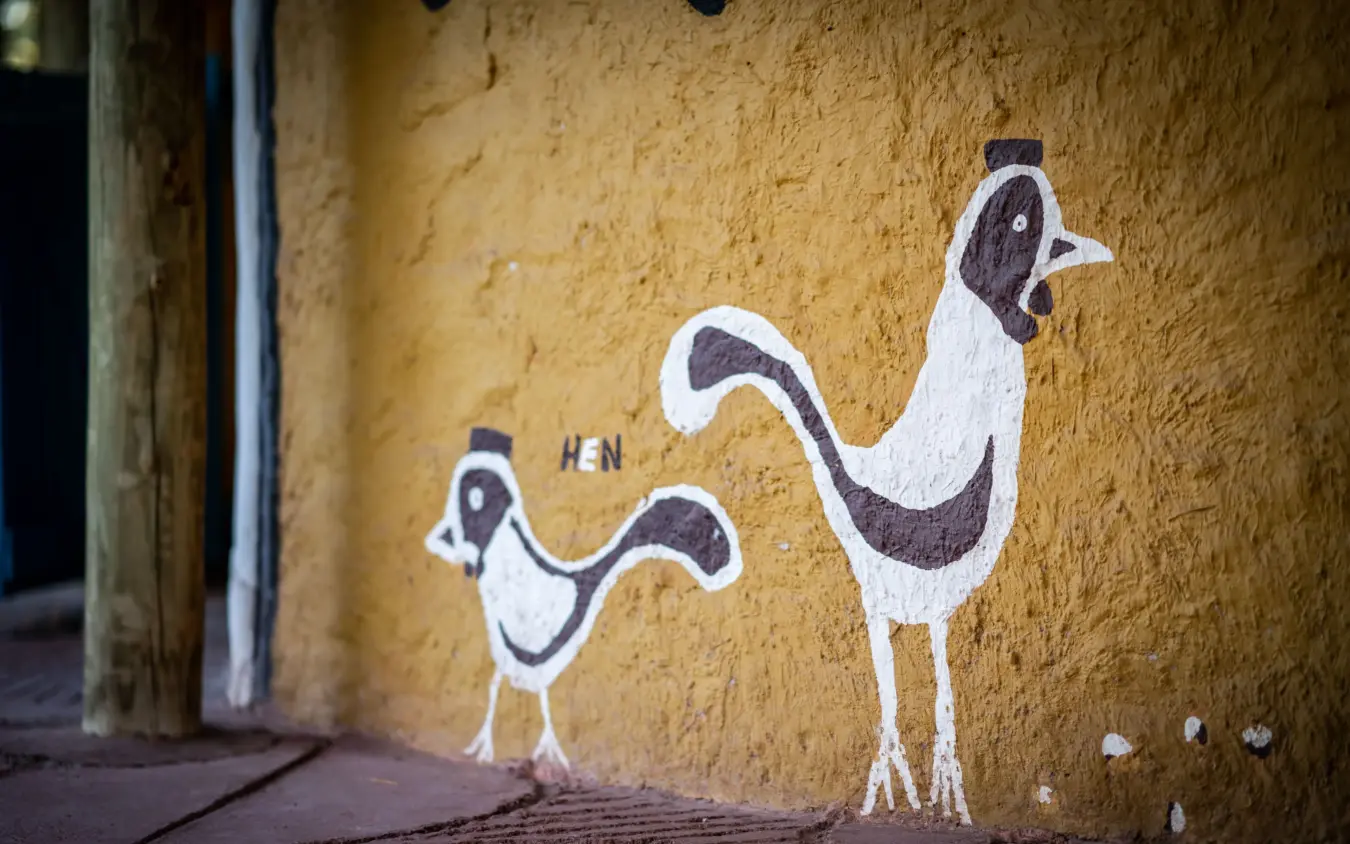
Ralph Bousfield founded Planet Baobab in tribute to his father Jack, who ran safaris across these salt flats from the 1960s. The design follows Bakalanga village architecture, round mud walls under conical thatch, with geometric murals painted by local artists. None of it defers to conventional safari taste, and that is the point.

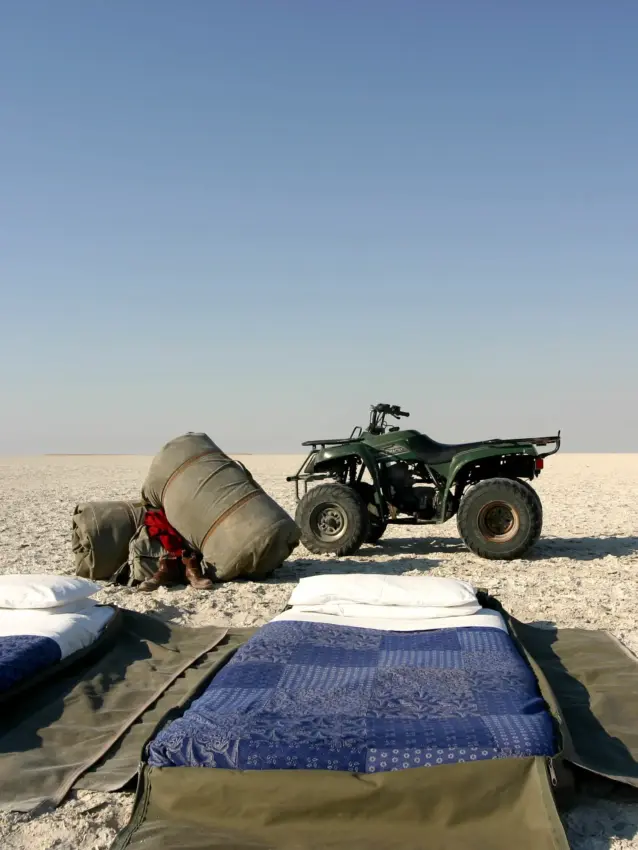
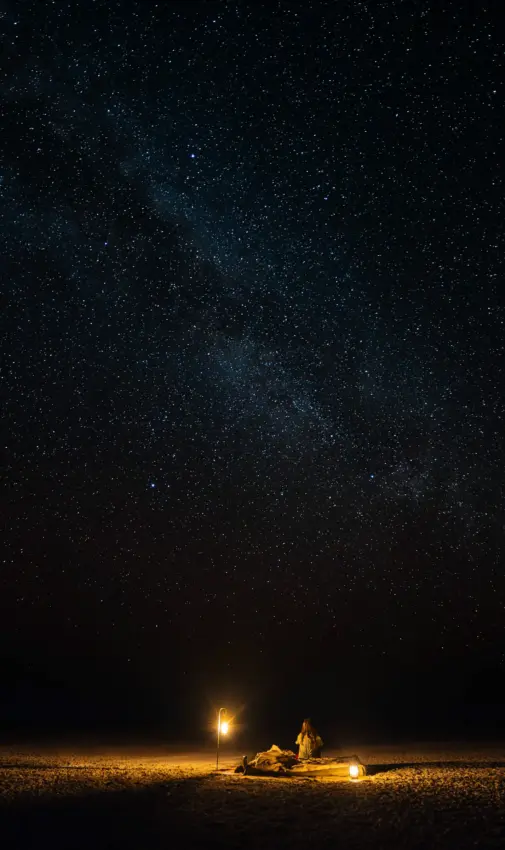
Some nights end on the pan itself, bedrolls laid on the salt.

The camp began as a stopover breaking the drive between the Okavango Delta and the salt pans, and has grown into a base for the pans in their own right. Guests tend to arrive dusty from the road, and the camp is built to absorb that without ceremony. Some nights end on the pan itself, bedrolls laid on the salt. Gweta lies east of Maun on the sealed highway, and light aircraft come in with a road transfer.

01

accommodation

Eighteen Thatched Huts Among Baobabs

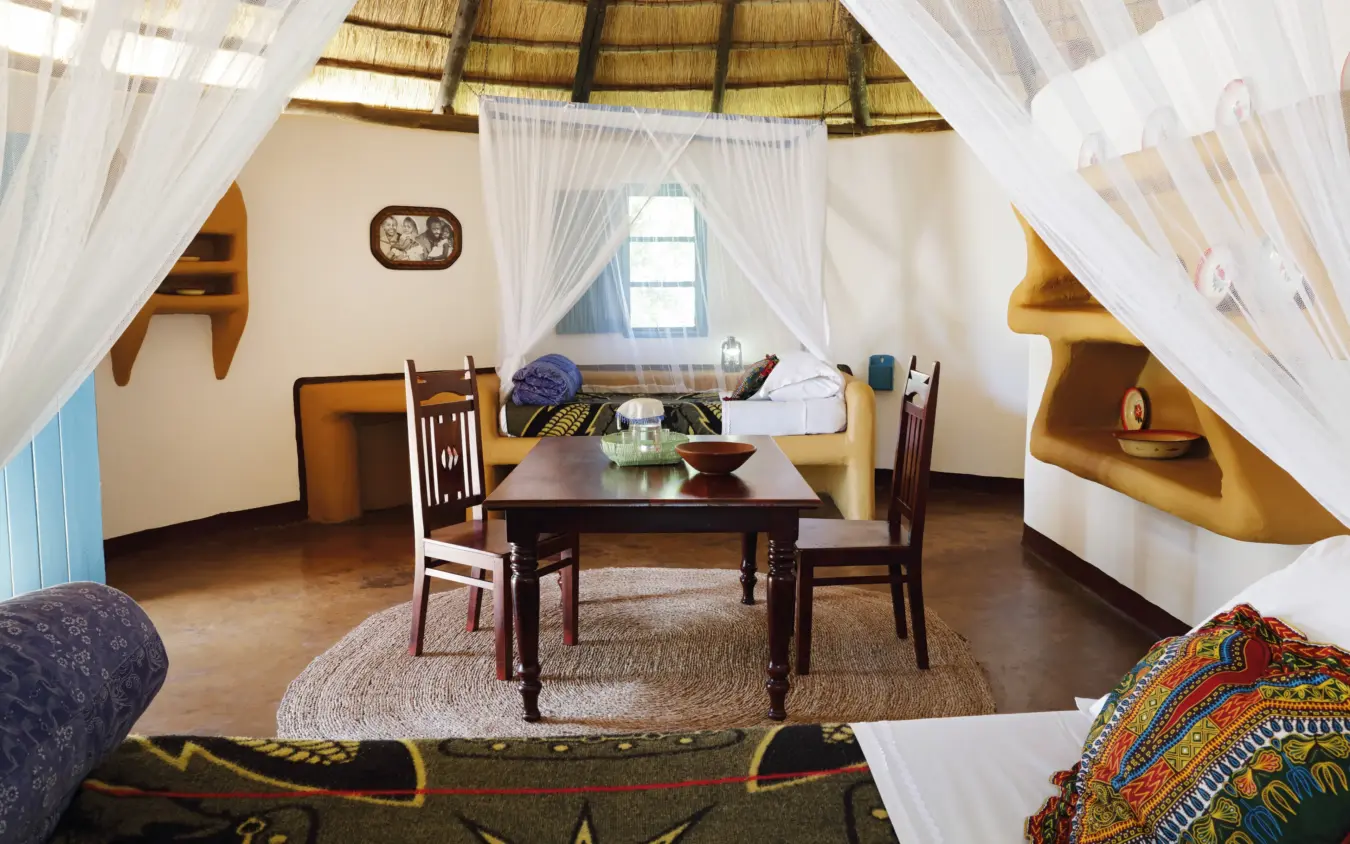
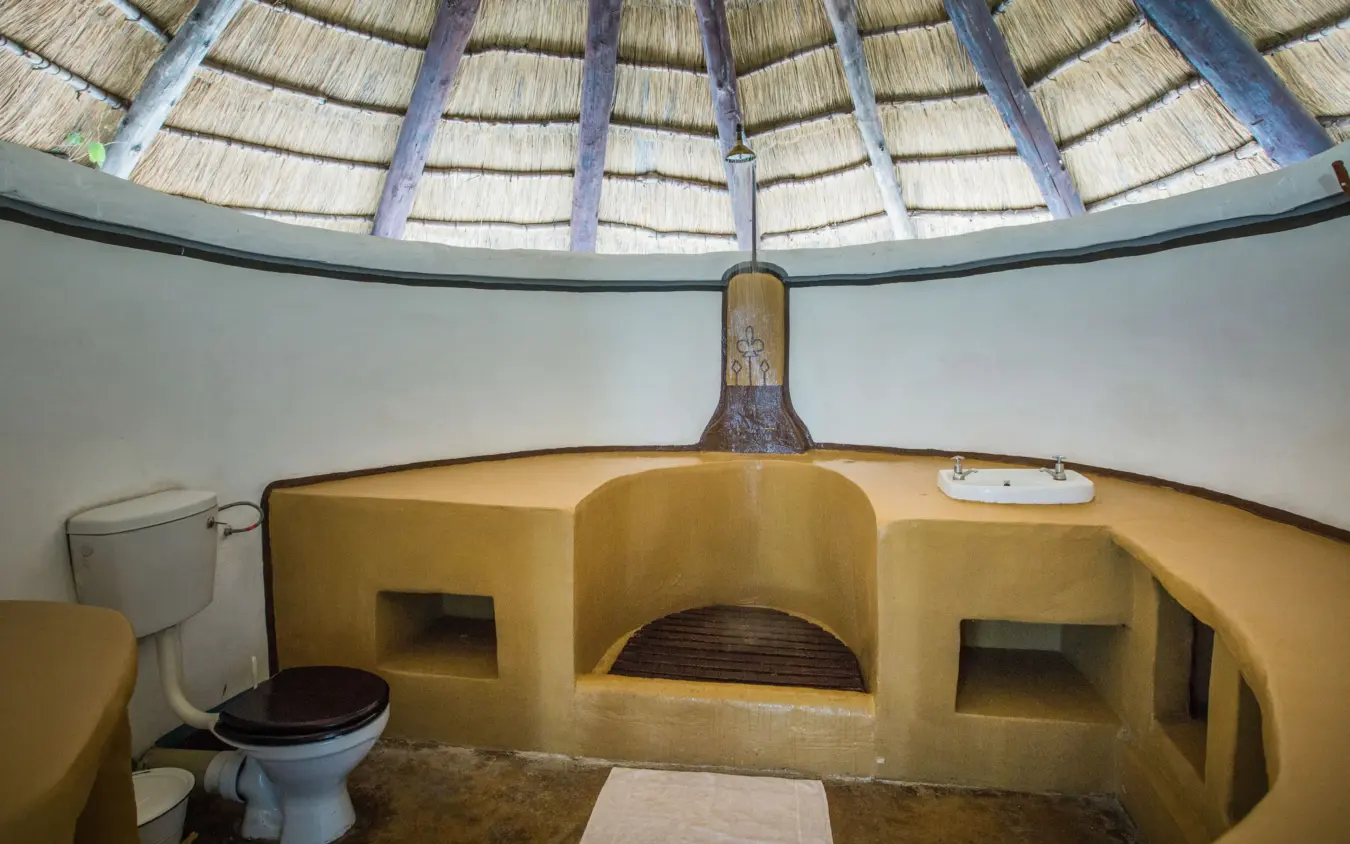
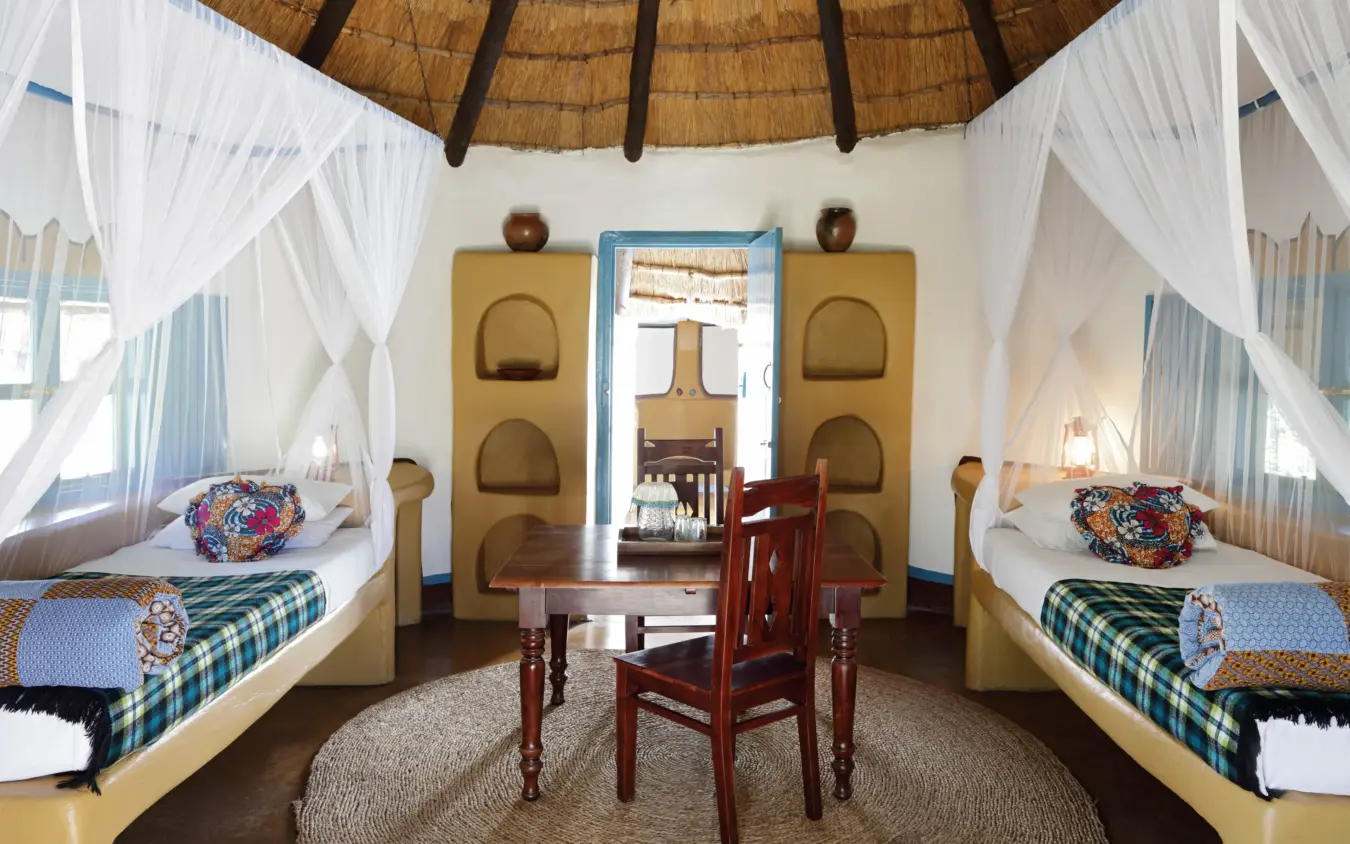
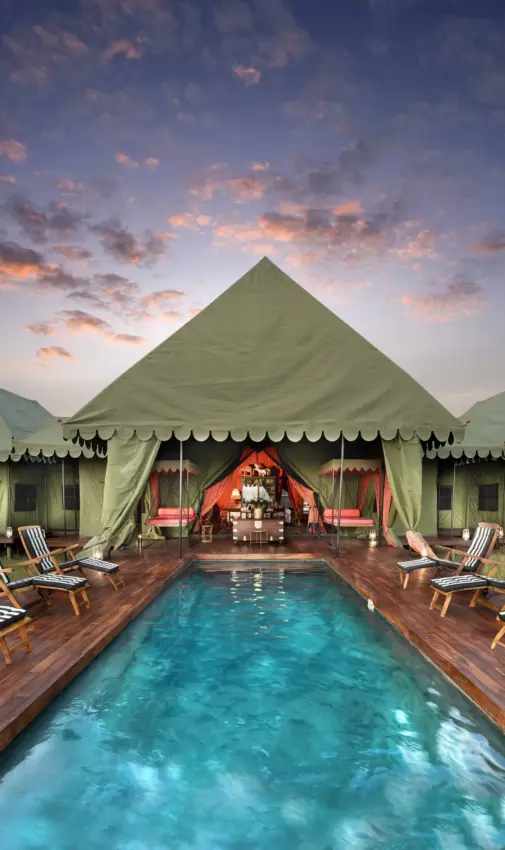
Eighteen thatched huts stand among the baobabs: eight twin Bakalanga huts, seven twin Baobab huts and three family huts with a double bed flanked by two singles. All are round-walled, mud-built and en suite, with indoor showers, air conditioning and a private courtyard. Camping is available separately, with shared ablutions.
02

activities

Quad Biking Onto Ntwetwe Pan

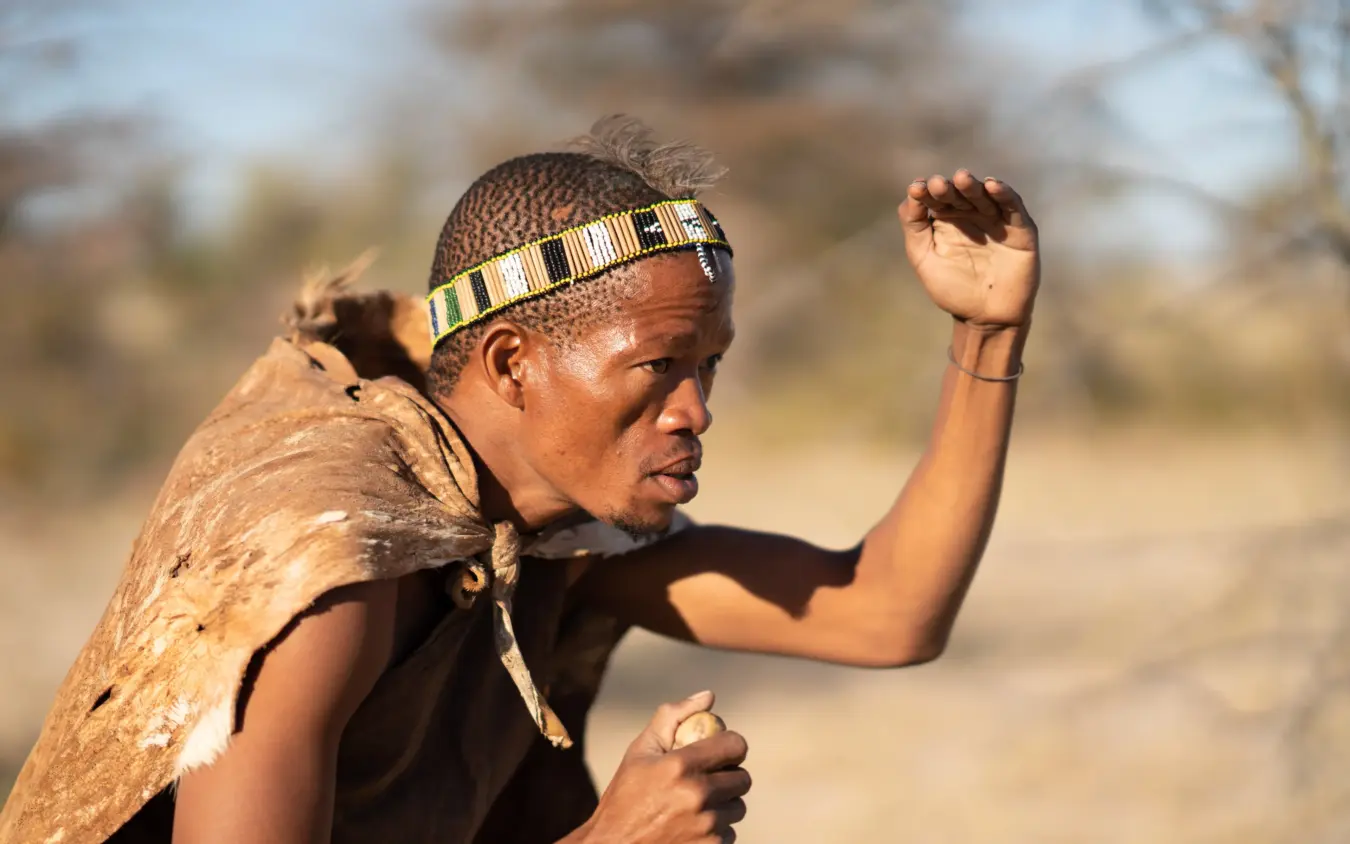
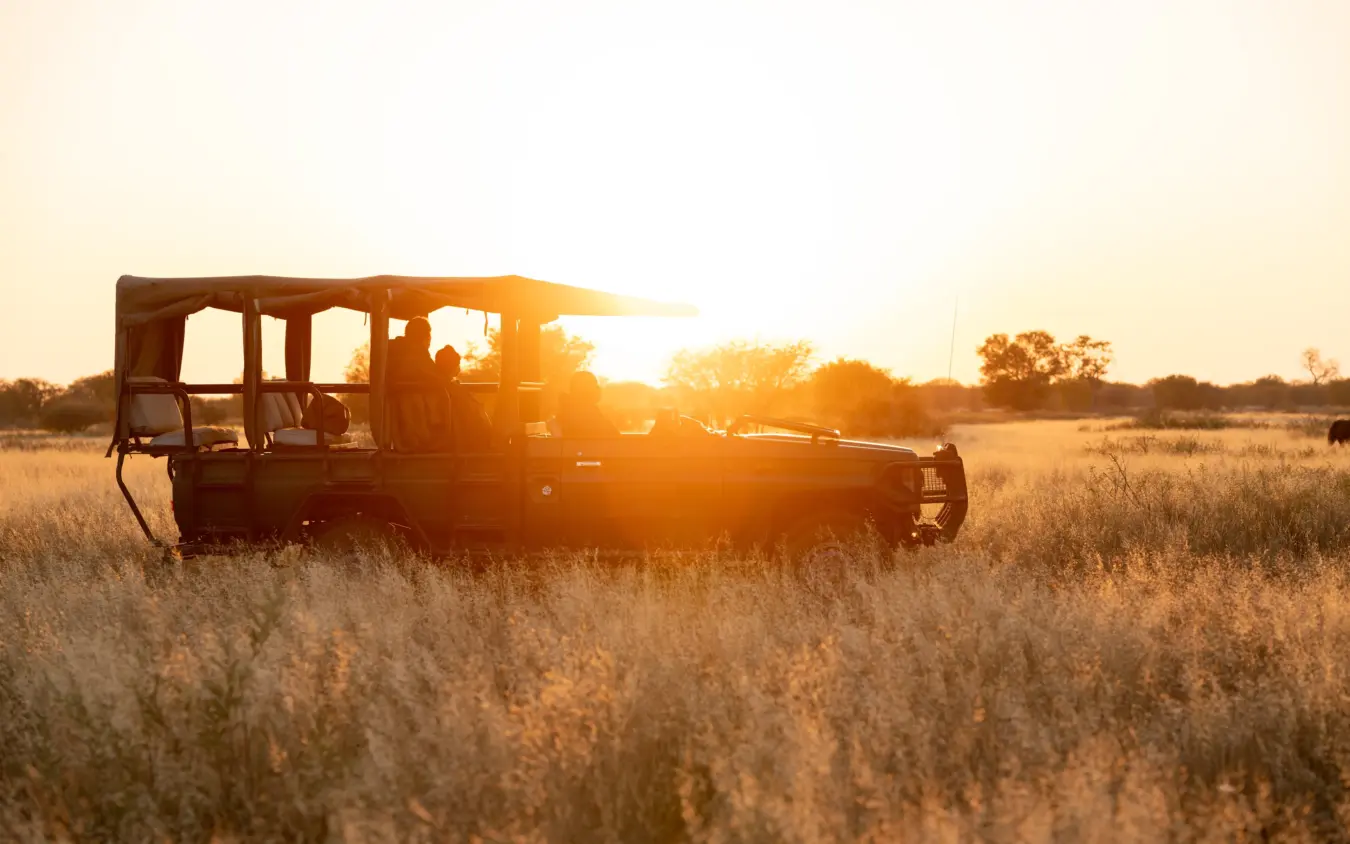
Quad biking onto Ntwetwe Pan runs in the dry season, with optional overnight sleep-outs on the salt afterwards. Meerkat visits, game drives onto the pan, guided baobab walks, San tracking walks, fossil-hunting outings and village visits to Gweta and its cattle posts run year-round. Nxai Pan National Park is a possible day trip.

03

conservation

Makgadikgadi–Nxai Pans Zebra Migration Routes

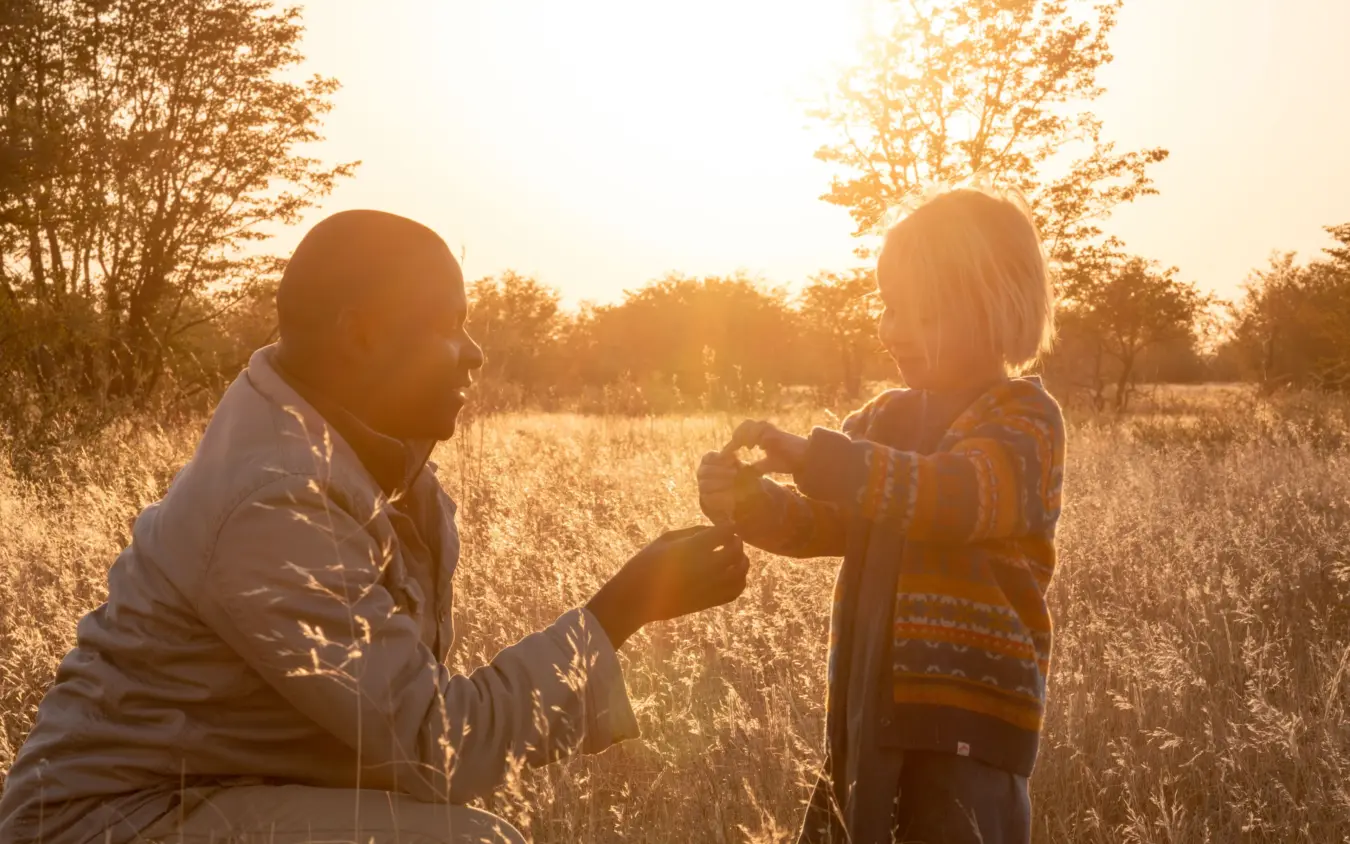
The Makgadikgadi–Nxai Pans Conservation Initiative works with area landholders on grazing and land-use planning aimed at restoring the migration routes zebra herds once used before land-use changes disrupted them. Naturalists monitor the resident meerkat colony daily. Hospitality and guiding staff are drawn from Gweta, the village at the camp's edge, and local women paint the murals on the huts.

ready to get started?

Get in touch and let’s start the conversation. An initial consultation helps us understand what you’re looking for, whether that’s specific experiences, luxury touches, or marking a special occasion, and from there we’ll guide you through what’s possible so you can decide if we’re the right fit.

Alternative accommodation in makgadikgadi pans

frequently asked questions

By road or by light aircraft, and the road leg is easier than the distance suggests. Gweta sits 200 kilometres east of Maun on the sealed main road, and the camp's own transfer schedule puts the drive from Maun at about two and three quarter hours, run on a shared basis with a minimum of two travellers. The turning is reachable in a two-wheel-drive vehicle, so a self-drive arrival genuinely works here in a way it does not at most camps we book in Botswana.

There is also an airstrip at Gweta, and the camp runs a transfer from it that takes under half an hour into the baobab grove. We can arrange a private charter into Gweta, typically a Cessna Caravan or a Pilatus PC-12, which takes the scheduled timetable out of the equation and matters most when you are joining Planet Baobab to a Delta camp on the same day. Tell us at the enquiry stage which way you would rather arrive and we will price both.

Yes, and the month matters more than the map. TravelHealthPro, the UK's official travel health service, puts the northern half of Botswana at high risk of malaria from October to May and recommends antimalarial tablets for those months, with the risk falling to low for the rest of the year, when it advises awareness of the risk and bite avoidance instead. Gweta sits well inside that northern half. The CDC recommends prescription medicine to prevent malaria for travellers going to certain areas of Botswana, and the districts it names include Tutume and Boteti, the two that take in the Makgadikgadi and the village of Gweta.

We plan safaris rather than practise medicine, so we name no medicine and give no instruction. That decision belongs with you and your doctor or a travel clinic, and it is worth raising close to departure because the guidance is reviewed. The camp's own advice to guests is simply to take precautions and speak to a doctor. Practically, the evenings here are spent outdoors around the bar and the pool, so neutral long sleeves and trousers after sundown and repellent on any skin still showing are sensible whatever you settle on.

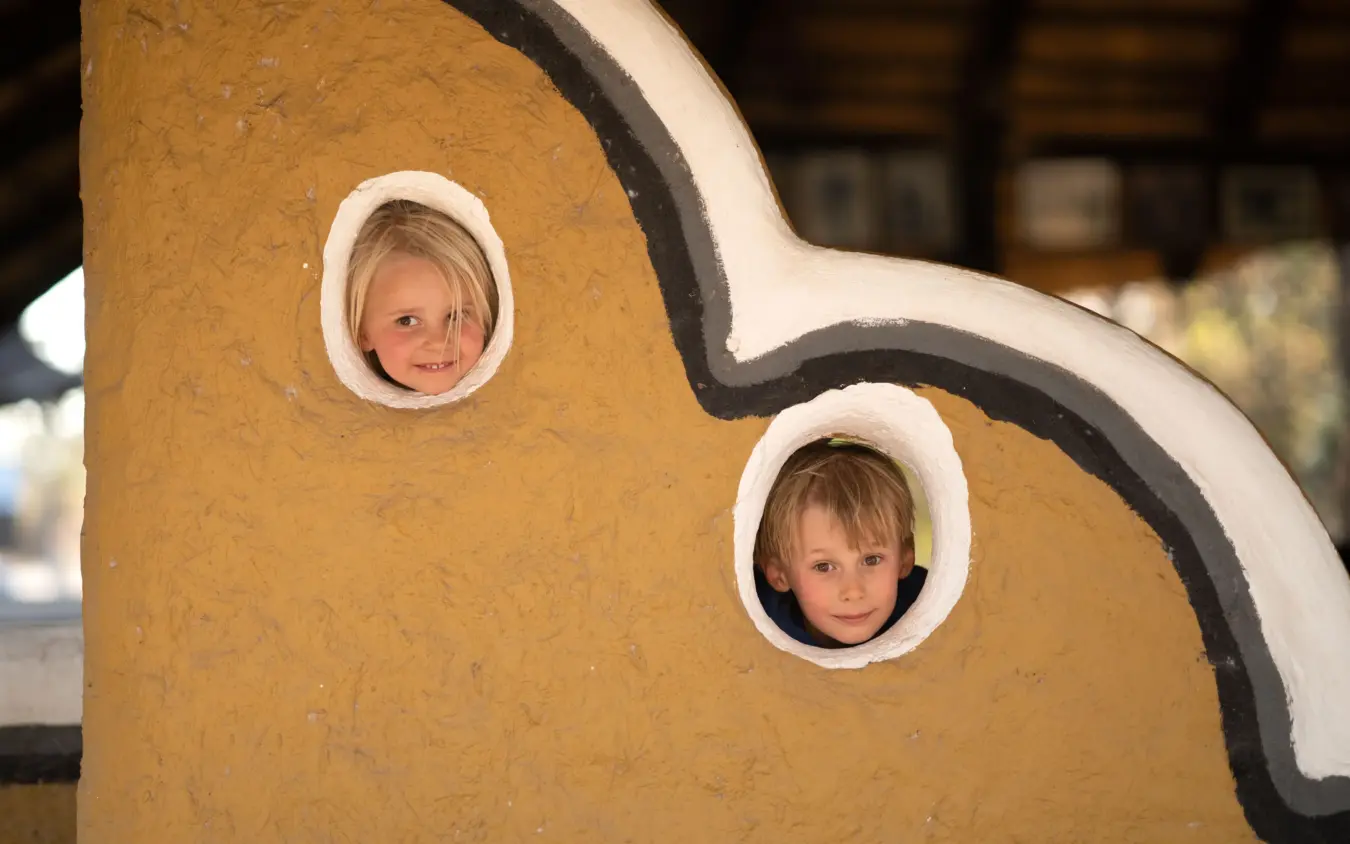
Yes, at any age, which is unusual in Botswana. Camps in the Okavango Delta generally start at six, and the camp's own rate sheet welcomes all ages here, with under-sixes sharing with their parents at no charge and children up to eighteen charged at a reduced rate on both the room and the activities. Three of the huts are built as family rooms, a double bed and two singles under one thatch, so a family of four sleeps together rather than across two huts.

The one age rule that bites is the quad bikes: two riders share a machine, and a child under twelve has to ride with an adult rather than alone, though sole use of a bike can be arranged for a surcharge. Worth knowing before you plan around it, the camp cannot run activities privately, so every outing is shared with whoever else is booked on it that morning, and the pool is for residents only. Tell us your children's ages when you enquire and we will say which of the pan trips will actually suit them.

Both, up to a point, and this is one of the few camps we sell in Botswana where a mobile phone works at all. The camp's own information sheet says there is cell phone reception in the central area, which is the bar, restaurant and pool end of the grove rather than the huts. Wifi is available and is charged for rather than bundled into the rate, which catches people out because the smarter camps on these same pans include it. There is mains electricity, with charging points in the huts and in the main area.

That is the whole picture as the camp states it, and it is worth setting expectations around the outings: the pan trips run 40 kilometres out from the grove and the sleep-out is a night away from camp altogether. If someone in your party needs to be reachable at a set hour, tell us before you travel and we will confirm the current arrangement with the camp rather than guess at it.

Less than most safari rates in Botswana, and this is the single thing to understand before comparing it with anything else. The camp's published rate covers the hut, dinner and breakfast. Lunch, all drinks, guest laundry, guiding, transfers and the activities themselves sit outside it and are charged as you use them. That is a deliberate difference from the smarter camps on the same pans, which roll everything into one nightly figure, and it is why Planet Baobab reads as inexpensive until the pan trips are added to it.

A community, conservation and reserve fee is charged per person per night on top of the room, and it does not apply to children under six. Each activity is priced separately and runs for a minimum of two people, so a solo traveller pays that two-person minimum to go out at all. None of this is a reason to avoid the place, it simply means the cost has to be built activity by activity rather than by counting nights. We do that work and give you one figure with everything already in it, so tell us which outings you want and we will build it into your quote.

Yes, all year, but not always by quad bike and not always overnight. The expedition that takes you out to Ntwetwe with a picnic breakfast and the meerkats runs every month of the year. The version with quad bikes and the overnight sleep-out on the salt both run from June to the end of October only, because the crust has to be hard enough to carry a machine. From November the quad bikes move to a shorter guided ride nearer the grove, and the trip that goes out after the zebra and wildebeest runs from November to the end of April, which is the other reason to come in the green months. All of it is weather dependent and none of it can be guaranteed.

One thing to settle in advance if you want the sleep-out. The camp does not hold your hut while you are out on the pan, so you check out, leave your luggage at reception and use the shared washrooms when you get back the next morning. If you would rather walk straight into your own room, the camp's advice is to book and pay for the hut for that night as well, and we will flag that in your quote rather than let it surprise you on arrival.

rated five stars by our clients

other areas in botswana

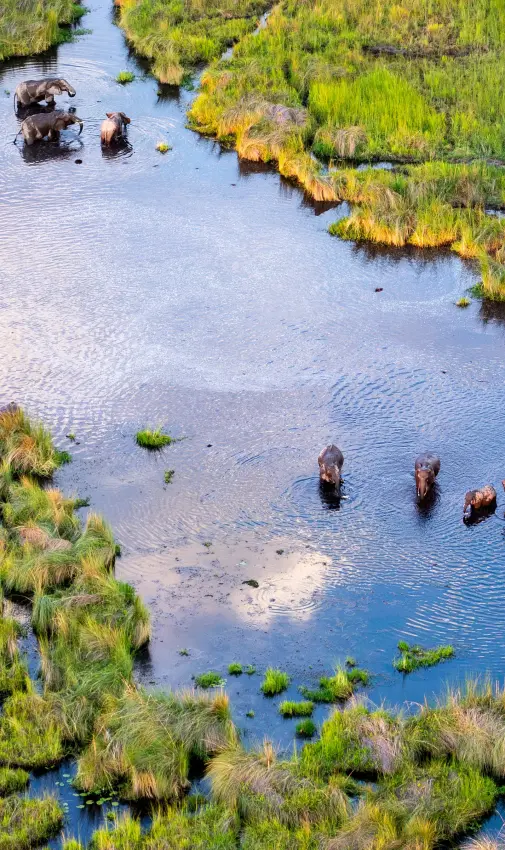
Aerial view of elephants wading in shallow water surrounded by vegetation 01

The Okavango Delta

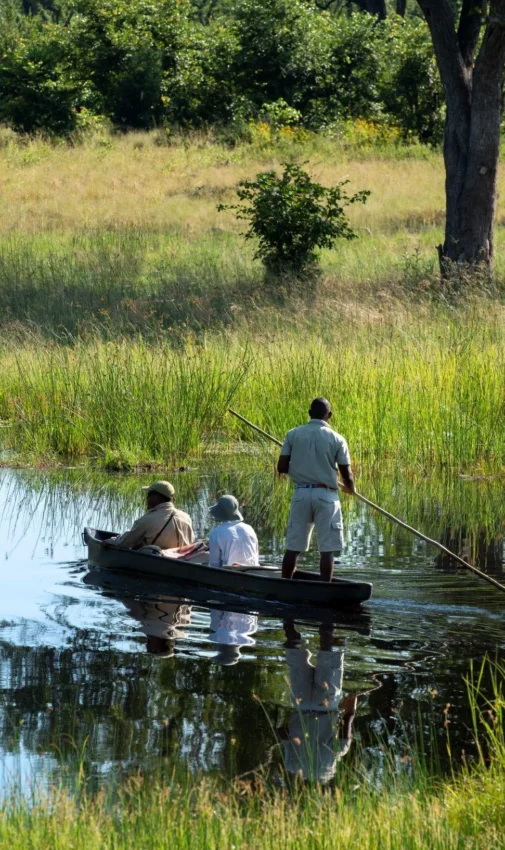
Guests poling traditional boat through wetland waterway, Linyanti Wildlife Reserve, Botswana 02

Linyanti Wildlife Reserve

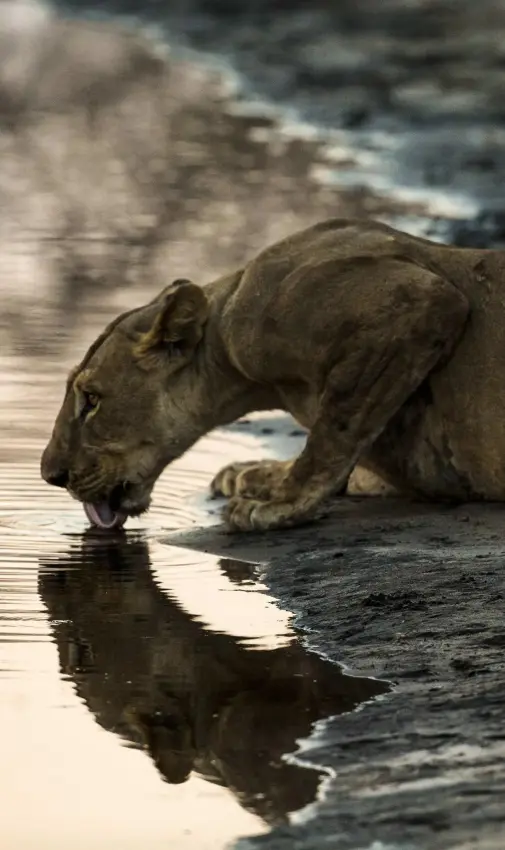
Lion drinking from water's edge at sunset, Selinda Reserve, Botswana 03

Selinda Reserve

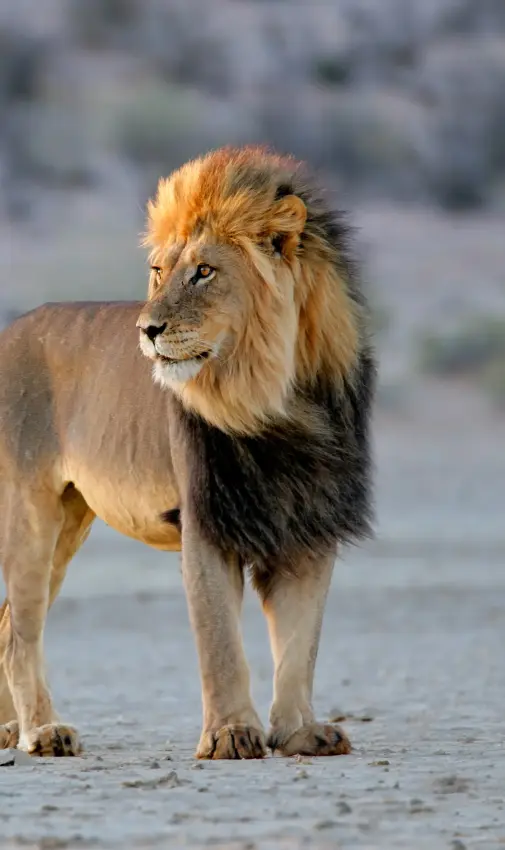
Male lion standing on sandy ground in natural habitat 04

Central Kalahari

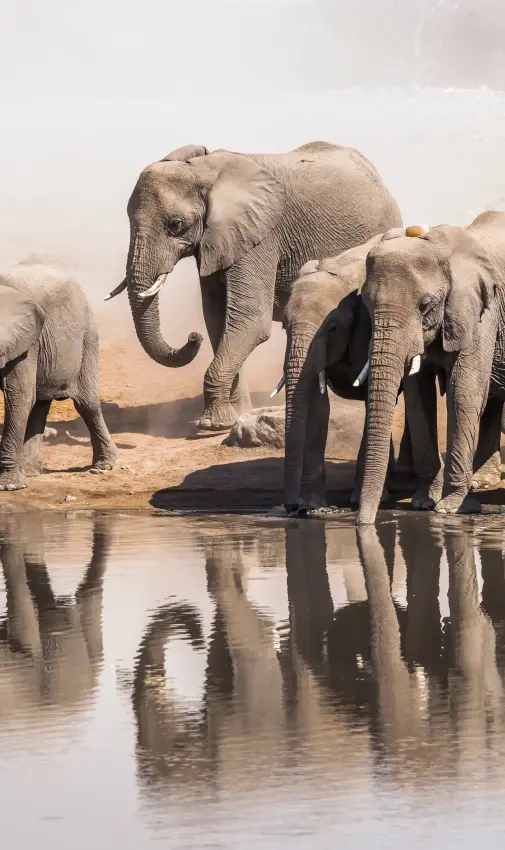
Herd of elephants drinking at waterhole with reflections 05

Chobe

06

Maun

Planning a journey together

our approach

remote, exclusive
& personal

Every journey starts with a conversation. We take the time to understand your vision before we start planning.

Whether by phone or in person, we work with you directly to shape something that is considered, personal, and expertly delivered.

get in touch
destinations ideas & inspiration our process about us contact us