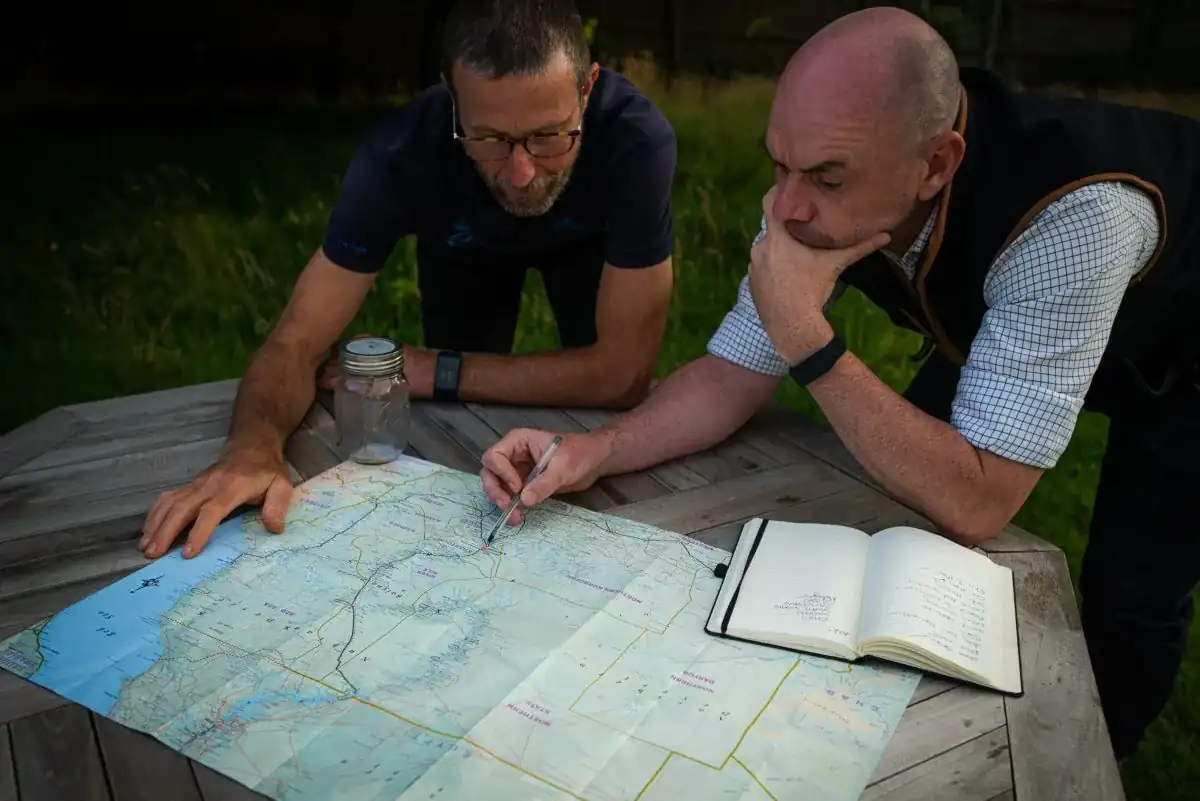
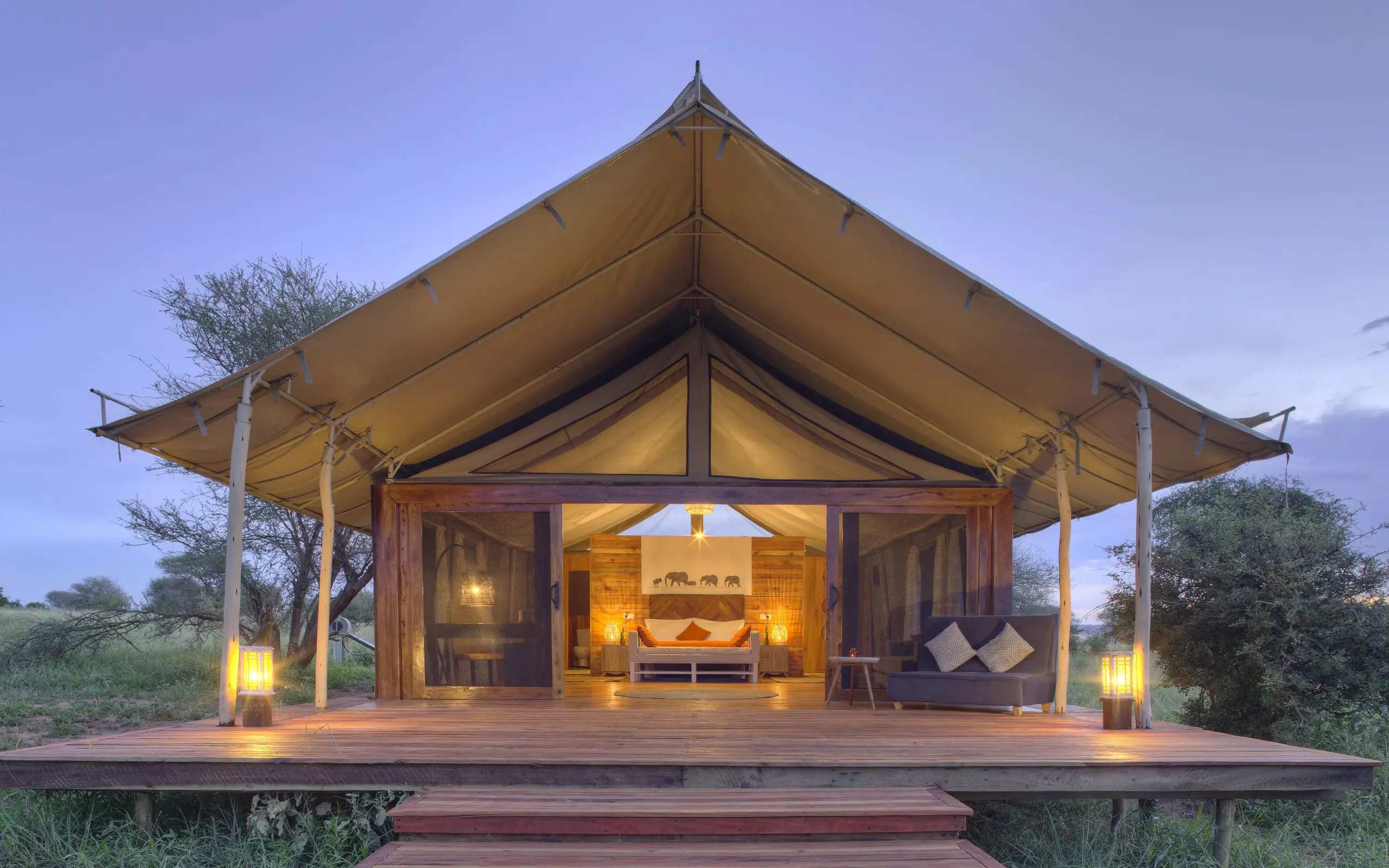
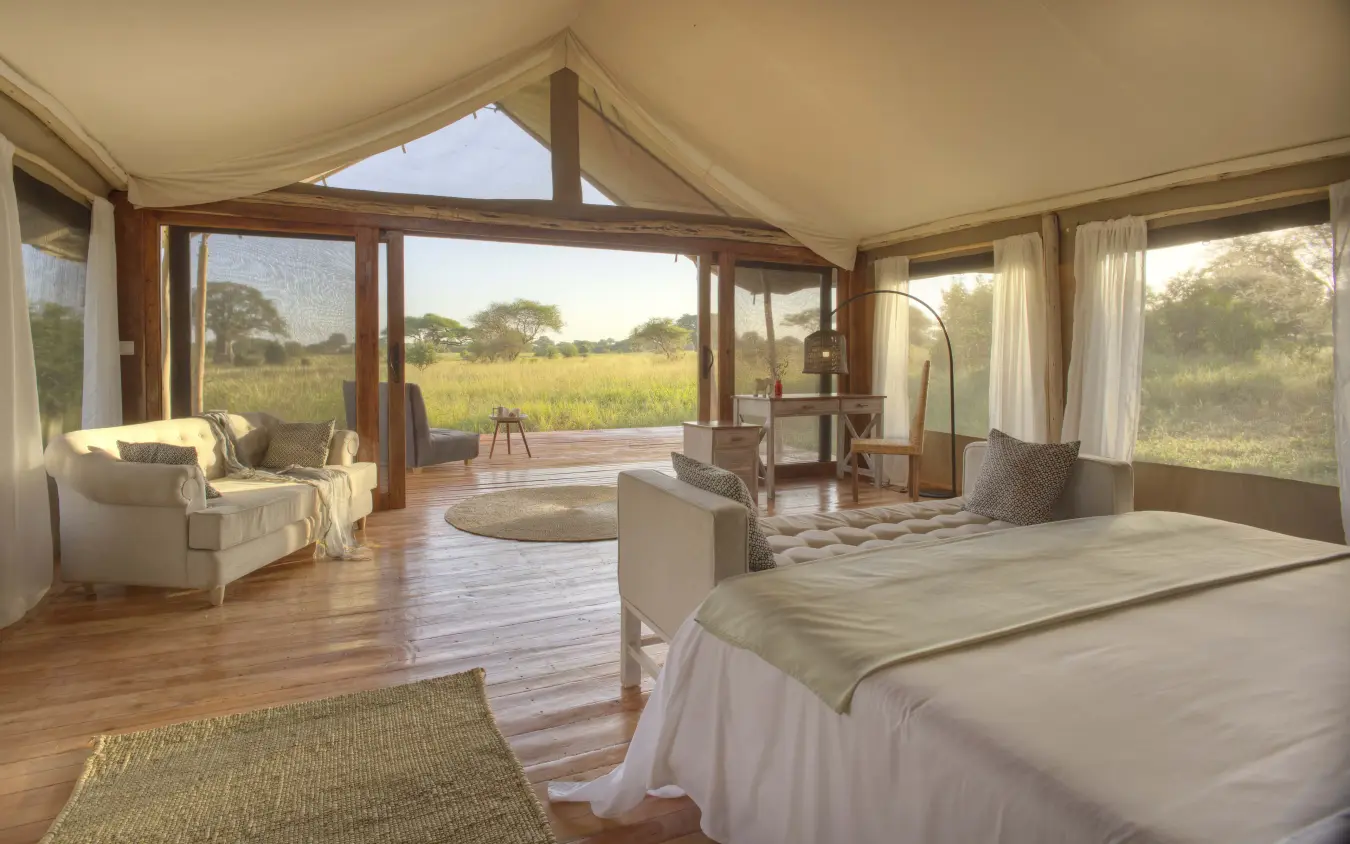
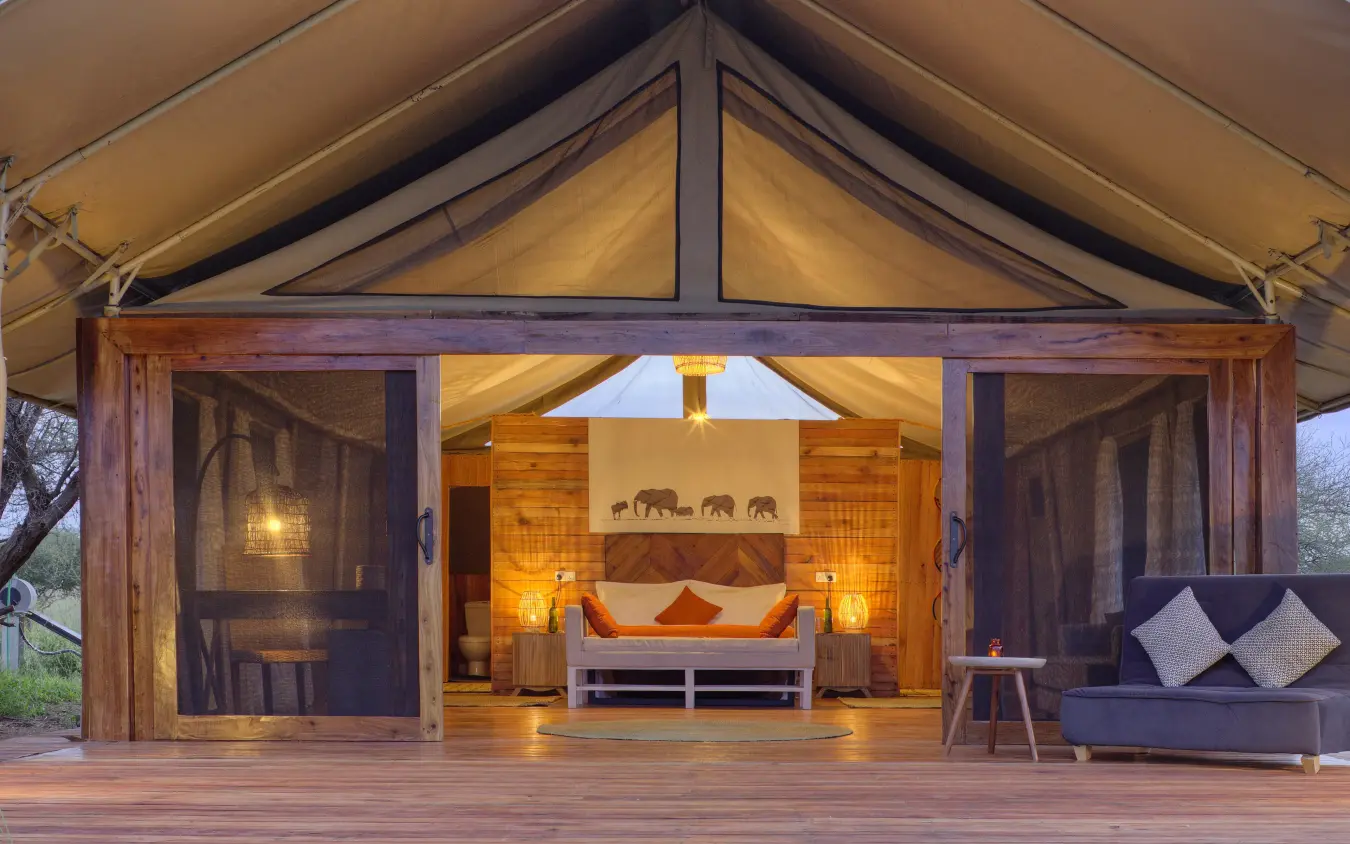
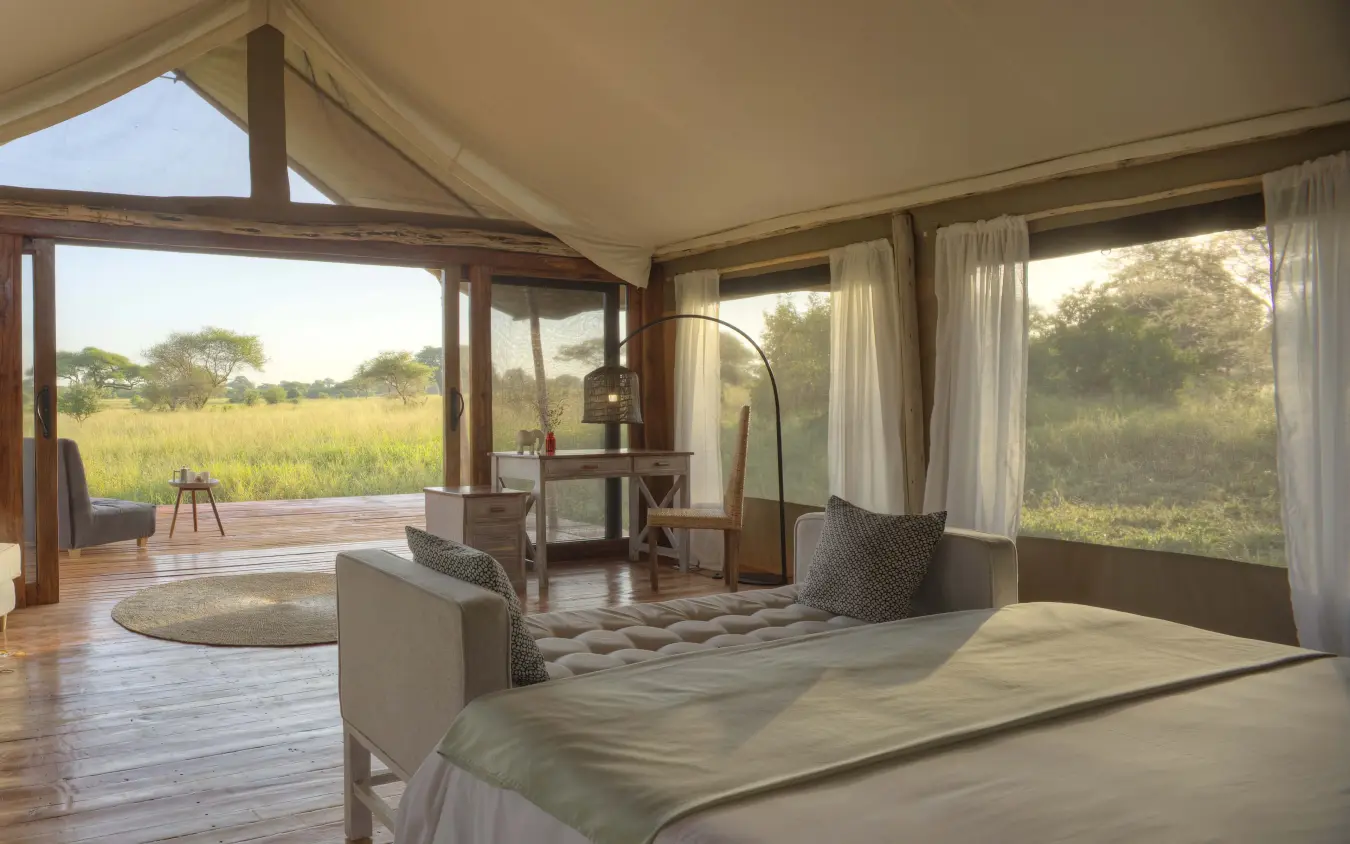
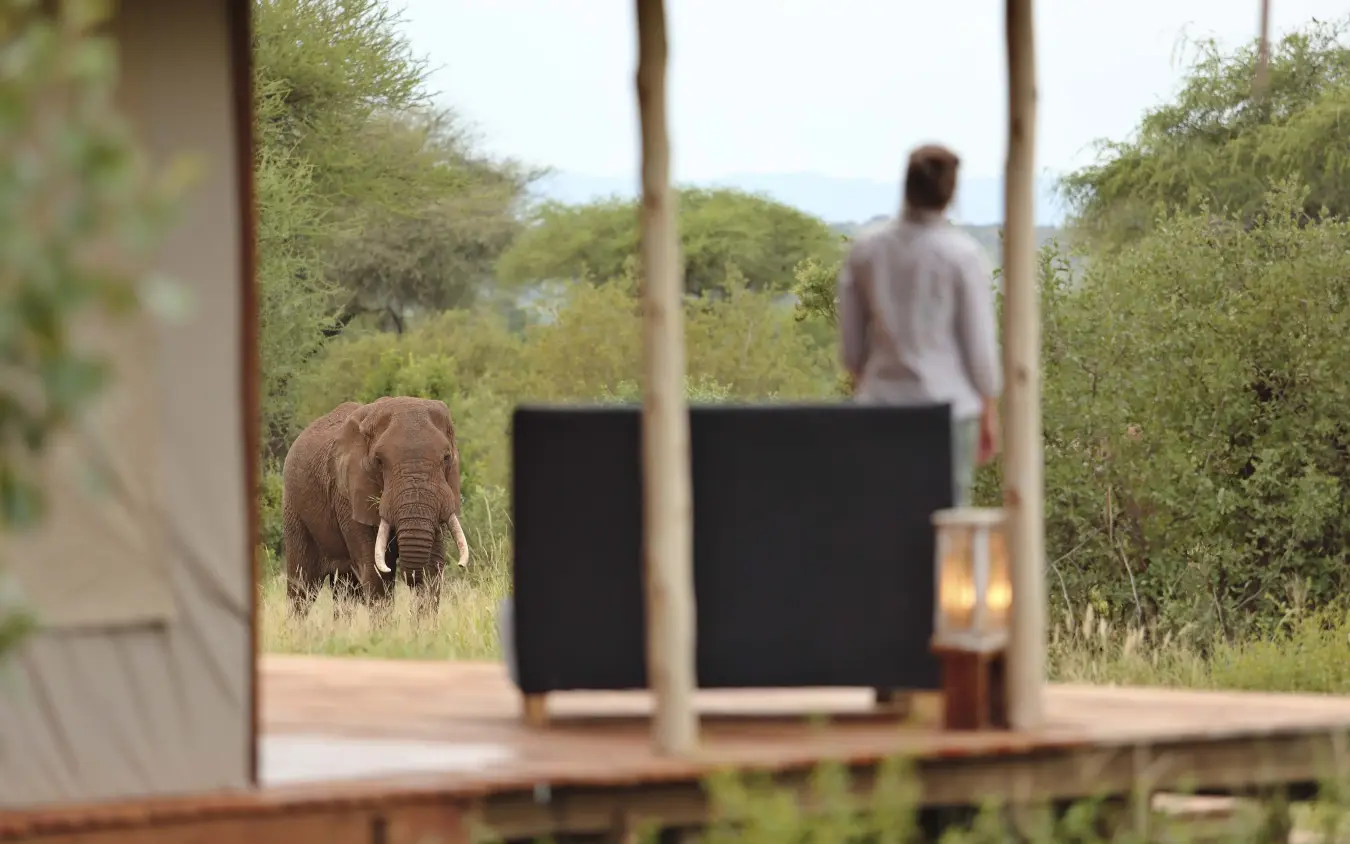
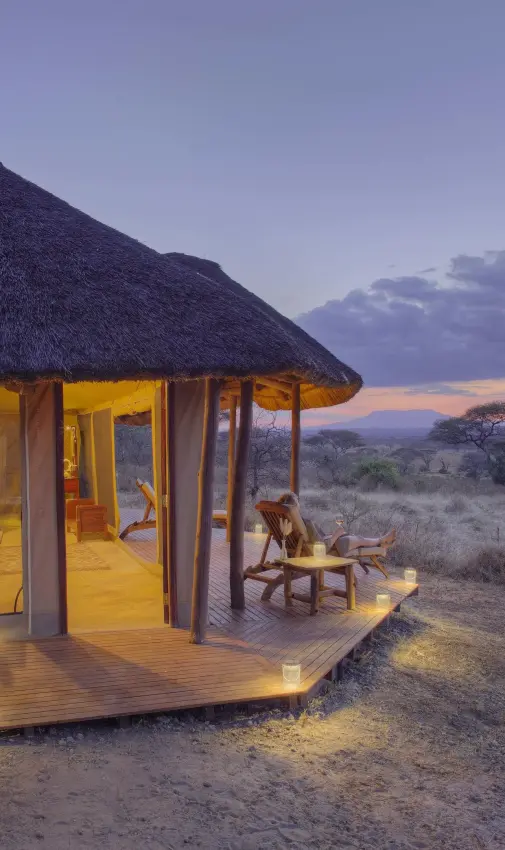
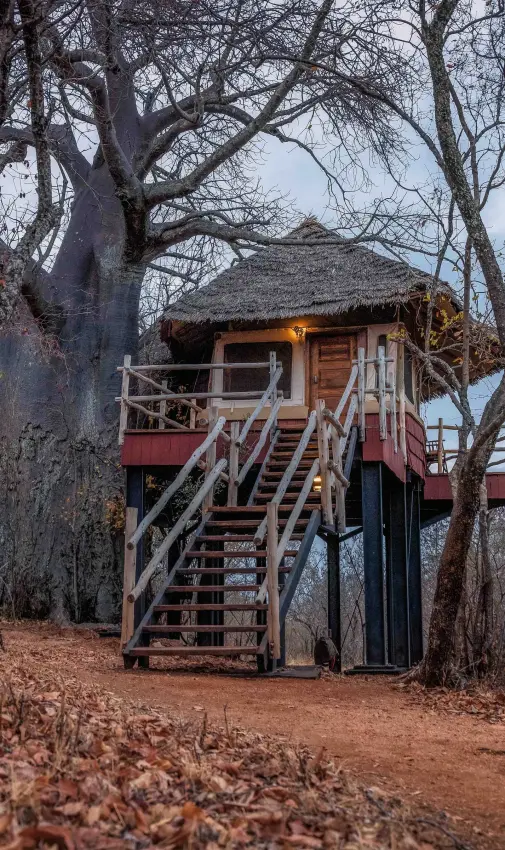
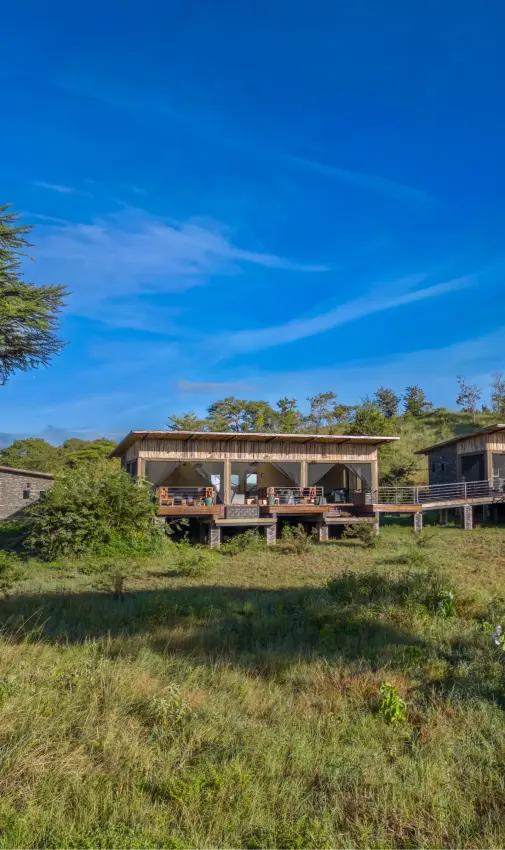
The suites are canvas, stretched over log-and-pipe frames with an outer layer of shade cloth to hold the heat off. Wooden steps lead up to a private veranda, and sliding mesh doors open into bedrooms of handmade furniture, a writing desk and pale drapes. Bathrooms are polished concrete, with hand-moulded terracotta basins and hot and cold showers. The honeymoon suite adds an outdoor shower, and there are two family suites. Little of it travelled far: the canvas comes from Morogoro in southern Tanzania, and the timber and thatch were gathered locally.
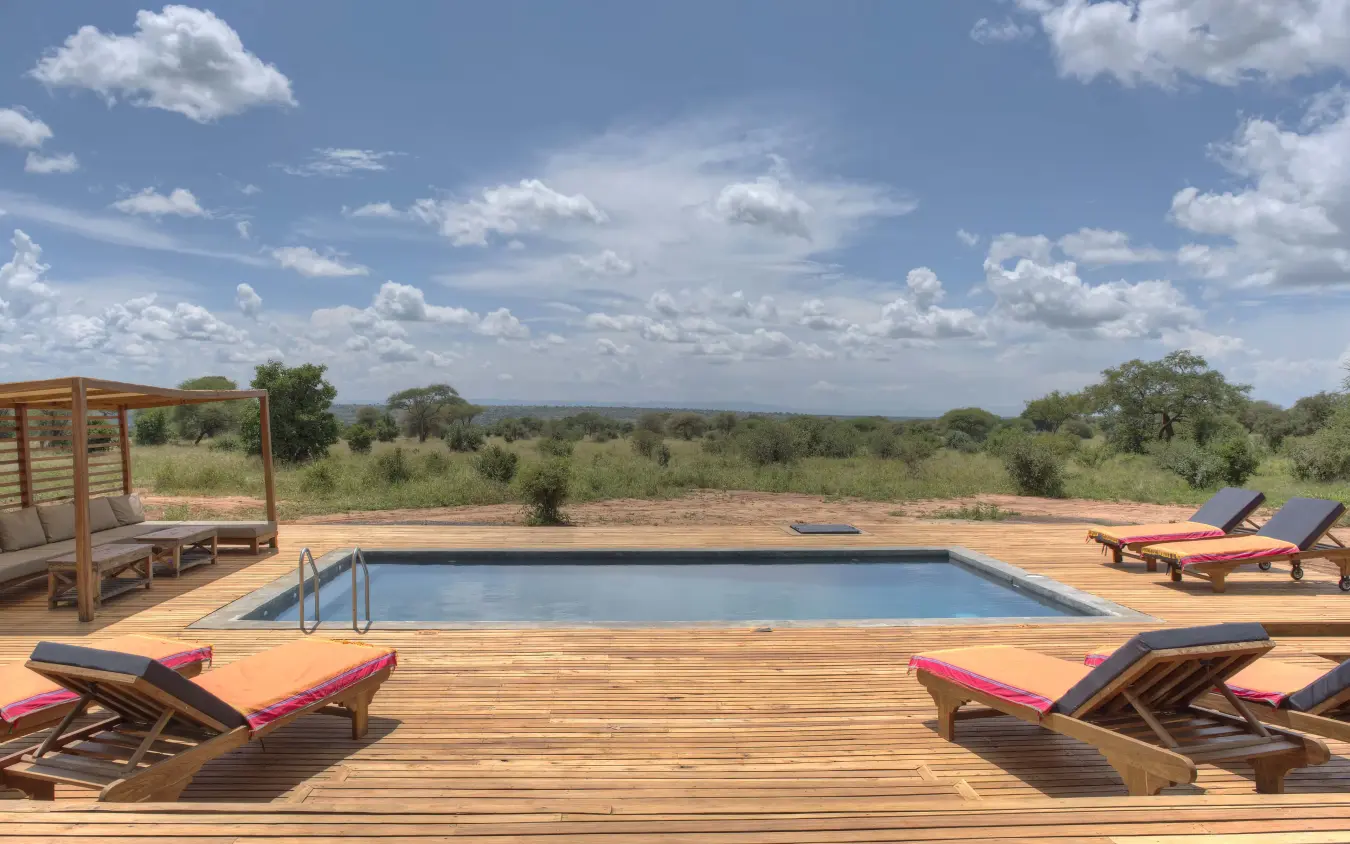
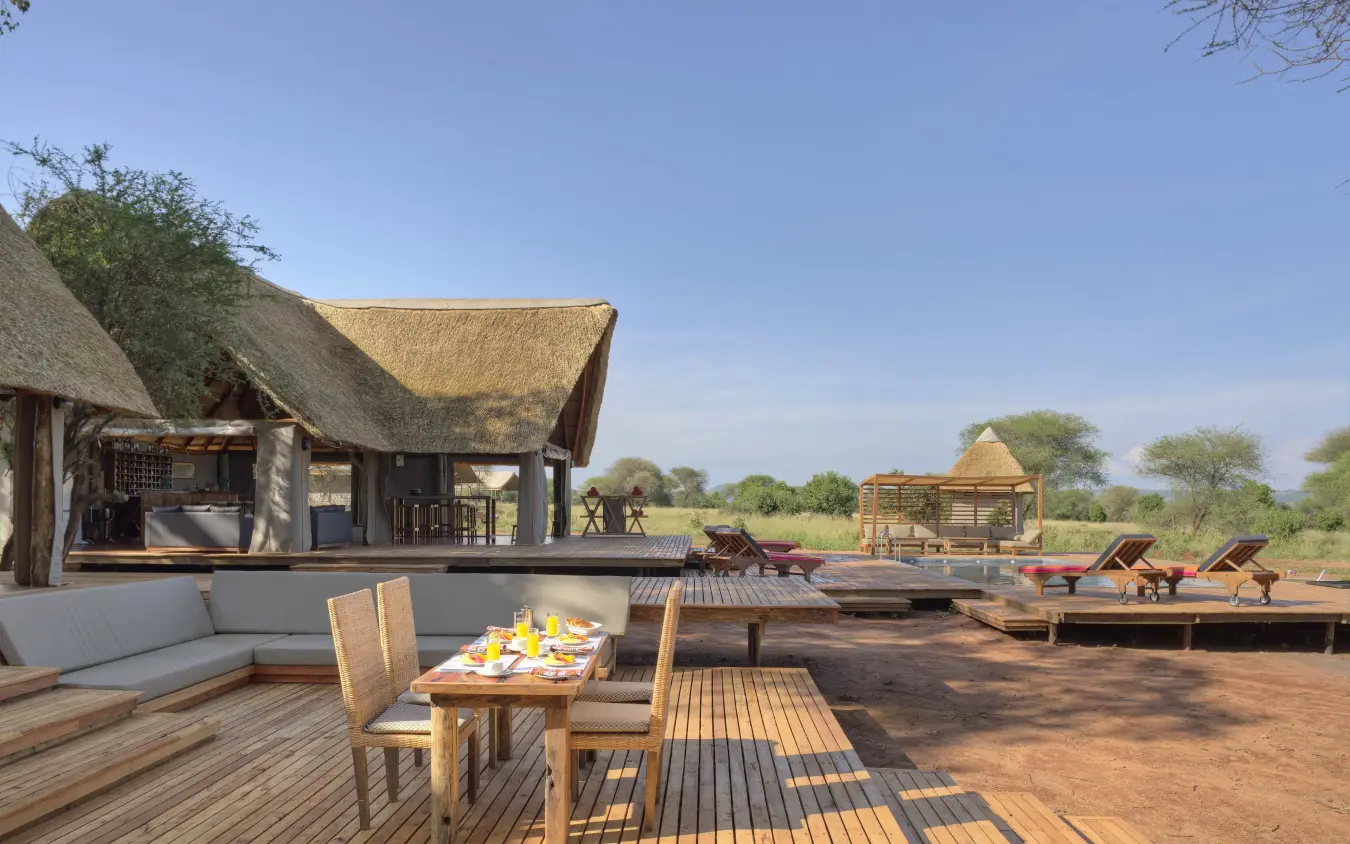
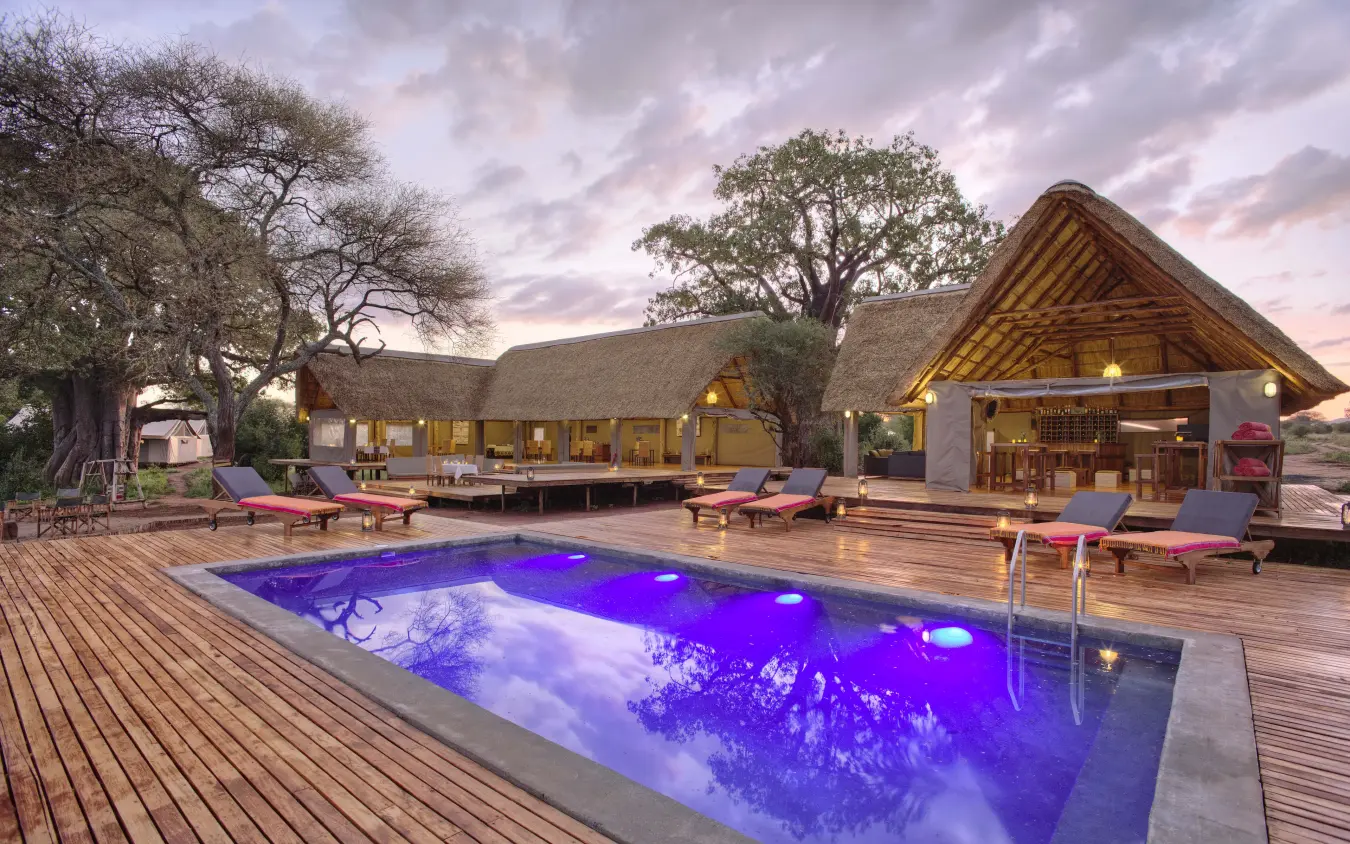
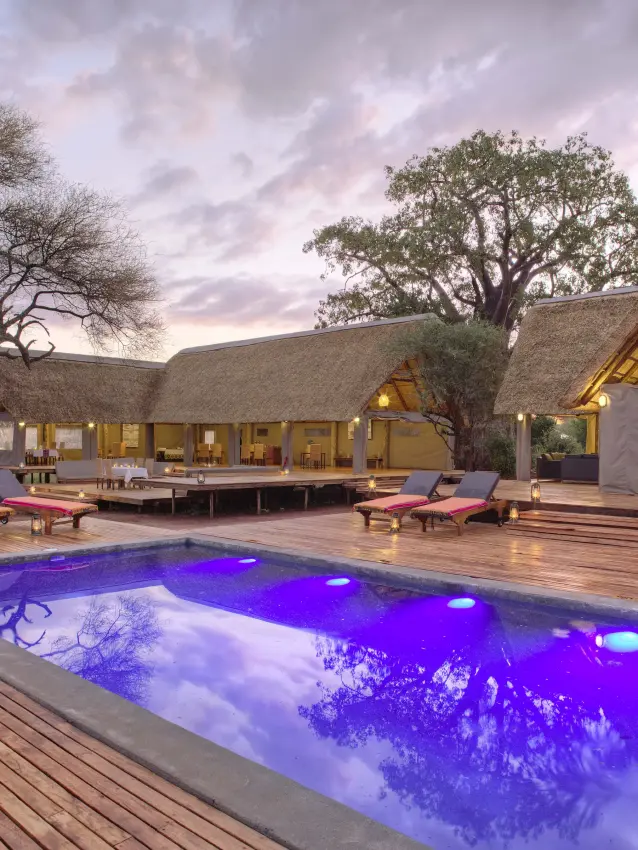
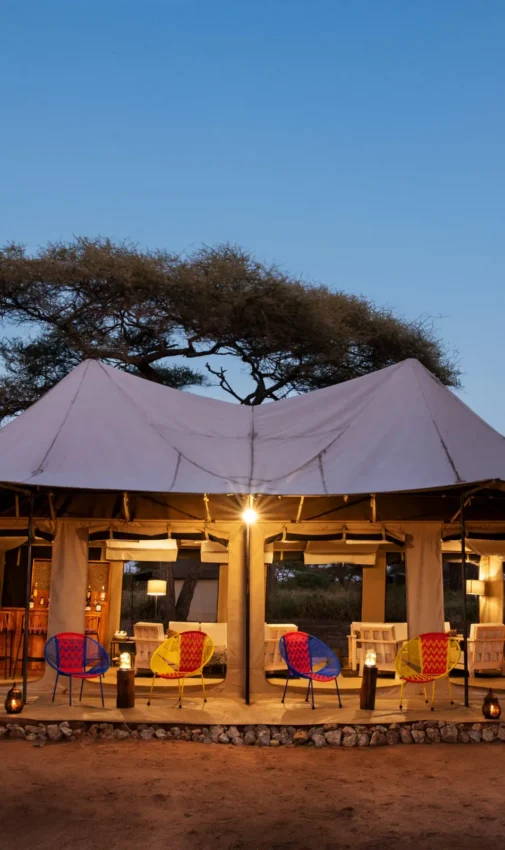
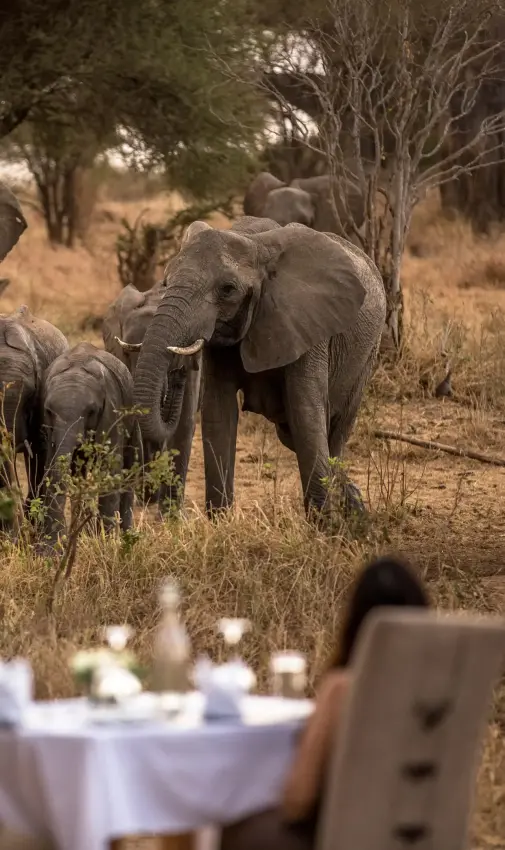
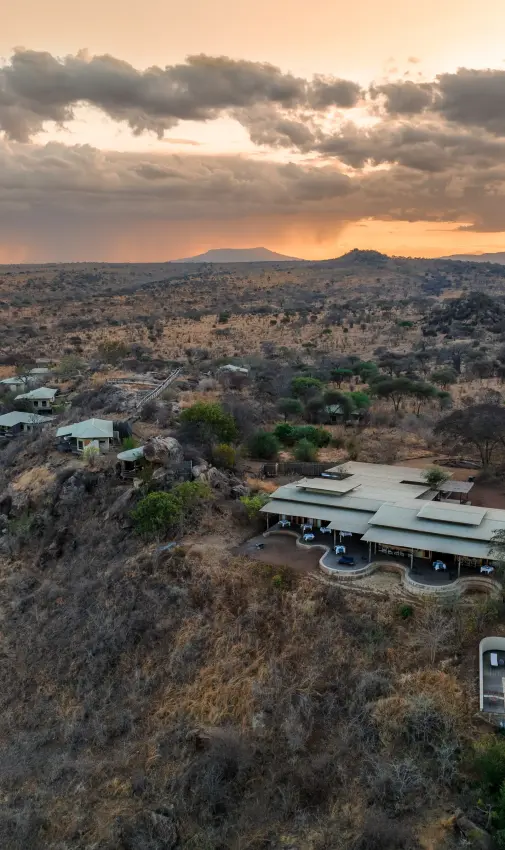
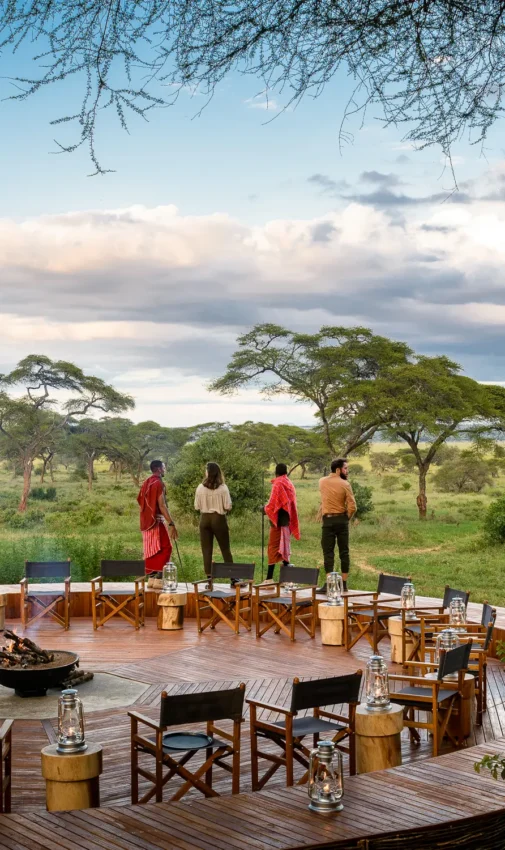
Meals come out of a single open-sided thatched room under a double-pitched roof: bush cooking built on Tanzanian produce, communal tables, and South African wine. Breakfast can be moved out into the bush, and dinner onto the pool deck by candlelight. Lights dim early in the evening. Then it is the campfire, the baobabs overhead, and the sound of the bush outside the light. Staff walk guests back to the tents along paths lit by lanterns and scented with beeswax.
Then it is the campfire, the baobabs overhead, and the sound of the bush outside the light.
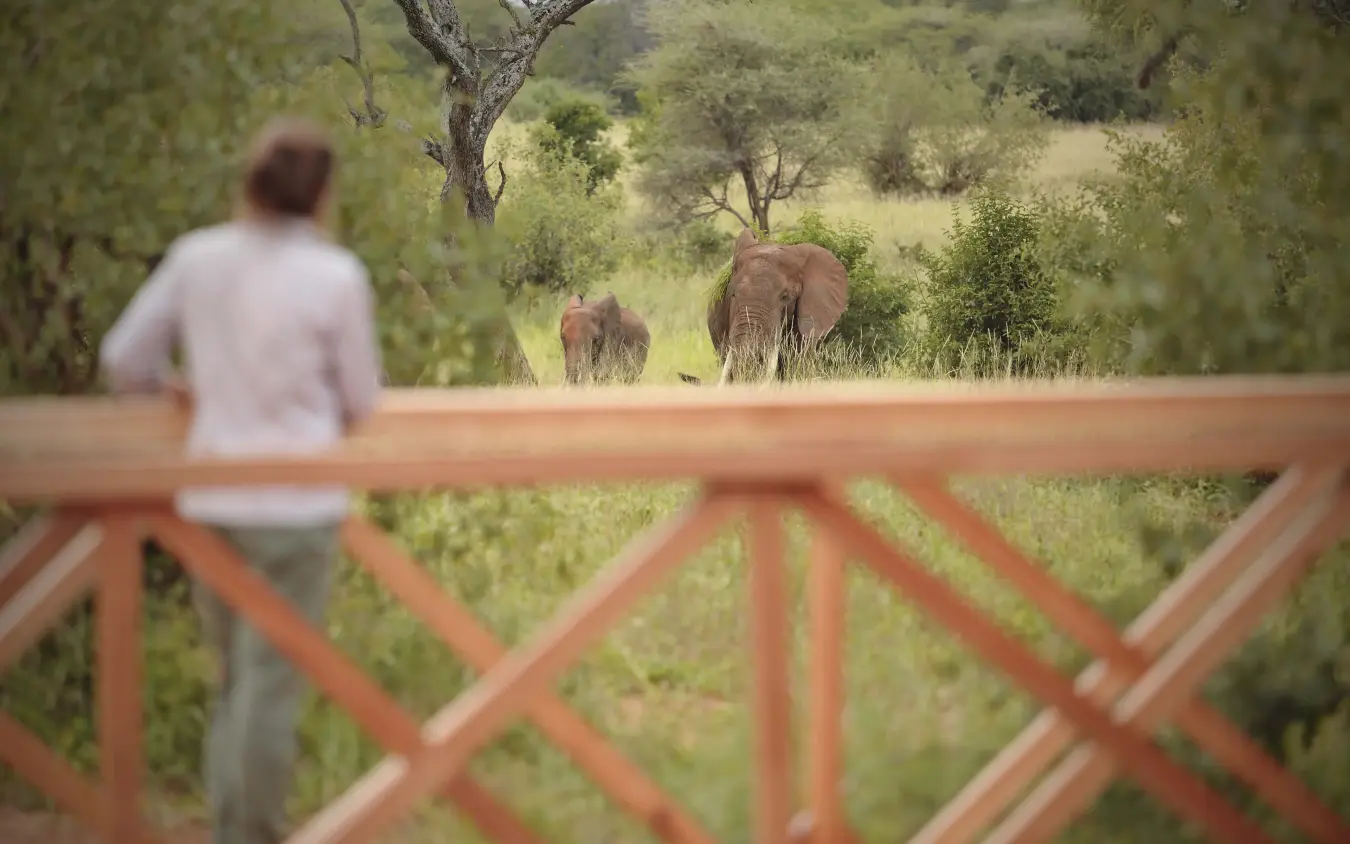
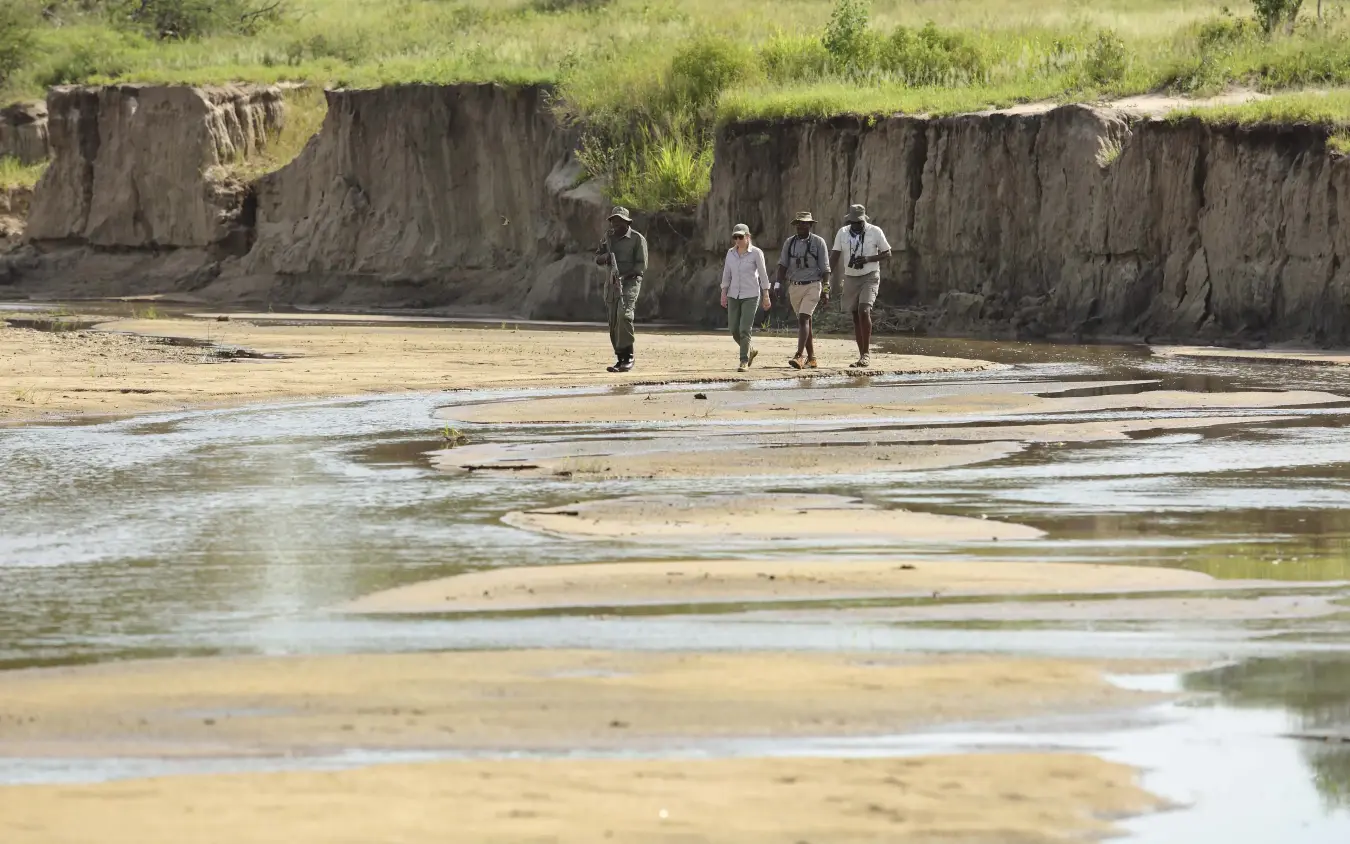
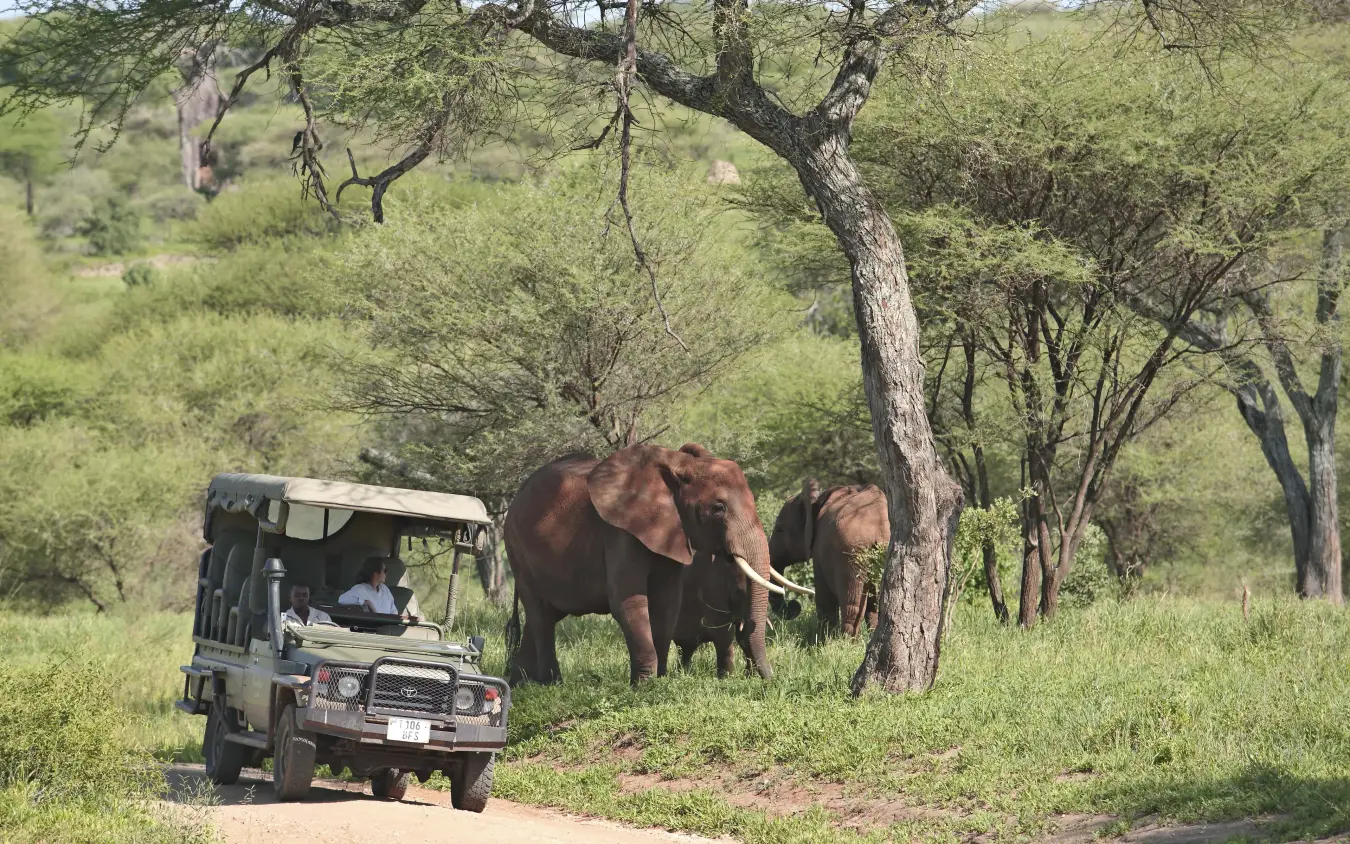
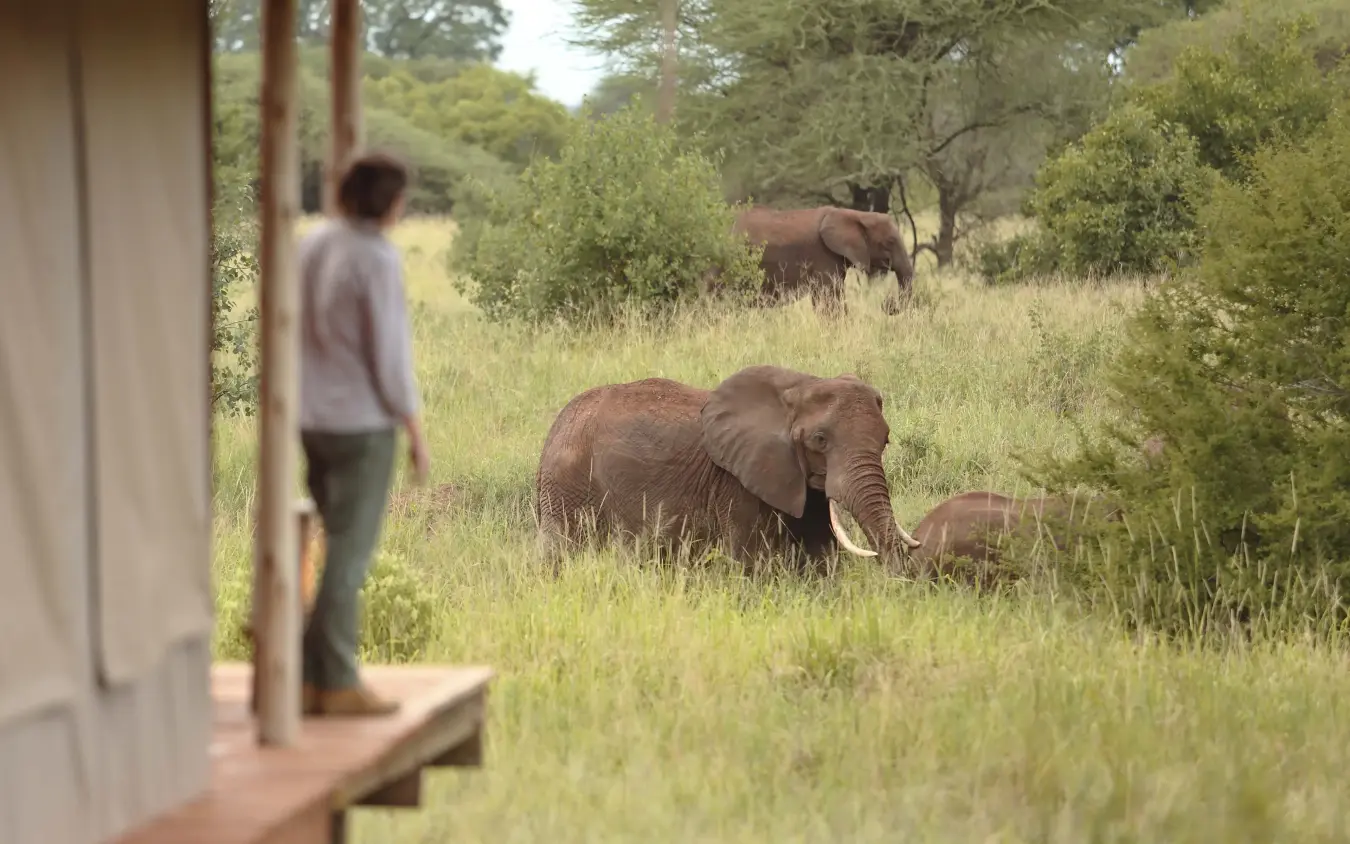
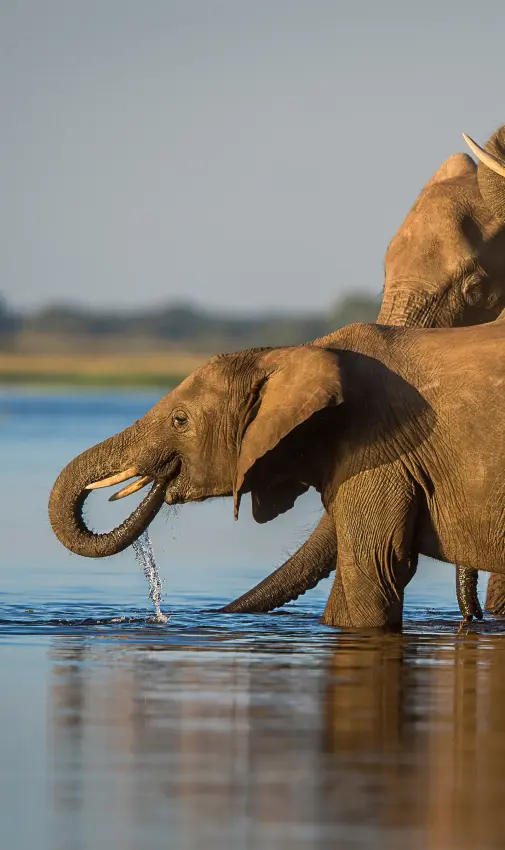
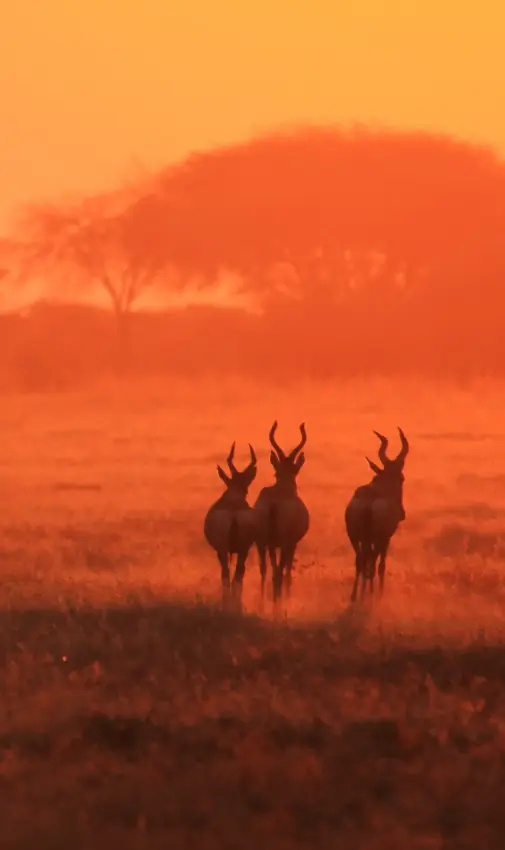
Days run on two drives, early and late, with full-day loops further south and a packed lunch when the guiding warrants it. Walking safaris leave from camp with a guide and an armed national park ranger, and the pace changes everything: tracks, dung, birdsong, the small business of the bush that a vehicle drives past. Birding walks can be arranged in the same spirit. On the right morning, balloons lift over the baobabs at first light, and breakfast is set out on the ground below.
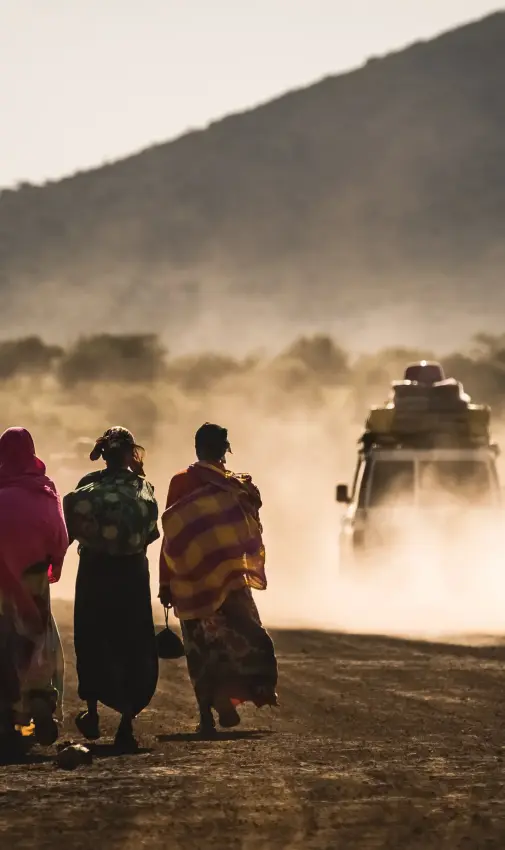
Almost everyone working here grew up in the villages along Tarangire’s boundary. They come in at entry level and are trained up through the camp into guiding and into management, over years rather than a season, and the result is a staff who know this stretch of bush as home ground. That boundary matters to guests too: visits to Maasai homesteads take place beyond the park line, and inside it the vehicles stay on the roads, since off-road driving is not permitted in Tarangire National Park, in keeping with its protected status.