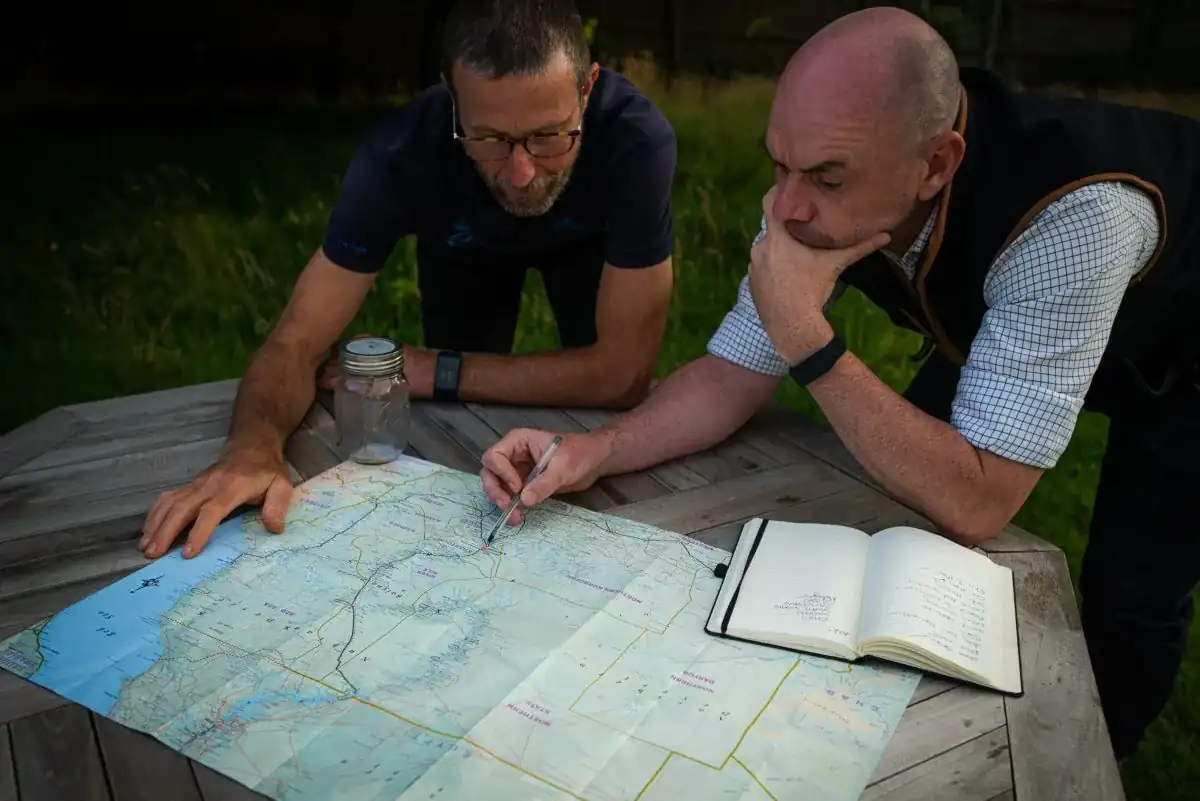
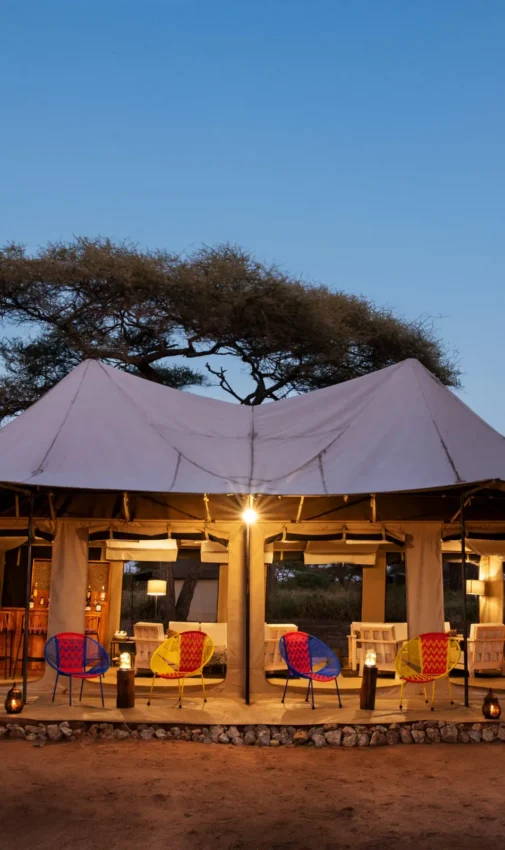
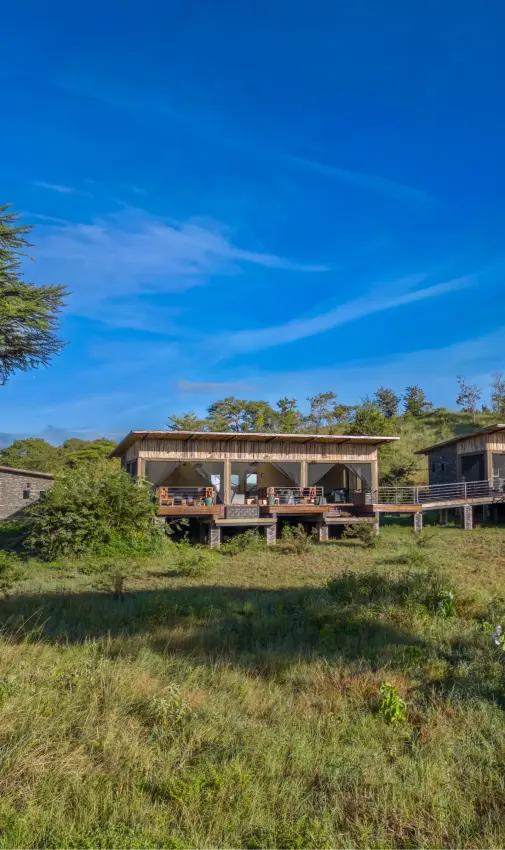
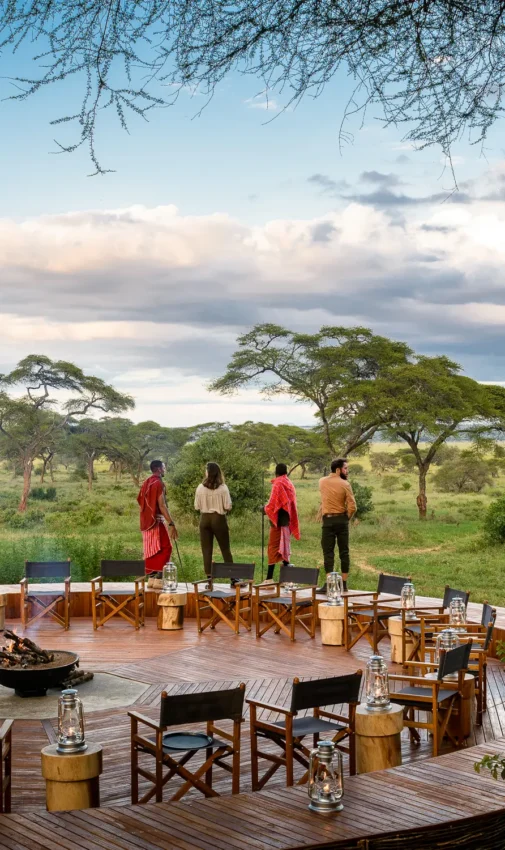
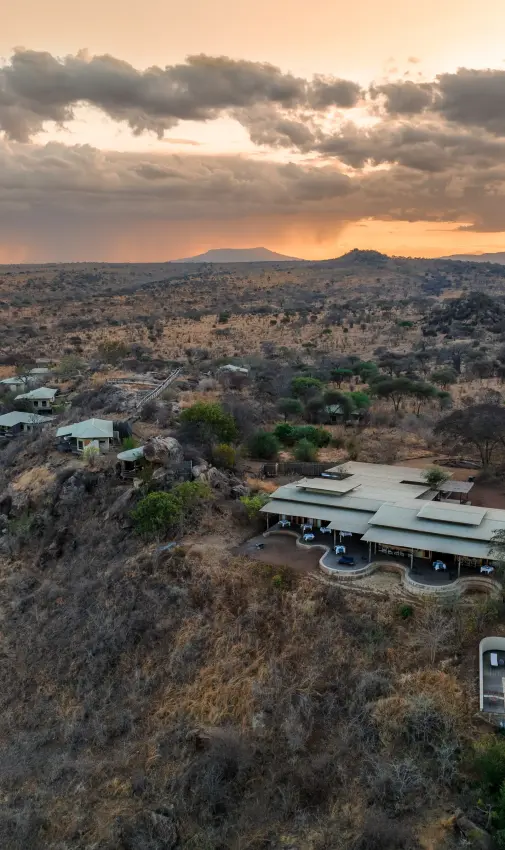
Harjot Mann and Premjeet “Premo” Brar built Nimali Tarangire on family roots that reach back to East Africa in the 1890s. They named it for the Swahili word nimali, meaning wealth, a way of saying that nature is the region’s real asset. What they wanted was something small and personal, a camp inside a private reserve where the pace stays unhurried and the wildlife arrives on its own terms, not to a fixed itinerary. The result feels lived in rather than staged, closer to a family home in the bush than to anything run to a timetable.
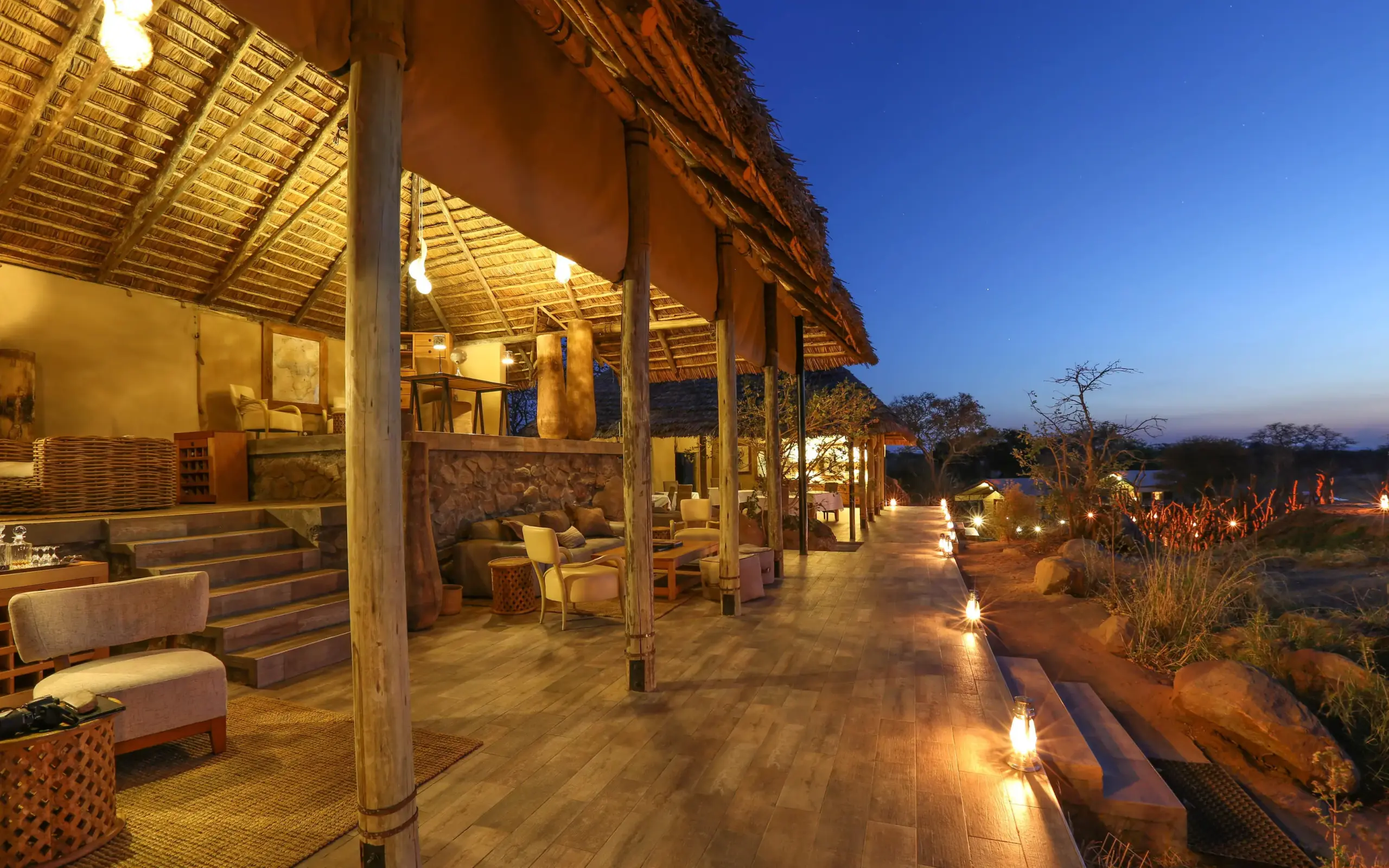
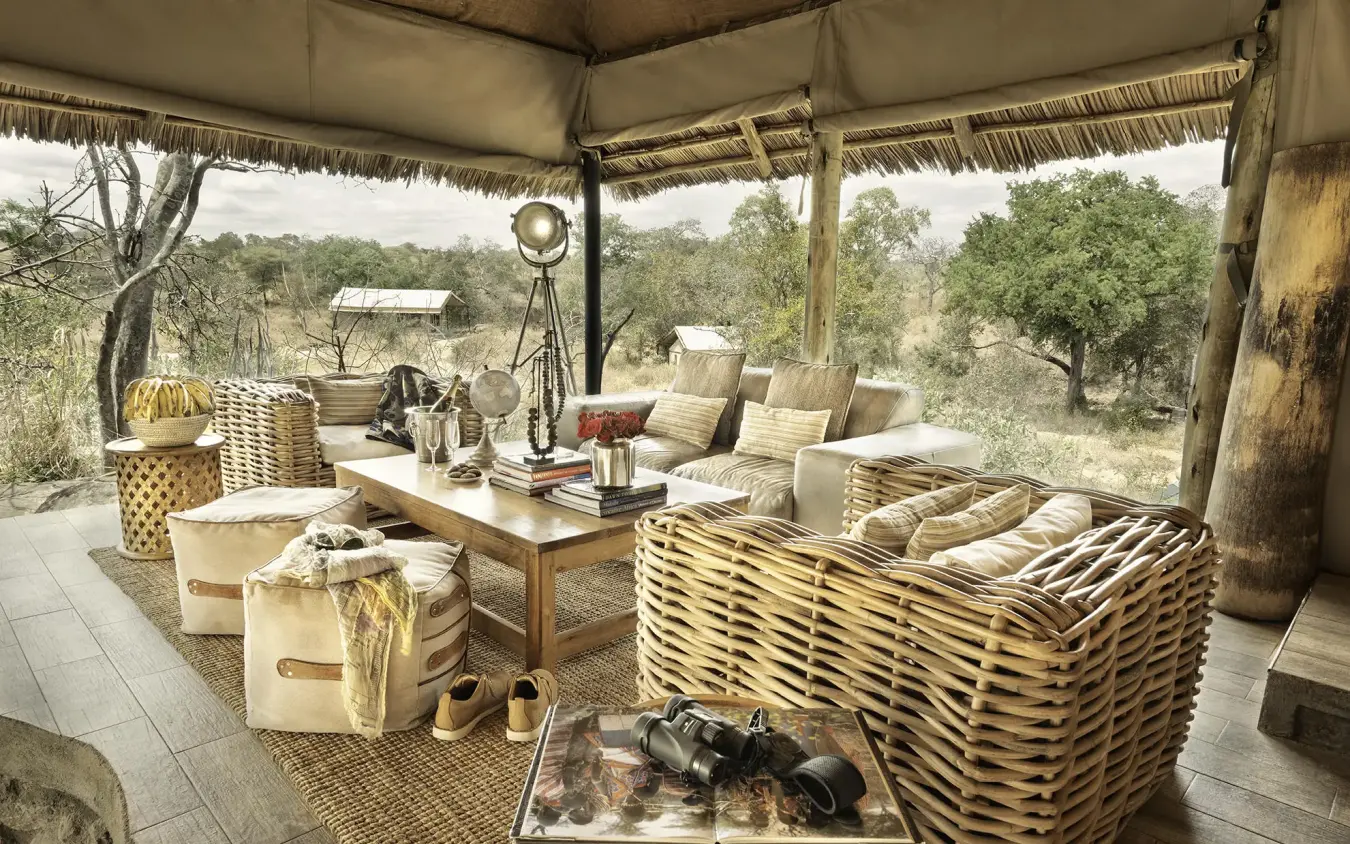
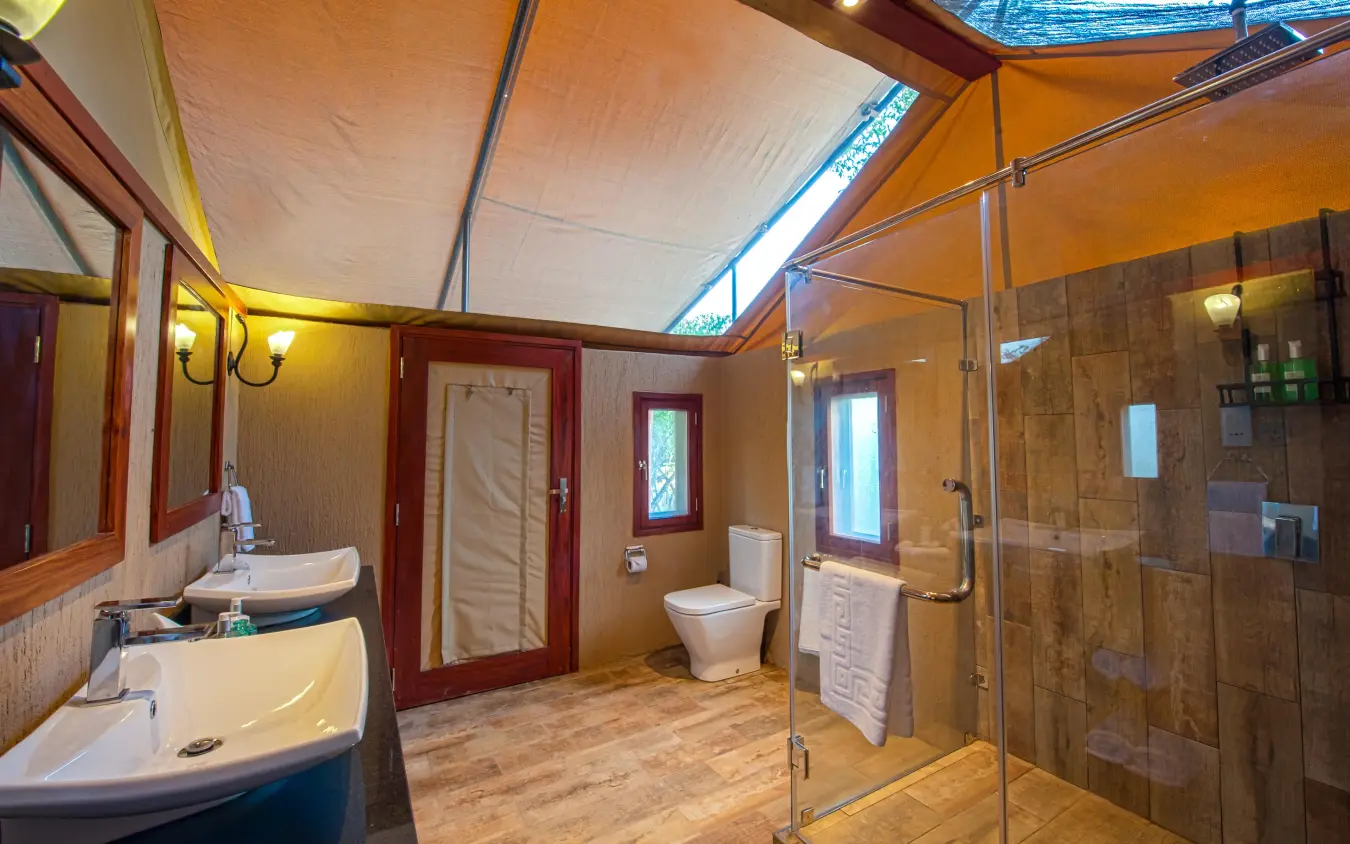
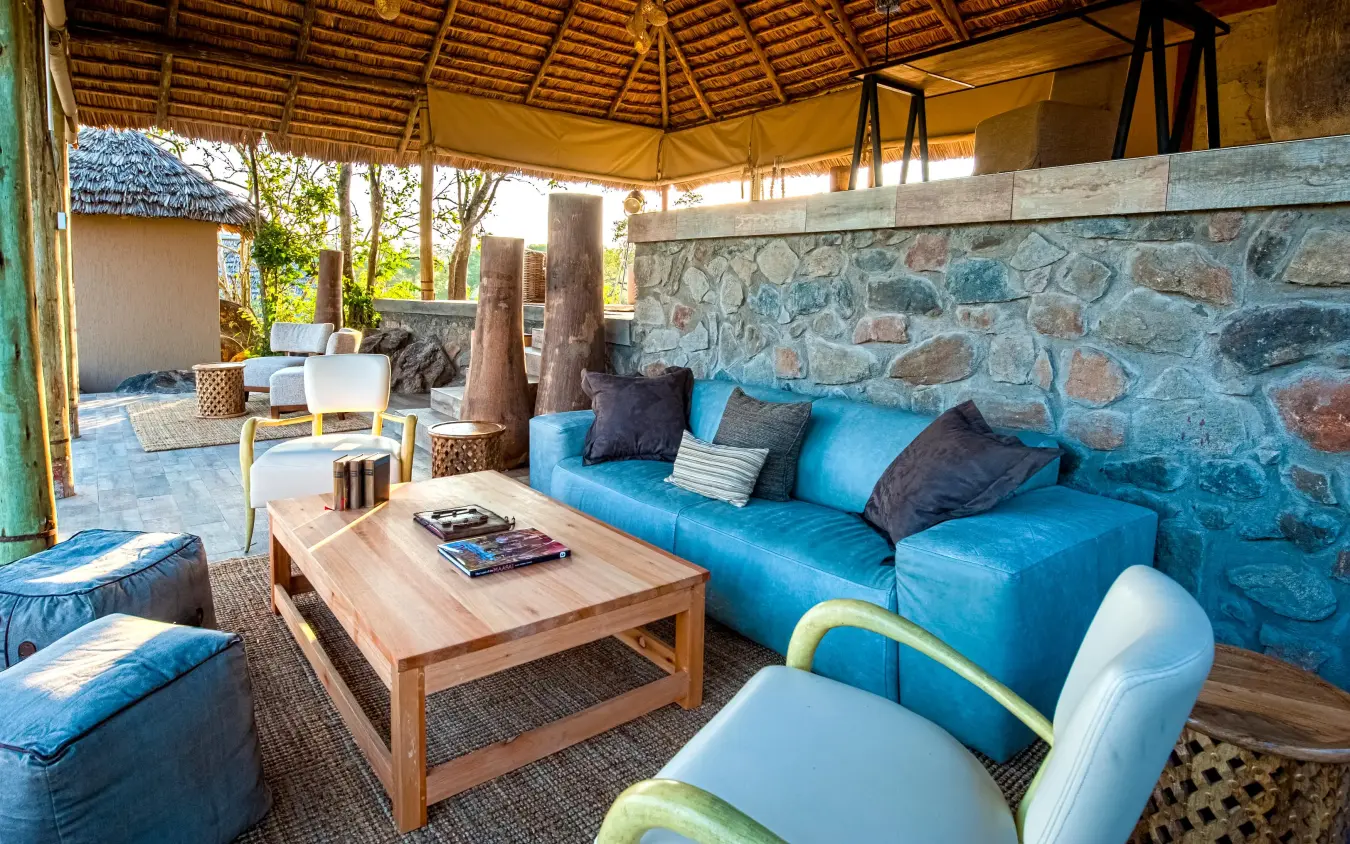
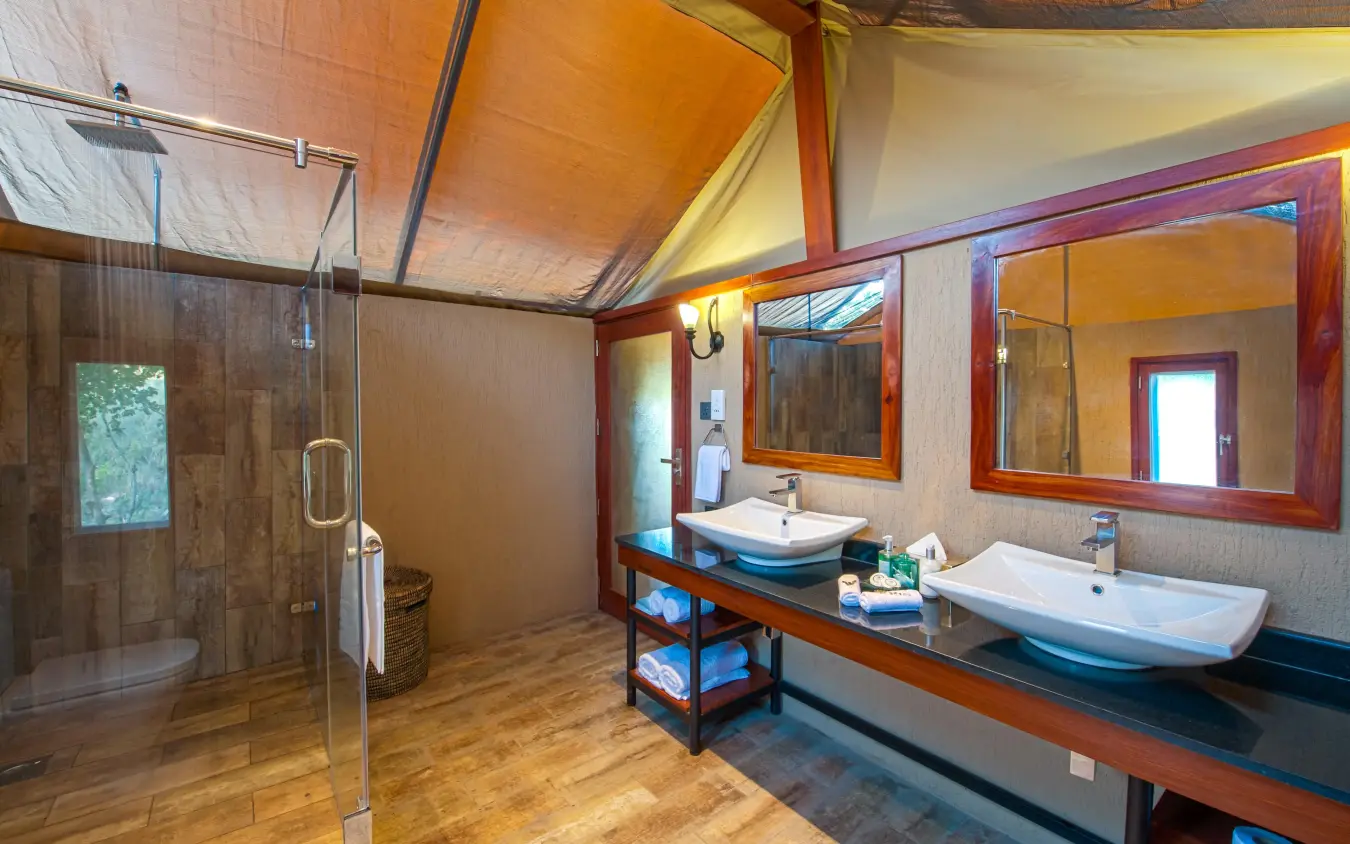
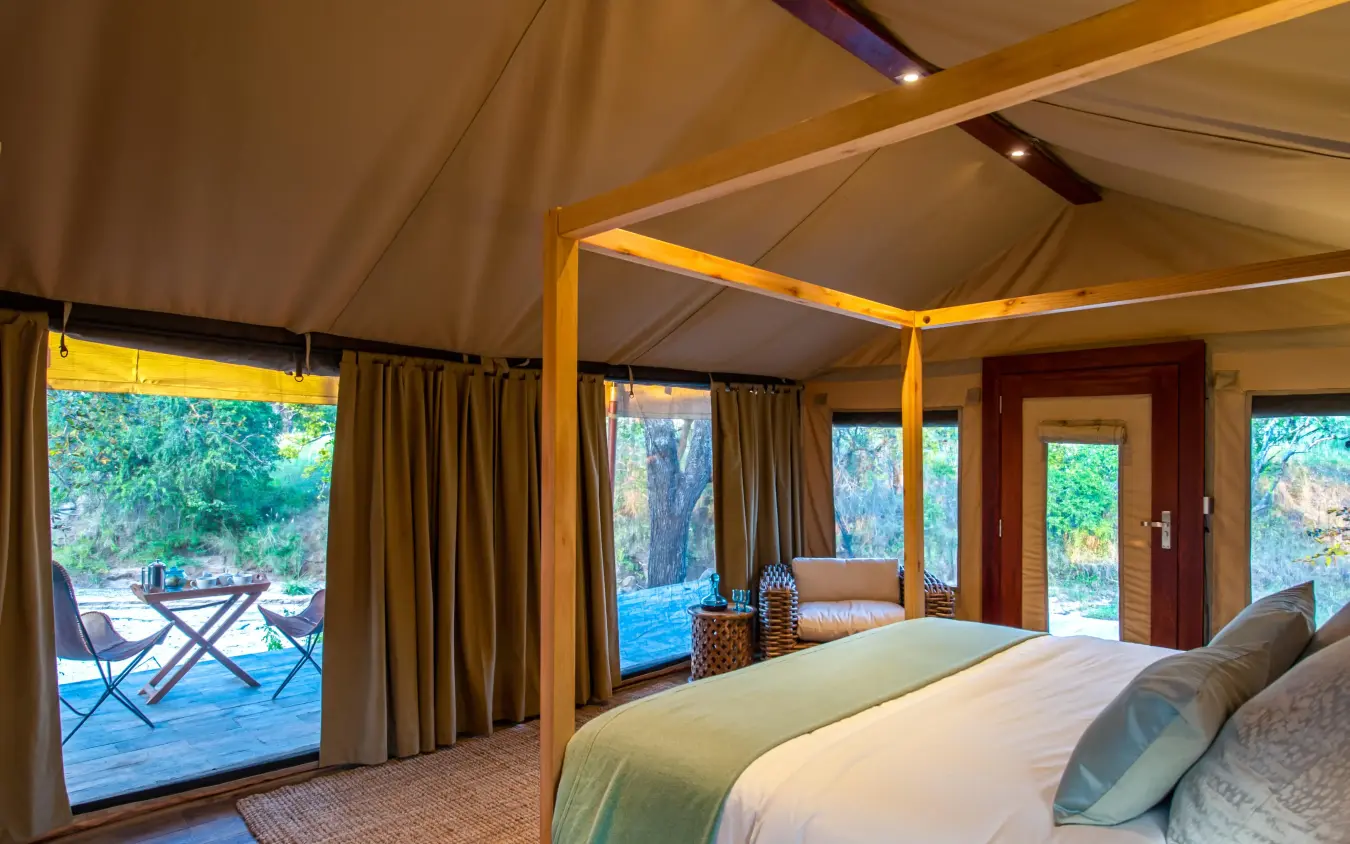
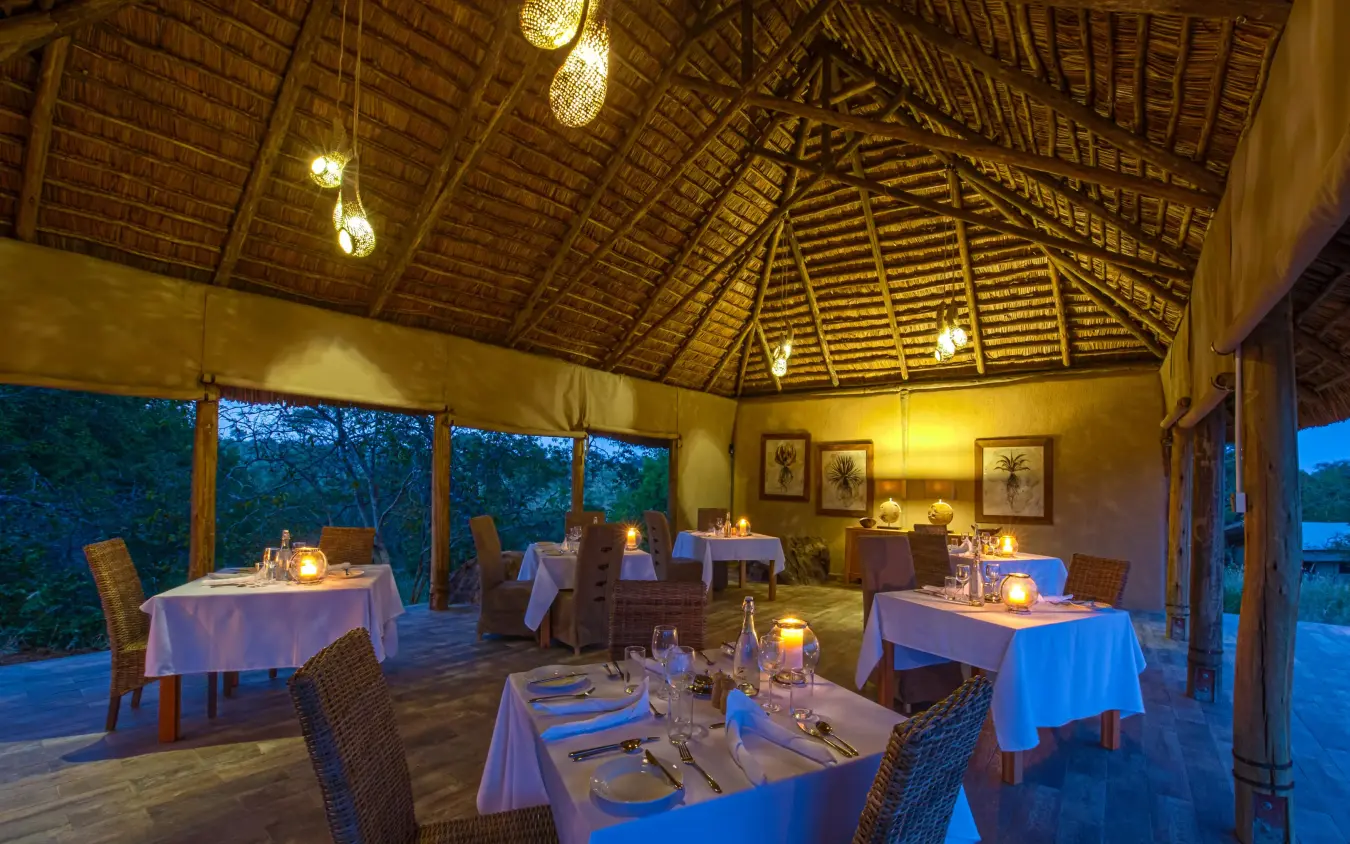
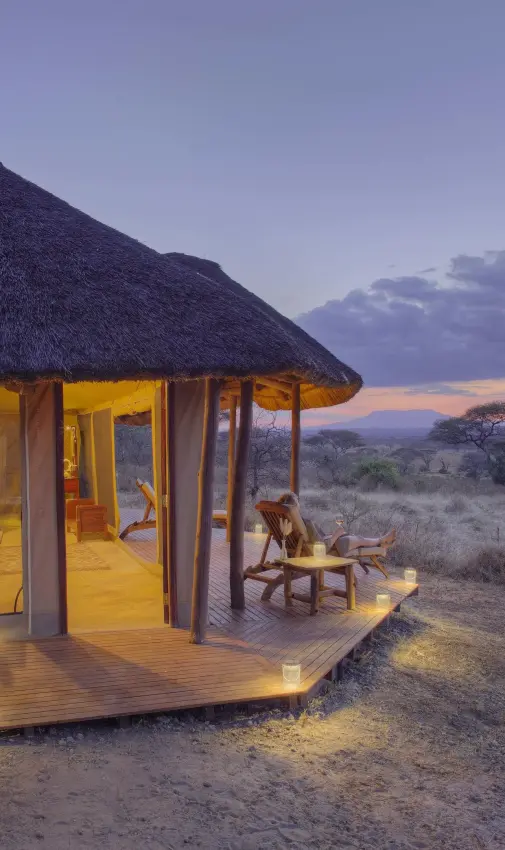
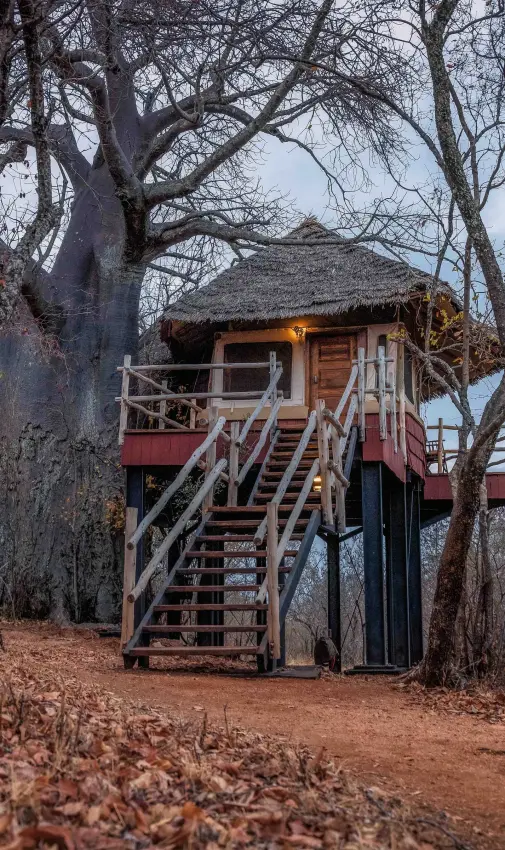
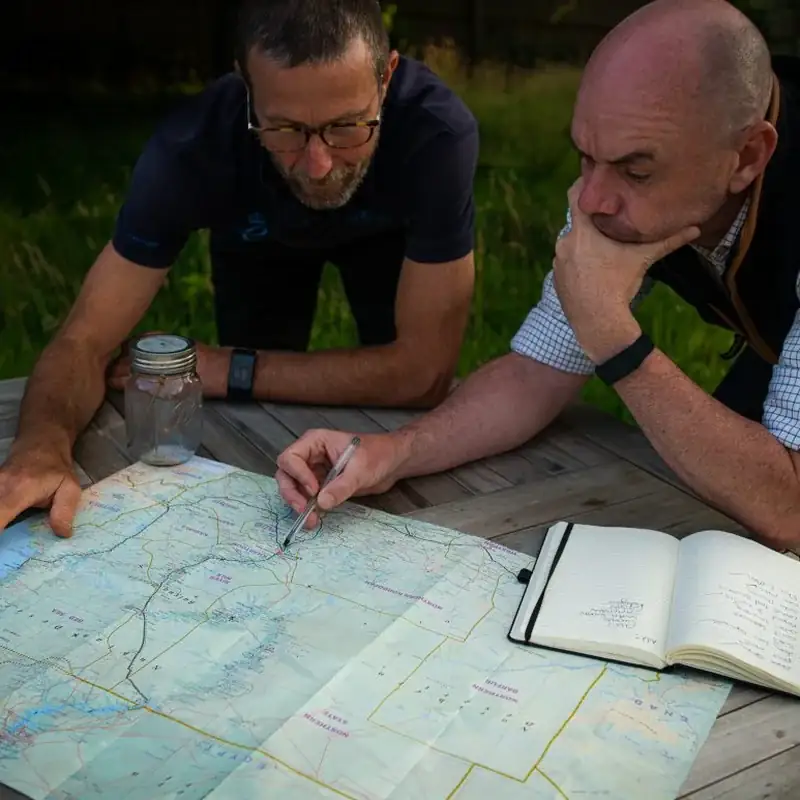
Canvas walls and thatched roofs rest on foundations of stone and timber, contemporary and organic at once. Inside, copper and hardwood fittings catch the low light, and the bathrooms have double vanities and rain showers, glass-walled and backed by stone. Local fabrics, hand-beaded detail and recycled glass warm the earthy greys and tans. In the lounge, framed botanical prints and antique maps hang above the granite the builders refused to move, and the room takes on the feel of a working expedition base instead of a hotel lobby.
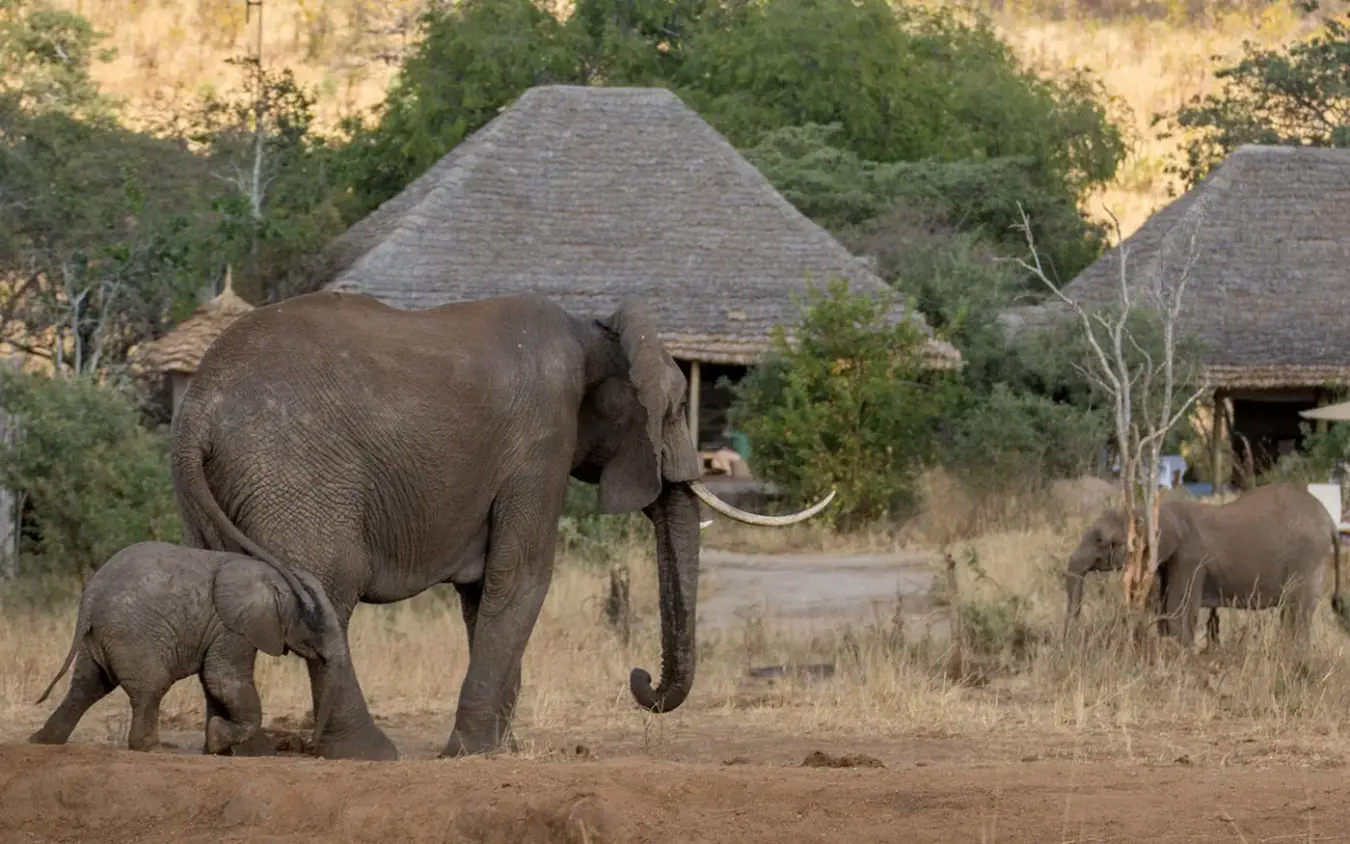
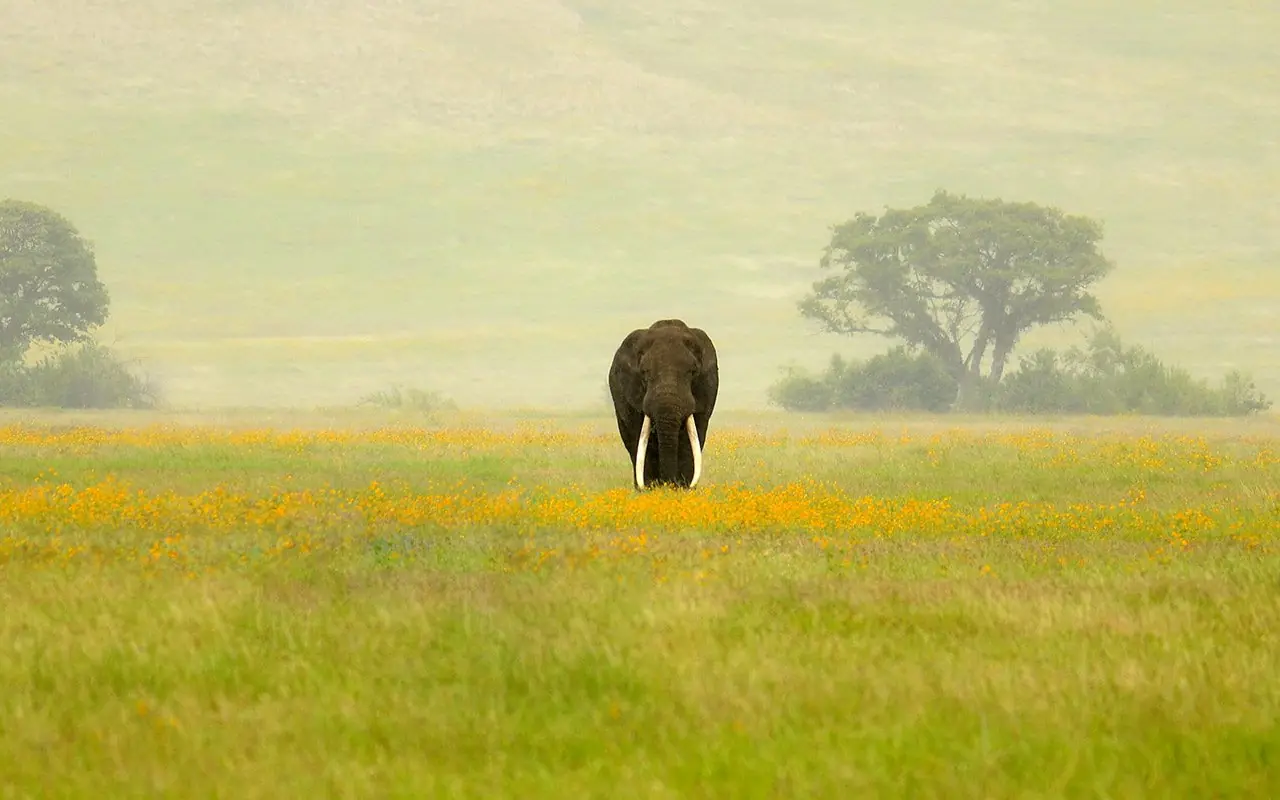
Camp staff have watched a mother elephant calve undisturbed in the grass between two suites.
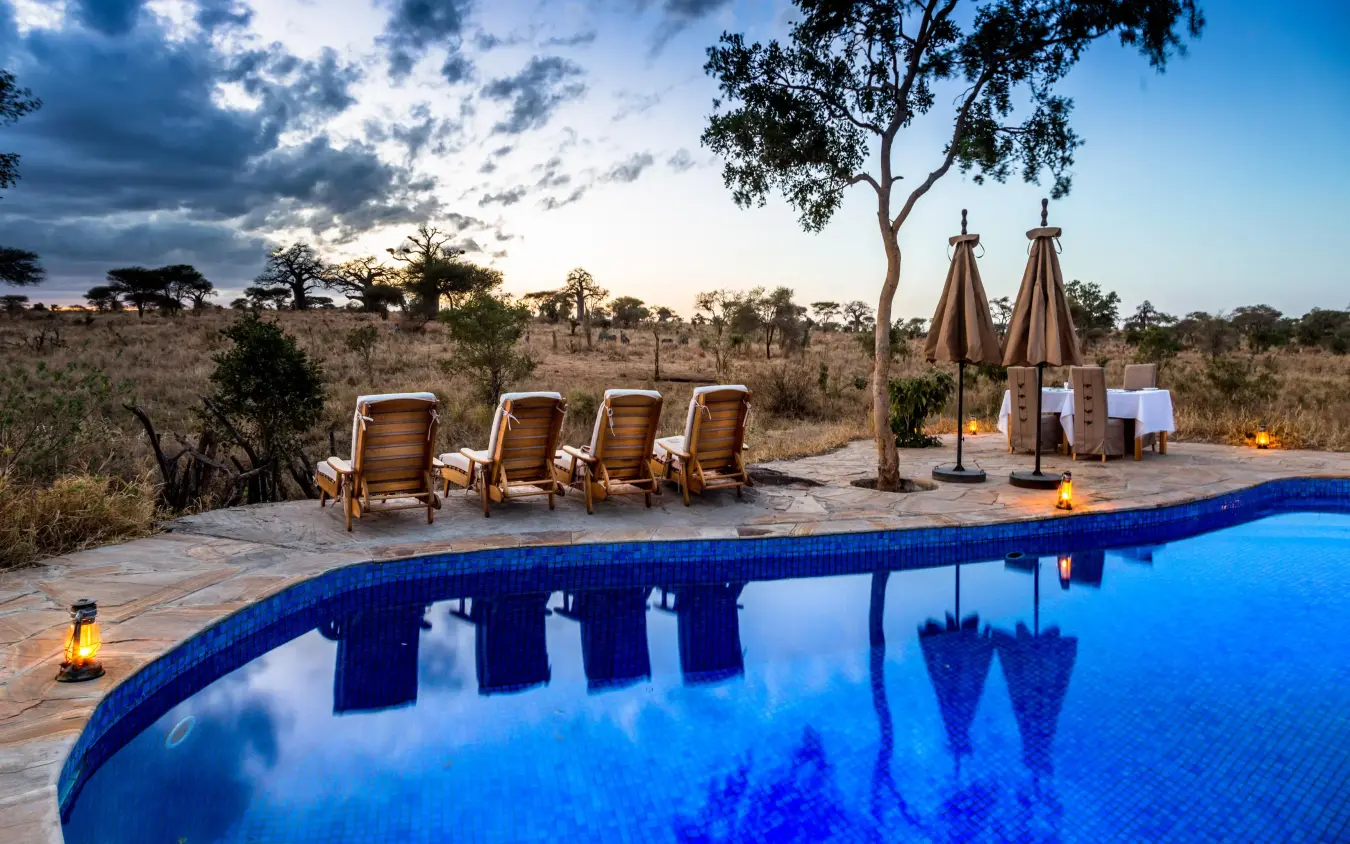
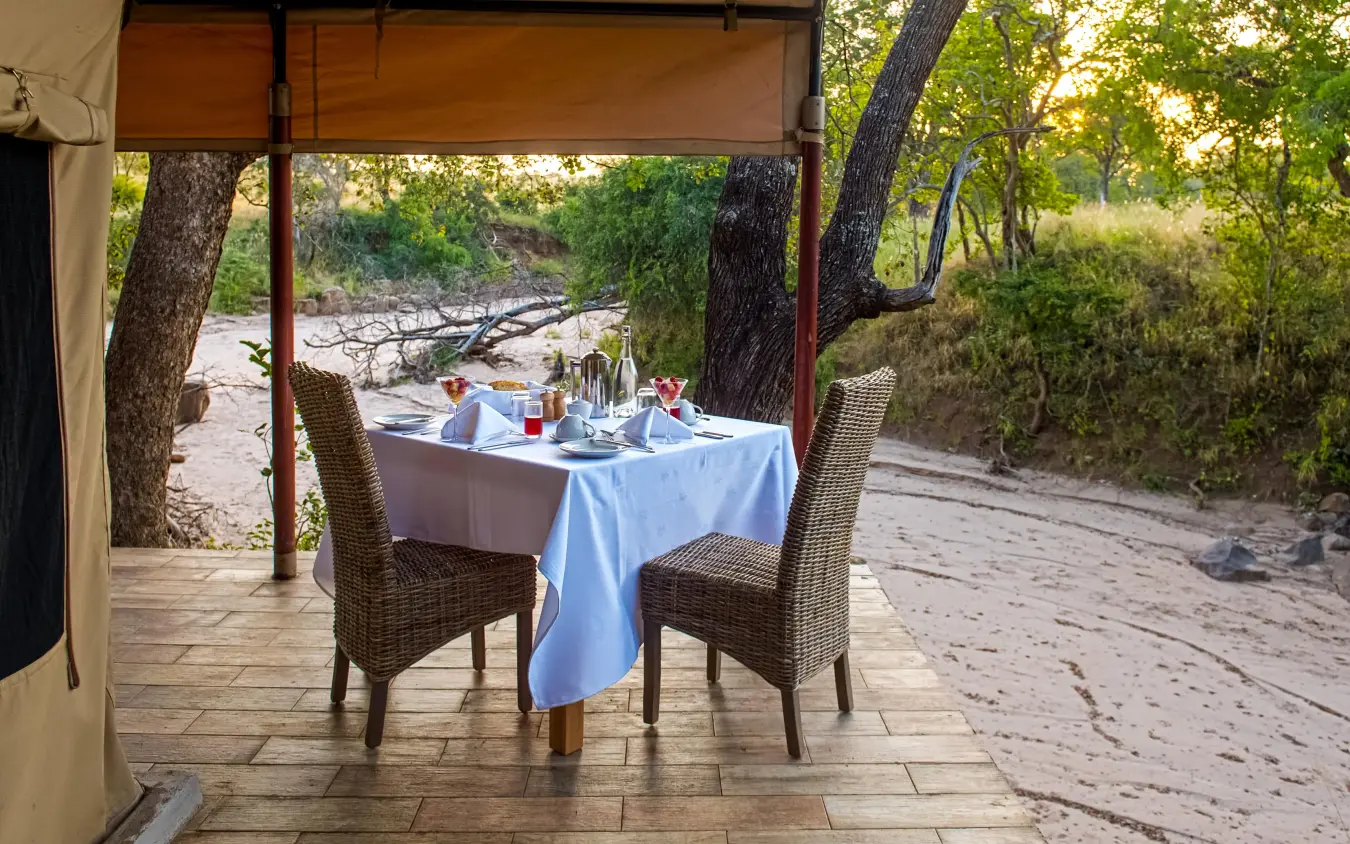
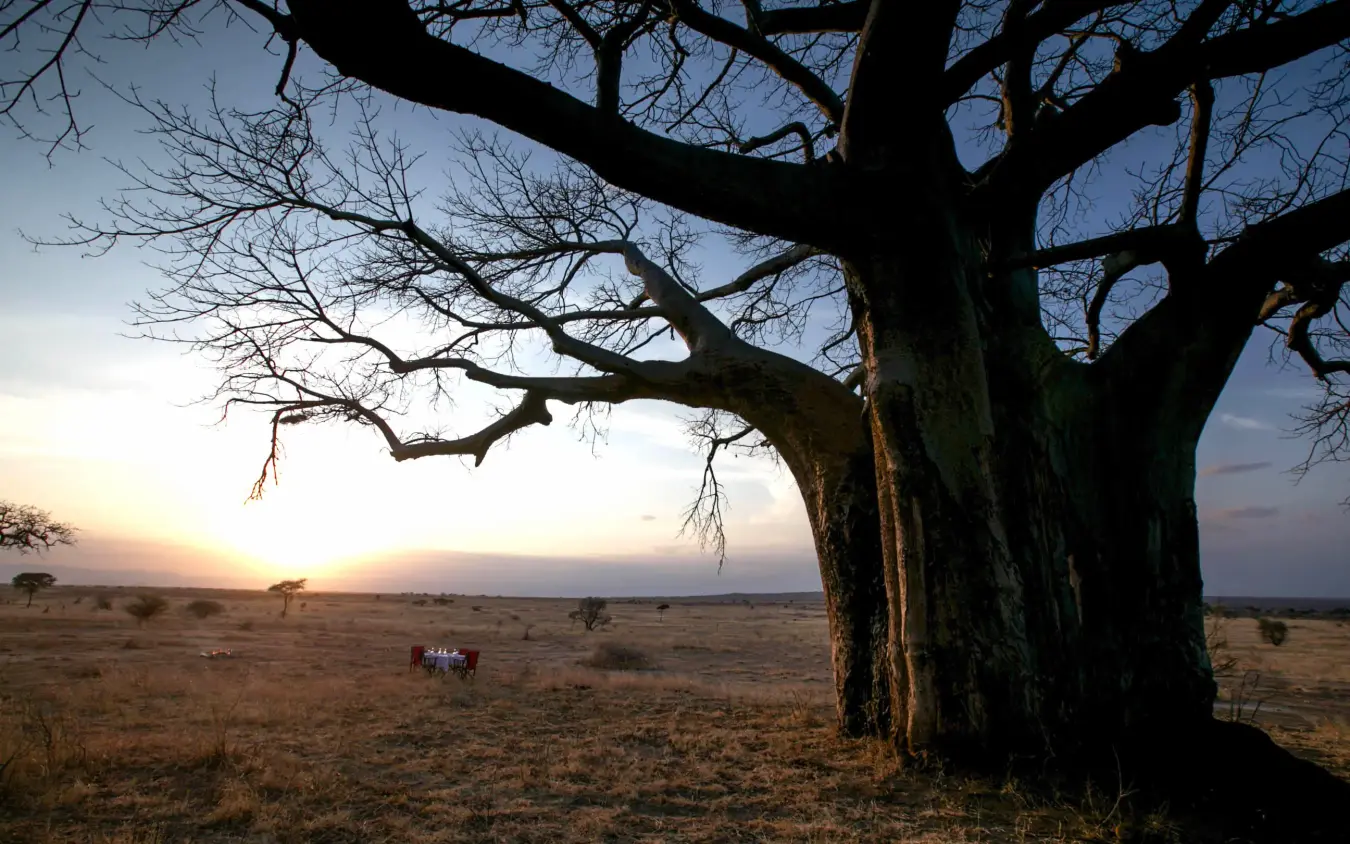
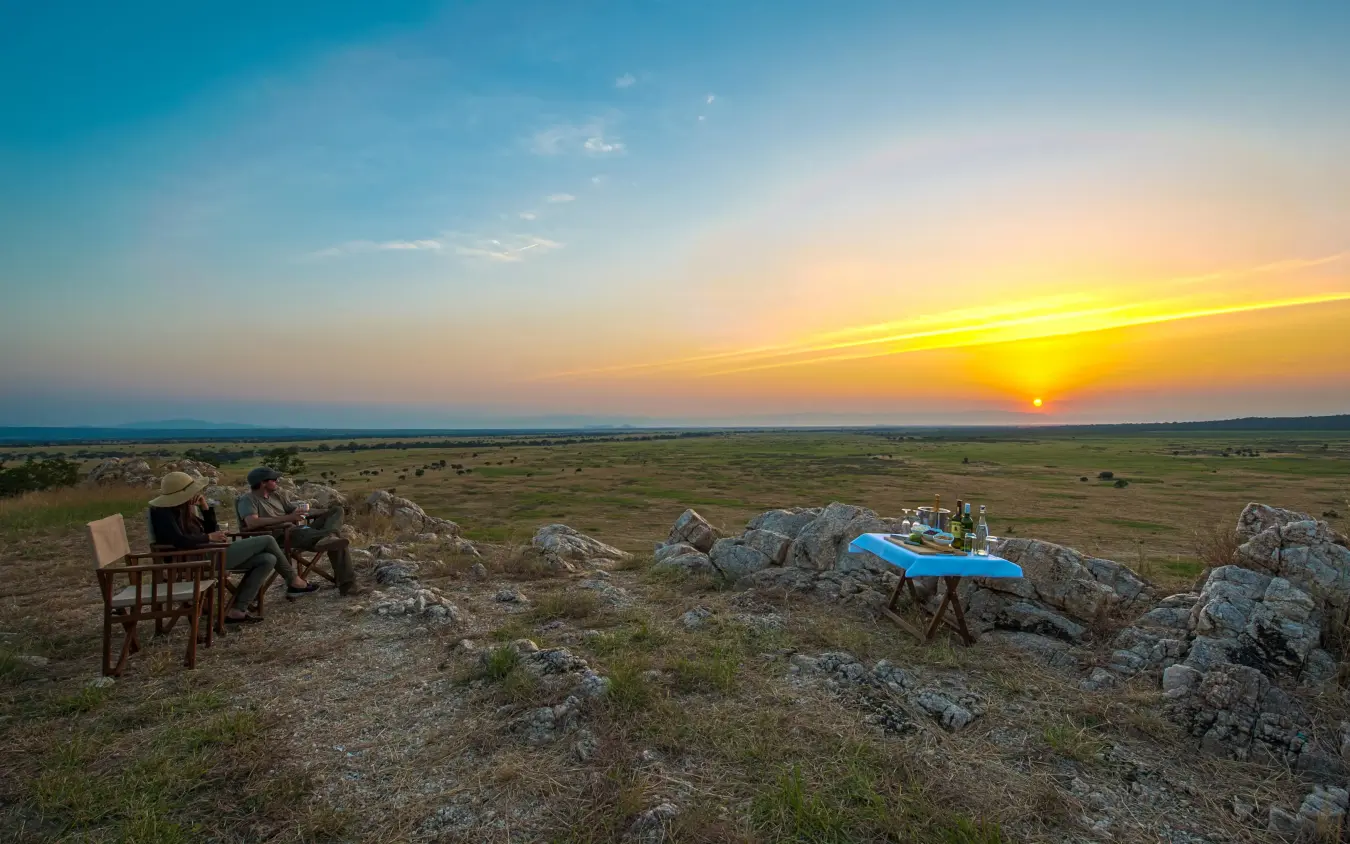
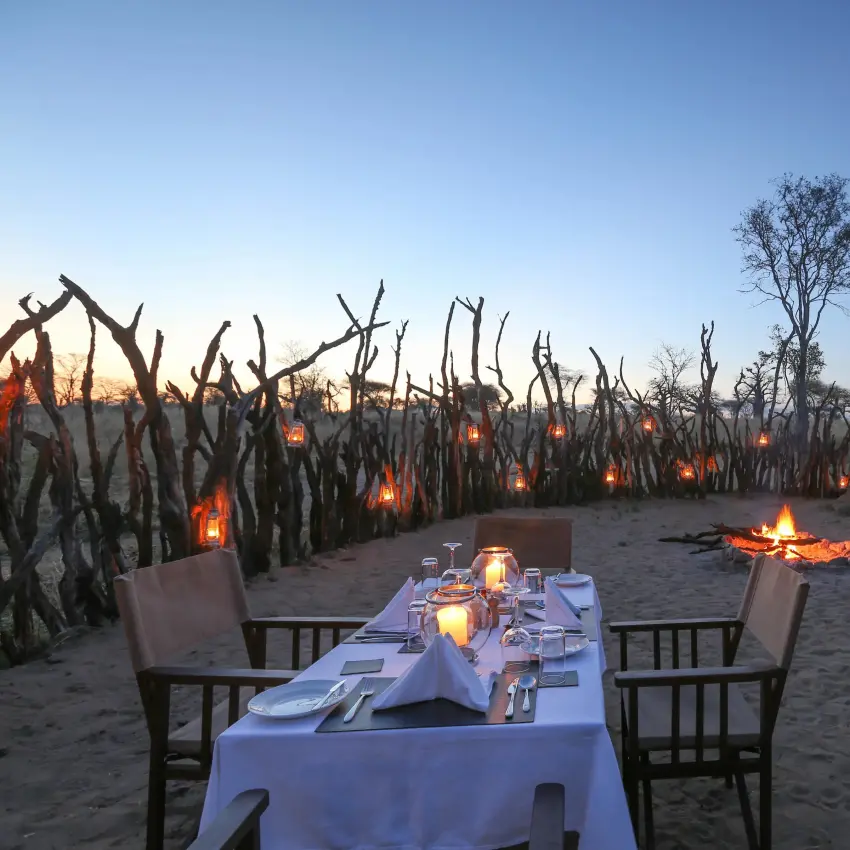
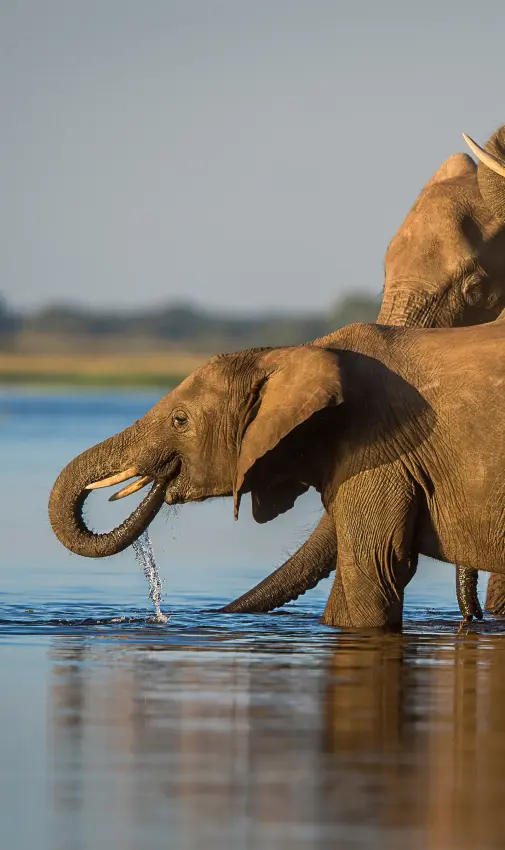
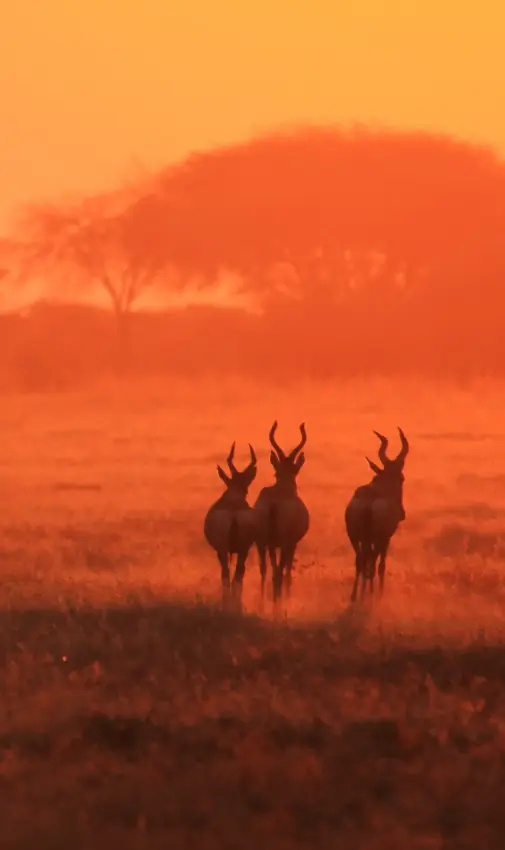
Mornings carry the scent of wild sage across camp, and after dark come the call of hyena and the distant sawing of a leopard through the acacia. Sunsets throw crimson behind the baobabs. The wildlife comes close. Camp staff have watched a mother elephant calve undisturbed in the grass between two suites. Guests looked on from their decks. Elephants, zebra and antelope pass the waterhole through the daylight hours, coming and going as they please. Little here is arranged; most of it simply arrives.
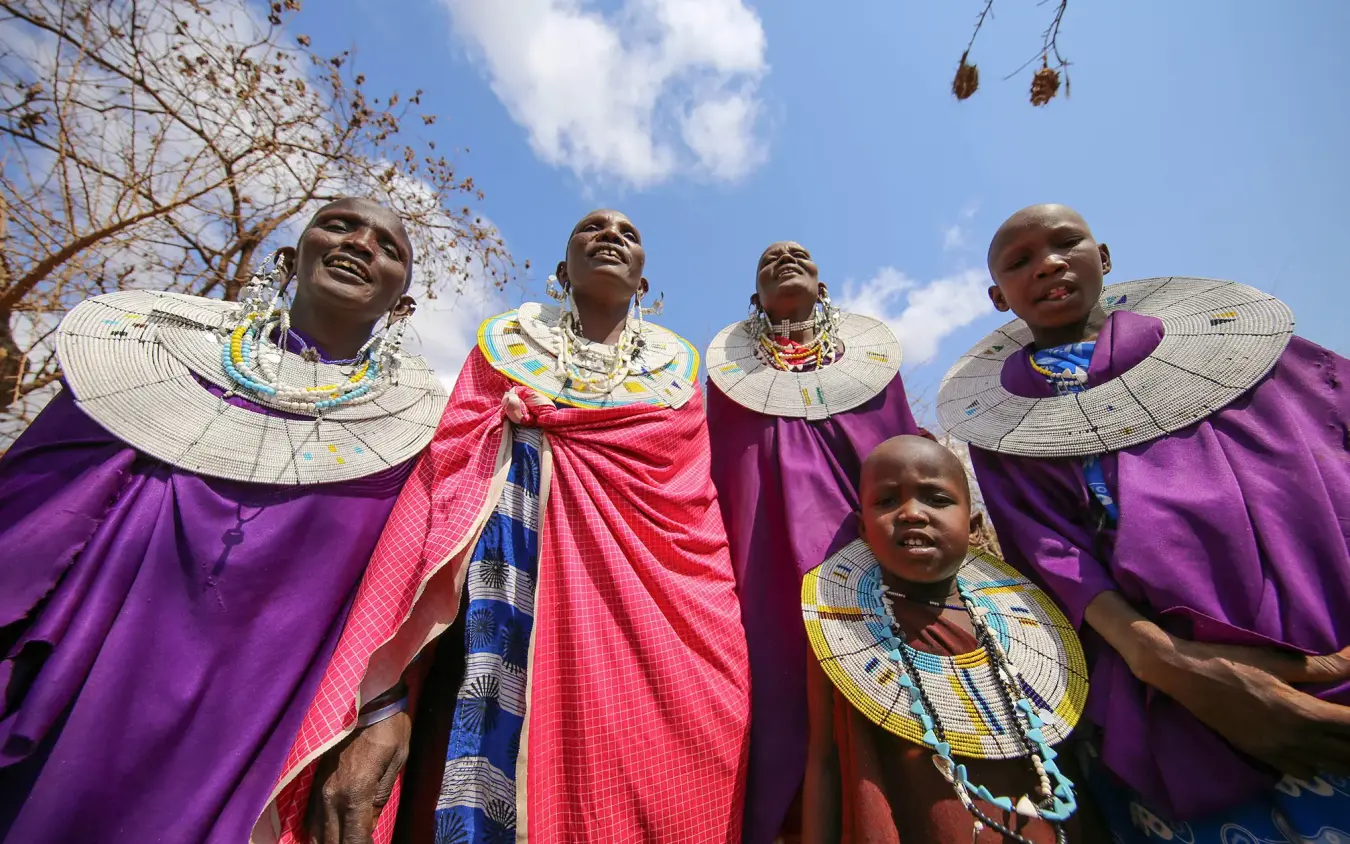
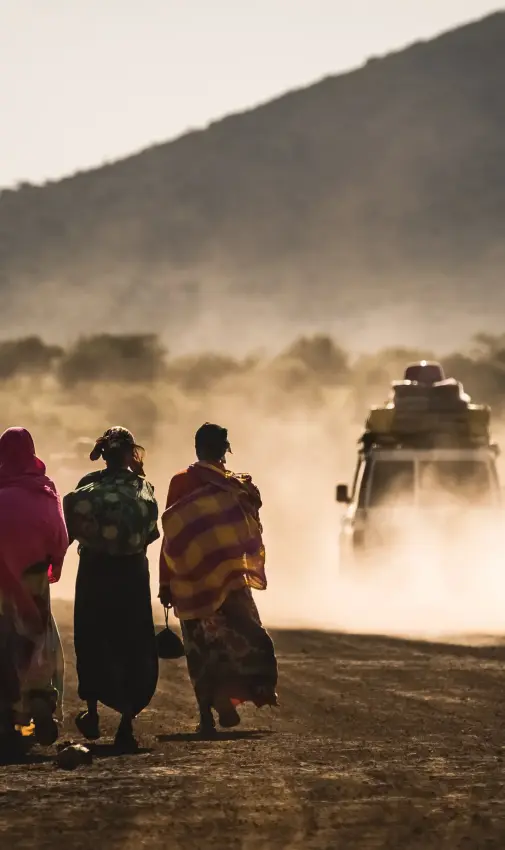
Solar power runs the camp, from the water pumps and the lighting to the kitchen refrigeration. Single-use plastic has no place here. Drinking water is filtered on site and served in glass, and what waste remains is sorted and carried to a recycling programme in Arusha. As a partner in the community-run Randilen Wildlife Management Area, the camp channels guest fees into local land management, employs and trains Maasai staff, and buys its produce from neighbouring farms, so the land pays its way for the people who own it.