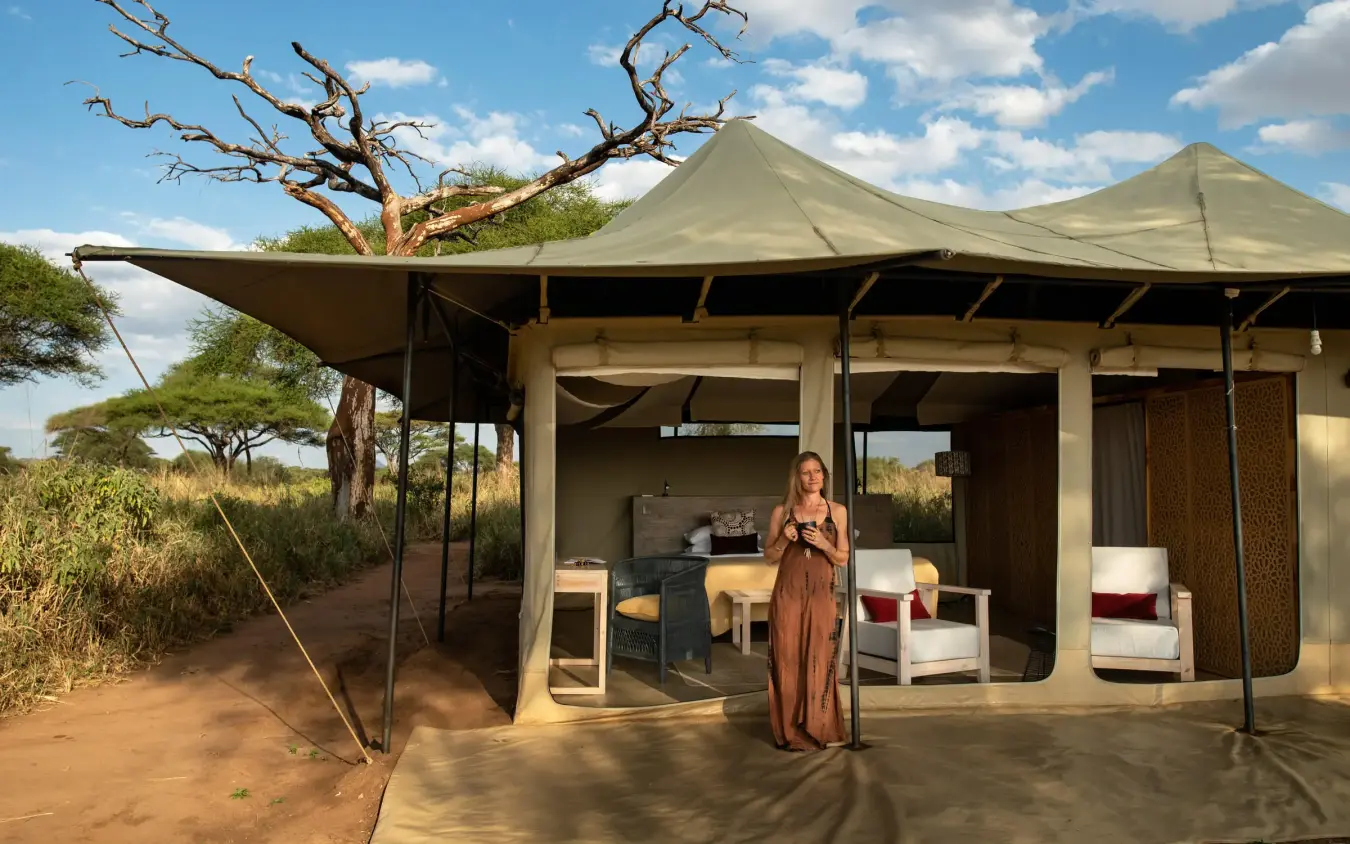
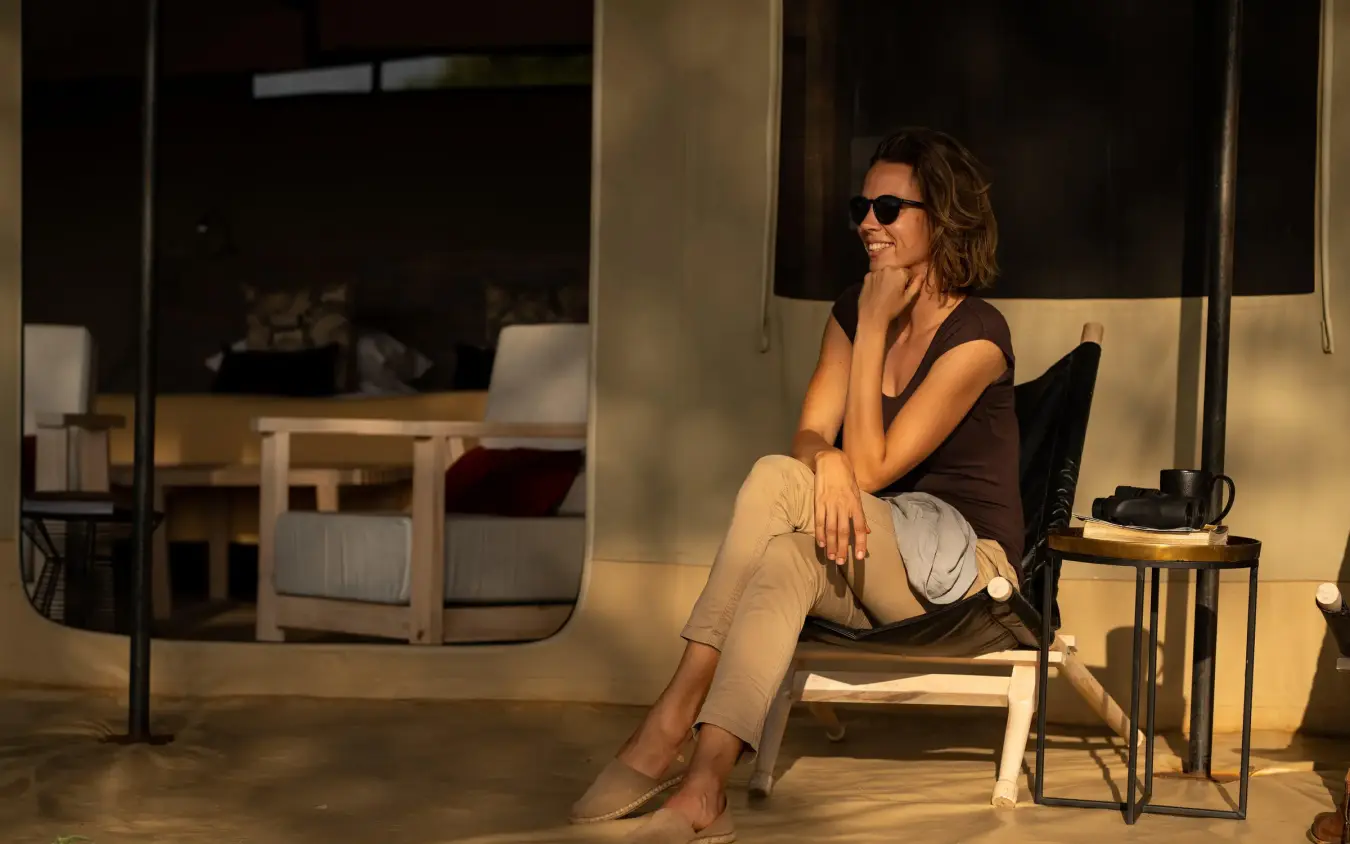
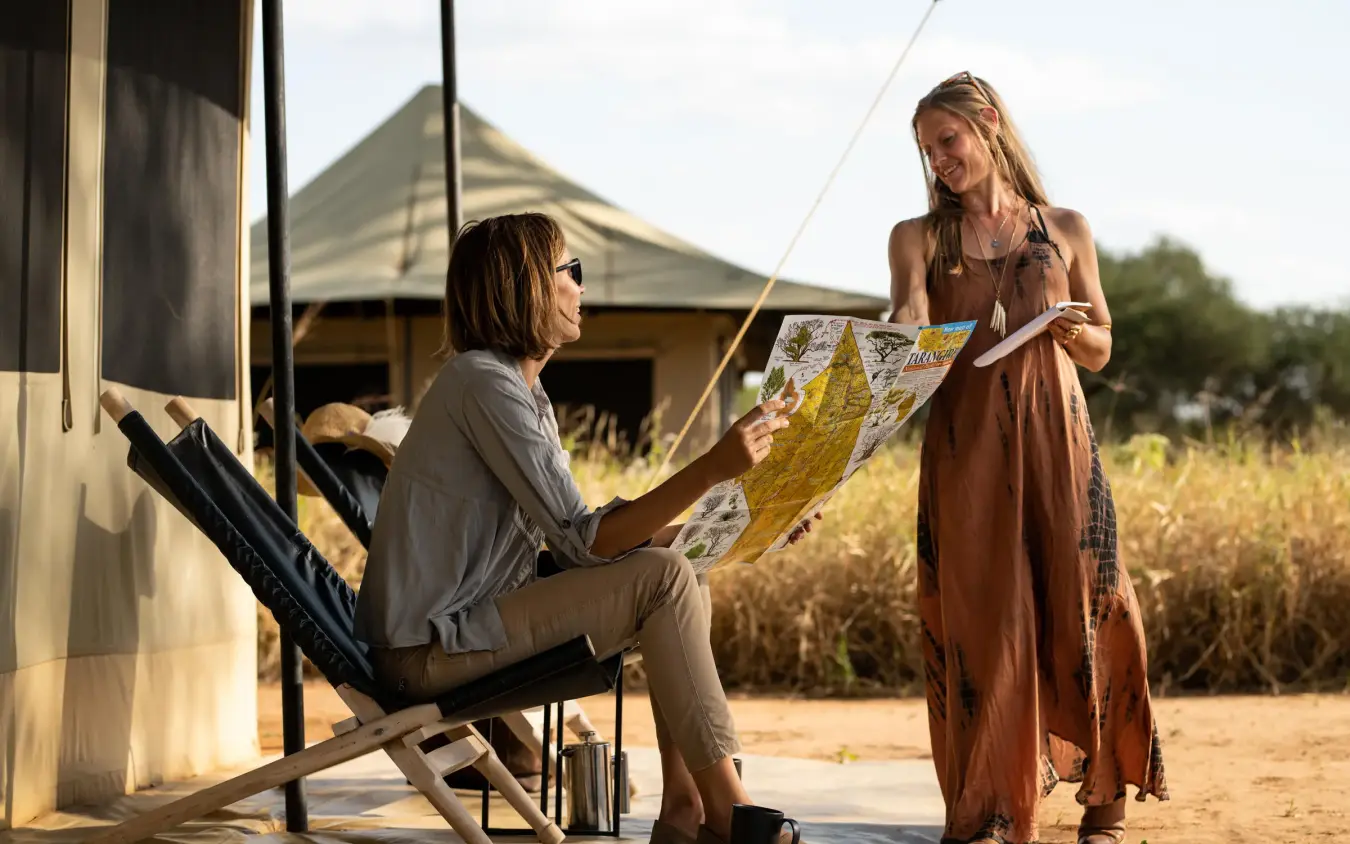
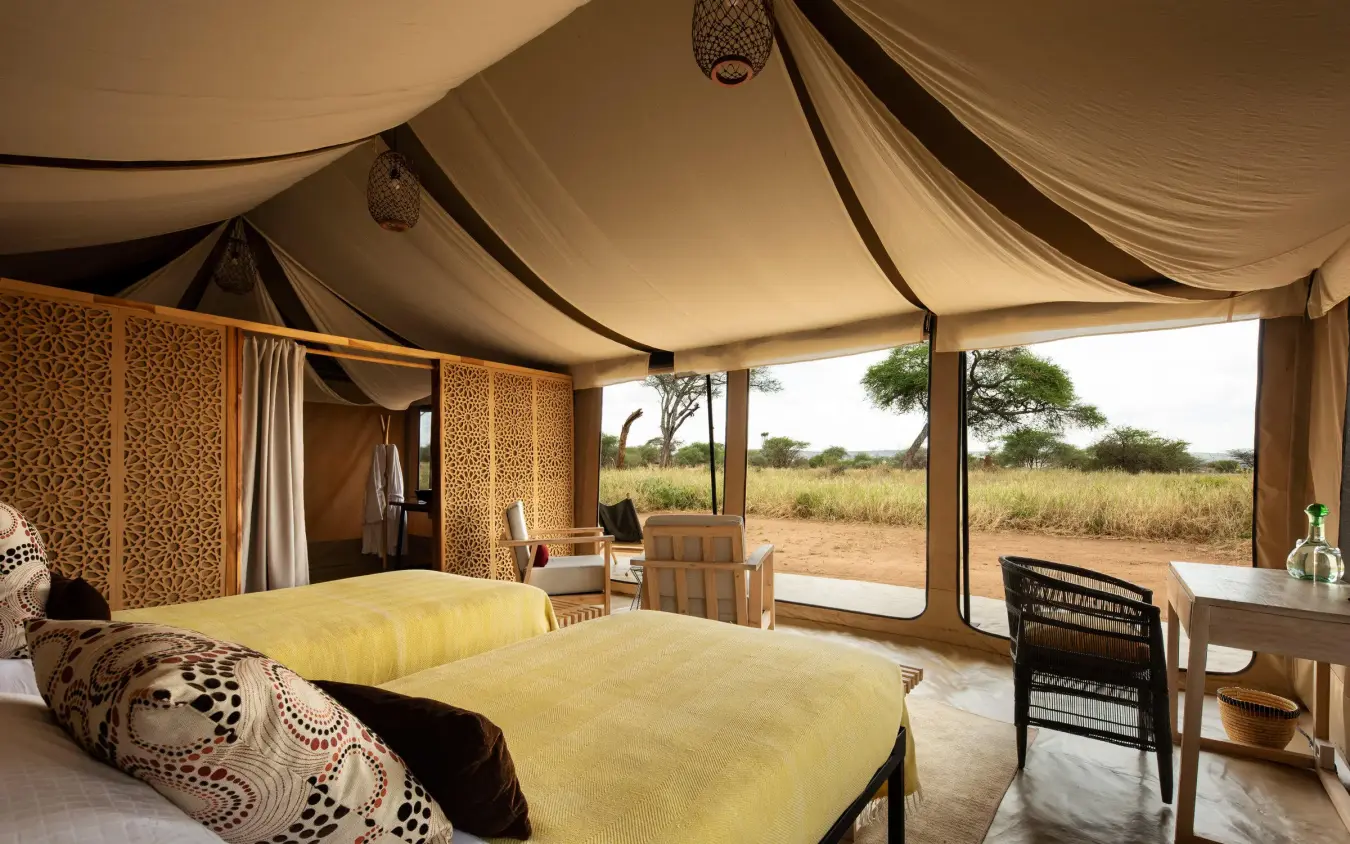
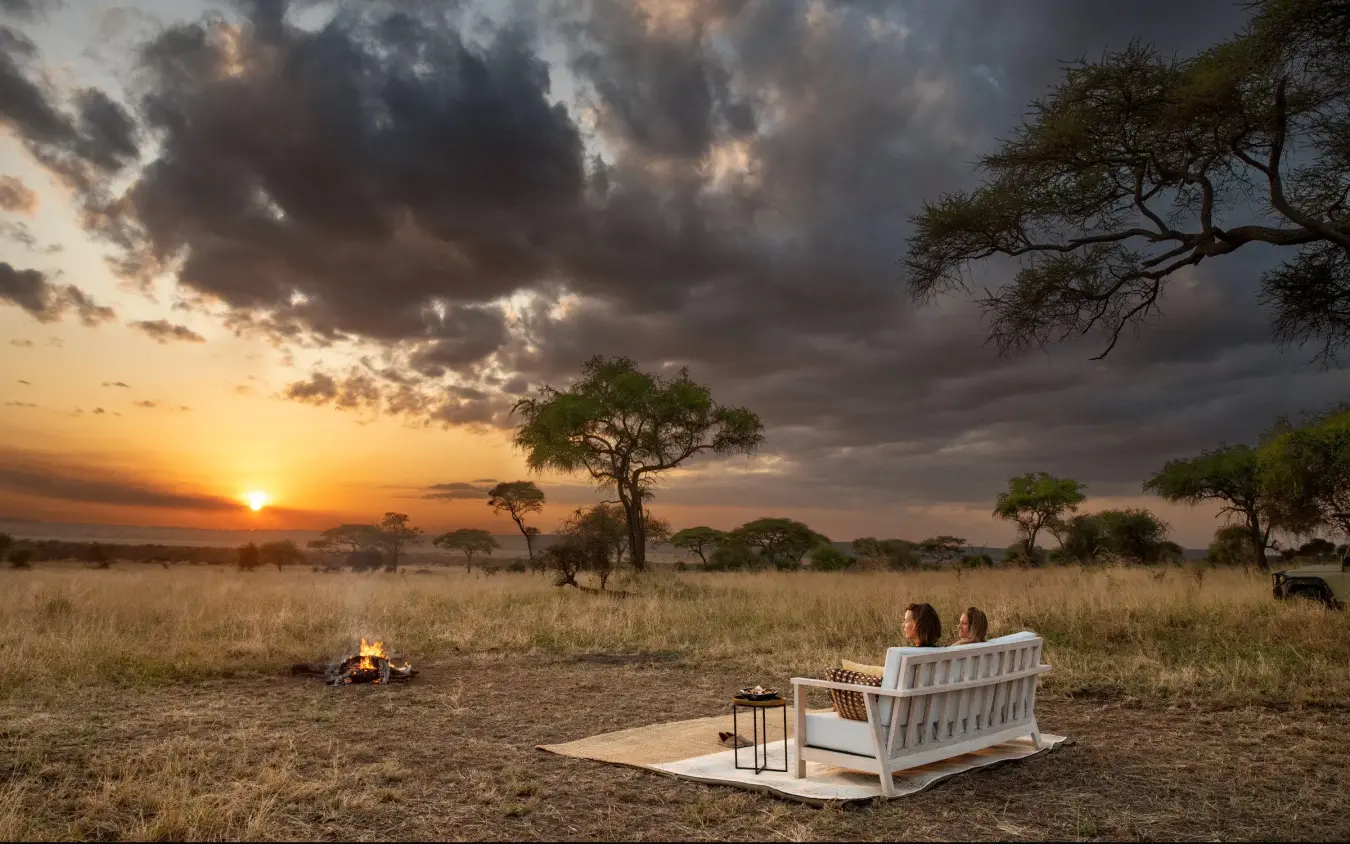
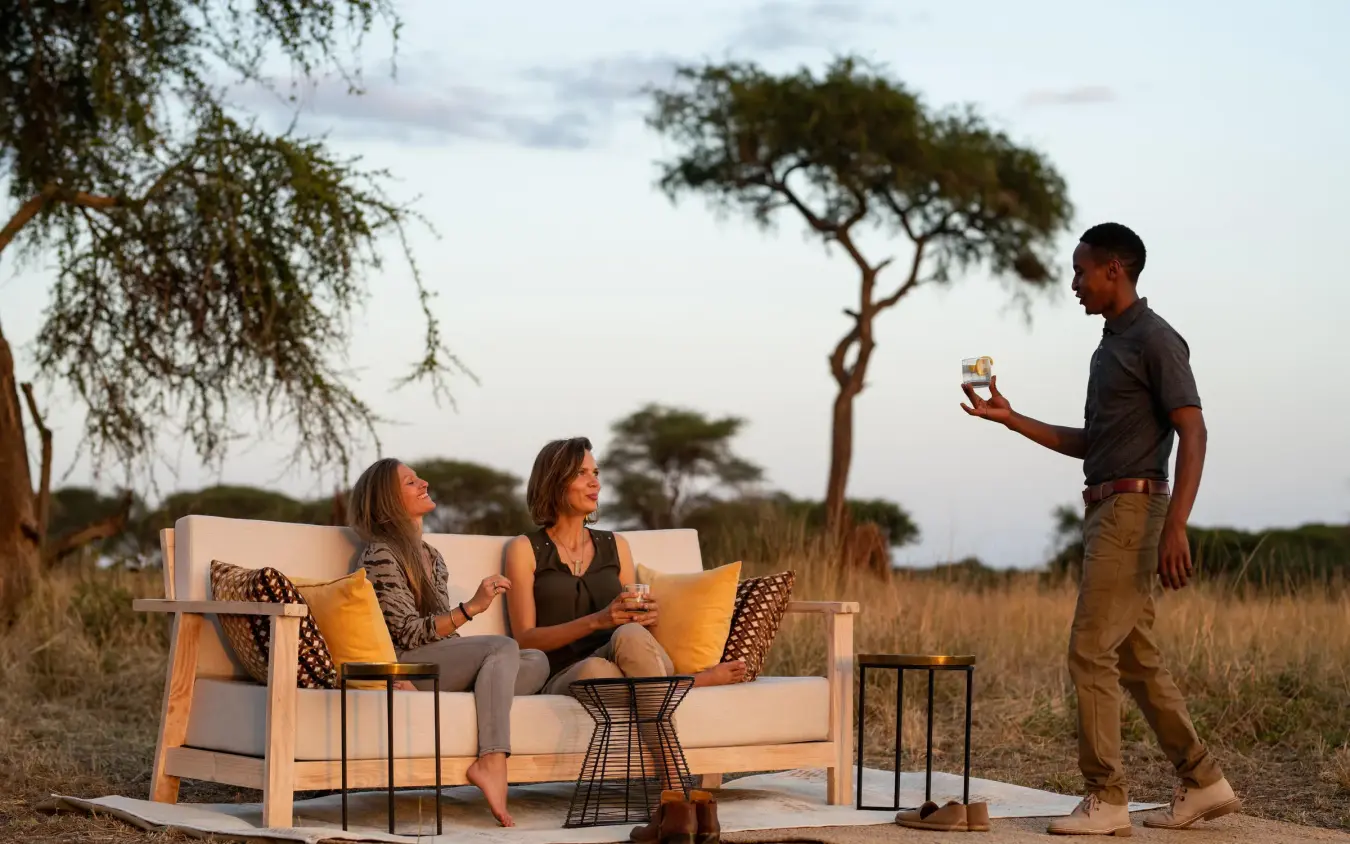
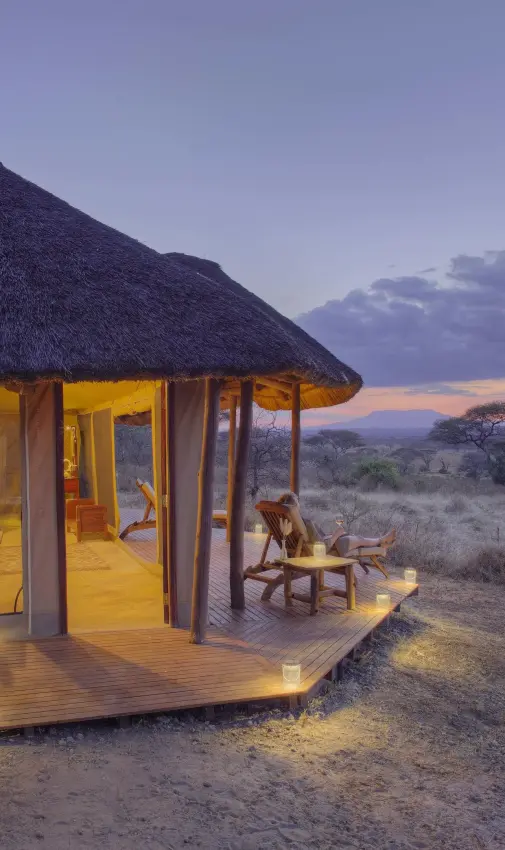
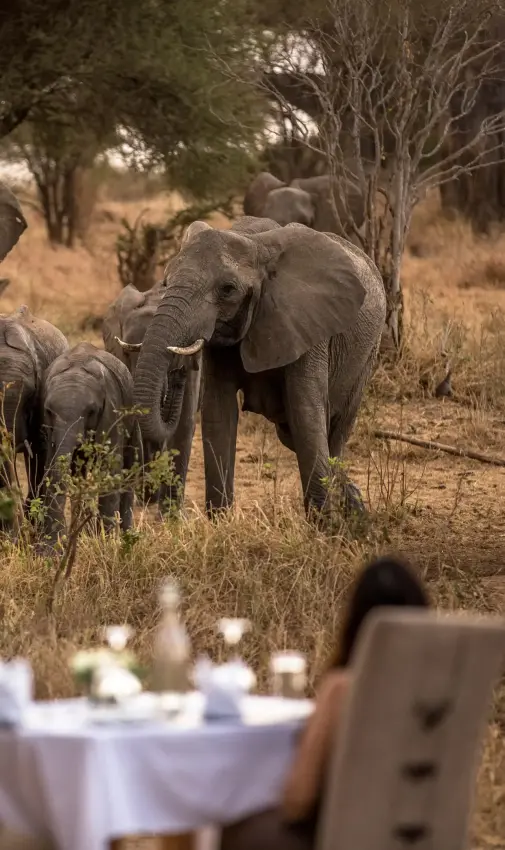
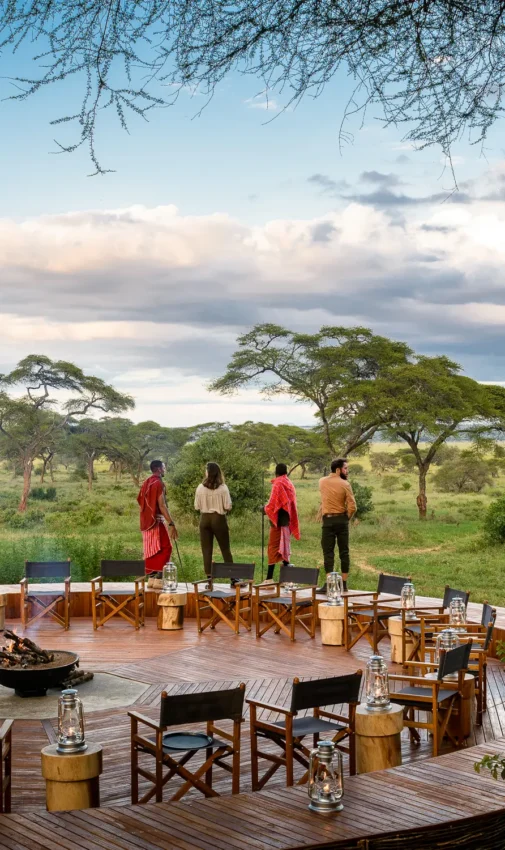
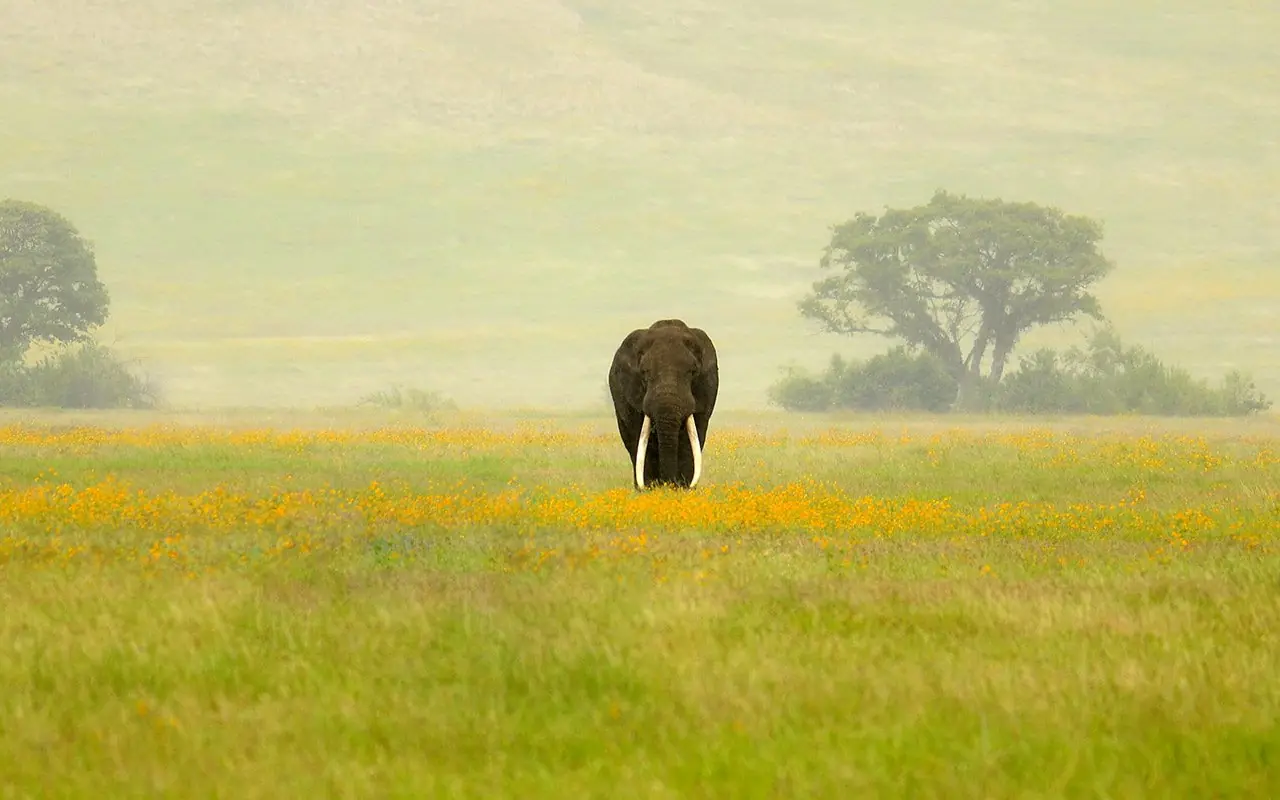
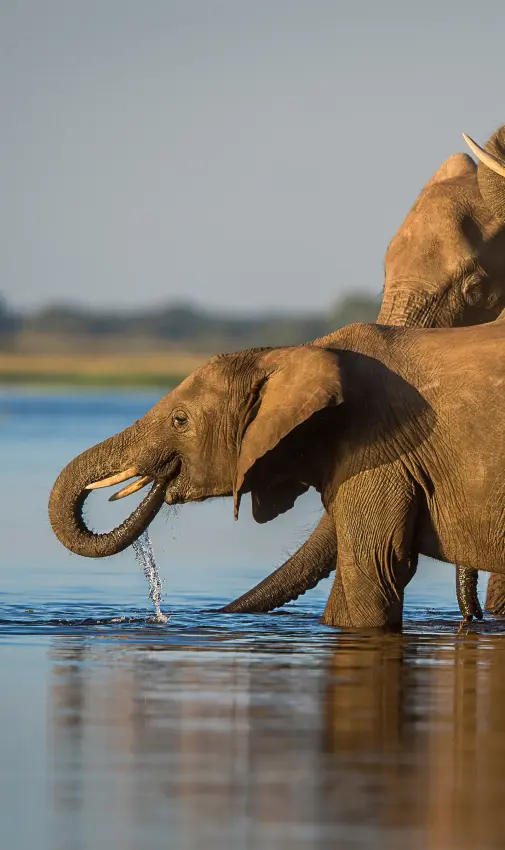
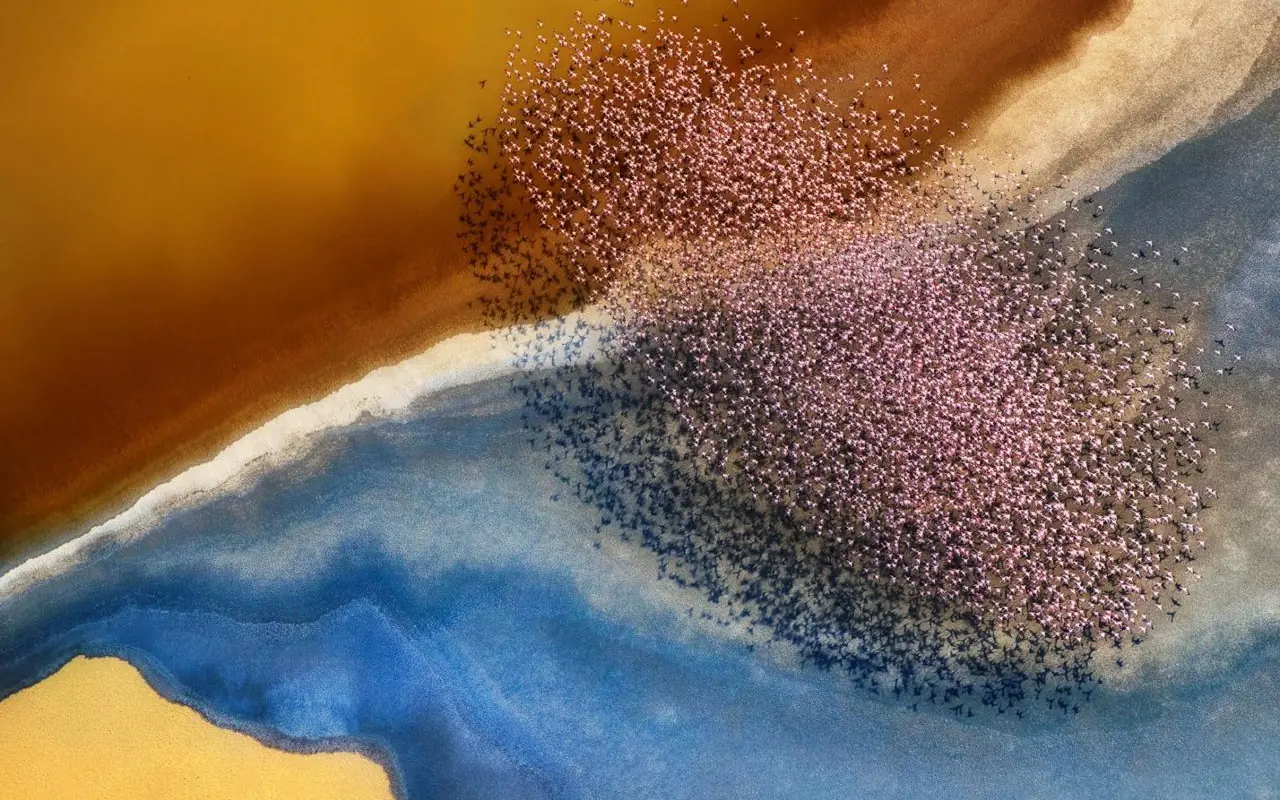
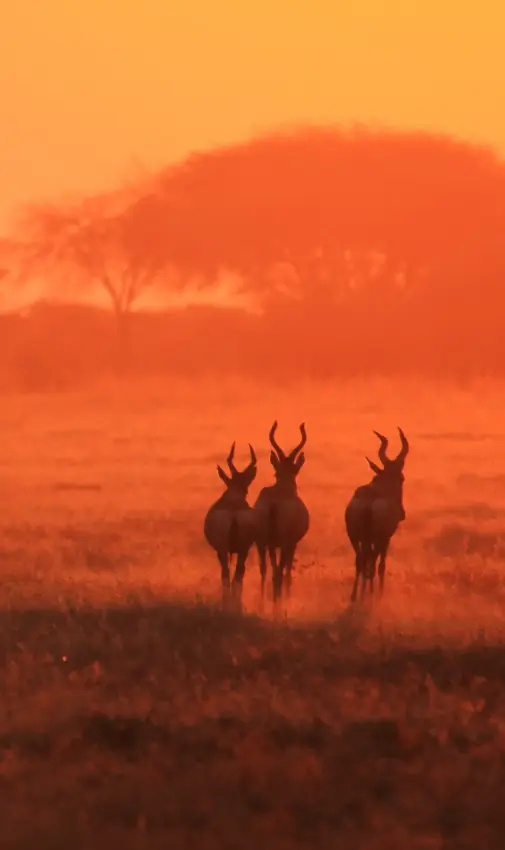
From July through October the water thins across central-southern Tarangire, and the swamps beside camp become the heart of everything. Elephant herds, buffalo, wildebeest, zebra and giraffe funnel toward the wetland and the Tarangire River, and the predators follow, lion and leopard, cheetah and caracal hunting across these plains. More than 550 bird species have been recorded in the park, many of them gathered around the water and visible from the veranda without your ever leaving the chair.
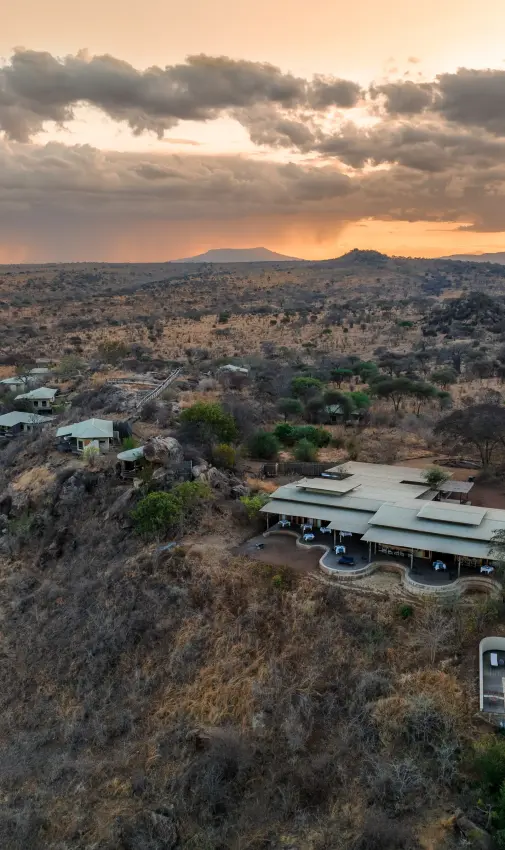
The camp sits in a quieter corner of the park and sees fewer vehicles than the areas near the main gate, so sightings feel private rather than shared. You arrive by air to Kuro Airstrip, roughly a 25-minute flight from Arusha, and then take a game drive to camp. That drive threads through baobab ridges and elephant corridors, so it works as the first game drive of the trip rather than a transfer, the wildlife arriving before you have even reached your tent.
That drive threads through baobab ridges and elephant corridors, so it works as the first game drive of the trip.
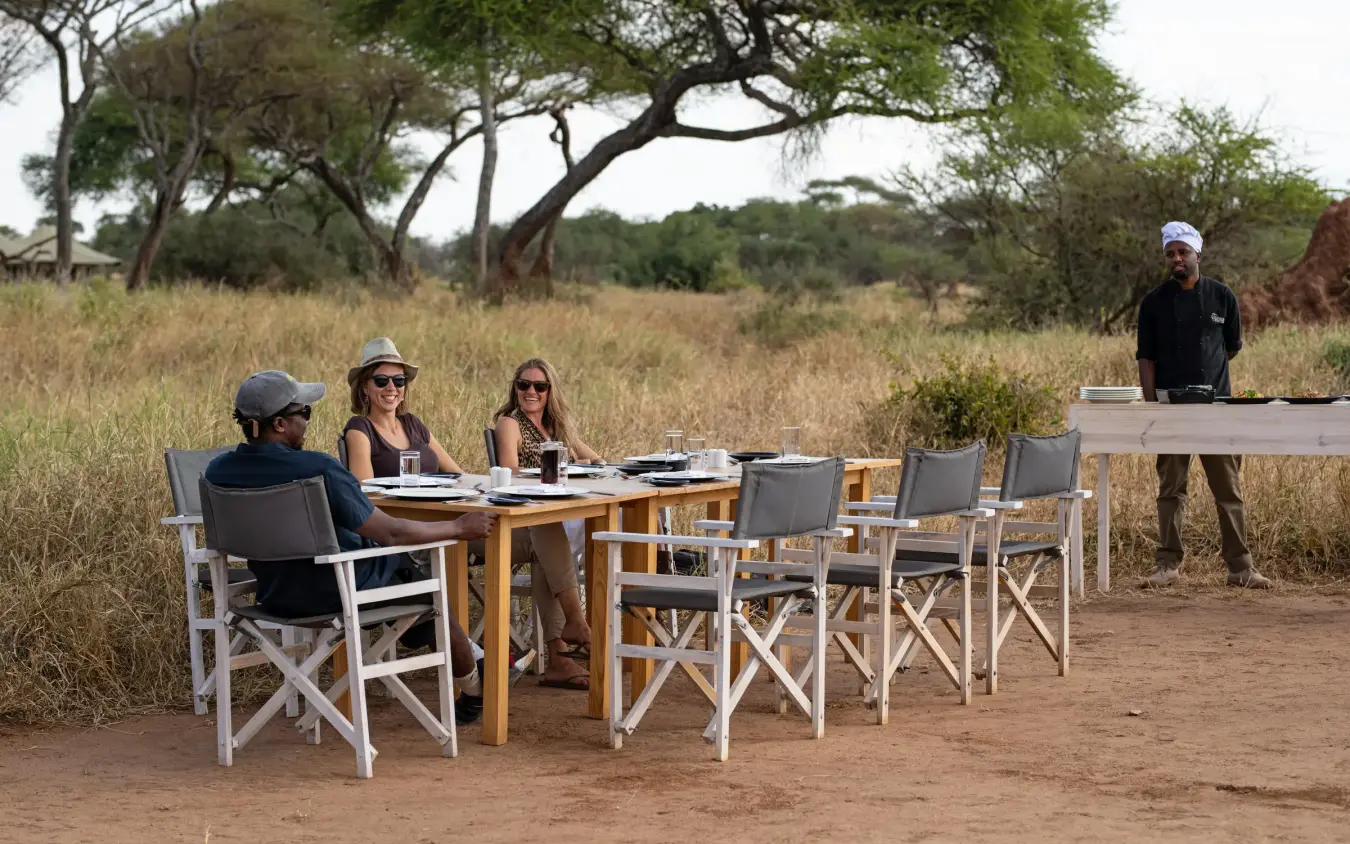
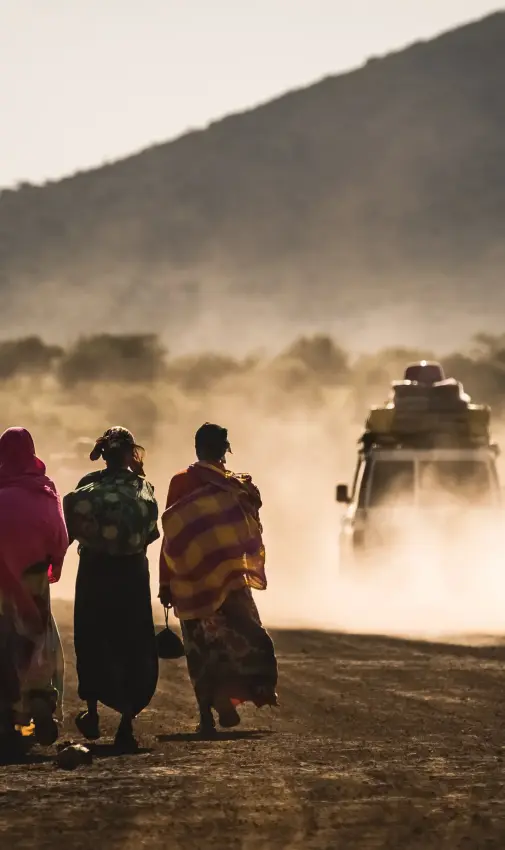
Days follow the wildlife rather than a schedule. Game drives run into Tarangire’s varied habitats, while walking safaris and night drives operate within the park under Tanzania National Parks rules, each accompanied by an armed ranger and the walking reserved for guests aged sixteen and over. Bush breakfasts pause the morning drive with fresh-baked muffins and bread among the bird calls, and a visit to a Maasai community can be arranged whenever you wish.
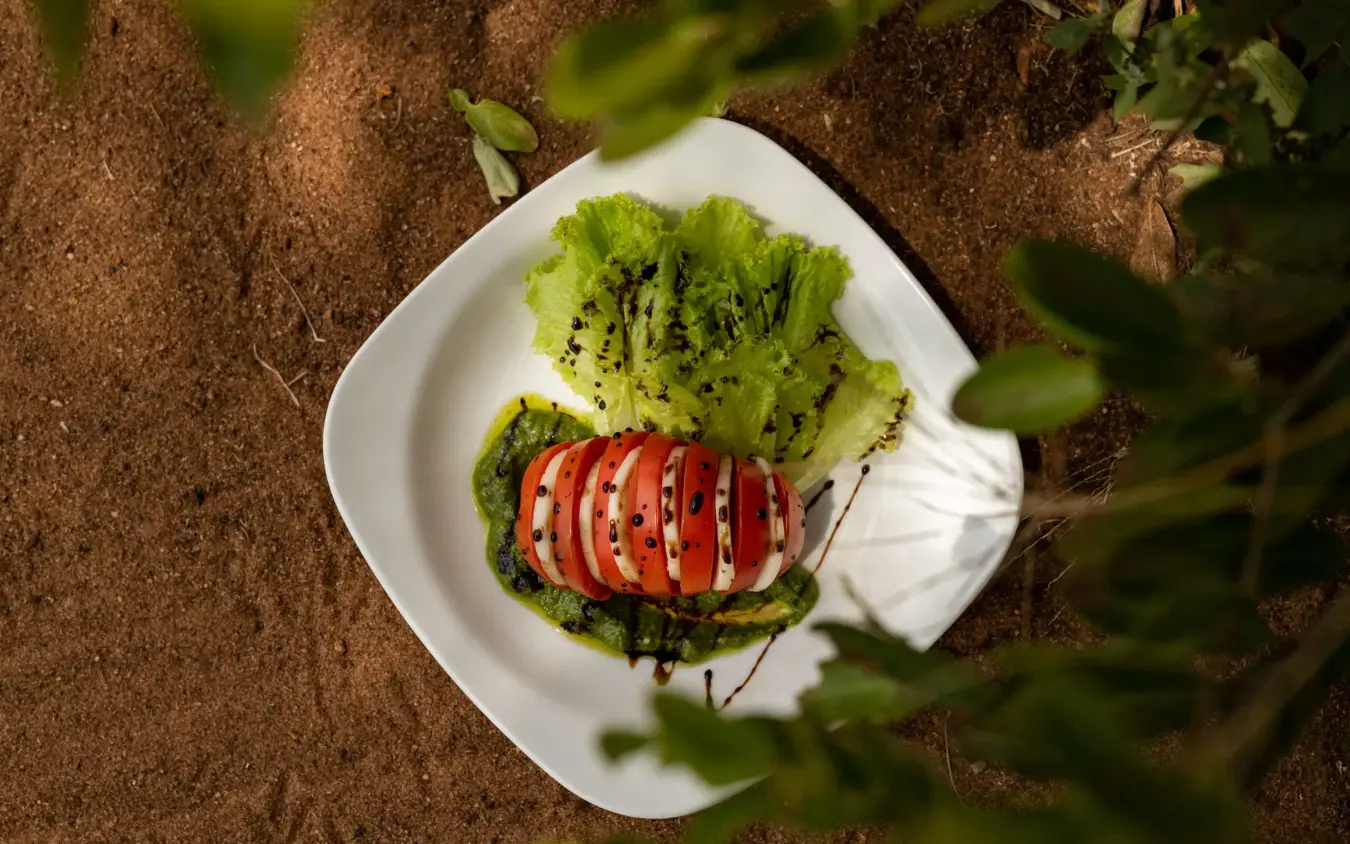
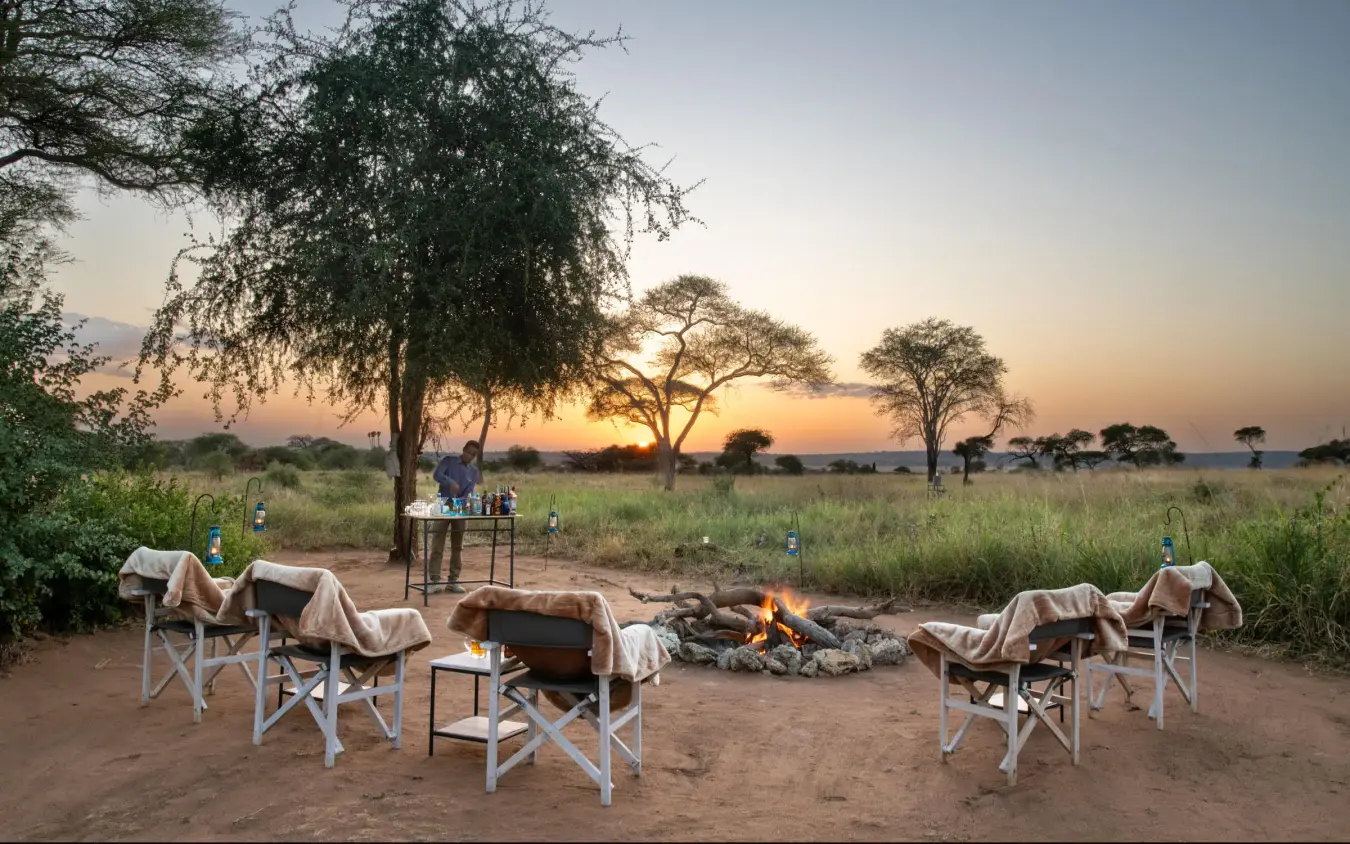
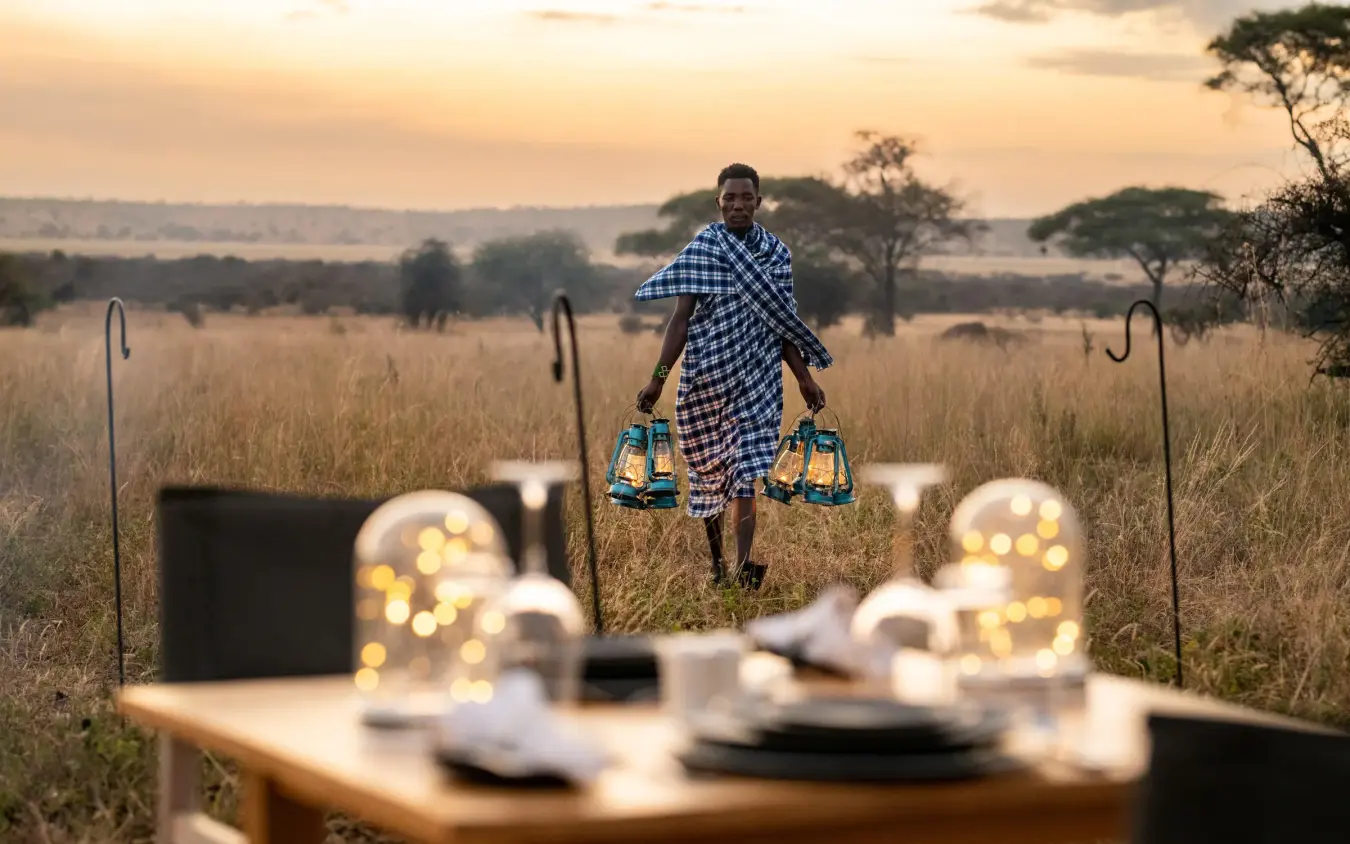
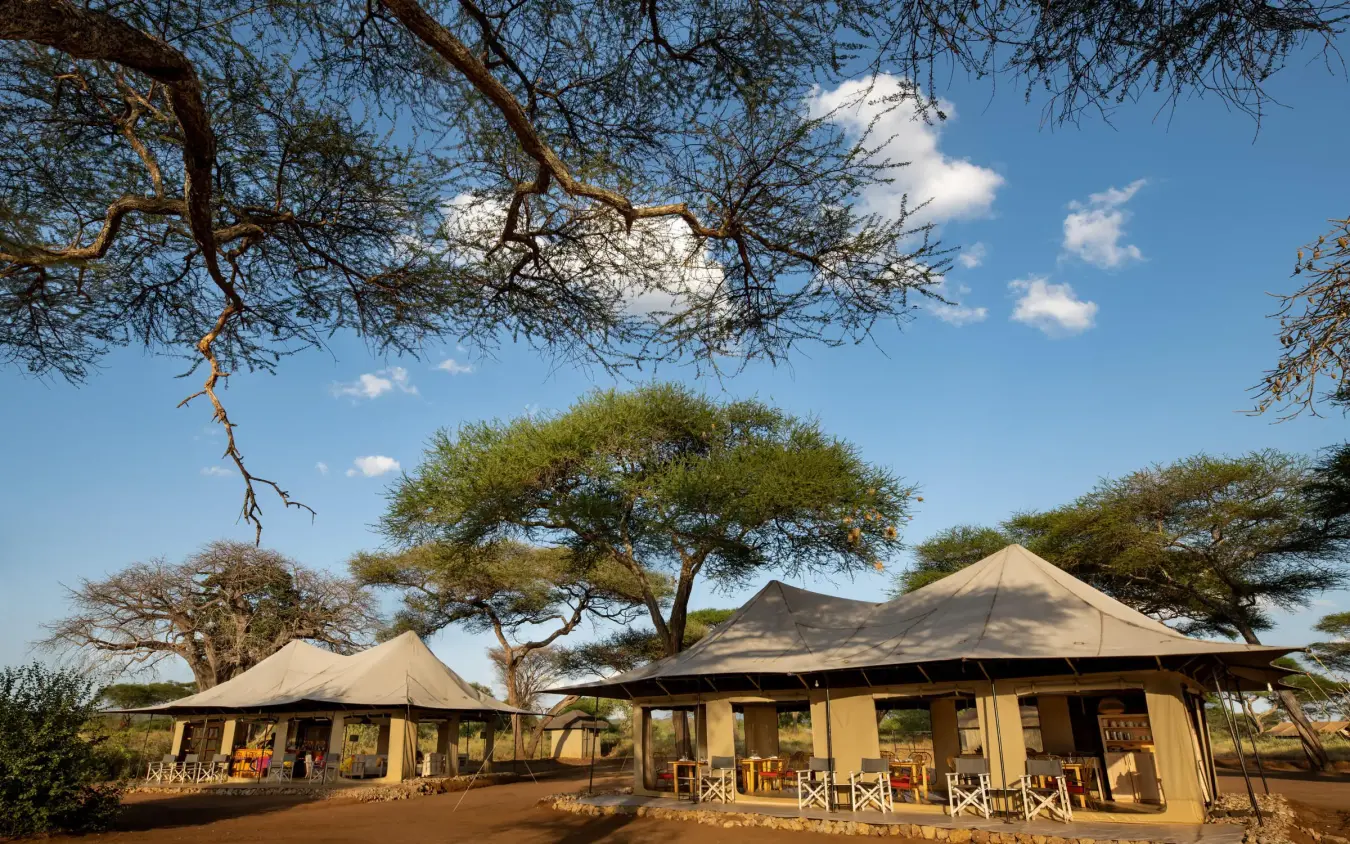
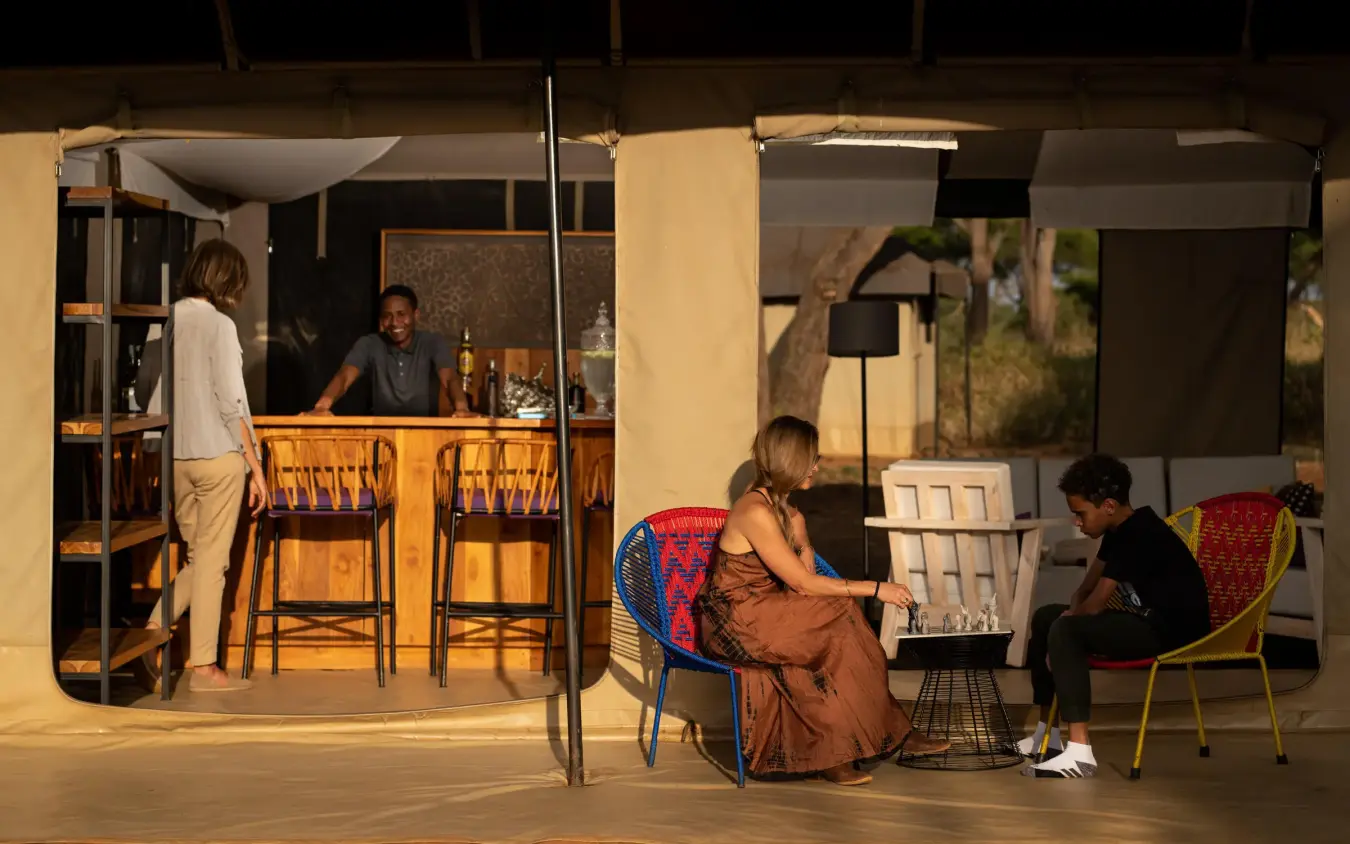
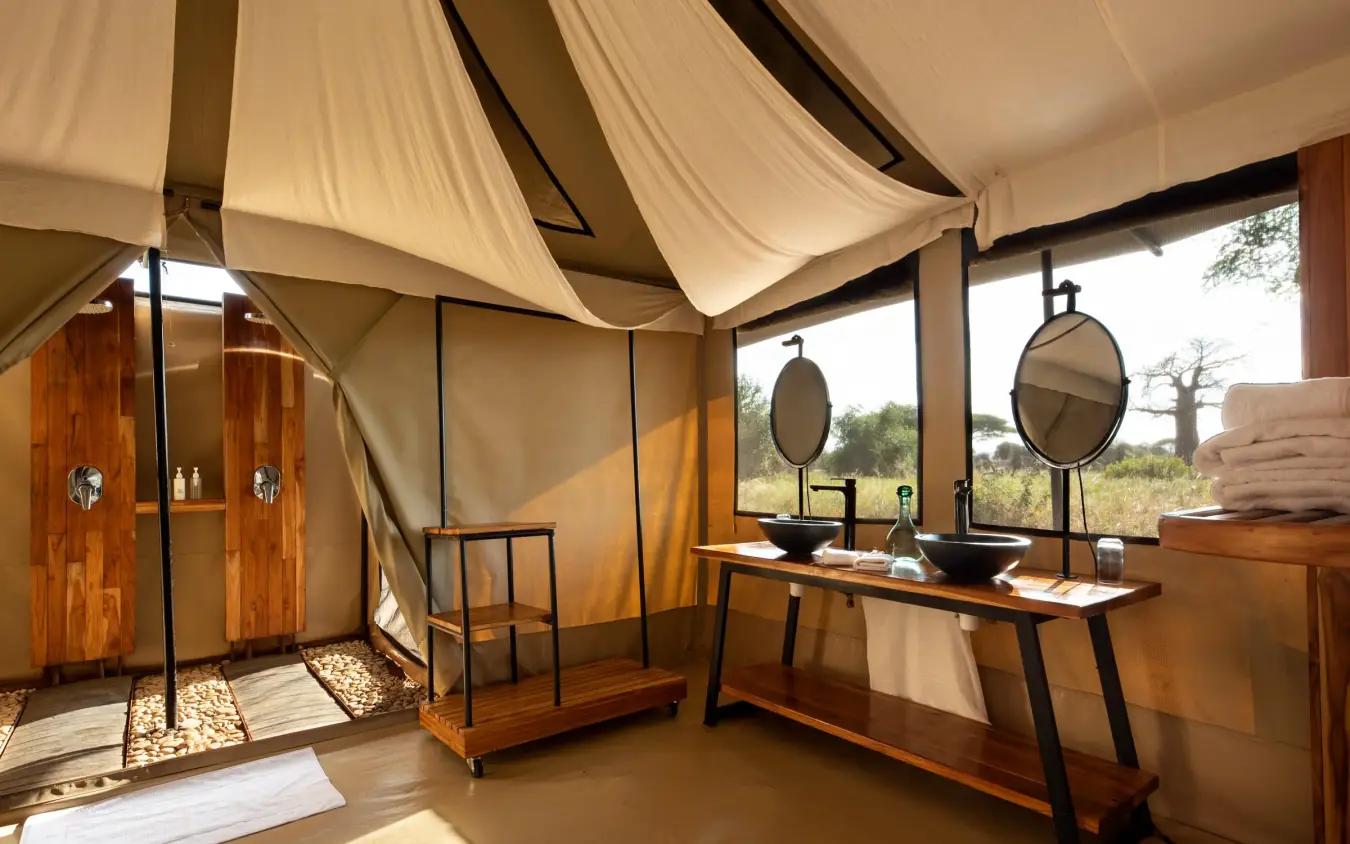
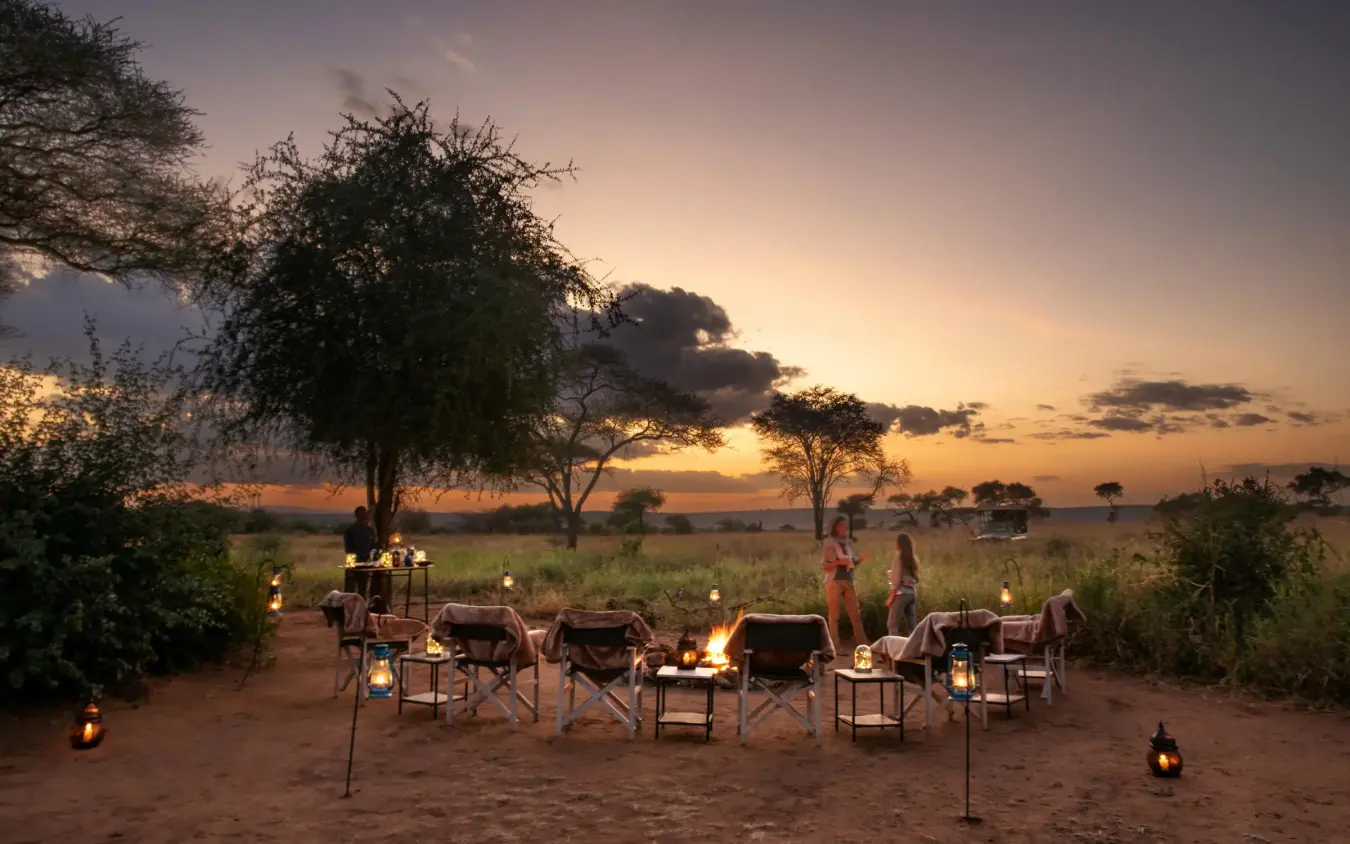
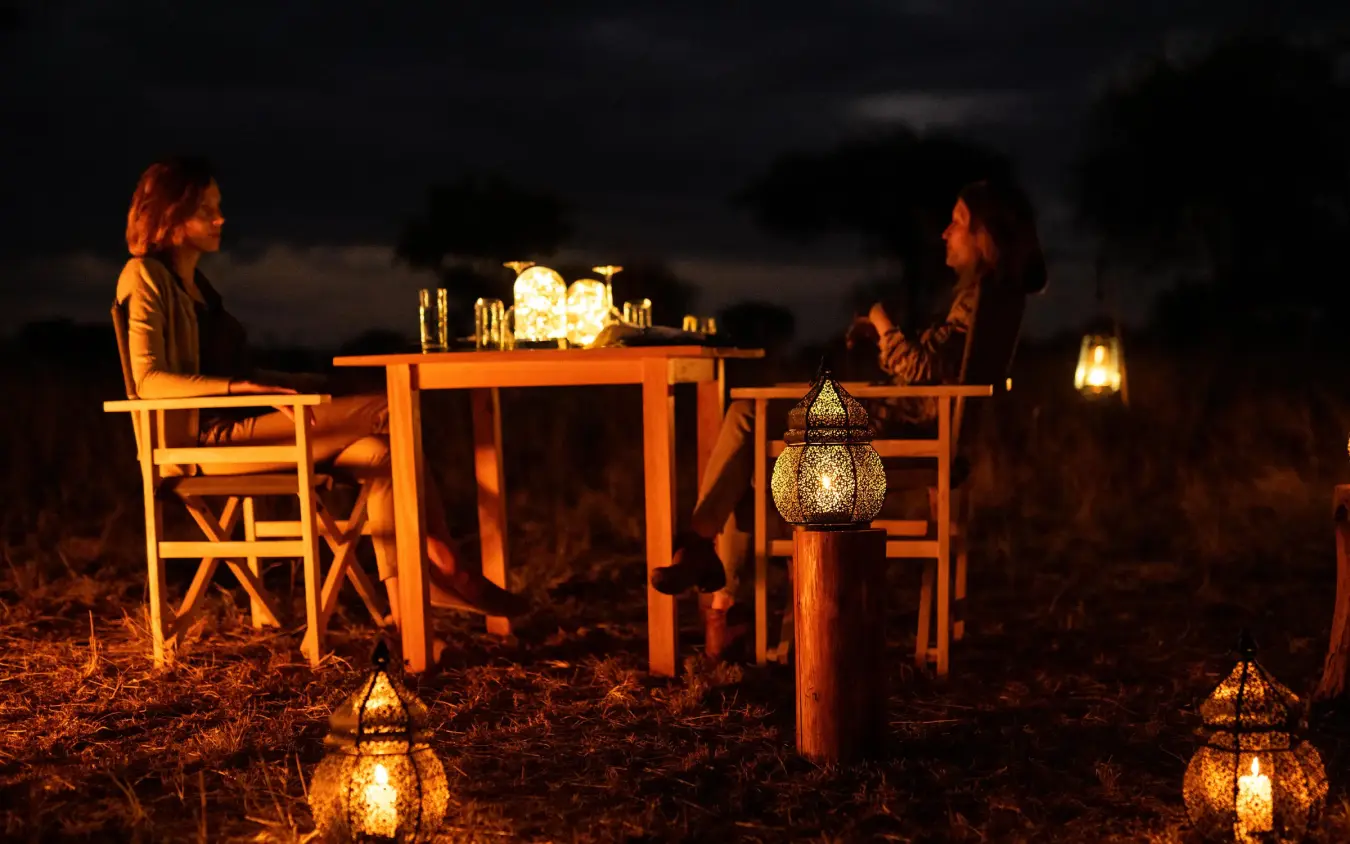
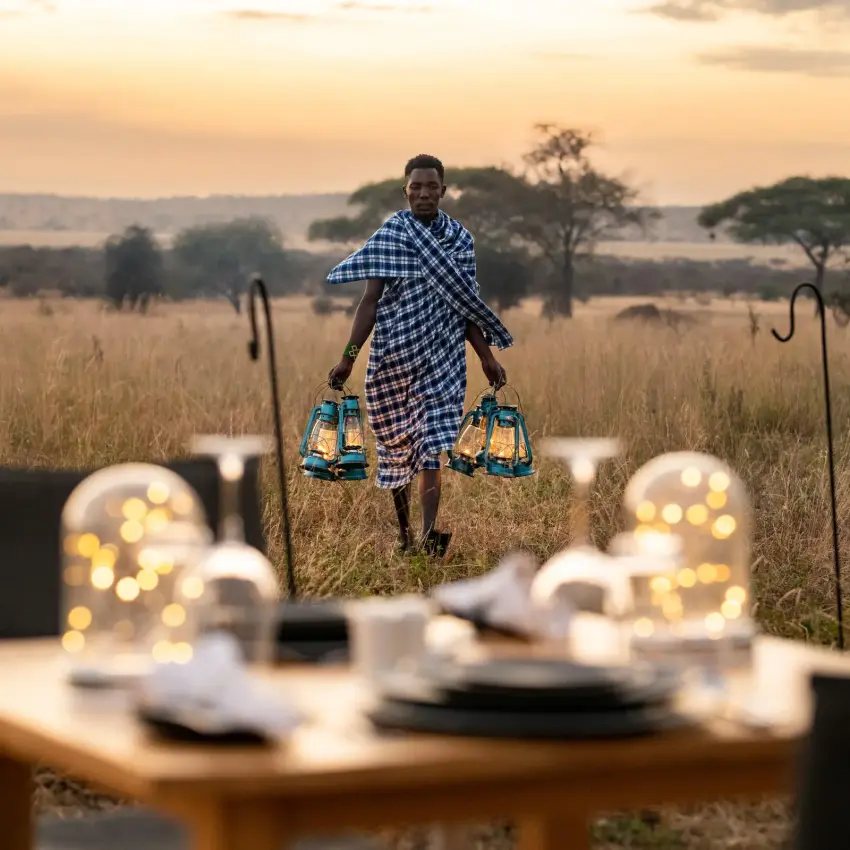
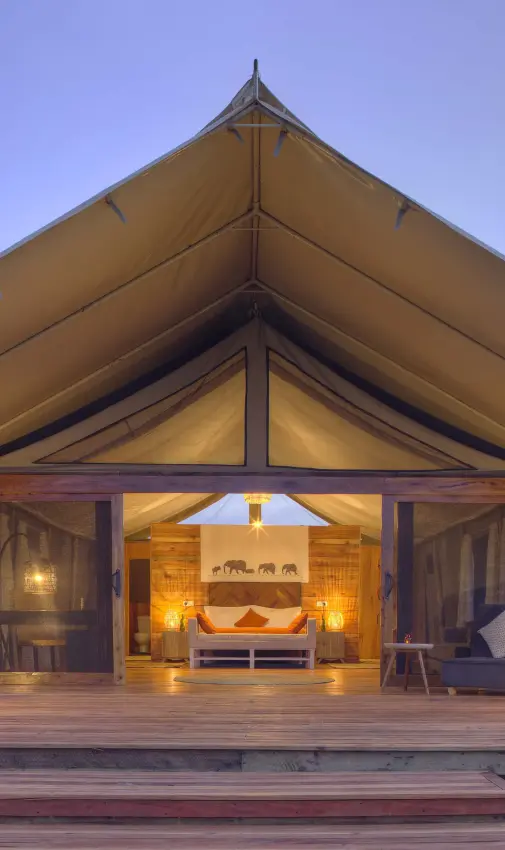
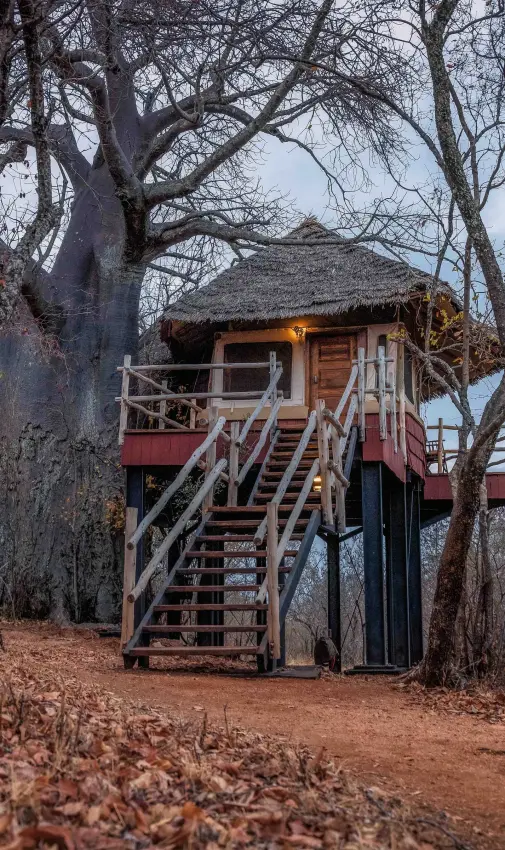
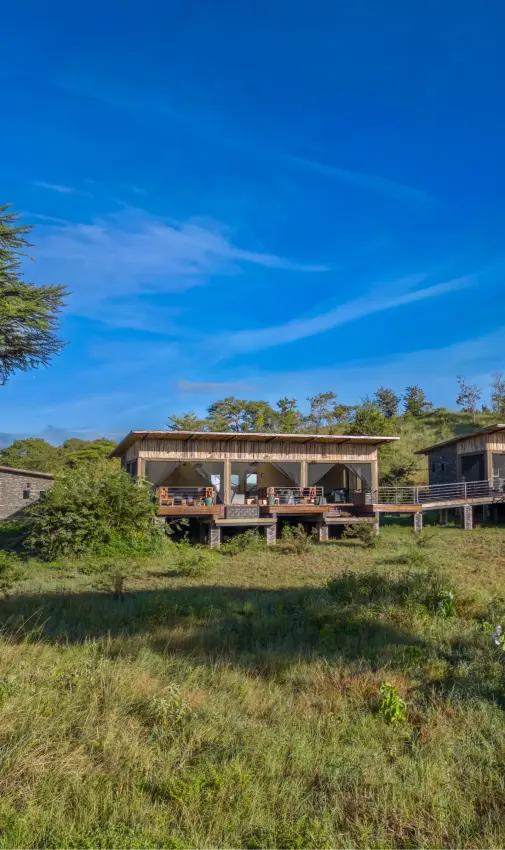
Meals bring the standard of a small hotel into the bush. The kitchen works with fresh, locally sourced ingredients and bends to whatever you prefer, and dining moves between the open-sided tent, a communal table and the shade of the baobabs outside. At night the plain carries its own sound, lion and hyena and elephant calling across the dark. Children aged five and over are welcome, and a family tent awaits those travelling together.