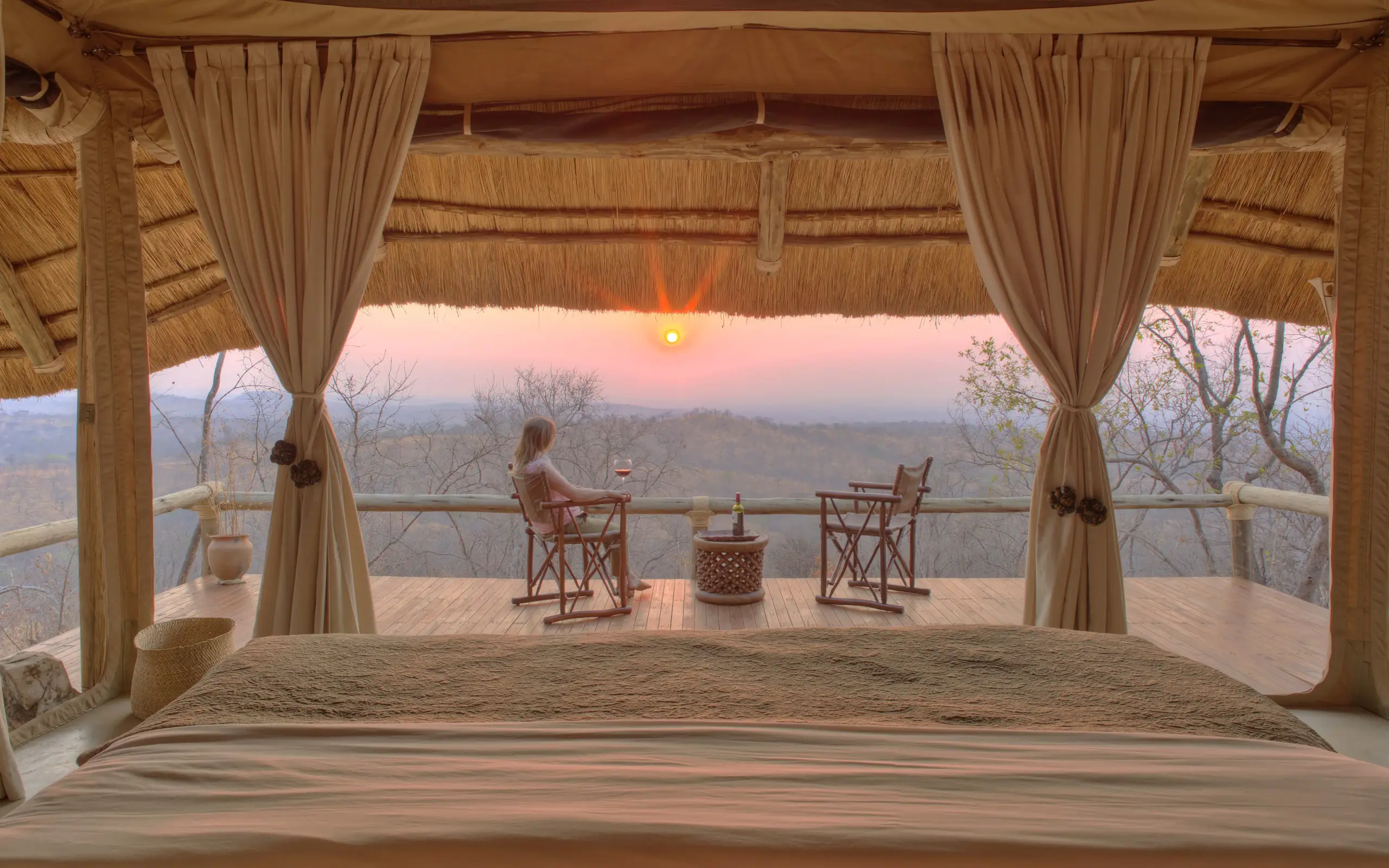
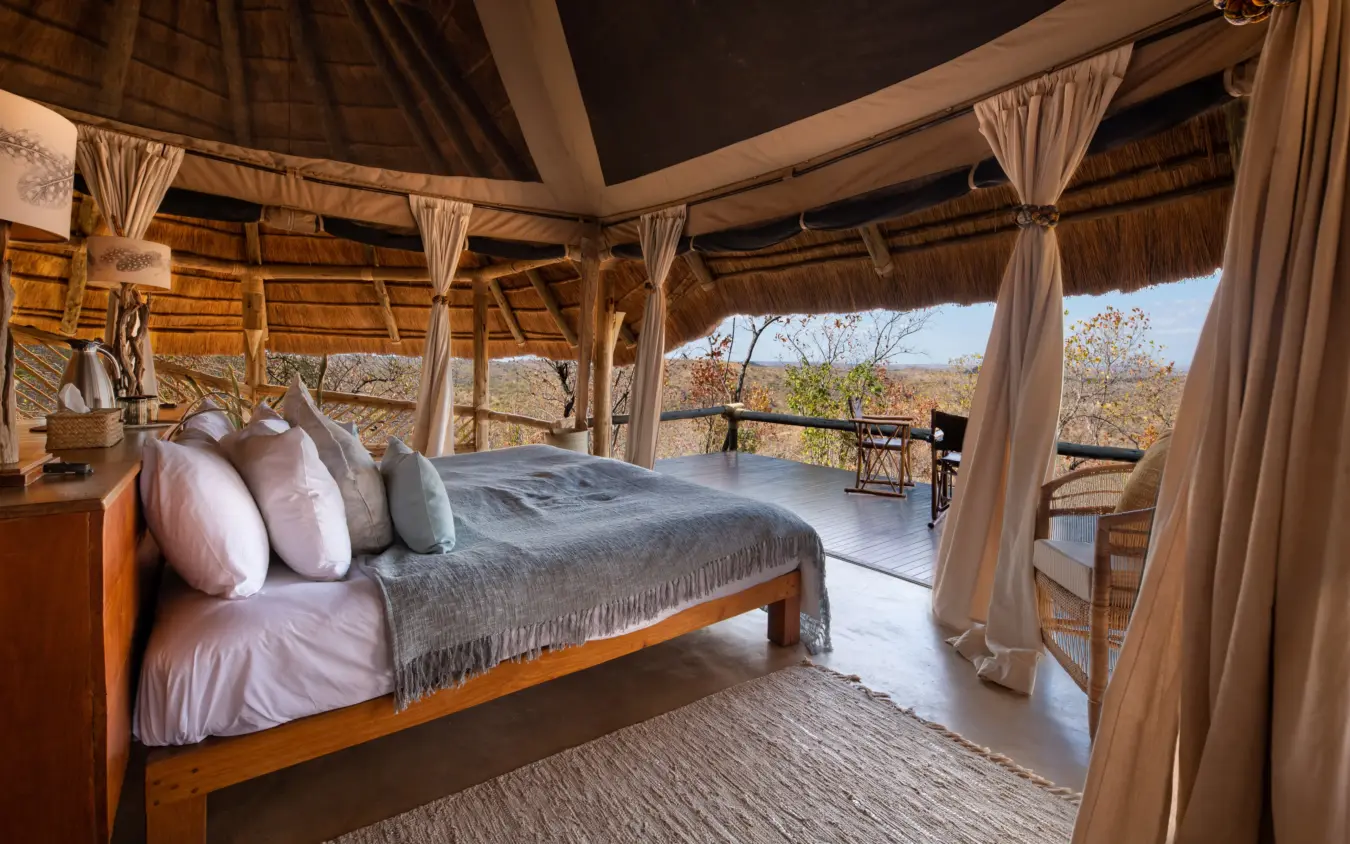
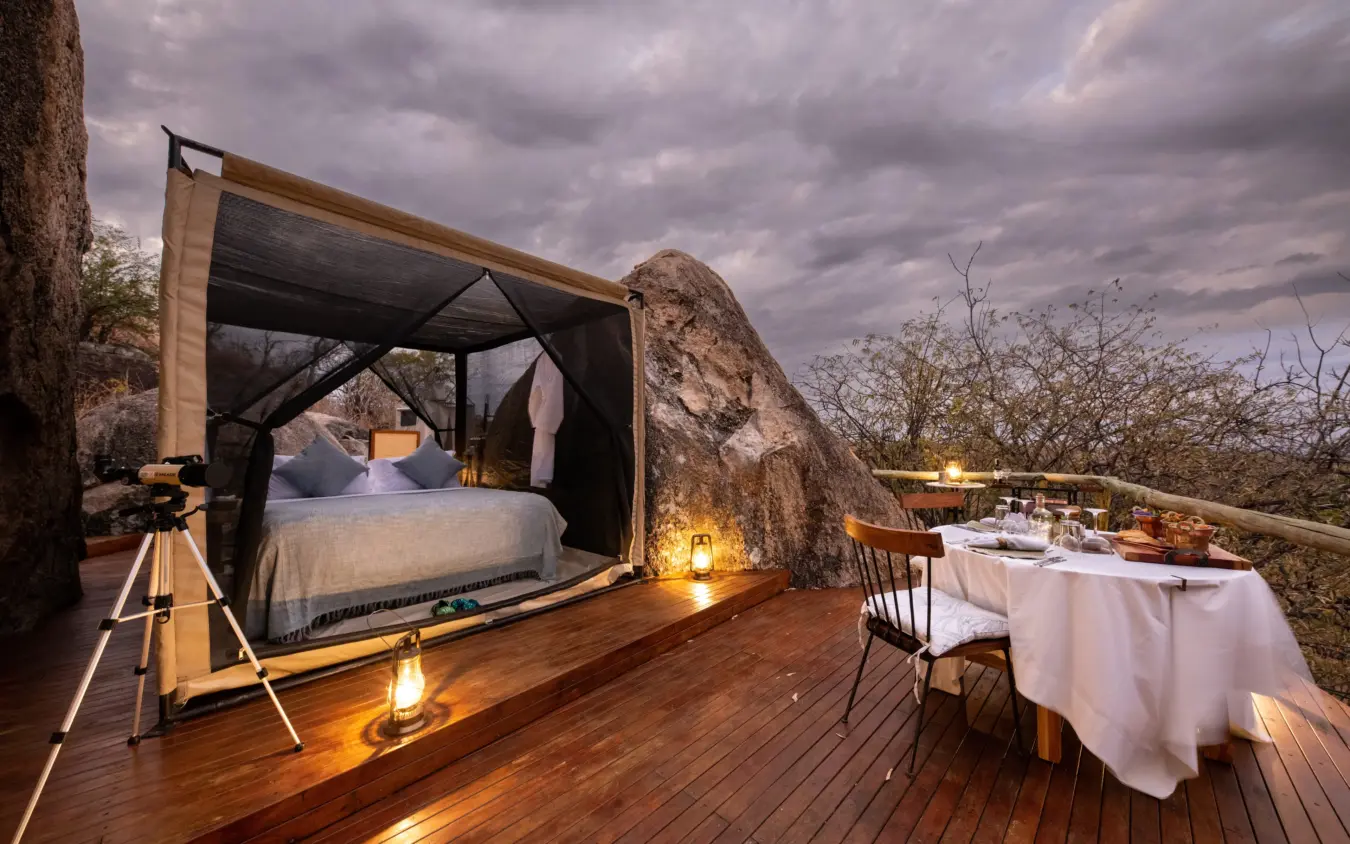
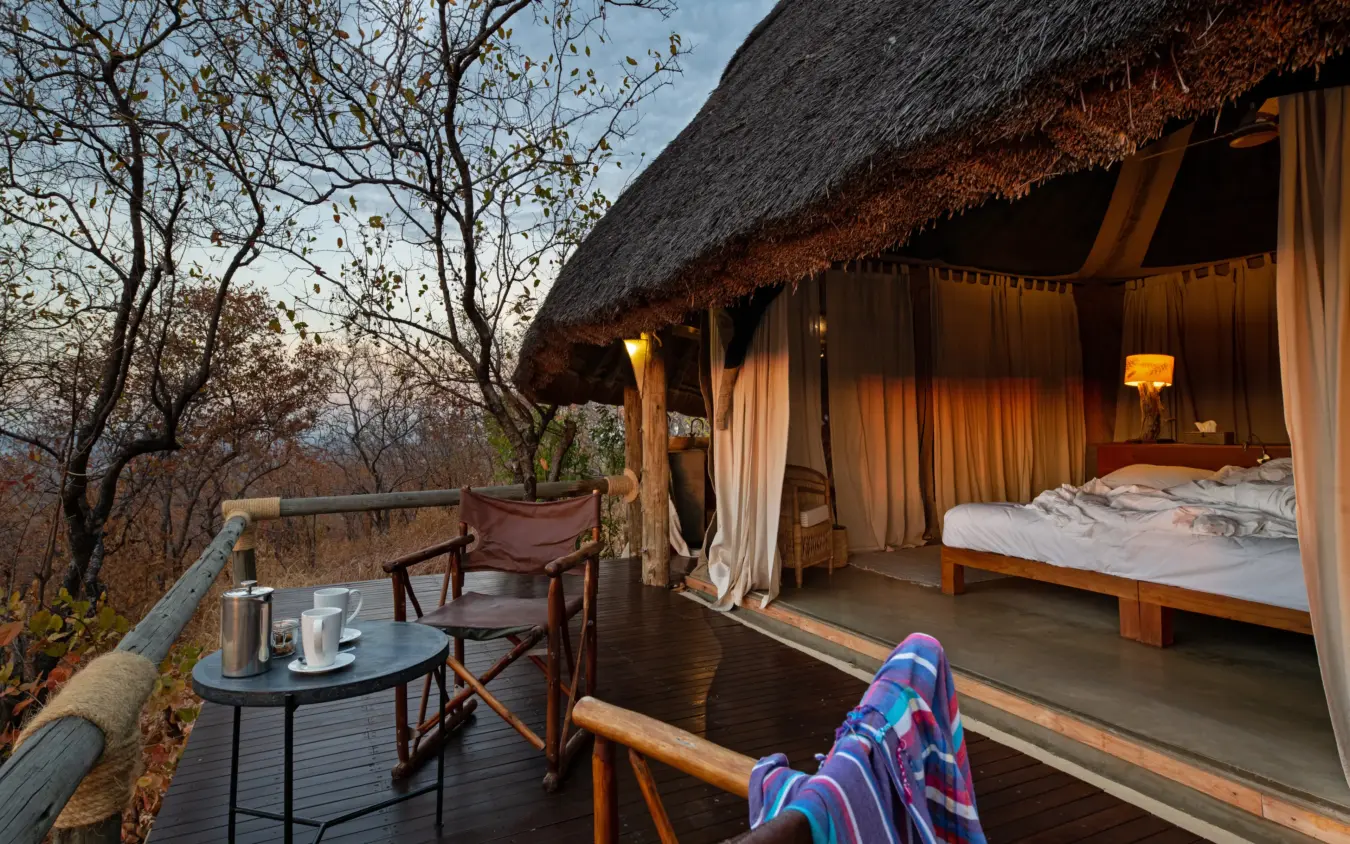
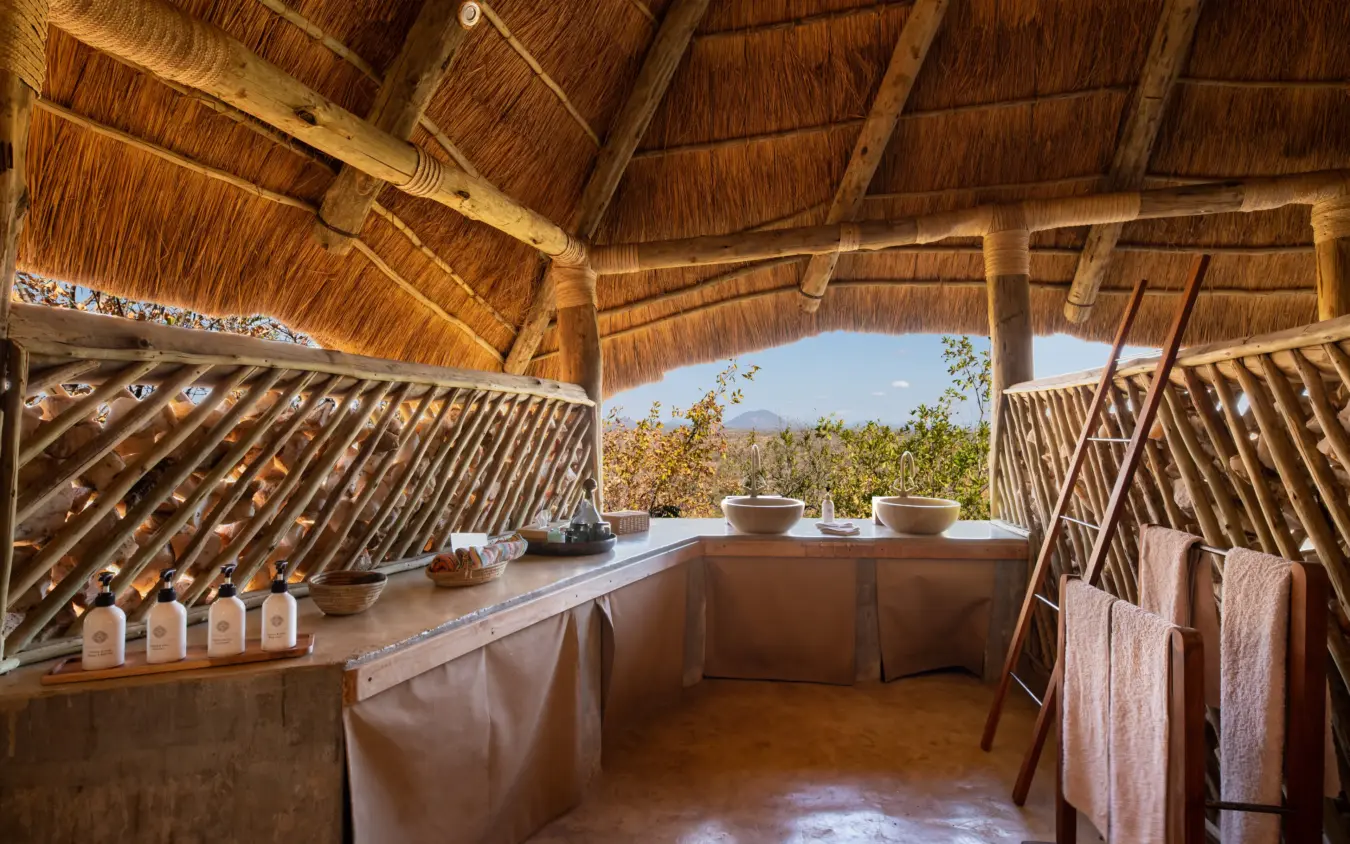
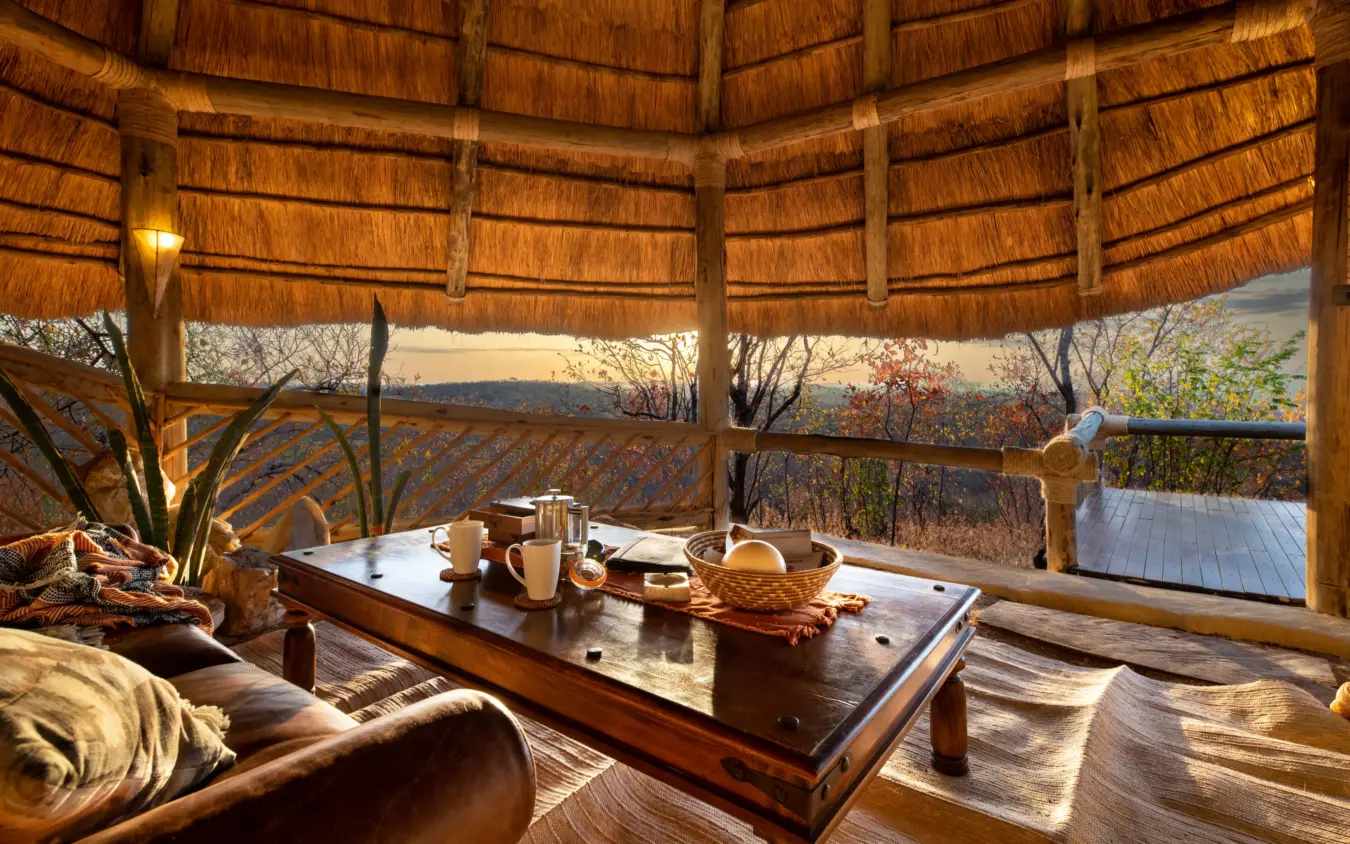
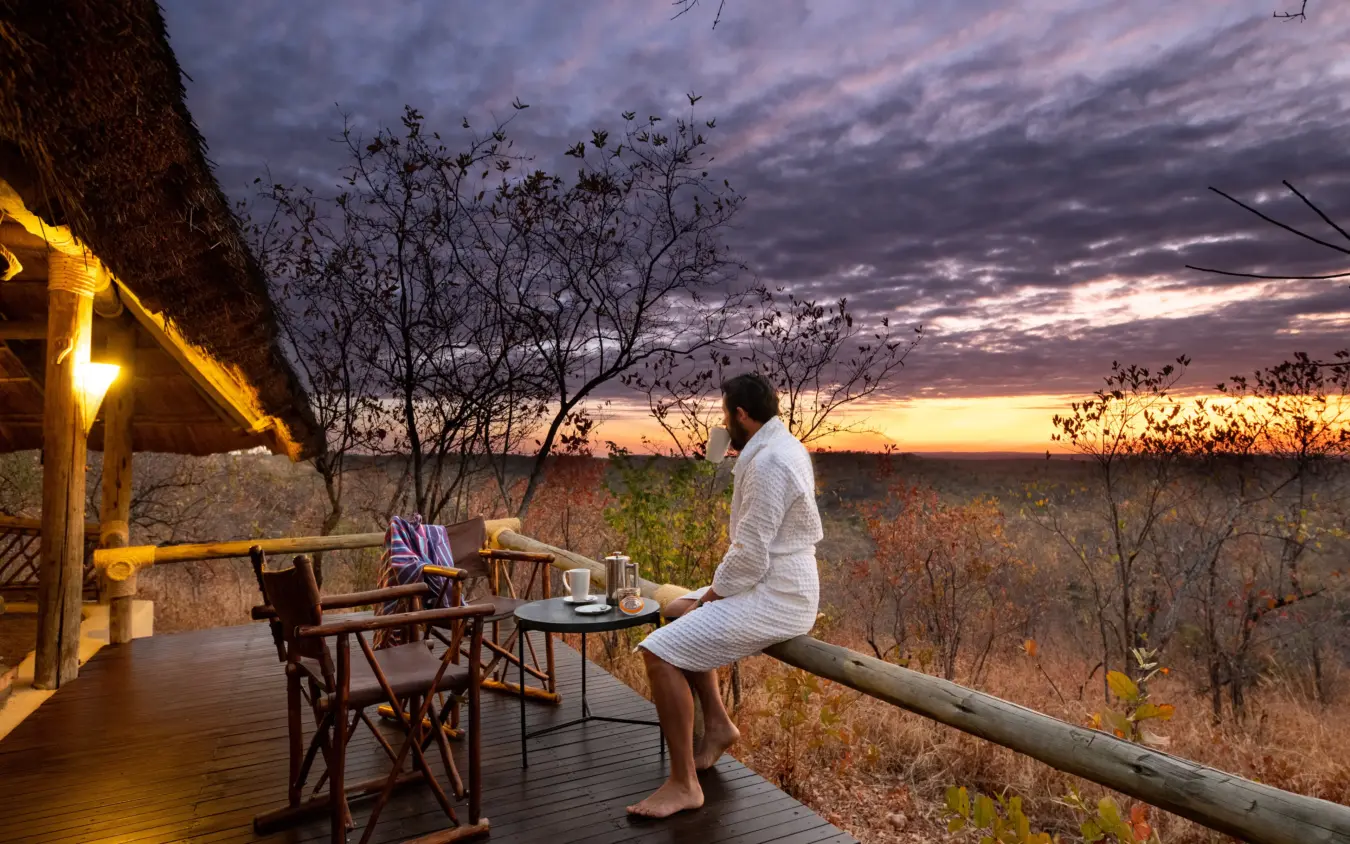
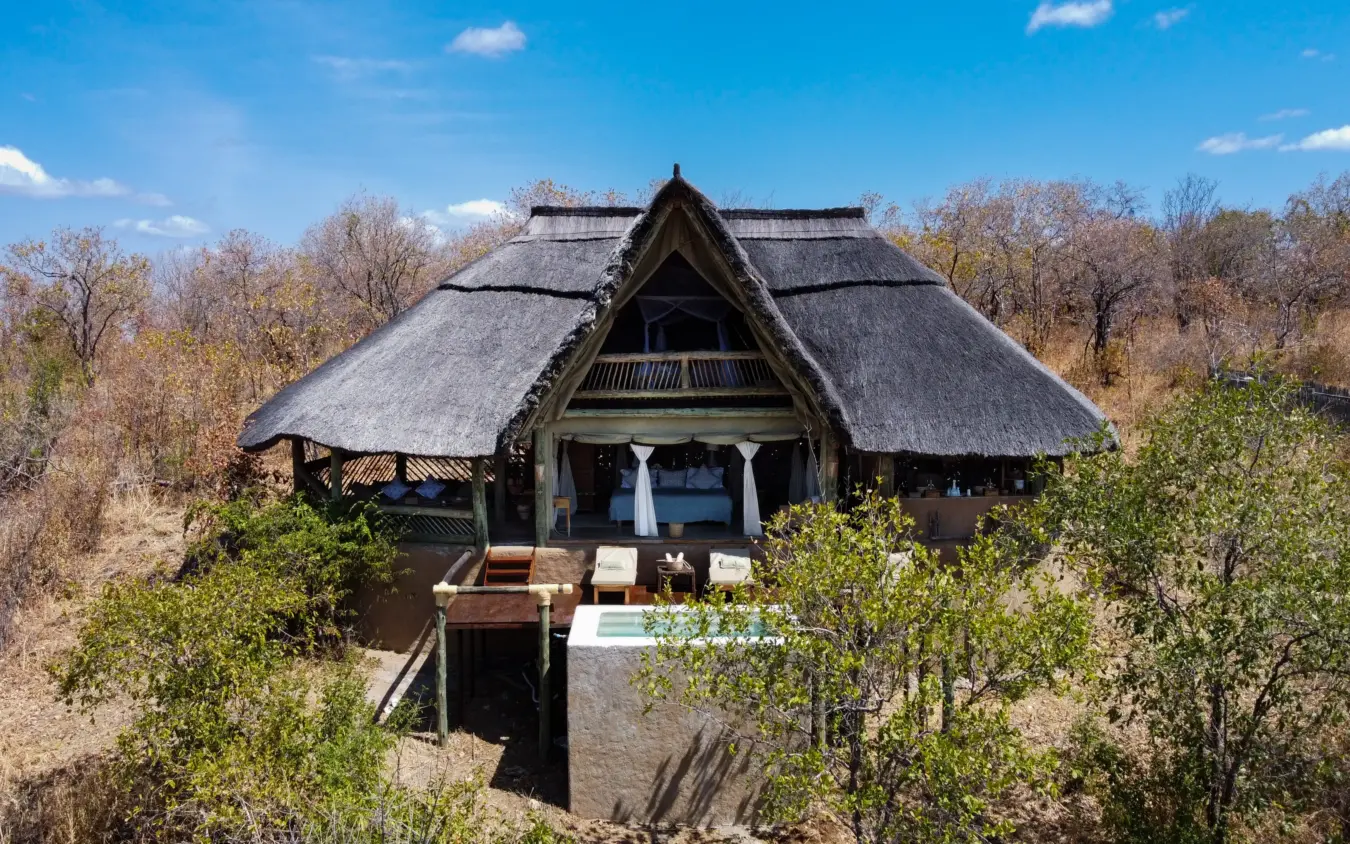
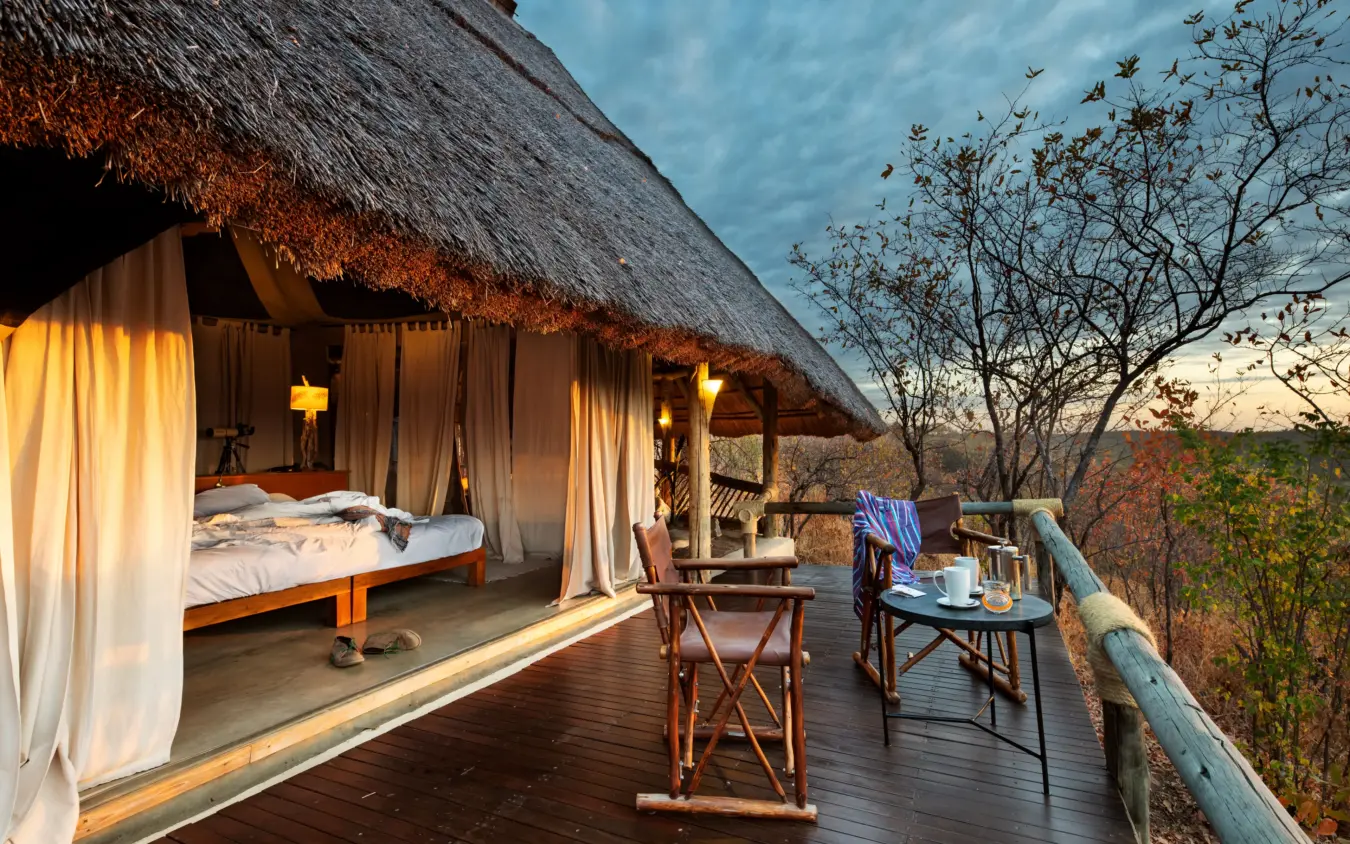
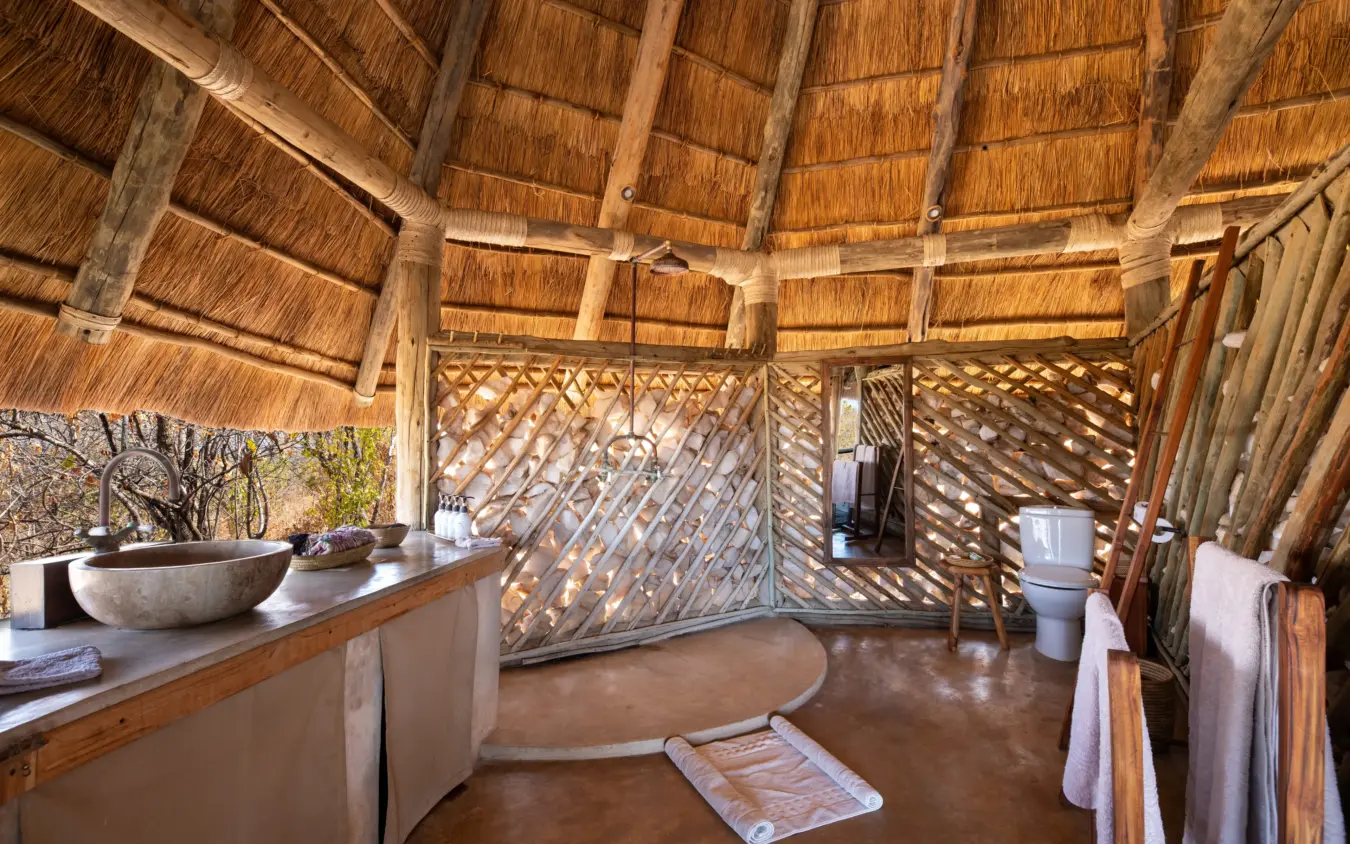
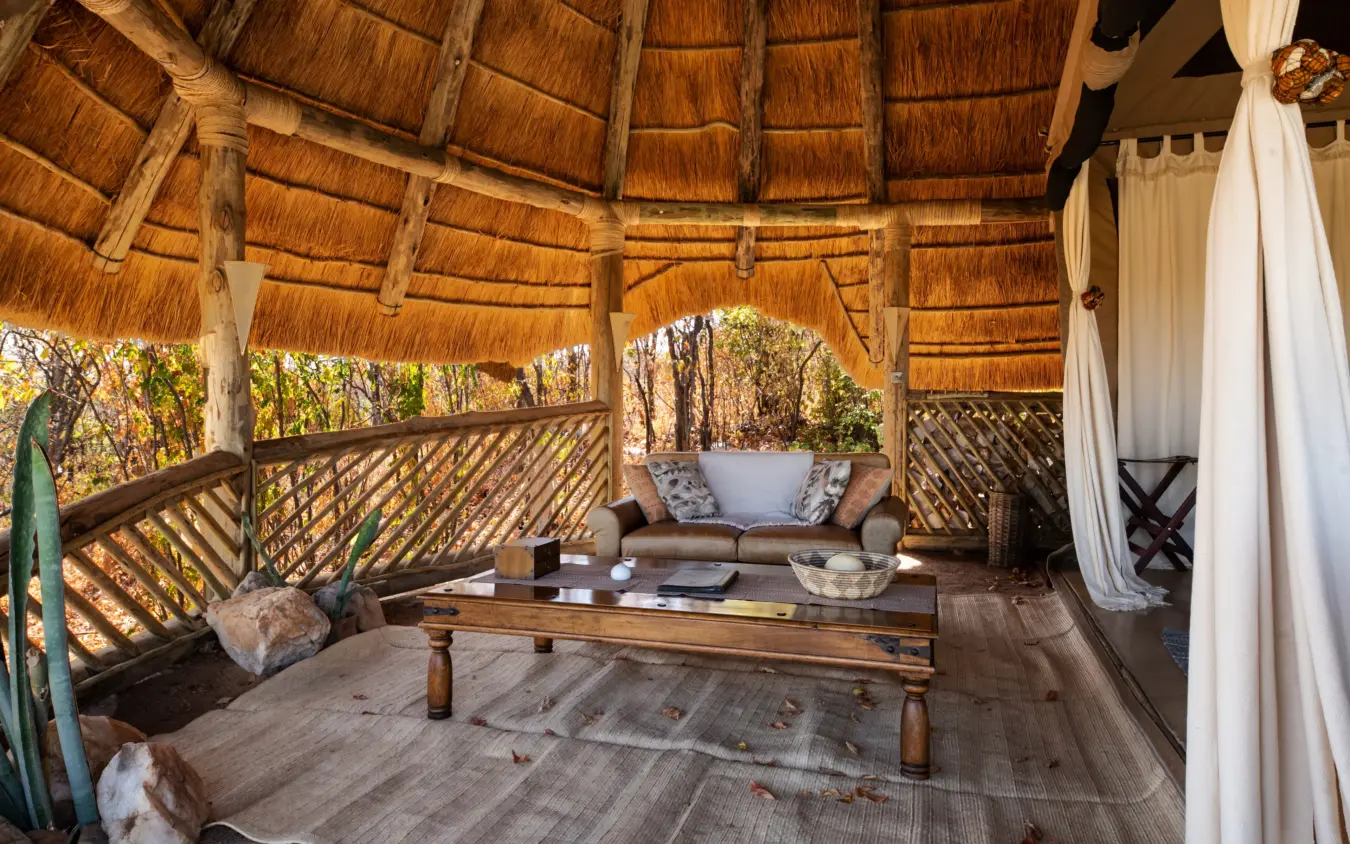
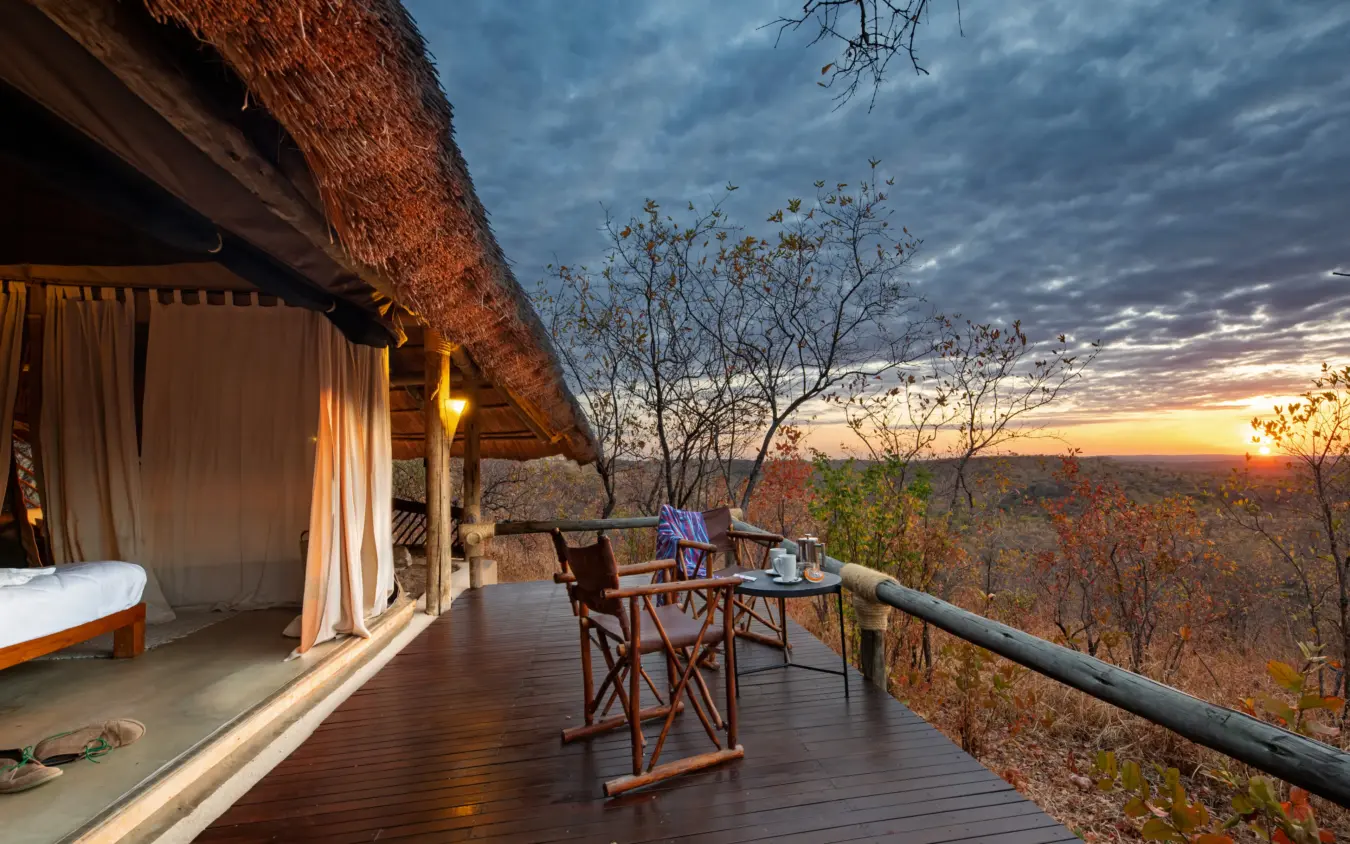
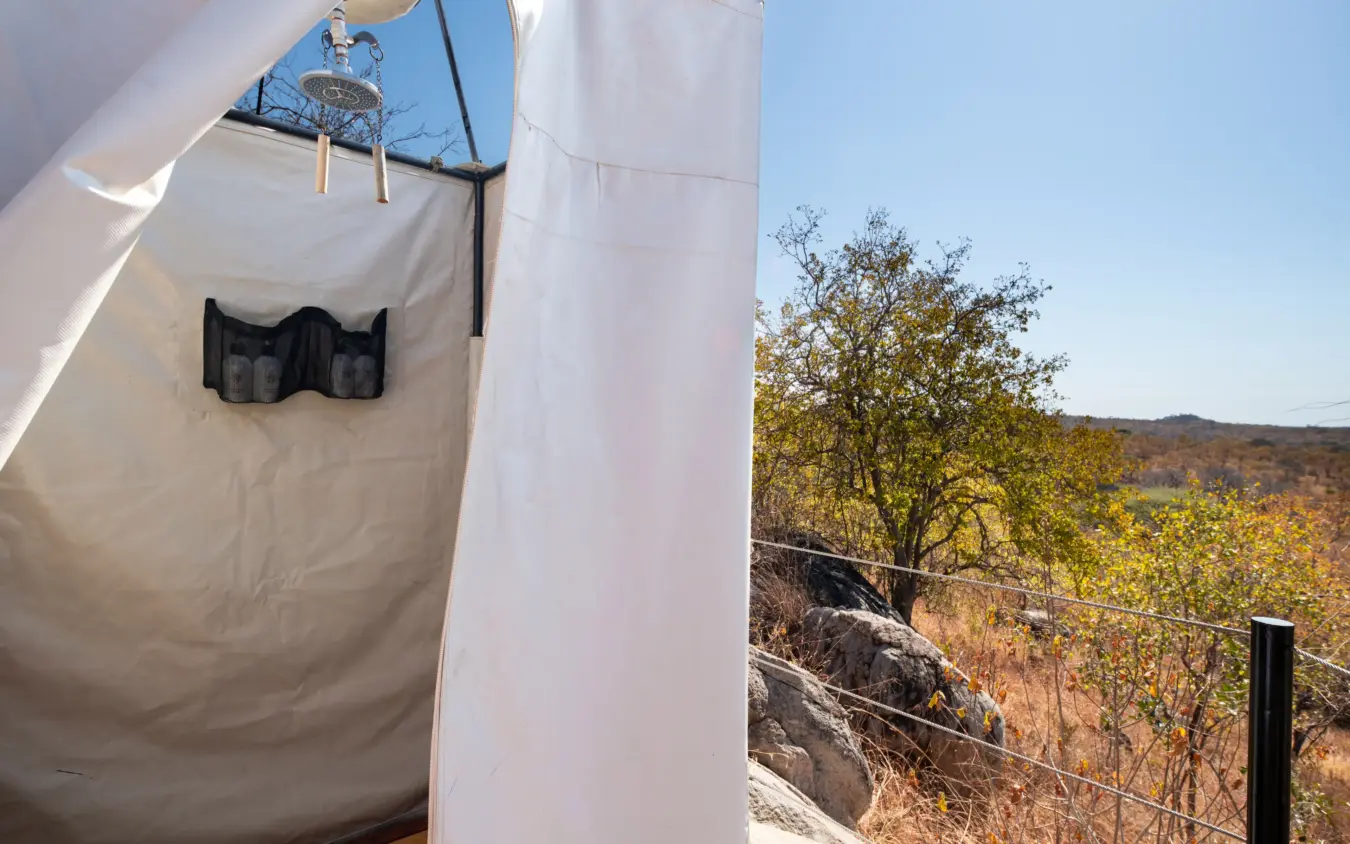
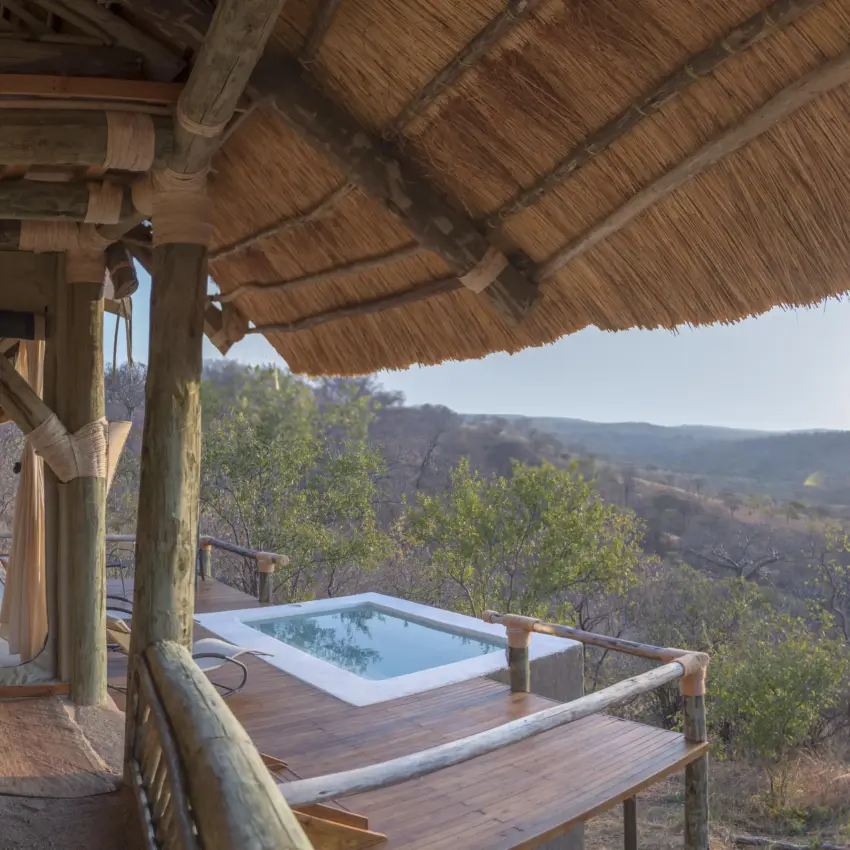
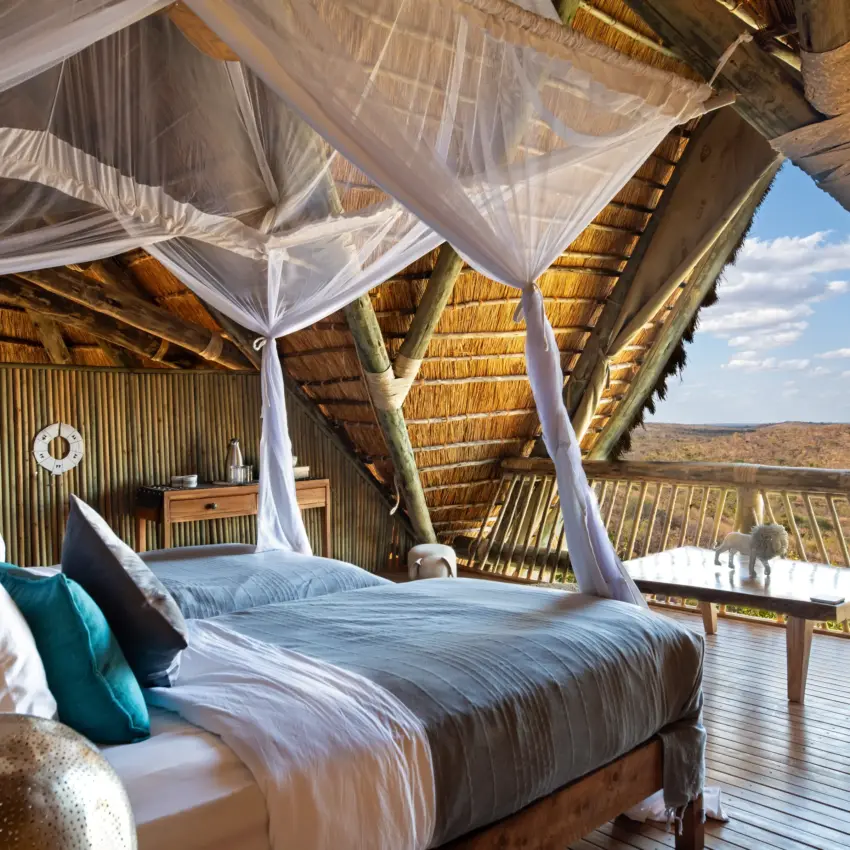
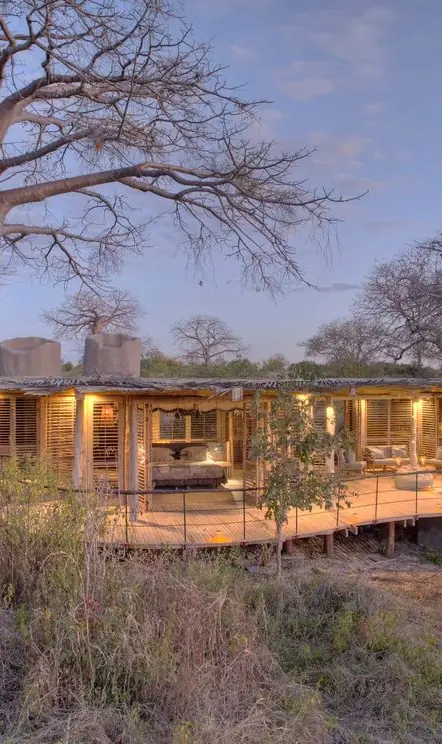
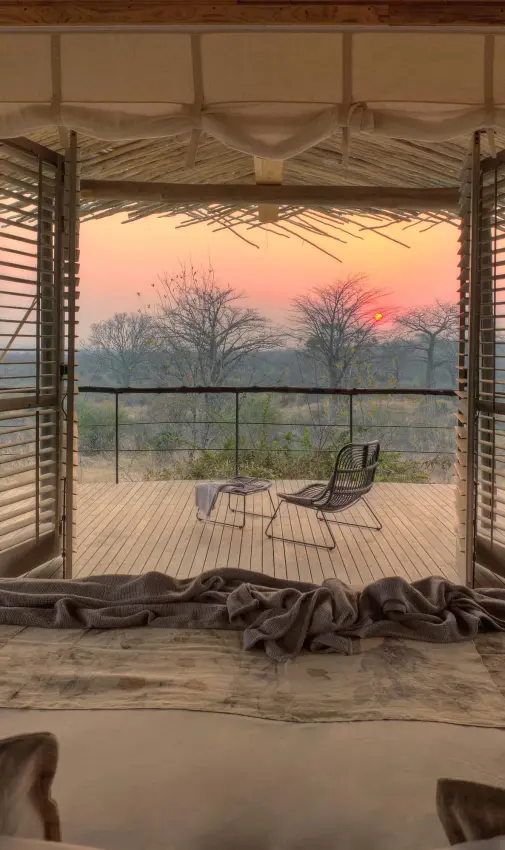
The seven tents run along the escarpment, each one open-sided to the drop and the light. Rooms one to three face the sunrise and four to six the sunset, so the changing light plays differently across each through the day. A two-storey family tent came later, sleeping two adults below and up to three children above, with its own plunge pool and deck. All of it is built of canvas and timber sourced close to hand, comfortable without being fussy, and never at the expense of the view.
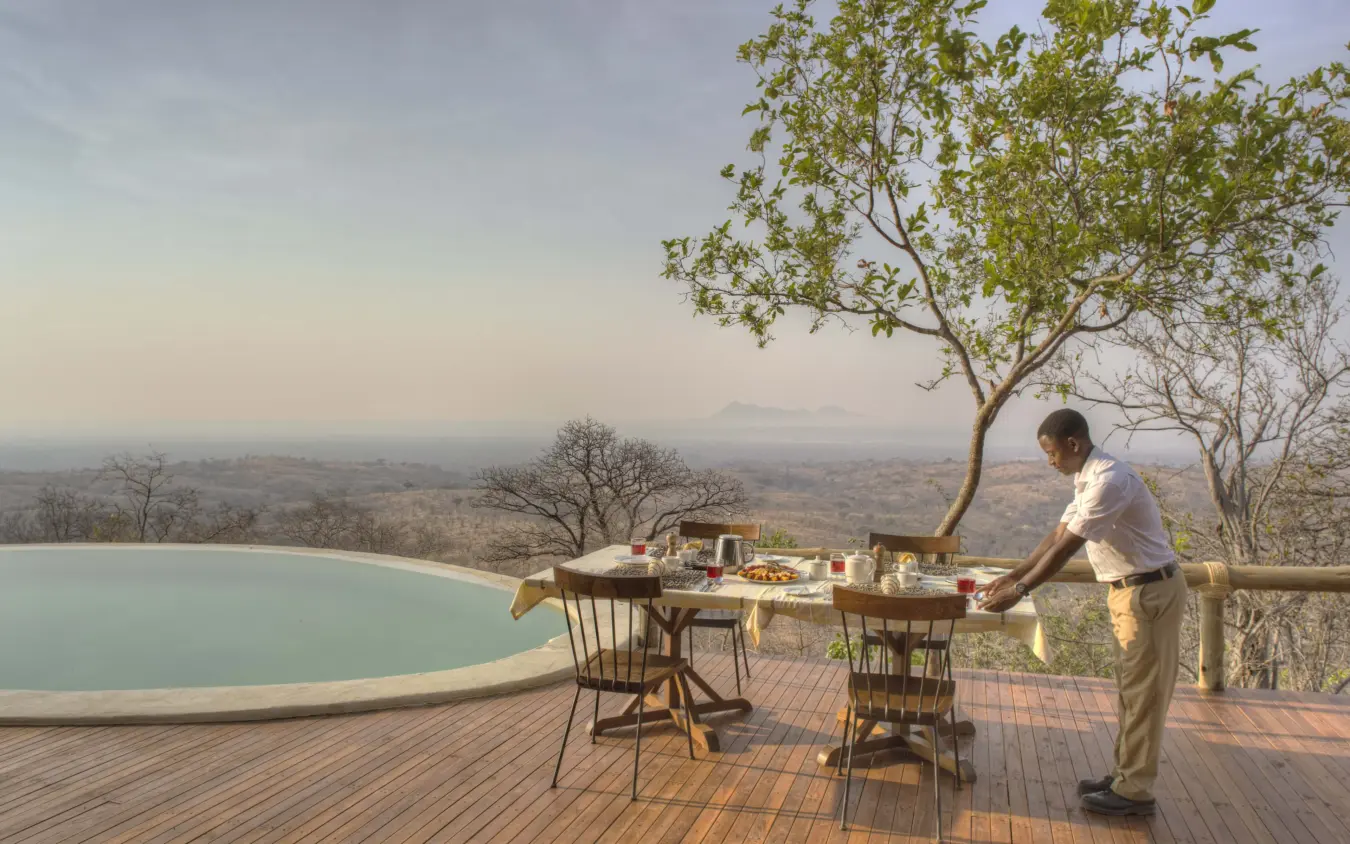
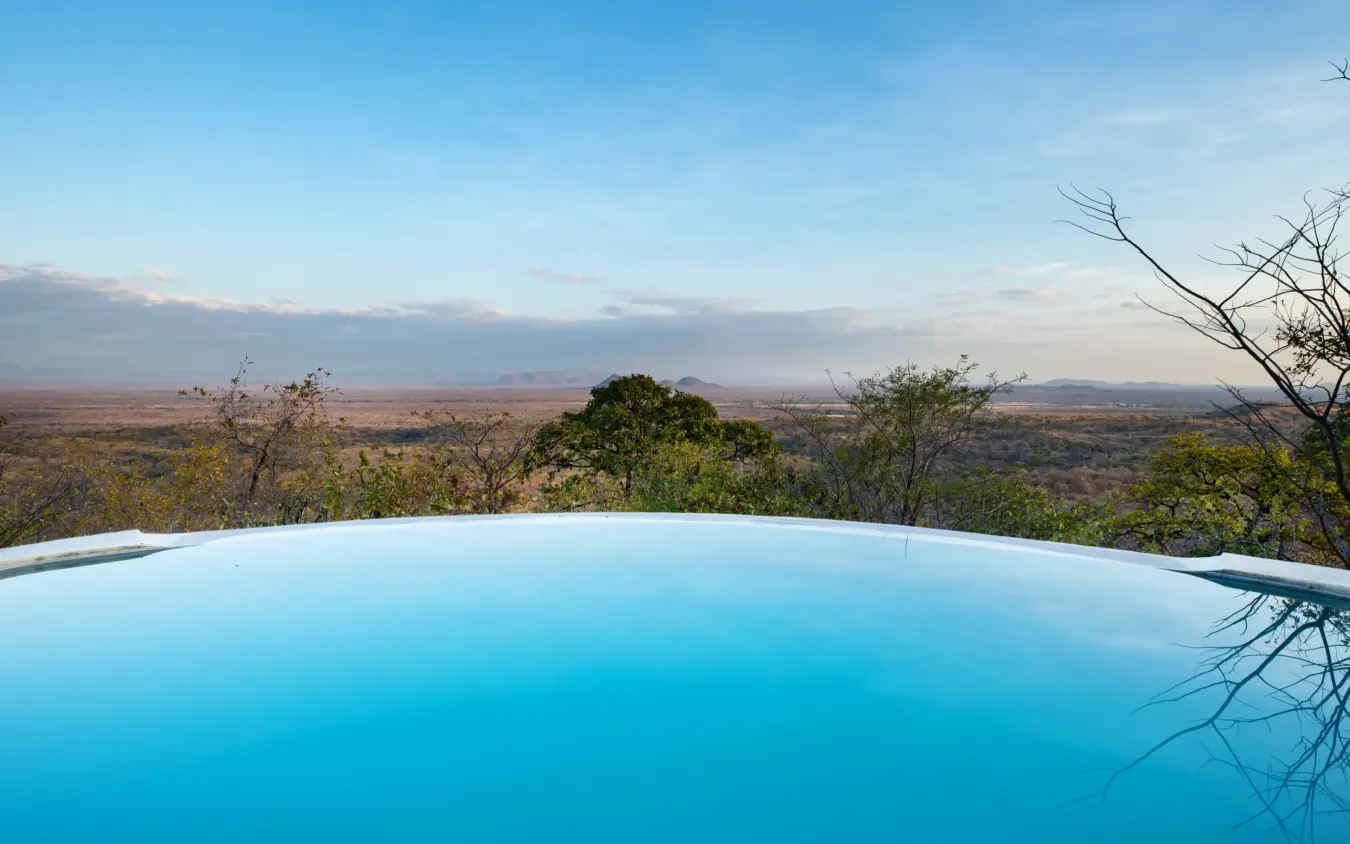
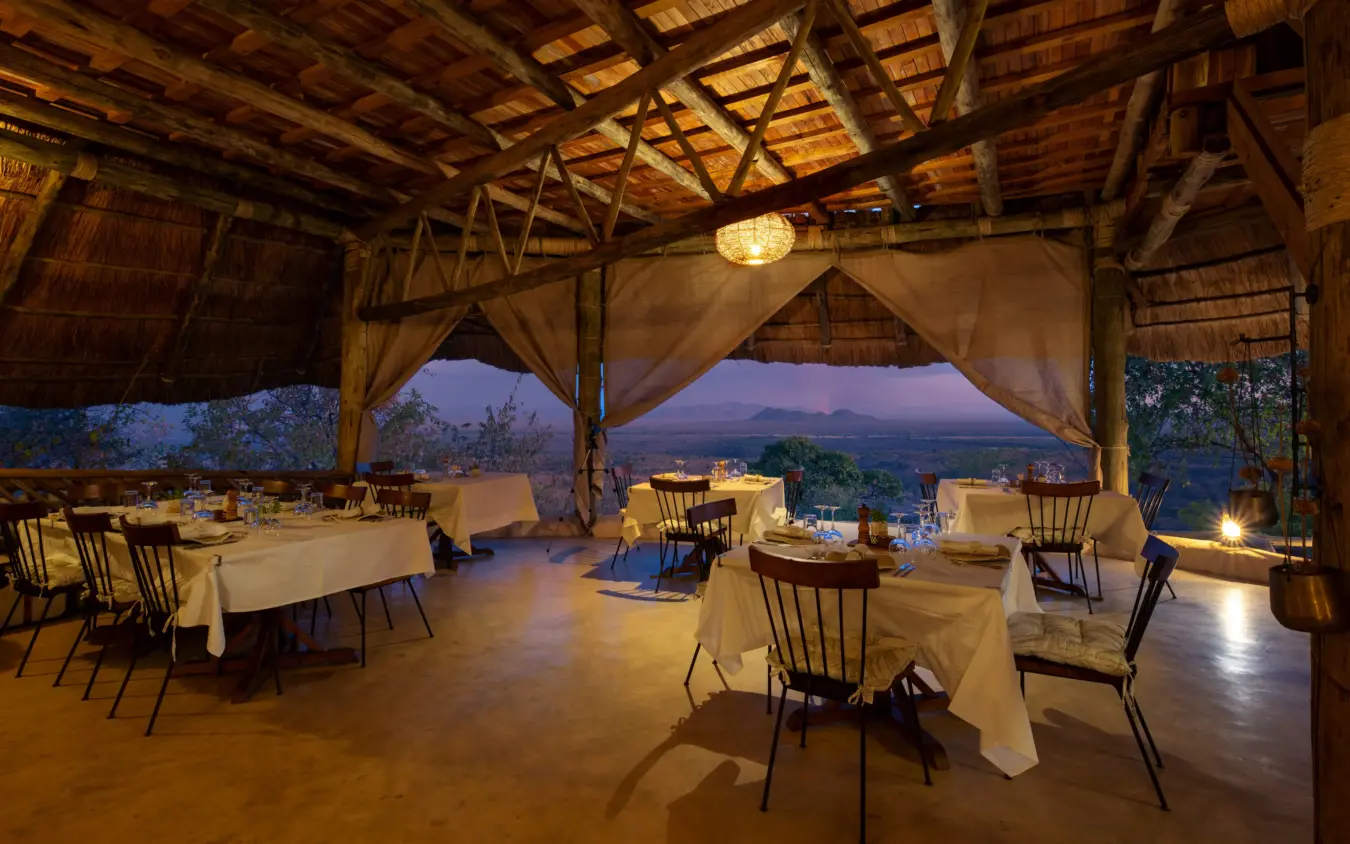
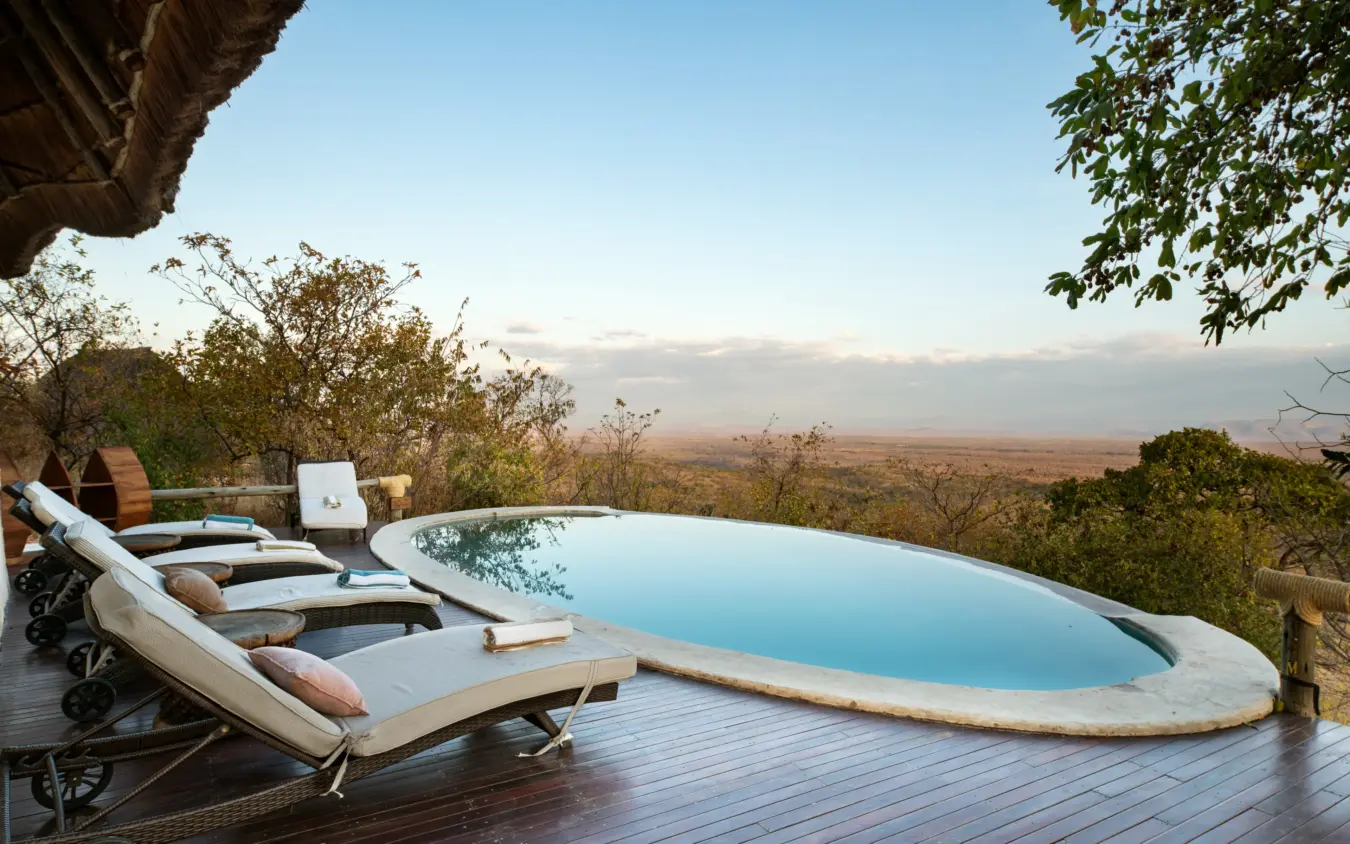
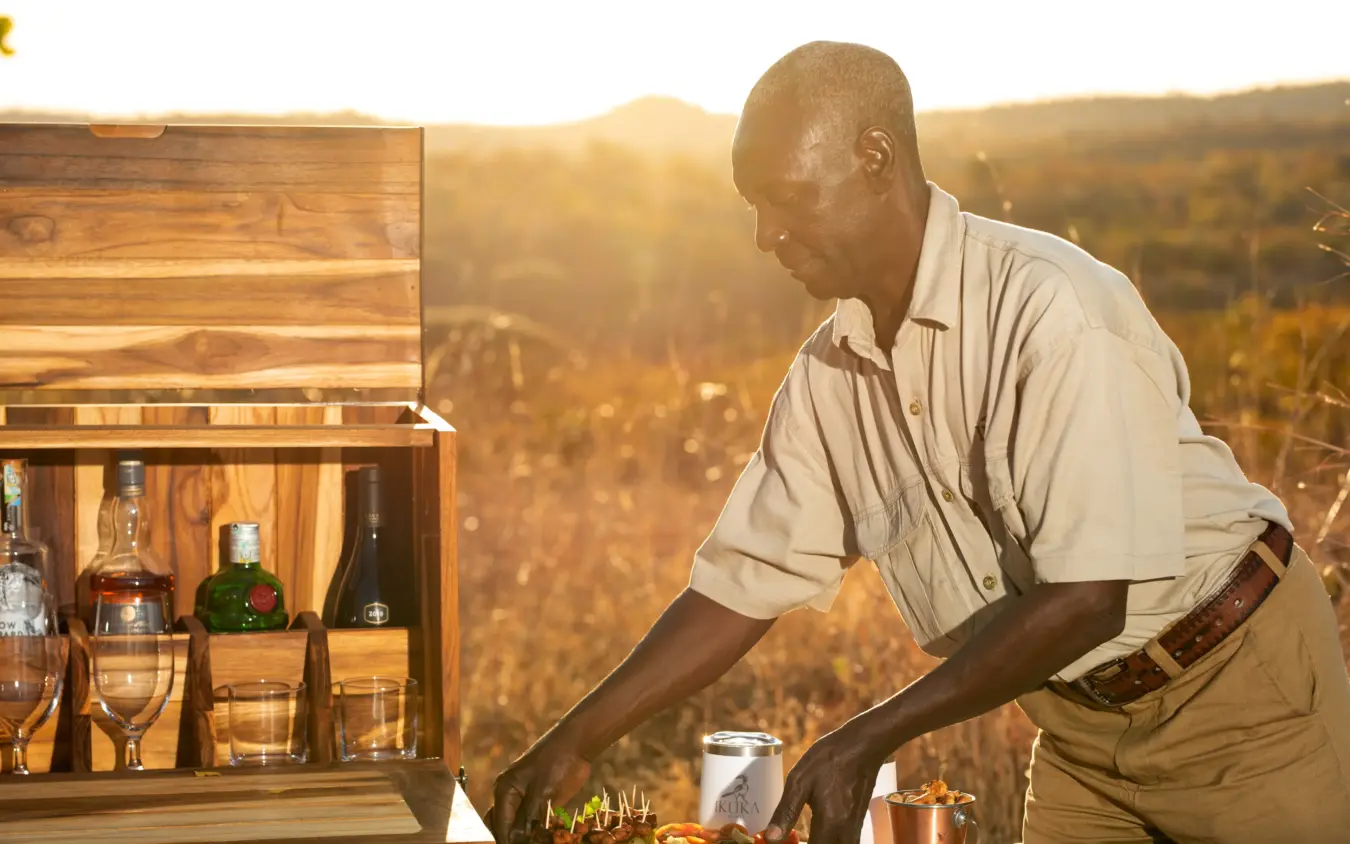
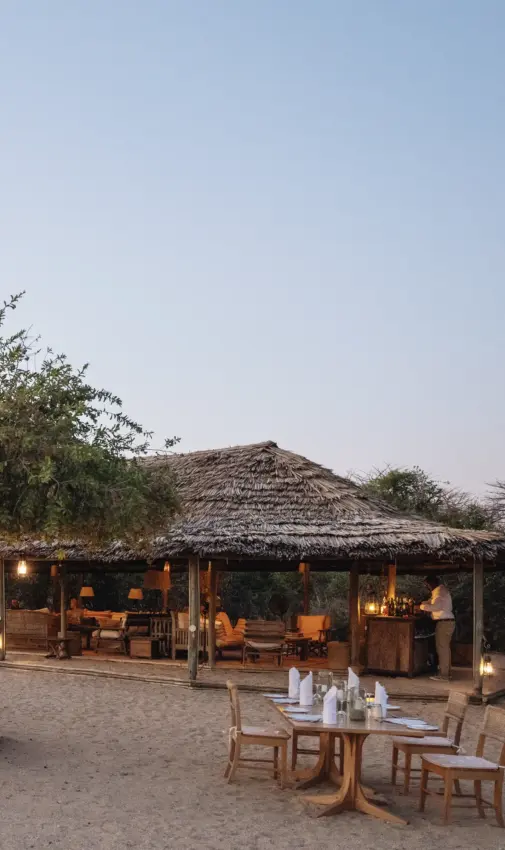
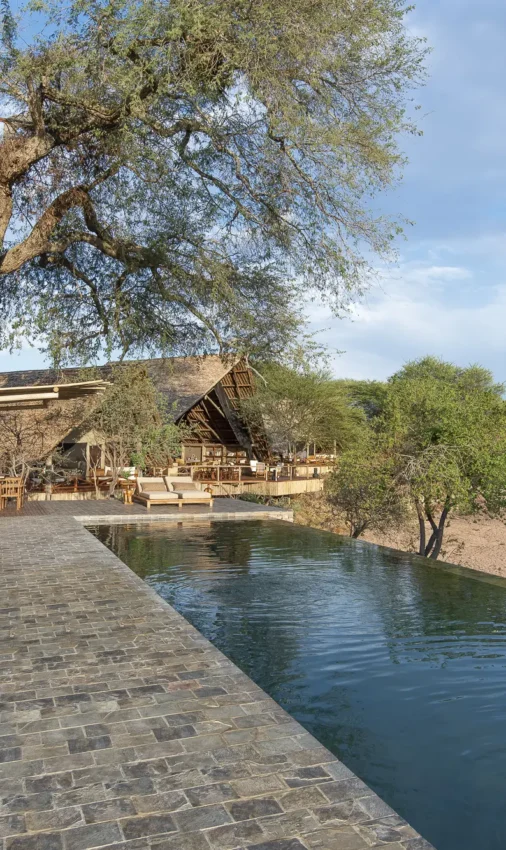
The main area rises over two storeys. Its lower floor gathers the leather-sofa lounge, the dining space and a well-stocked bar around the same wide outlook, with a telescope trained on the plains below. A steep set of stairs climbs to a second relaxation area and a small library. On the escarpment edge the pool is lit at night by paraffin lamps that give the camp a soft, old-fashioned safari feel after dark, when dining turns communal and scenic, often hosted by Mark and Chloe themselves and drawing on fresh ingredients across European and African cooking.
The seven tents run along the escarpment, each one open-sided to the drop and the light
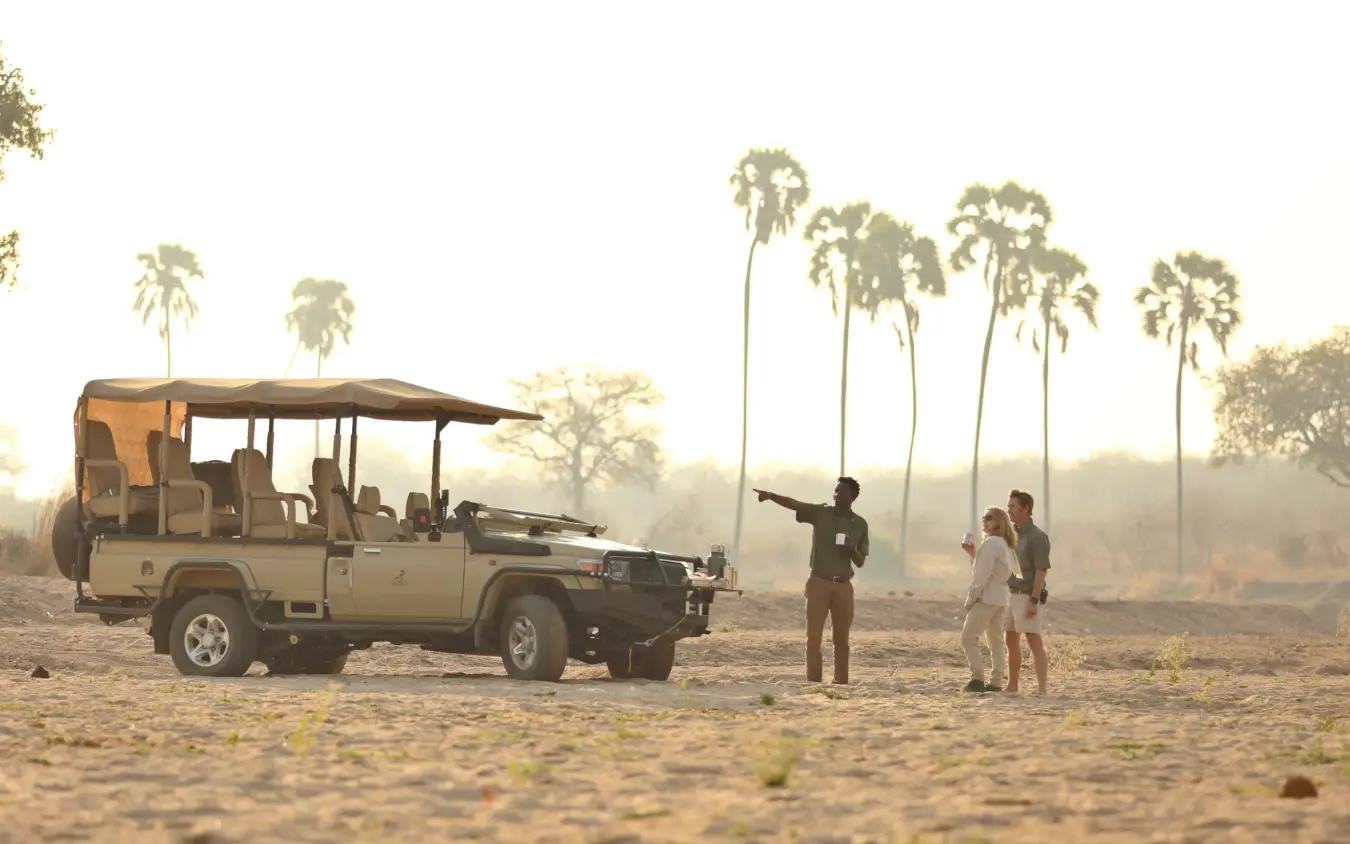
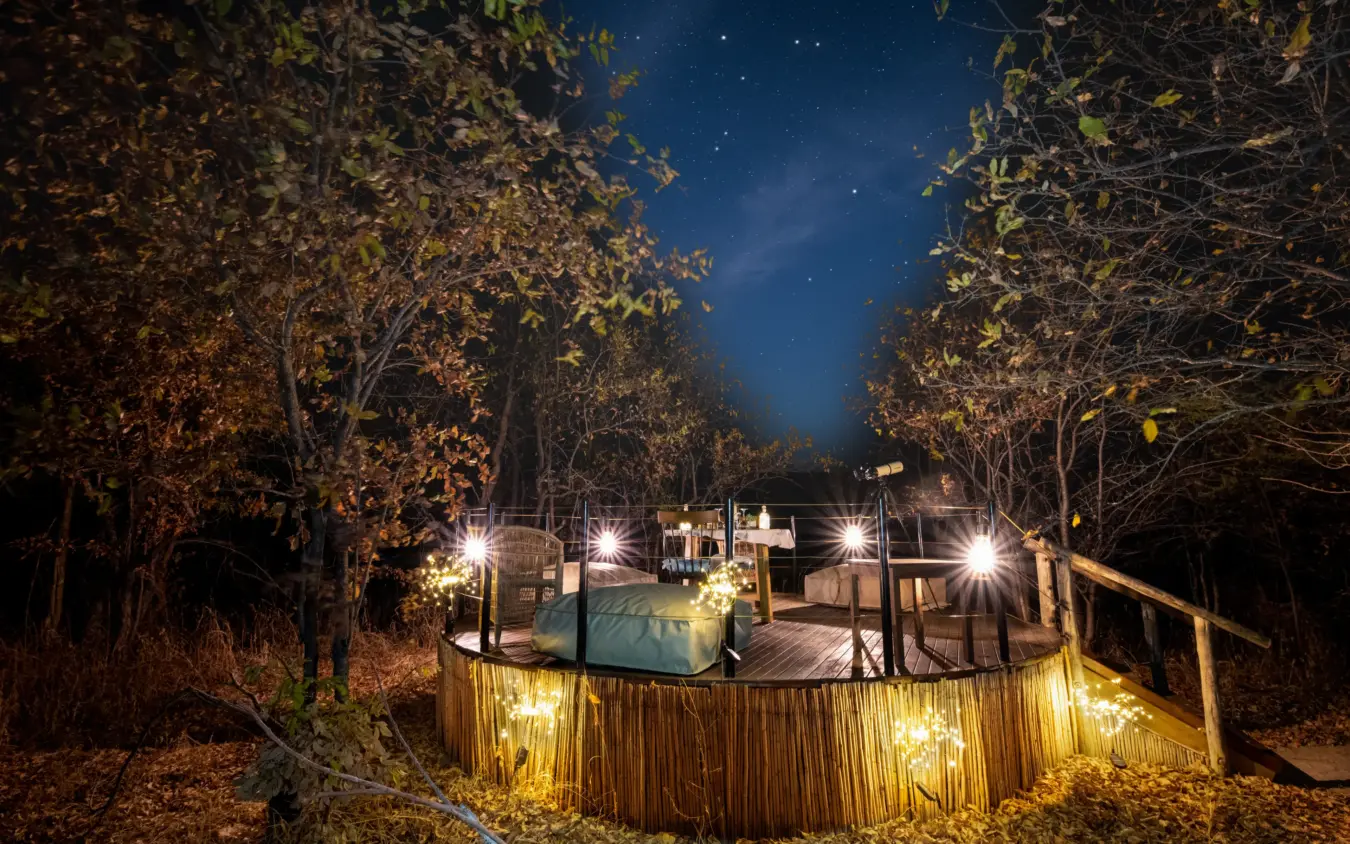
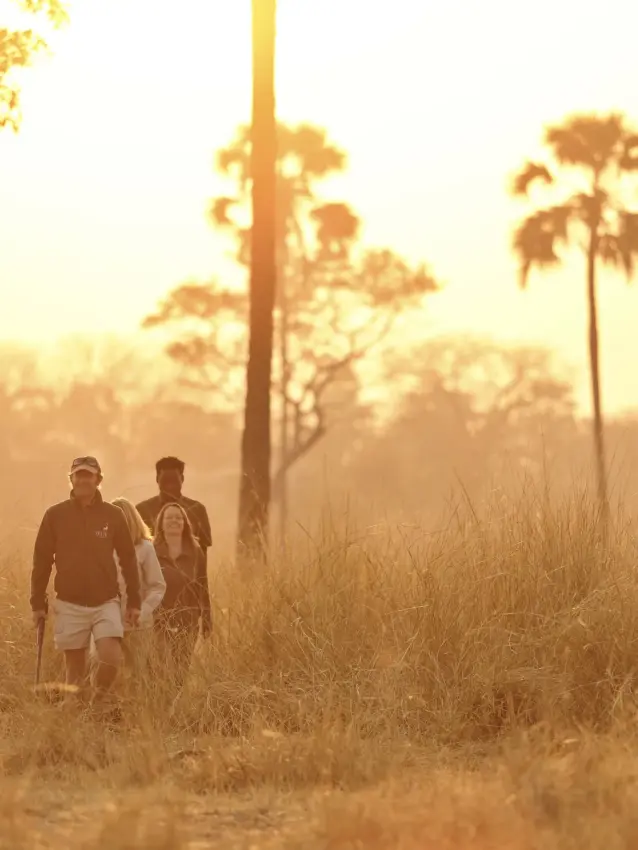
Game drives run in open 4×4 vehicles, while guided walking safaris explore the country near camp on foot alongside an armed guide, usually led by Mark himself. Ruaha’s size and low visitor numbers make room for real walking, and, by arrangement, for a night spent sleeping out under the stars. It is the kind of freedom a busier park could never offer, and it belongs to the place as much as any view from the deck.
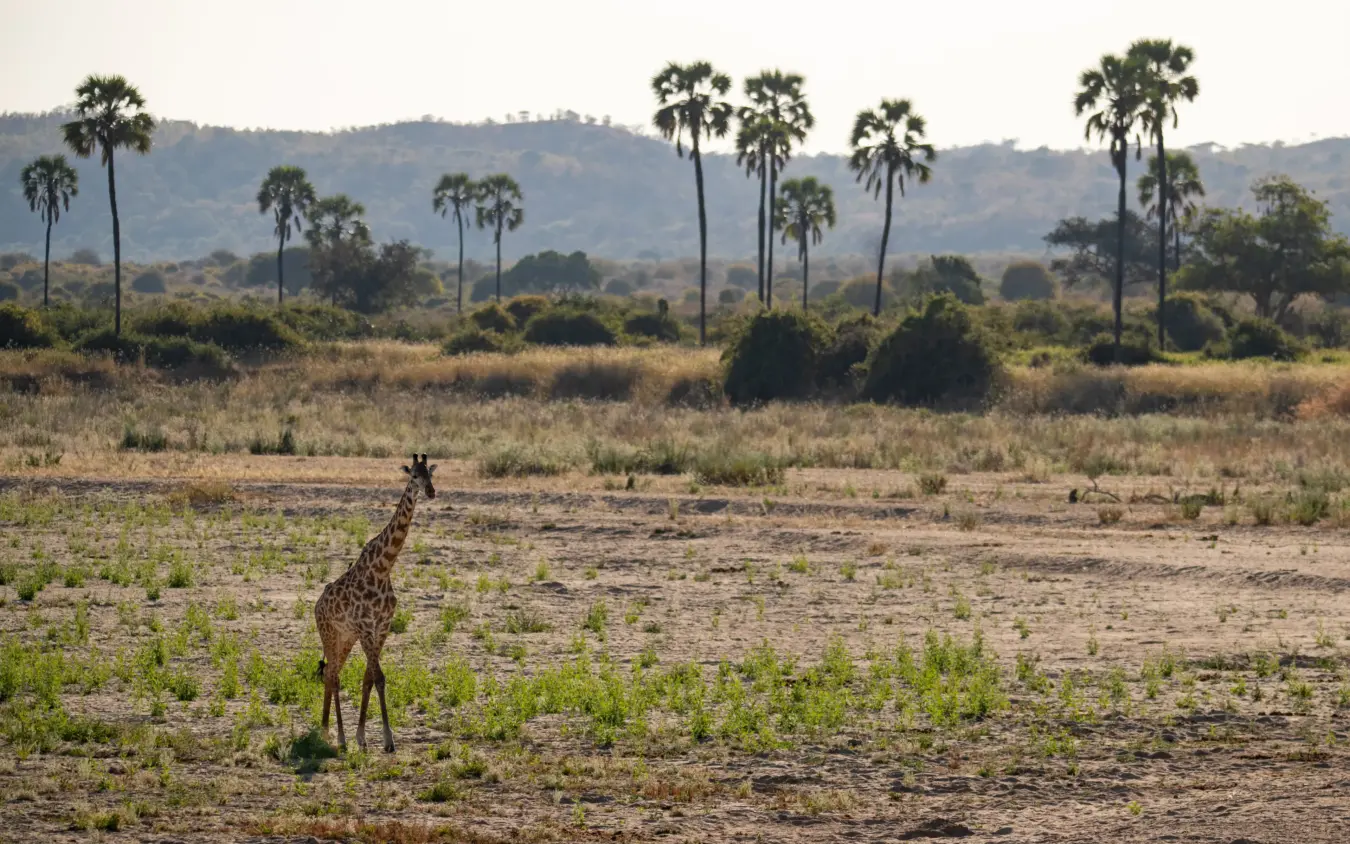
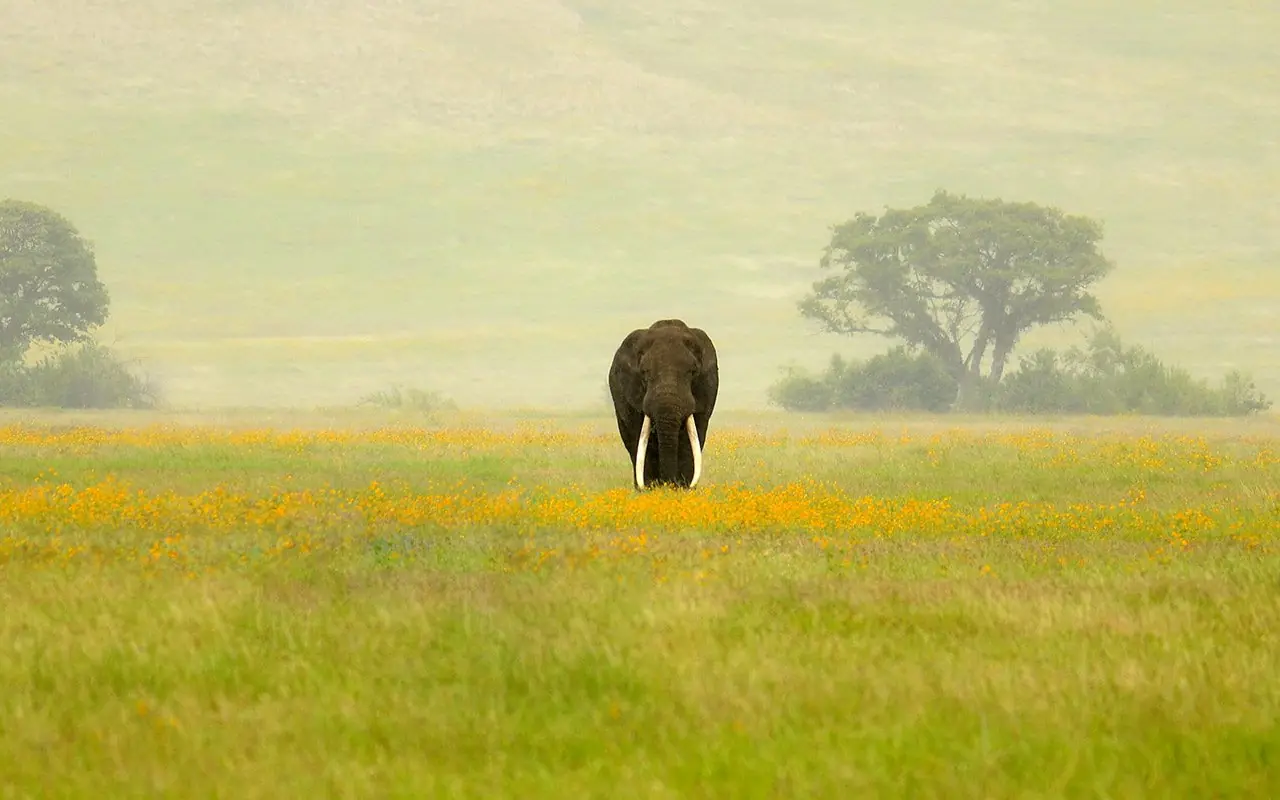
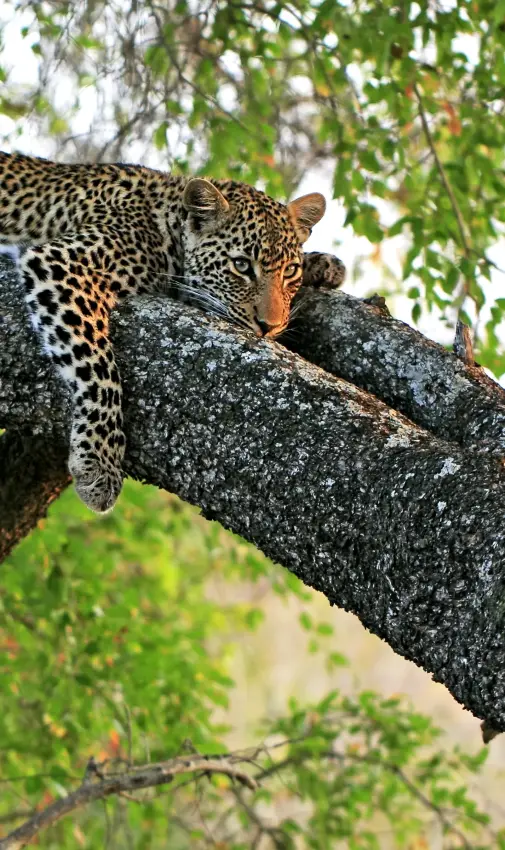
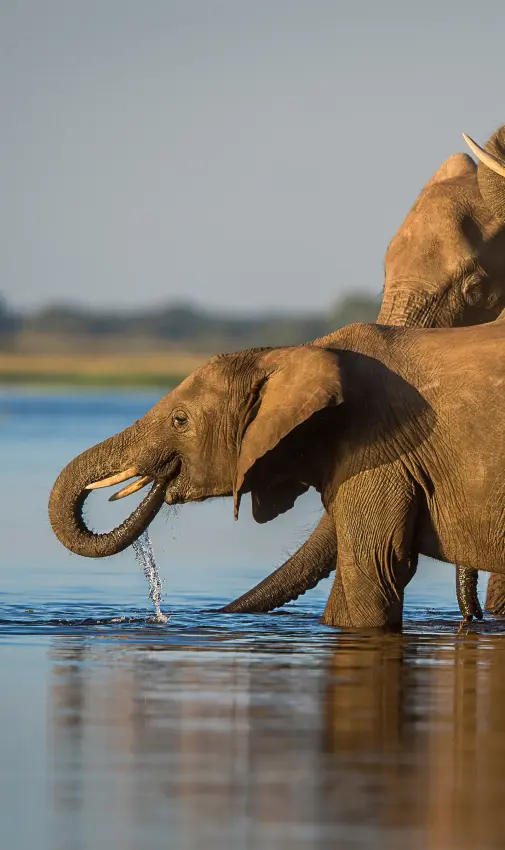
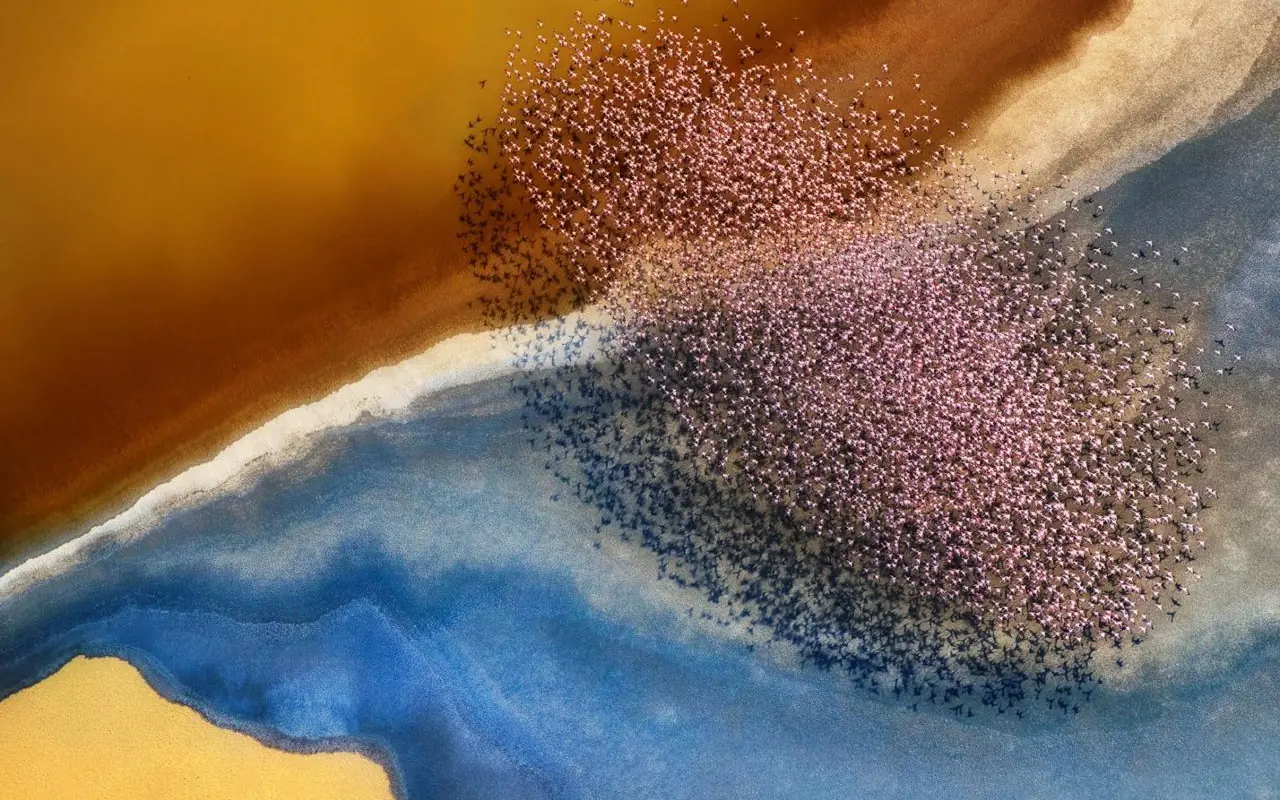
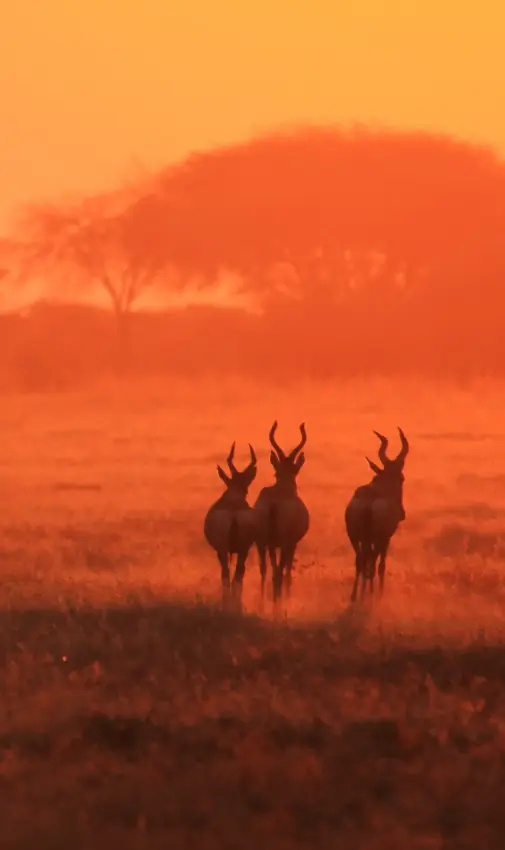
Inside a national park, the camp works within Tanzania National Parks rules rather than the wider freedoms of a private conservancy, which keeps the focus on daytime drives and walks in the game-rich Mwagusi area. The reward is the wildlife itself, the lion prides hunting the plains below and the elephant herds along the river, the birdlife carrying across the park. What Ikuka adds to that picture is the vantage point, and the hands-on attention of the two people who built it.