Camp

Usangu Expedition Camp

A six-tent research camp in the remote Usangu Wetlands of southern Ruaha, Tanzania, where guests join the fieldwork.

Country: Tanzania
Location: Usangu Wetlands, Ruaha National Park
Number of rooms: 6

Sixty kilometres to the next camp

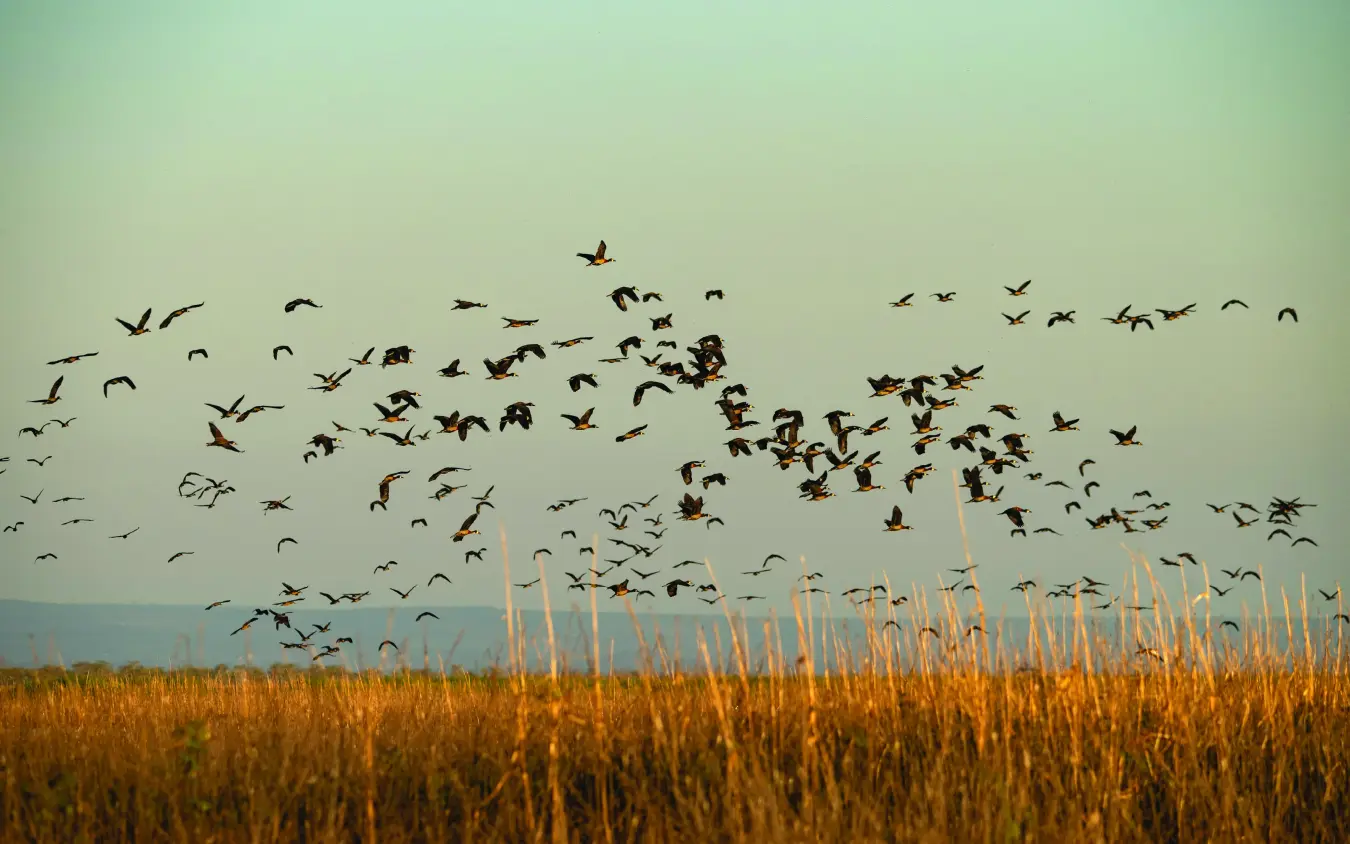
In the far southern reaches of Ruaha National Park, the Usangu Wetlands run out towards the horizon, and this is a place to work as much as to watch. For long stretches there is not another vehicle in sight. Guests place the camera traps themselves, follow collared predators across the floodplains and add to research that is still under way, with the nearest camp some 60 kilometres off.

For long stretches there is not another vehicle in sight.

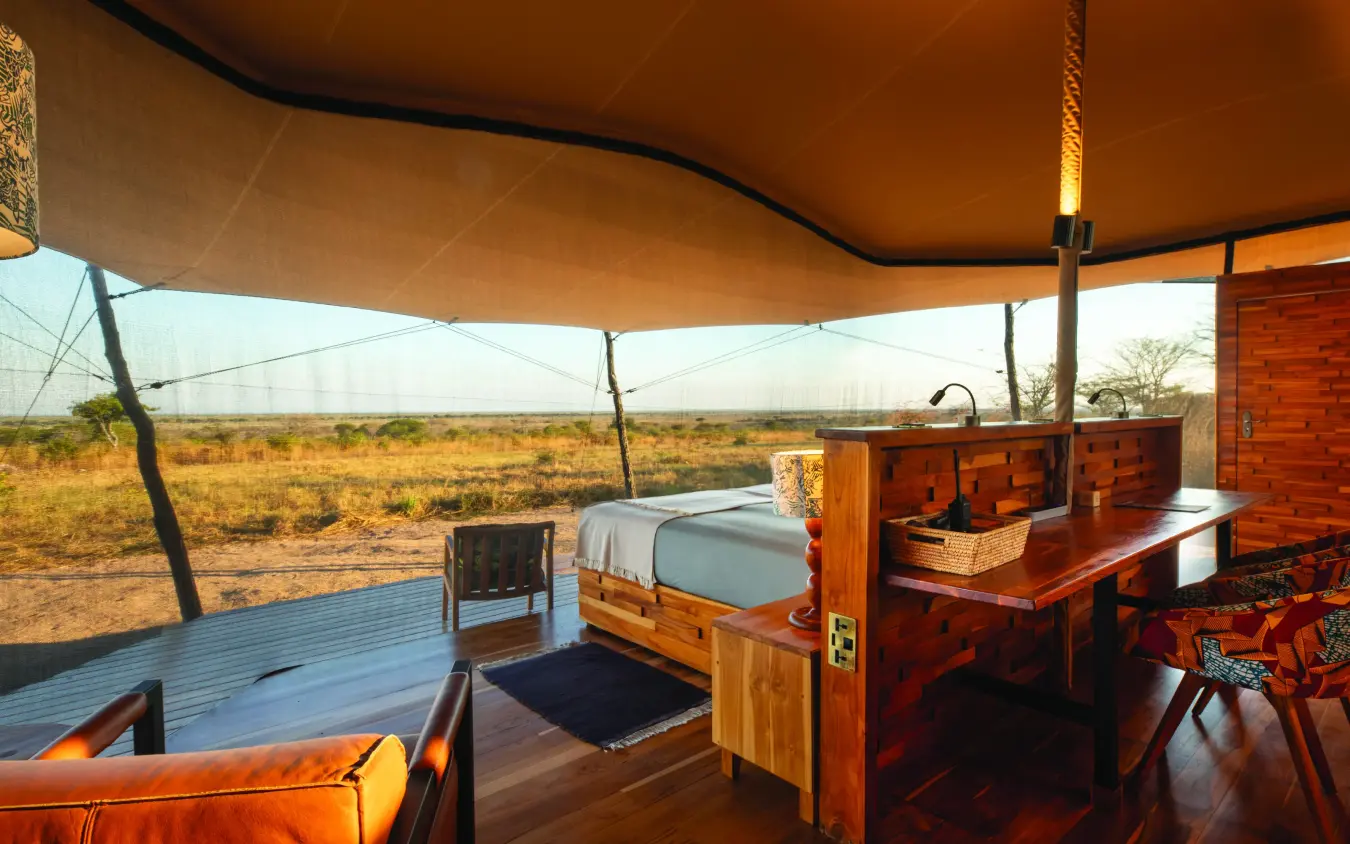
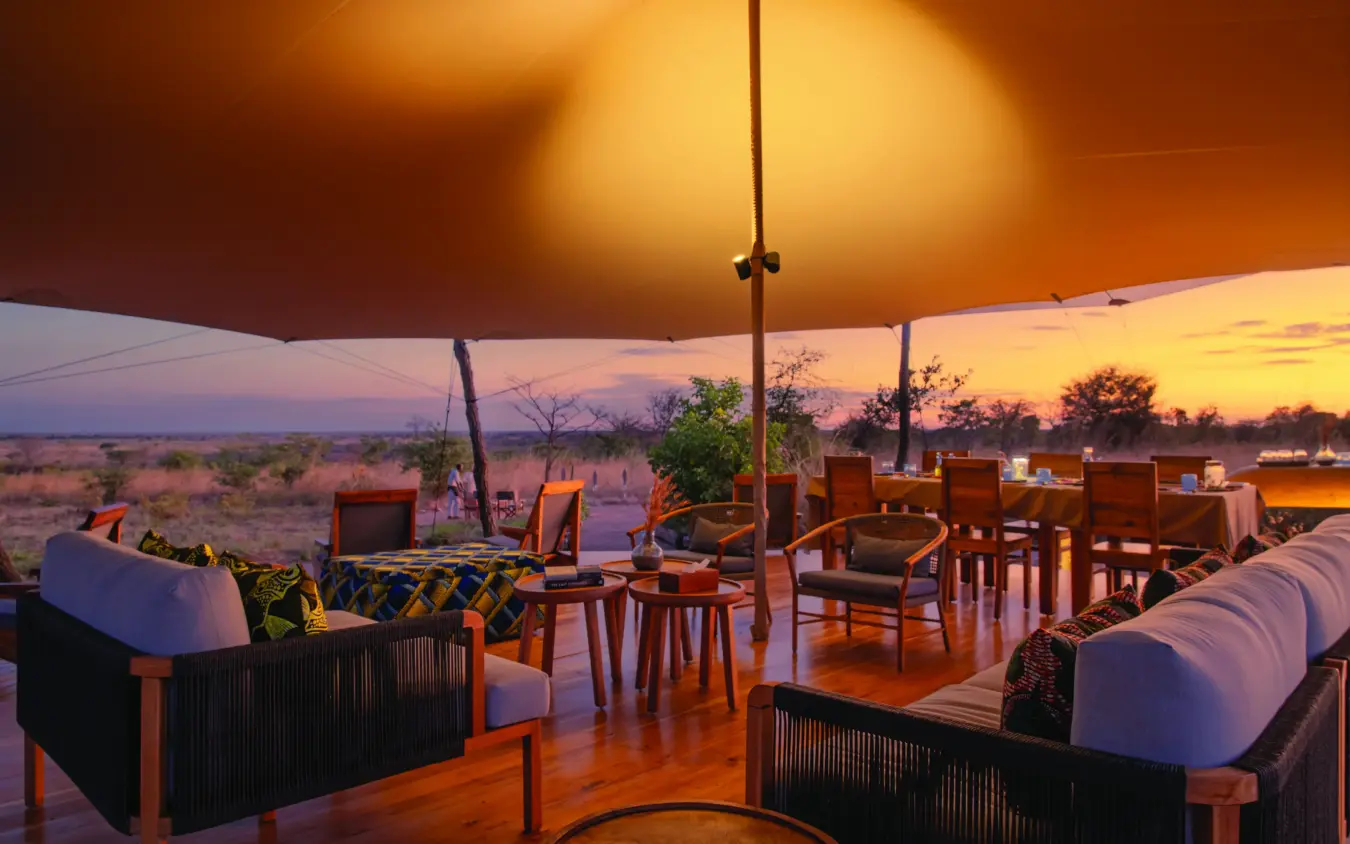
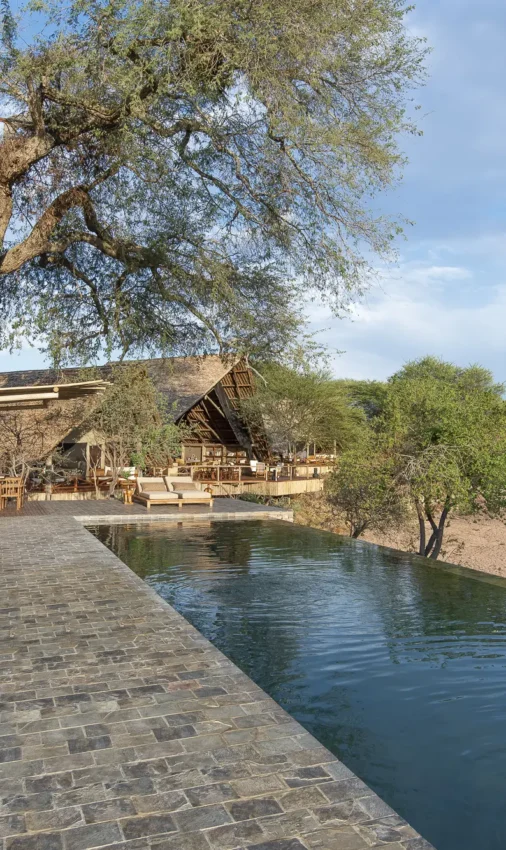
Miombo woodland rises behind the tents, which stand just beyond the seasonal high-water mark and look out over floodplains that turn from flooded channel to open grass as the dry months advance. The canvas and mesh is pitched on wooden decks, the power comes off the sun, and the scale is kept deliberately small. The feel is expedition rather than lodge.

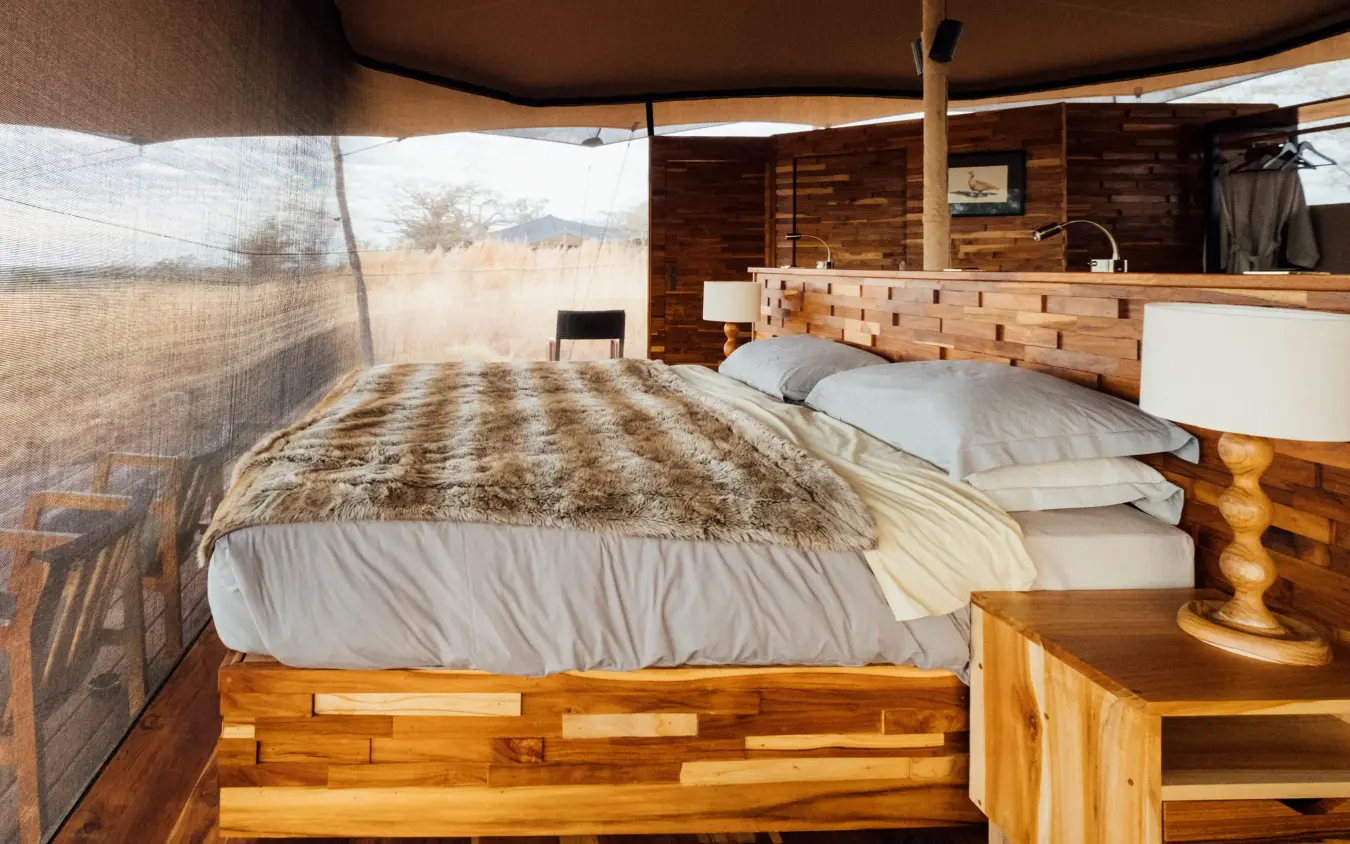
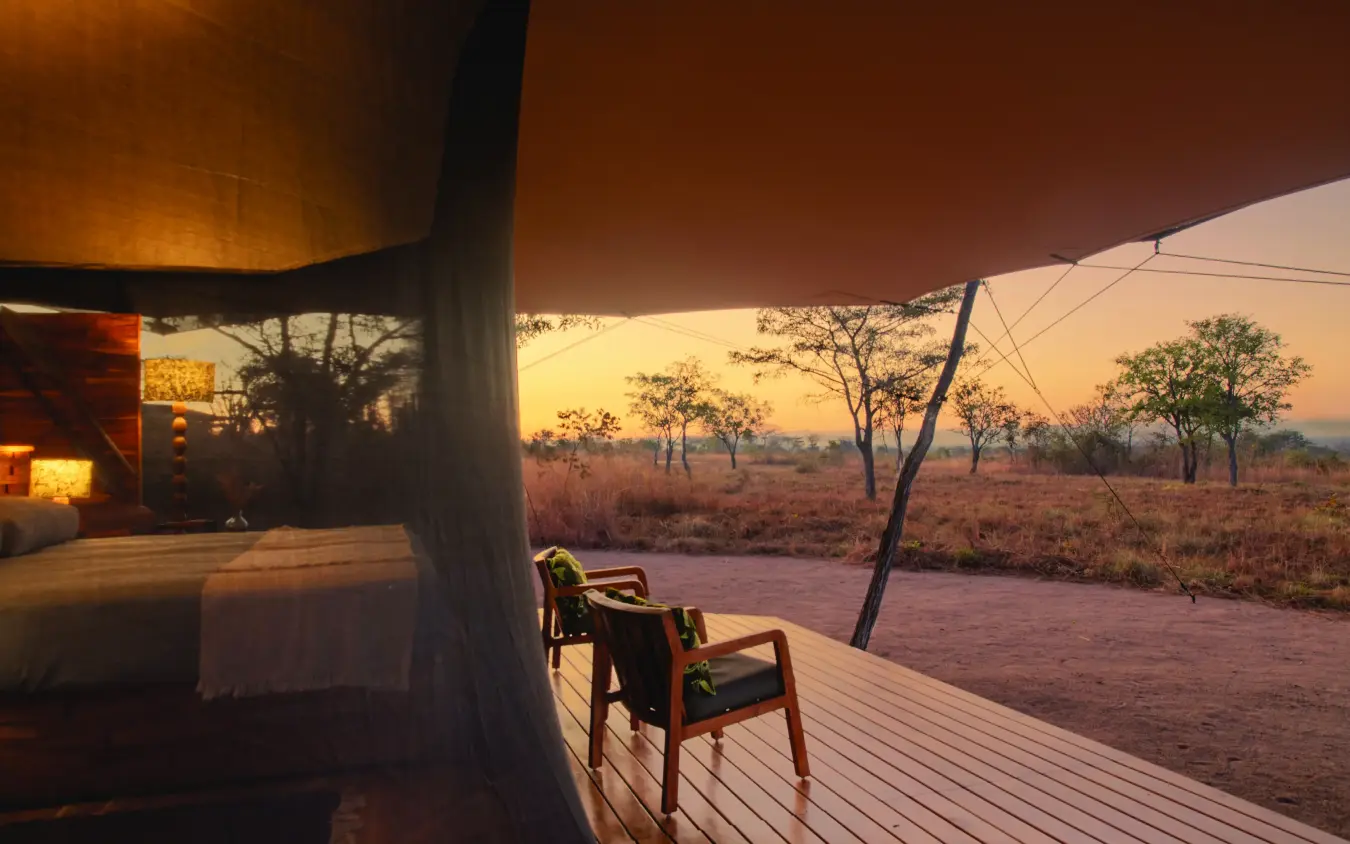
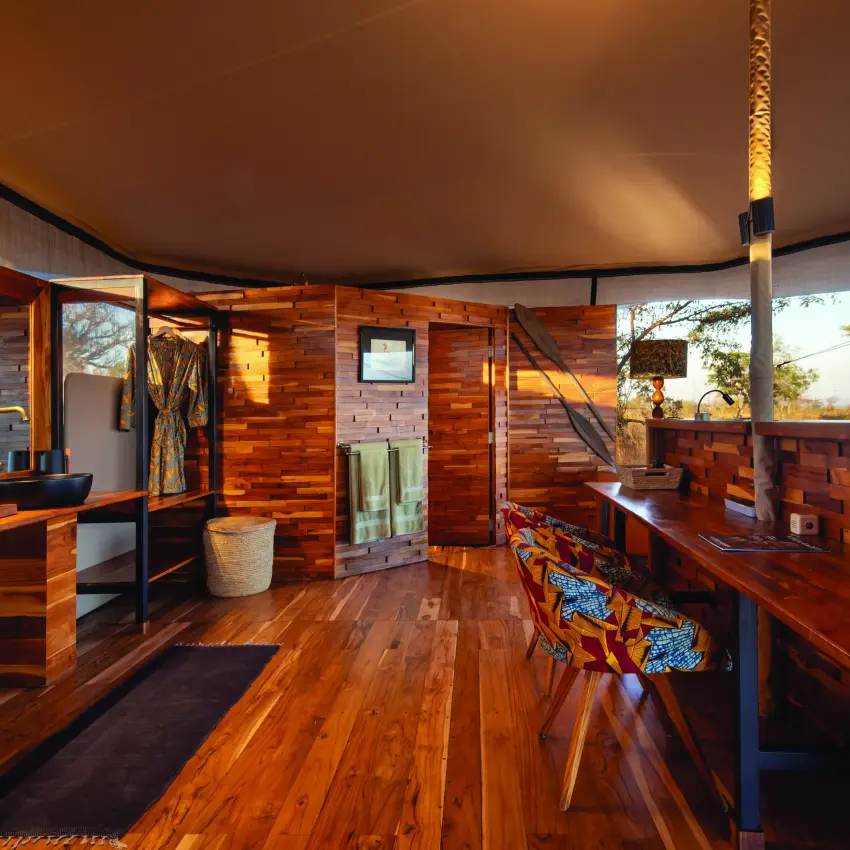
Canvas safari tent bedroom with savanna views through mesh window, Usangu Expedition Camp, Ruaha National Park, Tanzania
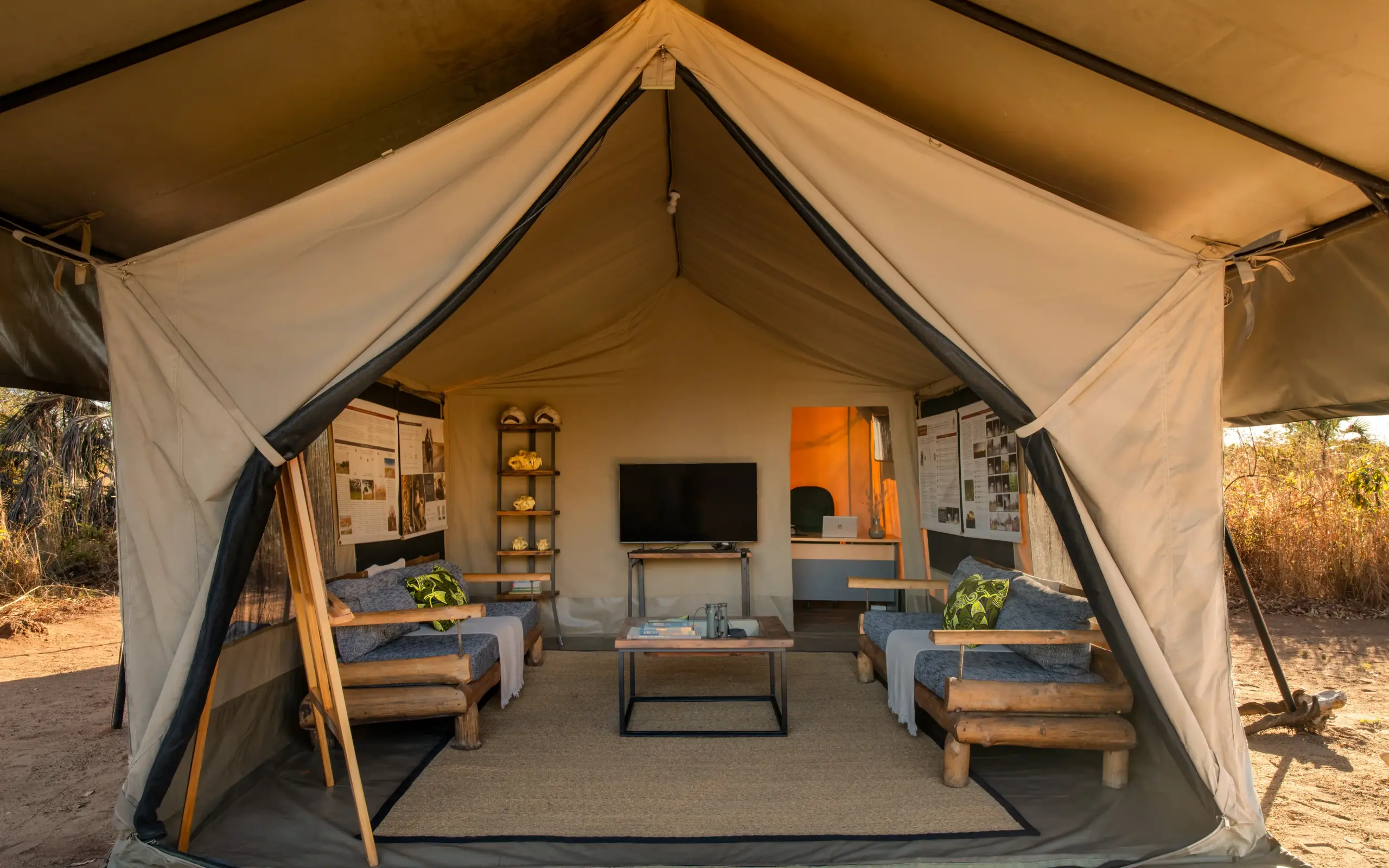
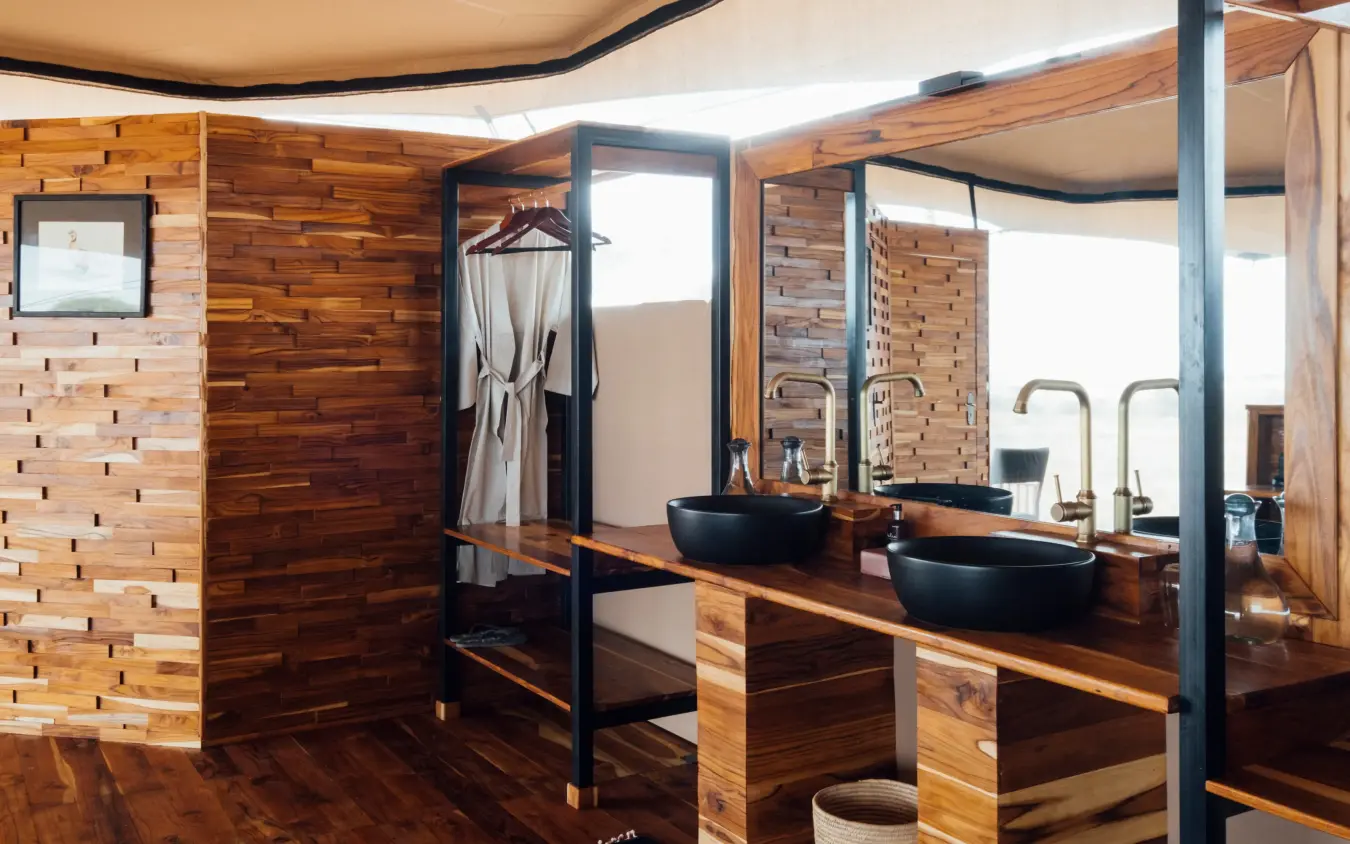
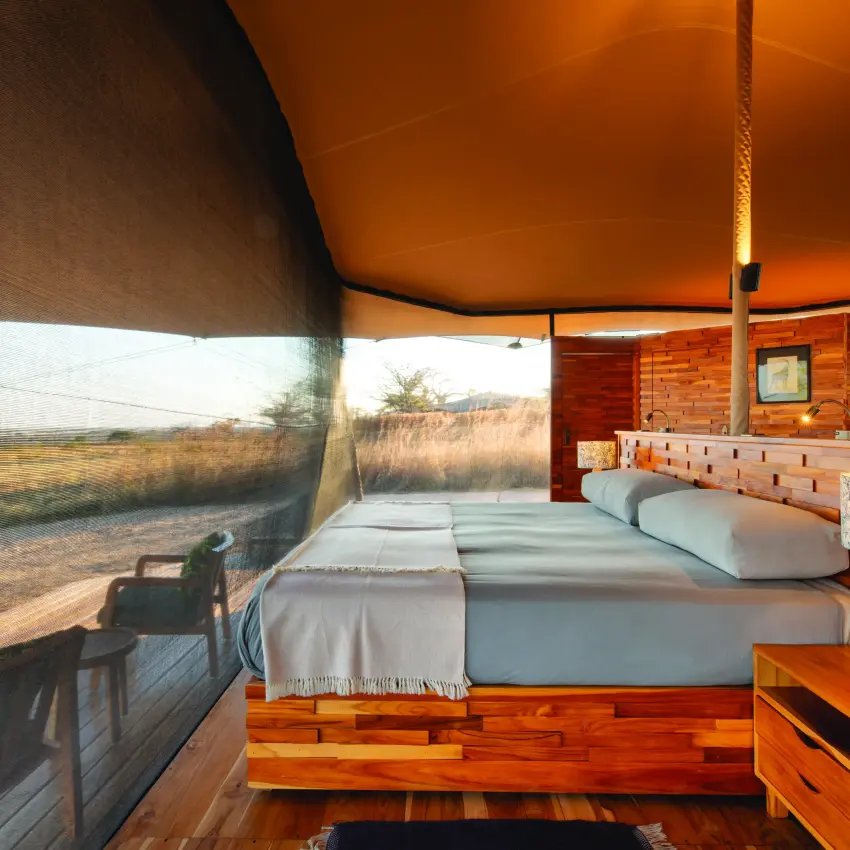
Interior of safari lodge with wooden furnishings and open views, Usangu Expedition Camp, Ruaha National Park, Tanzania

Each of the six tents keeps its beds and chairs at the front, behind a mesh frontage that opens onto the wetlands, while an internal screen divides the bedroom from an en-suite bathroom with twin basins at the rear. The veranda is angled for morning light and evening drinks. The interiors are simple and functional, built around the view and not the fittings, so nothing competes with the plain beyond.

The hyena calls and lions sound in the distance.

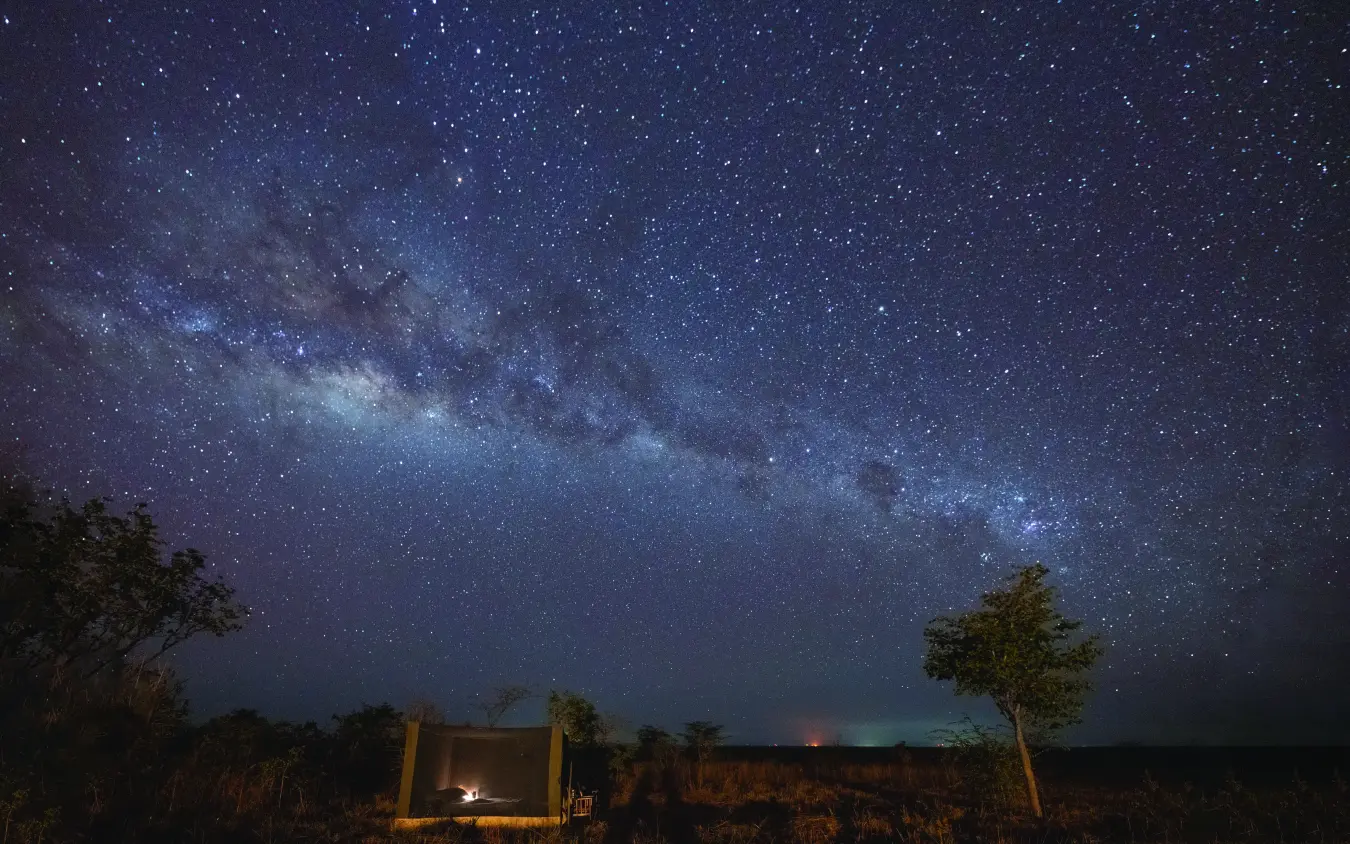
A short walk from each tent, in its own clearing, stands a Star Cube, an open-air net tent for sleeping out beneath the stars. The hyena calls and lions sound in the distance. The wash of insects never quite stops, and the bush closes in around you until dawn arrives unfiltered over the floodplain, with the way back to the main tent kept short and easy.

Open-air bedroom tent with savanna landscape view, Usangu Expedition Camp, Ruaha National Park, Tanzania 01

accommodation

Six Octagonal Tents on Wooden Decks

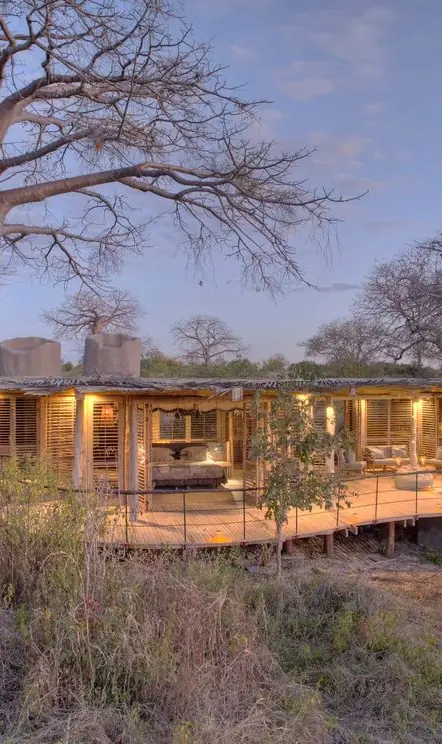
Six octagonal safari tents, each raised on a wooden deck with a private veranda facing the wetlands. An internal screen divides the double or twin bedroom, mesh-fronted and set with chairs, from the en-suite bathroom behind it, with twin basins and a shower. A separate open-air Star Cube near each tent allows sleep-outs under the stars.

Safari vehicle with passengers observing wildlife herd in savanna, Usangu Expedition Camp, Ruaha National Park, Tanzania 02

activities

Thermal-Imaging Night Drives and Camera-Trap Deployment

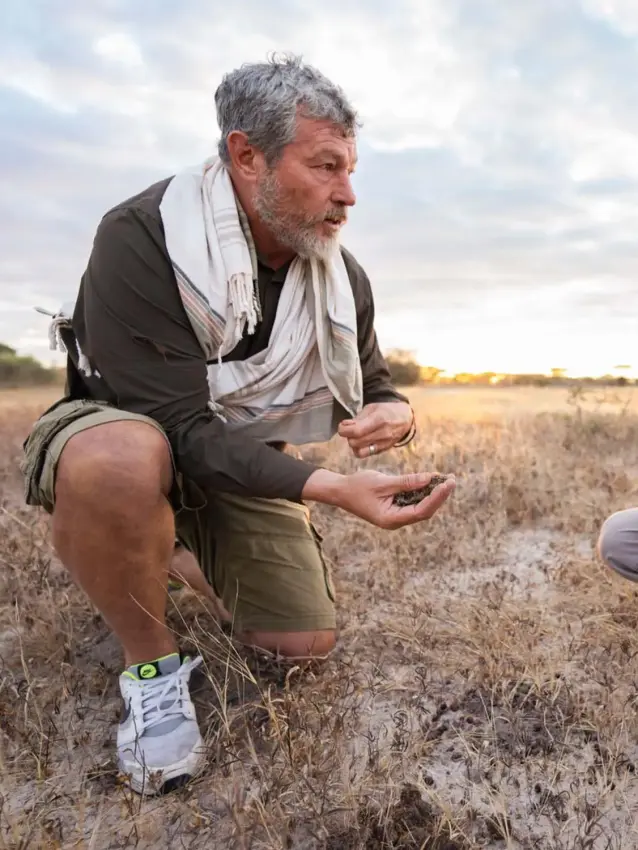
Game drives with a private vehicle and guide, plus thermal-imaging night drives within the park. Guided walking safaris cross floodplains and miombo woodland, and boating explores the seasonal channels when water levels allow. Guests deploy camera traps, join telemetry tracking and visit the Douglas Bell Eco Research Station.

Guide using binoculars to observe wildlife at sunset, Usangu Expedition Camp, Ruaha National Park, Tanzania 03

conservation

Usangu Wetlands Biodiversity Assessment with Tanzania Wildlife Research Institute

The camp partners with the Tanzania Wildlife Research Institute and the national parks authority on a biodiversity assessment of the Usangu Wetlands, run through the Douglas Bell Eco Research Station. Guest camera-trap images and tracking data feed predator studies. A per-night conservation contribution supports research and anti-poaching work in the area.

ready to get started?

Get in touch and let’s start the conversation. An initial consultation helps us understand what you’re looking for, whether that’s specific experiences, luxury touches, or marking a special occasion, and from there we’ll guide you through what’s possible so you can decide if we’re the right fit.

Alternative accommodation in ruaha national park

frequently asked questions

This is the deep end of Ruaha, and the journey reflects it. You fly into Dar es Salaam, take a light aircraft into the park, a scheduled run of up to two and a half hours with stops, and then drive about two hours from Jongomero airstrip south into the wetlands. We plan the day so the legs join up, and a private charter, typically a Cessna Caravan or Pilatus PC-12, can shorten the flying considerably.

Soft bags only on the light aircraft, around 15 to 20kg per person depending on the airline, confirmed with you before you pack. The long transfer is itself a game drive through country very few people cross.

Yes. The Usangu wetlands sit well below the 1,800 metre line that both the CDC and the UK's official travel health advice use for malaria risk in Tanzania, and standing water is mosquito country by definition, so antimalarial tablets are recommended without hesitation.

The tents are mesh-fronted and netted, which helps at night. Confirm the current advice with a travel clinic or your doctor before you travel, and keep arms and legs covered once the sun drops.

The camp takes guests aged twelve and over. Younger children are not accepted, which reflects what the place is: a working research camp in genuinely wild country, with long drives, walking, boating and nights that run late around the fire.

For a twelve-year-old and up with real curiosity it is arguably the best camp in Tanzania, since the camera traps, tracking and researchers turn a safari into something they take part in. Tell us who is coming and we will say honestly whether it fits.
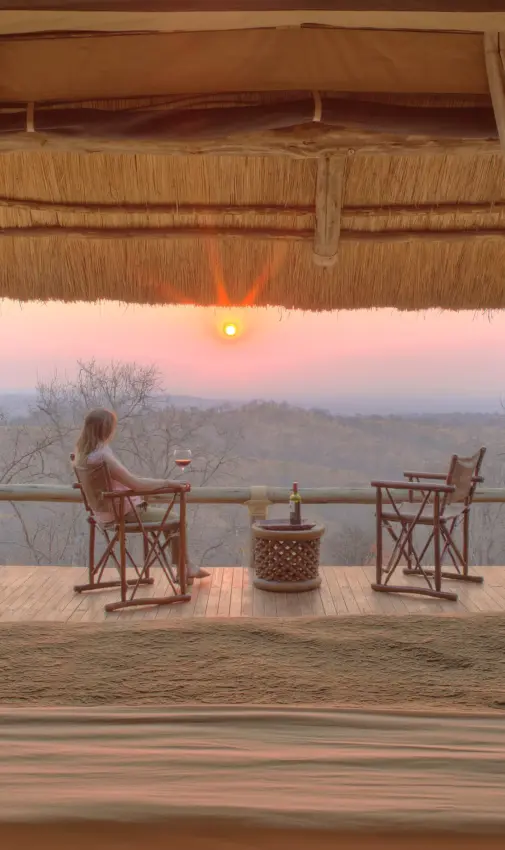
The camp runs June to November only, closing for the wet season when the floodplains drown the tracks. Early in the season the channels still hold water and the boating is at its best; by September and October the plains have dried to open grassland, the game concentrates, and the heat builds toward the rains.

Every week of that window works; the choice is really water against dryness. We suggest at least three nights, both because of the journey in and because the research activities need time to come back with results.

June and July bring surprisingly crisp mornings out on the open floodplains, with hot clear days; by October and November the heat is serious and the first storms start to build. It is a camp lived largely outdoors, so pack for sun and dust more than anything else.

Neutral colours, a warm layer for dawn starts, strong sun protection and closed shoes for walking are the core. Binoculars and a camera with a long lens repay themselves here more than at most camps.

The camp keeps a wifi connection running, satellite-fed and best used lightly, and there is effectively no phone signal in the wetlands, whose nearest neighbour is some sixty kilometres away.

The honest advice is to arrive expecting to disappear for a few days. If you need a reliable line out for work or family, tell us before booking and we will confirm exactly what the camp can support.

rated five stars by our clients

other areas in tanzania

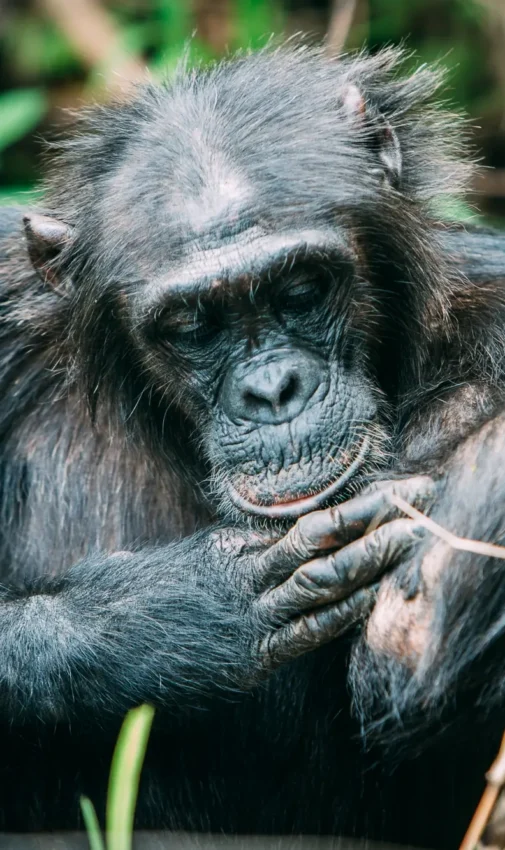
Chimpanzee holding branch while foraging in forest, Mahale Mountains, Tanzania 01

Mahale Mountains

Guests relax in chairs by river with child wading, Lake Manyara, Tanzania 02

Lake Manyara

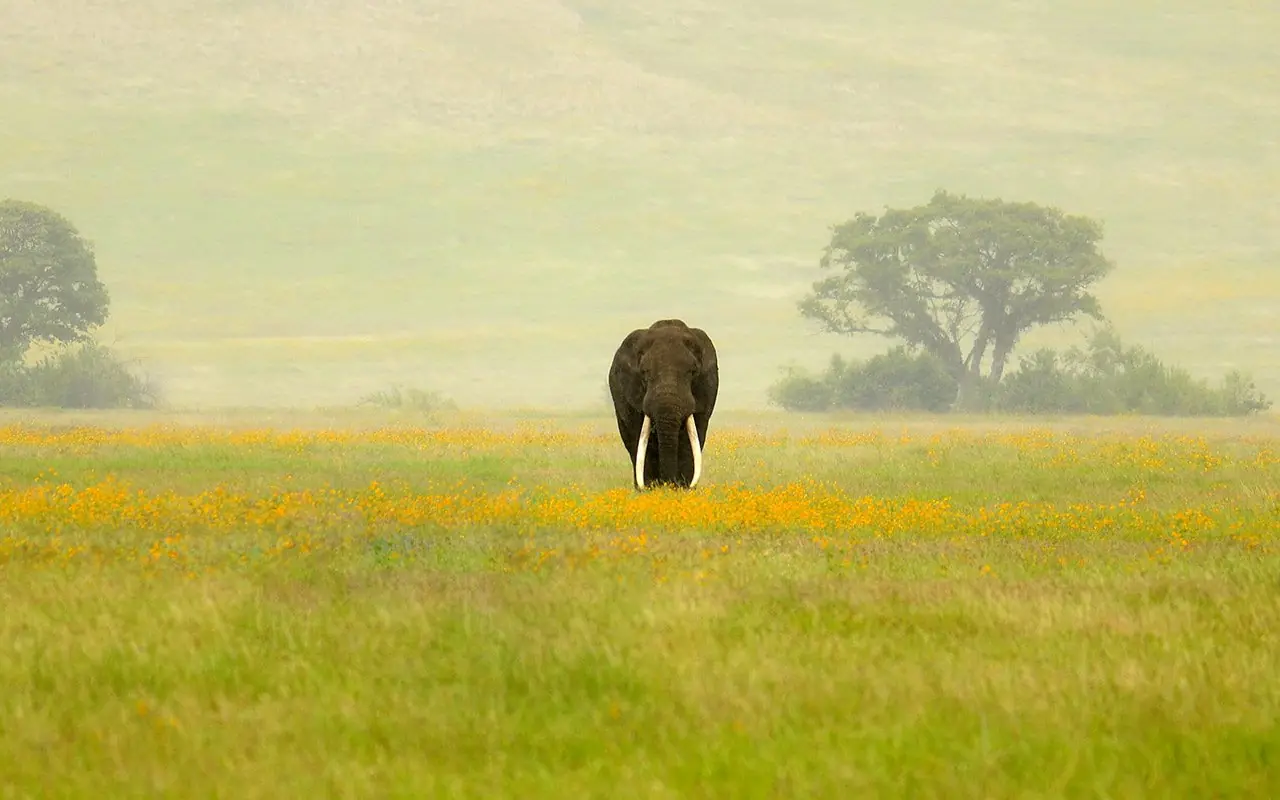
Elephant walking alone across golden savanna grassland 03

Ngorongoro Crater

Silhouetted herd of wildebeest in dusty savanna landscape 04

Serengeti National Park

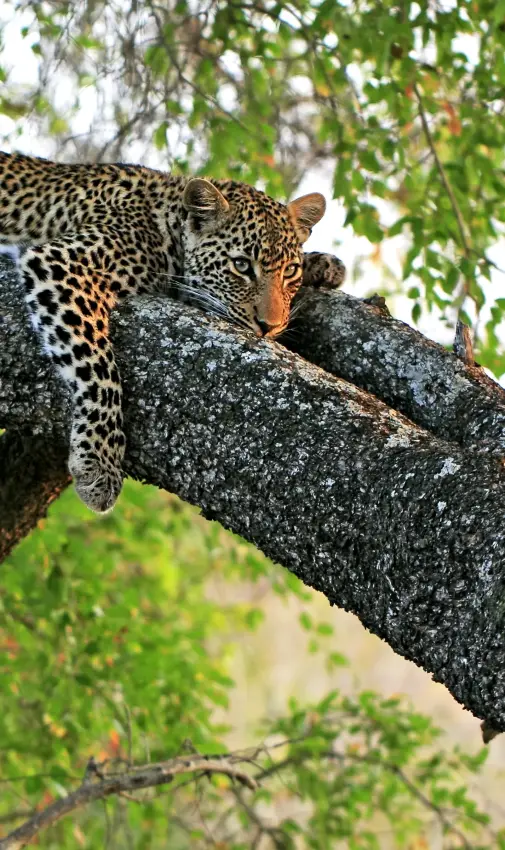
Leopard resting on tree branch surrounded by green foliage 05

Tarangire National Park

Hippopotamuses in water with heads above surface 06

Katavi National Park

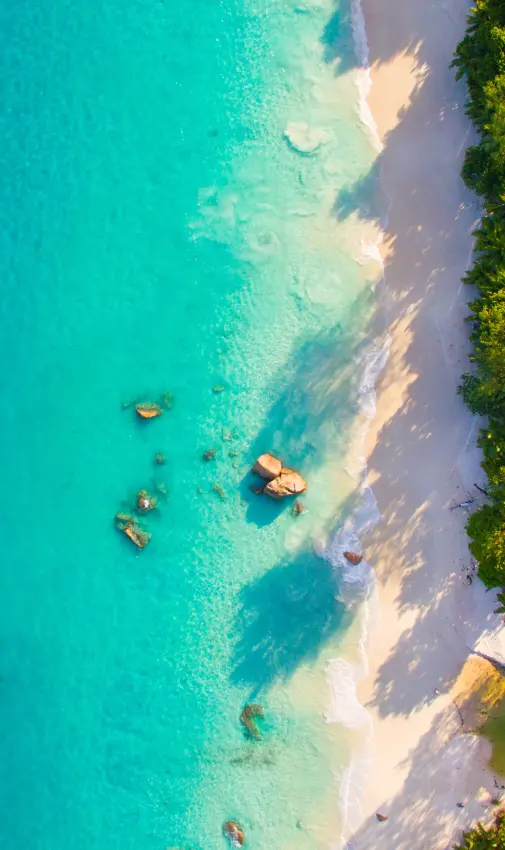
Turquoise water beach with boats and tropical vegetation 07

Zanzibar & Pemba

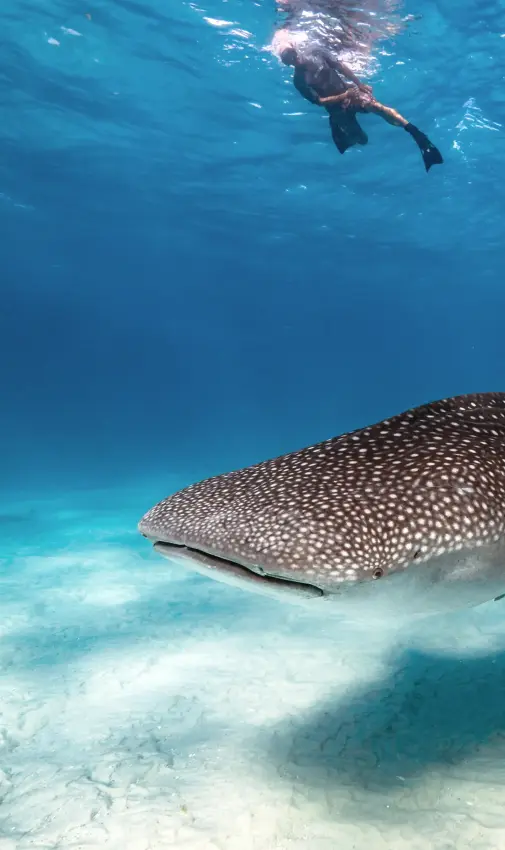
Snorkeler swimming alongside whale shark in shallow turquoise water, Mafia Archipelago, Tanzania 08

Mafia Archipelago

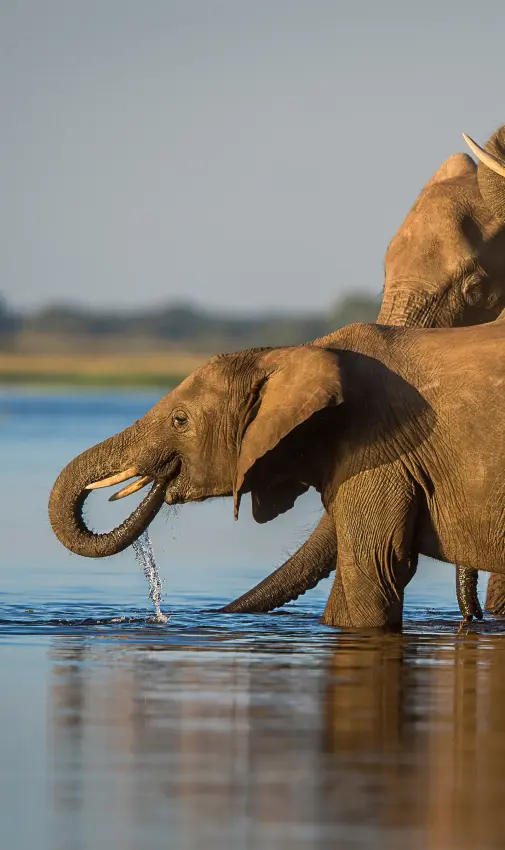
elephants drinking water at riverbank during daytime 09

Nyerere National Park

Chimpanzee among vegetation looking toward camera, Rubondo Island, Tanzania 10

Rubondo Island

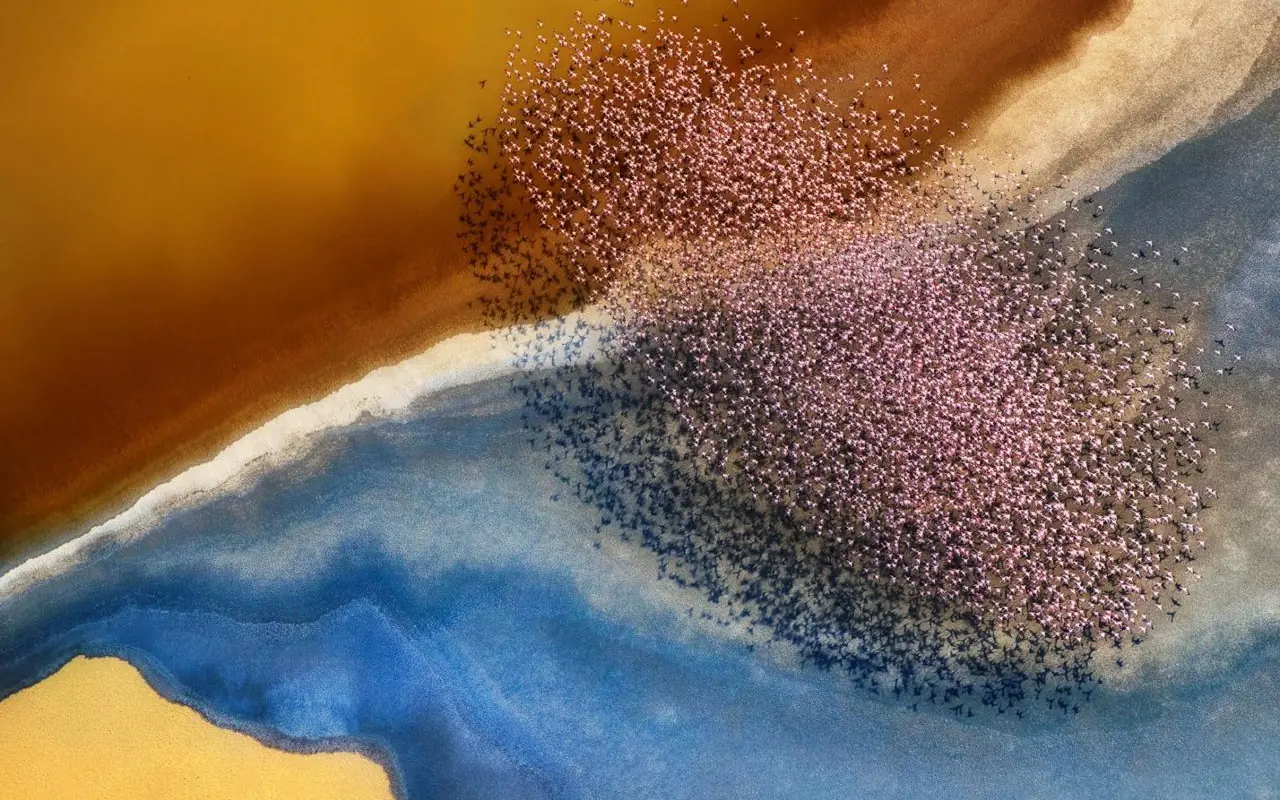
Aerial view of colorful salt lakes and mineral deposits 11

Lake Natron

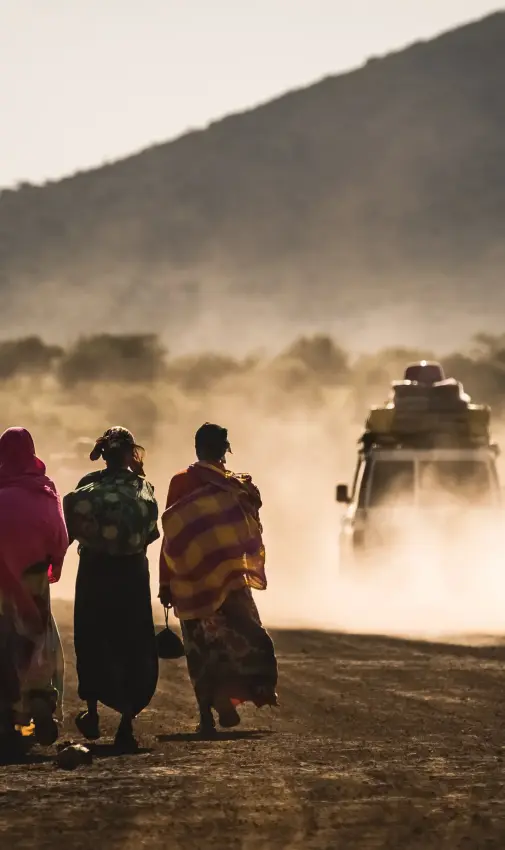
Local people walking on dusty road with vehicle approaching 12

Arusha

13

Ugalla River National Park

Planning a journey together

our approach

remote, exclusive
& personal

Every journey starts with a conversation. We take the time to understand your vision before we start planning.
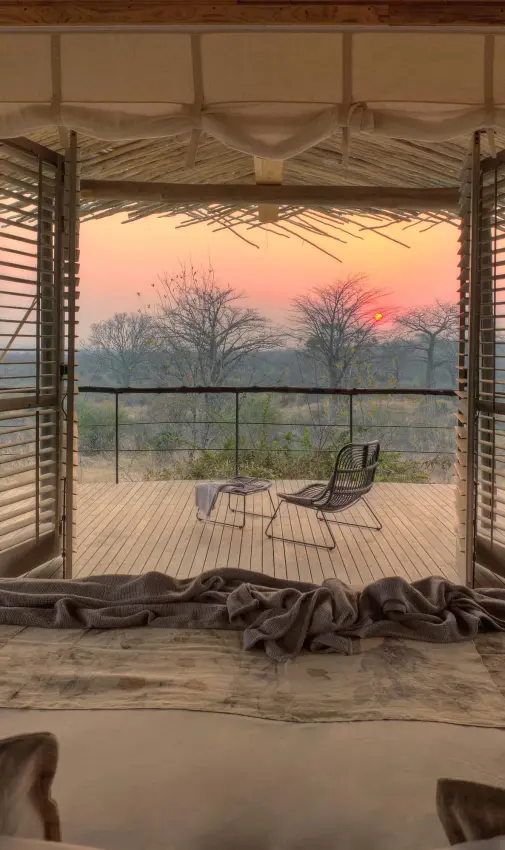
Whether by phone or in person, we work with you directly to shape something that is considered, personal, and expertly delivered.

get in touch
destinations ideas & inspiration our process about us contact us