Lodge

Sand Rivers

A riverfront lodge on the Rufiji in Tanzania’s Nyerere National Park, built in 1984 for walking safaris and days on the water.

Country: Tanzania
Location: Rufiji River, Nyerere National Park
Number of rooms: 8

On foot along the Rufiji since 1984

Richard Bonham built Sand Rivers in 1984 on the northern bank of the Rufiji, in a stretch of Nyerere National Park where other vehicles are still scarce. He was among the first to take guests out on foot across this part of southern Tanzania, and later received the Prince William Award for Conservation in Africa. The camp is now run by Nomad Tanzania, and walking remains at its heart.

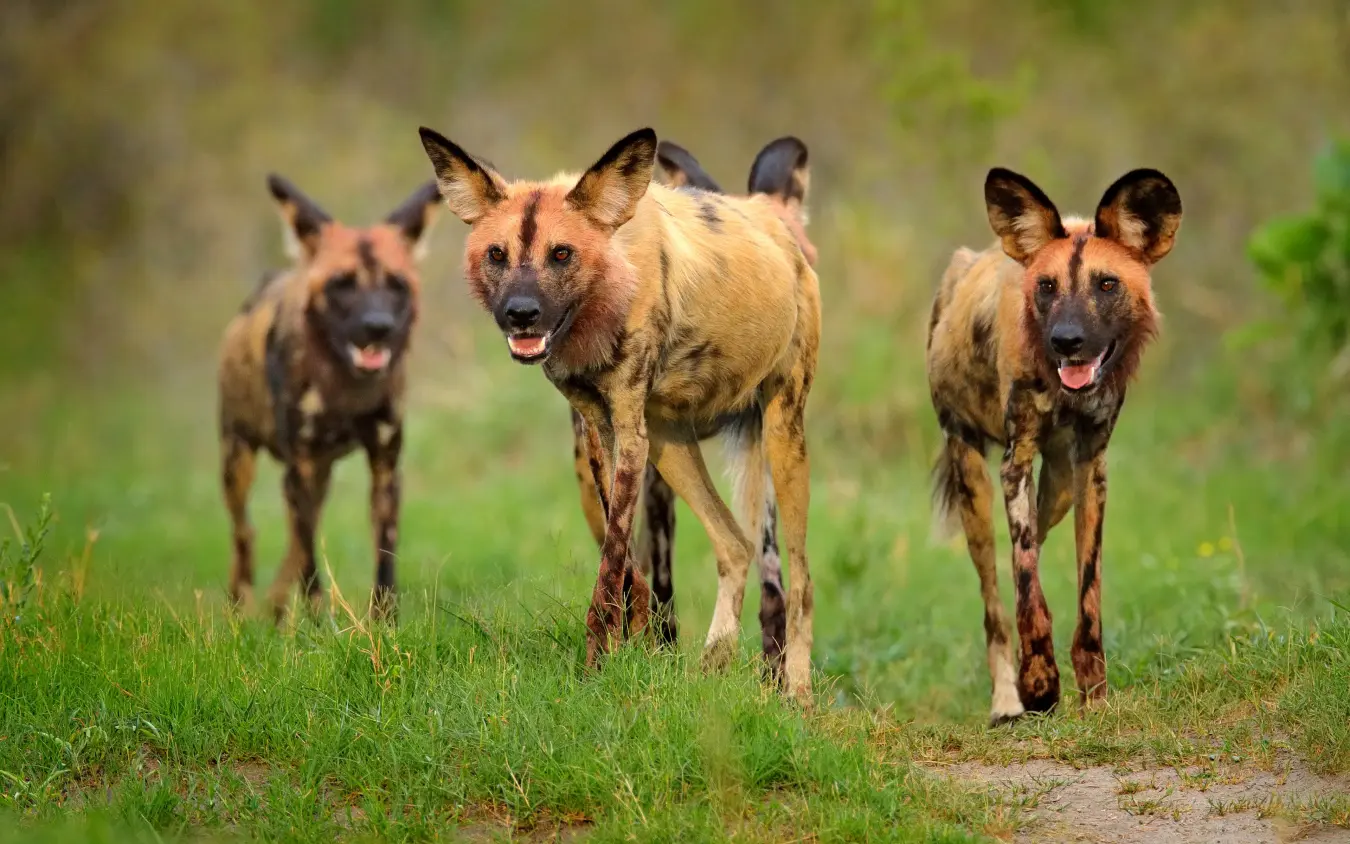
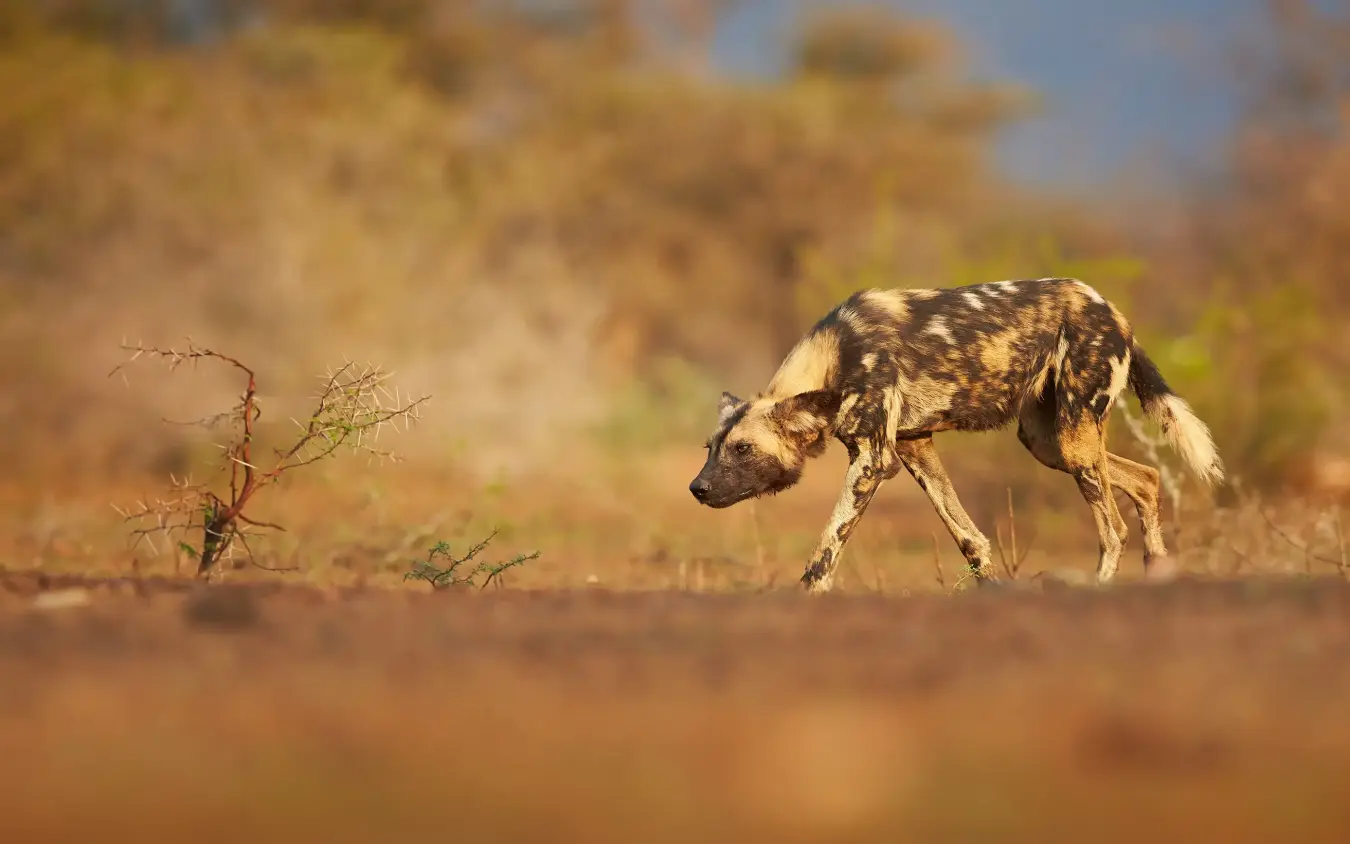
Wild dogs are seen regularly on foot in this part of the park.

Guests set out from camp with armed rangers, and the walks turn on tracking, plants and bushcraft, taken at a pace no vehicle allows. Wild dogs are seen regularly on foot in this part of the park. Boat safaris on the Rufiji and its lakes run alongside the walking, and for those who want more of the river there are fly-camping nights out along its banks.

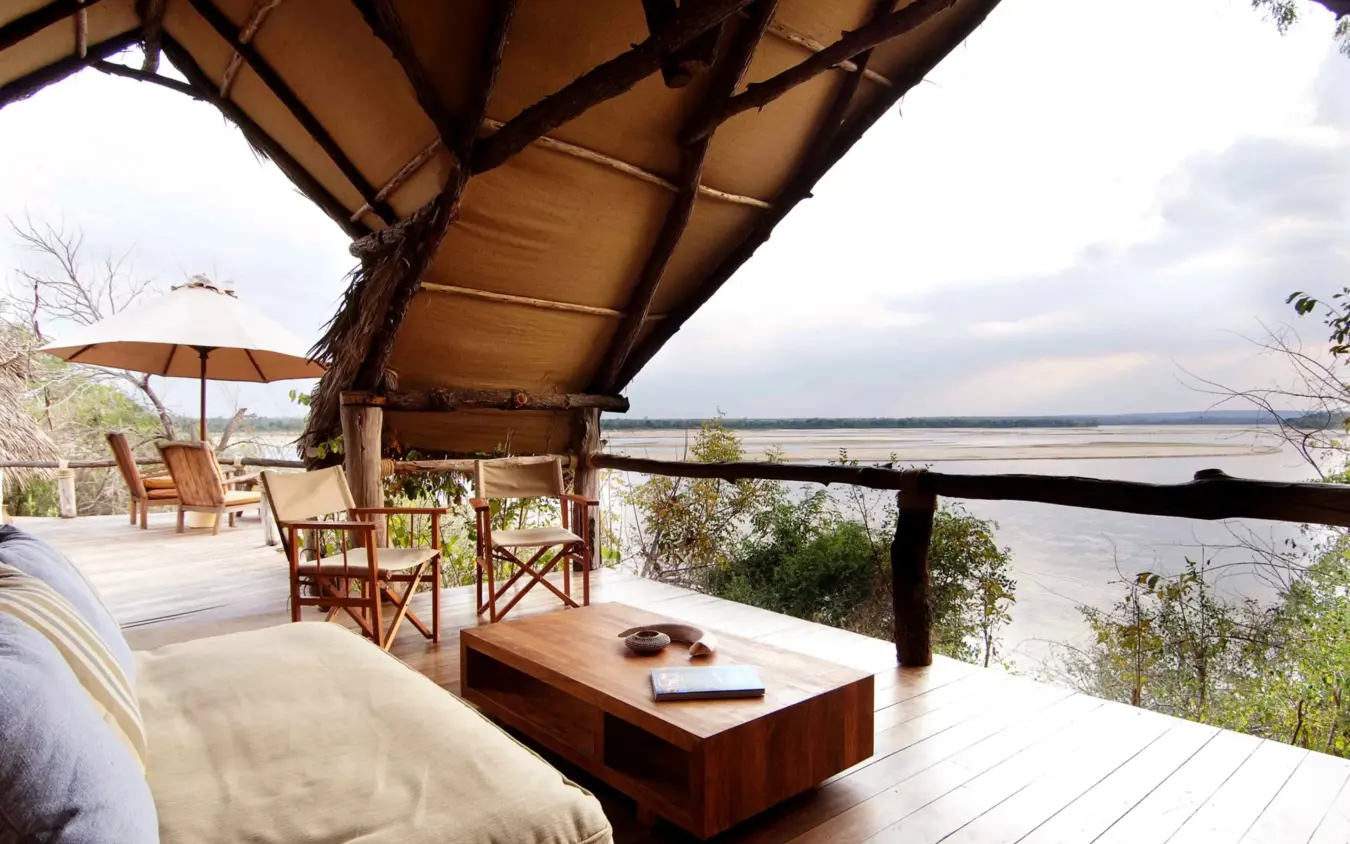
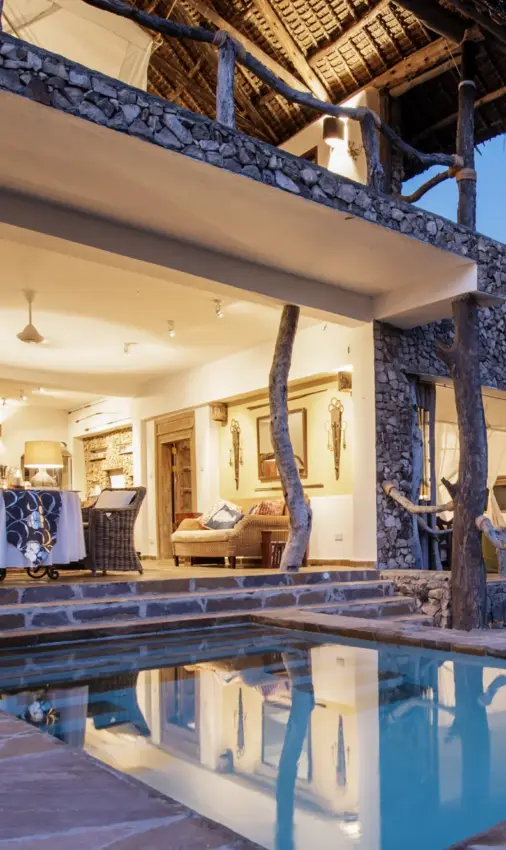
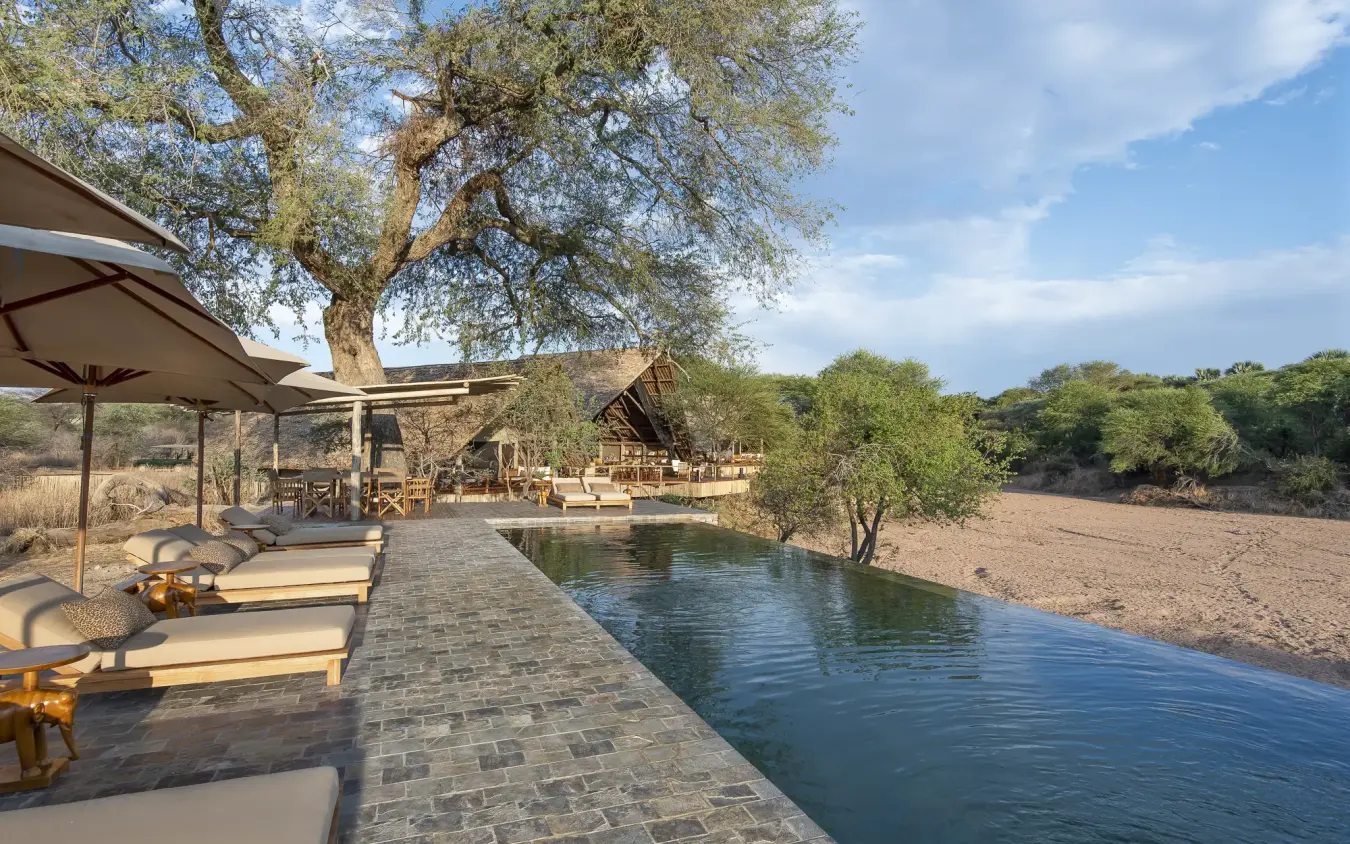
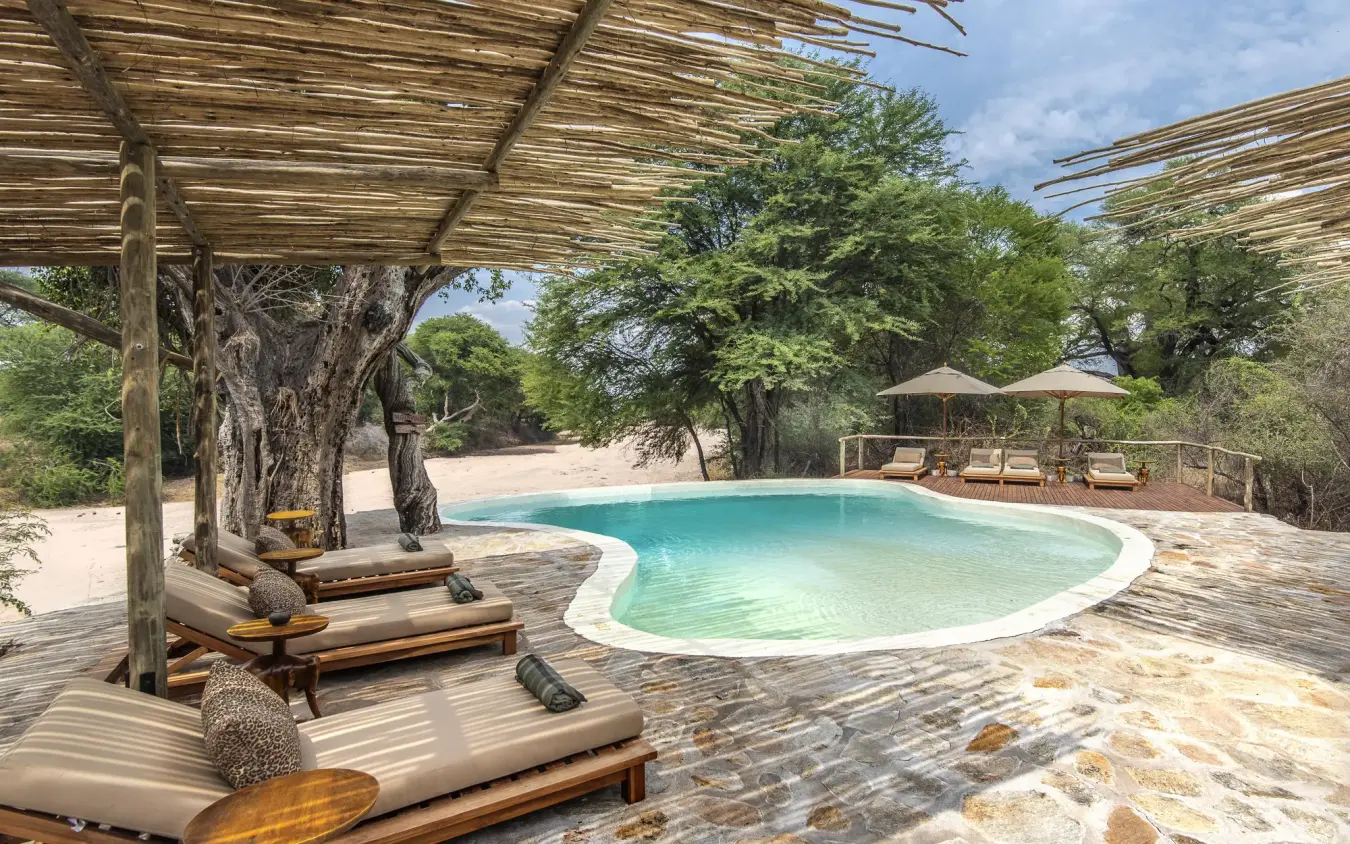
Guests relaxing by sunken pool overlooking lakeside landscape from safari lodge terrace, Sand Rivers, Nyerere National Park, Tanzania
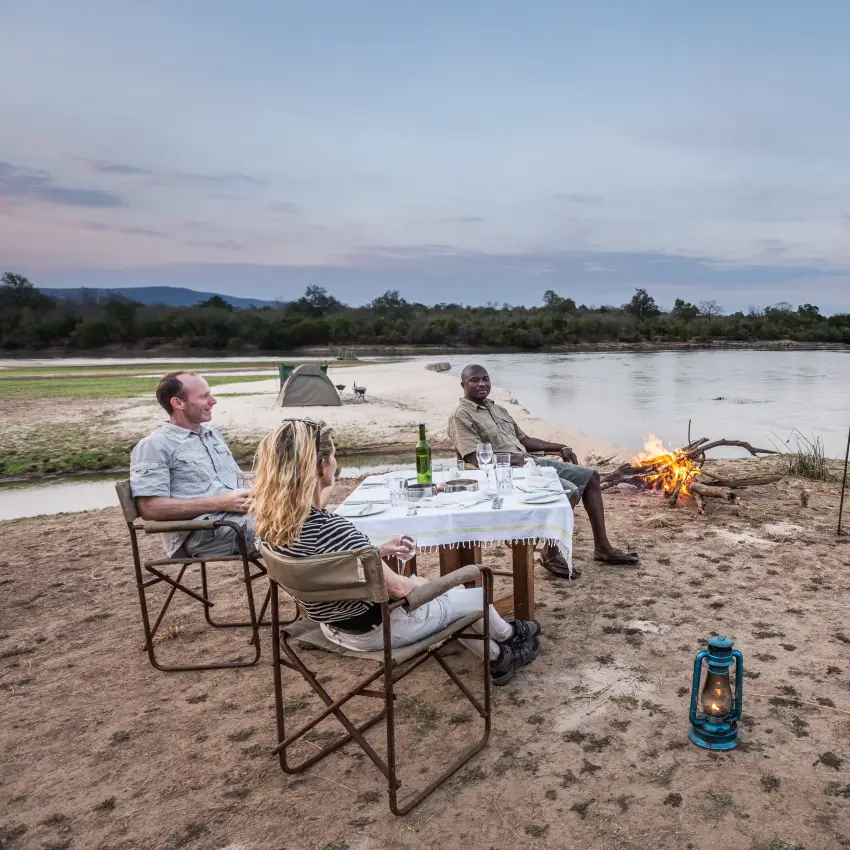
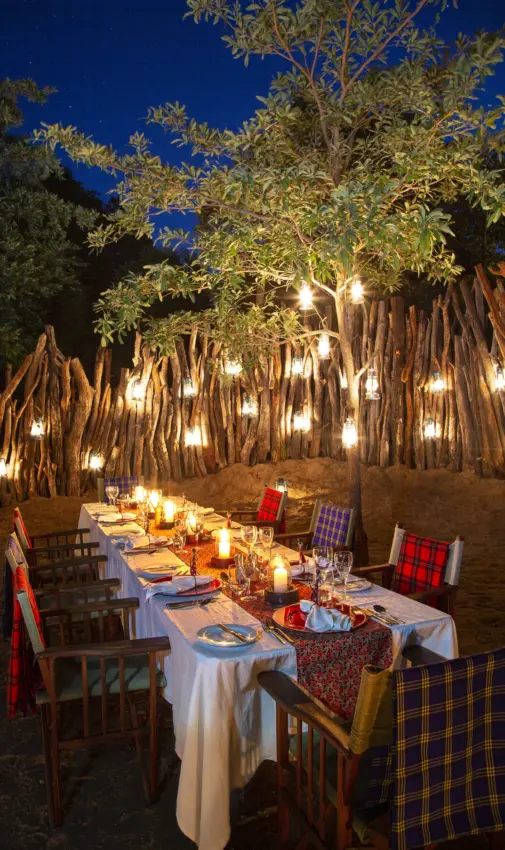
Guests dining at table by campfire on riverbank at dusk, Sand Rivers, Nyerere National Park, Tanzania

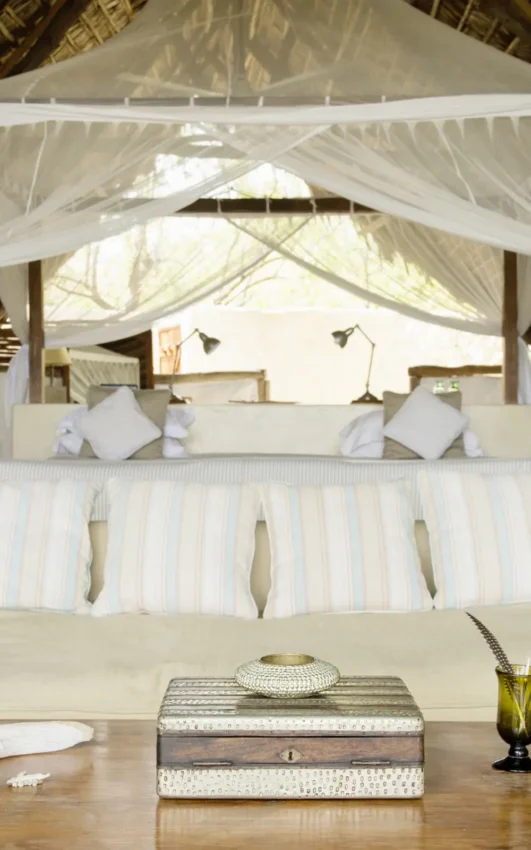
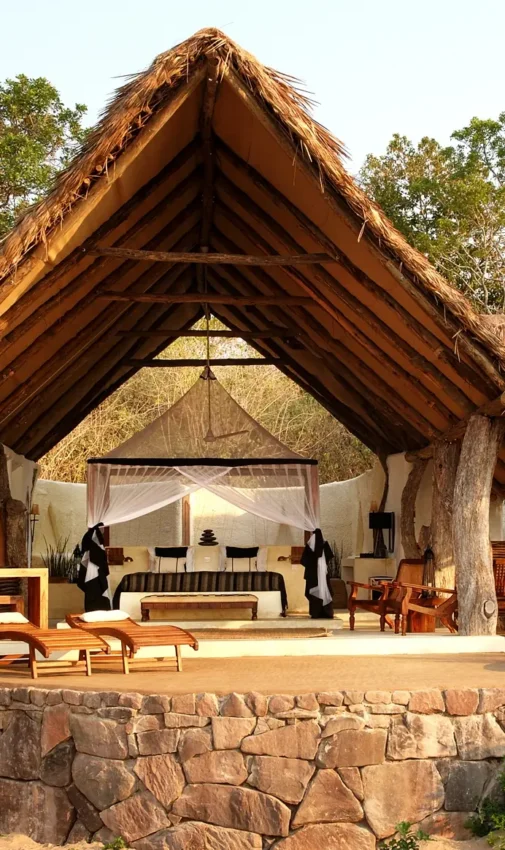
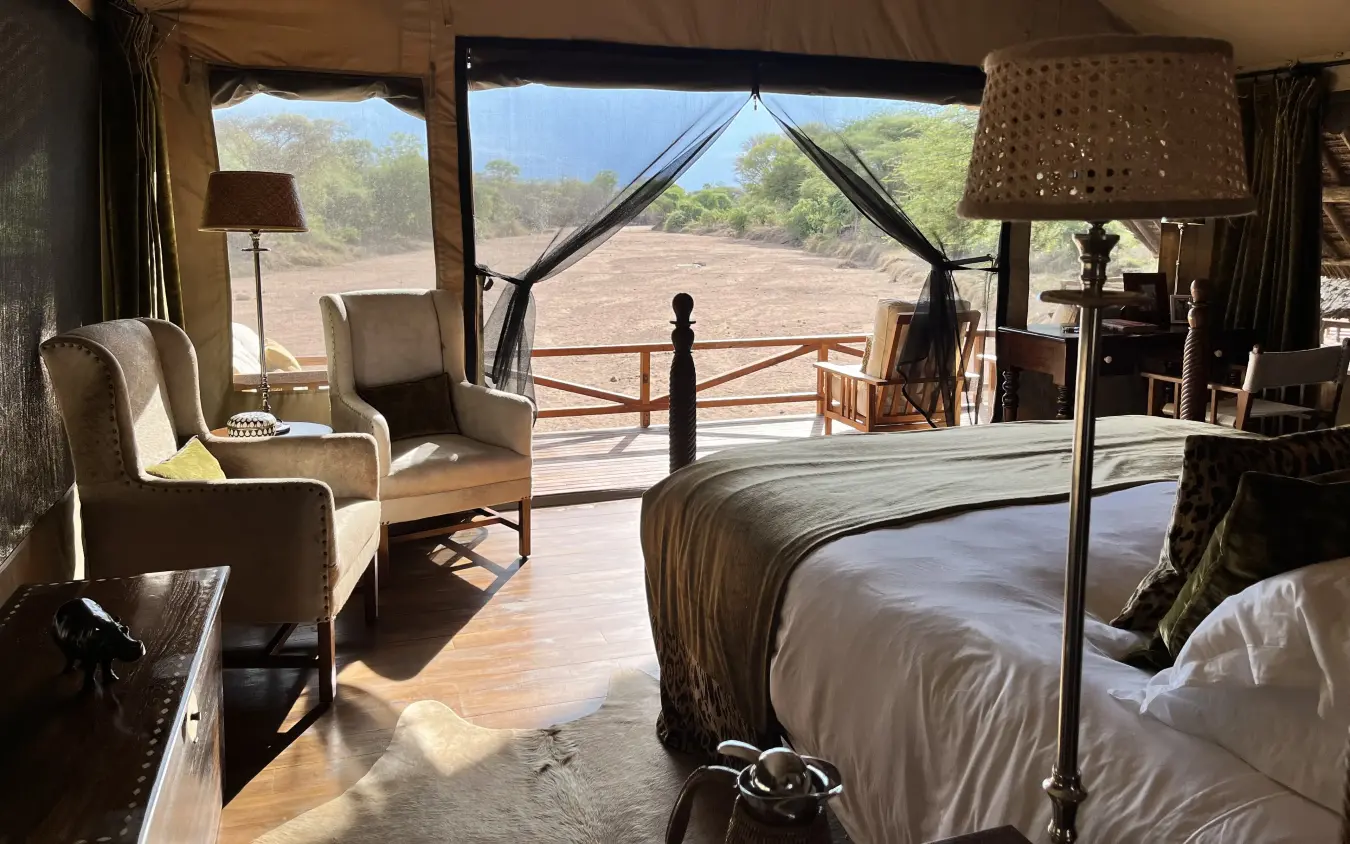
Eight stone-and-thatch cottages line the riverbank, each open at the front to a wide bend of the Rufiji. Hippos and crocodiles hold the sandbanks below the cottages. Fish eagles call over the water. The design is deliberately plain, all rough-hewn timber and stone floors, palm thatch and canvas, with the beds under mosquito nets and the river just beyond.

Hippos and crocodiles hold the sandbanks below the cottages.

From the camp, motorboats run upstream to Stiegler’s Gorge, where the Rufiji narrows between canyon walls some 100 metres high and breakfast is laid out on the rocks. Downstream, the boats drift past pelicans and carmine bee-eaters nesting in the banks. Boat safaris are permitted here in a way they are not in Tanzania’s northern parks, and they work the lakes as well as the river.

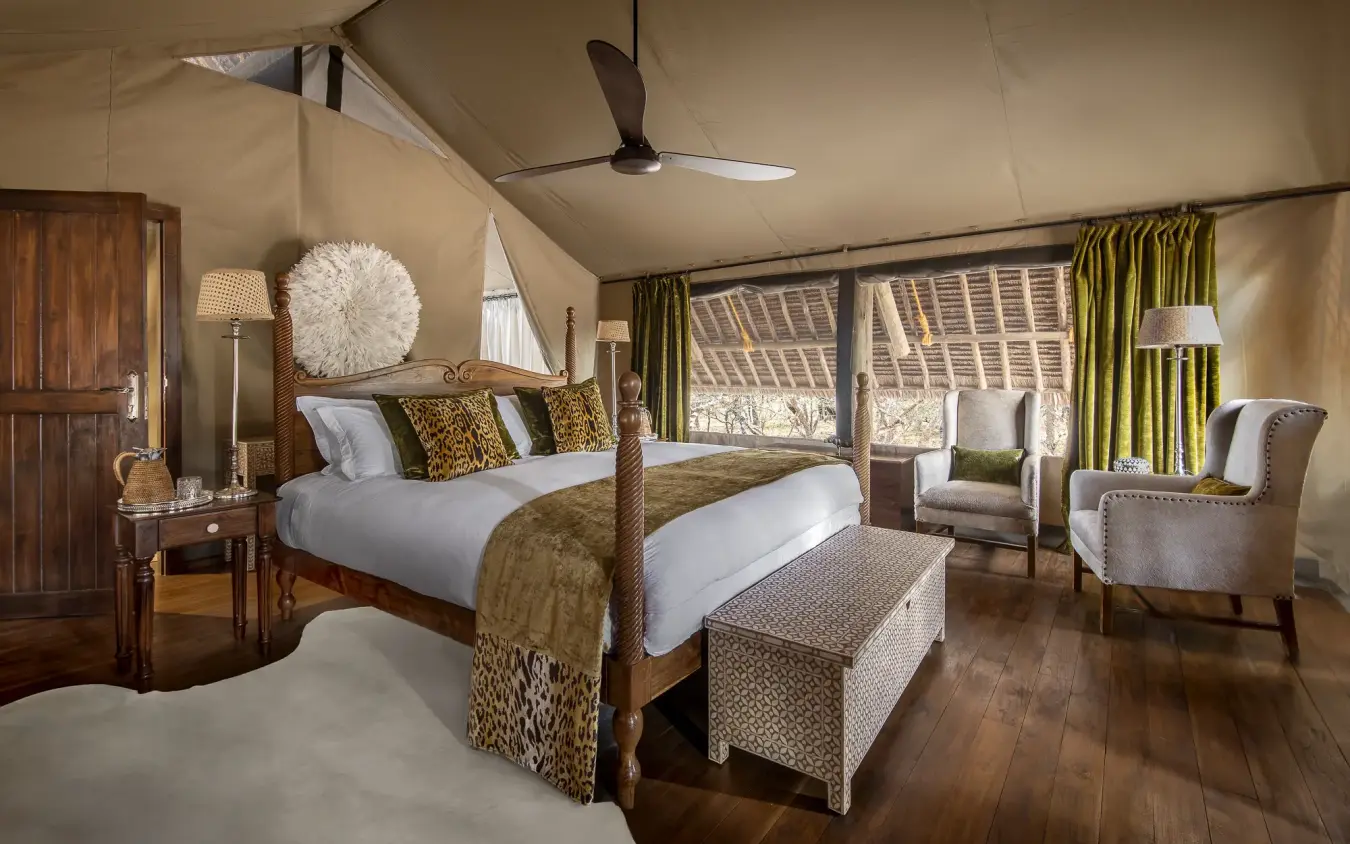
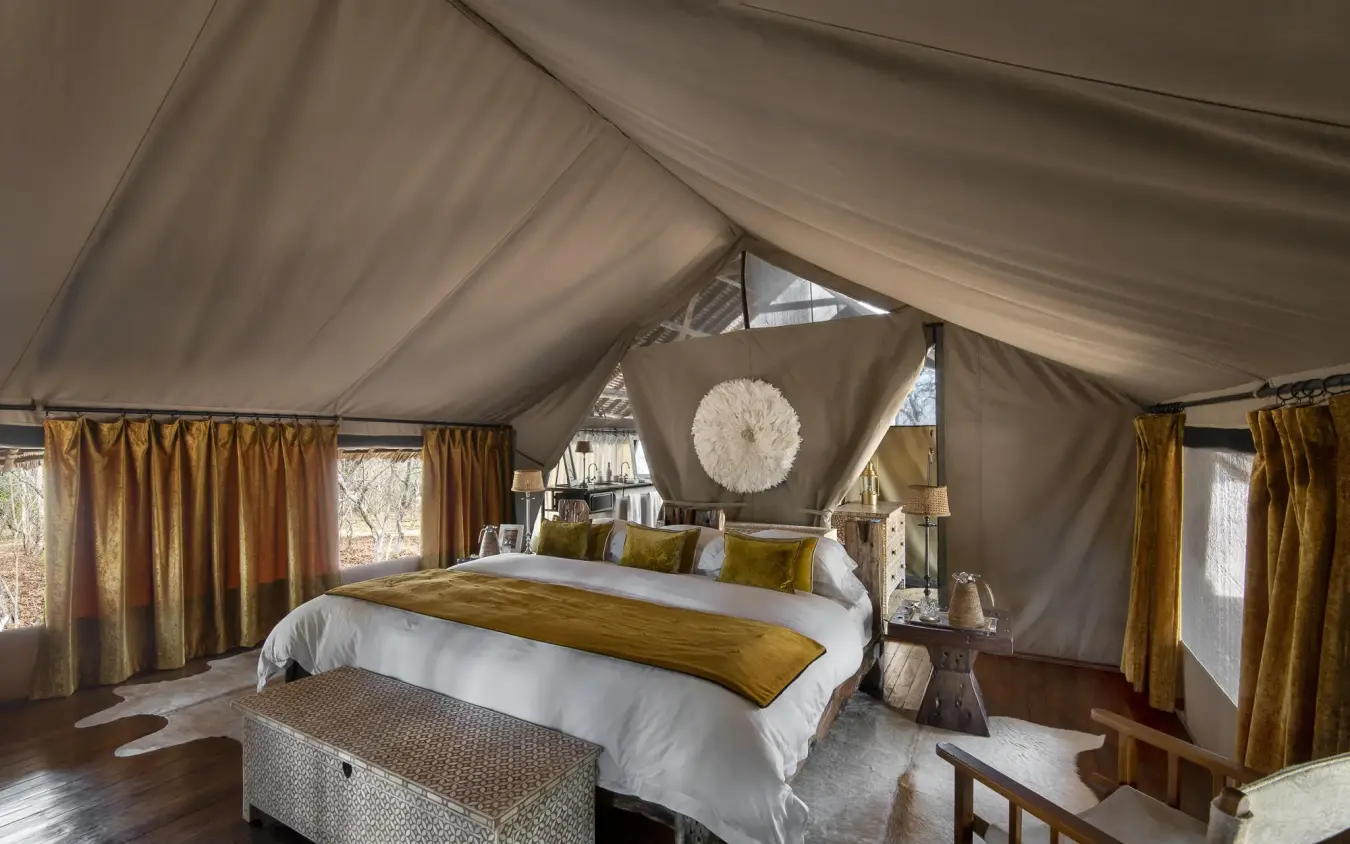
Luxury safari bedroom with draped canopy and savanna views through open walls, Sand Rivers, Nyerere National Park, Tanzania 01

accommodation

Eight Stone-and-Thatch Cottages on Rufiji

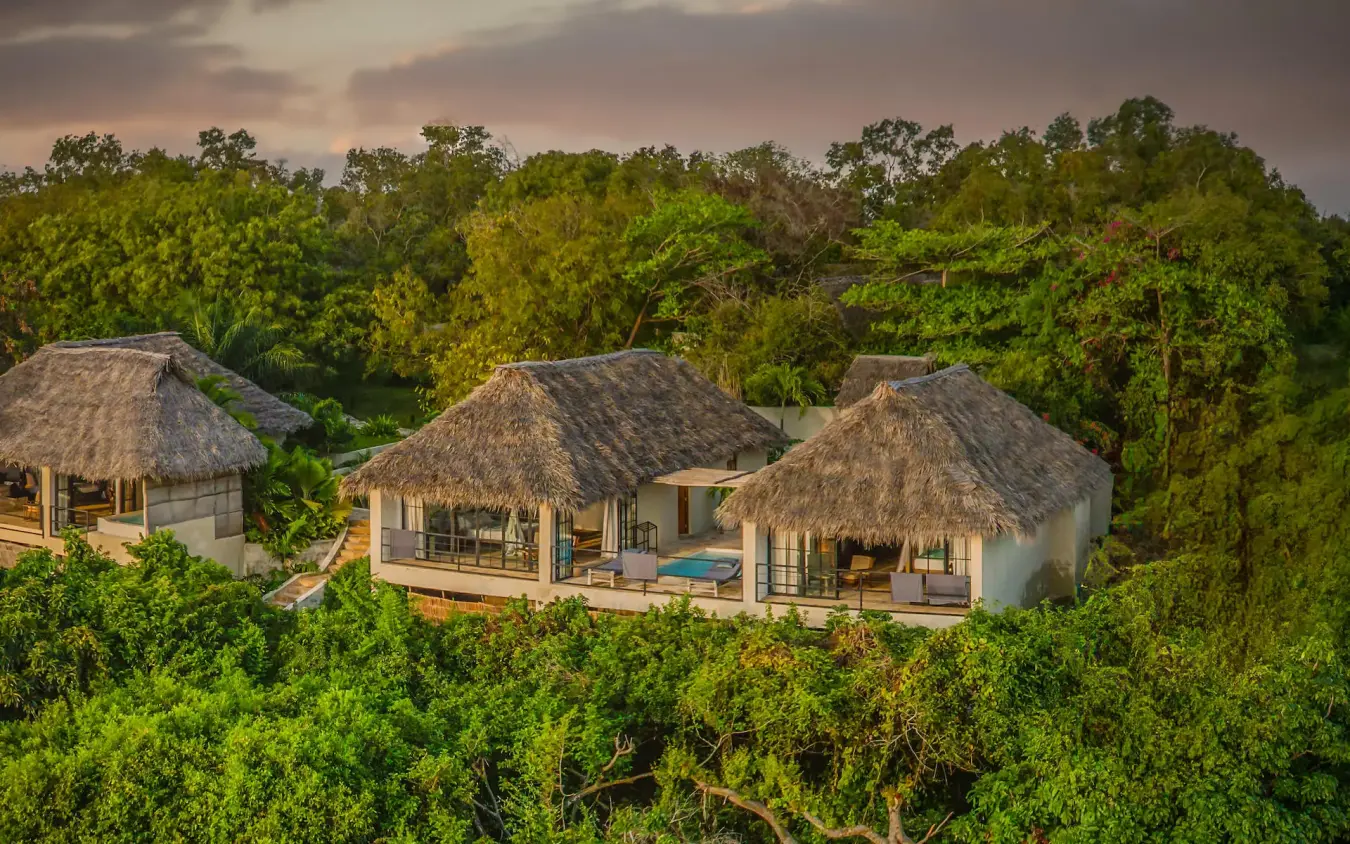
Eight open-fronted stone-and-thatch cottages line the riverbank, each with an en-suite bathroom and mosquito nets over beds facing the Rufiji. Three are larger suites set apart from the row, each with a private plunge pool. Adjacent cottages can be combined for families travelling together, and sandy paths lead to the main deck.

Small motorboat on river with dense forest and rocky shoreline, Sand Rivers, Nyerere National Park, Tanzania 02

activities

Boat Safaris to Stiegler's Gorge

Guests walk with armed rangers, take boat safaris on the Rufiji as far upstream as Stiegler's Gorge, and join open-vehicle game drives to Lake Tagalala, all inside the park. They can also fly-camp, fish for tiger fish and catfish, and soak in the Tagalala hot springs. Walking and fly-camping are for guests aged twelve and over.

Guides walking through dry bushland with valley landscape in background, Sand Rivers, Nyerere National Park, Tanzania 03

conservation

1,000 Children Across 12 Schools

The camp backs anti-poaching patrols in Nyerere National Park and hosts mobile medical and dental clinics for neighbouring villages. Through the Nomad Trust, it also funds a meal-a-day programme that reaches more than 1,000 children across 12 schools. Founder Richard Bonham went on to co-found the Big Life Foundation.
ready to get started?

Get in touch and let’s start the conversation. An initial consultation helps us understand what you’re looking for, whether that’s specific experiences, luxury touches, or marking a special occasion, and from there we’ll guide you through what’s possible so you can decide if we’re the right fit.

Alternative accommodation in nyerere national park

Accommodation across Nyerere runs to small, low-density camps spread across a vast wilderness. Semi-permanent luxury tents front the Rufiji, classic bush camps sit back in the woodland, and permanent lodges open onto river views. Most offer boat access to the channels and lakes, and all stay intimate and small in scale.

frequently asked questions

You fly into Dar es Salaam on your international flight, then join a light aircraft south to Kiba airstrip, about forty-five minutes in the air, with a game drive of around fifteen minutes from the strip to camp.

The same strip is also served by flights connecting from Zanzibar, Mafia and Ruaha, so the camp slots easily into a wider Tanzanian route. We can also arrange a private charter, typically a Cessna Caravan or Pilatus PC-12, timed to your own day rather than the airline's.

Seats on the scheduled flights are shared and luggage is soft bags only, with a weight limit of around 15 to 20kg depending on the airline, which we confirm with you before you pack. Driving from Dar es Salaam is possible in roughly six hours, though nearly everyone flies.

Yes, and worth taking seriously. The camp sits low on the Rufiji, far below the 1,800 metre line at which the CDC and the UK's official travel health advice say malaria risk falls away, so antimalarial tablets are recommended for a stay here. The mosquito nets over the beds and repellent in the rooms help, but the tablets and covering up after dark are the real protection.

We do not make medical recommendations, and we would not want to. We arrange travel; we are not doctors. Which tablets suit you, how they sit with anything else you take, and what is right for a child are questions for your own doctor or a travel clinic. On the practical part, dusk is the hour that matters, so long sleeves, long trousers and repellent are worth the packing space.

Hot river country. The June to October dry season brings hot days, warm evenings and very little rain, with the heat building as October approaches, while the short rains around November and the long rains from March to May turn the park green and humid. Mornings are mild rather than cold, so heavy layers stay at home.

Pack light, breathable clothes in neutral colours for the walks, a wide-brimmed hat, sunglasses and strong sunscreen, plus closed walking shoes with decent grip. Swimwear earns its place for the pool and the hot springs.

Come between June and October, when the falling water pulls elephant, buffalo and the plains game to the river and lakes and the walking is at its best on firm, open ground. October runs hottest. The green months are quieter and superb for birds, though the long rains from March to May close much of the park's accommodation.

The dry season is also when the boating comes into its own, with the sandbanks exposed and the birdlife nesting in the banks, so the classic months give you the river at its liveliest as well as the land.

Month by month: the best time to visit Nyerere National Park

This is remote southern Tanzania, so keep expectations low. Where wifi exists in this part of the park it tends to sit in the main areas and run slowly, and mobile signal is patchy at best, gone entirely for long stretches.

Most guests treat that as part of the point of the place. If you need to stay reliably reachable, tell us and we will confirm exactly what the camp offers before you travel.

Three nights is the sensible minimum, and four is better. The flights land mid-morning or midday, and the camp's range, walking one day, a full day on the river the next, a night out fly-camping if it appeals, needs room to breathe rather than a rushed two-night turnaround.

It also pairs naturally on a southern loop, with Ruaha a short flight west for a second, drier kind of wilderness, or the coast and its islands twenty minutes' flying east for the end of a trip.

rated five stars by our clients

other areas in tanzania

Ruaha National Park lies to the west, a rugged park of large lion prides, elephant herds and baobab-studded woodland, linked to Nyerere by a short flight and forming a natural southern pairing. Mikumi National Park makes an easy savannah stopover between the coast and the southern highlands, while the forests and waterfalls of Udzungwa Mountains National Park offer endemic primates and hiking for travellers wanting contrast with the floodplain. Zanzibar's beaches and Stone Town round off a trip, a short flight from Nyerere's airstrips.

African wild dog standing alert in grassland 01

Ruaha National Park

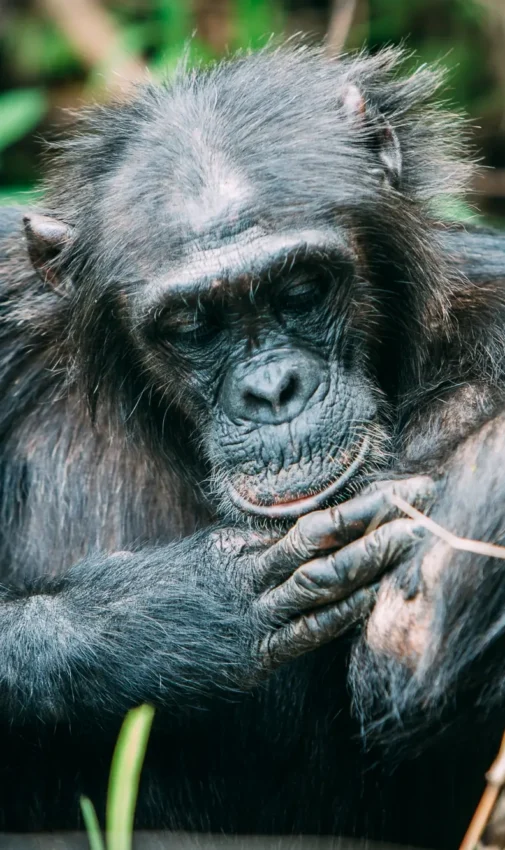
Chimpanzee holding branch while foraging in forest, Mahale Mountains, Tanzania 02

Mahale Mountains

Guests relax in chairs by river with child wading, Lake Manyara, Tanzania 03

Lake Manyara

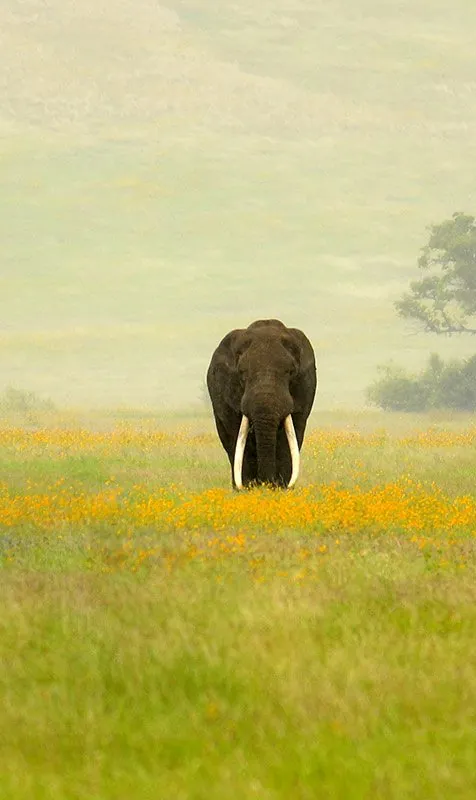
Elephant walking alone across golden savanna grassland 04

Ngorongoro Crater

Silhouetted herd of wildebeest in dusty savanna landscape 05

Serengeti National Park

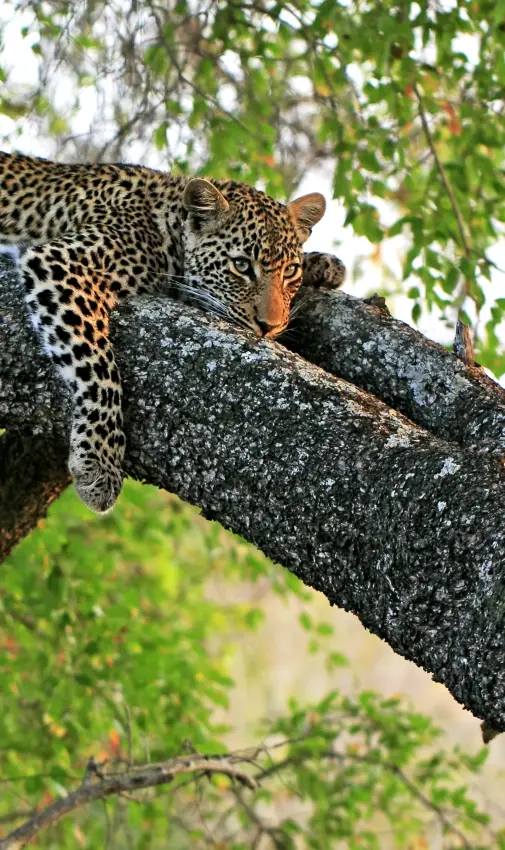
Leopard resting on tree branch surrounded by green foliage 06

Tarangire National Park

Hippopotamuses in water with heads above surface 07

Katavi National Park

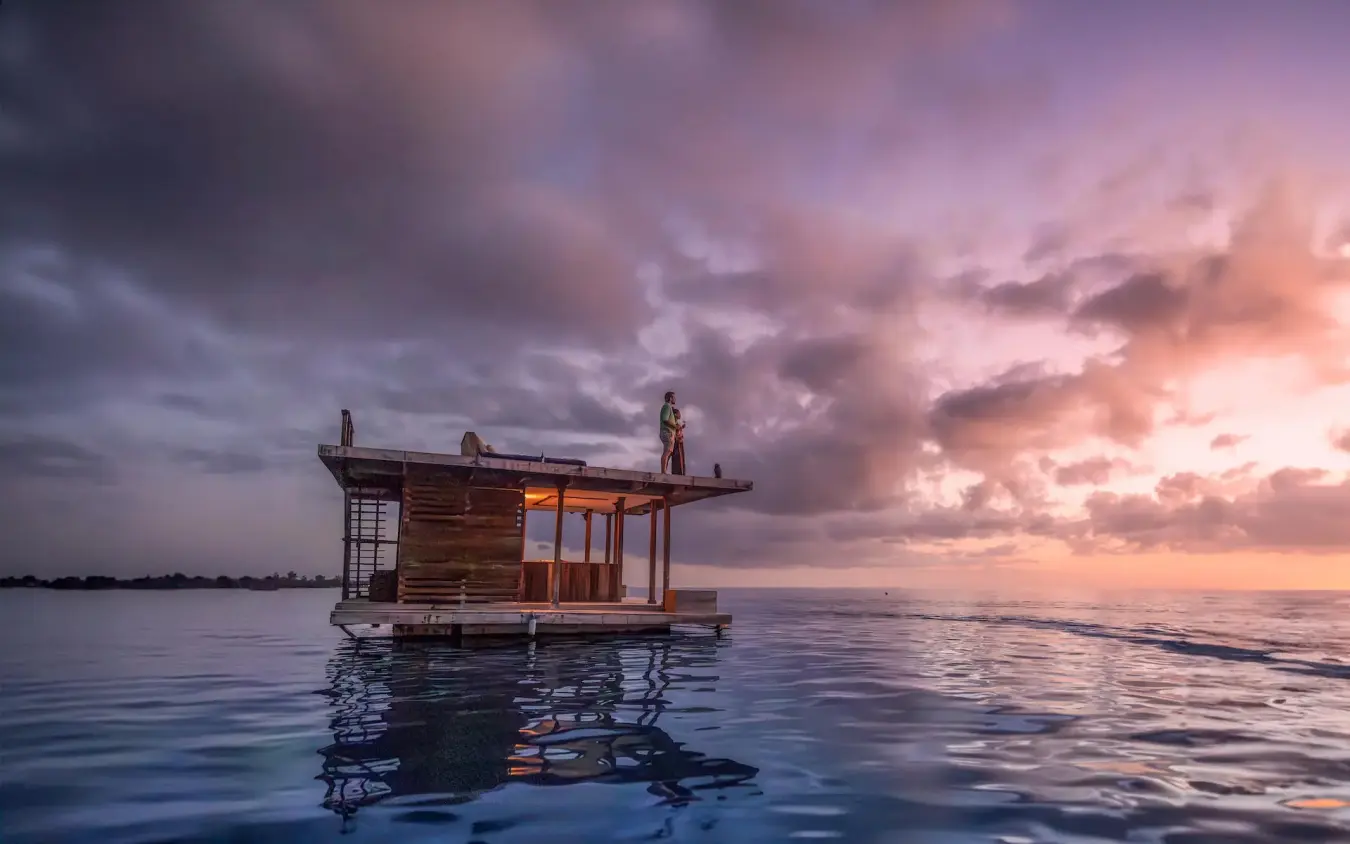
Turquoise water beach with boats and tropical vegetation 08

Zanzibar & Pemba

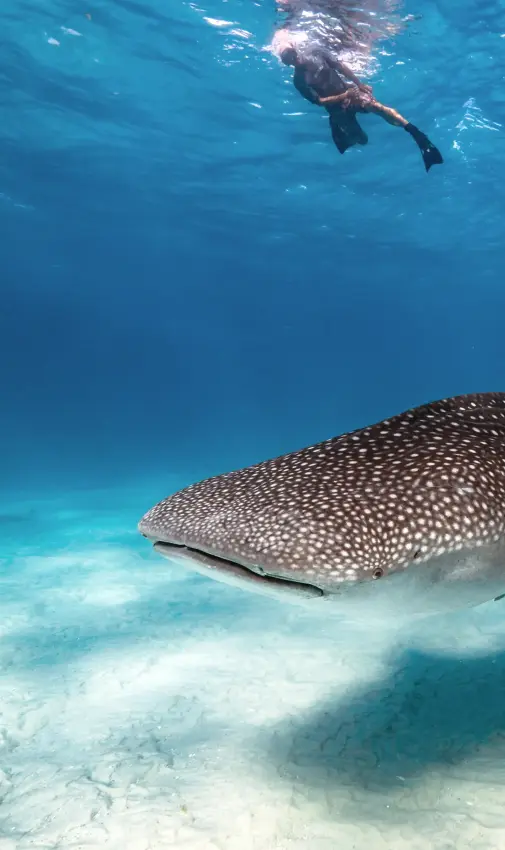
Snorkeler swimming alongside whale shark in shallow turquoise water, Mafia Archipelago, Tanzania 09

Mafia Archipelago

Chimpanzee among vegetation looking toward camera, Rubondo Island, Tanzania 10

Rubondo Island

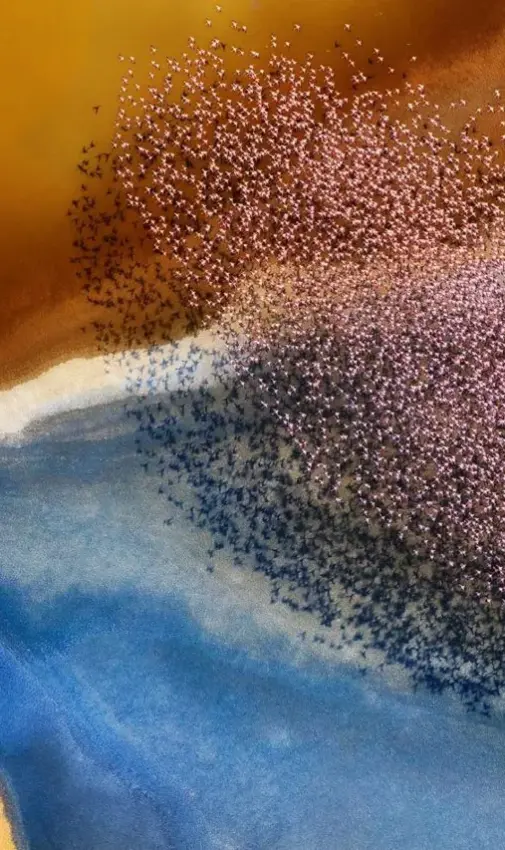
Aerial view of colorful salt lakes and mineral deposits 11
Lake Natron

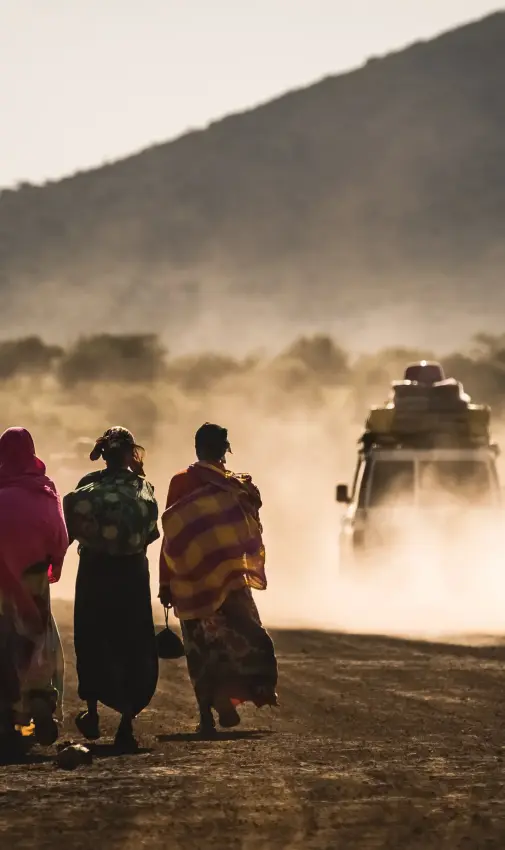
Local people walking on dusty road with vehicle approaching 12

Arusha

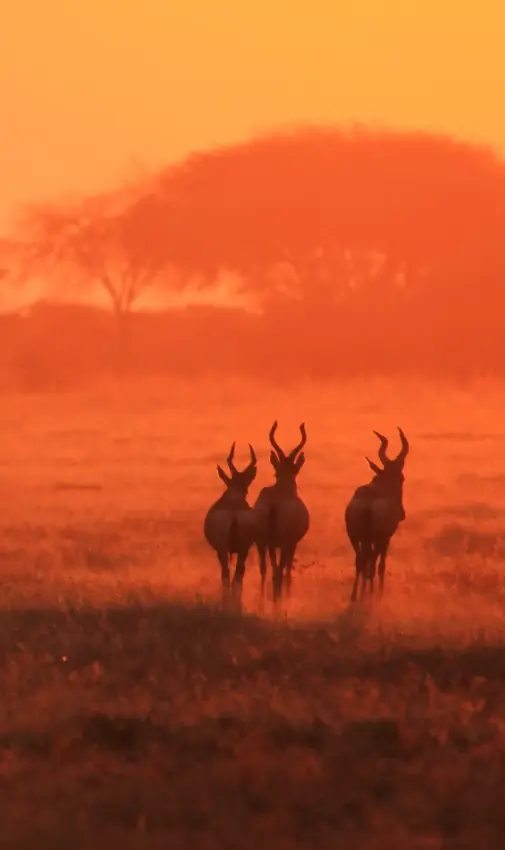
Herd of antelope silhouetted against orange sunrise 13

Ugalla River National Park

West Kilimanjaro, Tanzania 14

West Kilimanjaro

Planning a journey together

our approach

remote, exclusive
& personal

Every journey starts with a conversation. We take the time to understand your vision before we start planning.

Whether by phone or in person, we work with you directly to shape something that is considered, personal, and expertly delivered.

get in touch
destinations ideas & inspiration our process about us contact us