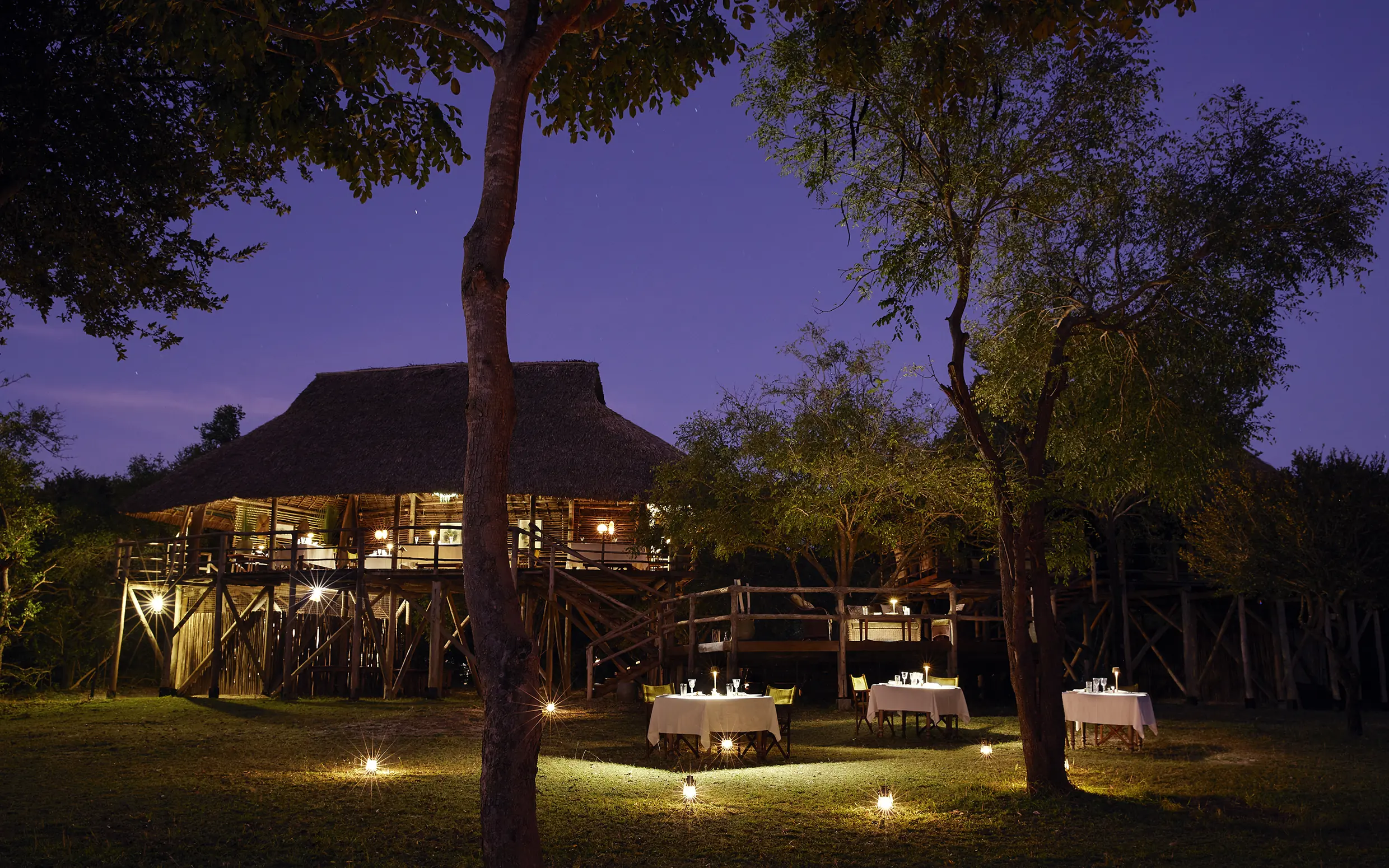
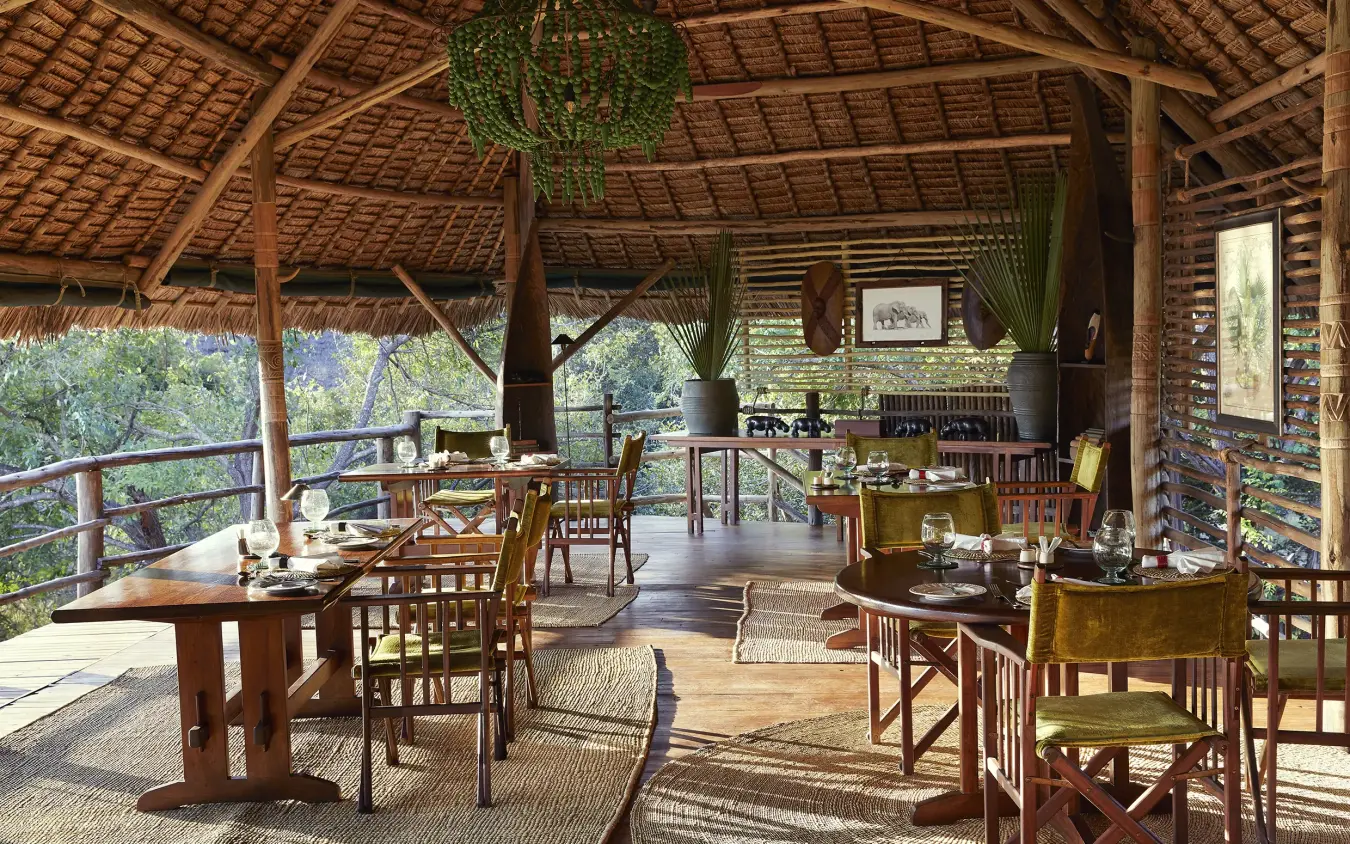
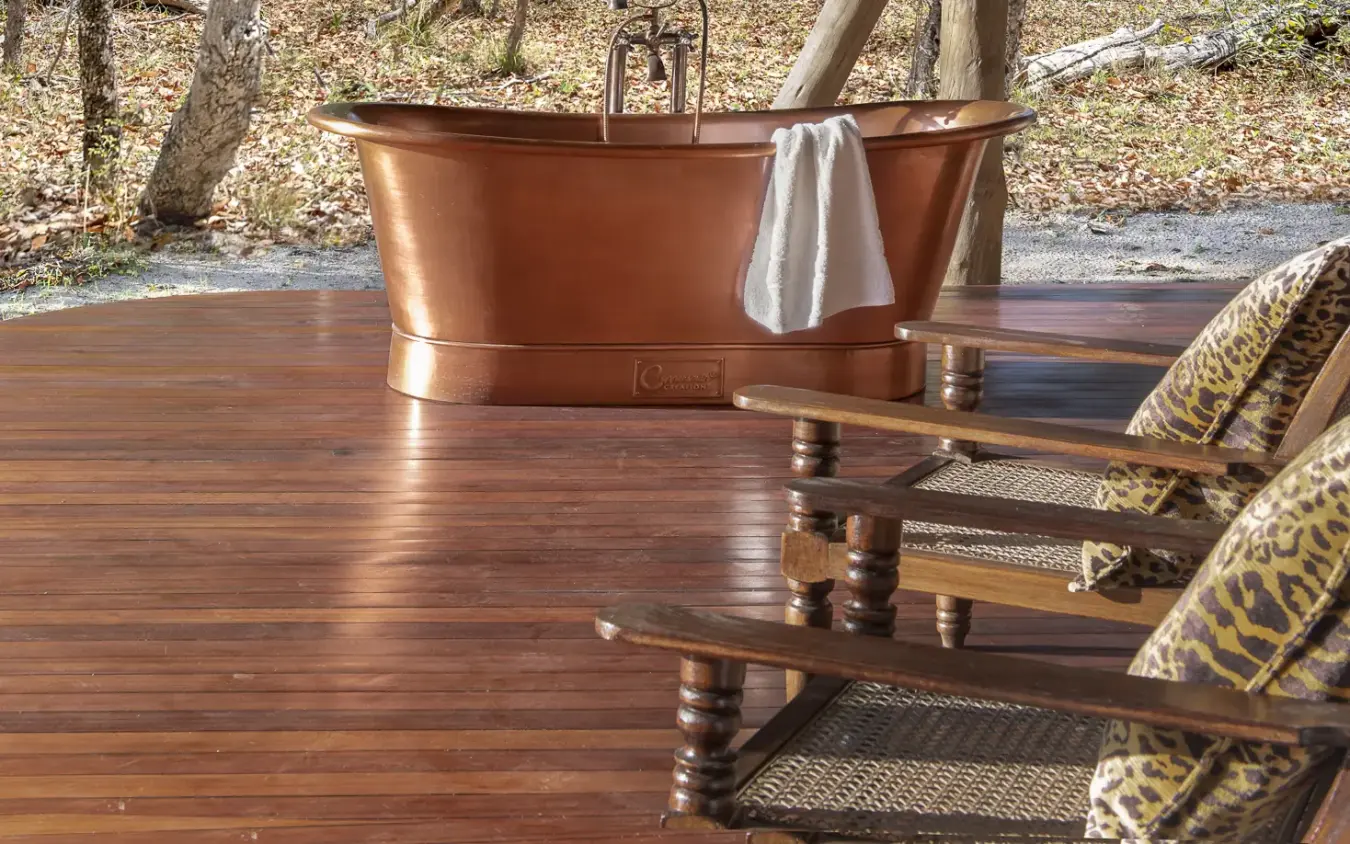
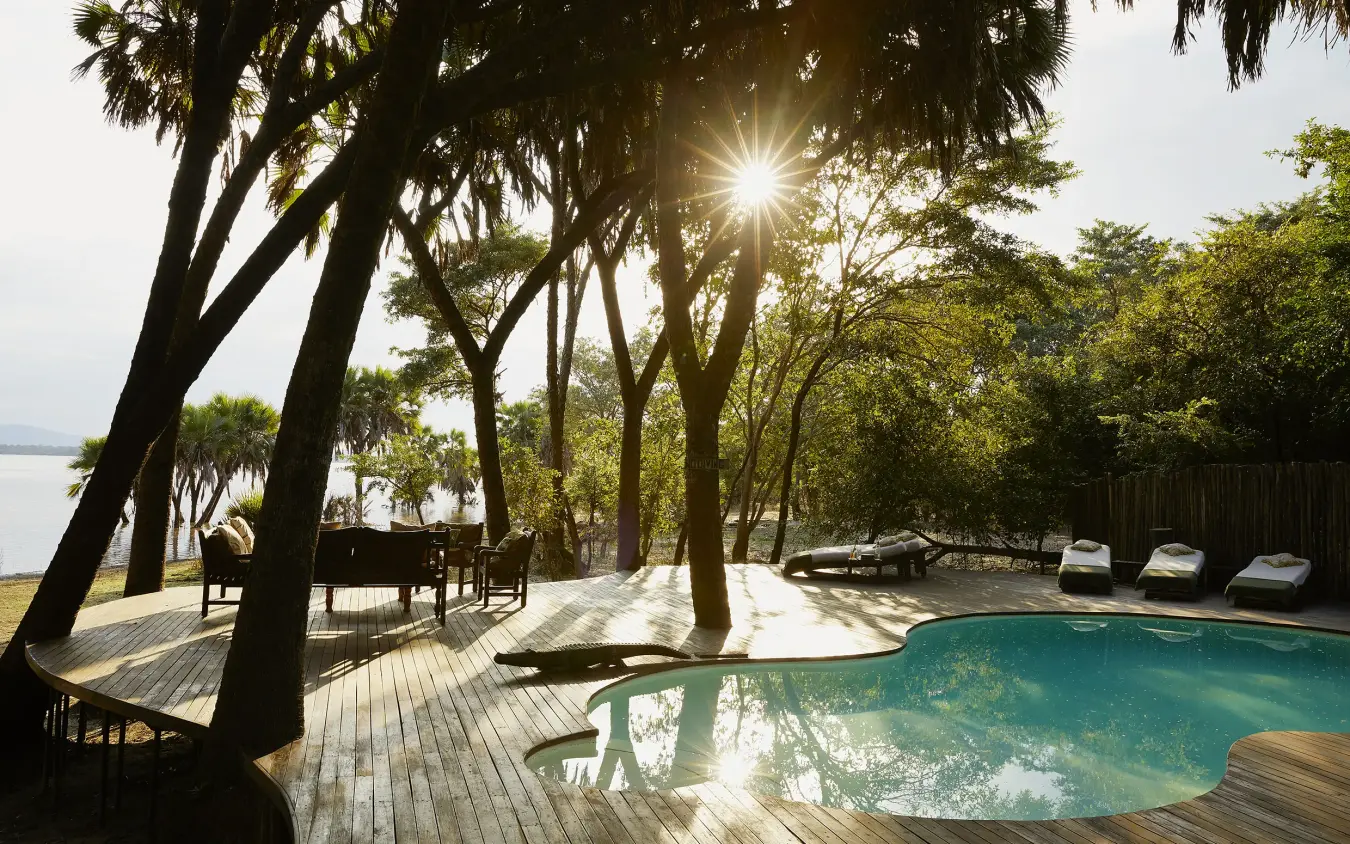
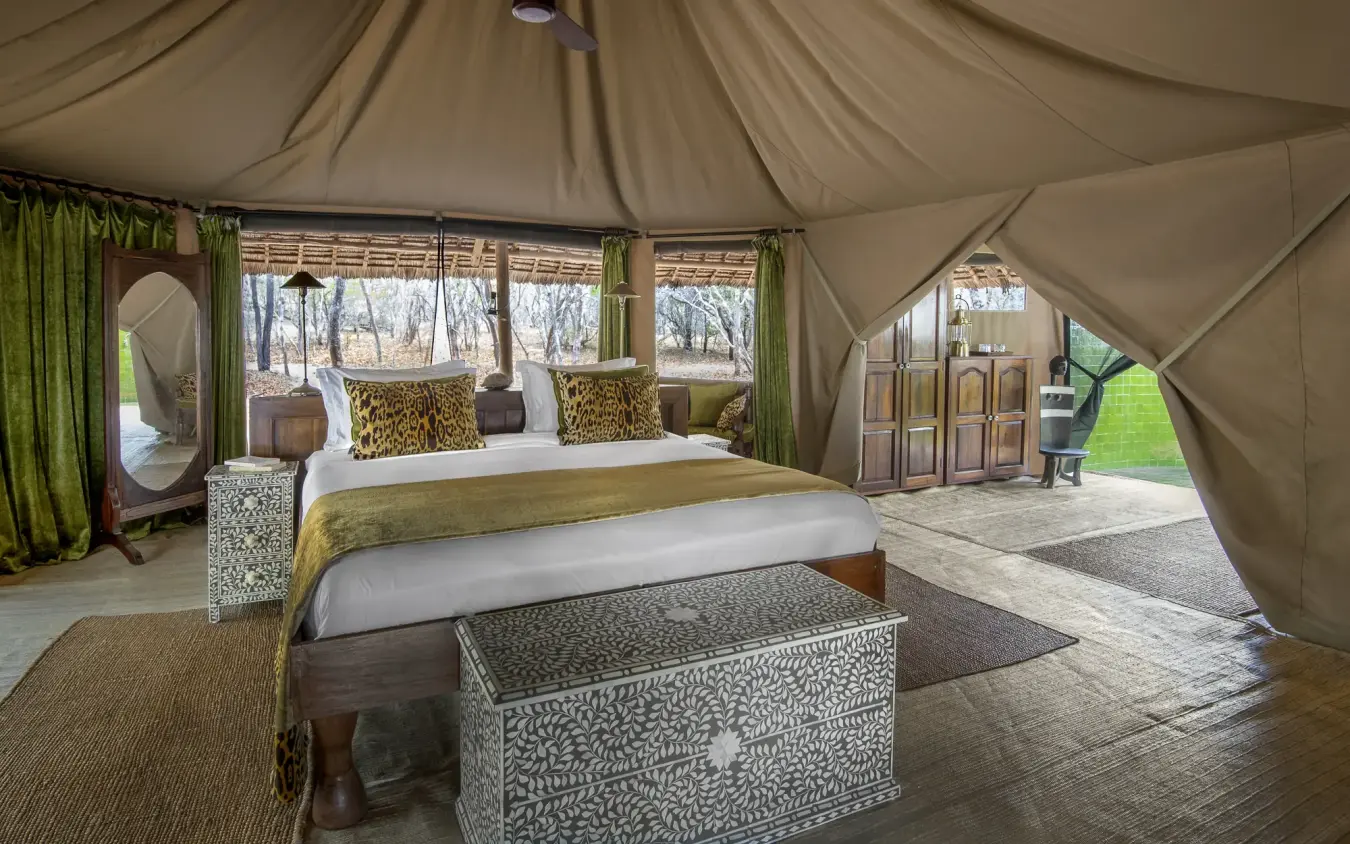
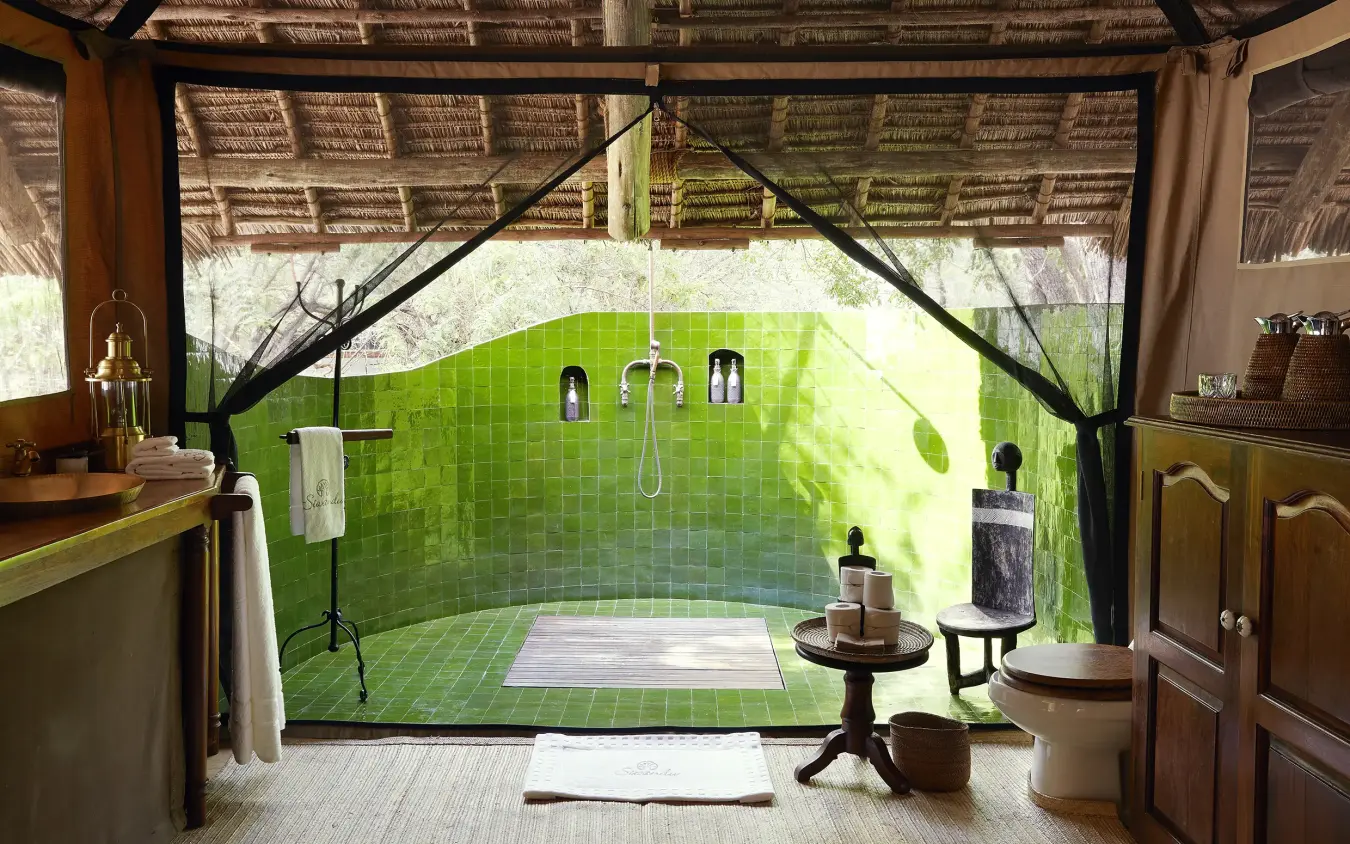
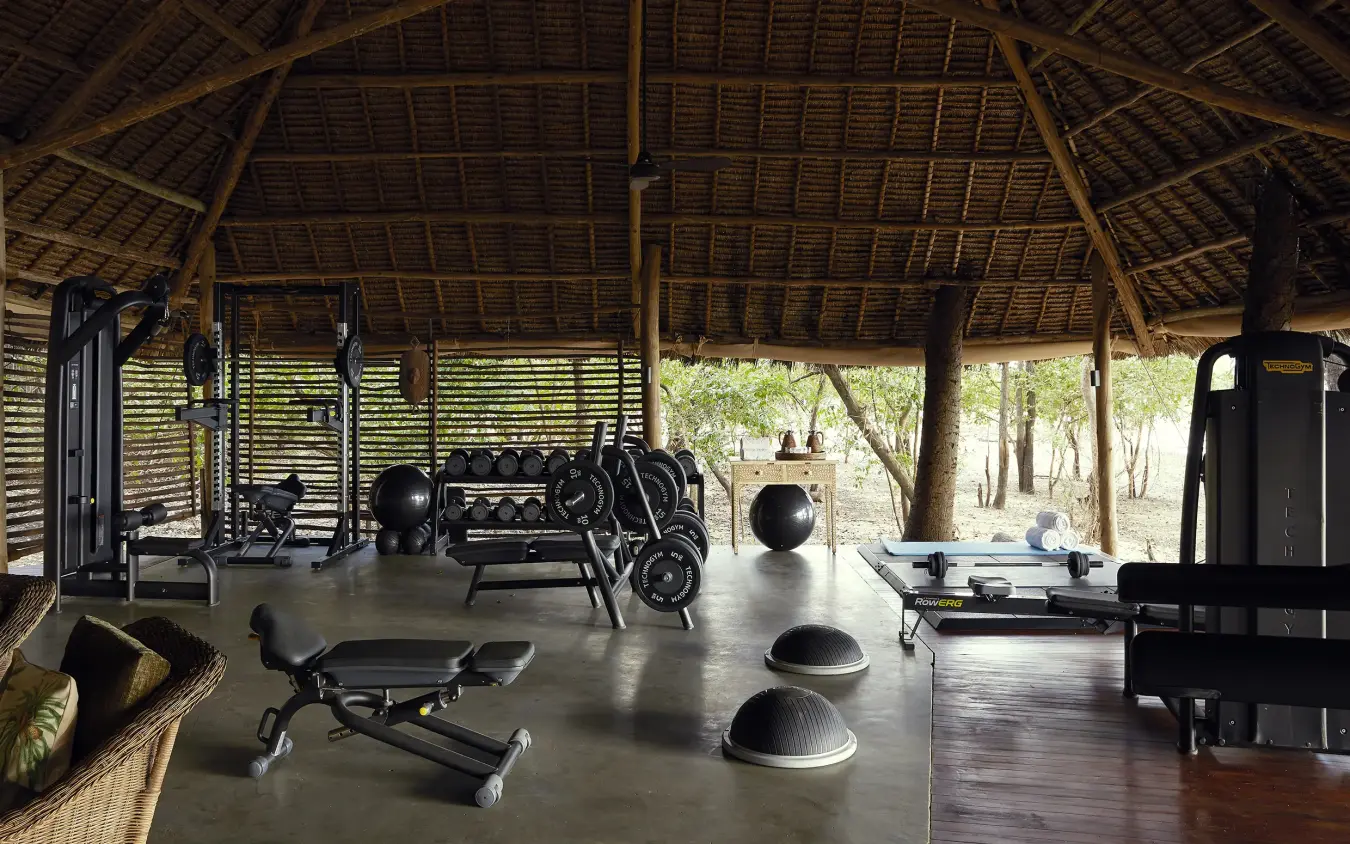
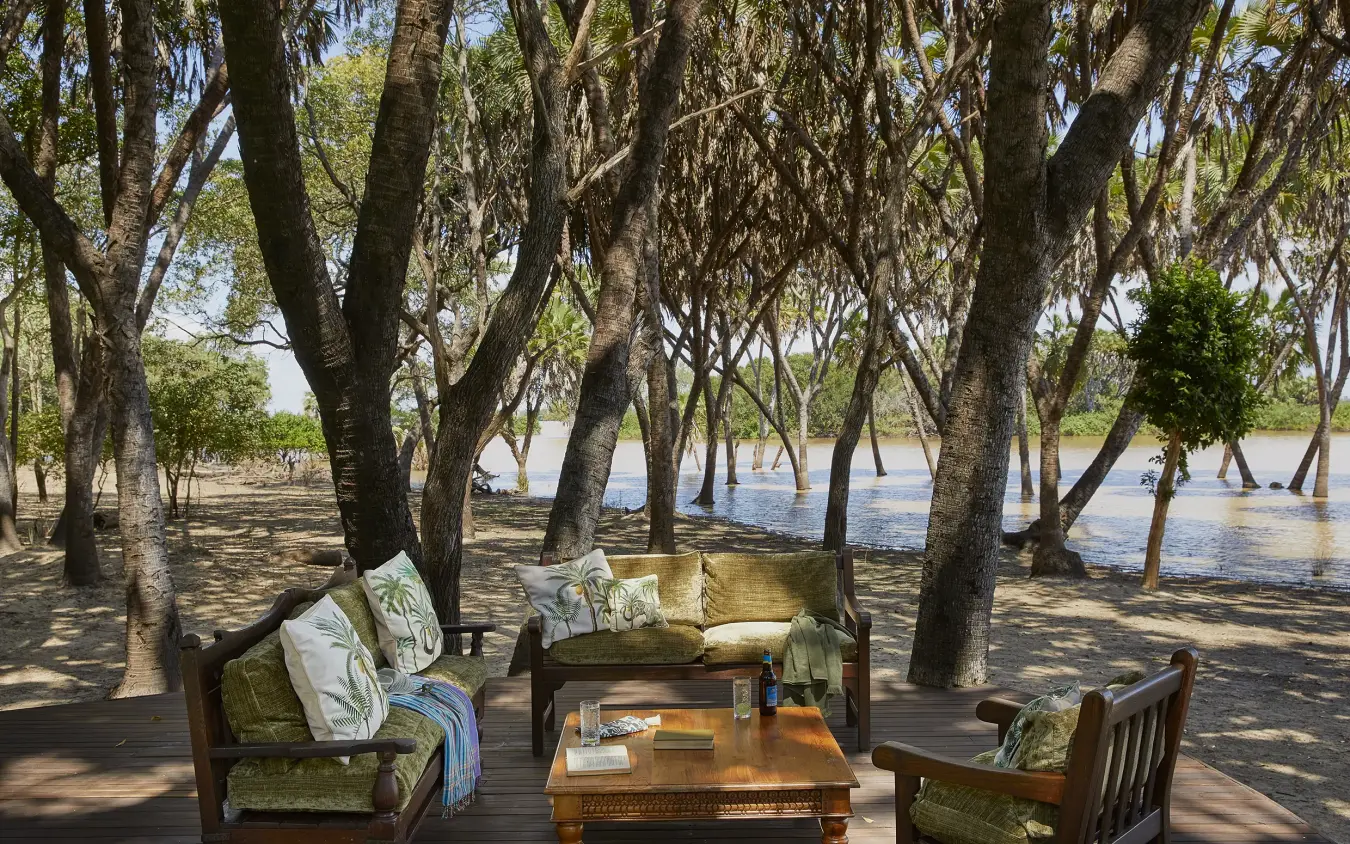
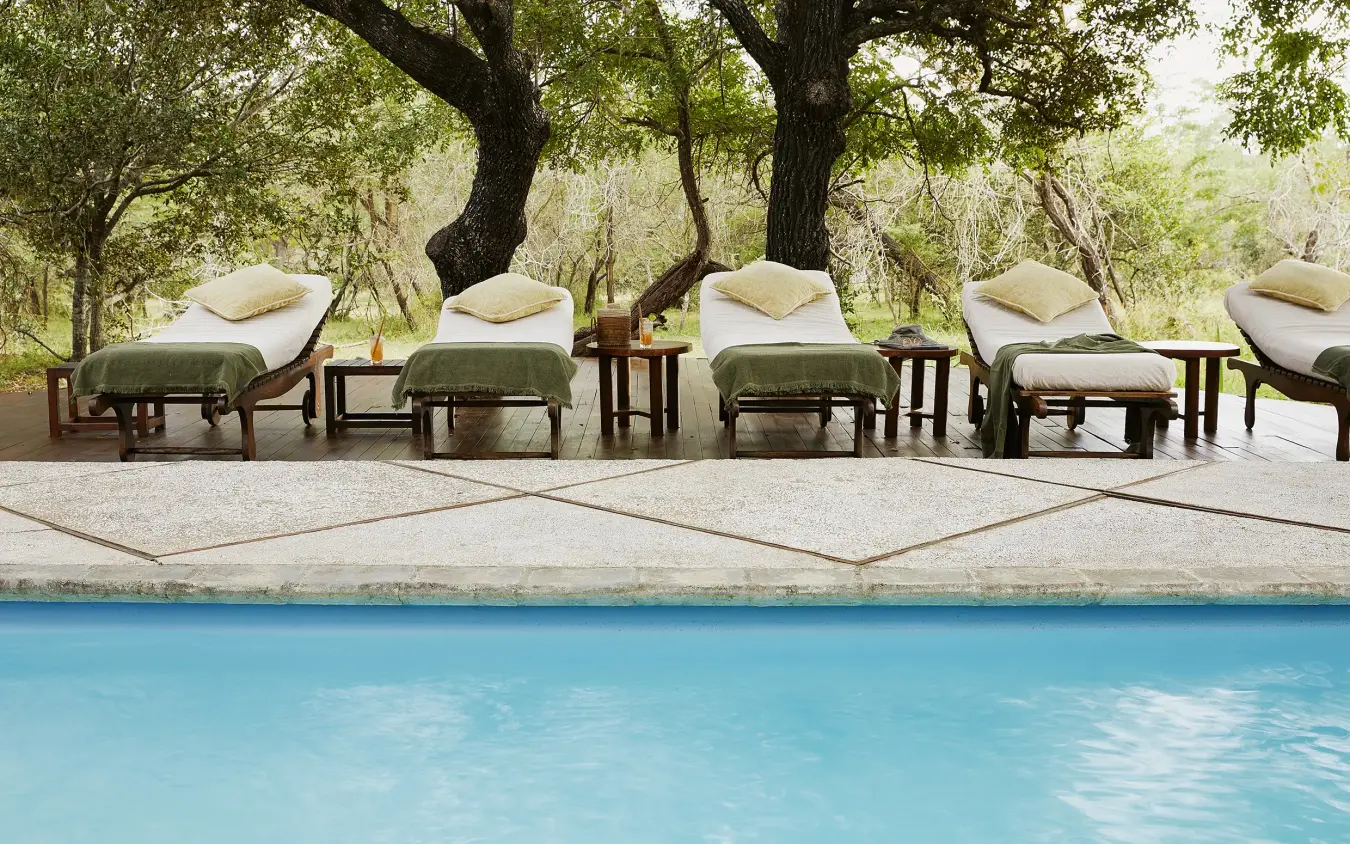
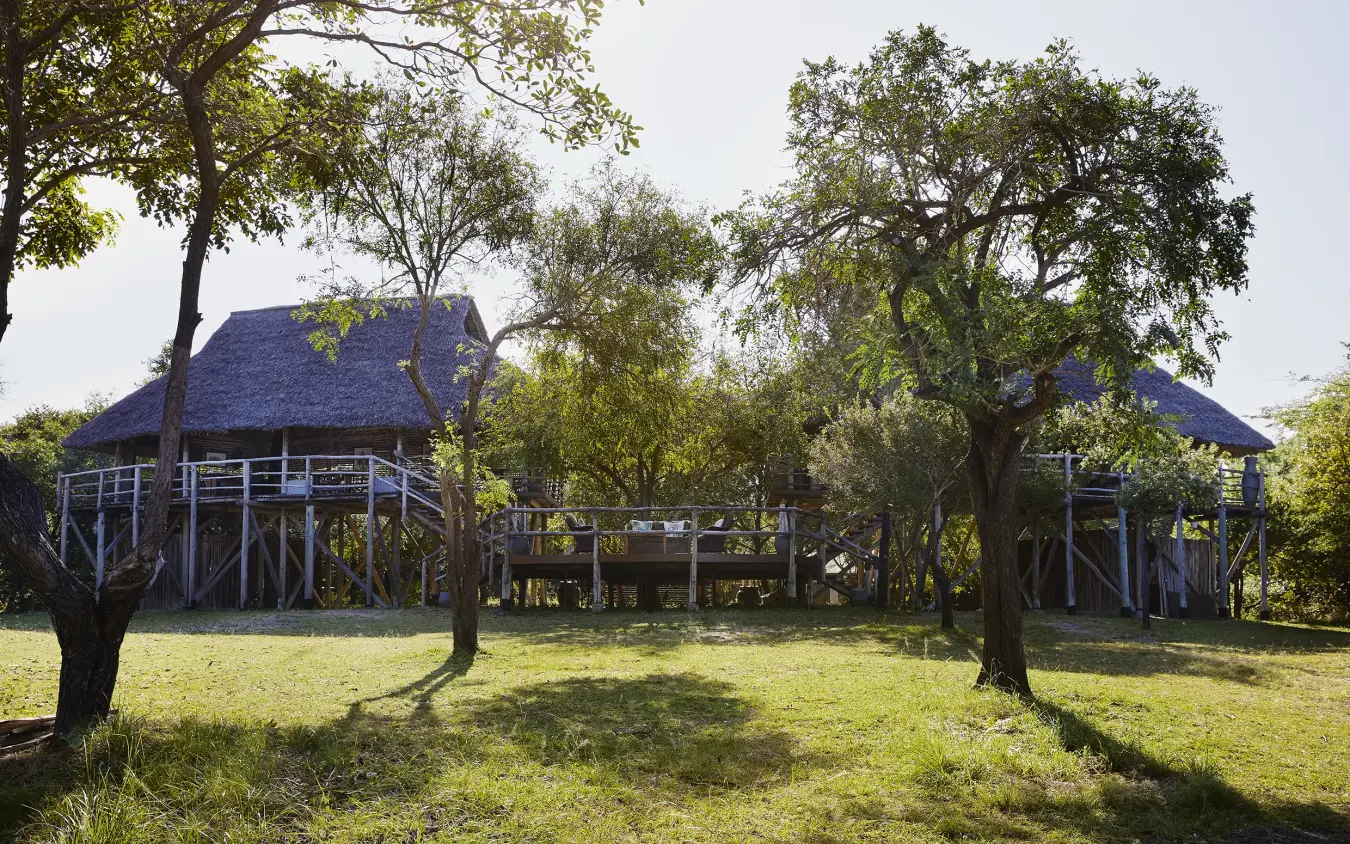
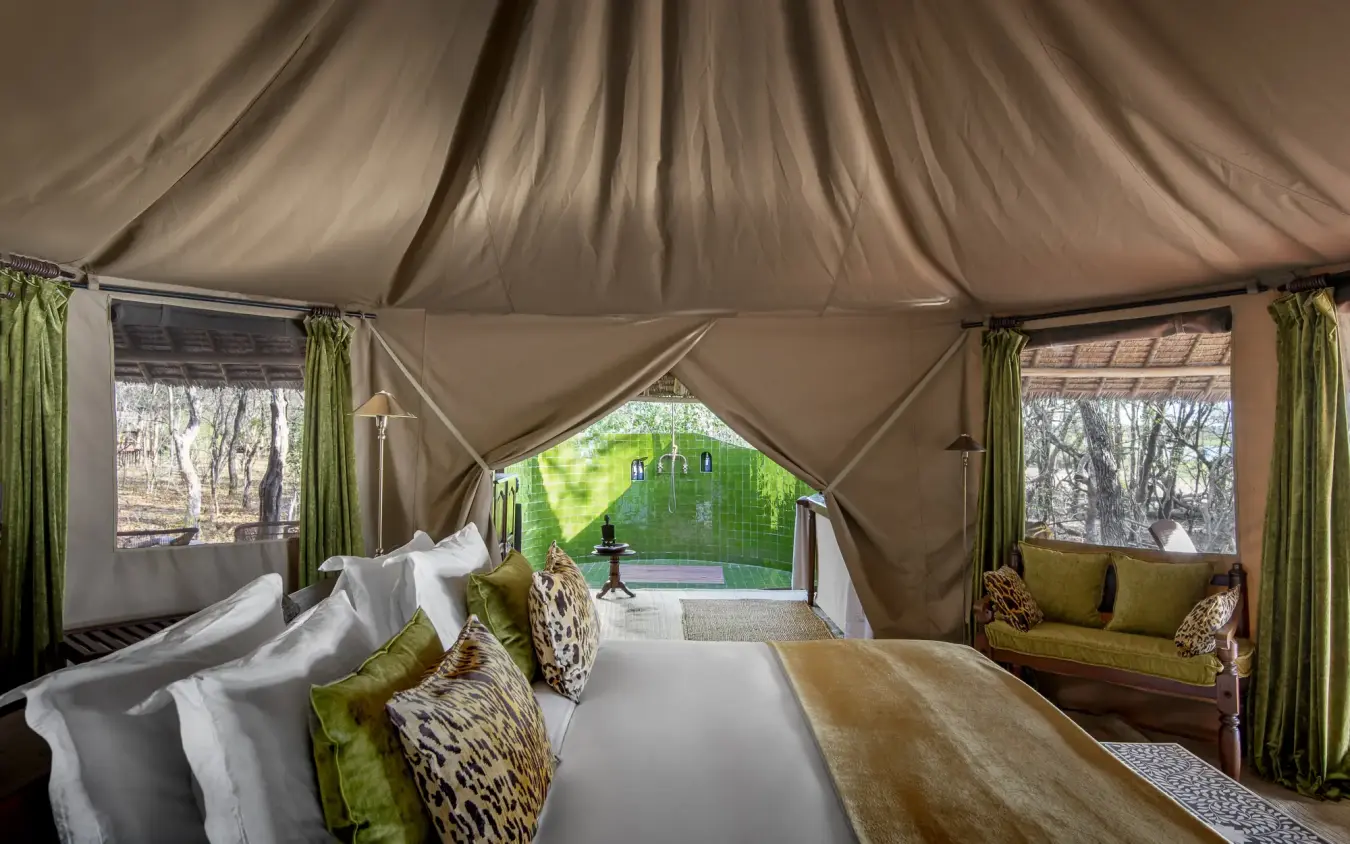
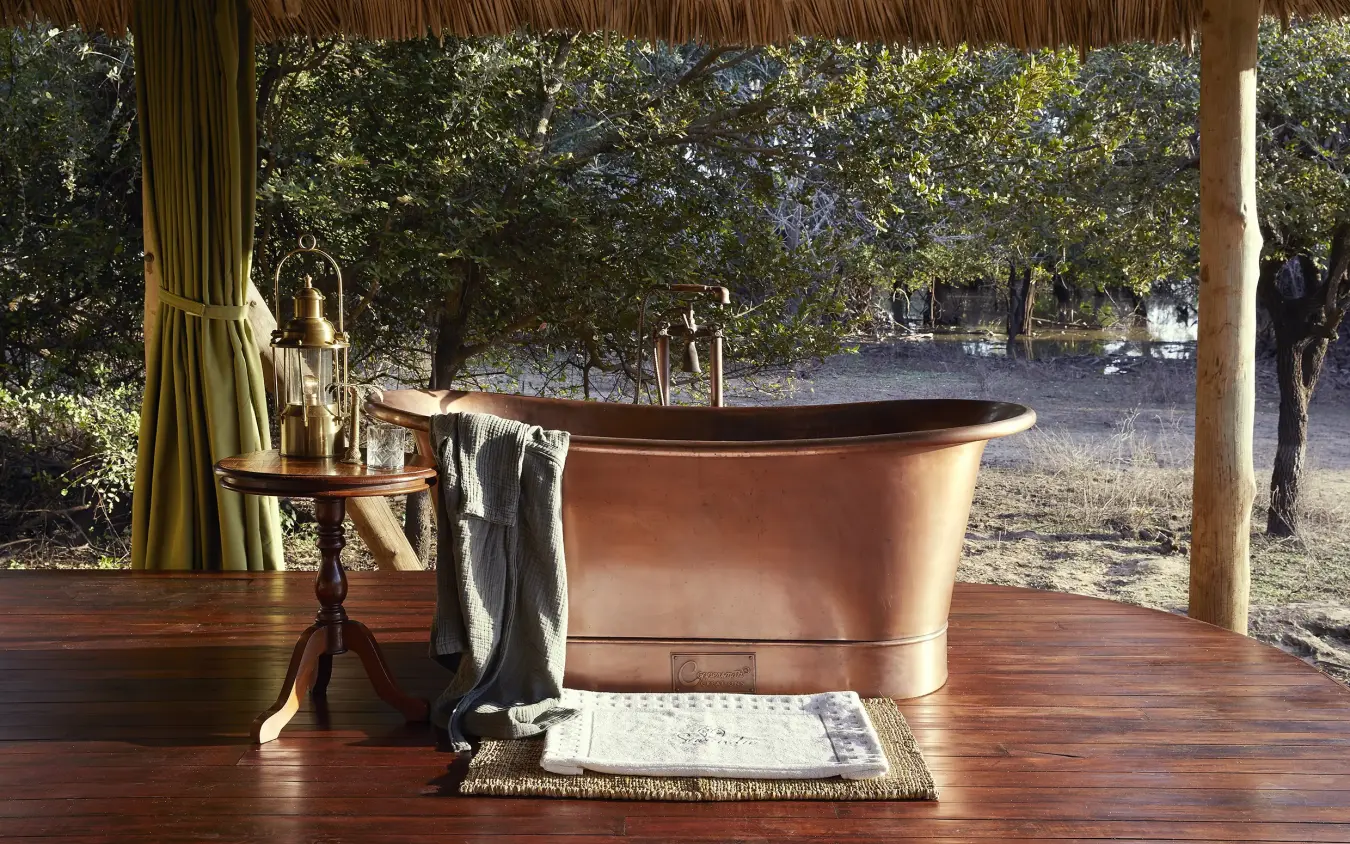
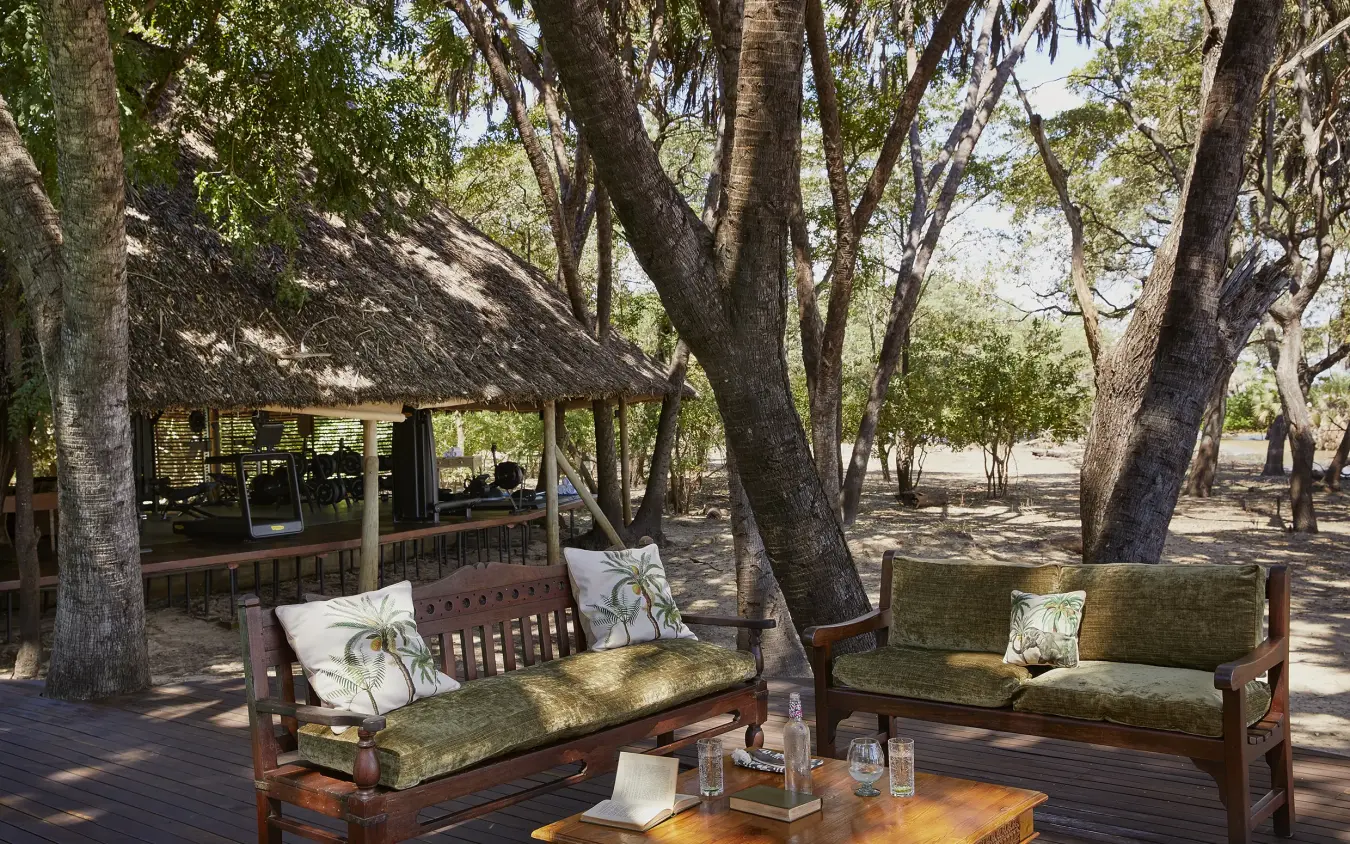
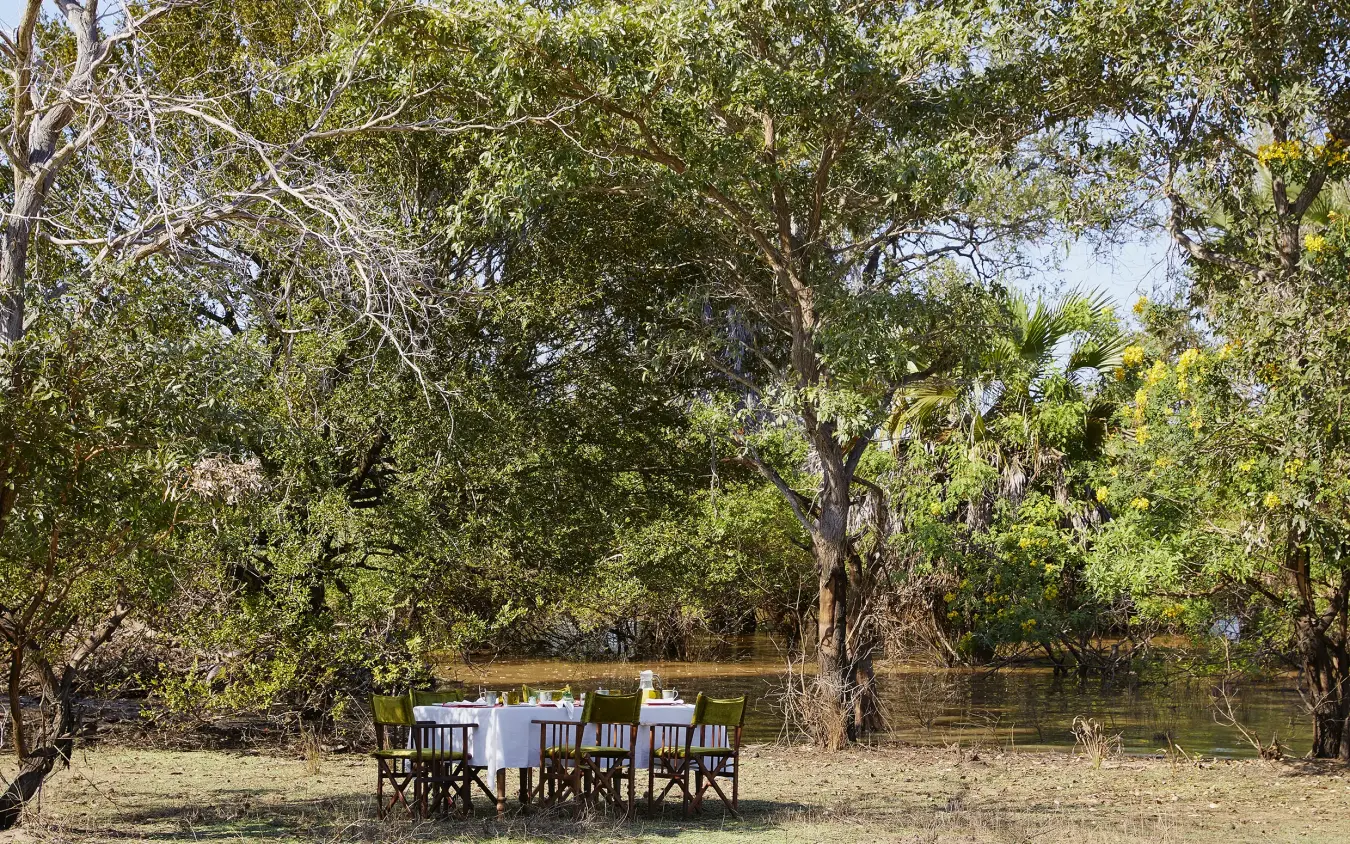
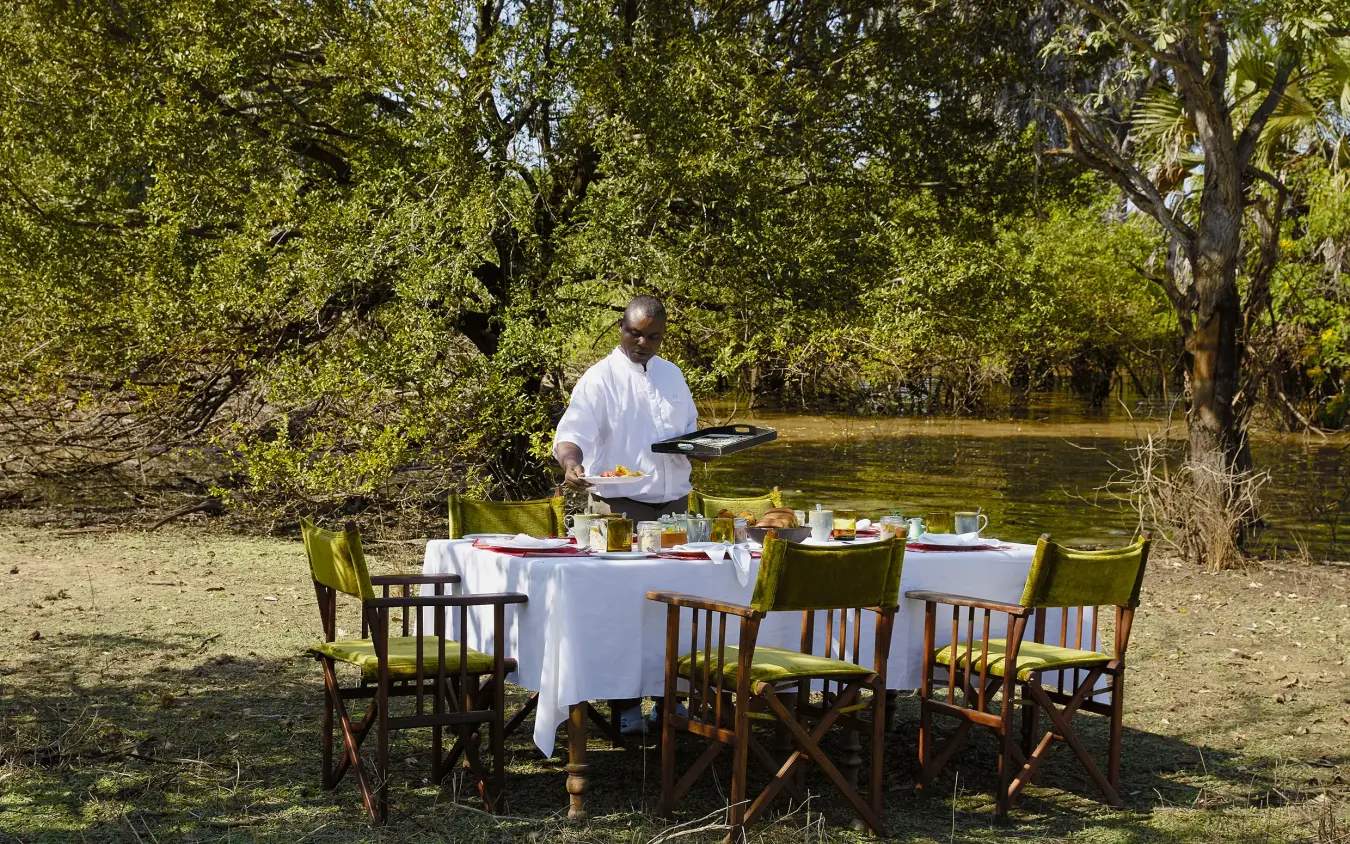
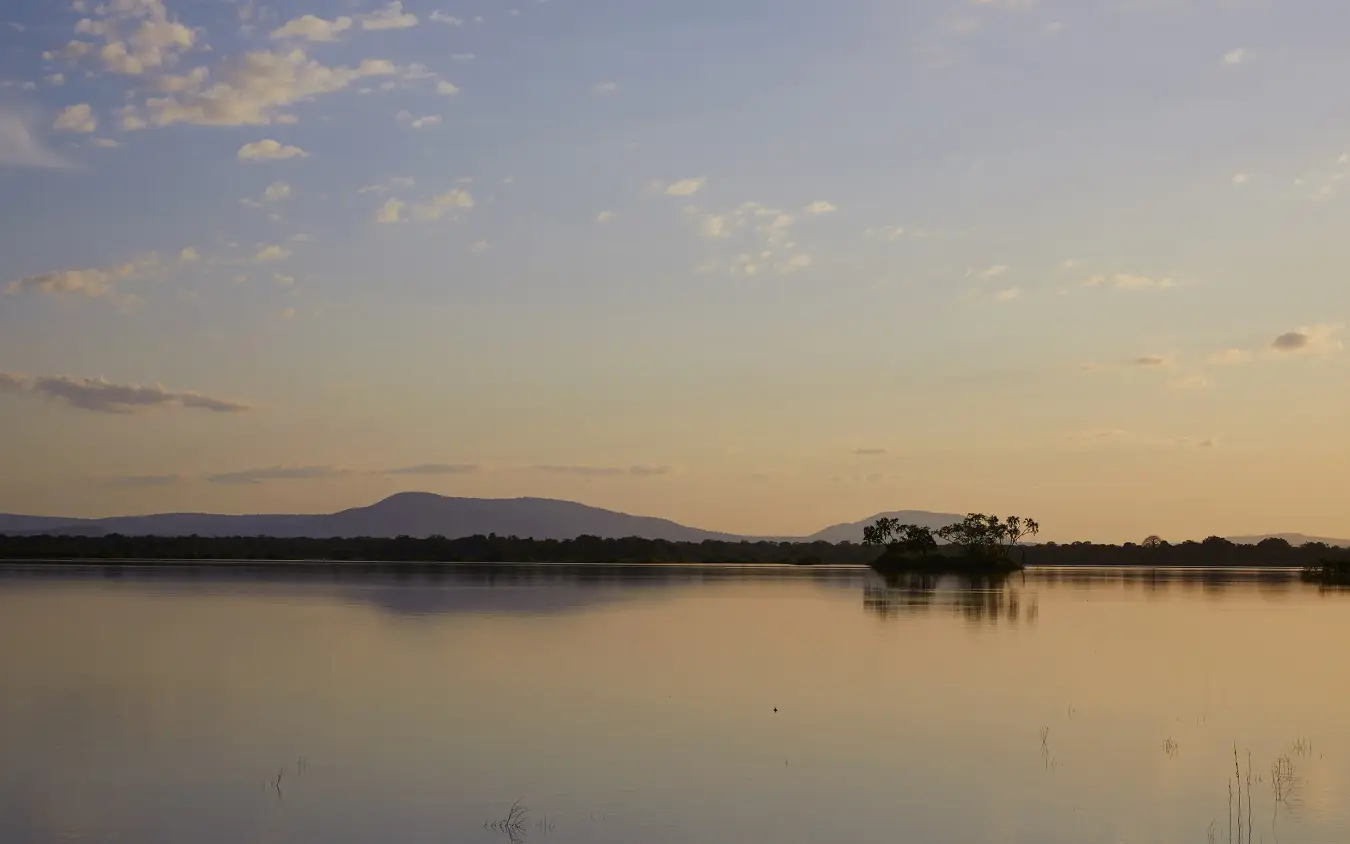
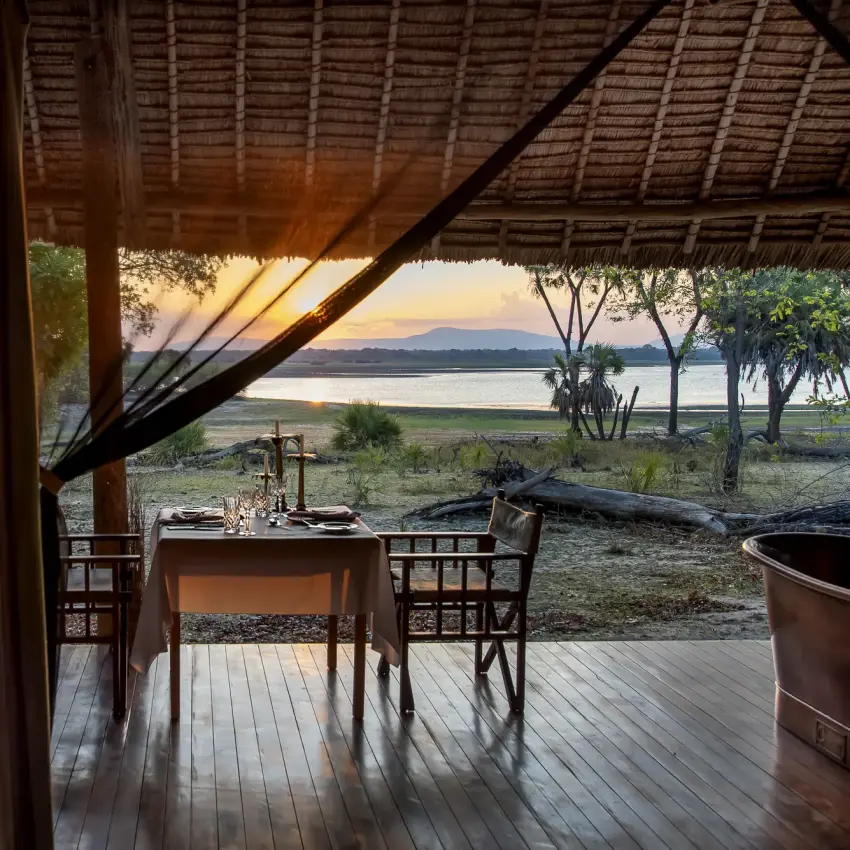
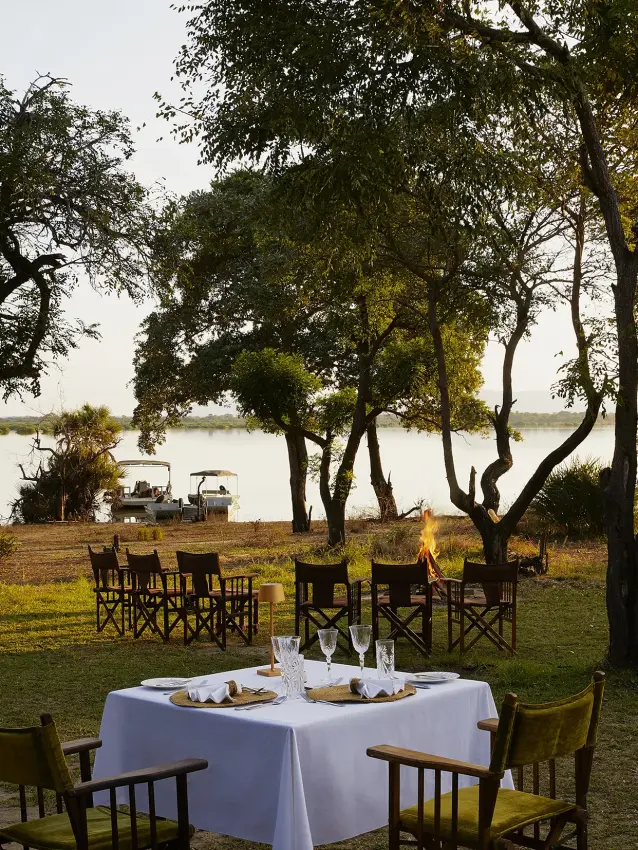
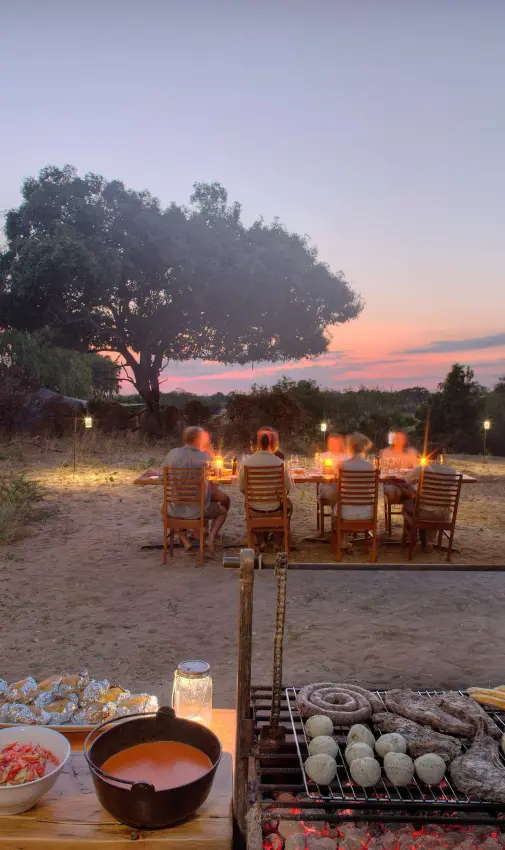
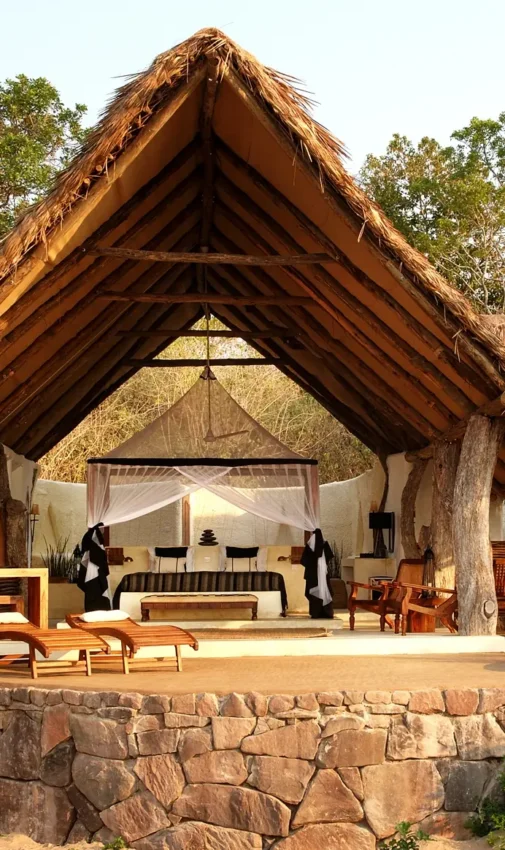
Two sections of camp, spaced along the shore, keep guests apart rather than clustered together. Each tent has canvas walls, a thatched or canvas roof and a veranda facing the lake, furnished simply in wood and natural fabric. The style is traditional rather than contemporary, with palms and open bush framing the tents and little in the way of hard landscaping between them. From the raised decks, hippo, crocodile and passing plains game are visible without leaving the tent, and the open-sided mess, lounge and pool all face the same stretch of water.
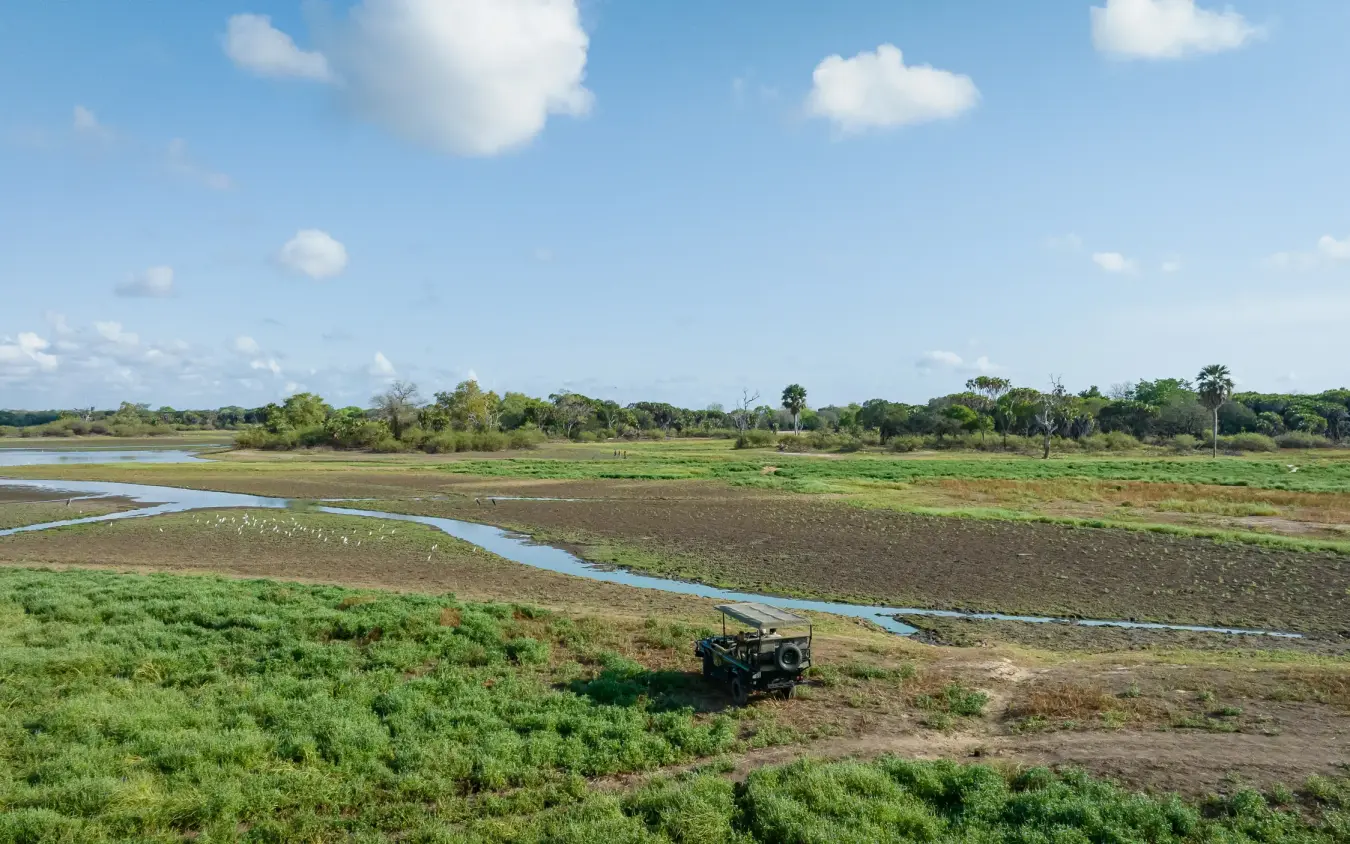
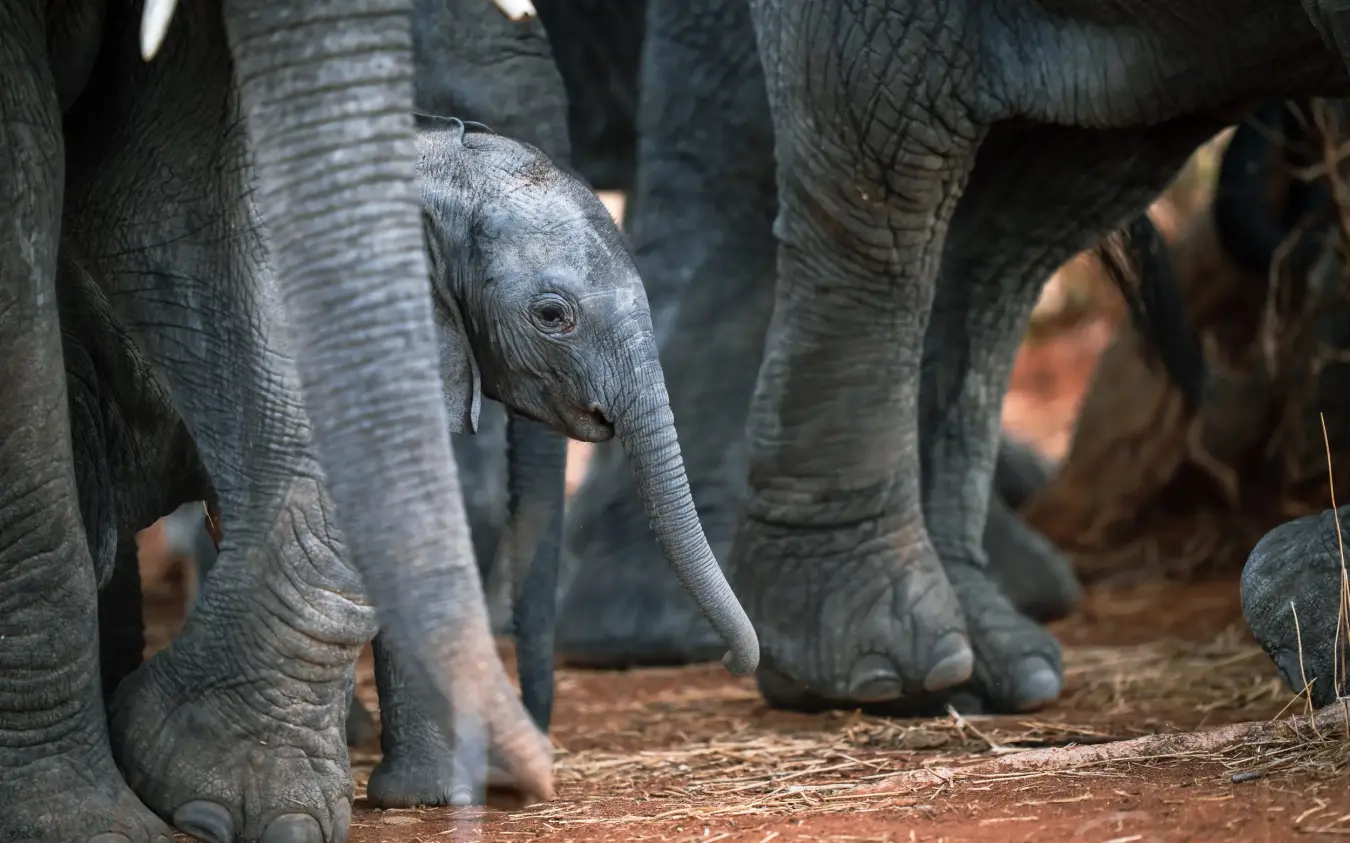
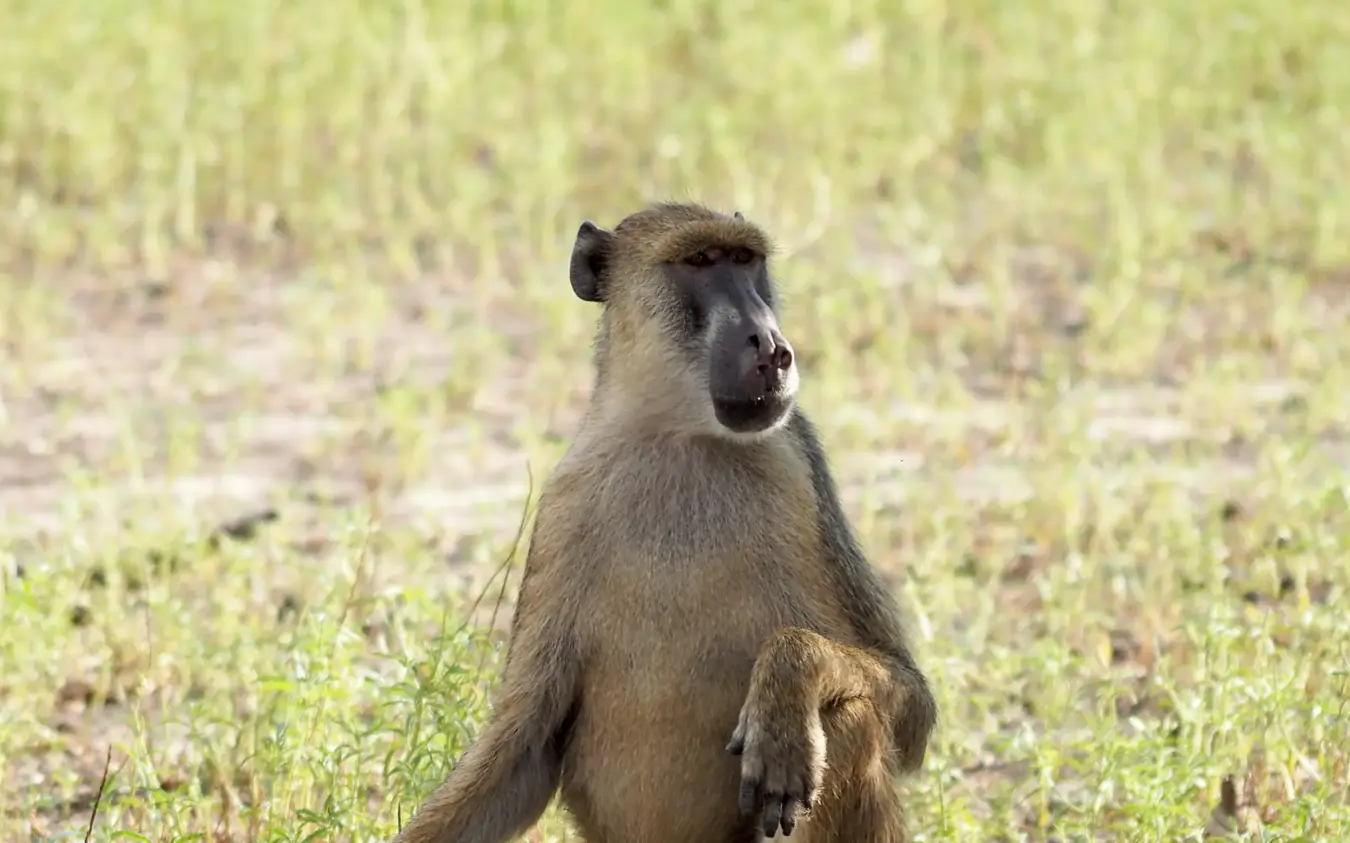
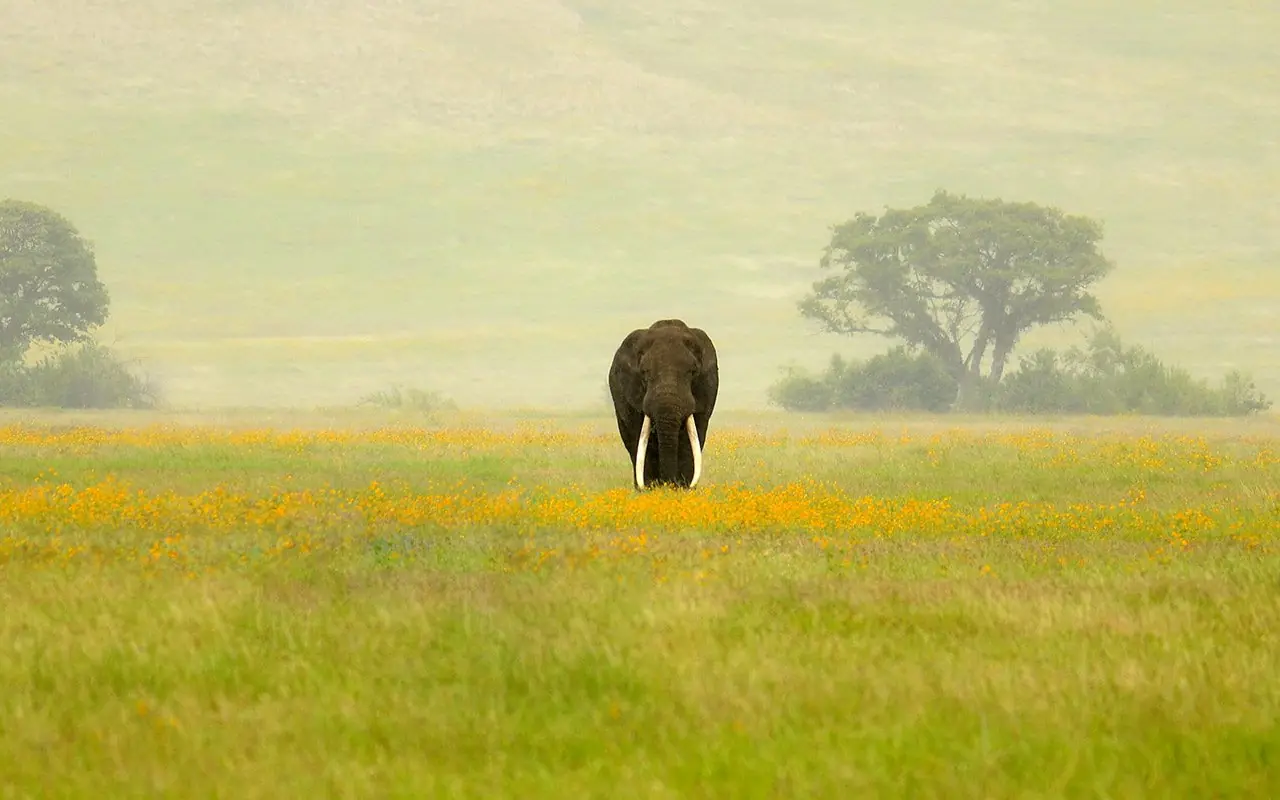
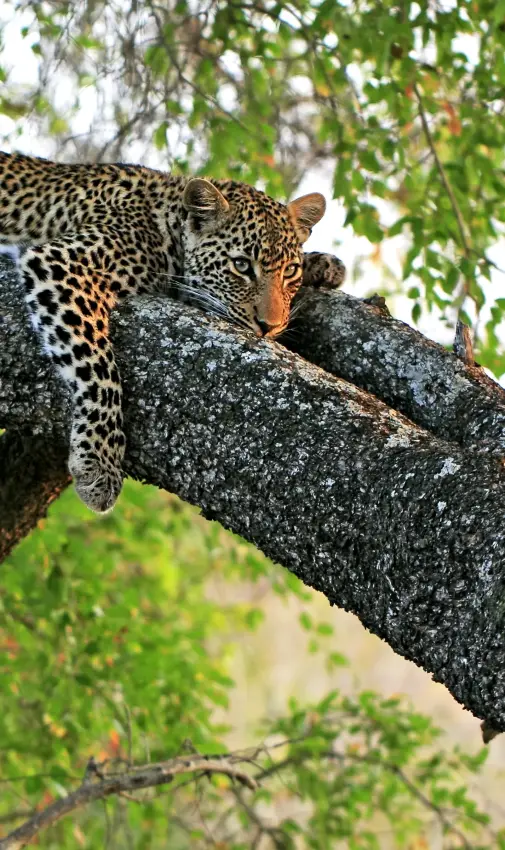
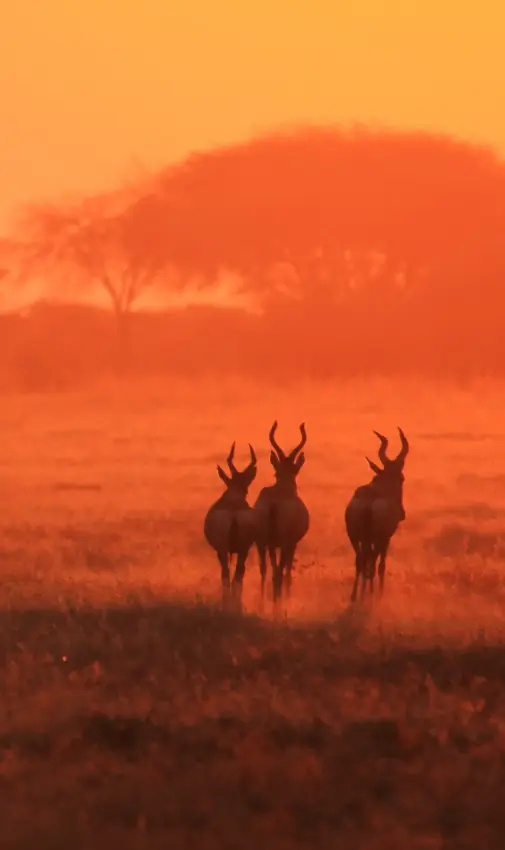
Nyerere National Park replaced the old Selous Game Reserve designation, and it is the Rufiji’s network of lakes and channels that supports the density of wildlife around Siwandu. Elephant, buffalo, lion, leopard and giraffe appear regularly on land activities. Rhino and cheetah are extremely rare in this part of Tanzania and are not a realistic expectation. On the water, hippo and crocodile are the constants, joined by herons, storks, kingfishers and fish eagles working the margins throughout the day.
Nights carry the sound of hippo grunting and, at times, lion calls across the water.
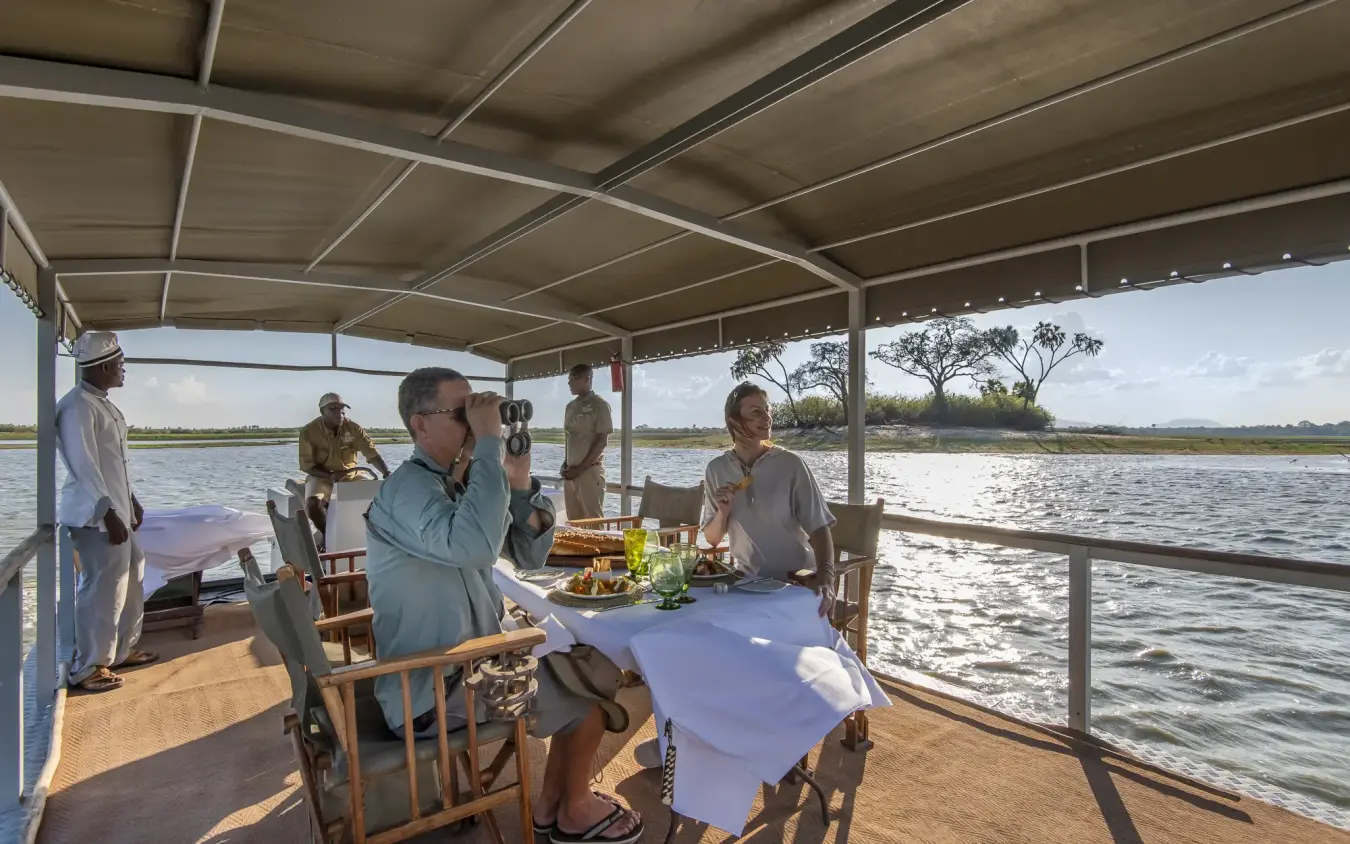
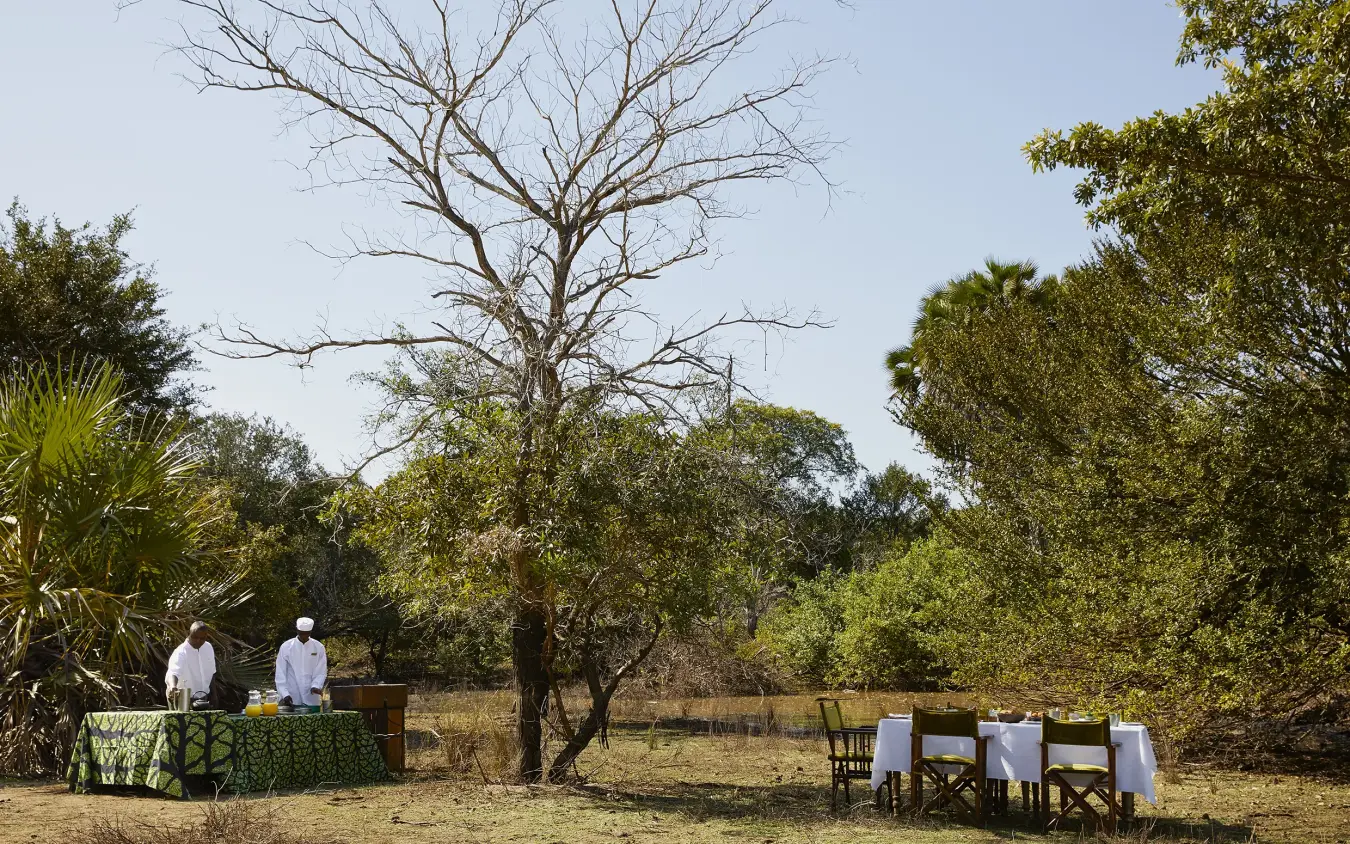
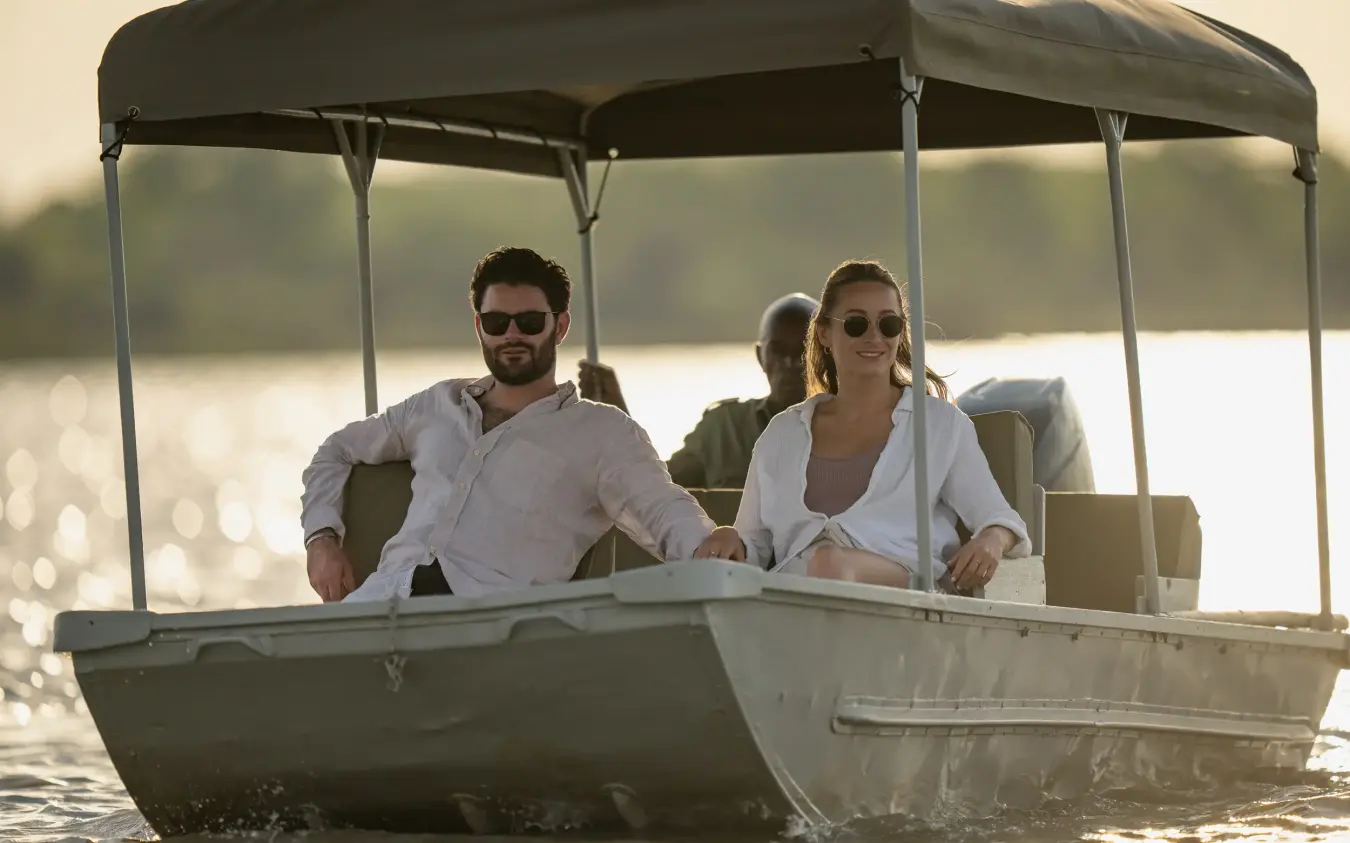
Most guests come for the boat safaris, which run on Lake Nzerakera and the connected Rufiji channels close to where the lake meets the river. Standard cruises focus on hippo, crocodile and birdlife, while breakfast and sundowner cruises build a meal into the outing. Morning and afternoon game drives cover the woodland and lake plains. Guided walks set out with armed guides to work the ground on foot, tracking and reading the smaller signs of animal movement. For a different way to spend time on the water, there is catch-and-release fishing on the lake.
The camp is reached by a flight of roughly forty minutes south from Dar es Salaam to the local airstrip, then a short transfer to camp. Nights carry the sound of hippo grunting and, at times, lion calls across the water. By day, palms rustle and elephants move through camp on their own schedule. Evenings often end with lamplit paths back to the tent and the lake still audible in the dark, while the hot afternoons are best given over to the pool, with animals visible along the shoreline throughout.