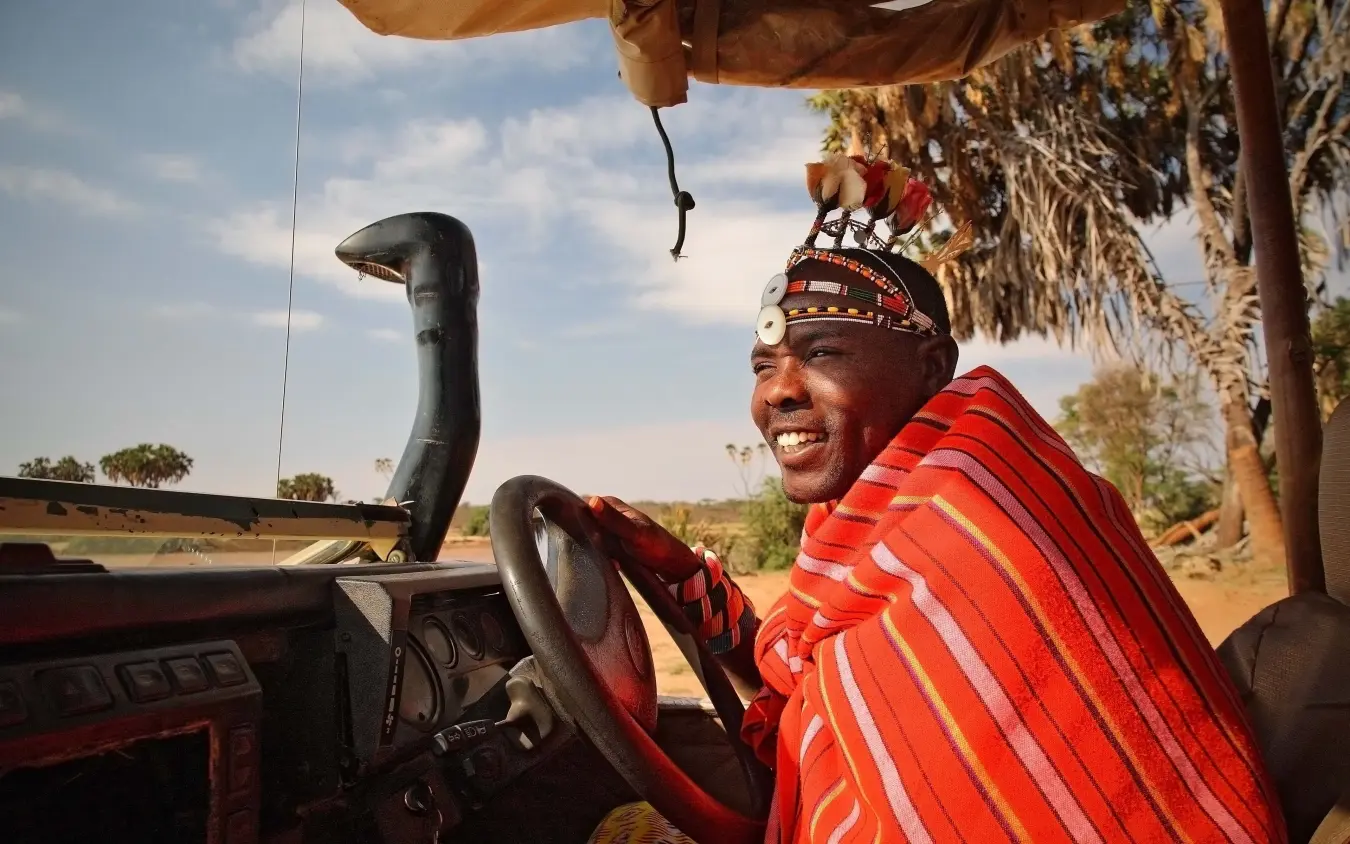
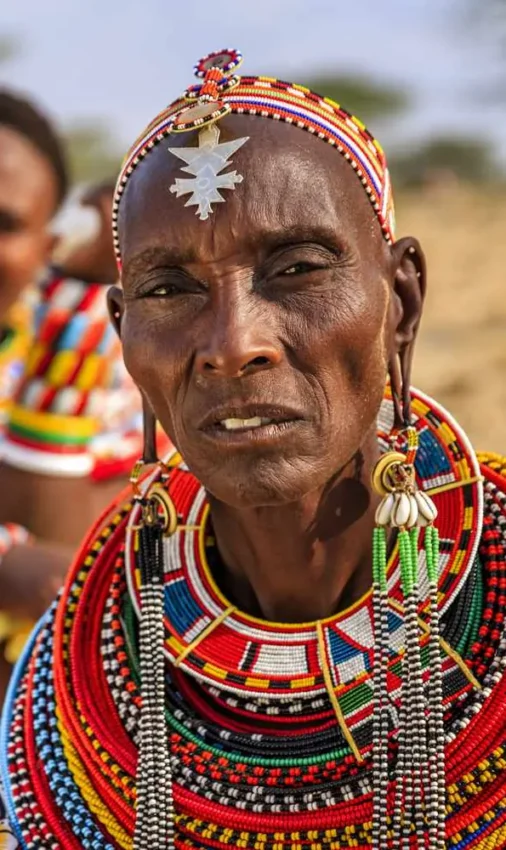
Riccardo Orizio, the former Italian journalist behind the Saruni lodges, opened Saruni Rhino in February 2017 in partnership with the Sera community, on a site the community had used for a guesthouse since 2006. The land and the buildings belong to the Sera Wildlife Conservancy. Most of the team on the ground is drawn from the local Samburu community, and lease payments, conservancy fees and a share of tourism income go towards scholarships, water access and healthcare across the region.
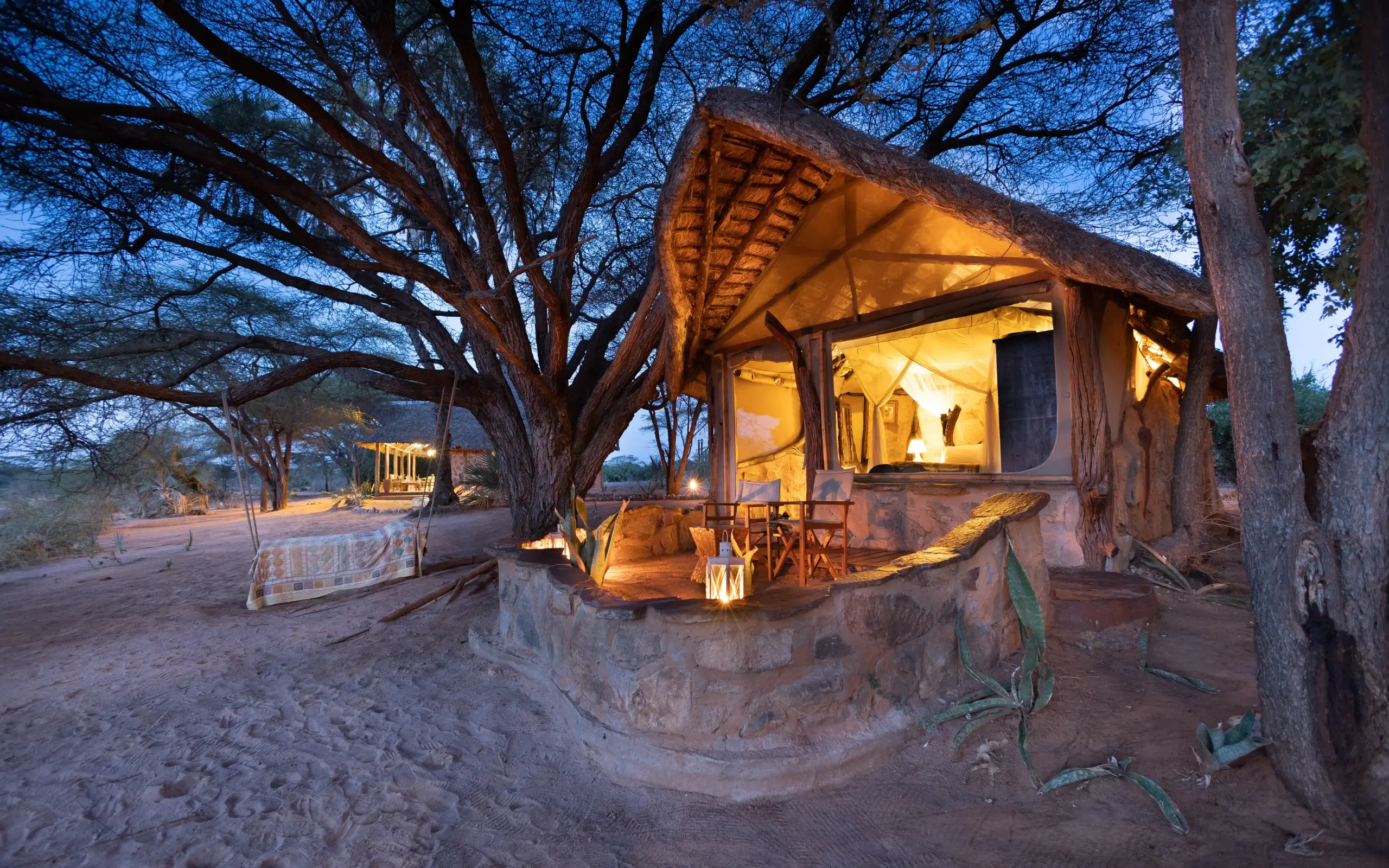
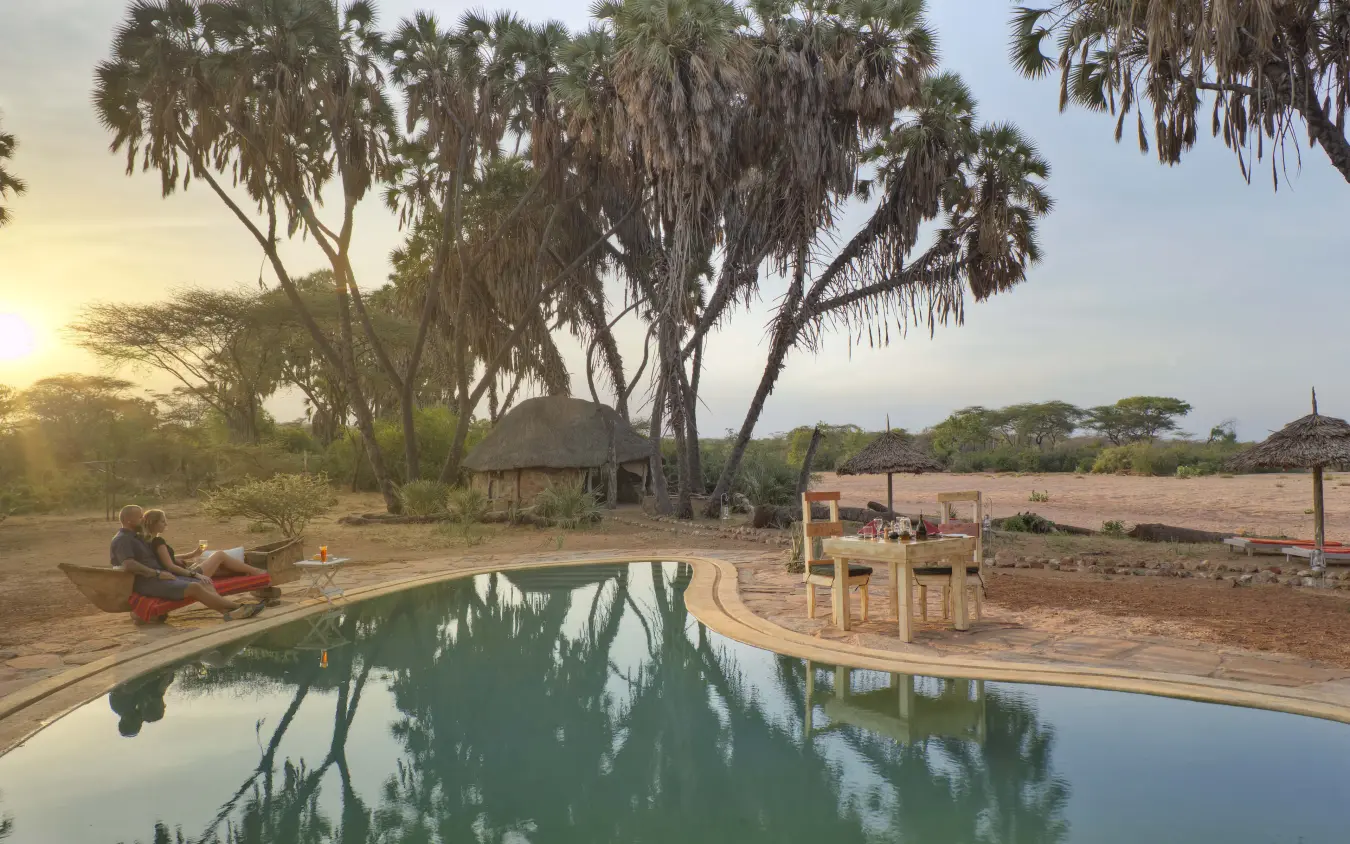
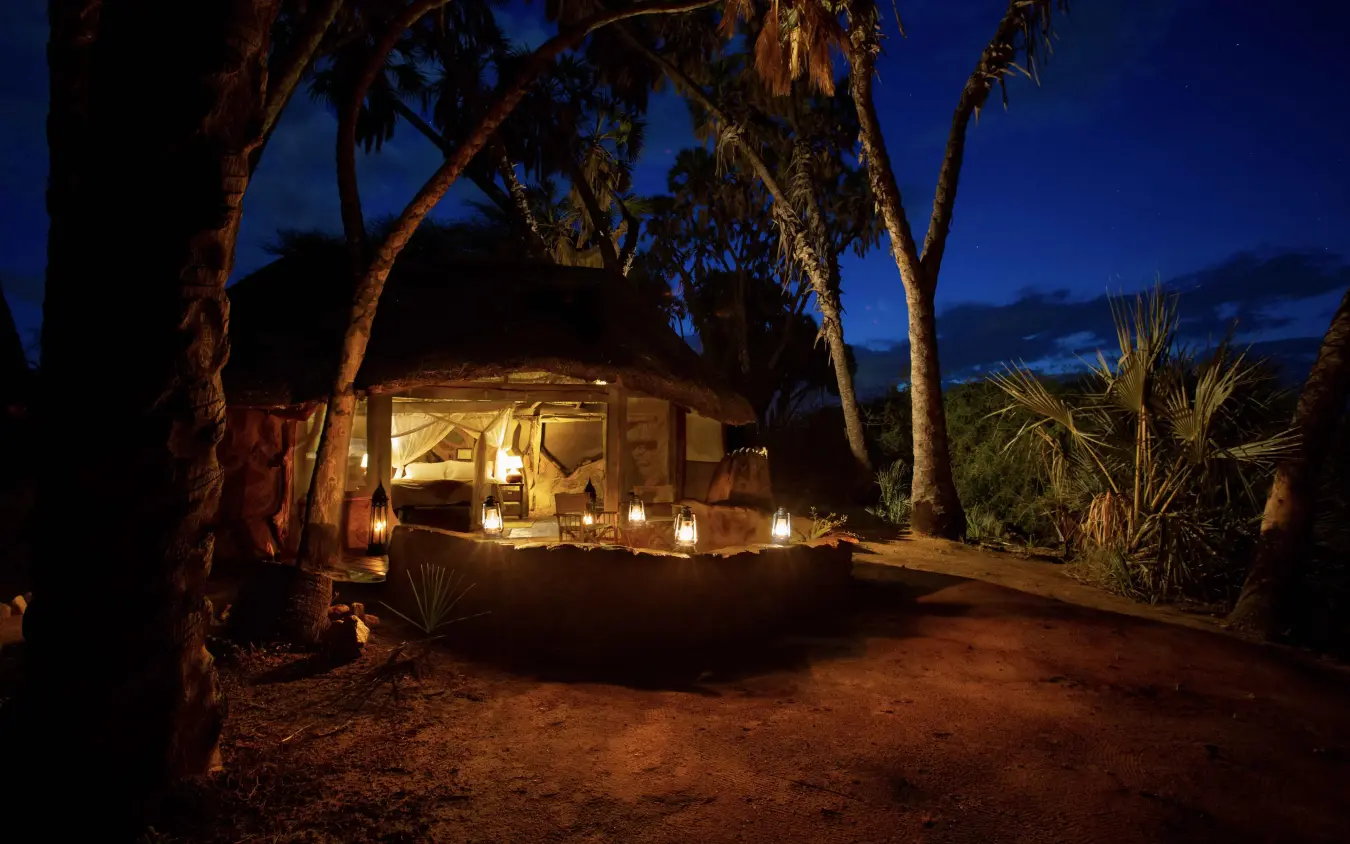
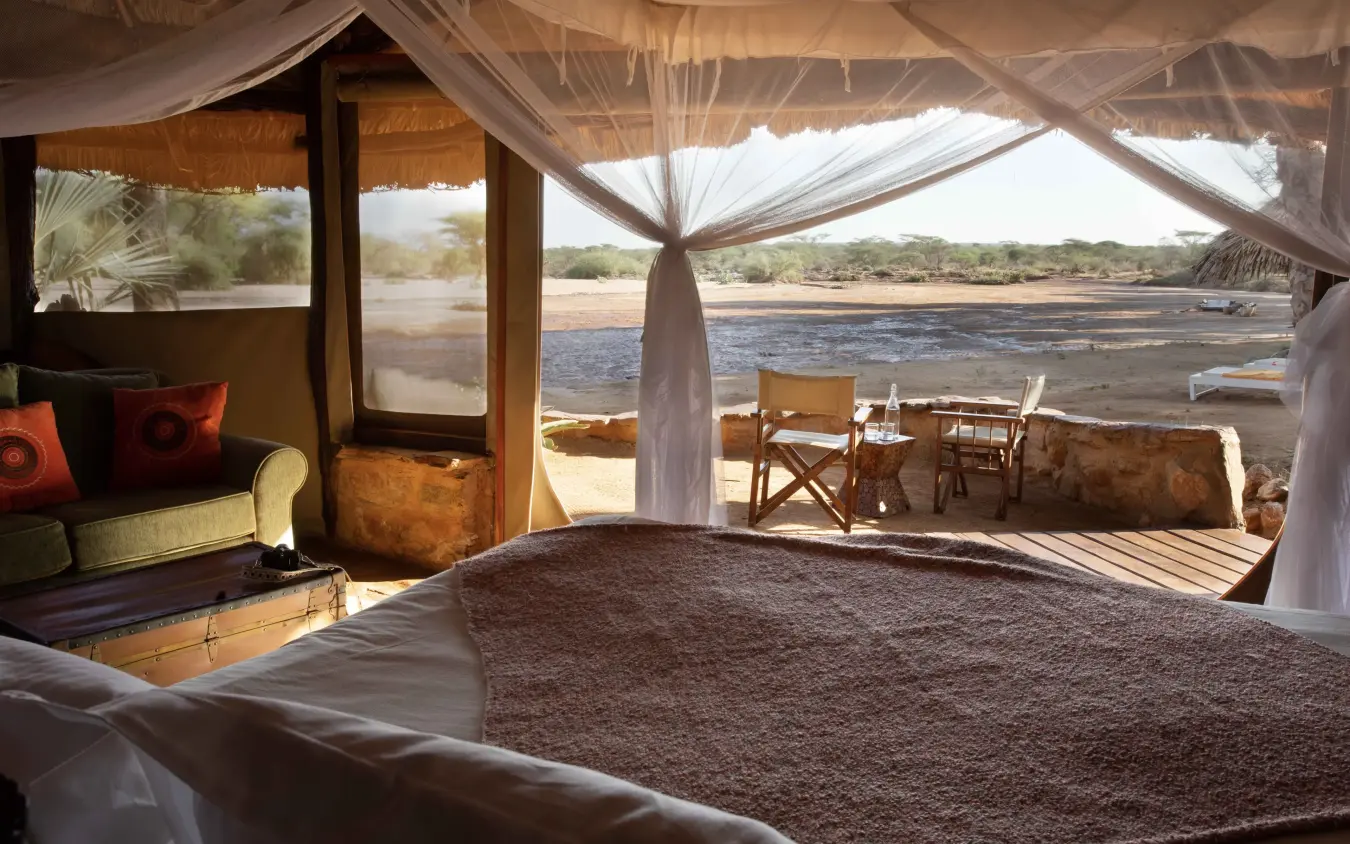
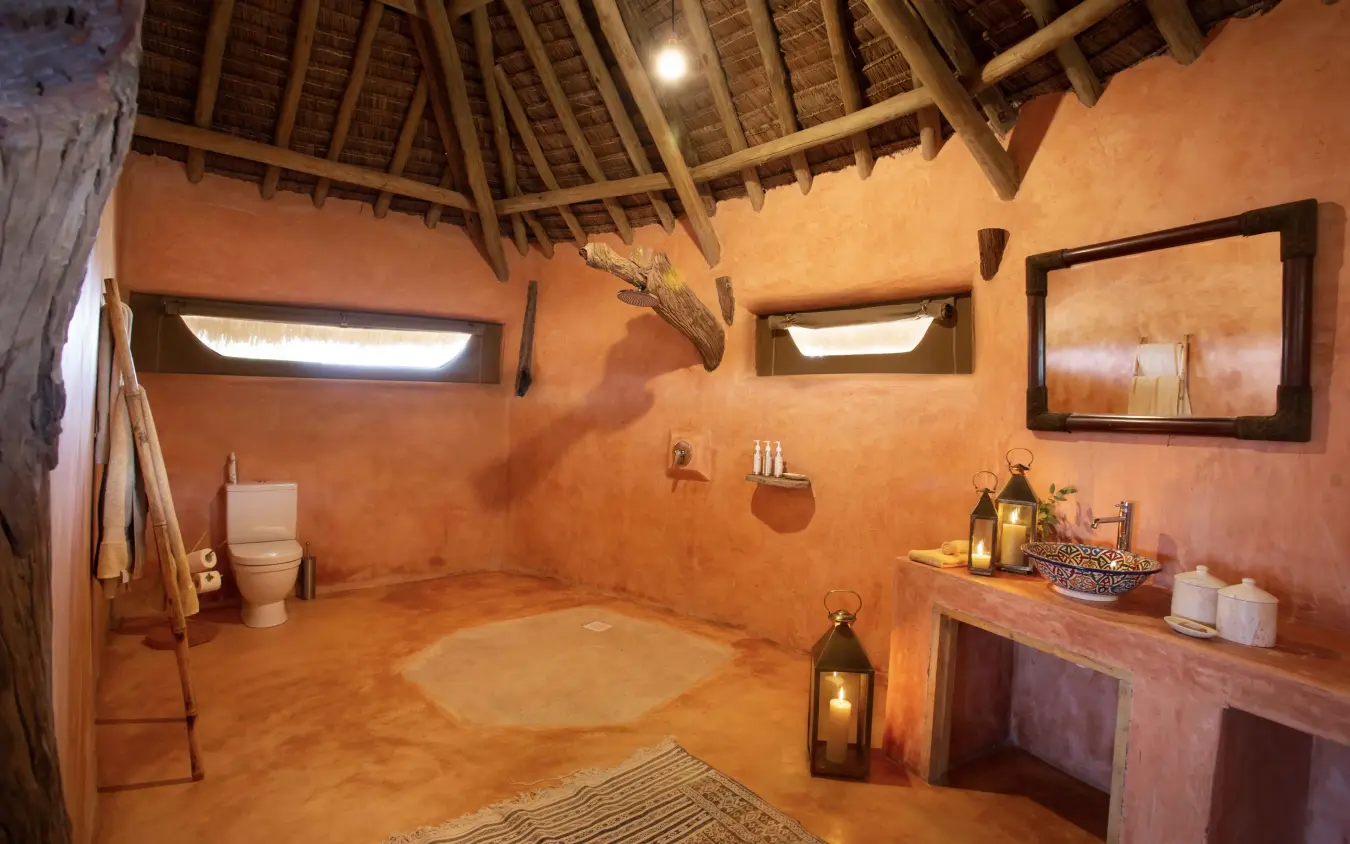
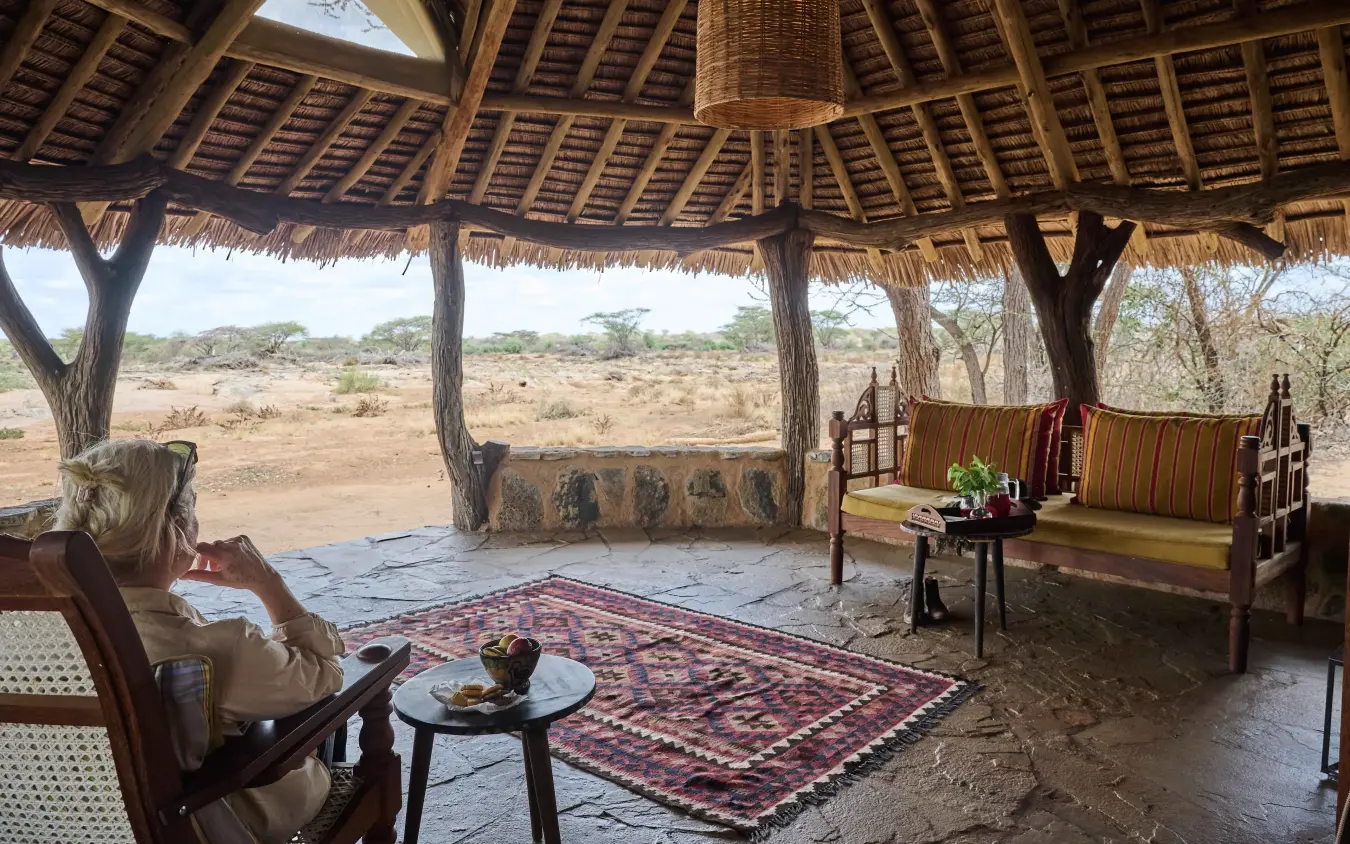
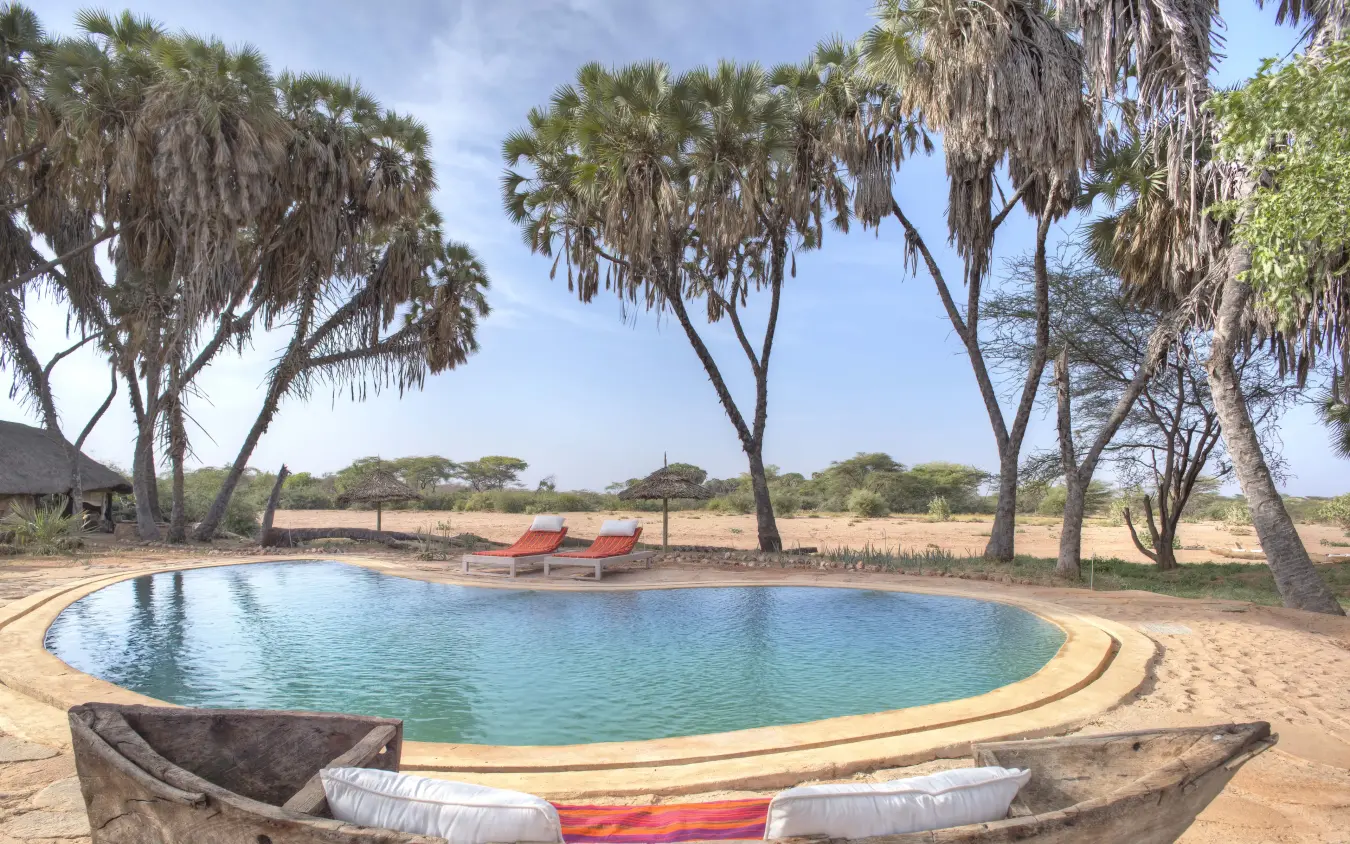
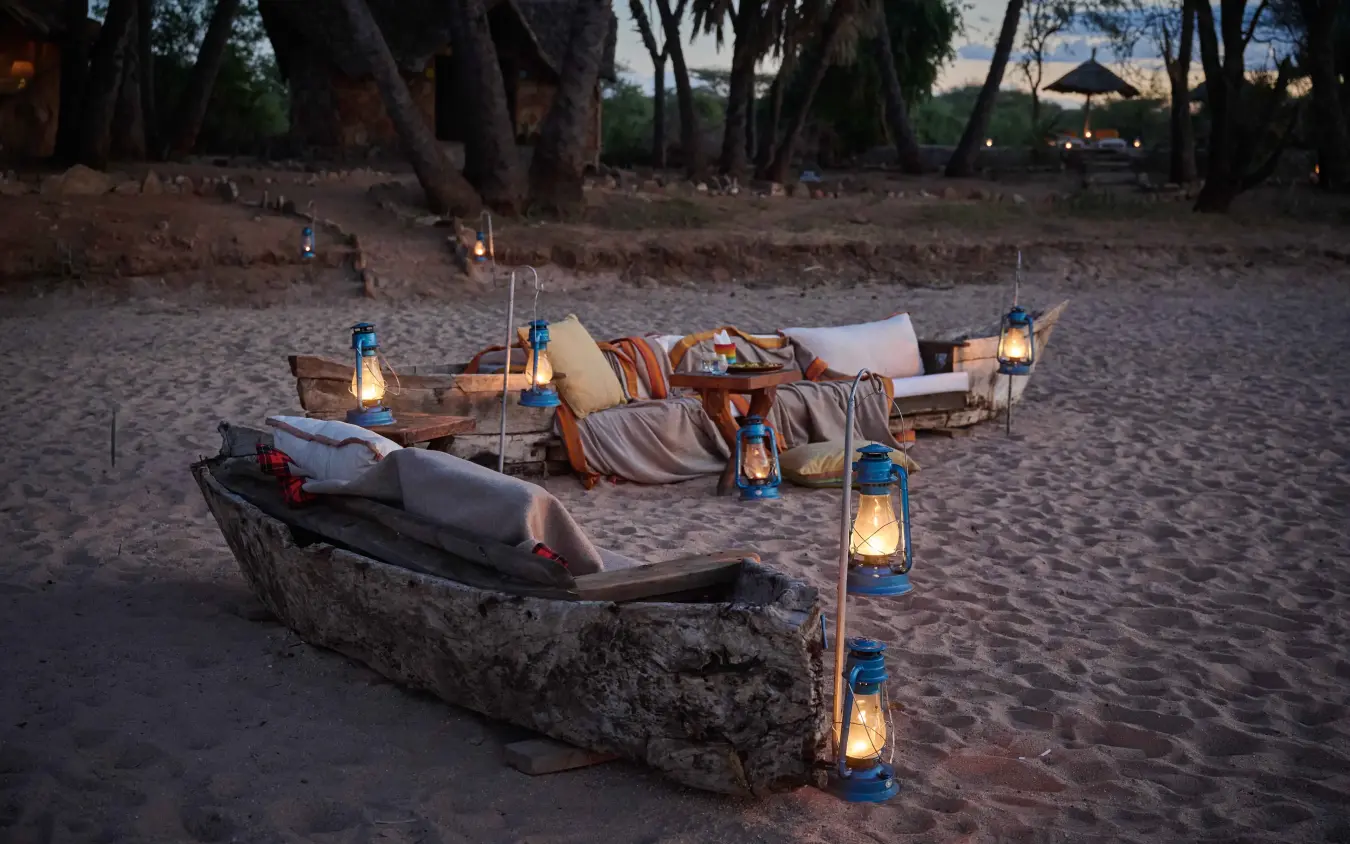
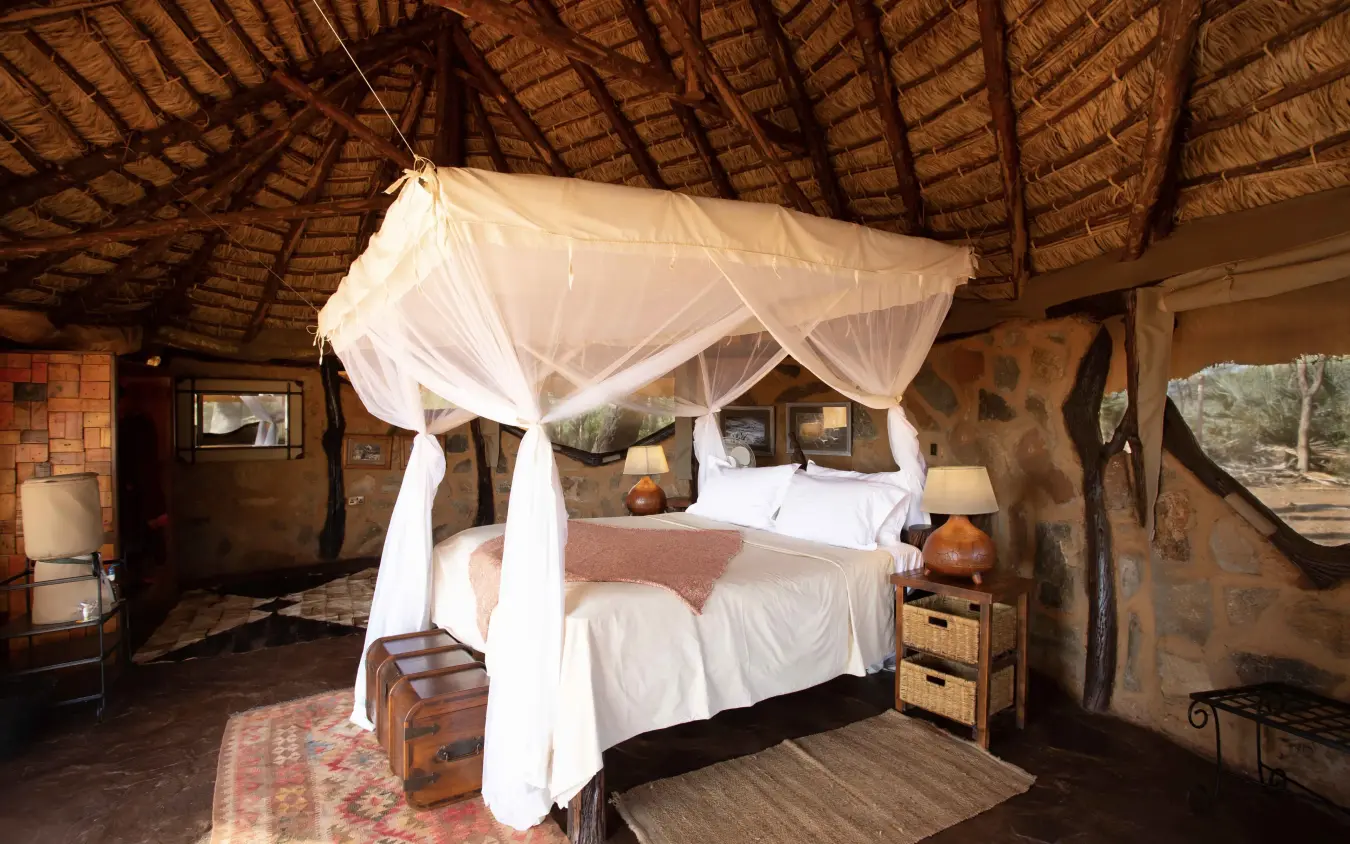
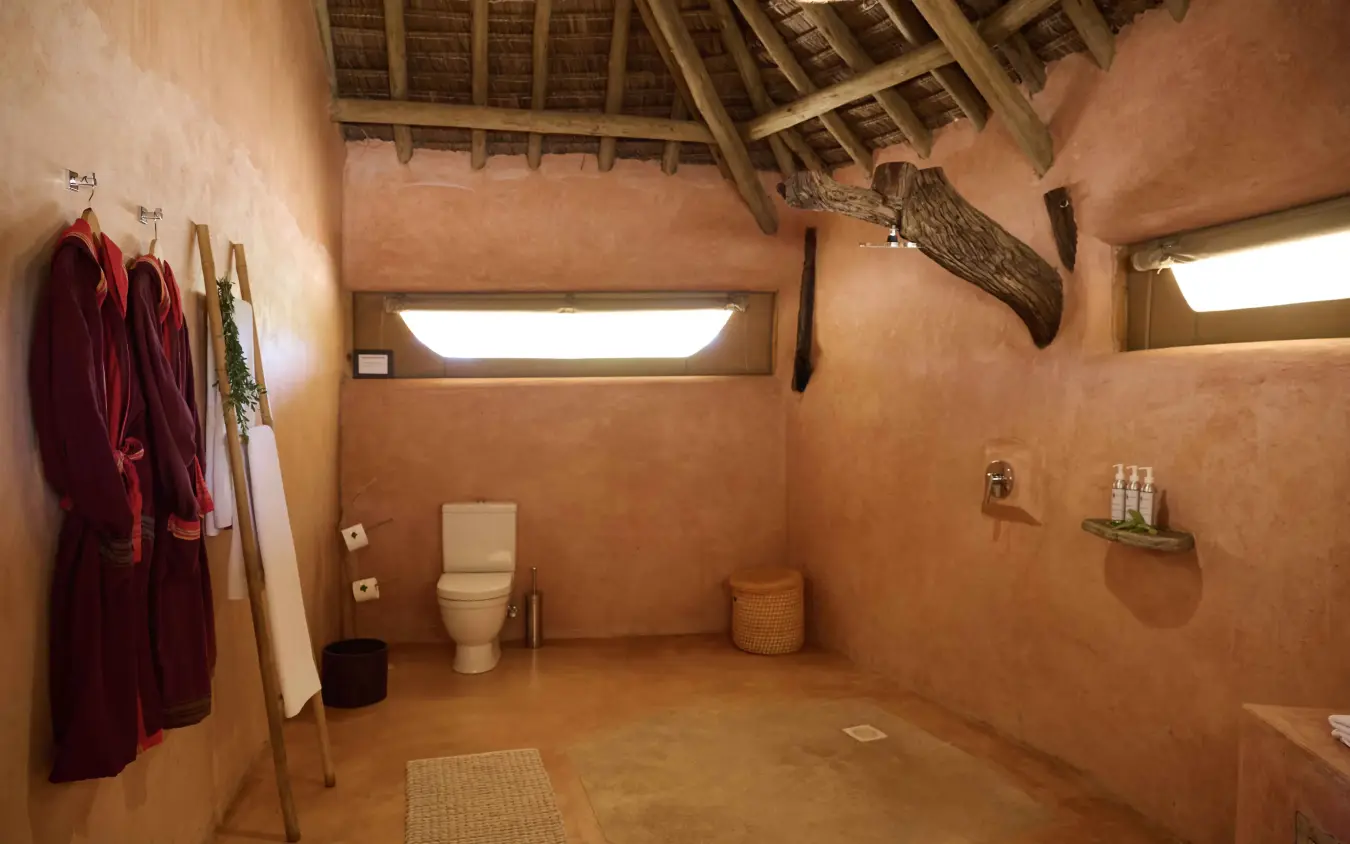
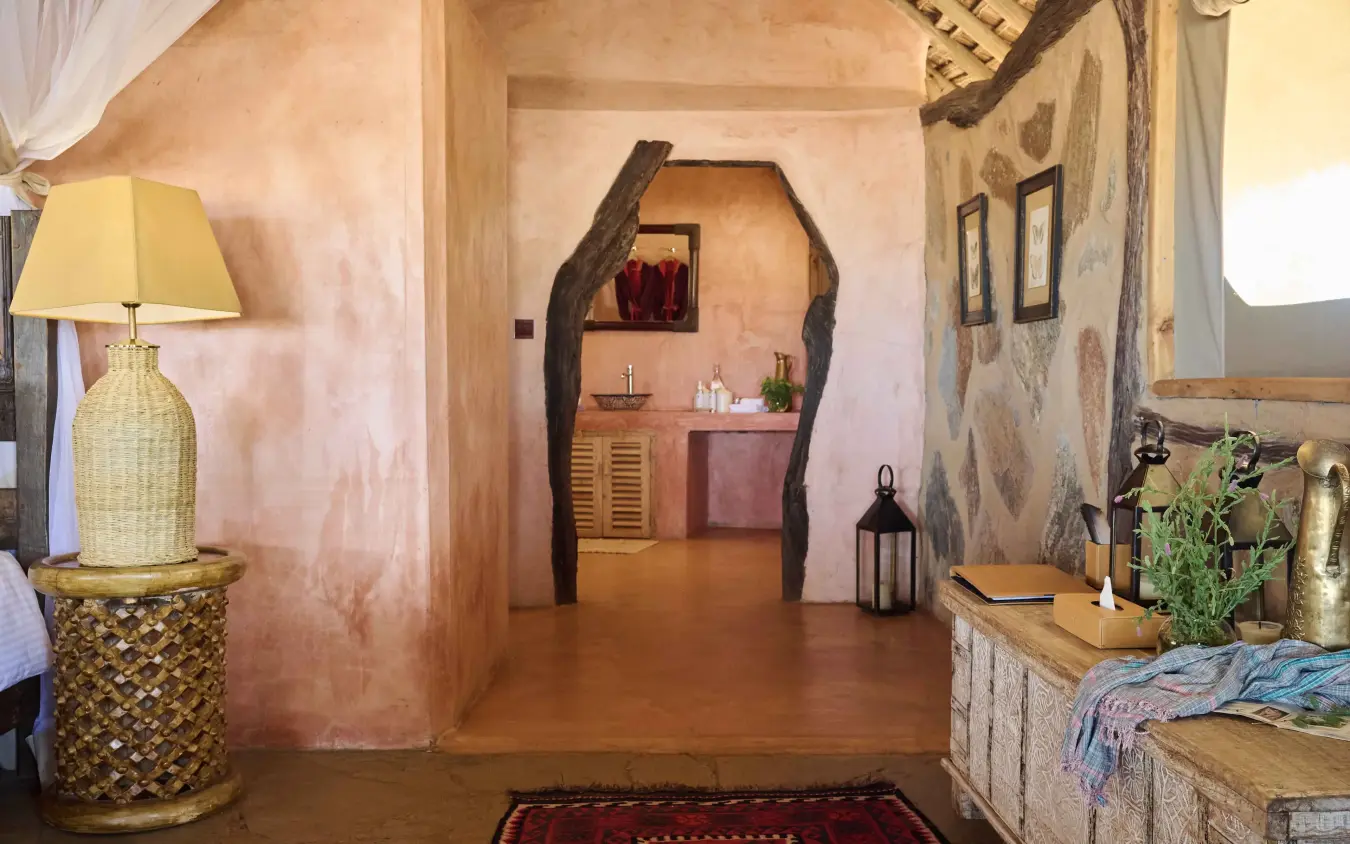
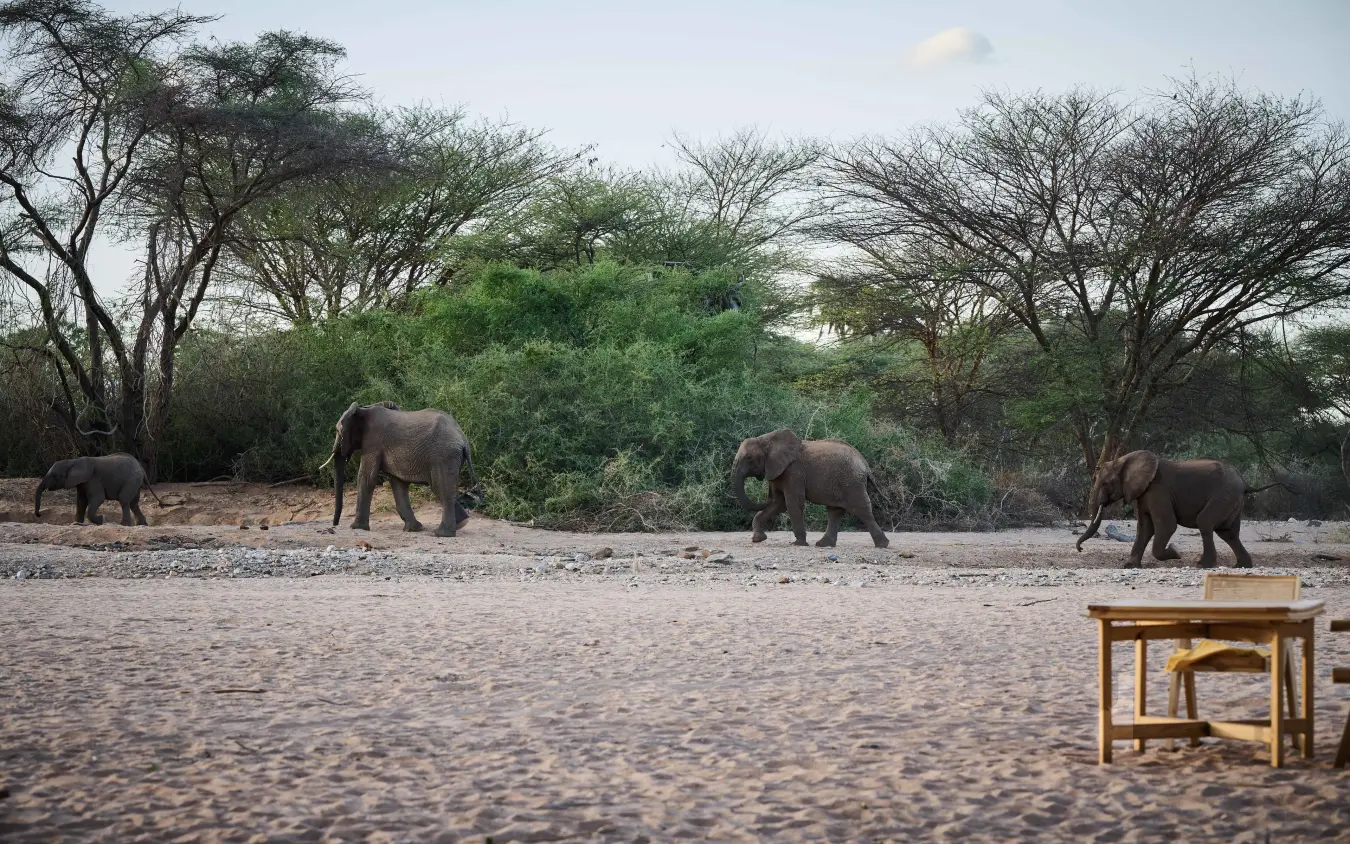
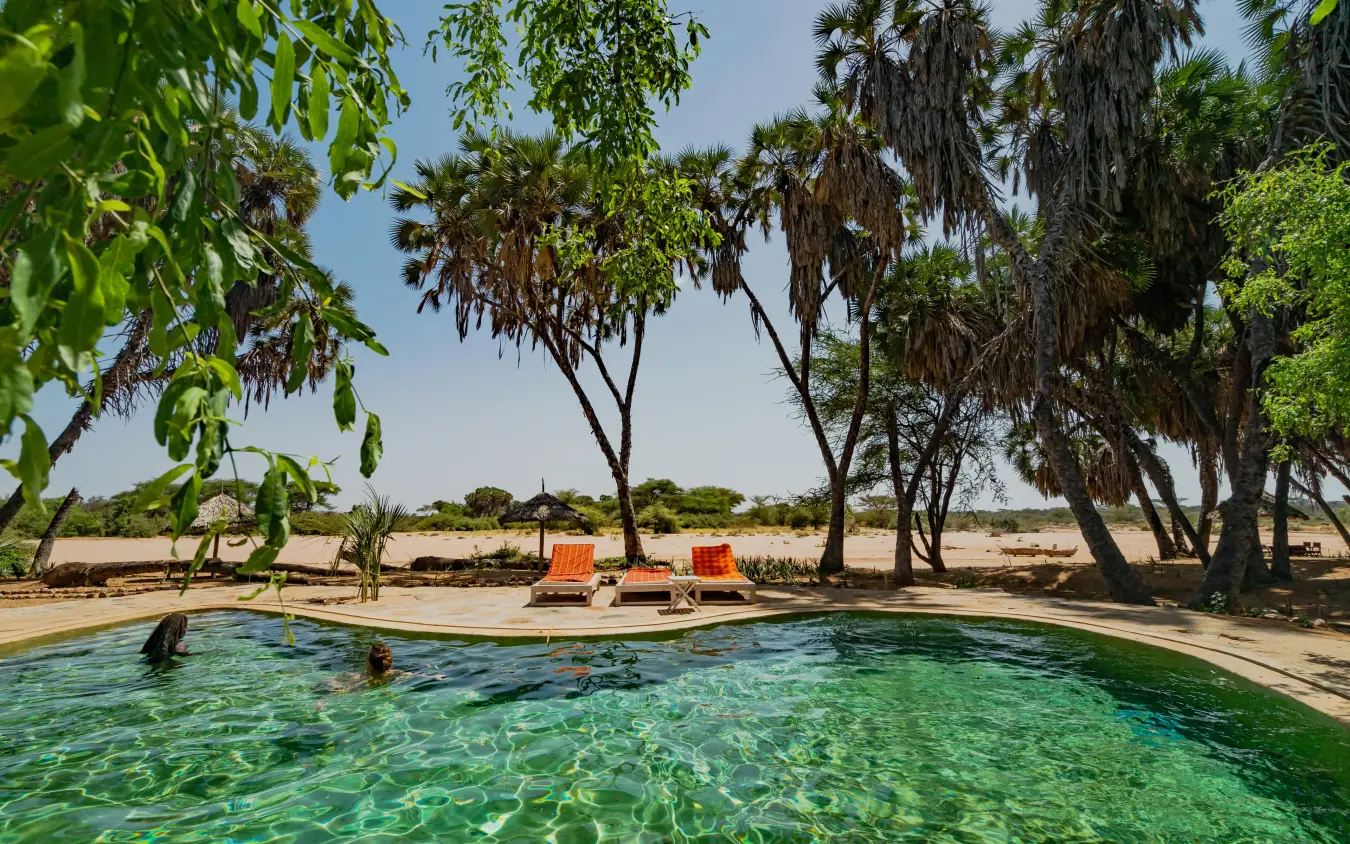
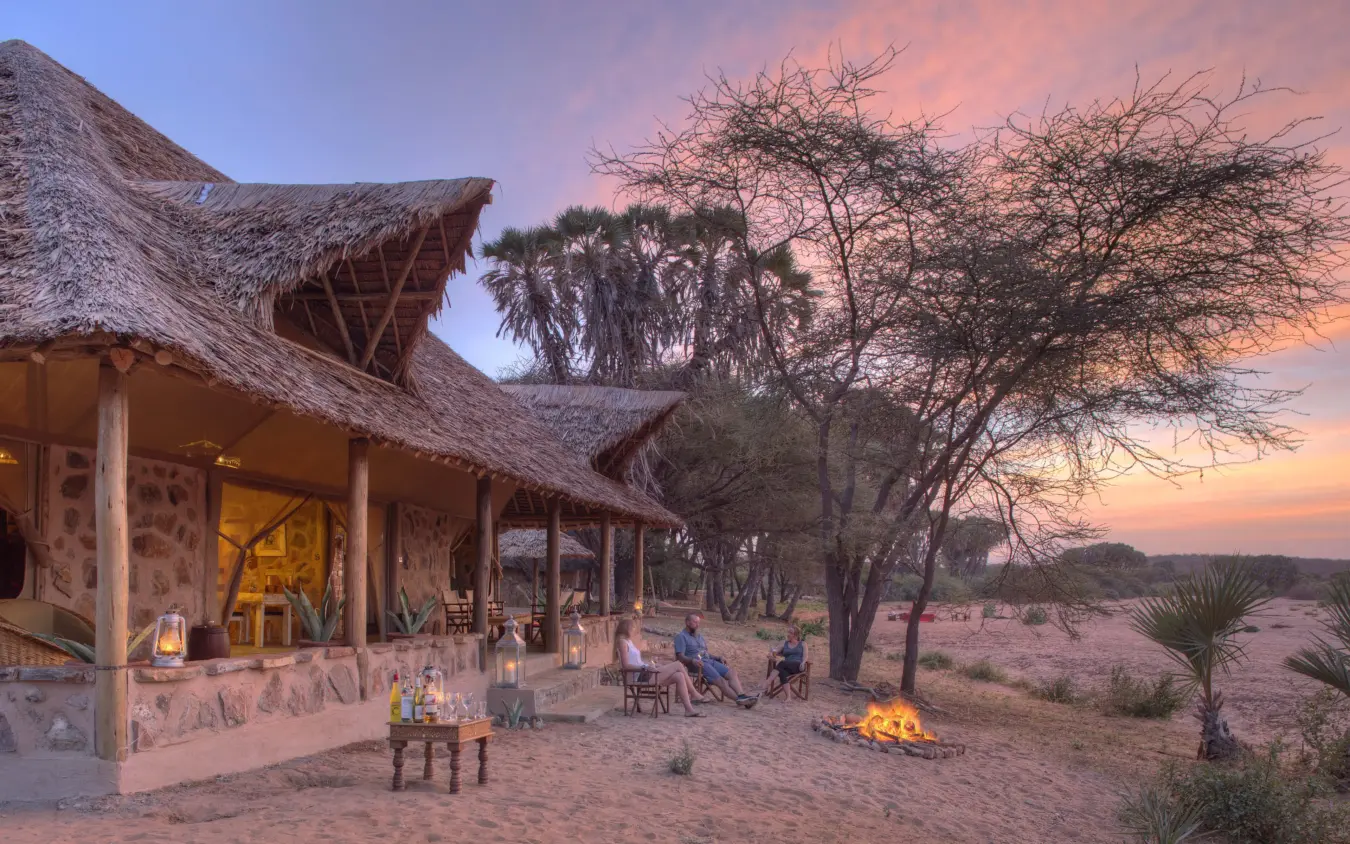
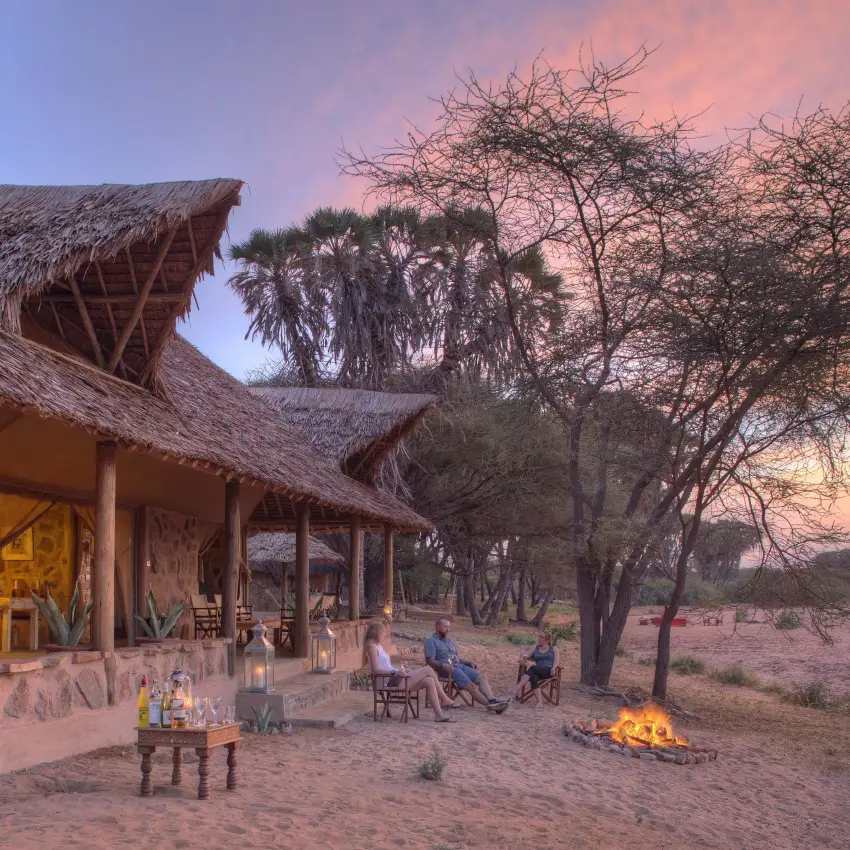
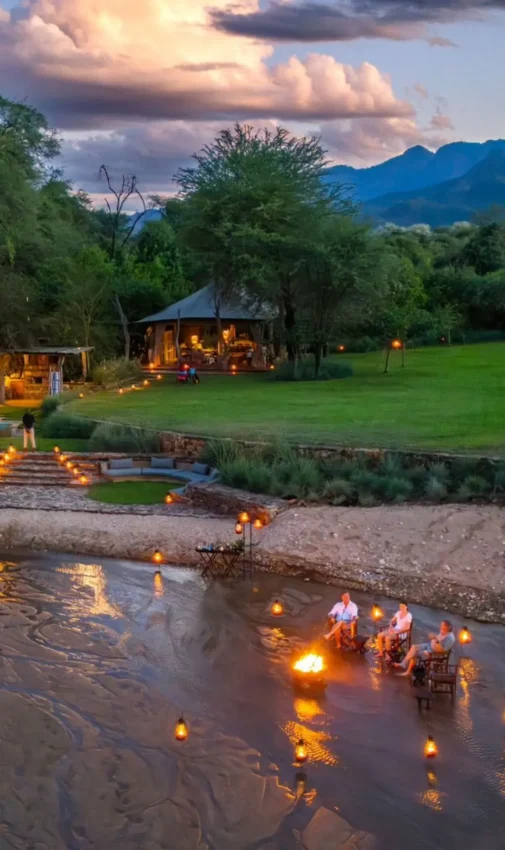
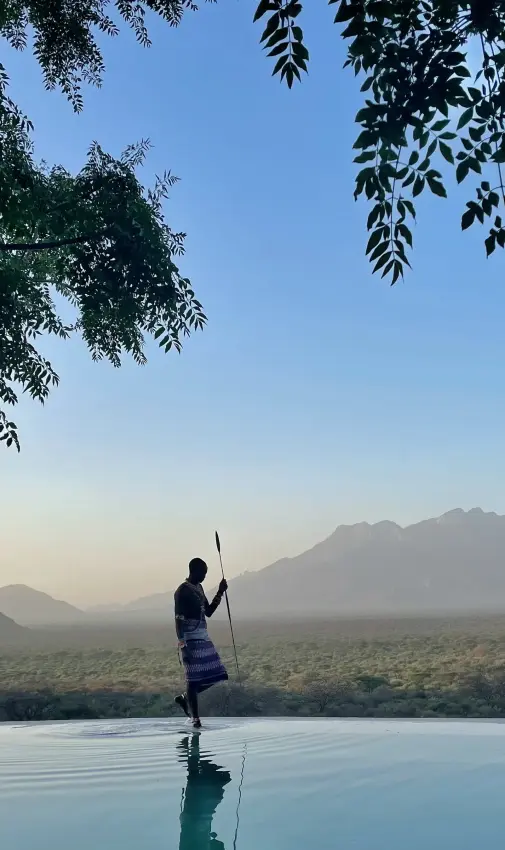
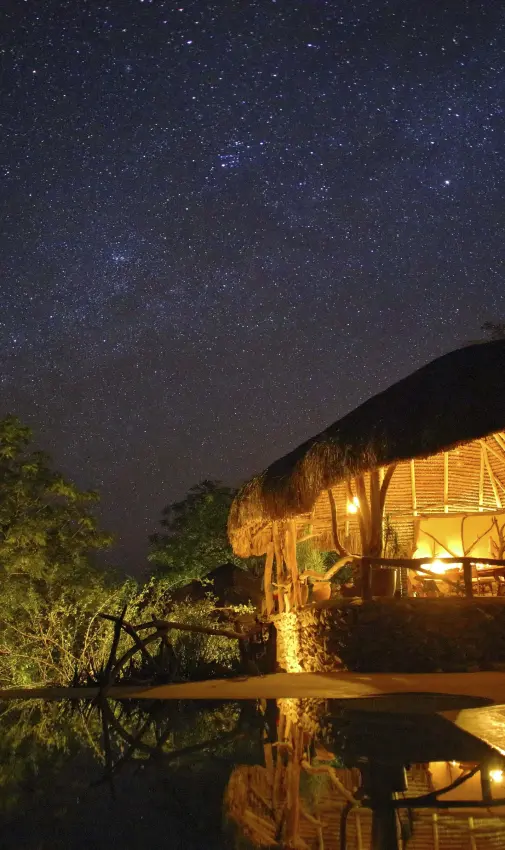
The design is deliberately pared back, built of rough-hewn stone, heavy timber and thatched makuti roofs, open-fronted to the riverbed. Polished stone floors hold the cool through the heat of the day. Sand-filled private terraces set with loungers run to the edge of the dry riverbed, and a curved pool follows the natural line of the bank. When the sun drops, lanterns and firelight do most of the night-time work.
When the sun drops, lanterns and firelight do most of the night-time work.
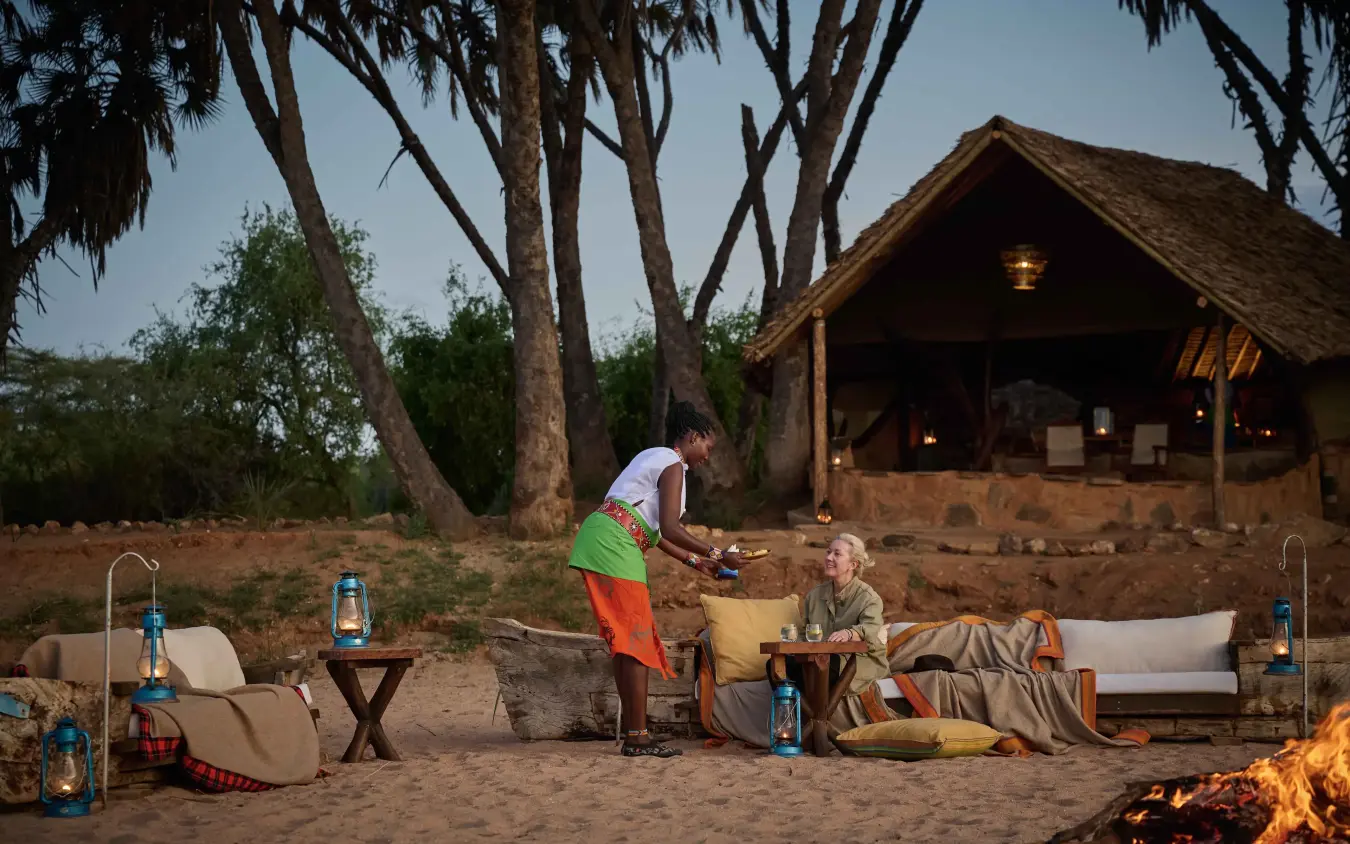
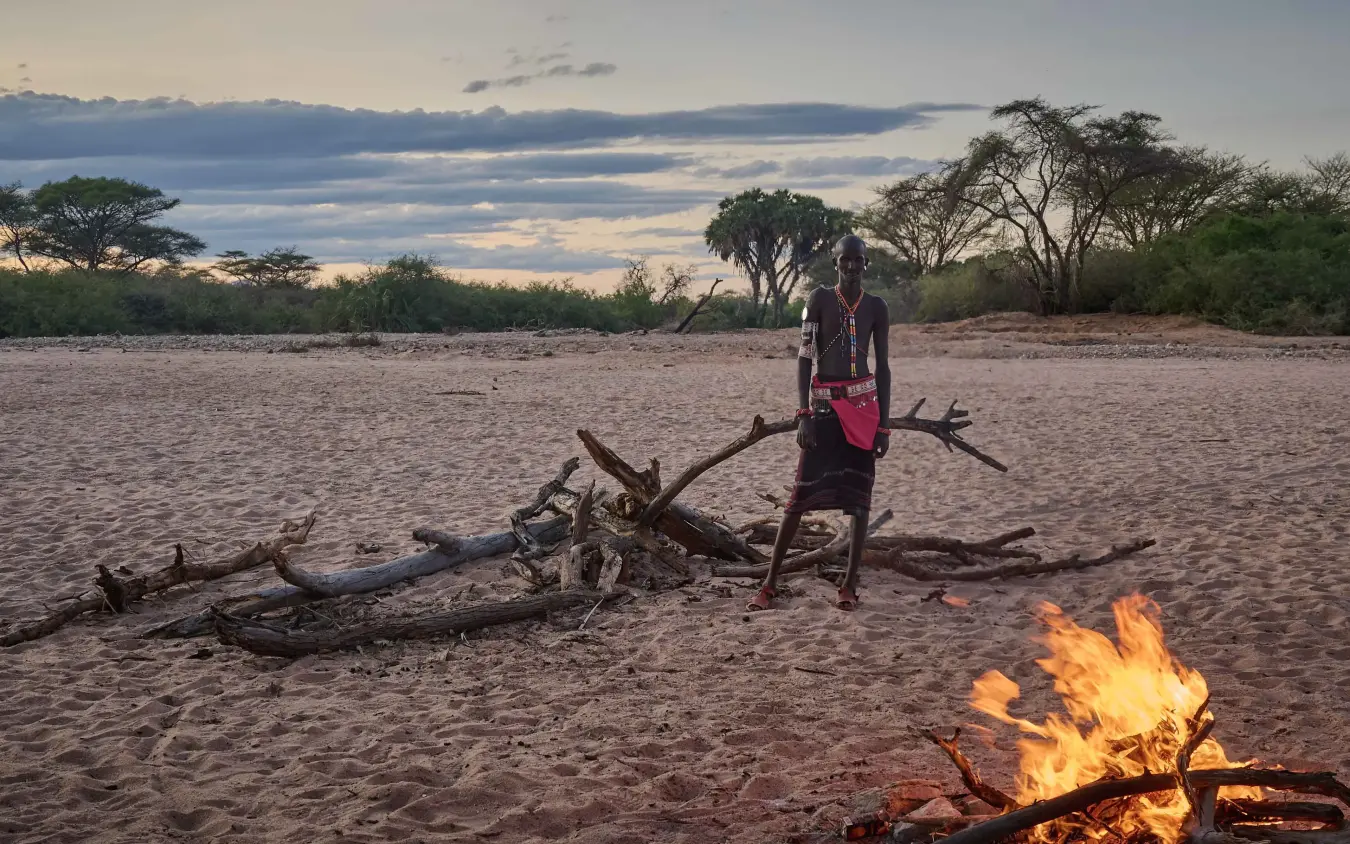
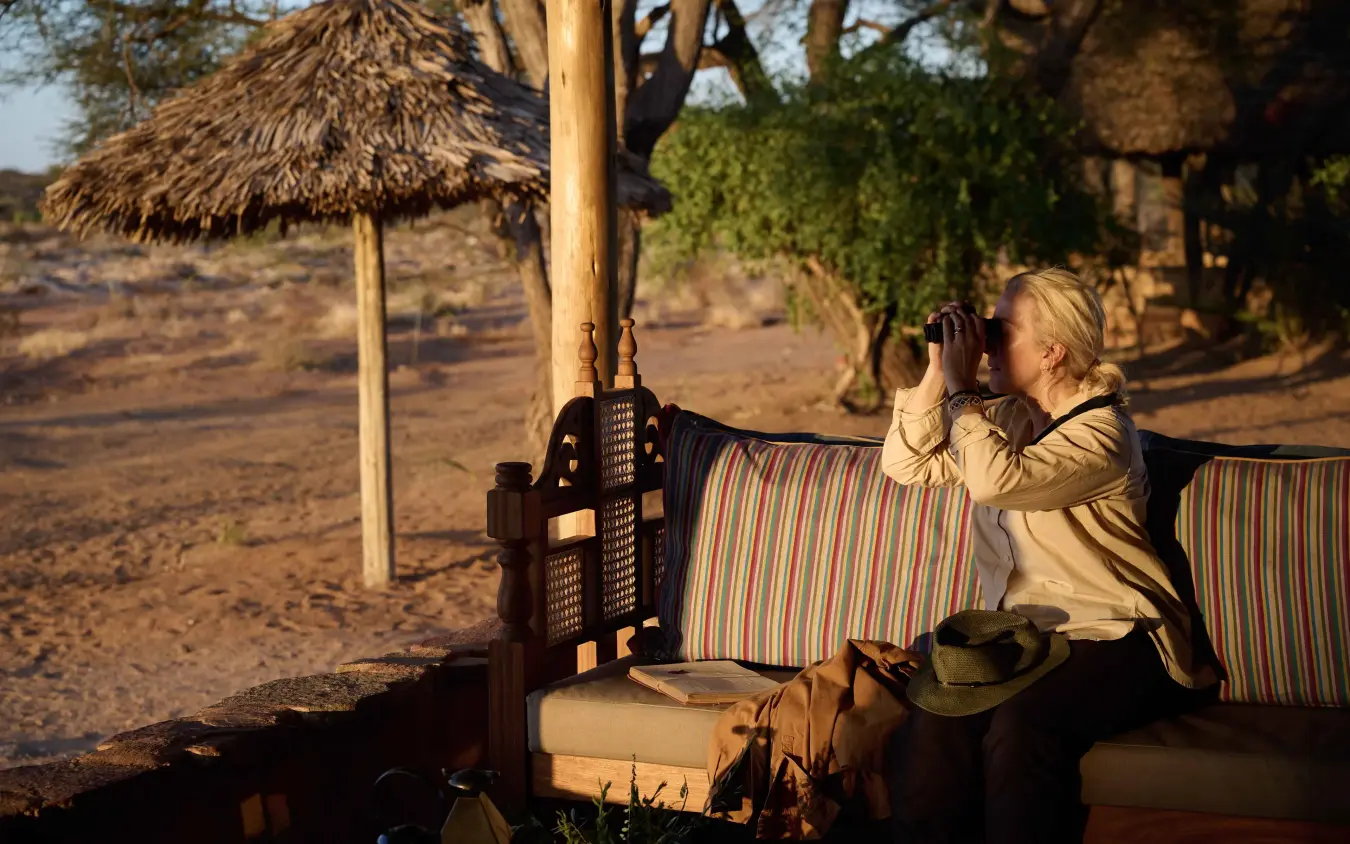
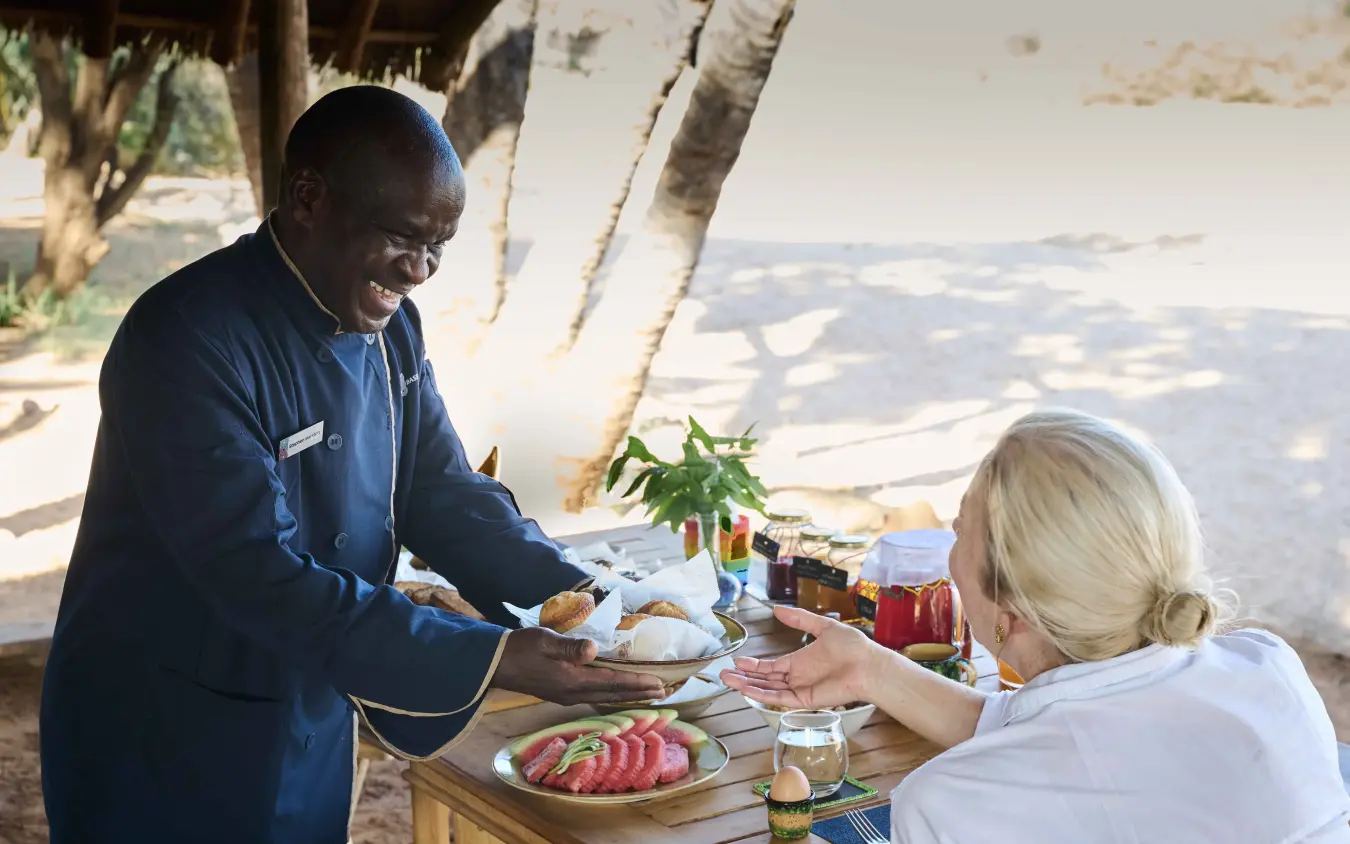
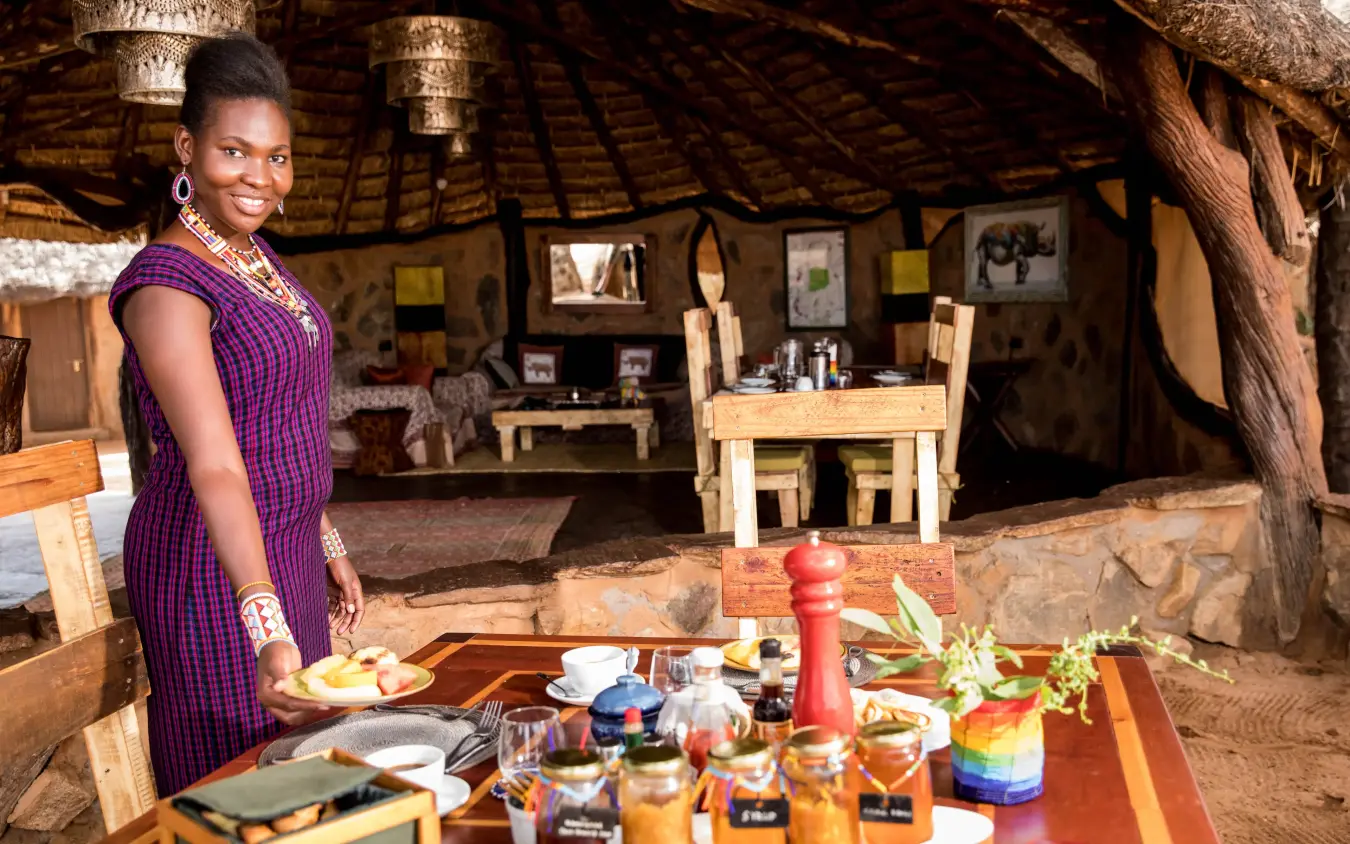
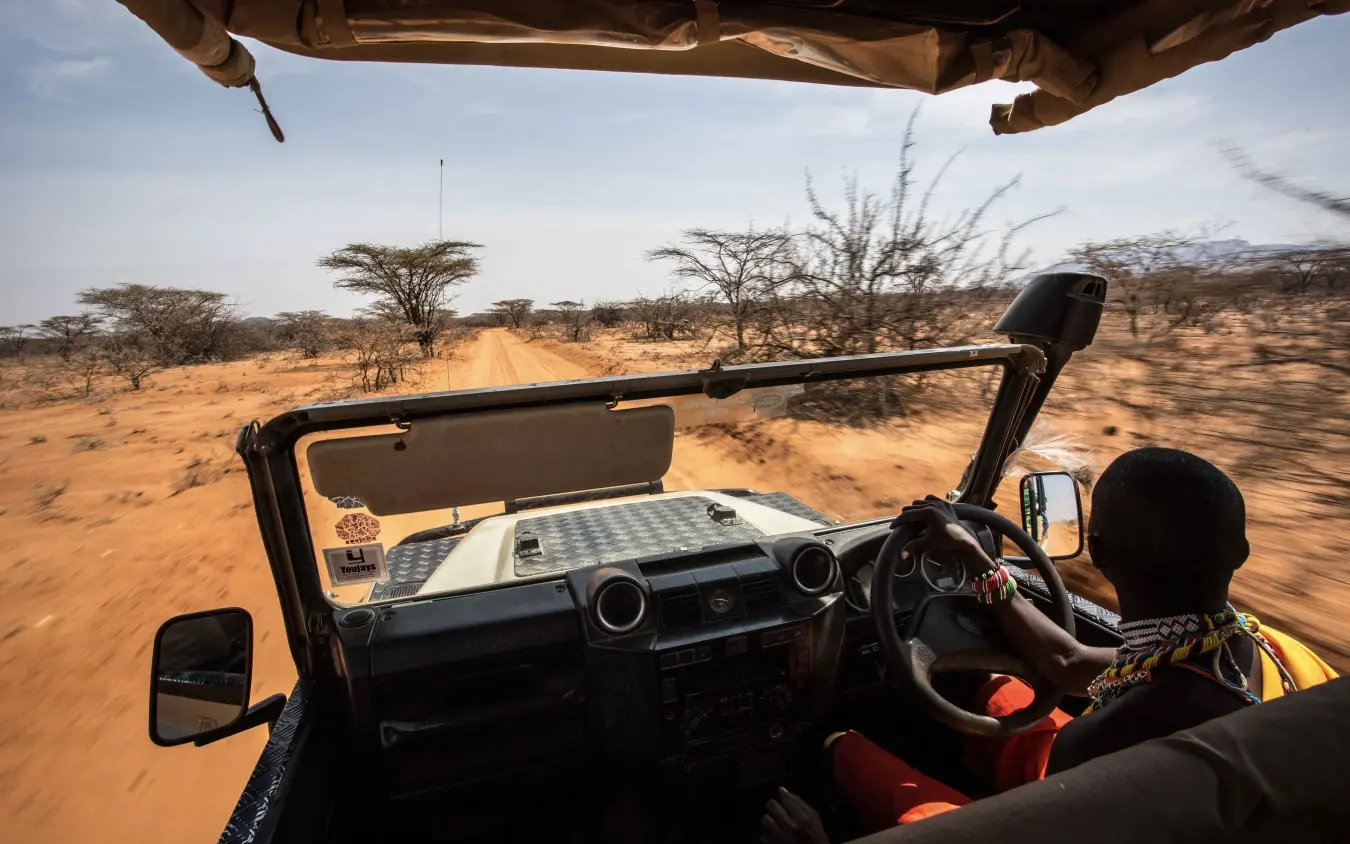
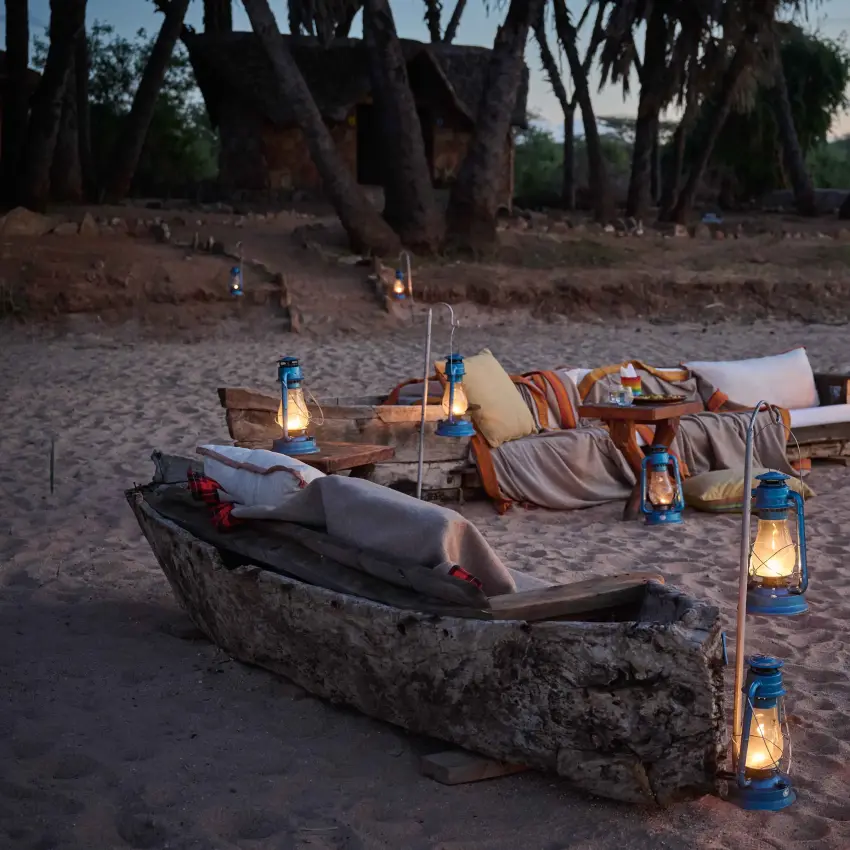
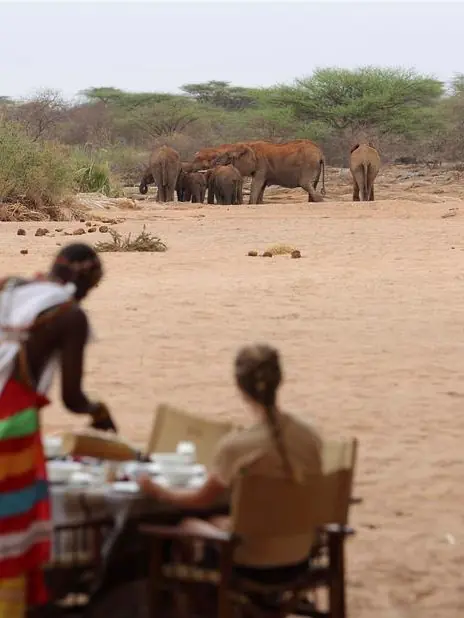
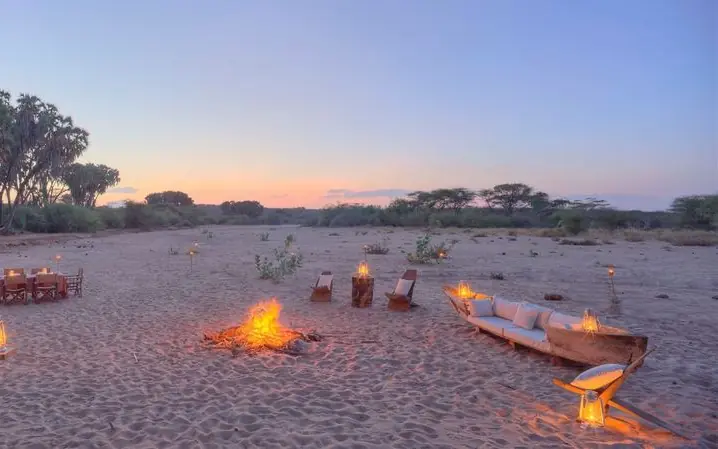
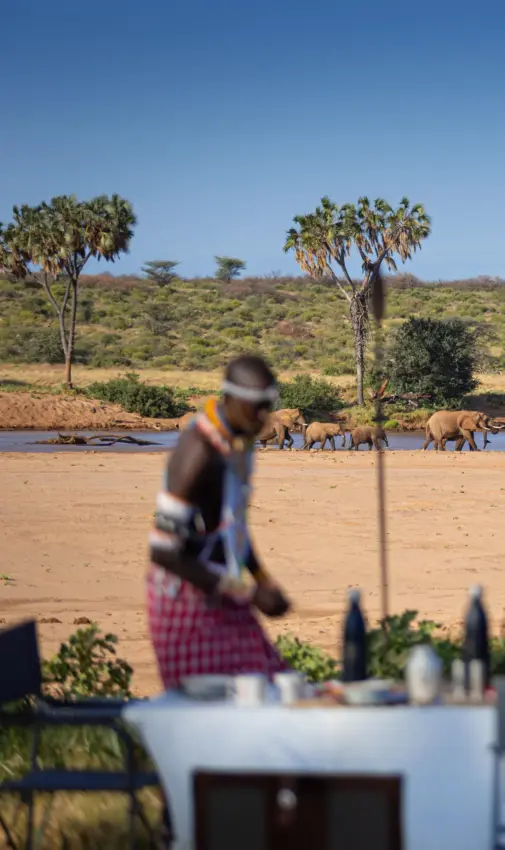
The days follow the rhythm of the tracking. Mornings and afternoons are given over to walking safaris along the sandy riverbeds and to game drives, by day and by night, across the wider conservancy. Meals come as picnic breakfasts or as lantern-lit dinners eaten in the cool sand of the Kauro riverbed, under a sky with no light to dim it. Cultural life centres on the Singing Wells at Kisima Hamsini, where Samburu herders dig deep into the dry earth and chant family songs that their own herds recognise and follow to the water.
Longer excursions reach the community-run Reteti Elephant Sanctuary in the Mathews Range, where rescued orphans are brought back to health, and the climb up Lontopi Mountain for anyone wanting a harder day on foot. Helicopter and biplane flights open the wider Northern Frontier from the air. Access is by light aircraft into a Northern Kenya airstrip and then a drive into the conservancy, and the sister camp, Saruni Samburu, lies within reach by road or a short charter.