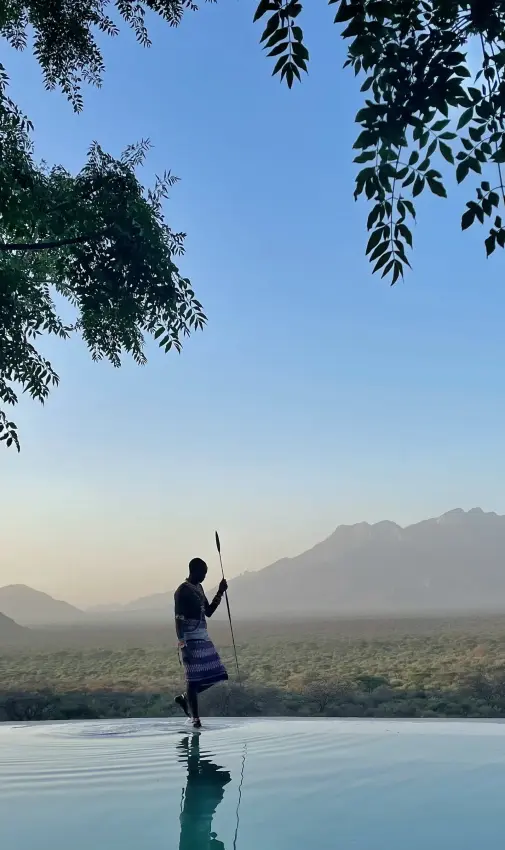
The house reopened on 5 January 2026 after a full rebuild, and much of what earlier guests remember came through intact. The walls are still cut into the hillside and the cedar is still deadwood. Spring water arrives by gravity. The pool is shaped from the rock and the bathtubs lie open to the sky. Interiors are quieter now, with hand-loomed textiles and carved wood, and the solar power runs more reliably than before. The rebuild smoothed some edges and reworked the living spaces without turning a handmade mountain house into a hotel.
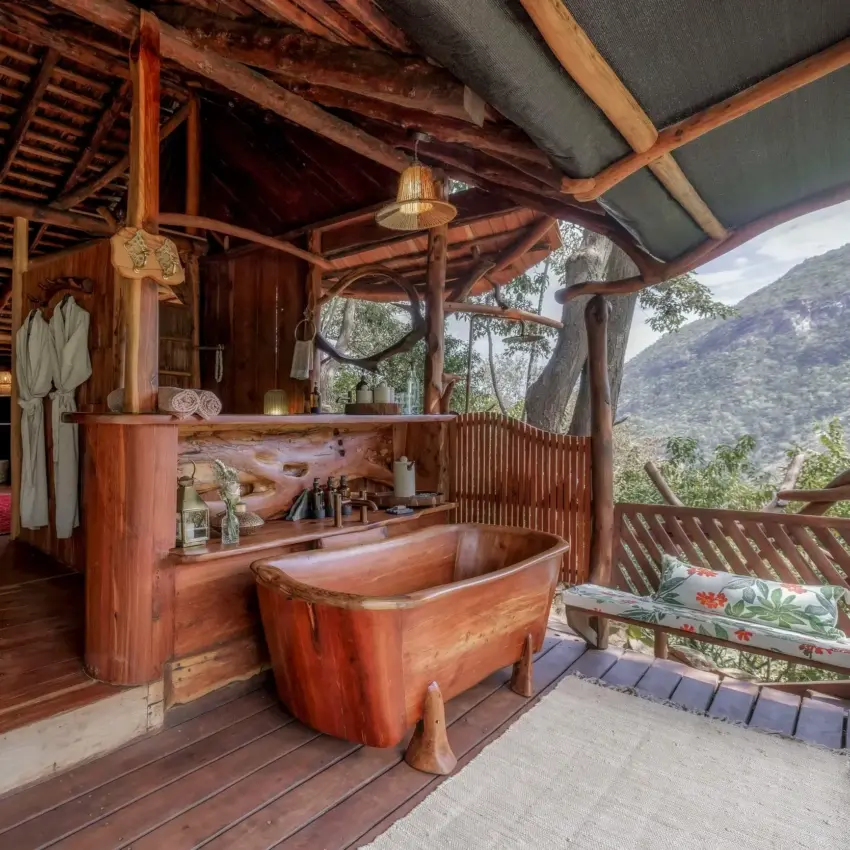
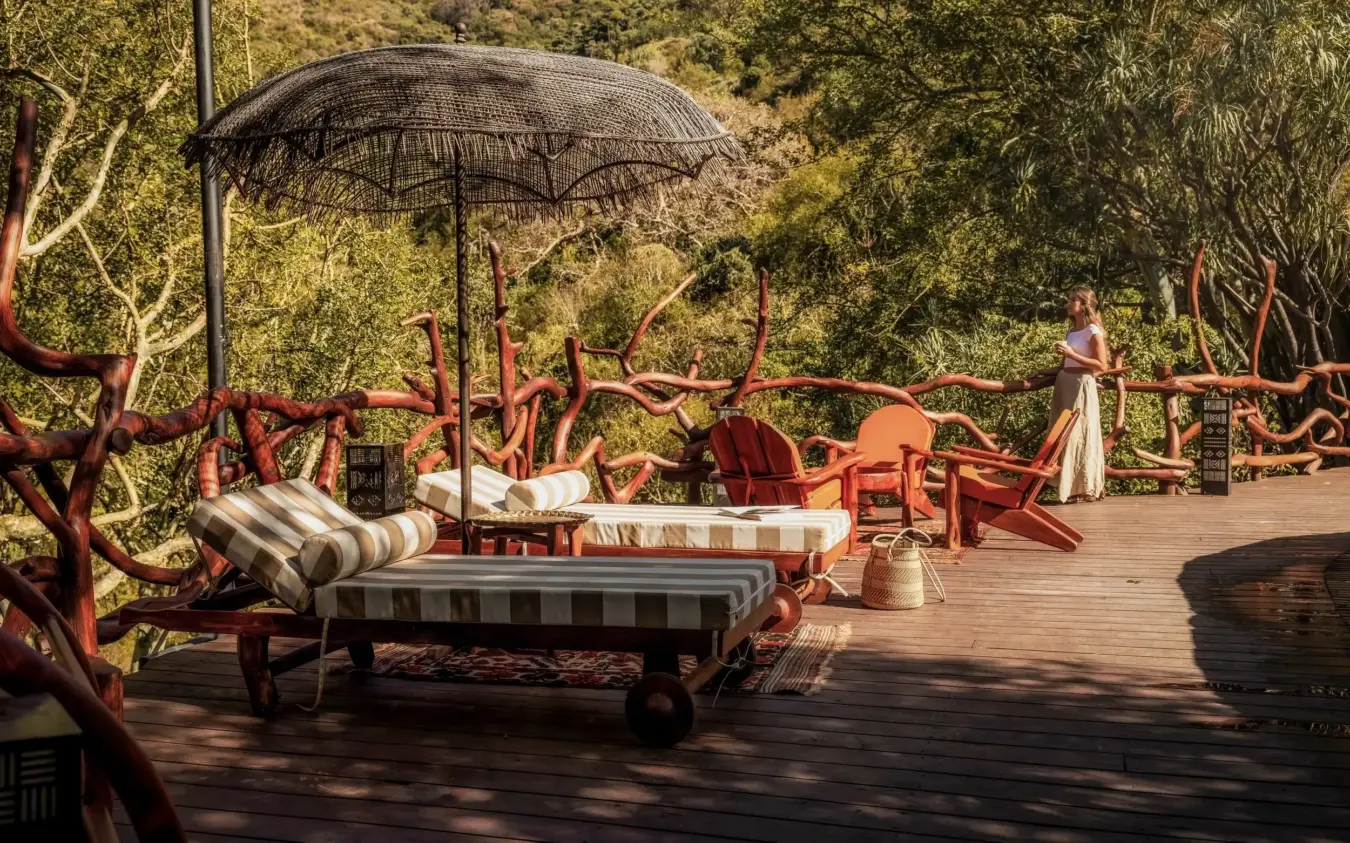
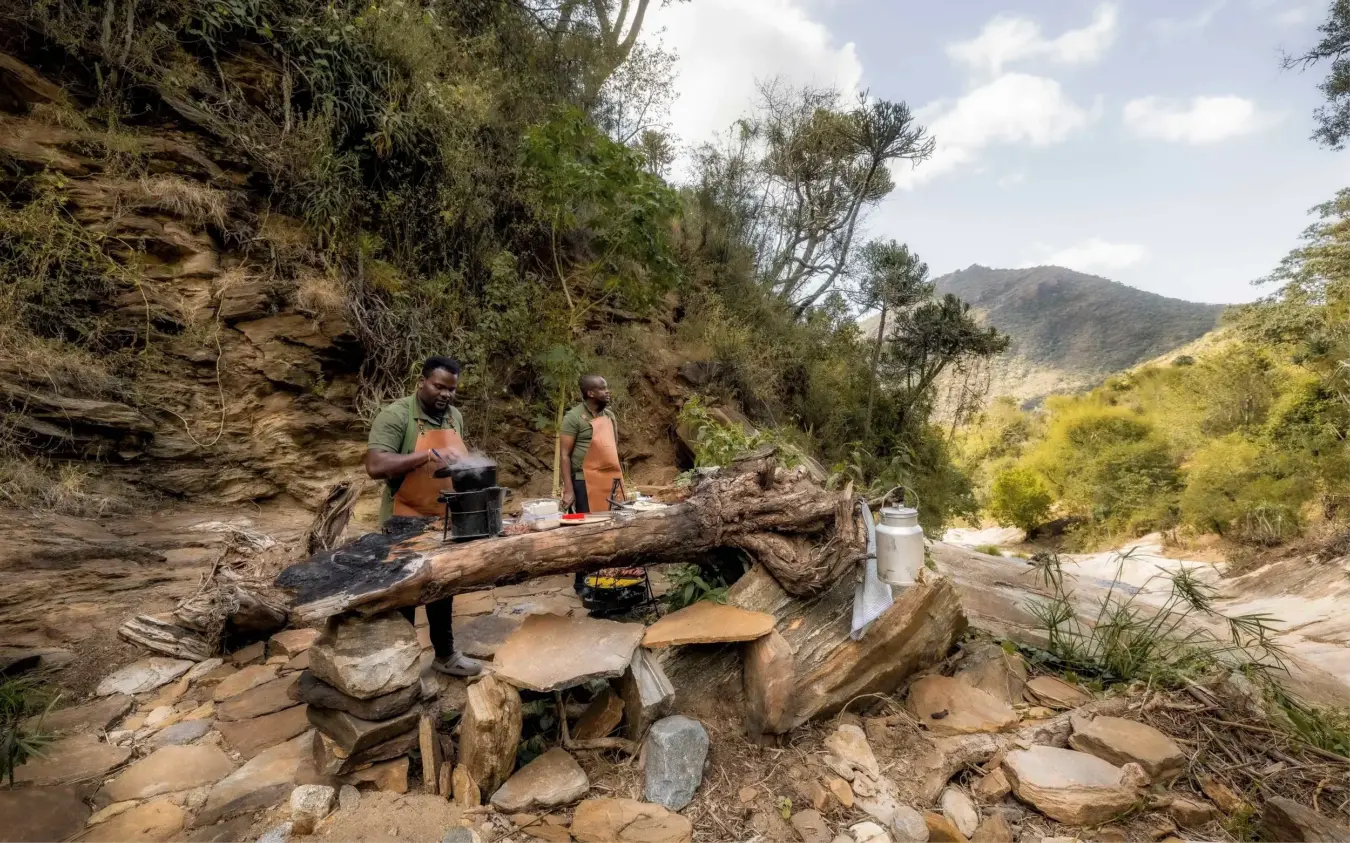
Big indigenous trees shade the cottages, and in the roofless bathrooms the sunken tubs and basins were carved from stone and wood by local hands. Nights are cold enough for a fire in the hearth while the plains below hold the desert heat. Much of the produce comes from the lodge’s own garden and bread is baked each morning. Meals move between the open deck, the fireside and, now and then, the rocks beside the lugga. Children are welcome, and the adventurous take to the walks and the waterslide, with supervision around the rocks, the pool and the open bathrooms.
Nights are cold enough for a fire in the hearth while the plains below hold the desert heat.
Guests fly by light aircraft from Wilson Airport in Nairobi to an airstrip on the plains. Overland, the same journey takes two days through Maralal and Baragoi over volcanic rock. From the airstrip a track cut from bedrock rises steeply into the cedar forest, and the last stretch is a test of nerve. Helicopters come in too, opening up flights over the Suguta Valley and on to Lake Turkana, roughly 50 kilometres north, where South Island National Park offers crocodiles and birdlife. The house asks for a traveller comfortable with real remoteness.
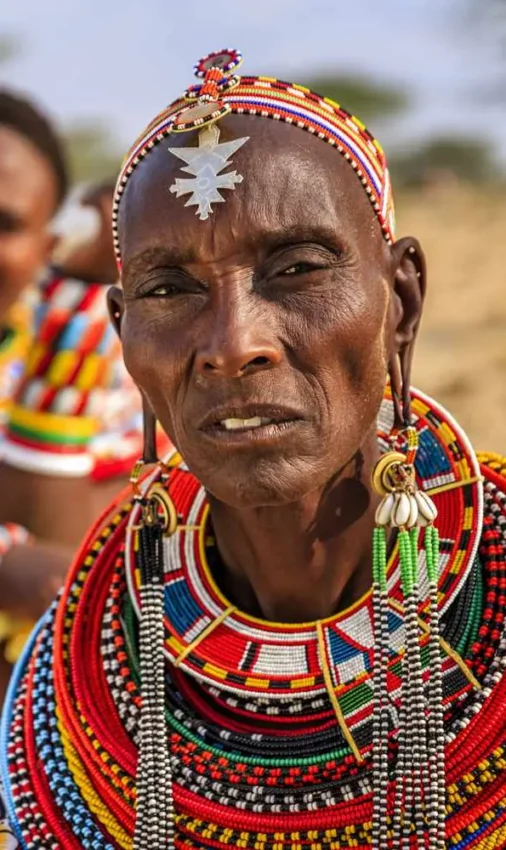
Mount Nyiro rises to 2,848 metres, and the Samburu hold it more sacred than any other mountain. Most of the staff come from Ewaso Rongai, a village shaded by acacias and fig trees at its foot, and the ties go beyond wages. Visits to Samburu and Turkana homesteads grow out of those friendships, with no fixed programme behind them. Guests staying in late May or June can travel on to the Lake Turkana Cultural Festival at Loiyangalani, where a dozen ethnic groups gather for music, dance and reconciliation talks.