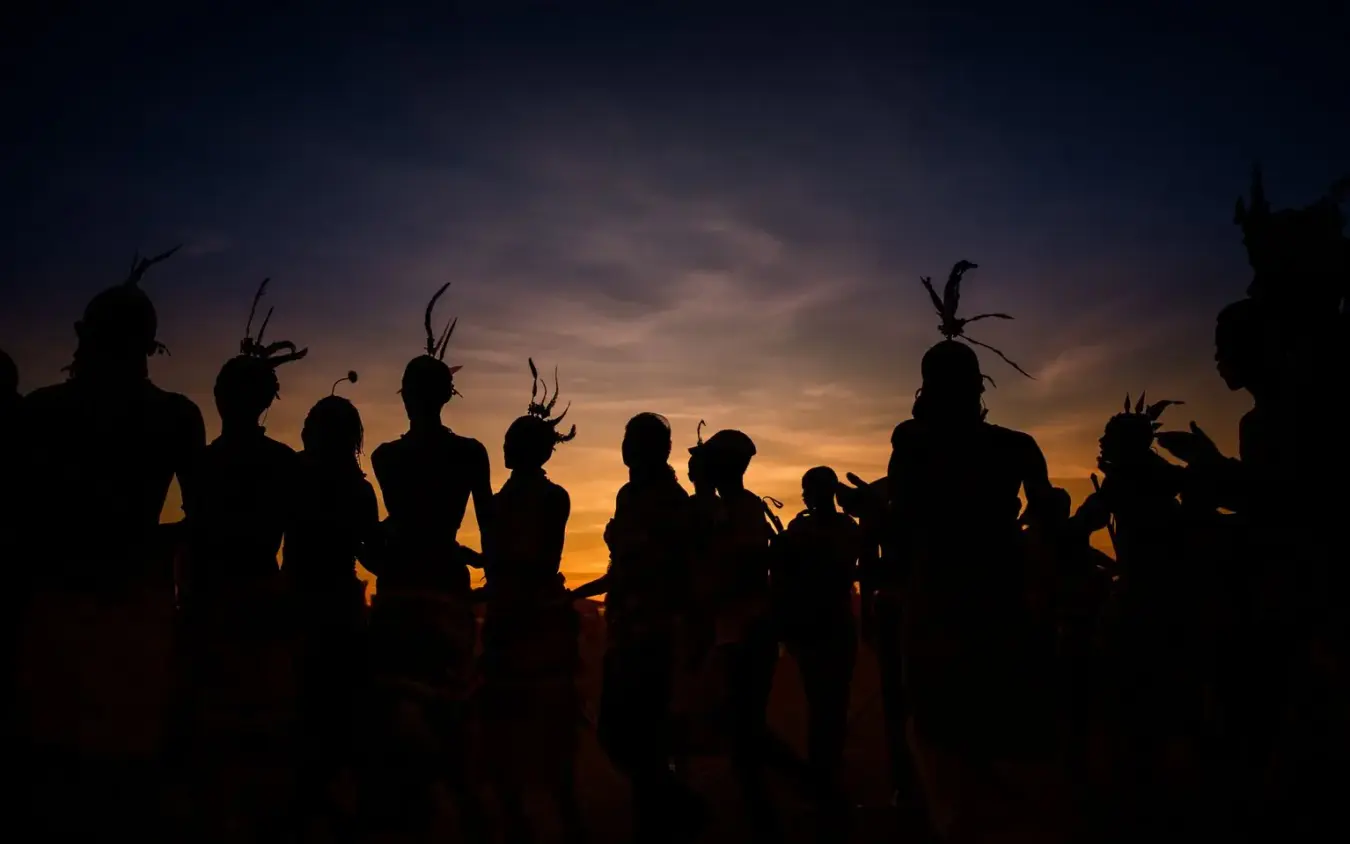
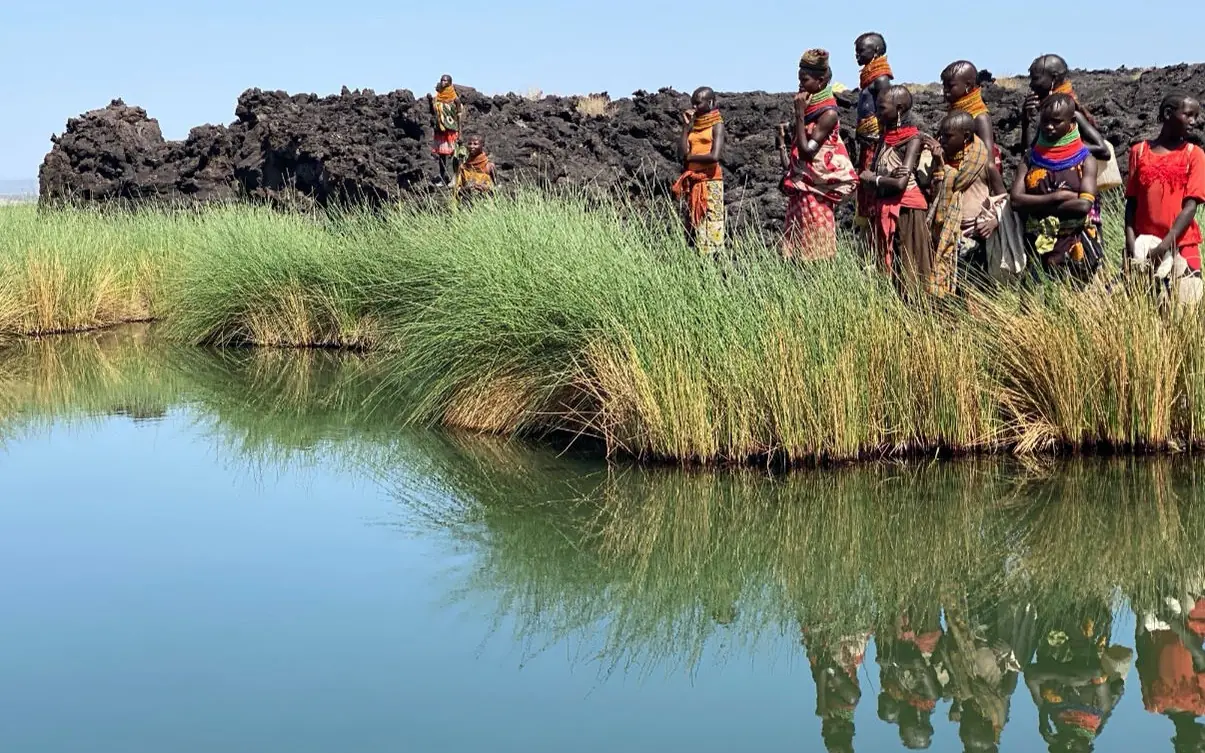
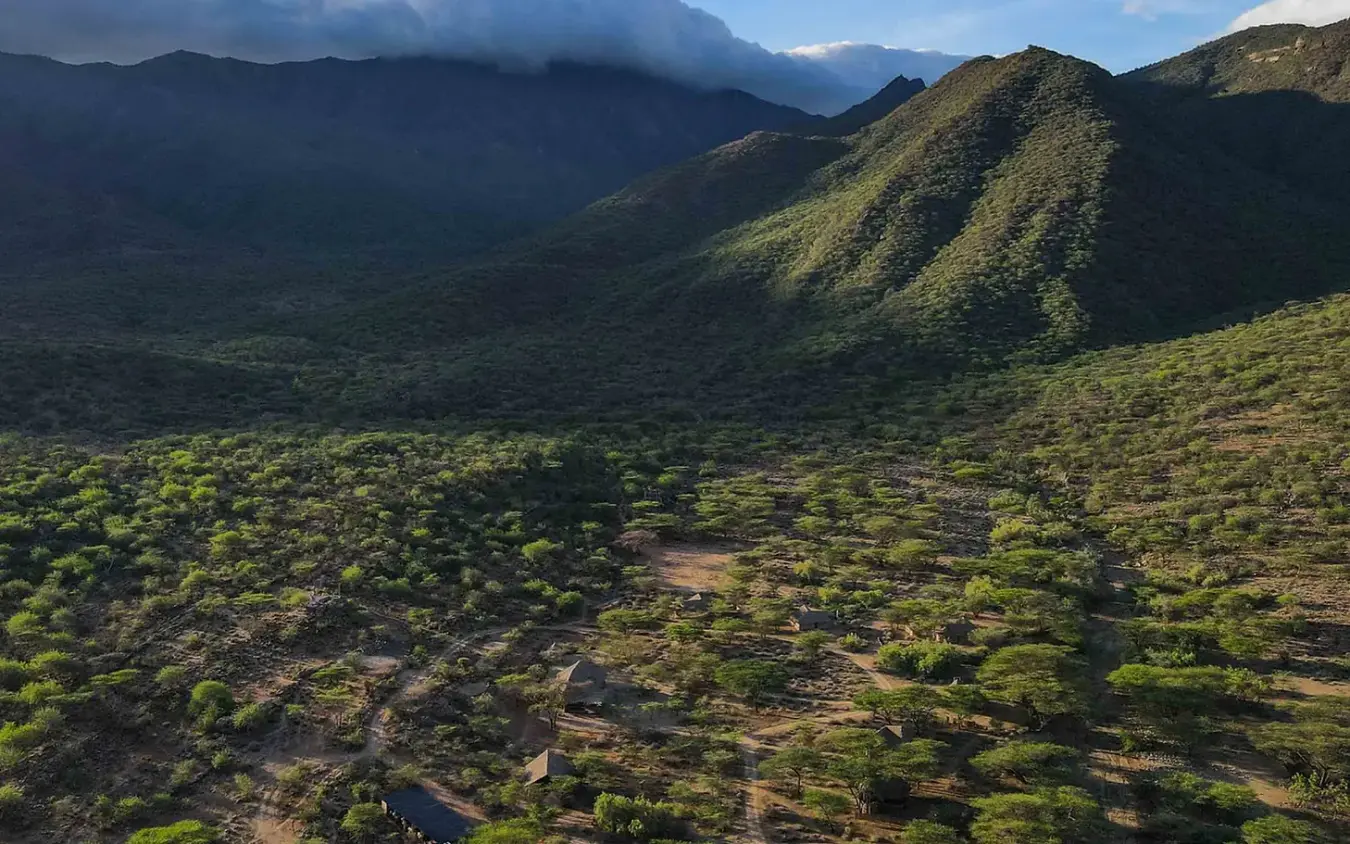
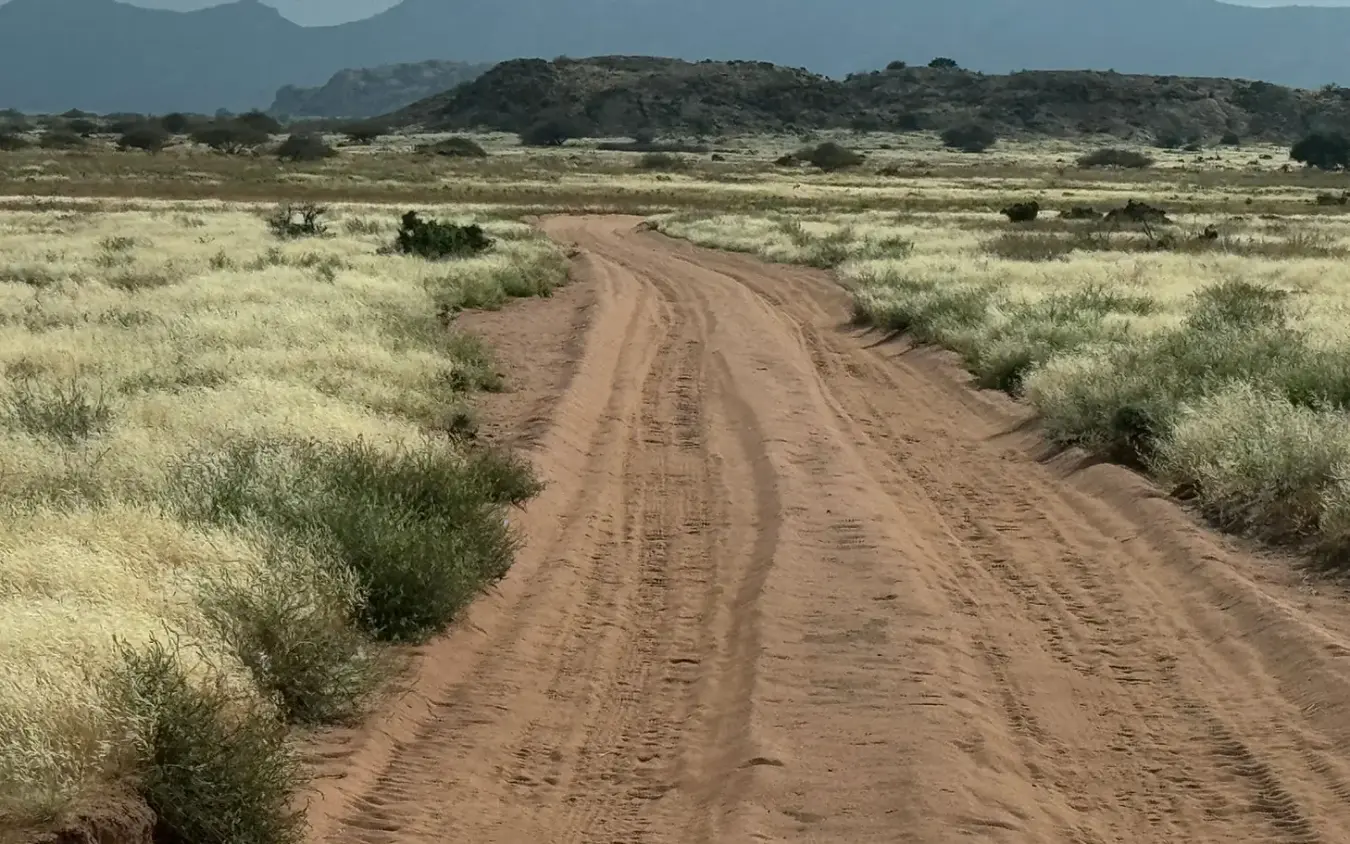
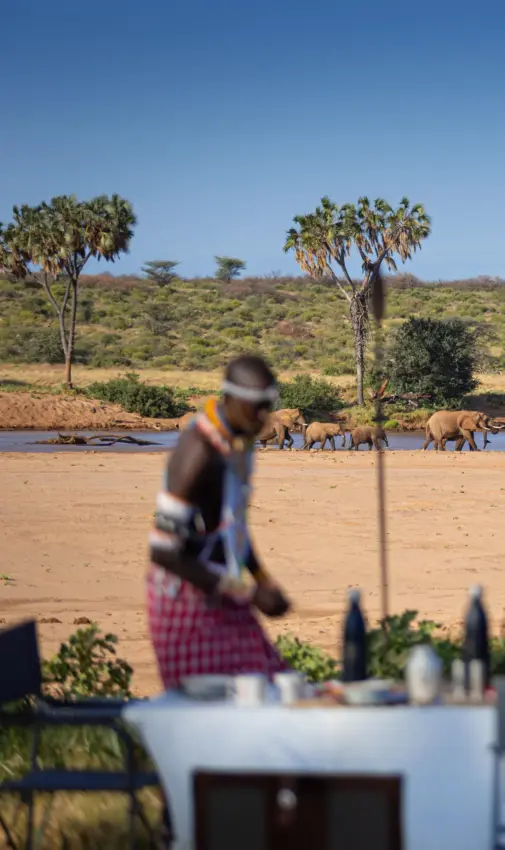
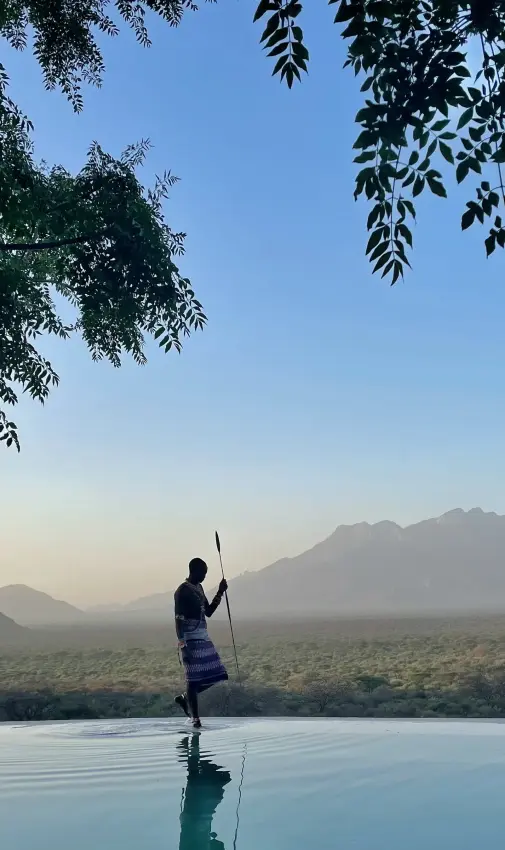
The South Horr Valley belongs to the Samburu and Rendille peoples, and much of what happens at Koros Camp turns on that connection. Cultural visits reach remote homesteads by 4×4 or quad bike, often at the golden end of the day when the light runs long across the red earth. A Samburu women’s group produces beaded work and light shades sold through the camp, and the visits themselves put income directly into the hands of local performers, so the relationship runs both ways.
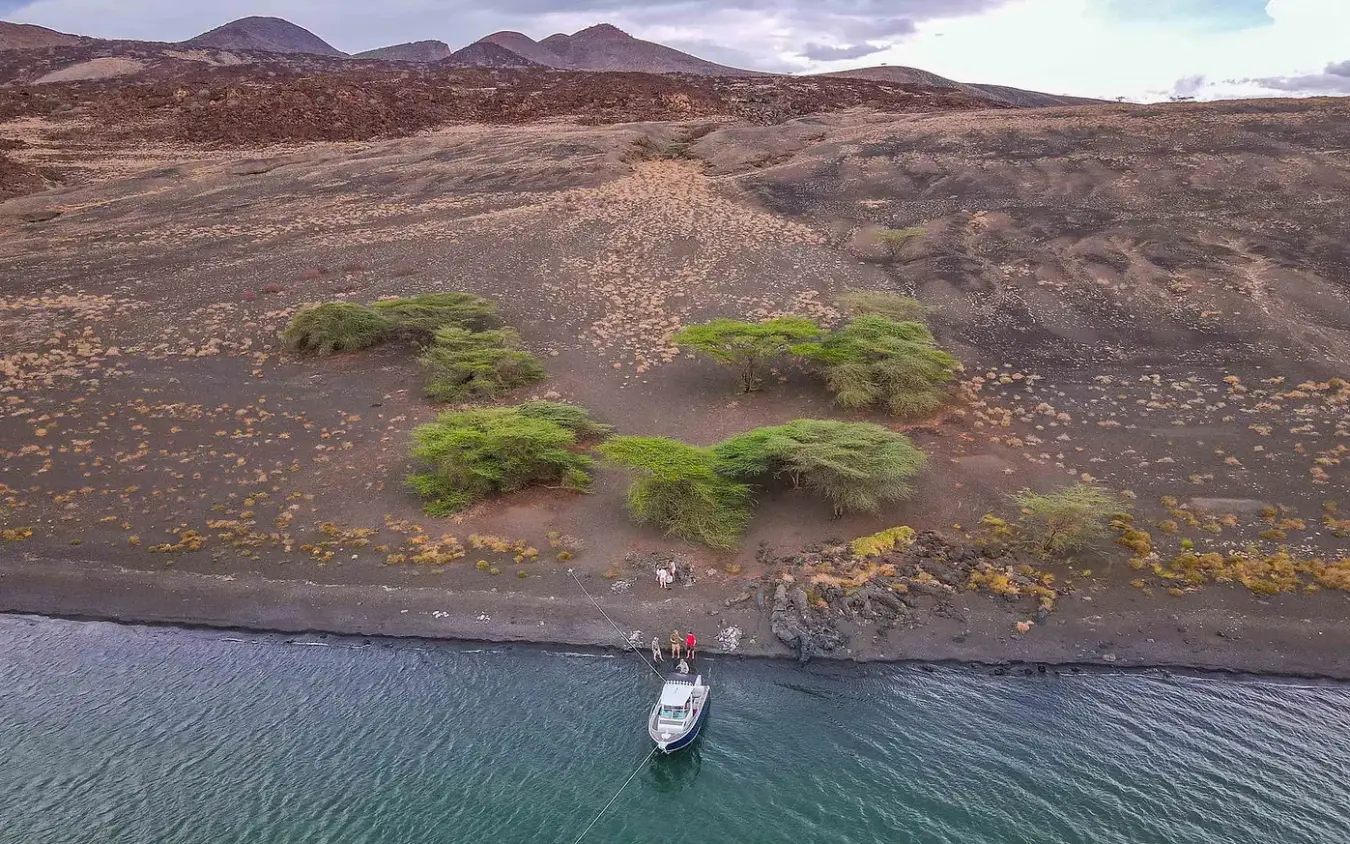
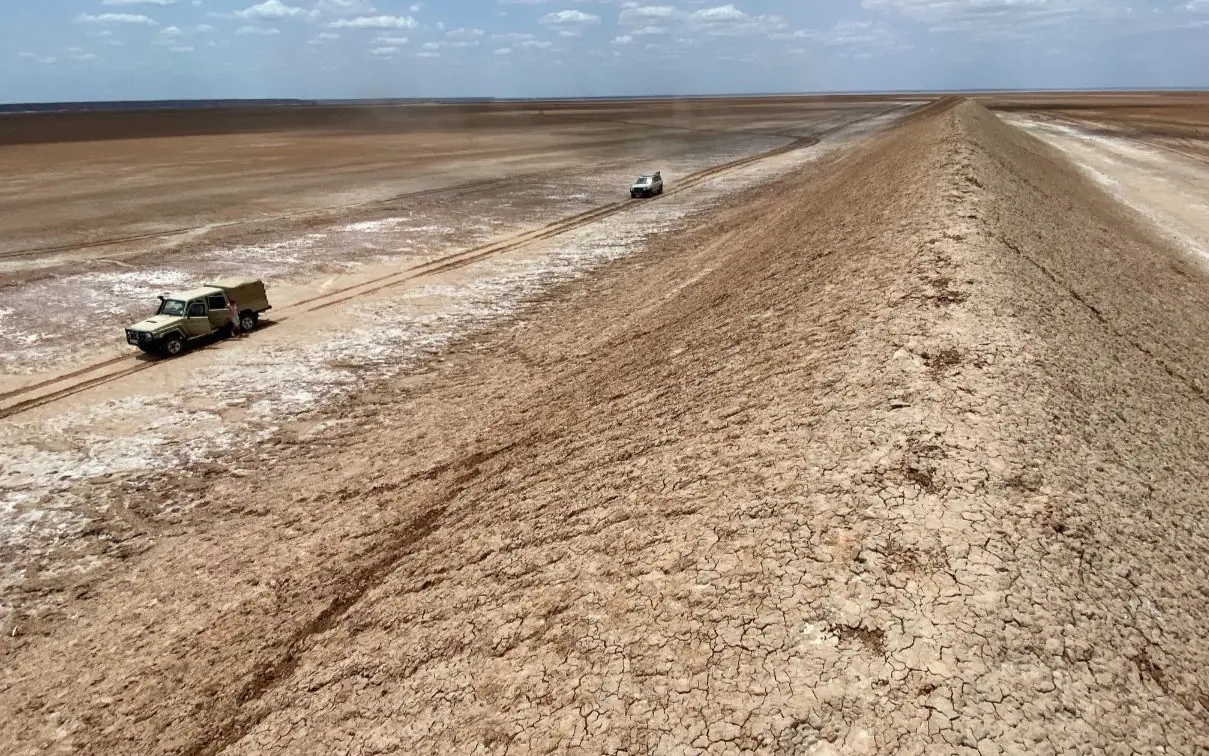
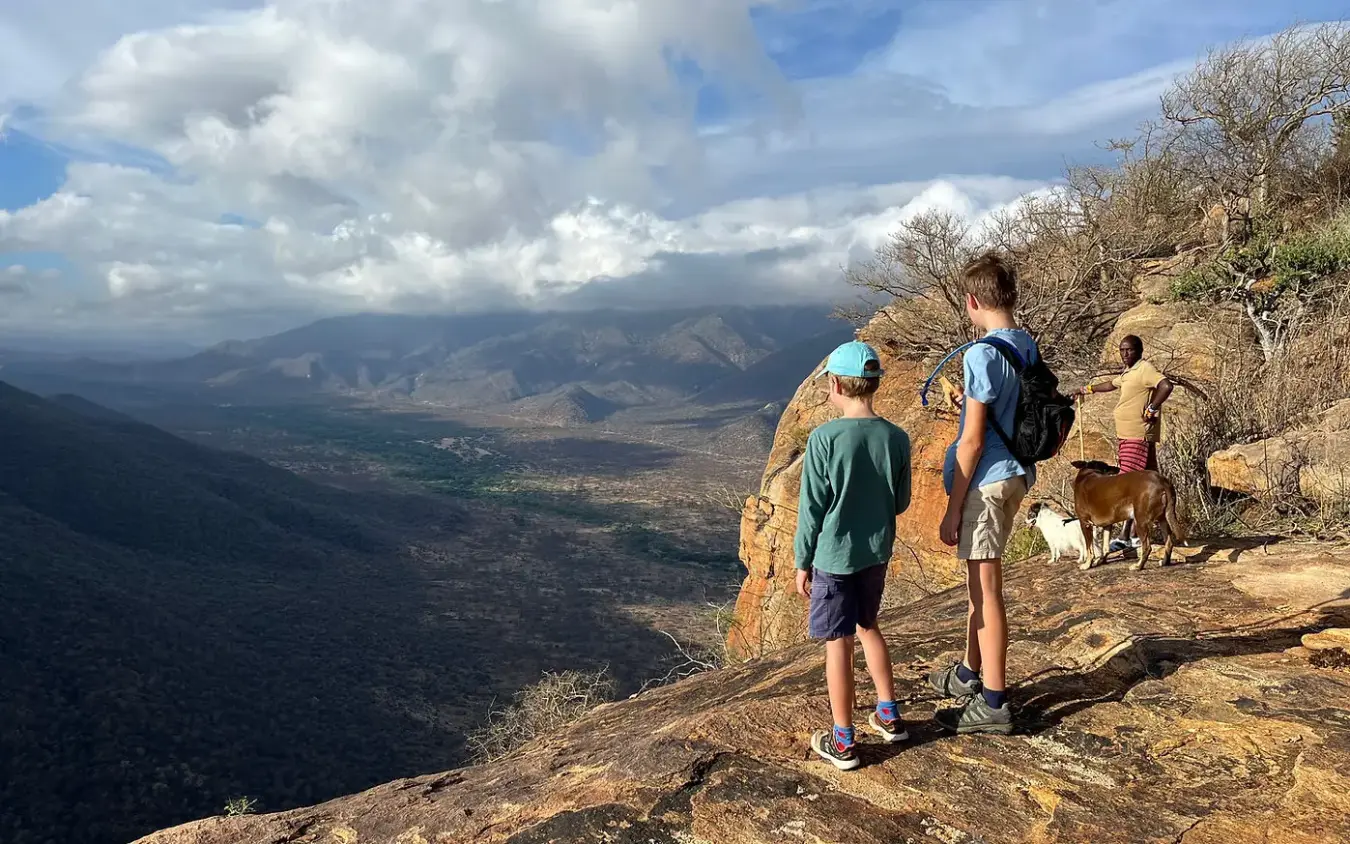
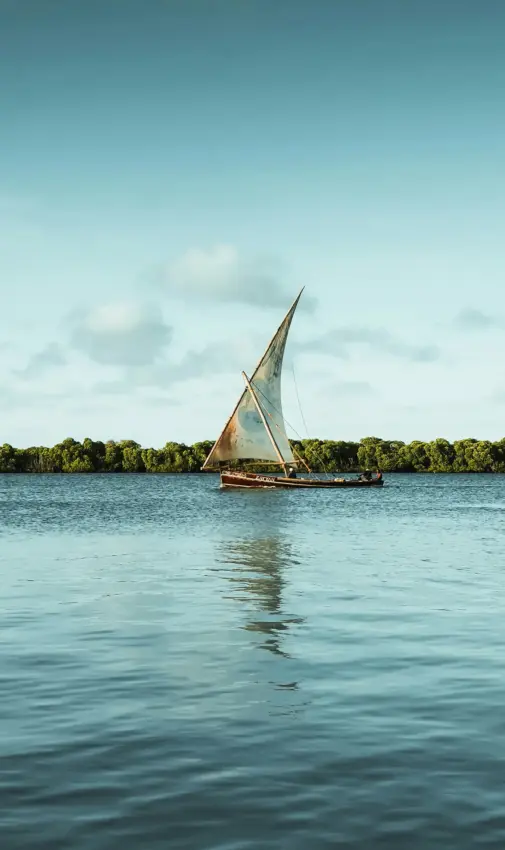
The activity list runs wider than most bases in the far north. Guided walks follow dry riverbeds and climb rocky kopjes, quad bikes cross the sandy country between communities, and an aluminium boat carries guests onto Lake Turkana for Nile perch fishing and for the crocodiles and birdlife that gather along the shore. Fly camping under the stars extends the reach further still, into the desert or towards the lake itself.
an aluminium boat carries guests onto Lake Turkana for Nile perch fishing
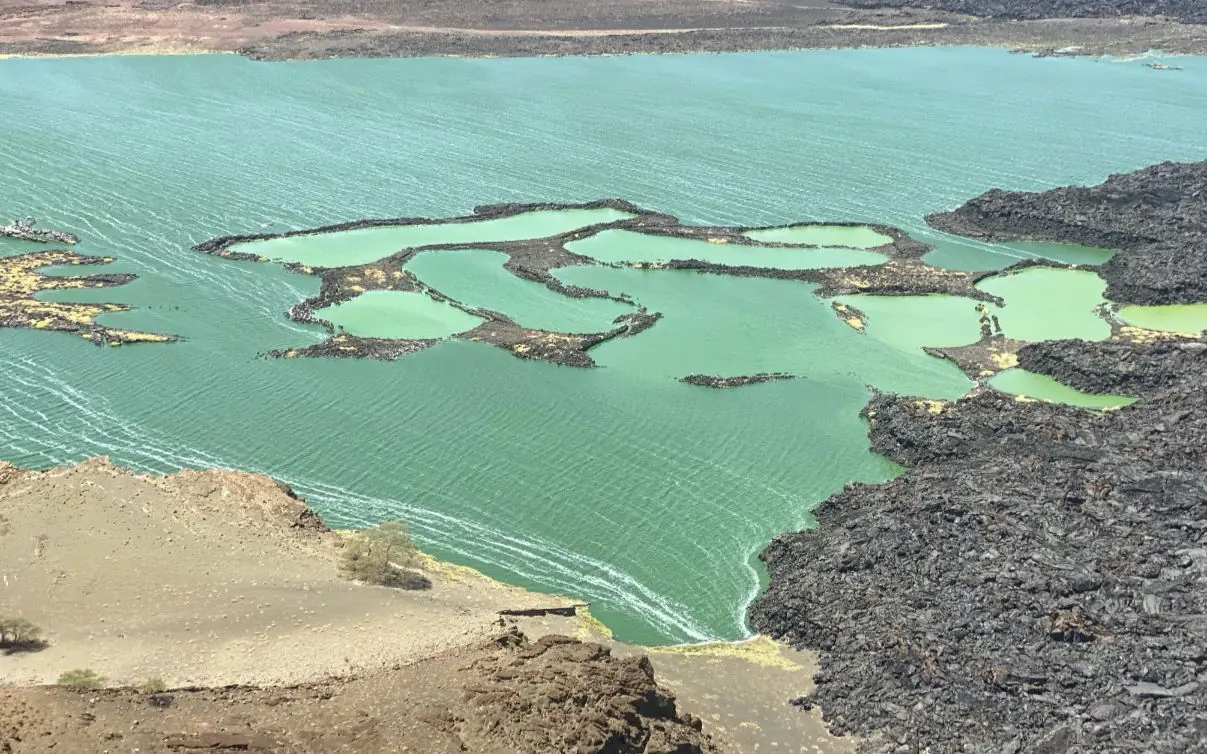
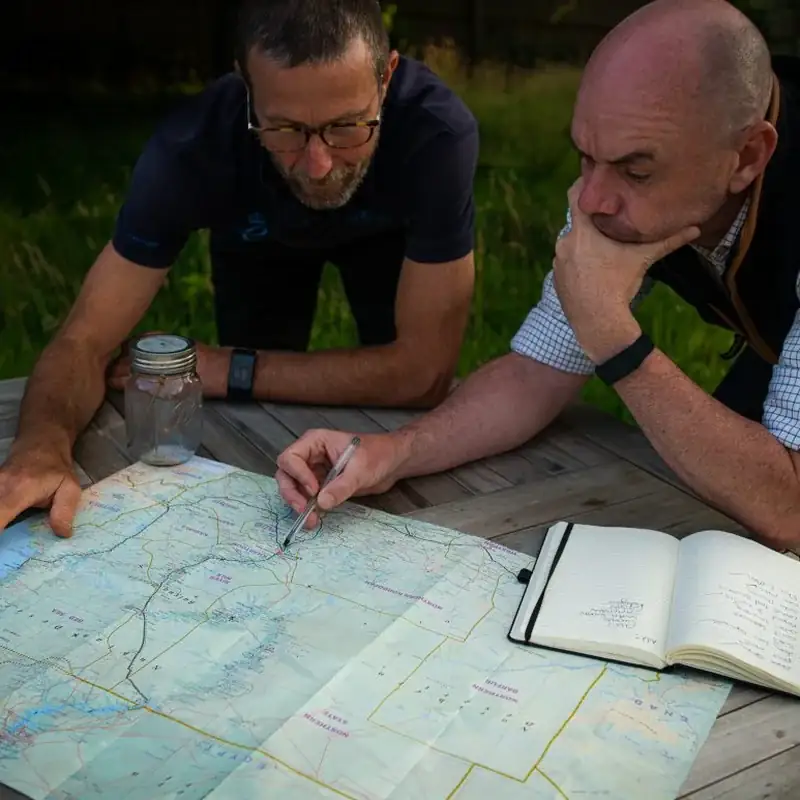
Helicopter safaris are the signature. Flights cross Lake Turkana and its islands, touch down on sand dunes, and take in flamingos on Lake Logipi and the volcanic expanse of the Suguta Valley, ground that would otherwise swallow days of driving. With its own helipads and Tropic Air’s aircraft on hand, the north’s most remote corners fold into an afternoon’s flying, days from anywhere by road yet minutes away in the air.
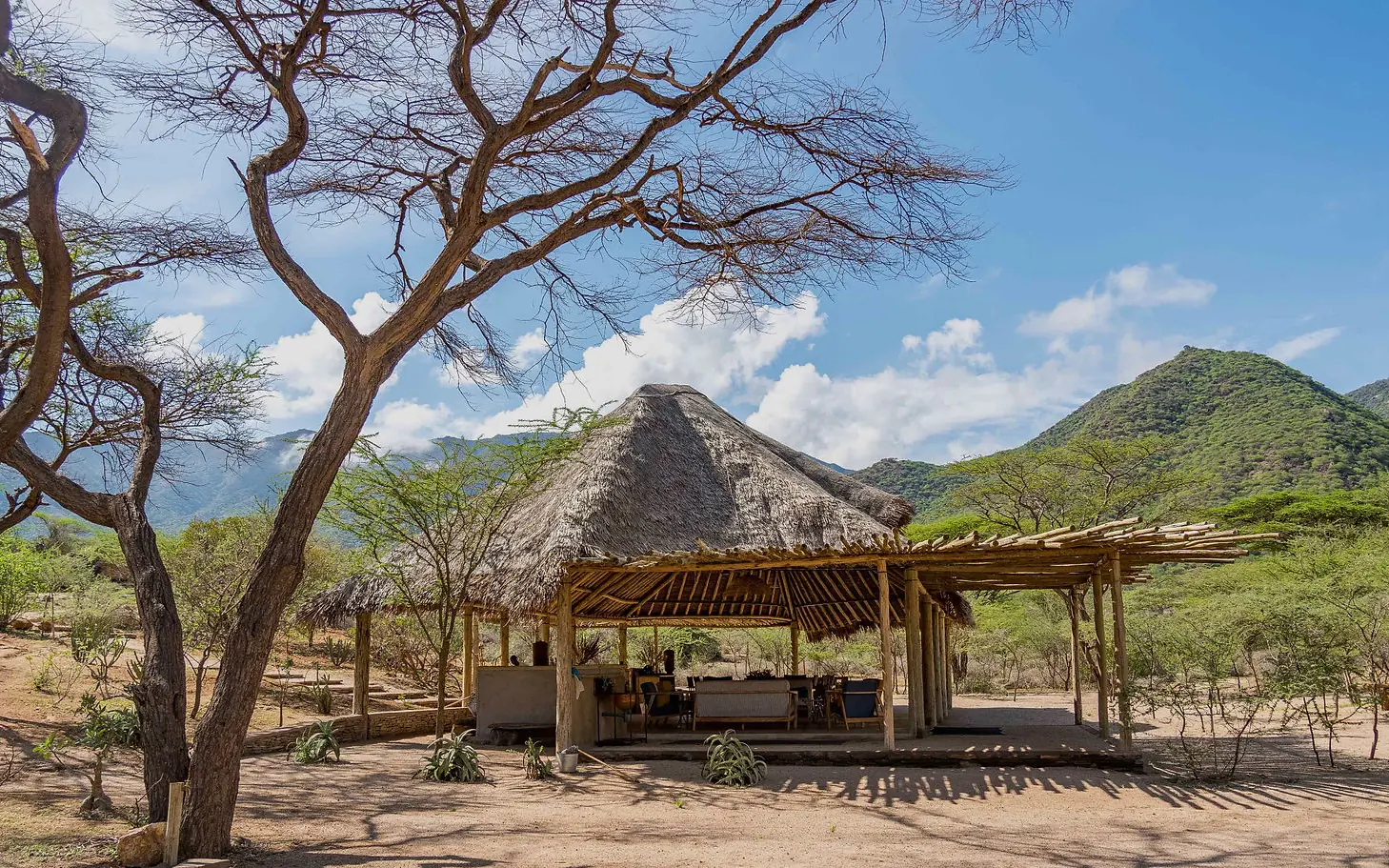
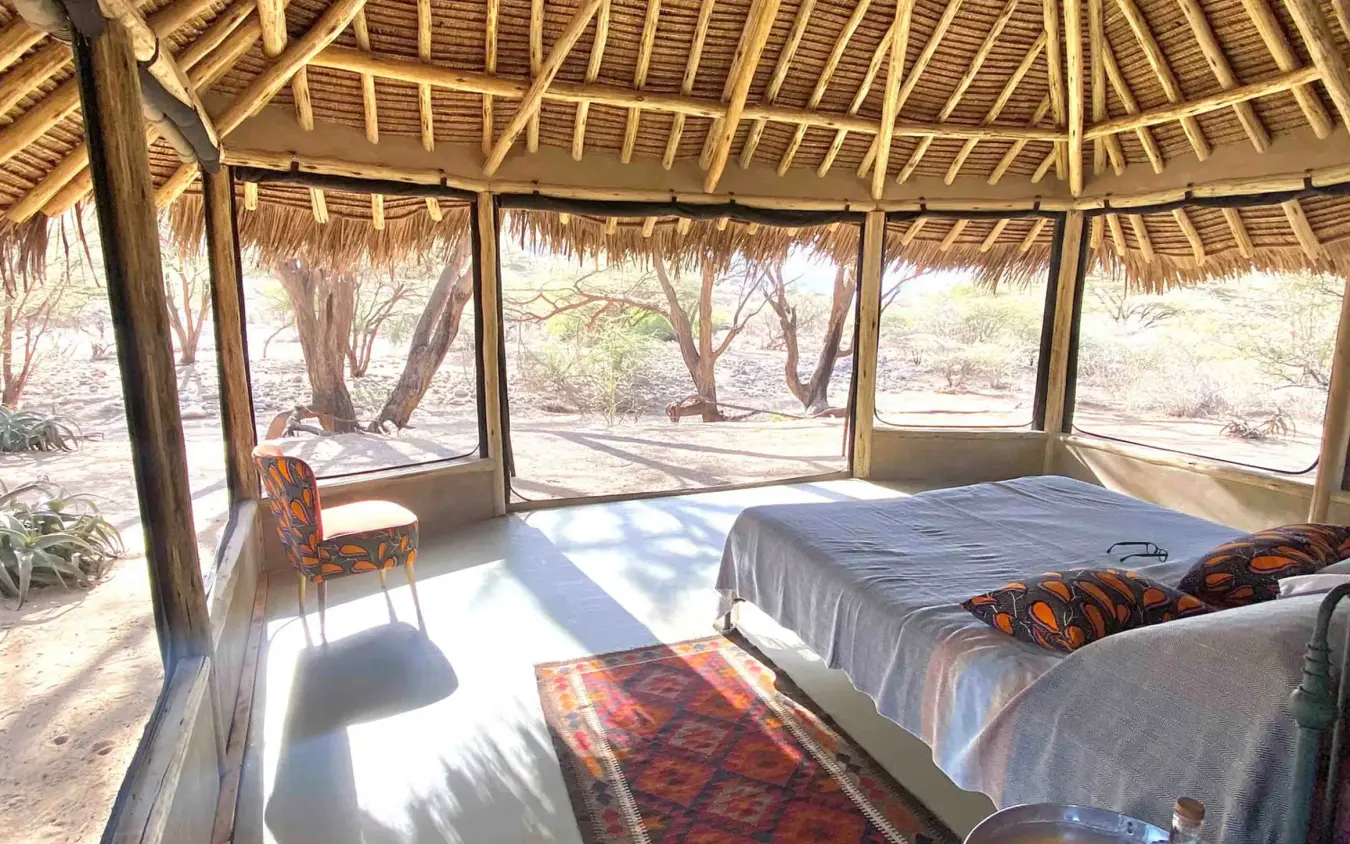
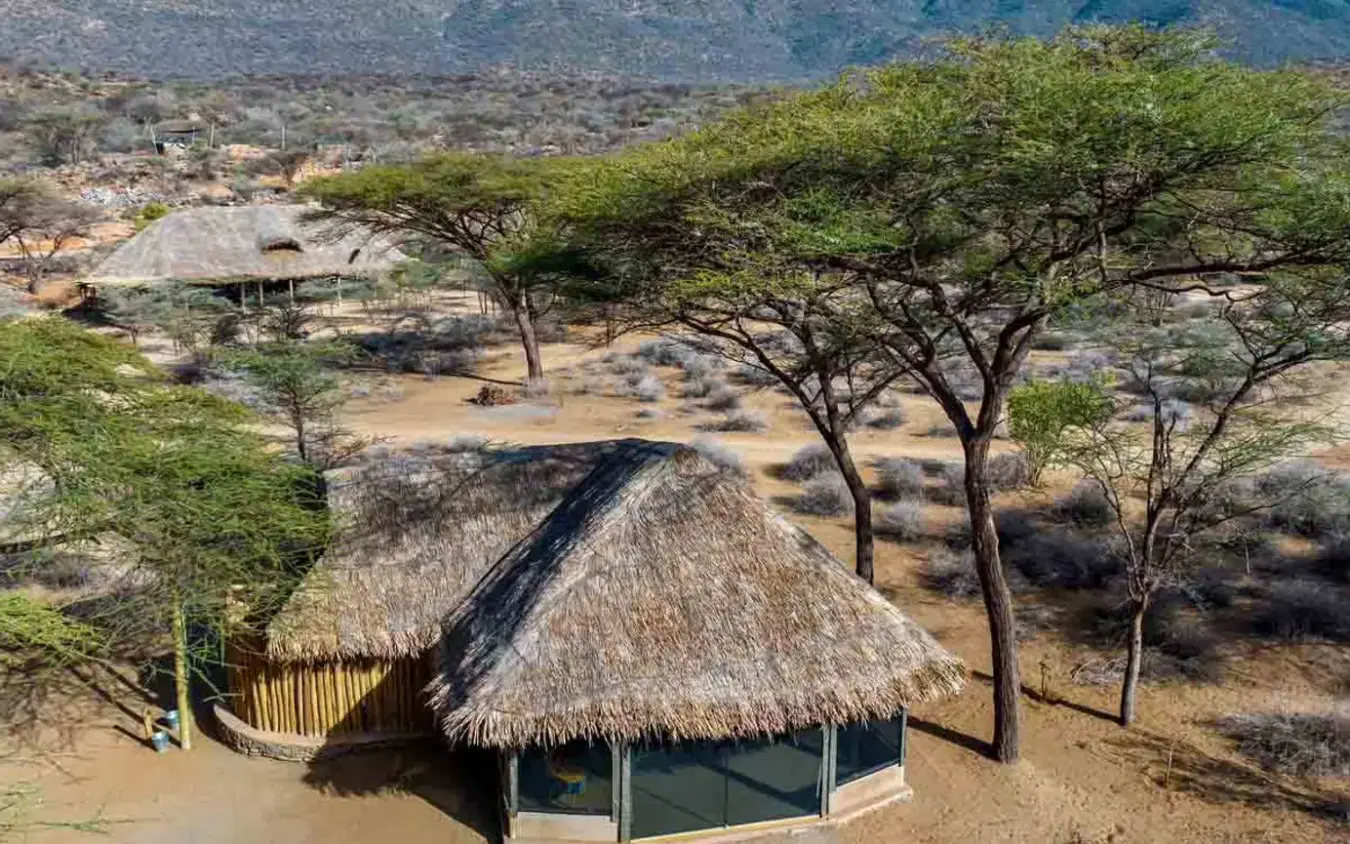
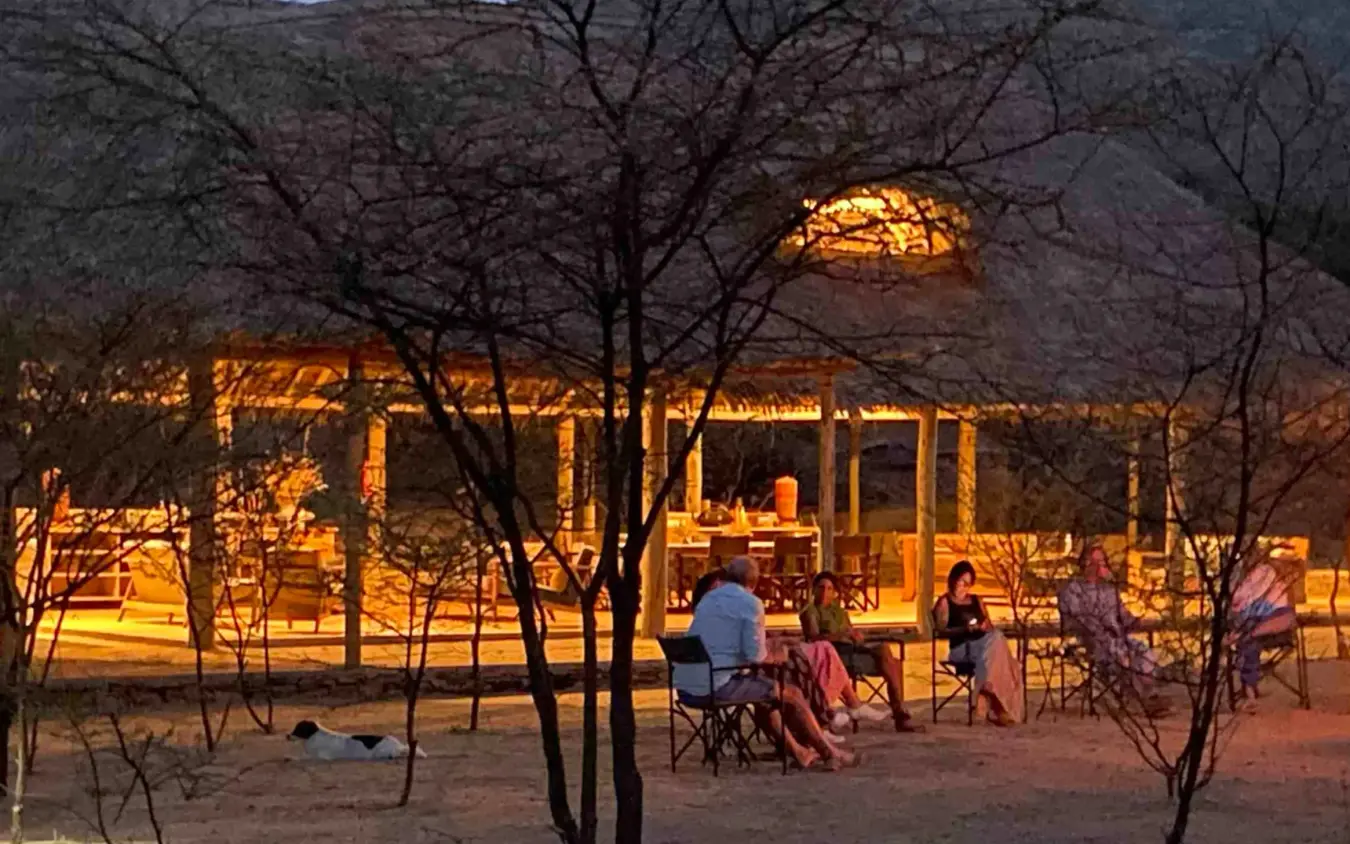
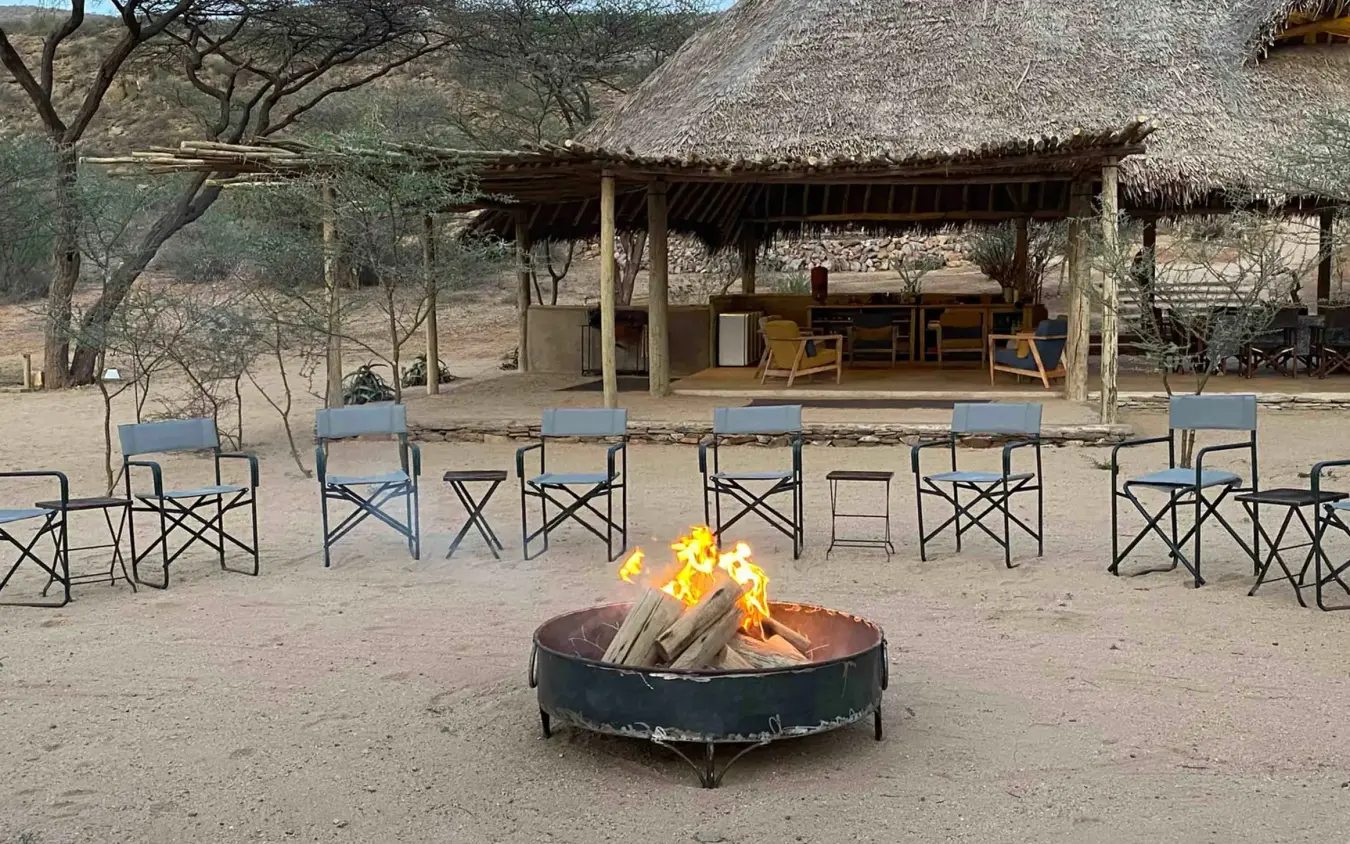
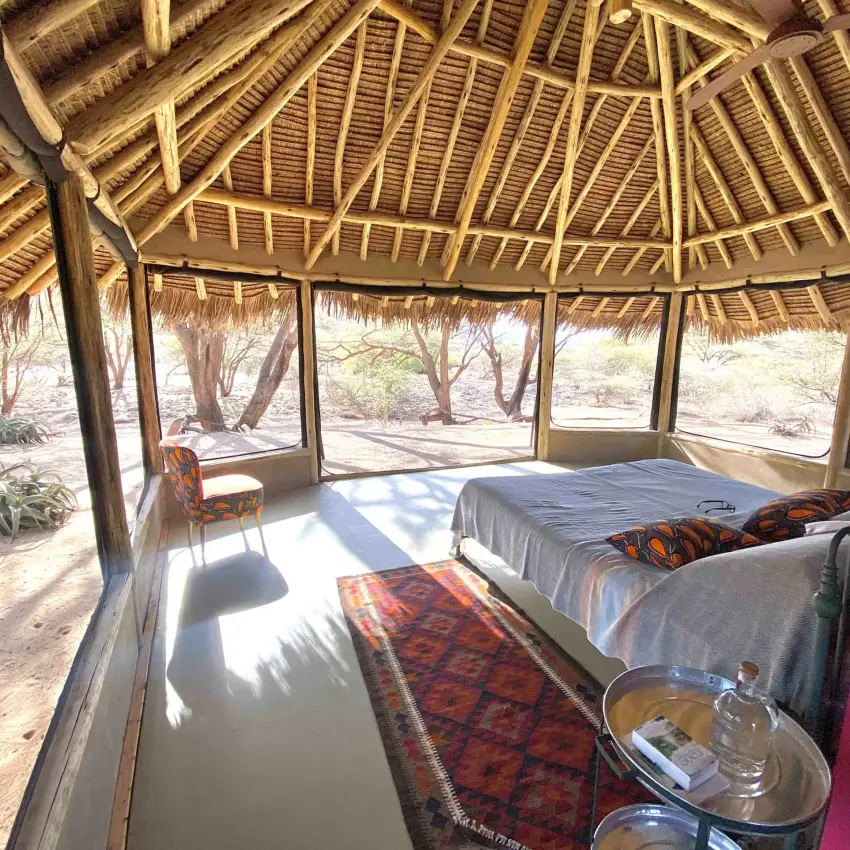
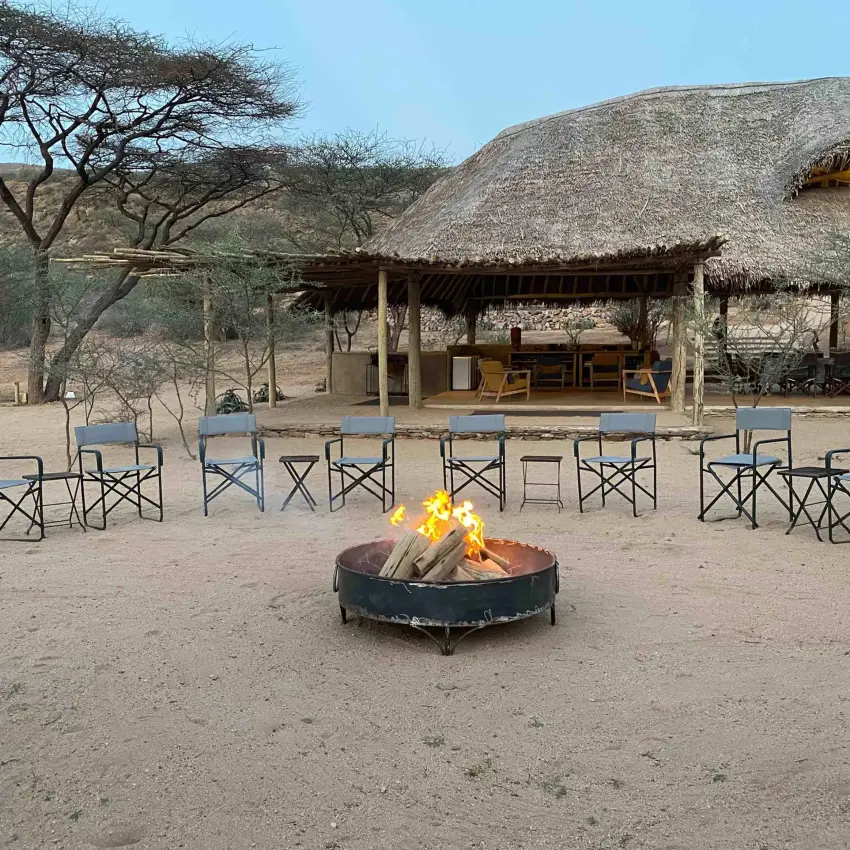
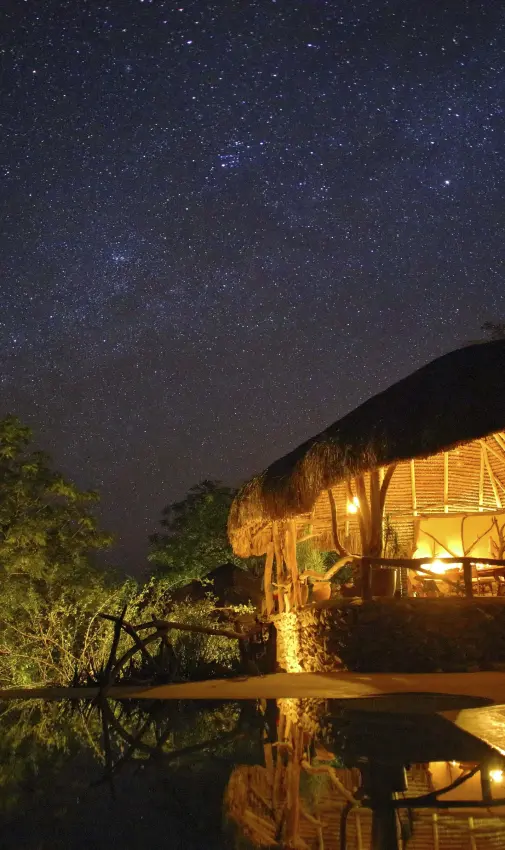
Dining is honest and generous rather than formal. Nile perch comes cooked fresh, alongside curries, kebabs, pizza served on blankets under the stars, and chicken pies eaten on a Lake Turkana beach. Meals move around the camp with the day, in the open-air mess under thatch, beside the pool, or around the fire. With only six rooms, usually taken on an exclusive-use basis, the rhythm bends to the group rather than a schedule, and the whole place feels like a house in the desert.