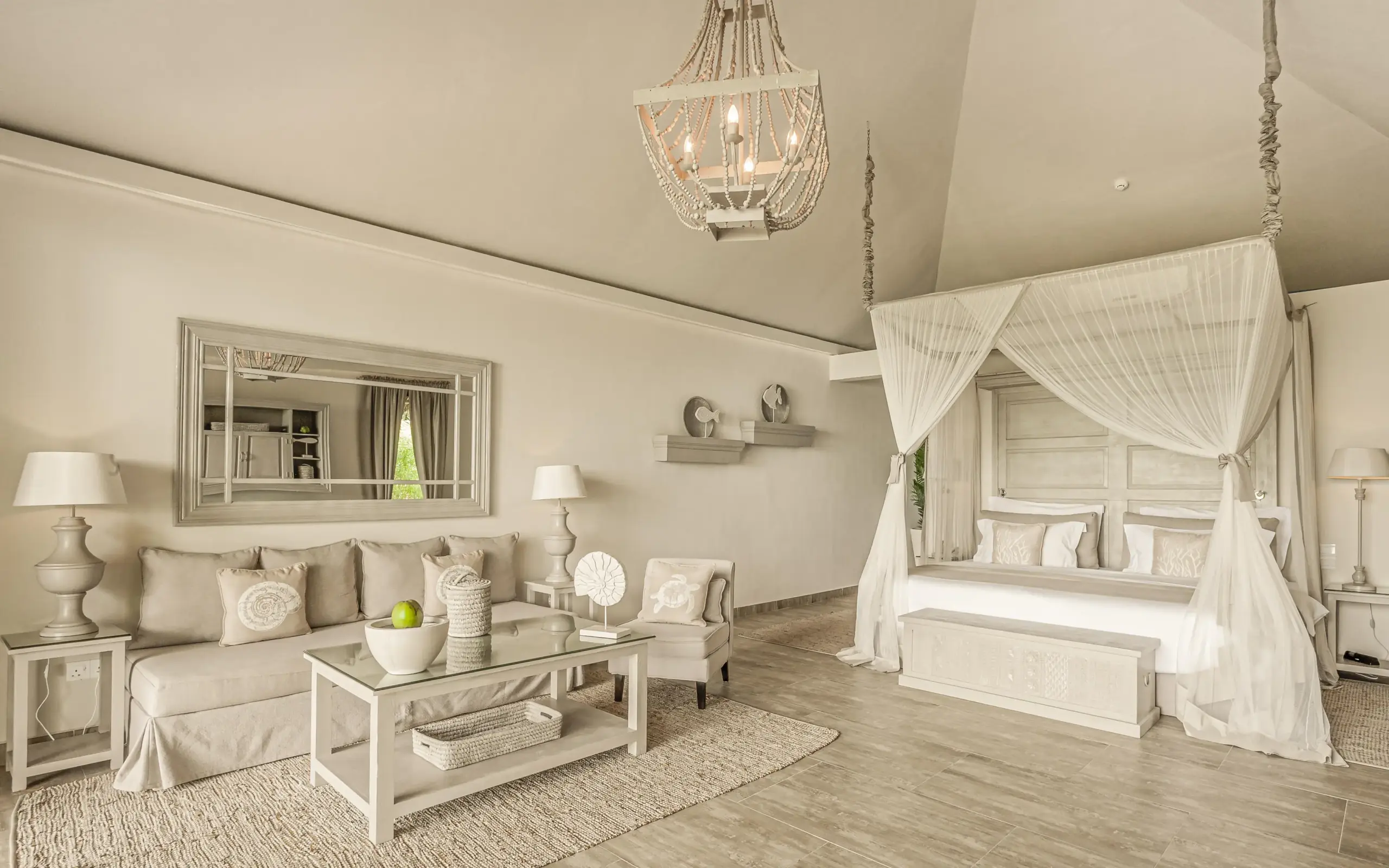
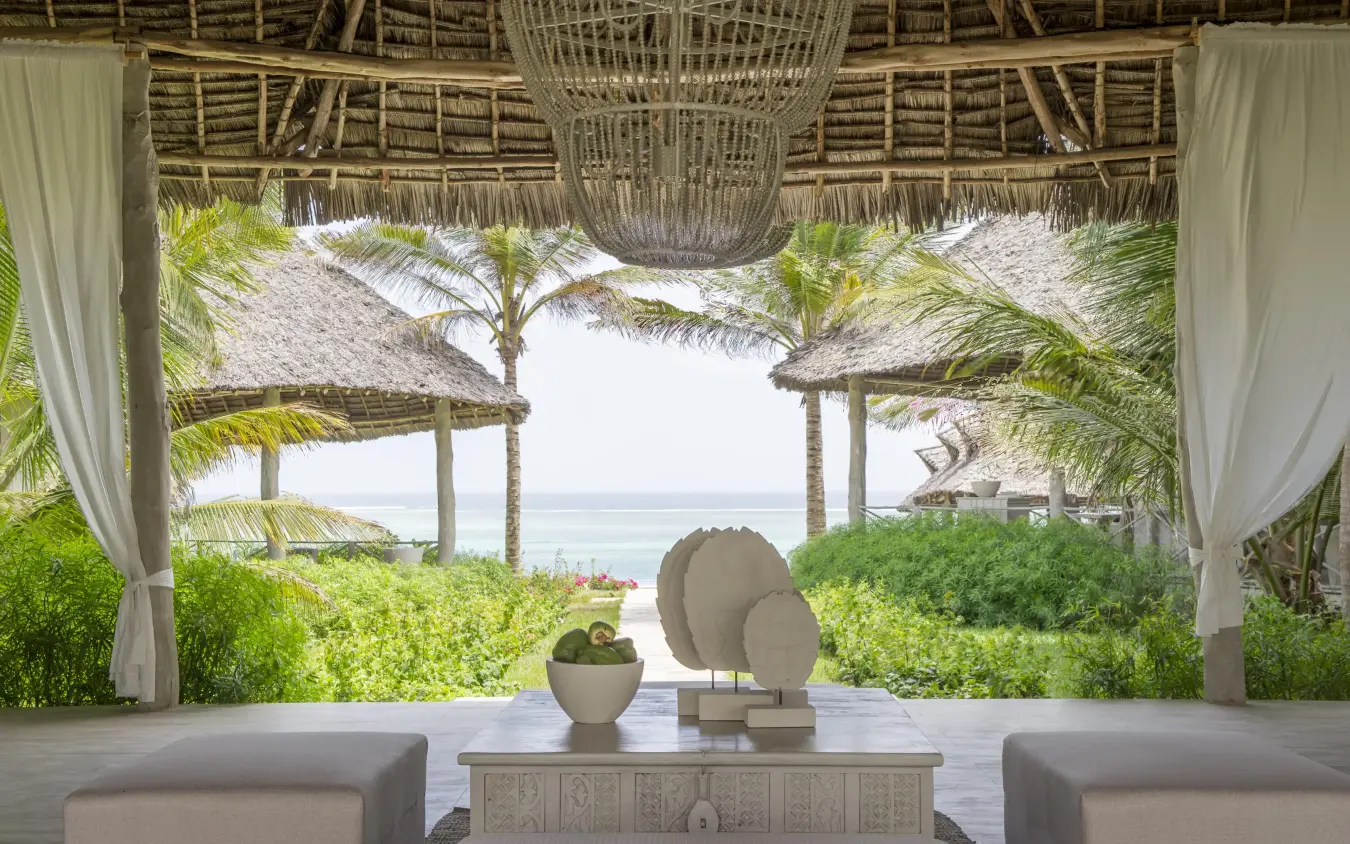
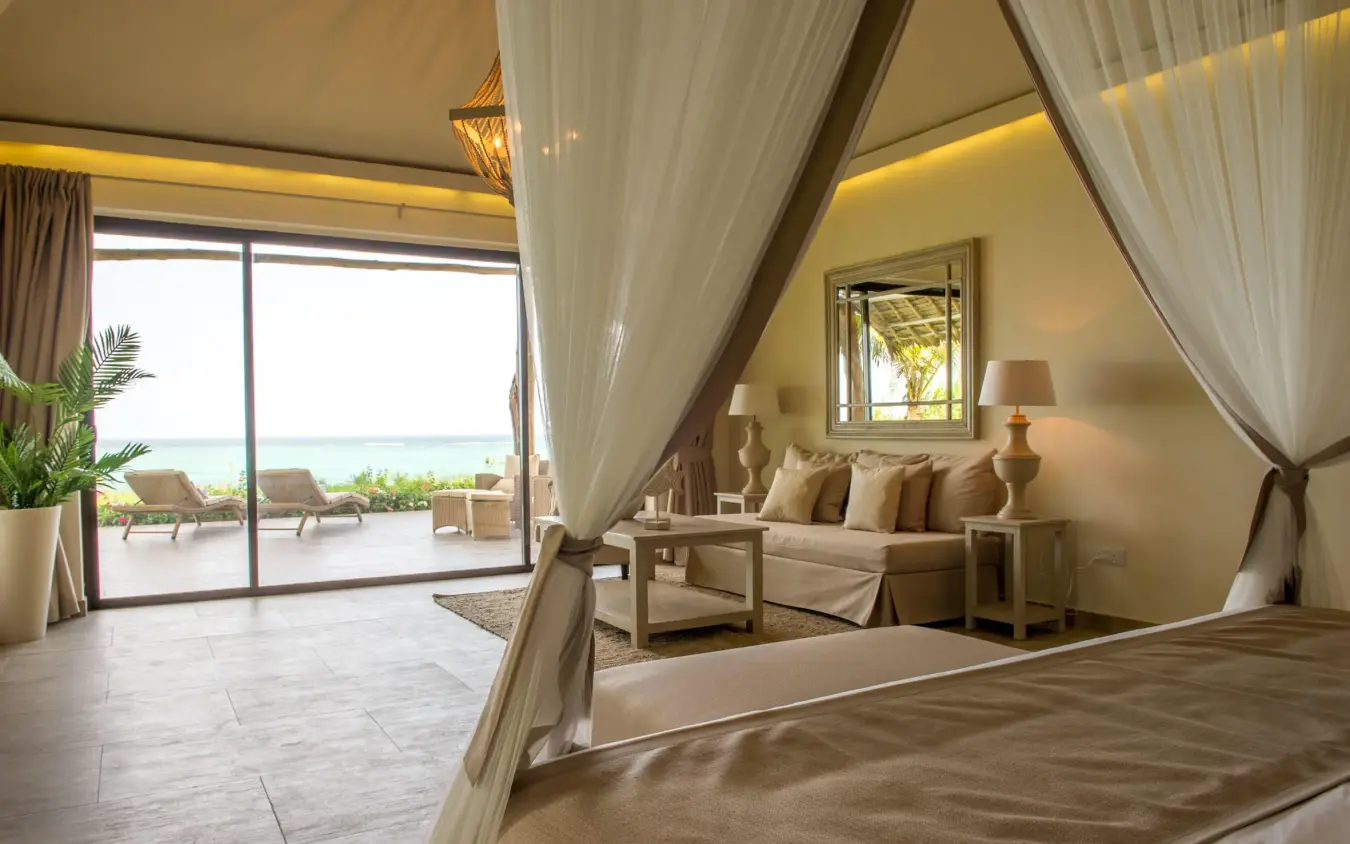
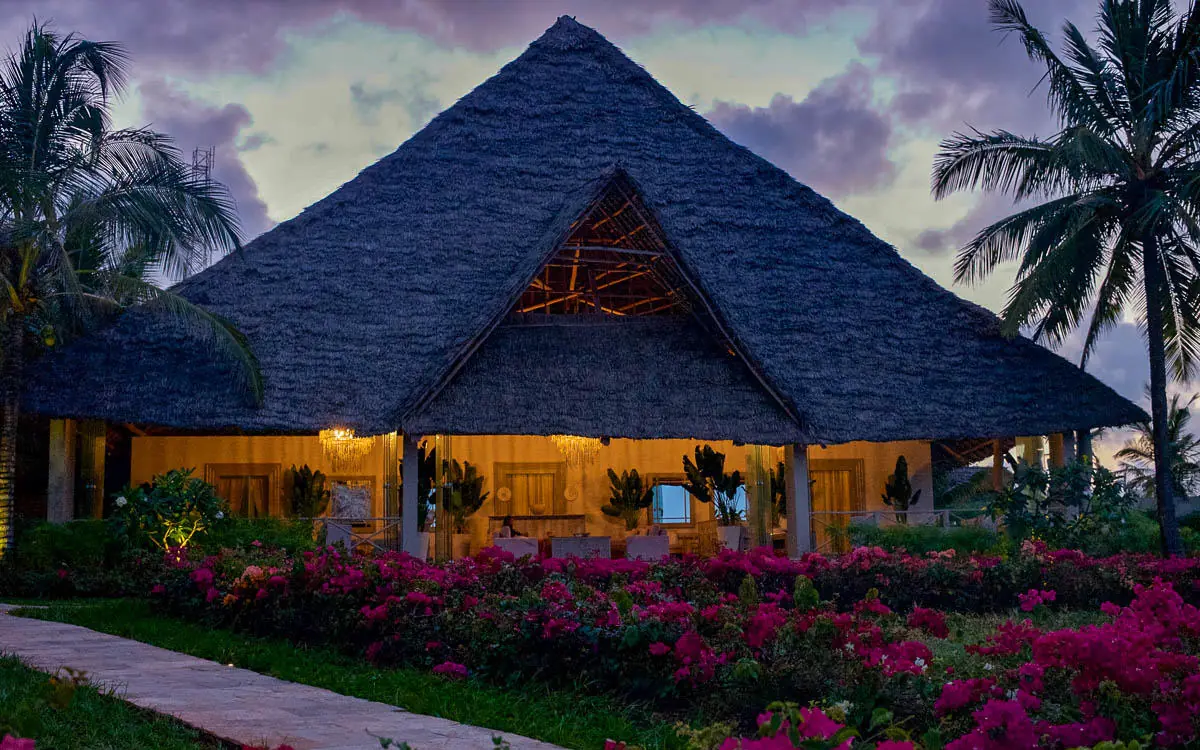
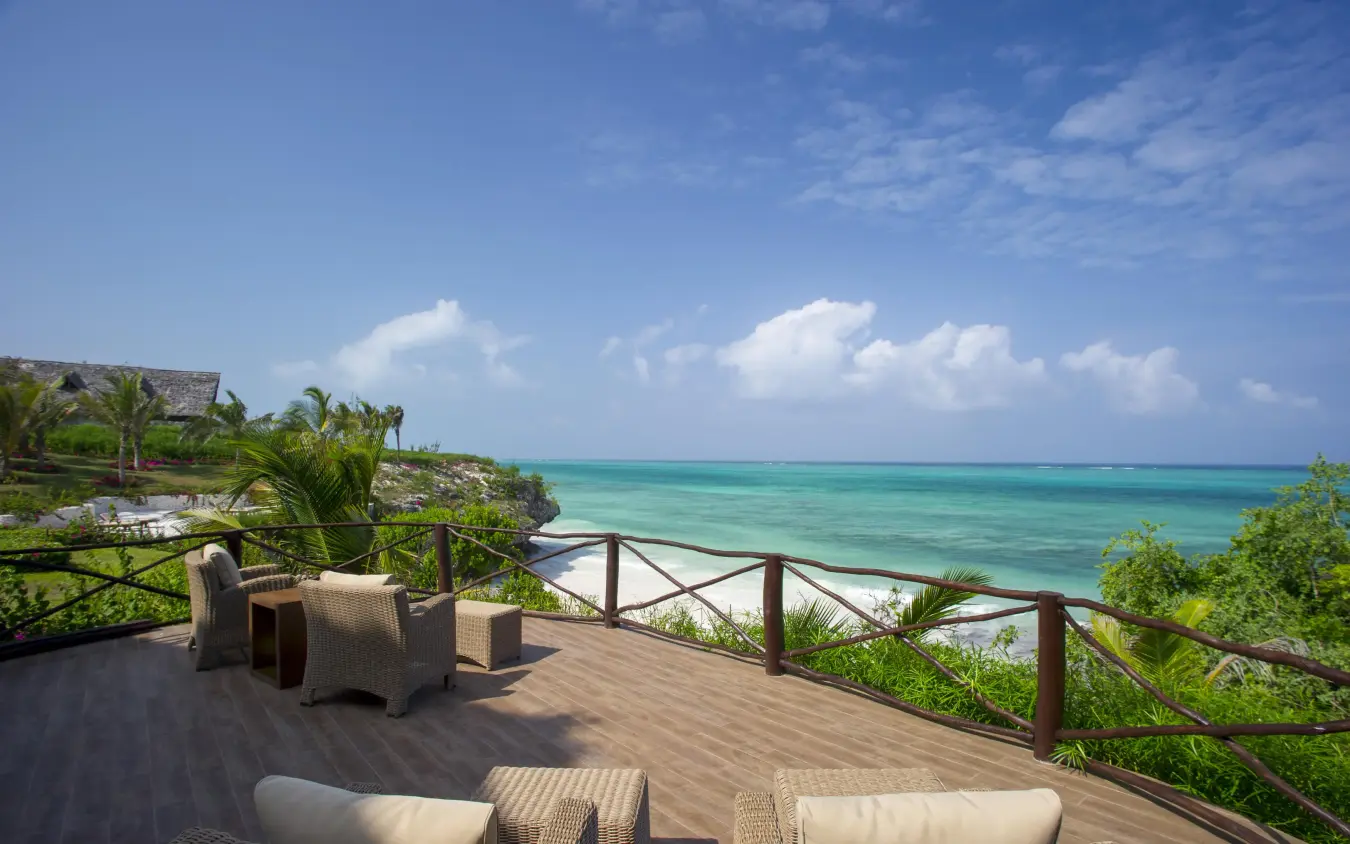
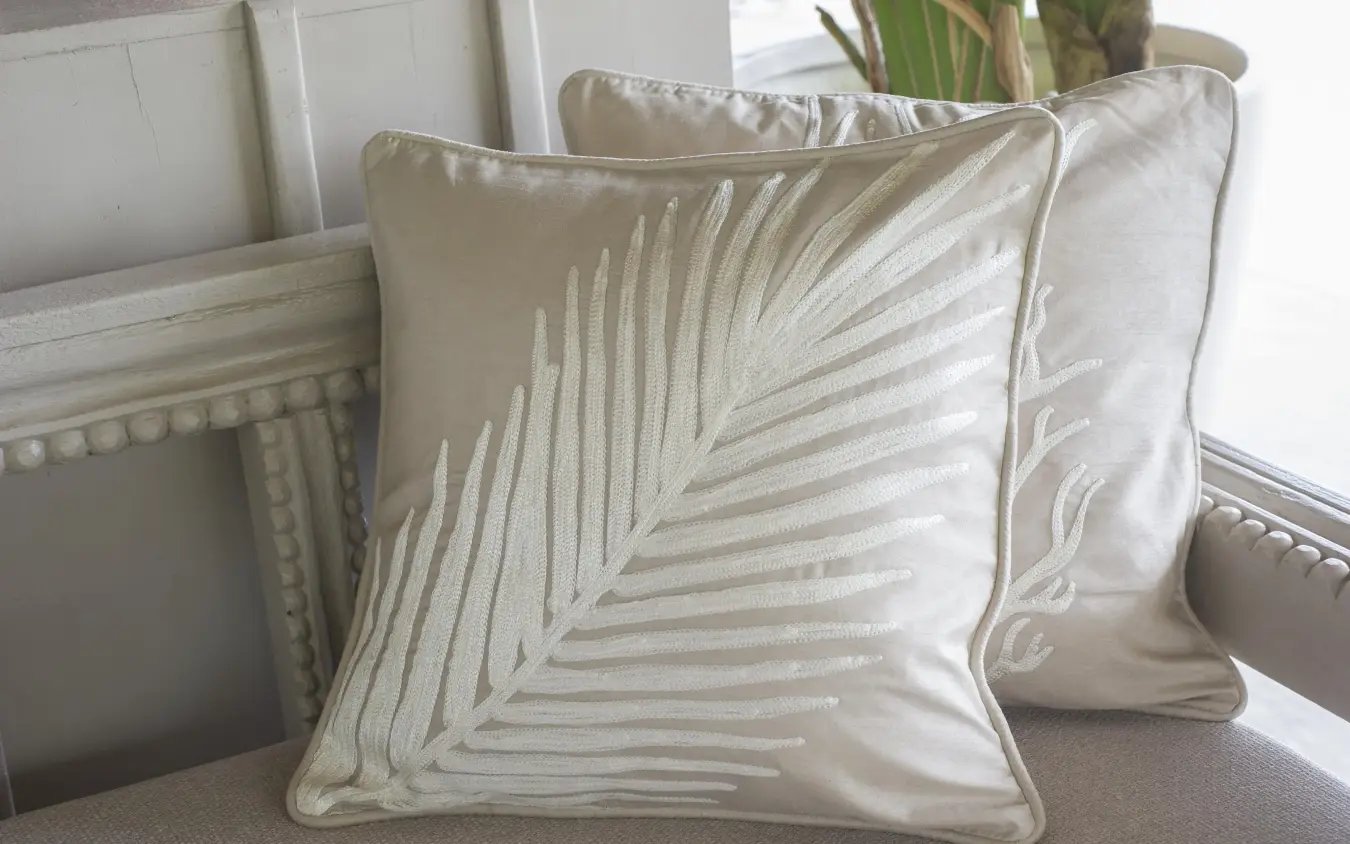
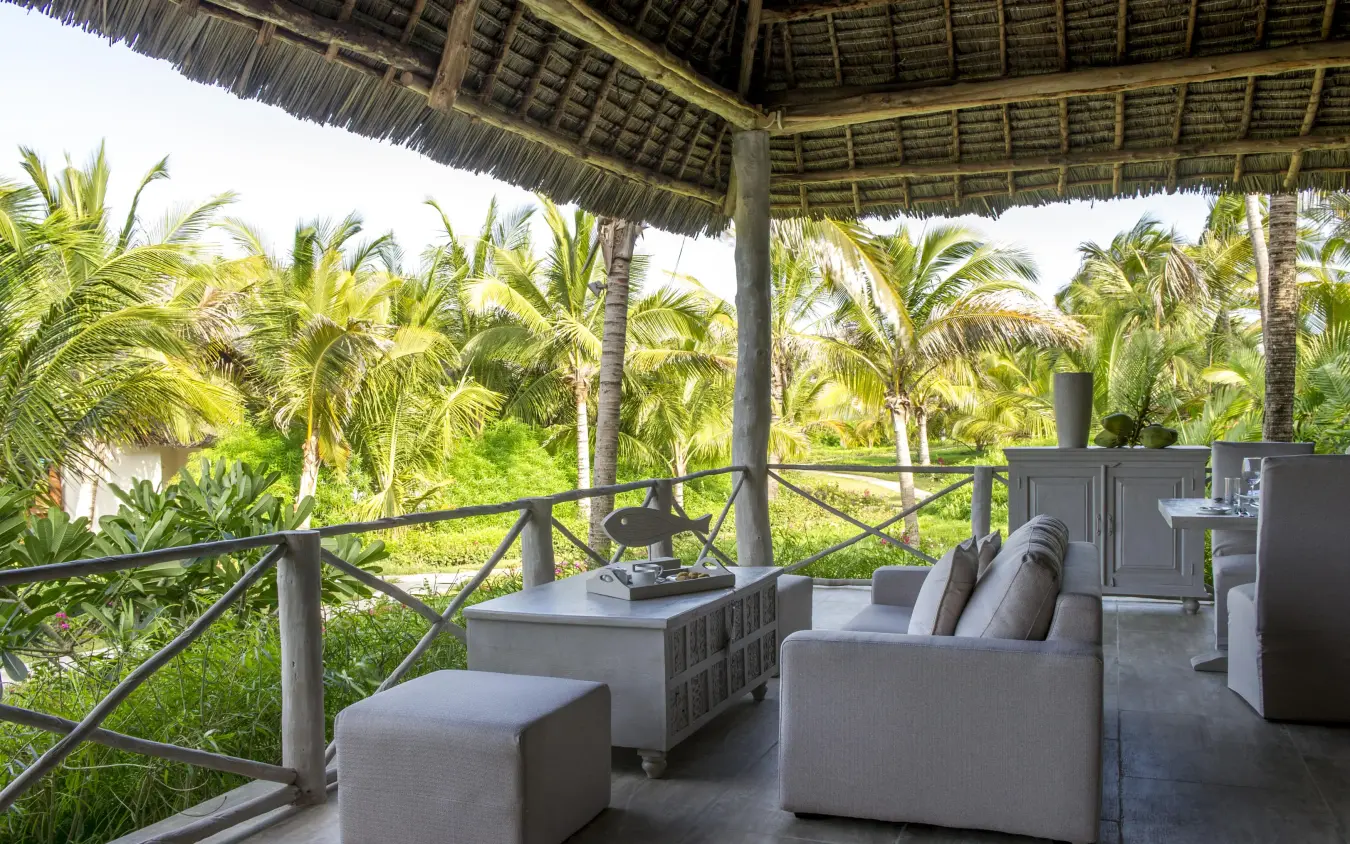
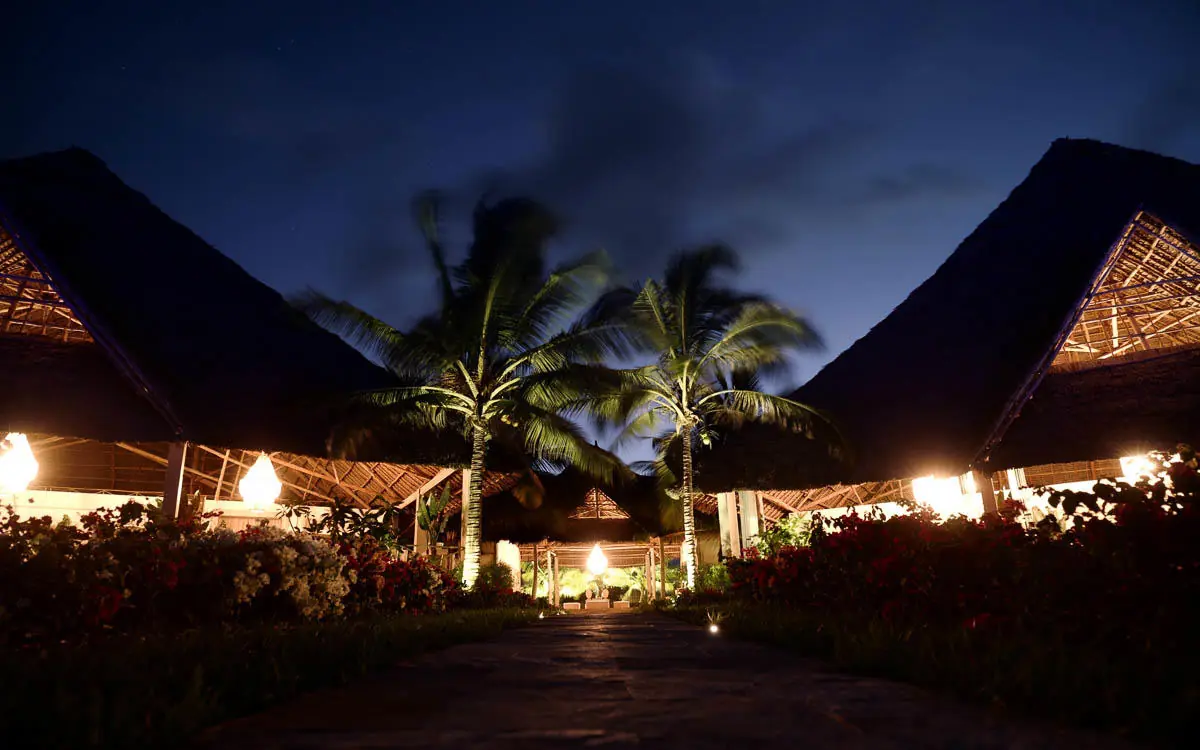
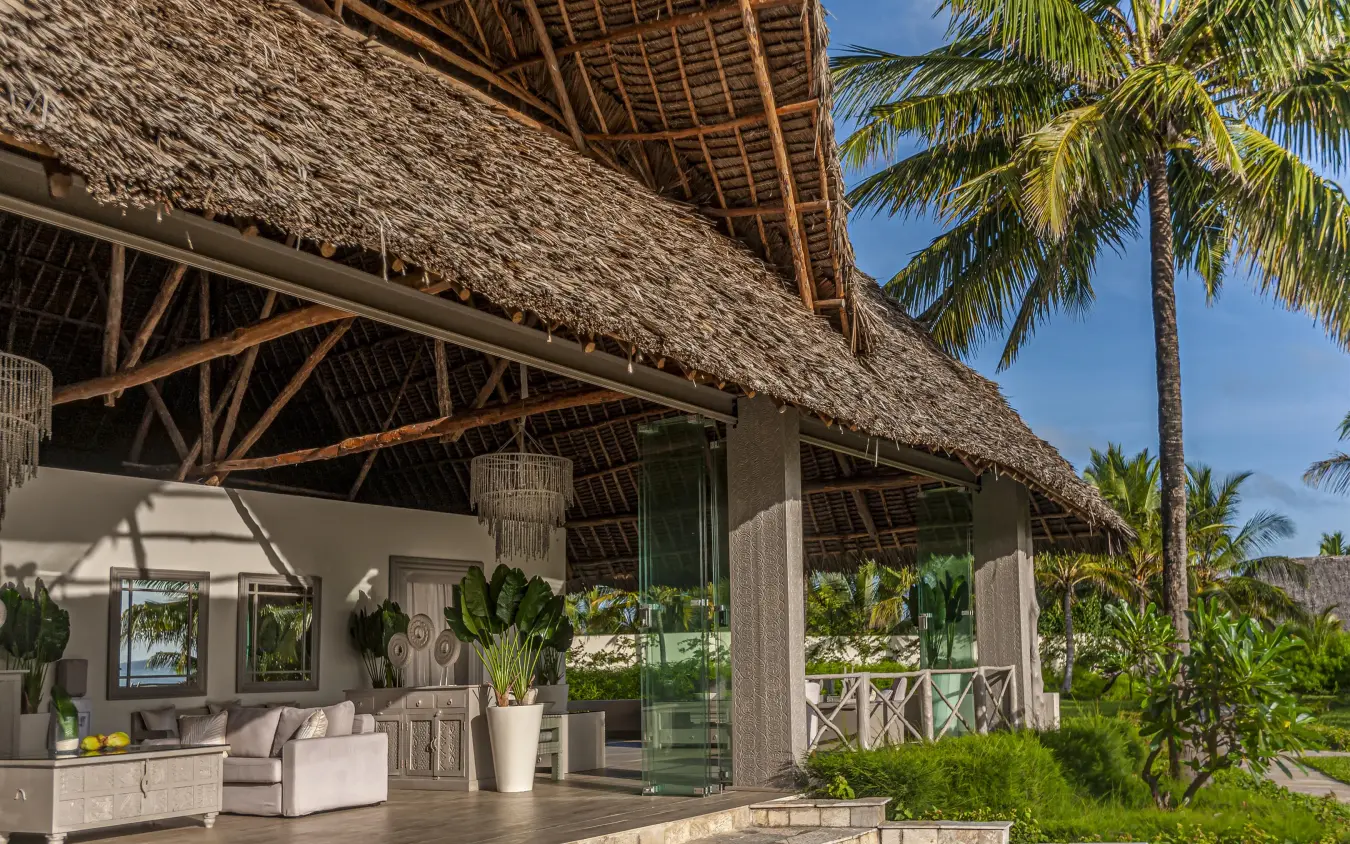
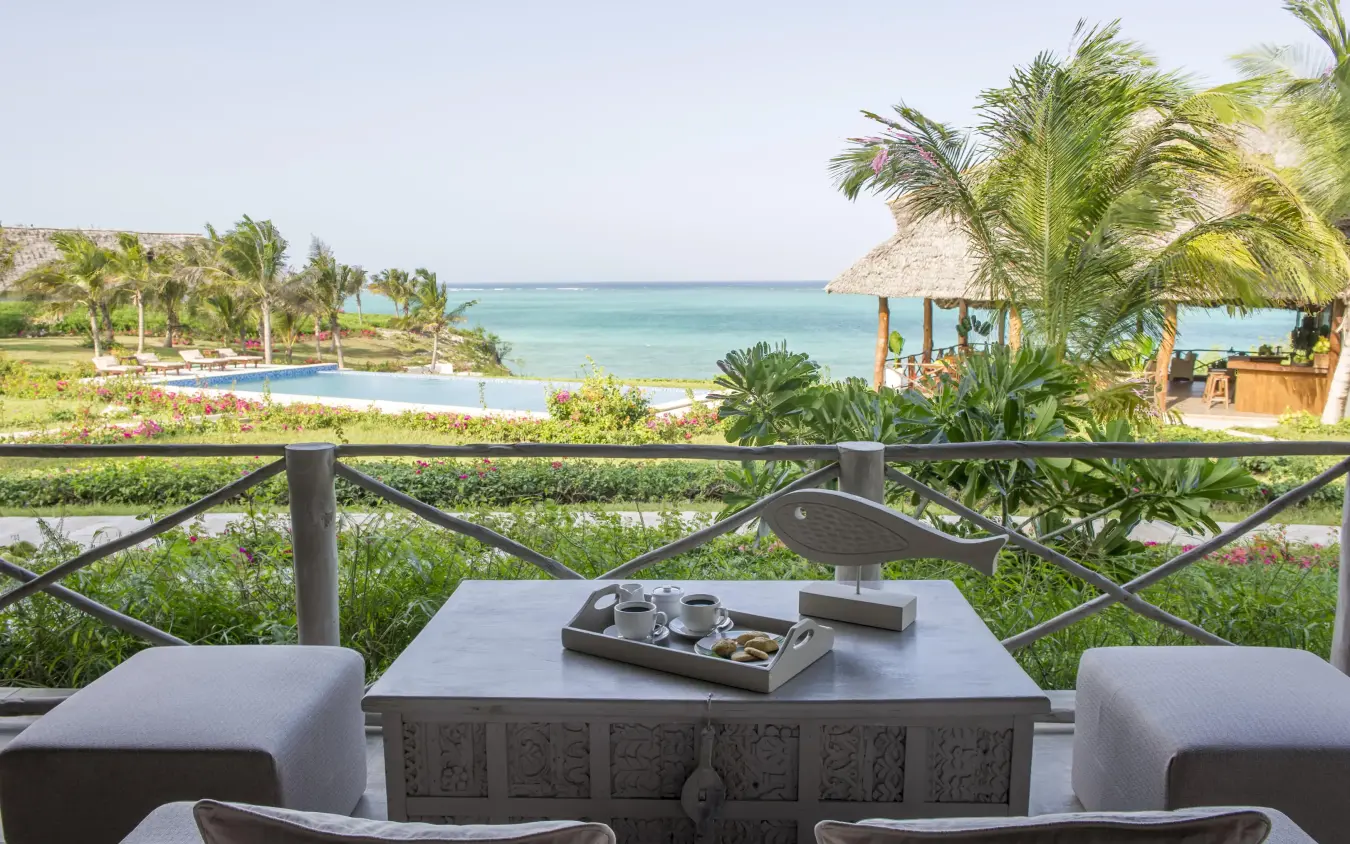
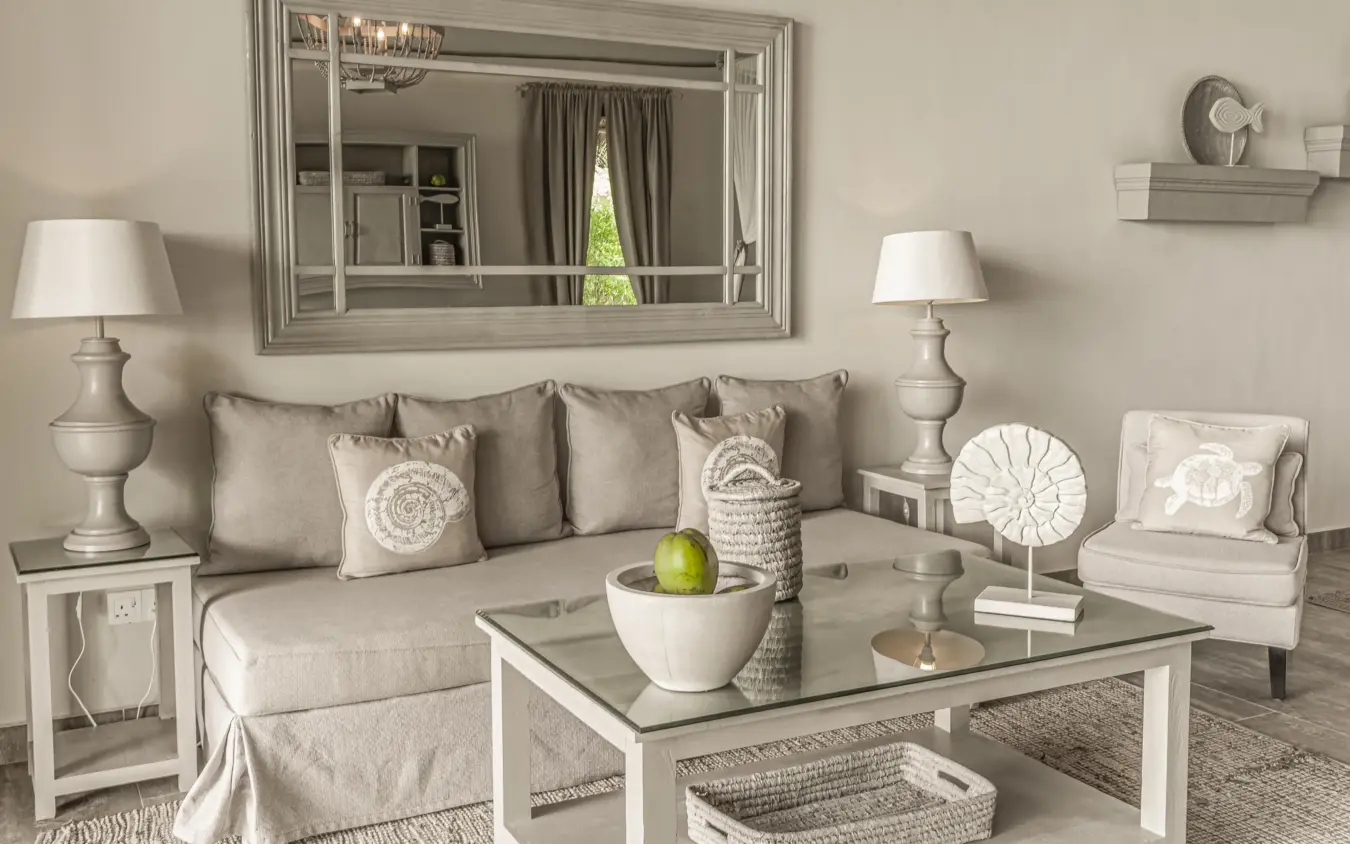
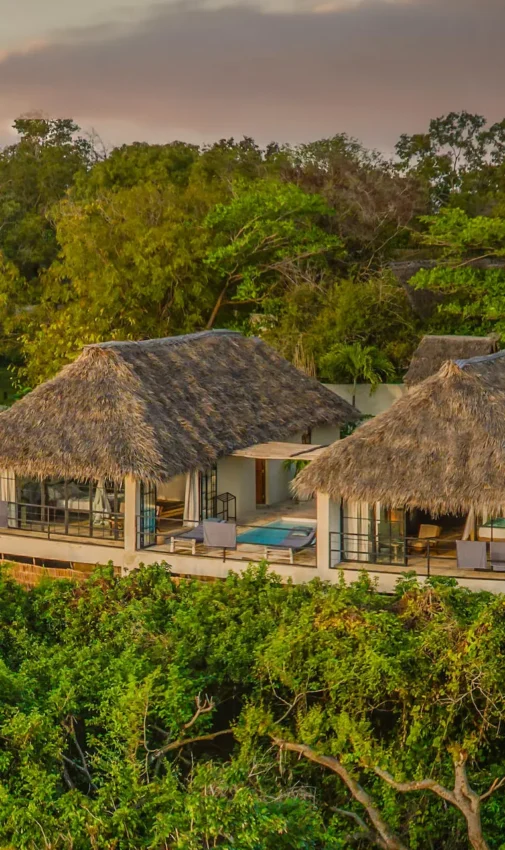
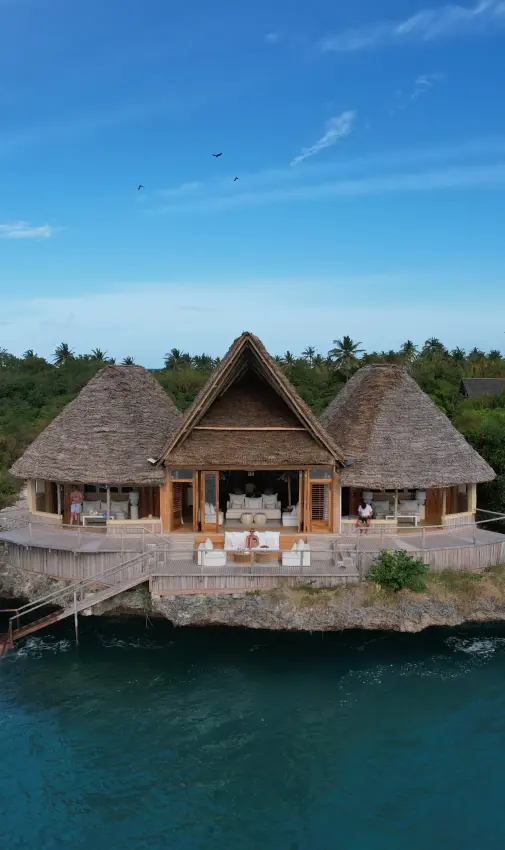
Each villa stretches to more than a hundred square metres, painted in a pared-back palette of pale creams and soft coastal tones. Driftwood accents, woven baskets and rattan detailing are left to frame the sea rather than compete with it. A freestanding bathtub sits by a window looking out to the water, and the king bed is placed to keep the Indian Ocean in view from the moment you wake. Every villa carries a Swahili name drawn from a sea creature, Chewa for grouper, Pweza for octopus.
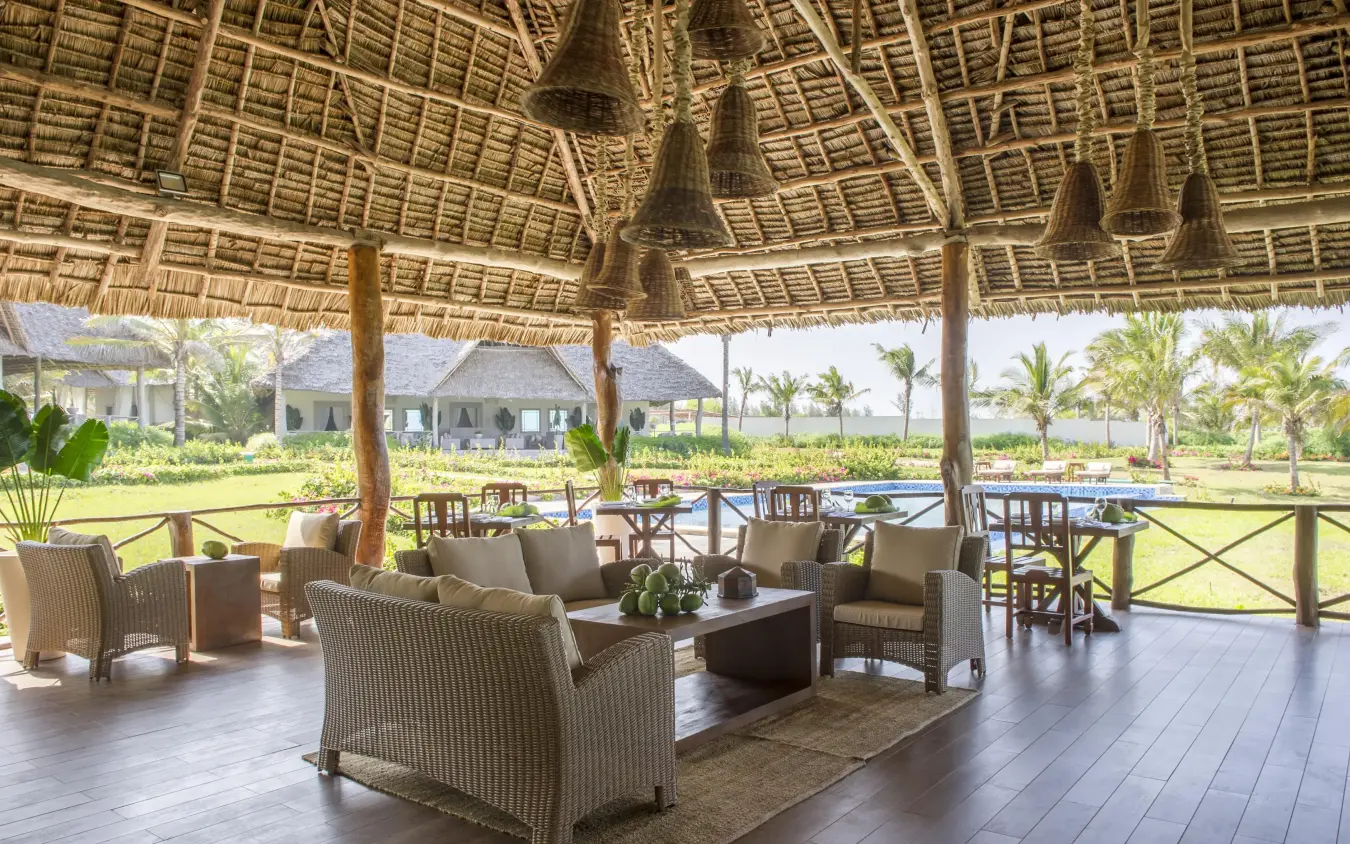
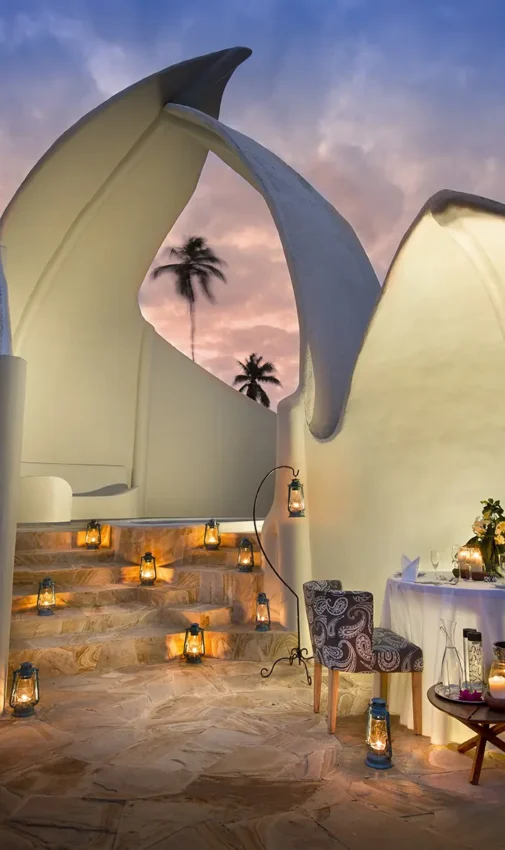
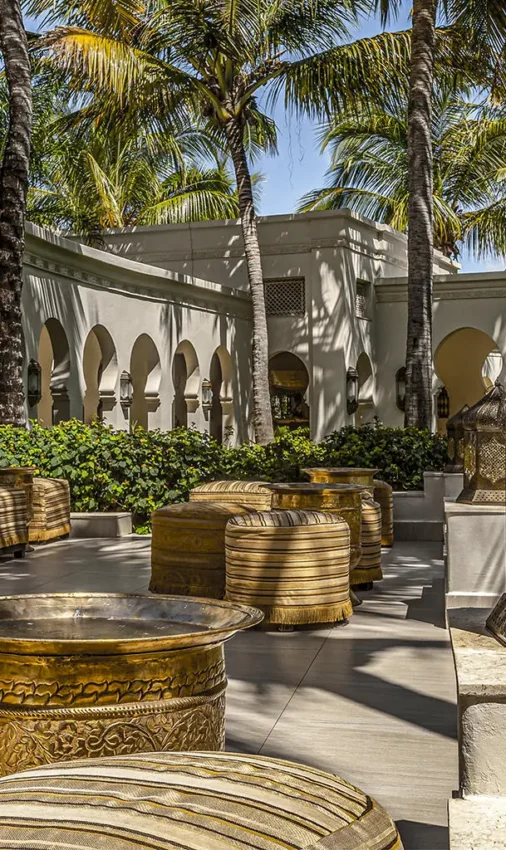
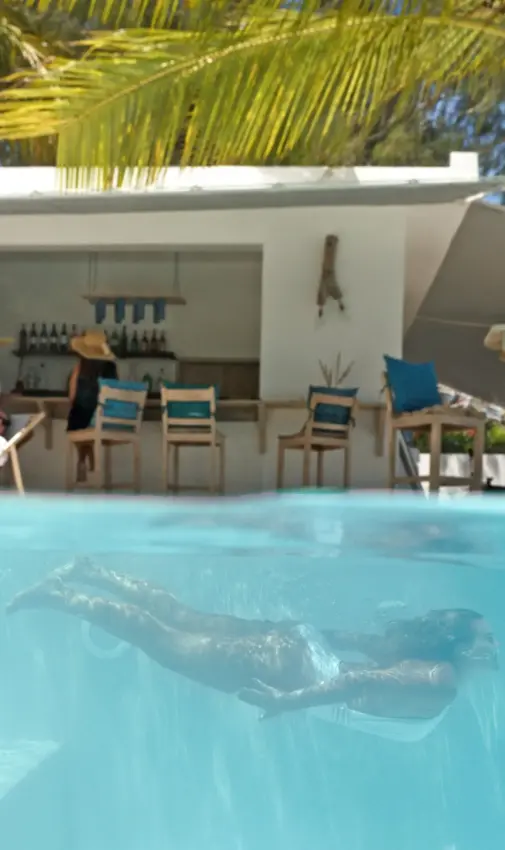
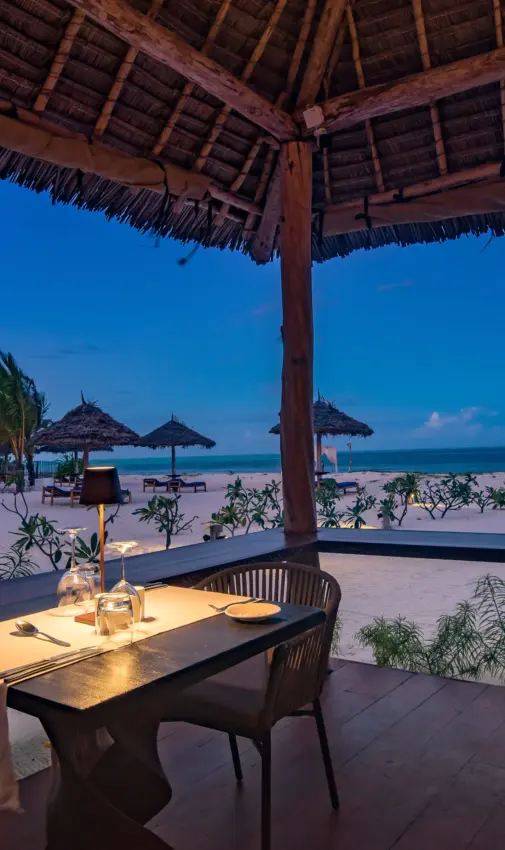
Dining is all-inclusive and built around the daily catch and the hotel’s own shamba, an on-site farm growing vegetables, herbs and spices and keeping animals for the kitchen. Meals move with the day, from the casual Mswakini Beach Bar at shore level to the Drift Wood Dining Room for dinner, and the Mali Mali Lounge for cocktails and canapés at sunset. Private dinners can be laid on a villa terrace or right at the cliff edge, the cooking leaning throughout on fresh seafood and Zanzibar spices.
Dining is all-inclusive and built around the daily catch and the hotel’s own shamba
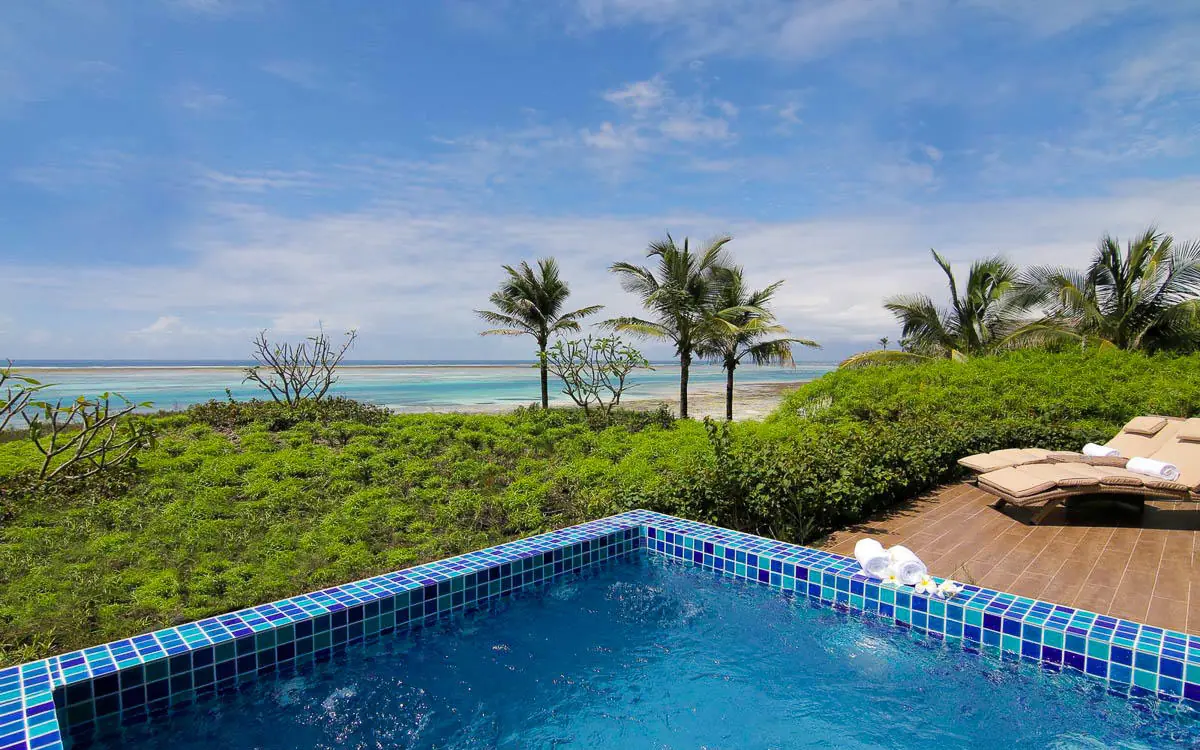
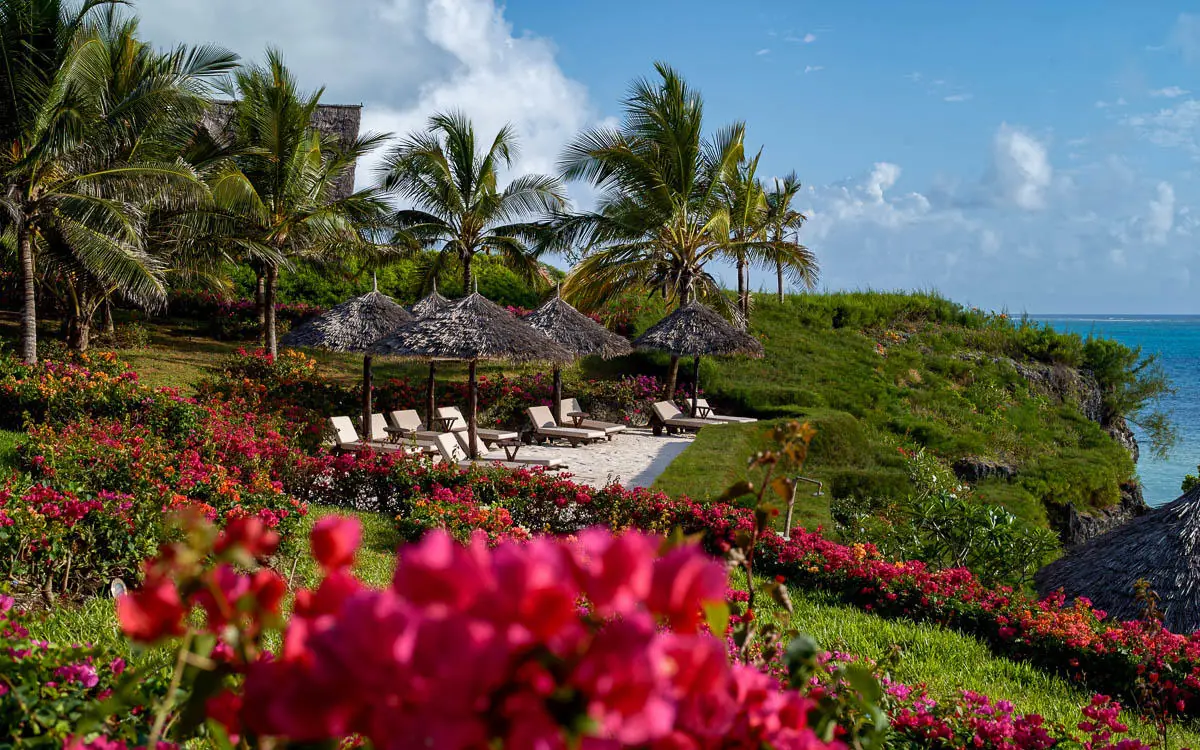
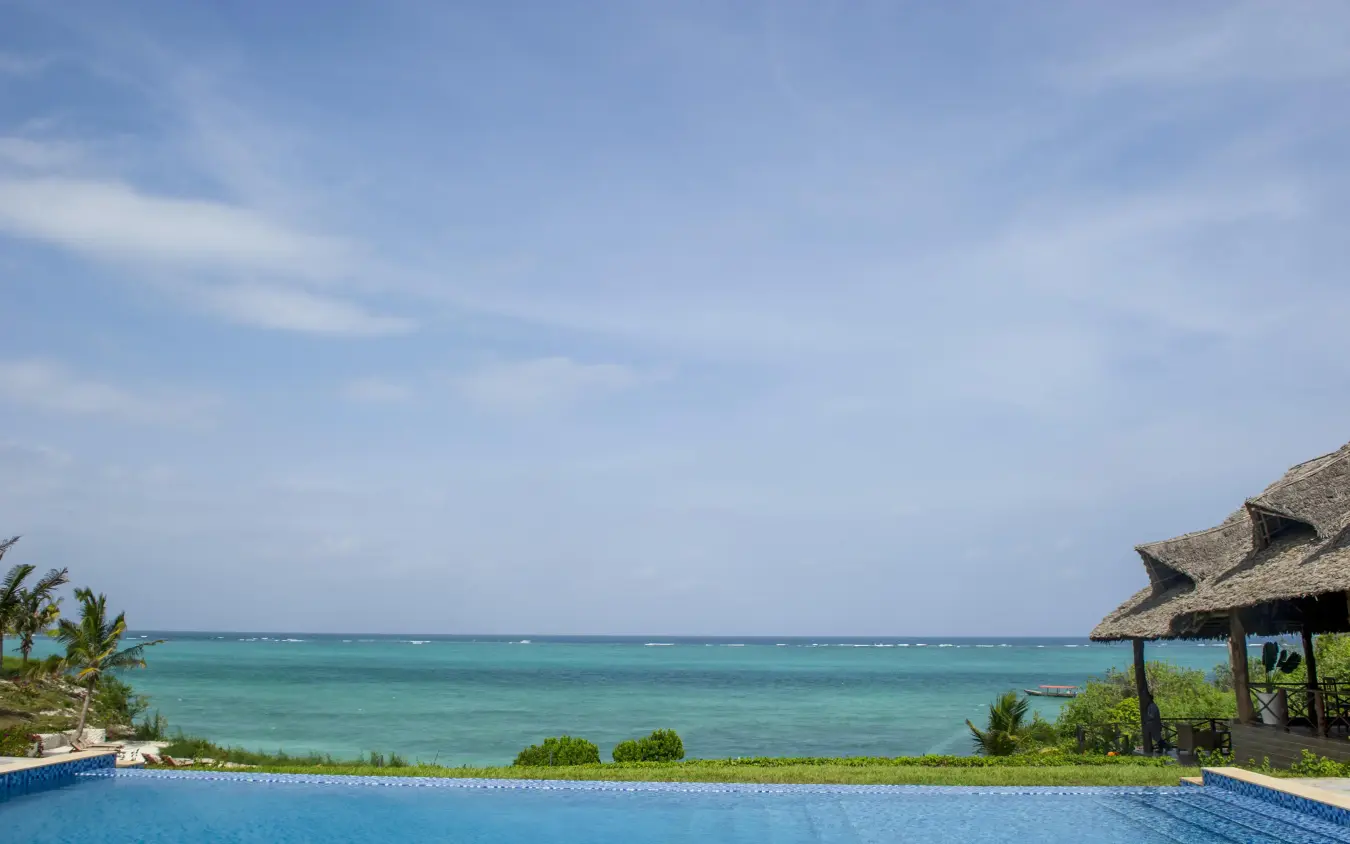
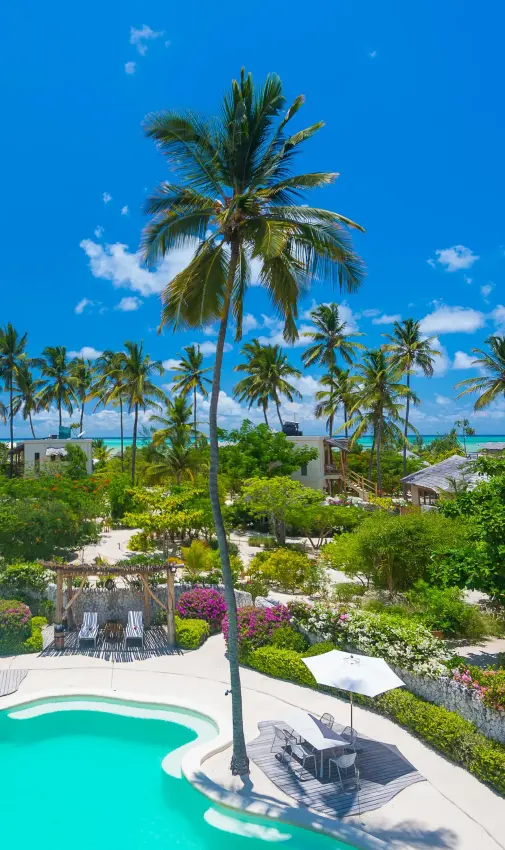
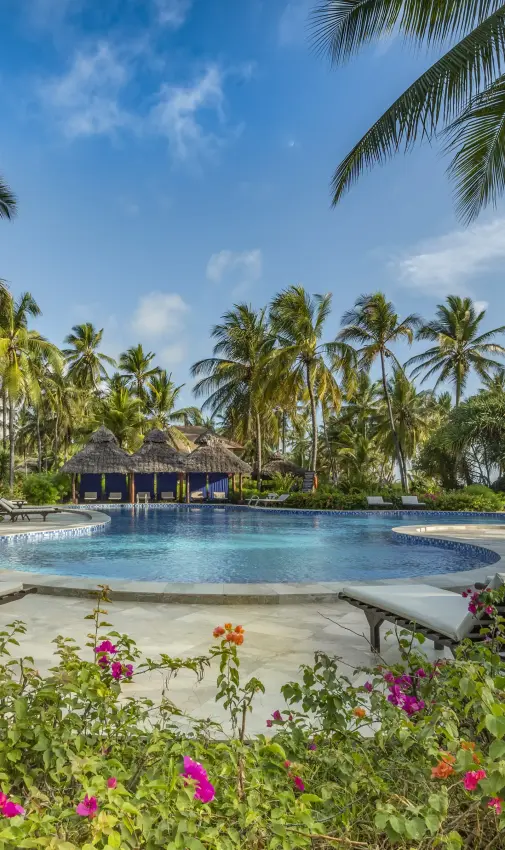
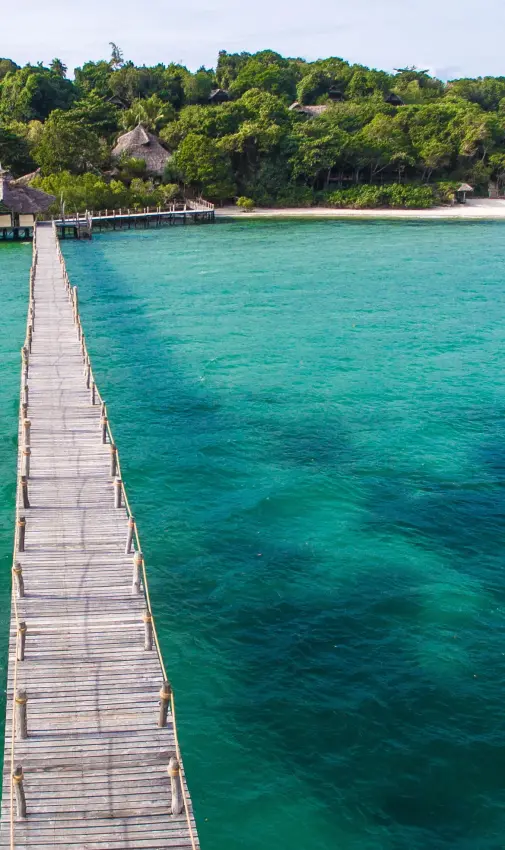
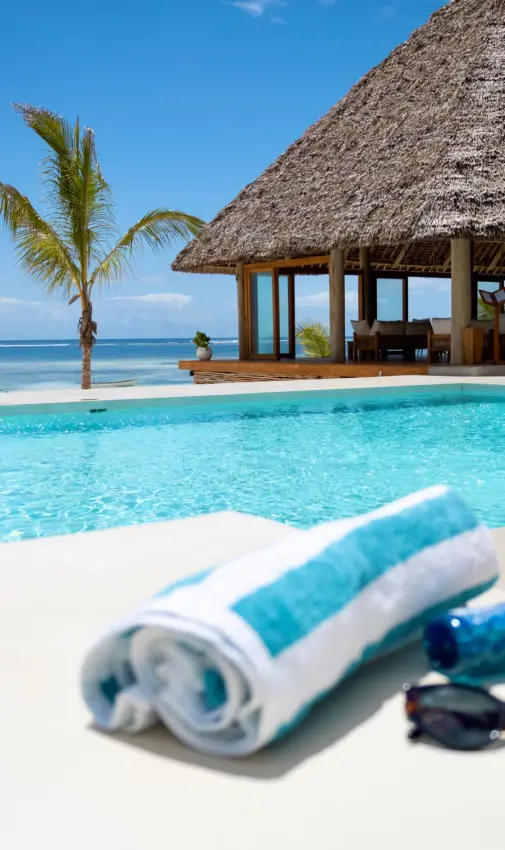
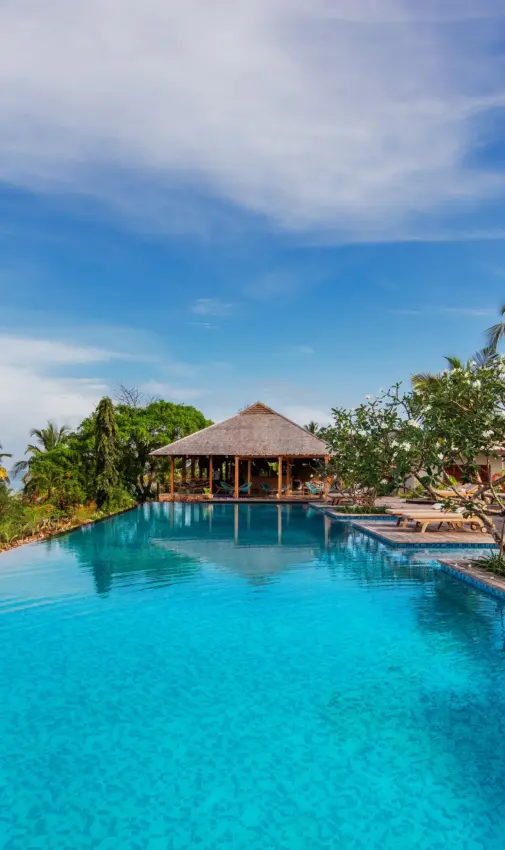
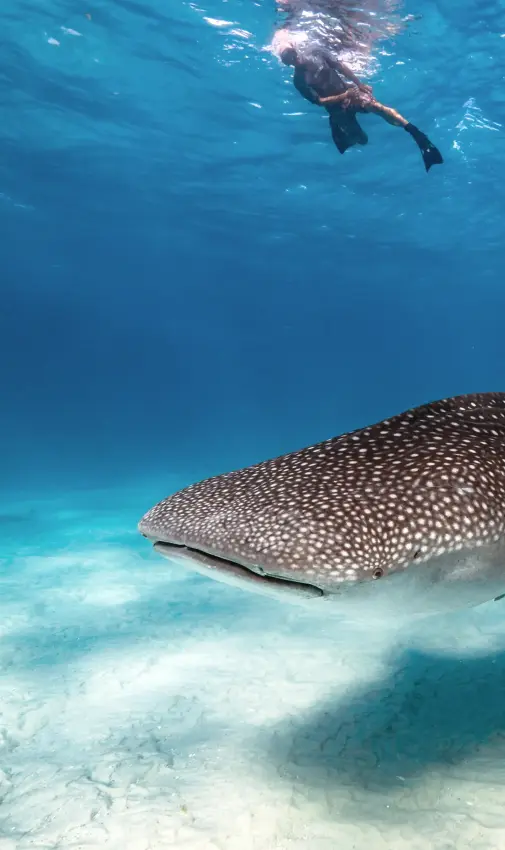
The days settle into an easy rhythm. Mornings are for snorkelling straight off the cove or diving the reef through the on-site Rising Sun Dive Centre, and afternoons drift between the infinity pool and each villa’s private plunge pool. The landscaped gardens run to bougainvillea and coconut palms, with a jogging track threaded through them for those who want to move. Kayaking, paddleboarding, reef-shoe walks, sailing and seasonal kitesurfing are all arranged from here, each in its own good time.
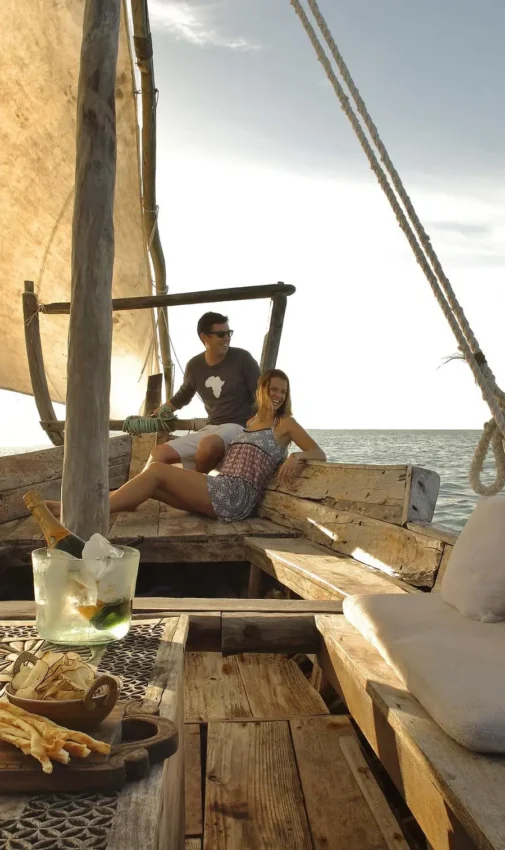
Beyond the cliff, the island unfolds at a gentler pace. Jozani Forest, home to the endemic Zanzibar red colobus monkey, lies some distance inland, while Stone Town, a UNESCO World Heritage Site, sits within reach with spice farms along the way. The Zawadi Swahili Day takes guests into the neighbouring village of Bwejuu, and dhow cruises trace the coast at sundown. Many pair Zanzibar with a mainland safari, arriving here to unwind once the driving is done.