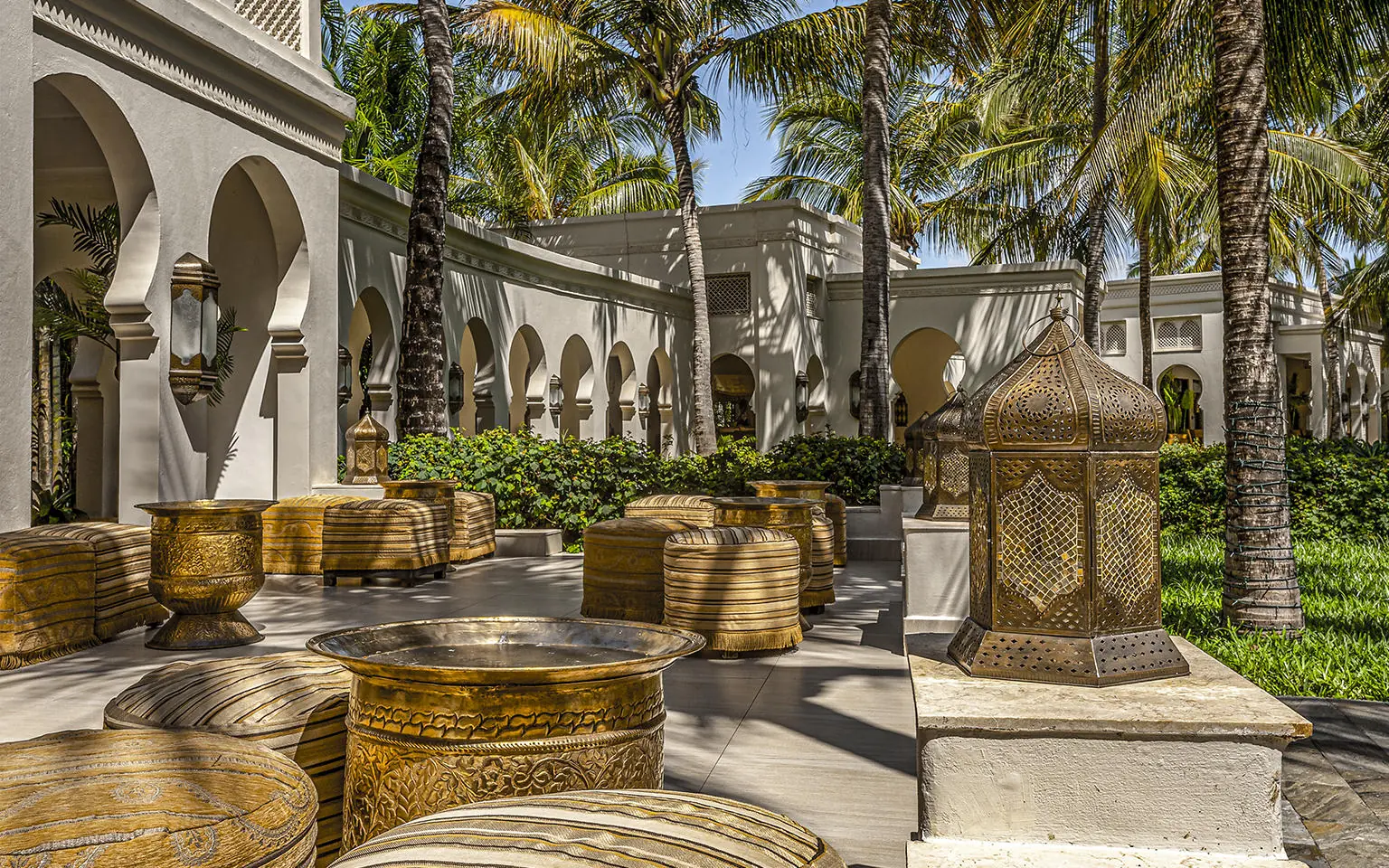
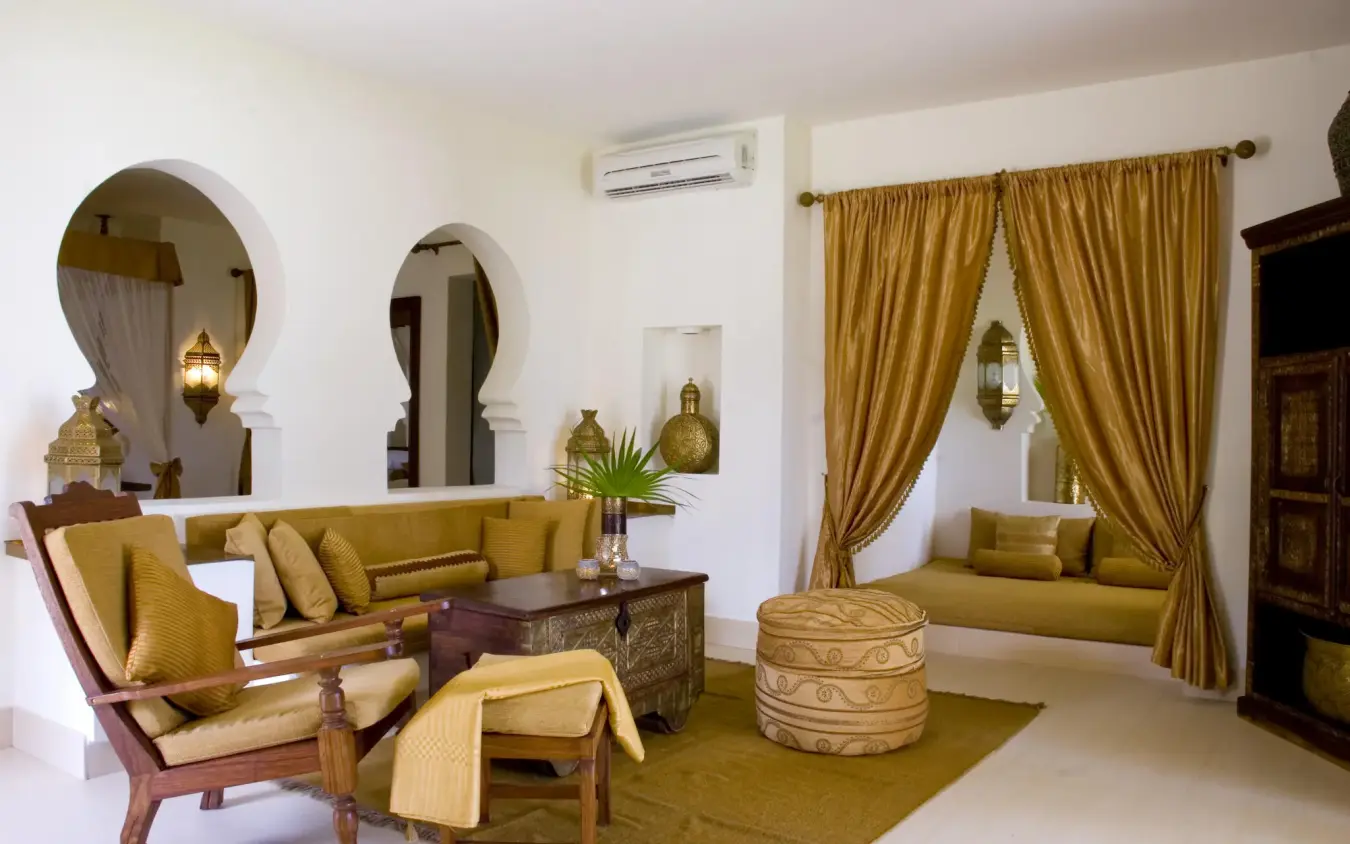
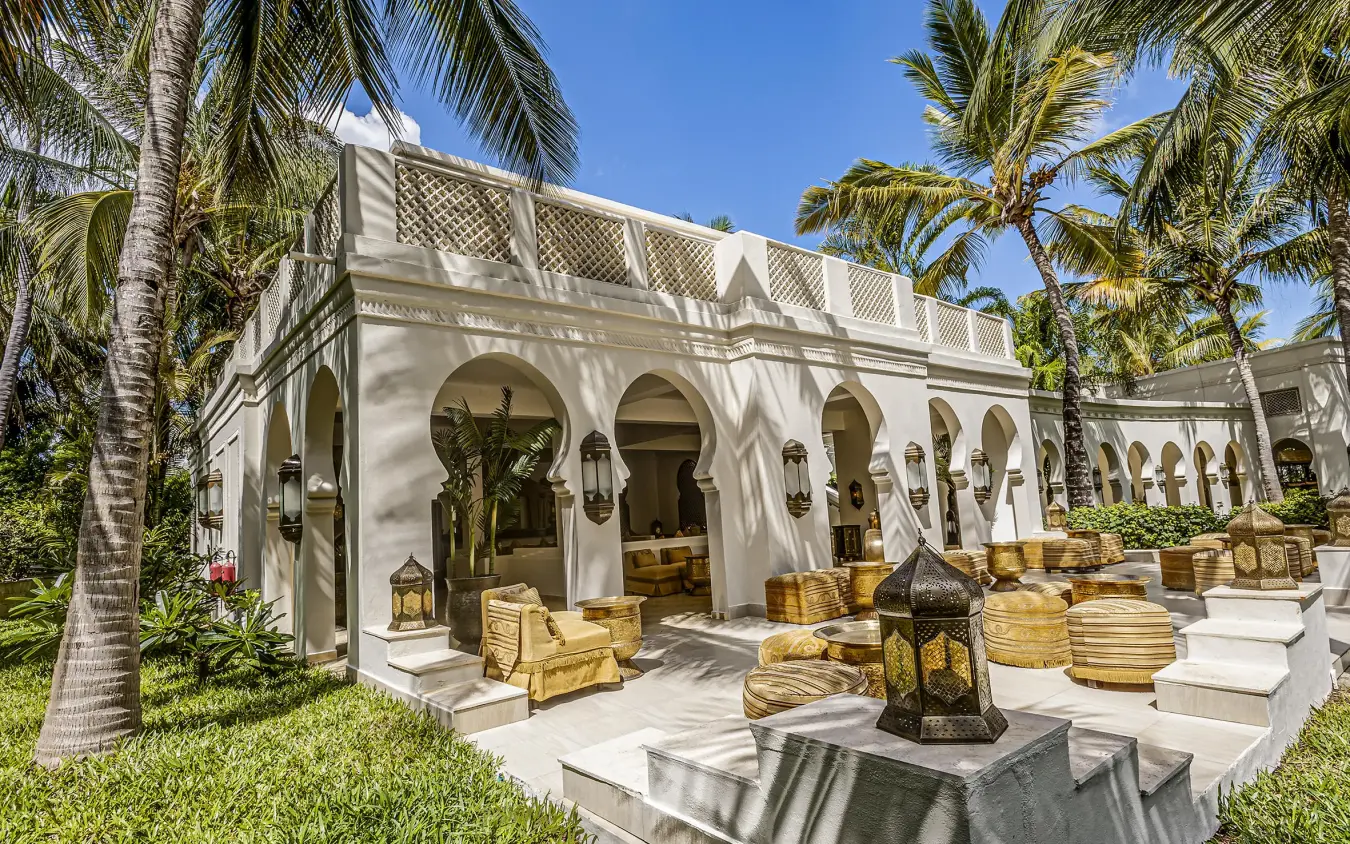
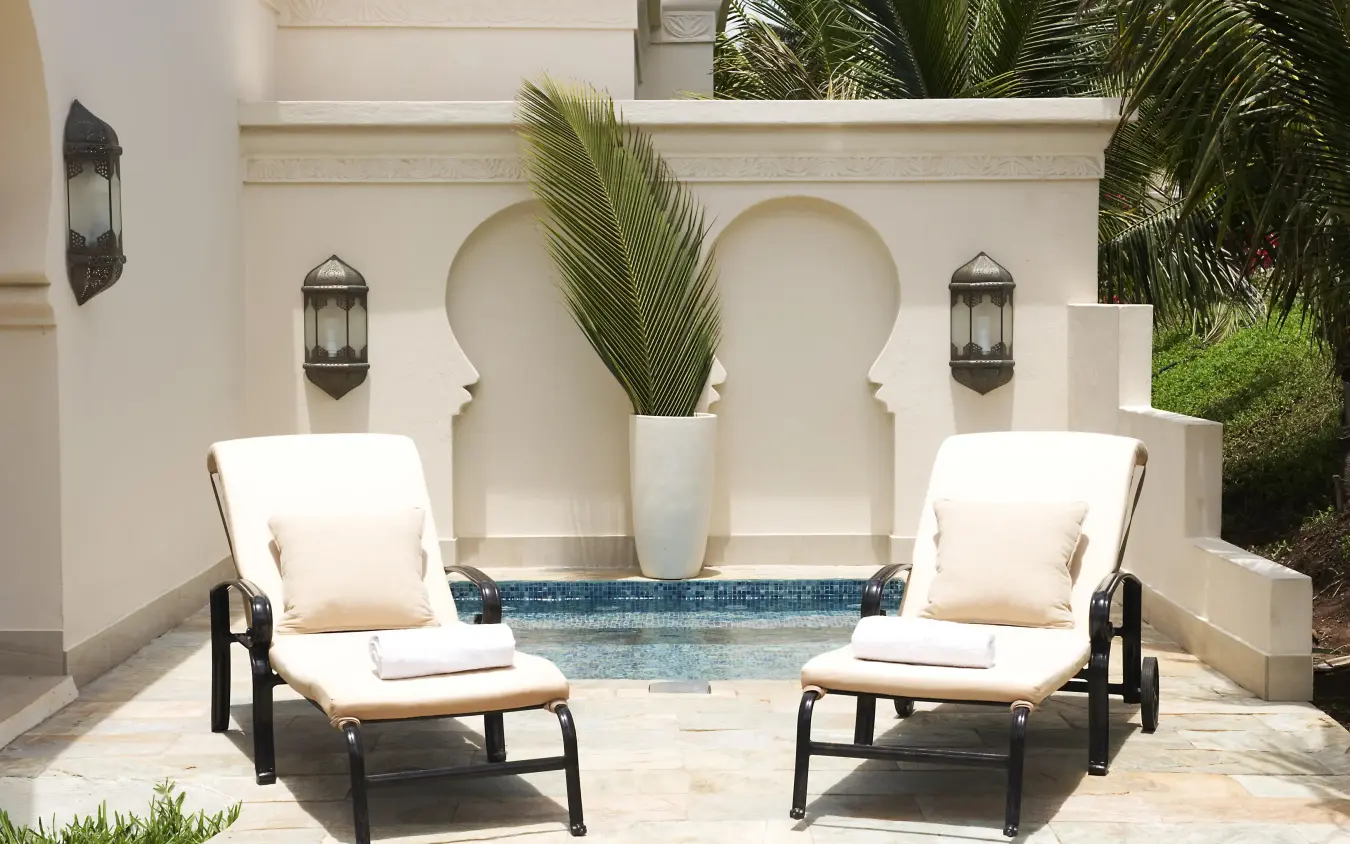
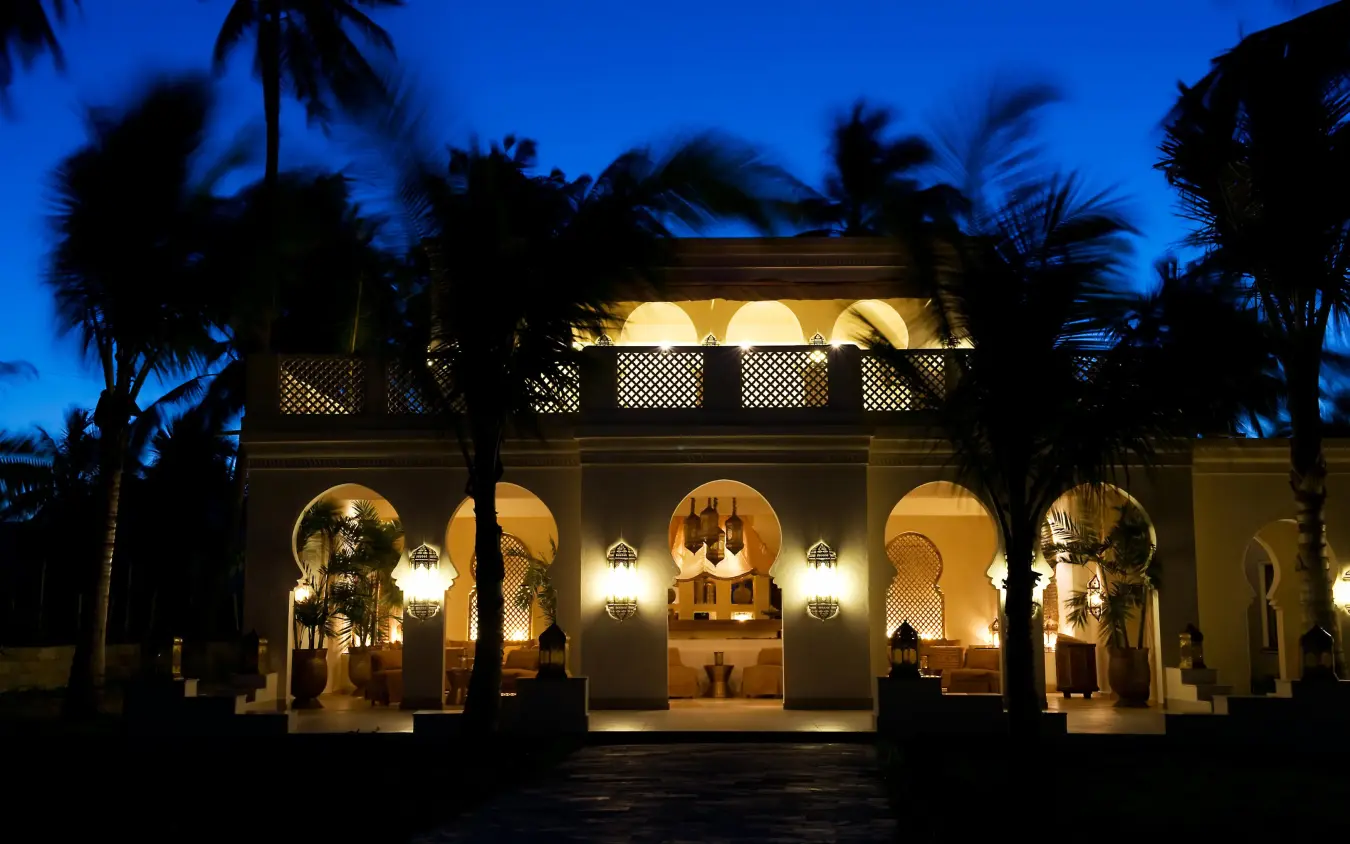
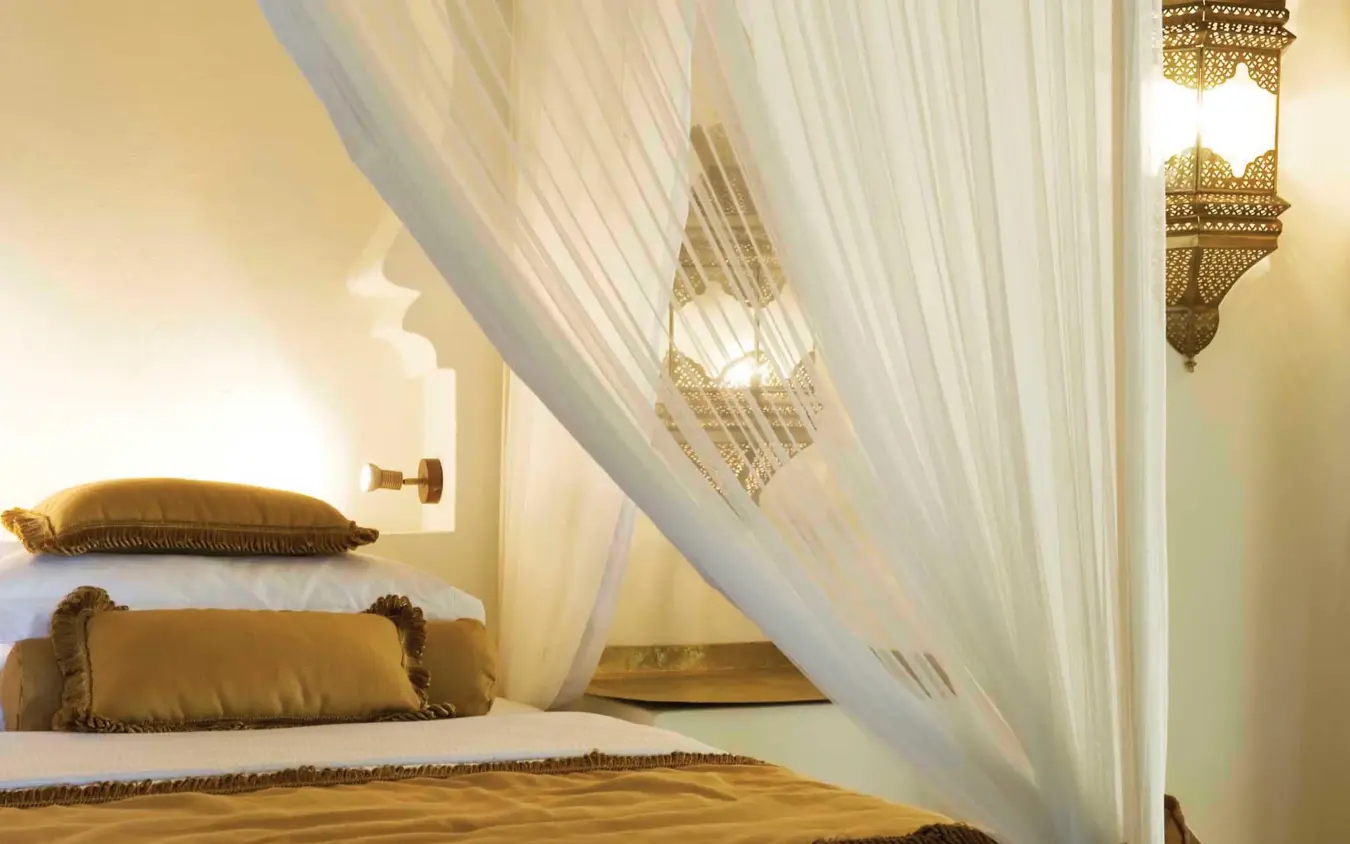
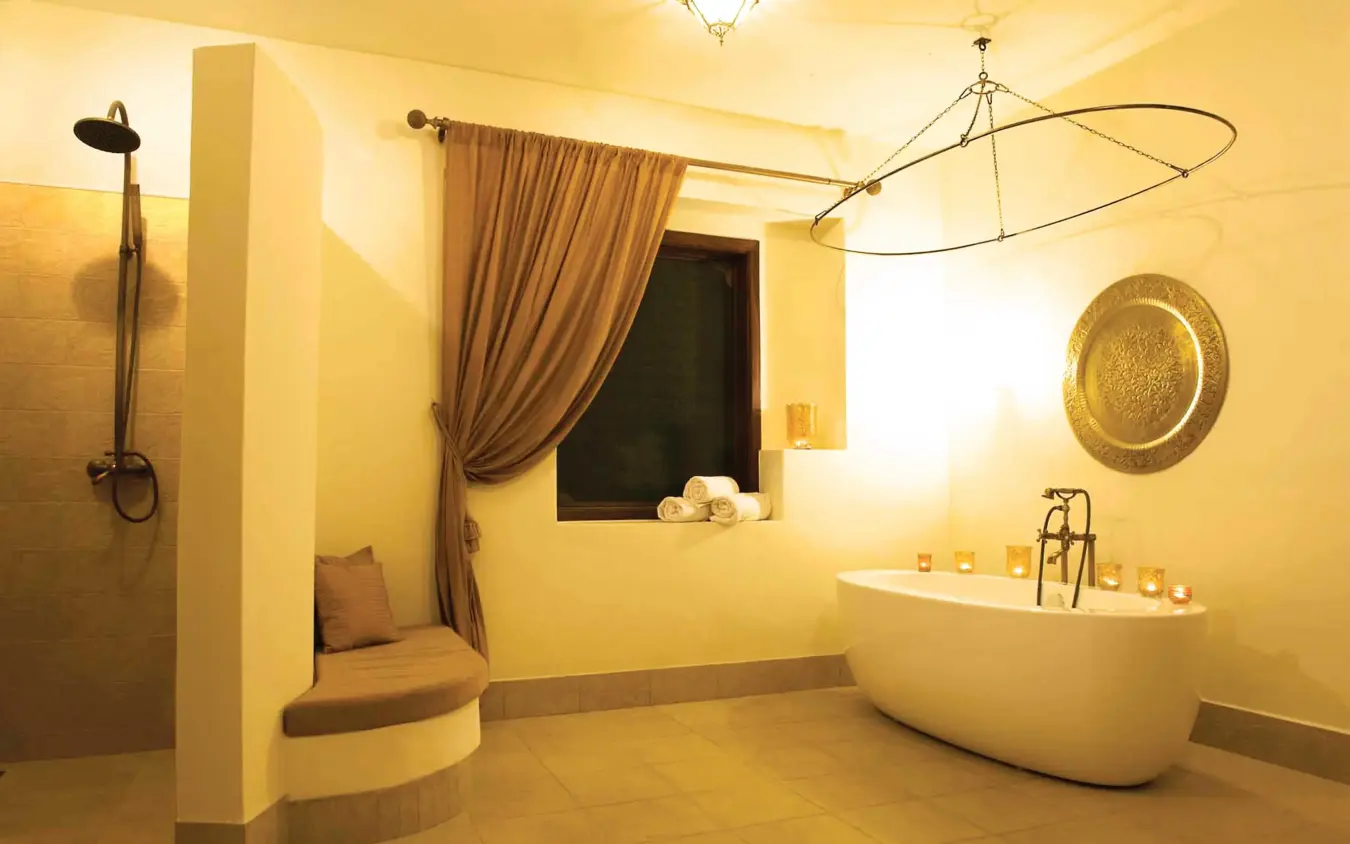
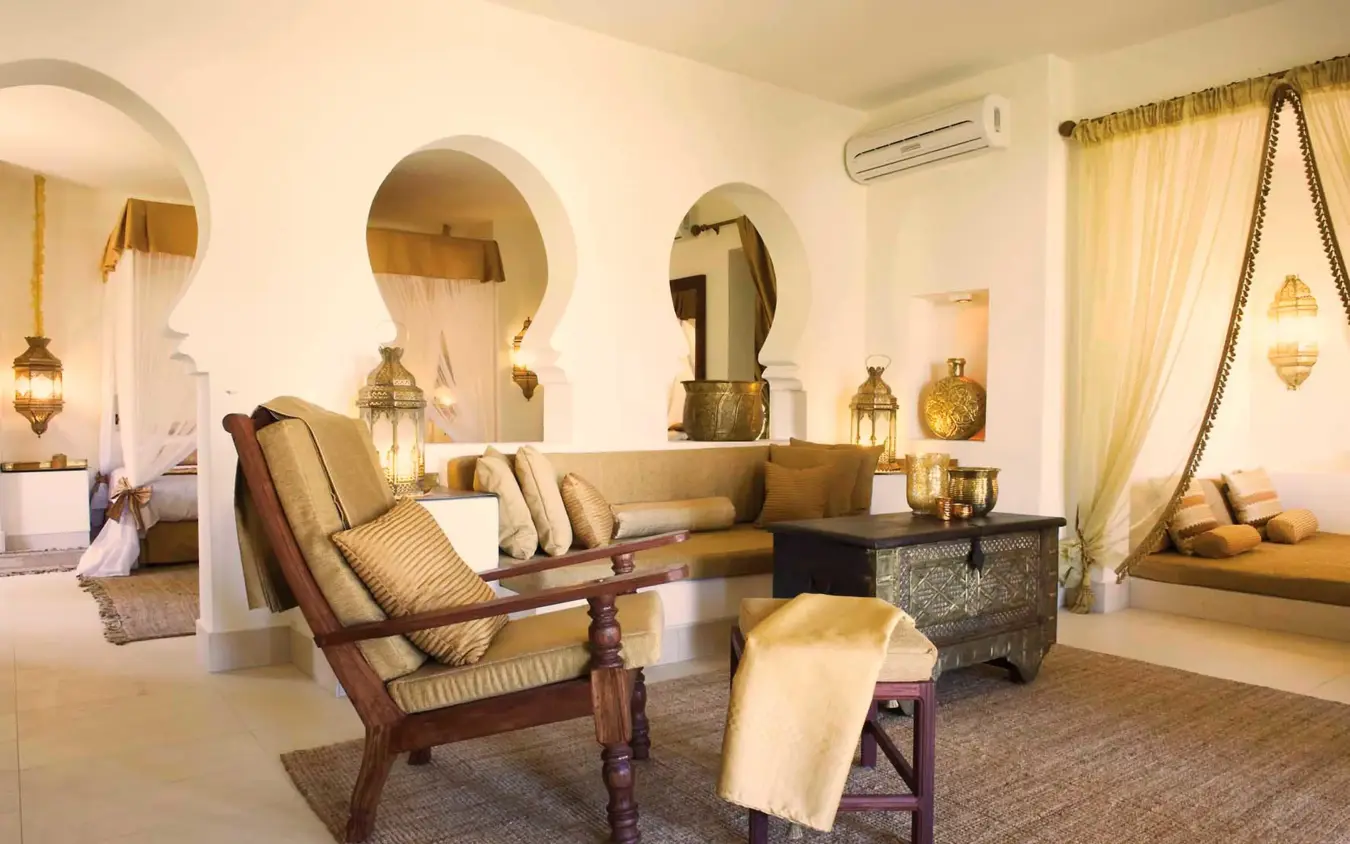
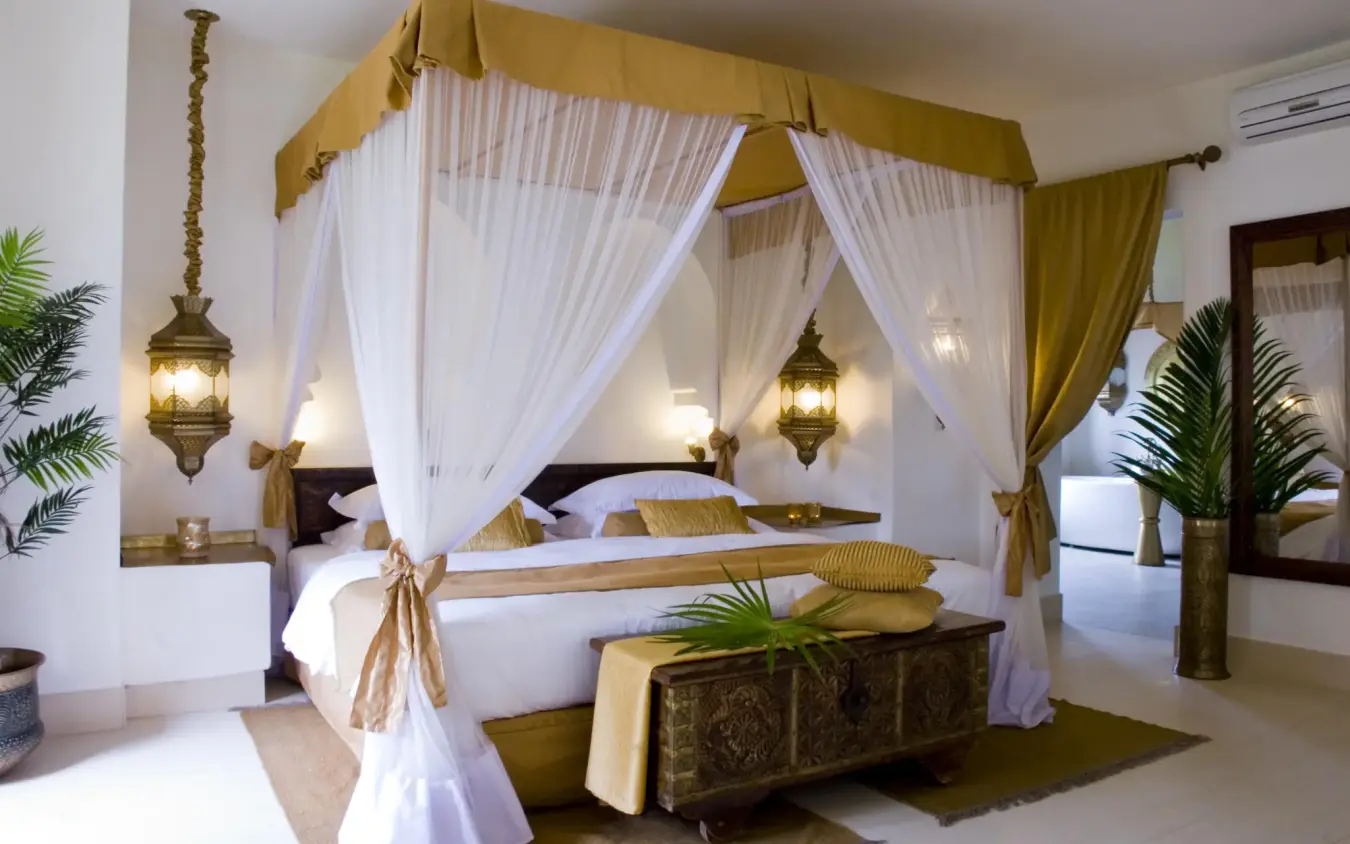
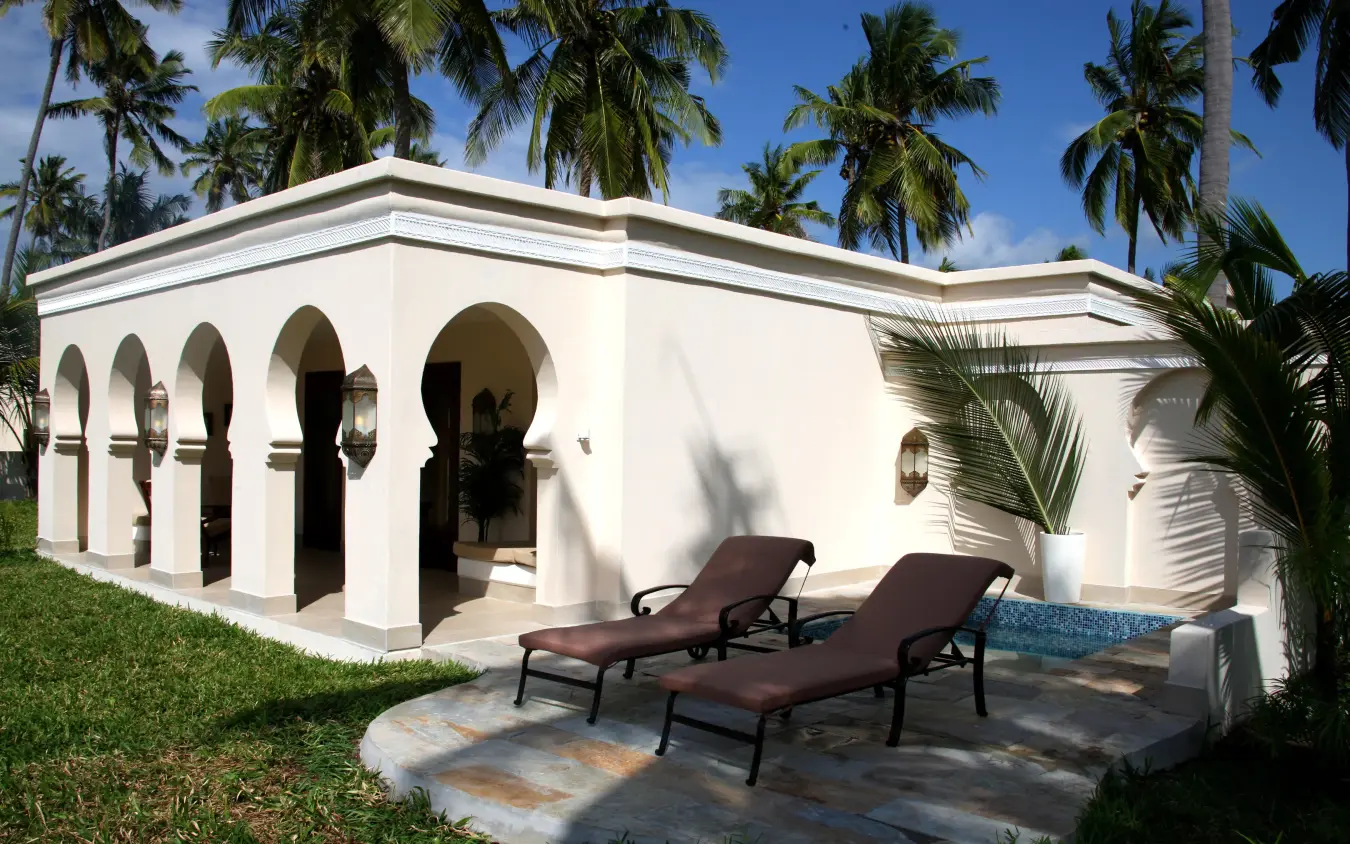
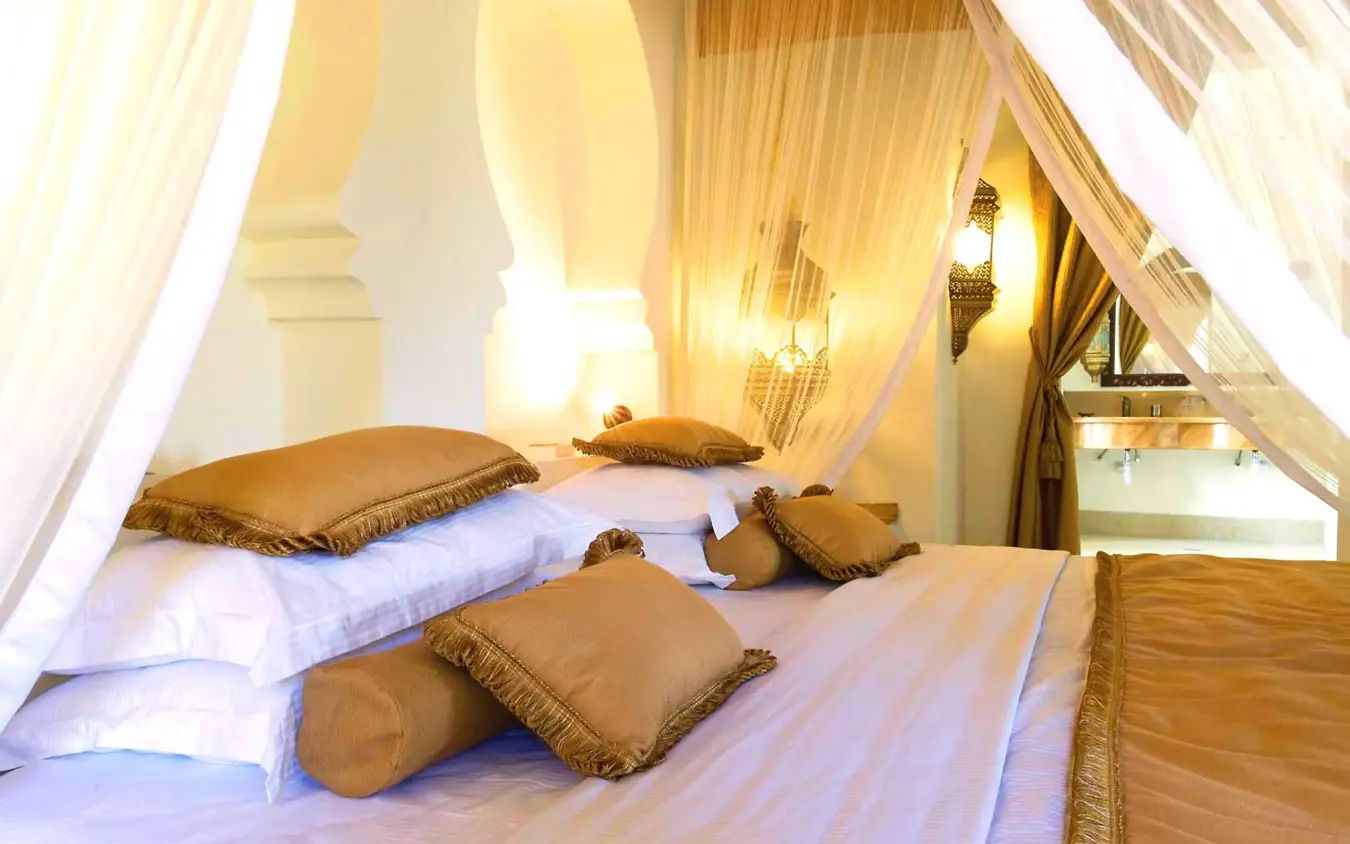
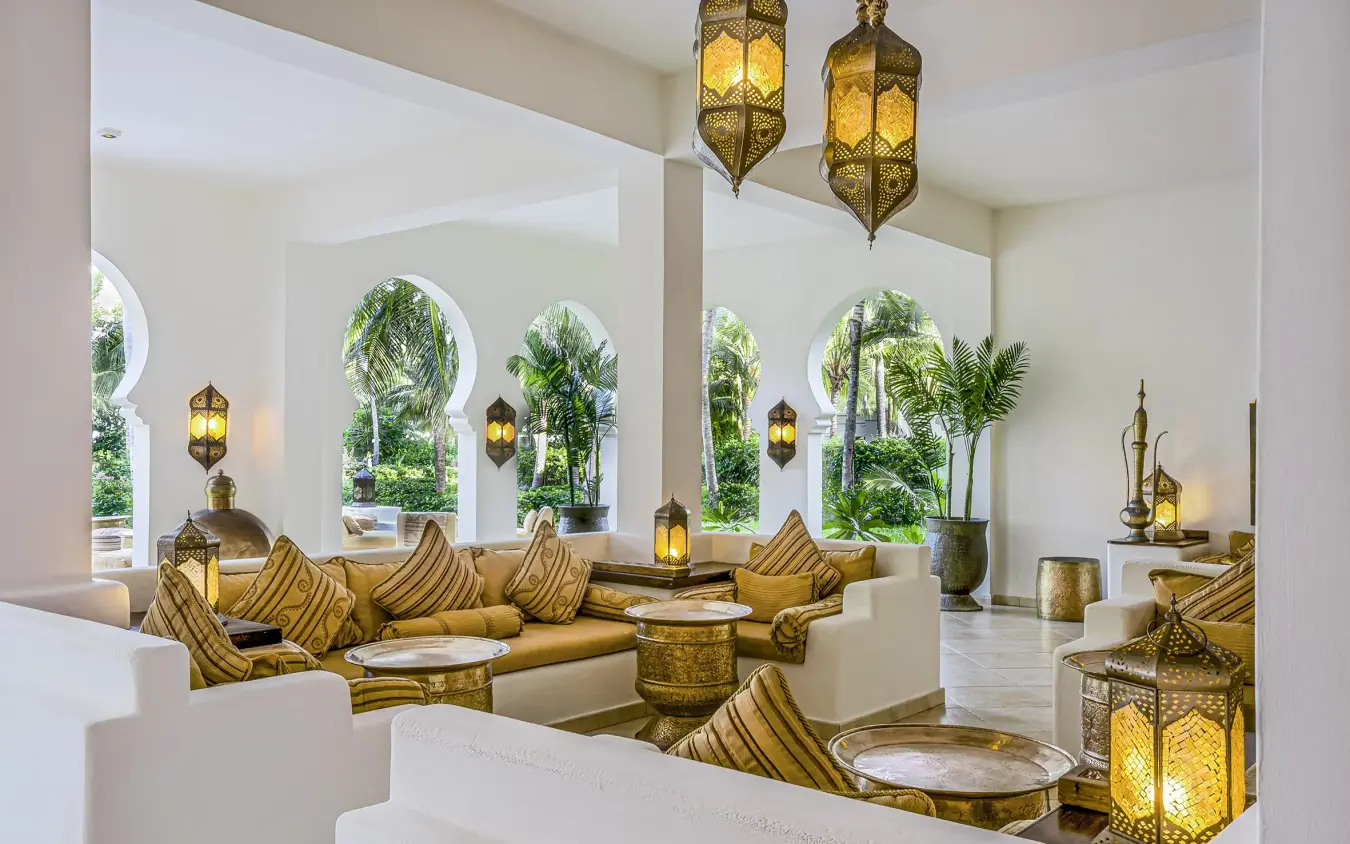
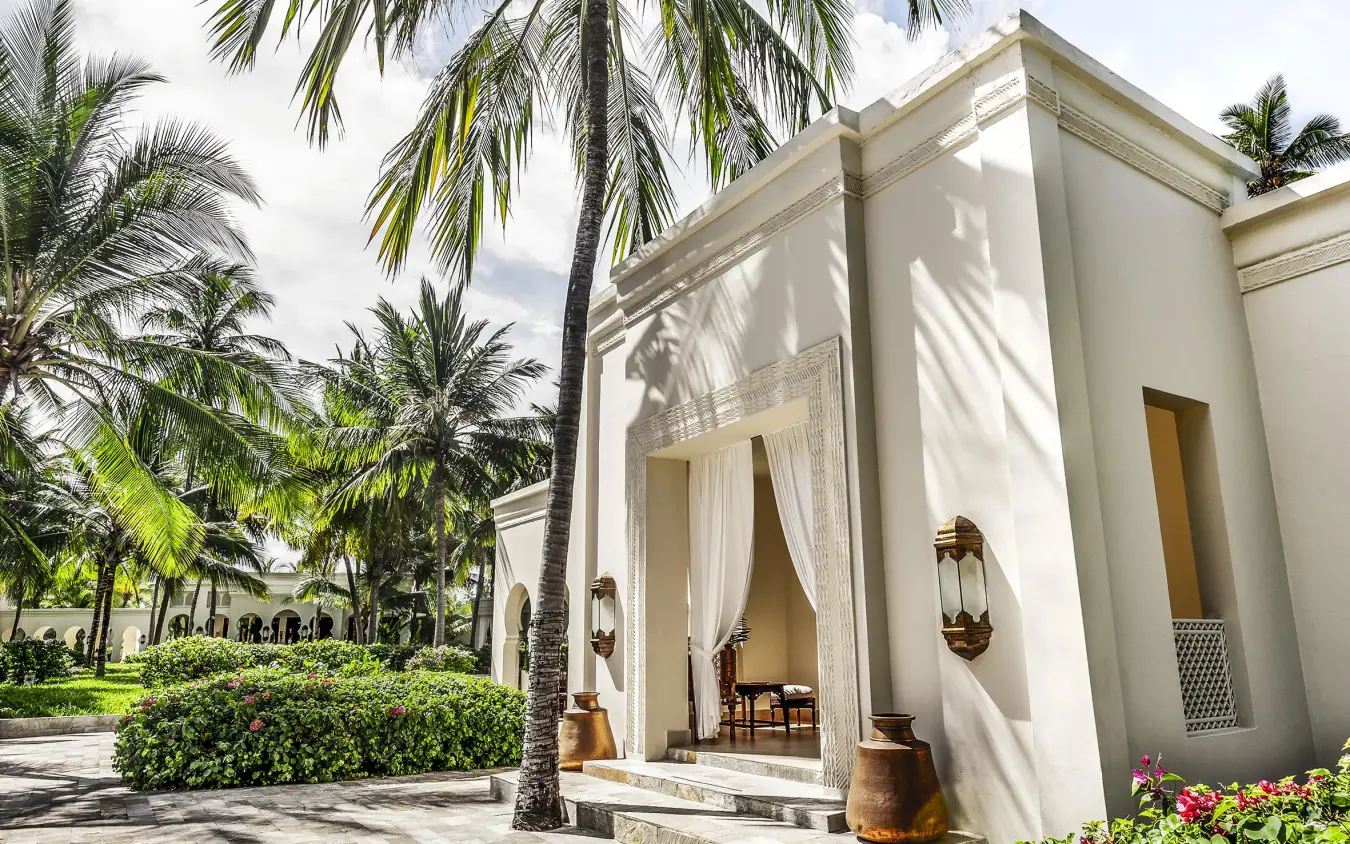
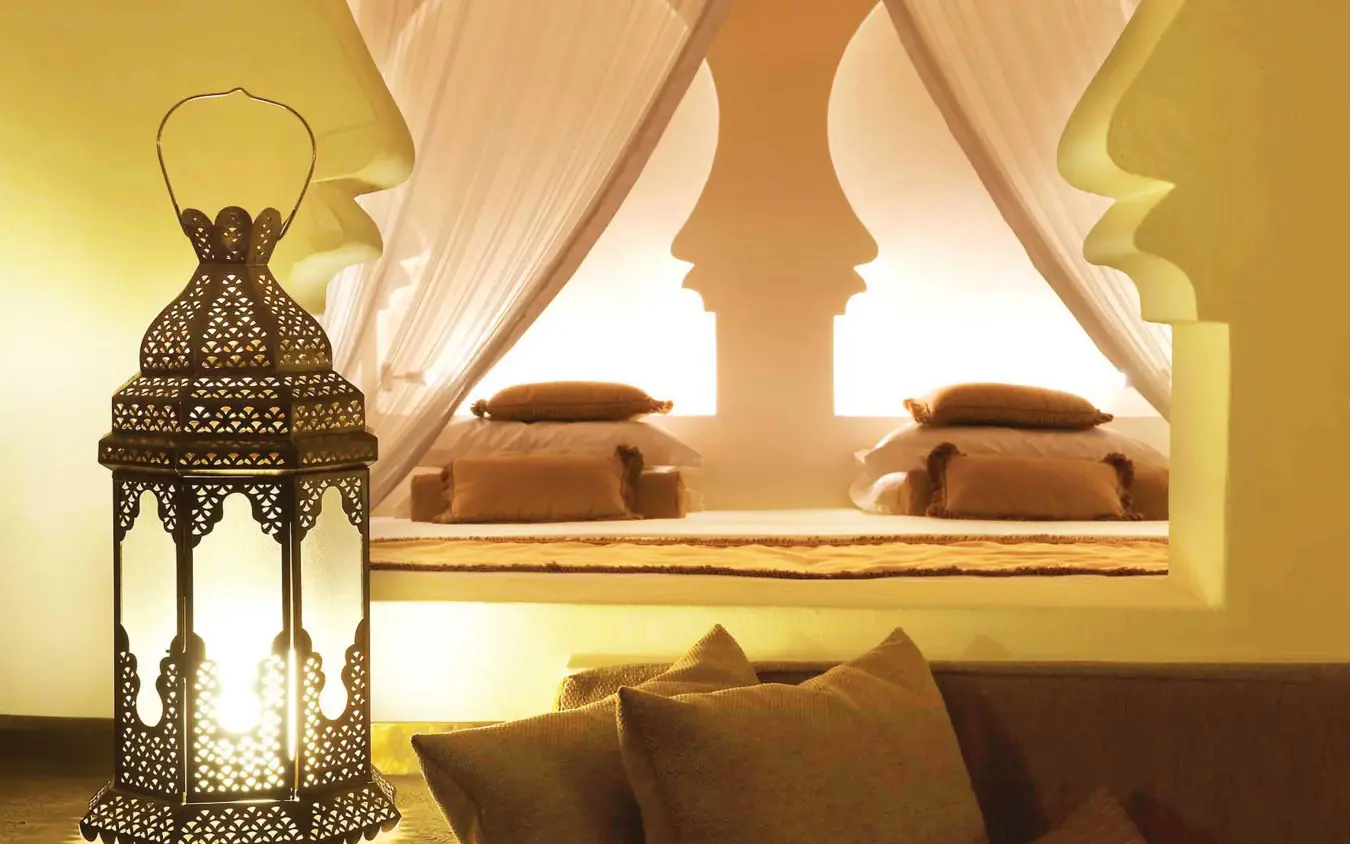
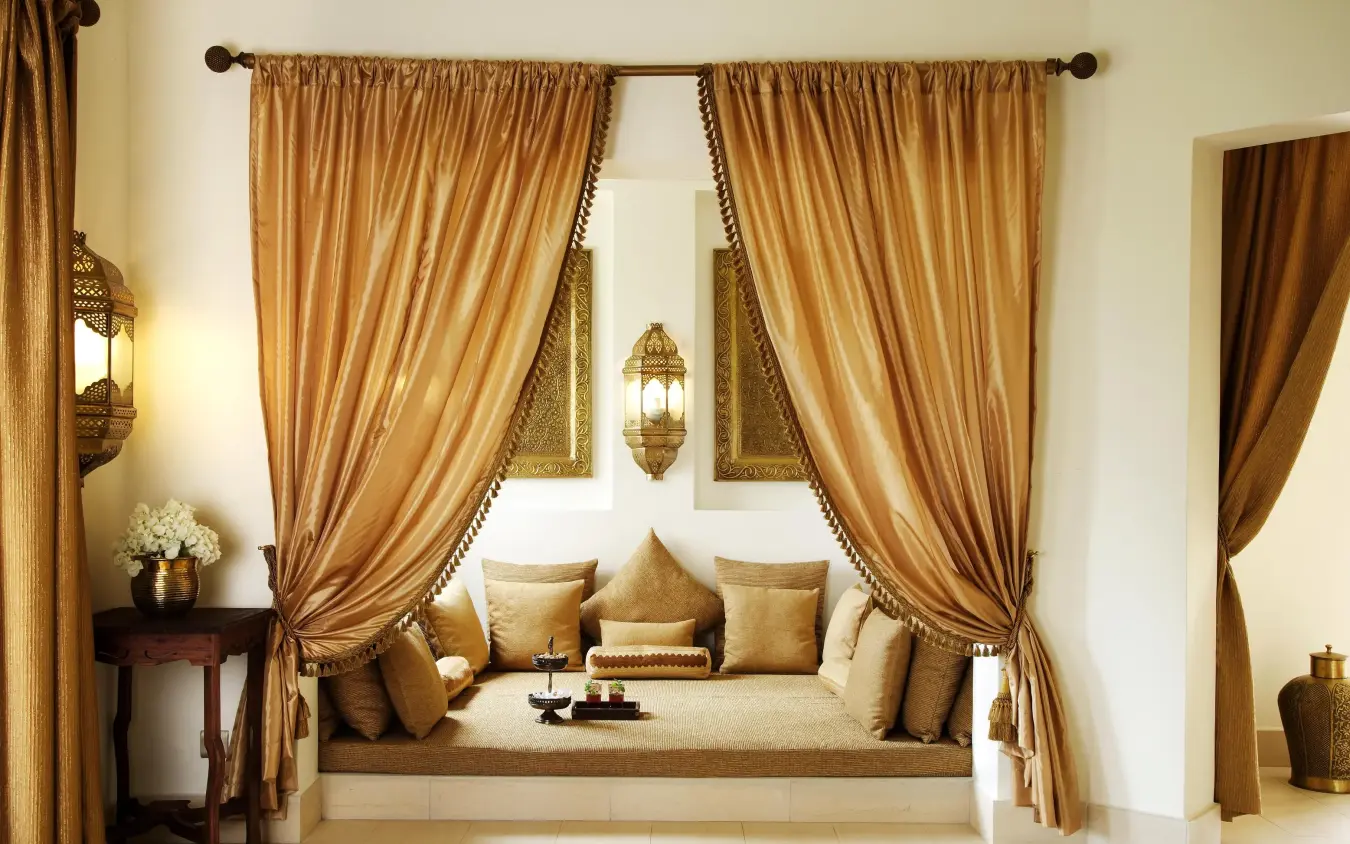
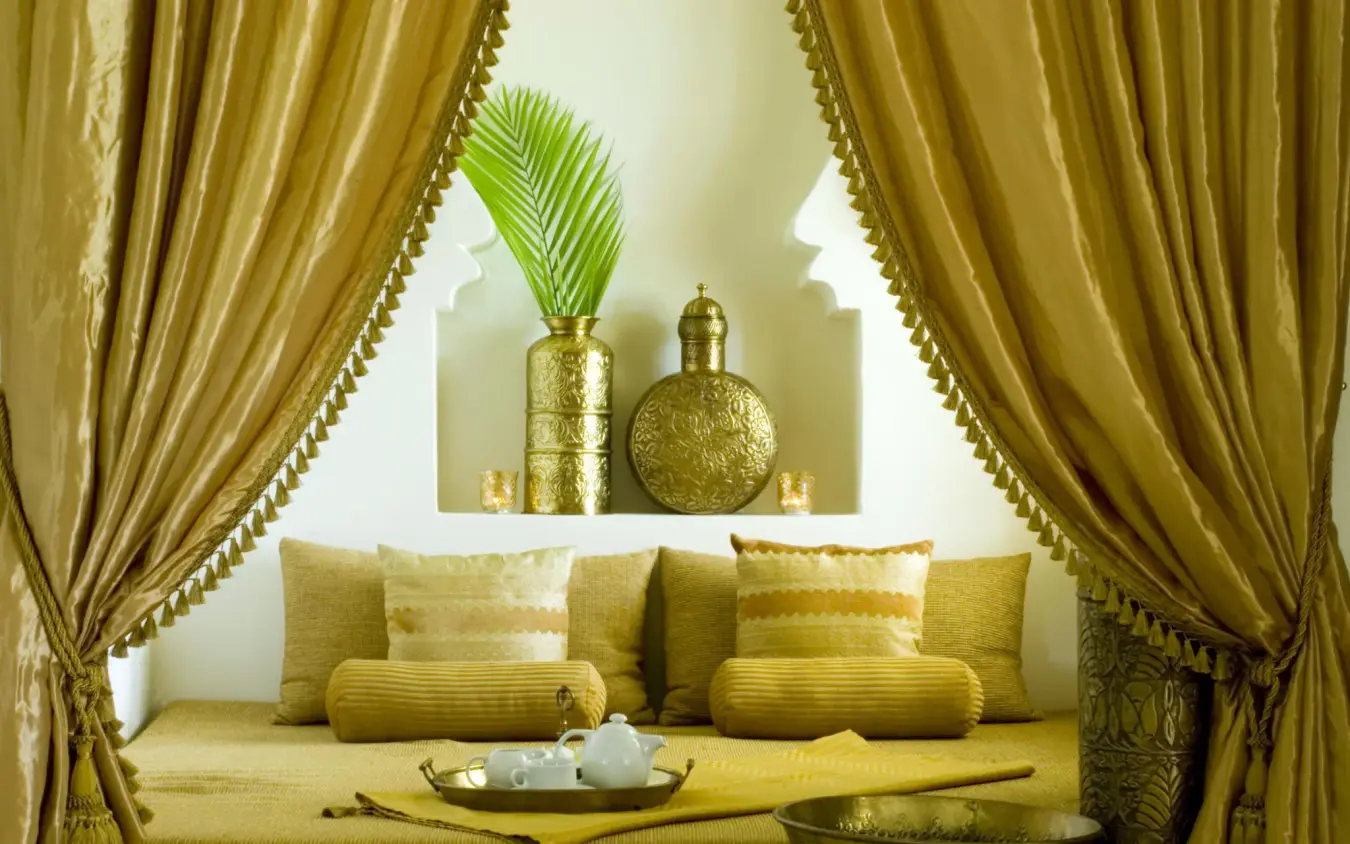
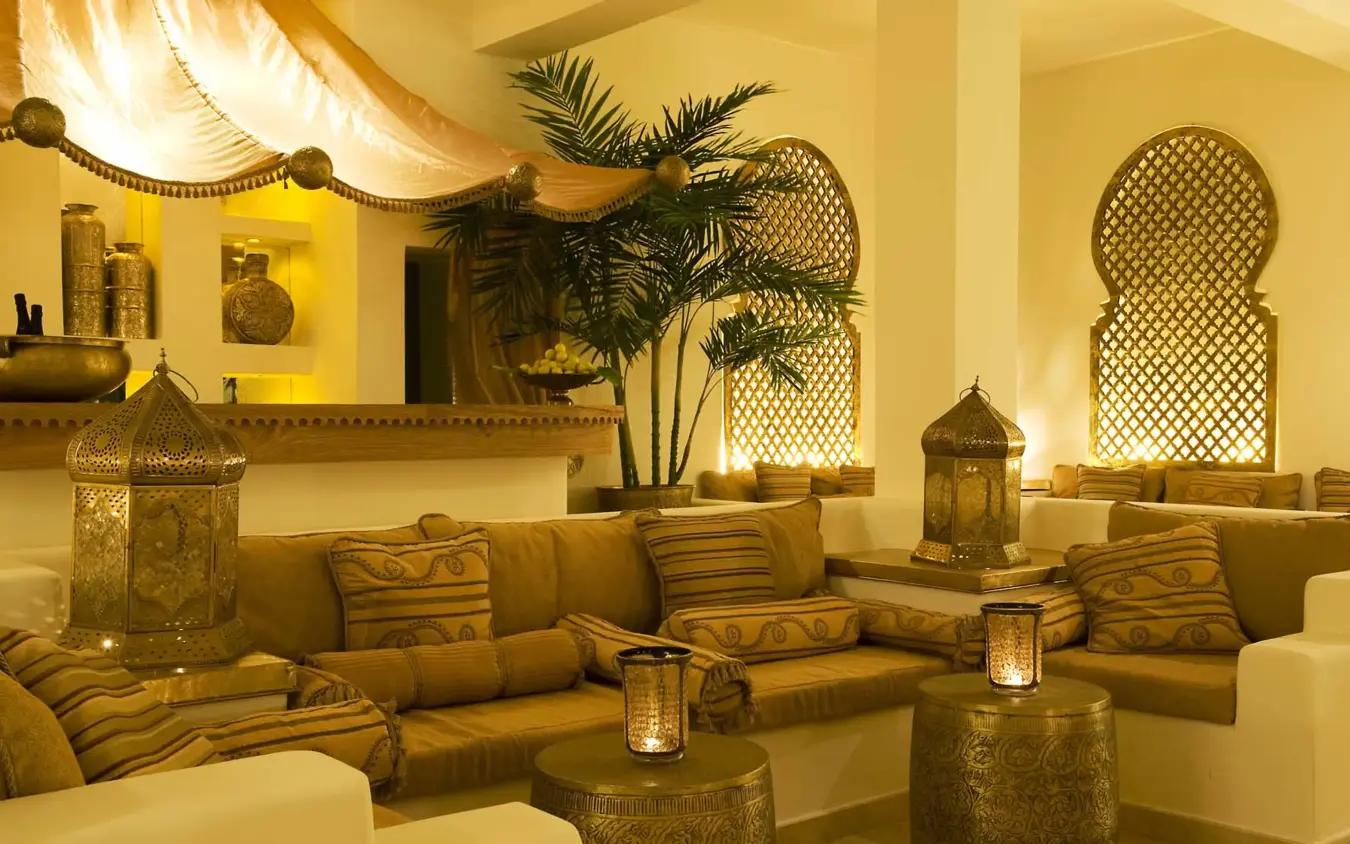
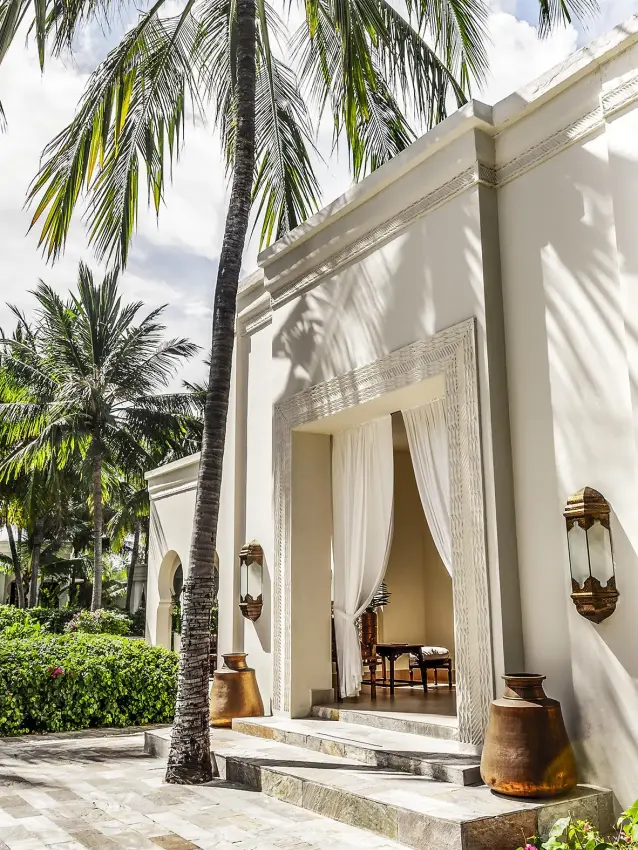
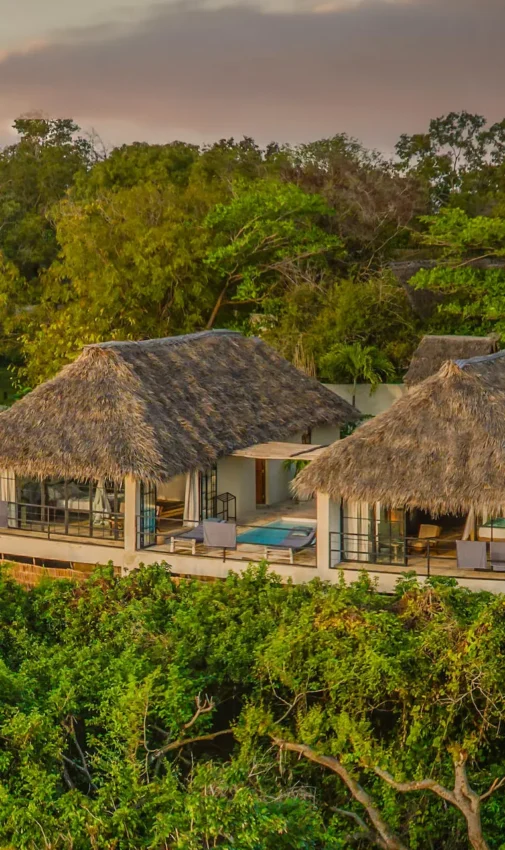
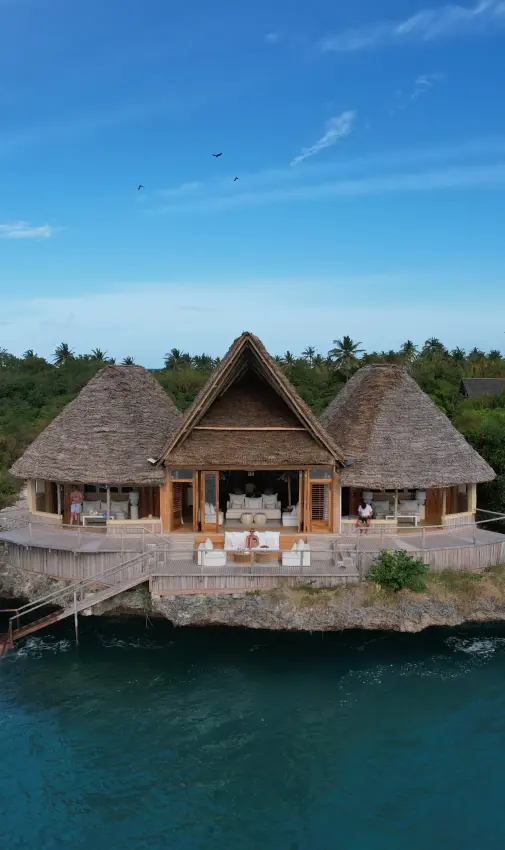
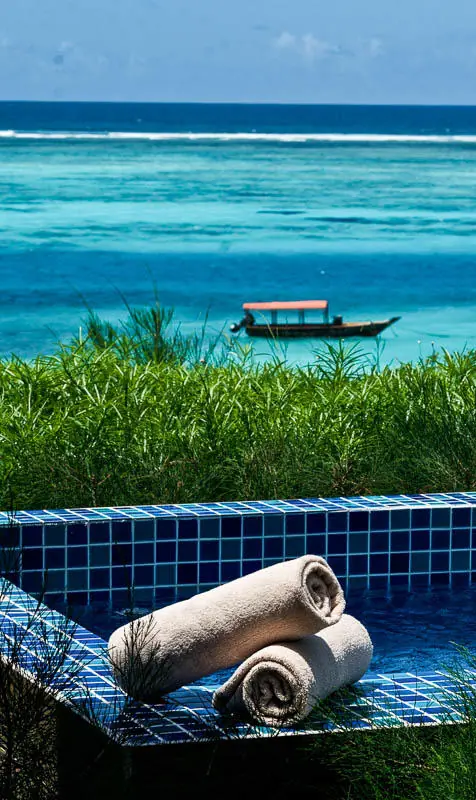
Step inside and the effect is less hotel room than private palace apartment, cool and shaded against the equatorial light. High ceilings rise over hand-carved wooden furniture made by local artisans, intricate plasterwork and brass lanterns, while plasma televisions stay hidden inside antique-style wardrobes. Each villa opens onto a large terrace with its own plunge pool and sun loungers, and the master bedroom leads through to a freestanding bath and a walk-in dressing room.
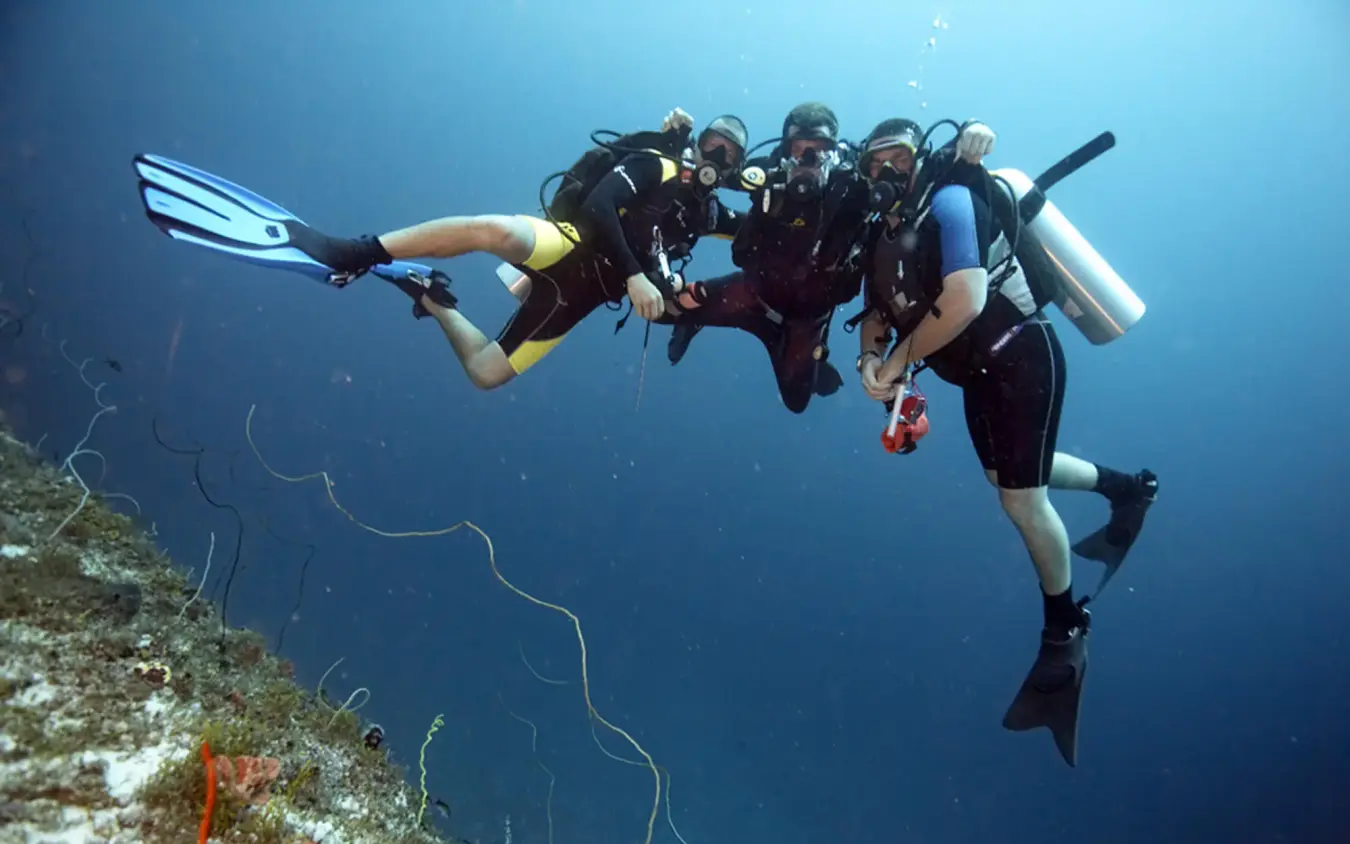
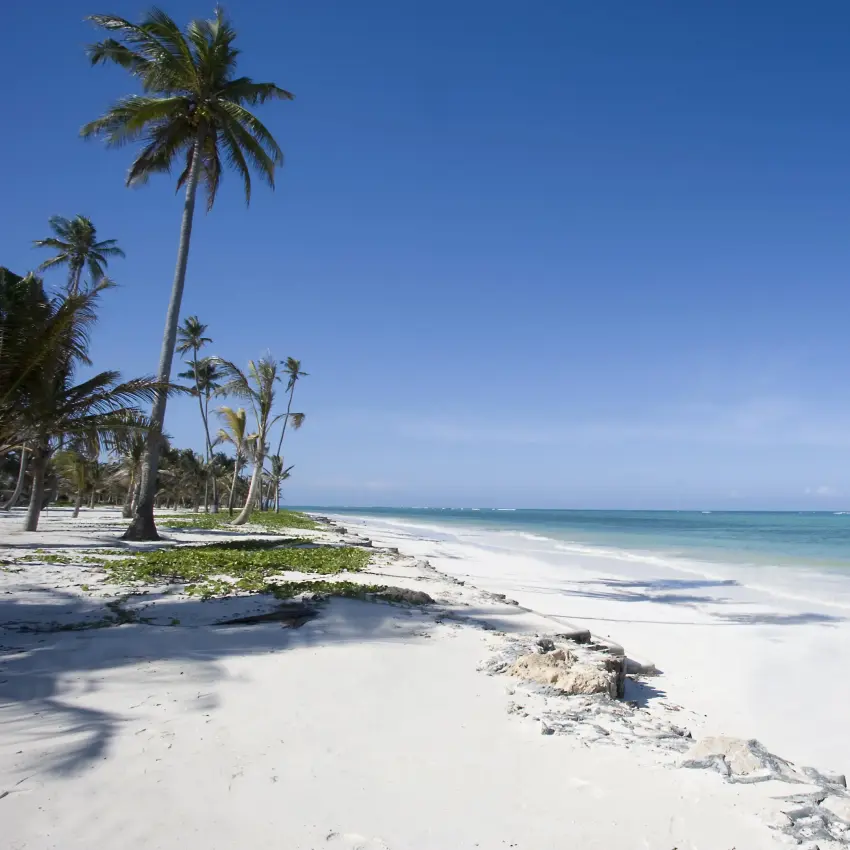
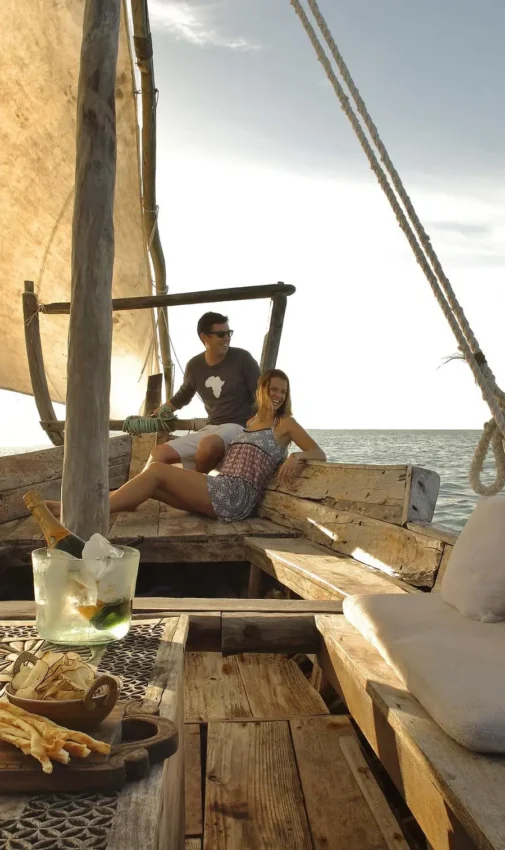
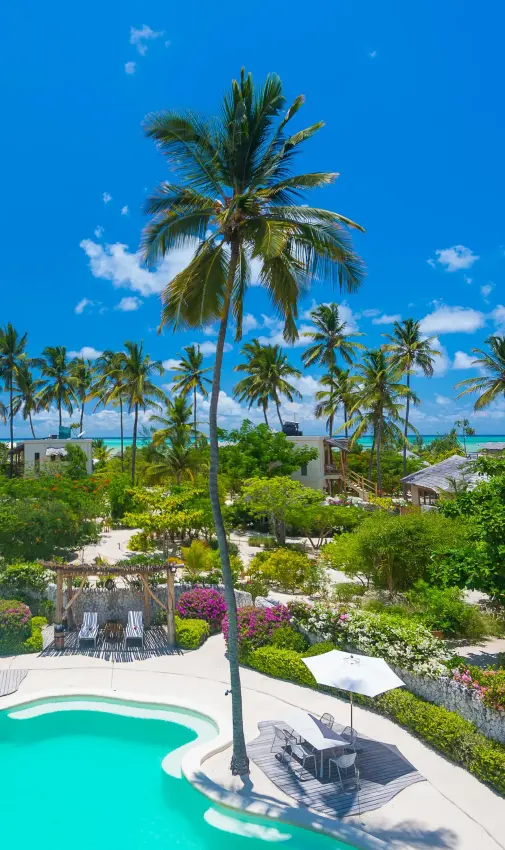
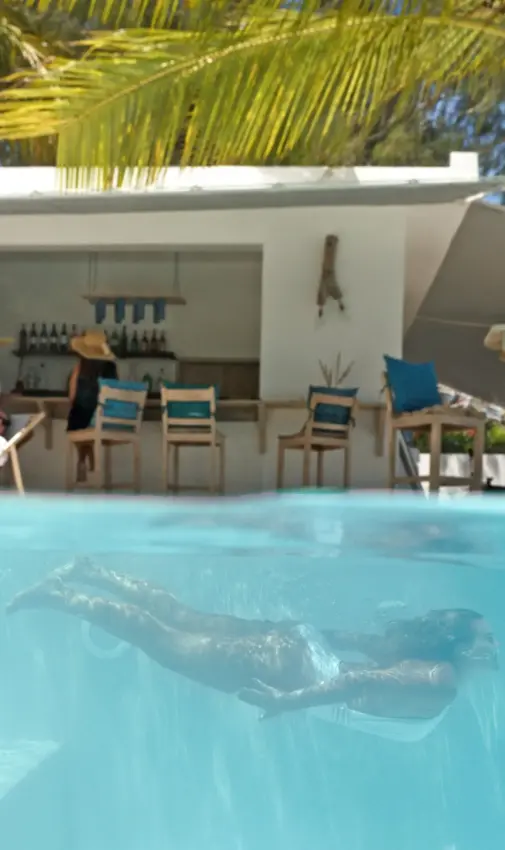
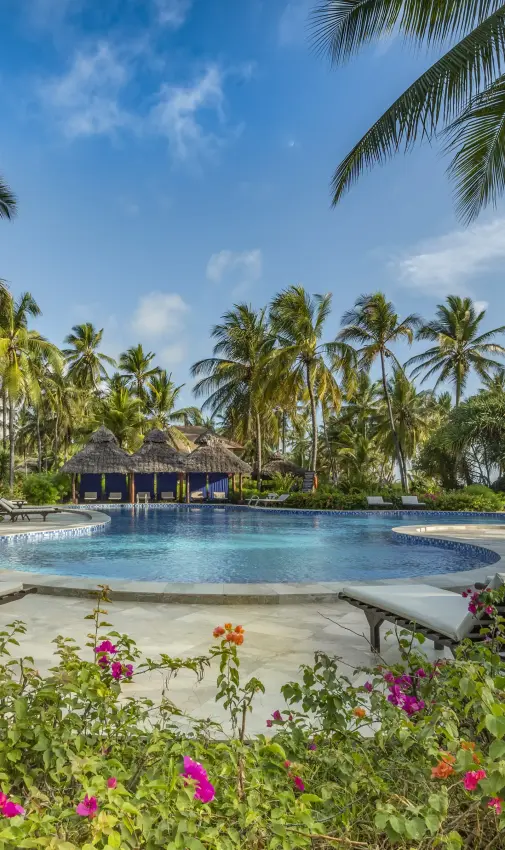
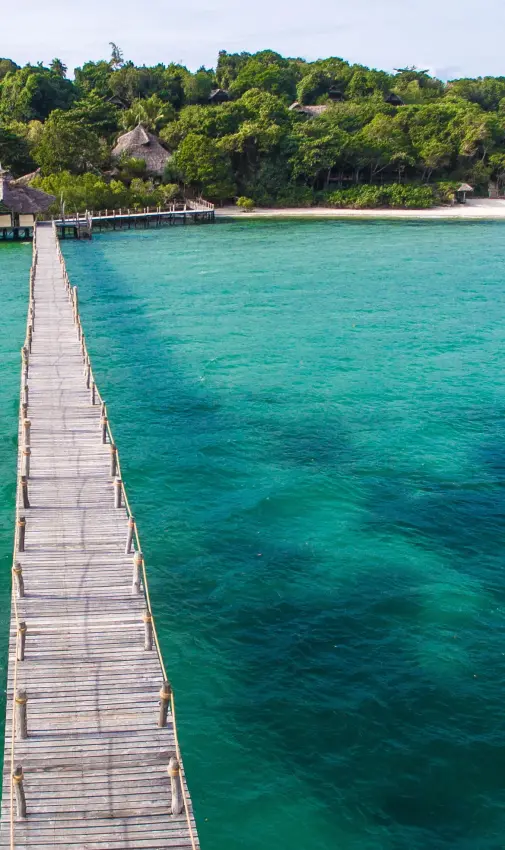
For anyone drawn to the water, the days begin at the Water Club, where high tide brings kitesurfing, kayaks, stand-up paddleboarding and sailing, along with beach sports and bicycles for exploring the coast. Divers of every level are looked after through a PADI centre partnered with the Rising Sun Dive Centre, a National Geographic-affiliated facility working the nearby reef. On land, a tennis court, a fitness centre and a library of books on Zanzibari history and wildlife wait for the hours when the sea can wait too.
Swahili lessons take place under the palms, chefs run cooking classes built around local spices
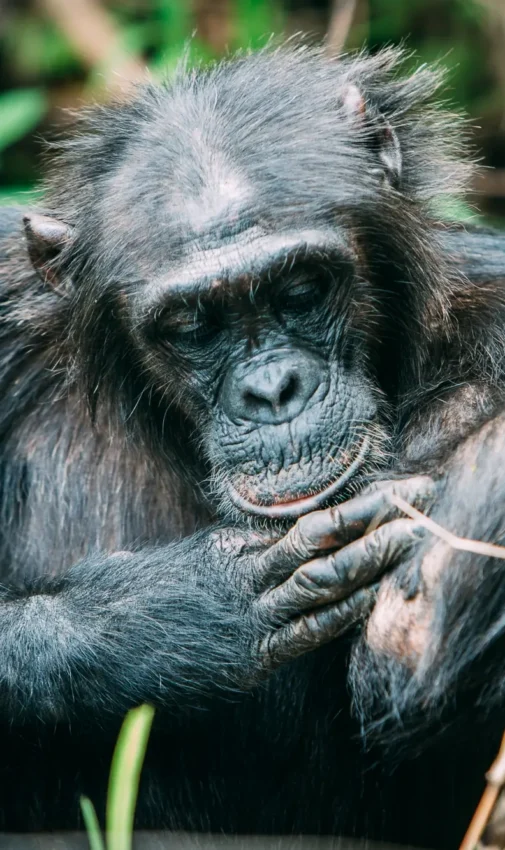
Much of the pleasure here is unhurried. Swahili lessons take place under the palms, chefs run cooking classes built around local spices, and palm-weaving happens on the beach. Some evenings a traditional Taarab band plays, music that would have sounded in the Sultan’s court in the 1880s. Further afield lies more of the island: Jozani Chwaka Bay National Park, which shelters the endangered Zanzibar red colobus a short drive inland, the dolphin tours off Kizimkazi, and Stone Town, a UNESCO World Heritage Site, all within reach.
Families settle easily into the two-bedroom villas, with a kids’ club, sandcastle building, beach volleyball and reef walks for younger guests, and babysitting arranged on request. Behind it all is a family that employs mostly Zanzibari staff, runs in-house hospitality training and English classes, and commissions the resort’s carved furniture locally. Their long-standing support for Bwejuu village reaches into the school, with learning materials and a bursary programme, and into the clinic, with a sponsored maternity and children’s ward, while a marine biologist visits to check on the reef and give educational talks.