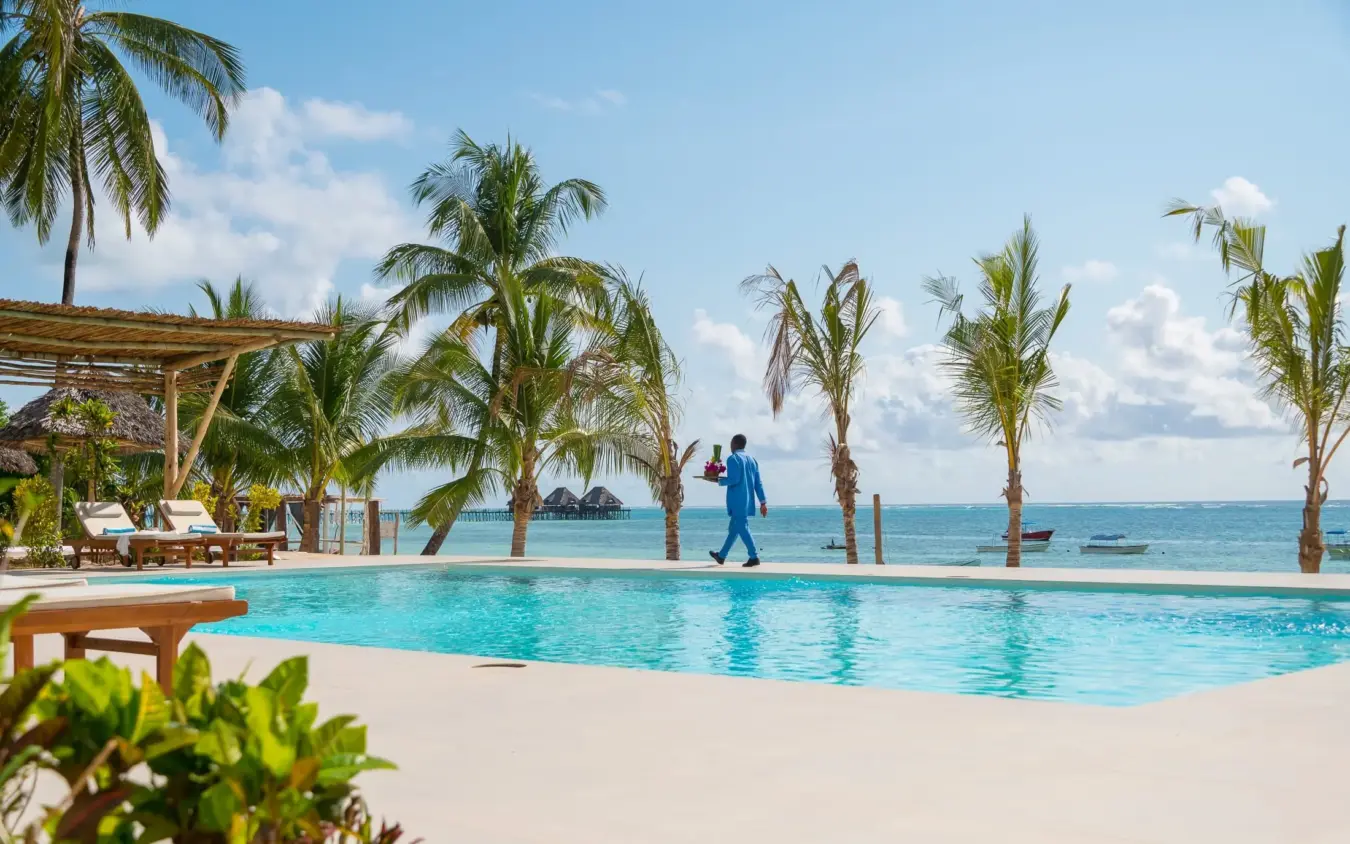
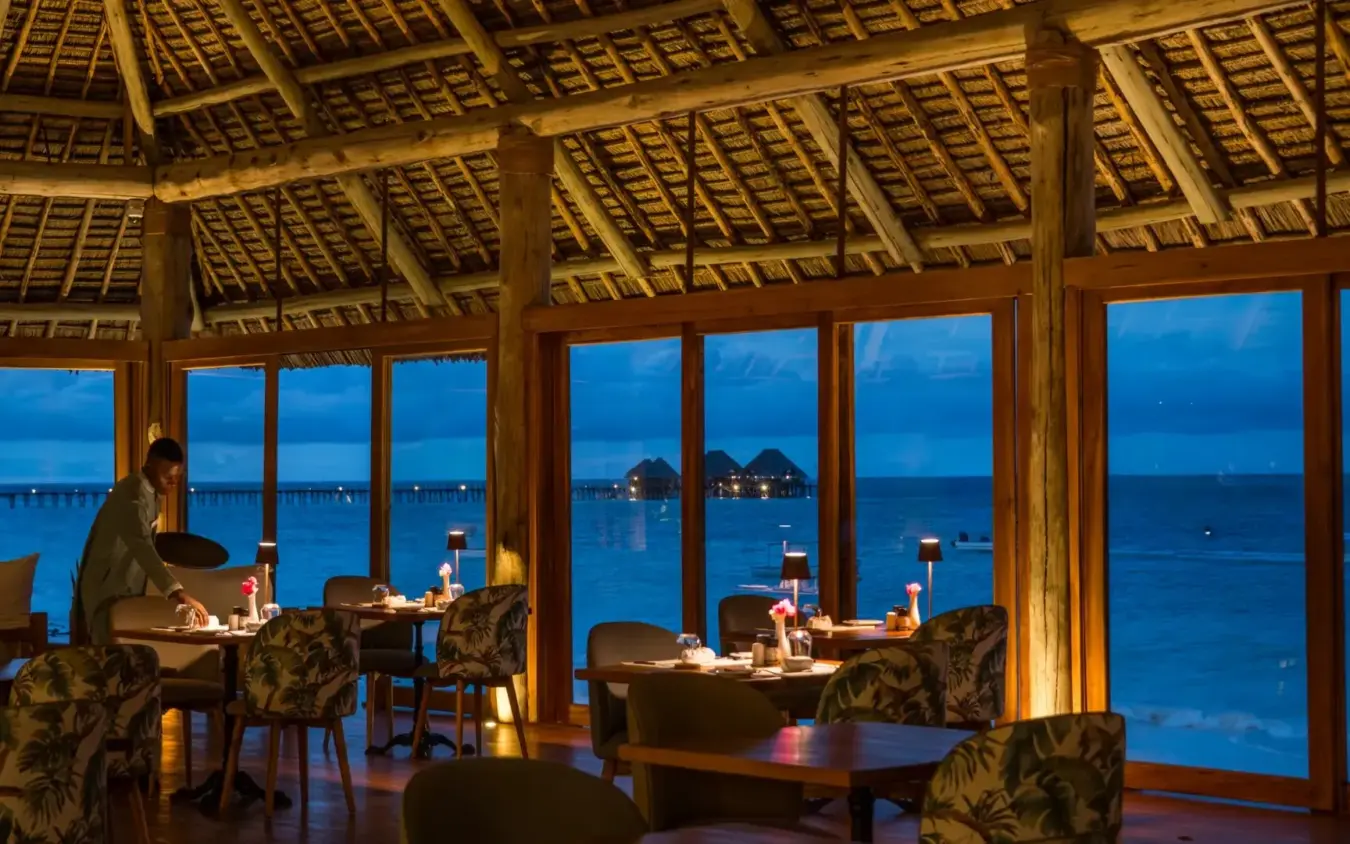
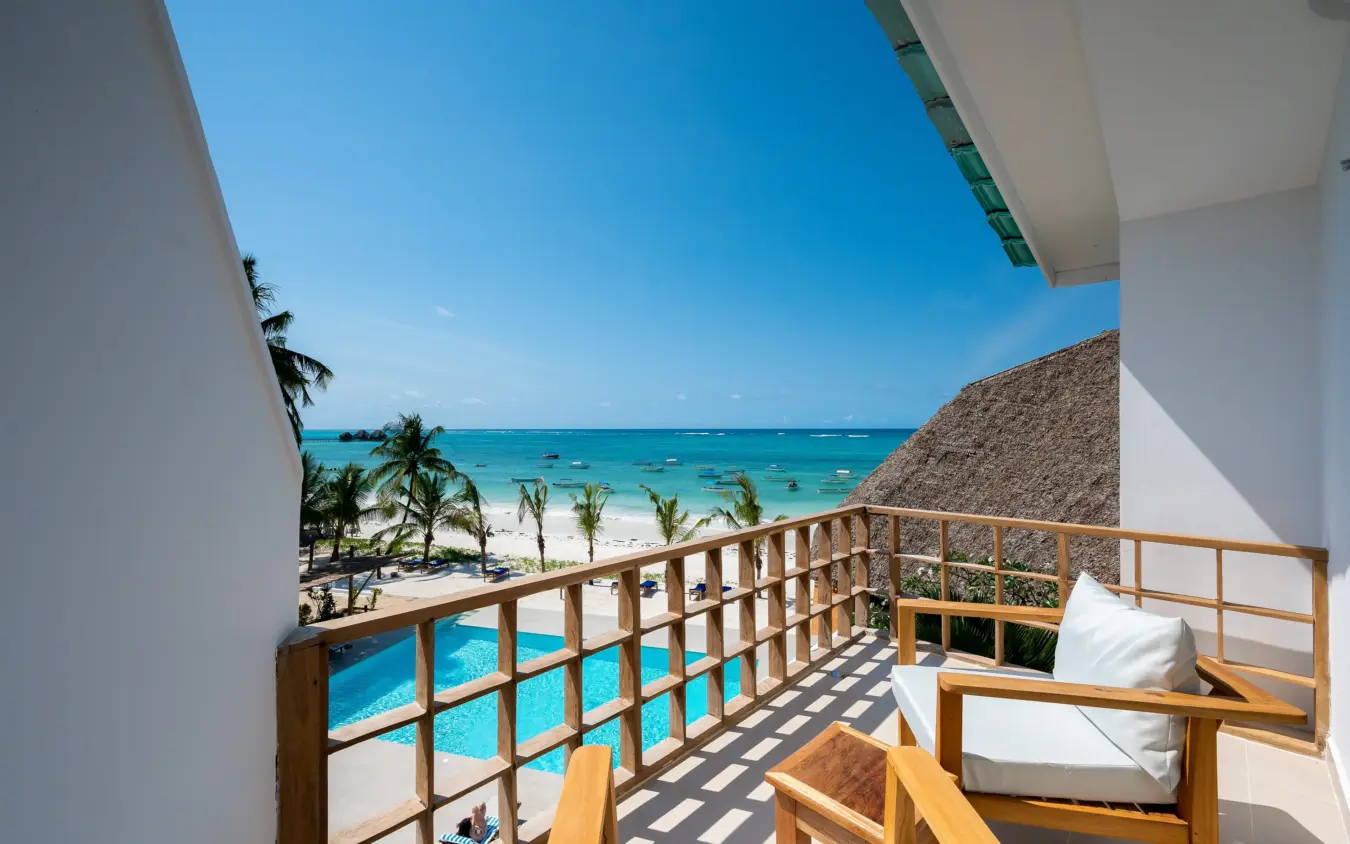
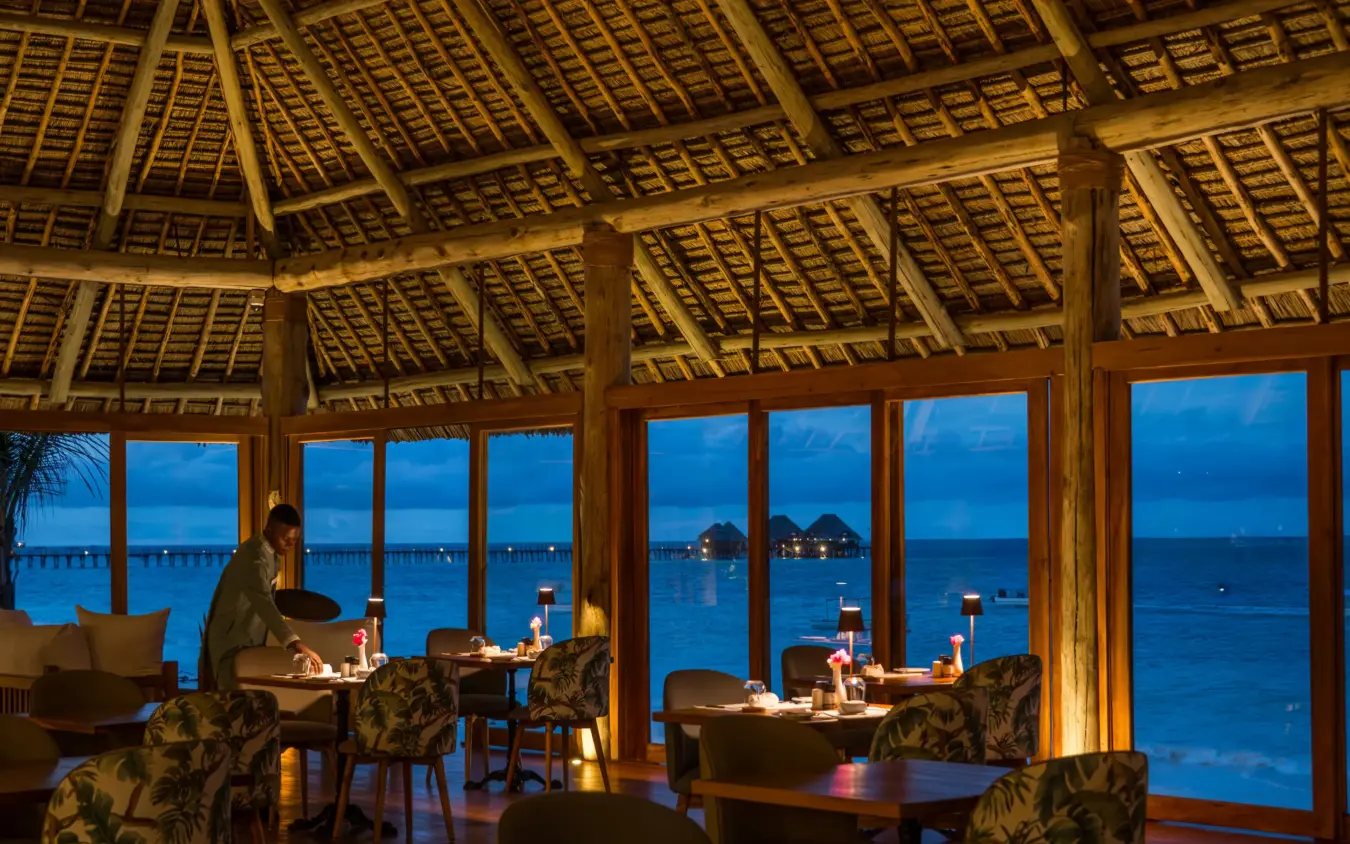
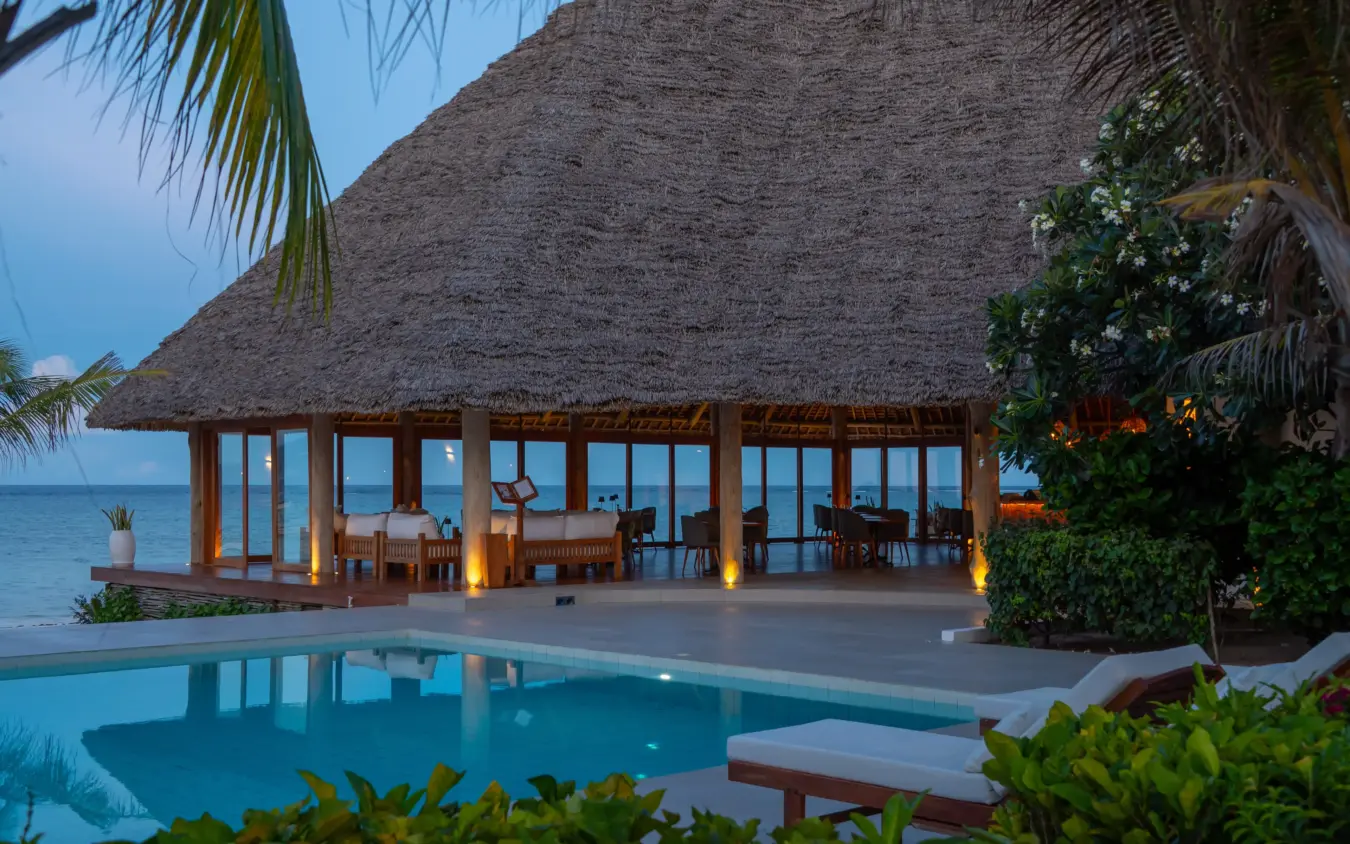
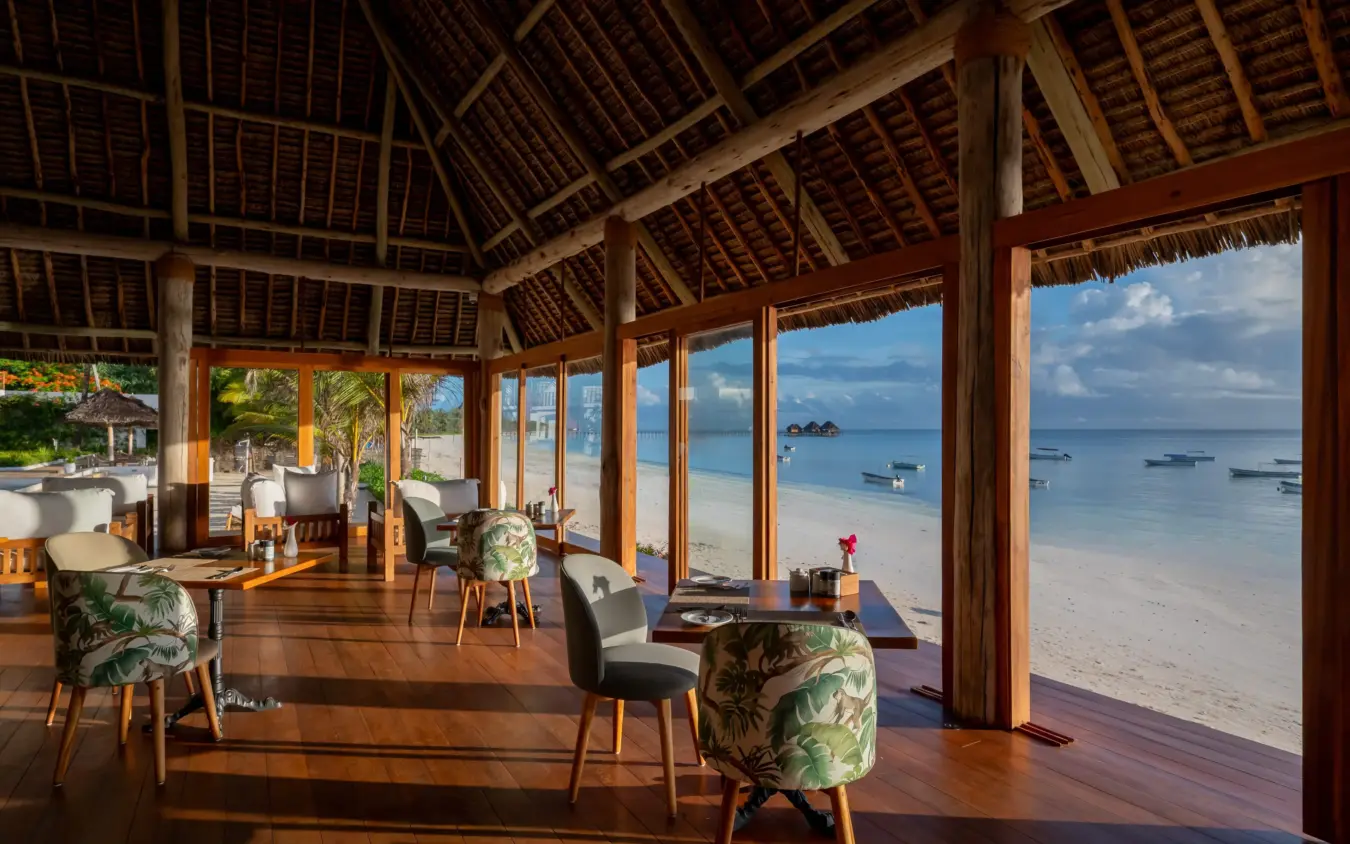
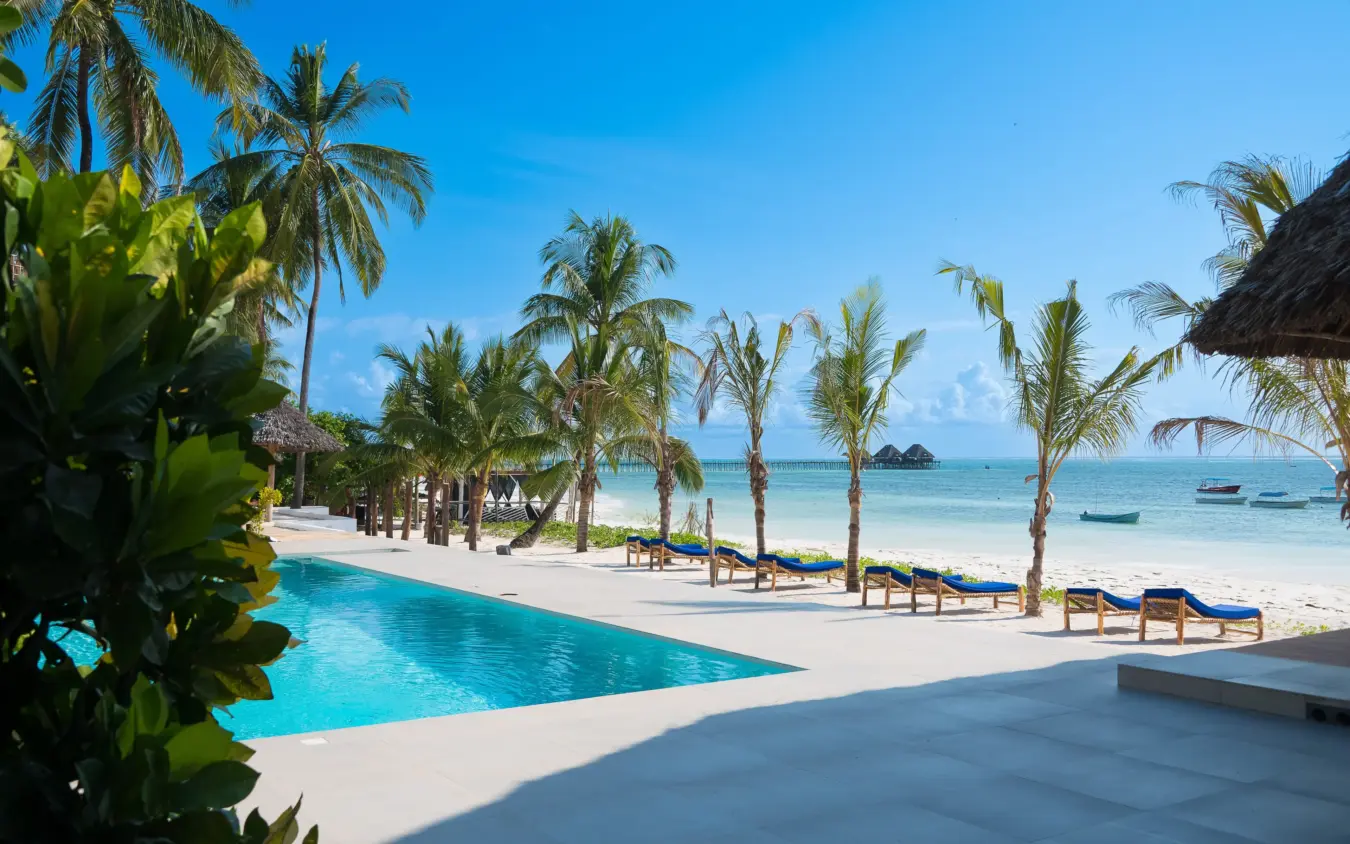
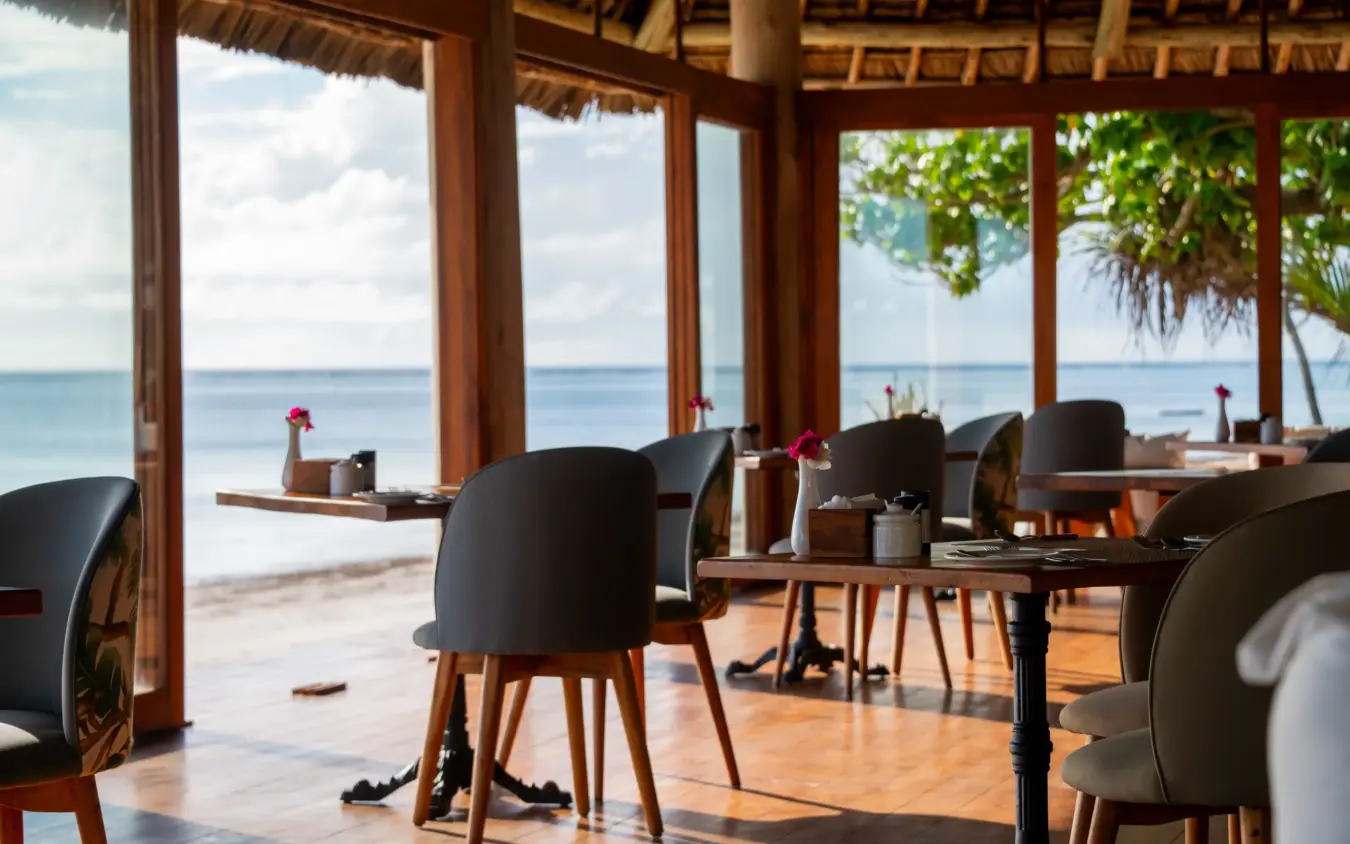
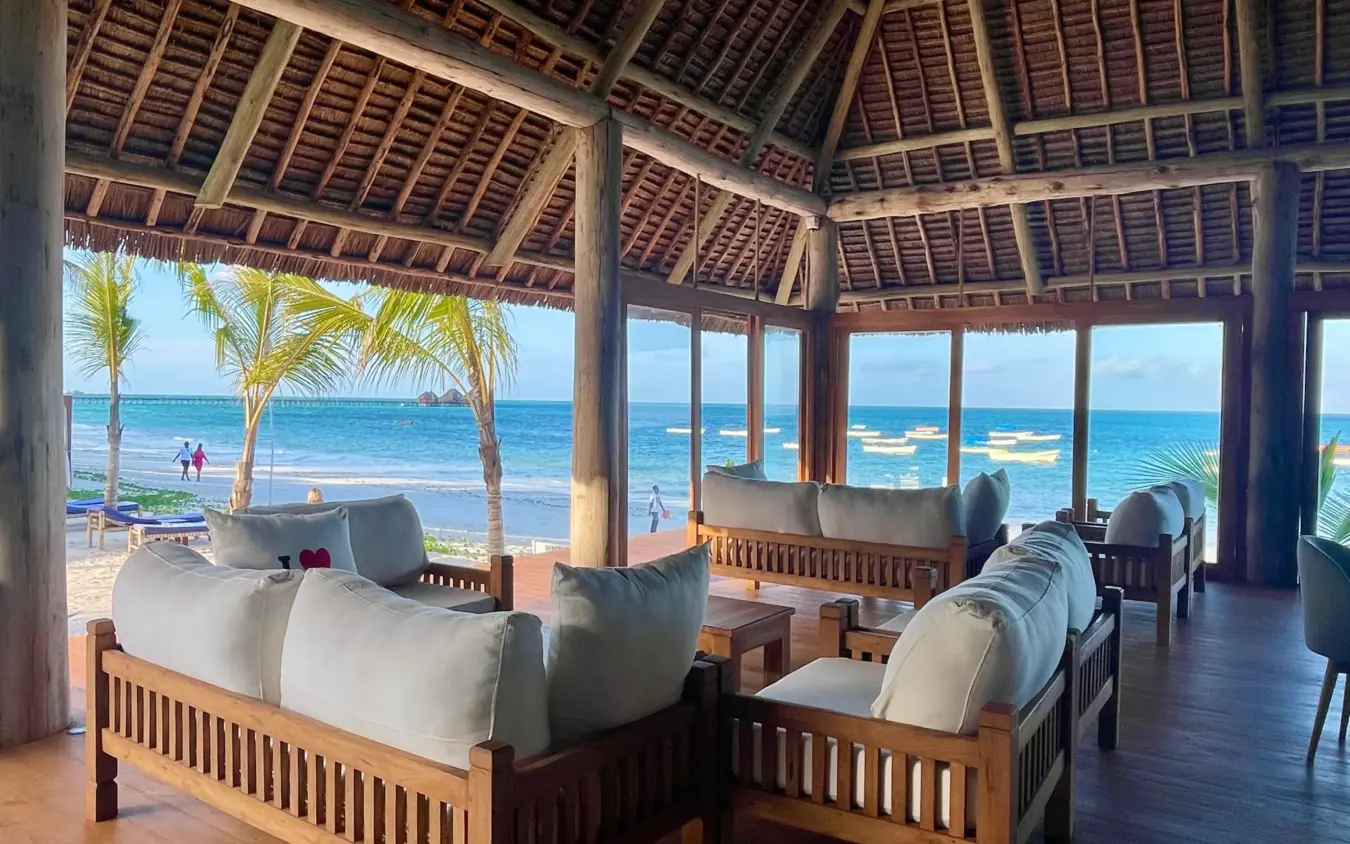
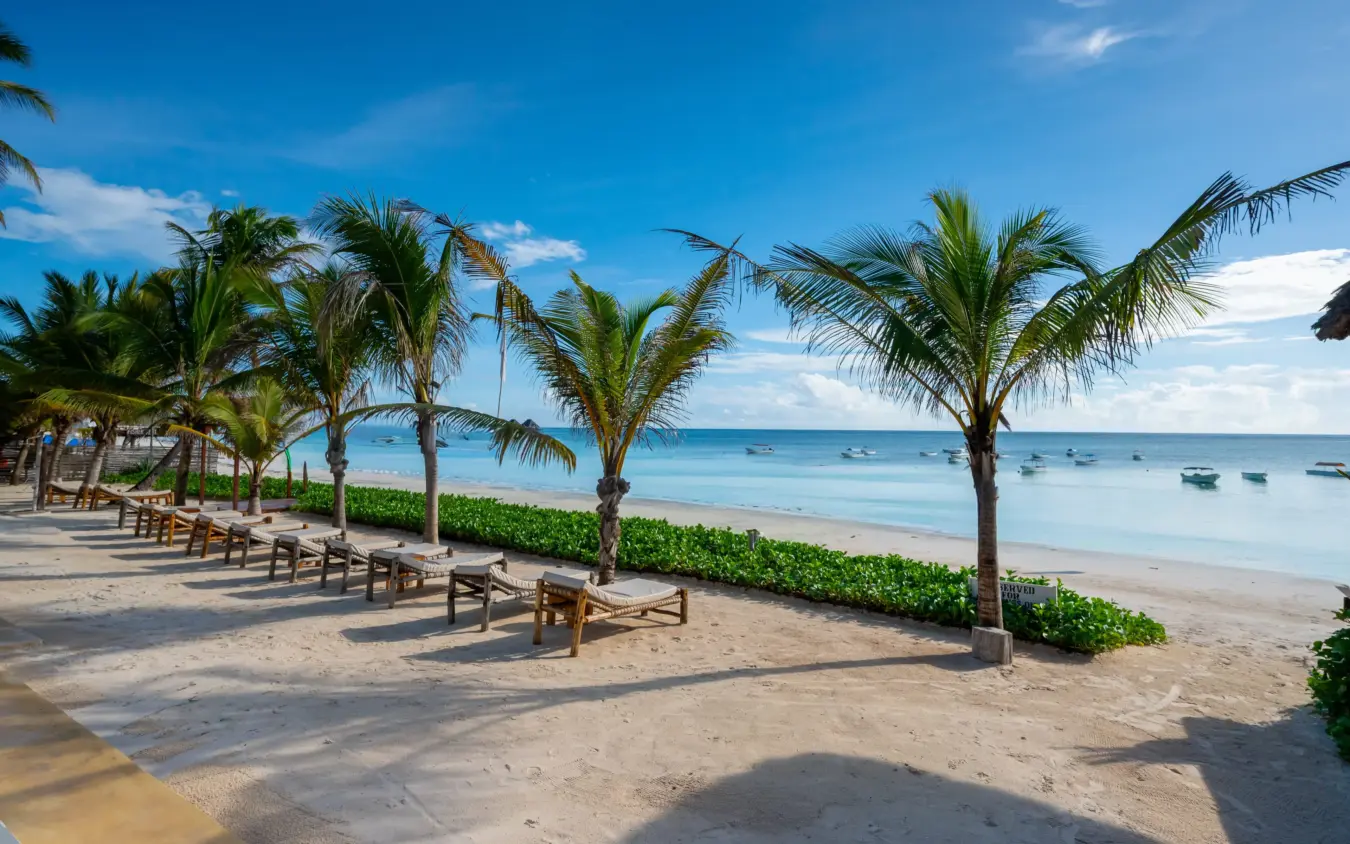
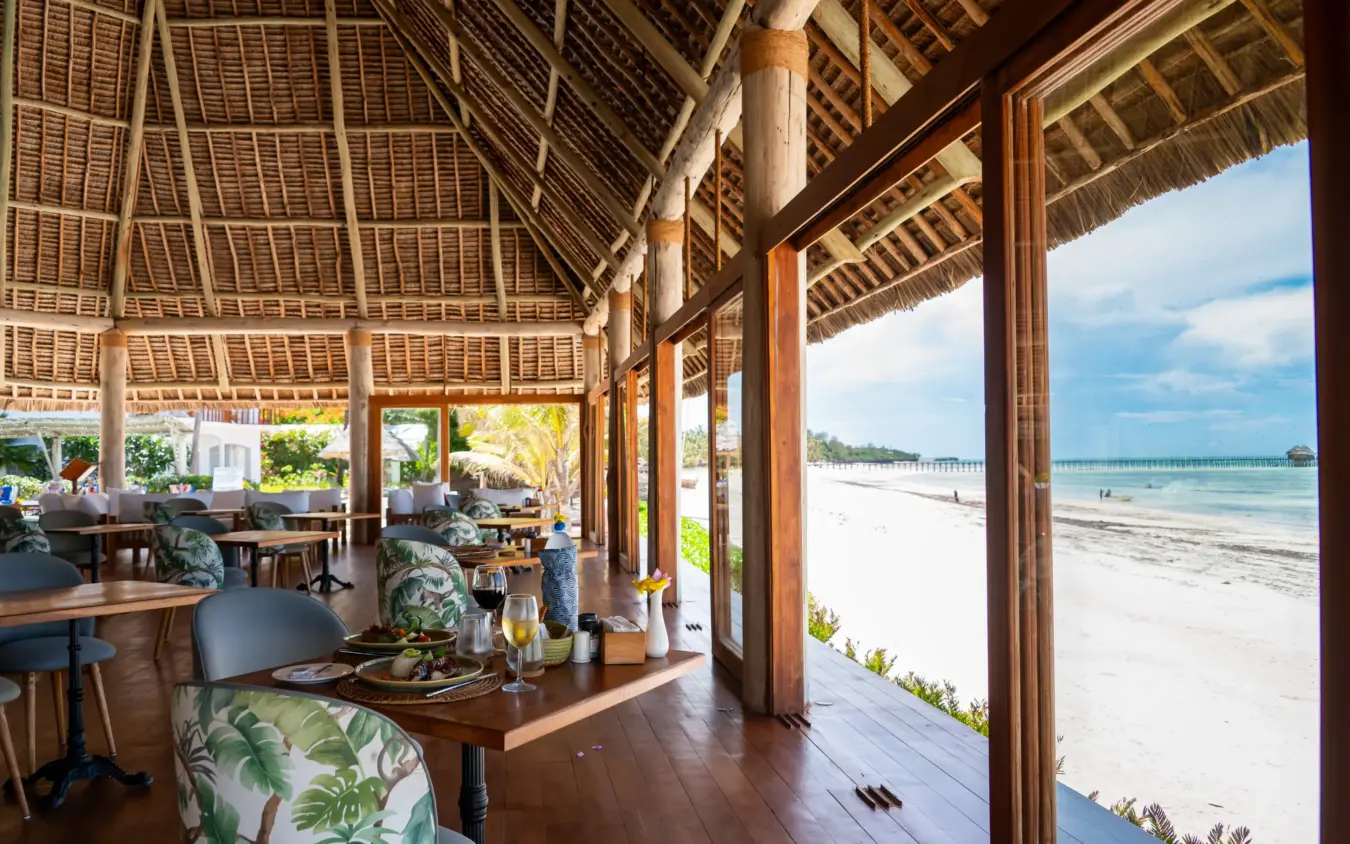
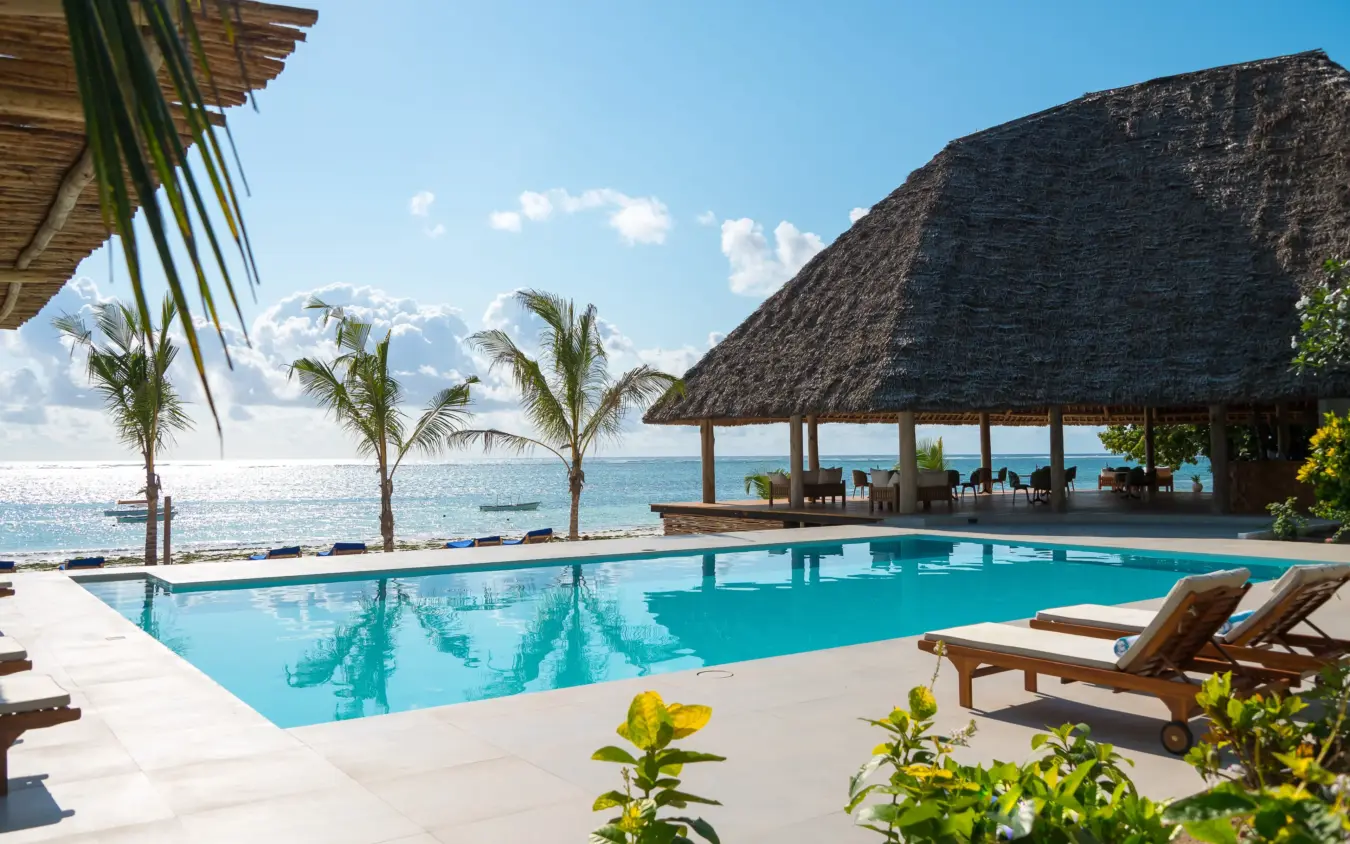
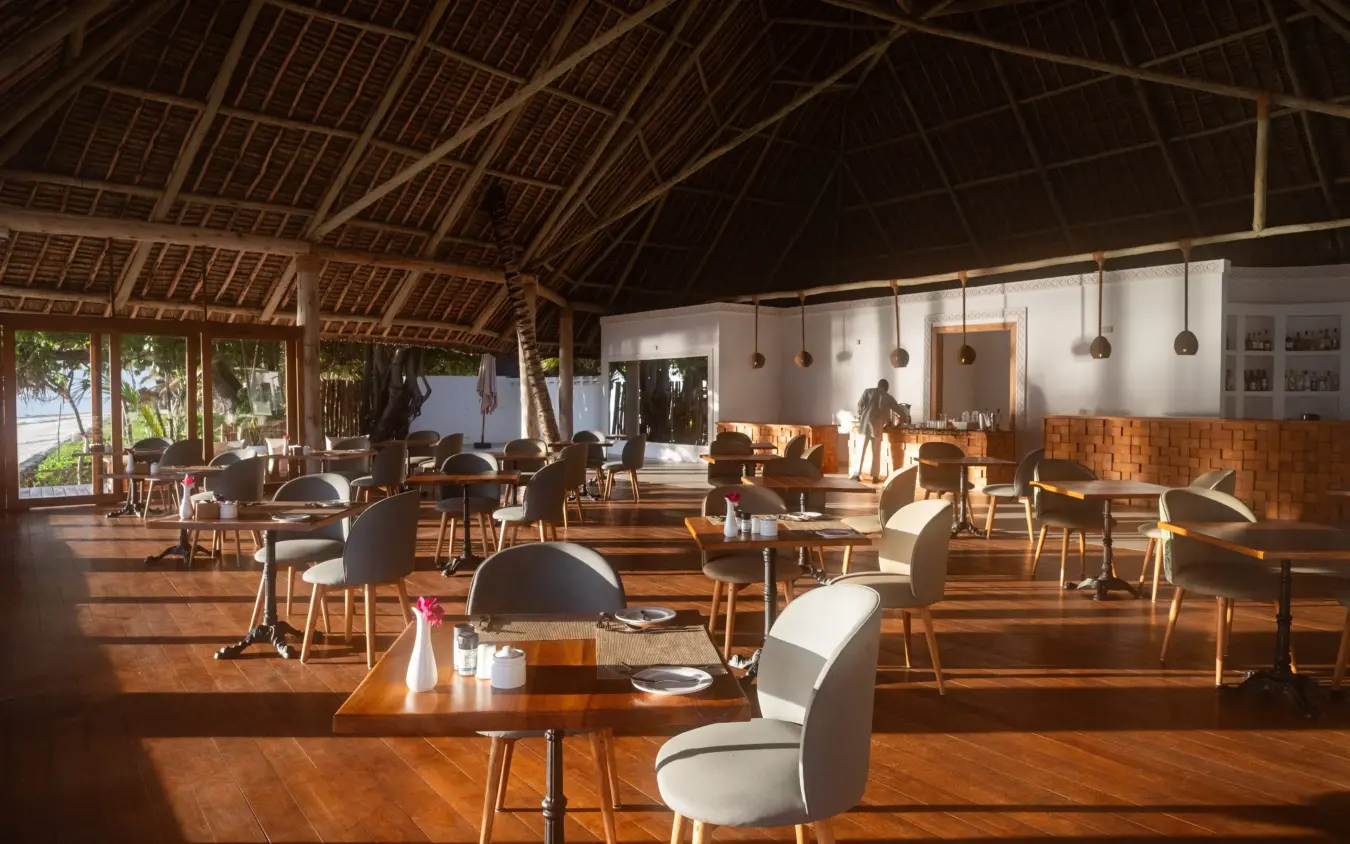
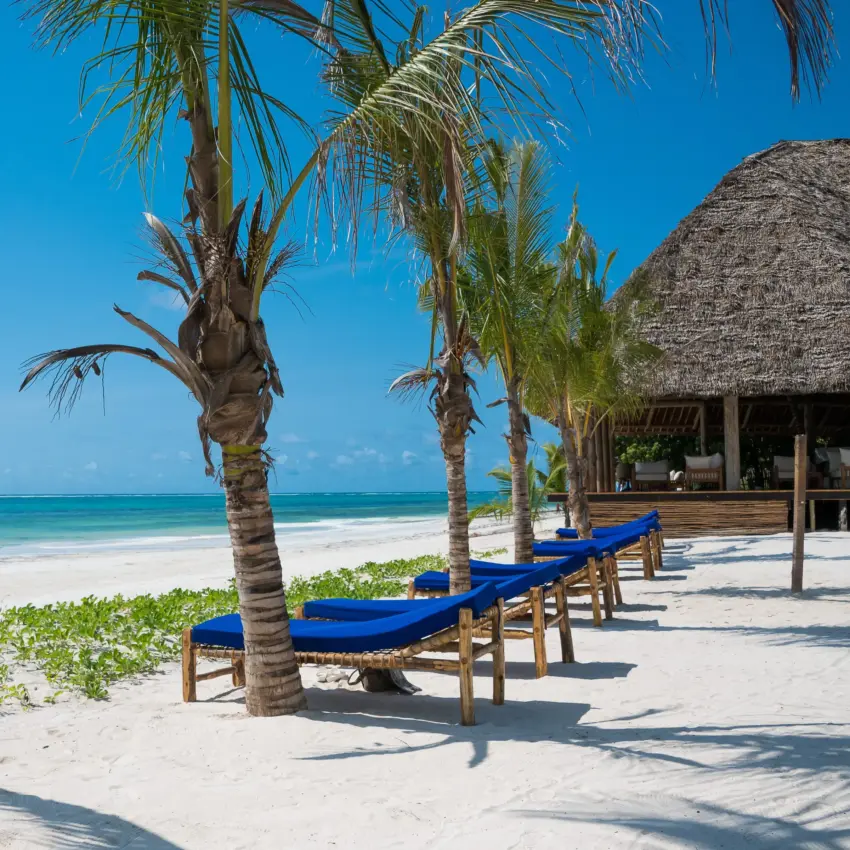
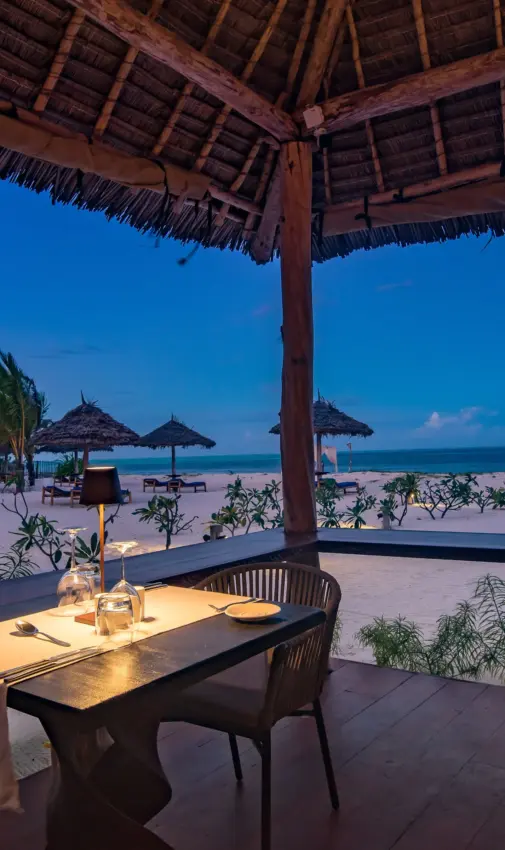
The restaurant opens straight onto the beach, and it belongs to the hotel’s guests rather than to passing diners. The kitchen is chef-led and built on Zanzibari spices, seasonal ingredients and fresh seafood, with light Mediterranean and Asian touches set alongside them. Breakfast begins slowly by the sea. Dinner unfolds under the stars, close enough to the shore to hear the water turn over on the sand. With covers kept few, nothing about the evening is hurried.
Beyond the beach, the days are handed over to the island itself, with excursions arranged through local partners rather than run in-house. Stone Town’s narrow alleyways, its carved wooden doors and its markets fill a morning easily, and inland the spice farms grow cloves, nutmeg, cinnamon and vanilla across small plots worked by hand. Jozani Forest is reached by road, and its shaded trails run through native vegetation and mangrove. It protects the Zanzibar red colobus monkey, a species found only on this island.
A traditional sailing boat takes the whole day, with sailing, swimming and snorkelling in between
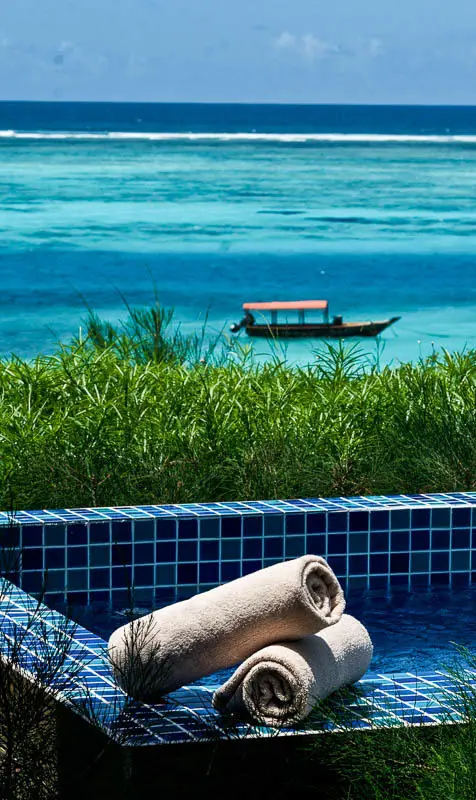
A half day at sea goes to the southern part of the Menai Bay Conservation Area, over on the island’s south coast, home to bottlenose and humpback dolphins, and the boat runs only when the sea allows. Prison Island holds a colony of Aldabra giant tortoises, some more than a hundred years old, brought originally from Aldabra itself. A dhow day uses the same protected water at a slower pace. A traditional sailing boat takes the whole day, with sailing, swimming and snorkelling in between, and lunch is served ashore on one of the bay’s islands.
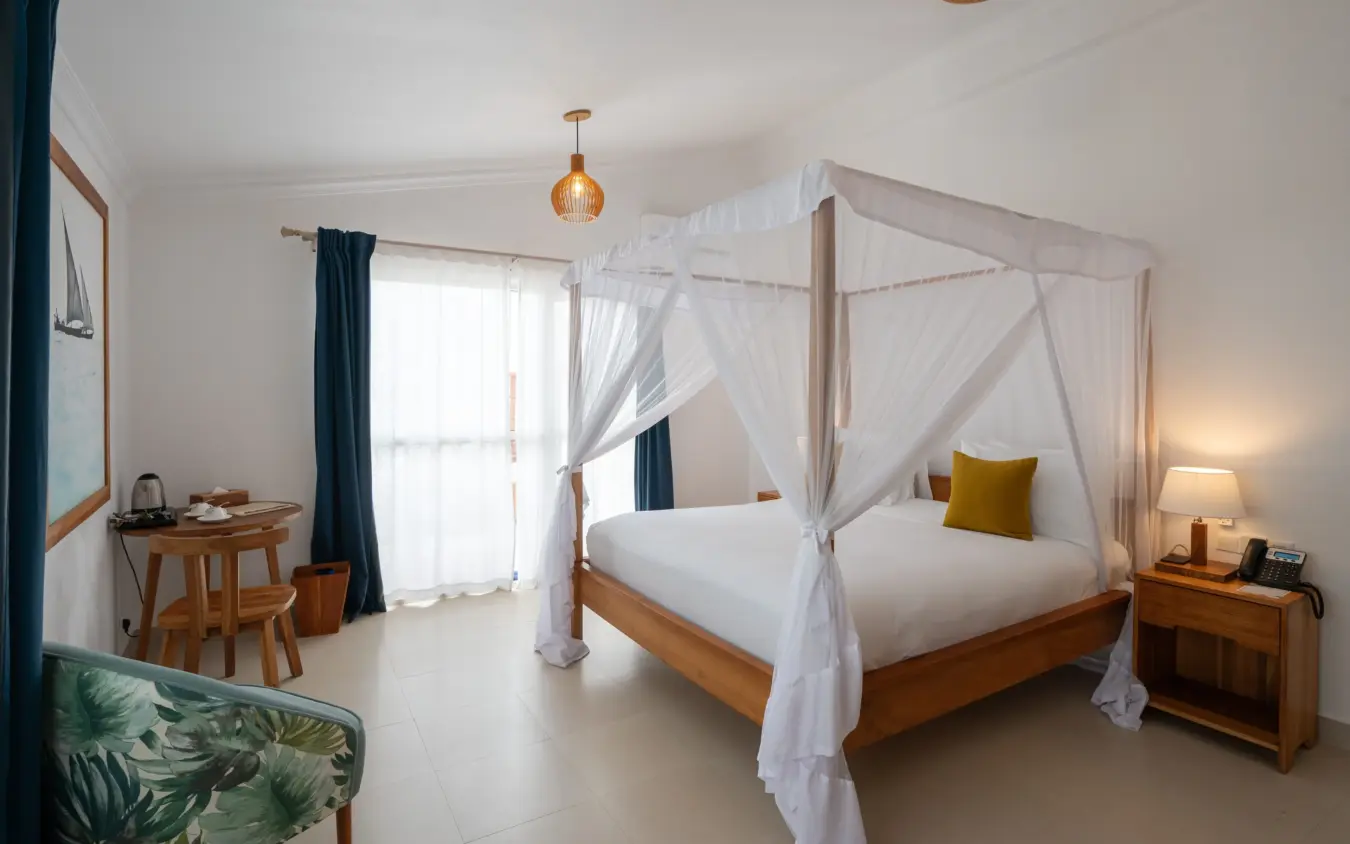
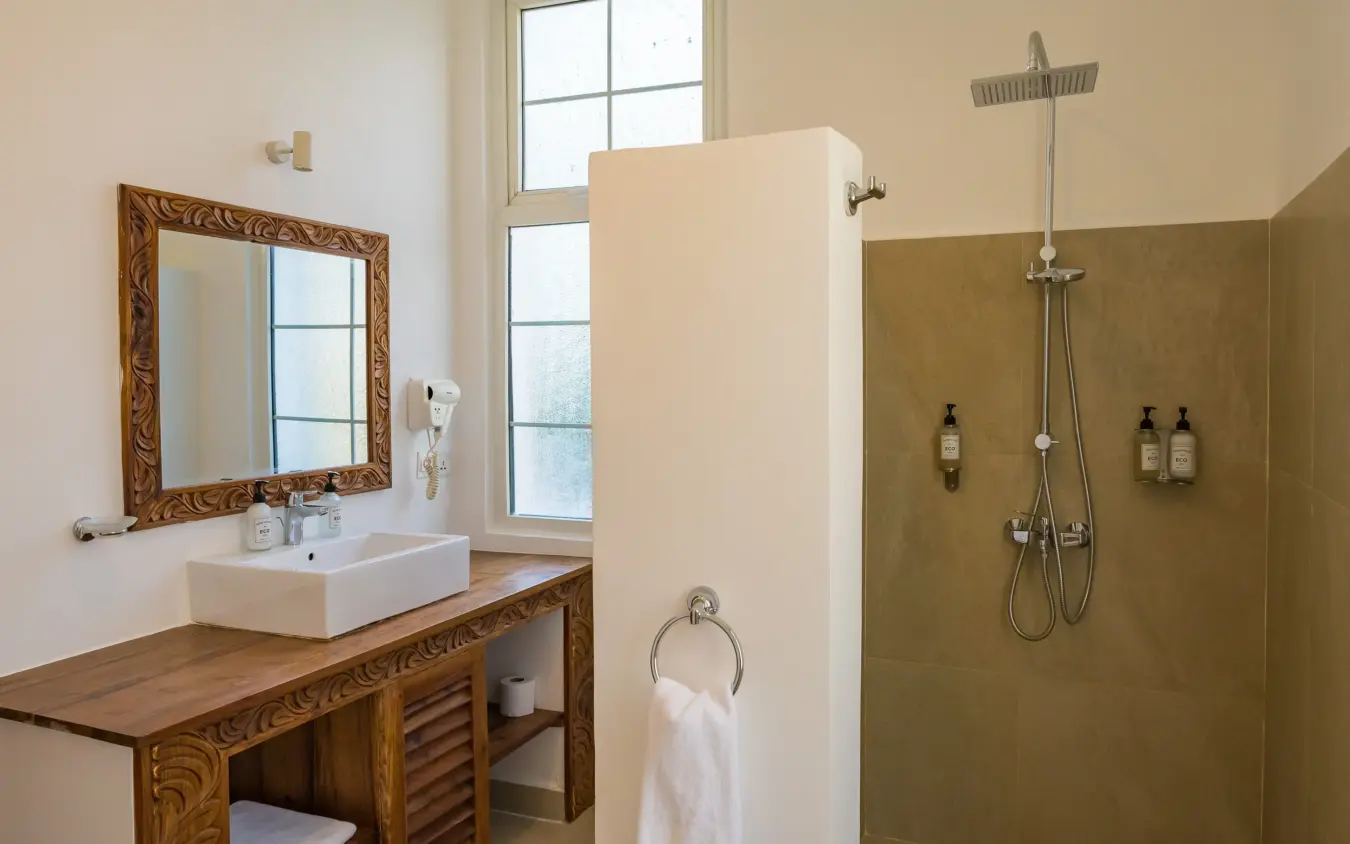
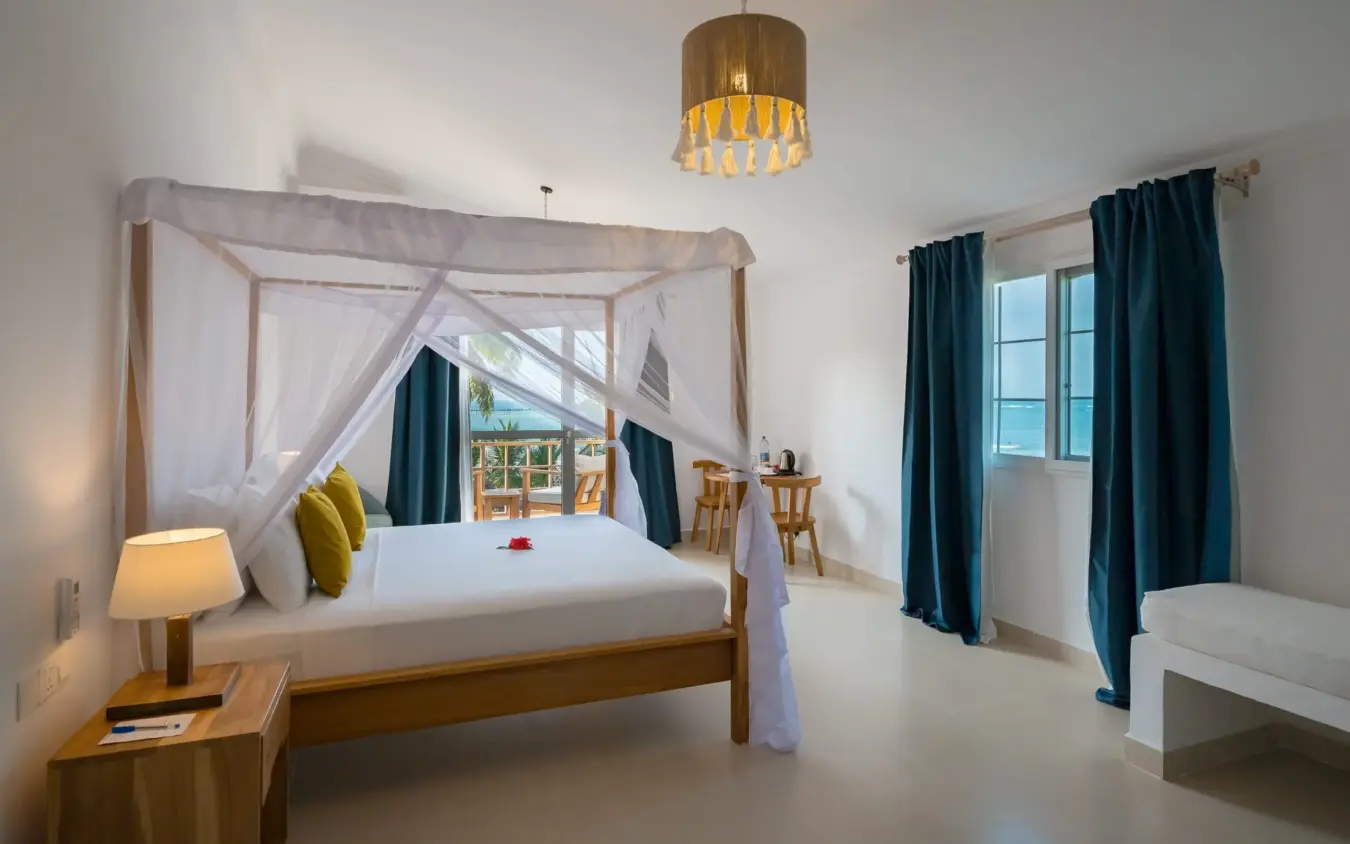
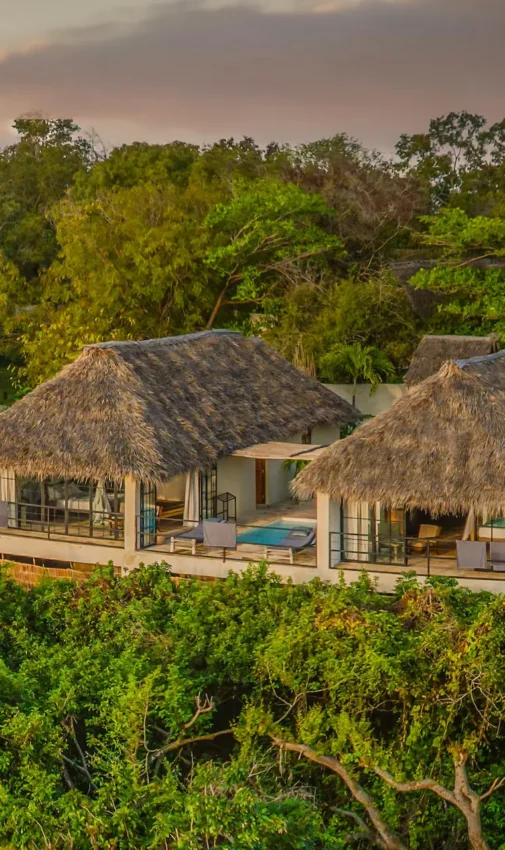
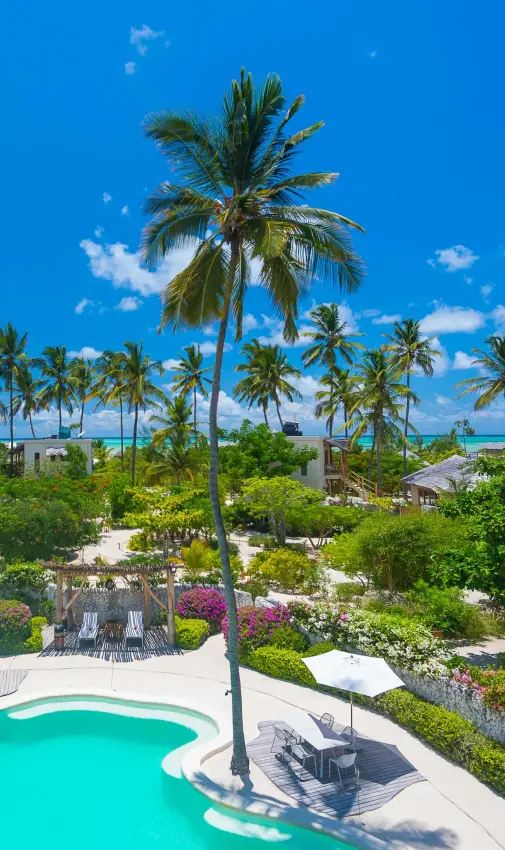
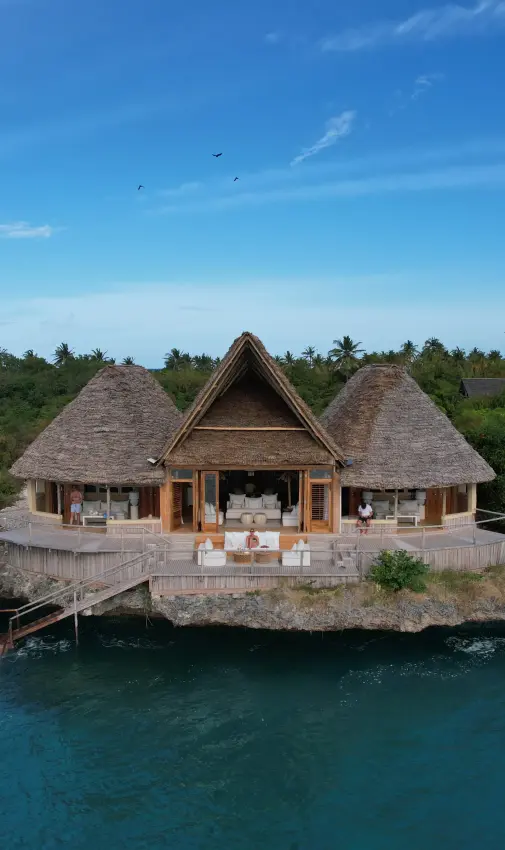
None of this runs to a fixed timetable, which suits a hotel built small by design: eighteen rooms and one kitchen. Nothing here is loud, and the day asks little beyond what the tide sets. The hotel suits couples and honeymooners, and it suits travellers arriving from a safari elsewhere in Tanzania just as well, looking for the opposite of an early wake-up call.