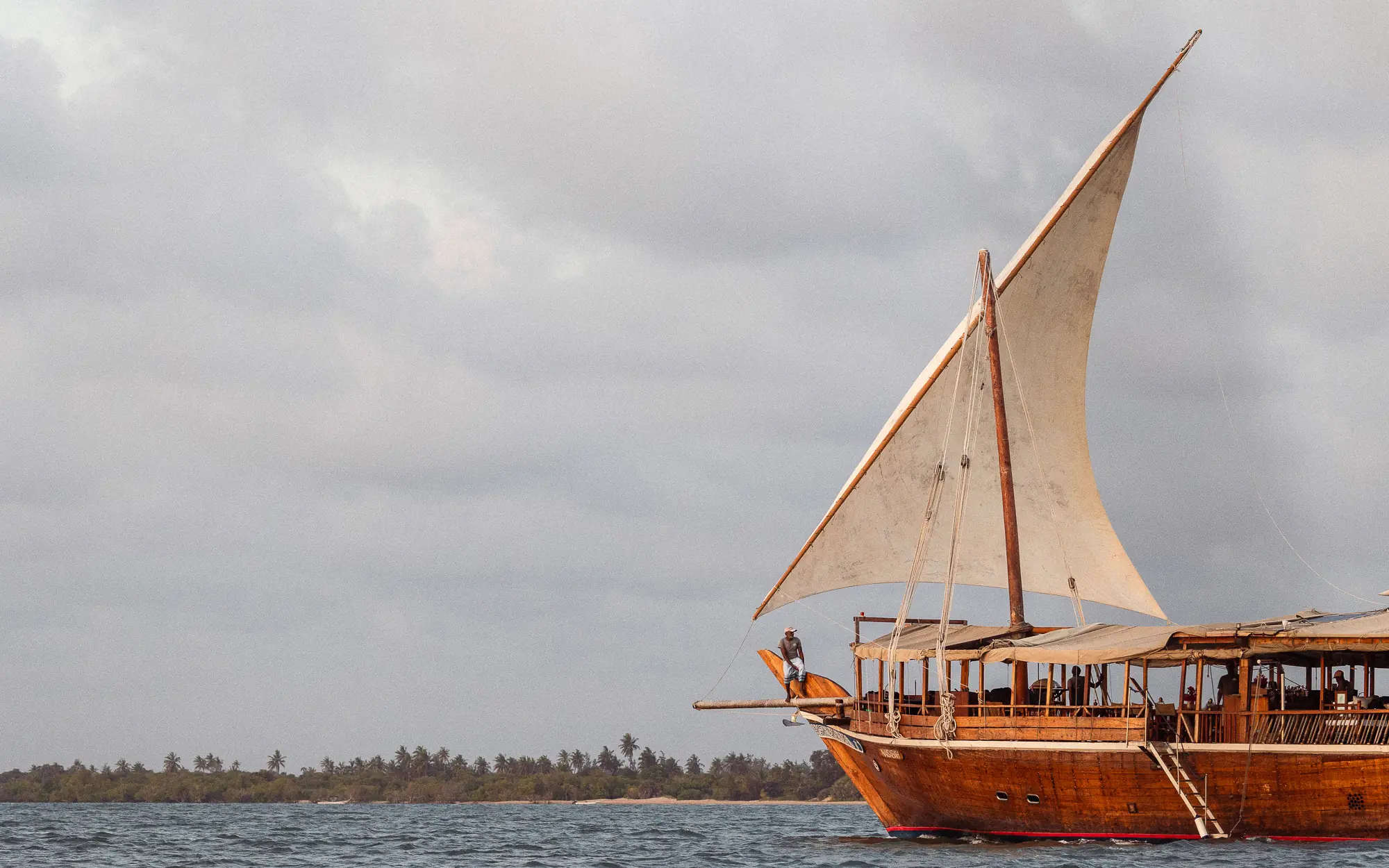
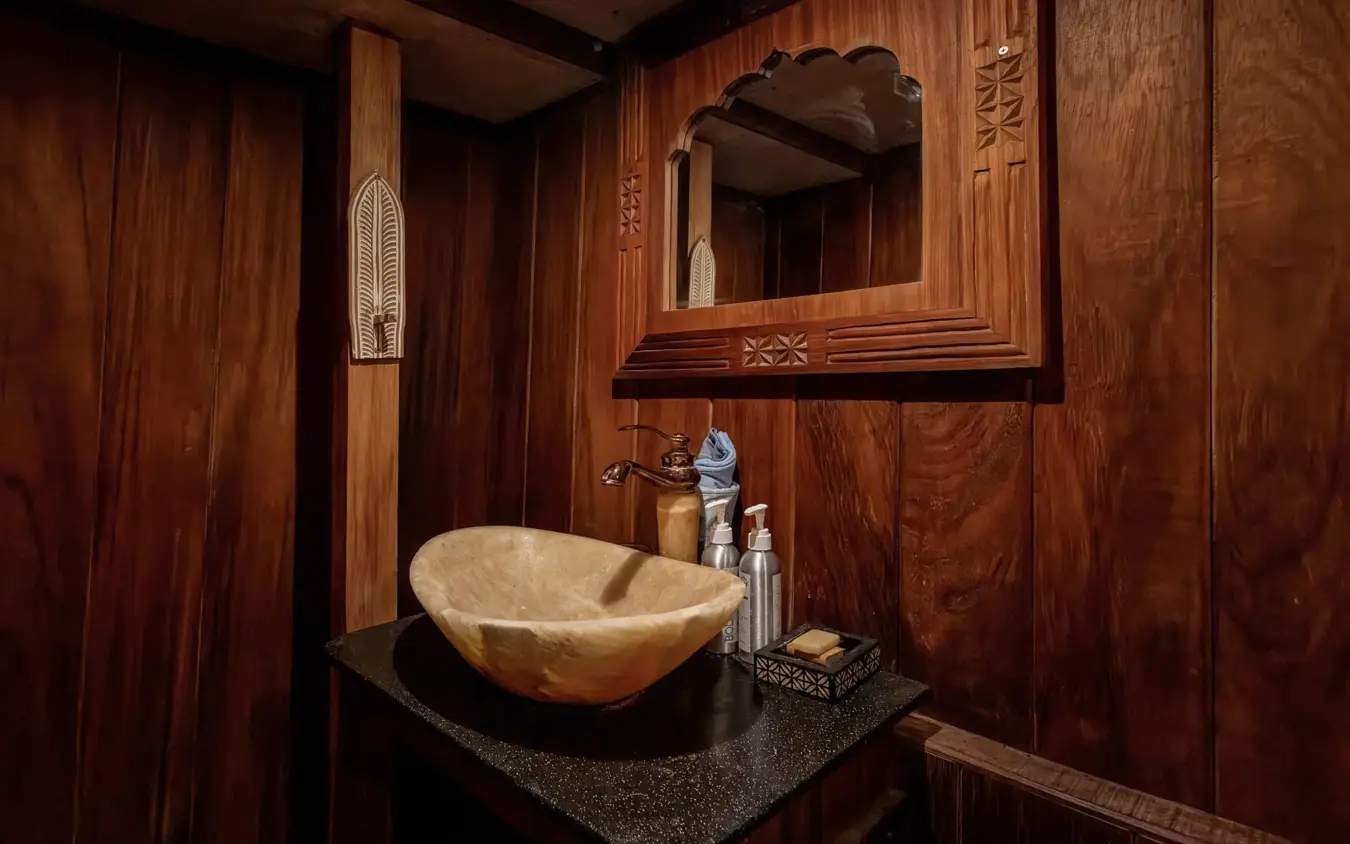
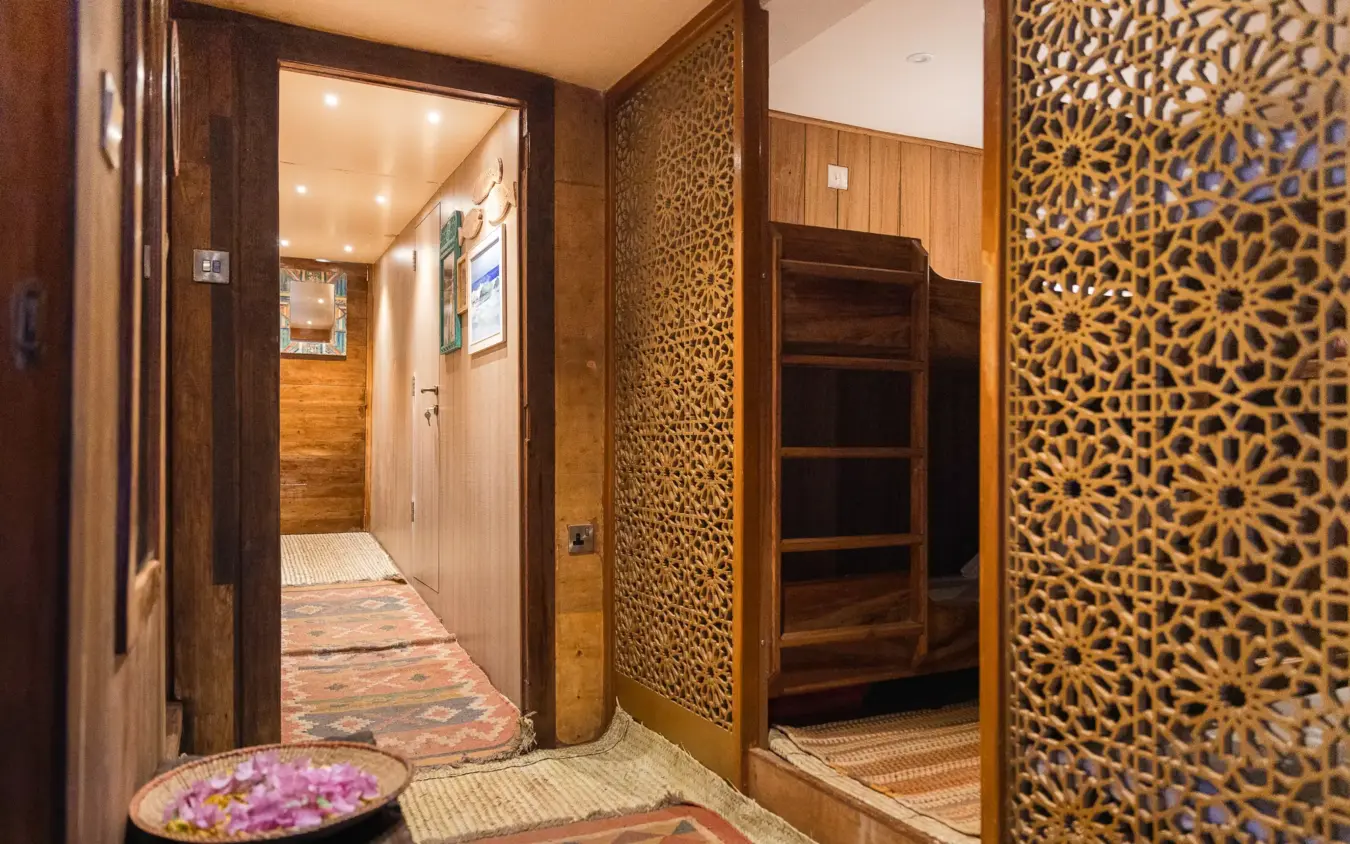
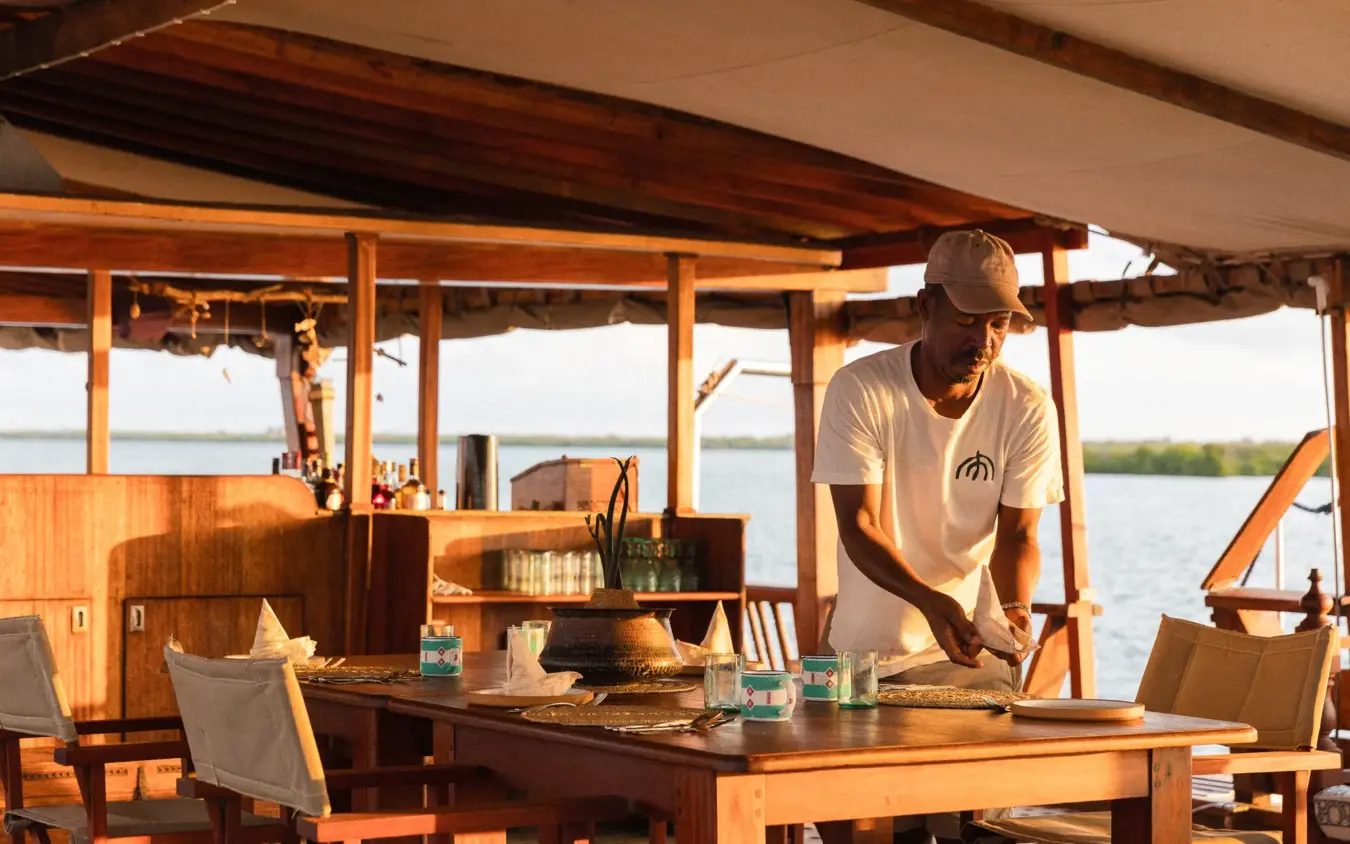
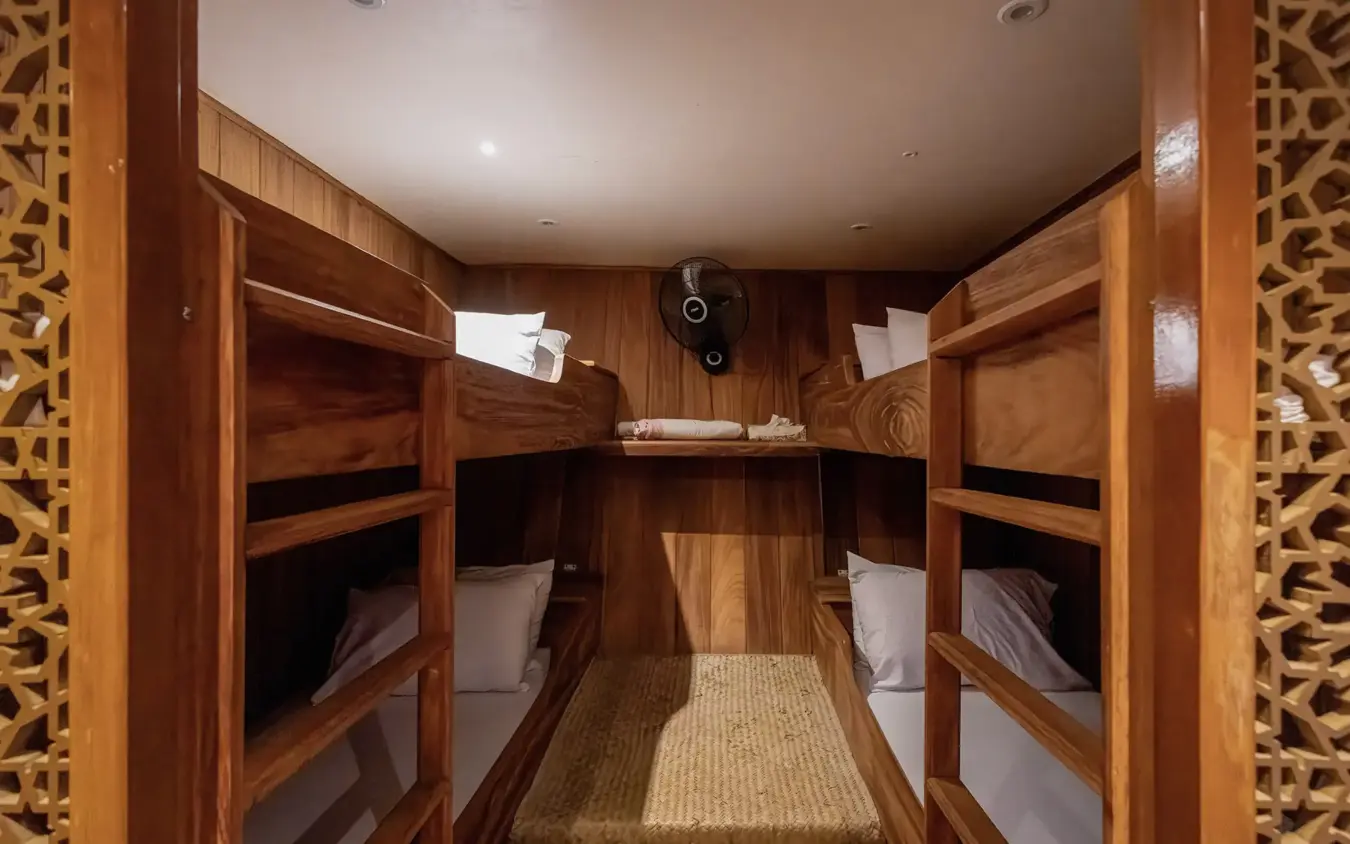
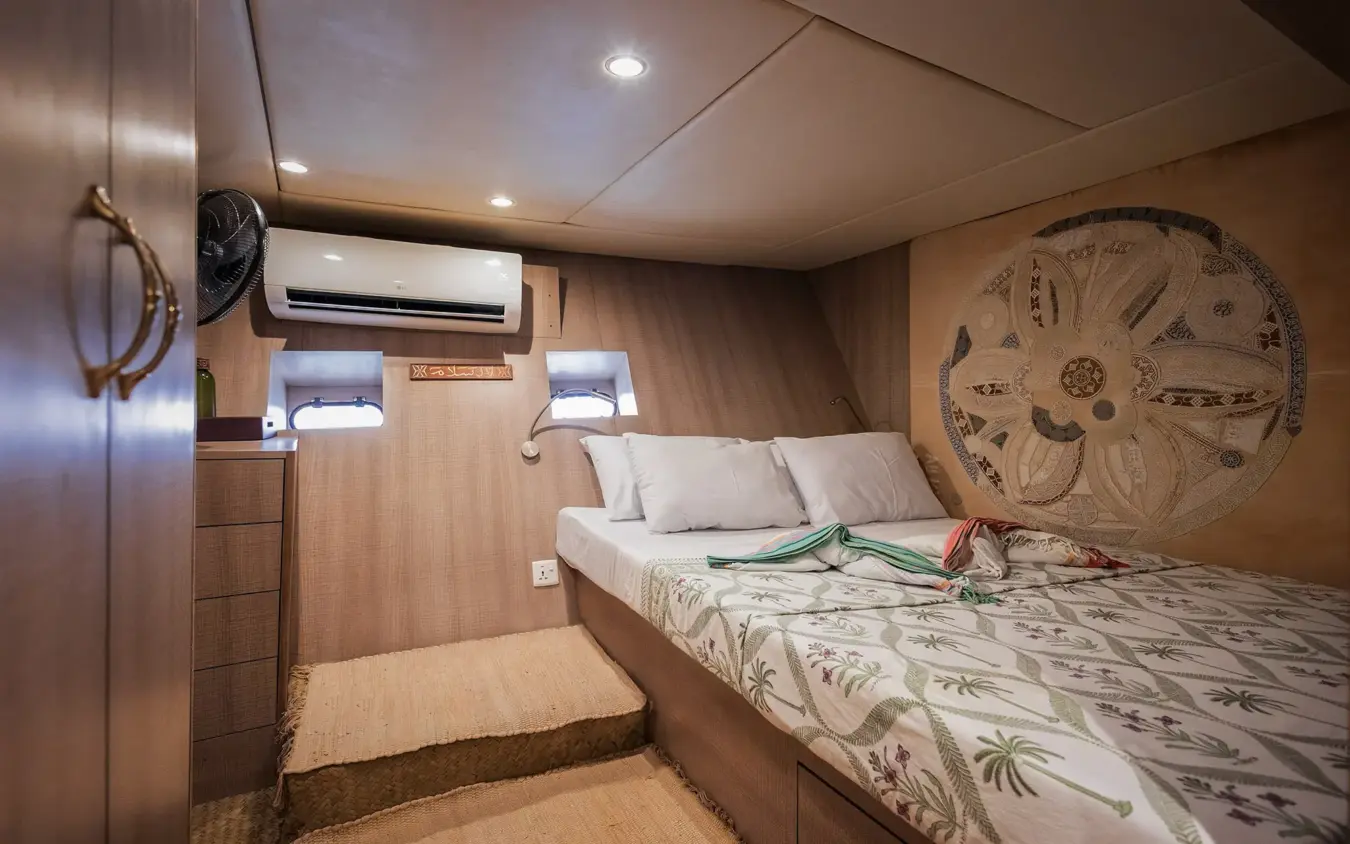
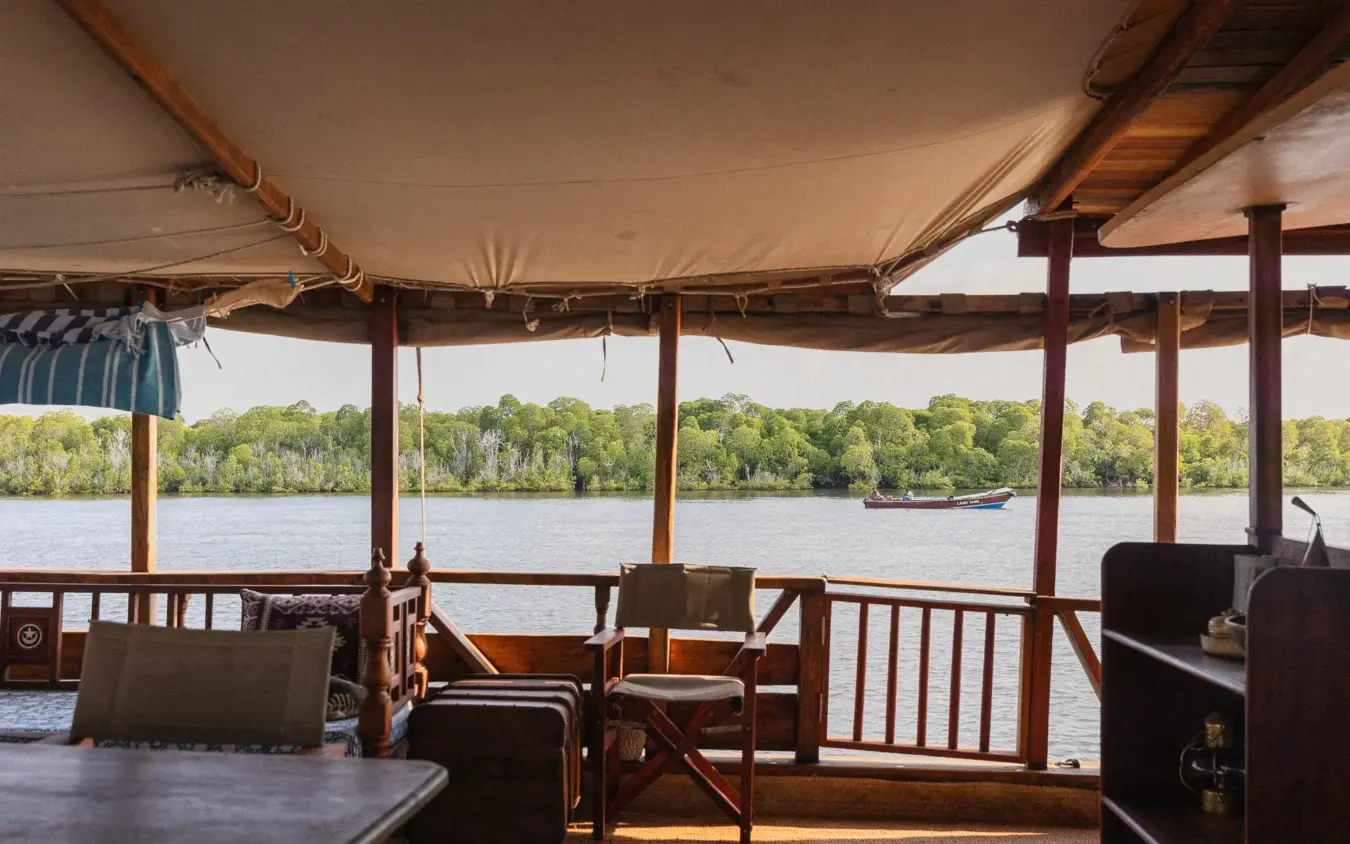
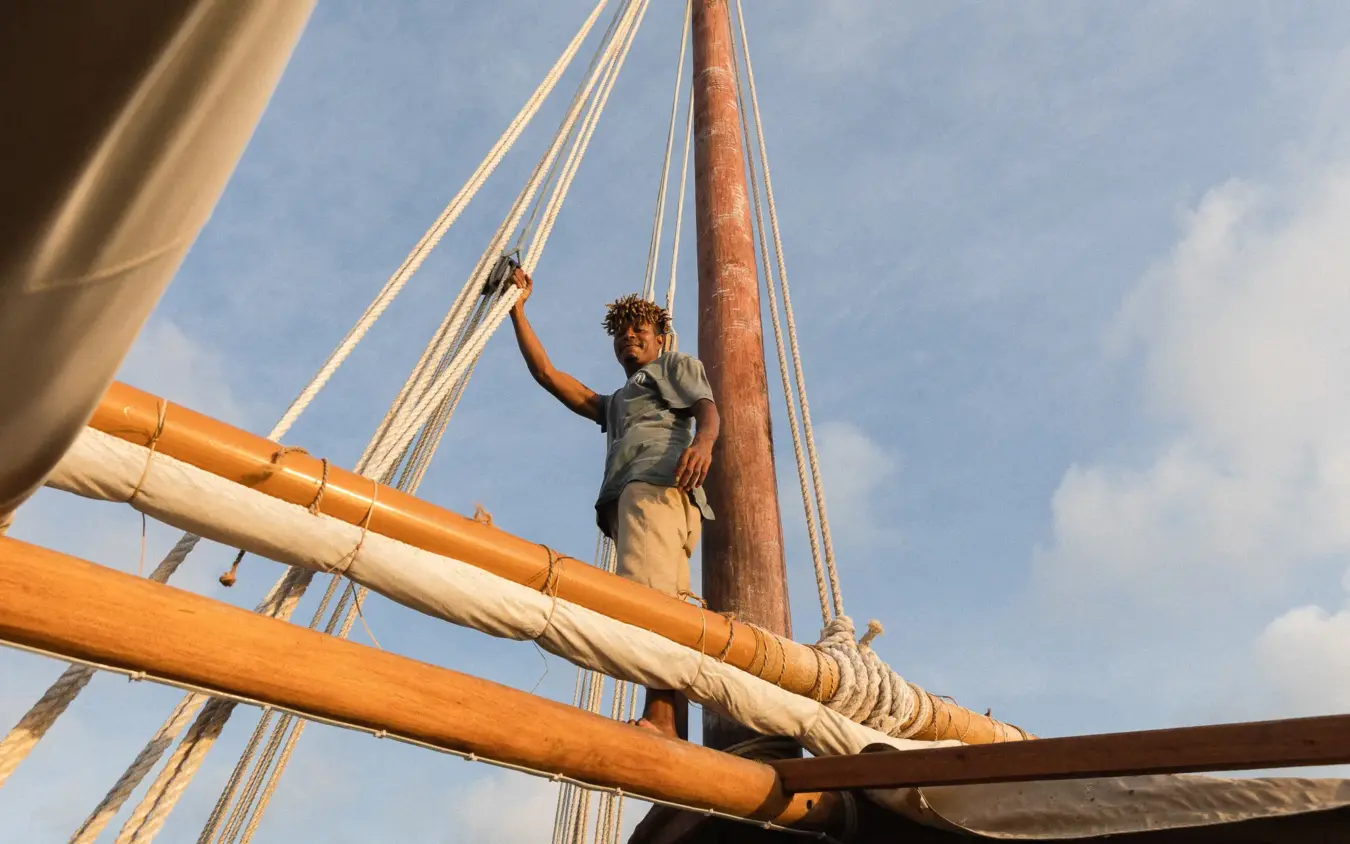
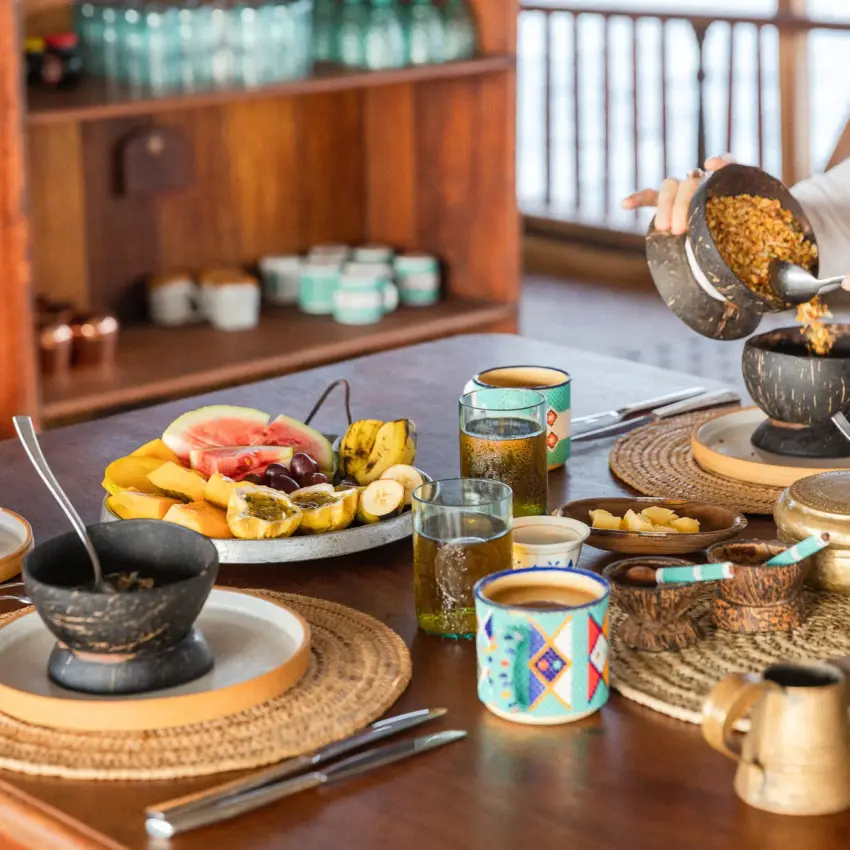
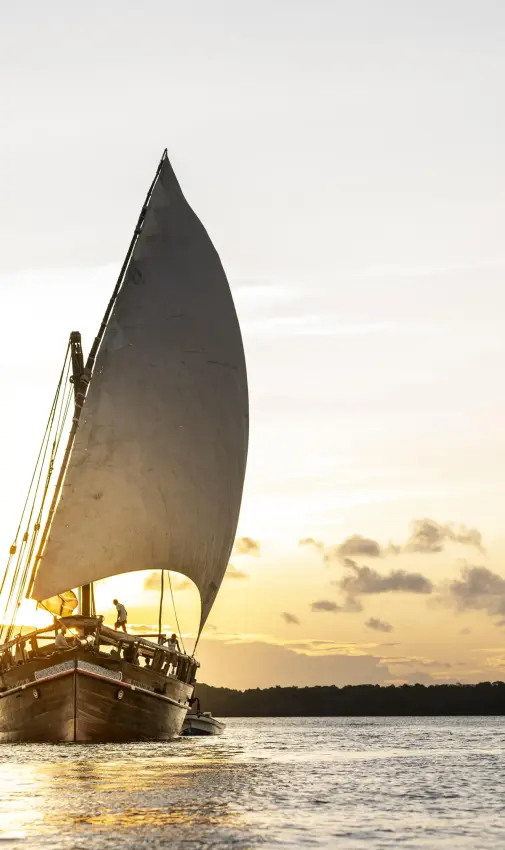
Below deck there are three cabins. Two are doubles, each with air conditioning, a washbasin and a flush toilet, and the third is a bunk room of four singles that works for children or friends sharing, using a separate bathroom with a hot shower. Cotton sheets, dressing gowns and hot fresh water throughout. The upper deck is the living space, with cushioned daybeds, a shaded dining area and mattresses laid out at night for anyone who would rather sleep in the open air. A desalinator makes the fresh water, and solar and wind carry the power.
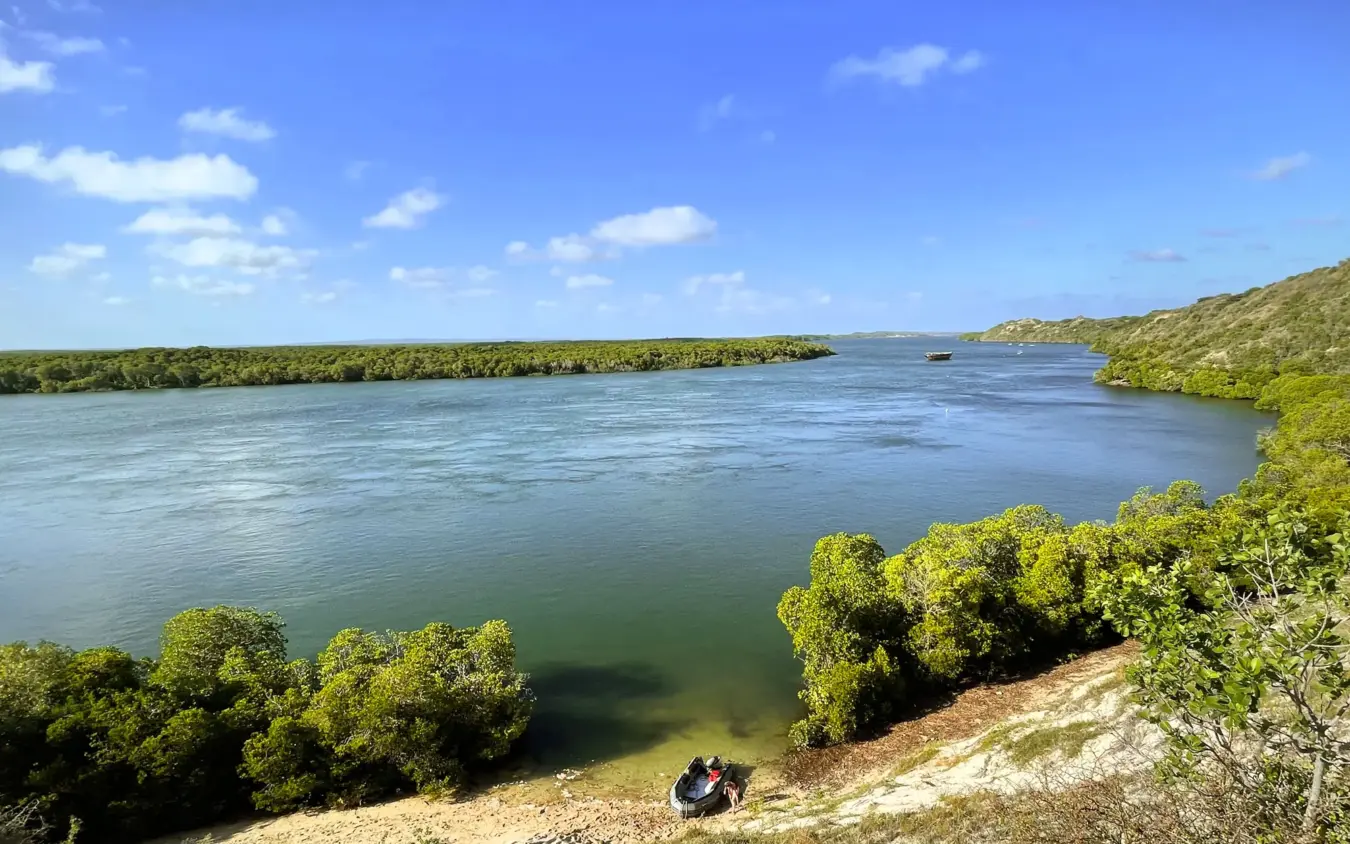
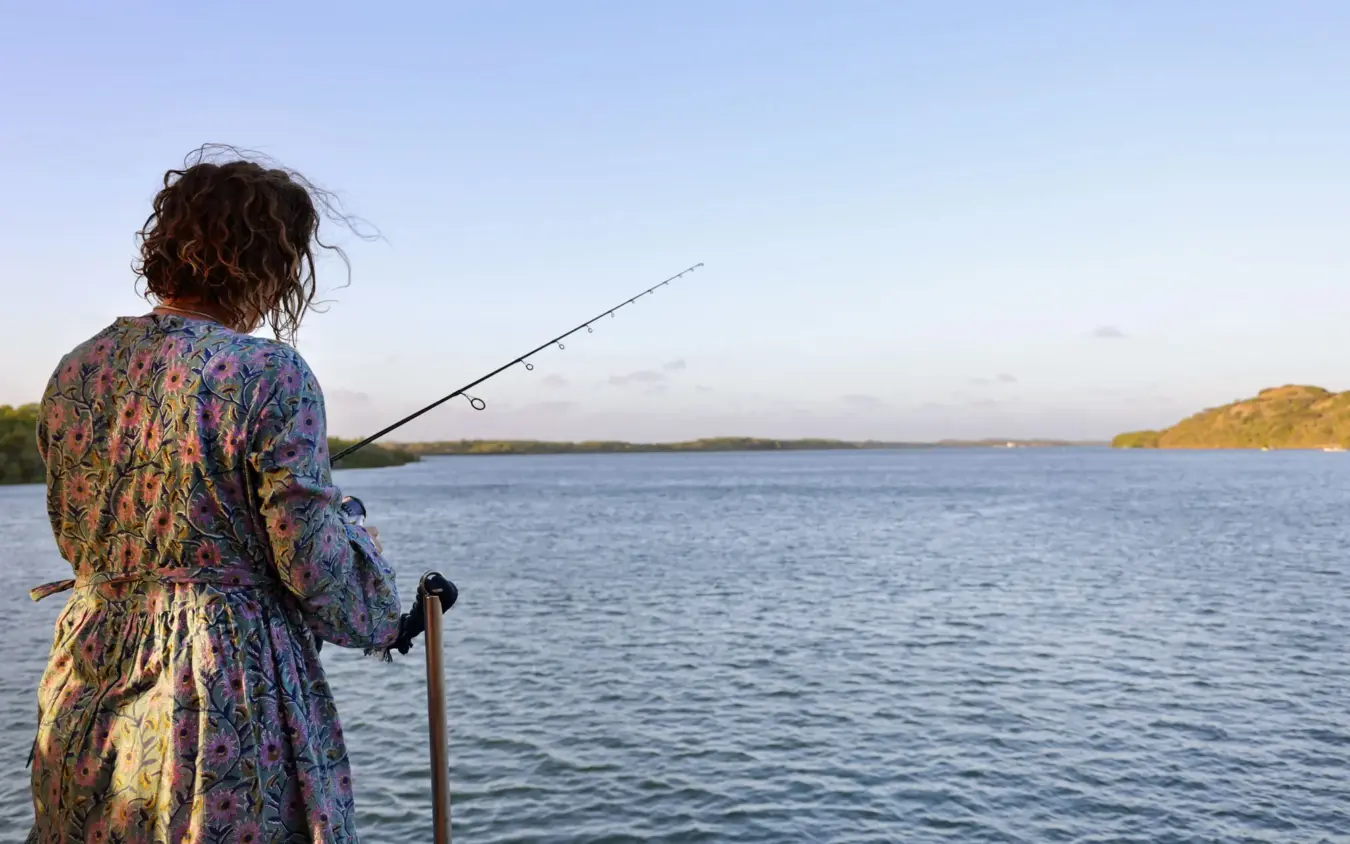
The leisure boat that travels with her opens up water-skiing, snorkelling drops on the reefs and fishing in the creeks, and deep-sea trolling, guided saltwater fly-fishing and diving can all be arranged. Kayaks and paddleboards go over the side into the mangrove creeks. Fish eagles hunt the channels here and mudskippers work the exposed roots. Turtles surface off the reefs, and mats come out on deck for yoga at sunrise, before the tide decides where the day goes.
Fish eagles hunt the channels here and mudskippers work the exposed roots.
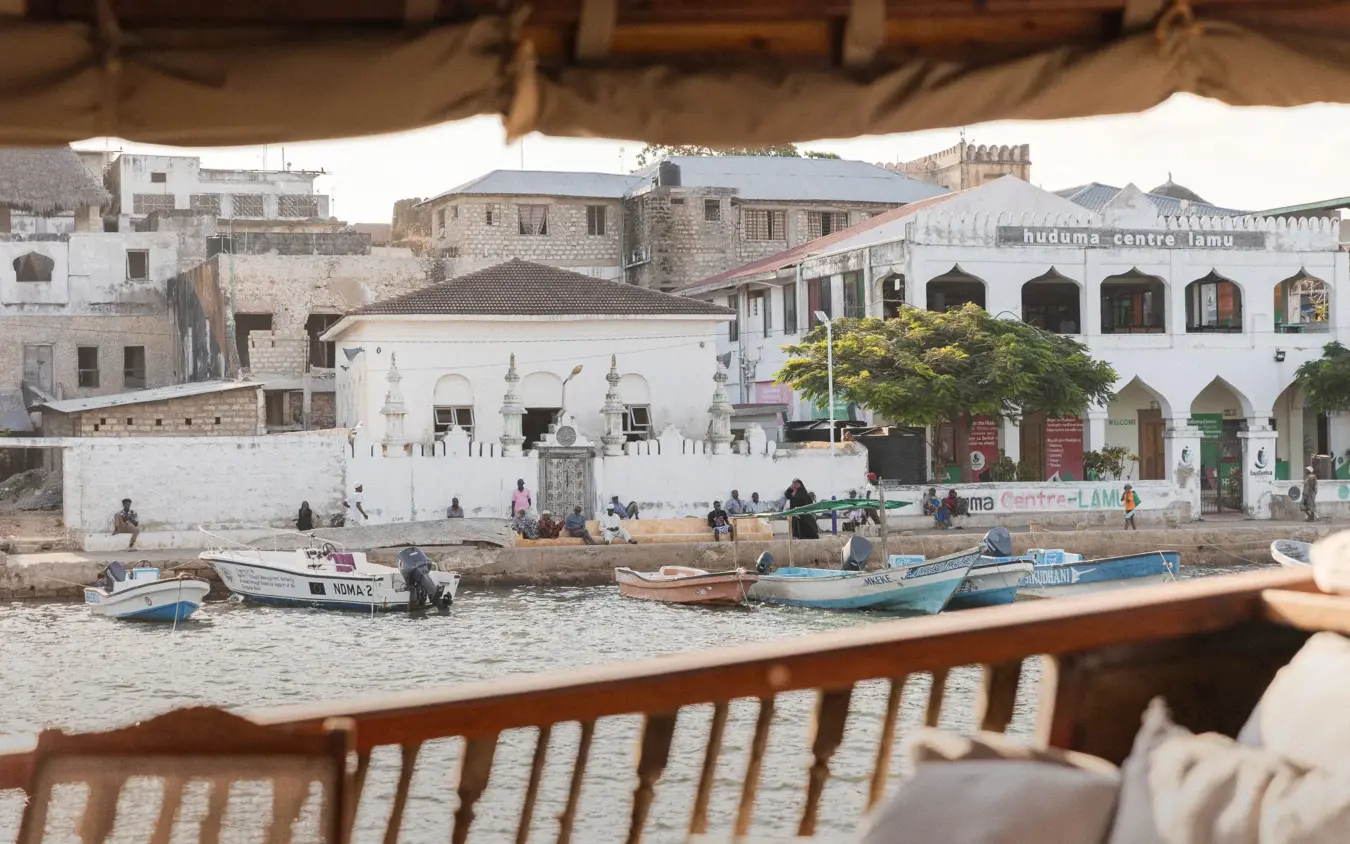
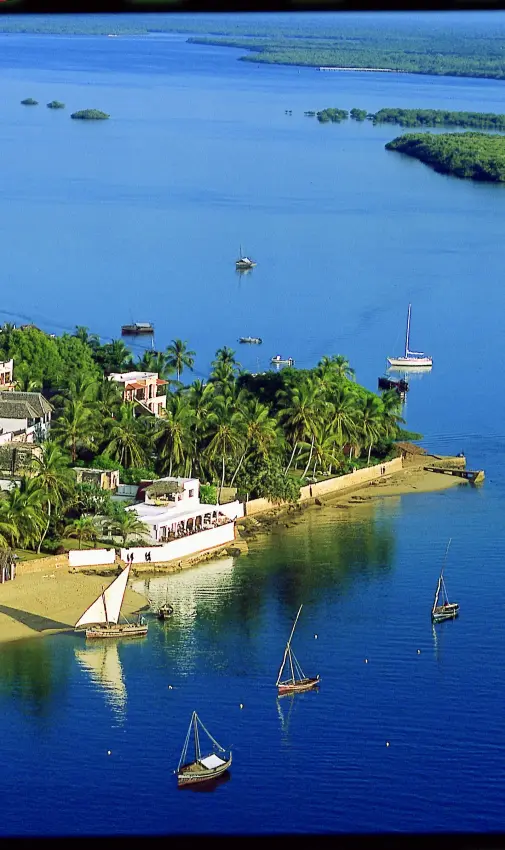
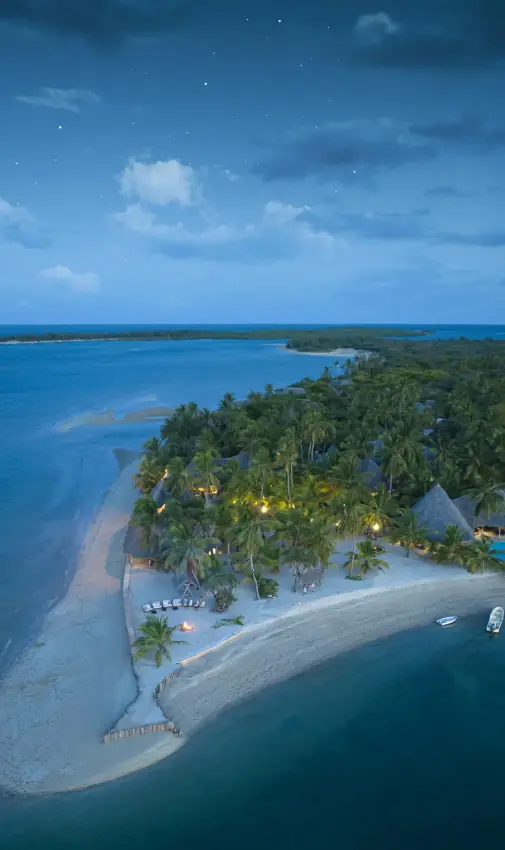
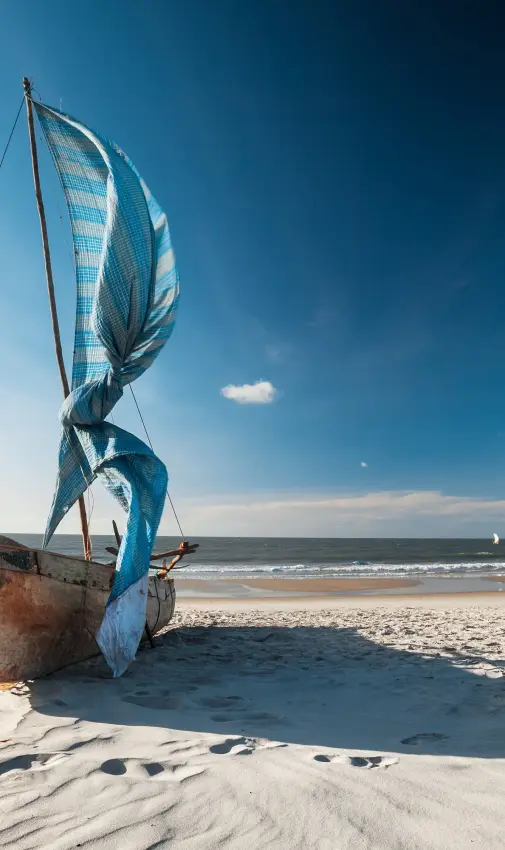
On land, Lamu Old Town is a UNESCO-listed maze of coral-stone houses and carved doors, walked with a guide from the boat, past woodcarvers still at work in their workshops. Shela’s sand lanes are quieter. Across the channel on Manda Island, the Takwa ruins stand at the head of a mangrove creek, reached by tender on a rising tide. An afternoon might go to palm weaving with women from the village, or a walk on the sand at Kipungani, or a picnic on a bar that surfaces for a few hours and then goes under.
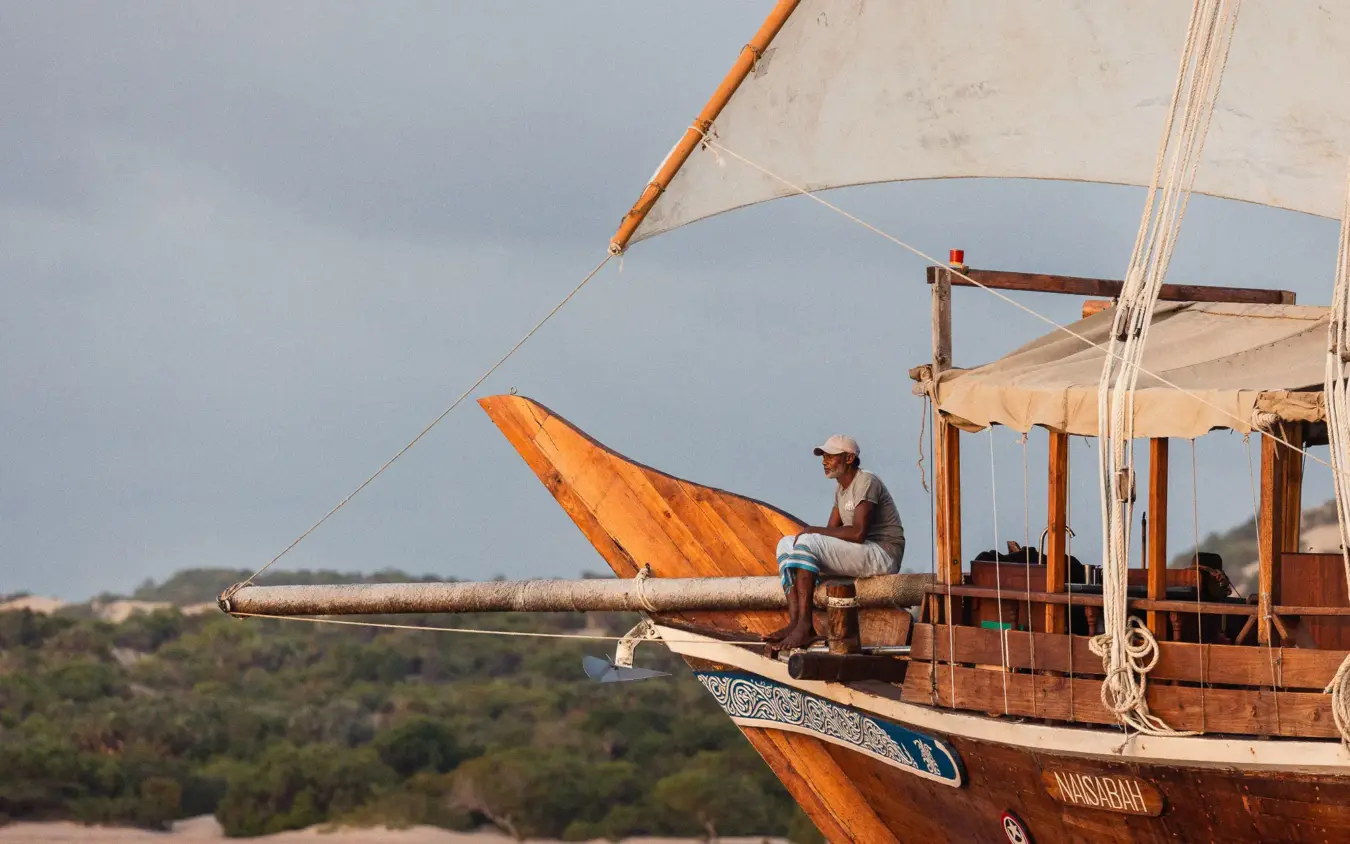
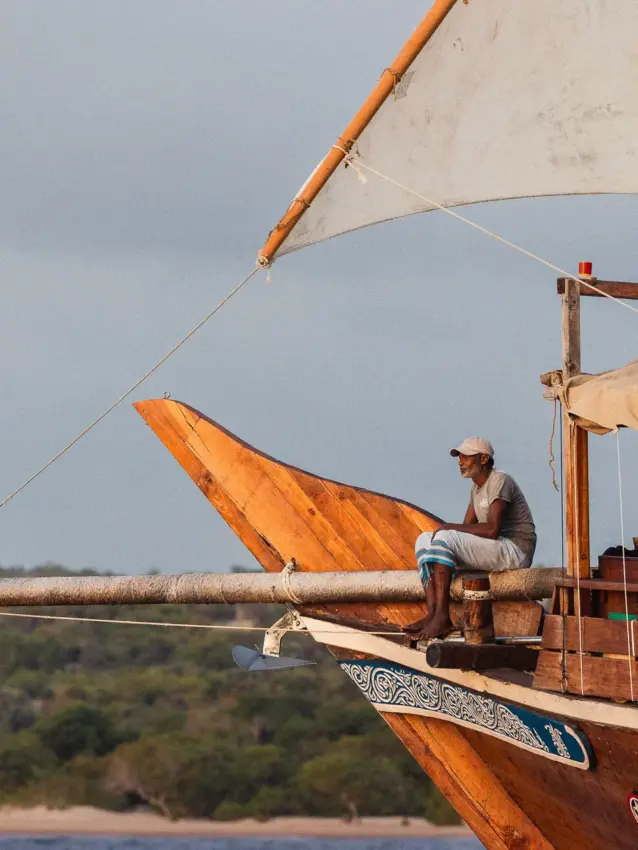
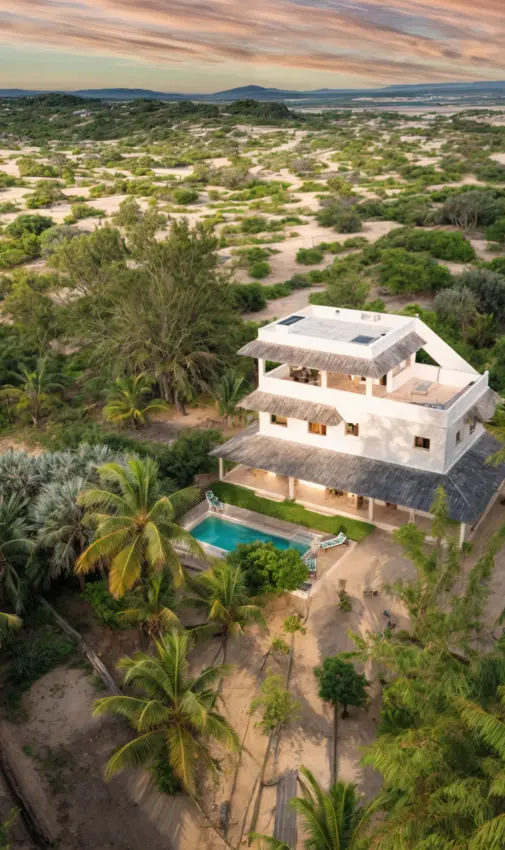
Scheduled and charter flights come in to Manda airstrip, where the crew meet you for a transfer of fifteen to thirty minutes. Sailing keeps to the waters around Lamu, Manda and Shela. The season runs from August to May, the long coastal rains closing NaiSabah in between. Children of six and over can sail if they swim confidently; families with toddlers, or anyone wanting a pool and room to spread out, are better in a house on shore.