Hotel

The Cabanas

Seven hand-built cabanas on Kizingoni Beach, Lamu Island, Kenya, off-grid and open to the trade winds

Country: Kenya
Location: Lamu Archipelago
Number of rooms: 7

Coral, makuti and driftwood on Lamu

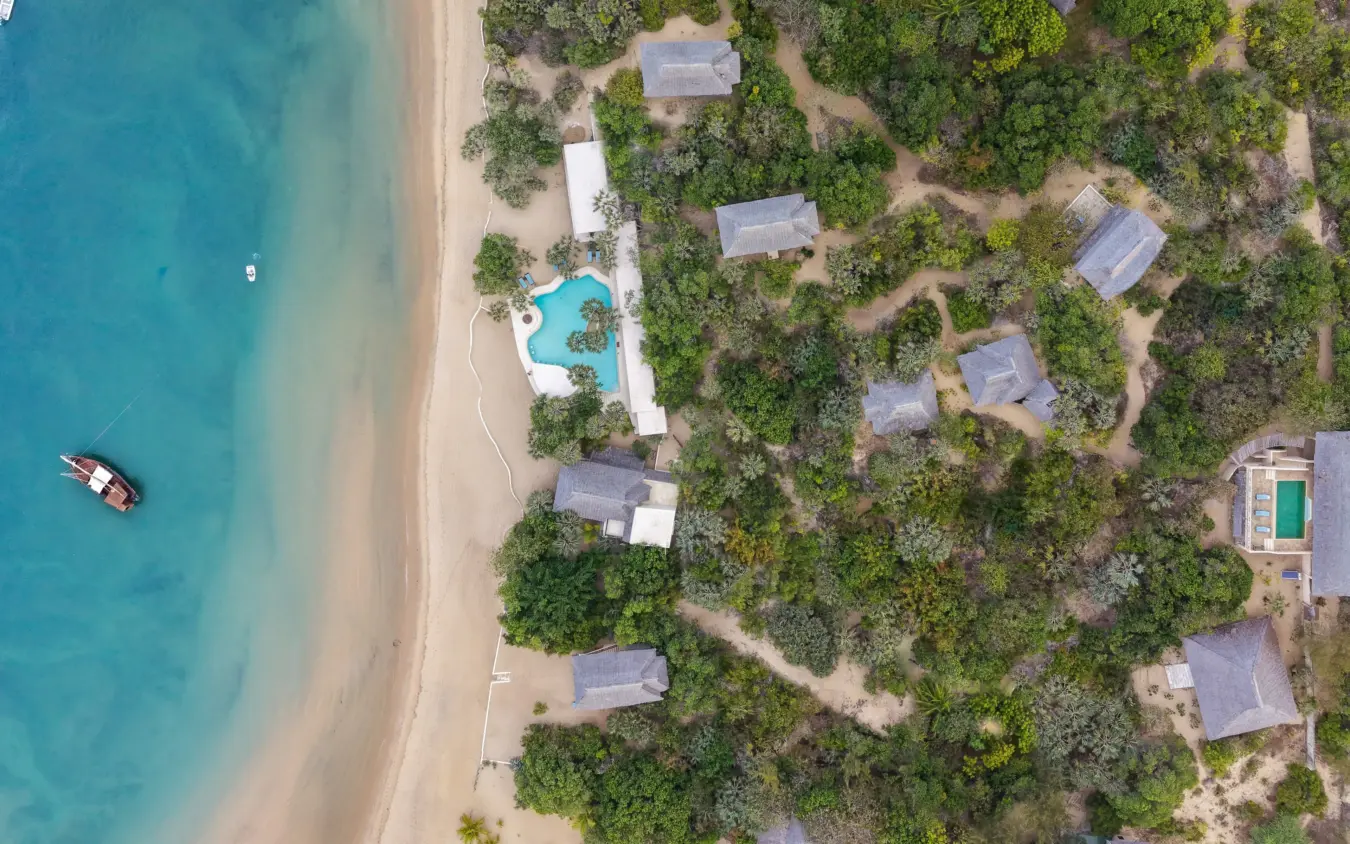
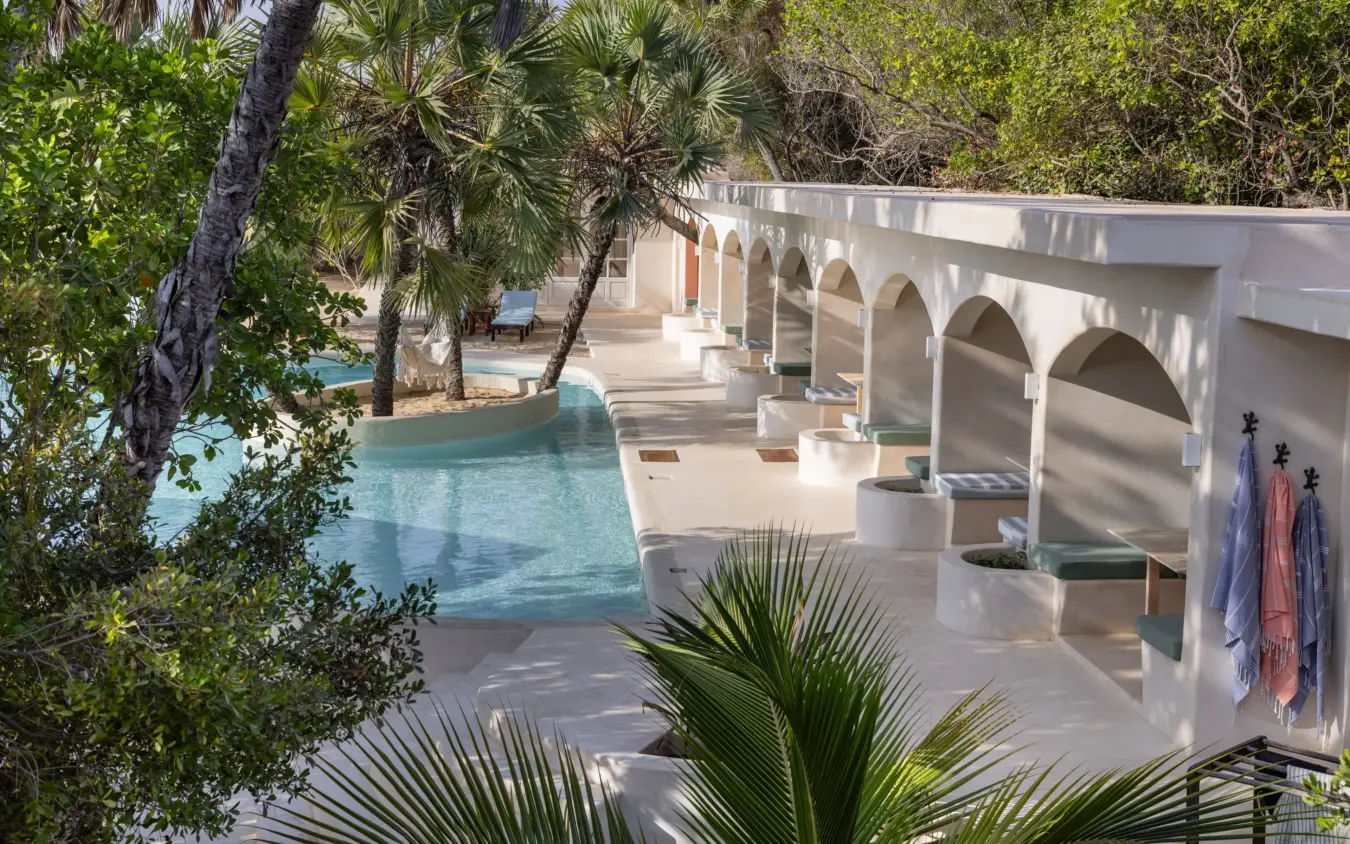
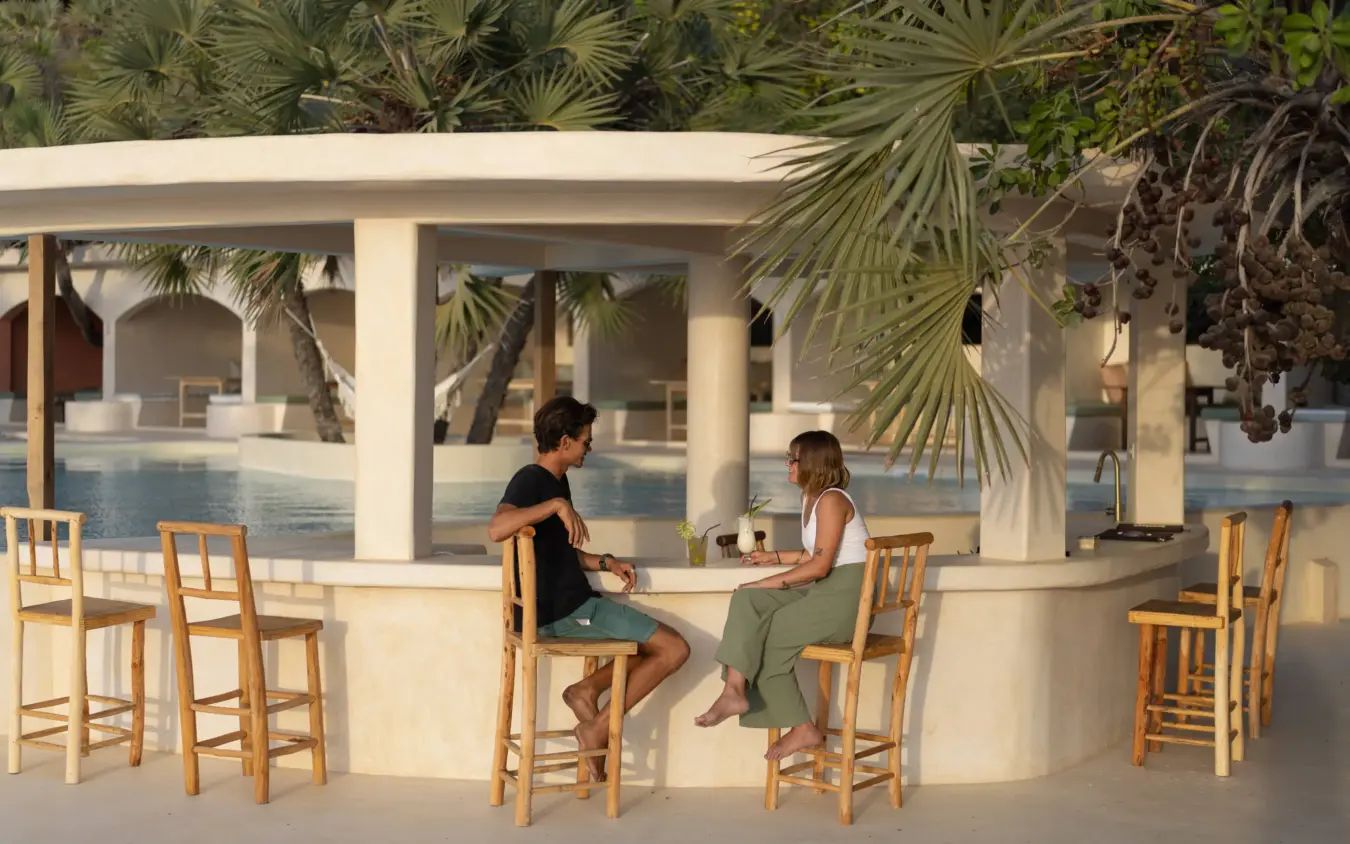
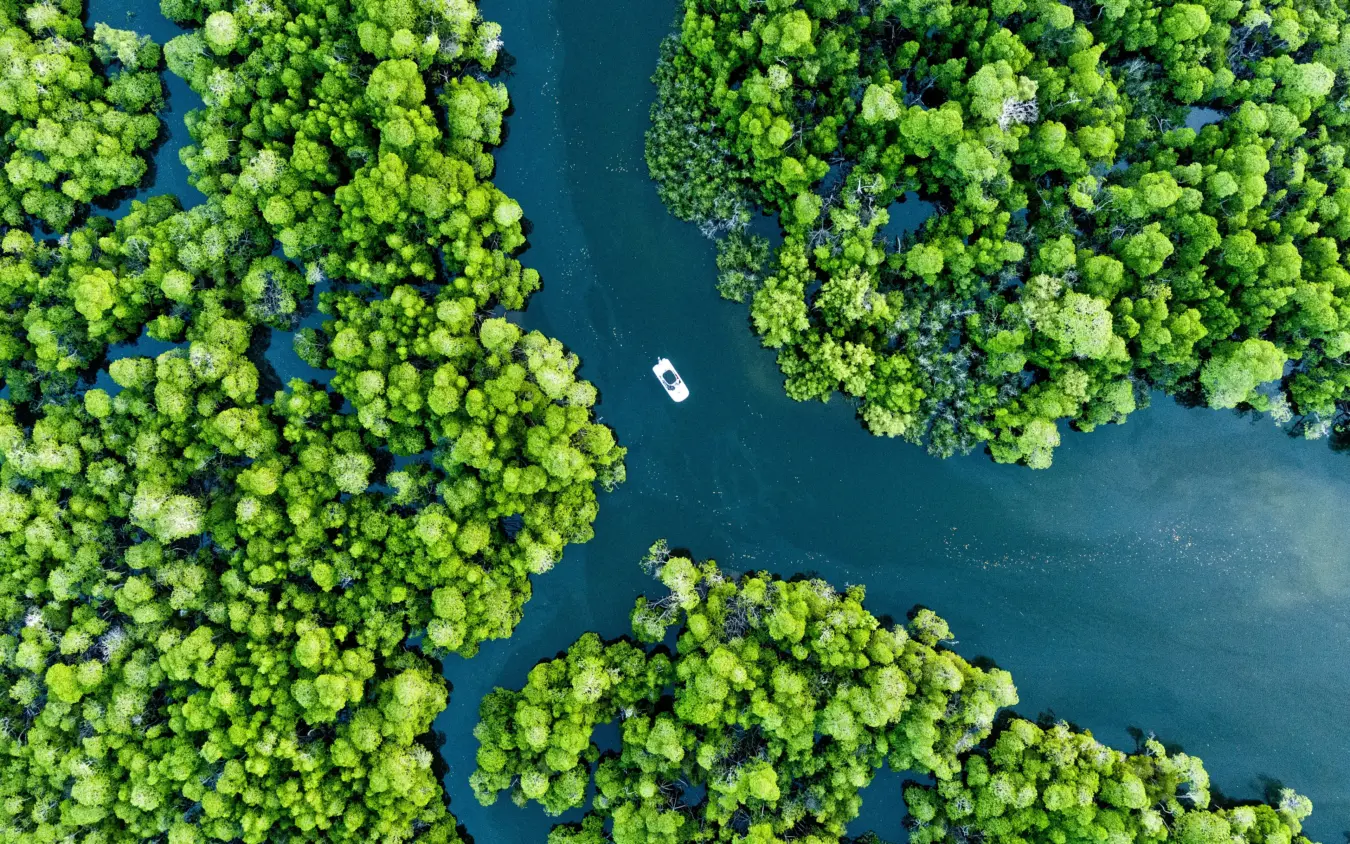
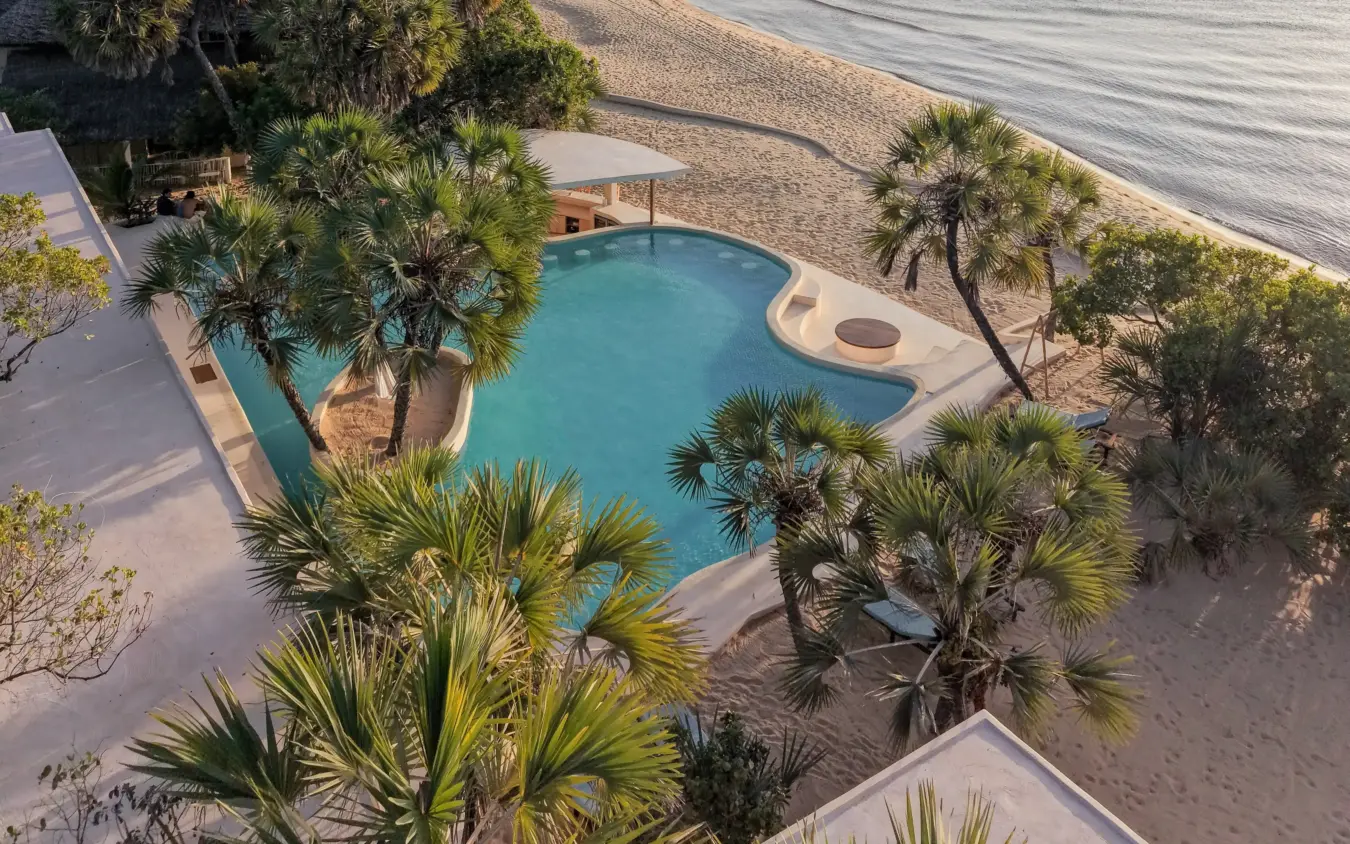
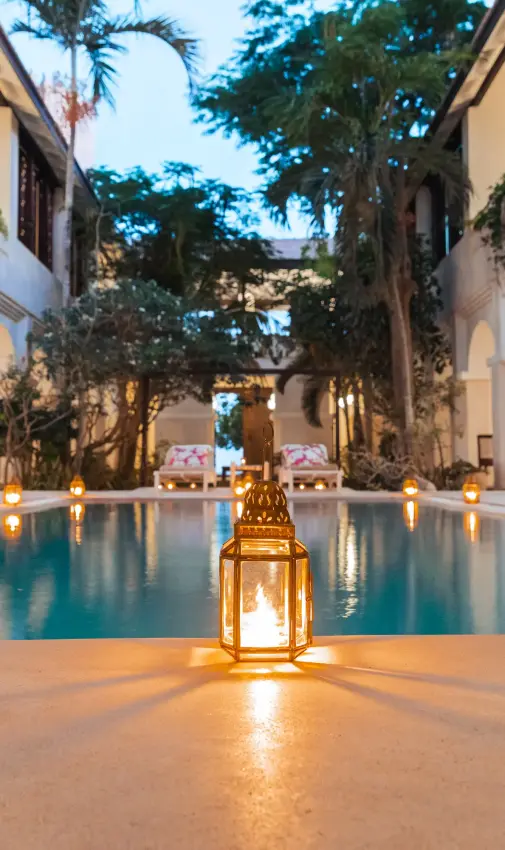
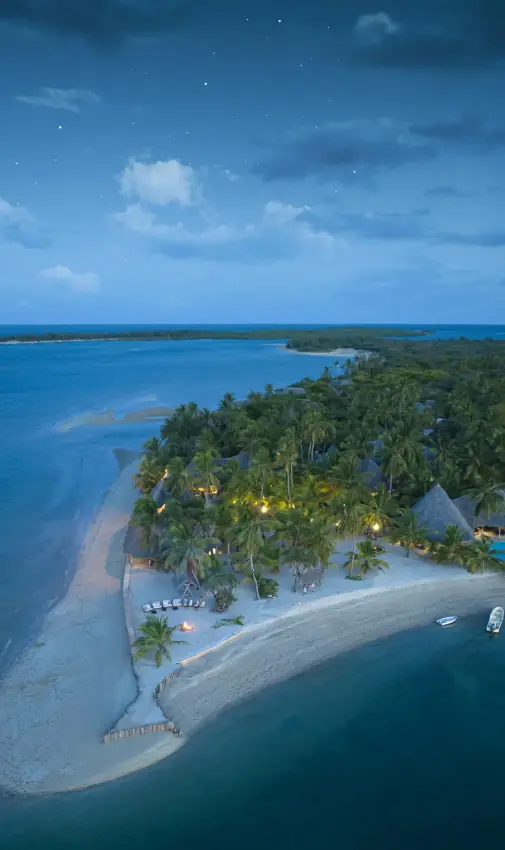
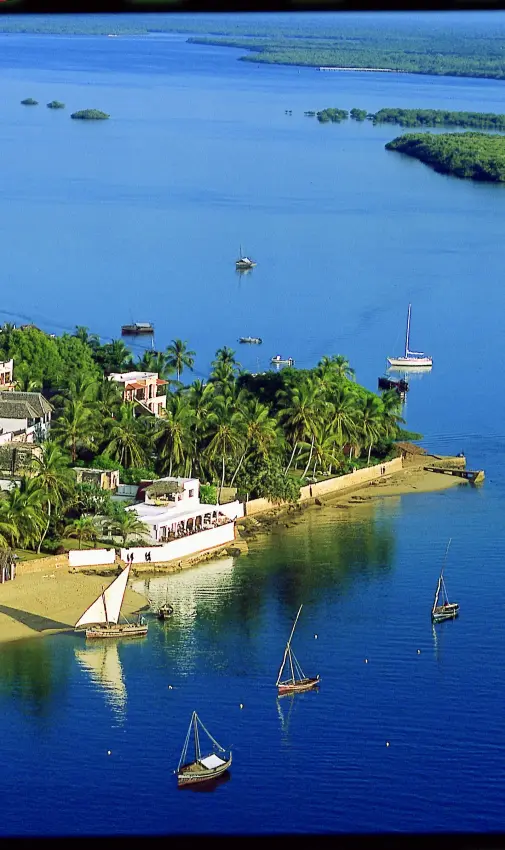
Seven hand-built cabanas are set into the dunes of Kizingoni Beach, on the southwestern shore of Lamu Island in Kenya’s Lamu Archipelago, open to the trade winds and reached by boat through the mangroves from the airstrip on Manda. There are no keys, no televisions and no fixed hour for dinner. The property runs on solar power, and the entire seven-cabana beach can be taken over by one family or group.

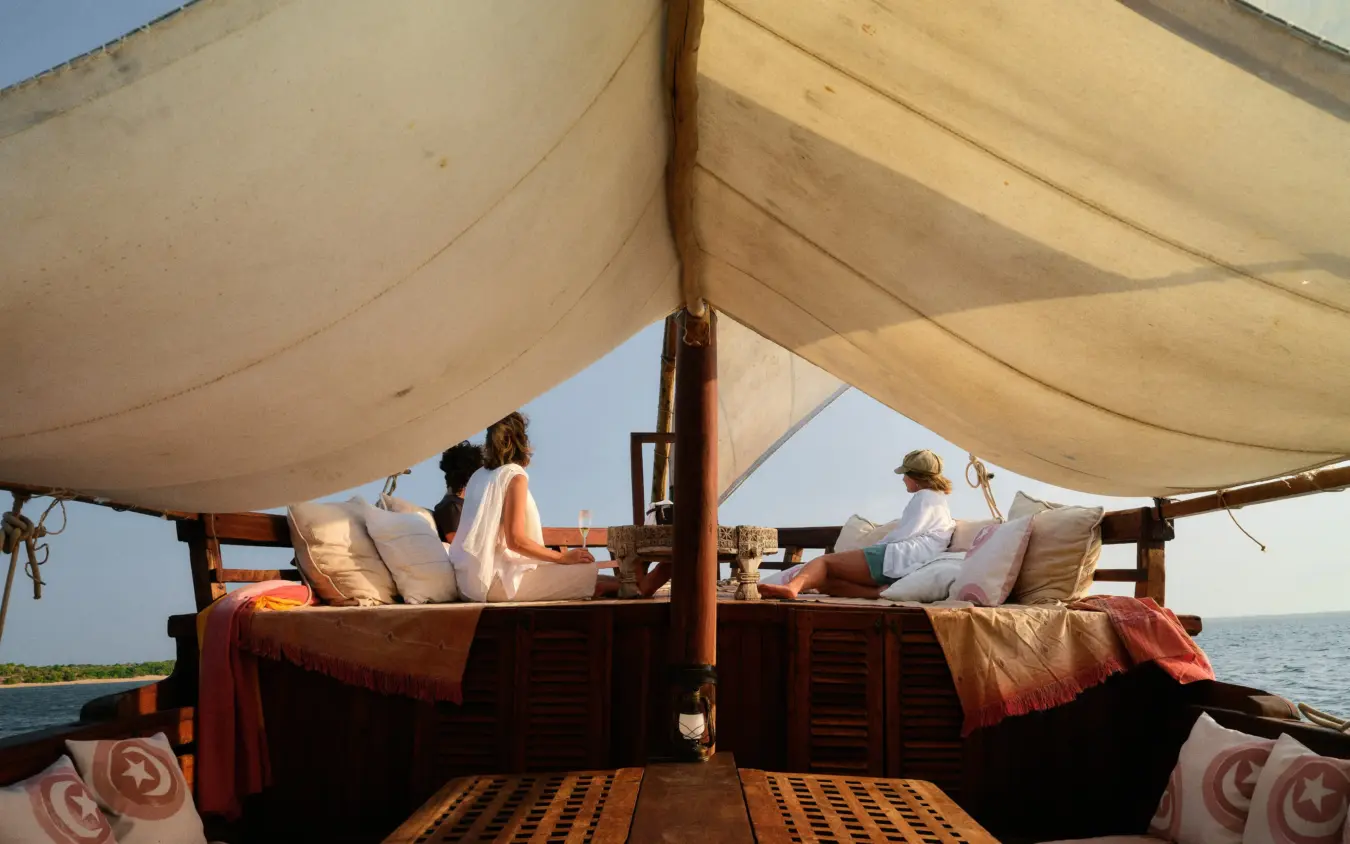
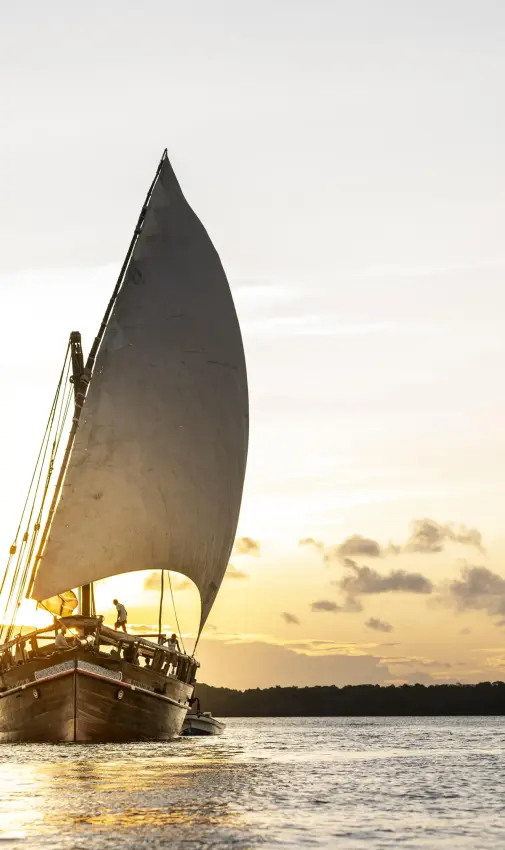
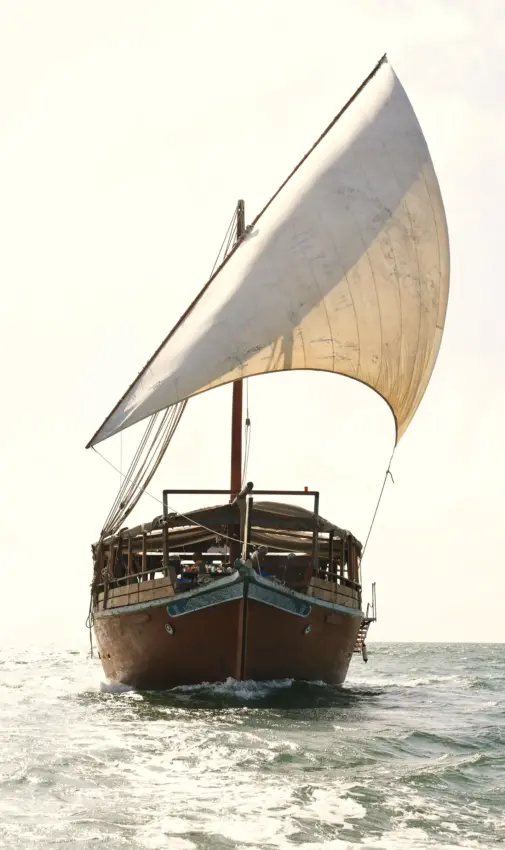
Dhows cross the channel under lateen sails at dusk.

The beach runs empty, walked mostly by fishermen and shorebirds. Dhows cross the channel under lateen sails at dusk. Across the water, a short boat ride away, Lamu Old Town keeps its coral houses and carved doors, its streets served by donkeys and not by cars. Kizingoni itself has no cars and no road.

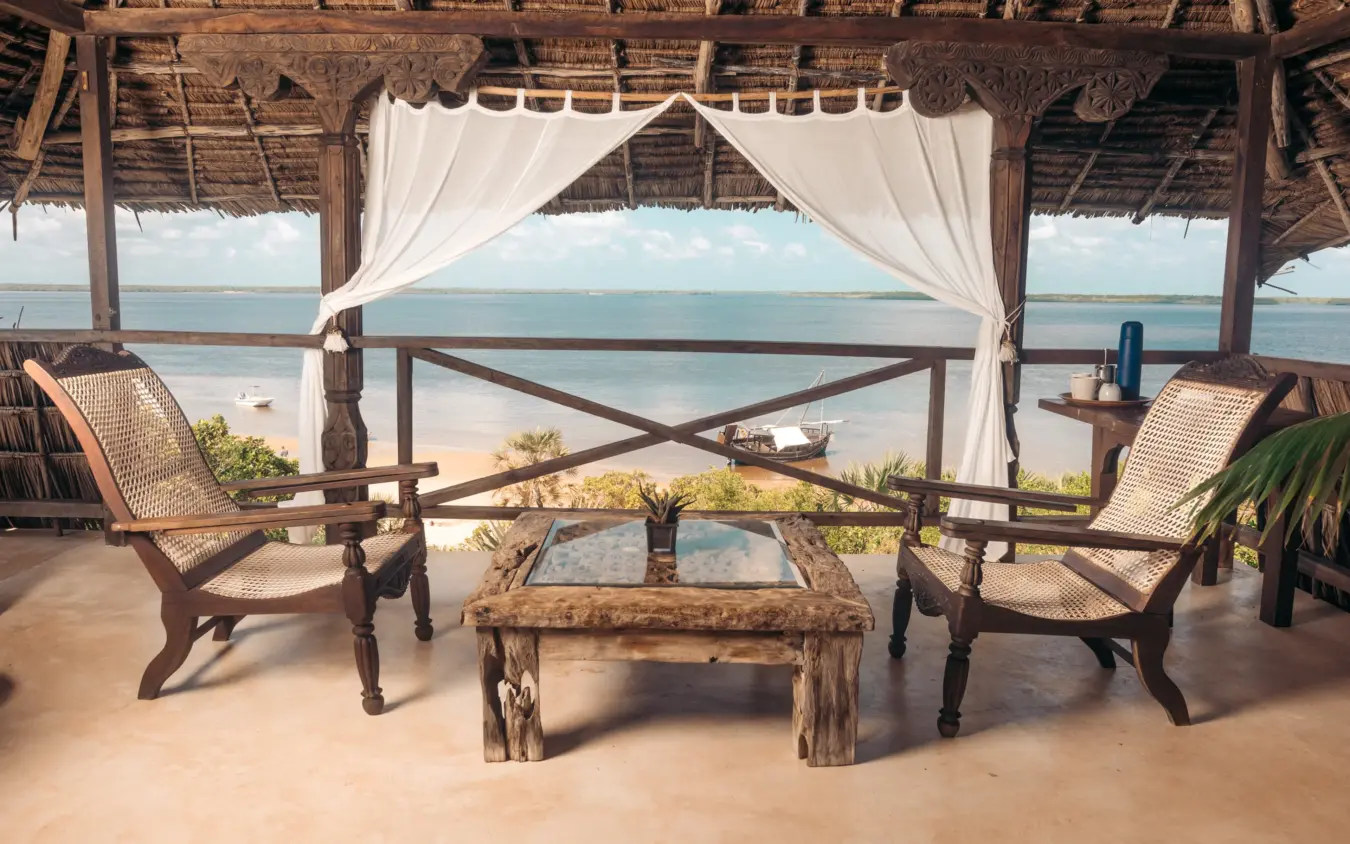
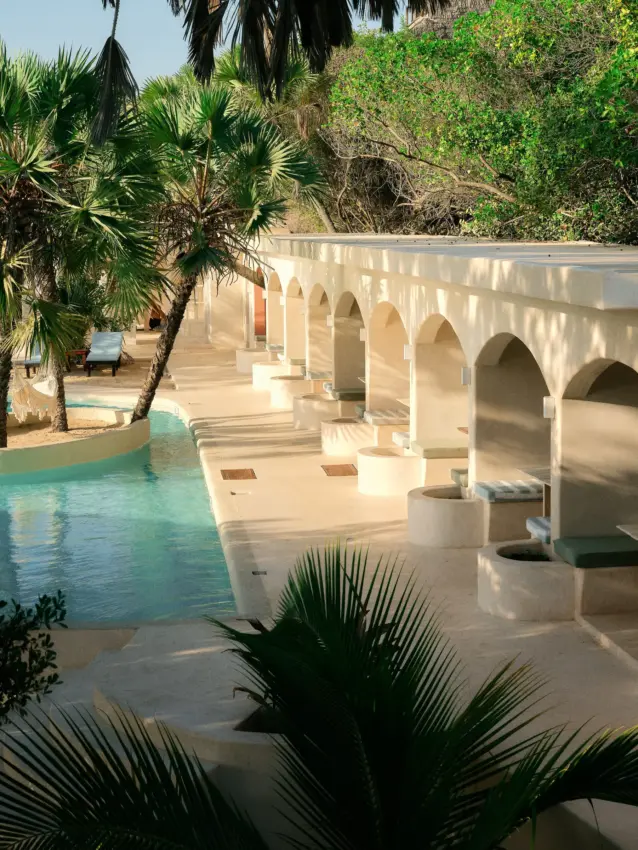
Waterfront lodge terrace with thatched roof overlooking vegetation and lake, The Cabanas, Lamu Archipelago, Kenya
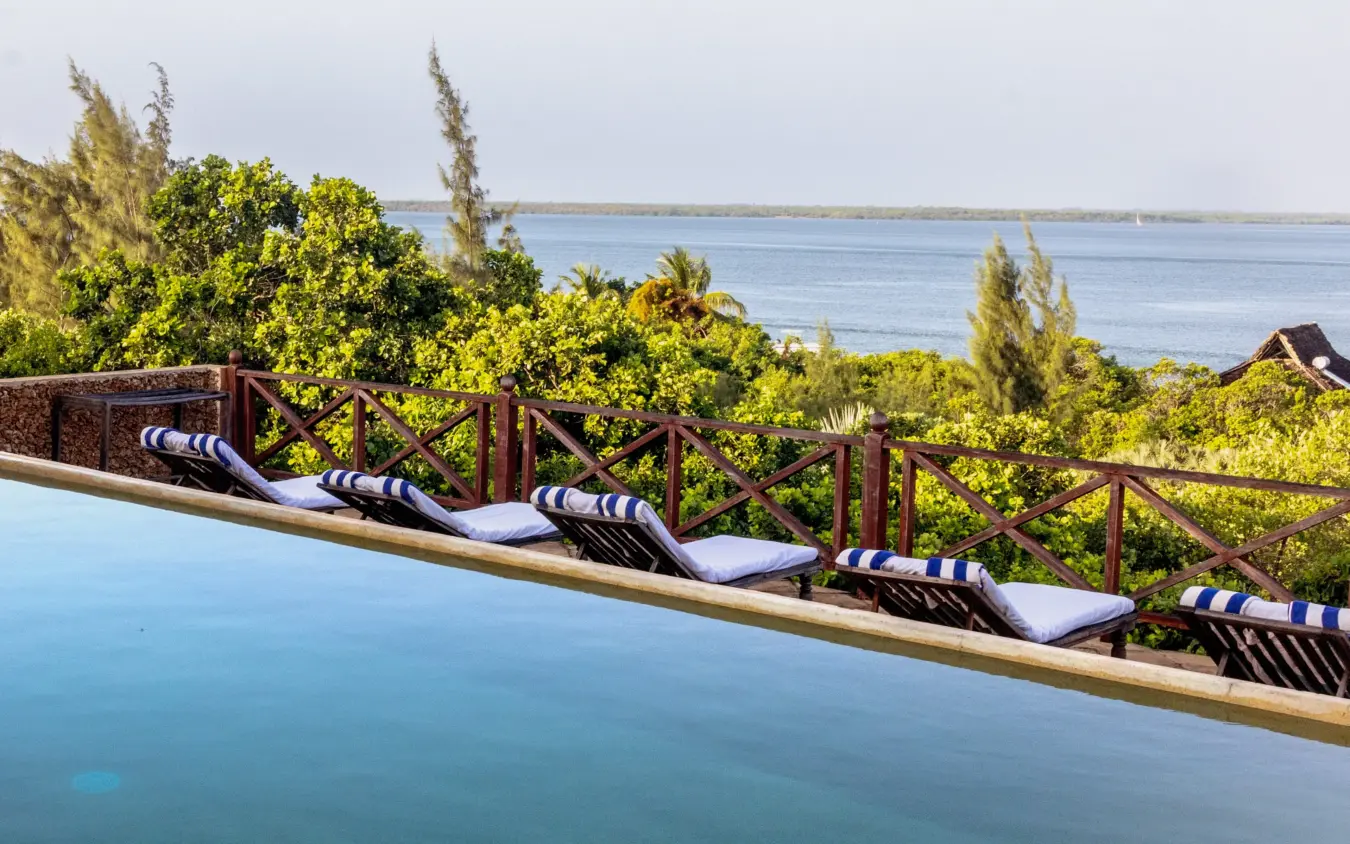
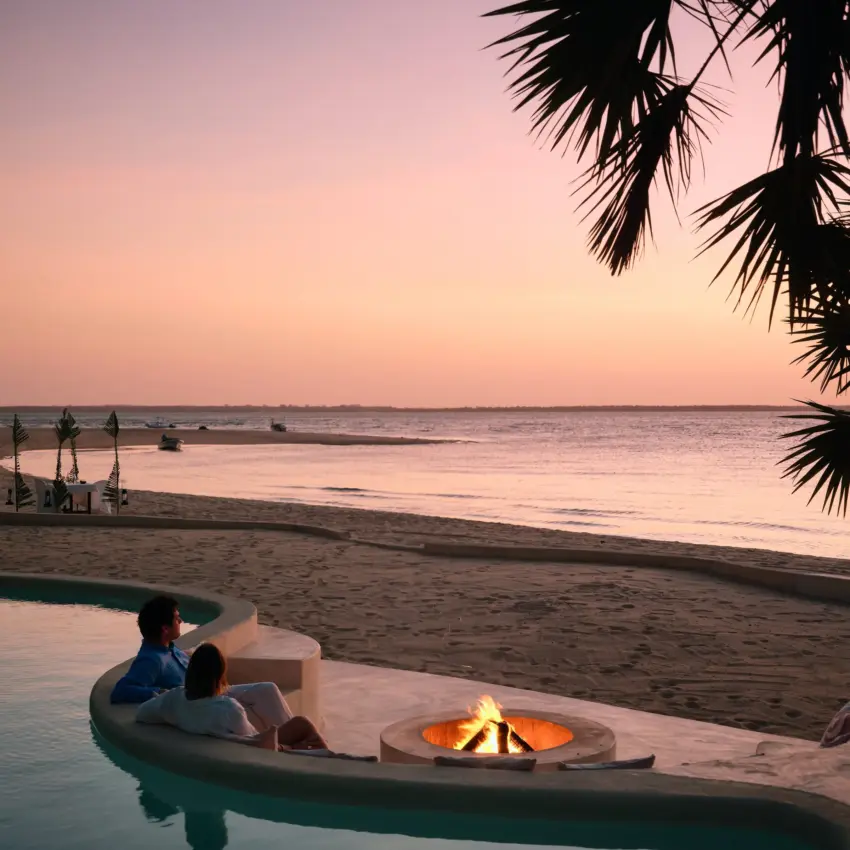
Couple relaxing in infinity pool by firepit overlooking beach at sunset, The Cabanas, Lamu Archipelago, Kenya

Leslie Duckworth found this beach in the late 1990s, after building four houses in Shela village, and bought the surrounding land to keep it from being developed. She spent the first years planting palms and indigenous trees. She lived in a makuti hut on the dune while the cabanas went up around her, and that hut still stands, now the family cabana called ʻOhana.

She spent the first years planting palms and indigenous trees.

Her daughter, Anna Campbell, returned to Lamu in 2017 to care for her mother, and her husband Shawn, a kitesurfer and arborist from Maui, came too. They run The Cabanas now. Shawn engineered the solar and water systems himself. Anna is a neuro-somatic health coach, and the Hawaiian cabana names are hers, chosen so Shawn would feel at home.

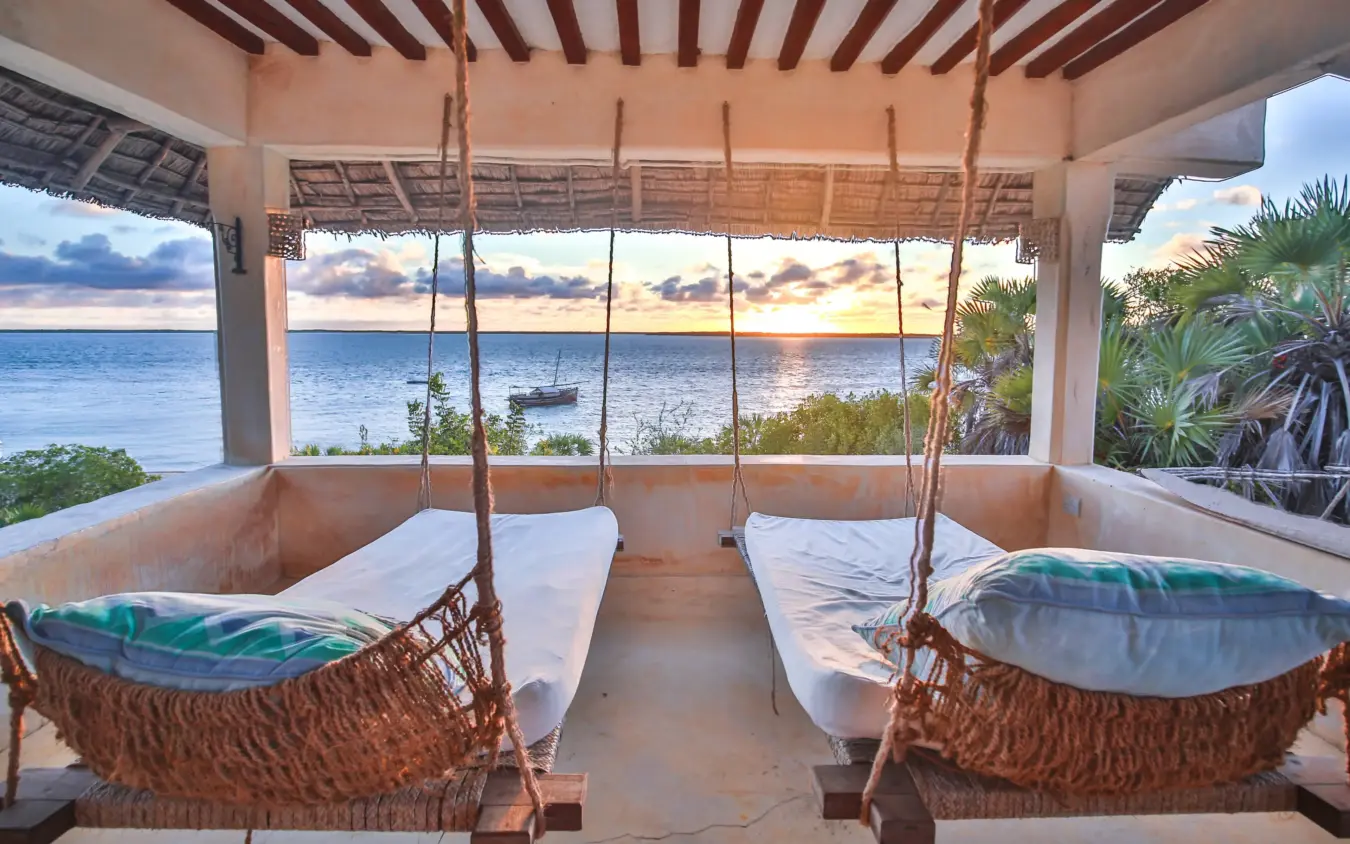
Waterfront bungalow bedroom with ocean view and moored fishing boat, The Cabanas, Lamu Archipelago, Kenya 01

accommodation

Seven Cabanas Hand-Built from Coral and Thatch

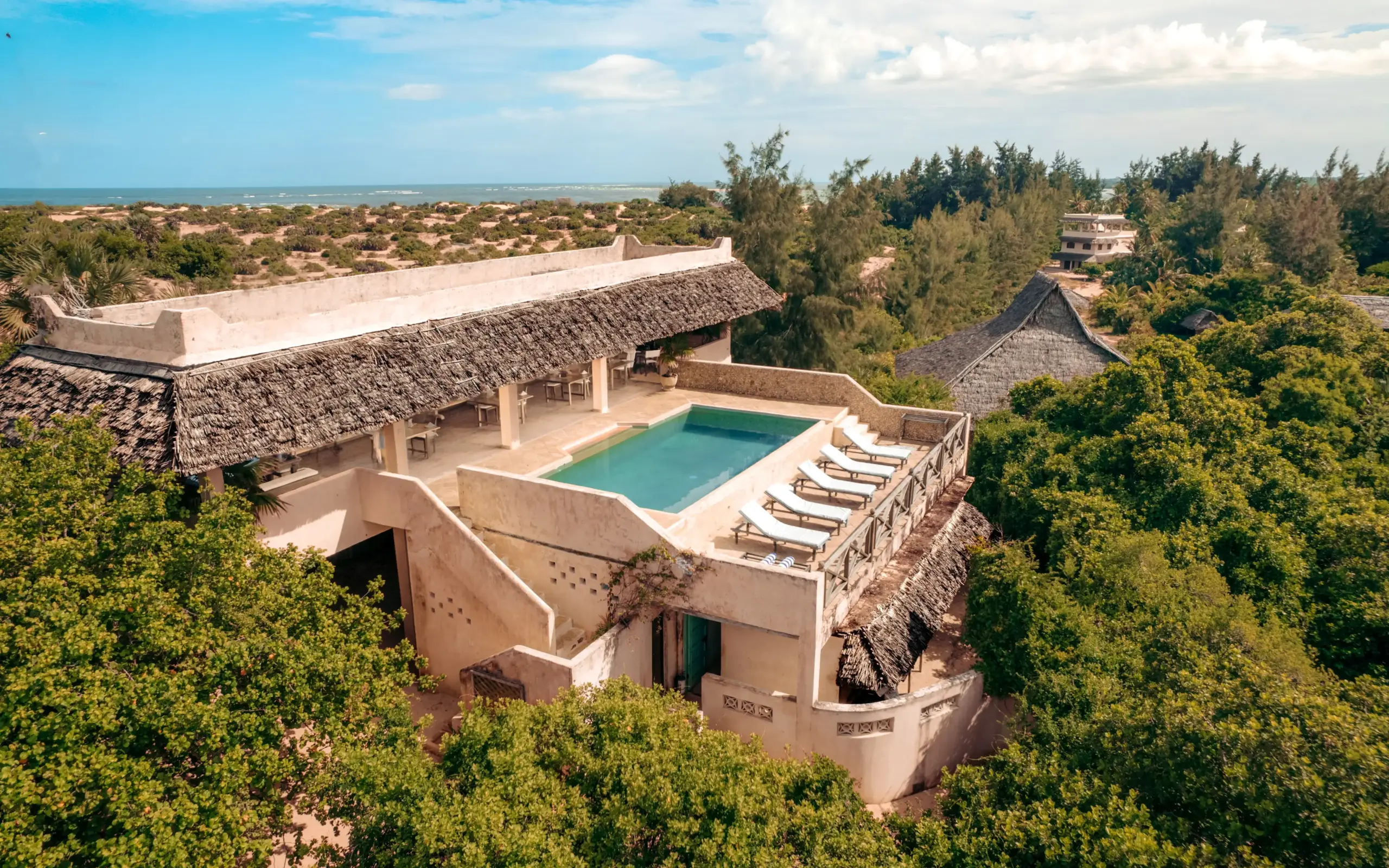
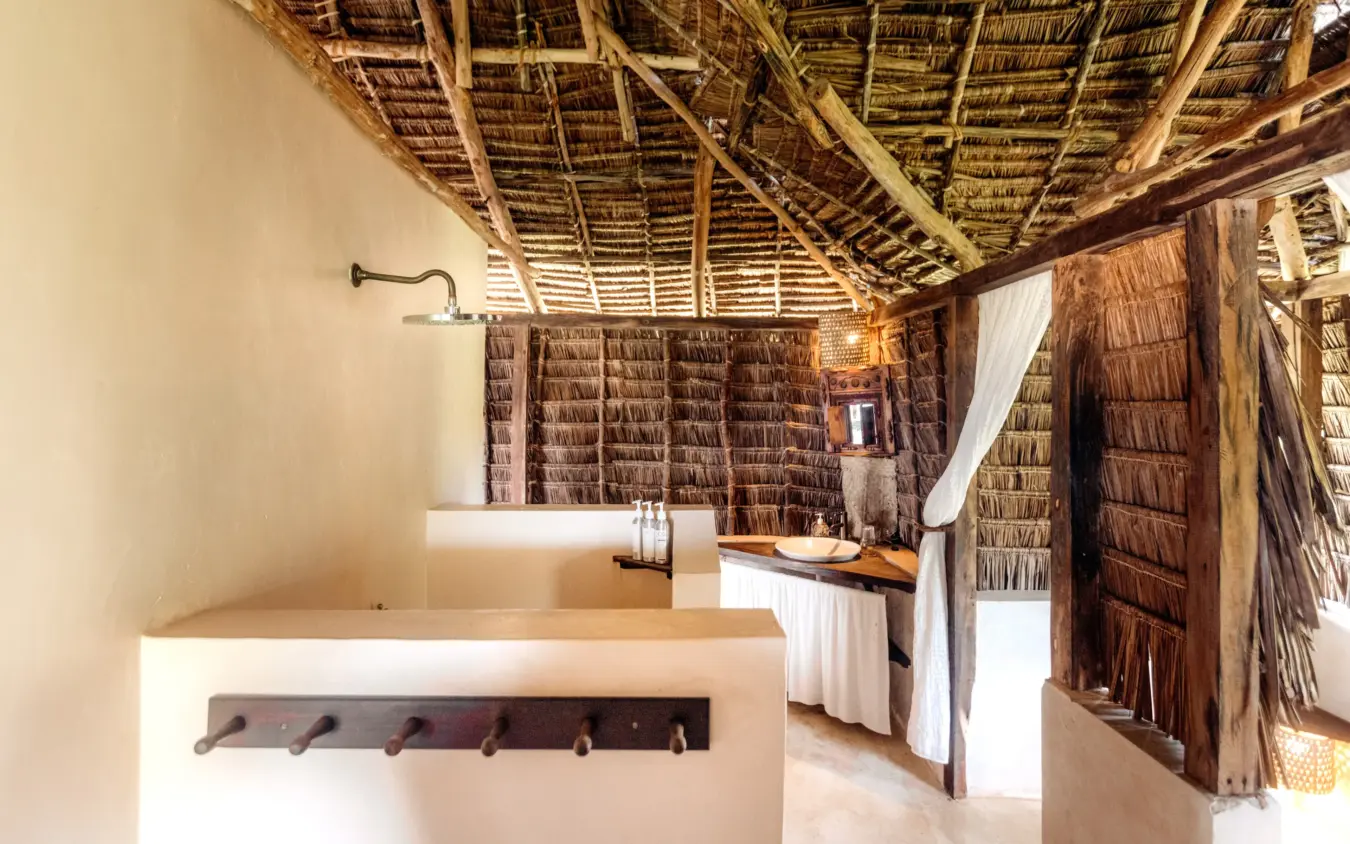
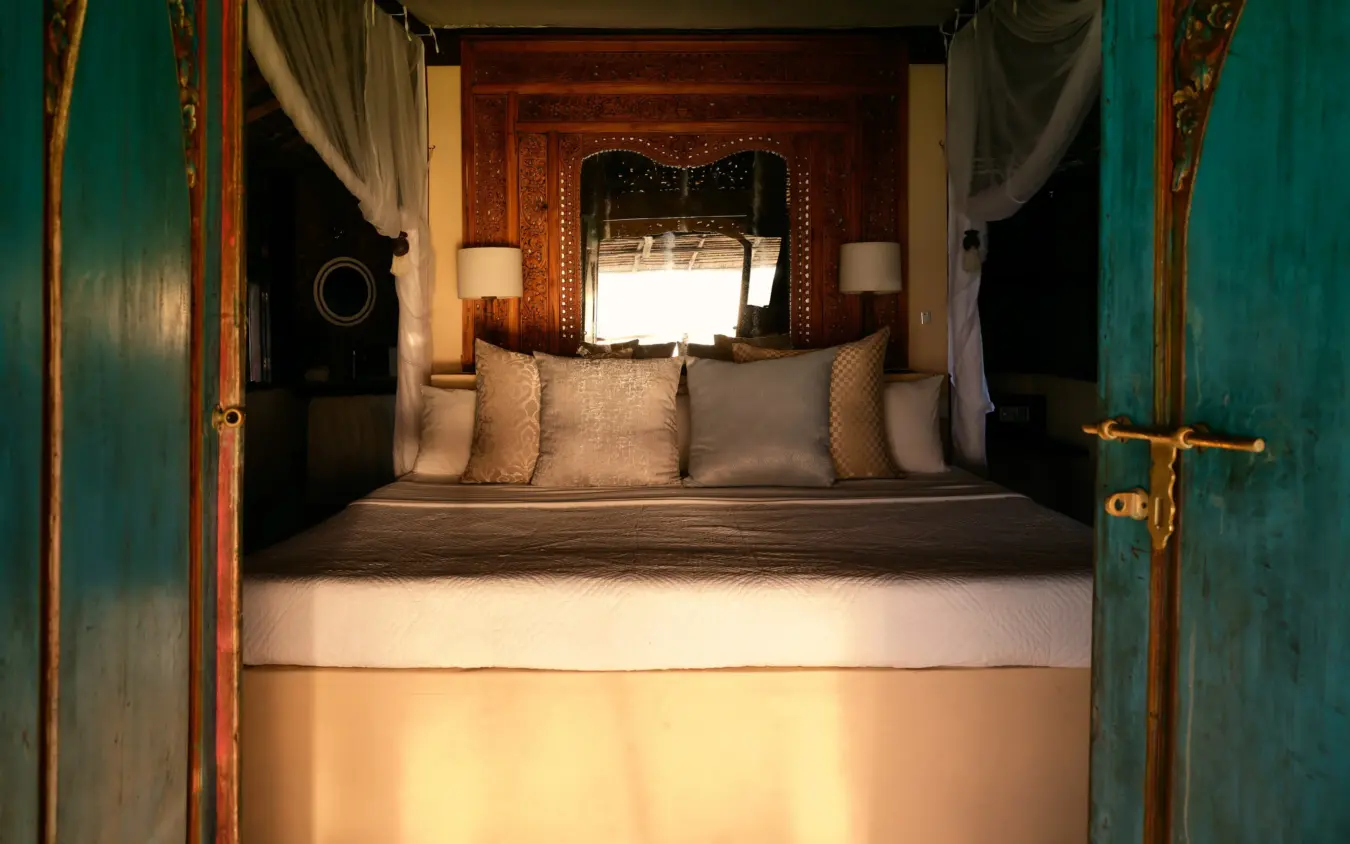
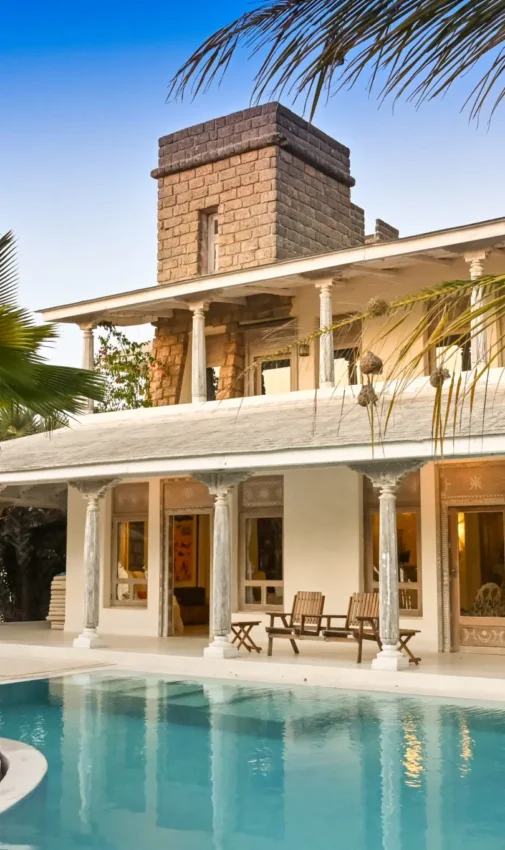
Seven cabanas, hand-built from coral, driftwood and makuti thatch, each named in Hawaiian. Lōkahi and Aloha are doubles for two; Makai, Mālama and ʻOhana sleep up to four across a double and a twin (or double), most with ensuites; Moana is a standard double cabana that sleeps up to two. Kailani, on the highest dune, adds a living room and a private infinity pool. No air conditioning.

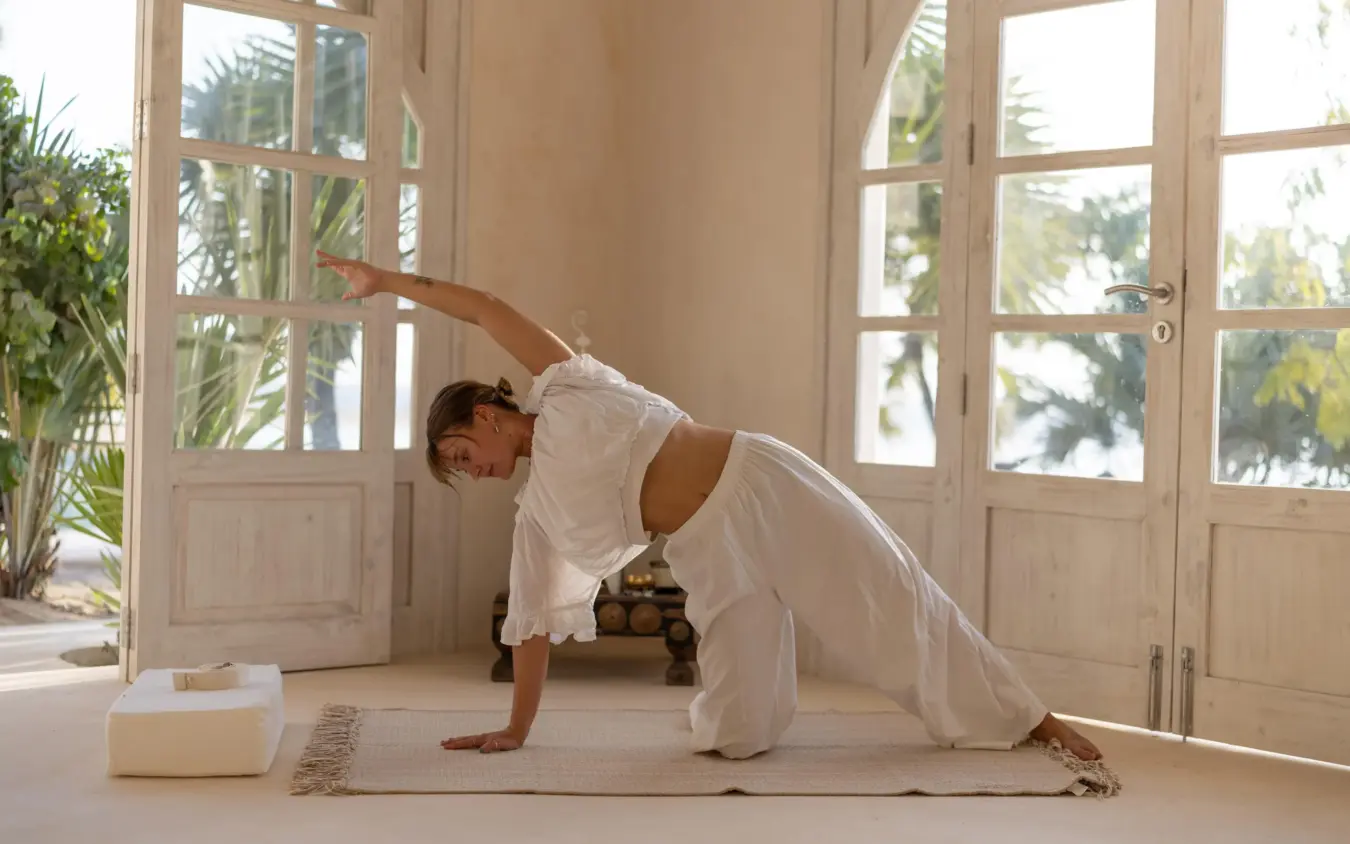
Woman practicing yoga in bright room with garden doors, The Cabanas, Lamu Archipelago, Kenya 02

activities

Sunset Dhow Sails and Phosphorescent Night Swims

Sunset dhow sails, sandbank picnics and dinners on the water; waterskiing, wakeboarding and paddleboarding in the sheltered channel; night swims in phosphorescent water. Yoga, breathwork, massage and reflexology in the Zen Den studio. Boat trips to Lamu Old Town and to the dhow builders at Matondoni.

Aerial view of motorboat navigating through forested waterway, The Cabanas, Lamu Archipelago, Kenya 03

conservation

Local Fundis and Boat Builders on Kizingoni Beach

The beach runs on solar power, engineered on site. Driftwood used for doors, daybeds and lamps arrives on the king tides rather than being cut. Water is drawn naturally filtered through the dunes, with wells rested in rotation and greywater reused in the gardens. Local fundis, boat builders and gardeners return to the property year after year.

ready to get started?

Get in touch and let’s start the conversation. An initial consultation helps us understand what you’re looking for, whether that’s specific experiences, luxury touches, or marking a special occasion, and from there we’ll guide you through what’s possible so you can decide if we’re the right fit.
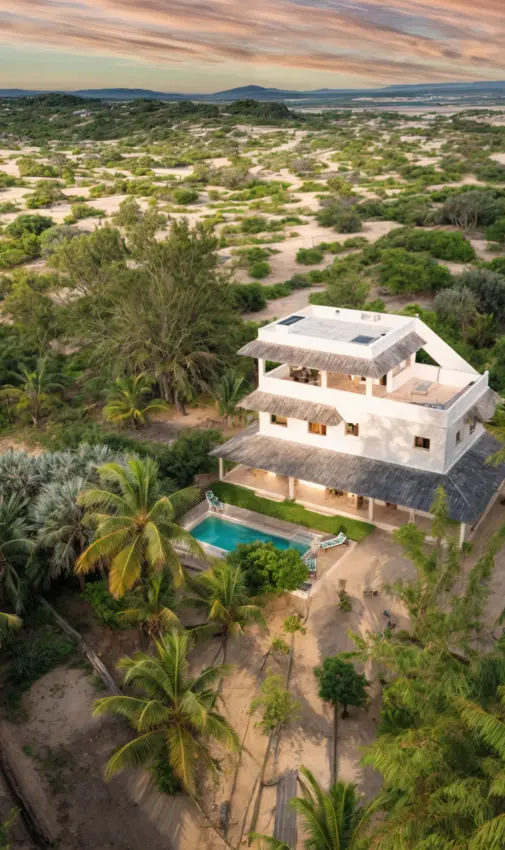
Alternative accommodation in lamu archipelago

frequently asked questions

You fly to Manda, the airport that serves Lamu, which sits on Manda Island across the channel. Scheduled services from Nairobi's Wilson airport take roughly an hour and a half to two hours depending on the routing, and there are coastal flights from Mombasa of around forty to forty five minutes.

From the airstrip it is a boat to Kizingoni Beach, usually twenty to thirty minutes, arranged in advance so nobody is changing boats in Lamu town with luggage.

There are no roads between the places visitors use on Lamu. Transport is by boat, on foot and by donkey, and boat times move with the tide and the wind, so we build slack into the day you fly out rather than cutting it fine.

Lamu is a working Swahili island and a predominantly Muslim one, not a resort strip, and that is most of its character.

Swimwear is fine on the beach in front of the cabanas and around the house, but not for walking through Shela village, the jetties, the shops or Lamu town, where loose clothing covering shoulders and knees is what local people ask for. A sarong or light cover up does the job walking between the two.

Alcohol stays within the house or a licensed hotel rather than being carried openly in public. Bring sandals that can get wet, a torch for sandy paths after dark, and sun protection, because there is very little shade between the house and the water.

Yes. The coast carries the same rating as the rest of the country: TravelHealthPro, the UK's official travel health service, rates Kenya high risk and recommends antimalarial tablets for it, setting apart only central Nairobi and the highlands above 2,500 metres, and the American CDC records transmission in all areas below that altitude, which includes the whole coast.
Lamu is at sea level, so none of the altitude exceptions apply here.
We do not make medical recommendations. We are travel planners, not doctors. Which tablets are right for you, whether they suit your own health or anyone else's in the party, and what is appropriate for a child, is a conversation between you and your doctor or a travel clinic. On the practical side, an open house on the shore means covering up at dusk and keeping repellent to hand.

January and February are the most reliable beach months, hot and generally dry under the Kaskazi, the north easterly wind that runs from about December to March. August to October is the other good window, warm and drier but breezier under the Kusi, the south easterly, which can make the sea choppy and is better for sailing than for flat water.

The long rains fall from about April into June or early July, with May normally the wettest month, and that is the least dependable stretch for boats and beach days. Short rains around November are usually lighter here than on the rest of the coast. Tell us what the week is for, swimming, sailing or simply not moving, and we will point you at the right months.

rated five stars by our clients

other areas in kenya

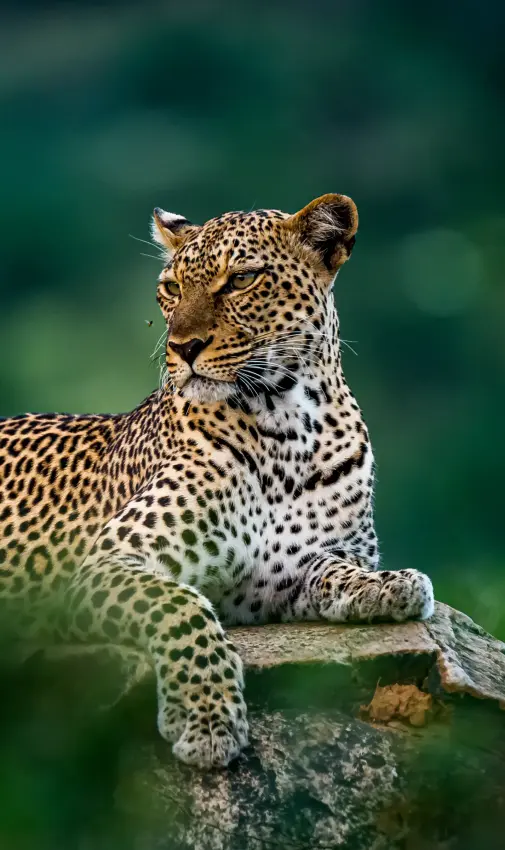
Leopard resting on fallen log in natural setting 01

Maasai Mara

Local guides with poles crossing shallow forest river, Northern Kenya, Kenya 02

Northern Kenya

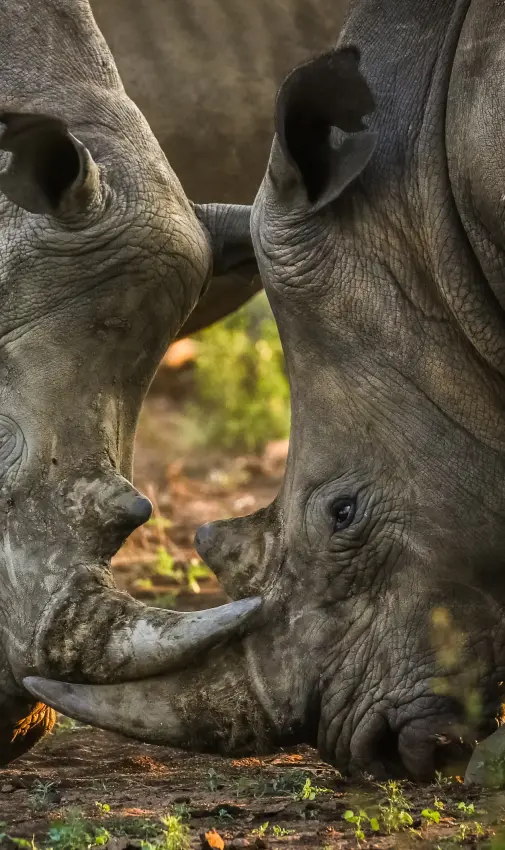
Two rhinos touching horns in natural habitat 03

Laikipia Highlands

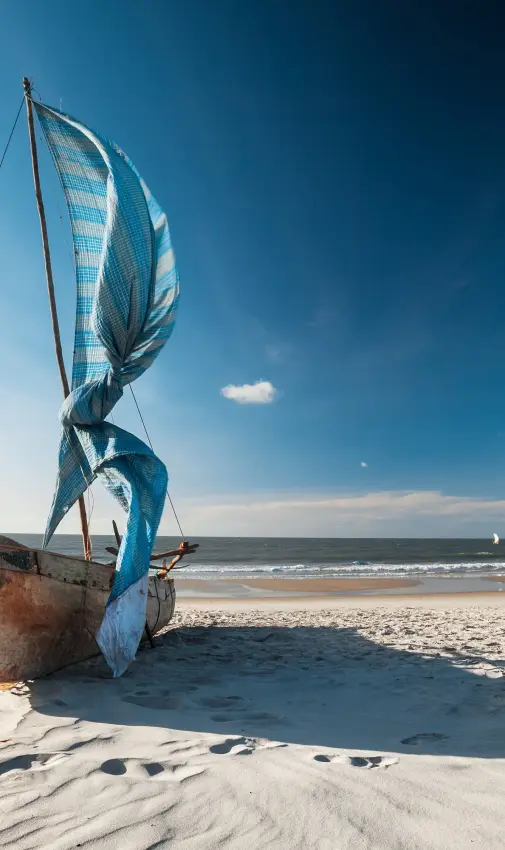
Traditional fishing boat with blue sail on sandy beach 04

Kilifi

Flock of flamingos wading in shallow pink-tinted water, Rift Valley Lakes, Kenya 05

Rift Valley Lakes

Snow-capped Mount Kilimanjaro rising above acacia trees and Tanzania savanna 06

Amboseli and Chyulu Hills

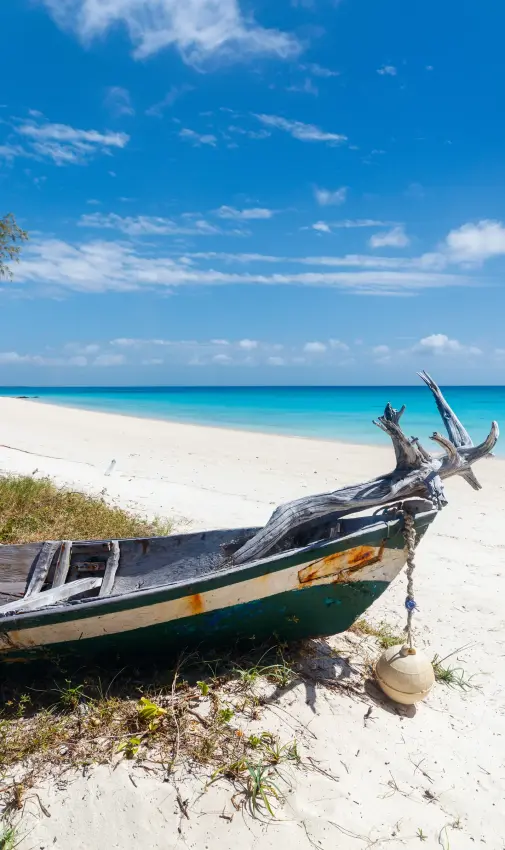
Wooden fishing boat beached on white sand tropical shore 07

Diani Beach

Man in traditional red garment driving open safari vehicle, Samburu Reserve, Kenya 08

Samburu Reserve

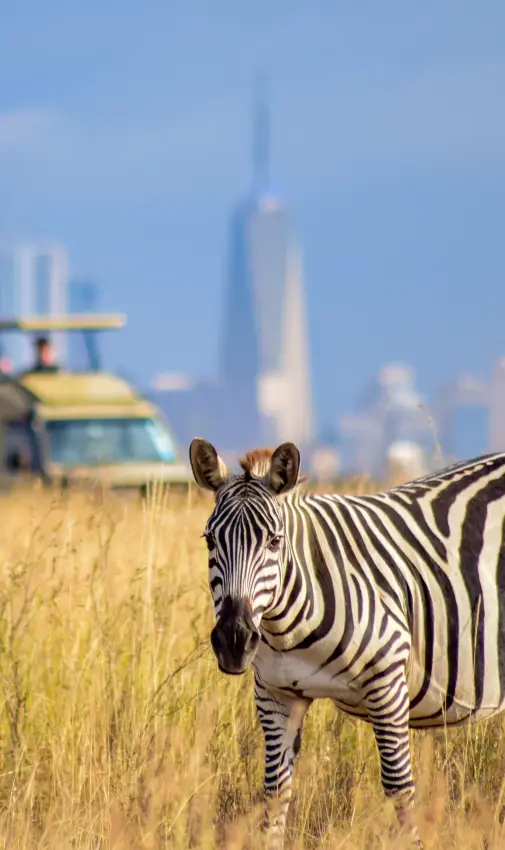
Zebras in savanna grassland with safari vehicle and city skyline 09

Nairobi

African elephants with calf walking through grassland at sunset 10

Tsavo

Planning a journey together

our approach

remote, exclusive
& personal

Every journey starts with a conversation. We take the time to understand your vision before we start planning.

Whether by phone or in person, we work with you directly to shape something that is considered, personal, and expertly delivered.

get in touch
destinations ideas & inspiration our process about us contact us