On the Kili for All day, guests trade the plains for the Shira Plateau, inside Kilimanjaro National Park, walking at 3,500 metres through high moorland where giant heather takes the place of acacia. By evening the same mountain is back on the horizon, seen from the tent veranda. Lower down, drives on the Enduimet rangelands can stop for a bush breakfast, a table laid in open grass with Kilimanjaro behind it.
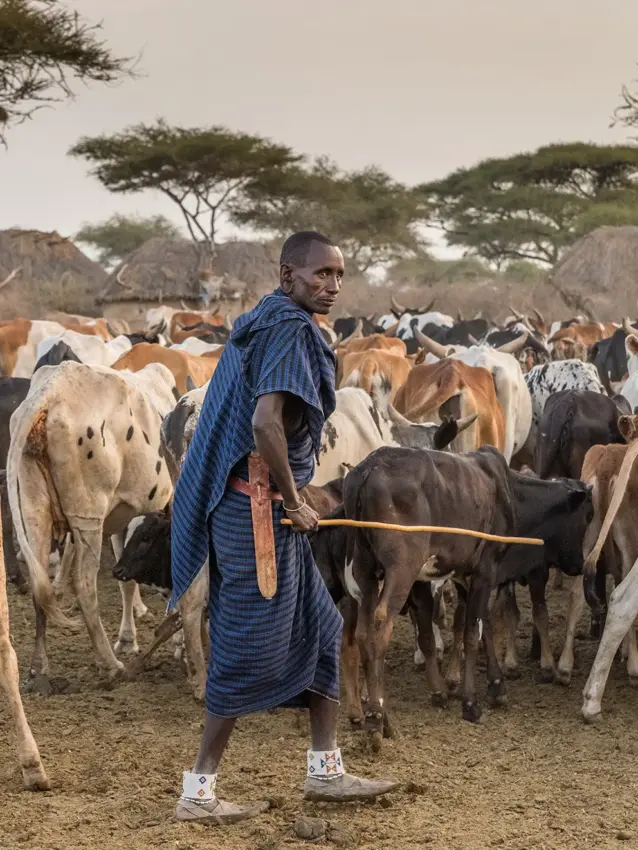
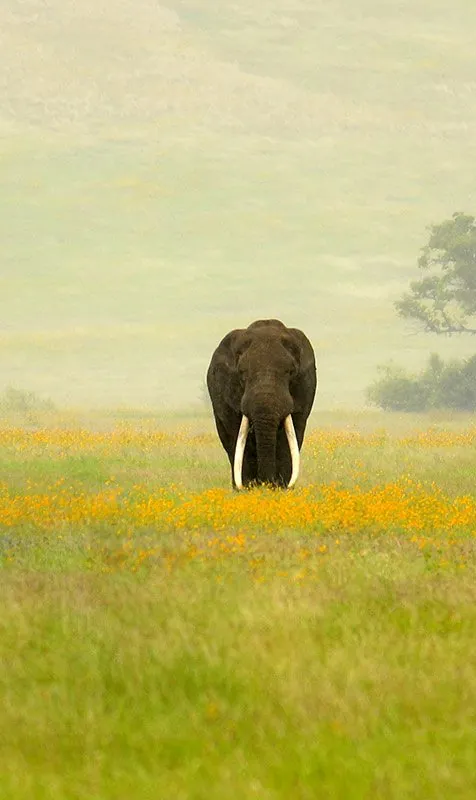
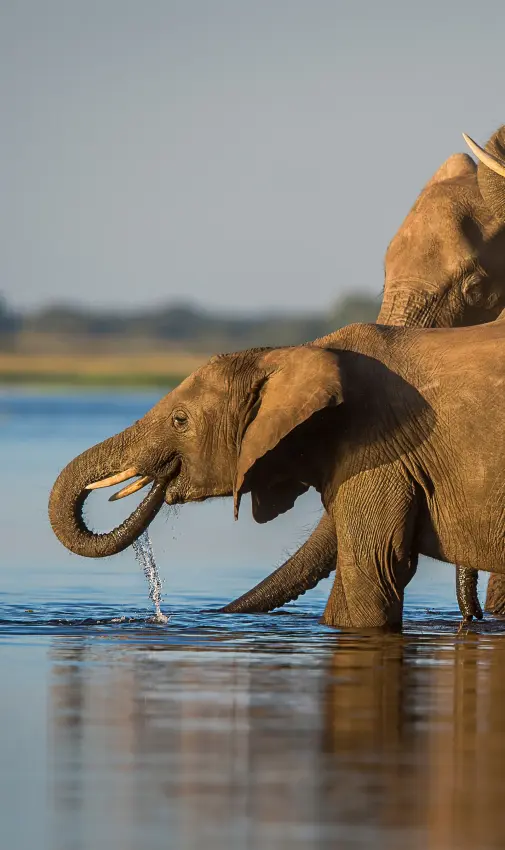
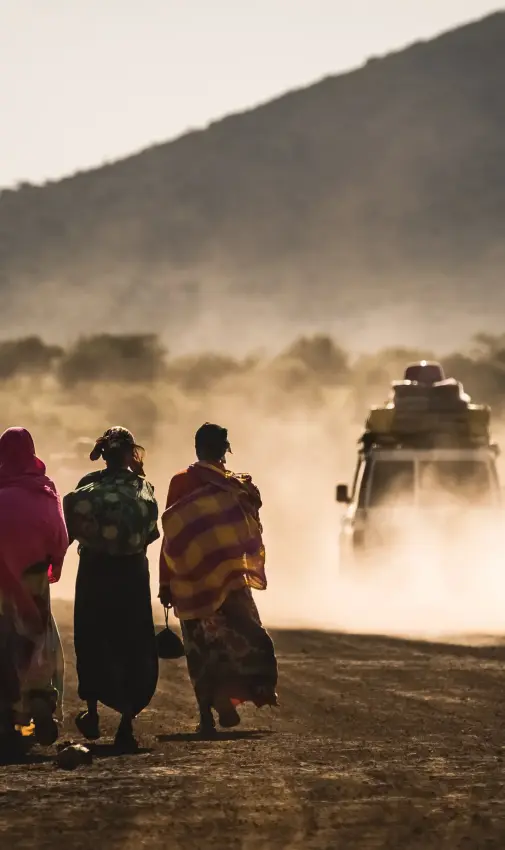
Most of the team are Maasai, and the camp runs on solar power alone. With no generator running, the nights carry the sound of elephants out on the plains. Closer in, wind moves through the grass and crickets start up around the tents. The fire is lit once Kilimanjaro has turned pink in the last light. Meals come from the Gabriel family’s gardens and from local smallholders, all of it organic. They are served on the dining terrace, with the mountain in front of the table.
With no generator running, the nights carry the sound of elephants out on the plains.
Shu’mata’s canvas tents follow the classic East African pattern. Inside, they are furnished in the spirit of an earlier safari age and hung with colourful Maasai art, and the en-suite bathrooms keep their showers open to the sky. Each tent takes two adults and two children sharing, so a family stays together under one roof of canvas rather than across separate rooms. Out front, a private veranda looks across the grass plains to Kilimanjaro. After dark, on clear nights, the Milky Way arcs over the ridge, and the veranda steps are the place to watch it.
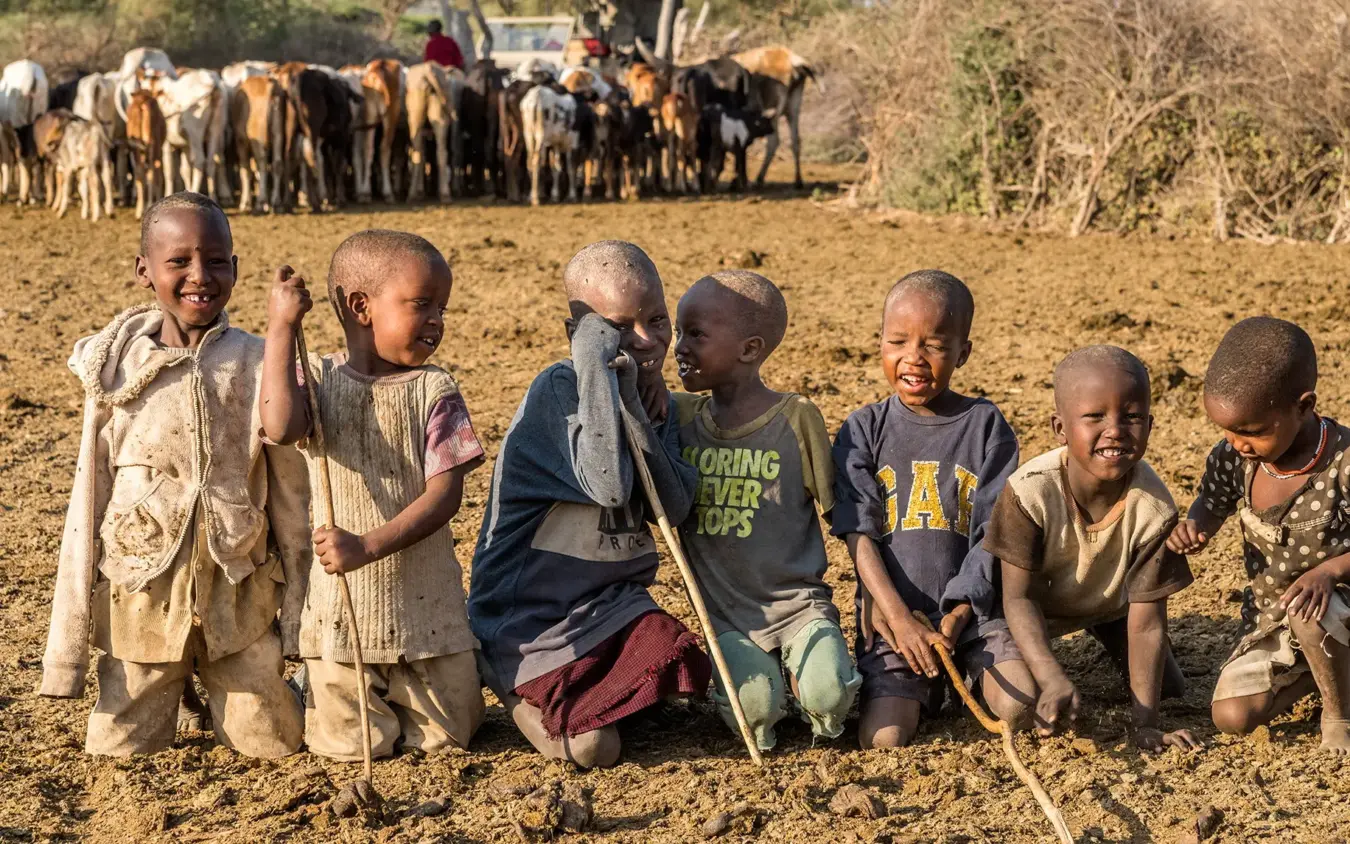
Kilimanjaro International is around two hours away by road, and the West Kilimanjaro airstrip about 45 minutes. For guests coming from Hatari Lodge, an hour and a half’s drive away, Shu’mata is the northern end of a longer journey the family runs, six nights travelling the corridor between Meru and Kilimanjaro on foot and in open vehicles. The grazing land around camp remains with the Maasai villages that govern the Enduimet Wildlife Management Area, and cattle and elephants use the same ground.