Villa

Okonjima Private Bush Suite

A two-bedroom thatched house facing a waterhole in Namibia’s Okonjima Nature Reserve, where collared leopards are tracked by radio.

Country: Namibia
Location: Okonjima Nature Reserve
Number of rooms: 1

Following a leopard's radio signal

Okonjima Private Bush Suite is a whole thatched house in central Namibia’s Okonjima Nature Reserve, taken by one party of up to four with its own guide and vehicle. The reserve has no lions or elephants. Leopards here are found by following a radio signal. Several of them wear collars fitted by AfriCat researchers, and the pulse leads the guide to the cat.

Leopards here are found by following a radio signal.

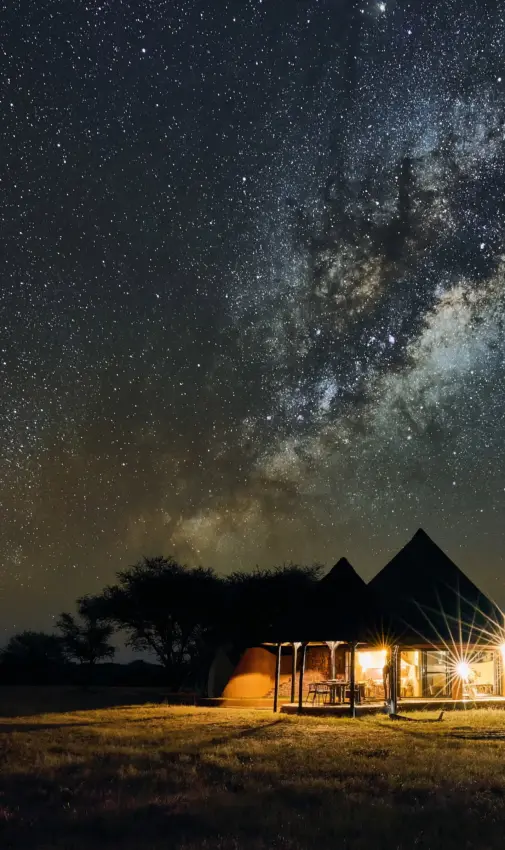
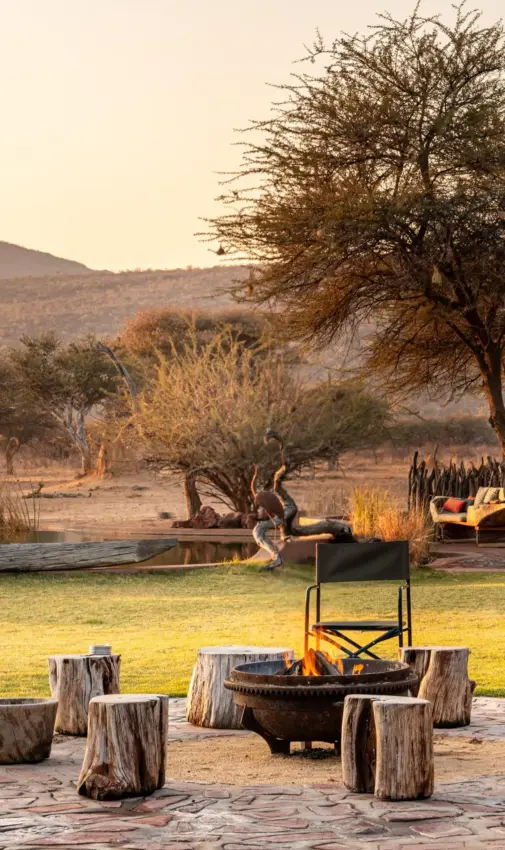
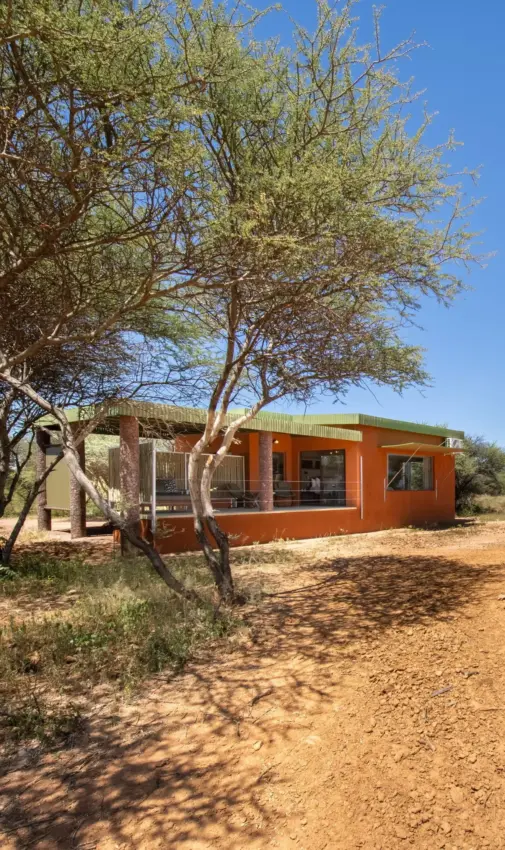
One double-volume thatched roof spans the house and faces a natural waterhole in the Okonjima valley, below the sandstone Omboroko Mountains, with an en-suite bedroom at either end. Between the bedrooms, a wood-burning fireplace joins the lounge and dining areas beside the chef’s kitchen, and the house has its own 13-metre pool. A private chef cooks to the guests’ timing, and a host runs the house.

Okonjima Private Bush Suite, Okonjima Nature Reserve, Namibia

Okonjima means “place of the baboons”. Val Hanssen bought it in 1970 and ran Brahman cattle on the land, and in 1986 the family began taking guests. Leopards took the calves, and they were shot for it. Killing them never cut the losses, but holding pens for the young calves did, and Val’s son Wayne turned from hunting leopards to studying them. In 1993 the family gave up cattle altogether and turned the land over to guests and carnivore research.

Leopards took the calves, and they were shot for it.

Four former farms became one reserve of some 200 square kilometres, and AfriCat, the foundation the Hanssens set up in the early 1990s, has studied its leopards since the late 1990s. In 2023 it enrolled a third-generation leopard. The research now draws in the University of Namibia and the Ongava Research Centre, and the Hanssen family still owns Okonjima.

Okonjima Private Bush Suite, Okonjima Nature Reserve, Namibia 01

accommodation

13-Metre Pool And Central Living Area

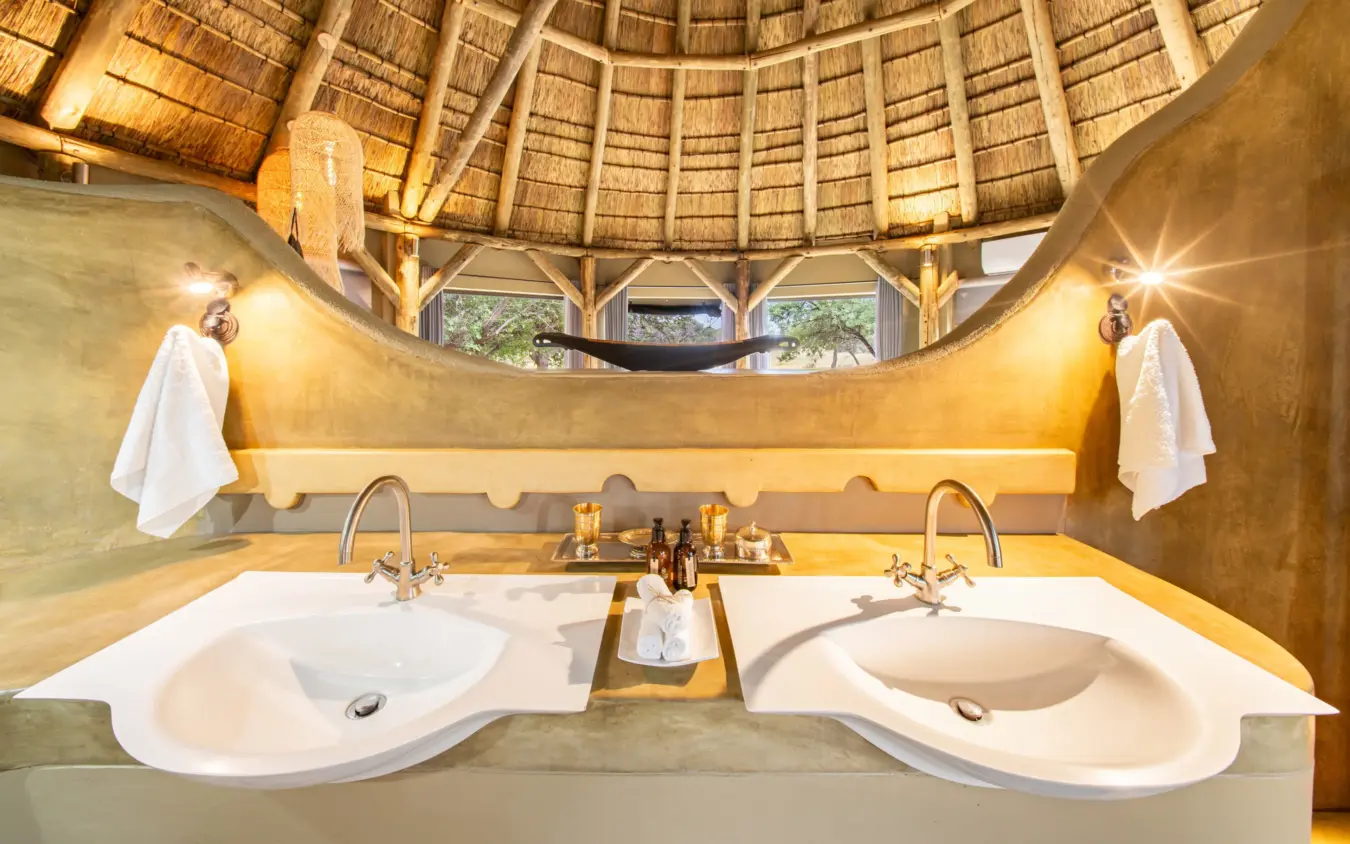
Okonjima Private Bush Suite has two en-suite bedrooms on either side of a central living area. Each has two queen-size beds, air conditioning, fans and heating, a safe and a desk. Bathrooms have a bath, indoor and outdoor showers and a bidet. The house sleeps four and has Wi-Fi, phone signal, a 13-metre pool and covered parking.

Okonjima Private Bush Suite, Okonjima Nature Reserve, Namibia 02

activities

Leopard Tracking By Radio Telemetry

All activities run inside the private Okonjima reserve with the suite's own guide and vehicle. They include leopard tracking by radio telemetry, brown hyena tracking, game and night drives, and guided nature trails. White rhino tracking on foot with the anti-poaching team and pangolin tracking on foot are also offered, the latter usually for stays of two nights or more.

Okonjima Private Bush Suite, Okonjima Nature Reserve, Namibia 03

conservation

AfriCat Foundation Monitors Leopards And Pangolins

The AfriCat Foundation studies the reserve's leopards. It monitors brown hyena and pangolin and sits on Namibia's pangolin working group, which the Ministry of Environment chairs. Tourism on the reserve pays for most of its work, and the reserve's anti-poaching team guards its white rhino.

ready to get started?

Get in touch and let’s start the conversation. An initial consultation helps us understand what you’re looking for, whether that’s specific experiences, luxury touches, or marking a special occasion, and from there we’ll guide you through what’s possible so you can decide if we’re the right fit.

Alternative accommodation in okonjima nature reserve

frequently asked questions

By road or by air. The reserve lies about half-way between Windhoek and Etosha National Park, ten kilometres off the B1 south of Otjiwarongo. It is about two and a half hours' drive from Windhoek, three from Hosea Kutako International Airport and three to four from Etosha. The last stretch is gravel: ten kilometres to the reserve gate, then another fourteen to sixteen inside it to the camps.

The reserve also has its own private airstrip, about an hour's flight from Windhoek and some twenty minutes' drive from the suite. We can put in a private charter, typically a Cessna Caravan or a Pilatus PC-12, landing there at the hour that suits you, which makes Okonjima an easy stop on the way north to Etosha or back to Windhoek at the end of a trip.

Seasonally, yes. The reserve lies in Namibia's Otjozondjupa region, which TravelHealthPro, the UK's official travel health service, rates as high risk from December to April, when it recommends antimalarial tablets, and low risk from May to November, when it advises awareness and bite avoidance. The American CDC lists Otjozondjupa among the Namibian regions where it recommends preventive medicine. Low risk is not no risk.

We are travel planners, not doctors, so we do not make medical recommendations. Whether to take tablets, which ones, and what suits a child are questions for your own doctor or a travel clinic, best asked with your dates in front of you. The practical side is simple: cover arms and legs from dusk and keep repellent to hand.

Yes. It is the one house at Okonjima that takes children of any age, babies included, where the Bush Camp and the African Villa take children from twelve. With two bedrooms of two queen-size beds each, a family of four has the whole house, its pool, its chef and its own guide and vehicle to themselves, so the days can run at the children's pace.

The activities carry their own age limits. Game and nature drives are open from three; leopard tracking, brown hyena tracking and night drives from six; guided walks from eight; pangolin tracking, rhino tracking on foot and the Into AfriCat research session from twelve. There is no child-minding, so parents look after their children around the house, and no child swims in the pool unaccompanied.

Nearly everything. The rate covers the house, every meal cooked by its own chef, a host, a private guide with a private game-drive vehicle, drinks other than premium and imported brands, laundry and wifi. Two guided activities a person a day are included, chosen from leopard tracking, brown hyena tracking, game and nature drives and the Into AfriCat session on the foundation's current research.

Rhino tracking on foot and pangolin tracking cost extra. Rhino tracking, night drives and guided walks are arranged at the lodge on arrival, weather and availability allowing. Pangolin tracking is only for guests staying at least two nights, takes six people at most and can be booked ahead, which we do. The reserve's park levy is charged per adult per night.
AfriCat is the conservation charity based on the Okonjima Nature Reserve, set up by the Hanssen family in the early 1990s as they turned their cattle farm from killing predators to protecting them. It runs one of Namibia's longest-running leopard monitoring projects, studies the reserve's brown hyena, and its pangolin project is one of the few anywhere following pangolins living free.

Guests see the work from the vehicle. Some of the reserve's adult leopards wear radio collars, so on leopard tracking the guide follows the signal with a telemetry receiver and guests help collect the project's data. Into AfriCat, Behind the Science, launched in July 2026, sets out the current research and how it is done. Tourism on the reserve helps pay for that research.

June to September, the dry winter months, when the bush thins, game comes to the waterholes and the days are clear. The reserve sits on a plateau at about 1,700 metres, so winter nights and early drives are cold and call for warm layers. October and November heat up quickly before the rains, and April and May are a fine middle ground, still green but with the air clearing.
The summer rains fall mainly between December and March. The reserve turns green, calves are born and the migrant birds arrive, and the light after a storm is a gift to photographers; leopard tracking goes on through the year, and the suite's own pool earns its place in the heat of the day. Pack a waterproof for those months.

rated five stars by our clients

other areas in namibia

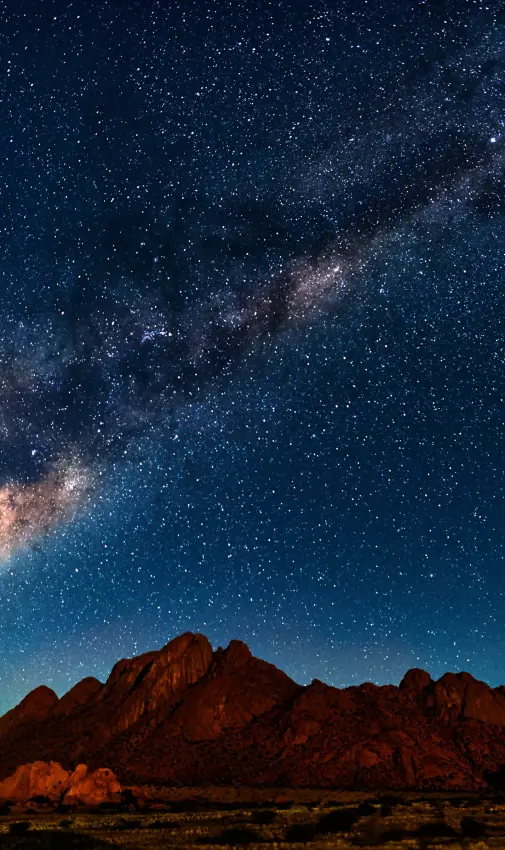
Rocky desert mountains silhouetted under starry night sky 01

Damaraland

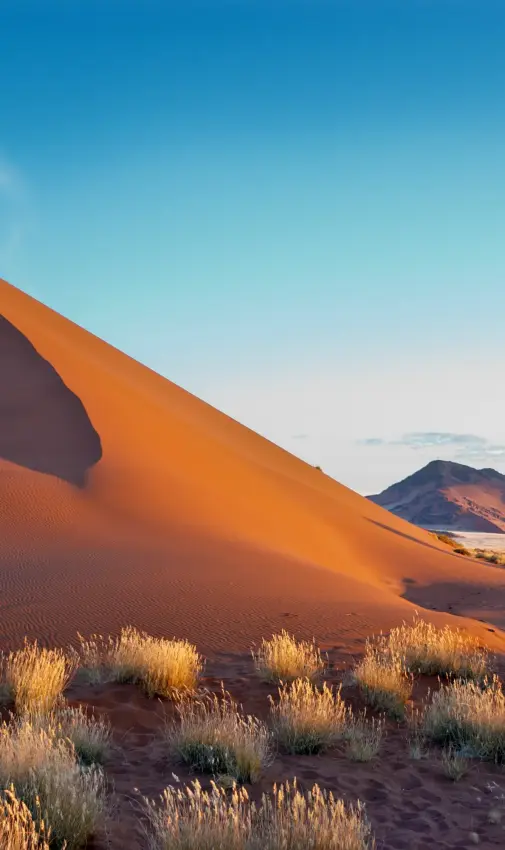
Golden sand dune at sunset with sparse desert vegetation 02

Sossusvlei

Elephant with zebras and antelopes at waterhole 03

Etosha National Park

Aerial view of desert dunes meeting coastal waves 04

Skeleton Coast

Portrait of a person wearing traditional African beaded jewelry 06

Kunene River

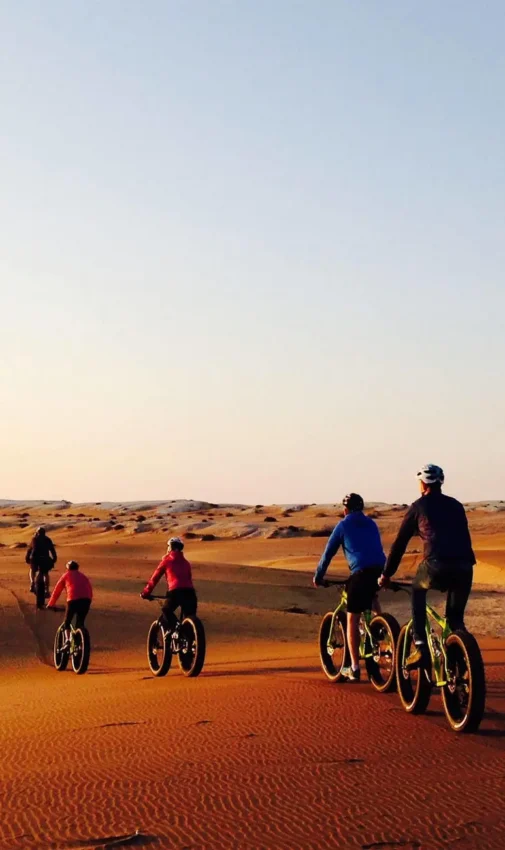
Cyclists riding across red sand dunes at sunset, Swakopmund, Namibia 07

Swakopmund

Elephant herd walking through dusty grassland with scattered trees, Zambezi Region, Namibia 08

Zambezi Region

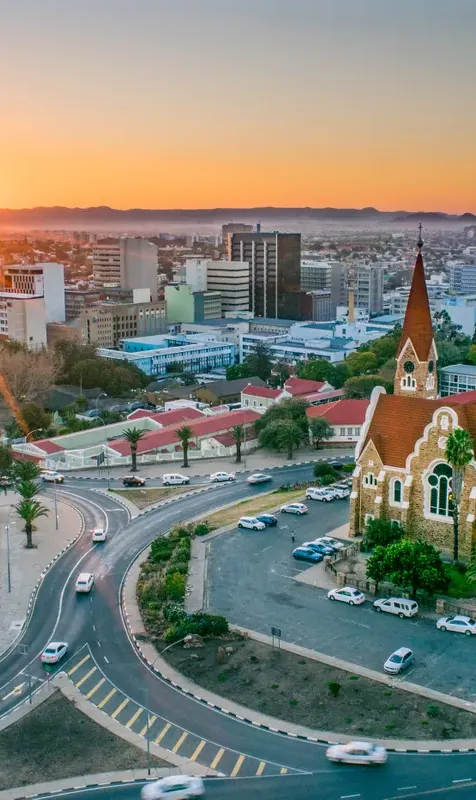
Aerial view of church and city at sunset 09

Windhoek

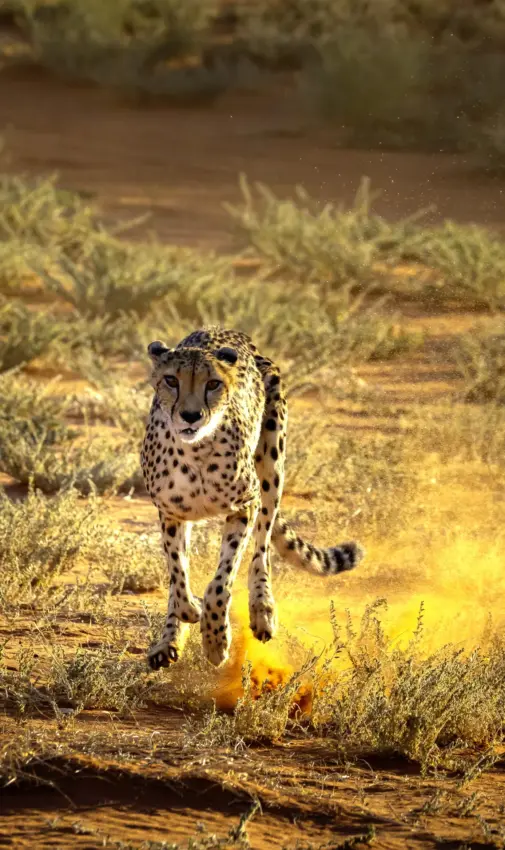
Cheetah running across sandy savanna scrub at sunset, Namibian Kalahari, Namibia 10

Namibian Kalahari

Planning a journey together

our approach

remote, exclusive
& personal

Every journey starts with a conversation. We take the time to understand your vision before we start planning.

Whether by phone or in person, we work with you directly to shape something that is considered, personal, and expertly delivered.
get in touch
destinations ideas & inspiration our process about us contact us