Camp

Okonjima Luxury Bush Camp

A family-run camp below Namibia’s Omboroko Mountains, where guests follow collared leopards by radio with guides who collect AfriCat’s field data.

Country: Namibia
Location: Okonjima Nature Reserve
Number of rooms: 9

Tracking collared leopards by radio

Okonjima Luxury Bush Camp lies in leopard country, below the sandstone Omboroko Mountains of central Namibia. The search for a leopard begins with a radio signal. Several of the reserve’s leopards wear research collars, and guests follow them out through acacia thornveld with guides holding VHF receivers, the same guides who collect field data for the AfriCat Foundation.

The search for a leopard begins with a radio signal.

Because those guides record every sighting, each leopard arrives with its back story: its range and habits, and often its lineage. In 2023 the study took on a third-generation leopard whose mother and grandmother were already part of it. Afternoon drives can end on a nearby hill with a drink as the light goes, before the return to nine rooms spread wide.
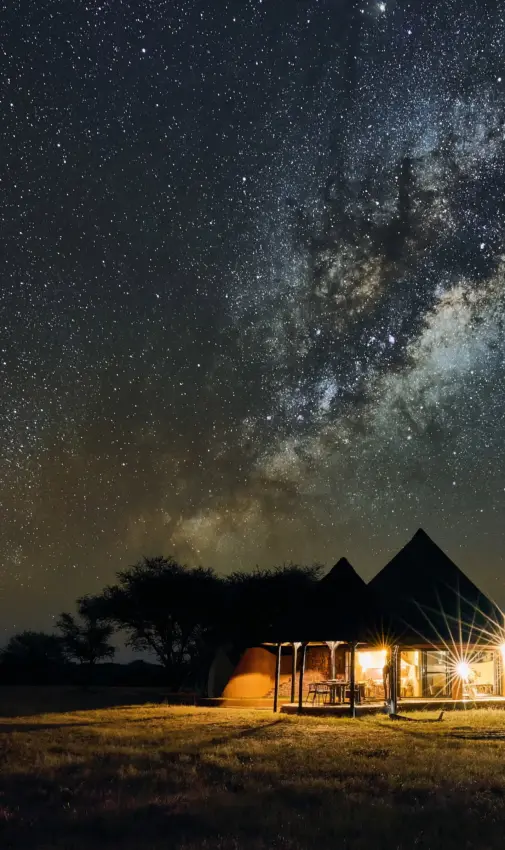
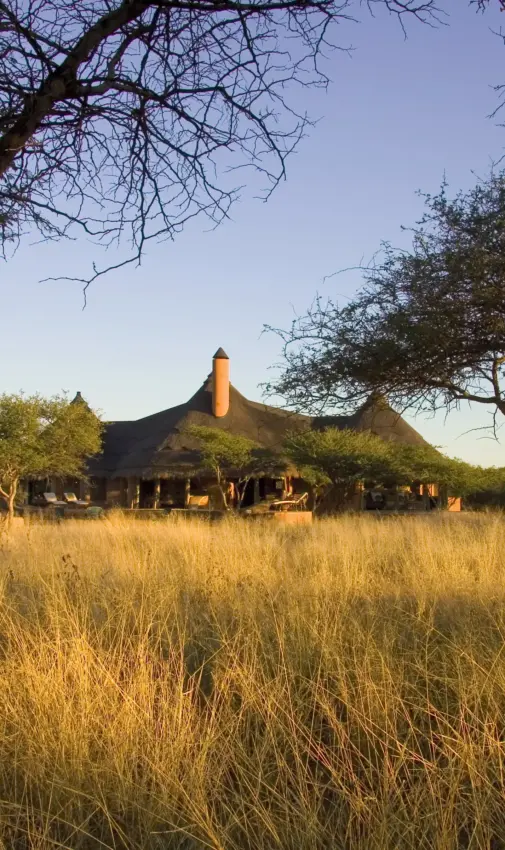
Okonjima Luxury Bush Camp, Okonjima Nature Reserve, Namibia
Fire pit seating area overlooking river and wildlife watering hole, Okonjima Luxury Bush Camp, Okonjima Nature Reserve, Namibia

Rose and VJ Hanssen settled this farmland in 1970 and ran Brahman cattle across it. In 1991 the family founded AfriCat, a name that reads as A-Free-Cat. It carries their advice to farmers: kraal livestock at night and leave the cats free. The last of the cattle went in 1993, and their children, among them Wayne and Donna, have since made the cattle farms a single reserve.

In 1991 the family founded AfriCat, a name that reads as A-Free-Cat.

The Hanssen family still owns and runs Okonjima, and every night a guest spends here helps fund AfriCat’s research. AfriCat’s early rescue work has since grown into long-term field studies, which now take in brown hyaena and pangolin alongside the leopards.

Okonjima Luxury Bush Camp, Okonjima Nature Reserve, Namibia 01

accommodation

Eight Thatched Chalets Plus Junior Suite

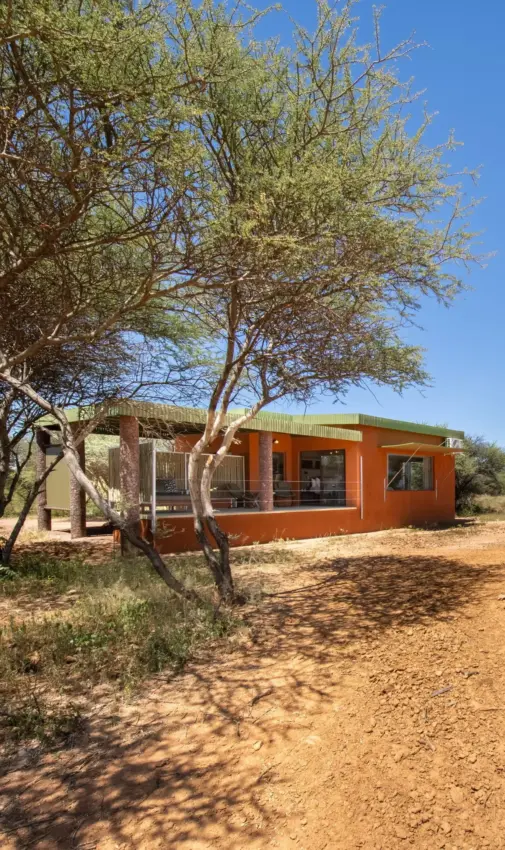
Nine rooms: eight thatched chalets and a Junior Suite. Each chalet is glazed on three sides, with two queen beds, leather chairs and a desk, and air-conditioning with heating. Gauze on some windows lets them stay open at night. Outside are a separate open-air sala and a birdbath. The Junior Suite adds a private lounge and fireplace.

Safari vehicle with guests spotting wildlife at sunset, Okonjima Luxury Bush Camp, Okonjima Nature Reserve, Namibia 02

activities

Leopard Tracking by VHF Telemetry

Leopard tracking by VHF telemetry leads the programme. Brown hyaena are tracked too, and white rhino are followed on foot with the anti-poaching team, alongside game drives, guided nature walks and night drives after dinner. Pangolin tracking on foot needs a stay of two nights or more. The Into AfriCat, Behind the Science session opens up the research.

Silhouetted guests with rifle and camera at golden sunrise, Okonjima Luxury Bush Camp, Okonjima Nature Reserve, Namibia 03

conservation

AfriCat Foundation Funds Leopard Research

The Hanssen family founded the AfriCat Foundation in 1991. Its research on leopard, brown hyaena and pangolin is funded by guest stays and supported by guides who collect its field data. Its early work rescued leopards trapped on farms and urged farmers to kraal livestock at night.

ready to get started?

Get in touch and let’s start the conversation. An initial consultation helps us understand what you’re looking for, whether that’s specific experiences, luxury touches, or marking a special occasion, and from there we’ll guide you through what’s possible so you can decide if we’re the right fit.

Alternative accommodation in okonjima nature reserve

frequently asked questions

Most people come by road, since the reserve sits roughly halfway between Windhoek and Etosha National Park, a natural first or last stop on a northern circuit. It is about two and a half hours from Windhoek on good tar along the B1, or three from Hosea Kutako International Airport, then ten kilometres of gravel to the reserve gate and fourteen to sixteen more to the camps.

If you would rather fly, we can arrange a private charter from Windhoek, typically a Cessna Caravan or a Pilatus PC-12, to the reserve's own airstrip, about fifteen minutes' drive from the camp. That suits anyone short of time or flying on to Damaraland or Etosha. Heavy summer storms can make the boundary rivers run, so between December and March we check the gravel before a self-drive.

Yes, seasonally. The camp lies in Namibia's Otjozondjupa region, which TravelHealthPro, the UK's official travel health service, rates as high risk from December to April, when it recommends antimalarial tablets, and low risk from May to November, when it advises awareness and bite avoidance. Low risk is not no risk. The American CDC lists Otjozondjupa among the regions where it recommends preventive medicine, with no seasonal split.

We do not make medical recommendations: we plan trips rather than practise medicine, so the question of tablets sits with you and your own doctor or a travel clinic, who can weigh your health and your dates together. In any month, long sleeves after sunset and repellent on the night drive are sensible habits.

Good, though never certain. Some of the reserve's adult leopards wear radio collars for the AfriCat Foundation's monitoring project, which has run since the 1990s and is one of the longest in Namibia. On a tracking drive the guide follows the collar signal with a telemetry receiver, narrowing the search through thick acacia bush to one hillside or gully. The cats are used to vehicles, so sightings are often unhurried.

The guides record each sighting for AfriCat, so every drive adds to the research. Leopards are wild and free to move, so we plan at least two nights here, which gives several tracking drives and a margin for the morning a cat stays in the thicket. Brown hyaena are tracked the same way.

On a fully inclusive stay each guest has two main activities a day, chosen from leopard tracking, brown hyaena tracking, a game and nature drive with no telemetry, and Into AfriCat, a session behind the scenes of the foundation's research. Meals and most drinks are in the same rate. You never walk alone on any outing on foot: a guide or tracker always leads.

Booked at the lodge, charged on top and subject to weather: a night drive after dinner for aardwolf, bat-eared fox and honey badger; rhino tracking on foot with the reserve's anti-poaching team; a guided hike of two to four hours in the Etjo sandstone hills; and pangolin tracking on foot, six people at most. We would plan three nights to fit them in.

It is the small, quiet one: eight thatched chalets and a Junior Suite for eighteen guests, against about fifty at Plains Camp near the airstrip. It lies some two and a half kilometres away in the south of the reserve, the chalets set eighty to a hundred metres apart, each with glass on three sides, a separate open-air sala and a birdbath. The lapa and pool look over a waterhole.

The Private Bush Suite, for four, and the African Villa, for eight, are separate houses for a family or friends who want a place to themselves. The Bush Camp takes children from twelve, so families with younger children are better placed in one of the others, and we can suggest which.

June to September. The dry winter thins the bush and draws animals to the waterholes, which makes tracking easier, and it matches our advice for Namibia as a whole, where April, May, October and November are shoulder months and December to March is the hot, wet season. On the reserve more than half the year's rain falls in January and February, and September and October are reliably dry.

The green months suit the right traveller: calving antelope, migrant birds, storm light for photographers and quieter camps. In winter the plateau at about 1,700 metres is cold before dawn, so pack warm layers and a hat for early drives, sturdy shoes for walking, and a torch with a red light if you plan to track pangolin.

rated five stars by our clients

other areas in namibia

Rocky desert mountains silhouetted under starry night sky 01

Damaraland

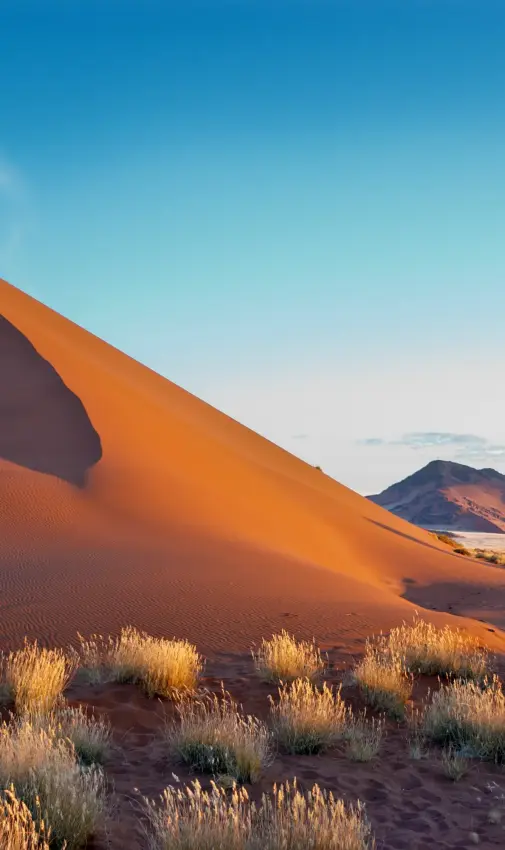
Golden sand dune at sunset with sparse desert vegetation 02

Sossusvlei

Elephant with zebras and antelopes at waterhole 03

Etosha National Park

Aerial view of desert dunes meeting coastal waves 04

Skeleton Coast

Portrait of a person wearing traditional African beaded jewelry 06

Kunene River

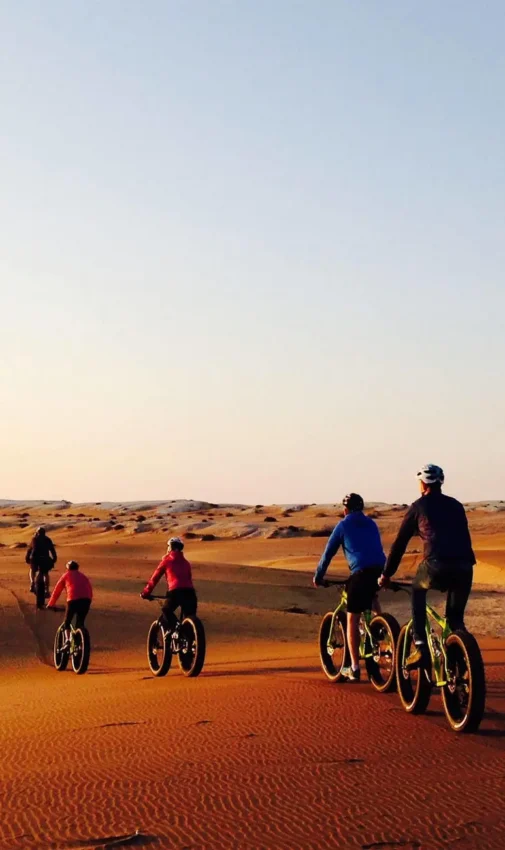
Cyclists riding across red sand dunes at sunset, Swakopmund, Namibia 07

Swakopmund

Elephant herd walking through dusty grassland with scattered trees, Zambezi Region, Namibia 08

Zambezi Region

Aerial view of church and city at sunset 09

Windhoek

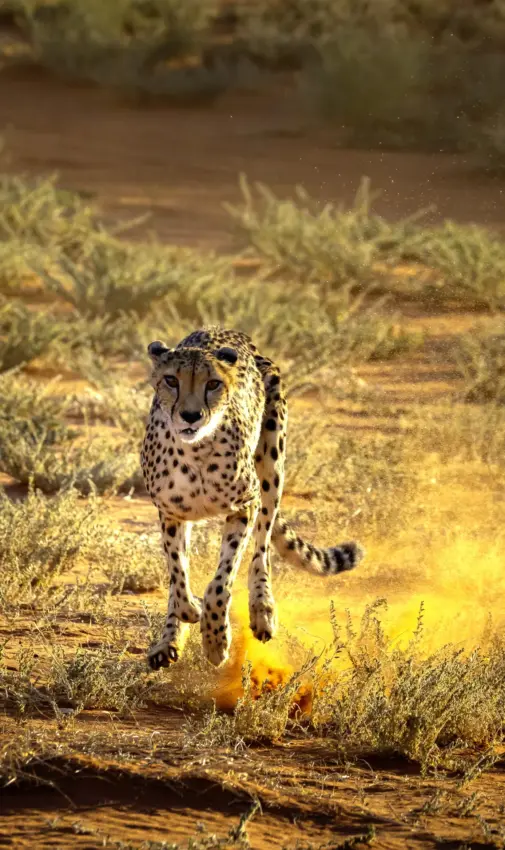
Cheetah running across sandy savanna scrub at sunset, Namibian Kalahari, Namibia 10

Namibian Kalahari

Planning a journey together

our approach

remote, exclusive
& personal

Every journey starts with a conversation. We take the time to understand your vision before we start planning.

Whether by phone or in person, we work with you directly to shape something that is considered, personal, and expertly delivered.

get in touch
destinations ideas & inspiration our process about us contact us