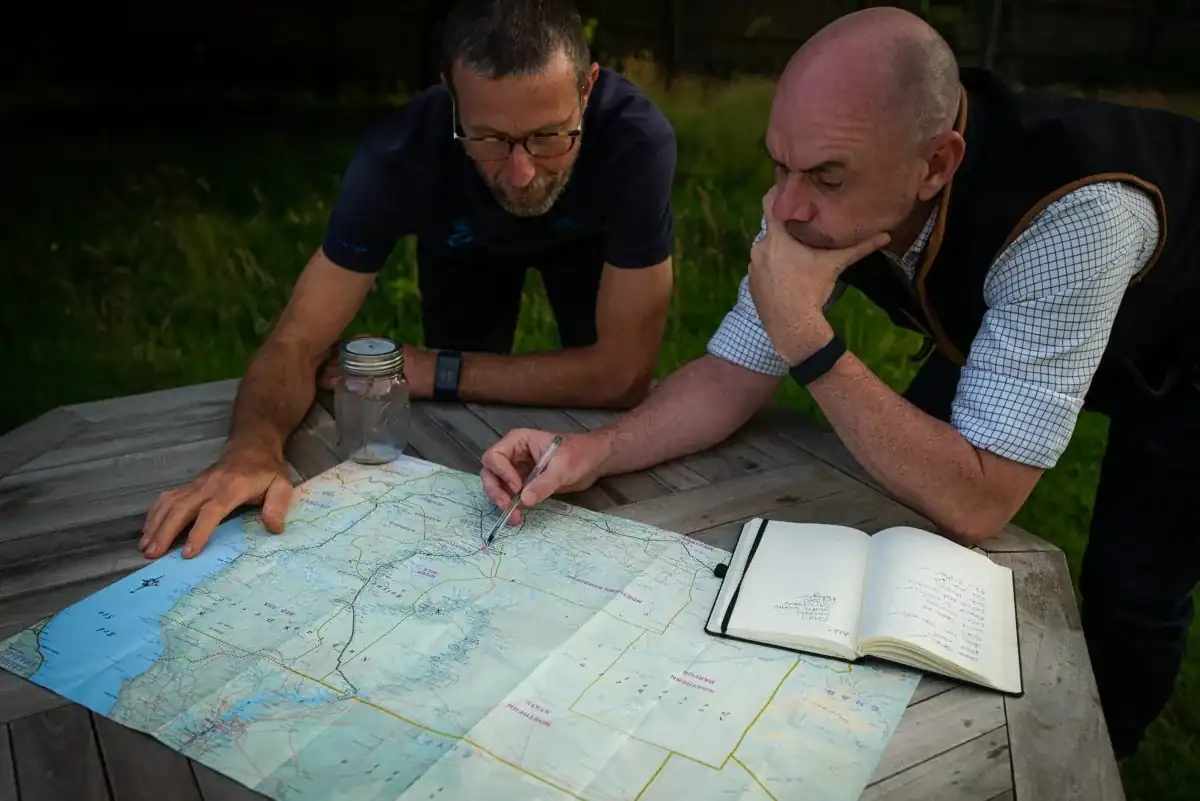
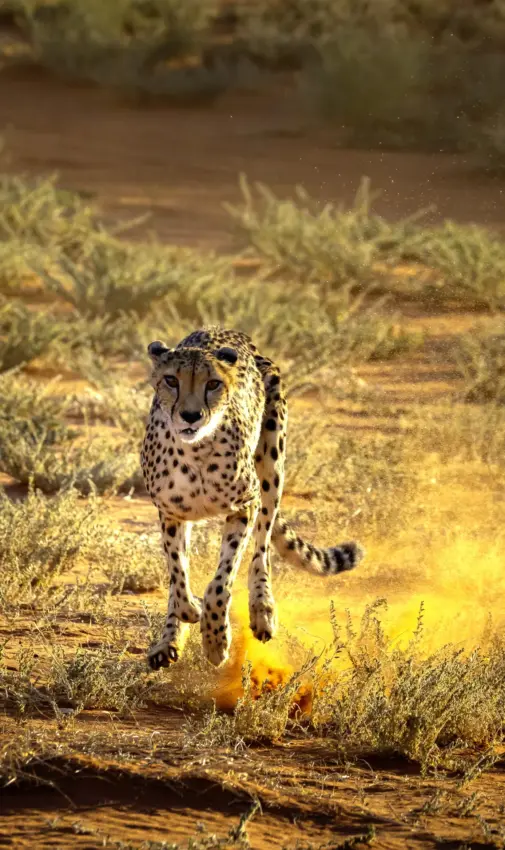
The Hanssens named their foundation AfriCat, after the idea of a free cat. Its first work was practical, persuading farmers to kraal their livestock at night and leave the cats alone. Research now centres on the reserve itself, and the camp’s guides log collar signals on their drives for the study. The leopard study has run for decades, and its records now follow several generations of the same leopard families. When a collared cat strays onto neighbouring farmland, its signal lets the team find it.
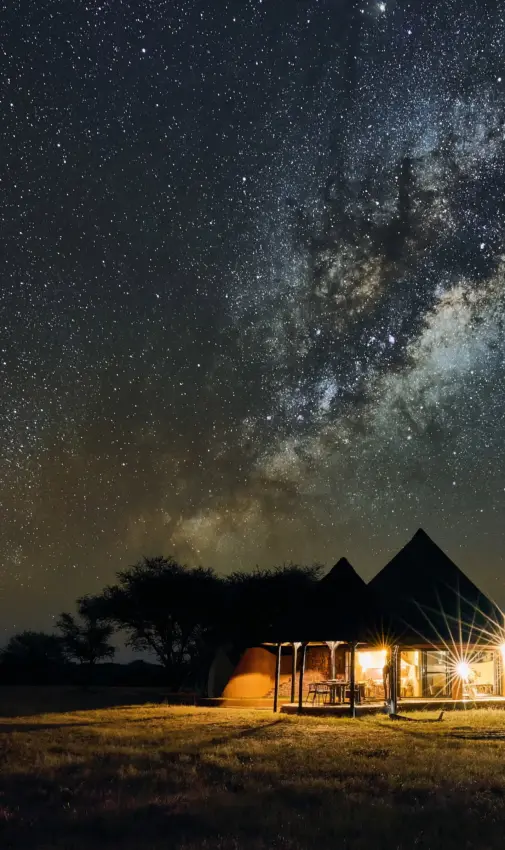
The first outing leaves in the early morning, after tea and coffee with warm muffins in the Barn, and comes back to a full brunch. The second heads out in the late afternoon. The sun drops behind the plain, and later black-backed jackals call out in the dark. Dinner follows in the Barn. Two nights give the leopard tracking room to work, with a second morning in reserve. It is worth planning ahead, too: every activity is booked separately, and some can only be arranged at camp.
The sun drops behind the plain, and later black-backed jackals call out in the dark.
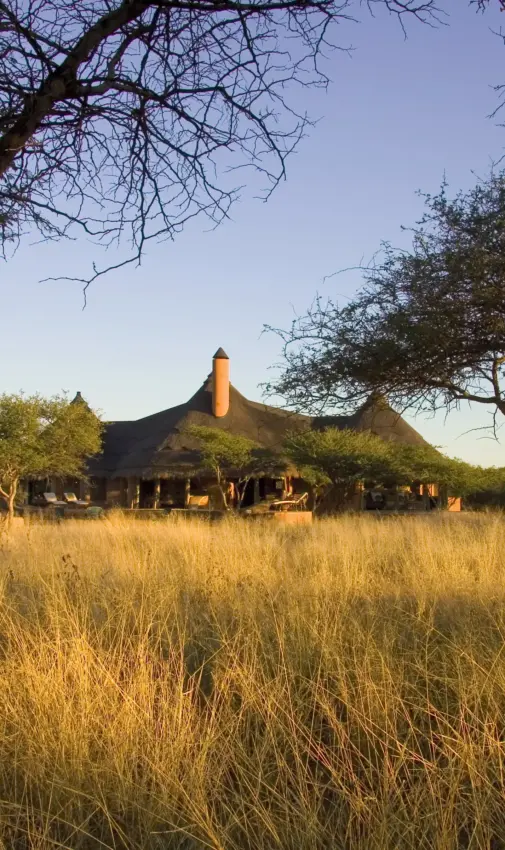
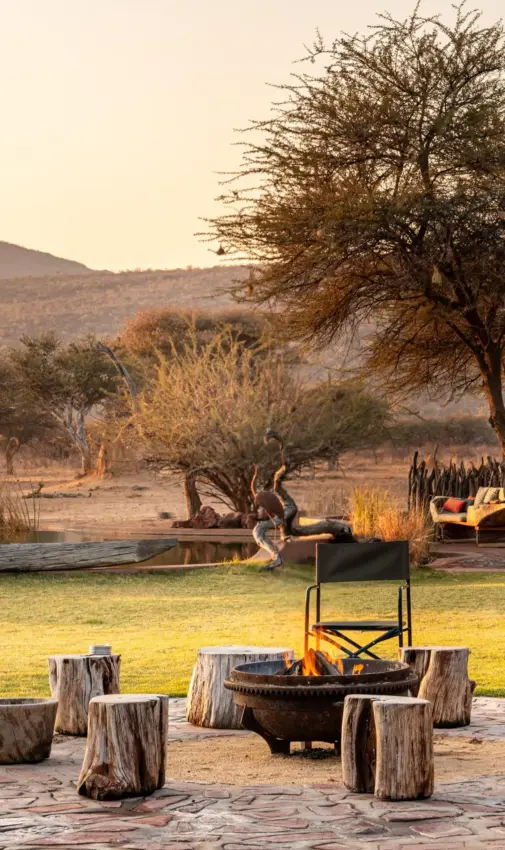
The larger View Rooms are spaced well apart along the plain, each with a day-bed on its veranda. The Classic Rooms are closer together, with director’s chairs on a smaller veranda. Every room has two double beds and woollen rugs underfoot. There is air conditioning and a twin shower. Four-bed family units with an interlinking door take children from three, and the far rooms are a proper walk from the Barn. Big windows look out over the grass plains.
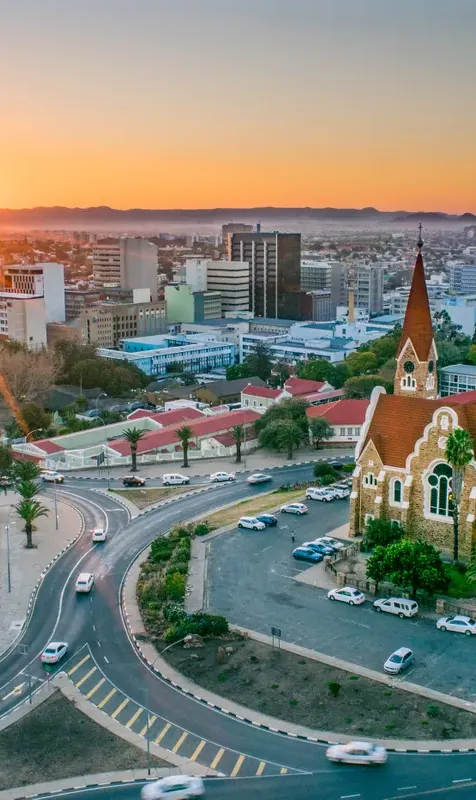
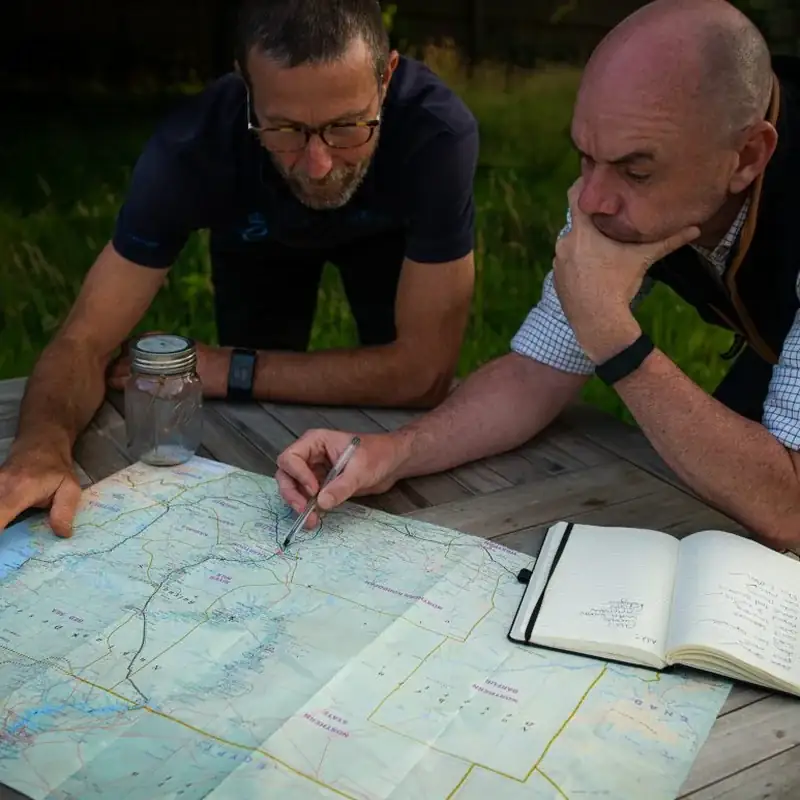
Plains Camp is about halfway between Windhoek and Etosha National Park. The drive from the capital takes two and a half hours, or it is an hour by charter to the reserve’s airstrip, a few minutes from the rooms. Stays run on dinner, bed and breakfast, with a set-menu lunch on offer, and breakfast is the kitchen’s strongest meal. For those who want to go deeper than the drives, there is the research itself. Launched in July 2026, Into AfriCat, Behind the Science gives two and a half to three hours to it: guests practise telemetry, study camera traps and EarthRanger data, and trace the lineages of individual leopards.