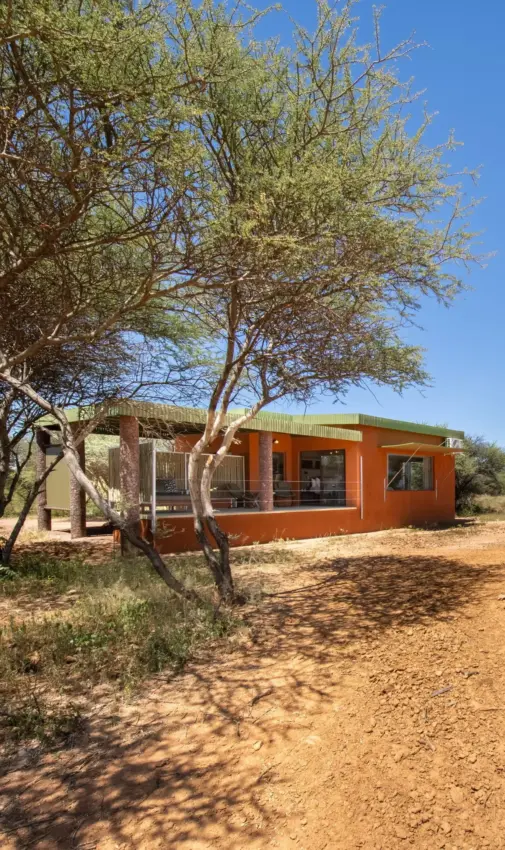
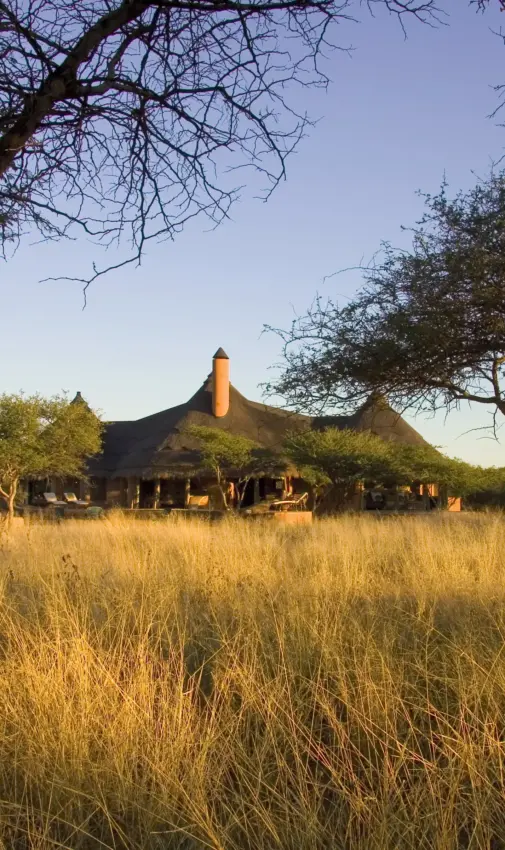
Each mini-suite rises to its own double-volume thatched roof. The front is glass, sliding doors that open the room to the bush, and they can be swapped for roll-down canvas and heavy-duty gauze so the sounds outside carry straight in. Inside there is air conditioning and heating, a Nespresso station and a minibar. In the main house, the main suite looks straight over the waterhole. The second, set up as a family room, faces the garden and has two extra beds upstairs; when every room is let separately, it is best kept for guests travelling with those in the main suite.
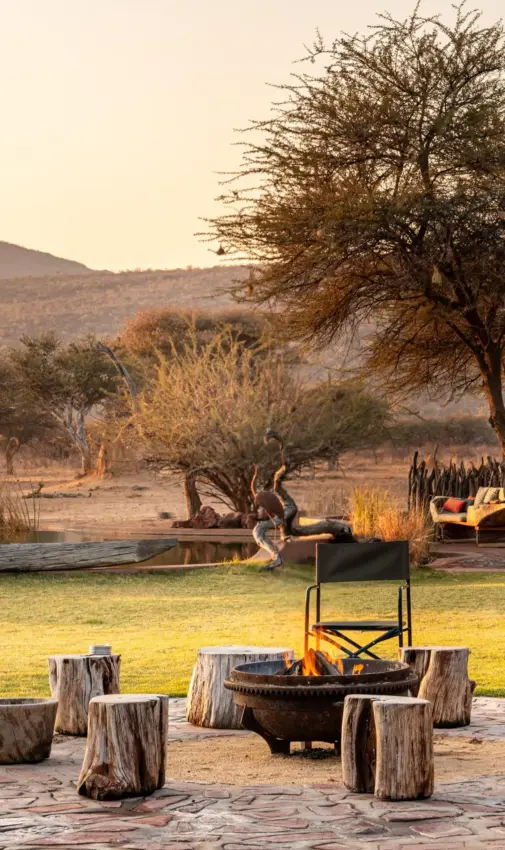
A private chef cooks every meal, served at the main house table or in the shaded sala. Wildlife comes down to drink at the waterhole beyond the pool deck. Breakfast comes with one eye on the water. Drinks come with the stay, apart from premium and imported brands, and coffee, tea and fruit are laid out through the day.
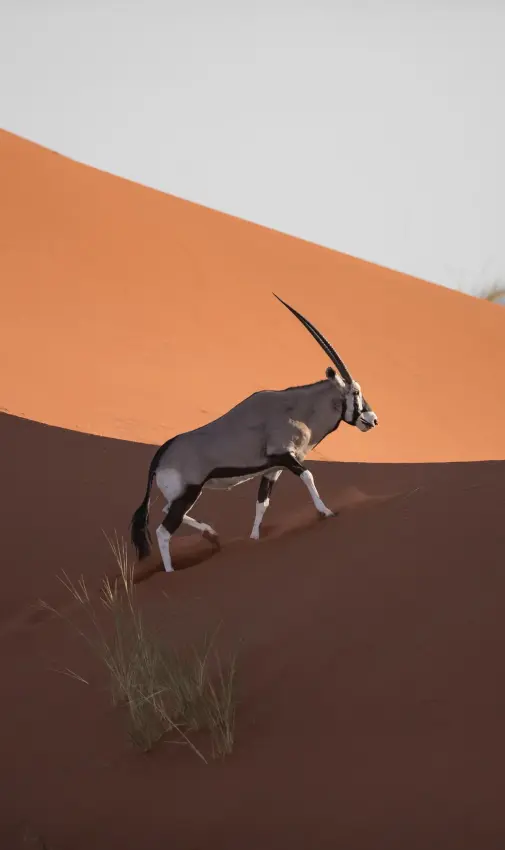
Wildlife comes down to drink at the waterhole beyond the pool deck.
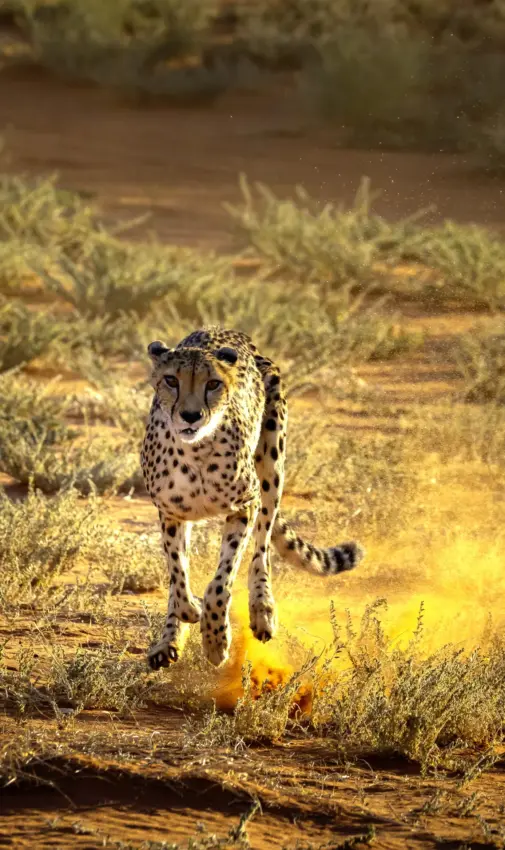
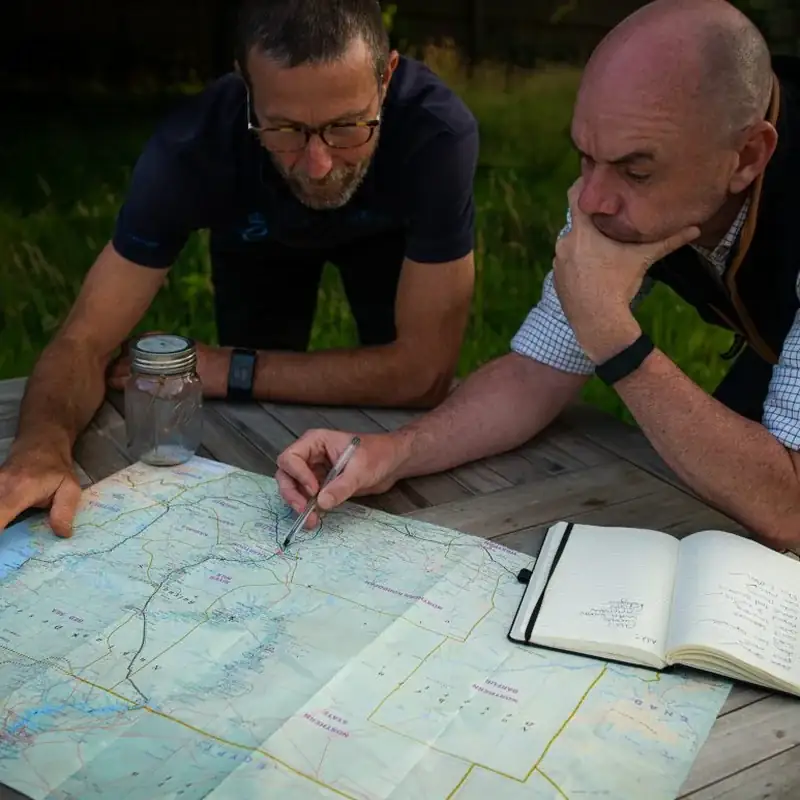
The reserve’s plains game includes giraffe, mountain zebra and kudu, and the waterhole draws a steady stream of birds. A stay includes two main activities a day, chosen from leopard and brown hyena tracking, game and nature drives and the Into AfriCat session, which takes guests behind the science of the tracking. Night drives, guided walking trails and the pangolin and rhino walks fall outside that allowance and are booked separately.
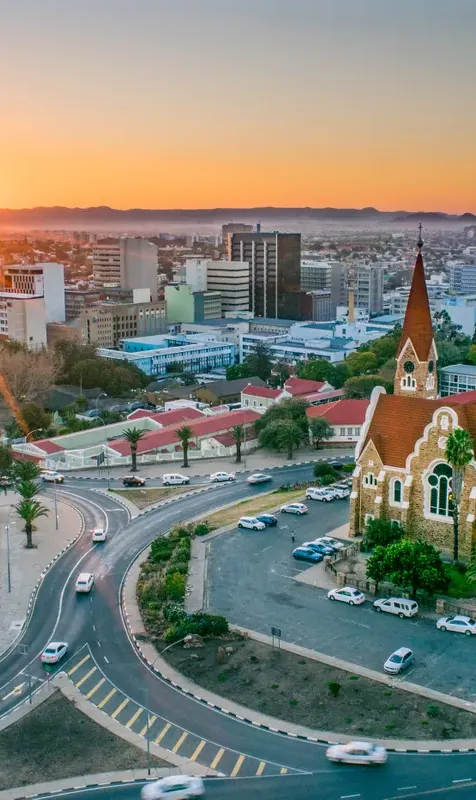
The reserve lies roughly halfway between Windhoek and Etosha National Park, so a stay here divides the journey north. The capital is two and a half hours away by tar road, and private charters land on the reserve’s own airstrip, a 25- to 30-minute drive from the villa. Children aged twelve and over are welcome, though there is no childcare, and the upstairs beds in the family room suit parents travelling with teenagers. The leopards that once cost the Hanssens their calves now pay for the research that follows them.