Hotel

Chale Island

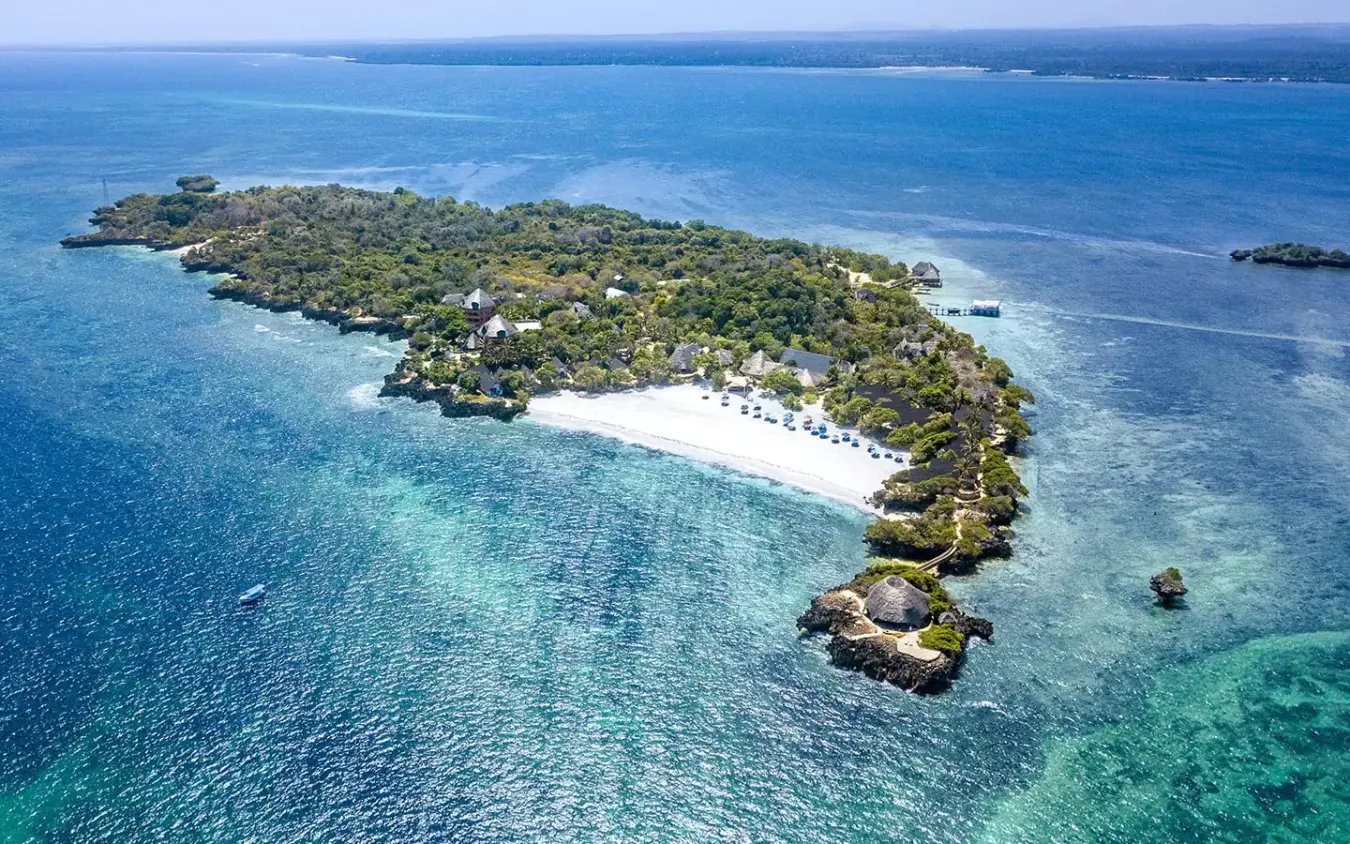
A private coral island off Diani Beach on Kenya’s south coast, reached by boat at high water or by tractor across the flats.

Country: Kenya
Location: Coral island south of Diani Beach
Number of rooms: 53

A tractor crossing to a coral island

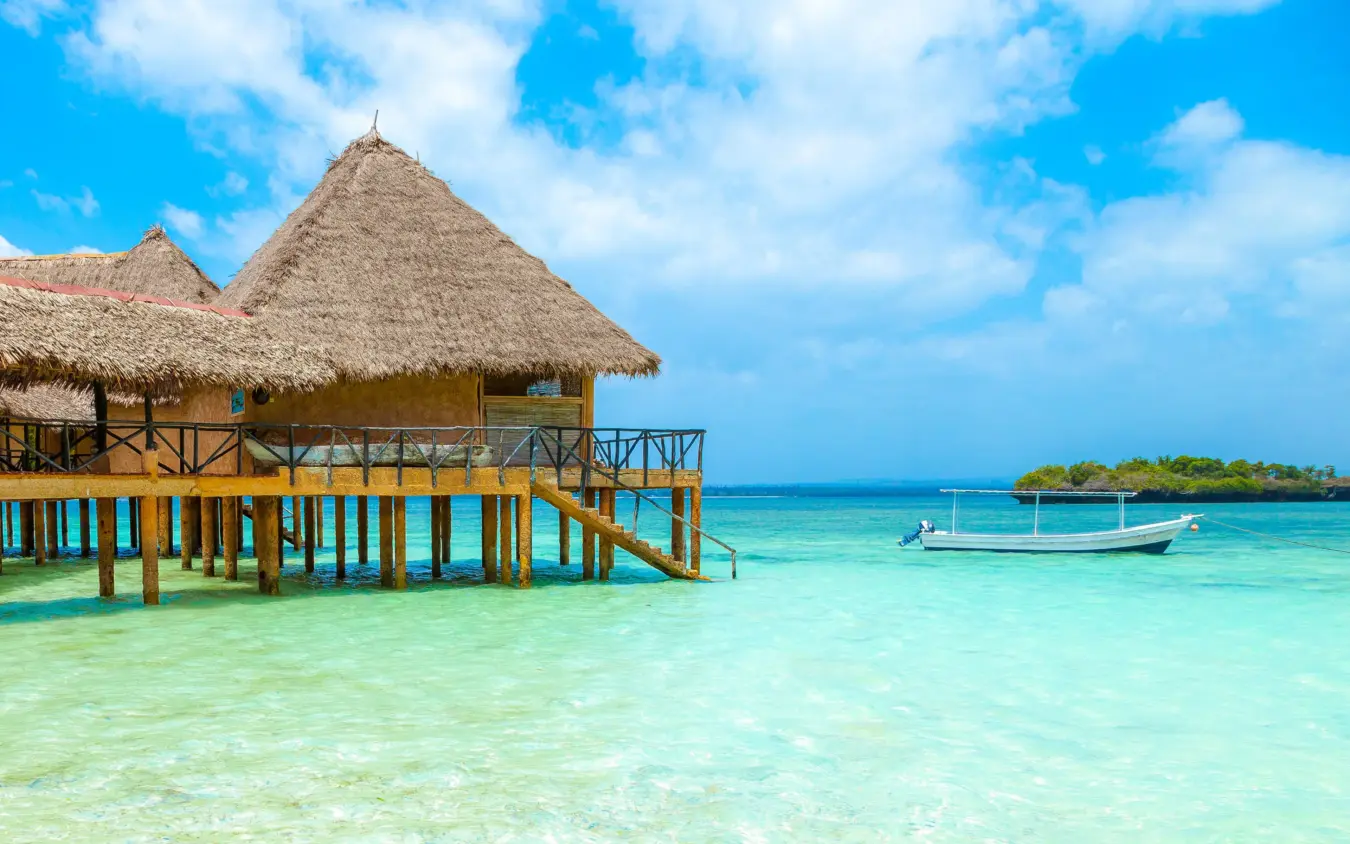
Arrival depends on the clock as much as the map. The resort occupies the northern end of a small coral island some 600 metres off Kenya’s south coast, at the southern end of Diani Beach. At high water you cross the channel by boat. Once the tide drains away, a tractor pulls a trailer across the sand flats.

The monkeys cross the canopy and run along the makuti roofs.

Fifteen acres of indigenous coastal forest cover the island’s southern two-thirds. Two troops of colobus live in it. The monkeys cross the canopy and run along the makuti roofs. Snorkelling starts straight off the beach, inside the Diani-Chale marine reserve. After dark, the bushbabies take over the soundtrack.

Mario Scianna arrived from Italy in 1982, a hotelier who went on to found the Diving the Crab dive school. He had already built The Sands at Nomad on the Diani mainland, this resort’s sister property, when he turned to the island, opening it in December 2006. He died in 2021, and the resort continues within the collection he founded.

At high tide the water rises to the foot of its steps.

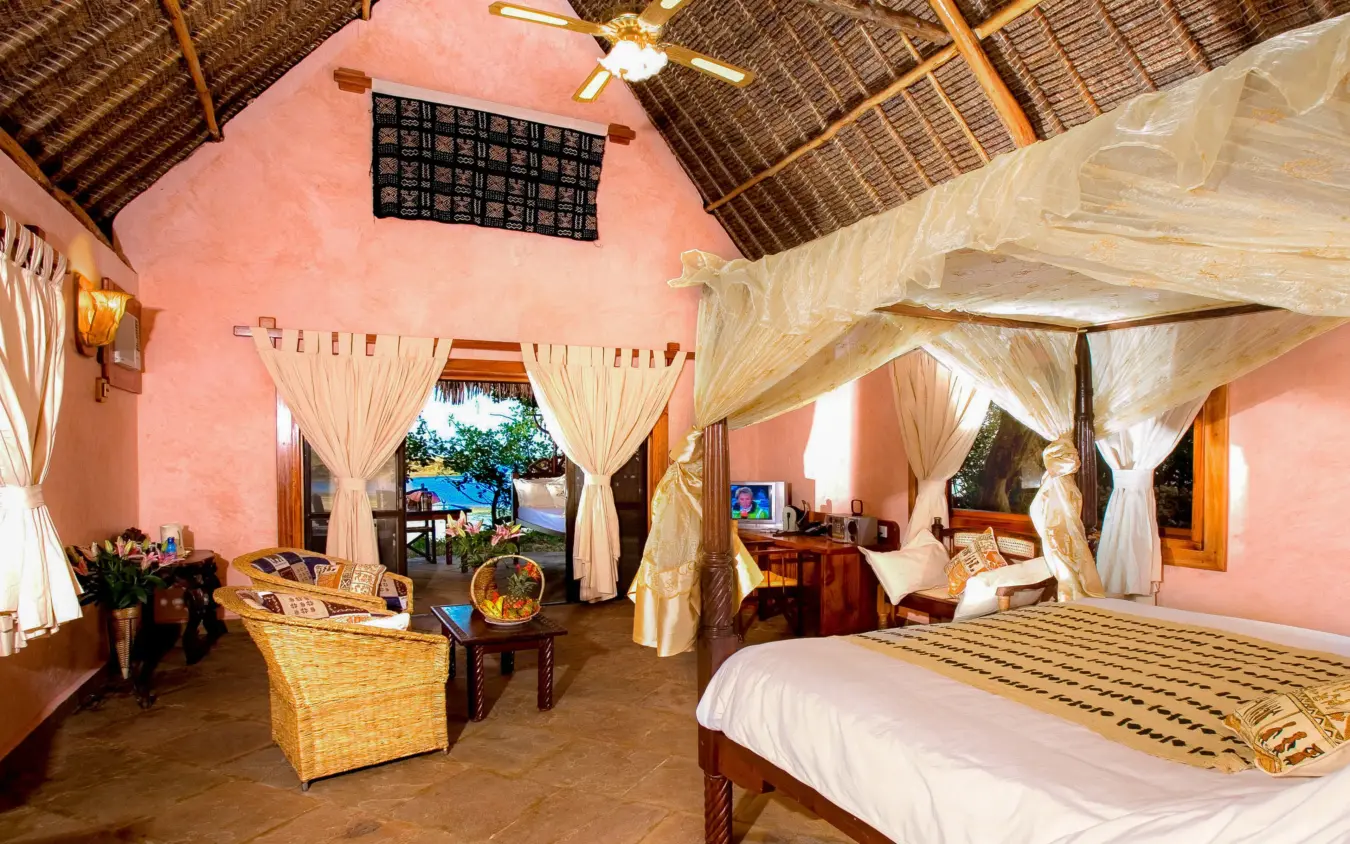
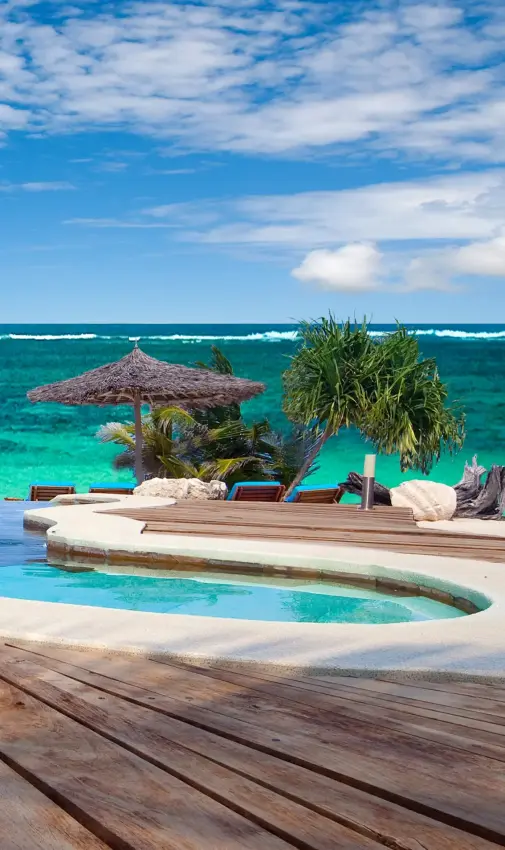
Whitewashed walls, makuti thatch, wood and wicker hold to the Swahili-coastal manner of this shore. Two rooms push the idea further. The Overwater Suite stands on stilts above the tidal lagoon, reached by a walkway. At high tide the water rises to the foot of its steps. The Suite on the Rocks, the largest here, has its own coral outcrop, two levels and a plunge pool.

01

accommodation

29 Ocean View Bandas and Five Room Categories

Fifty-three rooms across five categories: 29 Ocean View Bandas facing the lagoon or beach, 10 Tower Suites in two cylindrical towers, 12 Standard Rooms, one Overwater Suite on stilts above the lagoon, and the Suite on the Rocks with its own plunge pool. Interiors combine whitewashed walls, wood, wicker and mosquito netting throughout.

02

activities

Diving the Crab Centre and Kisite-Mpunguti Excursions

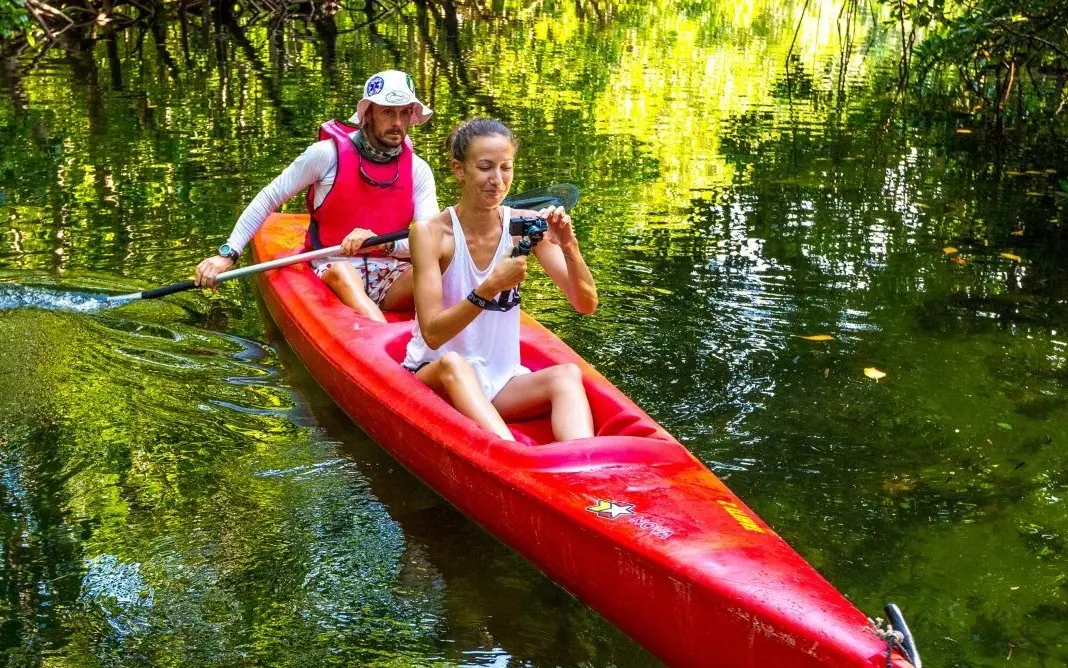
Snorkelling and scuba diving through the on-site PADI and SSI dive centre, mangrove kayaking, game fishing, glass-bottom boat trips and catamaran sailing. Guided walks cover the island's rock pools and sheltered bays at low tide, alongside turtle tracking, birdwatching and whale watching. Boat excursions run to Kisite-Mpunguti Marine National Park and Diani Beach.

03

conservation

Rangers, Coral and Turtle Monitors

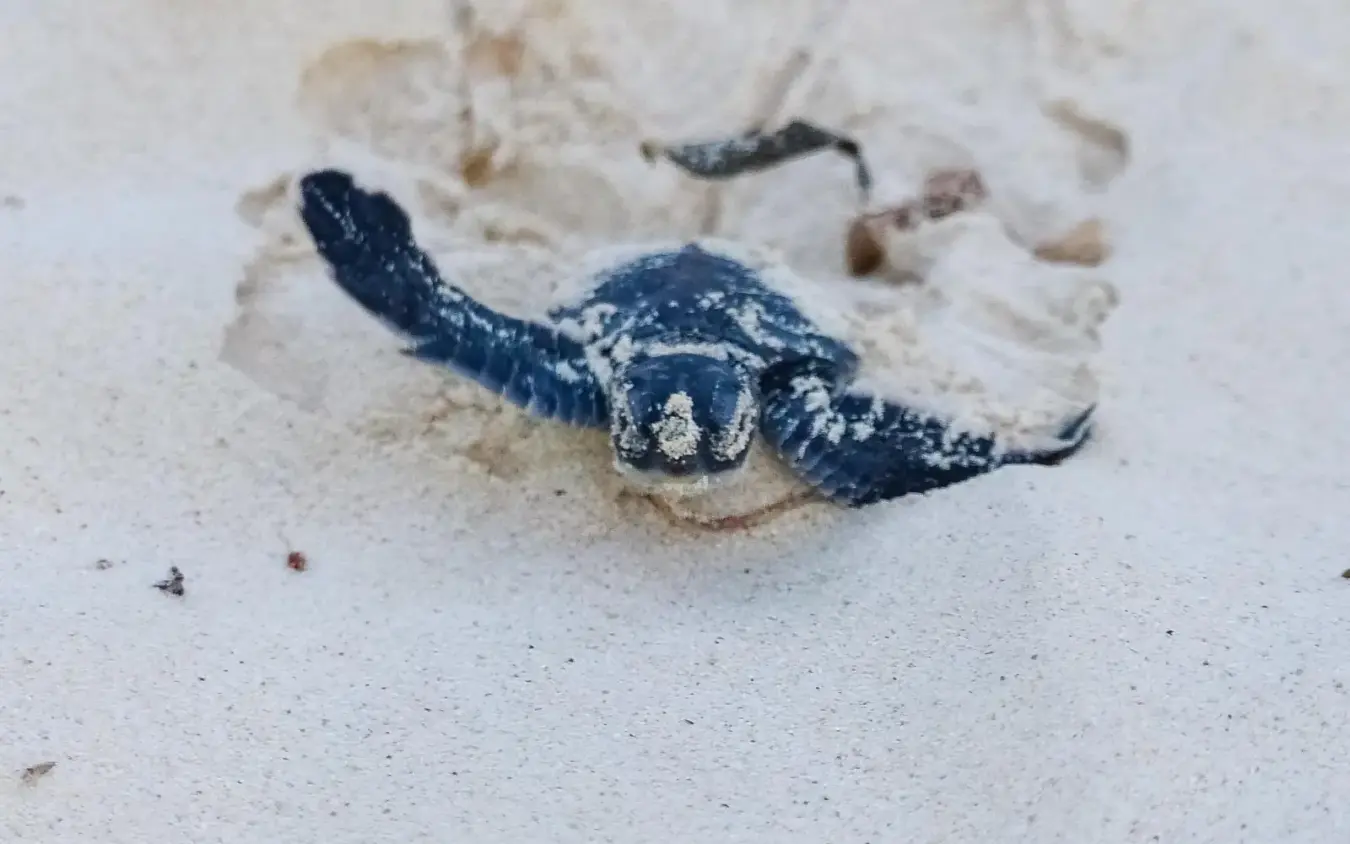
The resort houses and feeds six Kenya Wildlife Service rangers stationed in the Kaya Chale mangrove forest and clears invasive trees from the island's indigenous forest. Coral nurseries were started around Chale in 2024, Olive Ridley Project interns gather turtle data on the resort's dives, and the community turtle monitors of Diani Turtle Watch are sponsored by the resort among other hoteliers. Colobus Conservation and the Gazi women's mangrove boardwalk are supported too.

ready to get started?

Get in touch and let’s start the conversation. An initial consultation helps us understand what you’re looking for, whether that’s specific experiences, luxury touches, or marking a special occasion, and from there we’ll guide you through what’s possible so you can decide if we’re the right fit.

Alternative accommodation in diani beach

frequently asked questions

Fly to Ukunda, the airstrip that serves Diani. Safarilink runs two scheduled flights a day from Nairobi's Wilson airport, one mid-morning and one early afternoon, and the flight takes about an hour and a quarter; Skyward Express flies the same route. Coming from the Maasai Mara, there are direct flights to Ukunda in the migration months, and for the rest of the year you change at Wilson. Mombasa's Moi International is the alternative, around an hour and a half to two hours away by road. We can also arrange a private charter into Ukunda, typically a Cessna Caravan or a Pilatus PC-12, which takes you straight from a safari airstrip to the coast on your own timetable instead of through a Nairobi connection.nnFrom Ukunda it is thirty to forty minutes by road south to the resort's mainland reception, the last stretch on an unmade road. The crossing itself takes about five minutes whichever way the tide sends you, and the resort works from the tide table, so we give it your flight details and the right vehicle is waiting: the boat if the channel is full, the tractor if it has drained. Off the morning flight you can be on the island in time for lunch.

Yes, and it should be planned as one. TravelHealthPro, the UK's official travel health service, classes Kenya as a high-risk malaria country and lists antimalarial tablets among its recommendations, keeping its very low risk label for Nairobi city and the highlands above 2,500 metres. The CDC draws the same line, naming every area below 2,500 metres, game parks included, as somewhere it recommends preventive medicine. A coral island at sea level, ten kilometres down the coast from Diani, sits well inside both descriptions.nnWe are travel planners rather than medical people, so the decision belongs with you and your doctor or a travel clinic, and it is worth raising the whole route at the same appointment so the safari and the beach are covered together. Whatever you decide, the ordinary defences still apply once the sun goes: long sleeves at dinner, repellent on any bare skin, and the net down over the bed.
Yes, at any age, with two things worth knowing before you book rather than after. Babysitting is not an in-house service: the resort brings a sitter across from the mainland, so it is arranged before you travel rather than asked for at dinner. And there is no children's club. None of the sources we check, the resort's own site included, list one, so the days are made of the three pools, the beach and the water rather than a programme. Cots and high chairs are available on request, and the pools have no lifeguards.nnTell us the ages when you enquire and we will confirm the cot, the sitter and the rooming with the resort. The ground-level bandas by the beach suit the youngest children better than a room up one of the towers, and the tractor ride across the flats at low tide is the kind of arrival children remember.

Hot and humid the year round, with the wind doing most of the seasonal work. The kaskazi blows from the north-east from about December to March and brings the hottest, driest weather and the calmest, clearest water, which is the pick for snorkelling and for the room out over the lagoon. The kusi comes in from the south-east from around June to September, cooler and breezier, with more chop on the sea, and it is the season when seaweed drifts onto this stretch of coast; Chale's beach sits behind its reef and tends to collect it in small patches on parts of the sand rather than across the whole bay, but it is not immune. The long rains fall from late April into June and a shorter wet spell arrives in November, in bursts rather than settled grey days. Whatever the month, the tide runs the timetable on Chale: the crossing, the swimming off the beach and the walk round the rock pools all move with it.nnPack light cotton or linen, swimwear, a wide hat and high-factor sun cream that is reef-safe, which the resort asks for because the ordinary kind damages the coral you will be snorkelling over. Reef shoes earn their place on the rock pools and the flats, a long-sleeved layer covers both the breezier kusi evenings and the mosquitoes, and soft bags travel best on the flights. One small thing to expect: the resort's water comes from a borehole and is slightly salty in the shower, with filtered drinking water put in every room.
Three nights is the sensible minimum and four is better if you want to dive, because the tide-bound arrival and departure each take a slice out of a day, and a two-night stay spends most of itself in transit. It works best at the end of a safari: the morning flight from Wilson has you on the island for lunch, and we can fly you in straight from a safari airstrip, either on the seasonal direct service from the Mara or by private charter. From Nairobi the whole journey, door to island, is about three hours.nnThe resort is usually sold on half board, breakfast and dinner, with lunch and drinks charged as you go. Full board and all-inclusive versions of the rate are also offered, and which one makes sense depends on how you like to eat, so we confirm the basis with the resort when we quote and build any drinks package into the price so nothing arrives as a surprise. Wifi is included whichever basis you take, reliable in the main areas and less so in some of the rooms, and the road transfer from Ukunda and the crossing are arranged with the booking.

Not entirely, and it is better to know that than to expect a desert island. The resort is the only hotel on Chale, so everyone sleeping on the island is a guest, but the island is not sealed. The resort sells day passes, and dive and tour operators from Diani bring day visitors across for lunch, the pools, a mangrove tour and a guided walk in the forest, so the beach and the main pool carry more people in the middle of the day than at breakfast or after four o'clock, when the boats go back. The southern two-thirds of the island is a kaya, a sacred forest of the Digo people, who keep their access to it; walks into it go with a guide, and the sacred lake inside it is treated with the respect the community asks for. A few carvers work from one agreed spot on the beach, and that is the whole of the beach trade that reaches the island: Diani's mainland beaches are public and carry a well-established trade in boat trips, excursions and carvings that some travellers enjoy and others would rather not field, and very little of it crosses the water.nnIf you want nobody at all, the Suite on the Rock is the answer. It stands on its own outcrop, is surrounded by the sea at high tide, and runs like a private villa with the resort a short bridge away when you want it. Tell us whether that matters to you and we will steer the room choice accordingly.

rated five stars by our clients

other areas in kenya

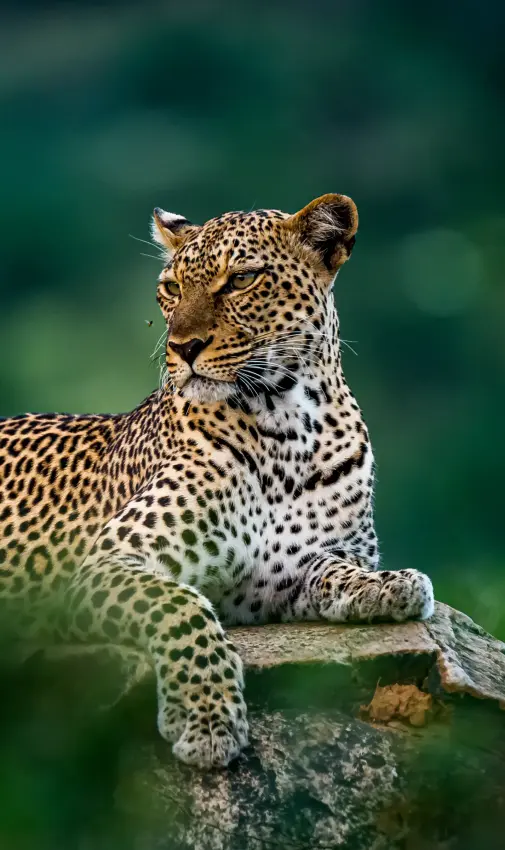
Leopard resting on fallen log in natural setting 01

Maasai Mara

Local guides with poles crossing shallow forest river, Northern Kenya, Kenya 02

Northern Kenya

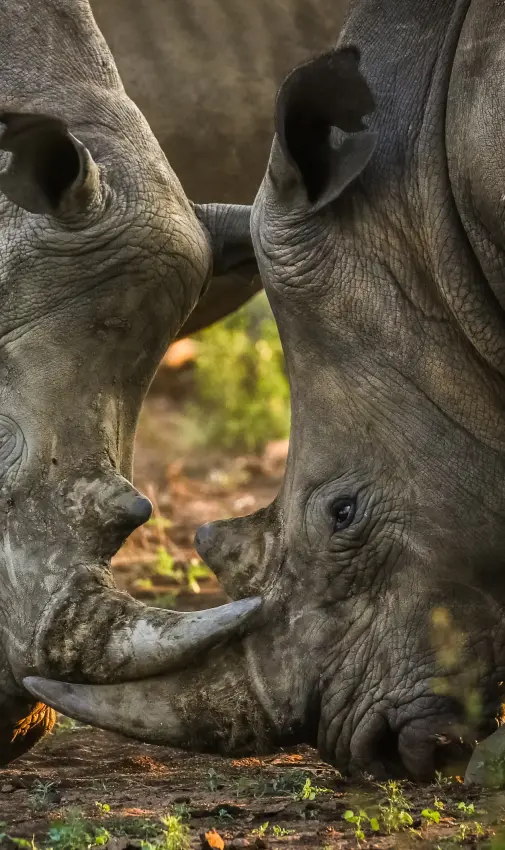
Two rhinos touching horns in natural habitat 03

Laikipia Highlands

Traditional fishing boat with blue sail on sandy beach 04

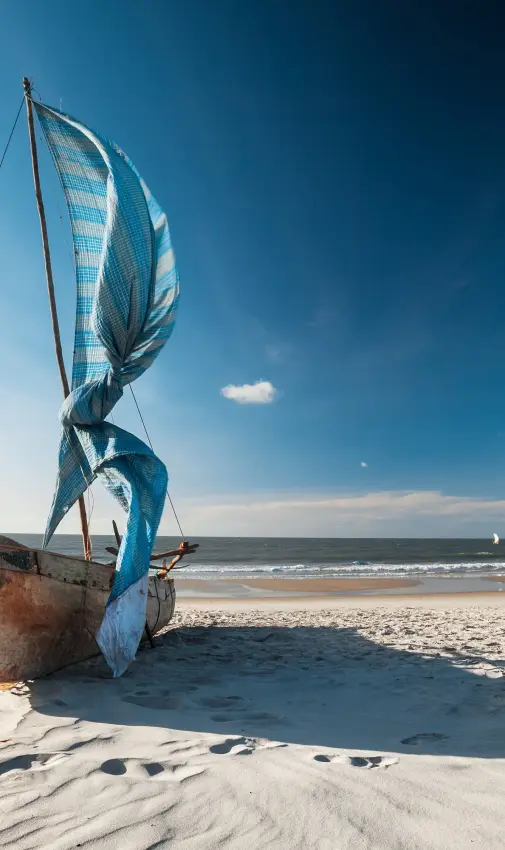
Kilifi

Flock of flamingos wading in shallow pink-tinted water, Rift Valley Lakes, Kenya 05

Rift Valley Lakes

Snow-capped Mount Kilimanjaro rising above acacia trees and Tanzania savanna 06

Amboseli and Chyulu Hills

Man in traditional red garment driving open safari vehicle, Samburu Reserve, Kenya 07

Samburu Reserve

08

Lamu Archipelago

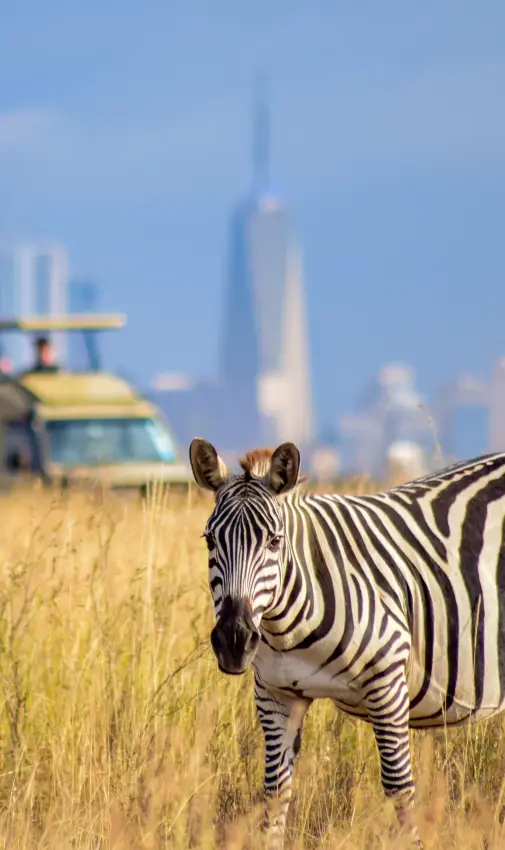
Zebras in savanna grassland with safari vehicle and city skyline 09

Nairobi

African elephants with calf walking through grassland at sunset 10

Tsavo

Planning a journey together

our approach

remote, exclusive
& personal

Every journey starts with a conversation. We take the time to understand your vision before we start planning.

Whether by phone or in person, we work with you directly to shape something that is considered, personal, and expertly delivered.

get in touch
destinations ideas & inspiration our process about us contact us