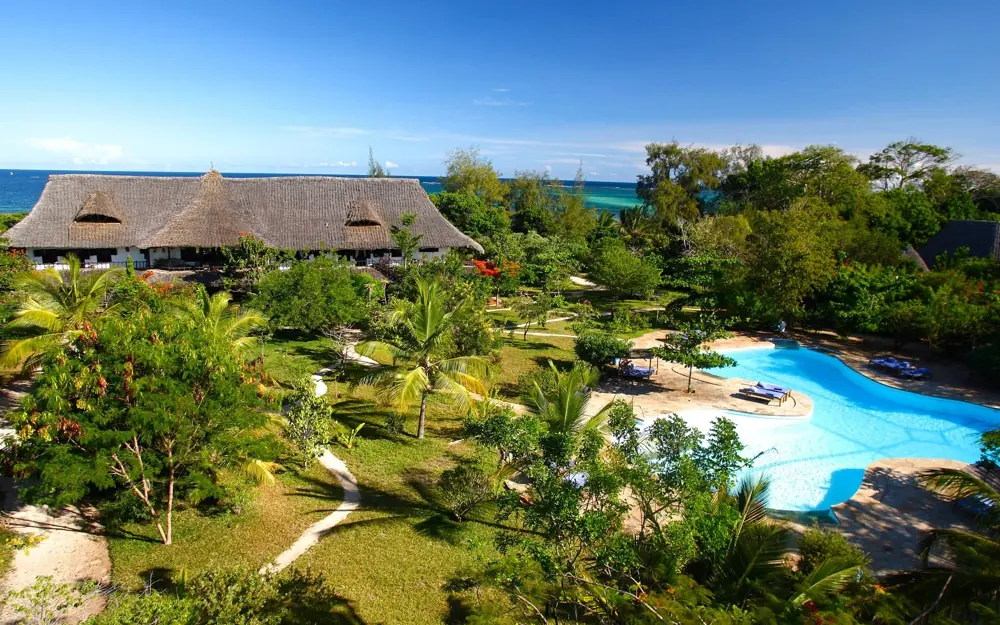
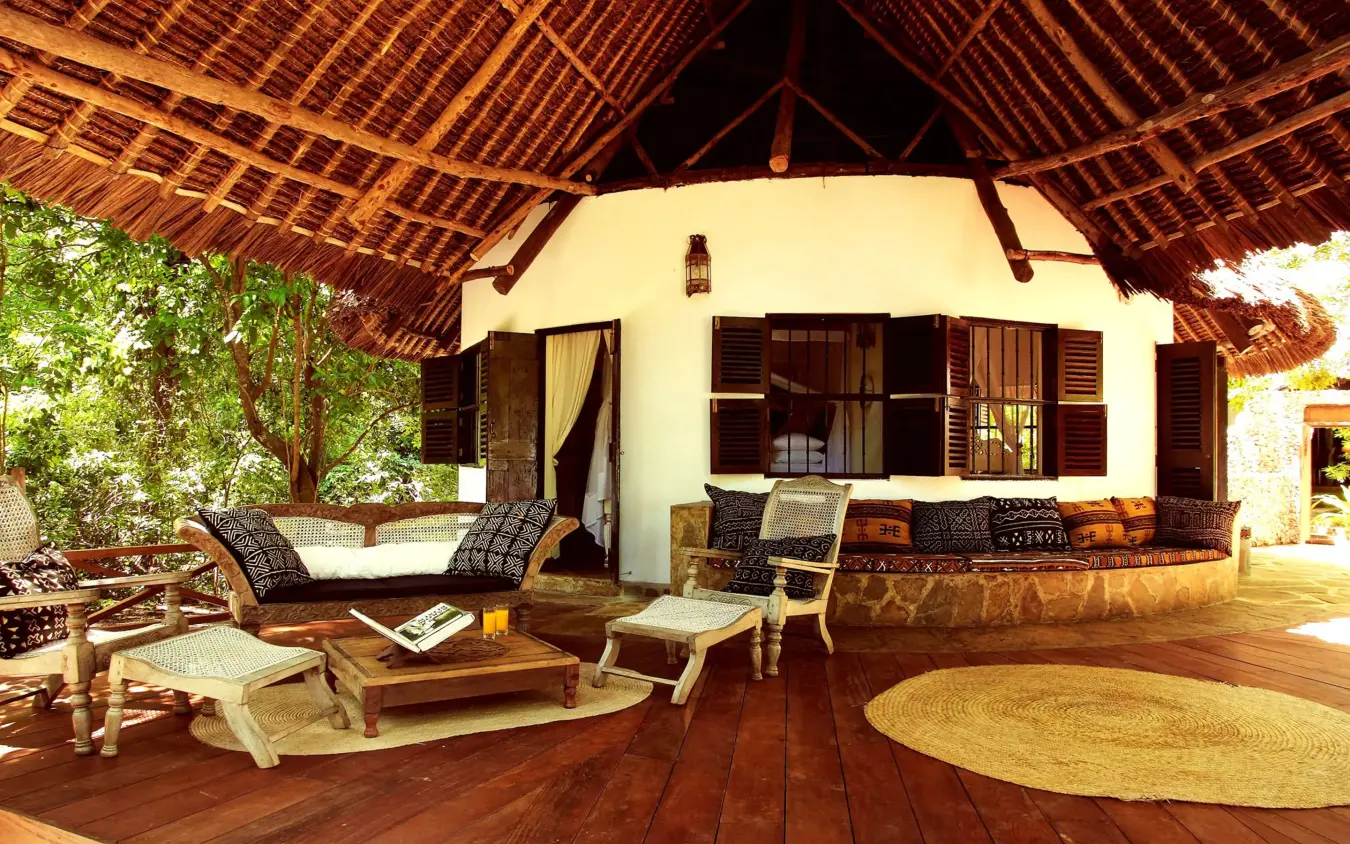
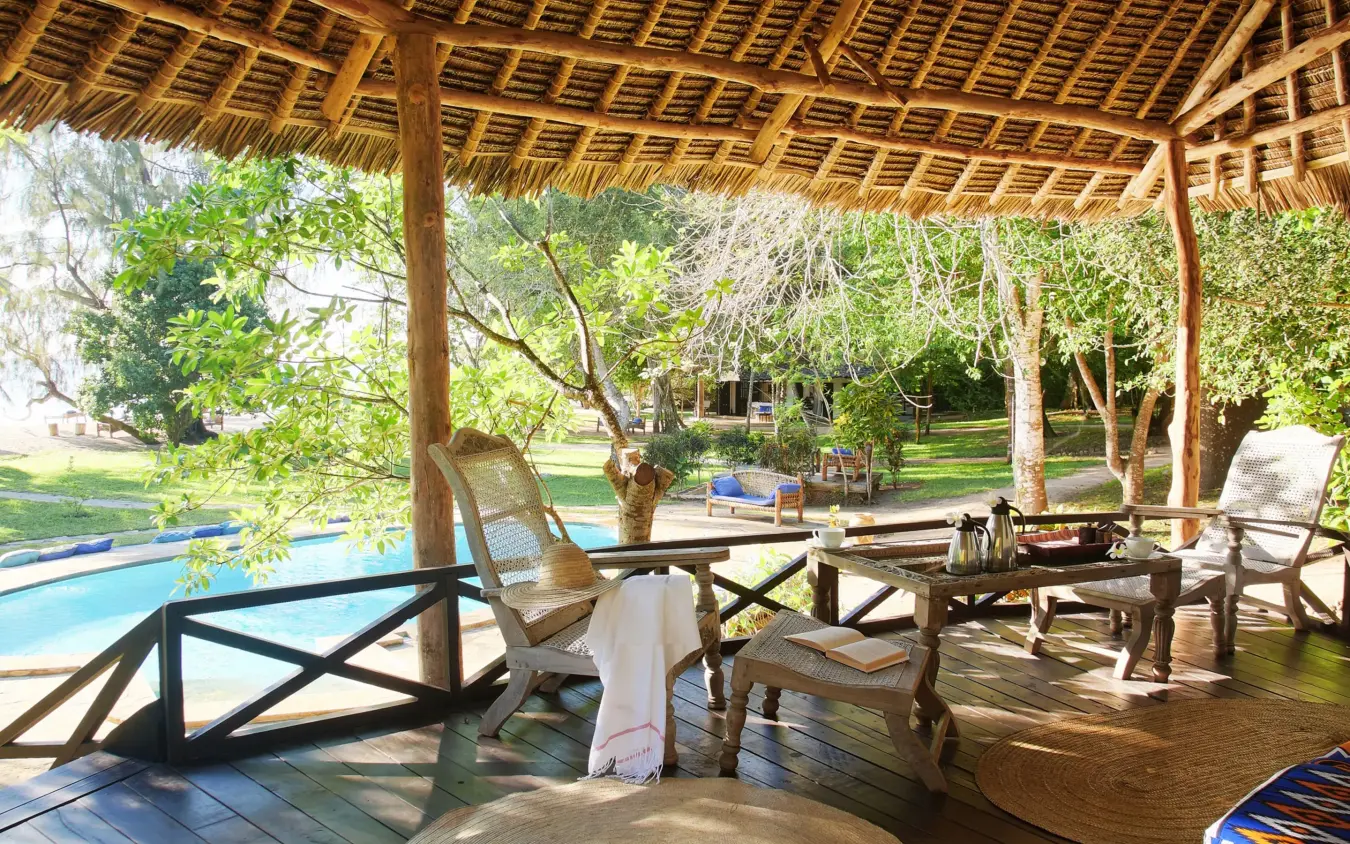
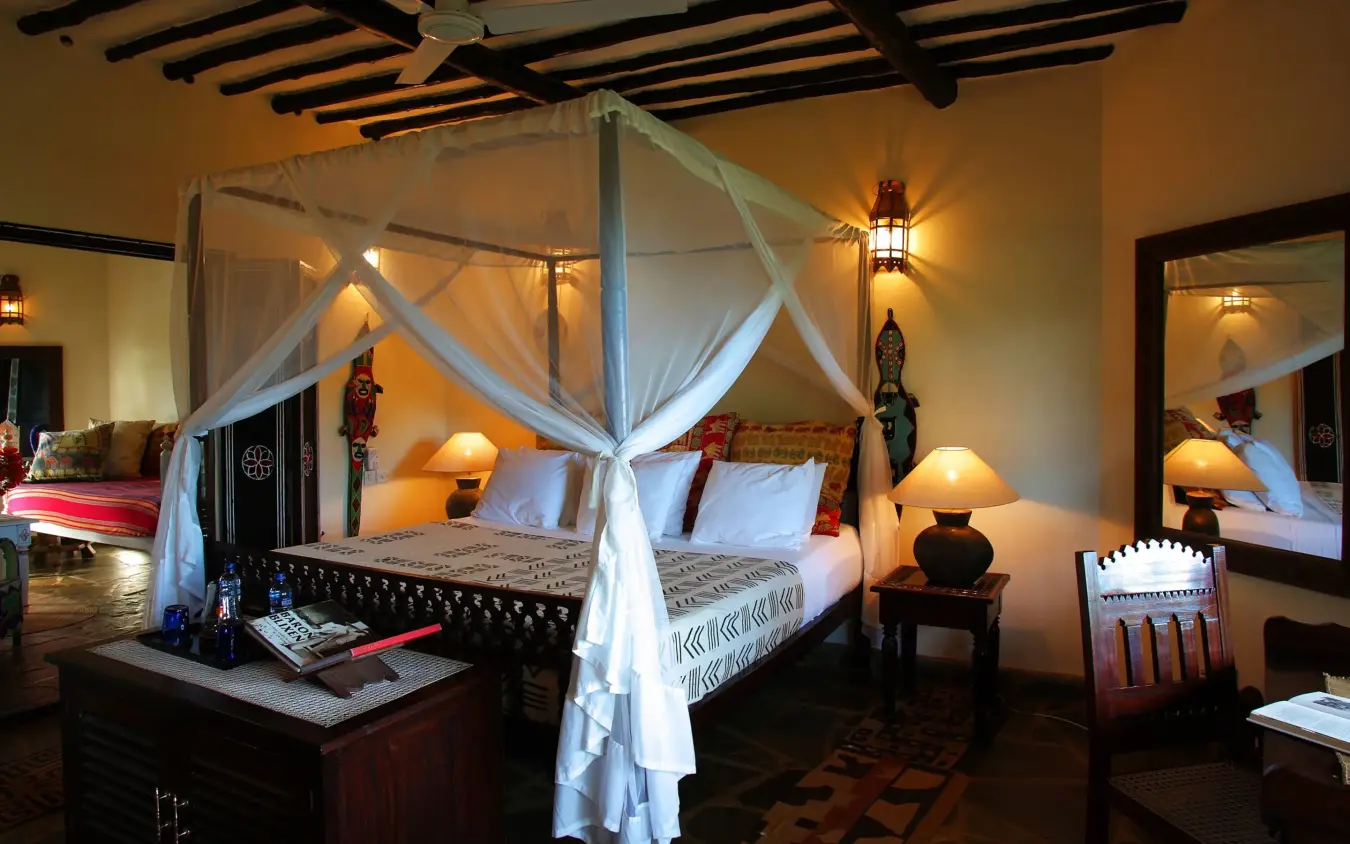
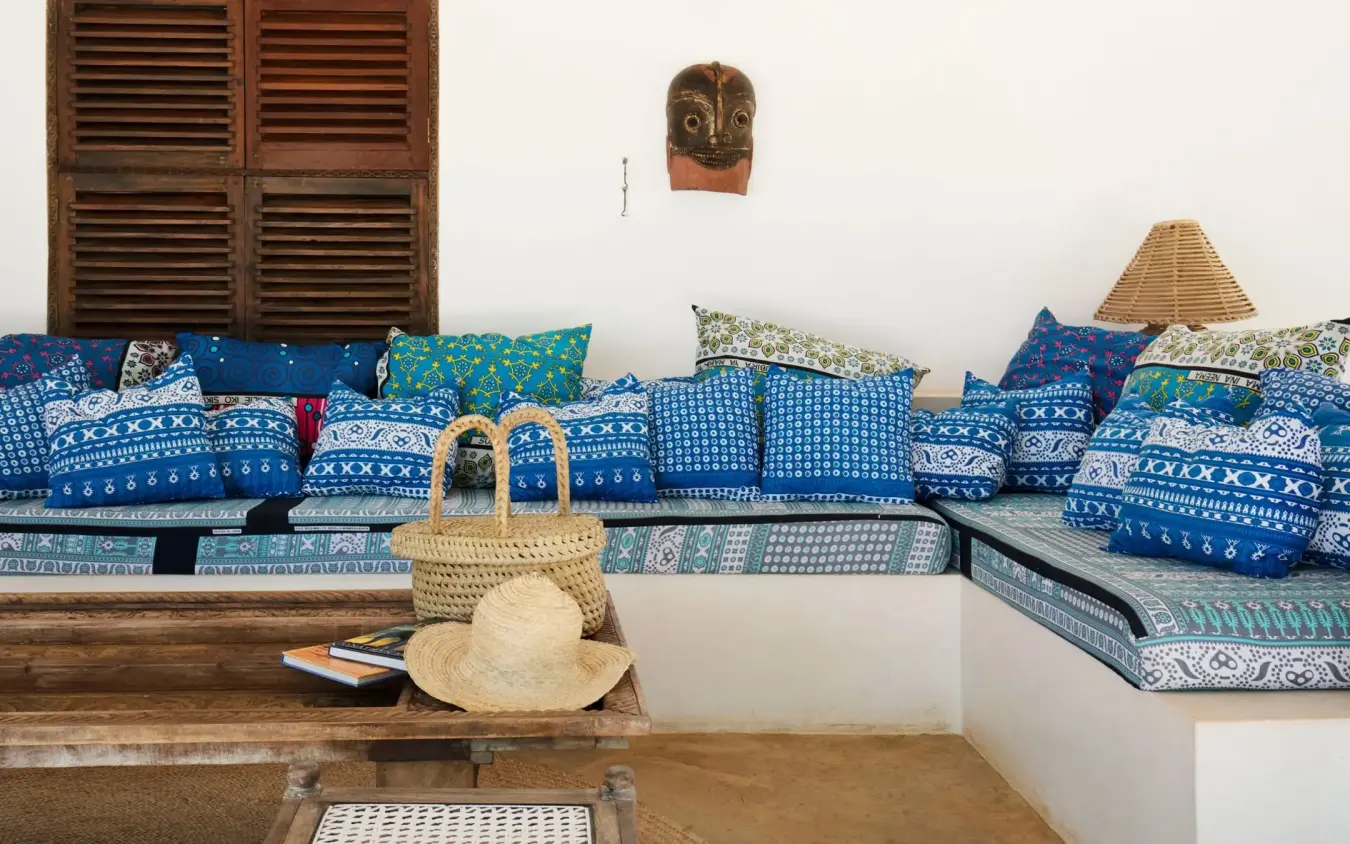
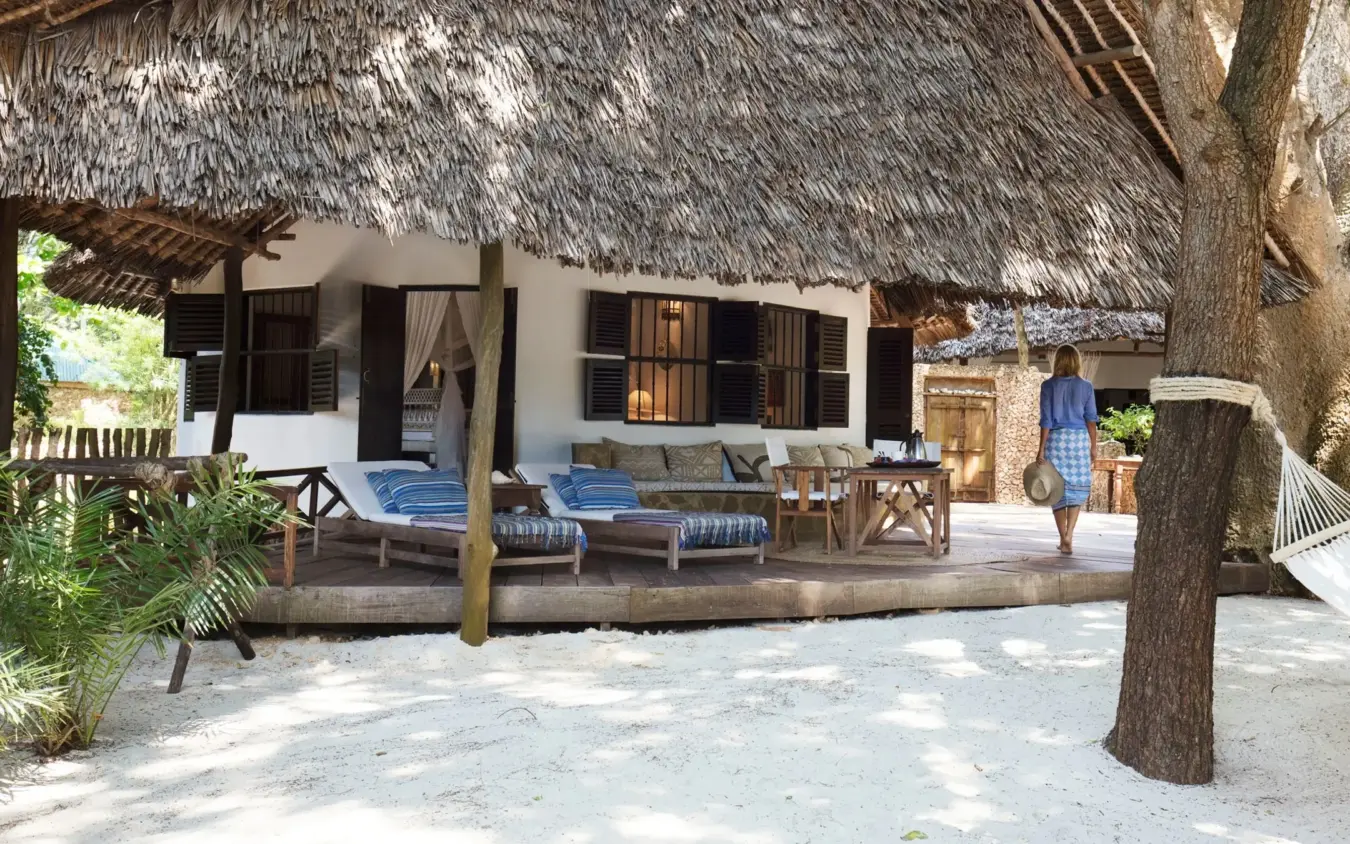
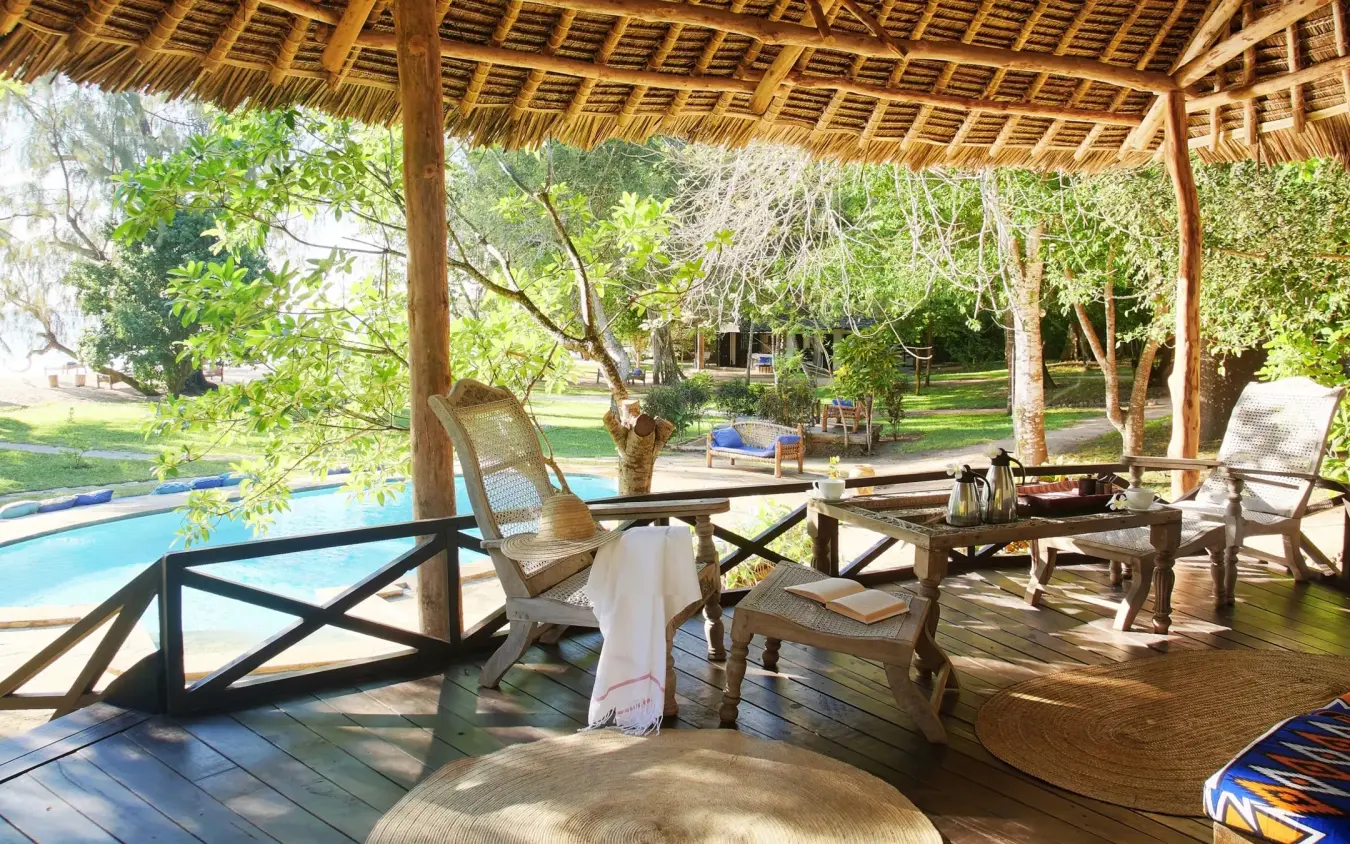
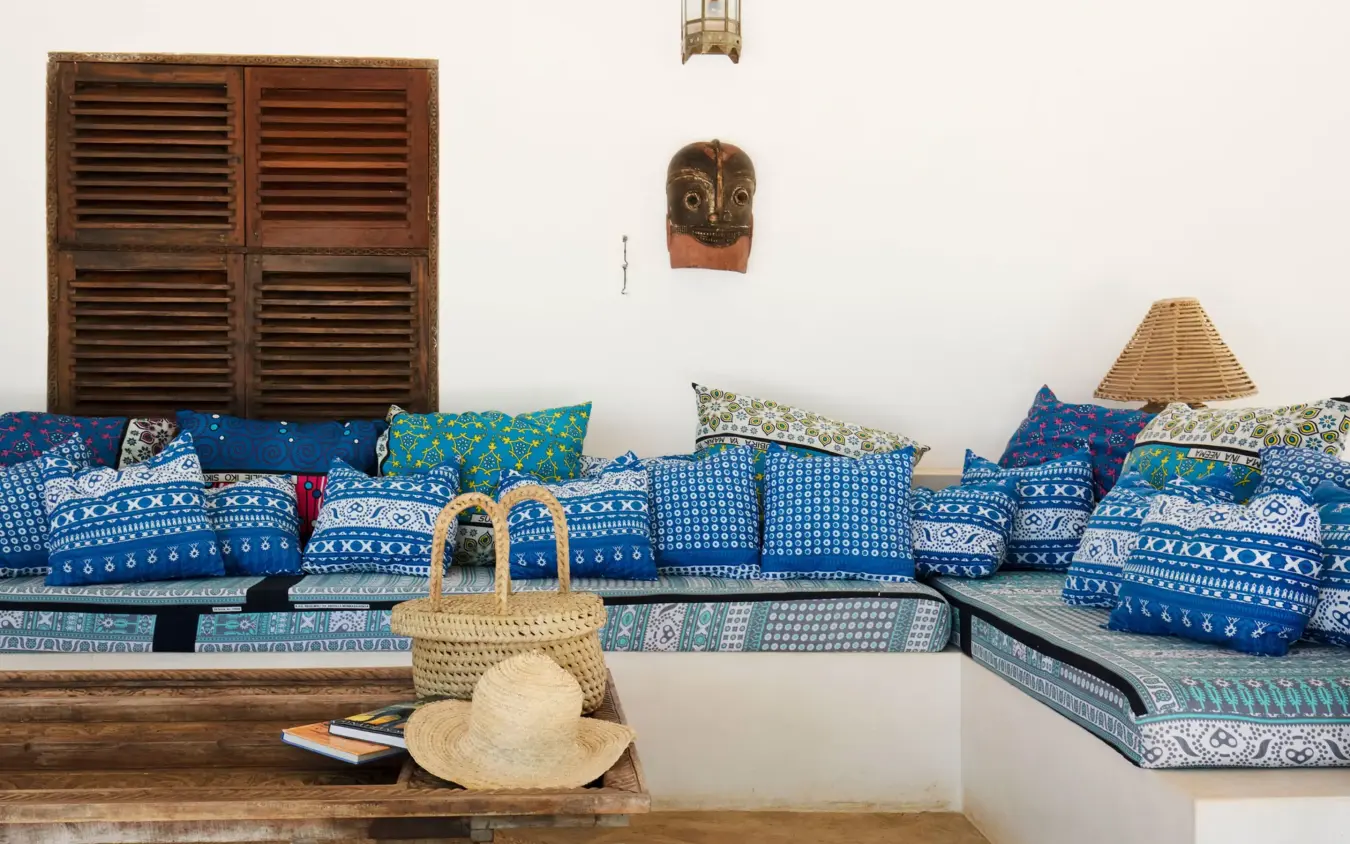
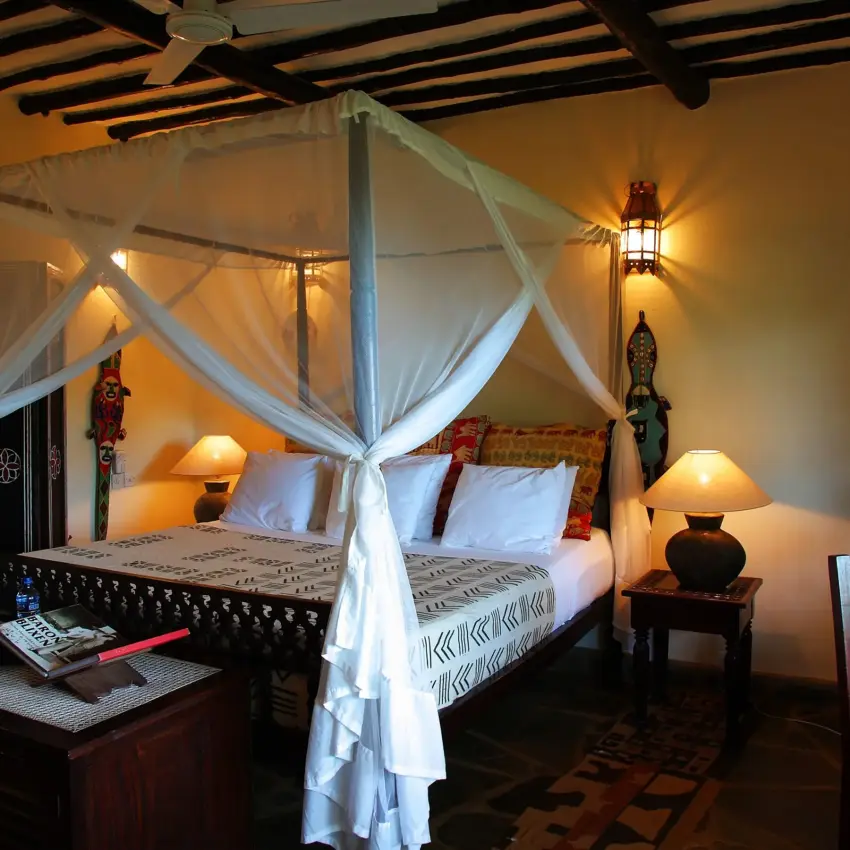
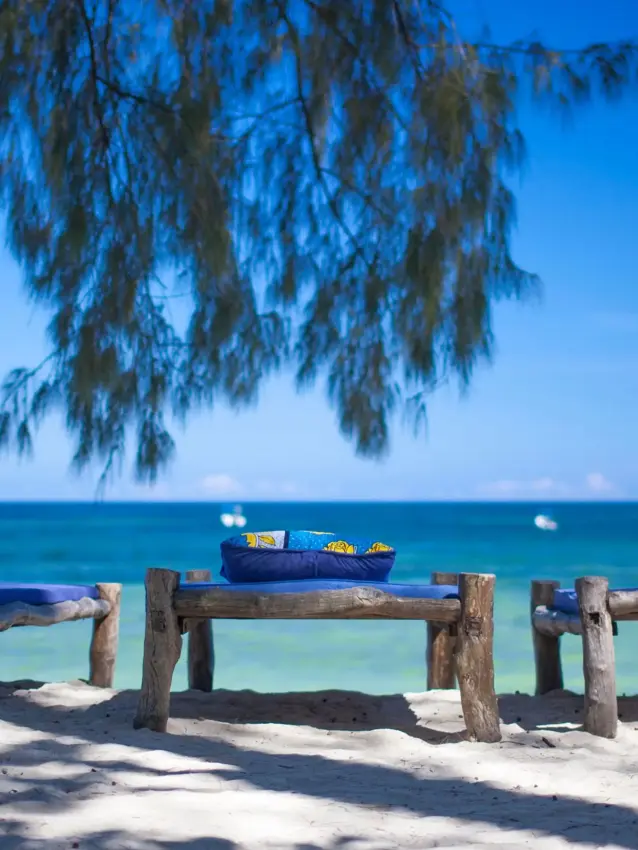
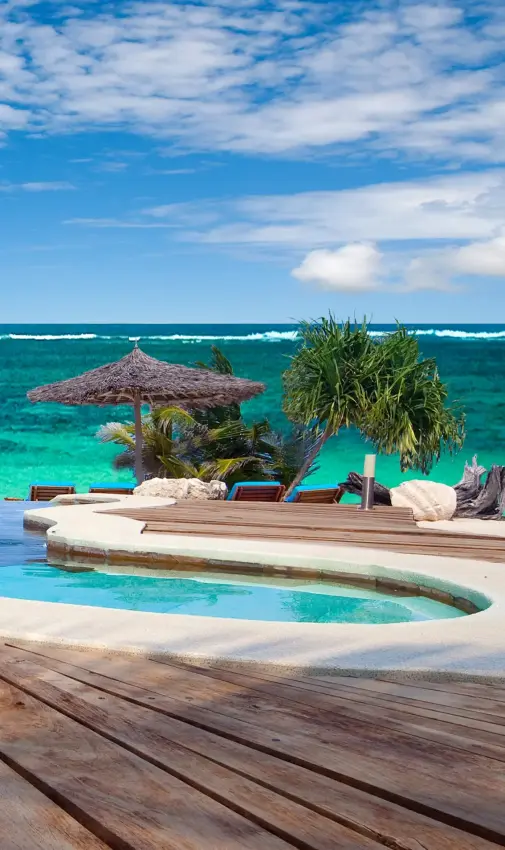
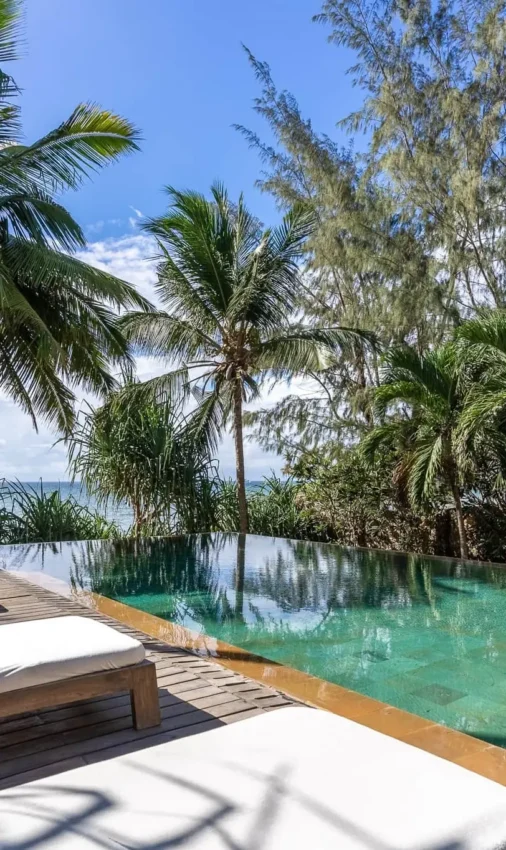
The lodge sits on a beachfront plot where Galu shades into the Kinondo area, bordered by rocky cliffs and the Kaya Kinondo sacred forest, with the nearest hotel a couple of kilometres away. Arrival feels less like a hotel check-in than being shown around an estate: paddocks first, then patches of coastal forest, then lawns rolling down to white sand. Coral stone, whitewashed plaster, dark hardwoods and palm-thatch makuti roofs give the architecture a Swahili character, softened by a Scandinavian restraint. Hand-carved daybeds, brass lamps and mosquito nets over the beds finish the rooms.
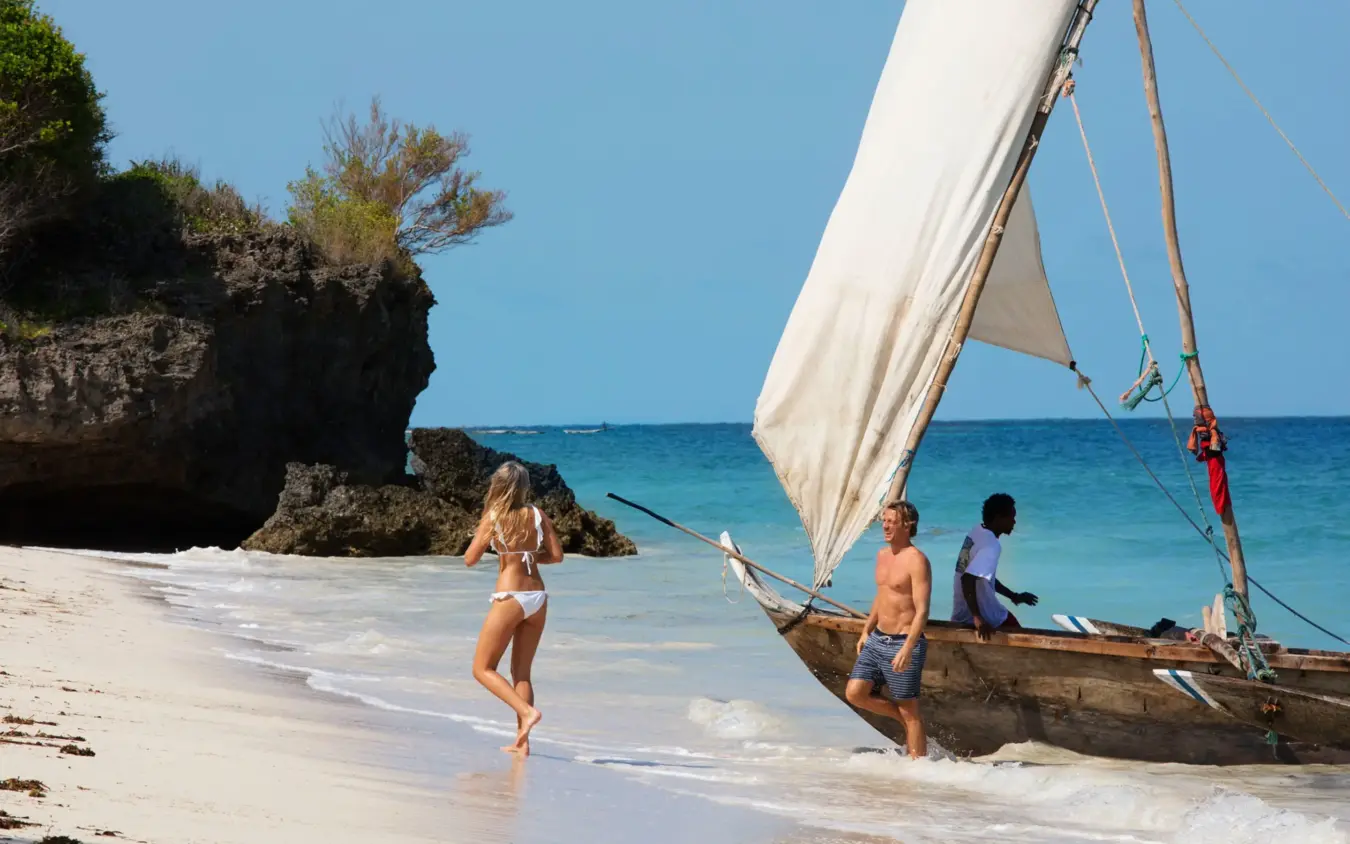
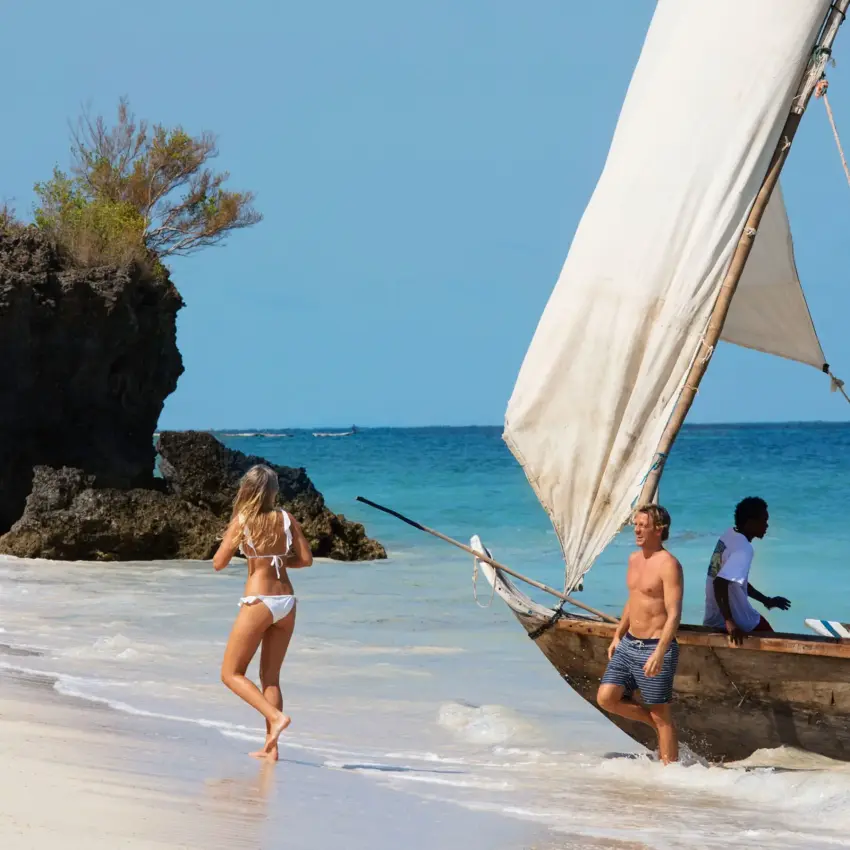
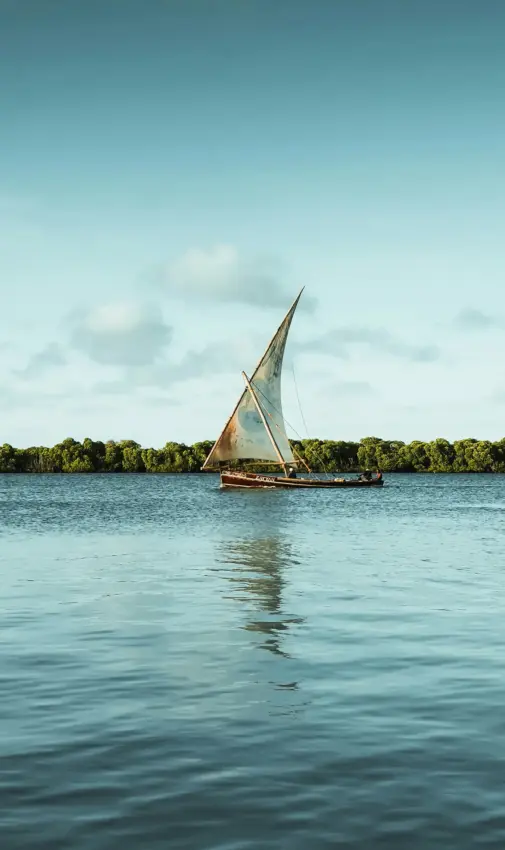
Days follow the tides rather than a fixed timetable. At low tide the reef flats gleam, and guests walk out or take the pier to swim and snorkel. Higher water brings out the dhows and the lodge’s Hobie Cat, heading for sandbanks where the sea turns a bright turquoise. Between times the children move between the pool, the horses and the beach, learning to sail or to stand on a wakeboard, while the adults settle into yoga on the platform, the sauna, or a book in the shade. Staff arrange all of it with the quiet ease of a well-run household.
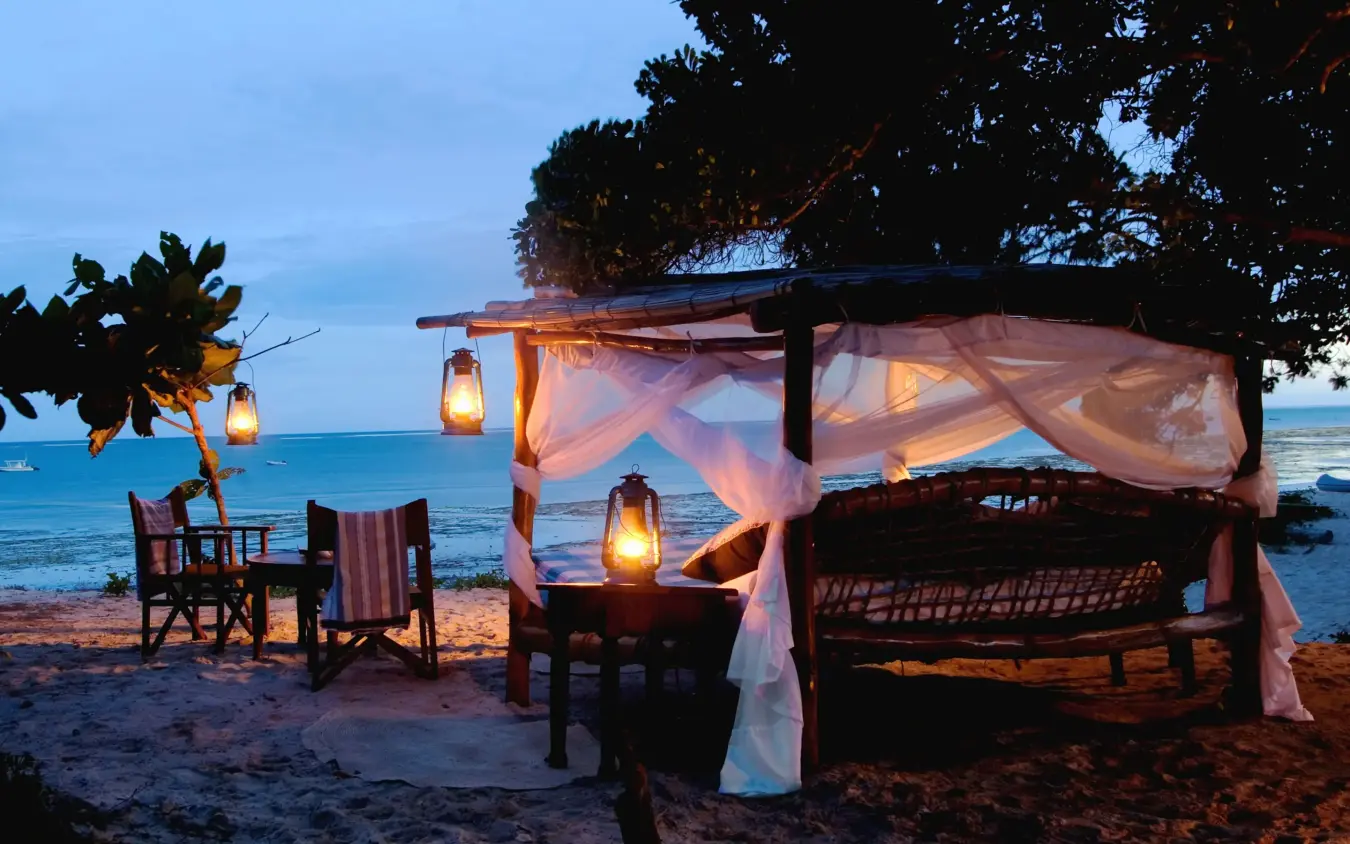
Dinner arrives by lantern-light in the garden, or up on the lookout tower
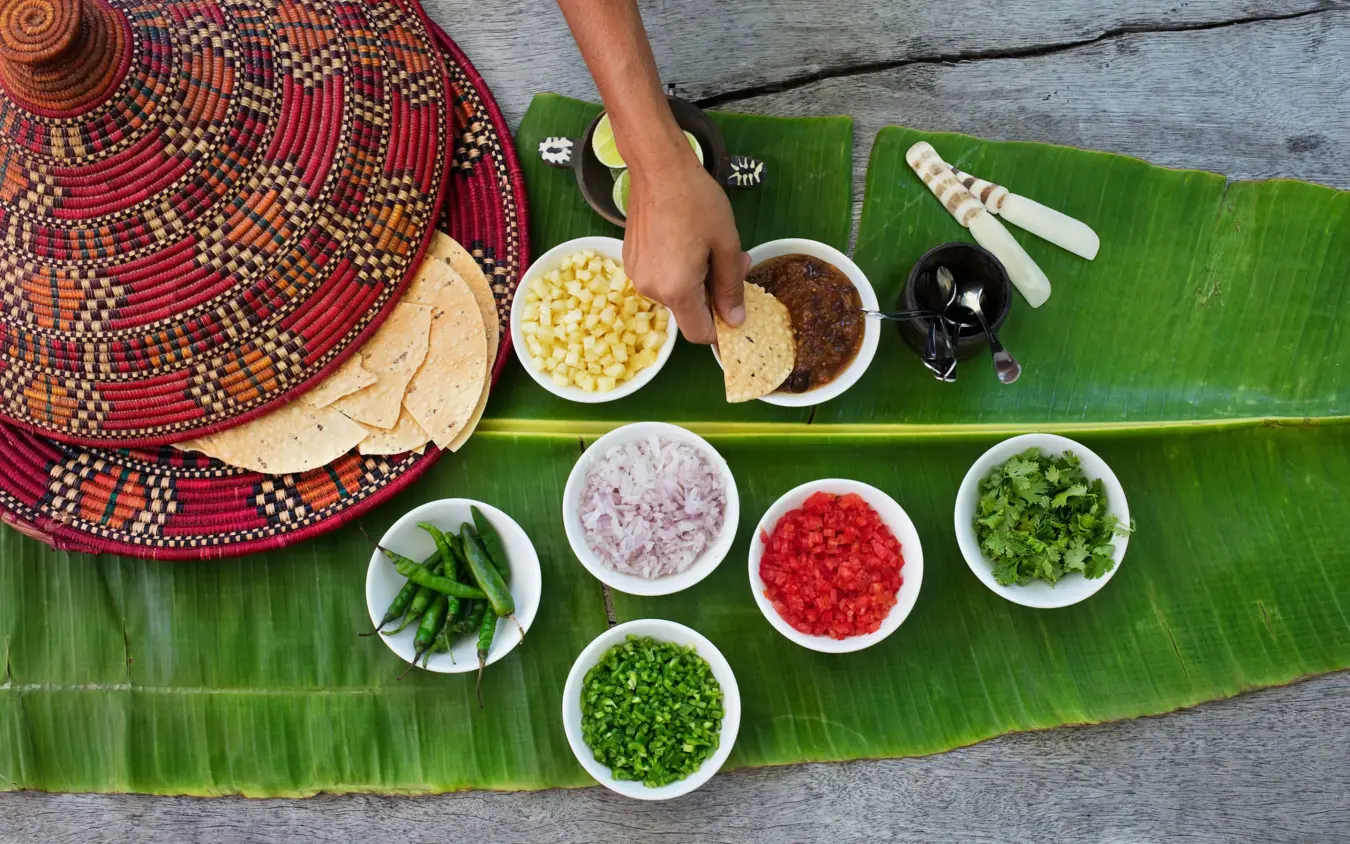
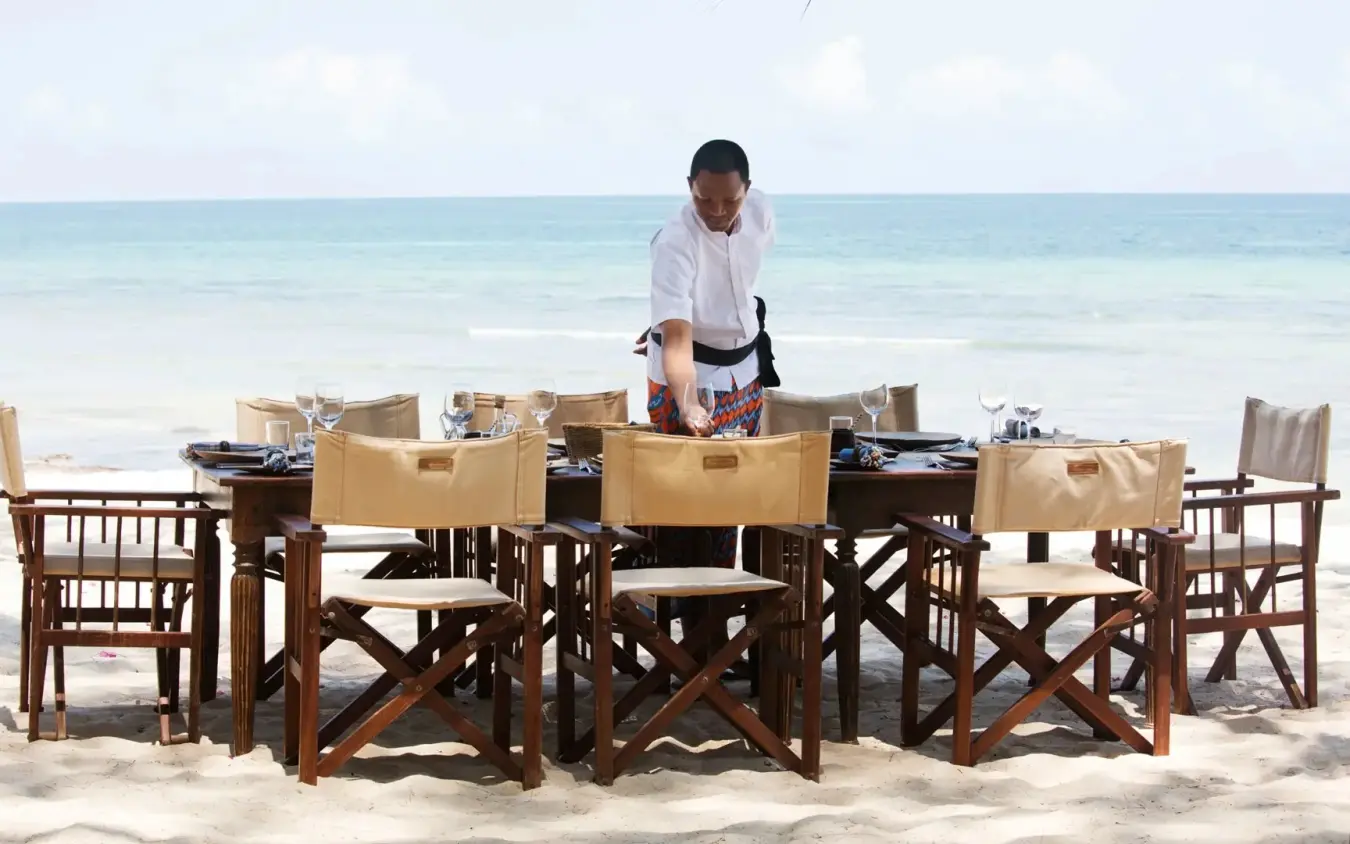
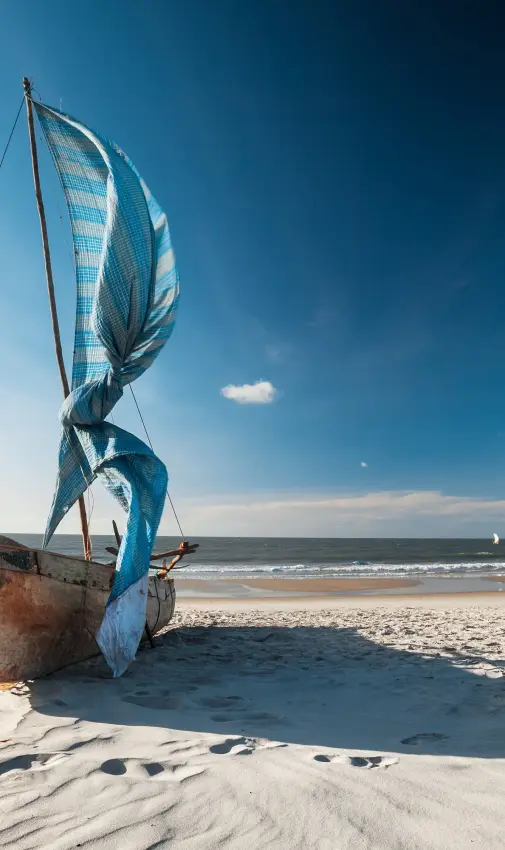
Dining has no fixed room. Lunch might be laid under the trees on the sand, or inside an old wooden boat beached on the shore, or in the boathouse. Dinner arrives by lantern-light in the garden, or up on the lookout tower. The kitchen leans on seafood landed that day and on fruit and vegetables from the lodge garden and community farms, with Swahili spices threaded through European cooking. Evenings often end at a fire on the beach, the children roasting marshmallows, the surf steady behind the talk.
What the Andersson family built reaches well past the beach. The Kinondo Kwetu Trust funds a hospital the family opened as a small clinic in 2008, now a Level 4 facility handling well over a hundred thousand patient visits a year. It works with Sweden’s Karolinska Institute on AI-based cervical cancer screening. The Trust also supports the local primary school, paying teachers and running a nursery feeding programme. Guided walks into Kaya Kinondo are led by Digo elders, and the family sponsors the East African Whale Shark Trust and Colobus Conservation.