Camp

Hoanib Skeleton Coast Camp

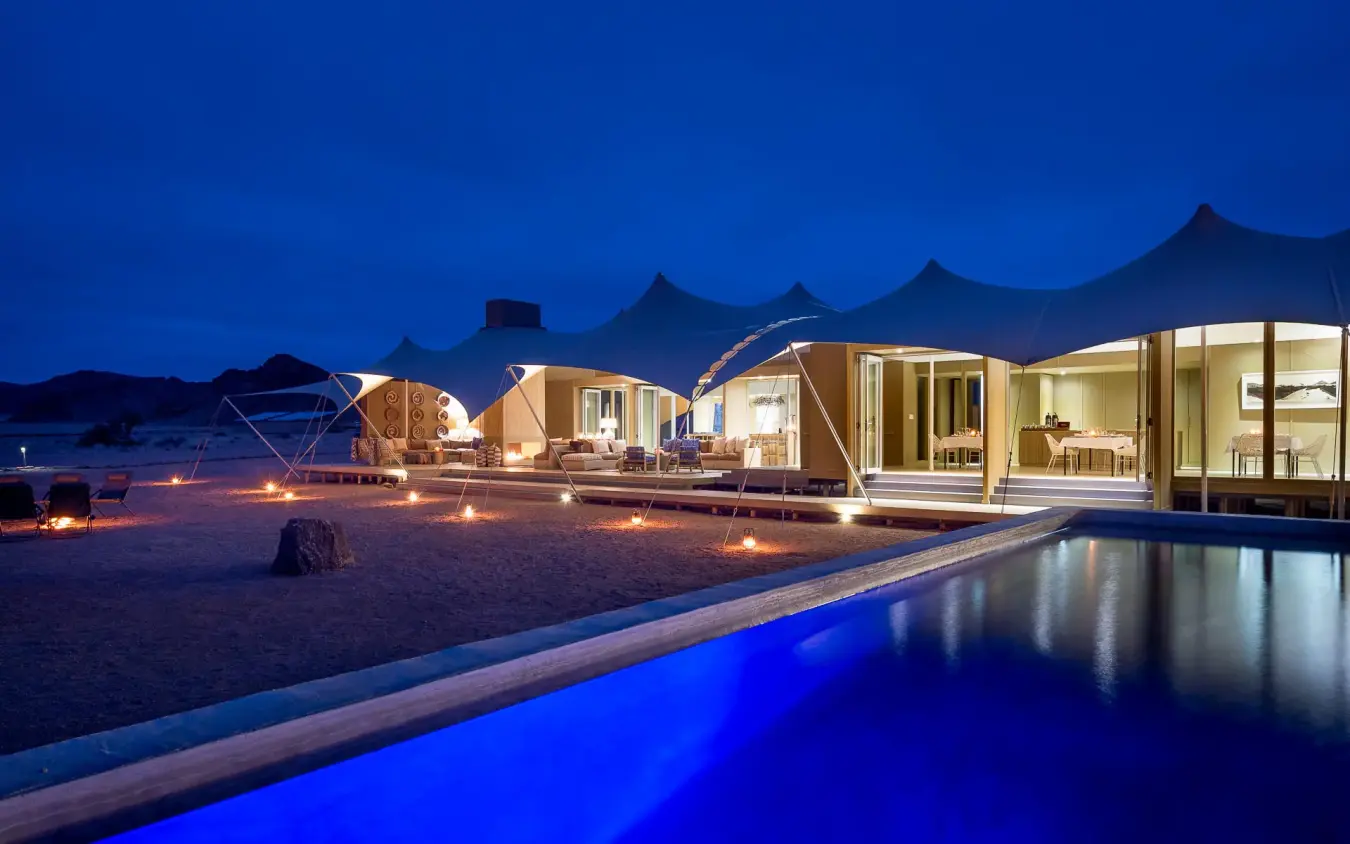
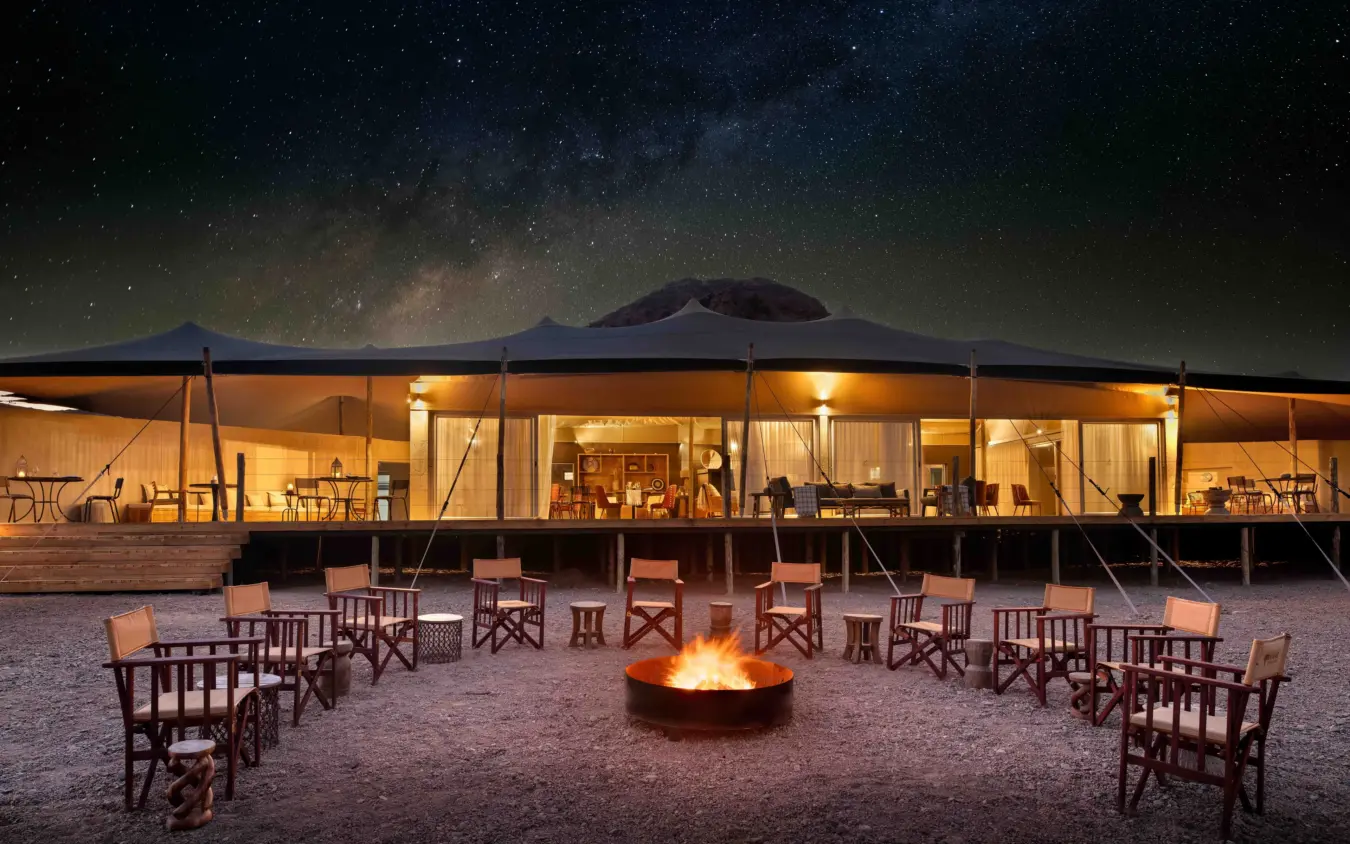
A solar-powered camp of eight canvas suites, set deep in Namibia’s Hoanib Valley, within reach of the Skeleton Coast.

Country: Namibia
Location: Skeleton Coast
Number of rooms: 8

From riverbed to Atlantic shore

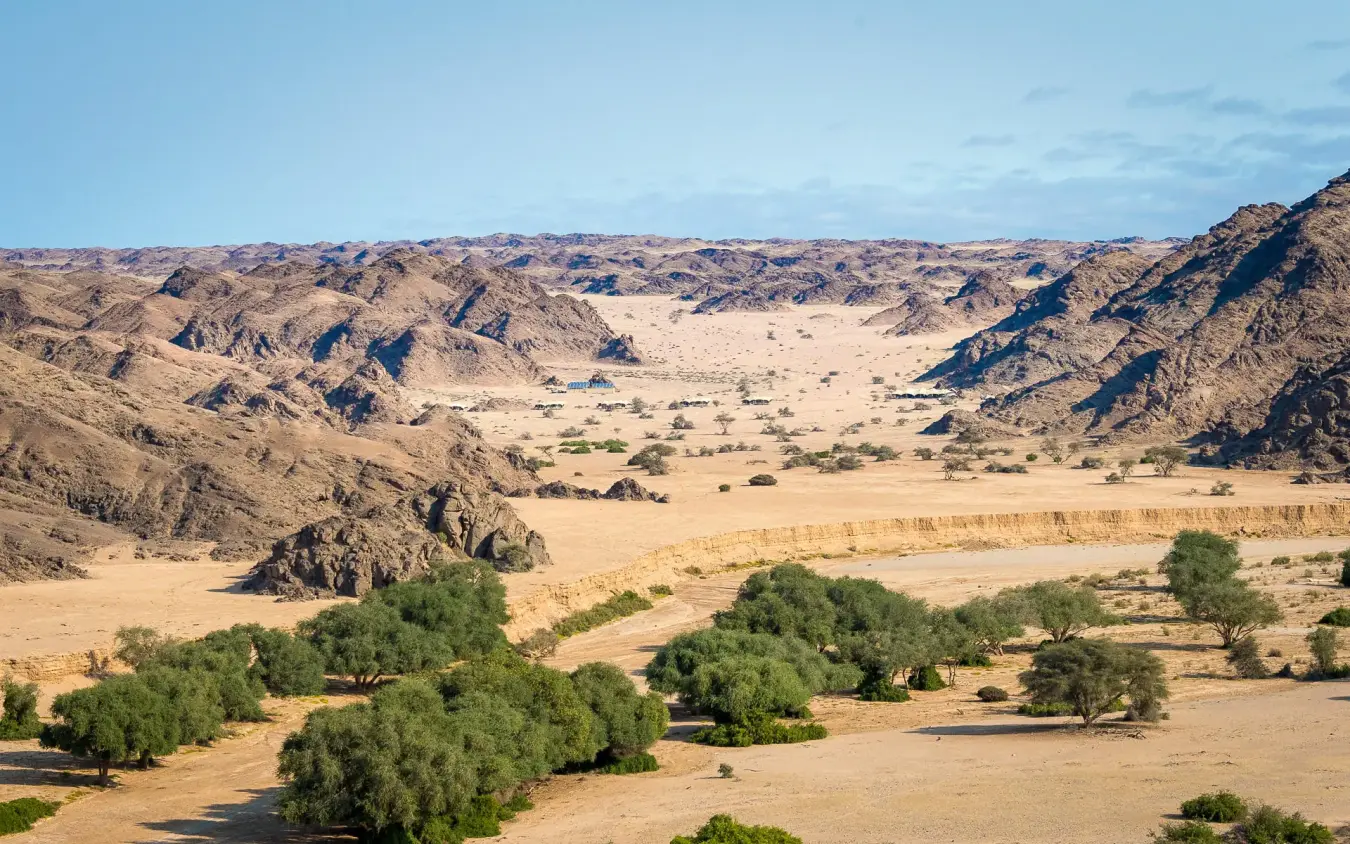
In the northern Palmwag Concession, near the boundary of Skeleton Coast National Park, two tributaries of the usually dry Hoanib River come together, and it is here, deep in the lower Hoanib Valley of Namibia’s Kunene region, that Hoanib Skeleton Coast Camp sits. You reach it only by flying. Light aircraft come down on gravel plains ringed by rugged hills and yellow dune fields, in one of the least populated corners of the country.

Few camps in Namibia combine both within a single stay

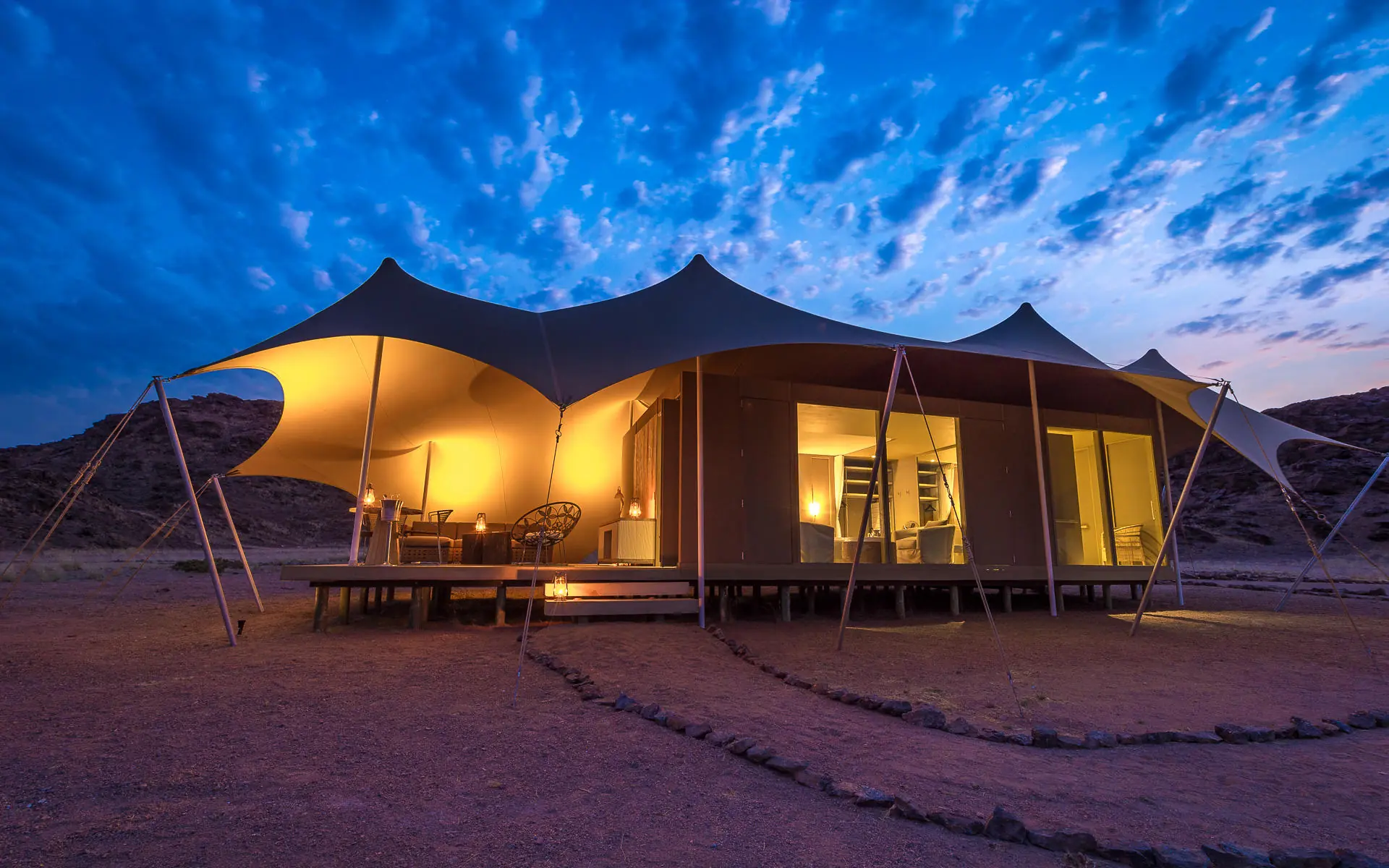
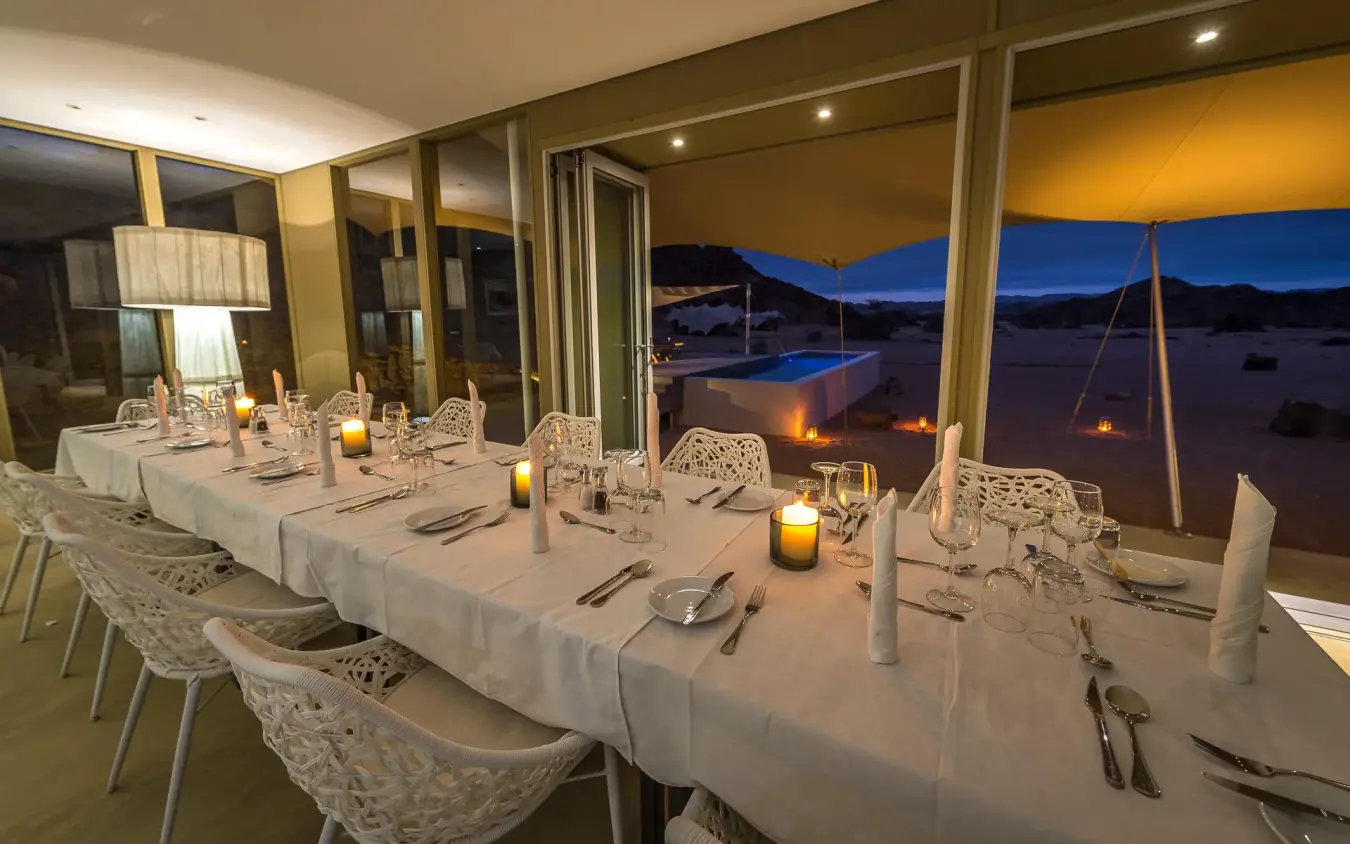
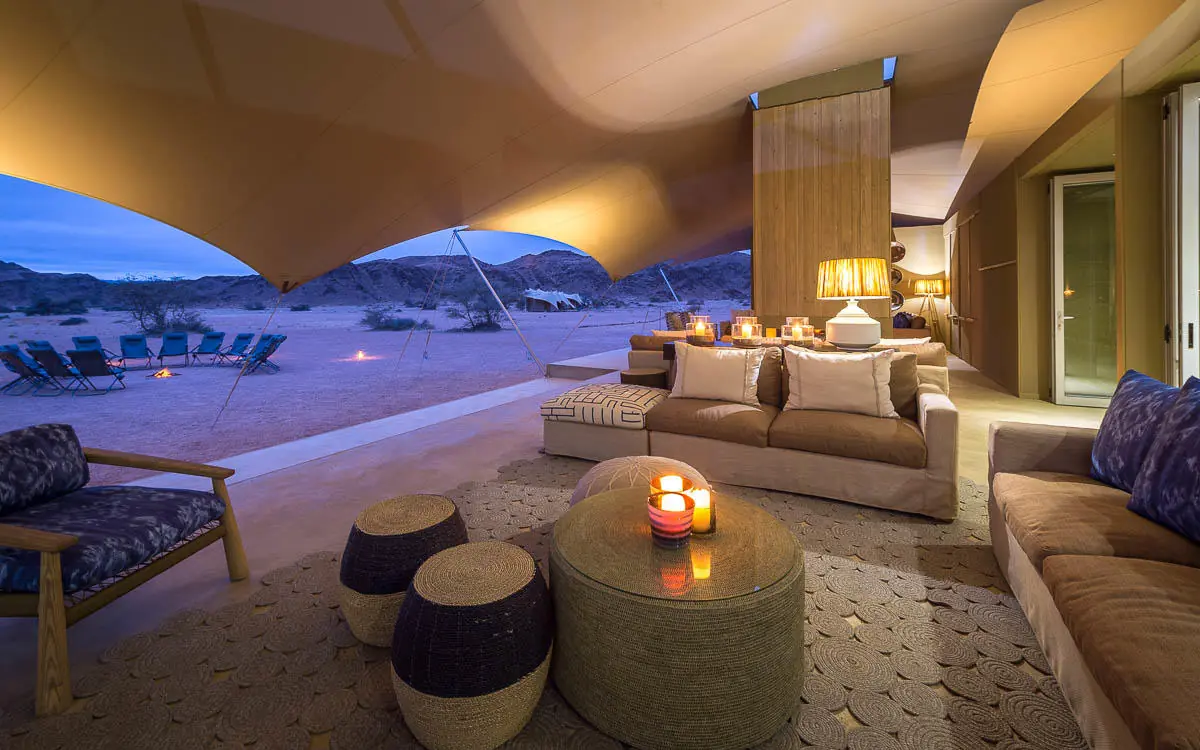
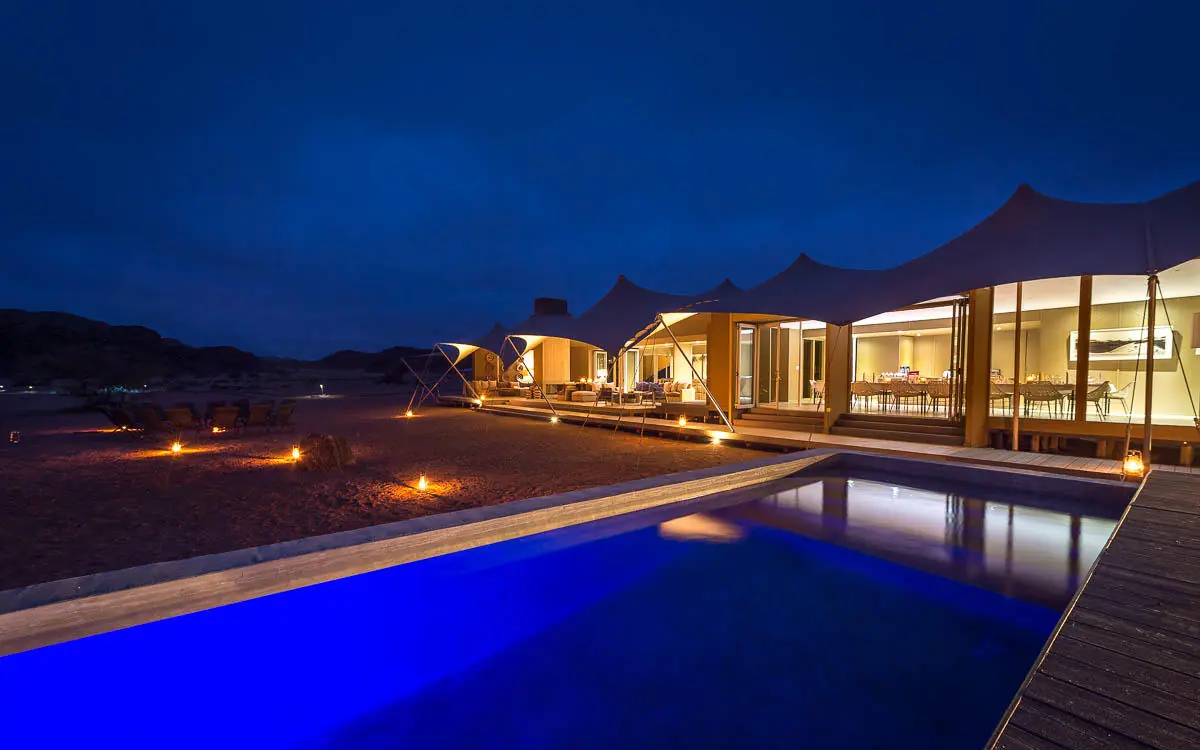
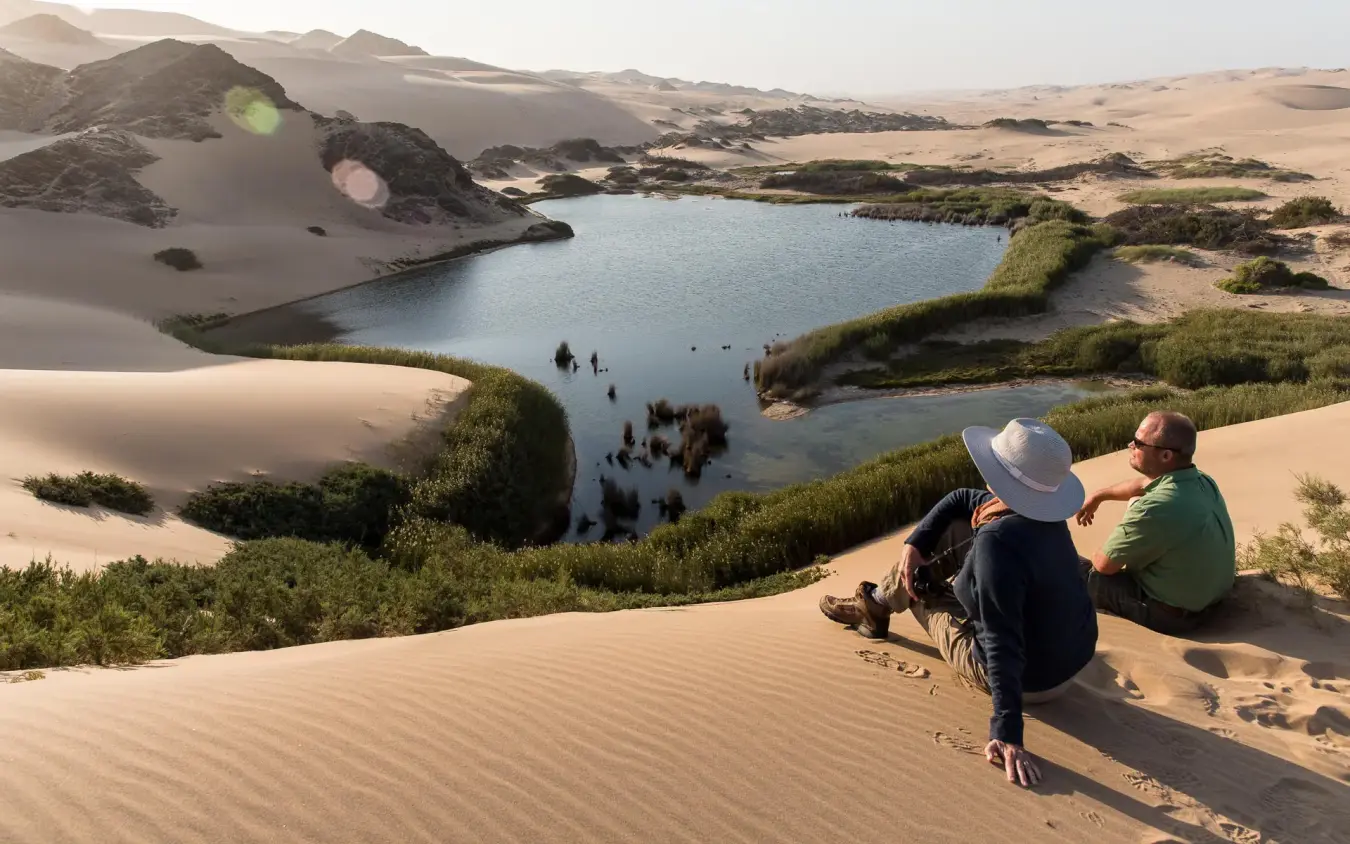
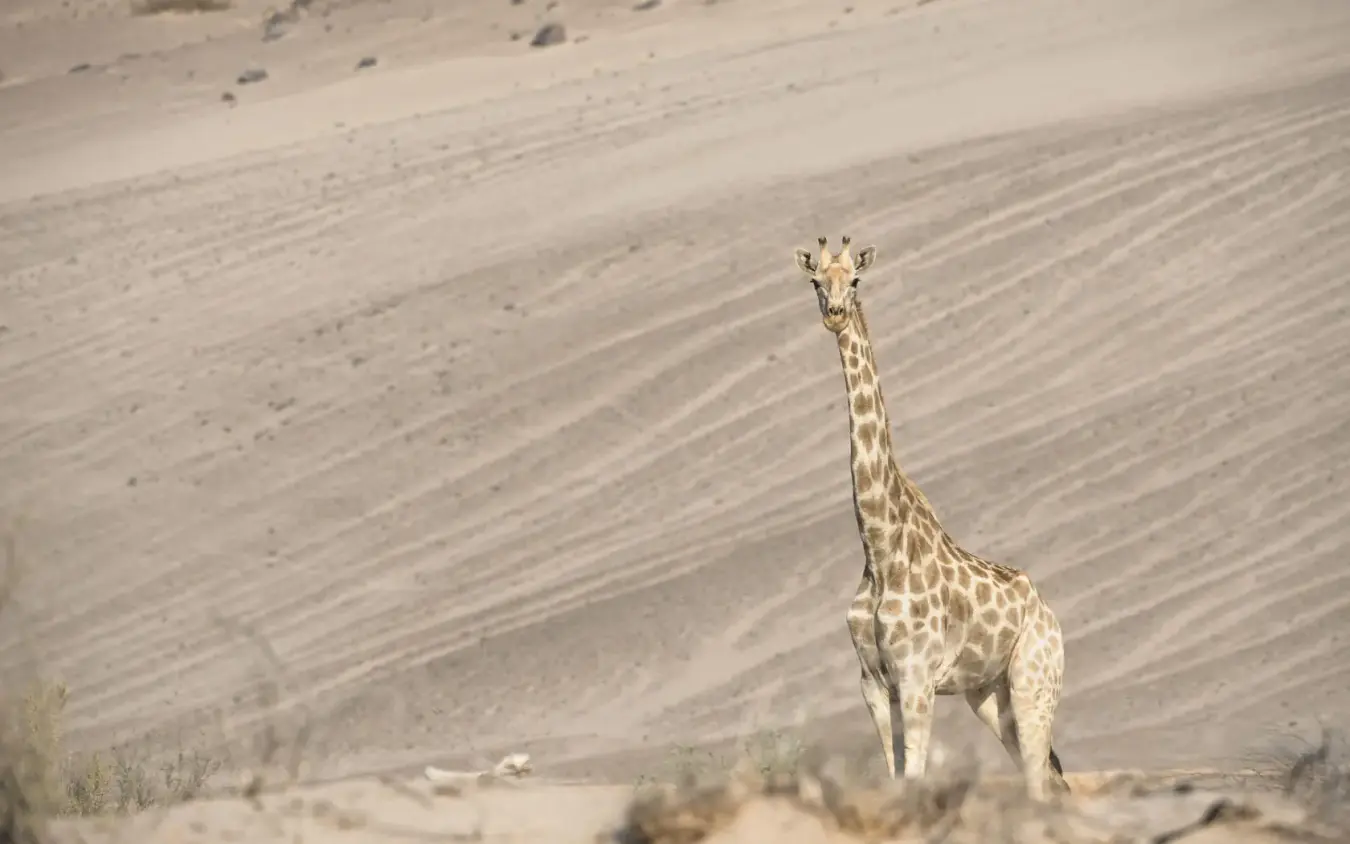
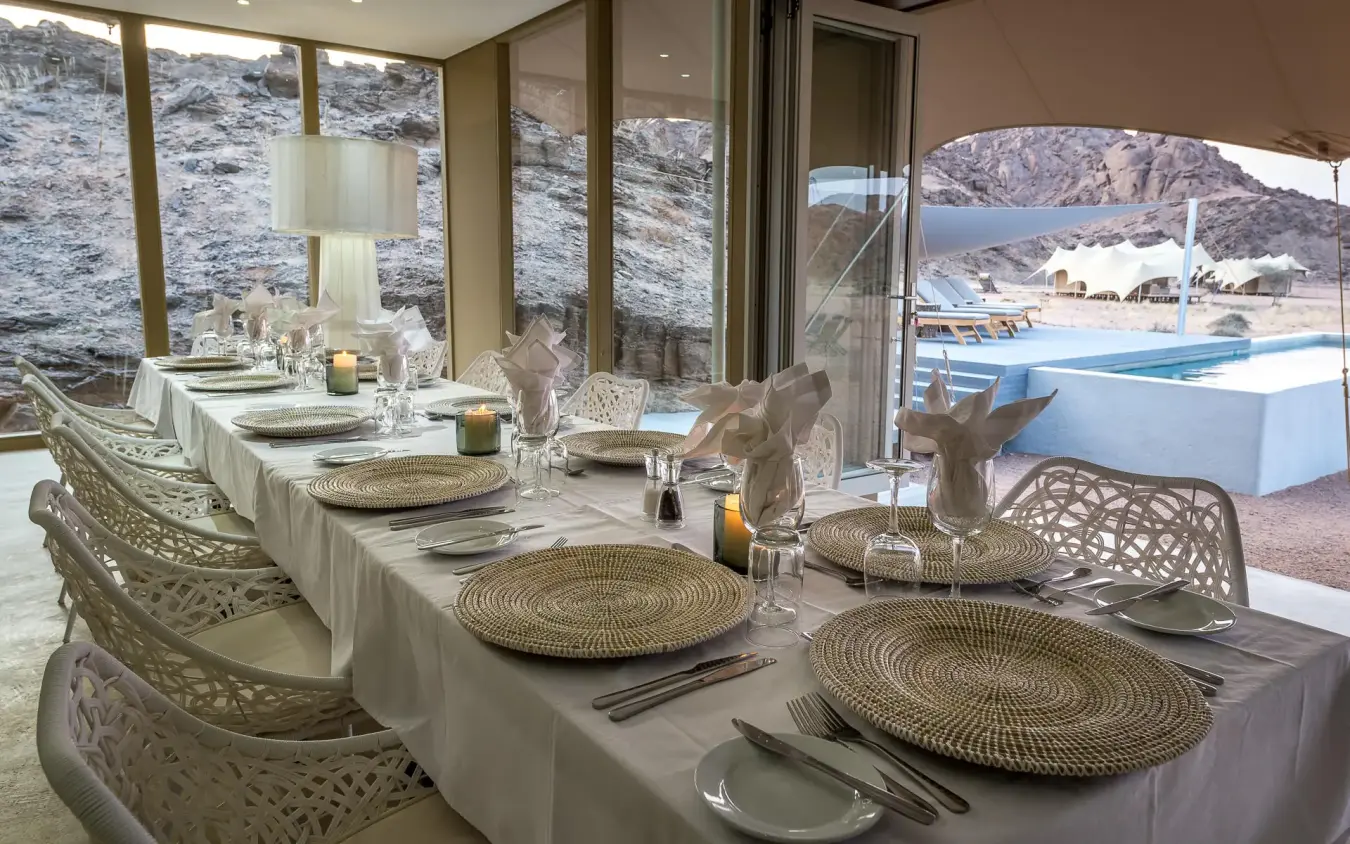
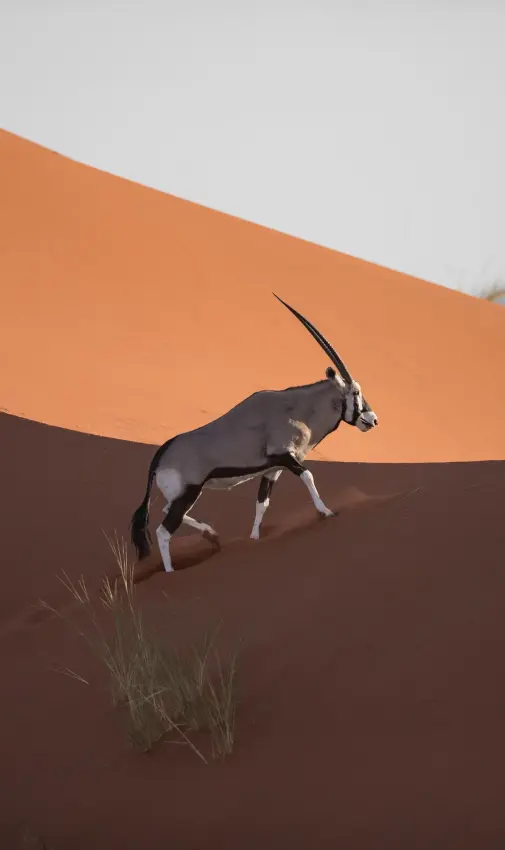
Eight canvas suites look out over a broad valley and a waterhole where giraffes, gemsbok and, on occasion, desert lions cross the open ground within view of the tents. The defining draw, though, is the run to the Atlantic, from desert-adapted elephants inland to the seal colonies and shipwrecks on the coast. Few camps in Namibia combine both within a single stay, and this one leads you the whole way, from riverbed to shore.

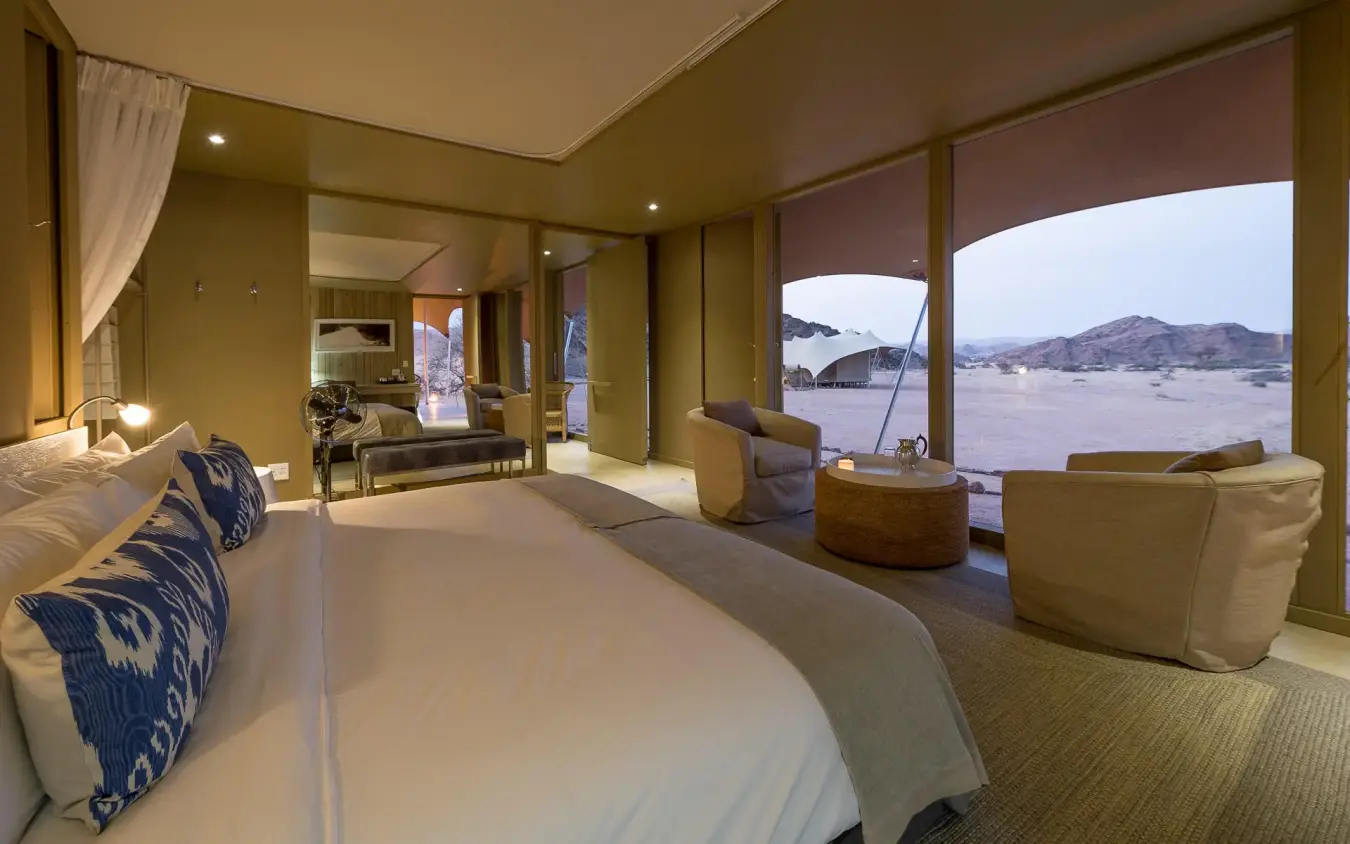
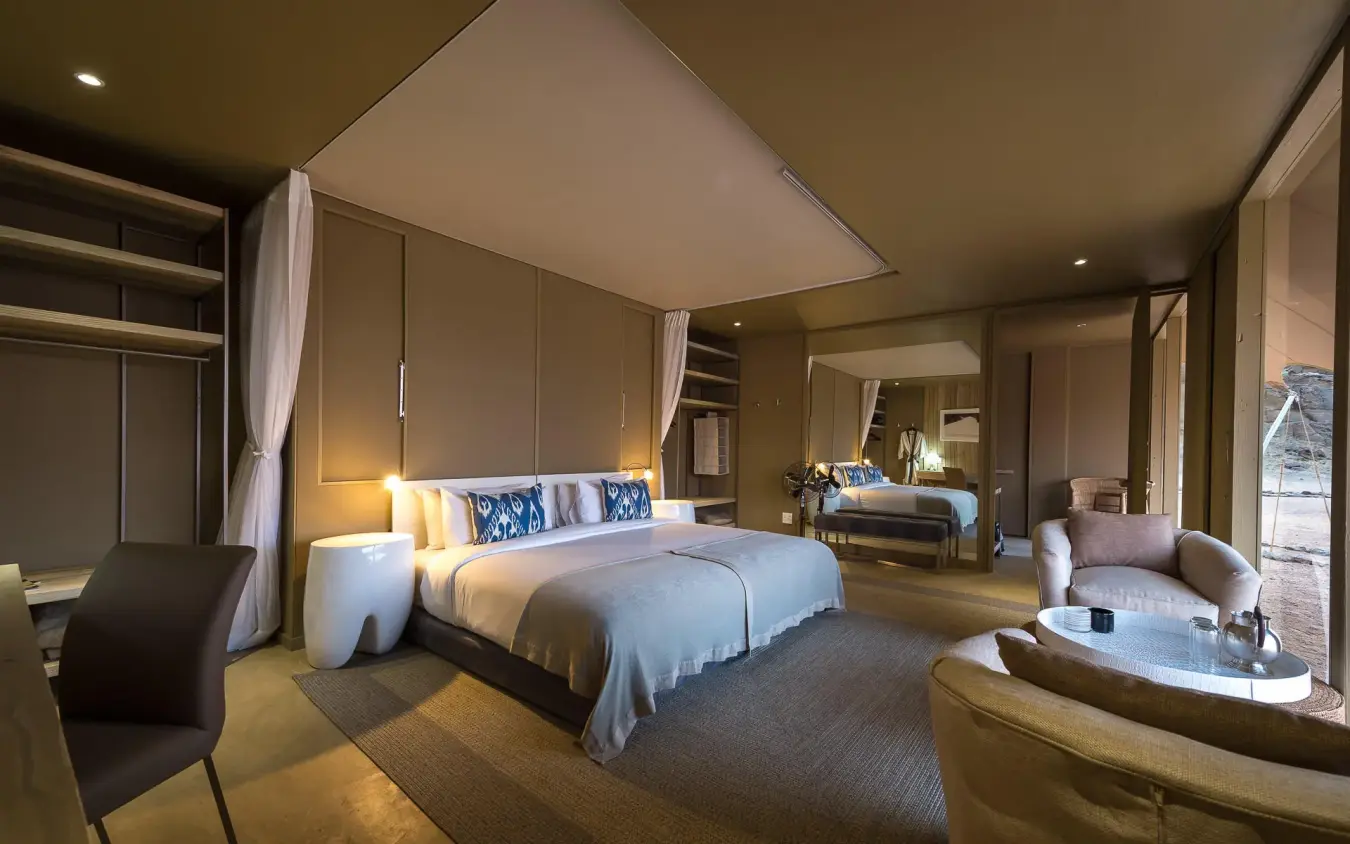
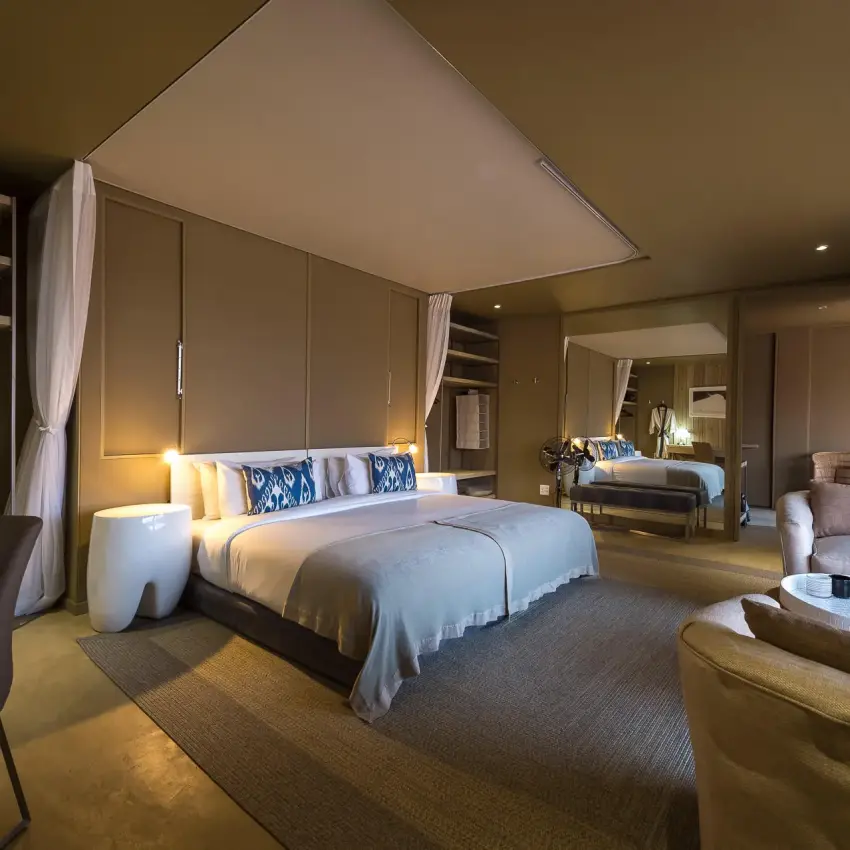
Spacious bedroom suite with canopy bed and sitting area, Hoanib Skeleton Coast Camp, Skeleton Coast, Namibia
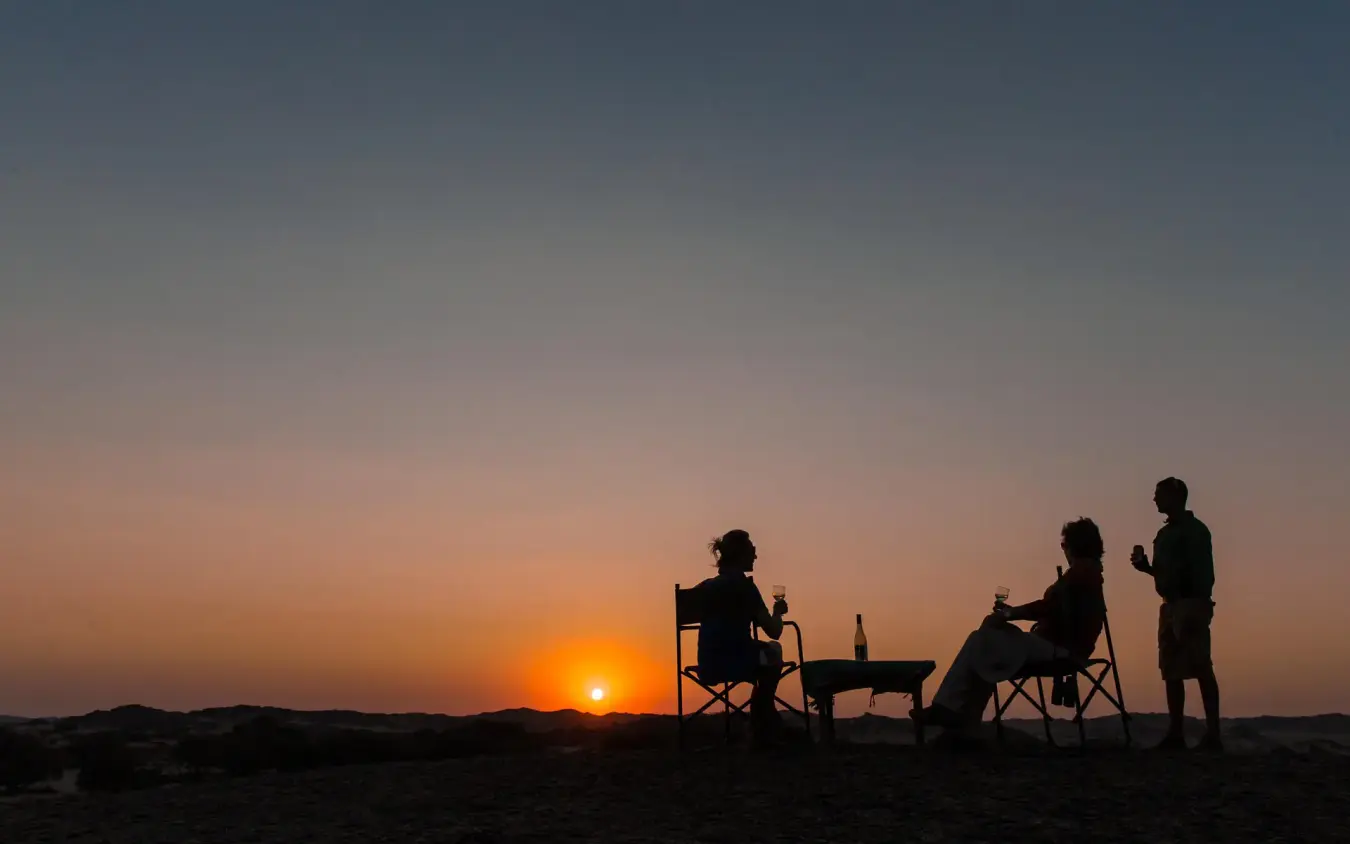
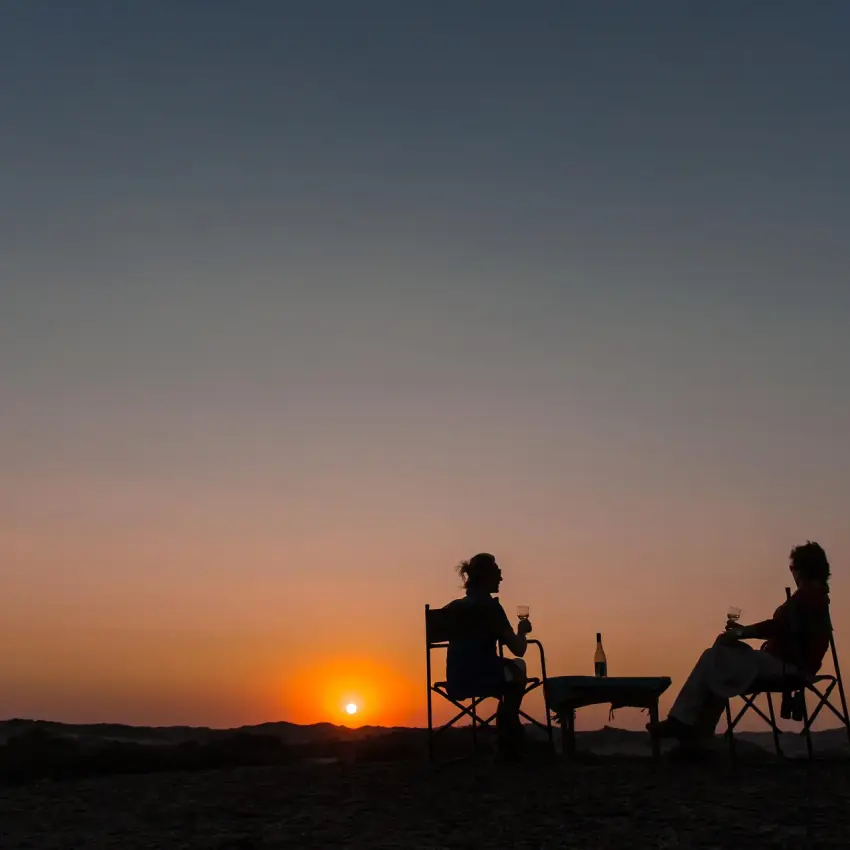
Group enjoying sunset drinks on desert beach, Hoanib Skeleton Coast Camp, Skeleton Coast, Namibia

The camp doubles as a base for research into the region’s desert-adapted lion and brown hyaena, and that scientific purpose runs through the guiding, so that a game drive here carries more interpretation than most. The Hoanib riverbed acts as a corridor through country that looks unable to sustain much at all, yet it supports elephant and black rhino, giraffe and Hartmann’s mountain zebra, gemsbok, springbok and kudu. Leopard and cheetah move through too, drawn, like everything else, to the reliable water of the inland springs at Klein Oase, Auses and Mudorib.

Leopard and cheetah move through too, drawn, like everything else

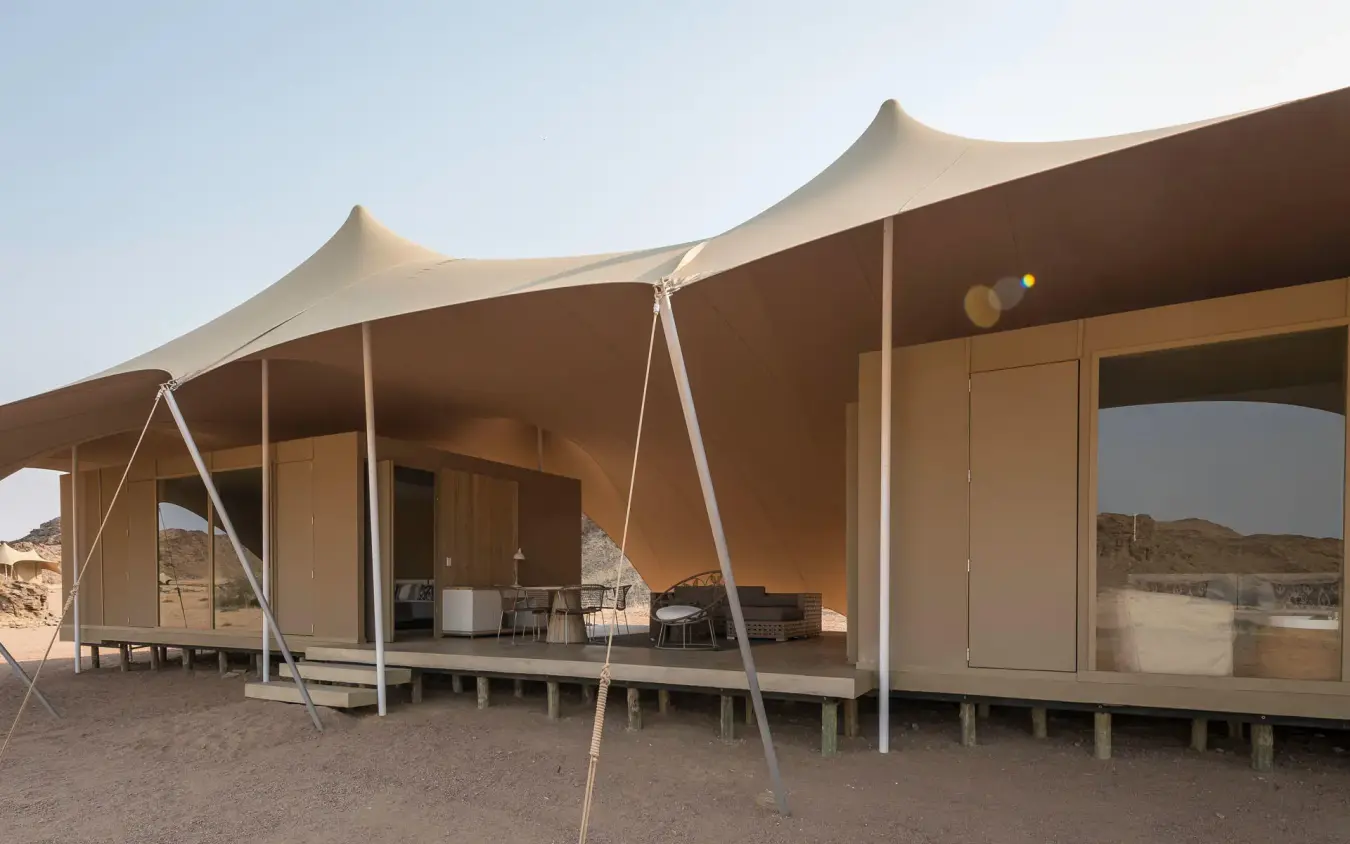
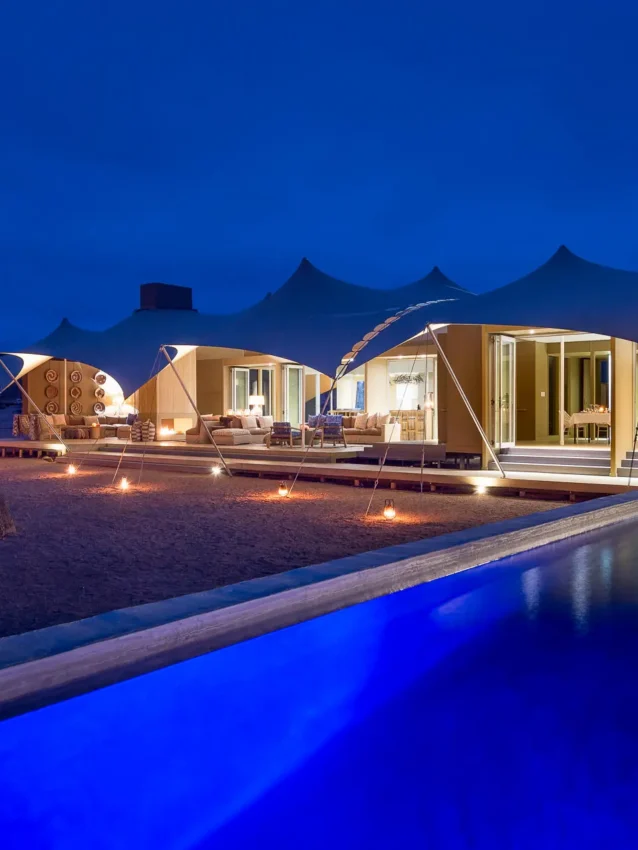
Mornings might follow elephants along the riverbed. Later in a stay, a full-day expedition drives down the river into the national park, crossing dune fields past Klein Oase to reach the coast at Möwe Bay, before turning home by scenic flight along the shore, over seal colonies and rusting wrecks. The ivory canvas suites were built to withstand desert extremes, from the morning fog that rolls in off the cold Benguela Current to the frigid nights and the afternoon sandstorms.

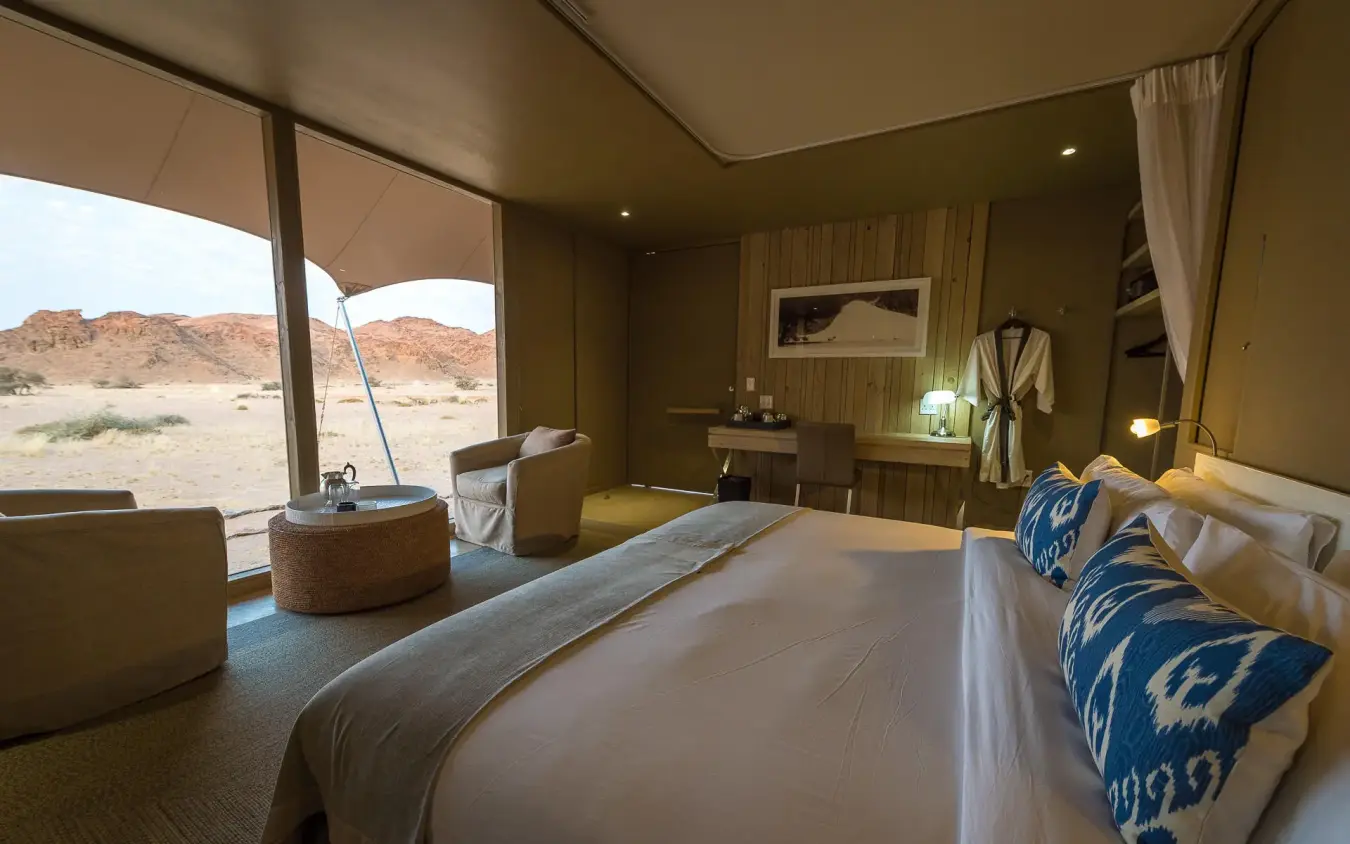
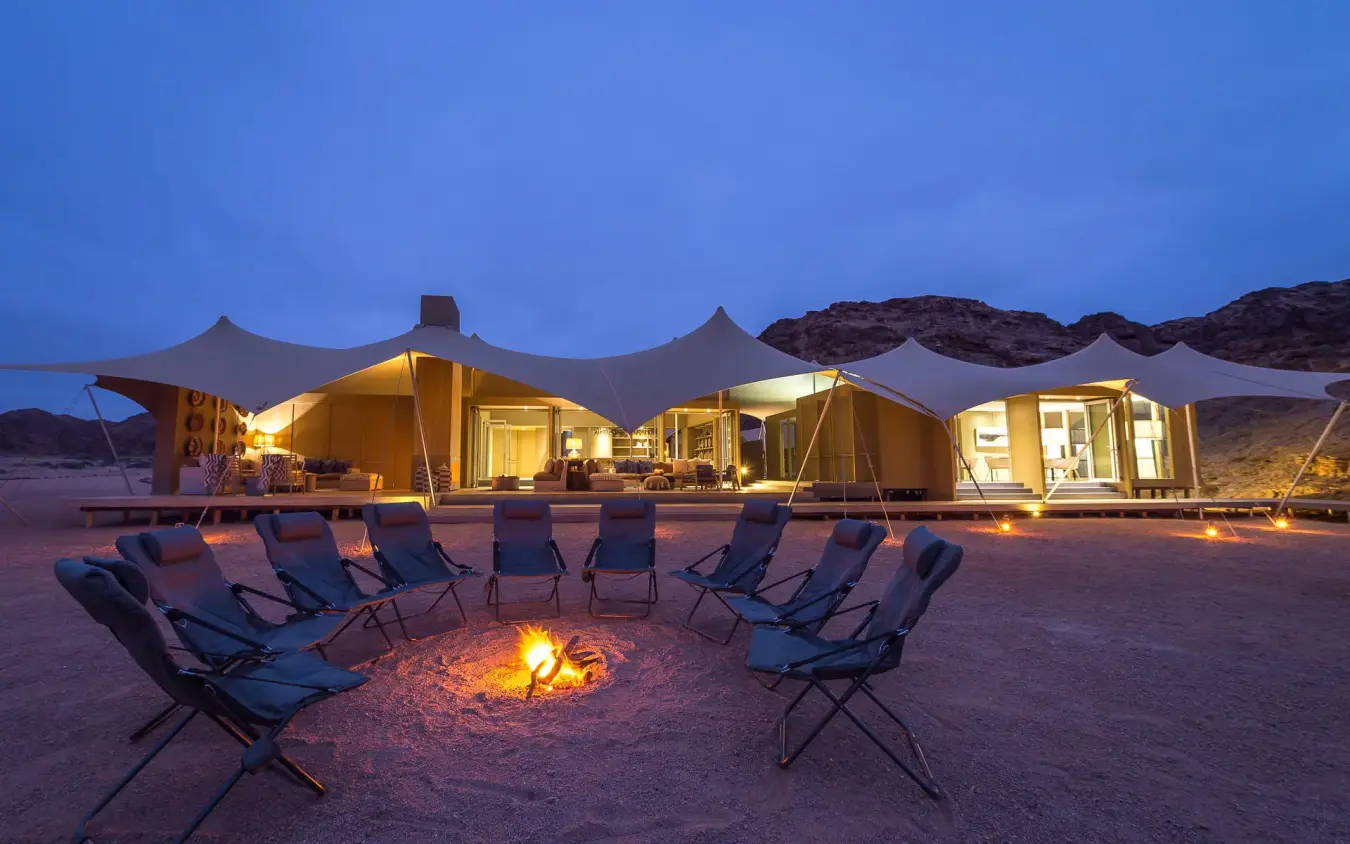
Spacious safari suite with bed, seating area, and desert views, Hoanib Skeleton Coast Camp, Skeleton Coast, Namibia 01

accommodation

Eight Canvas Suites Over the Waterhole

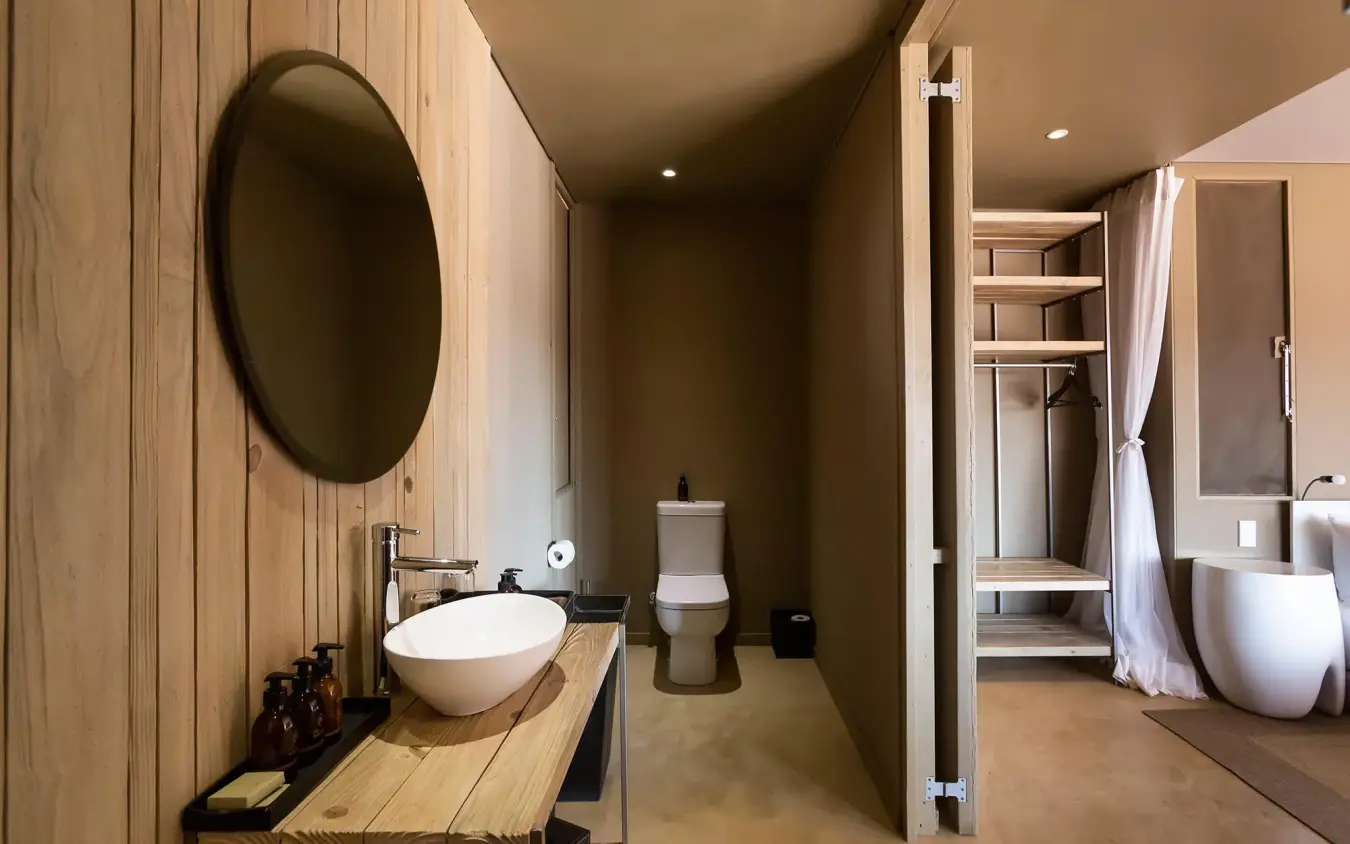
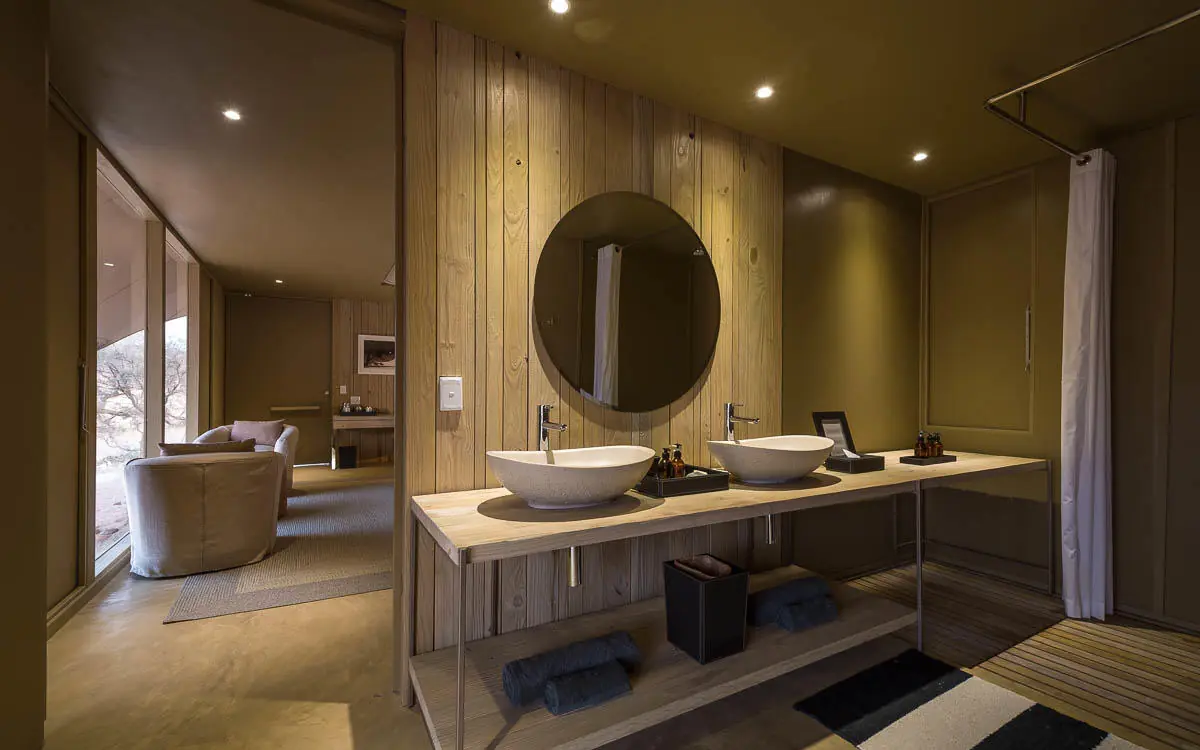
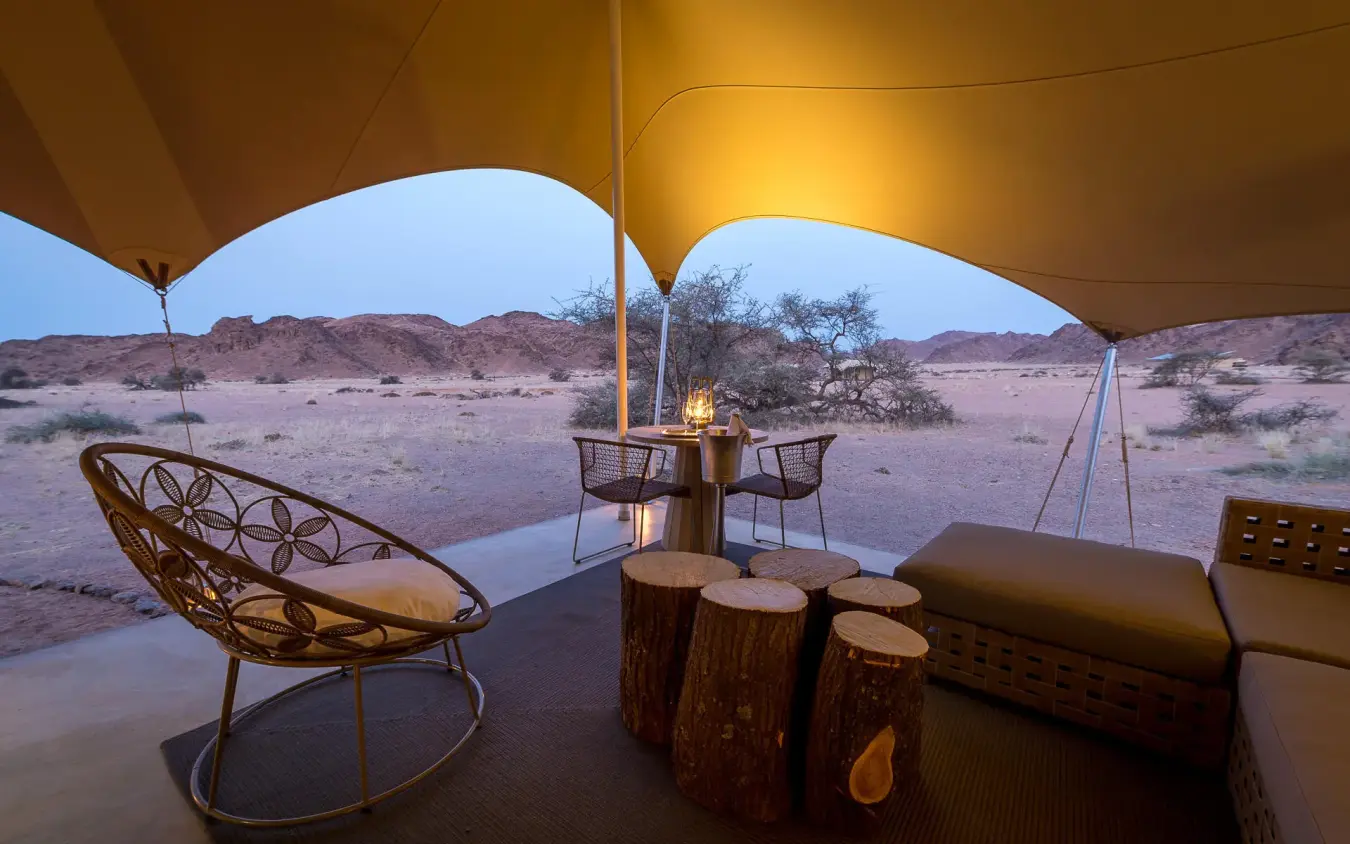
Eight canvas suites stand across the valley, seven of them twin-bedded and one a two-bedroom family unit with two en-suite bathrooms and a master whose beds convert to a king. Each opens onto a shaded veranda over the valley and waterhole, with an en-suite shower, writing desk and minibar within. All are solar-powered throughout, cooled by pedestal fans and warmed by solar geysers rather than air-conditioning.

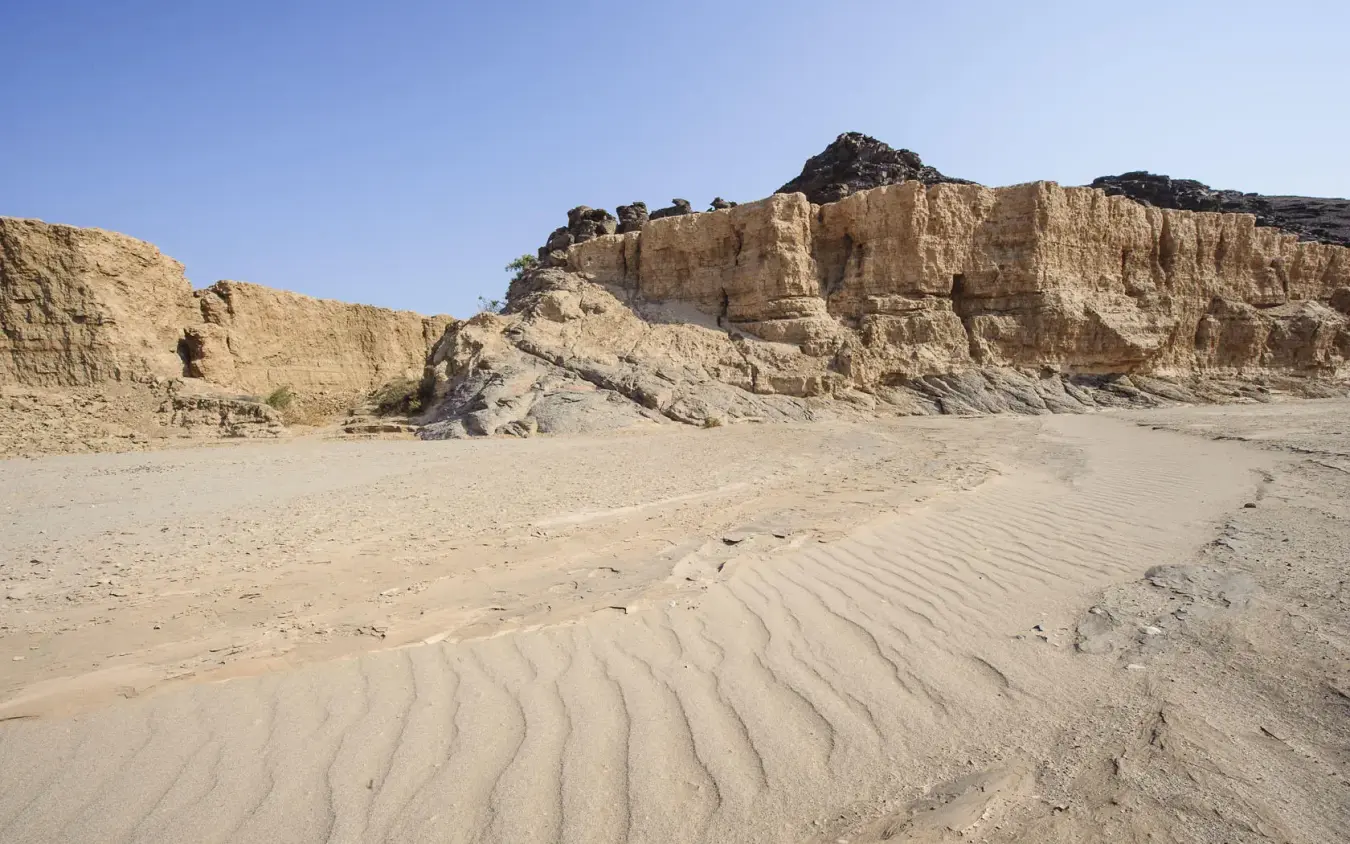
Three people jumping on sand dune against blue sky, Hoanib Skeleton Coast Camp, Skeleton Coast, Namibia 02

activities

Full-Day Expeditions to Möwe Bay

Morning and afternoon 4x4 drives and guided nature walks explore the Hoanib riverbed and the Palmwag Concession, where night drives are also permitted. Full-day excursions reach the inland springs at Klein Oase, Auses and Mudorib and, for stays of three nights or more, the Skeleton Coast at Möwe Bay via national park routes, typically returning by scenic flight.

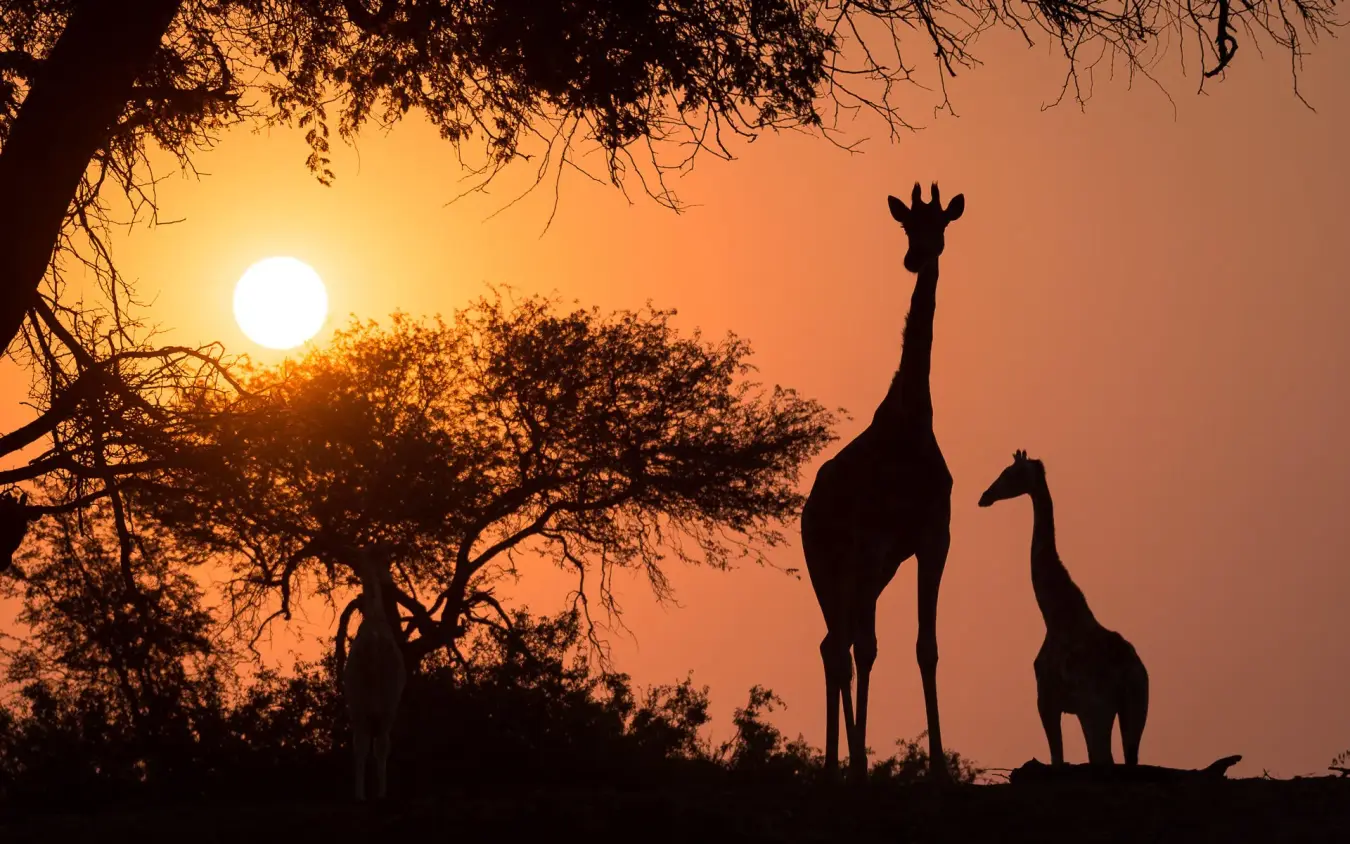
Giraffes silhouetted against orange sunset with acacia tree, Hoanib Skeleton Coast Camp, Skeleton Coast, Namibia 03

conservation

Desert Lion and Hyaena Research

Hoanib is the field base for the Desert Lion Conservation Project, Dr Philip Stander's decades-long study of Namibia's desert-adapted lions, with collaring funded through the Wilderness Wildlife Trust. The camp also hosts long-term brown hyaena research that feeds the IUCN's specialist group, and it runs as a joint venture with the Anabeb, Torra and Sesfontein conservancies, which earn income from every stay.

ready to get started?

Get in touch and let’s start the conversation. An initial consultation helps us understand what you’re looking for, whether that’s specific experiences, luxury touches, or marking a special occasion, and from there we’ll guide you through what’s possible so you can decide if we’re the right fit.

frequently asked questions

You reach this camp only by air. Light aircraft come down on gravel plains deep in the lower Hoanib Valley, flying from Windhoek in two legs of two to three hours in total, often via Damaraland, followed by a short transfer to camp. Self-drive is not an option for this remote corner.

We build the charters in and time them around your wider Namibia route, and we will confirm the flight plan when we plan the trip. If you would rather have the aircraft to yourselves, we can arrange a private charter, typically a Cessna Caravan or Pilatus PC-12, flown to your own schedule.

This stretch of the northwest carries a low, seasonal malaria risk. The coast and its dry riverbeds hold very little standing water, so risk is at its lowest in the dry winter, from about June to October, which is the main time to come, and rises modestly in the green summer after any rain.

Guidance changes from year to year, so we always suggest confirming the current position with a travel clinic or your doctor before you travel, along with the usual precautions against bites after dark.

The Hoanib valley can be hot and dry by day, while mornings near the coast are cool and often grey and foggy, because the cold Benguela current sits just offshore. The swing between the two catches people out.

Bring light, breathable clothes and sun protection for the inland heat and dust, then warm layers, a windproof jacket and a fleece for cold, foggy coastal mornings and chilly nights. Something warm to sleep in is worth packing.

Families are welcome, and the camp has a two-bedroom family suite with its own bathrooms and a master whose beds convert to a king. This is a remote, fly-in camp with long drives, so it suits older children who are comfortable with full days out in the vehicle, and younger children may need a private vehicle on the drives.

Tell us their ages and we will confirm the current policy for them, arrange the family suite and set up any private guiding.

The camp's signature run reaches the Atlantic, from desert-adapted elephant inland to the seal colonies and shipwrecks on the coast. It is a full-day excursion out toward Moewe Bay, offered on stays of three nights or more and usually returning by scenic flight over the dunes.

For that reason we suggest planning at least three nights here if reaching the coast matters to you. Shorter stays still give you the Hoanib valley, its waterhole and the desert wildlife, but the coast run needs the time.

The Hoanib valley draws desert-adapted elephant, giraffe and gemsbok, and, on occasion, desert lion, to the waterhole and the riverbed within view of the tents. The camp also doubles as a research base for the region's desert lion and brown hyaena, so the guiding carries more interpretation than most, and a drive here is as much about understanding the animals as counting them.

Nothing is guaranteed in country this arid and empty, which is exactly why a sighting here feels earned. We will set your expectations honestly before you come.

rated five stars by our clients

other areas in namibia

Elephant with zebras and antelopes at waterhole 01

Etosha National Park

Rocky desert mountains silhouetted under starry night sky 02

Damaraland

Portrait of a person wearing traditional African beaded jewelry 04

Kunene River

Golden sand dune at sunset with sparse desert vegetation 05

Sossusvlei

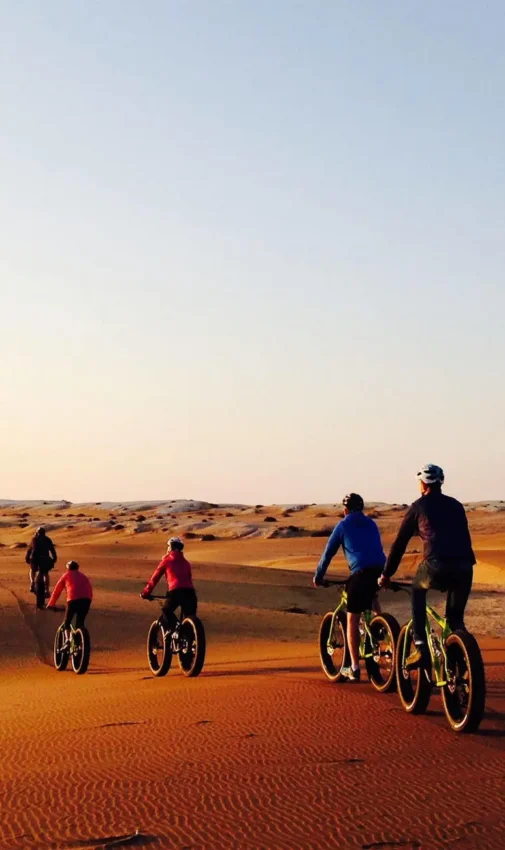
Cyclists riding across red sand dunes at sunset, Swakopmund, Namibia 06

Swakopmund

Aerial view of church and city at sunset 07

Windhoek

Elephant herd walking through dusty grassland with scattered trees, Zambezi Region, Namibia 08

Zambezi Region

Planning a journey together

our approach

remote, exclusive
& personal

Every journey starts with a conversation. We take the time to understand your vision before we start planning.

Whether by phone or in person, we work with you directly to shape something that is considered, personal, and expertly delivered.

get in touch
destinations ideas & inspiration our process about us contact us