Camp

Hoanib Elephant Camp

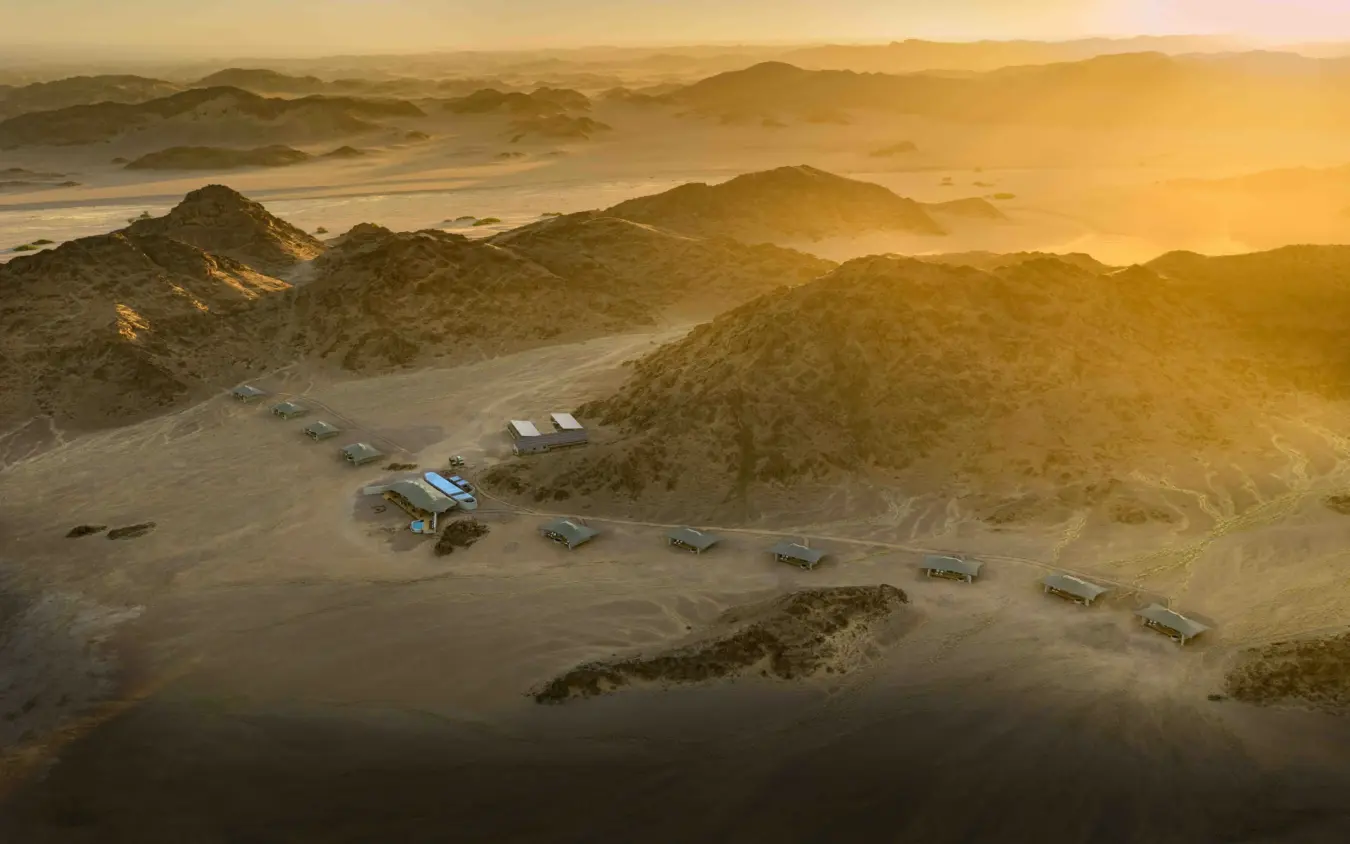
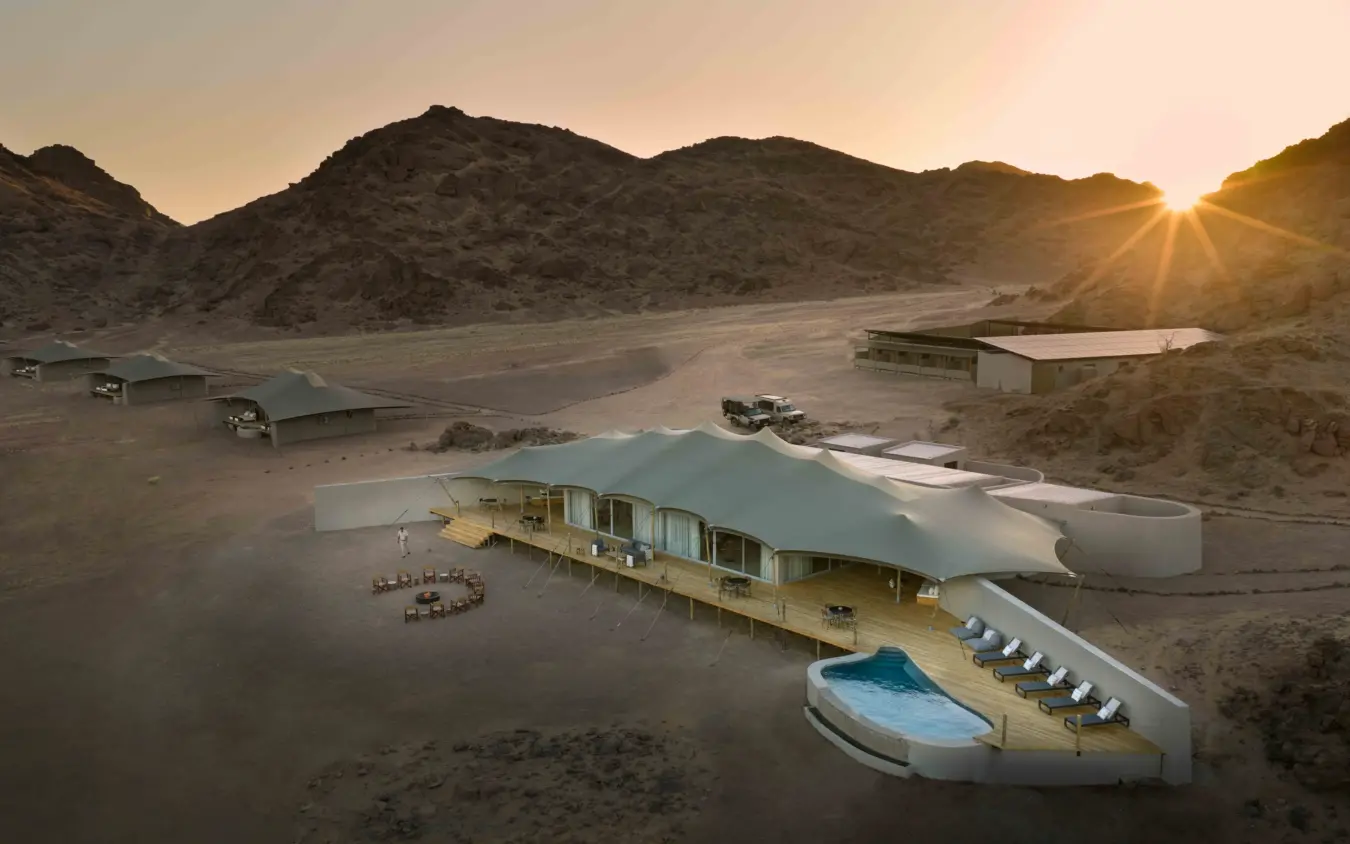
Ten solar-powered tents on the dry Hoanib riverbed in Namibia, tracking desert elephants inland of the Skeleton Coast

Country: Namibia
Location: Hoanib riverbed, Sesfontein Conservancy
Number of rooms: 10

Fewer than 50 elephants, one river

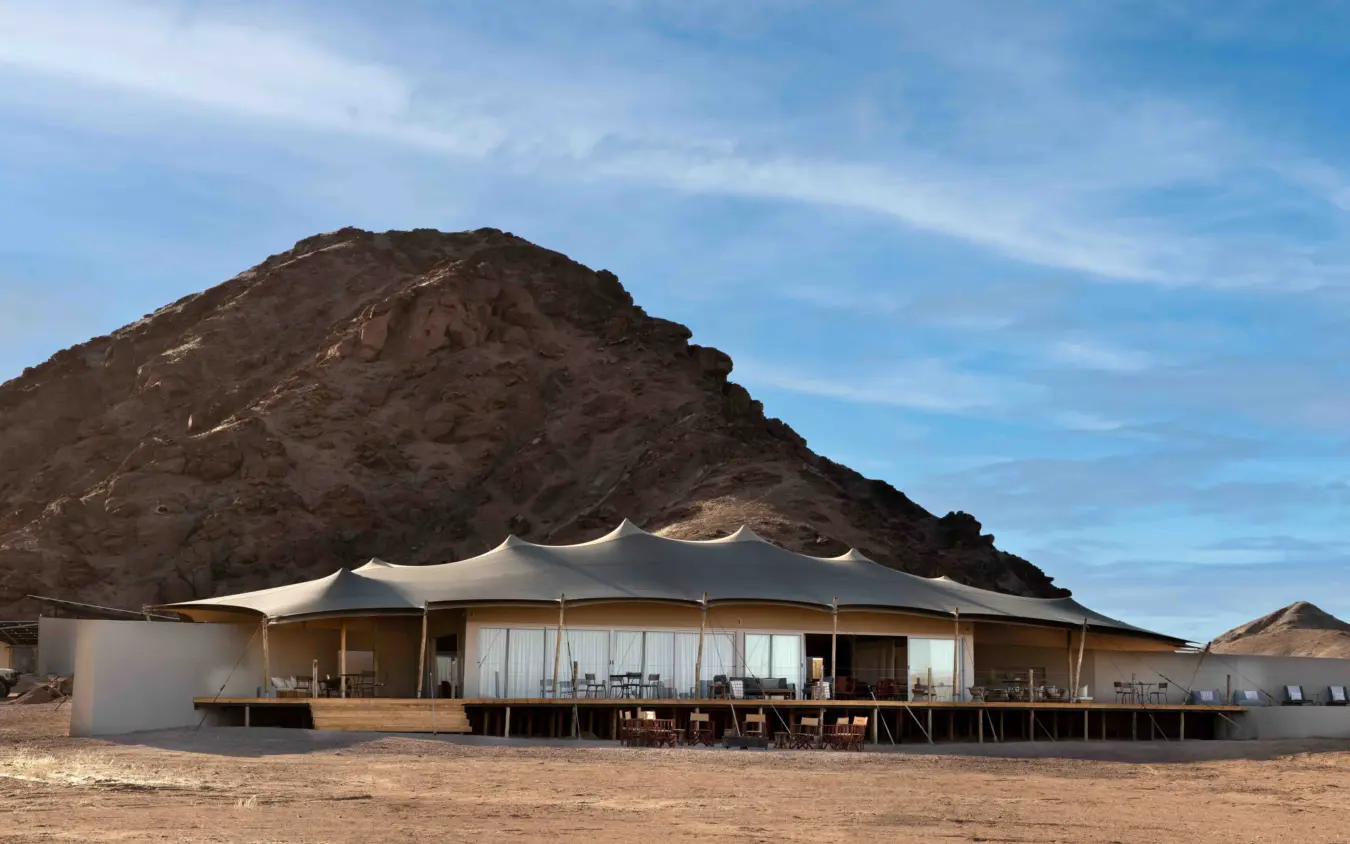
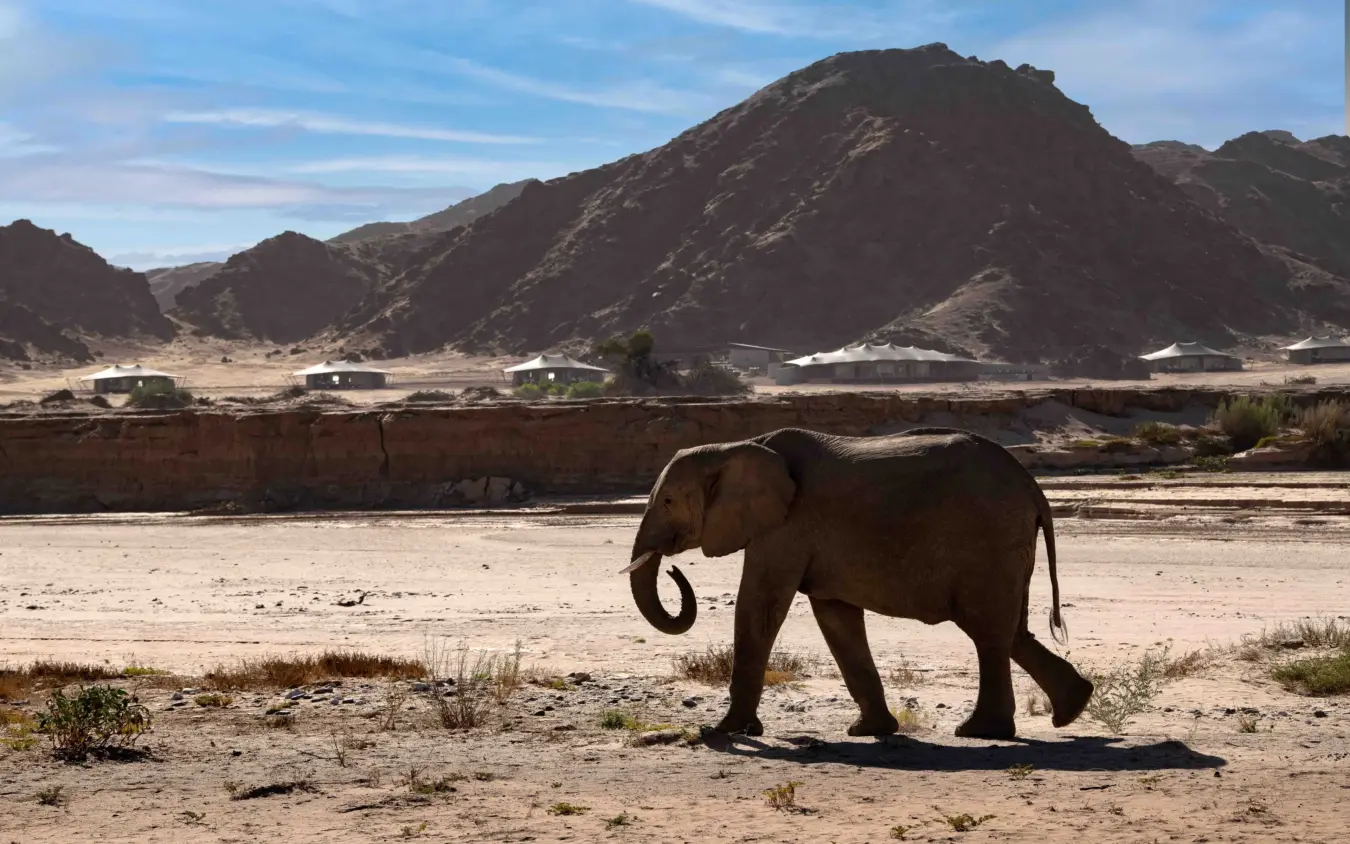
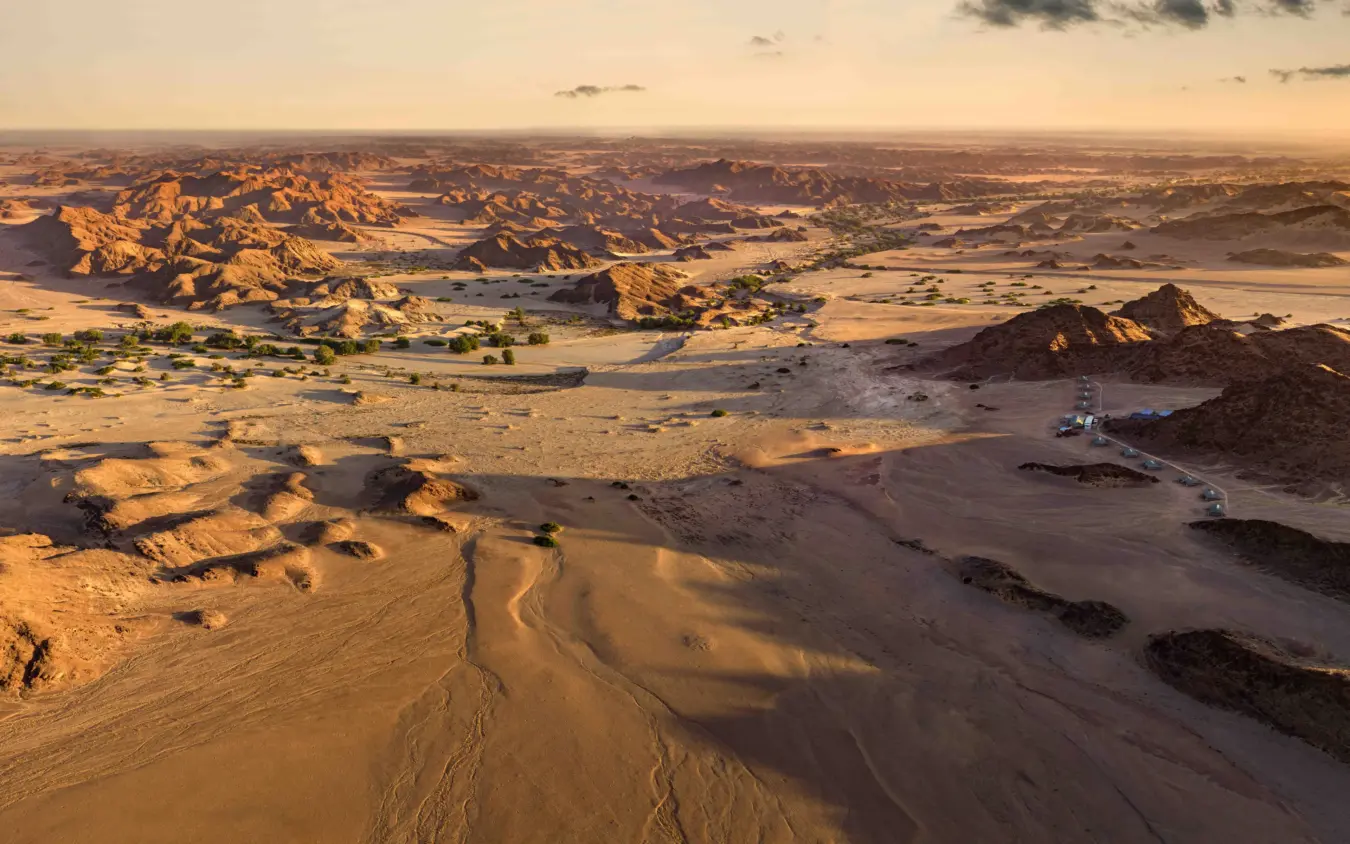
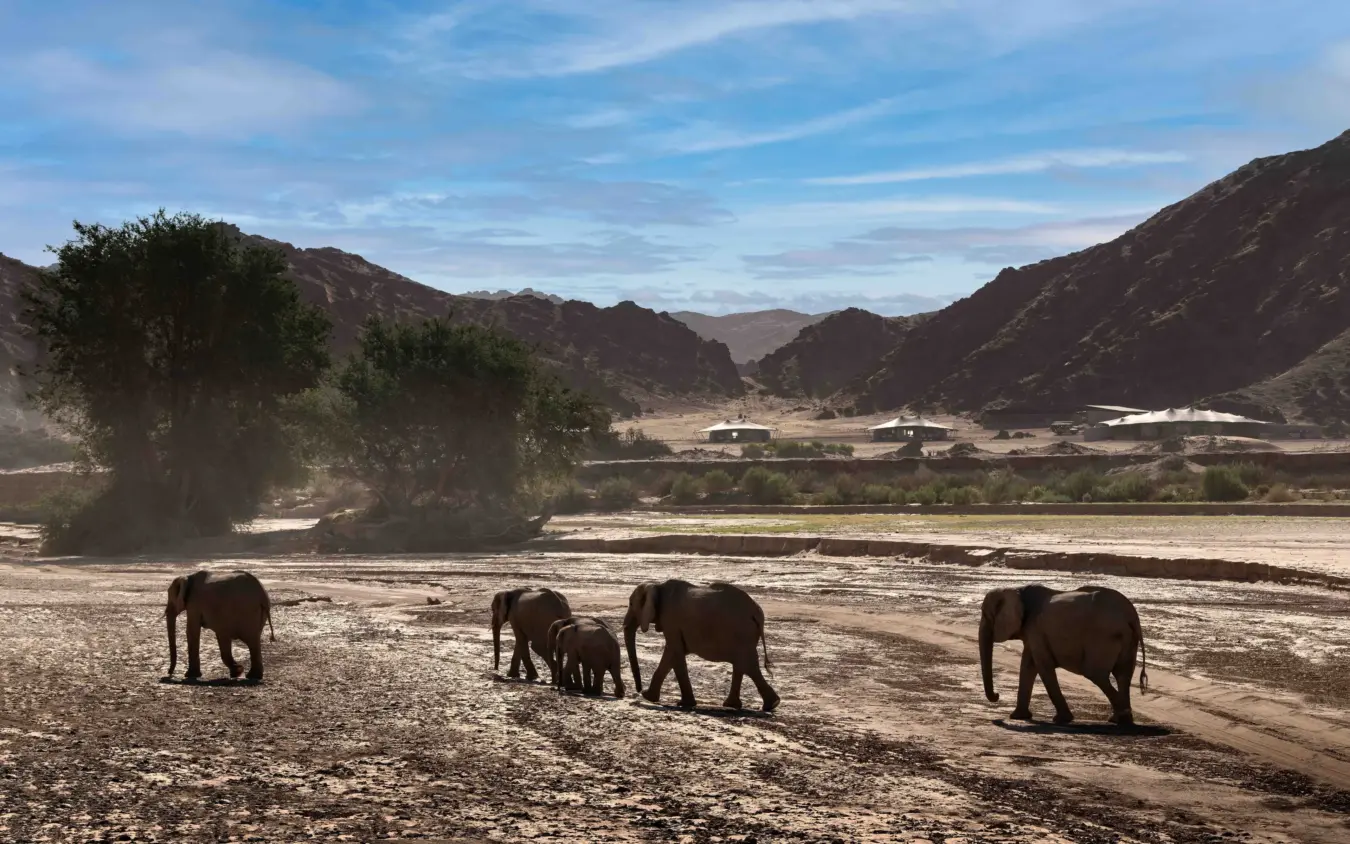
Hoanib Elephant Camp opened in May 2026 on the northern bank of the Hoanib riverbed, a dry sand corridor running west through the Sesfontein Community Conservancy towards the Skeleton Coast. The camp takes its name from the desert-adapted elephants that walk this river, feeding on ana tree pods and digging through the sand for the water beneath.

The guides know the elephant family groups by sight

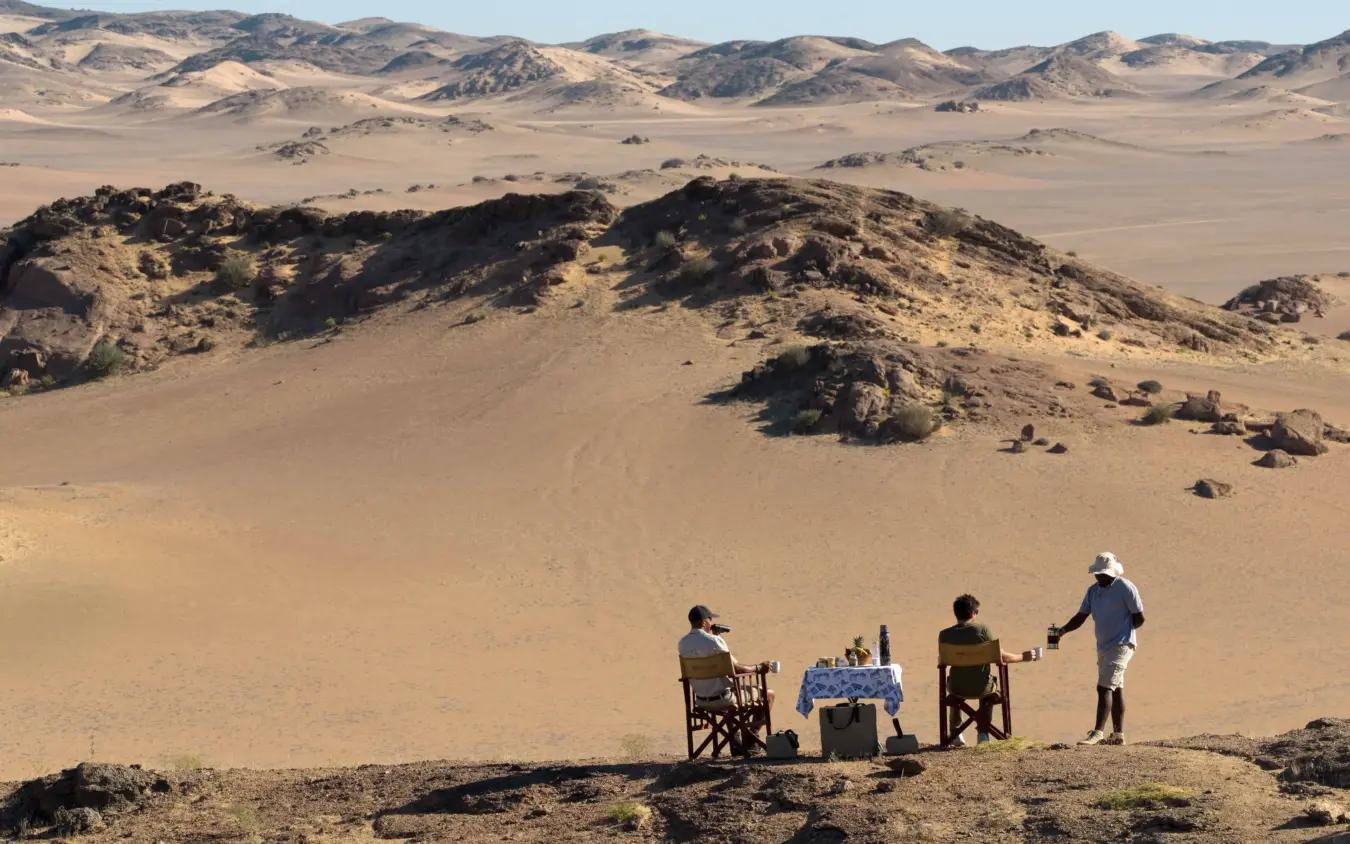
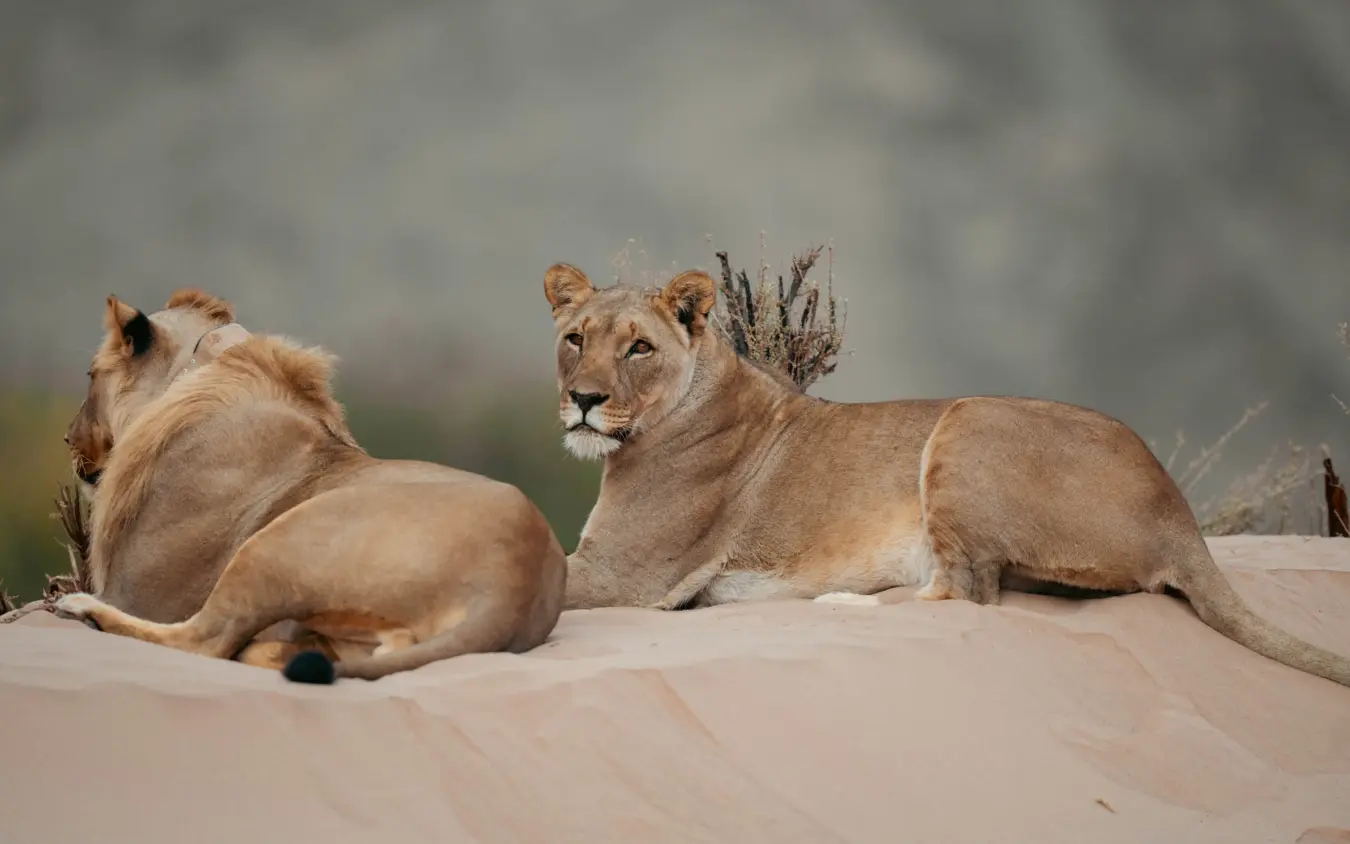
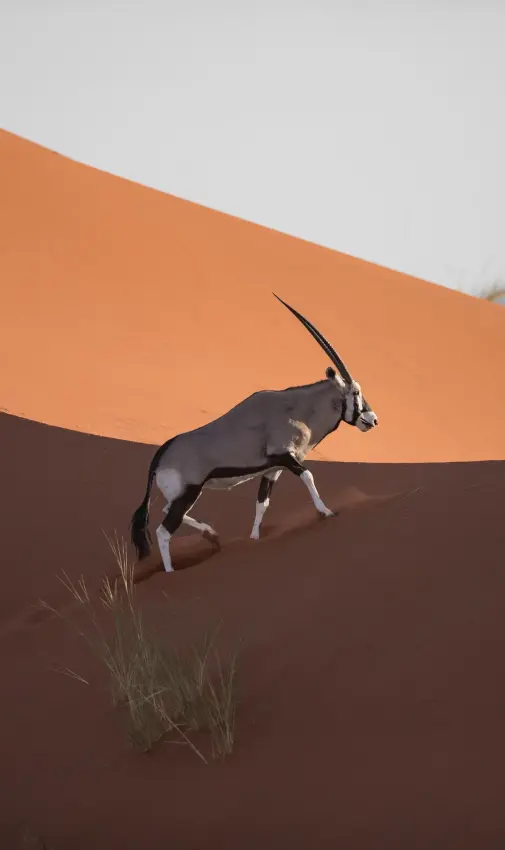
In winter, Atlantic fog pushes inland along the valley from the coast. The guides know the elephant family groups by sight. Fewer than 50 elephants use this river system at any time, so a morning drive becomes a matter of reading tracks, dung and broken branches, not of covering ground. Giraffe work the ana trees, and oryx and springbok cross the gravel flats. Desert lions pass through, rarely.

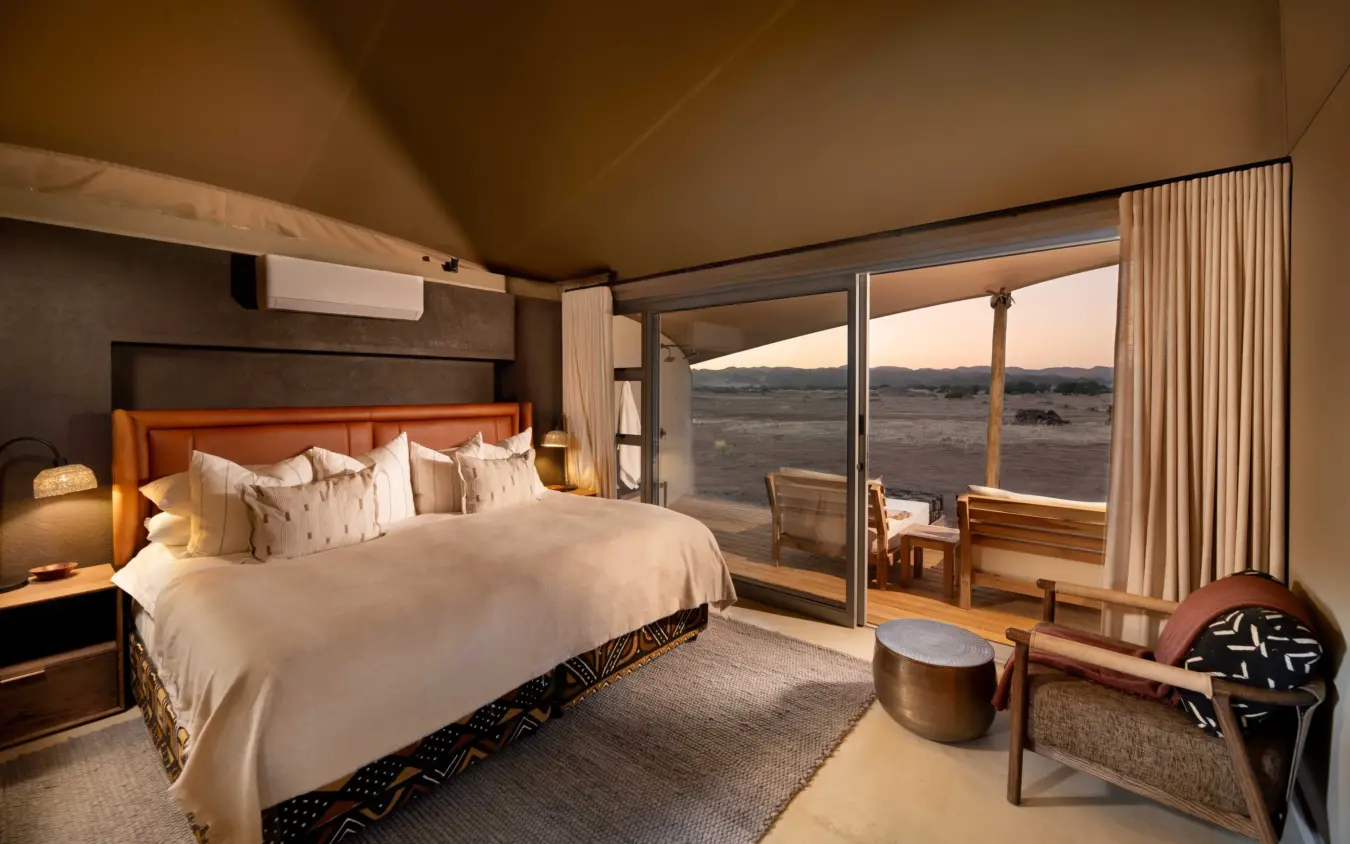
Luxury bedroom suite with panoramic windows overlooking vast savanna landscape at dusk, Hoanib Elephant Camp, Skeleton Coast, Namibia
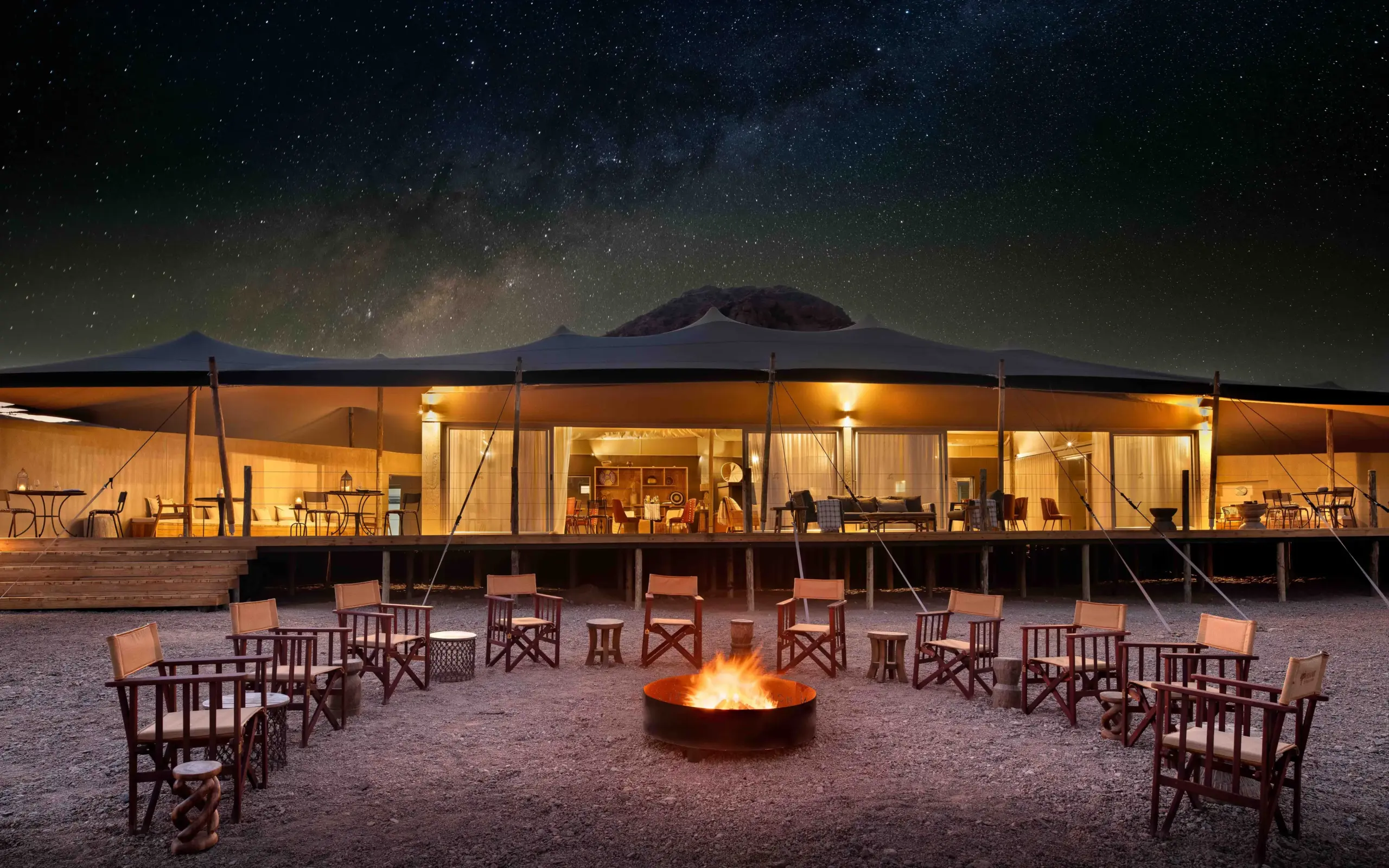
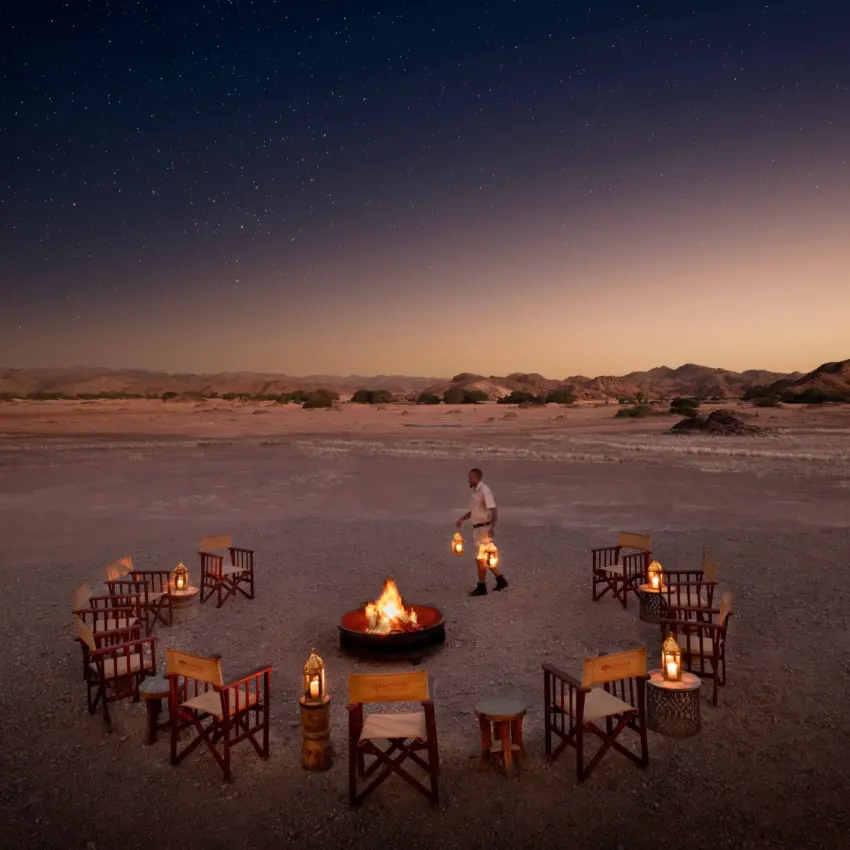
Campfire setup with chairs and lanterns in desert landscape at dusk, Hoanib Elephant Camp, Skeleton Coast, Namibia

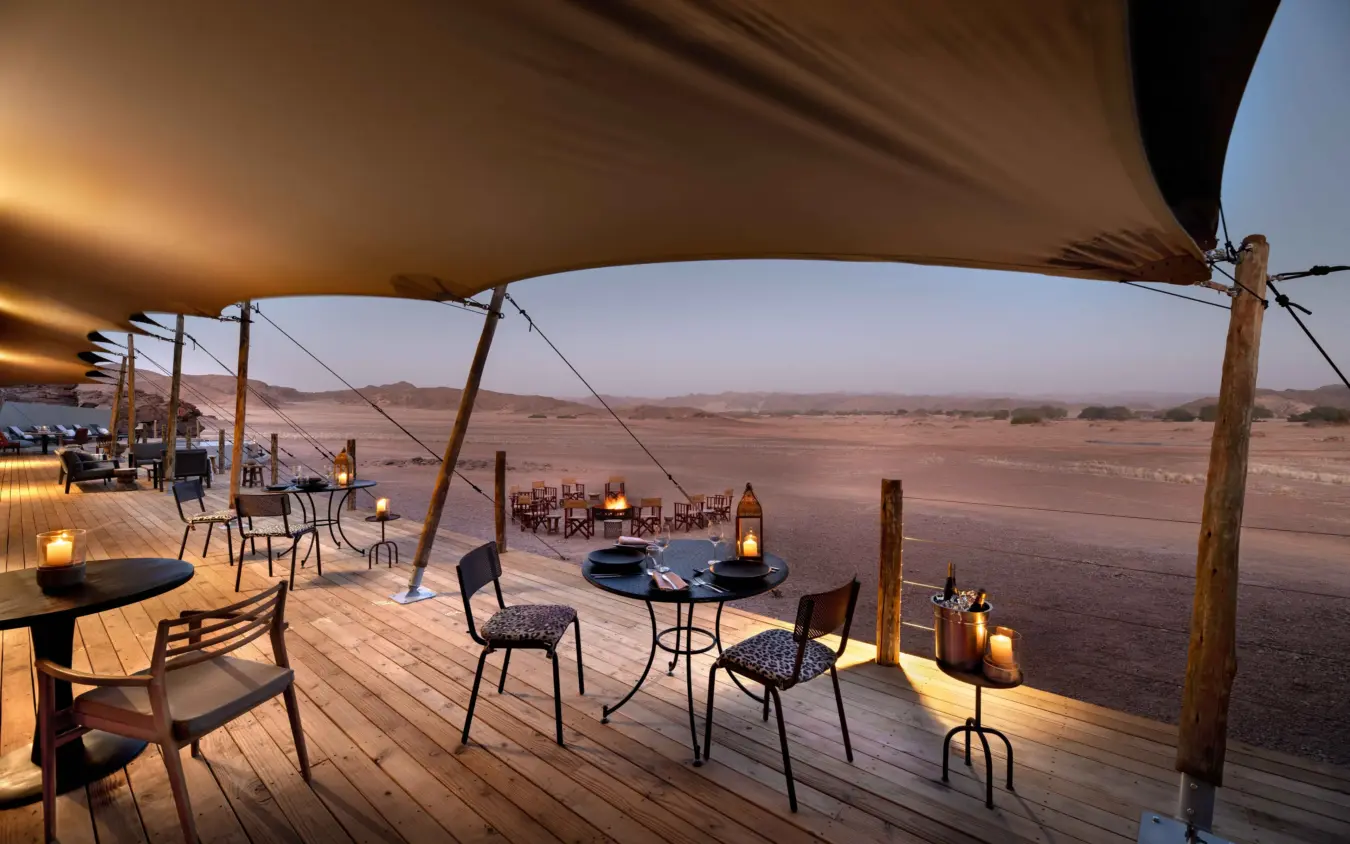
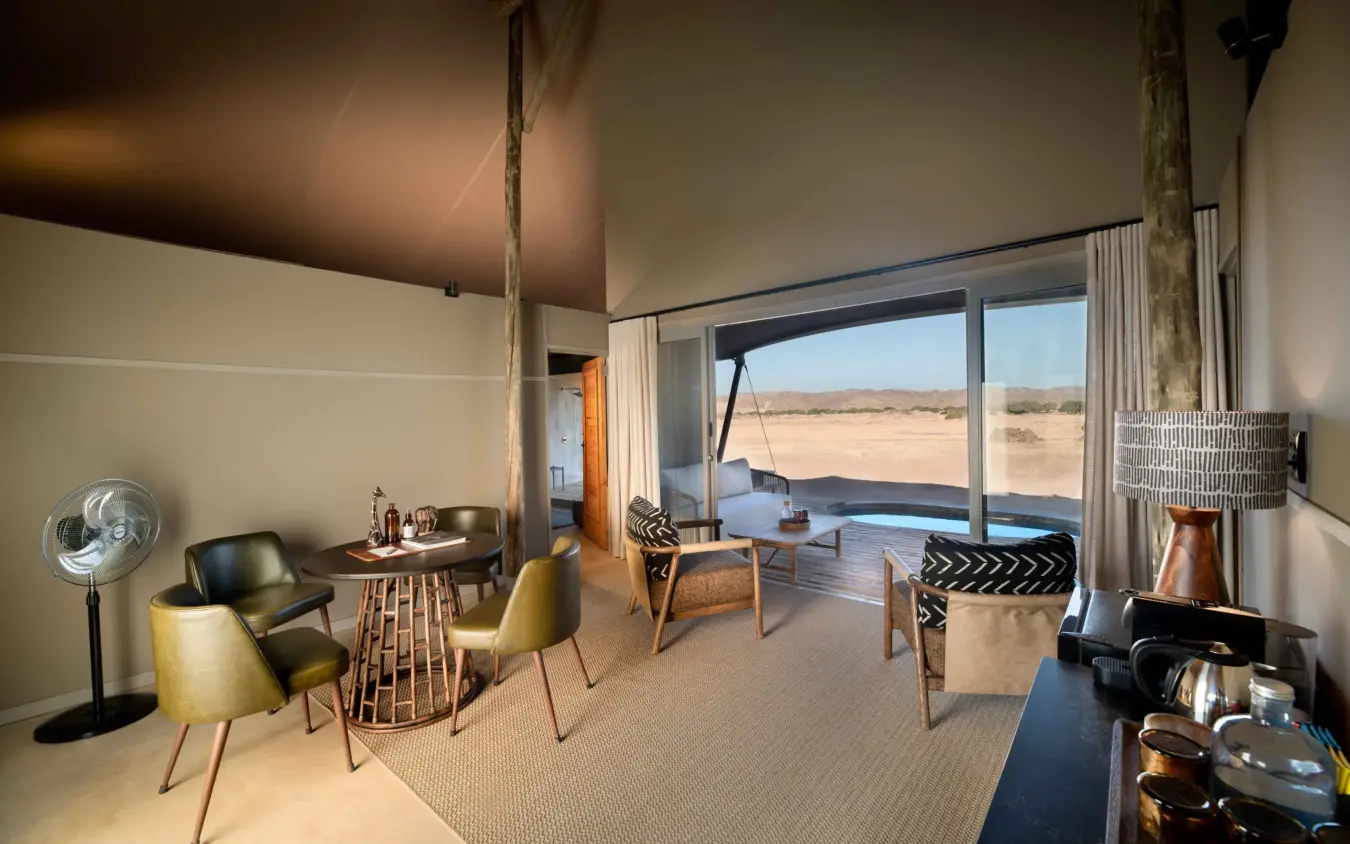
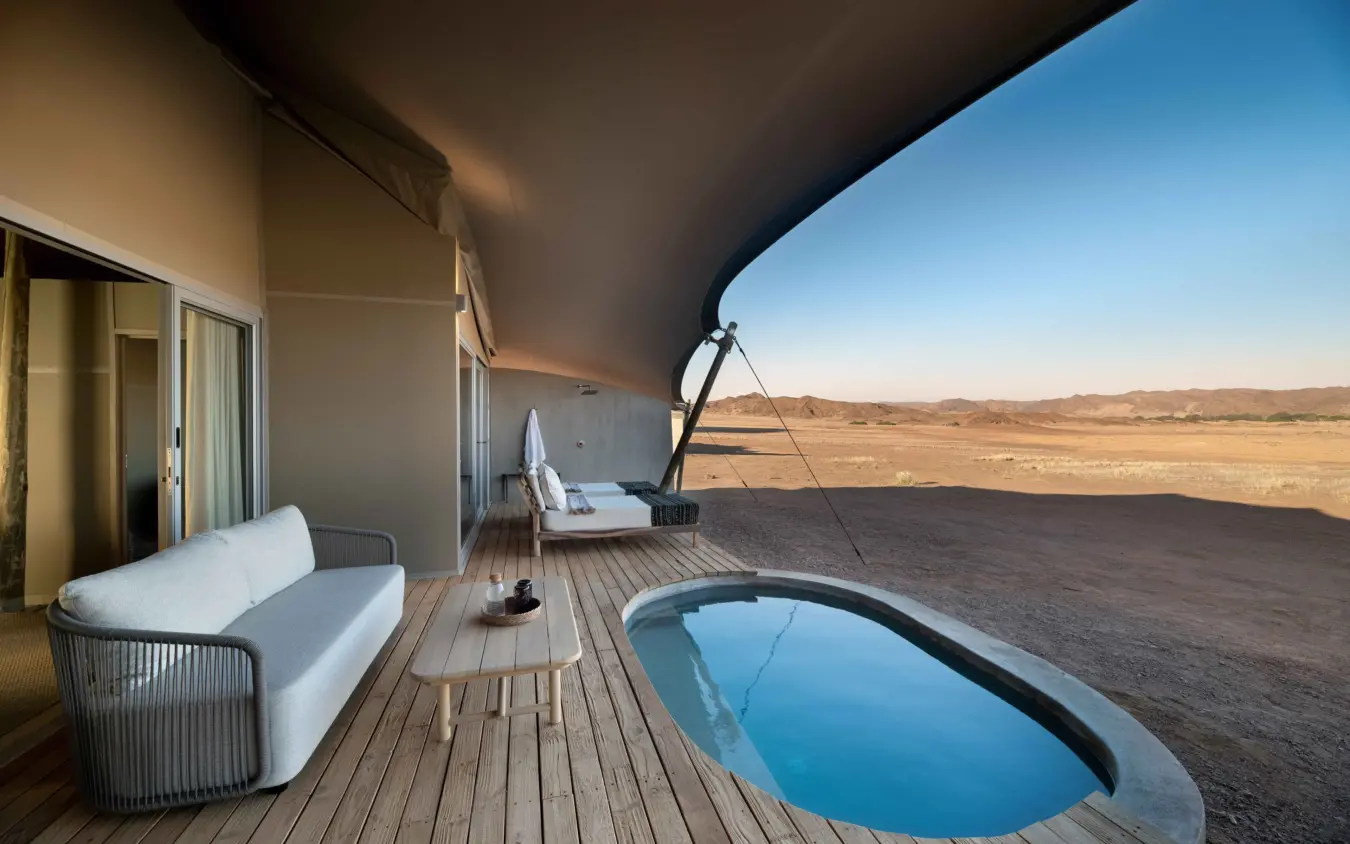
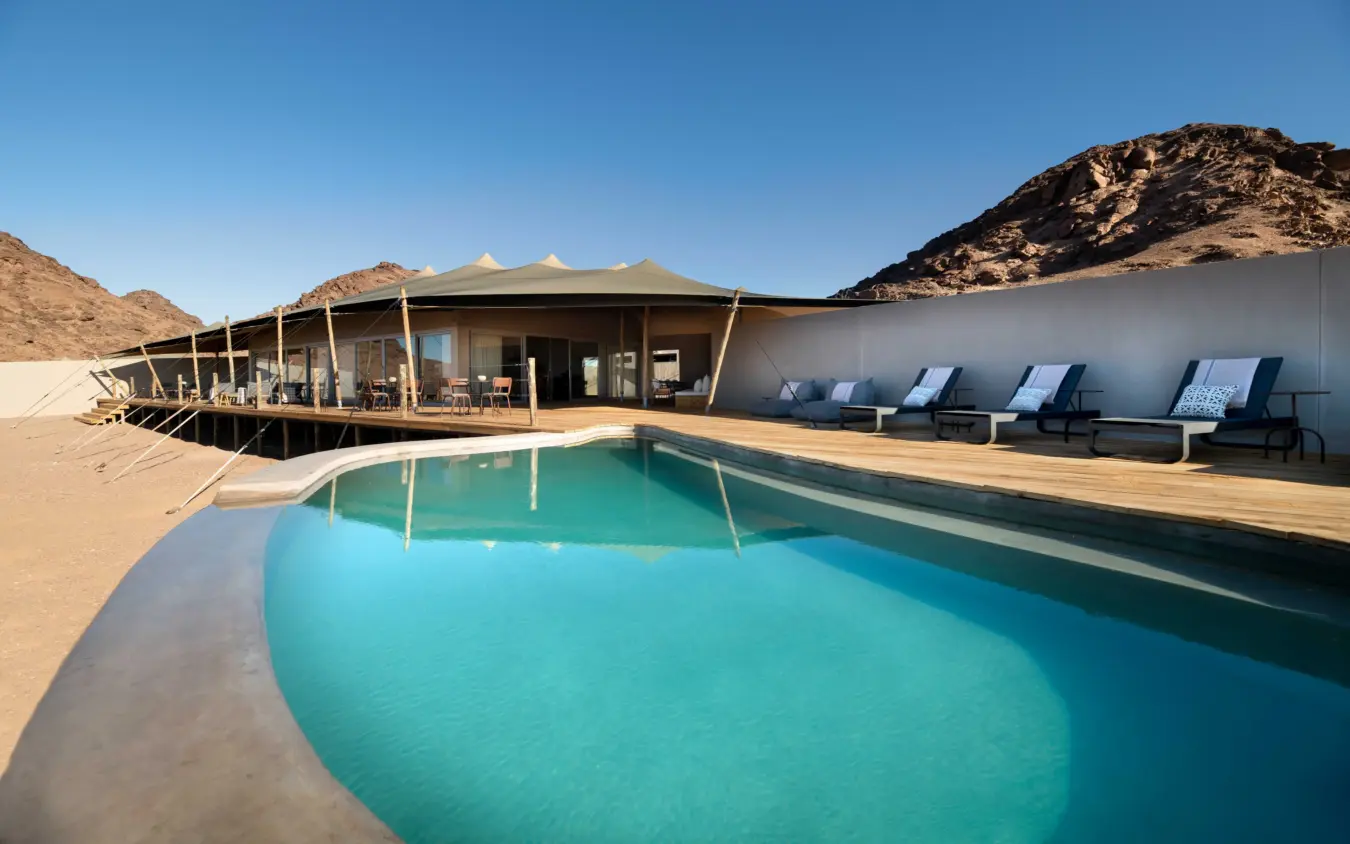
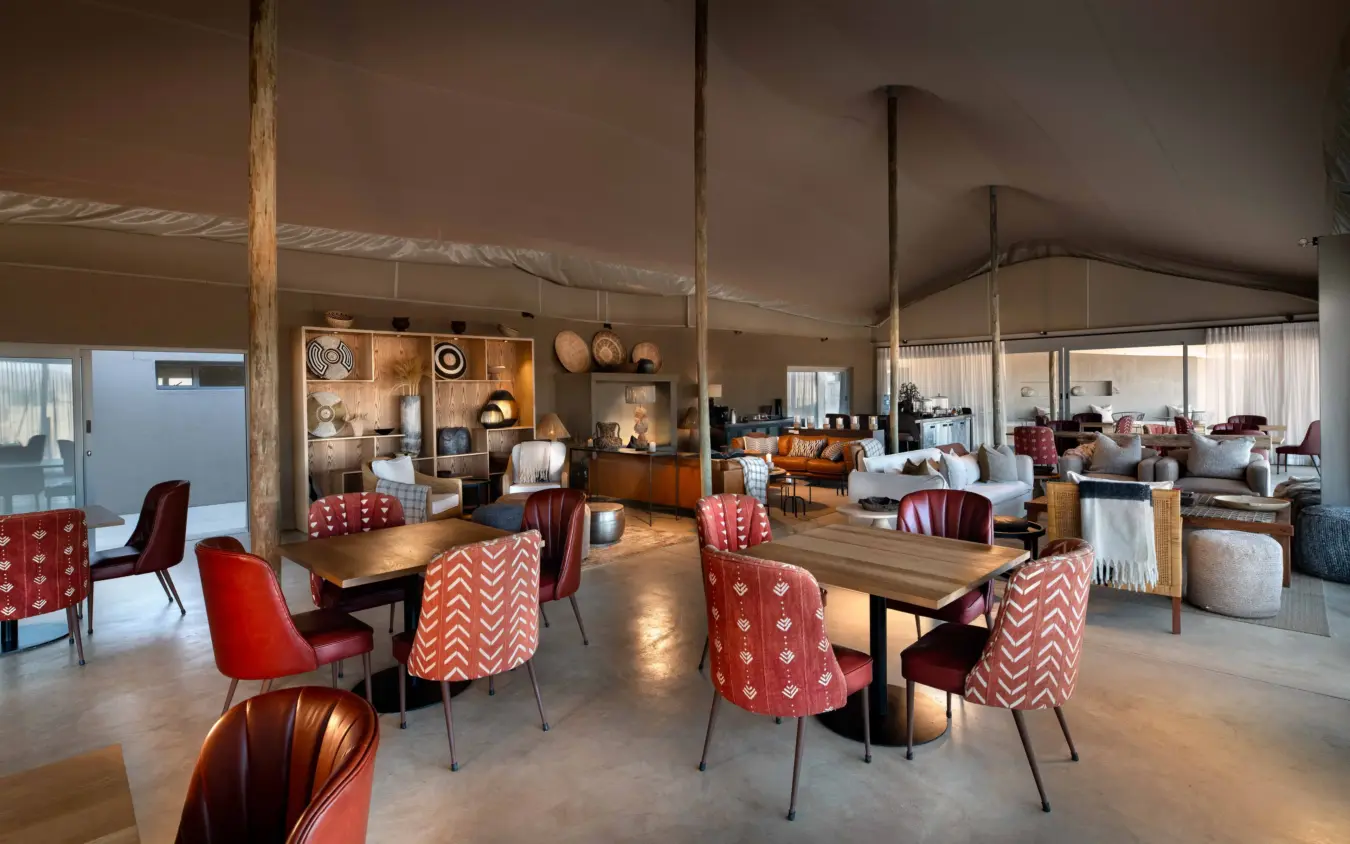
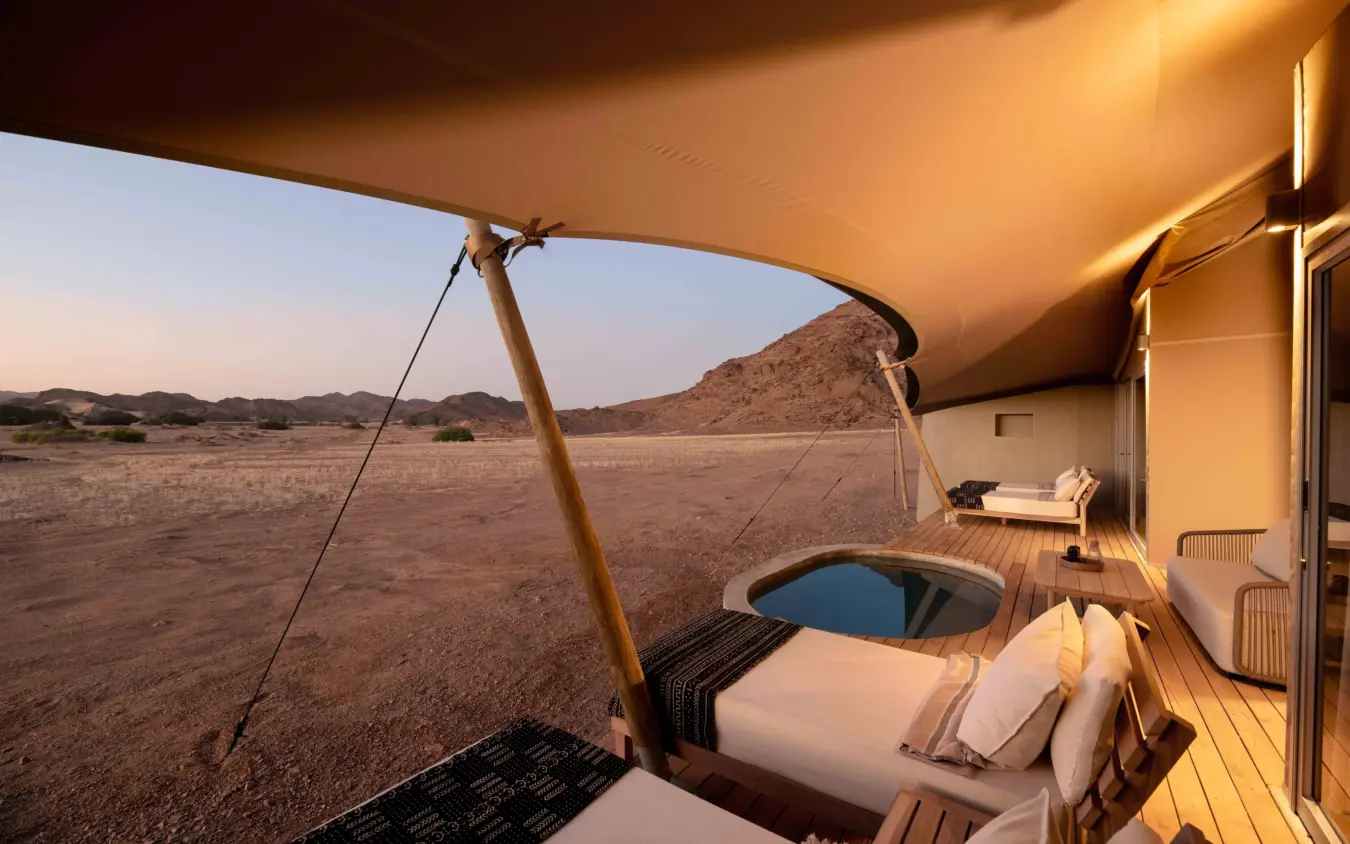
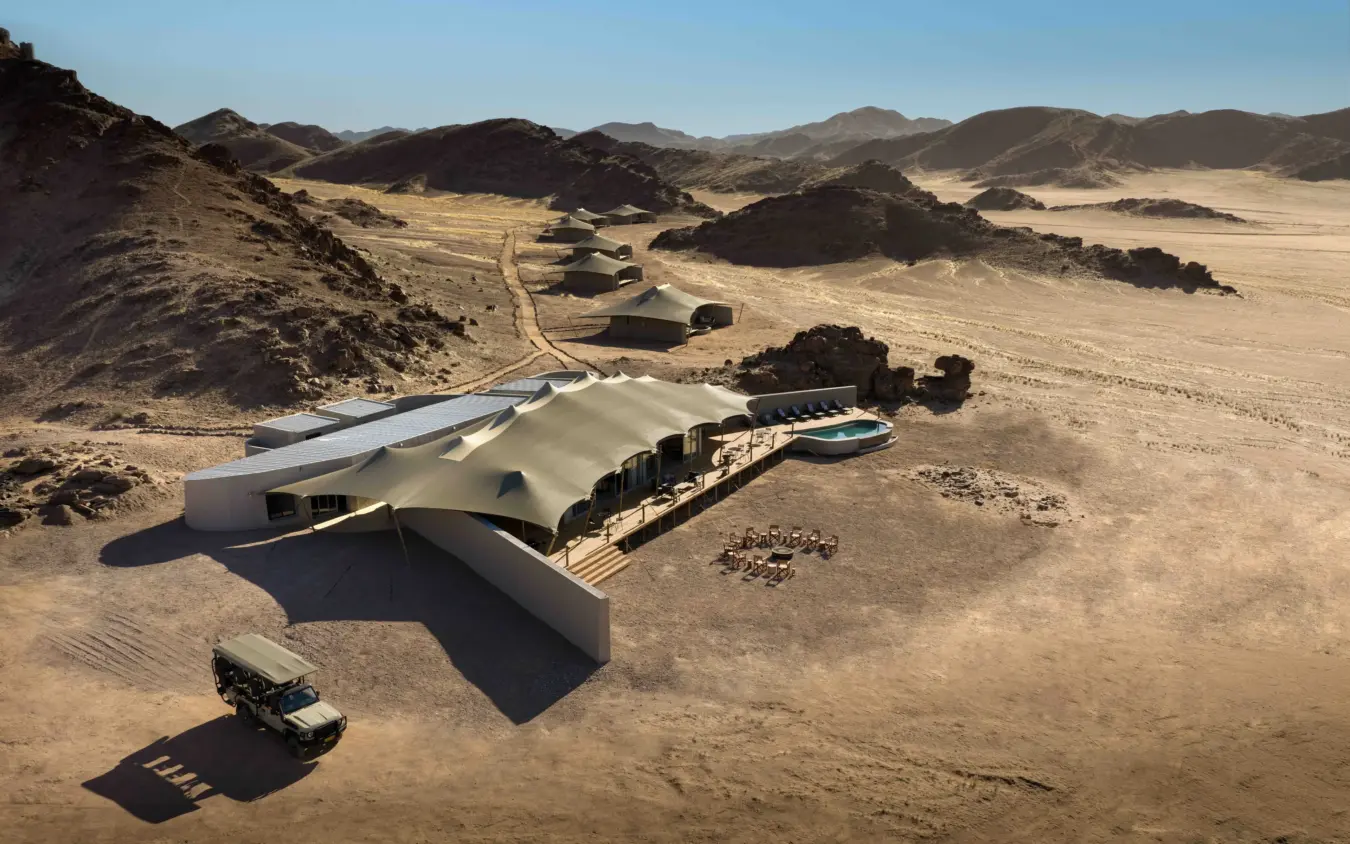
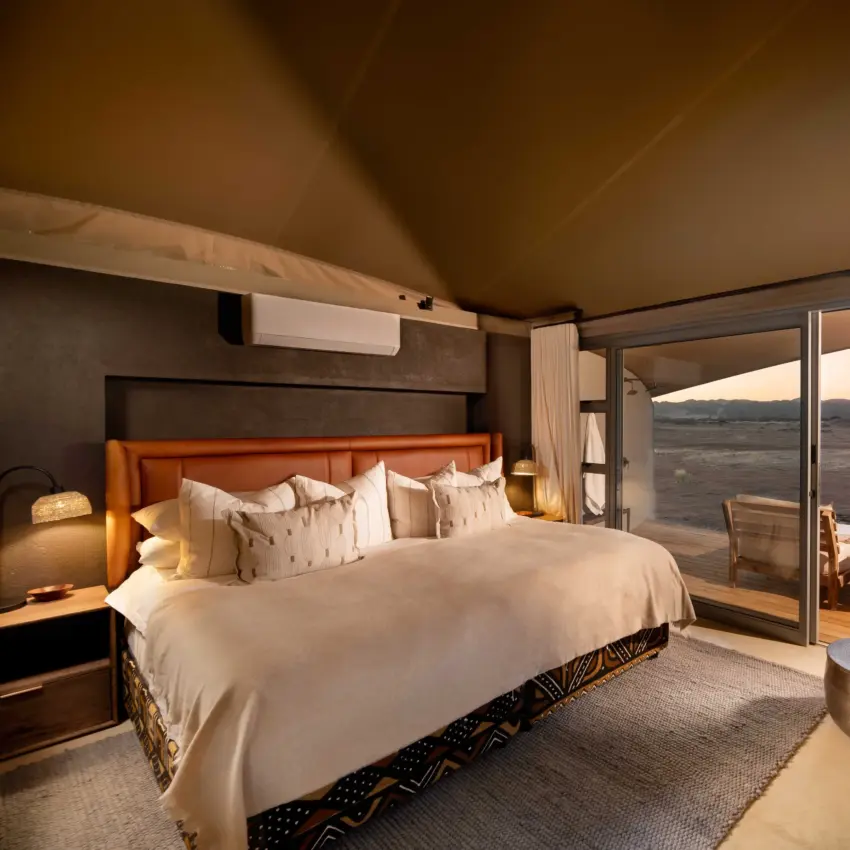
Ten tents stand on low timber decks facing the riverbed, eight of them twins and two family units. Rammed-earth walls carry insulated canvas roofs, which hold the interiors cool through afternoons that touch 40°C and warm through cold desert nights. Every deck has its own plunge pool, and the camp runs entirely on solar power, air conditioning included.

Rammed-earth walls carry insulated canvas roofs

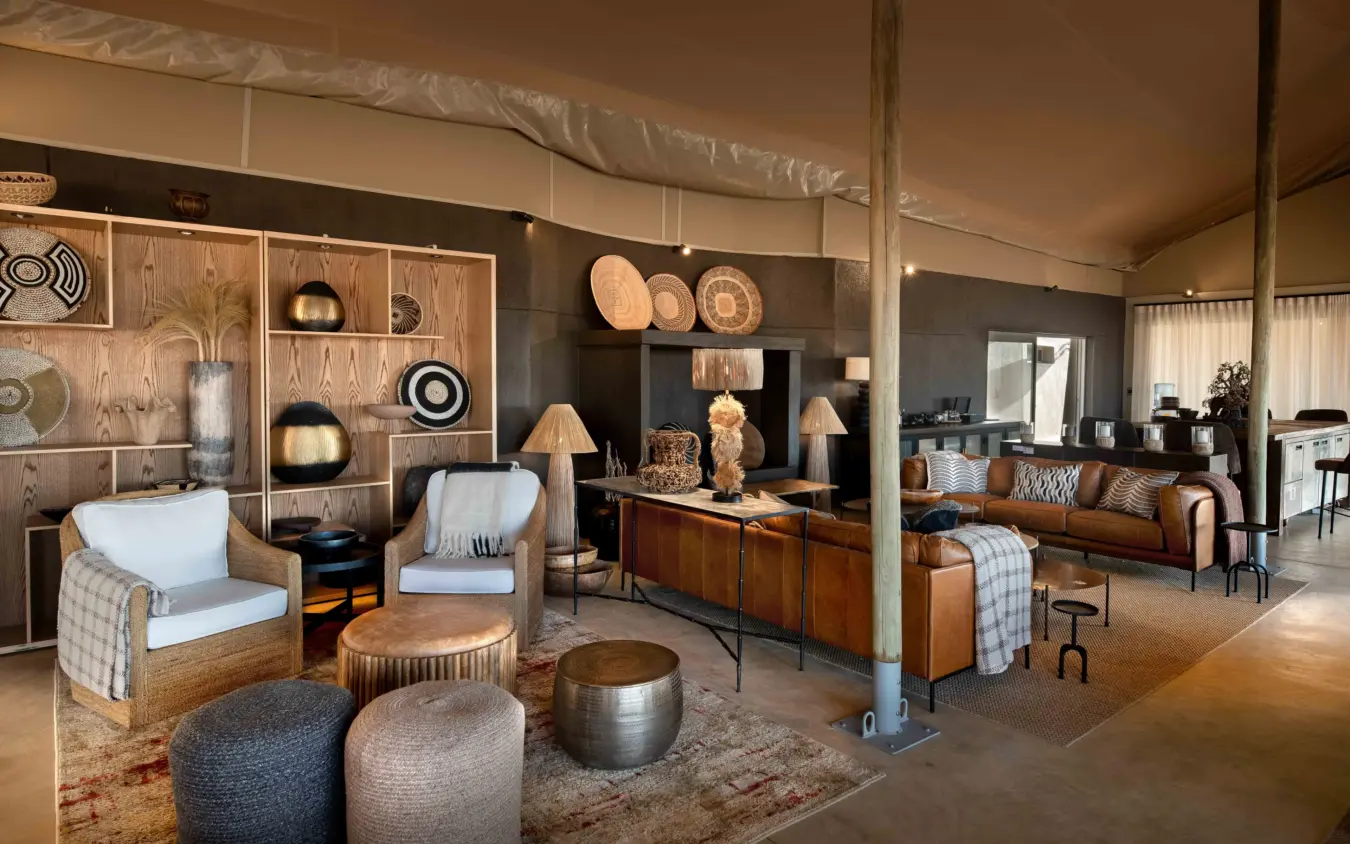
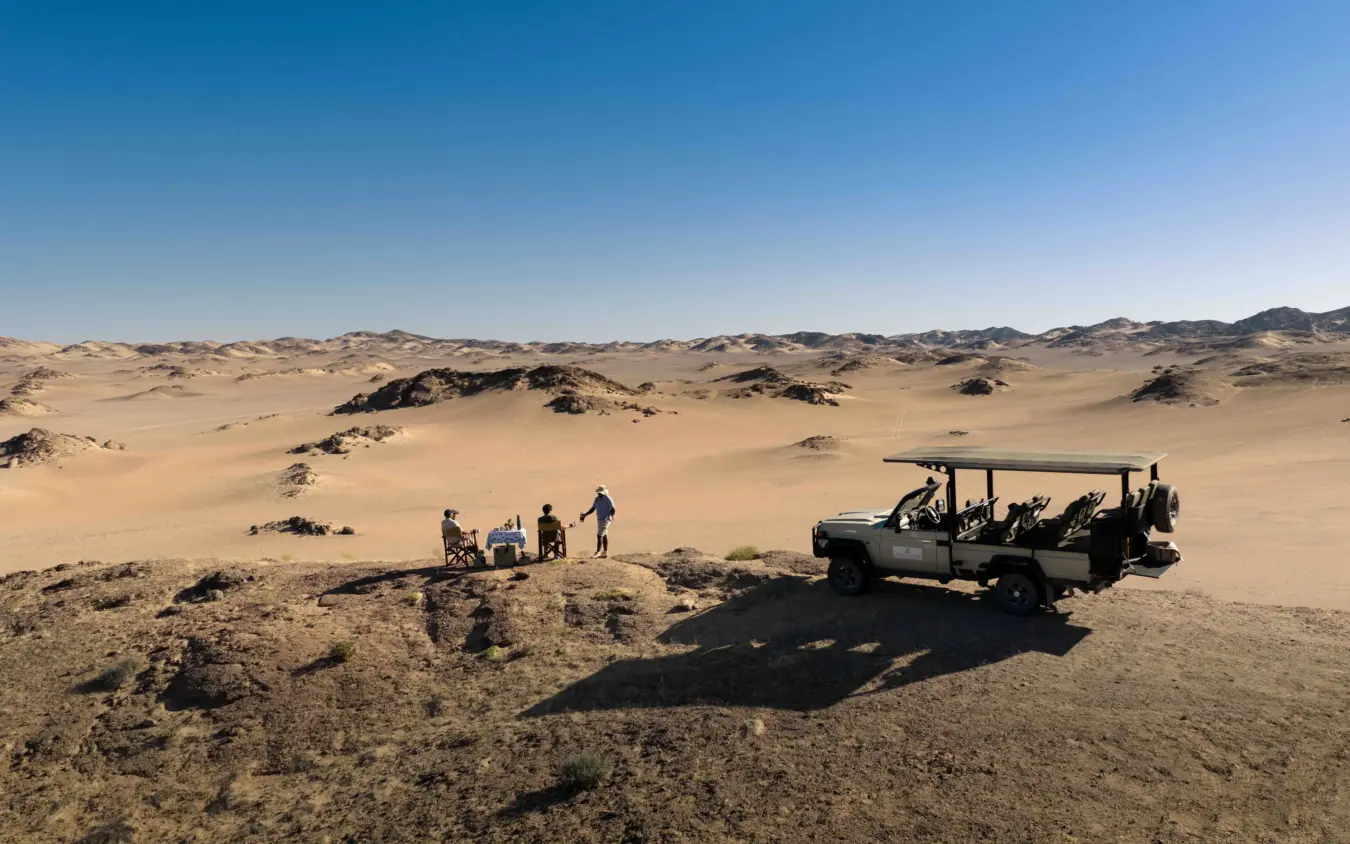
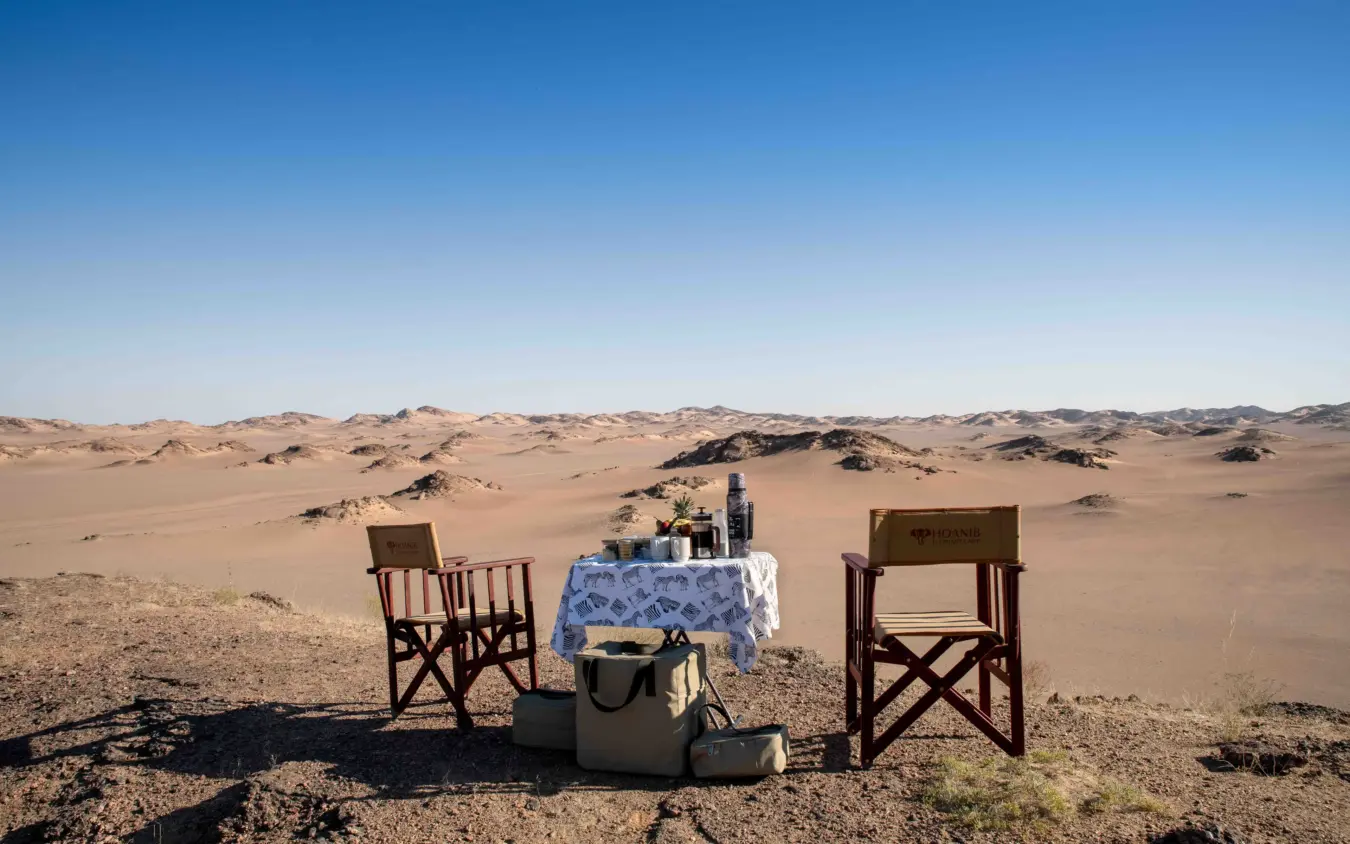
Because the camp works under conservancy agreements, not national park rules, guides can walk and drive off the tracks. Guides track black rhino with conservancy rangers and trackers, and dinner can be set out on the sand wherever the day ends. The main area holds an open lounge and dining room, a pool and a small spa, and after dark everyone gathers at the firepit.

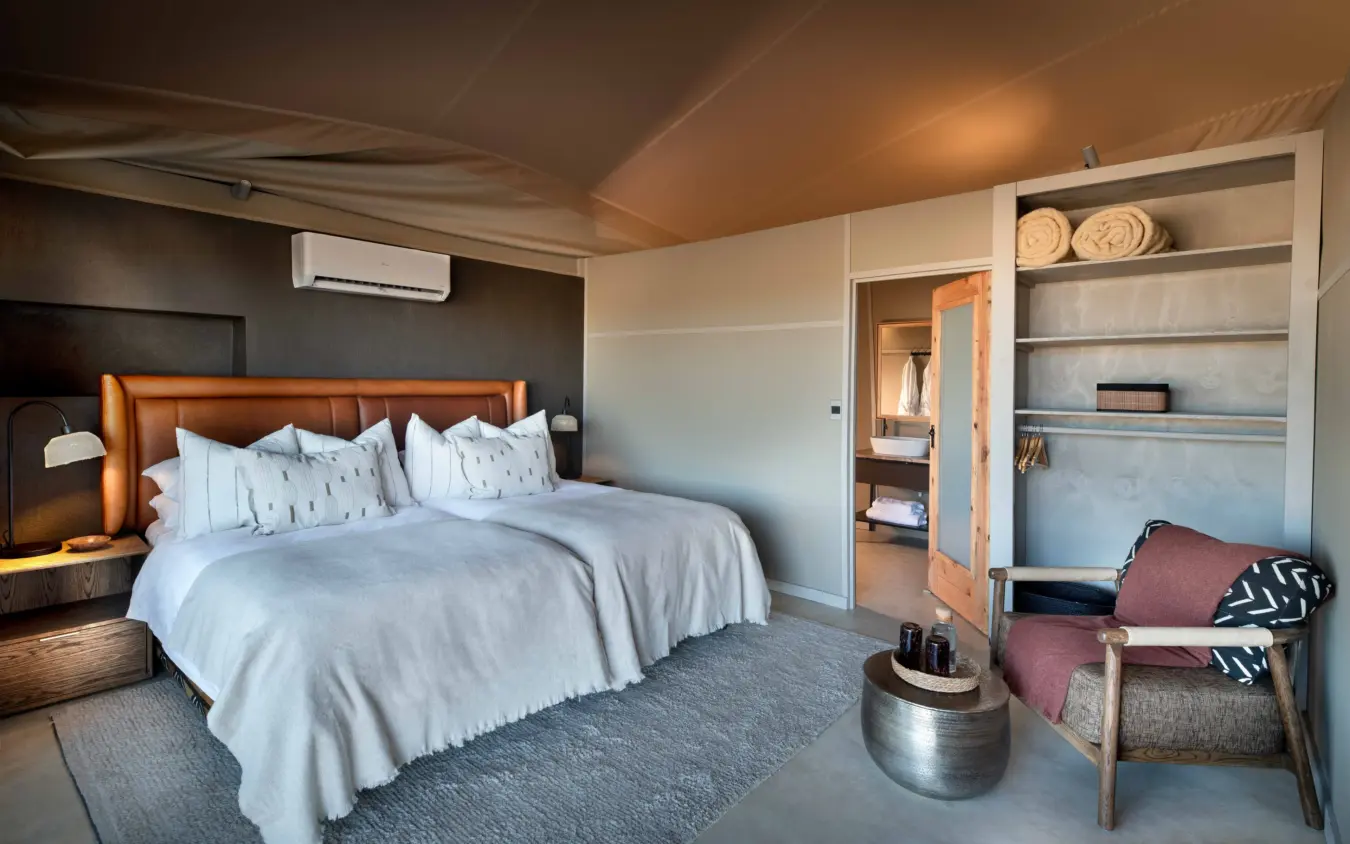
Luxury safari tent bedroom interior with orange leather headboard and canvas ceiling, Hoanib Elephant Camp, Skeleton Coast, Namibia 01

accommodation

Ten Tents with Private Plunge Pools

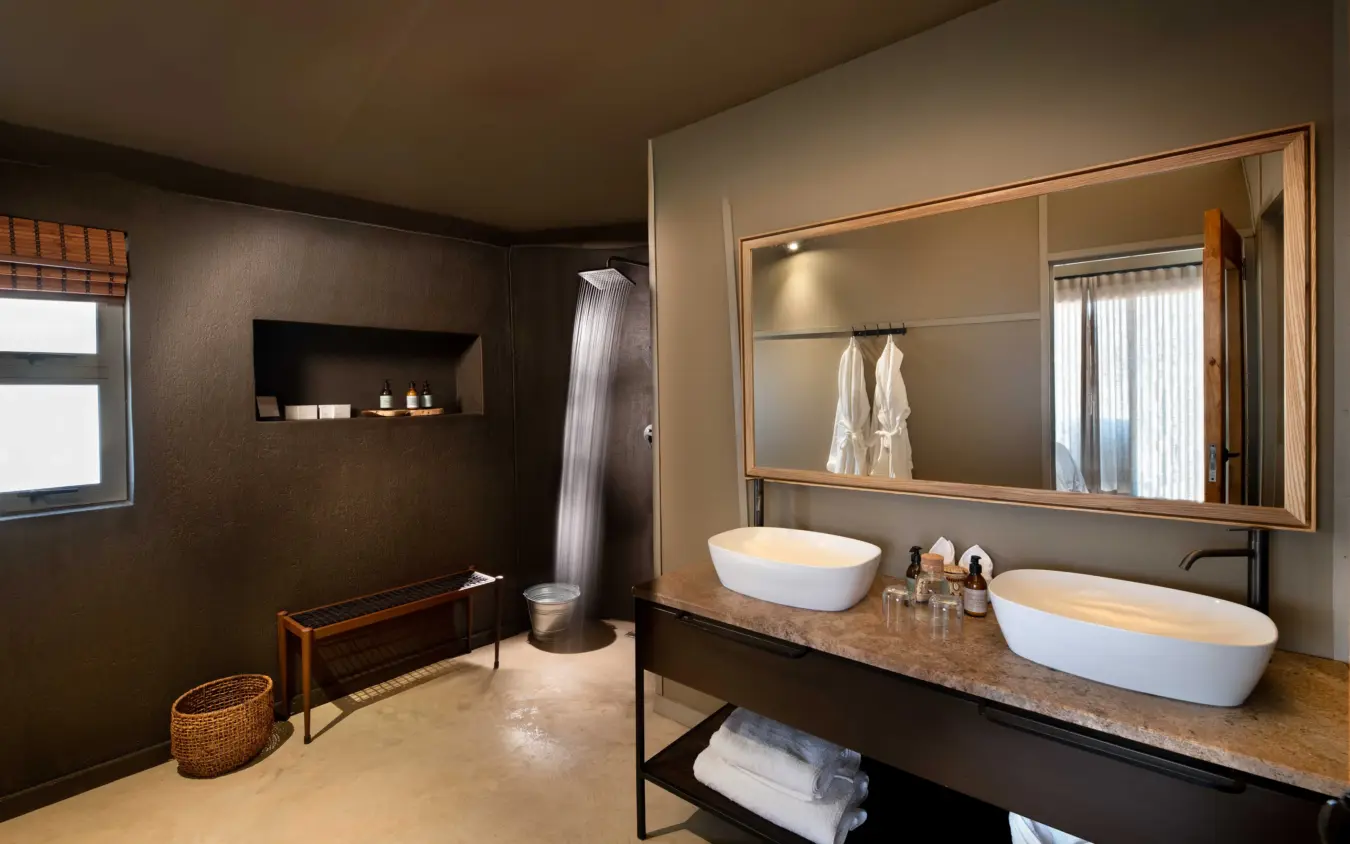
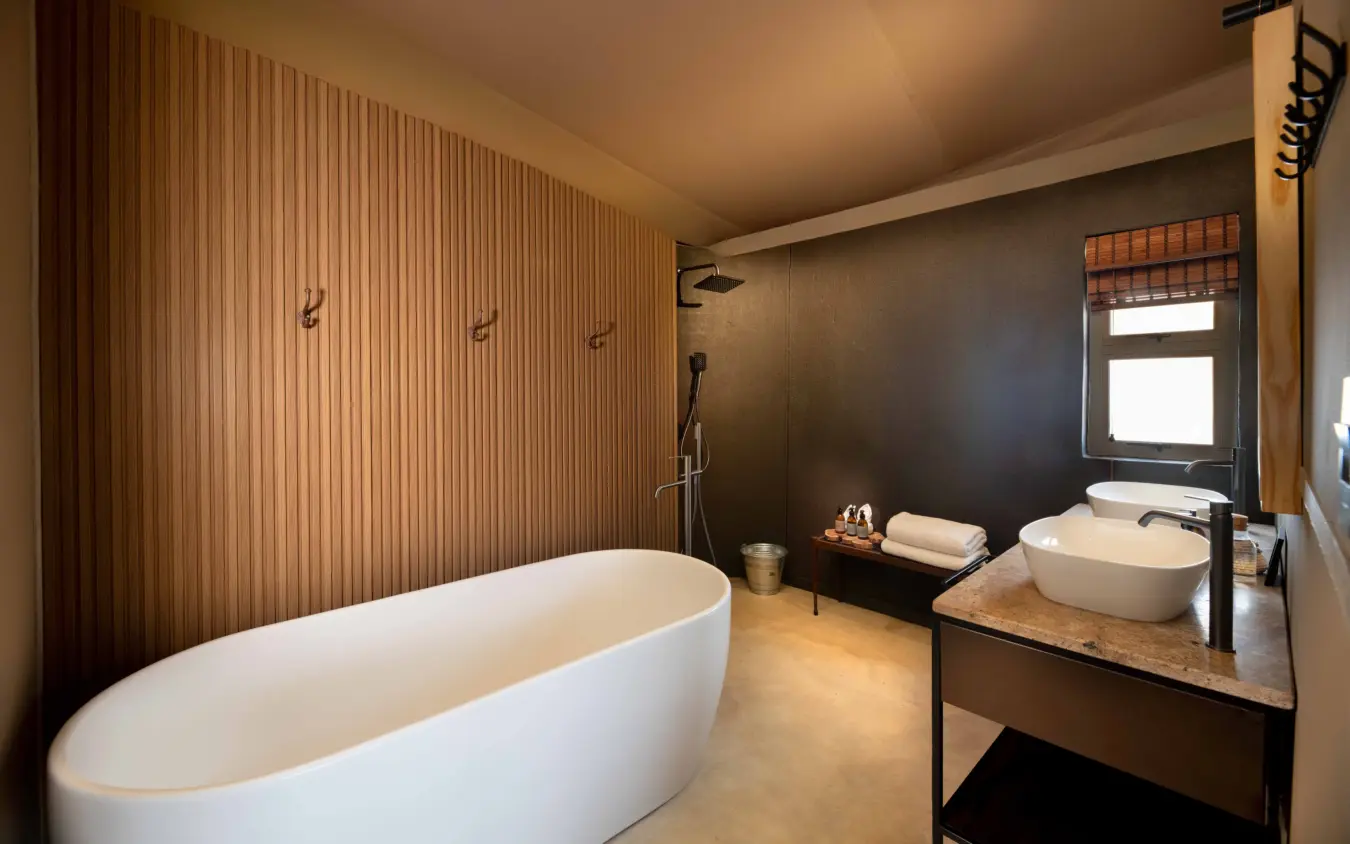
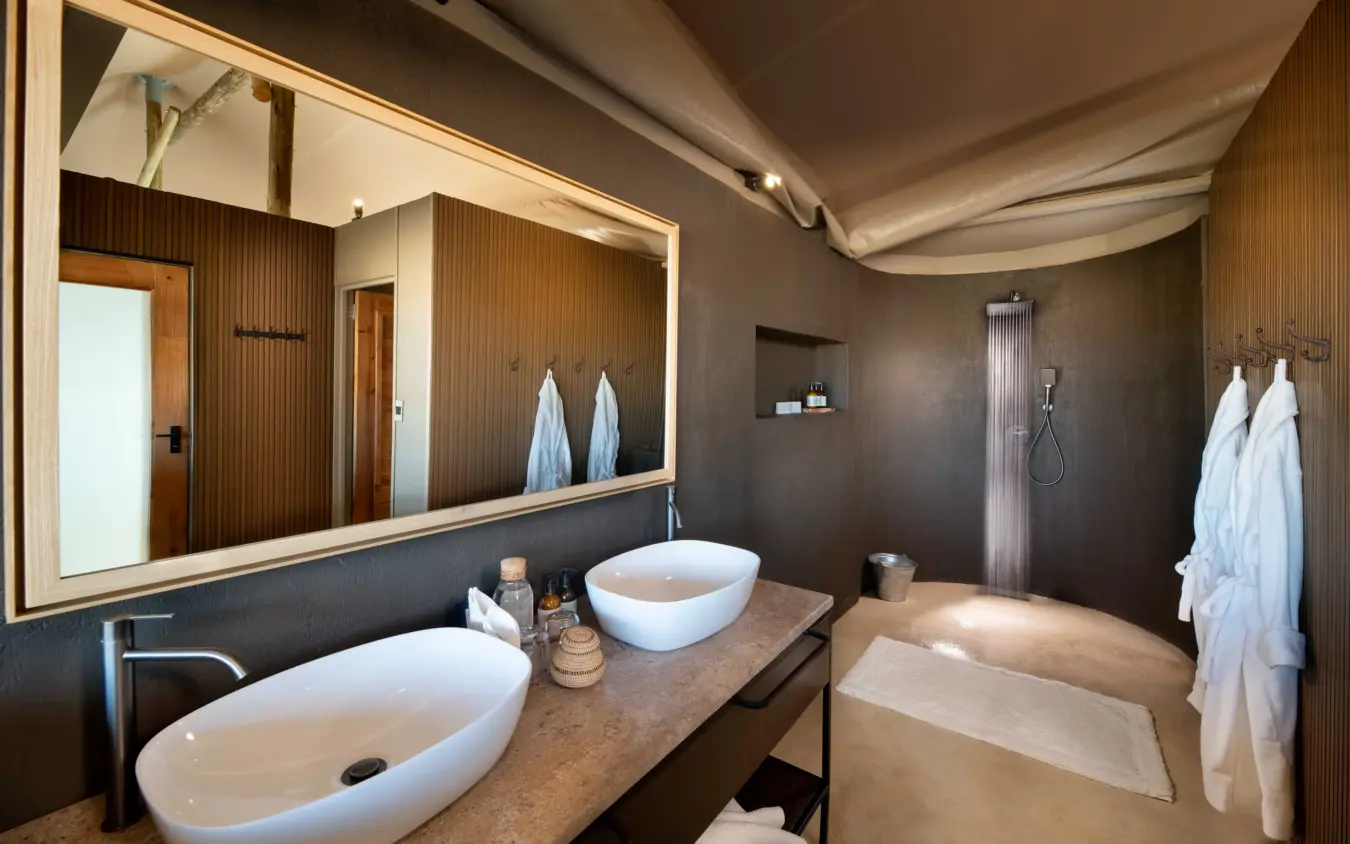
Ten tents, eight twins and two family units, each raised on a low timber deck with a private plunge pool and a view down the riverbed. Rammed-earth walls and insulated canvas hold the temperature steady, and the en-suite bathrooms have double vanities with indoor and outdoor showers. Air conditioning, Wi-Fi and complimentary laundry.

Safari vehicle silhouetted against desert dunes at sunset, Hoanib Elephant Camp, Skeleton Coast, Namibia 02

activities

Desert Elephant and Rhino Tracking

Morning and afternoon drives track desert-adapted elephant, giraffe, oryx, springbok and kudu along the riverbed and gravel plains, with desert lions a rare sighting. Rhino tracking runs with conservancy trackers. Guided walks, Himba visits, sundowners on the gravel flats and stargazing.

Elephants walking in dusty terrain with safari vehicle in background, Hoanib Elephant Camp, Skeleton Coast, Namibia 03

conservation

Black Rhino Monitoring with Save the Rhino Trust

Save the Rhino Trust works with conservancy trackers on black rhino monitoring in the Kunene region, and the desert lion early-warning system reduces losses at livestock kraals. Conservancy agreements with the Sesfontein community fund employment and early childhood learning projects.

ready to get started?

Get in touch and let’s start the conversation. An initial consultation helps us understand what you’re looking for, whether that’s specific experiences, luxury touches, or marking a special occasion, and from there we’ll guide you through what’s possible so you can decide if we’re the right fit.

alternative accommodation in skeleton coast

frequently asked questions

By light aircraft. The camp sits in the Sesfontein conservancy in Kaokoland, a long way from tarmac, and guests fly in by charter, from Windhoek or from the previous camp on a Namibia circuit, with the camp meeting the aircraft and driving you in.

That airstrip transfer is included in the rate, the flights themselves are not, and we build the charters in, typically a Cessna Caravan or a Pilatus PC-12. A new airstrip is planned a few minutes from camp, so we confirm the exact routing and timings for your dates when we book.

Soft bags only on the light aircraft, and the camp's laundry is included, so pack light. Its sister camp, Hoanib Valley Camp, lies 25 kilometres up the river, and the two can share one flight plan.

A seasonal one. The camp lies in Namibia's Kunene region, and TravelHealthPro, which carries the UK's official travel health advice, classes Kunene as high risk from December to April, when it recommends antimalarial tablets, and low risk from May to November, when it advises awareness and bite avoidance only.

The CDC lists Kunene among the regions of Namibia for which it recommends antimalarial medicine, without the seasonal split. Low risk is not the same as no risk.

We do not make medical recommendations, and we would not want to. We arrange travel; we are not doctors. Which tablets suit you, how they sit with anything else you take, and what is right for a child are questions for your own doctor or a travel clinic.

On the practical part, dusk is the hour that matters, so long sleeves, long trousers and repellent are worth the packing space.

Desert extremes. Afternoons in the dry season touch 40°C on the gravel flats, nights turn properly cold, and on winter mornings the coastal fog reaches the camp, so a single day can run from damp and grey to fierce heat. The green season, December to March, brings the only real chance of rain, and even then the river rarely runs.

Pack light, breathable clothes and a wide hat for the heat, then a fleece, a windproof layer and long trousers for dawn drives and the foggy mornings, with a buff or scarf for dust in the open vehicle and strong sun protection. Swimwear for the plunge pool on your deck, closed shoes for the rhino tracking, and soft bags for the flight.

October, if elephants are the point. It is the driest month, the last water in the riverbed pulls the elephant families together and the guides can read where they have been overnight, and July and August are the camp's peak season for the same reason with cooler days attached.

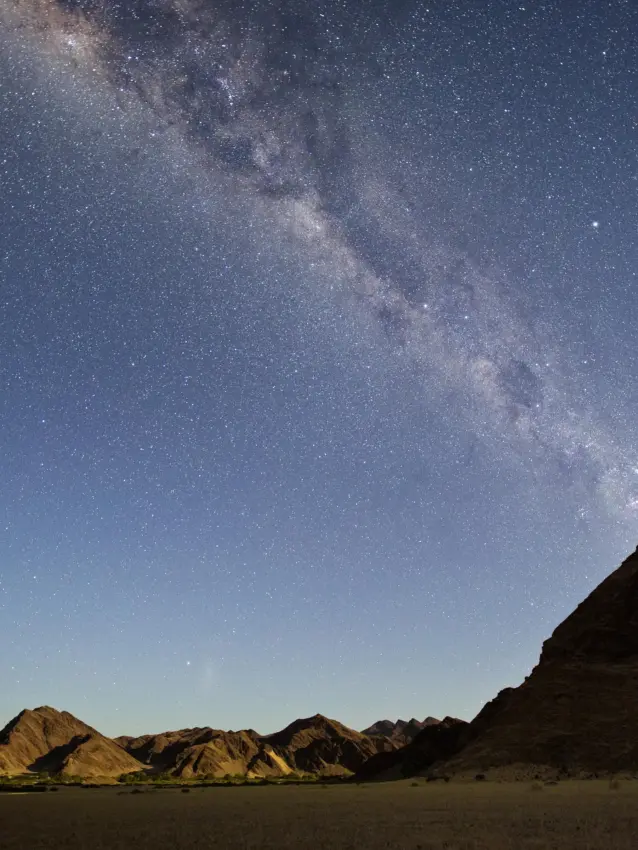
June to October as a whole is the reliable window, with the fog mornings and the clearest skies for the firepit and the stars.

December to March is the green season, hotter, with the chance of a shower that sends a brief pulse of green down the valley and scatters the animals, and the quietest time in camp. Sightings here are thin in any month, which is the nature of the place rather than a fault of the season, so we will set expectations honestly whichever you choose.

Almost everything once you land: all meals and drinks bar the premium brands, the daily activities and guiding, the transfer between the airstrip and camp, wifi, laundry and the park and conservancy entry fees. Outside the rate are the flights in and out, gratuities, travel insurance and helicopter excursions, and a private vehicle can be booked if you would rather not share.

A community, conservation and reserve fee is charged on top per person per night, which funds wildlife protection and the community projects along the river, and we build it into your quote from the start so nothing arrives as a surprise.
rated five stars by our clients

other areas in namibia

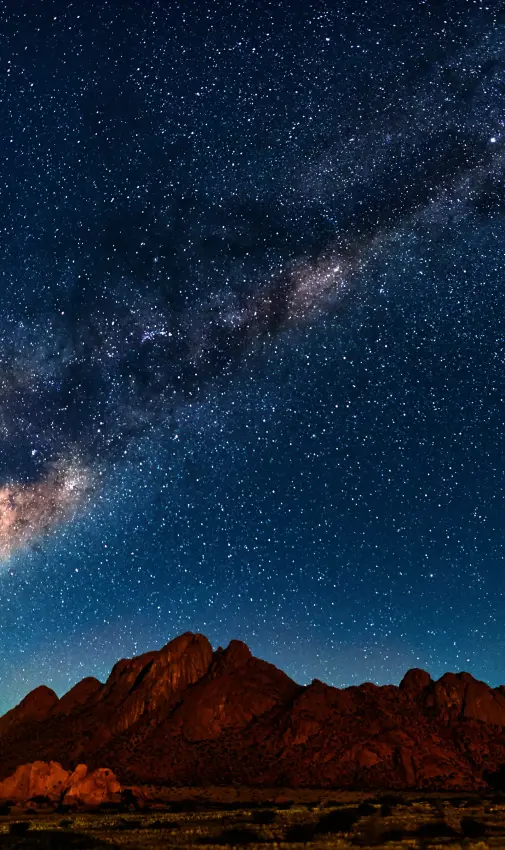
Rocky desert mountains silhouetted under starry night sky 01

Damaraland

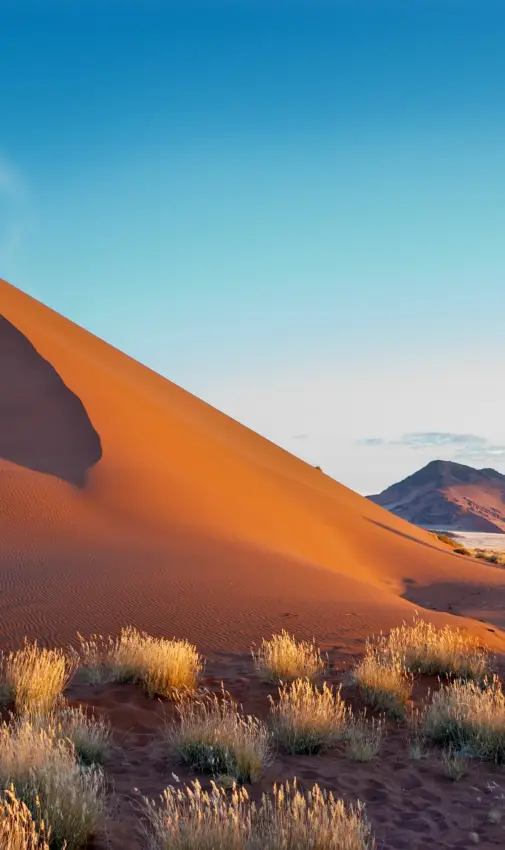
Golden sand dune at sunset with sparse desert vegetation 02

Sossusvlei

Elephant with zebras and antelopes at waterhole 03

Etosha National Park

Portrait of a person wearing traditional African beaded jewelry 05

Kunene River

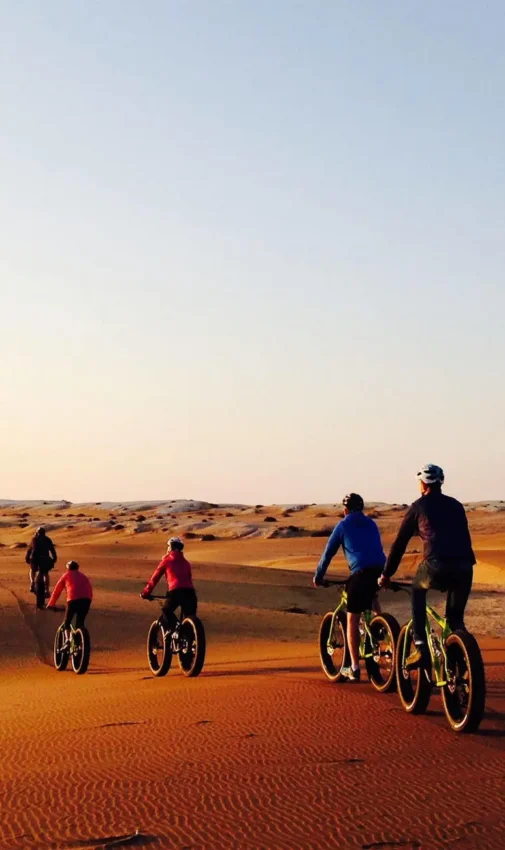
Cyclists riding across red sand dunes at sunset, Swakopmund, Namibia 06

Swakopmund

Elephant herd walking through dusty grassland with scattered trees, Zambezi Region, Namibia 07

Zambezi Region

Aerial view of church and city at sunset 08

Windhoek

Planning a journey together

our approach

remote, exclusive
& personal

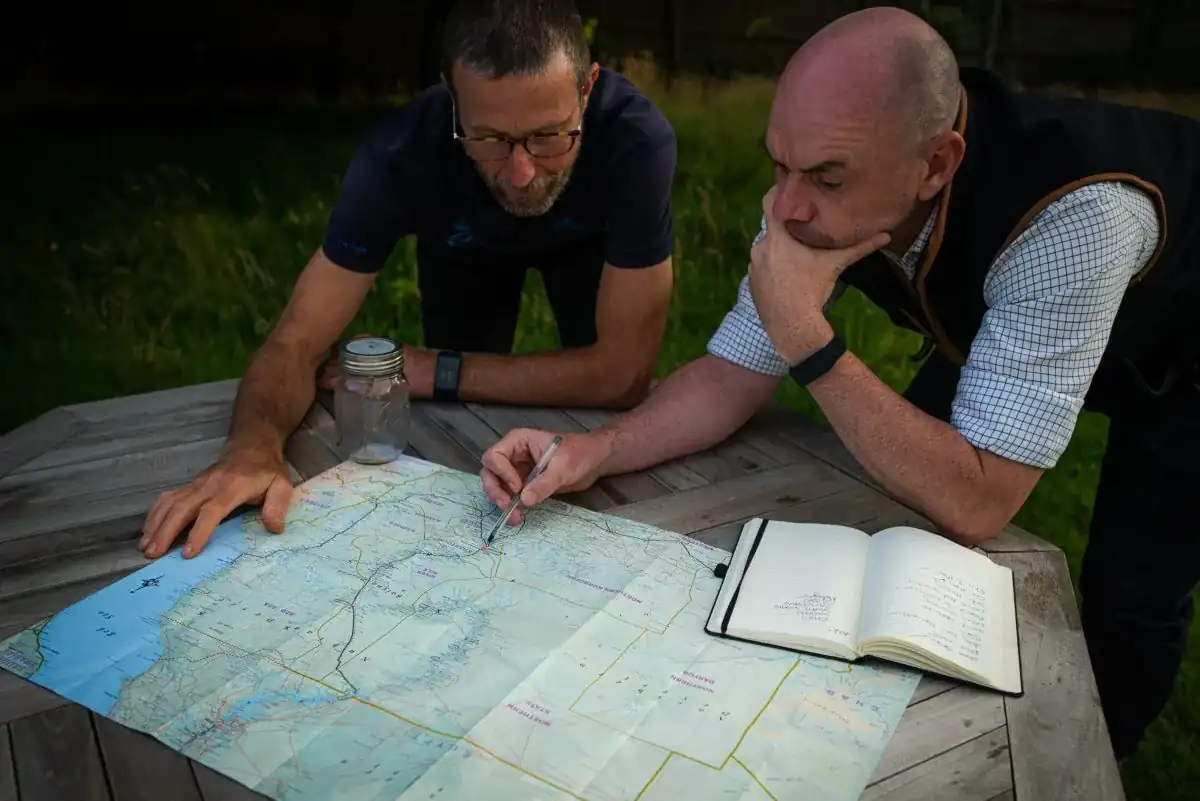
Every journey starts with a conversation. We take the time to understand your vision before we start planning.
Whether by phone or in person, we work with you directly to shape something that is considered, personal, and expertly delivered.

get in touch
destinations ideas & inspiration our process about us contact us