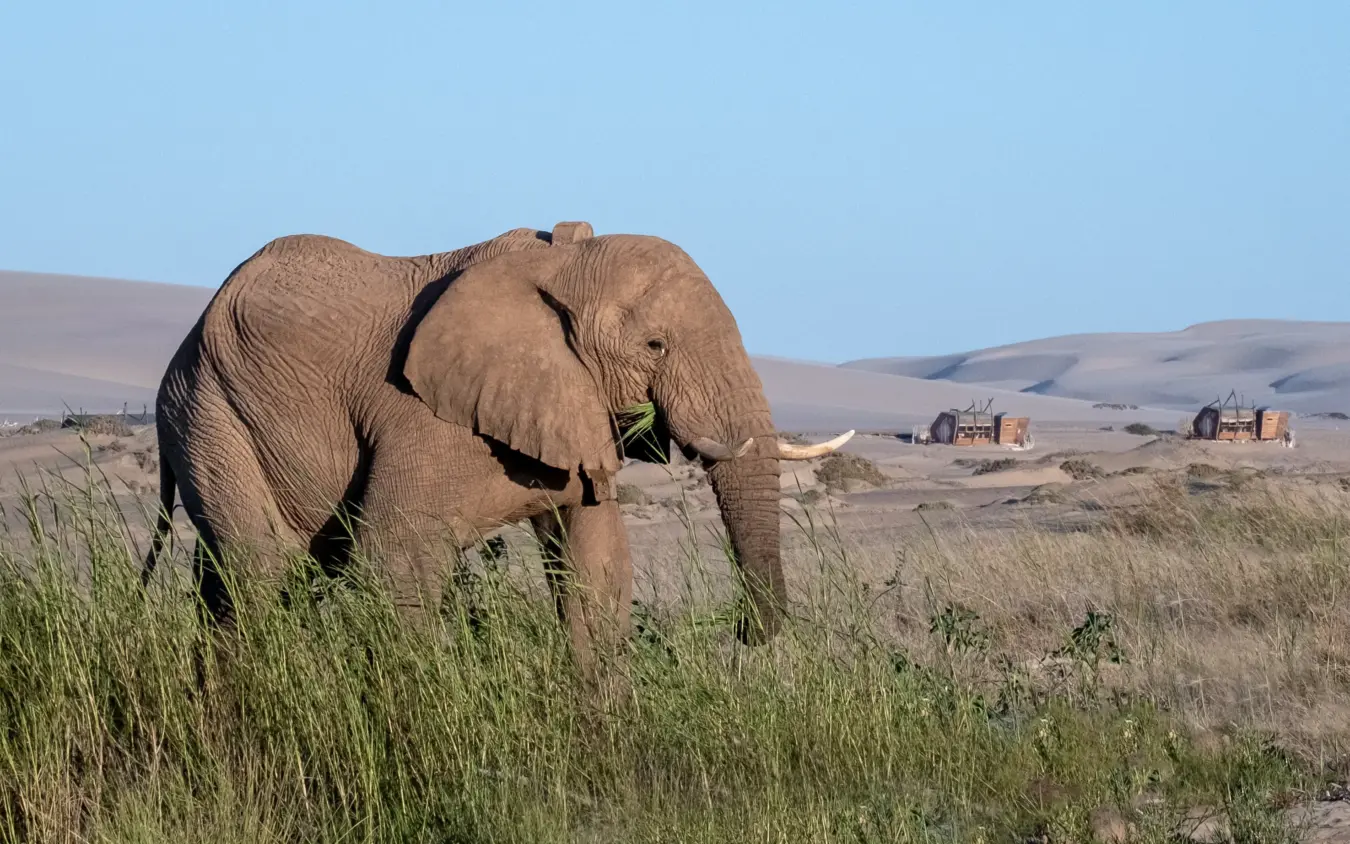
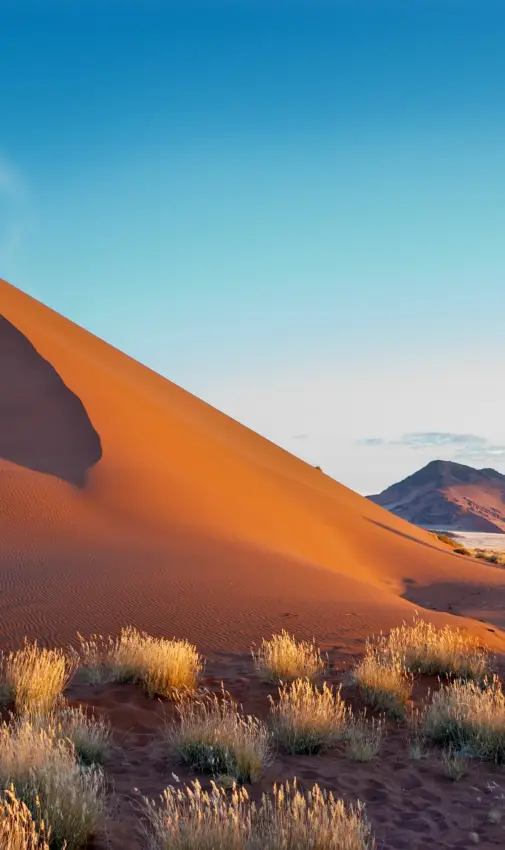
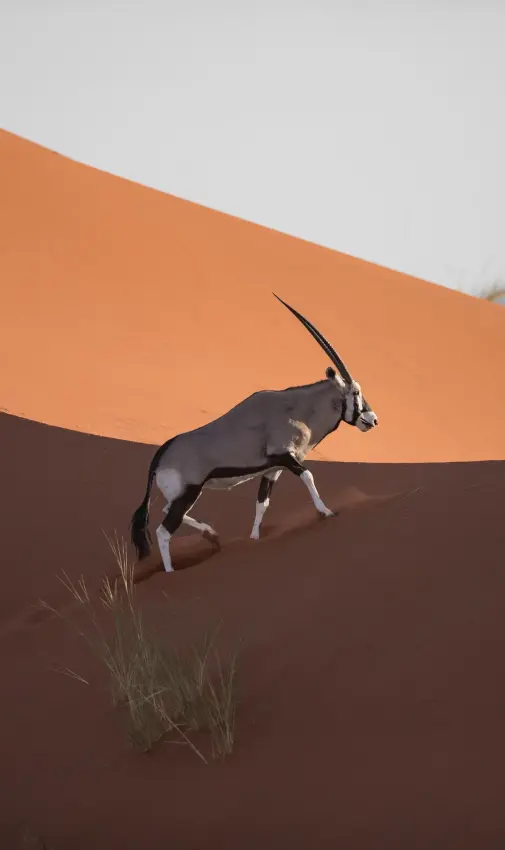
Days here are built around the coast rather than a waterhole. Wildlife on the Skeleton Coast is thin and hard-won, which makes each sighting count for more. Game drives work the dry riverbeds and dune faces for desert-adapted elephants, lions and brown hyenas, alongside giraffe, oryx, springbok, baboons and black-backed jackals. Overhead there are Rüppell’s korhaan and the Benguela long-billed lark, while the Möwe Bay seal colony holds vast numbers of Cape fur seals, a rare concentration of life on so austere a shore.
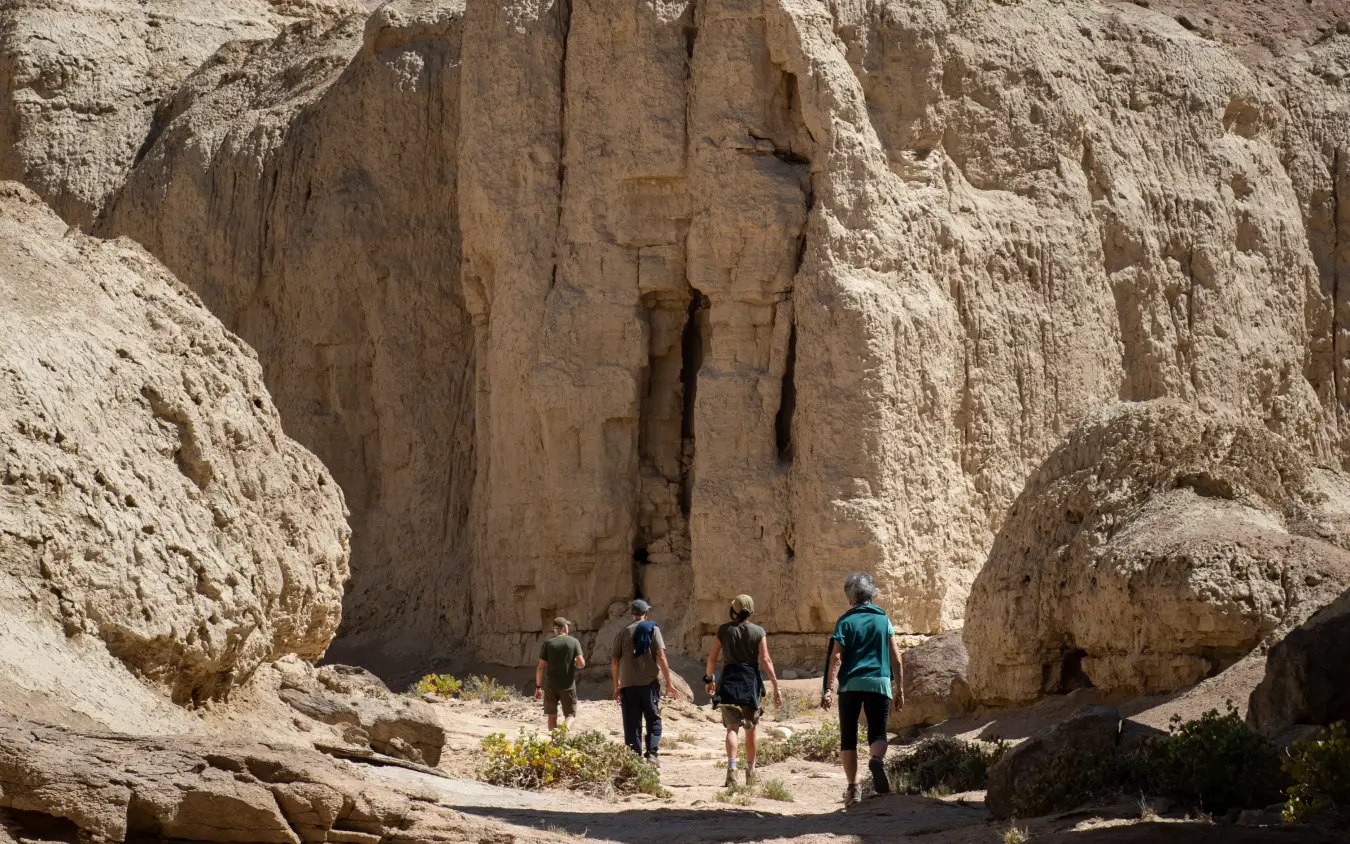
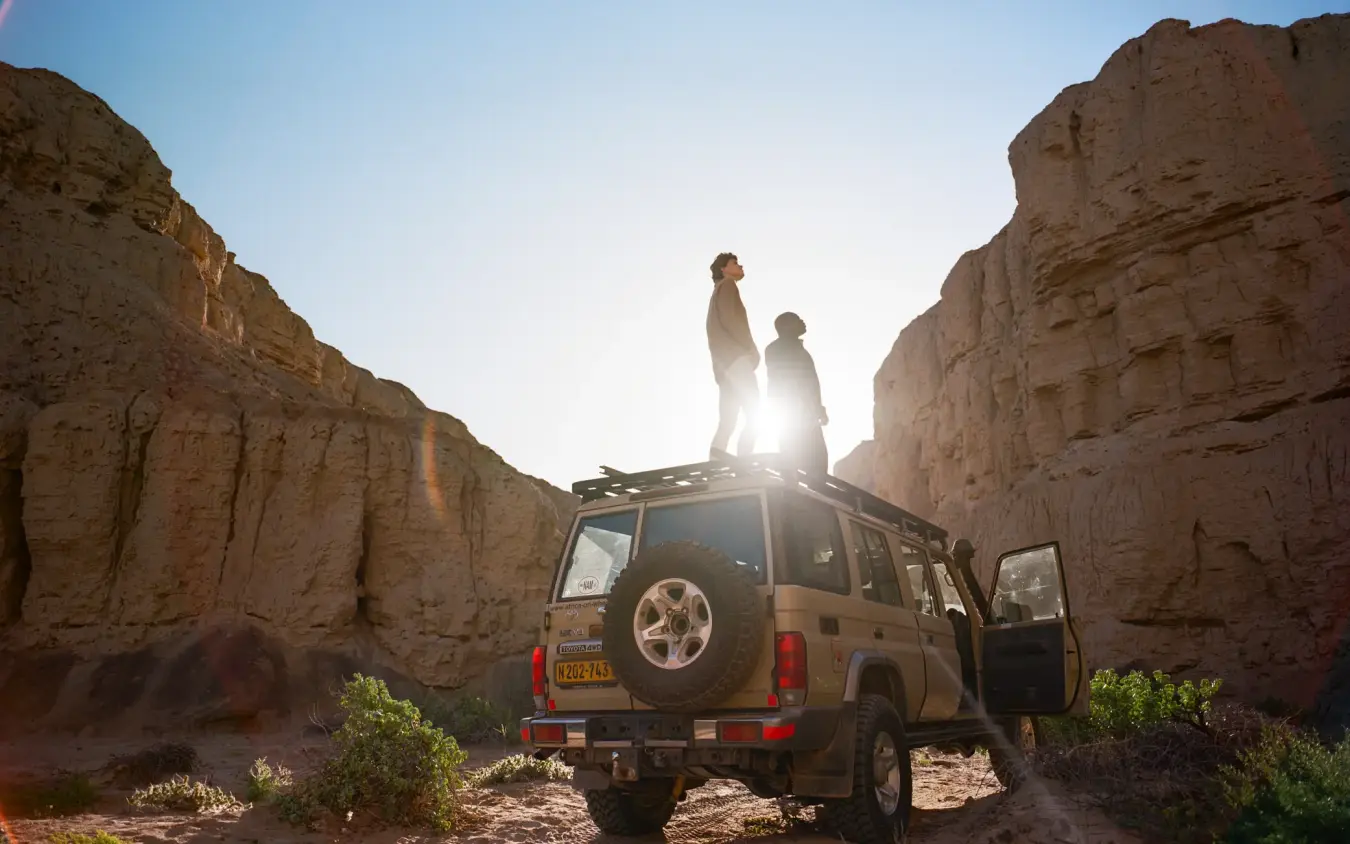
A full-day drive south to Möwe Bay traces the coast’s long history of loss. It takes in the seal colony, the Suiderkus and Karimona shipwrecks, and the remains of the Westies diamond mine. Inland, drives follow the dry Hoarusib riverbed to the Clay Castles, geological formations sculpted by the river over centuries. These are the routes where desert elephants and lions are most likely to appear, moving through a landscape that seems to hold no water at all.
Inland, drives follow the dry Hoarusib riverbed to the Clay Castles, geological formations sculpted by the river over centuries.
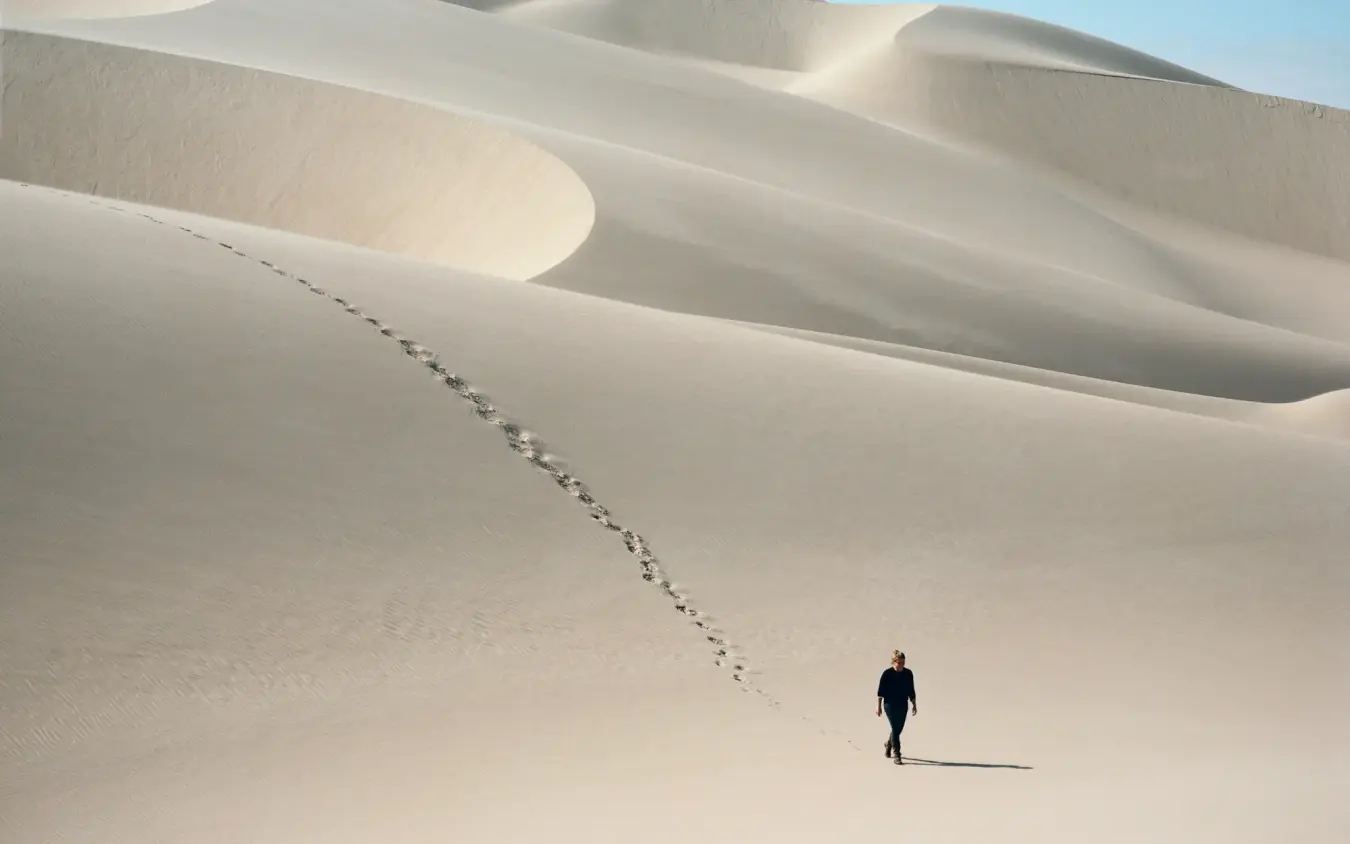
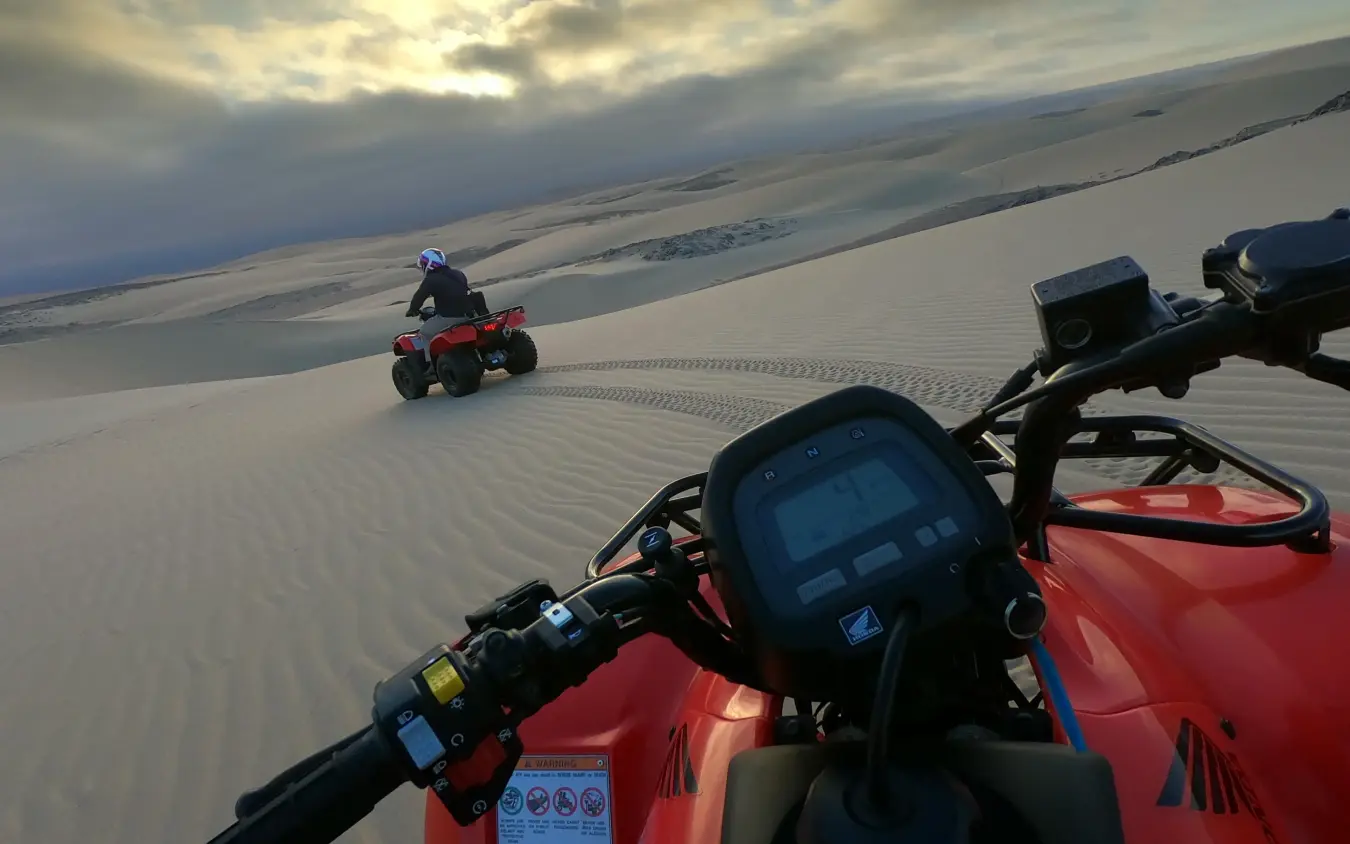
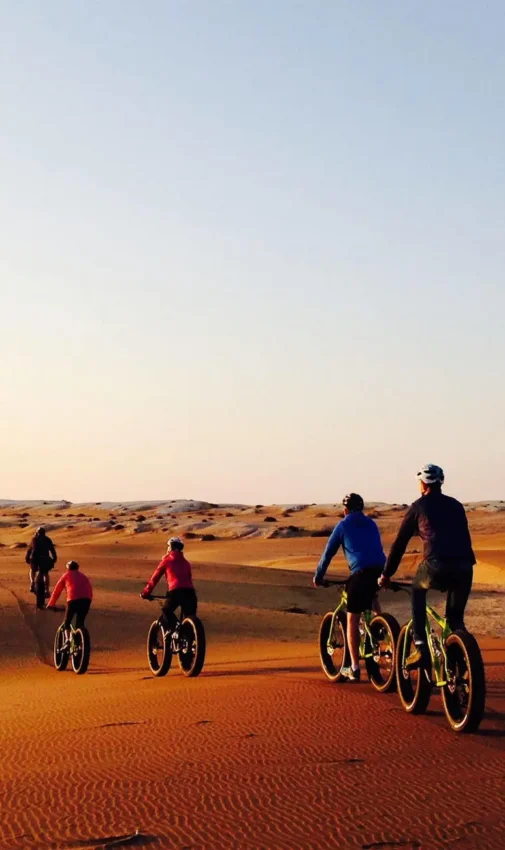
For a more active day, guided quad biking and sandboarding cover the dunes, and shore angling can be arranged, with the kitchen preparing the catch. As the light drops over the water, sundowners are set out at scenic points along the coast. Meals themselves sometimes move out of the main lodge entirely, onto the sand for a beach lunch or into a dry riverbed for a barbecue under the open sky.
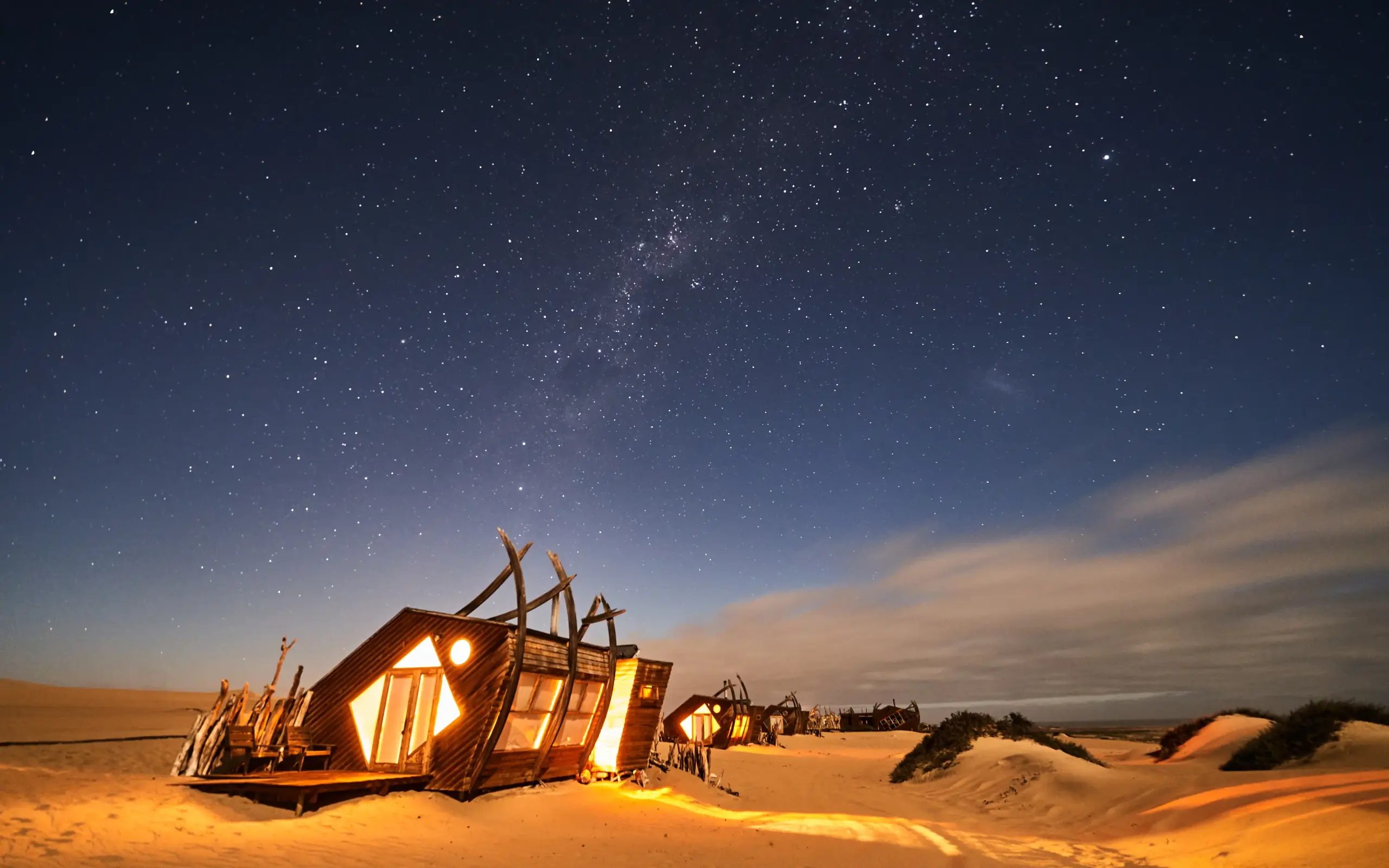
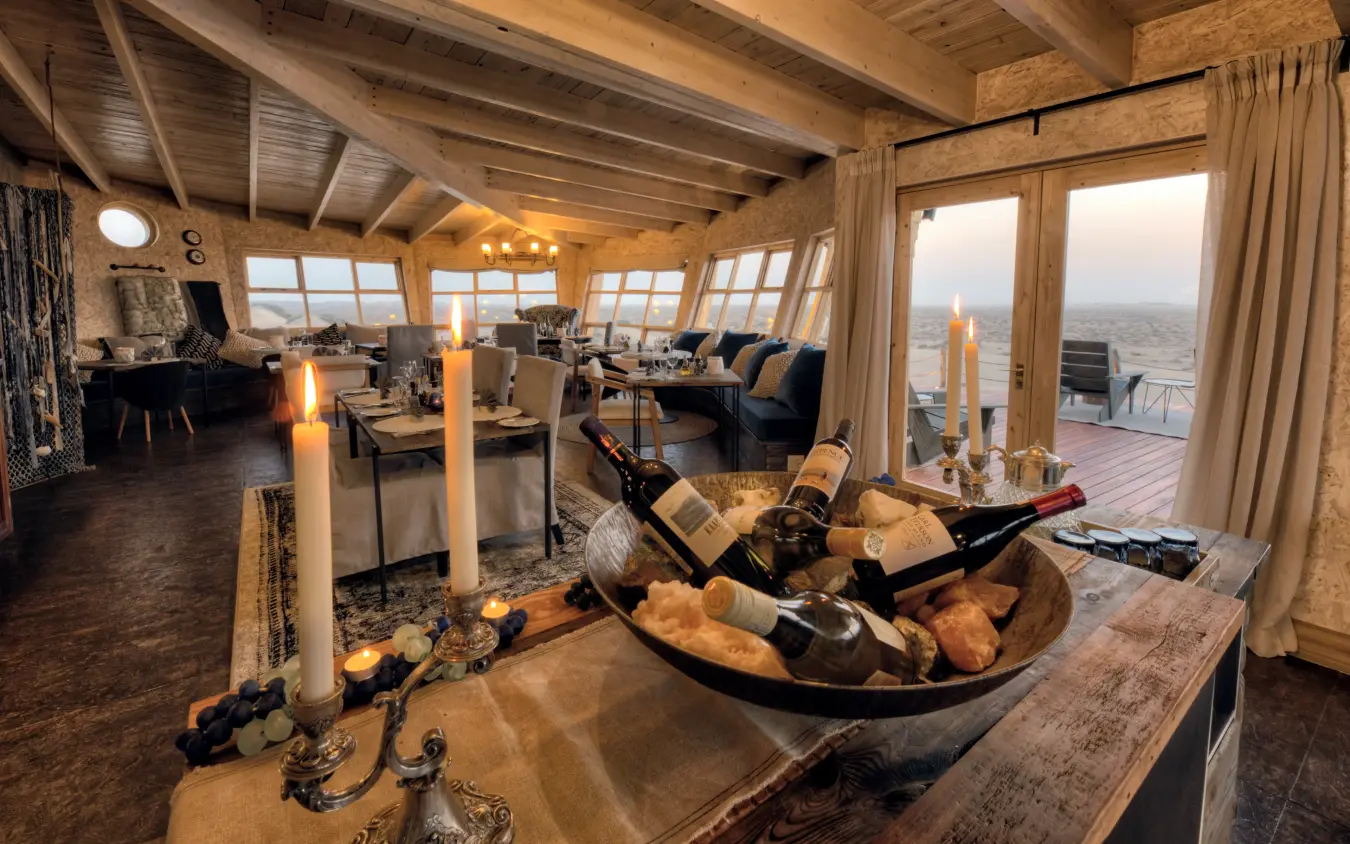
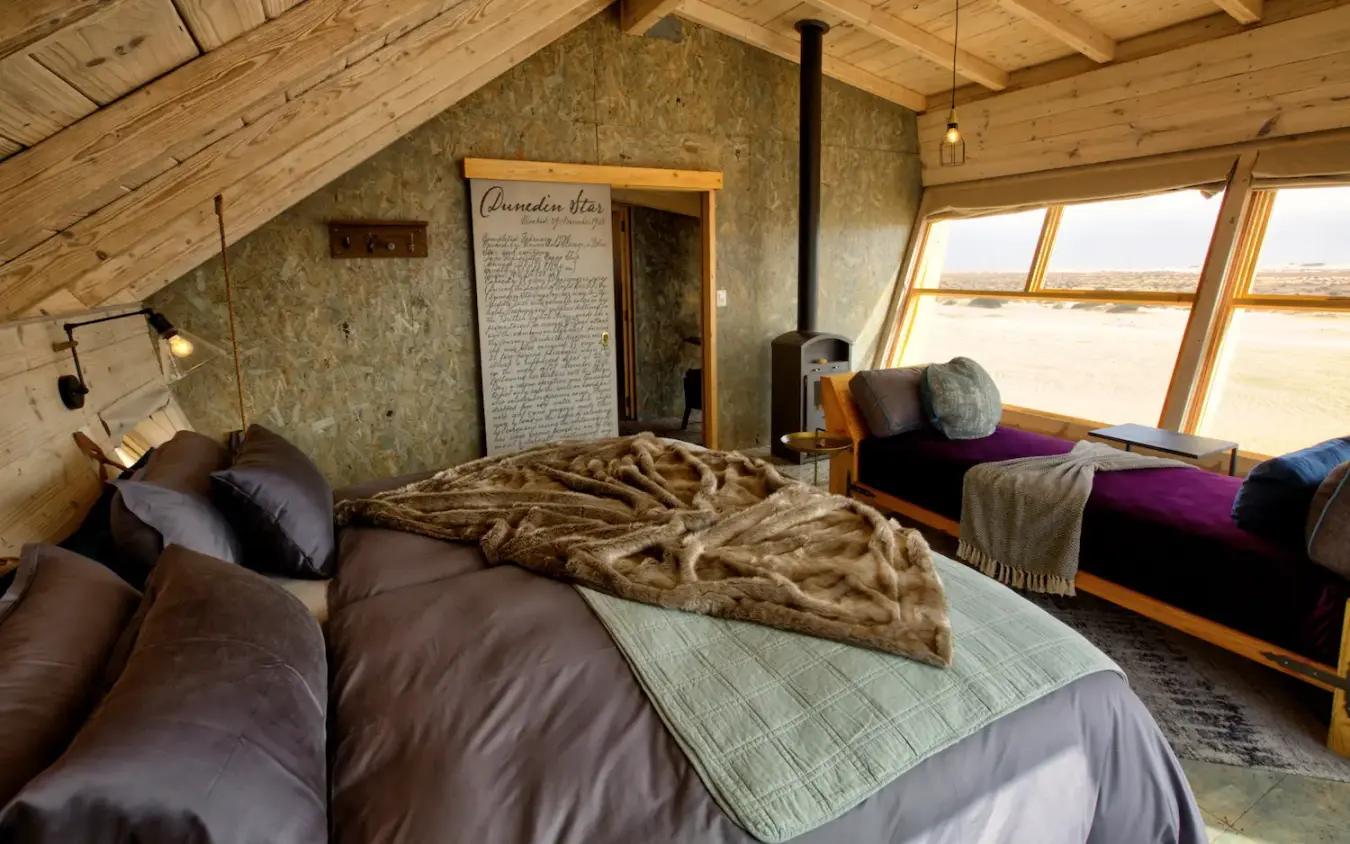
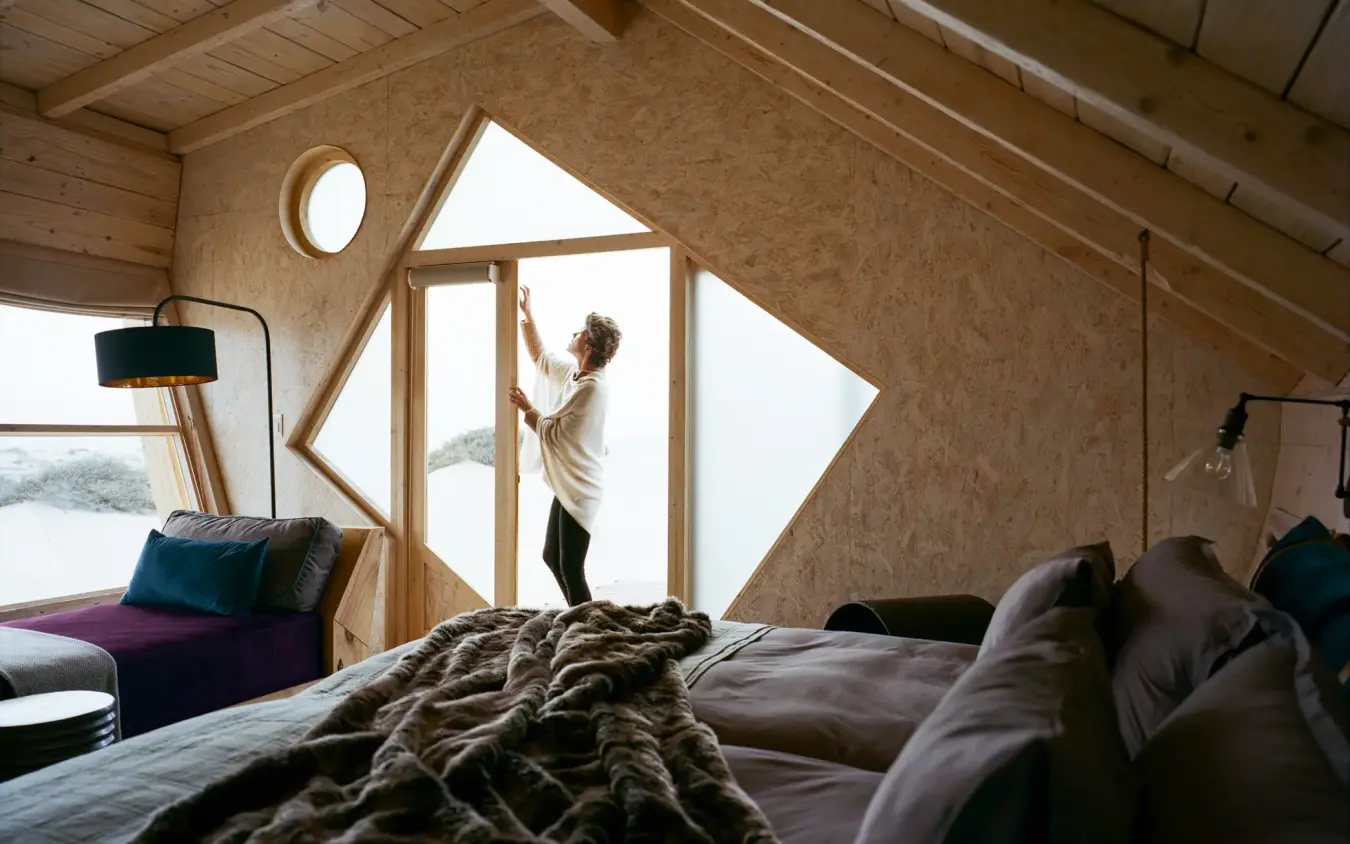
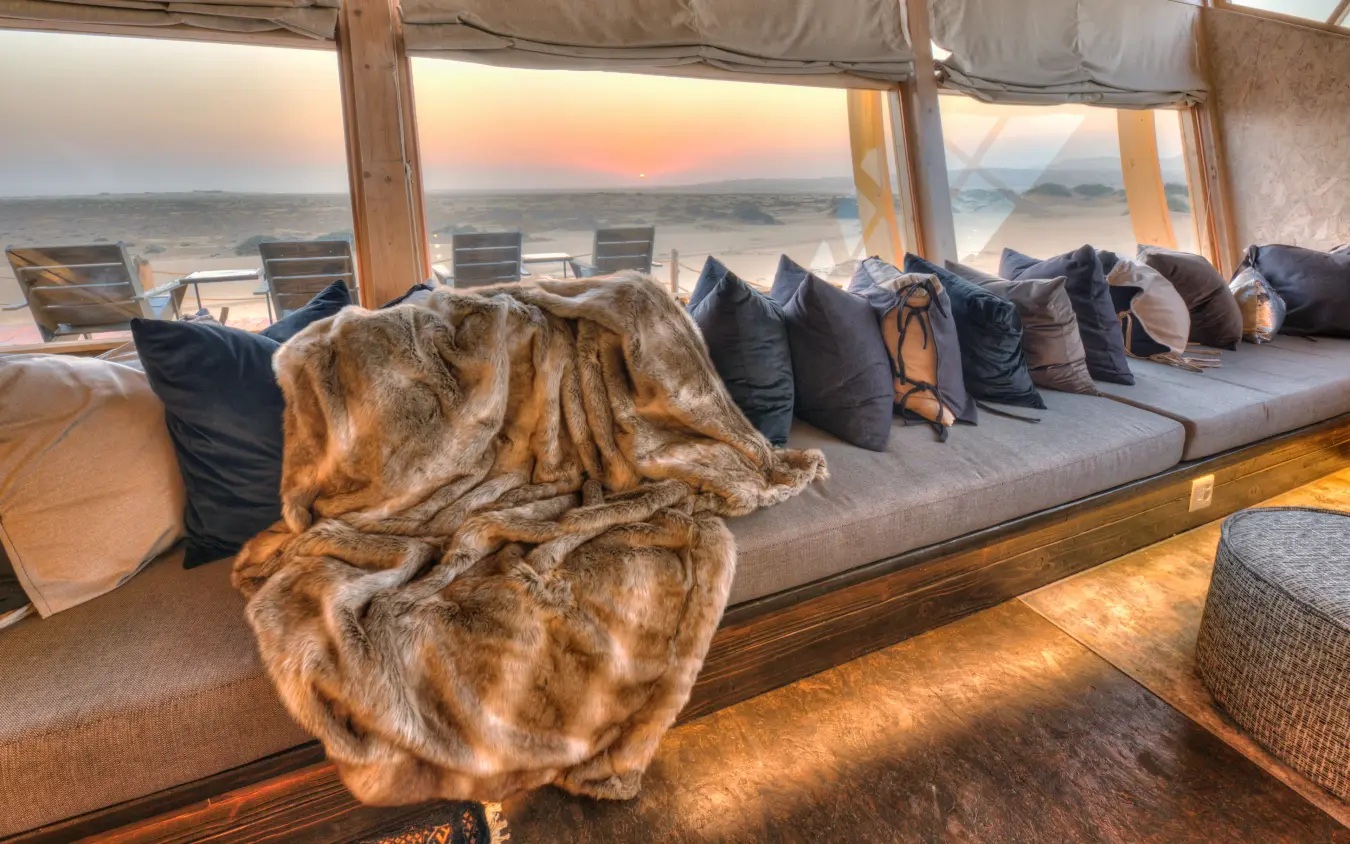
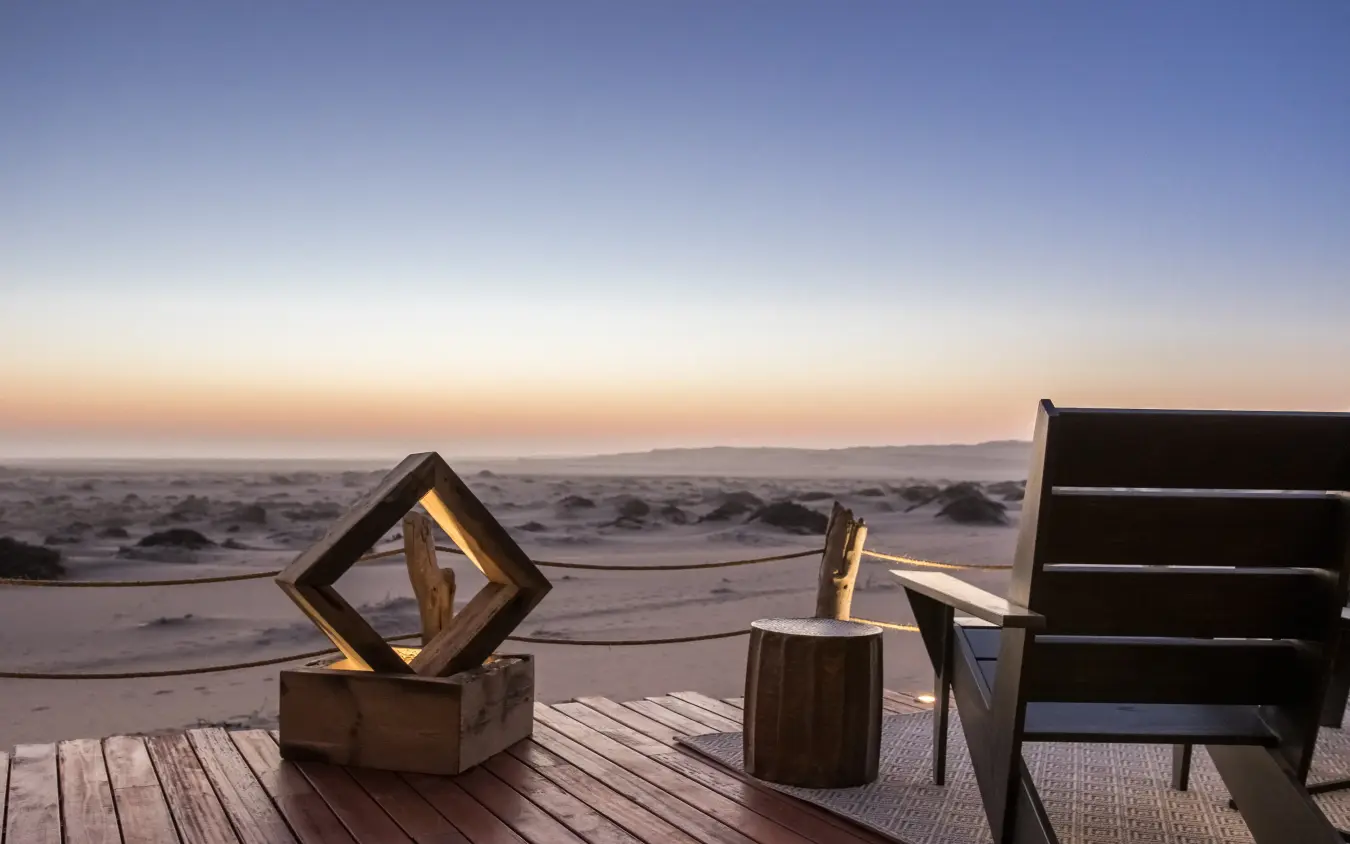
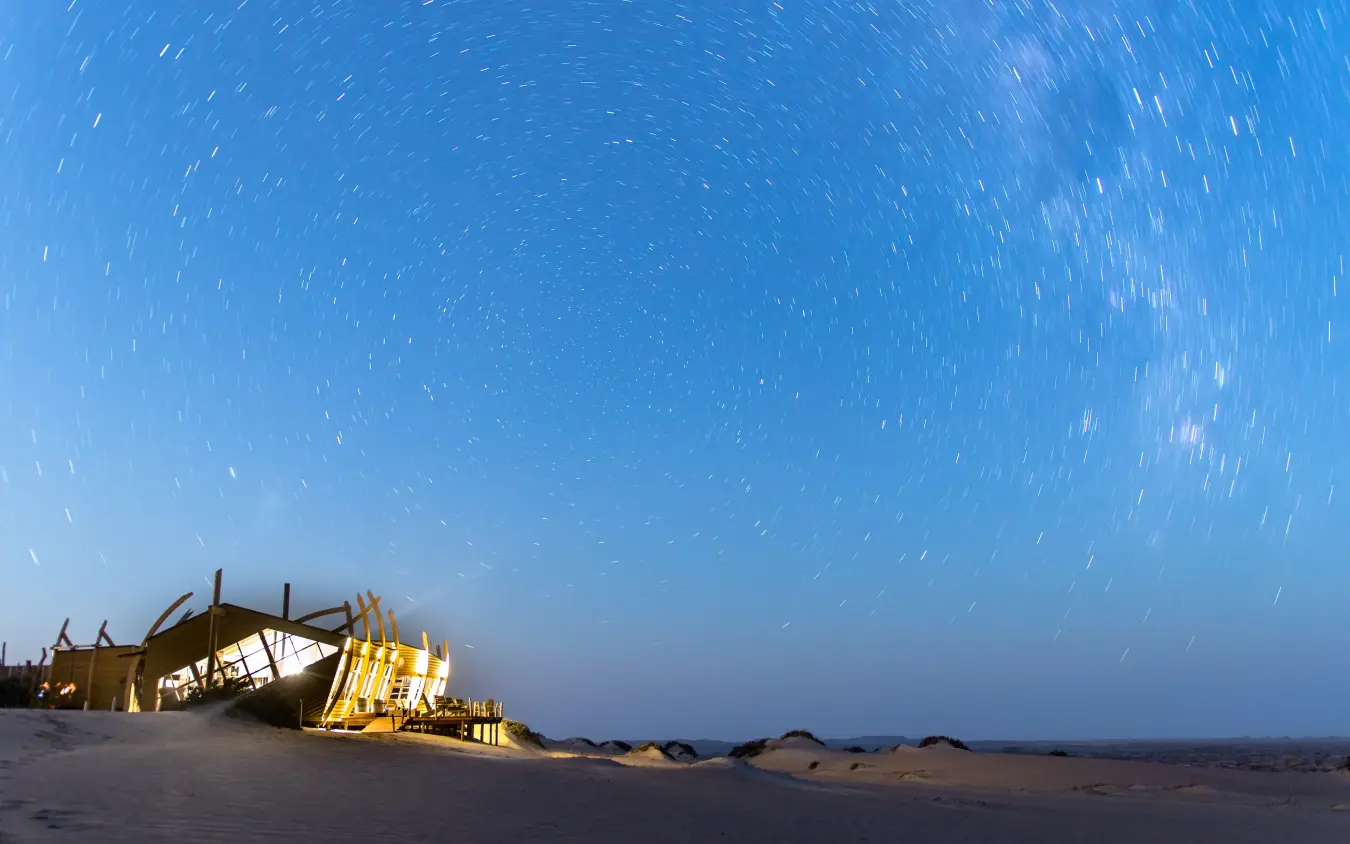
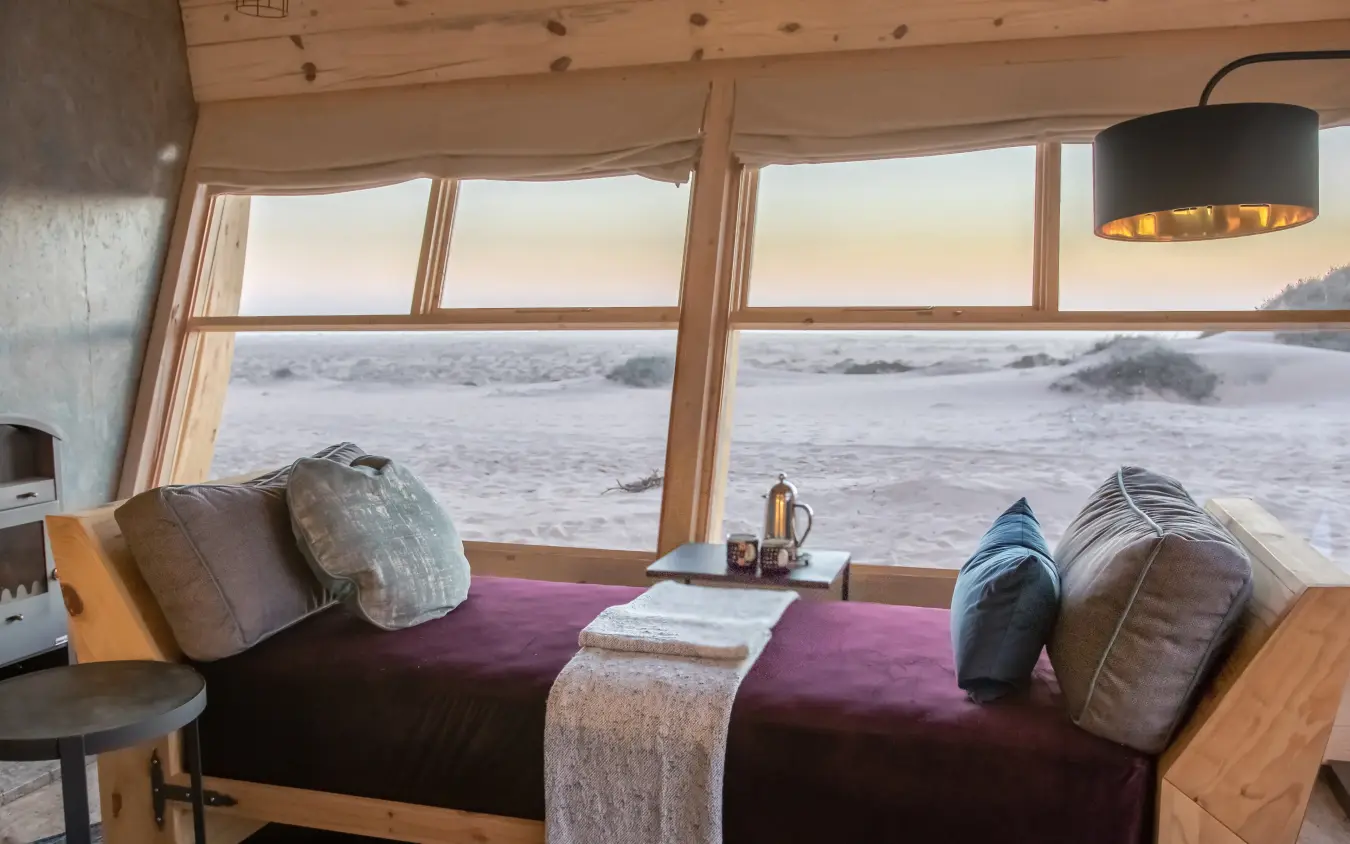
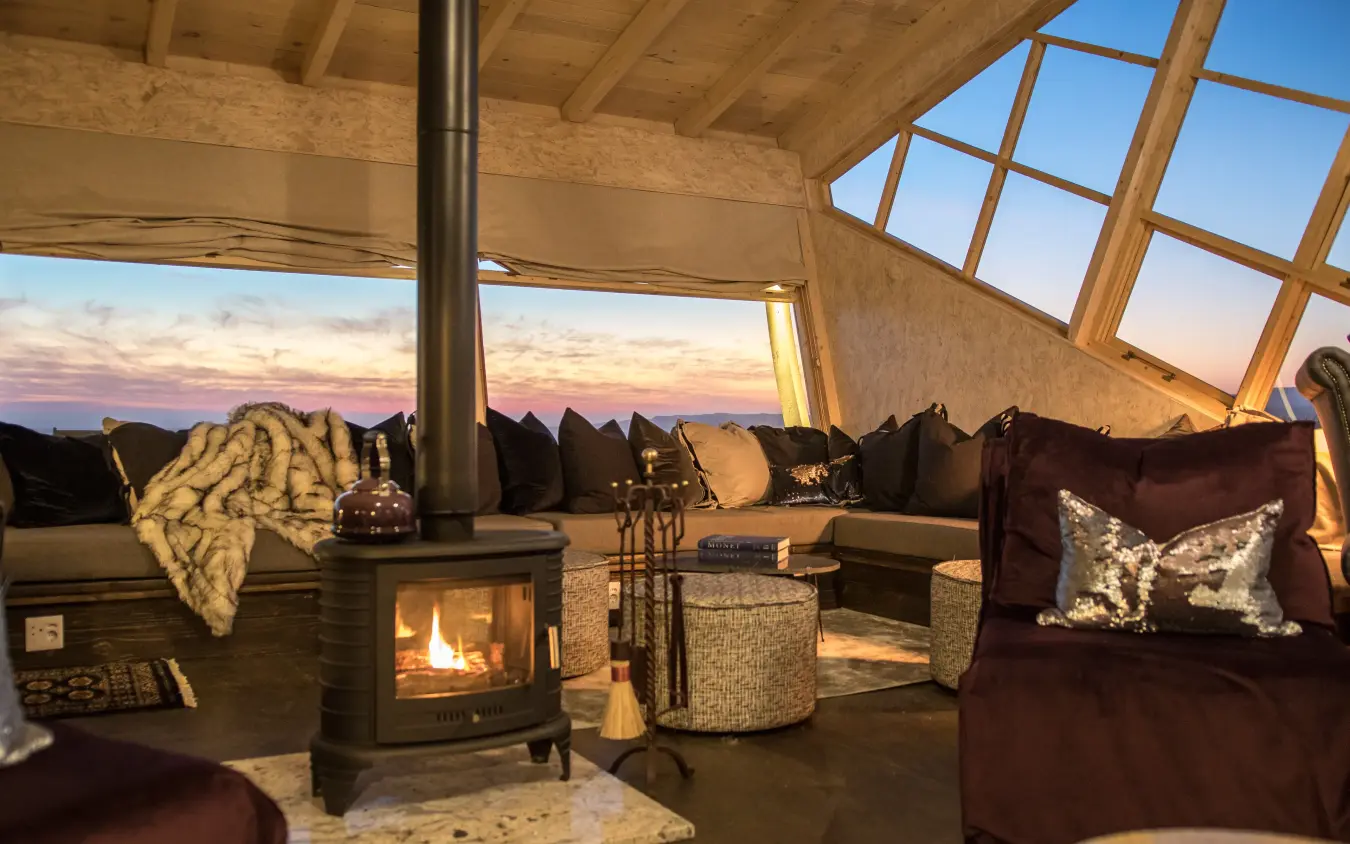
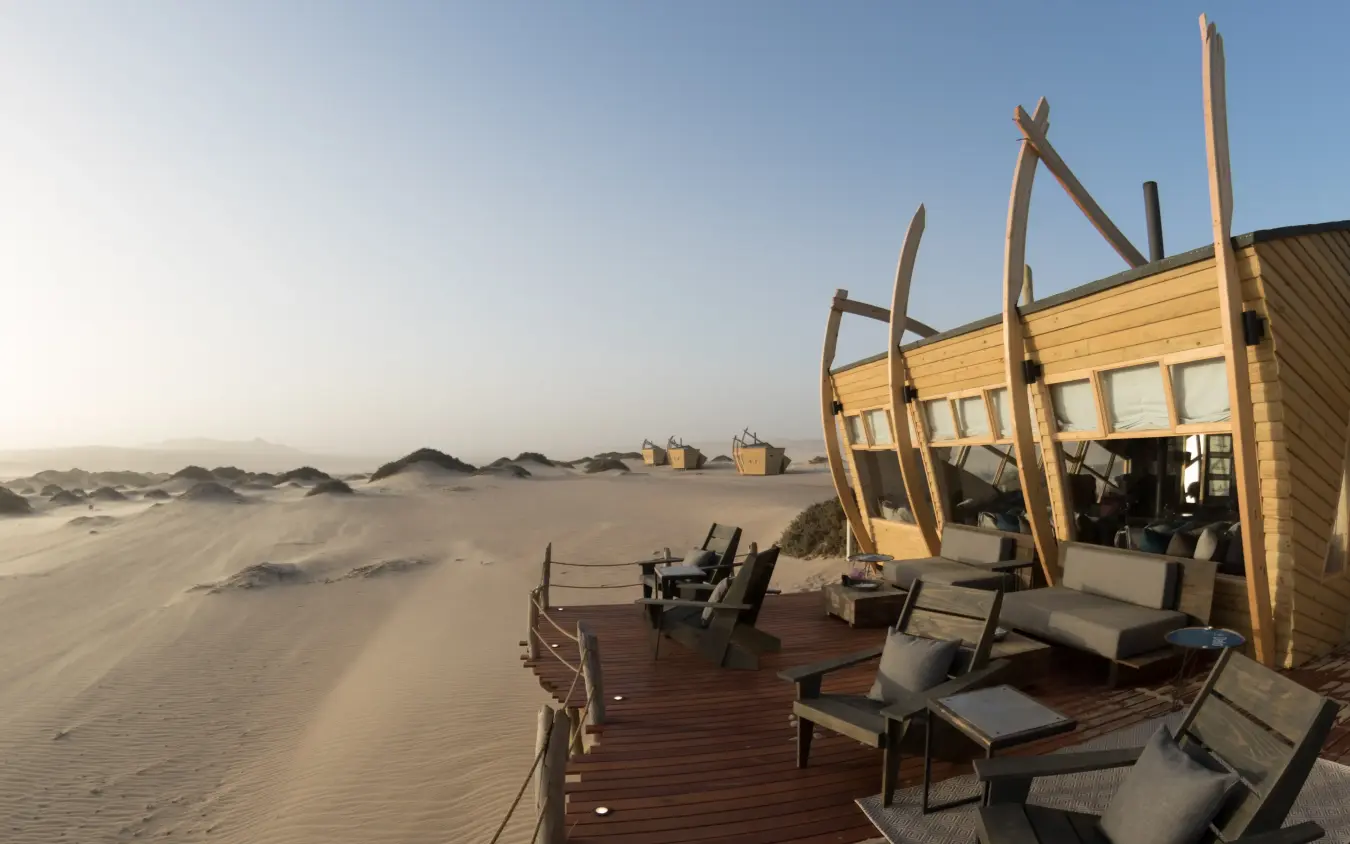
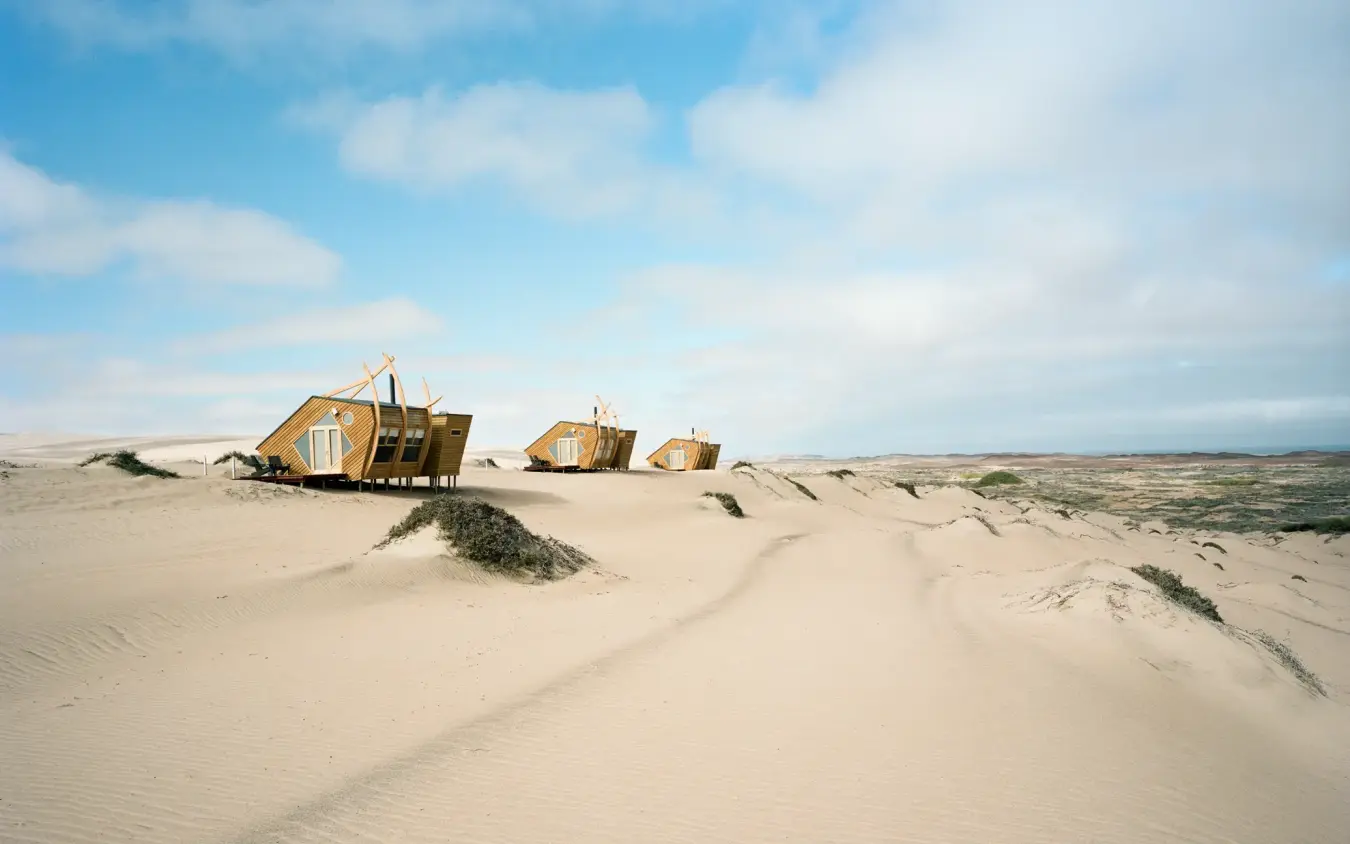
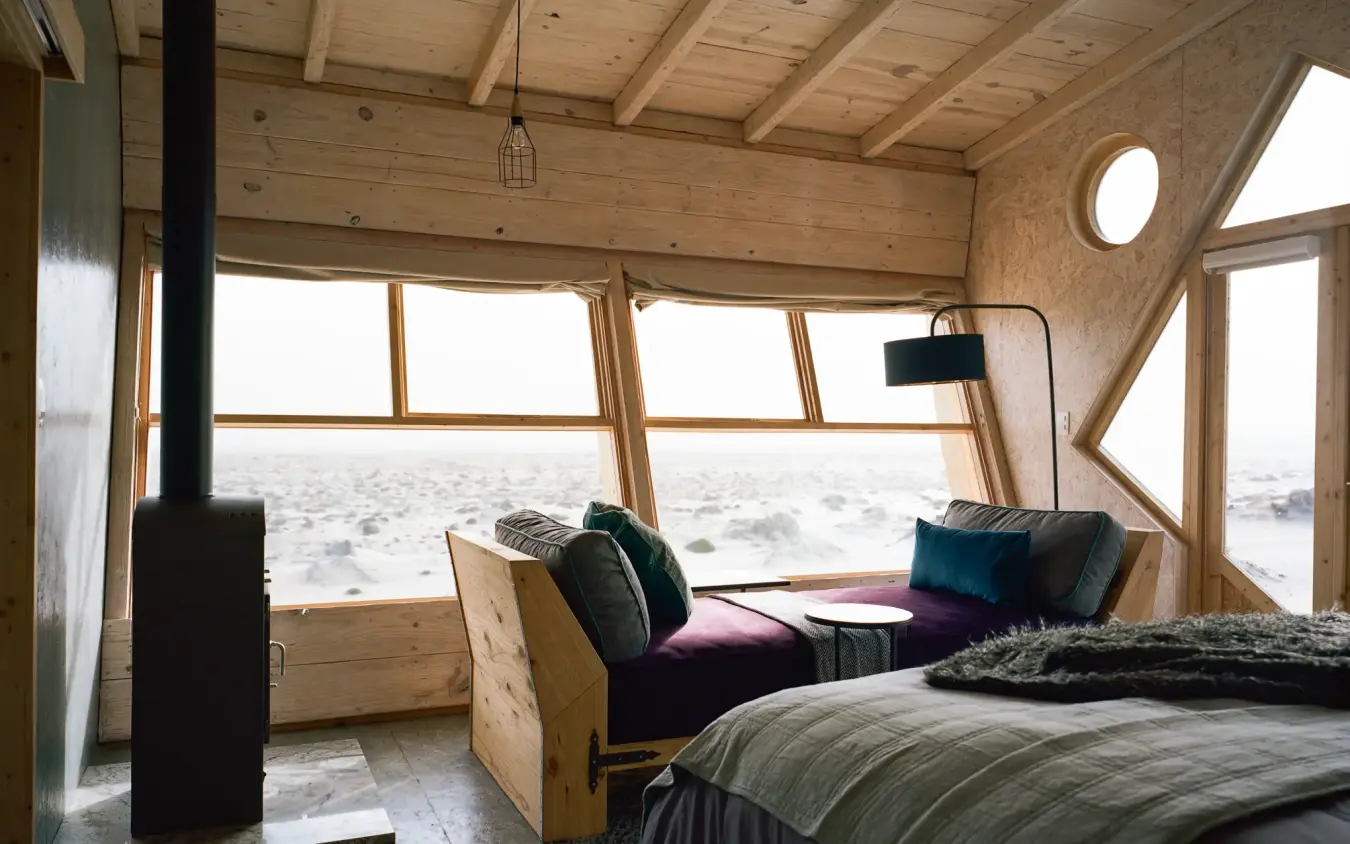
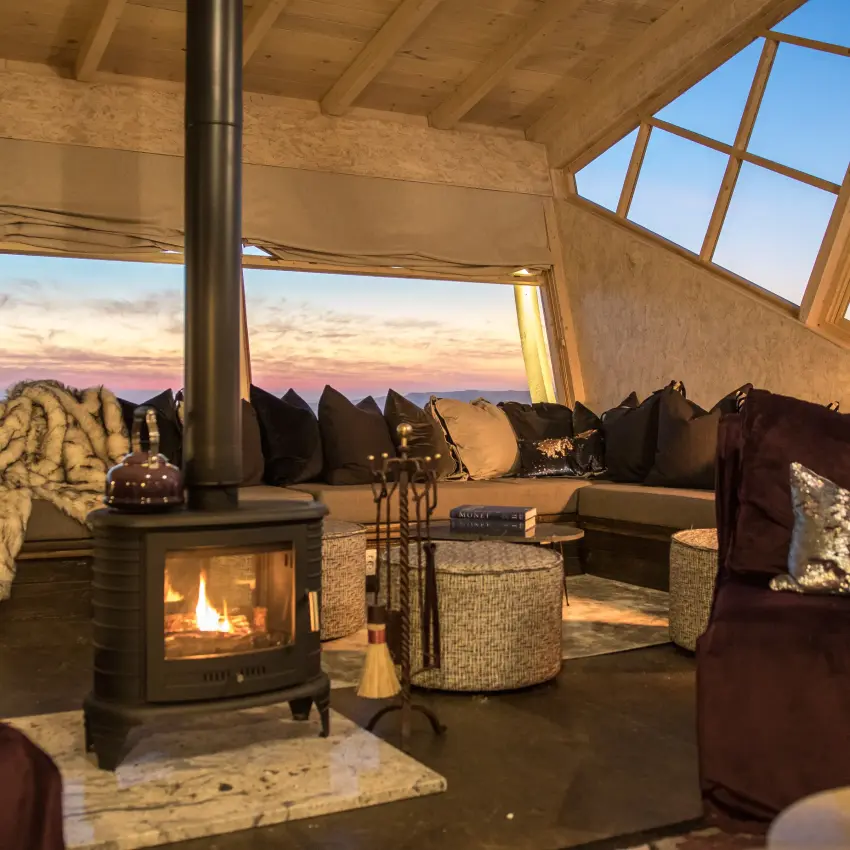
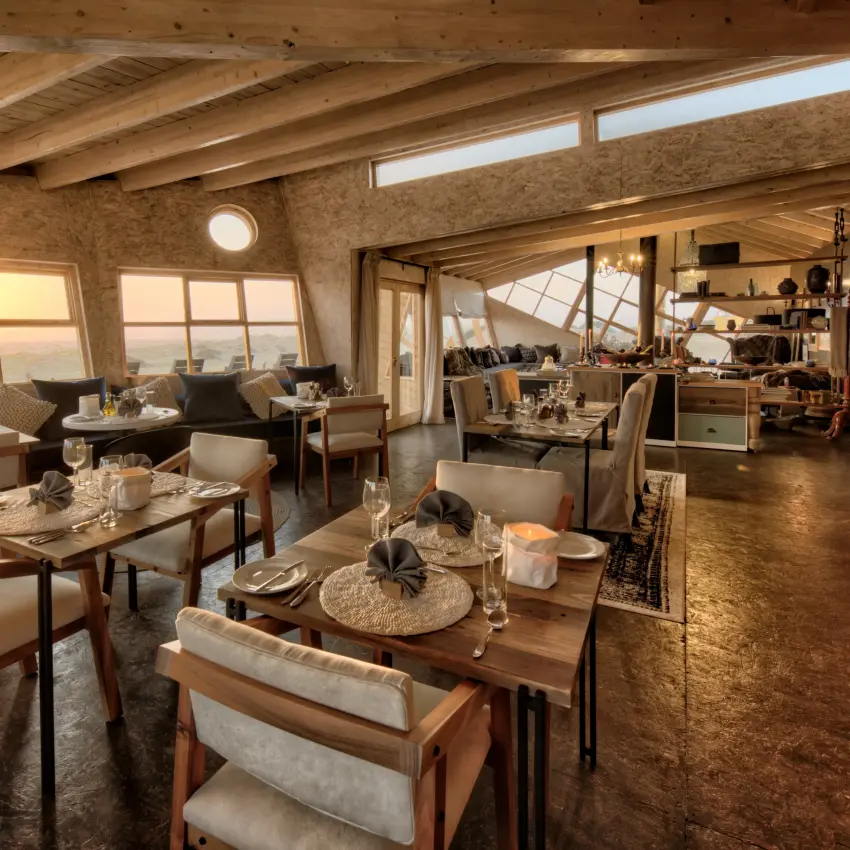
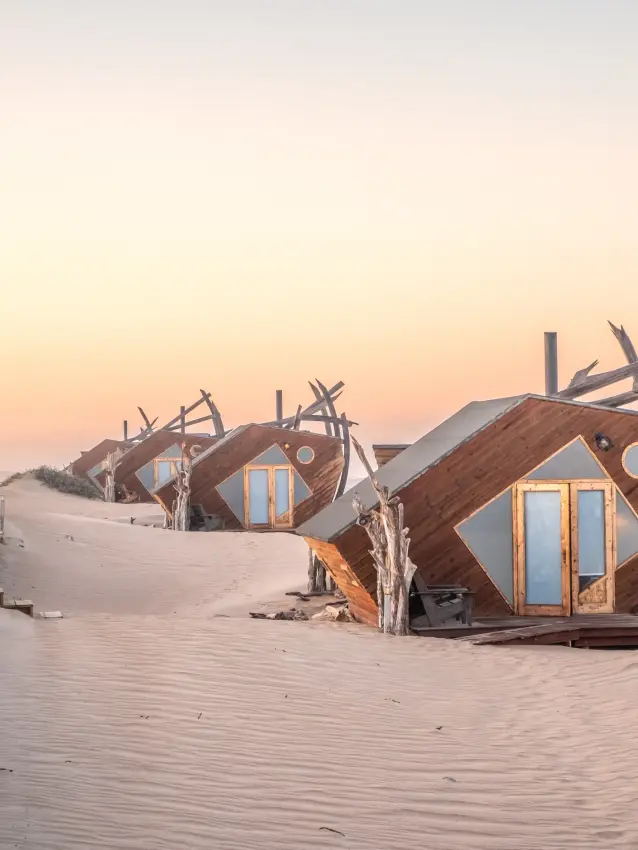
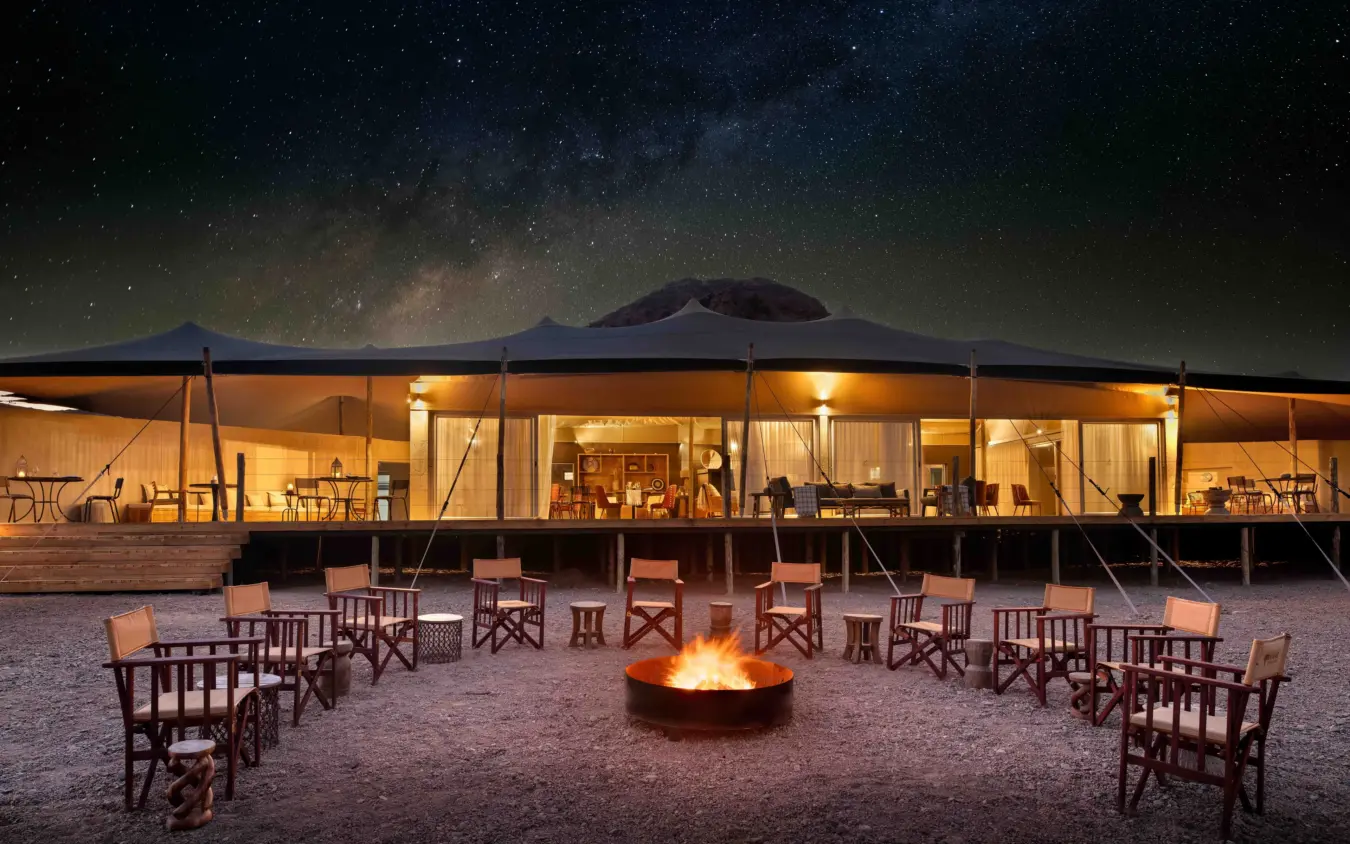
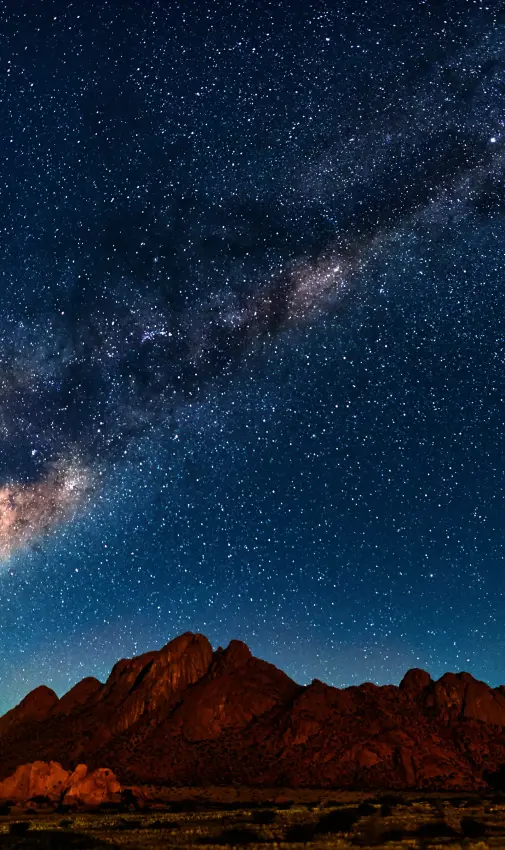
The main lodge holds the lounge, dining room and bar, with large windows and a wraparound deck framing the dunes and the Atlantic. Meals are wholesome and generous, and the wood-burning stoves take the edge off cold, fog-bound evenings. At night the dominant sounds are the surf and the silence of the desert. No other lights or buildings break the dark across the dunes, and the coast belongs entirely to those who sleep on it.