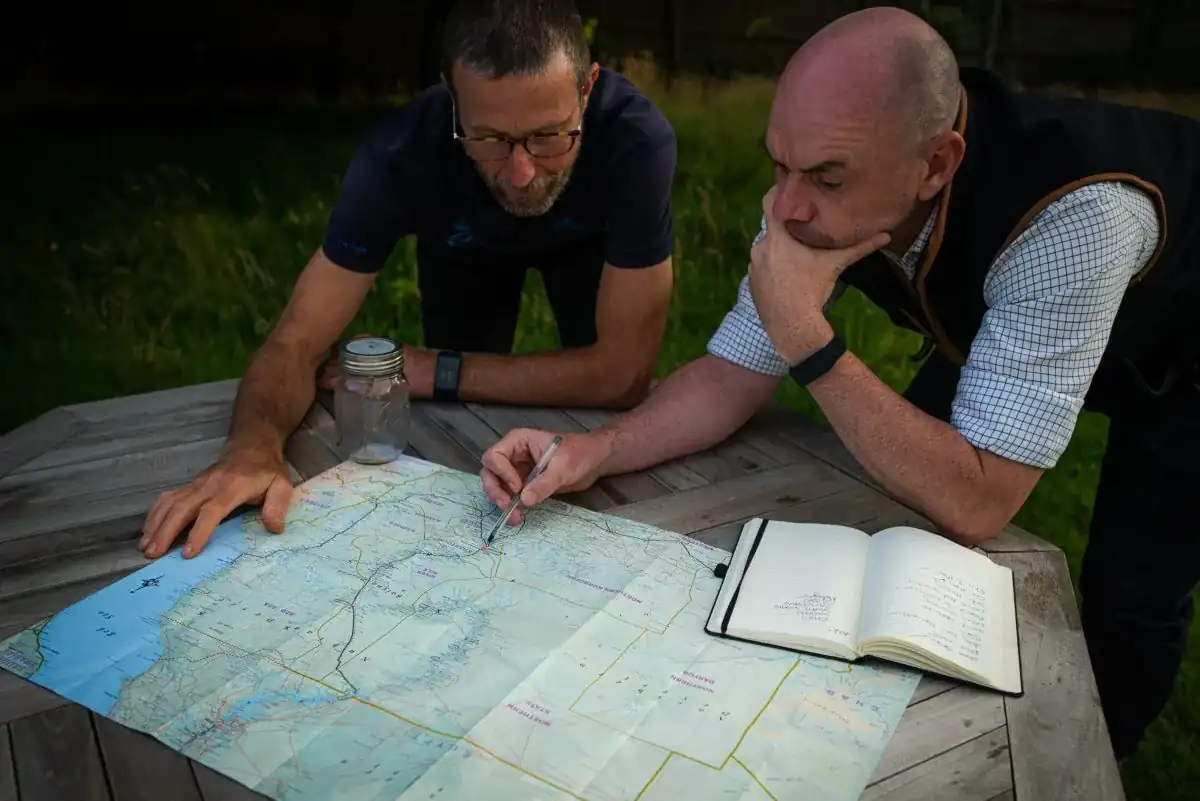
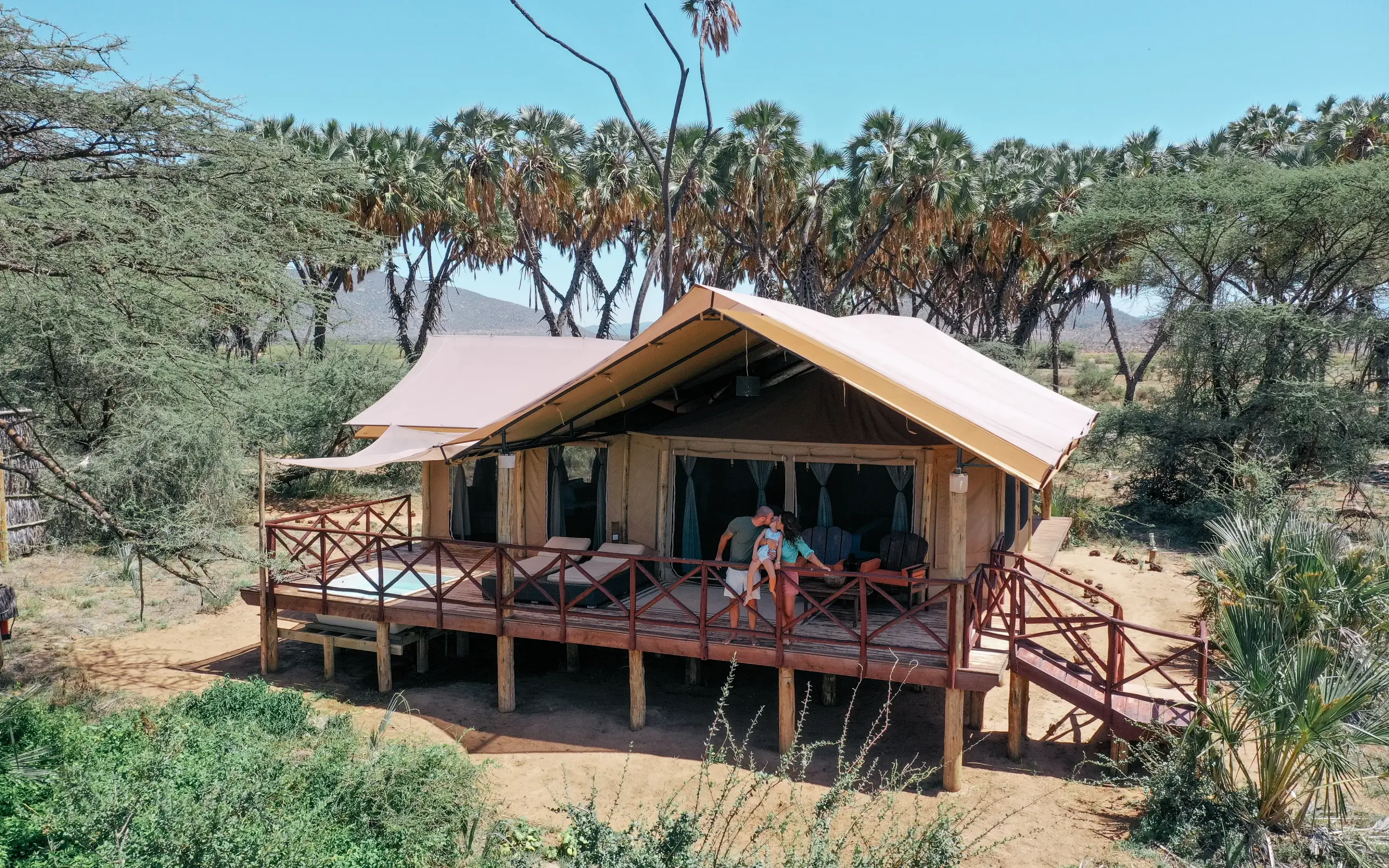
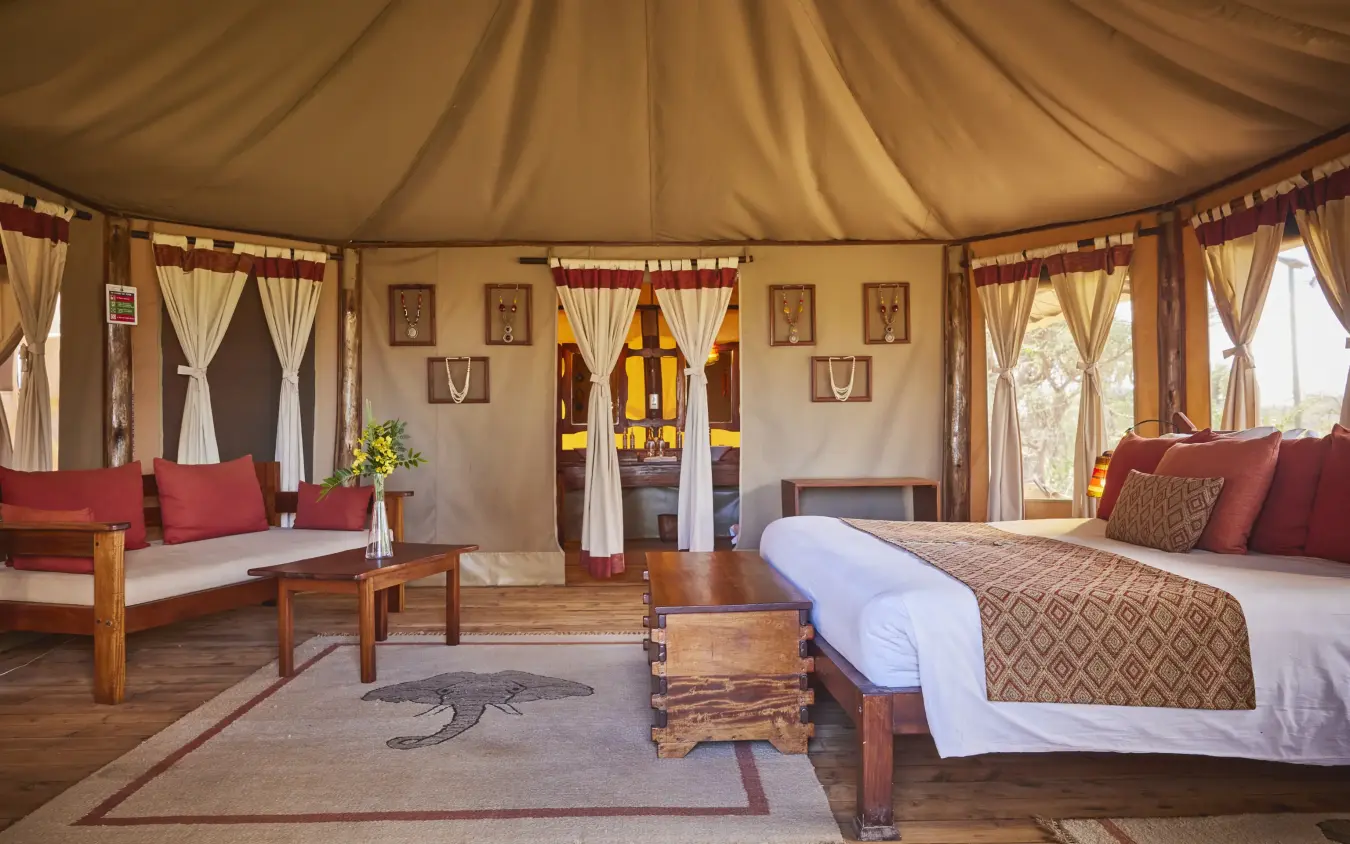
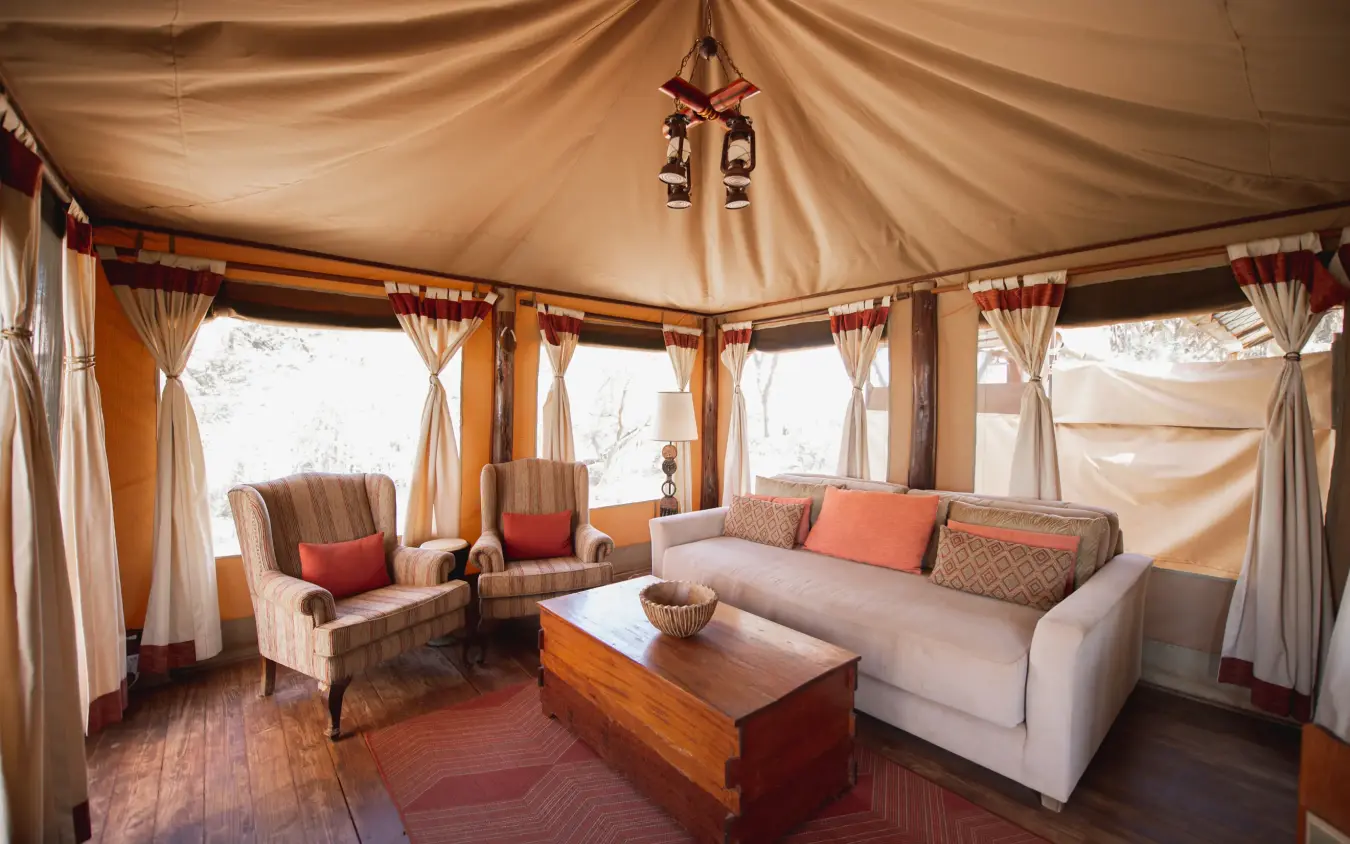
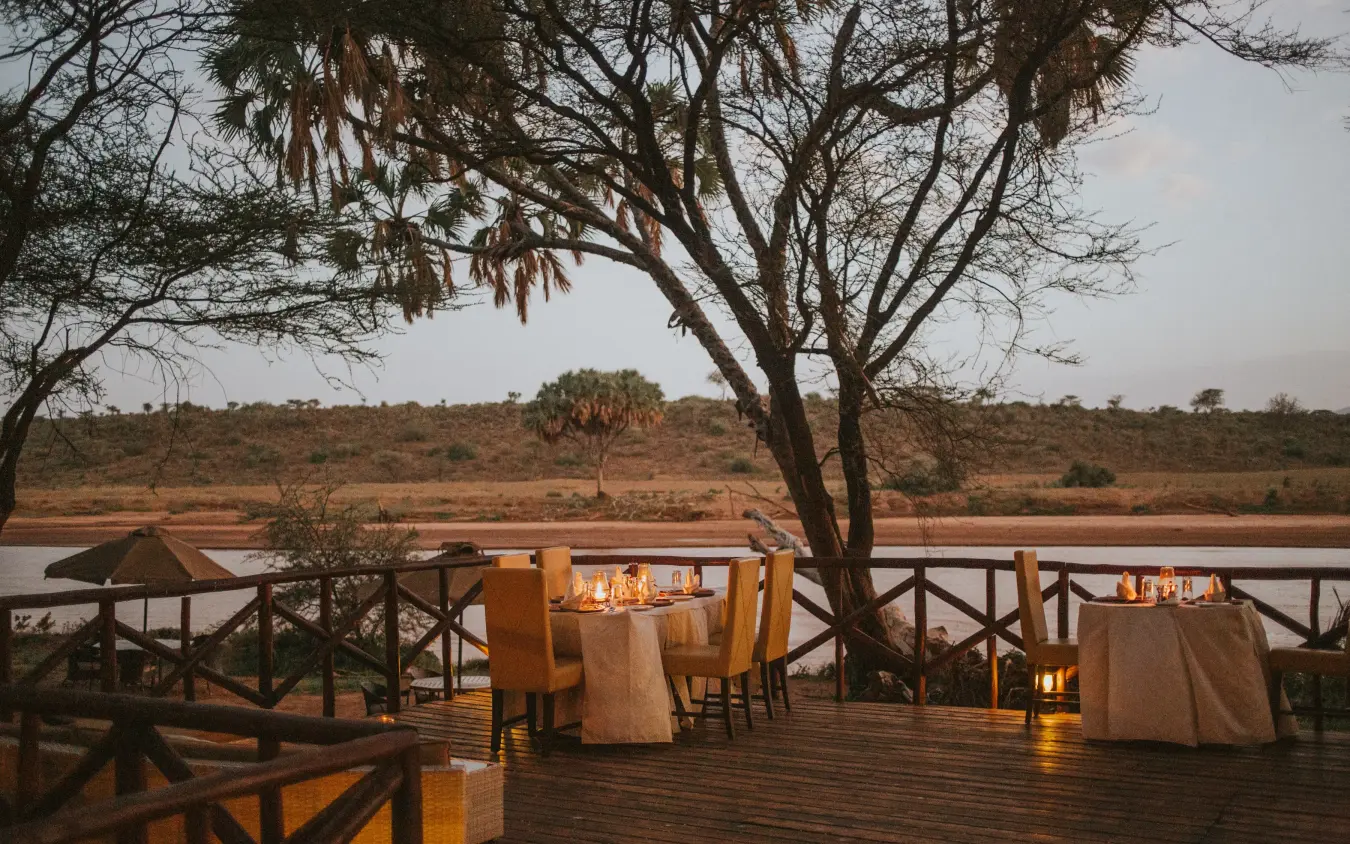
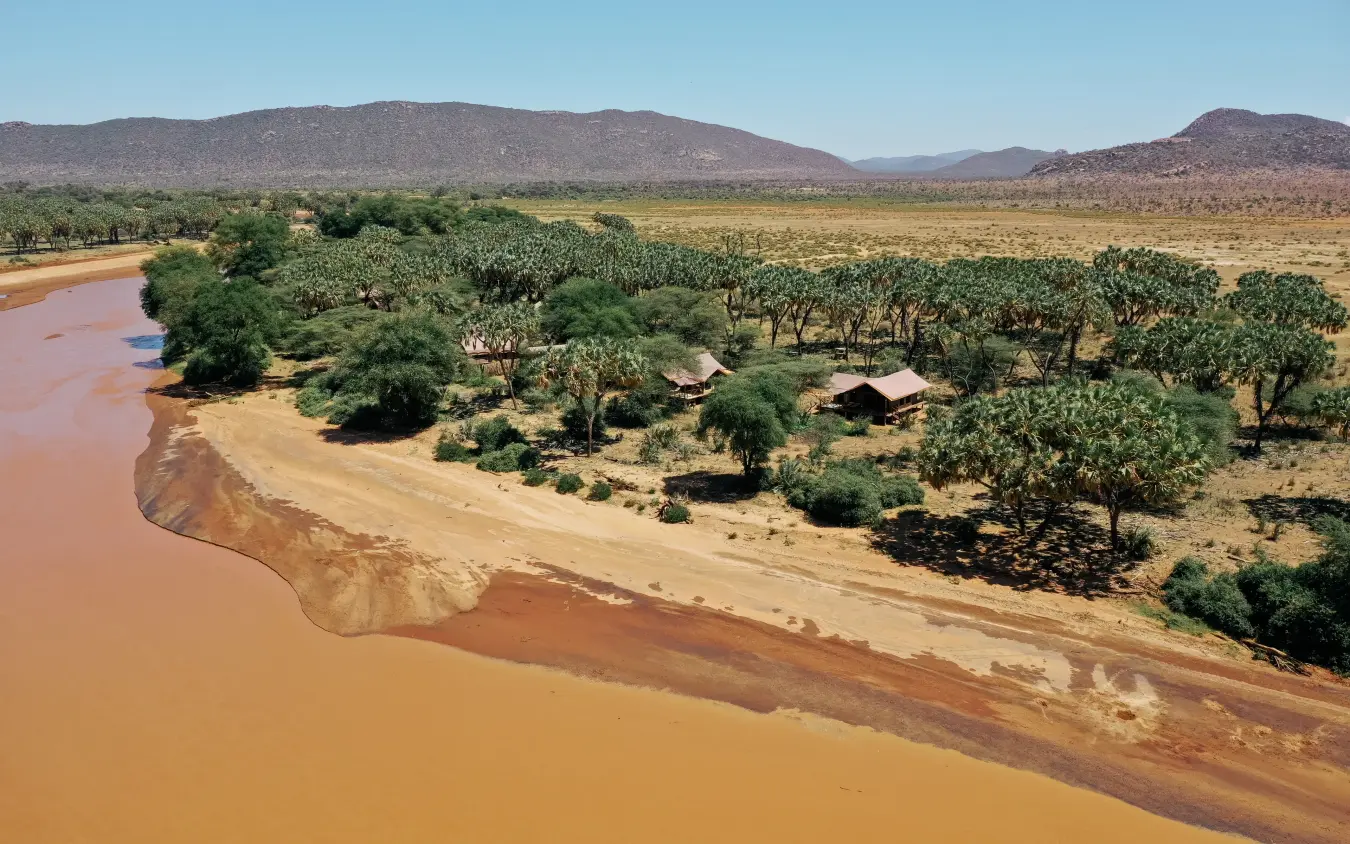
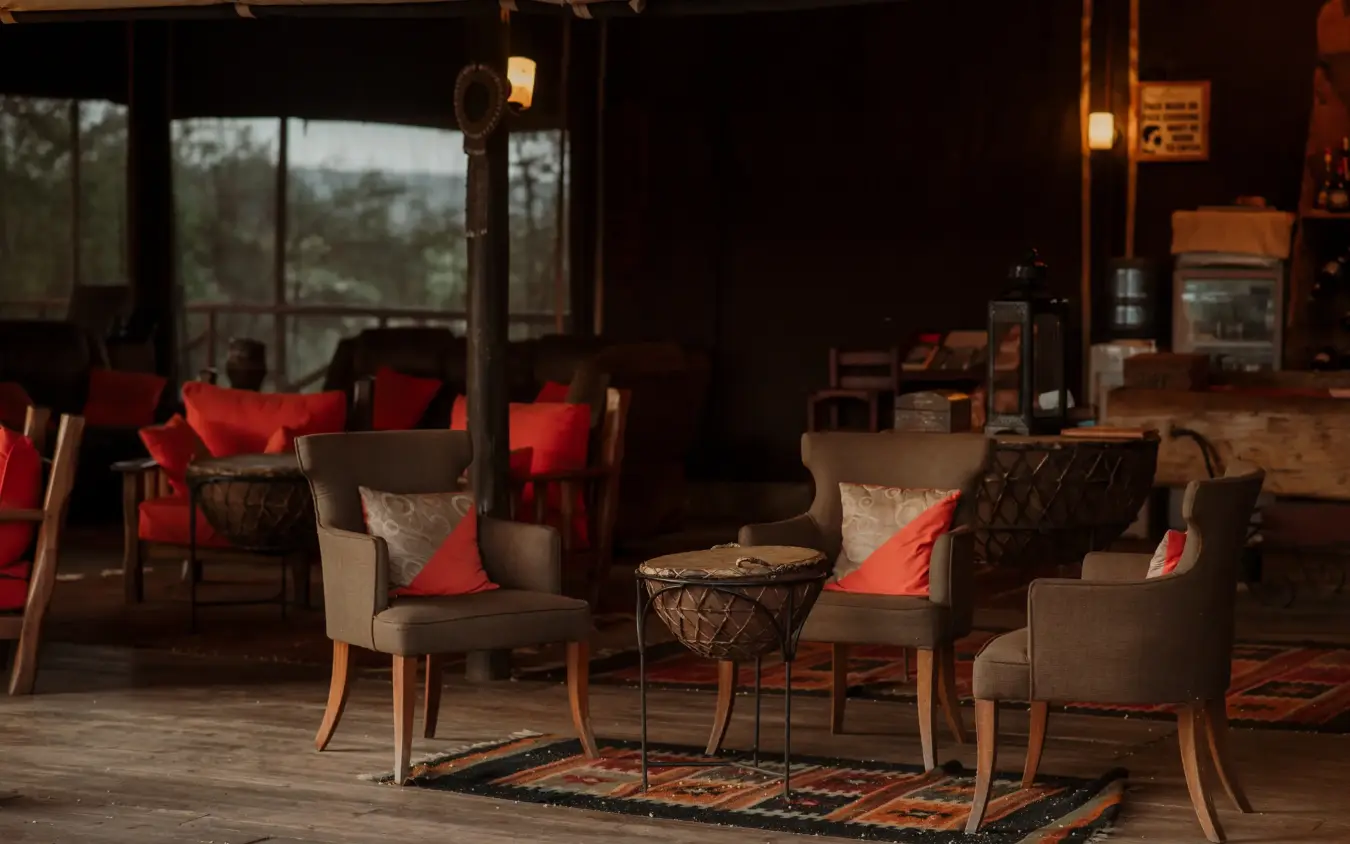
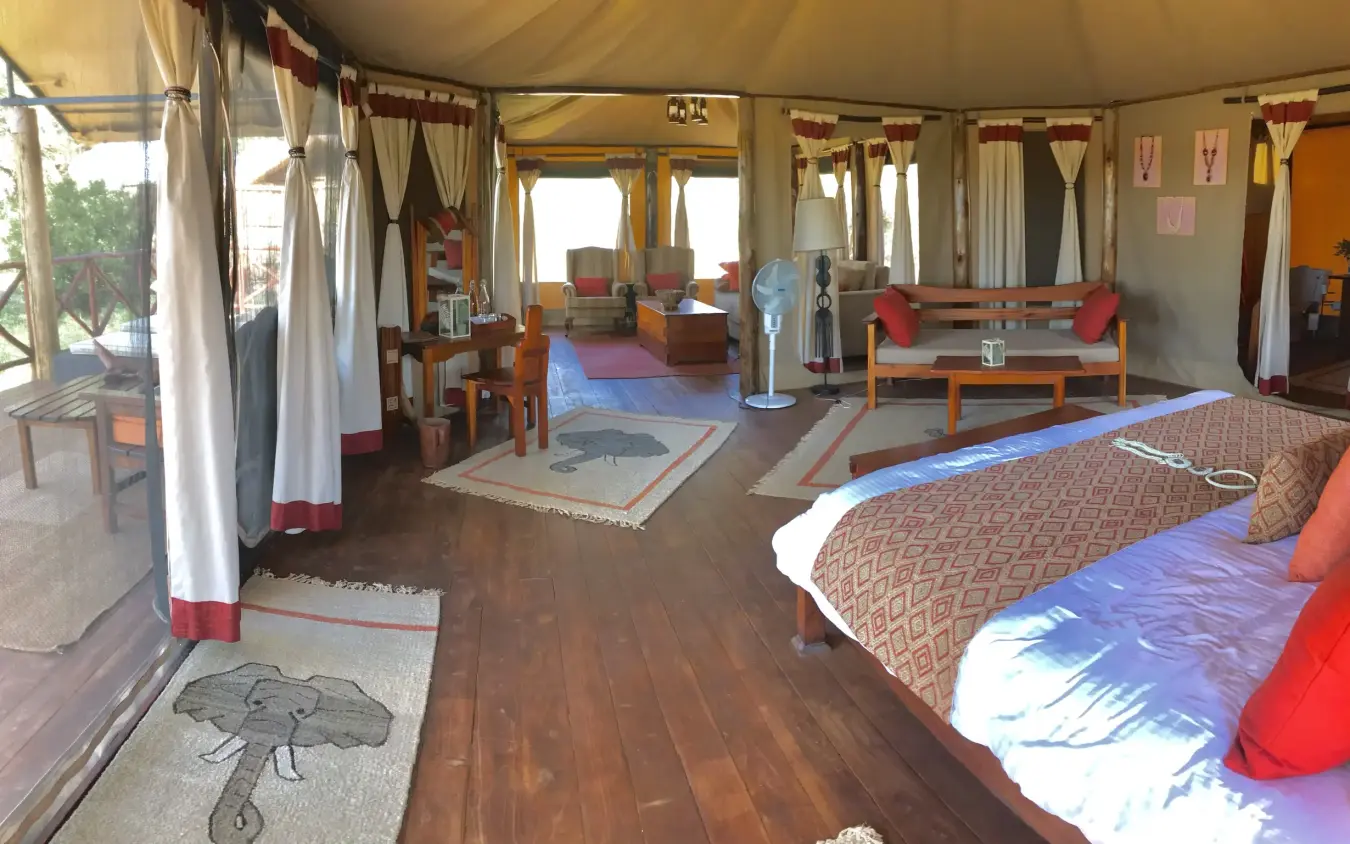
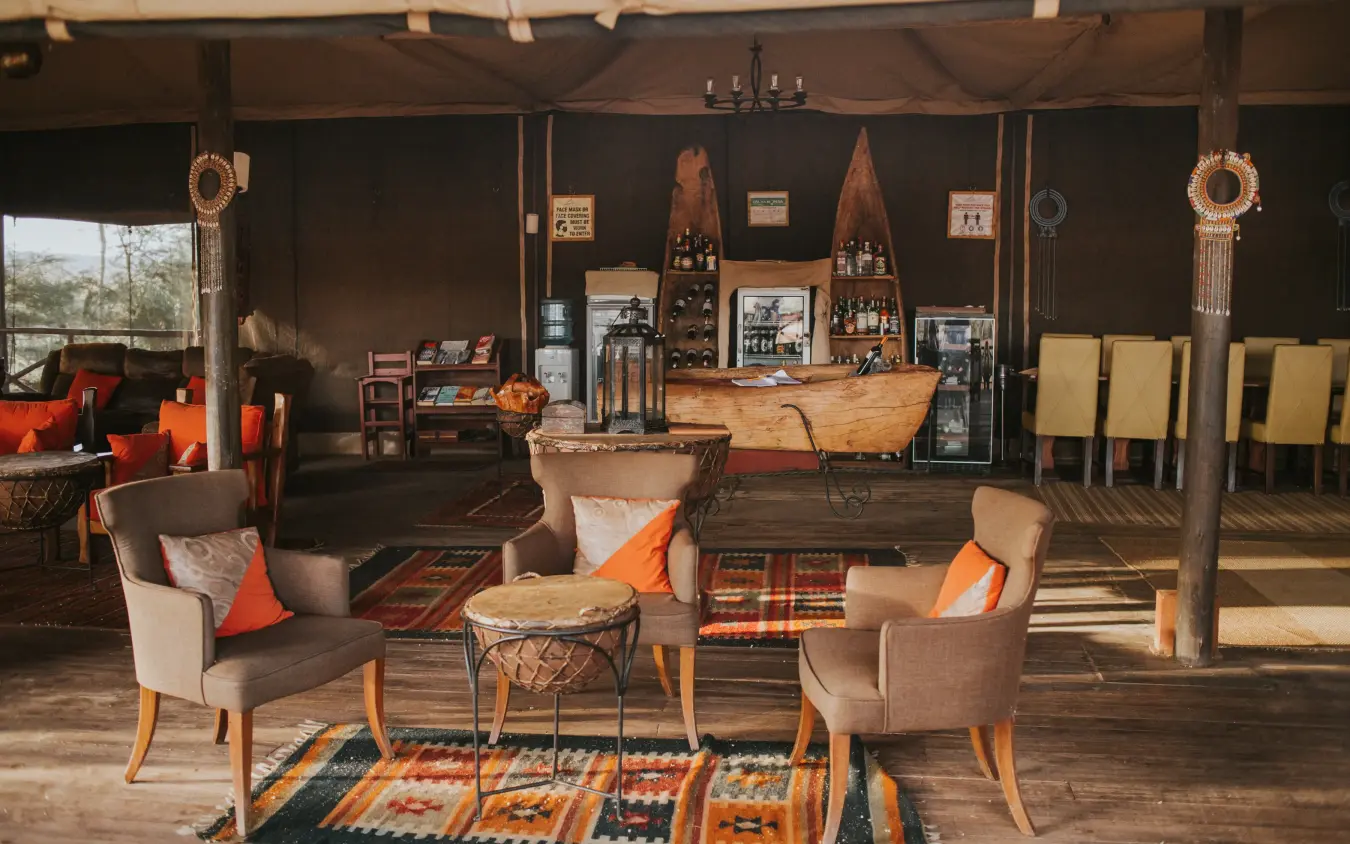
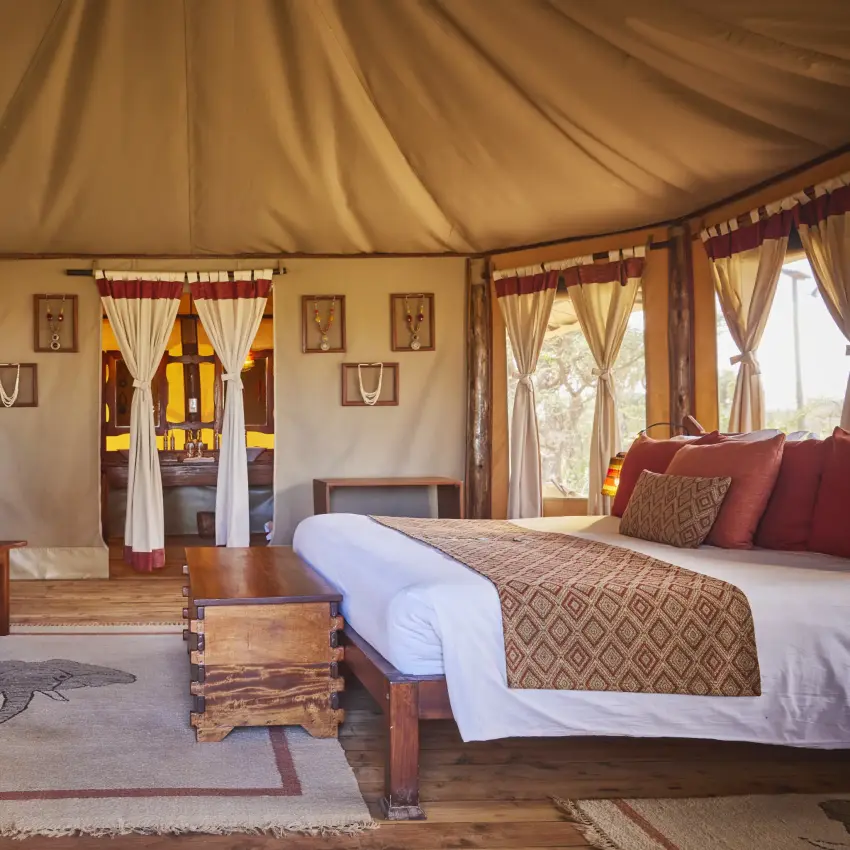
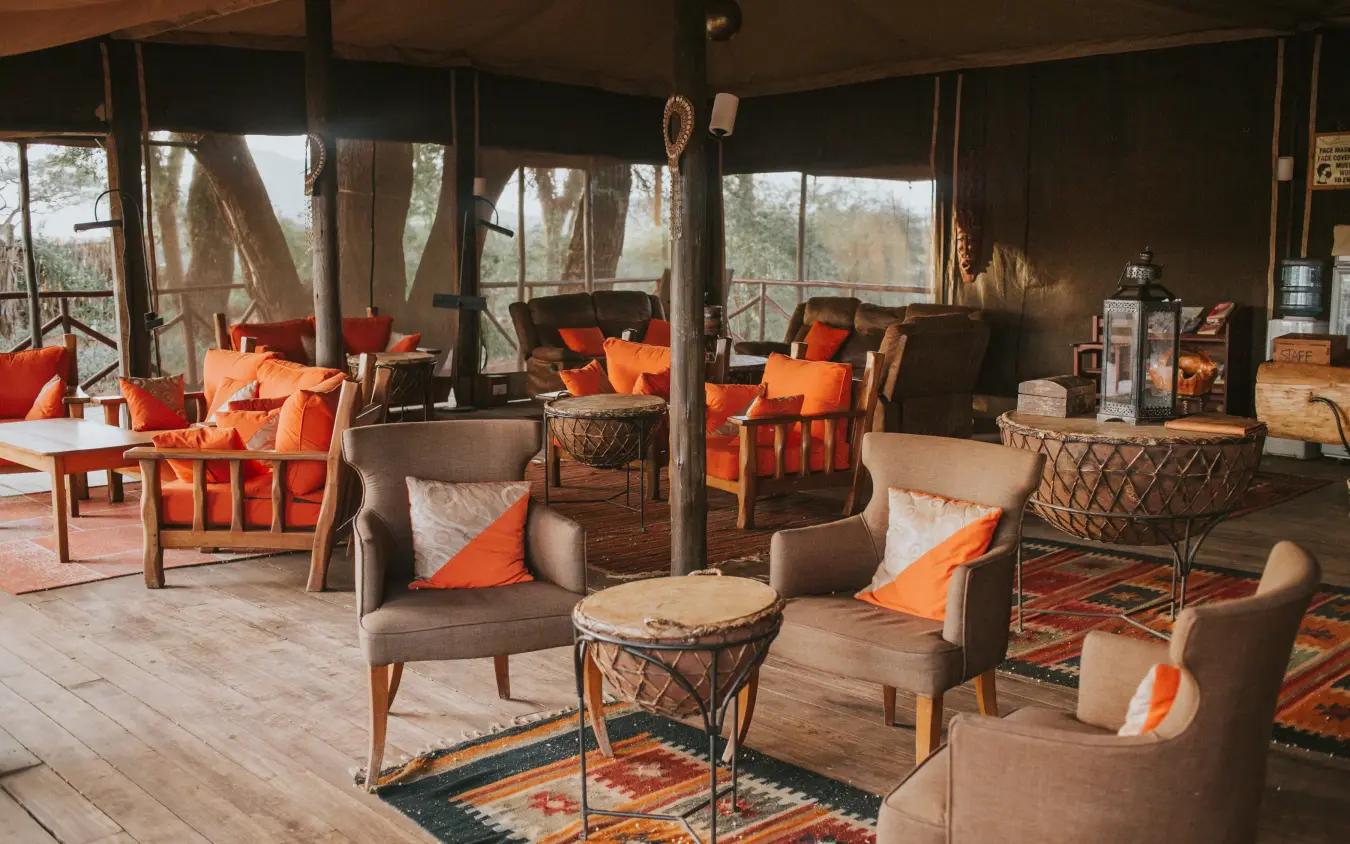
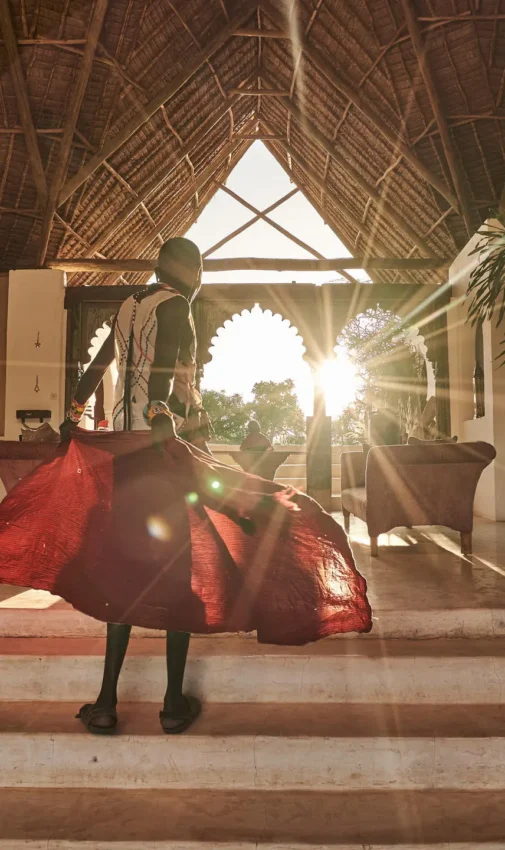
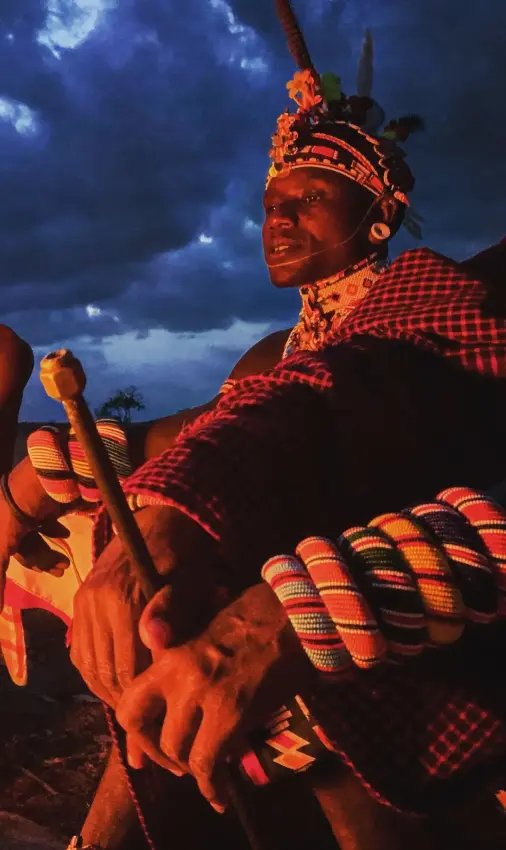
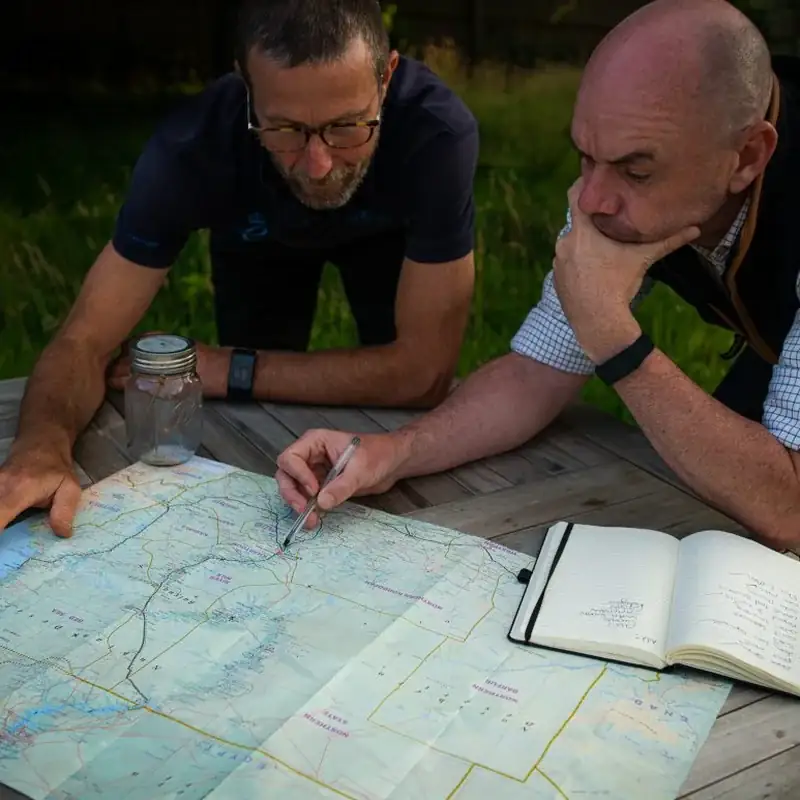
Nagib Popat and Anver Amershi built Elephant Bedroom Camp as a project of Atua Enkop Africa, the company they founded. Popat had known the bush of northern Kenya for years before construction began. The site he chose, a bend in the Ewaso Nyiro shaded by doum palms, set the template for how the camp would work: build lightly, and let the river and its wildlife do the rest. The name Atua Enkop comes from the Maa language, and the design follows the idea through. The pillars are local wood, the walls canvas, and the thatch hand-woven palm, with interiors warmed by ochre and red textiles that echo Samburu dress.
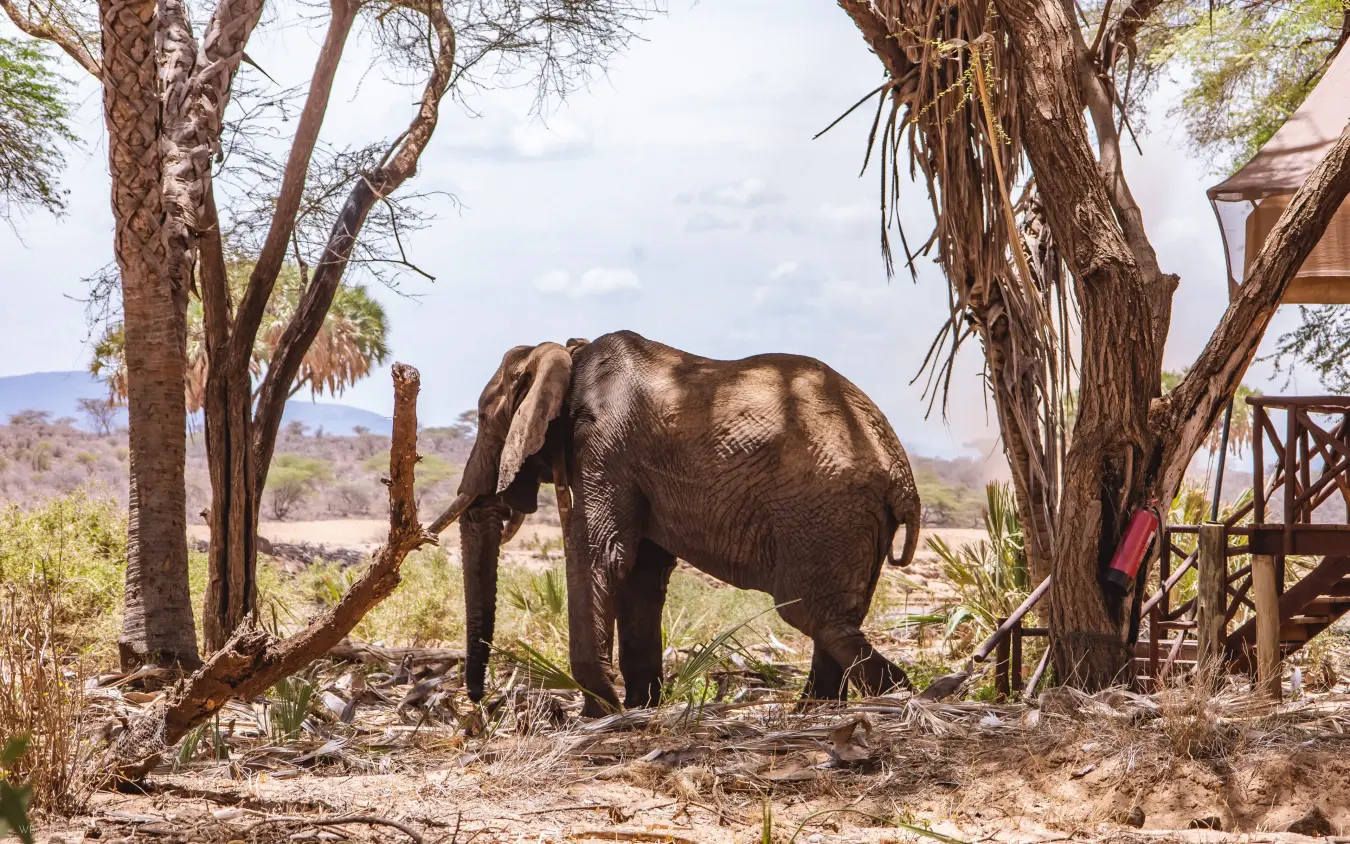
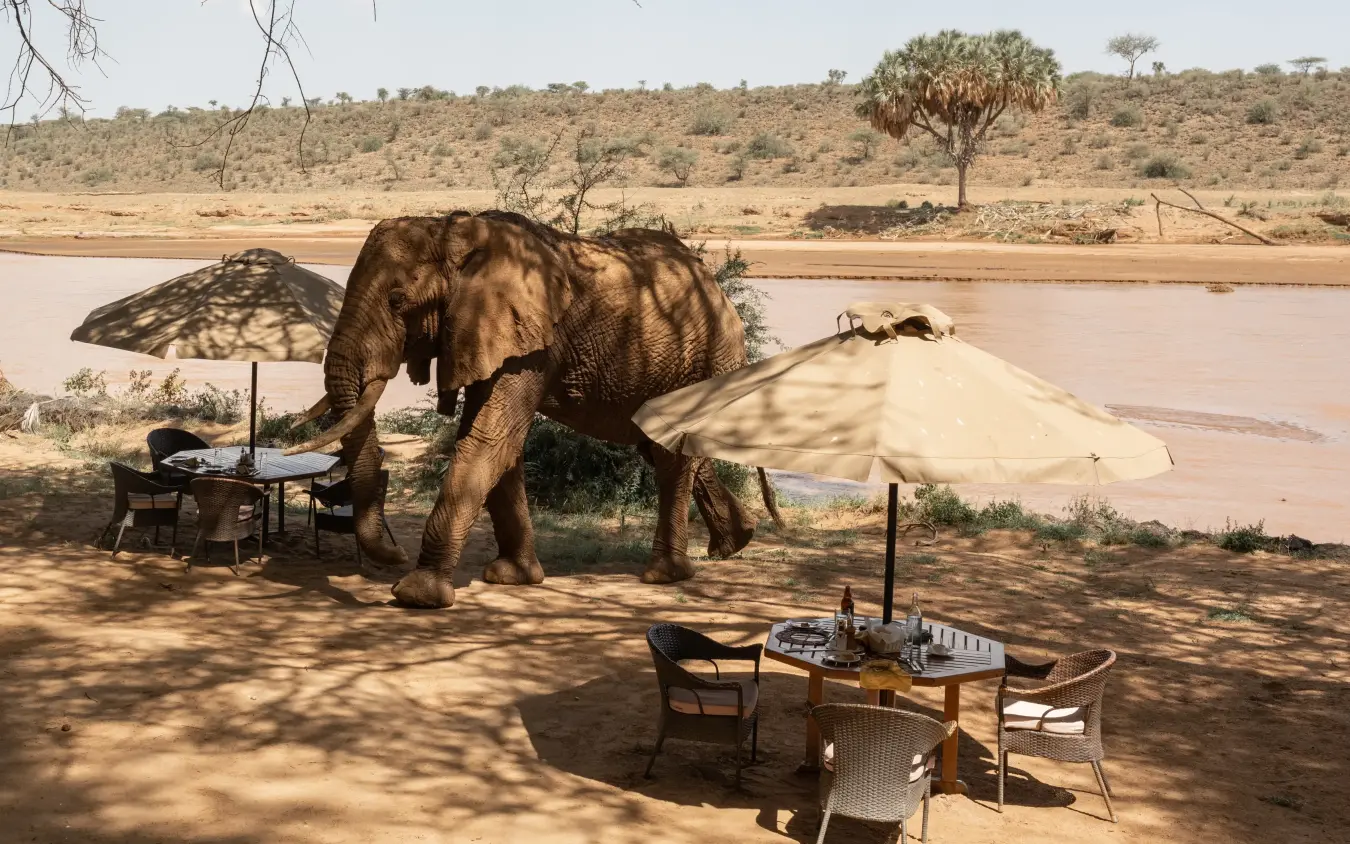
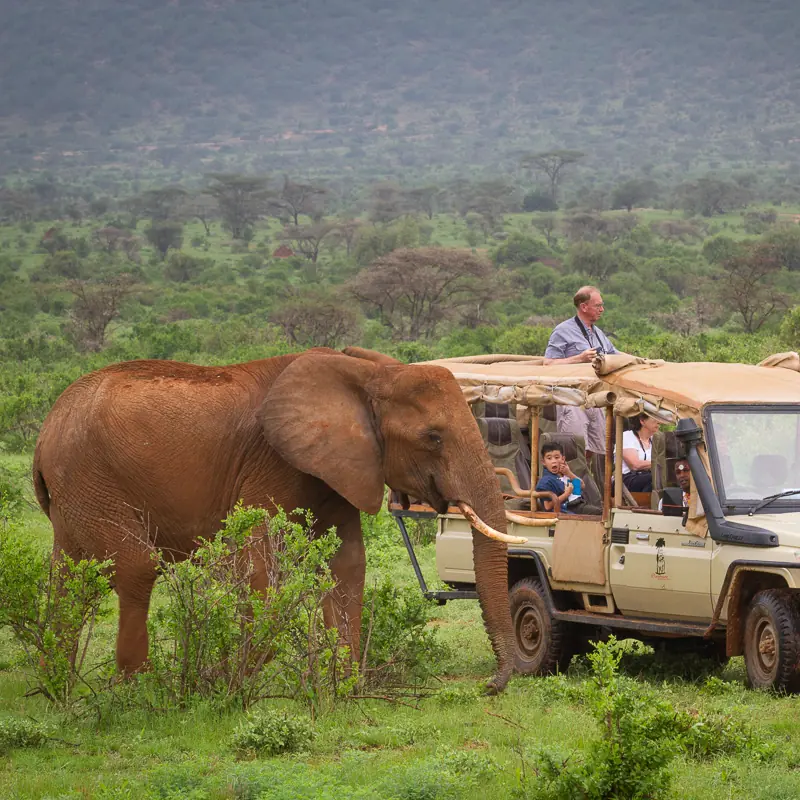
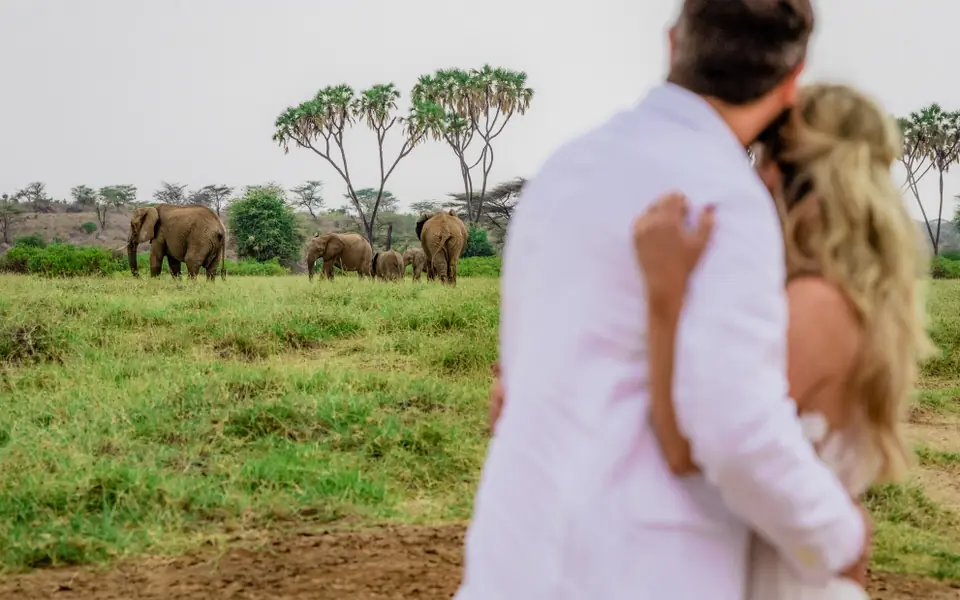
The camp’s character follows directly from its position on the river. In the dry season the Ewaso Nyiro shrinks to a chain of pools and sandbanks, and the elephant routes to the water run straight through camp. Nights carry the crunch of bark as the herds feed against the canvas walls, the chatter of vervet monkeys overhead, and the low rumble of animals moving through the palms toward the river. There is little between guest and animal here but a few metres of night air, and the camp is built to keep it that way.
Nights carry the crunch of bark as the herds feed against the canvas walls
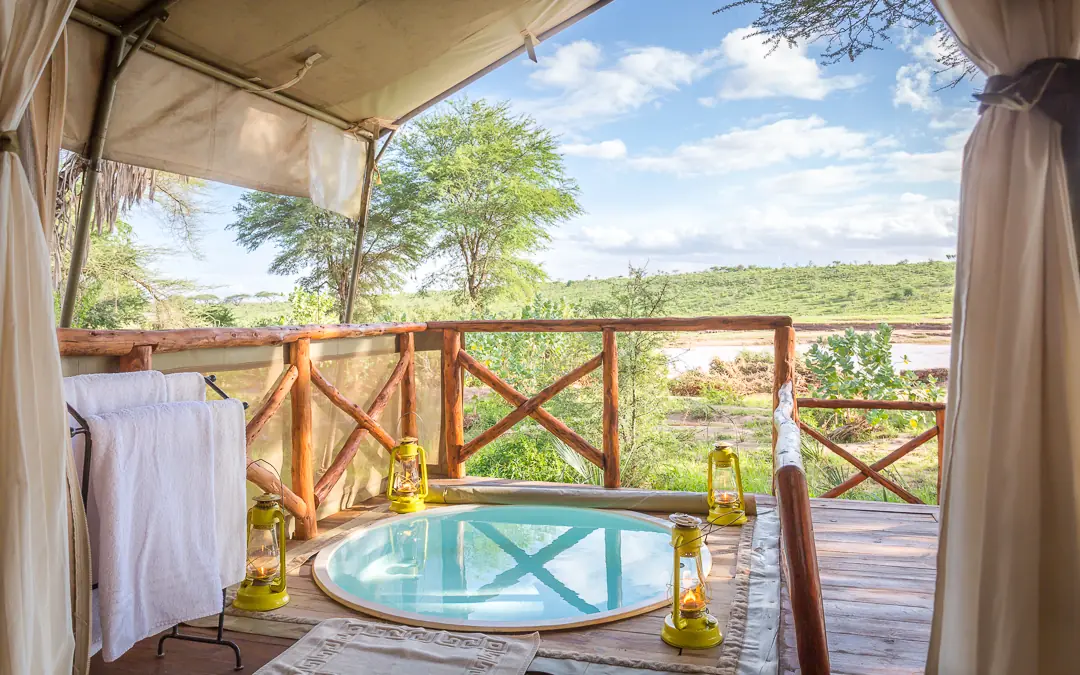
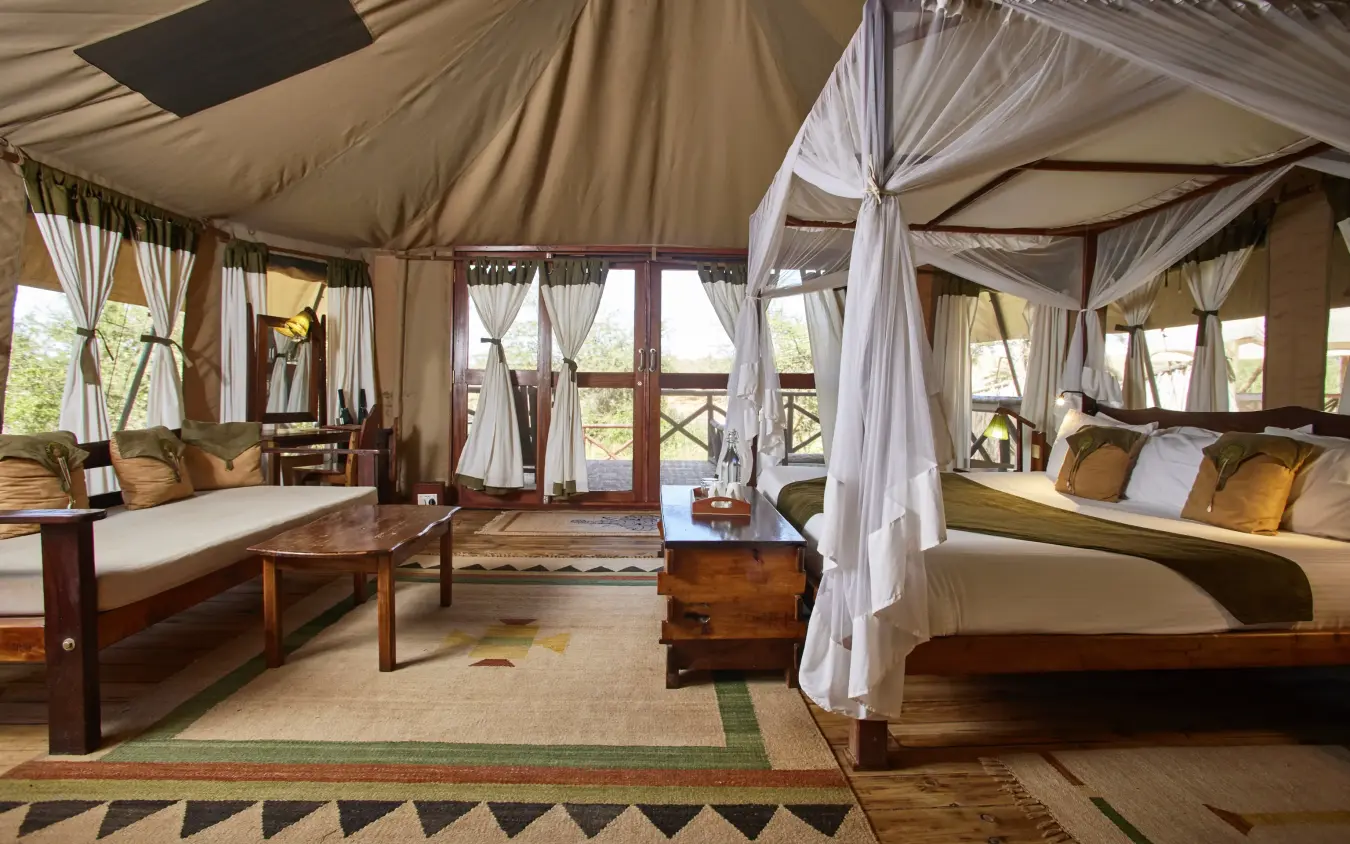
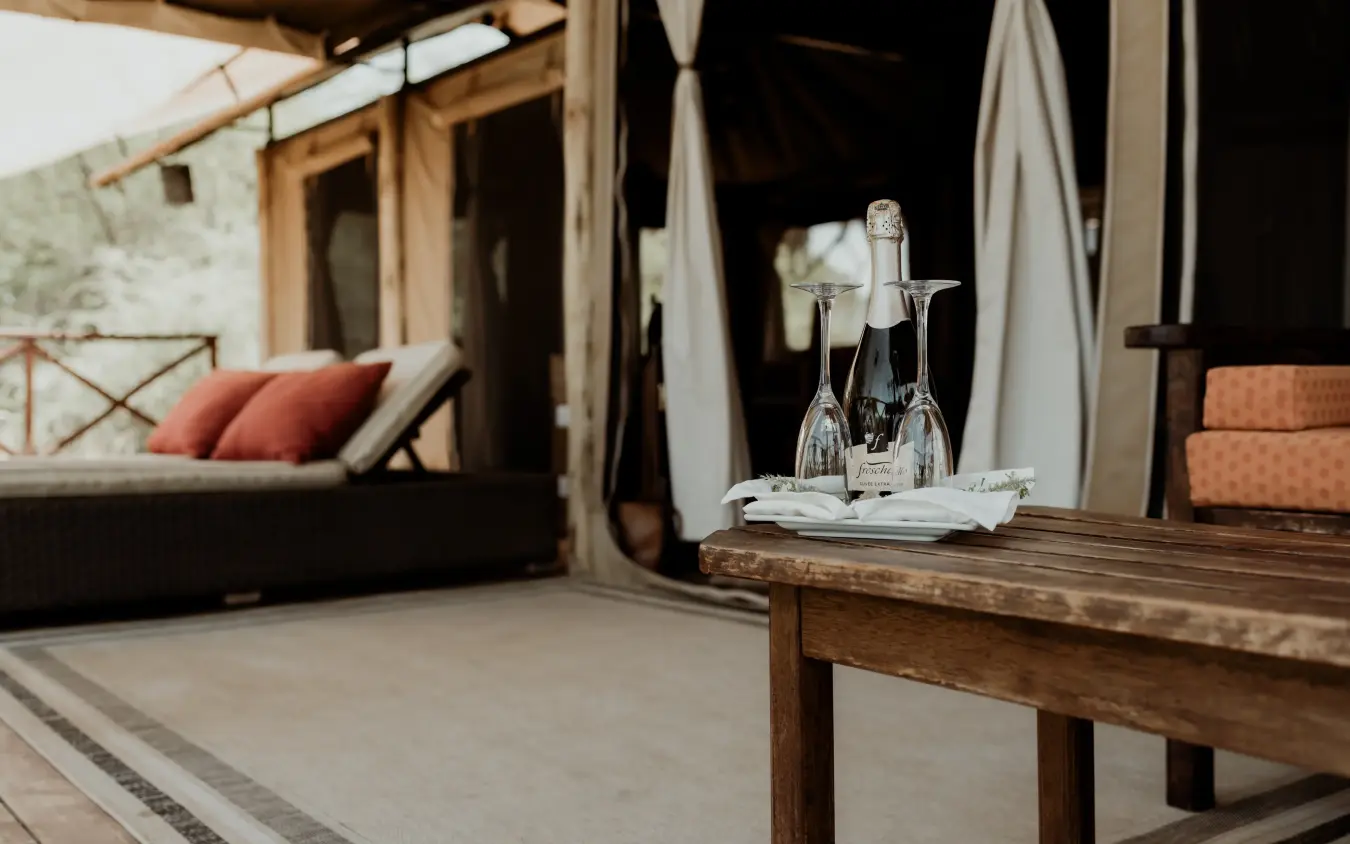
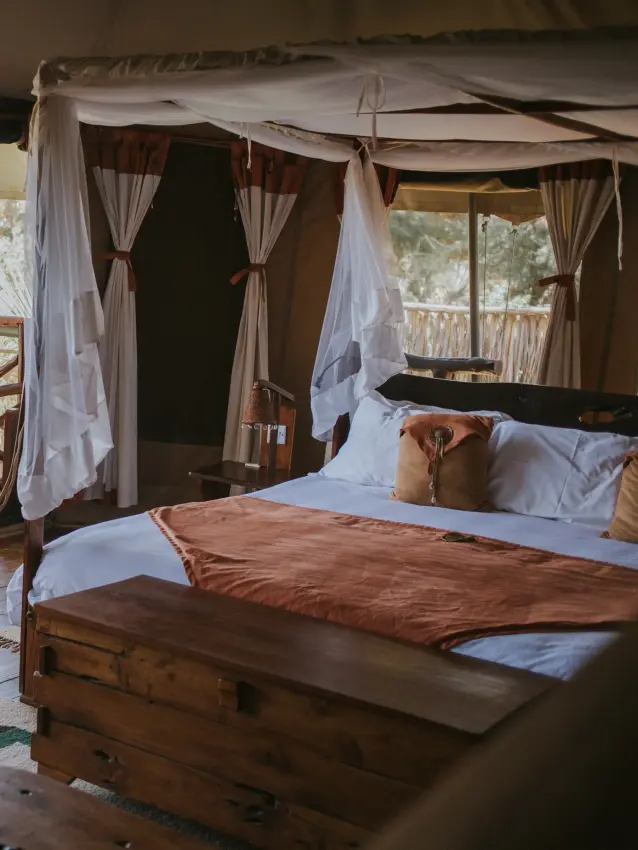
The two executive suites, Lapa and Lakira, were added in July 2018. Each has a standalone bathtub, an outdoor shower, and a double sunbed on an extended deck. The whole camp runs on a solar power system with battery storage, giving quiet, low-impact electricity in place of generators. Double-layered canvas roofs moderate the heat of the dry season, keeping the tents cool through the day without any mechanical cooling running overnight. The comfort is real, but it is kept deliberately light on the land.
The reserve is a focus for two of Kenya’s most respected research efforts. Save the Elephants, founded by Iain Douglas-Hamilton, and Ewaso Lions, founded by Shivani Bhalla, are both active here in wildlife monitoring. A majority of the camp’s staff are drawn from the surrounding Samburu community, and a share of every stay flows back to local conservation trusts alongside regional schools. The camp sources locally where it can, so the money a stay generates stays close to the ground it comes from.