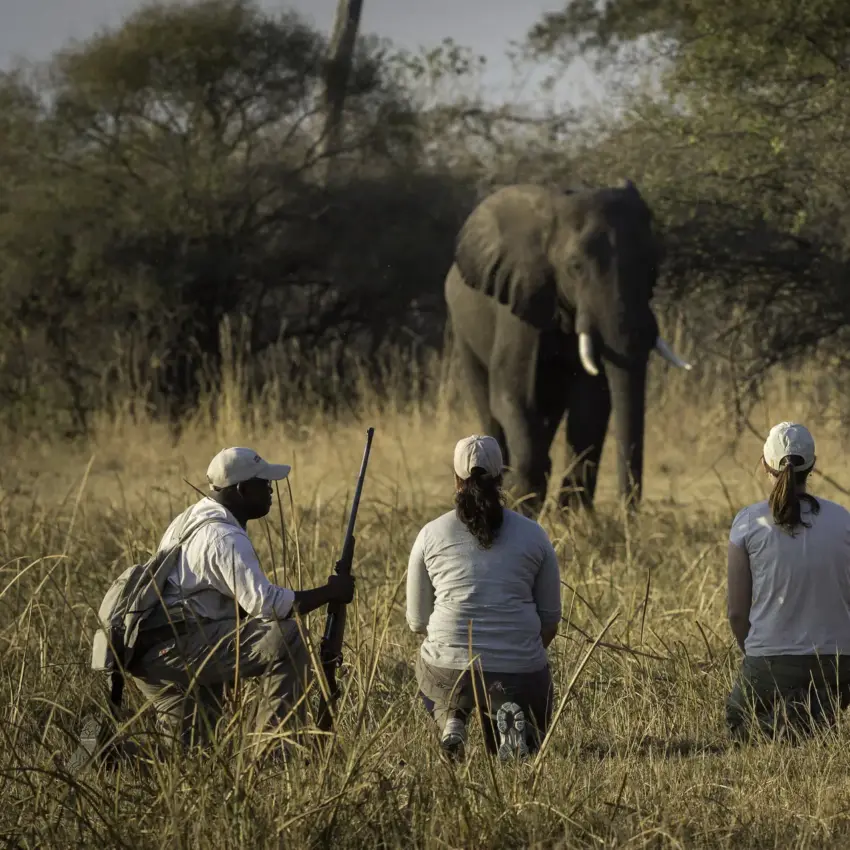
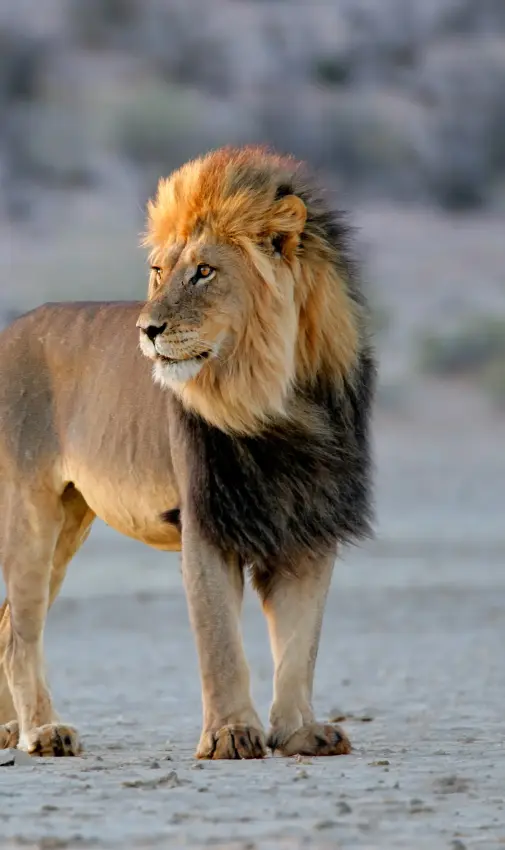
Light aircraft fly in from Maun, landing at the Linyanti airstrip, and the journey ends with a short drive north through the bush. Within a single morning’s drive of camp, the reserve changes character several times. Along the marsh it is reedbeds and lagoons, where red lechwe splash through the shallows and waterbuck keep close to the reeds. Inland it opens into dry savannah grazed by zebra. The woodland holds giraffe, along with the rarer sable and roan antelope.
By August the inland pans have dried, and the marsh holds the reserve’s game close. Wild dogs den in the area between June and August, which keeps a pack to one patch for weeks at a time. Mornings and evenings in the dry season run cool, enough to want a fleece on the early drive. When the summer rain arrives, between December and March, the pans refill and the herds scatter inland to them. Birders have more than 400 recorded species to work through. Carmine bee-eaters are among them, with African skimmers over the open water and ground hornbills on the floodplain.
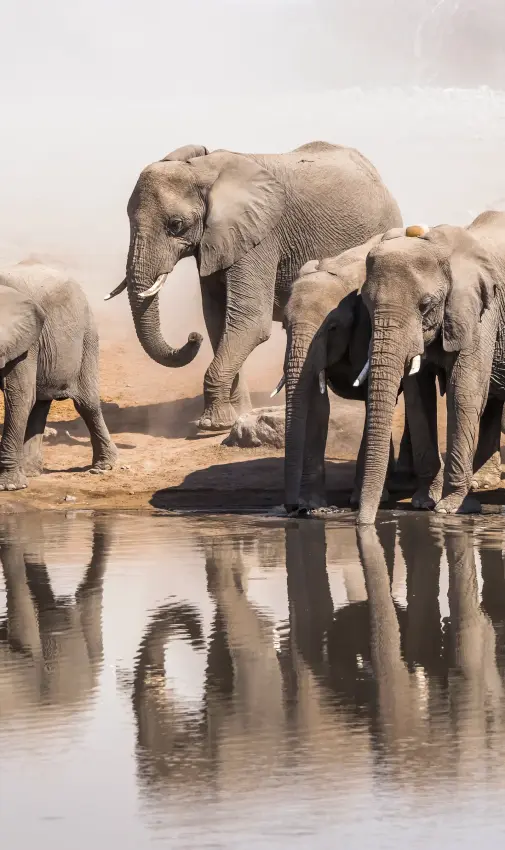
Hippos grunt and splash in the dark marsh, and elephants can be heard feeding close by
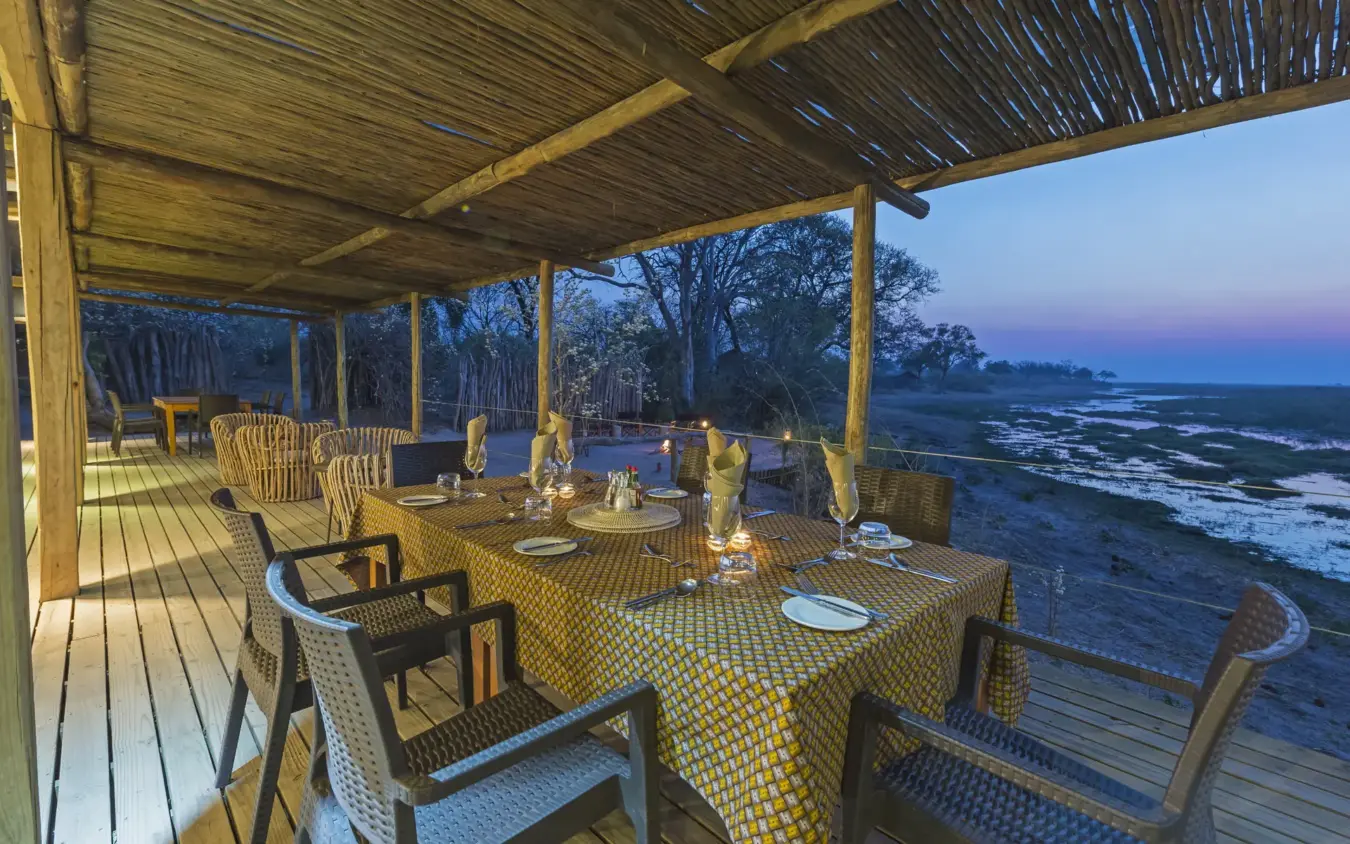
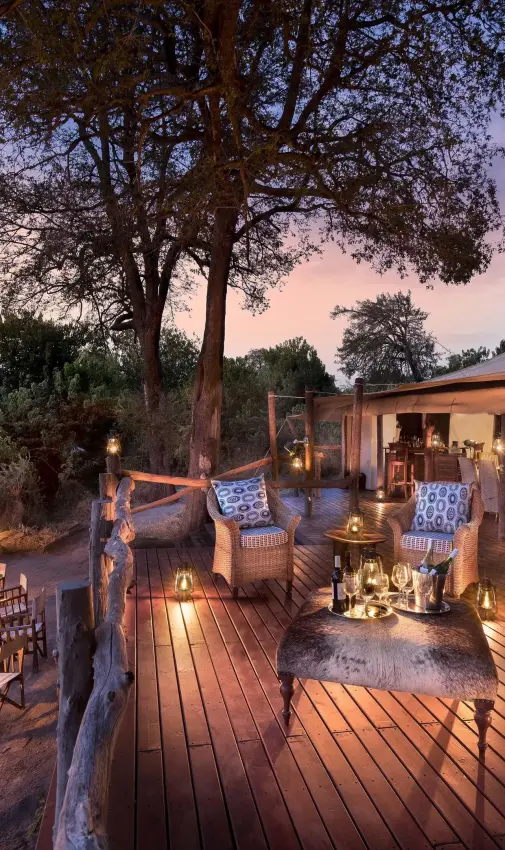
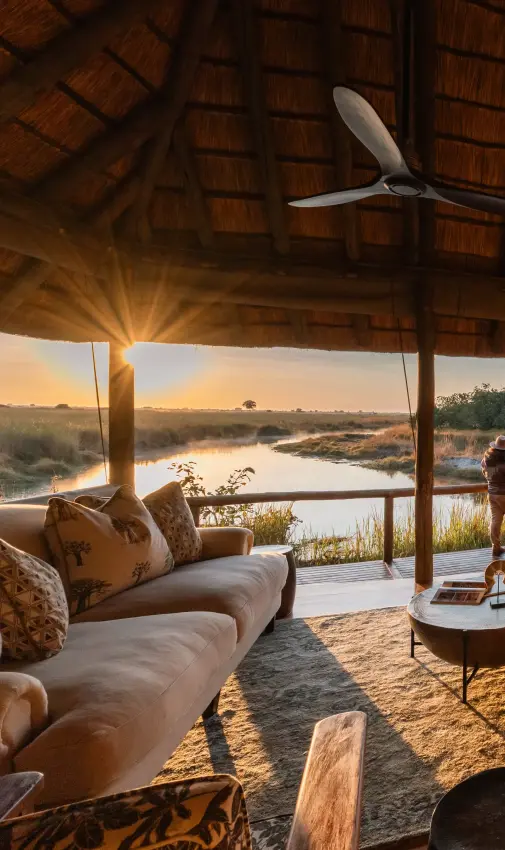
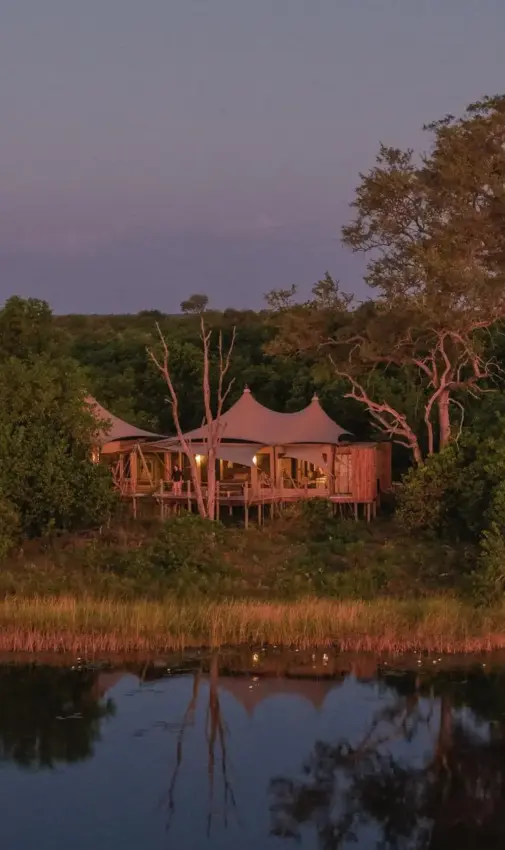
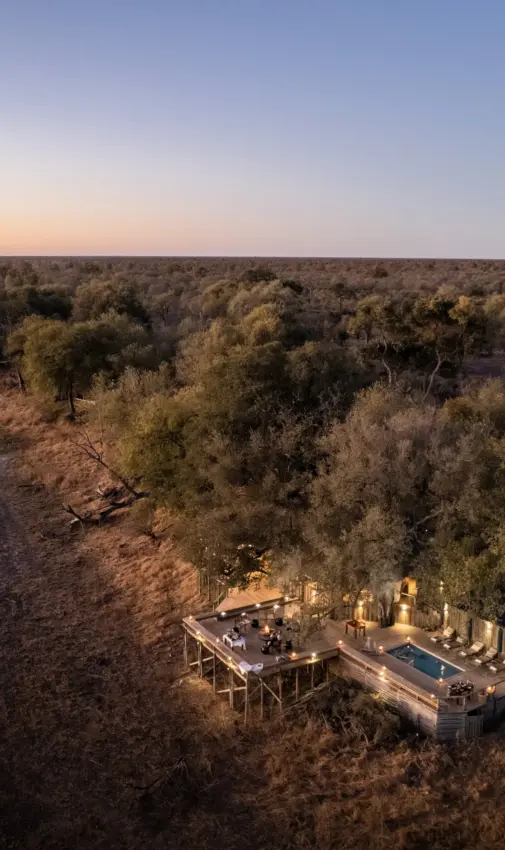
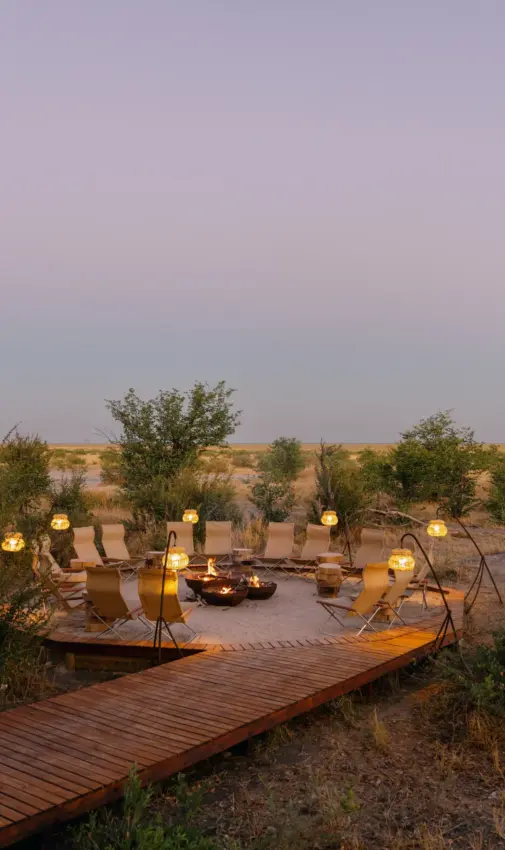
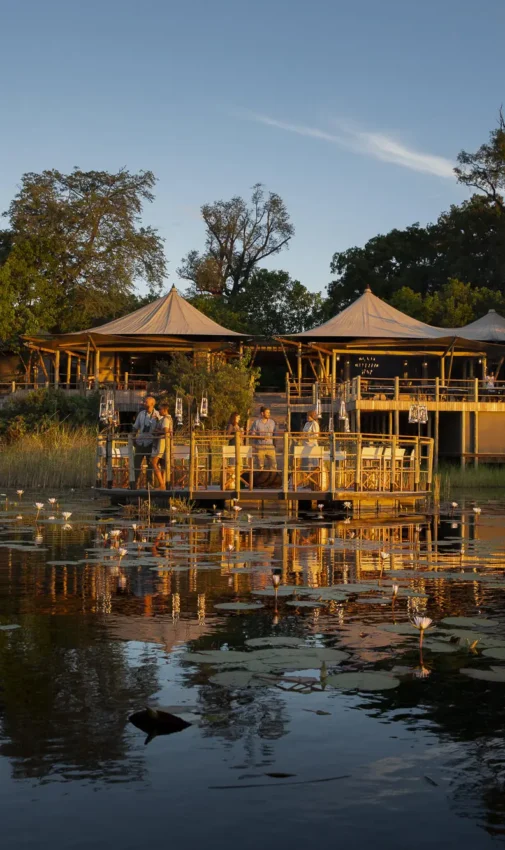
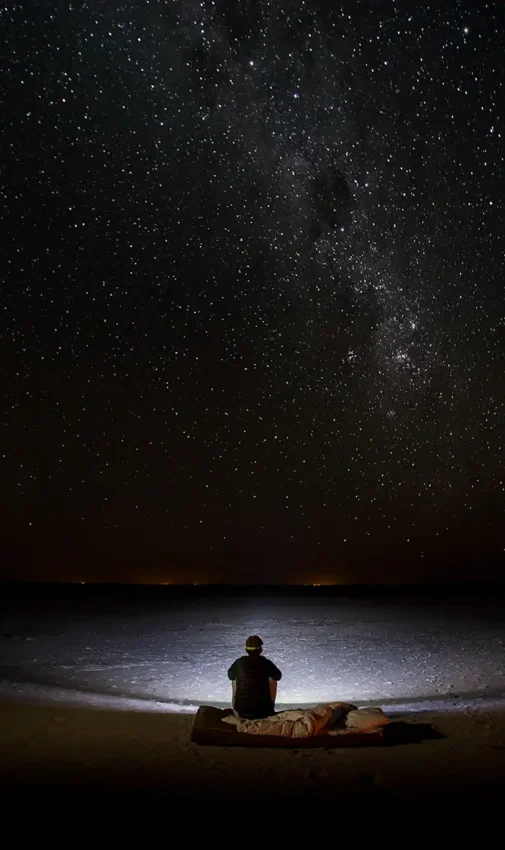
Dolly and Kgotso manage the camp day to day. Evenings begin with sundowners out on the reserve and end back at the fire. Hippos grunt and splash in the dark marsh, and elephants can be heard feeding close by. With just four tents, the camp lends itself to being booked in full by a family or a small group of friends, who then have the fire, the pool and the guides to themselves.
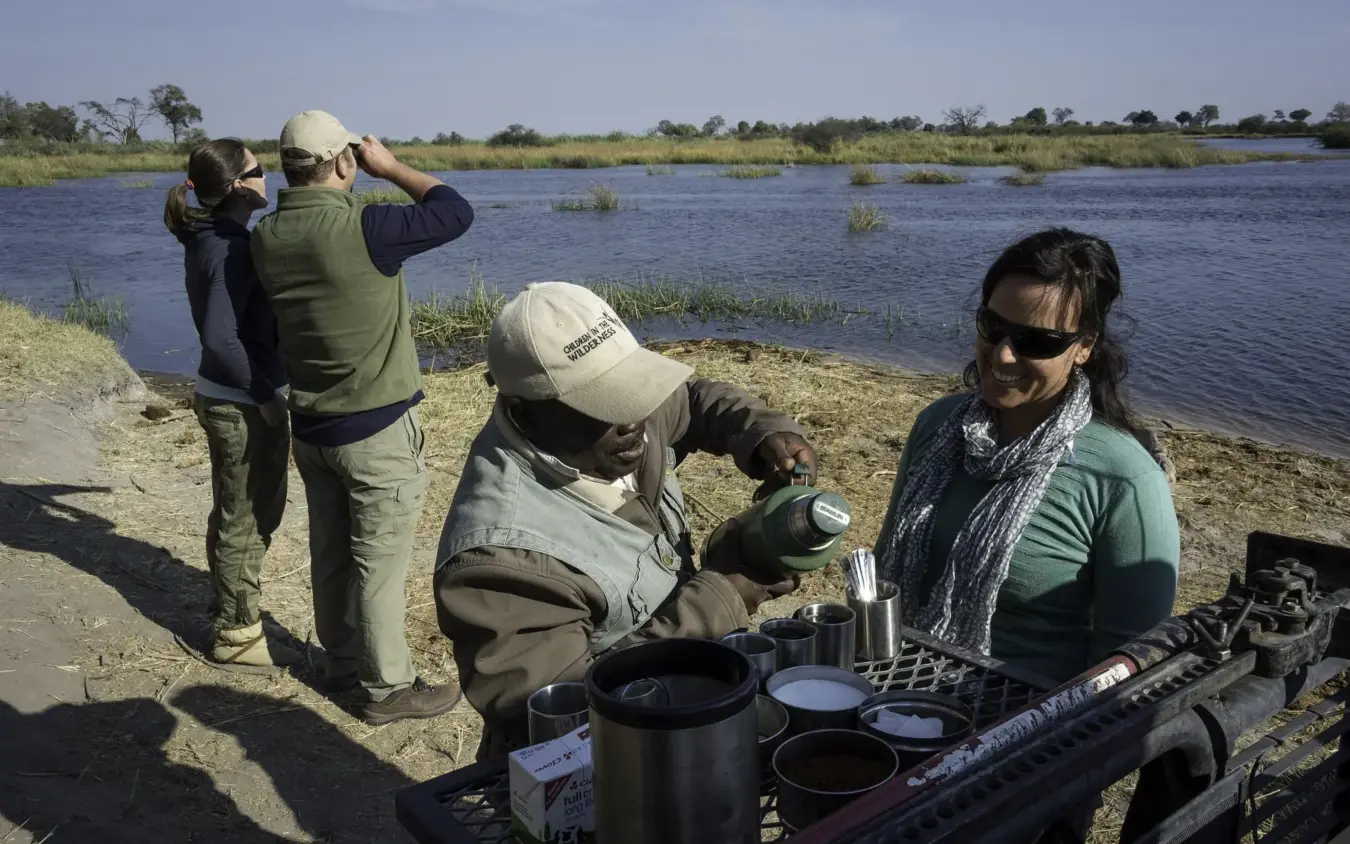
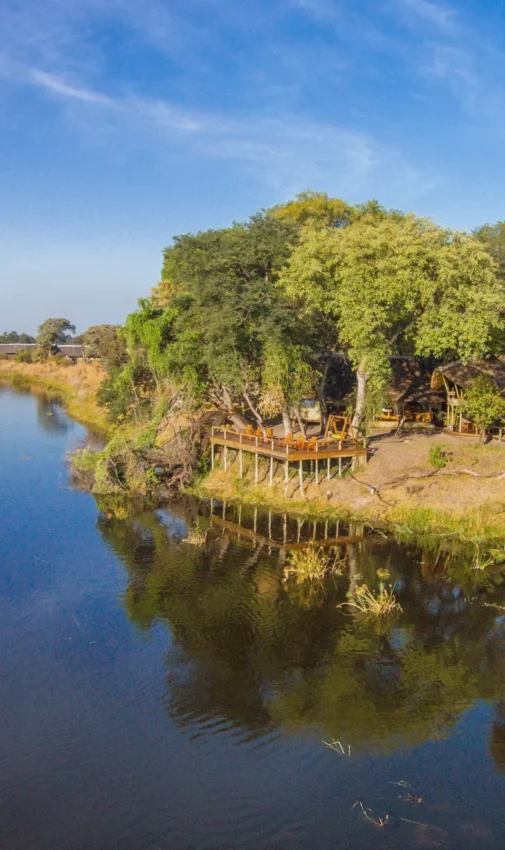
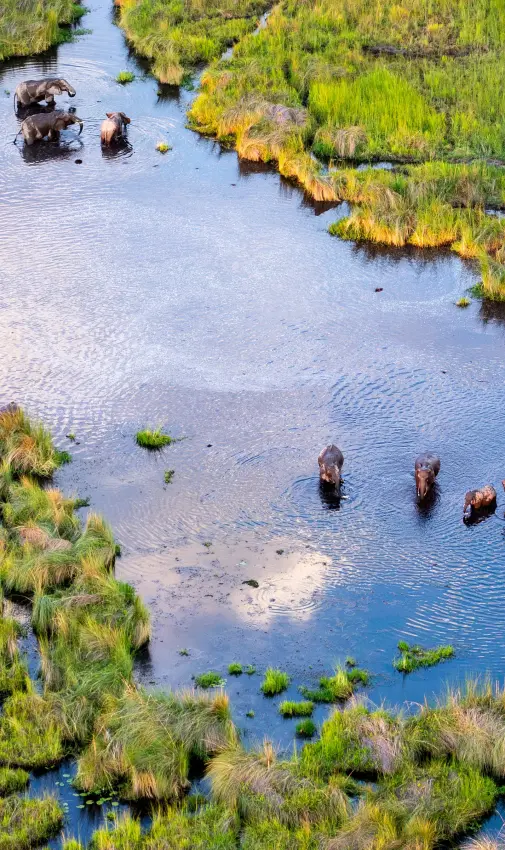
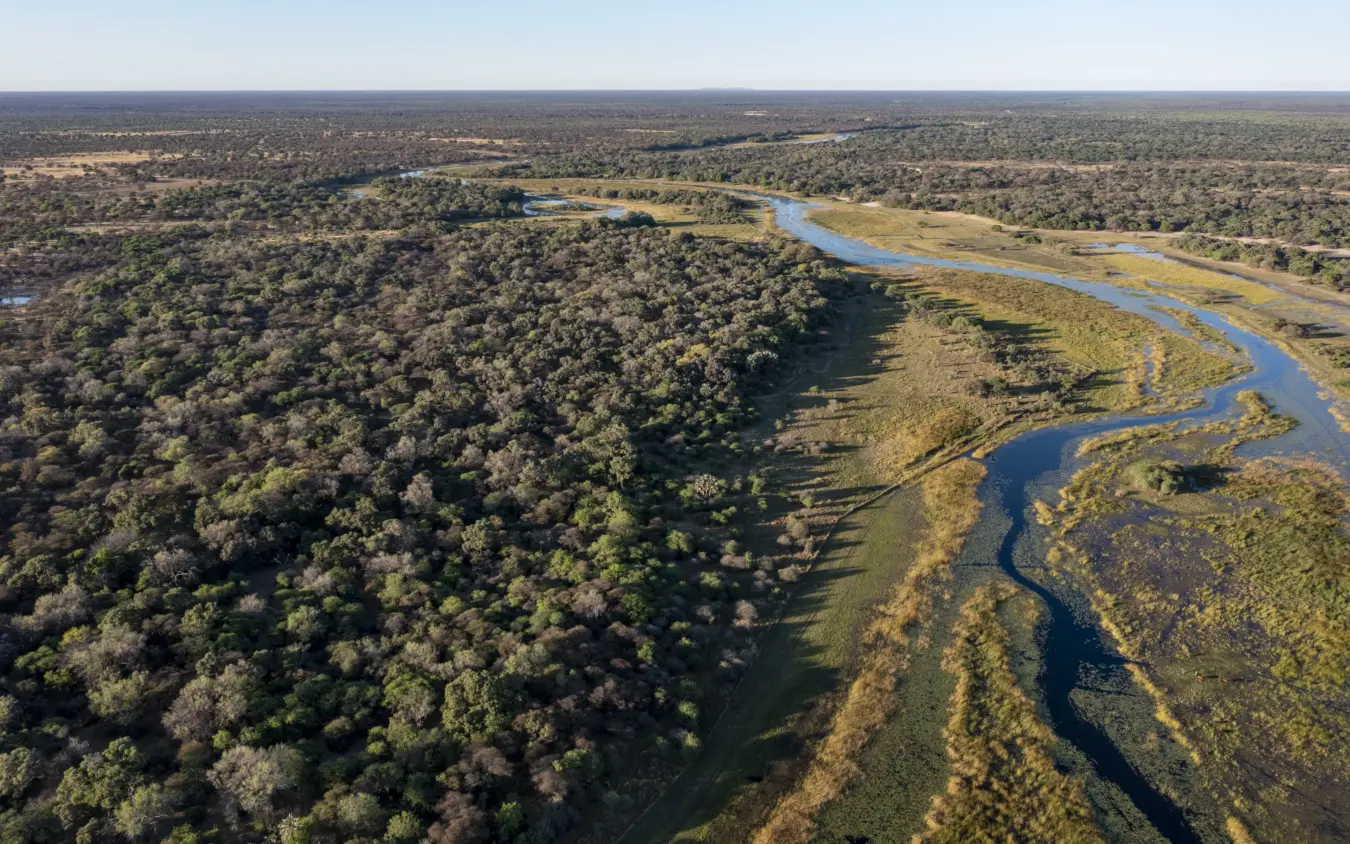
Helicopter flights lift off over the marsh, showing from above how the channels and lagoons thread through the reedbeds, in a way no vehicle can. Back on the ground, mornings belong to the game drive, sometimes stretched by a bush brunch set up in the field. The hot middle of the day goes to the pool, until the afternoon drive heads out. The format is old, and deliberately kept that way. Four canvas tents and a fire, and a marsh full of animals with very little standing between them.