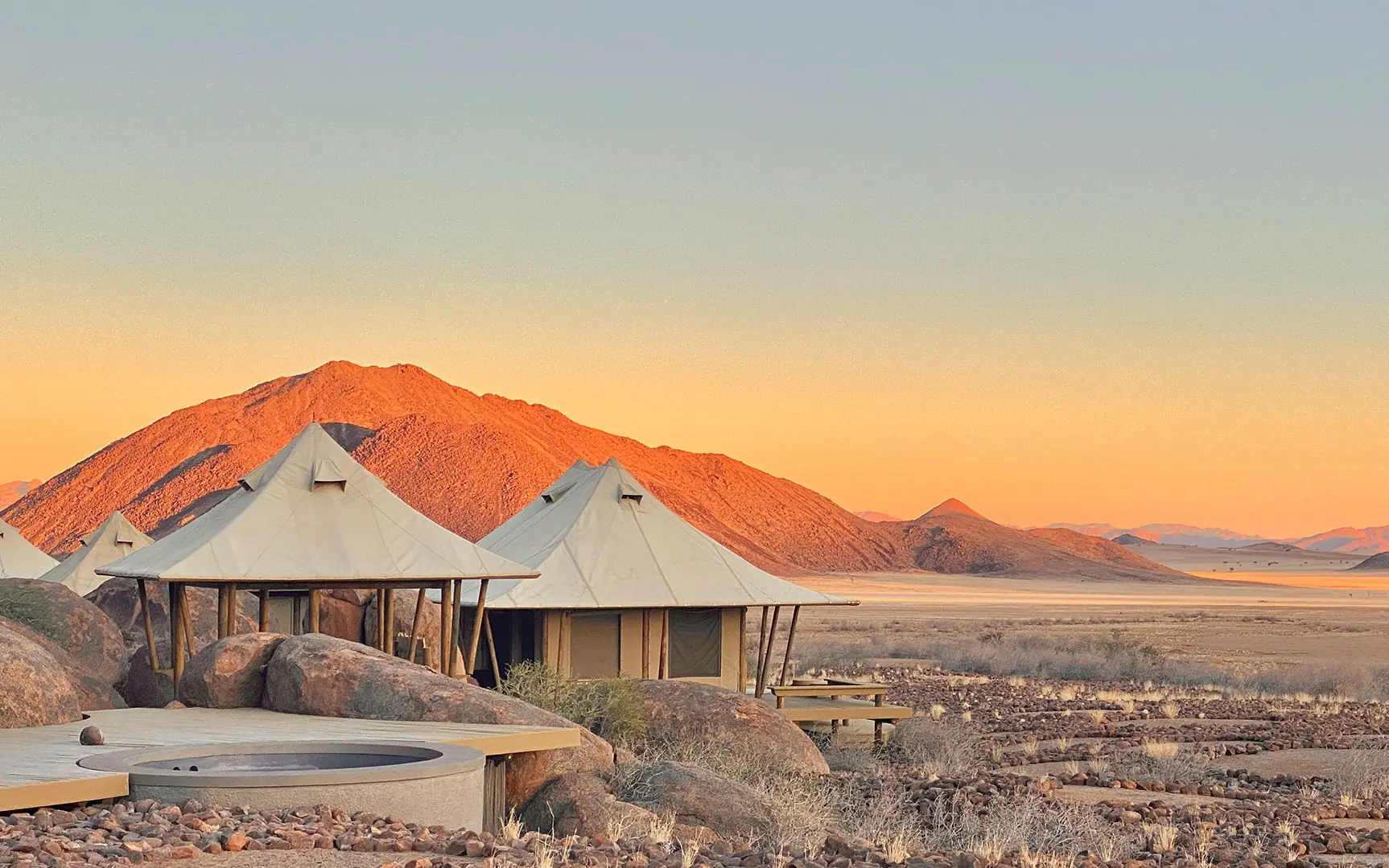
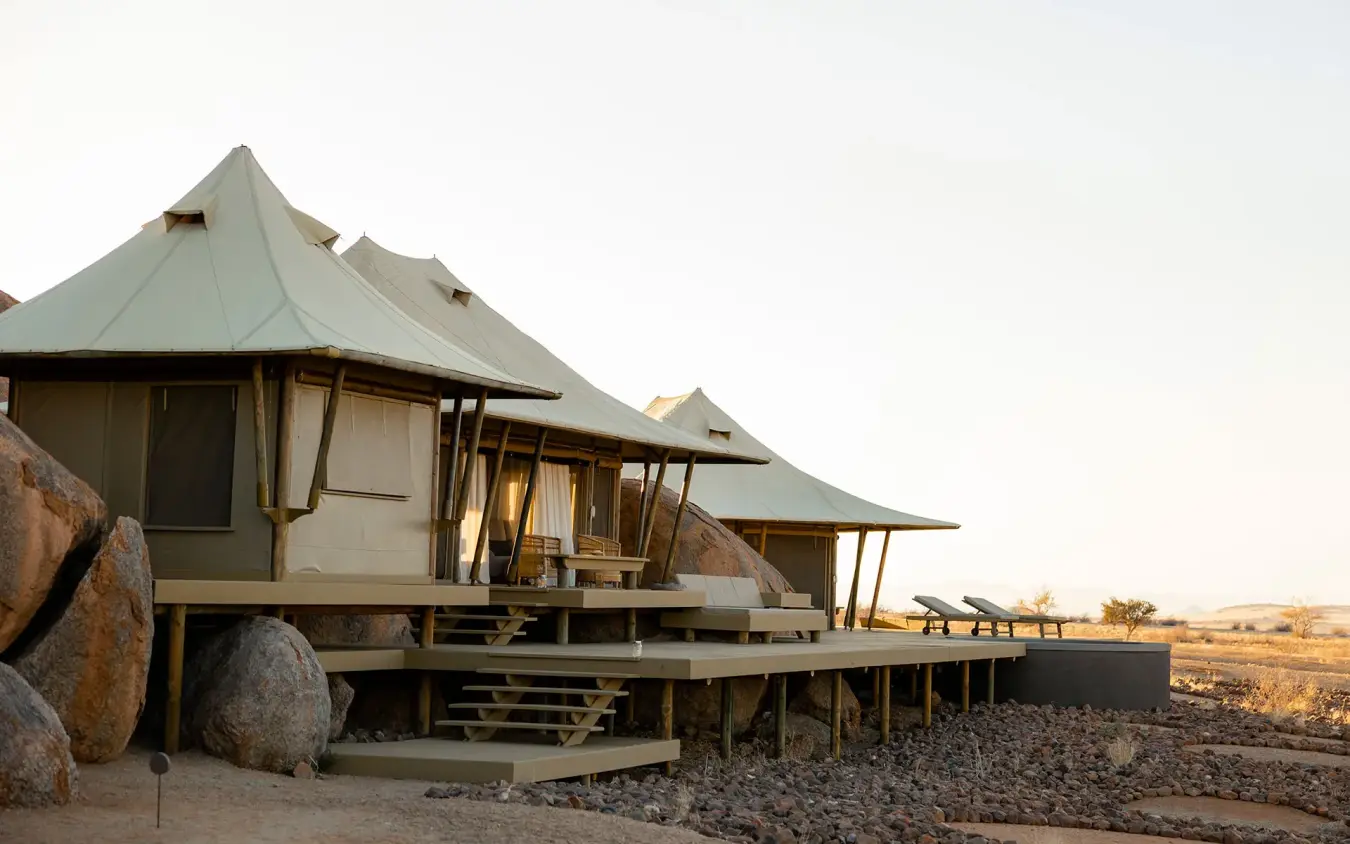
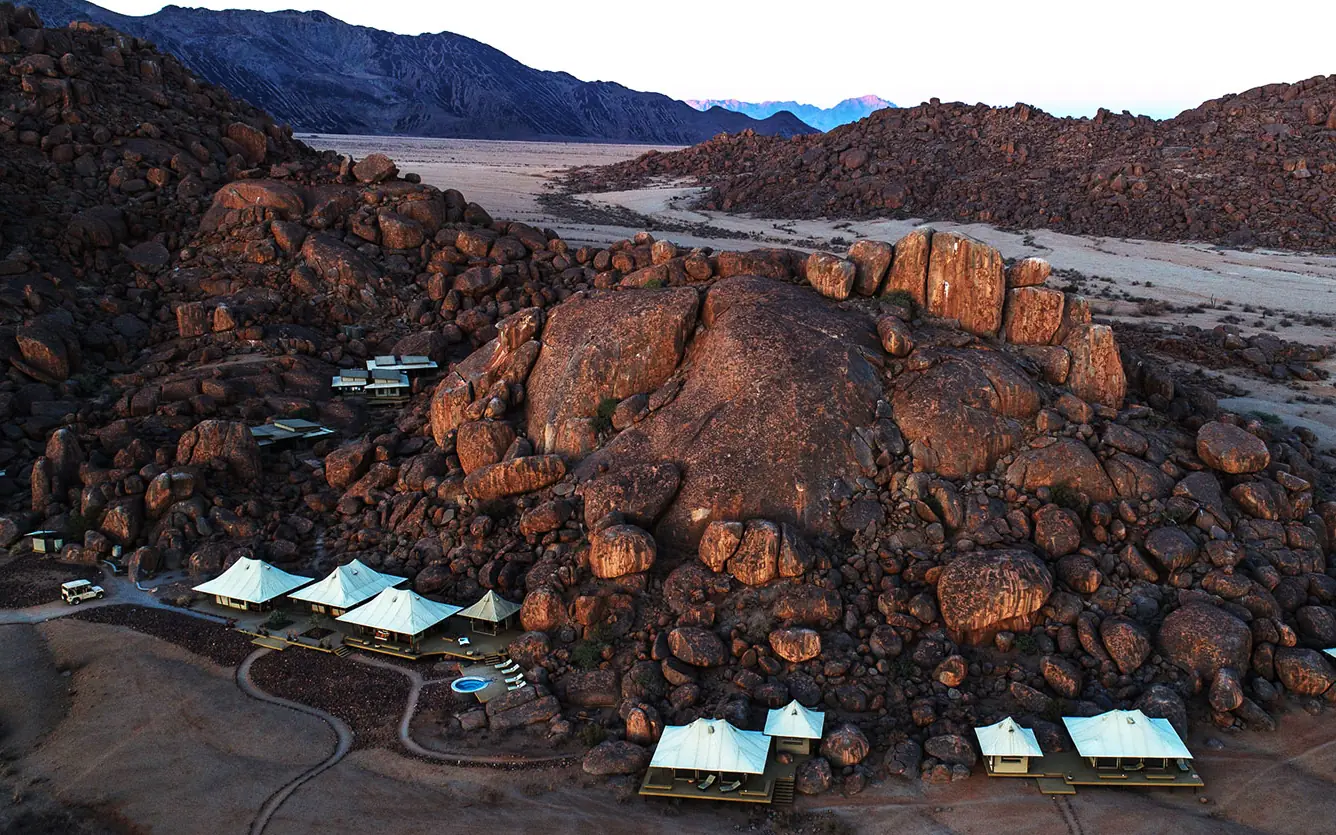
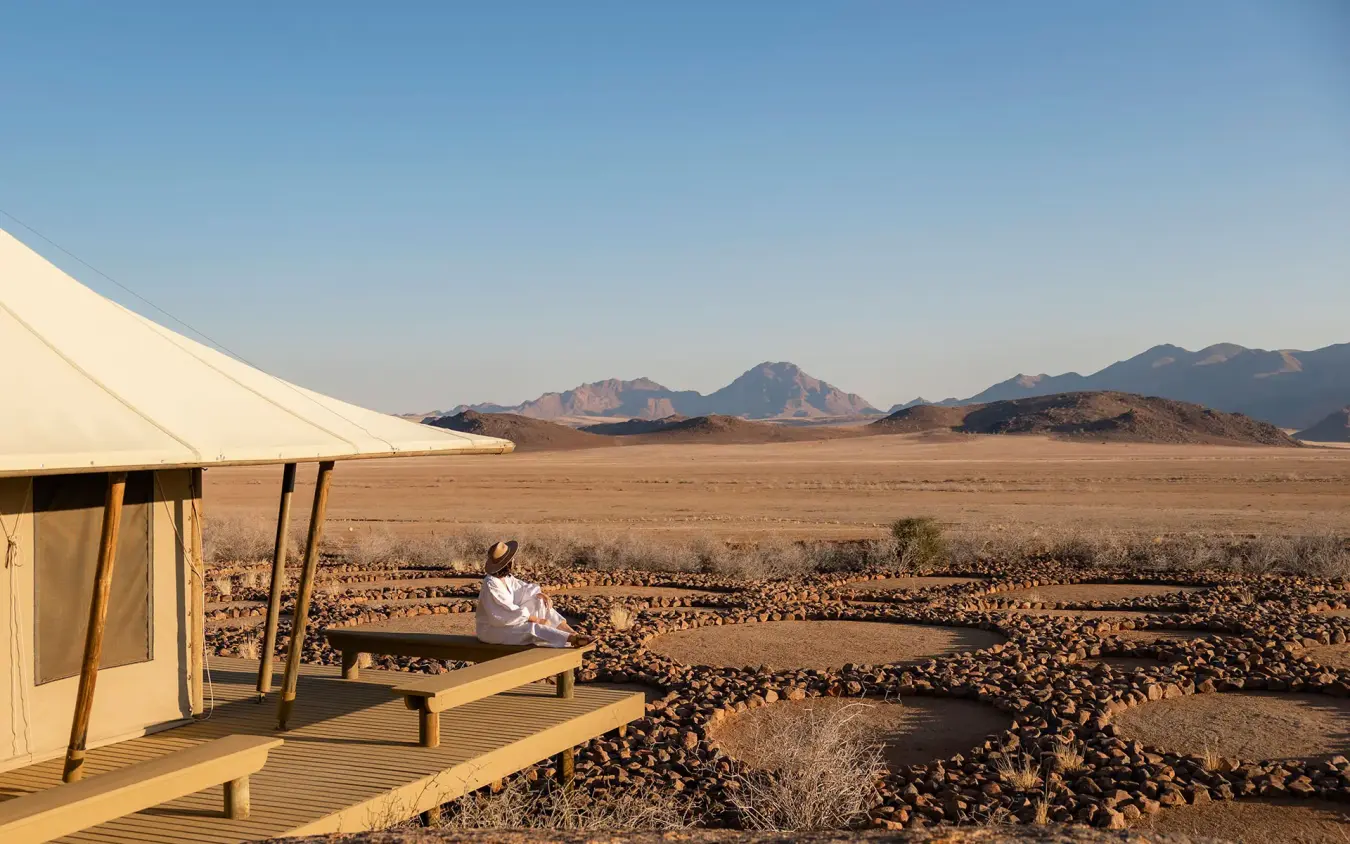
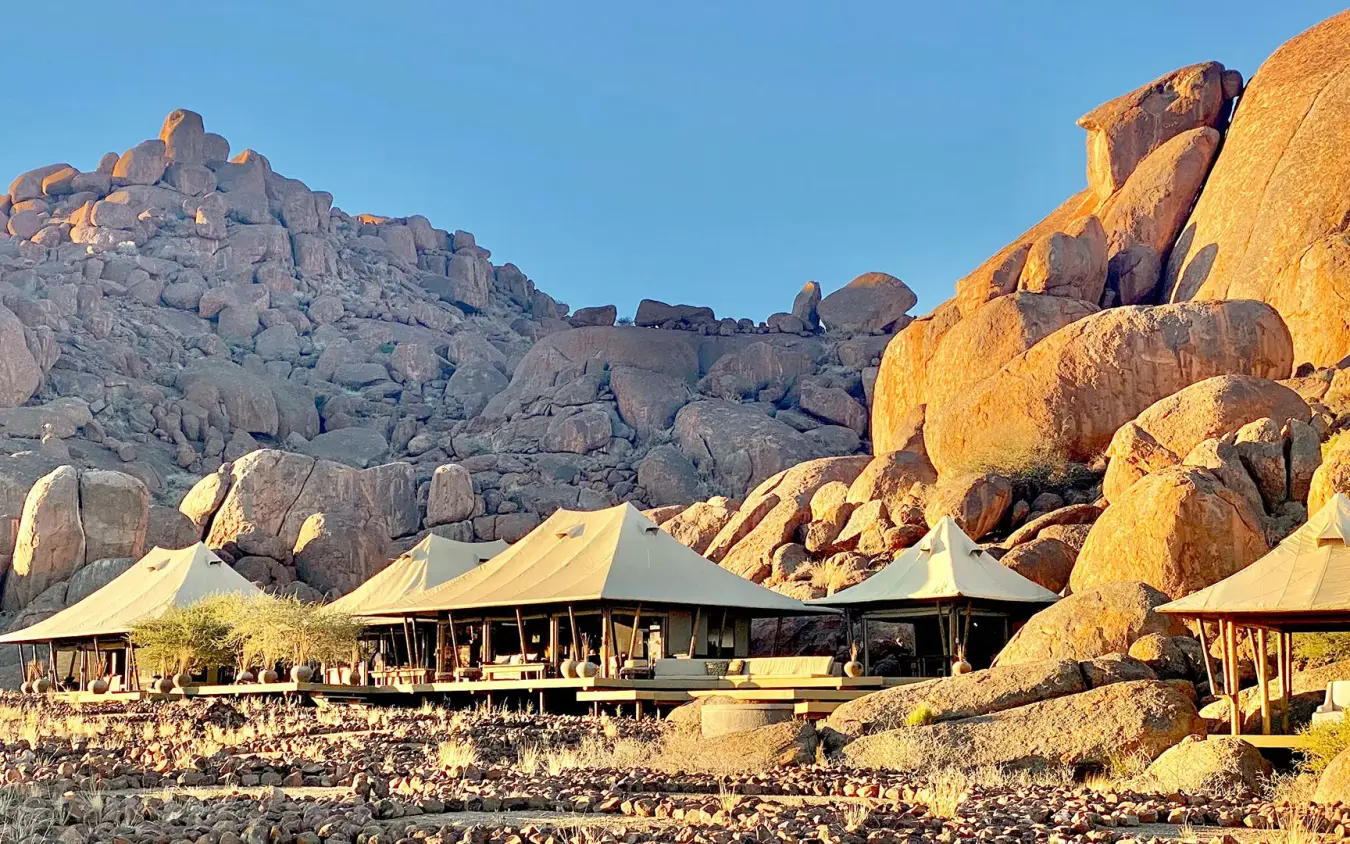
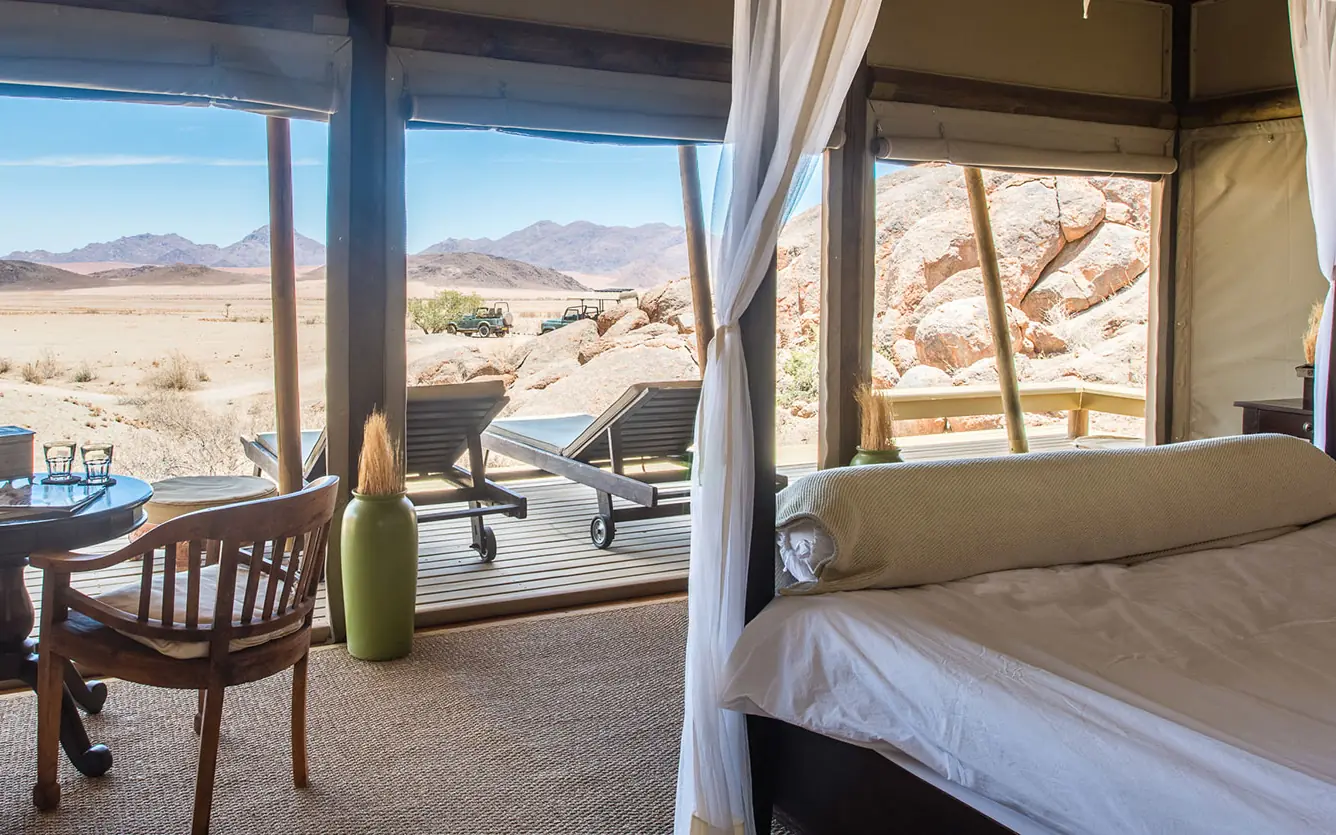
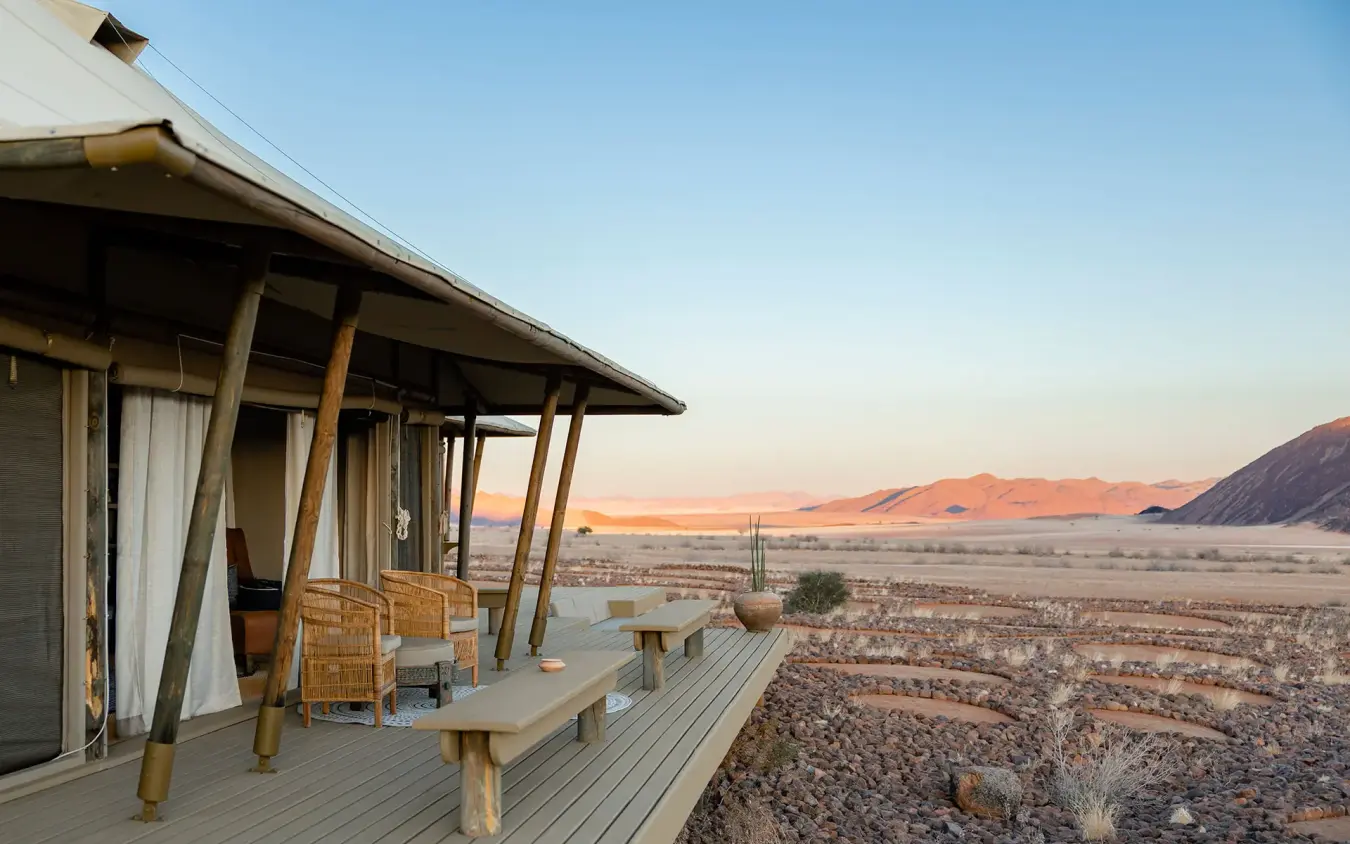
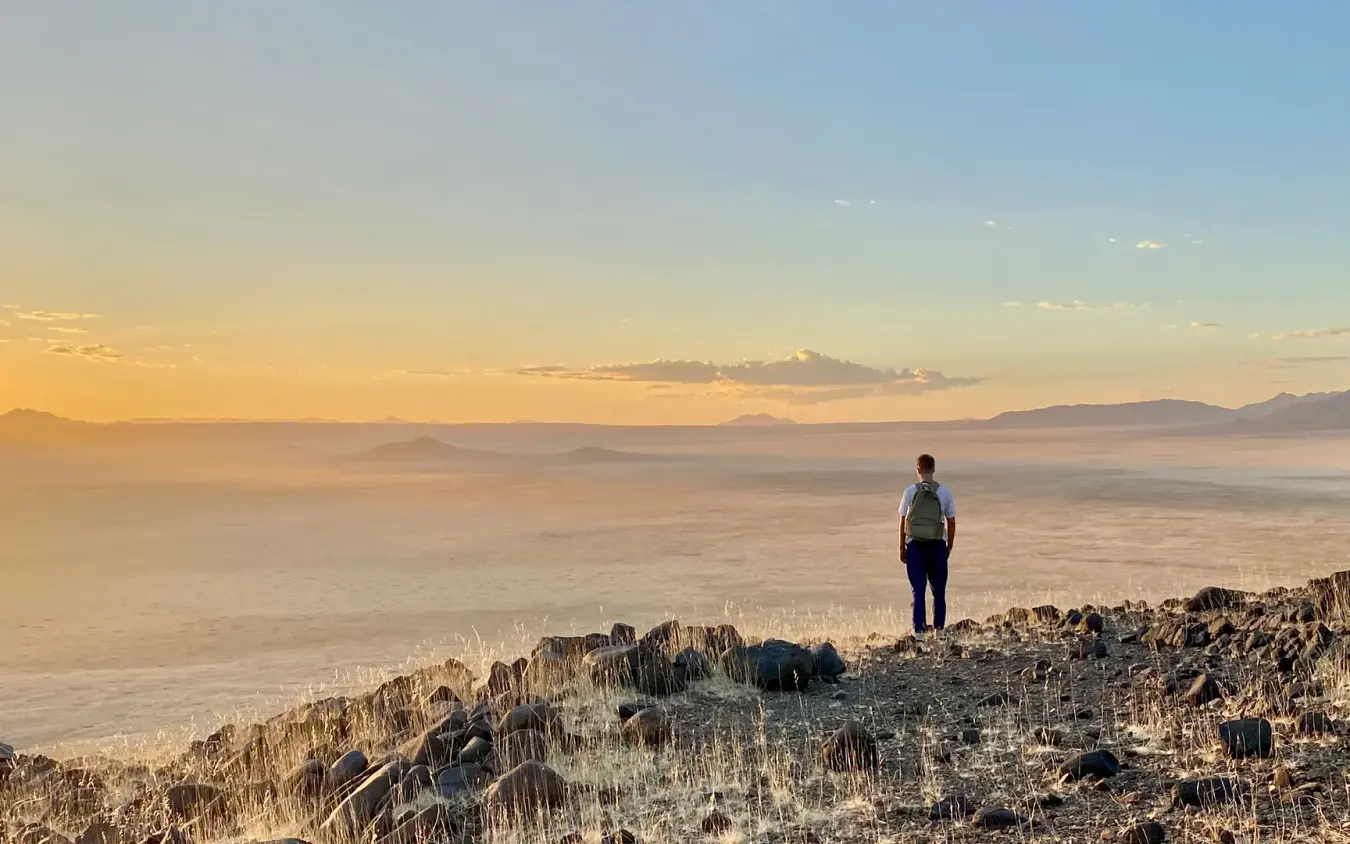
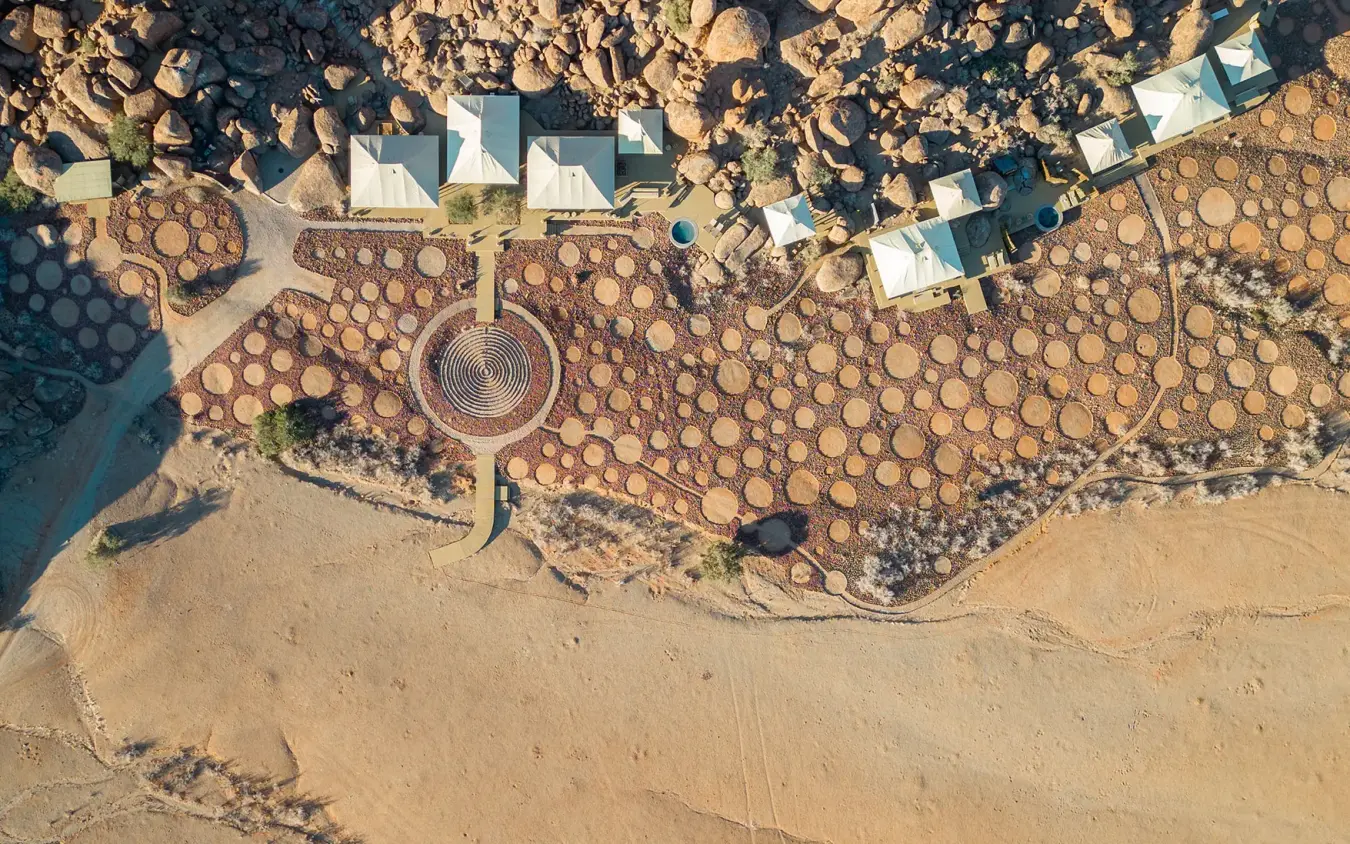
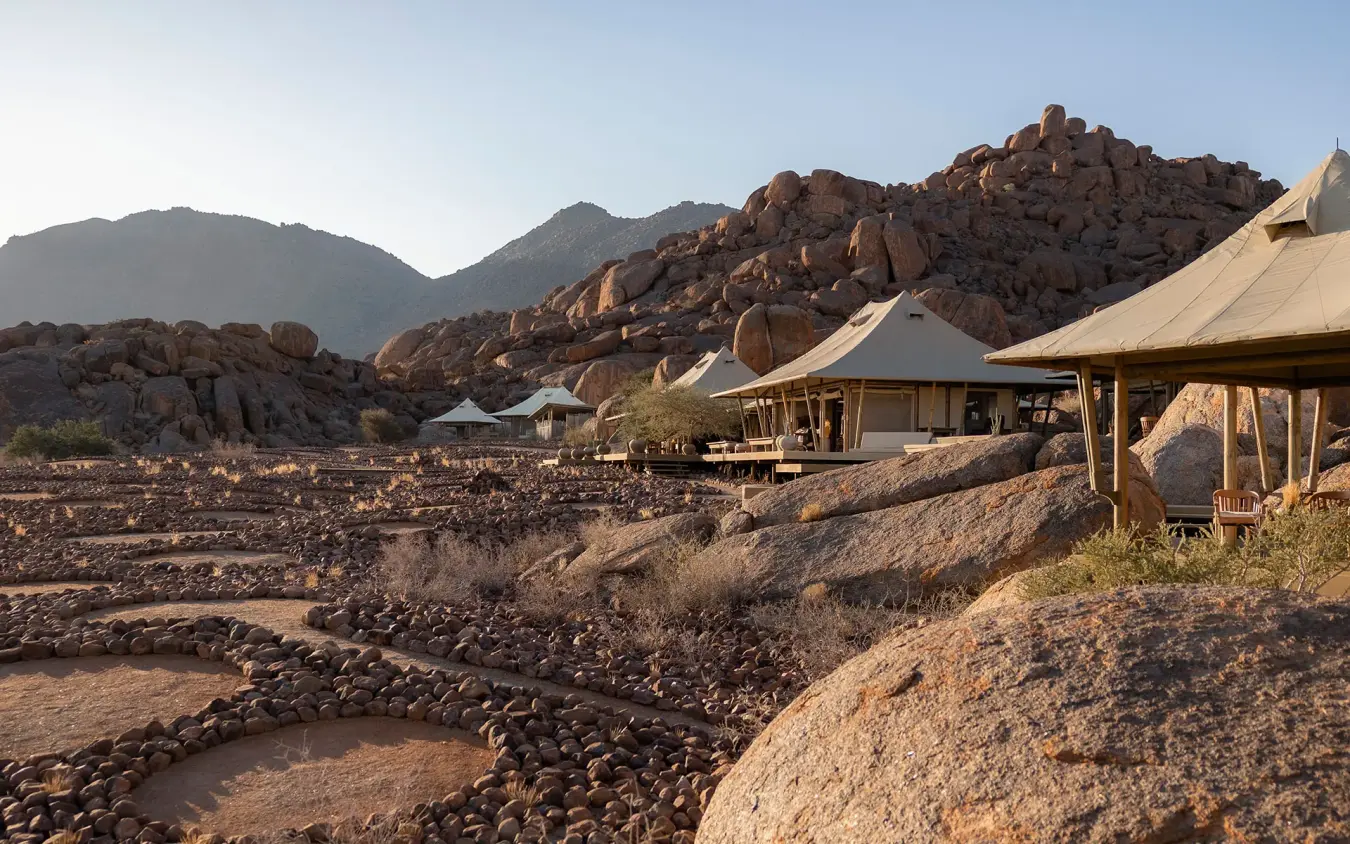
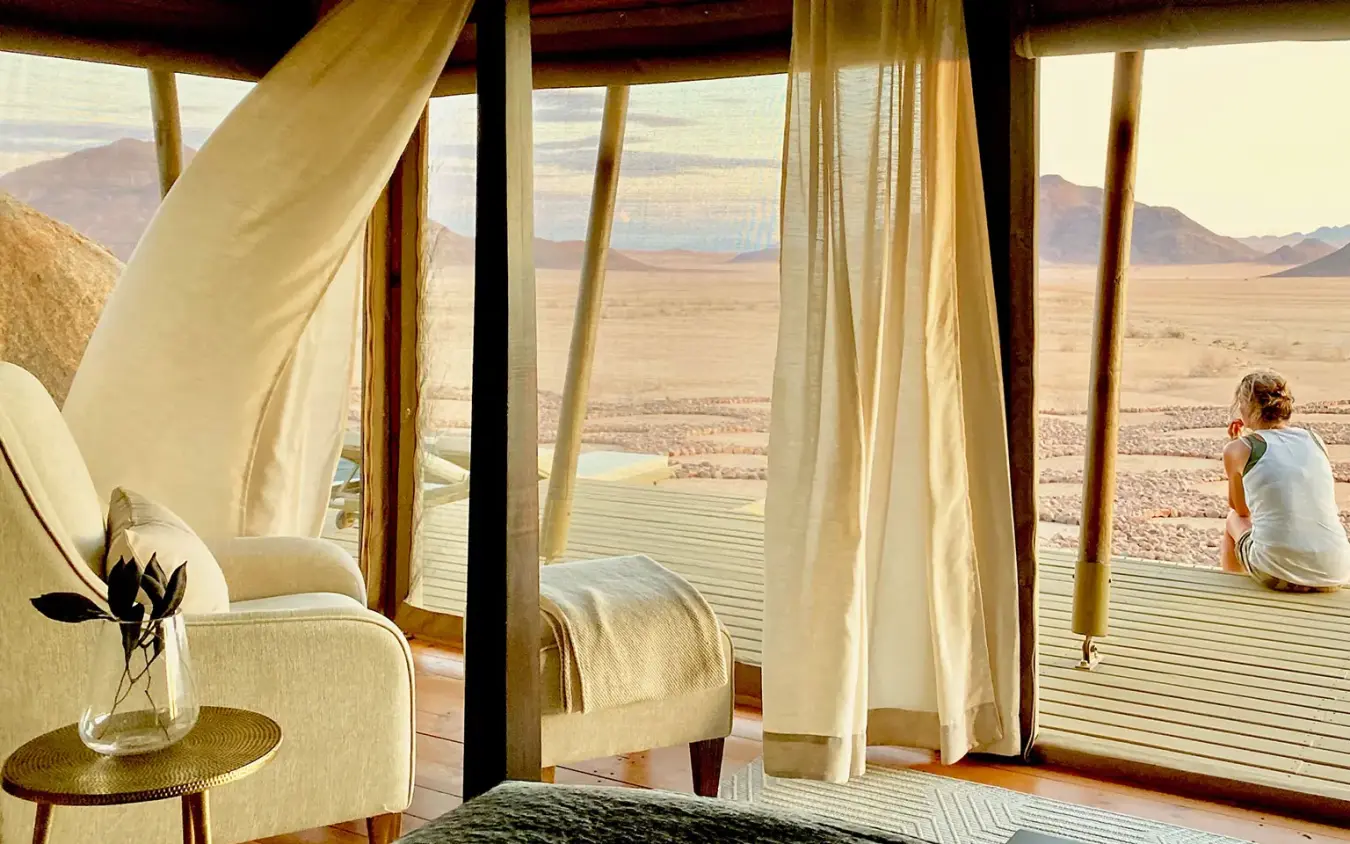
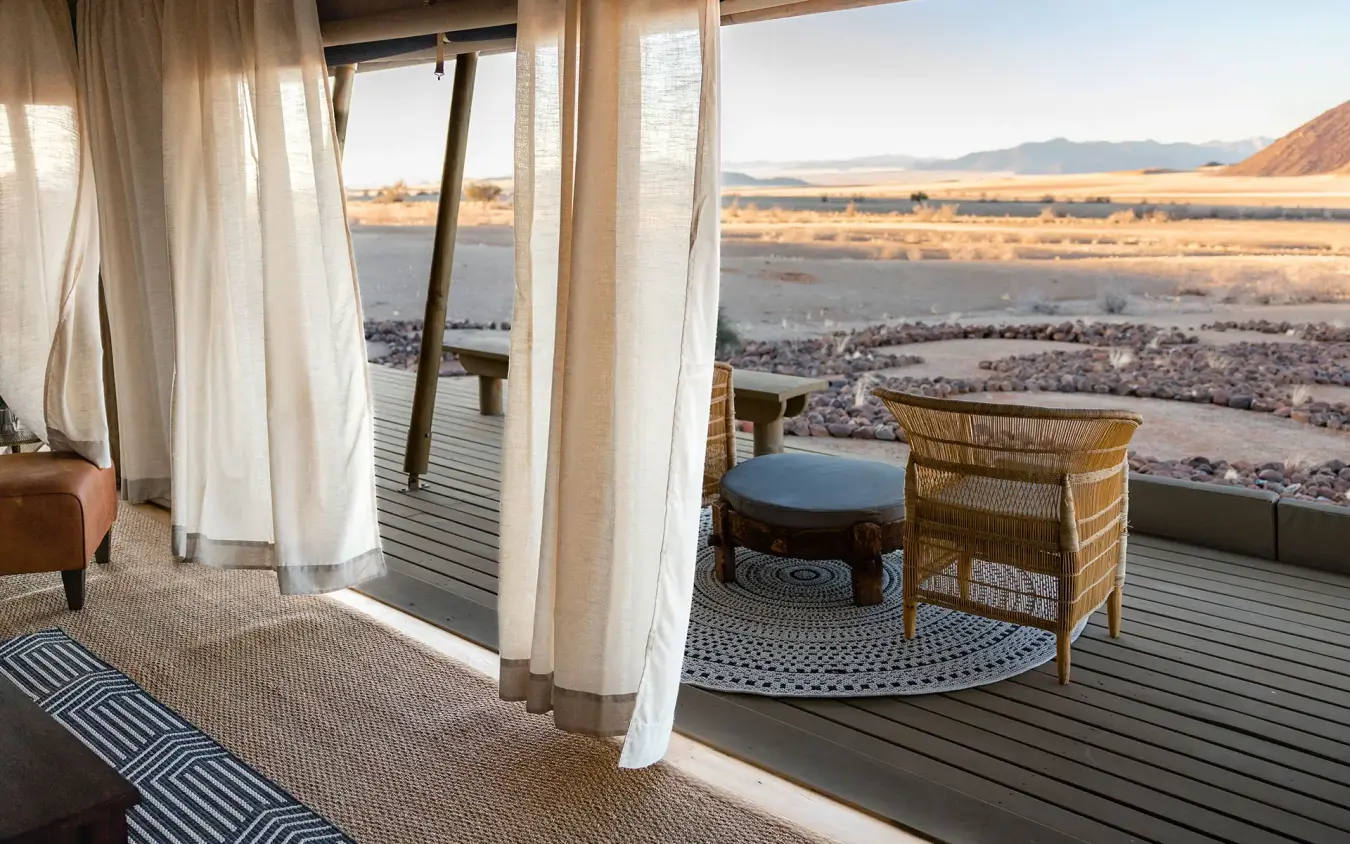
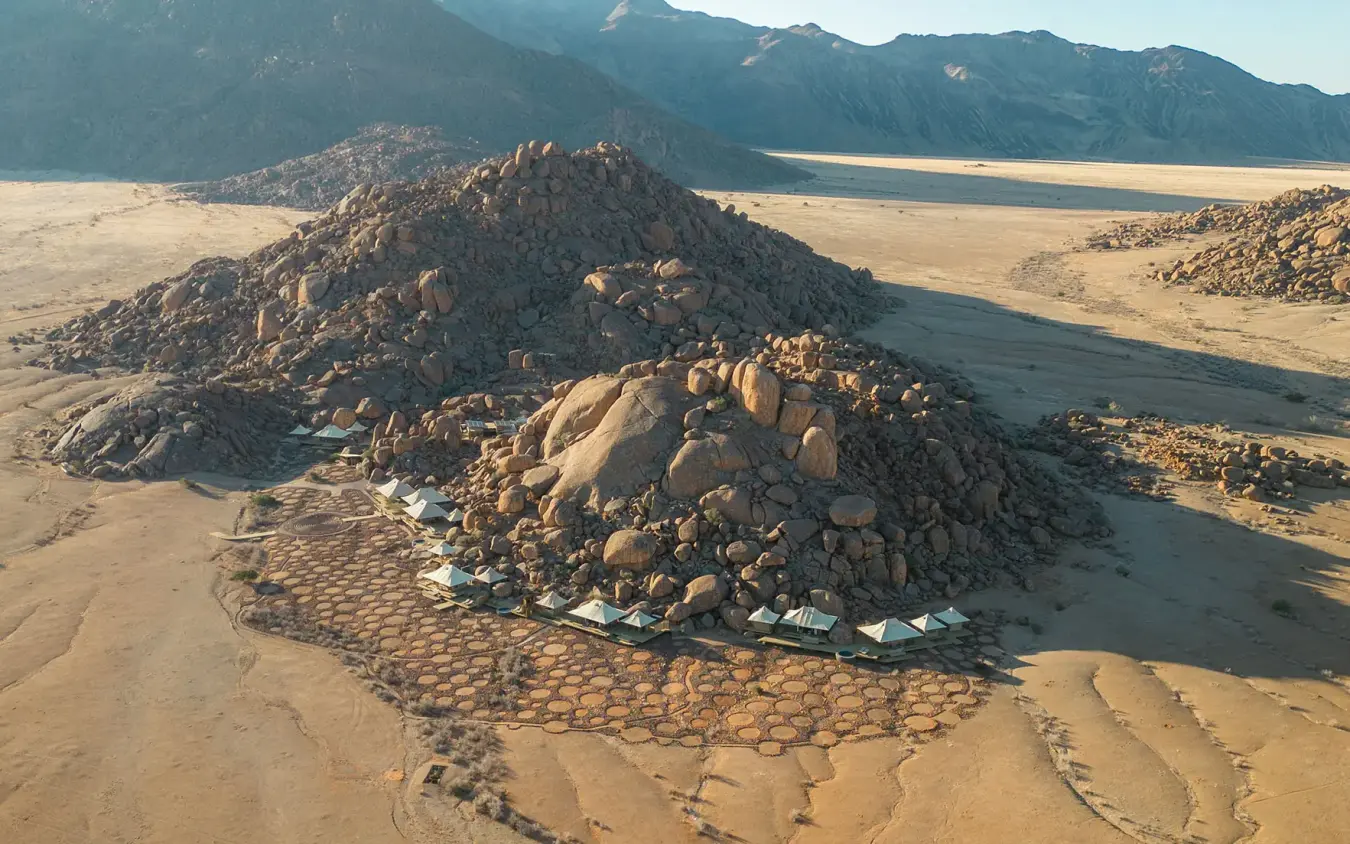
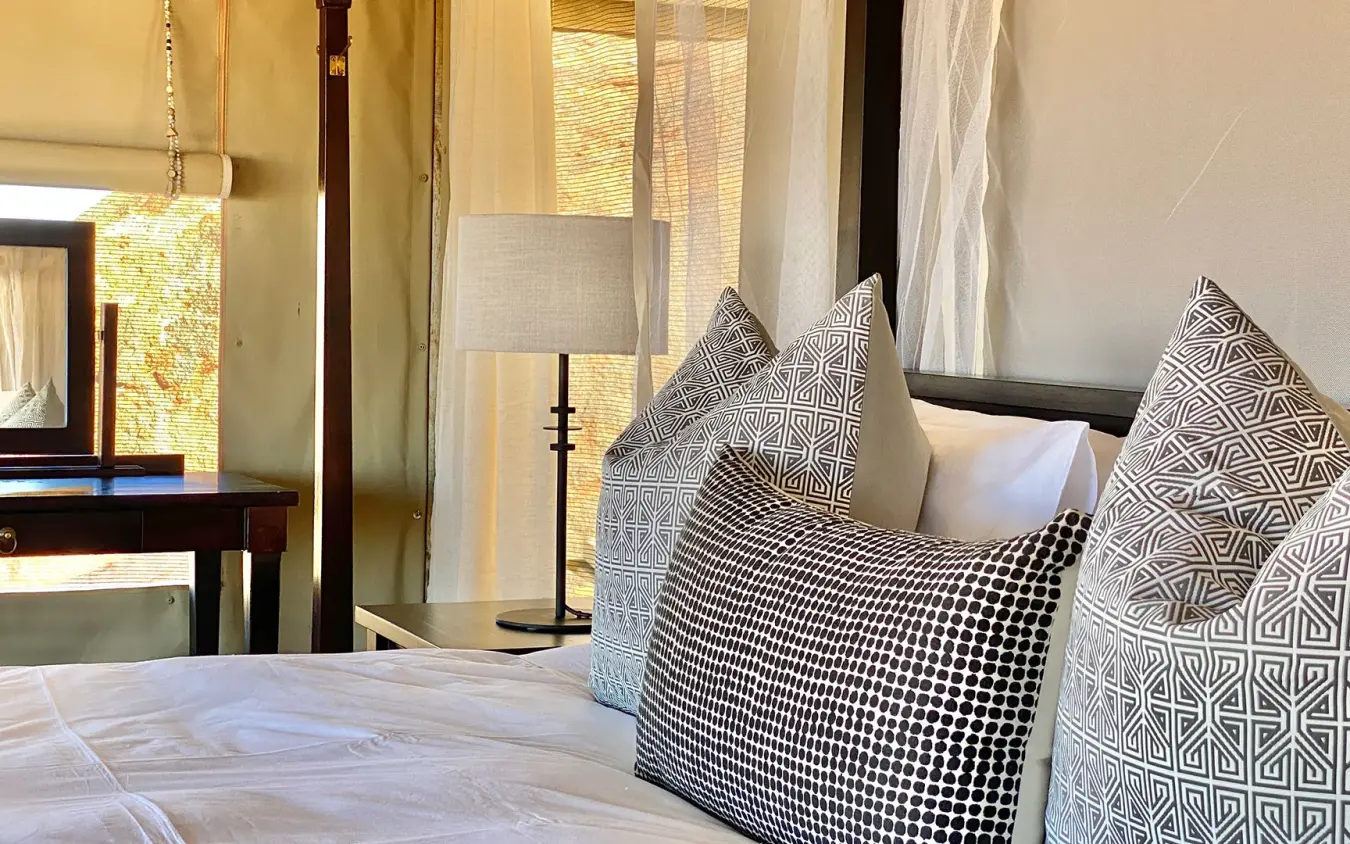
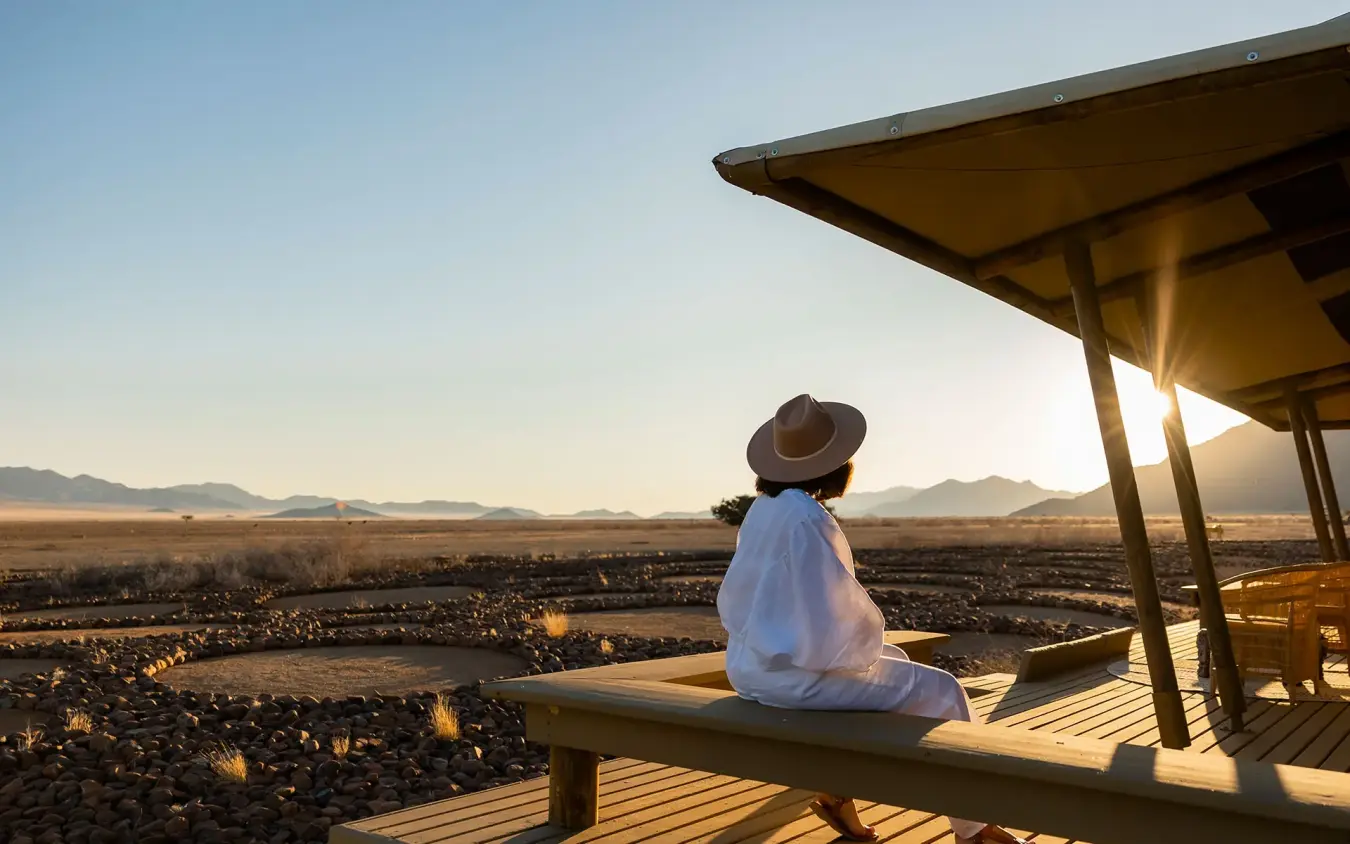
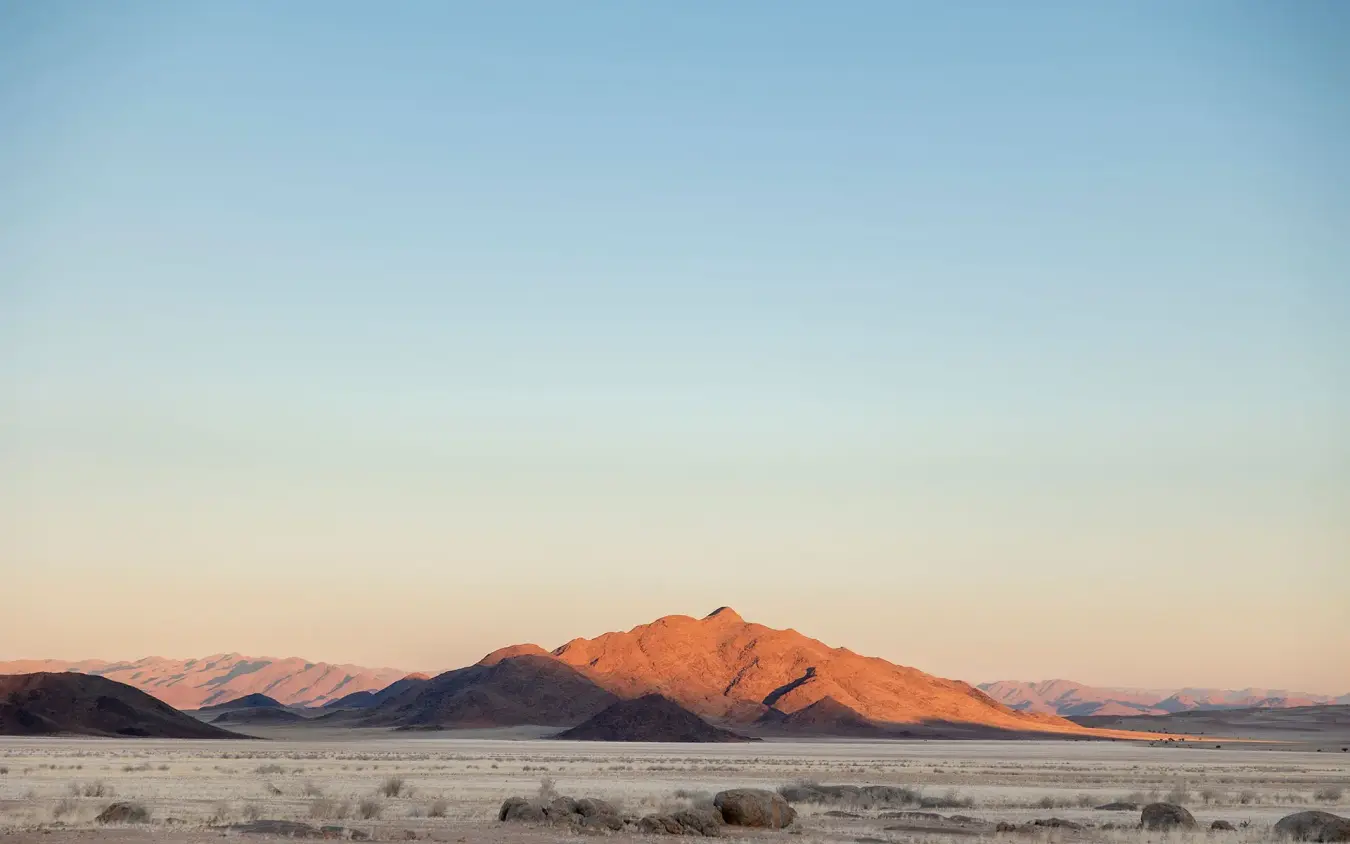
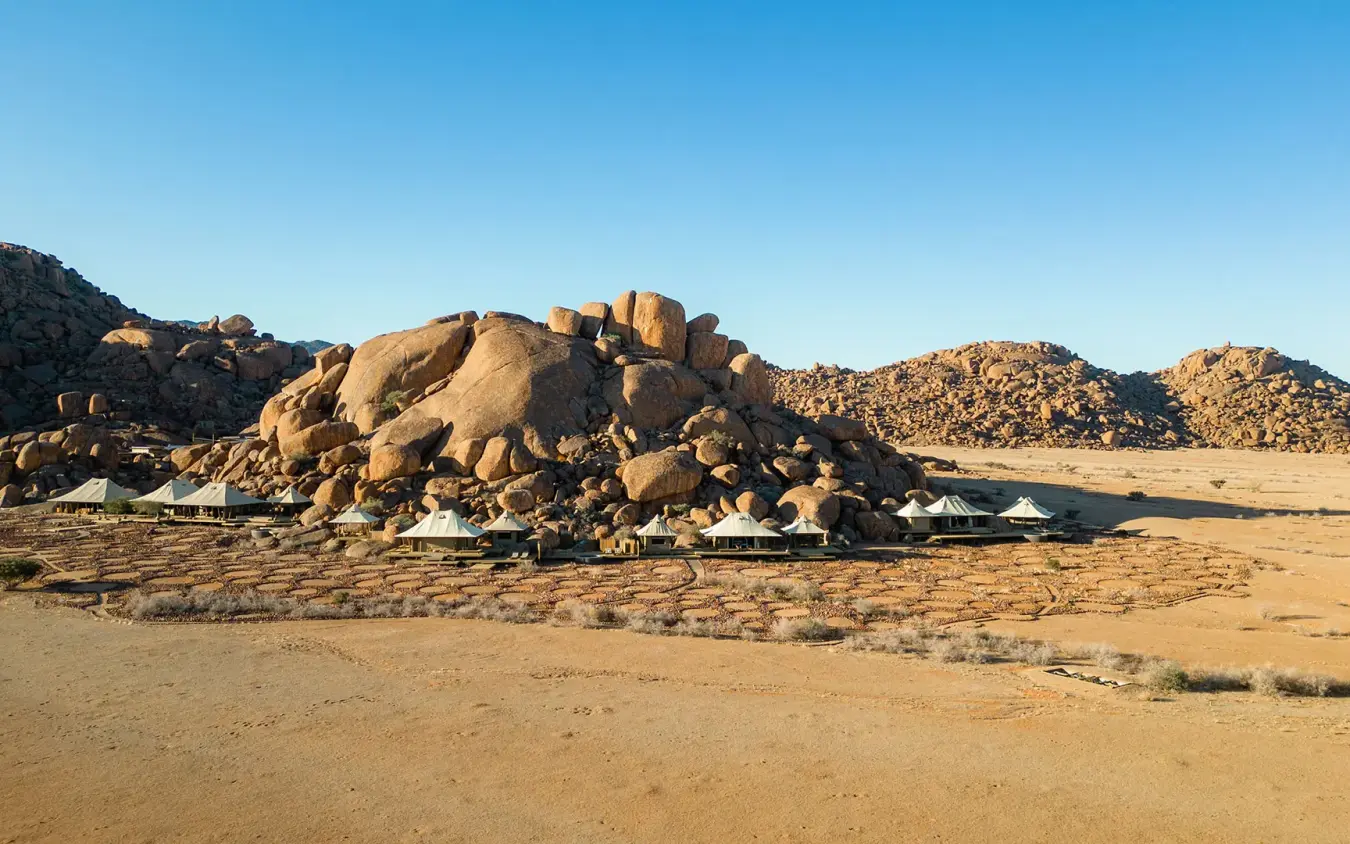
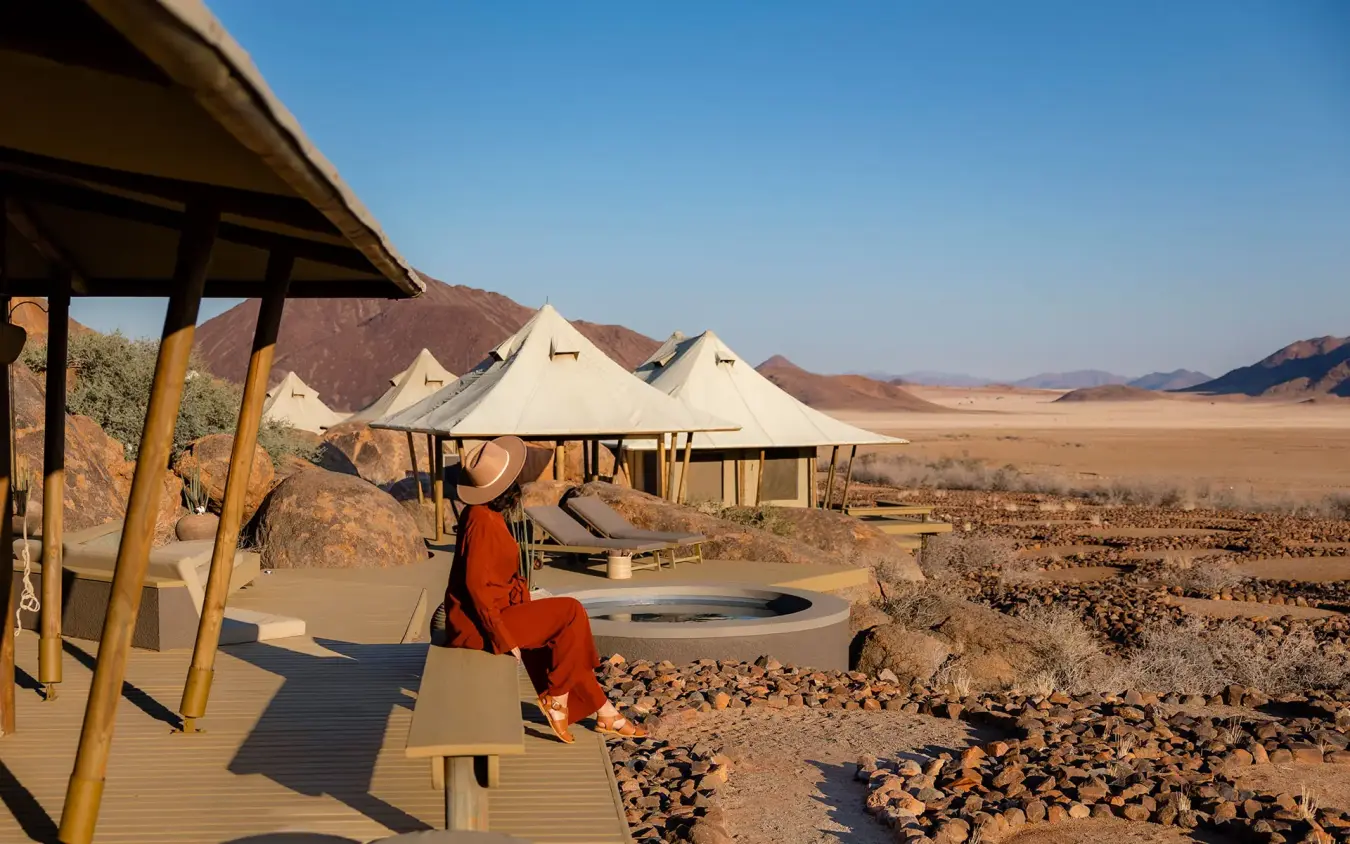
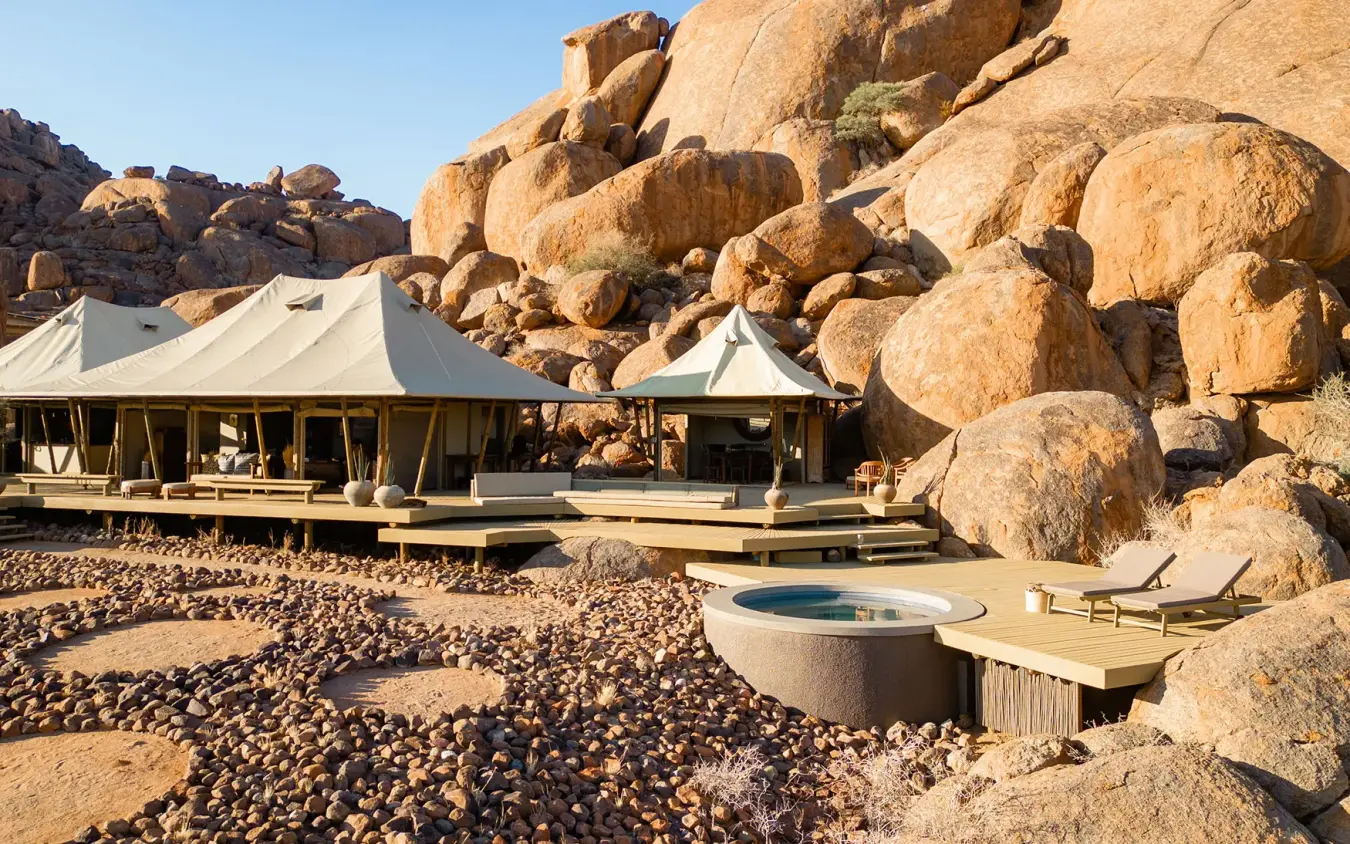
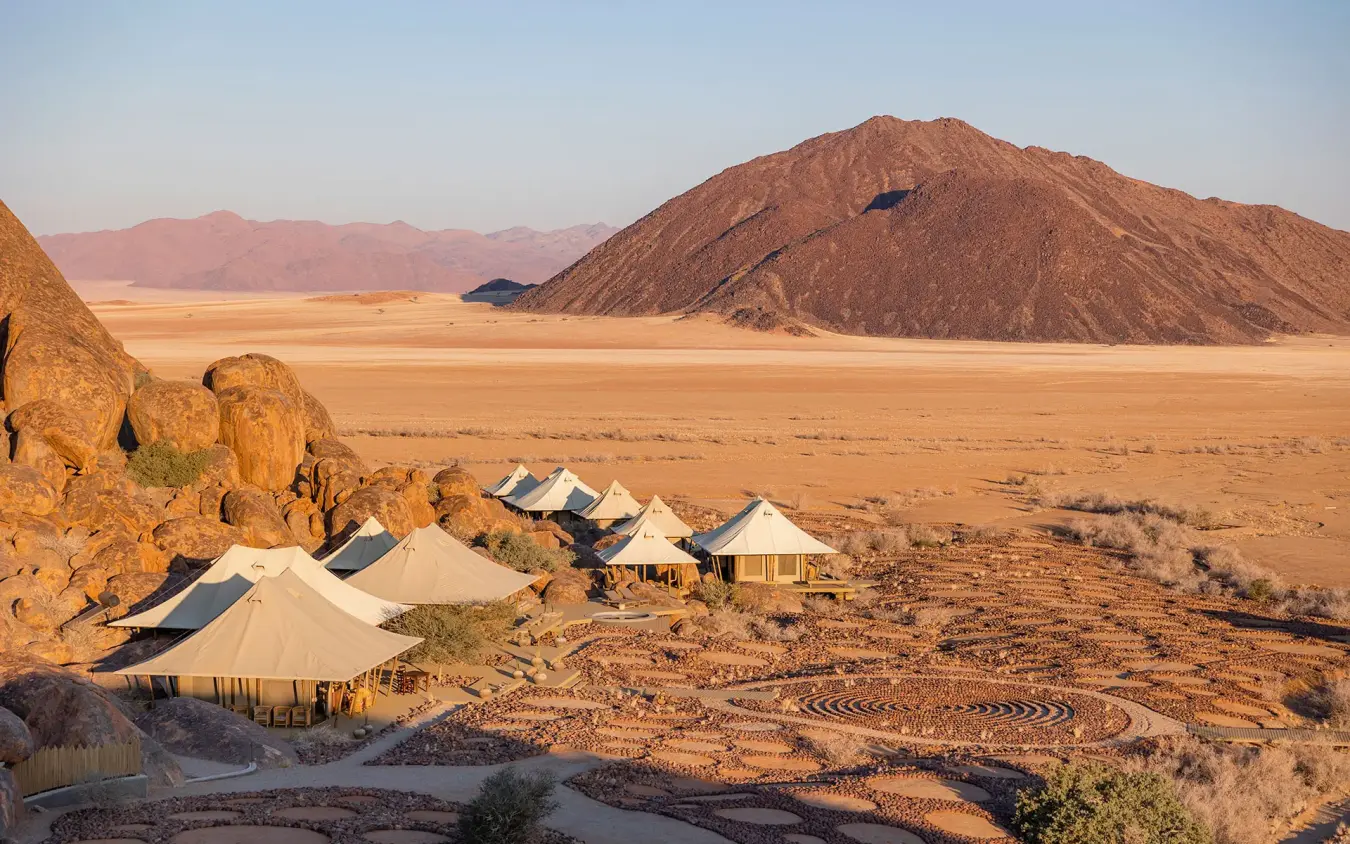
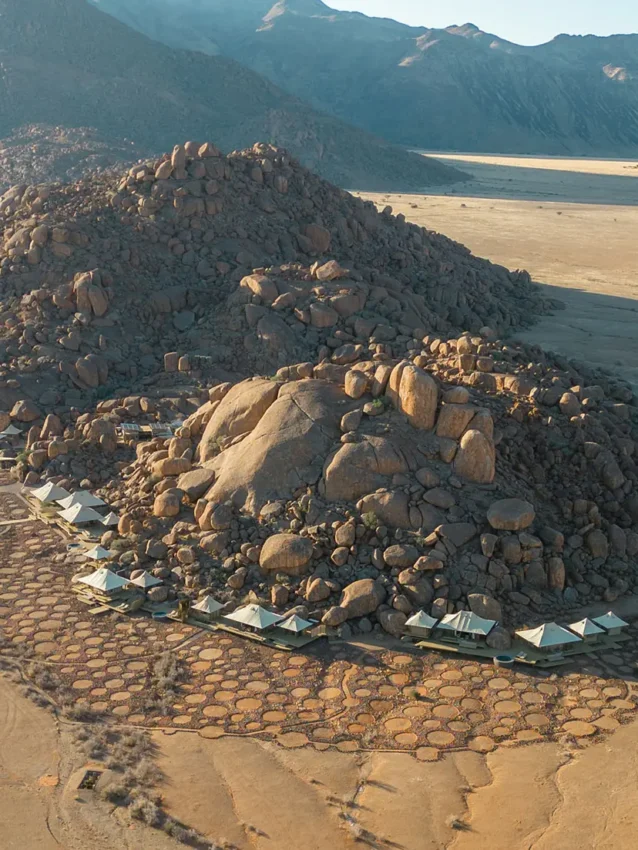
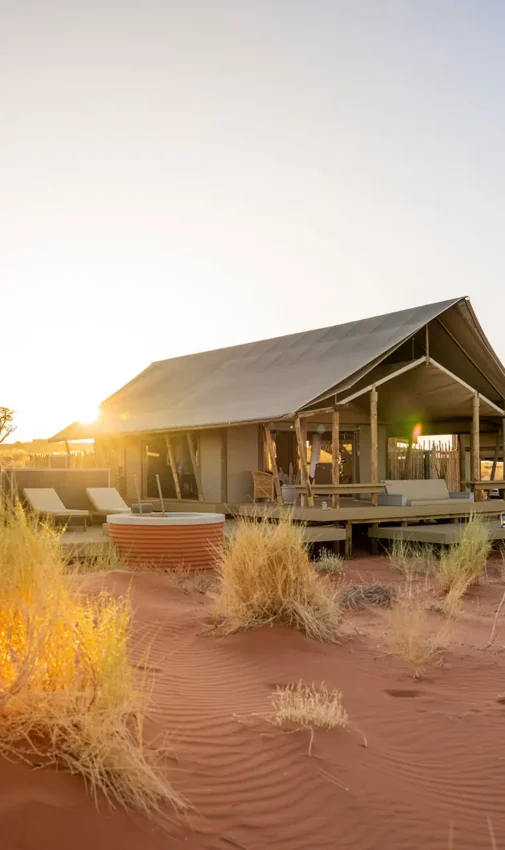
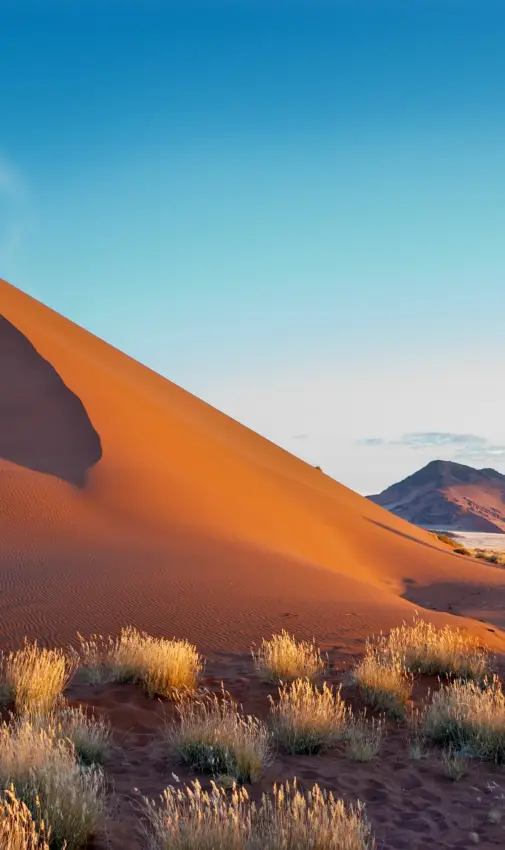
Five tented suites stand on raised wooden platforms, canvas stretched over timber frames and furnished plainly with four-poster beds under mosquito nets, a dressing table and a wooden storage chest. On three sides the canvas walls roll up, so the plains and the morning light come into the room instead of staying outside it. Each suite has its own bathroom and a private veranda, with access to a plunge pool, some private, some shared between neighbouring tents. The tents face east and catch the sunrise straight on, the first colour spreading across the gravel flats and up the granite behind camp.
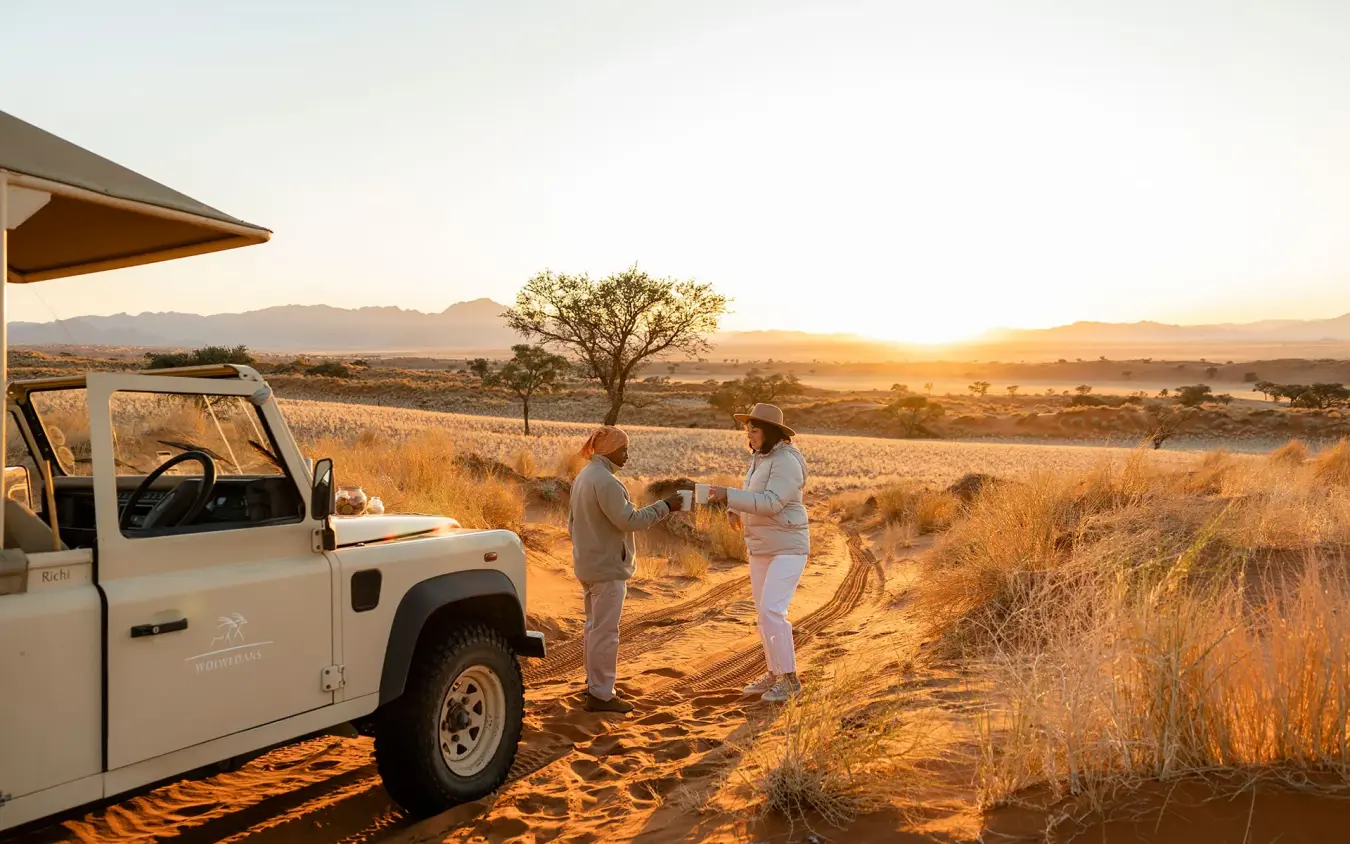
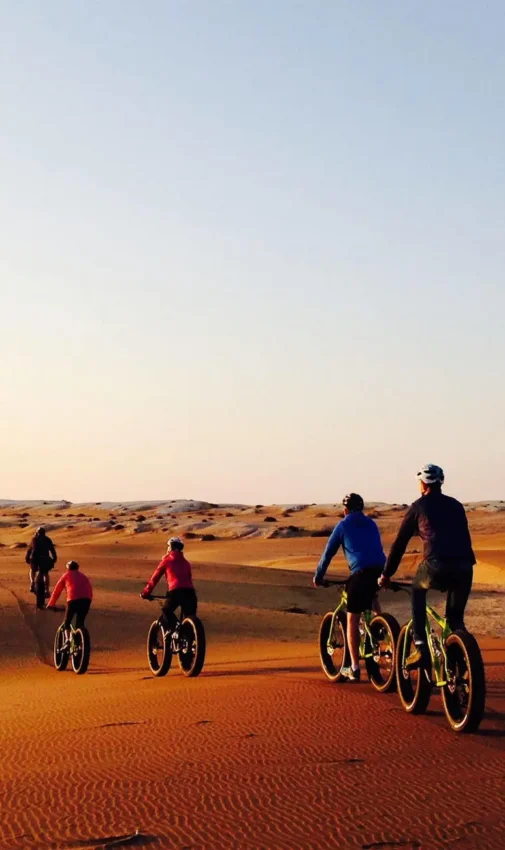
Because NamibRand is a private reserve and not a national park, walking safaris and off-track e-biking belong here in ways they never could inside Namib-Naukluft next door. The wildlife is desert-adapted rather than dense. Oryx and springbok move across the plains, while Hartmann’s mountain zebra, kudu and giraffe range more widely. Klipspringer and baboon work the rocks around camp, with leopard seen among them now and then. More than 150 bird species have been recorded across the reserve. Sightings come slowly here, on foot, not from a vehicle chasing a radio call.
Klipspringer and baboon work the rocks around camp, with leopard seen among them now and then.
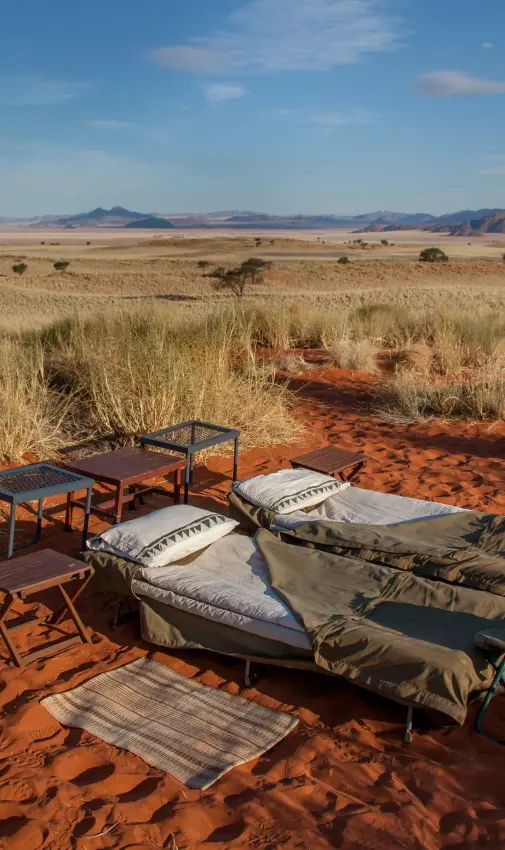
Solar panels run the camp, and a visit to the Wolwedans Village shows how that system works and where the reserve’s conservation funding goes. NamibRand carries Dark Sky Reserve status, and once the fire burns down the stars come out unusually dense, so stargazing without a telescope is built into the stay. Hot-air balloon flights and scenic flights over the Namib dunes and coastline can be arranged for a wider view. And for those who want the desert with nothing between them and it, a night sleeping out under open sky is there for the asking.
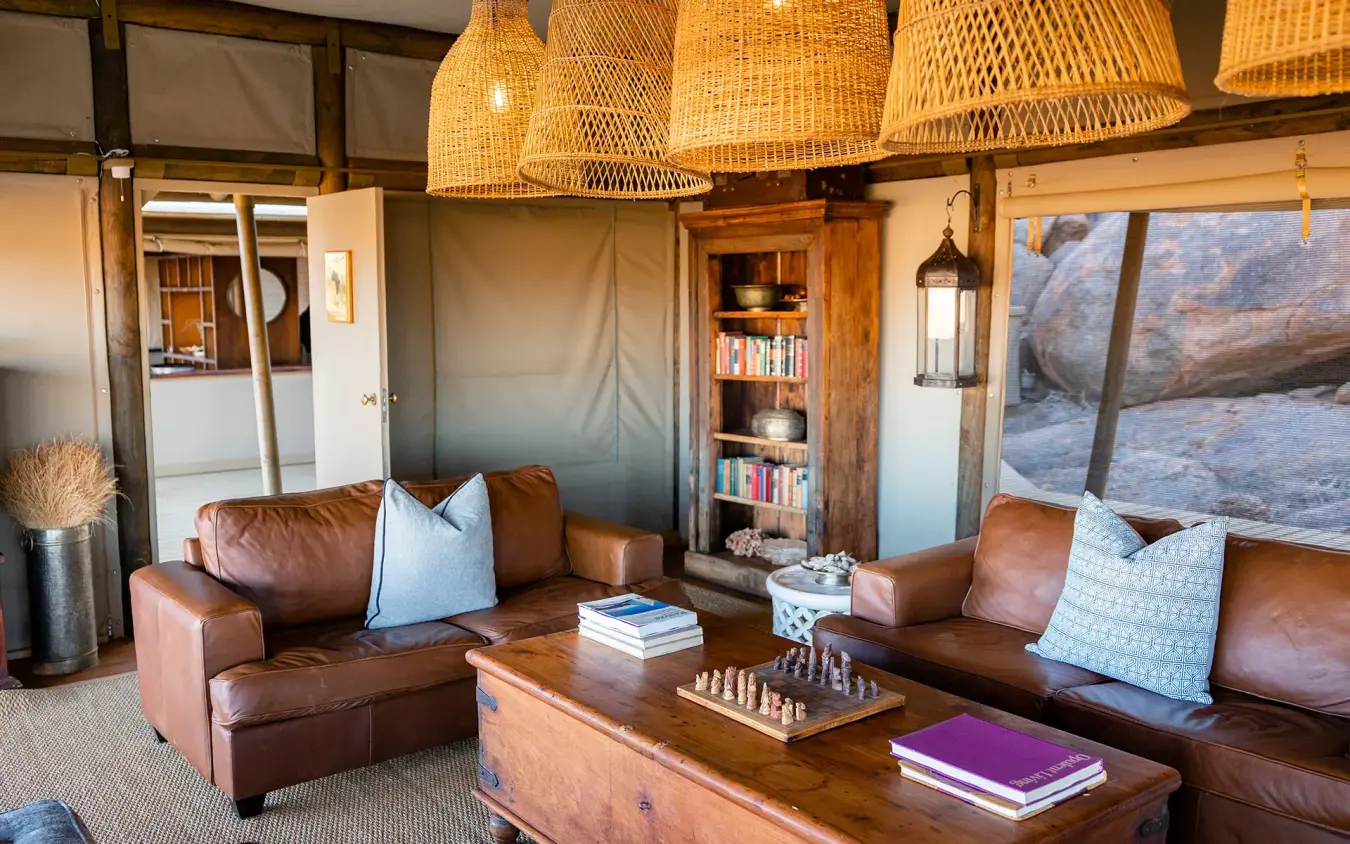
Meals are taken together at a lantern-lit table in the dining tent, or out on the deck when the weather allows, breakfast served in the morning sun and dinner paired with South African and Namibian wines, some of what reaches the table grown in Wolwedans’ own gardens. With ten guests at most and a small team looking after them, mealtimes move around the day’s walking and driving instead of the other way round. Evenings settle around the open fireplace, where the only competing sound is the wind over the plains and, some nights, a jackal calling out on the flats.