Camp

Wolwedans Dune Camp

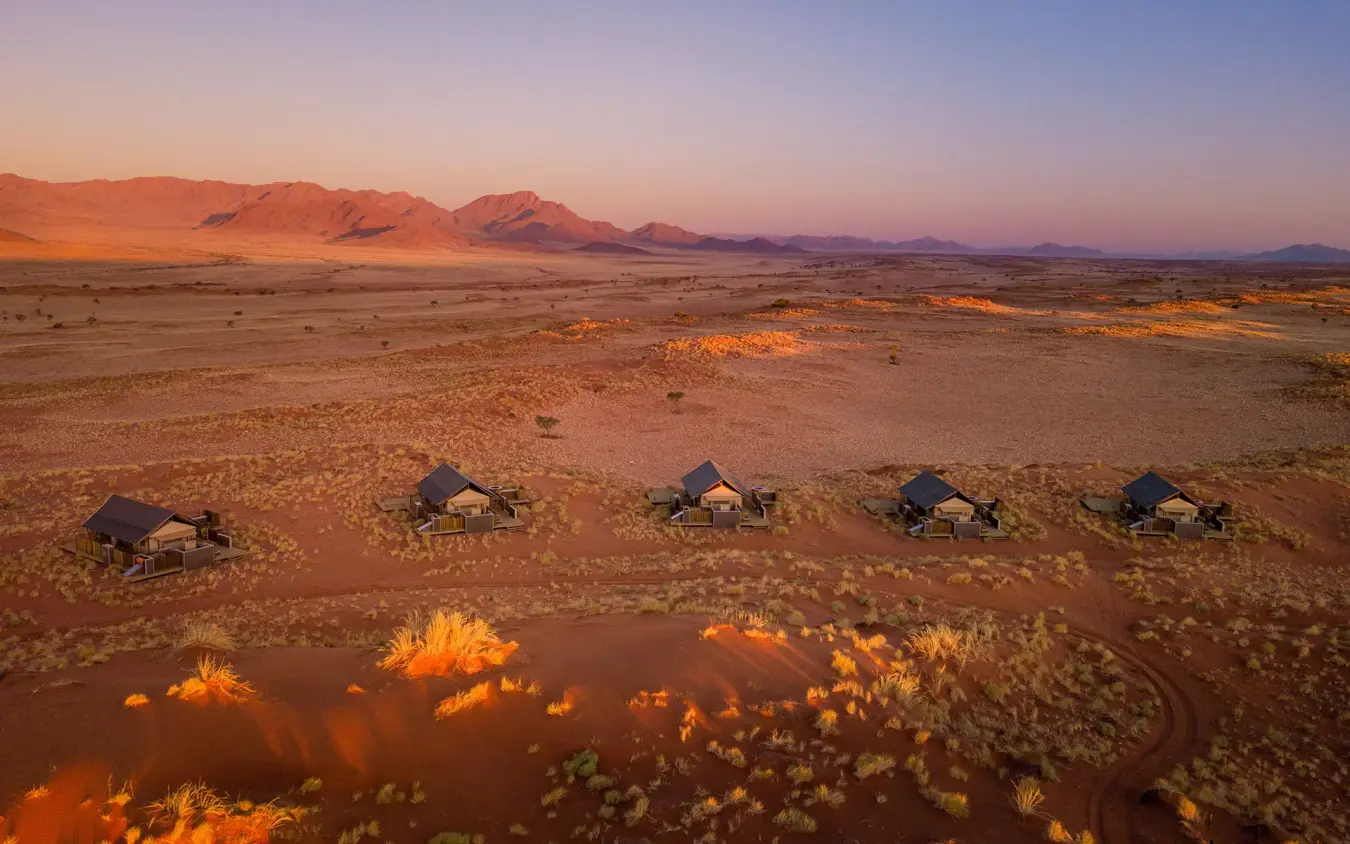
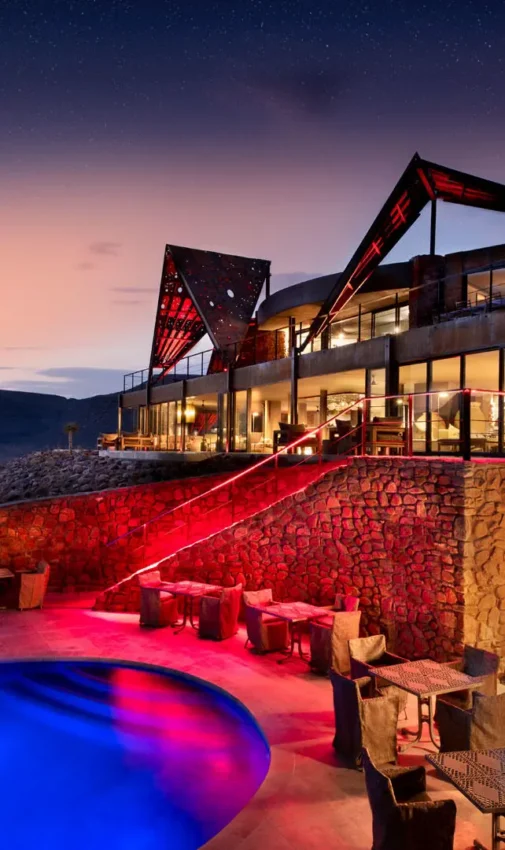
A six-tented camp on a vegetated dune in Namibia’s NamibRand Nature Reserve, facing red dunes, gravel plains and the distant Nubib Mountains.
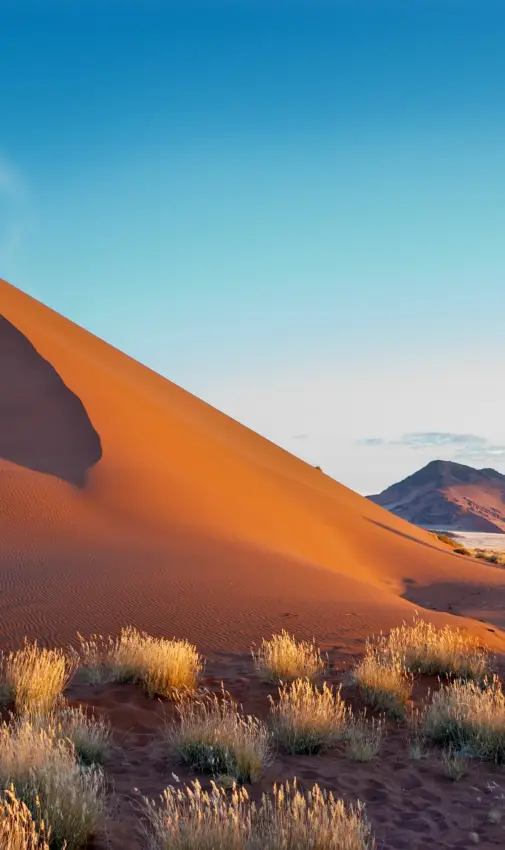
Country: Namibia
Location: NamibRand Private Reserve
Number of rooms: 8

A camp light enough to leave no trace

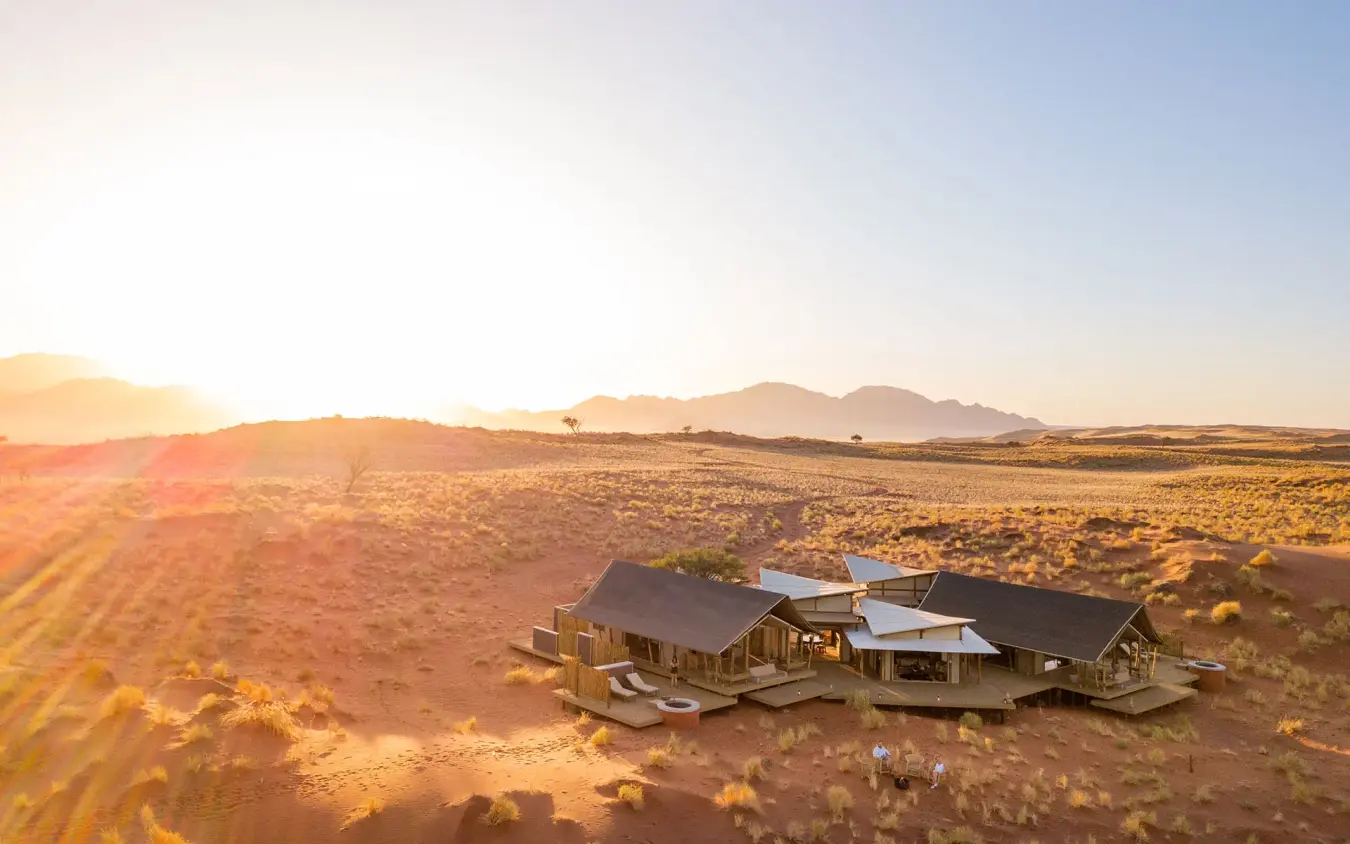
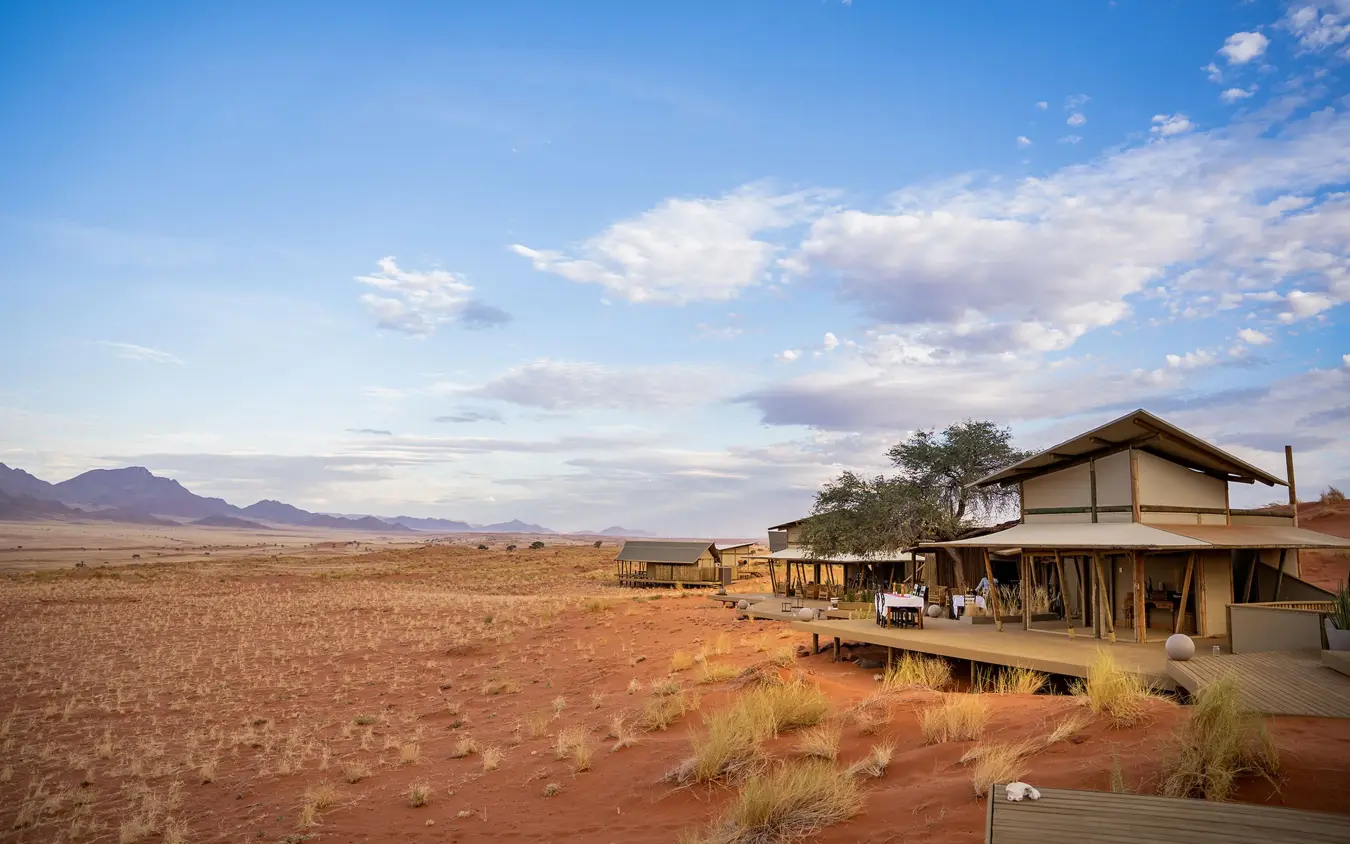
Wolwedans Dune Camp sits on the edge of a vegetated dune in the NamibRand Nature Reserve, a private wilderness in southwestern Namibia, south of Sossusvlei, where the land gives way to nothing but space and silence. Six tented rooms and a two-bedroom family suite look out across red dunes and gravel plains toward the reserve’s own emptiness. Sossusvlei’s famous dunes lie north, too far for a practical day trip, so the camp turns its back on them and faces the other way.

This is not big-five country, and the camp does not pretend otherwise

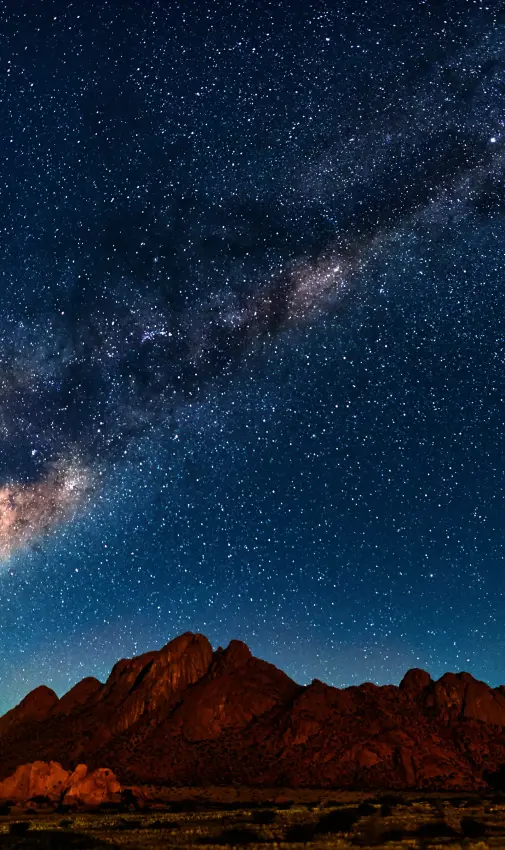
The nights here are close to unlit, as you would expect in a recognised Dark Sky Reserve, and the Milky Way reads as a solid band overhead, stargazing that needs nothing more than a blanket and a flat patch of sand. Below the dune face, oryx and springbok move across the plains, joined at times by zebra and ostrich, while cheetah and leopard have returned as the habitat corridors reopened. This is not big-five country, and the camp does not pretend otherwise. The draw is the desert itself, the shifting light on the dune faces at dawn and dusk, and a quiet deep enough to hear wind moving sand.

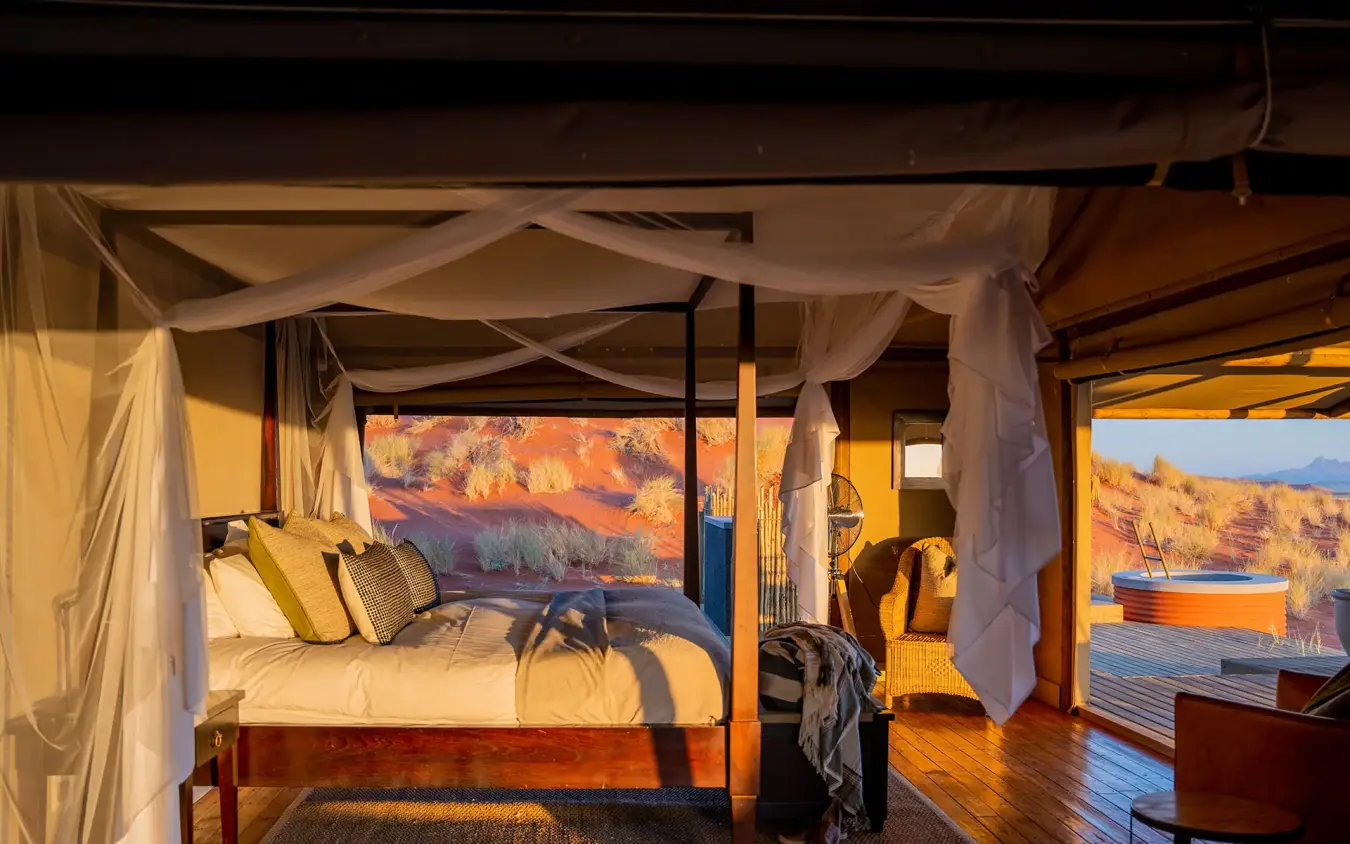
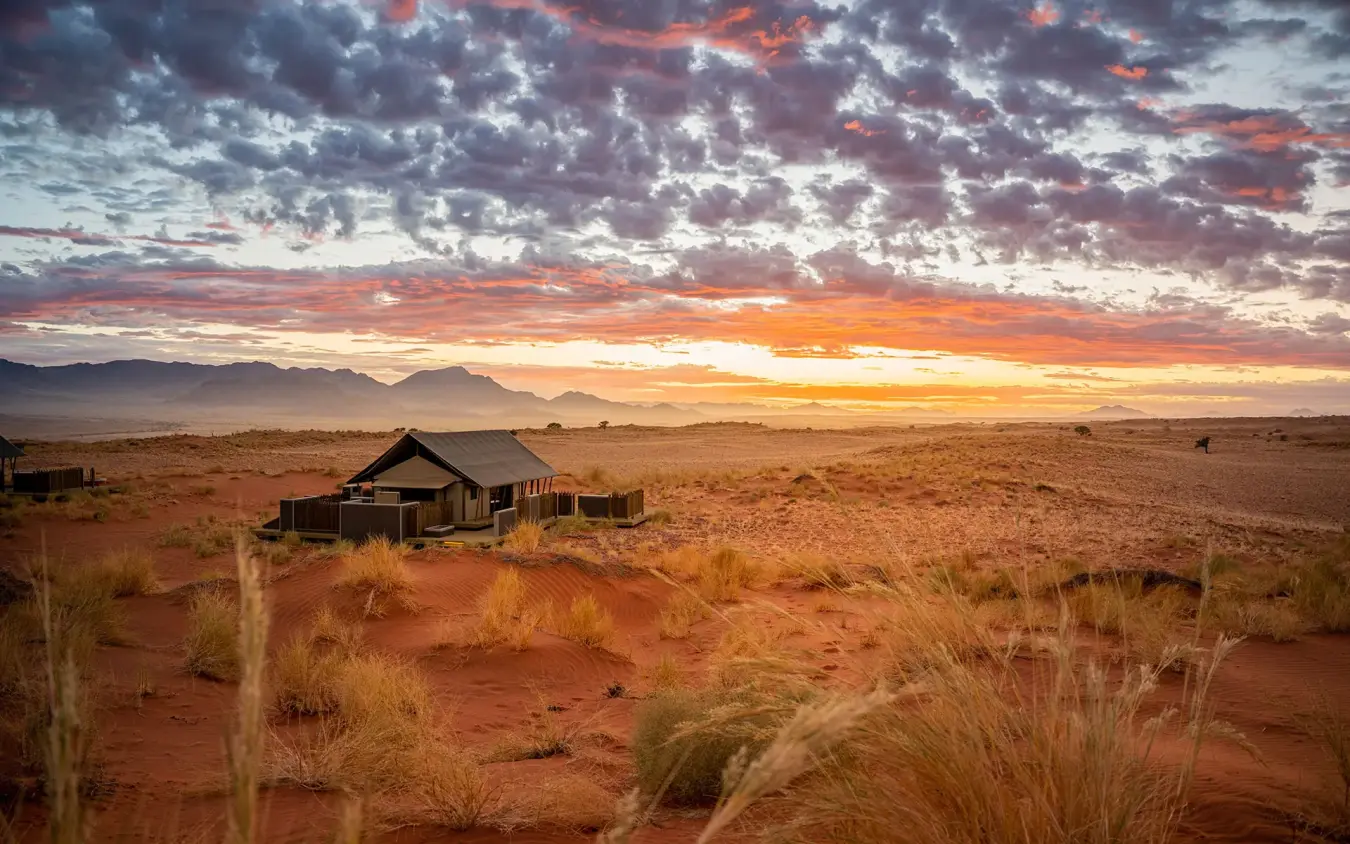
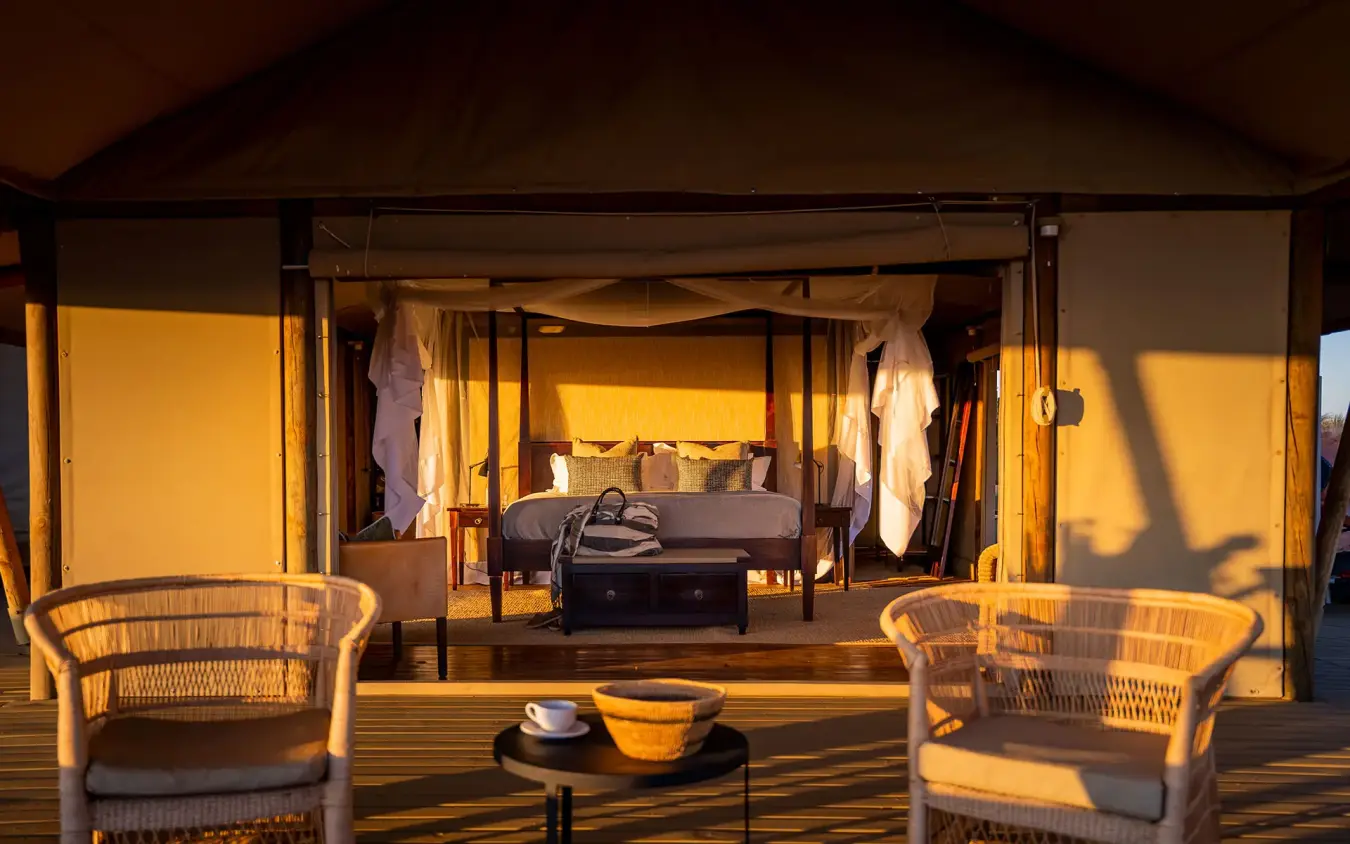
Bedroom with open doors overlooking desert landscape at sunset, Wolwedans Dune Camp, NamibRand Private Reserve, Namibia
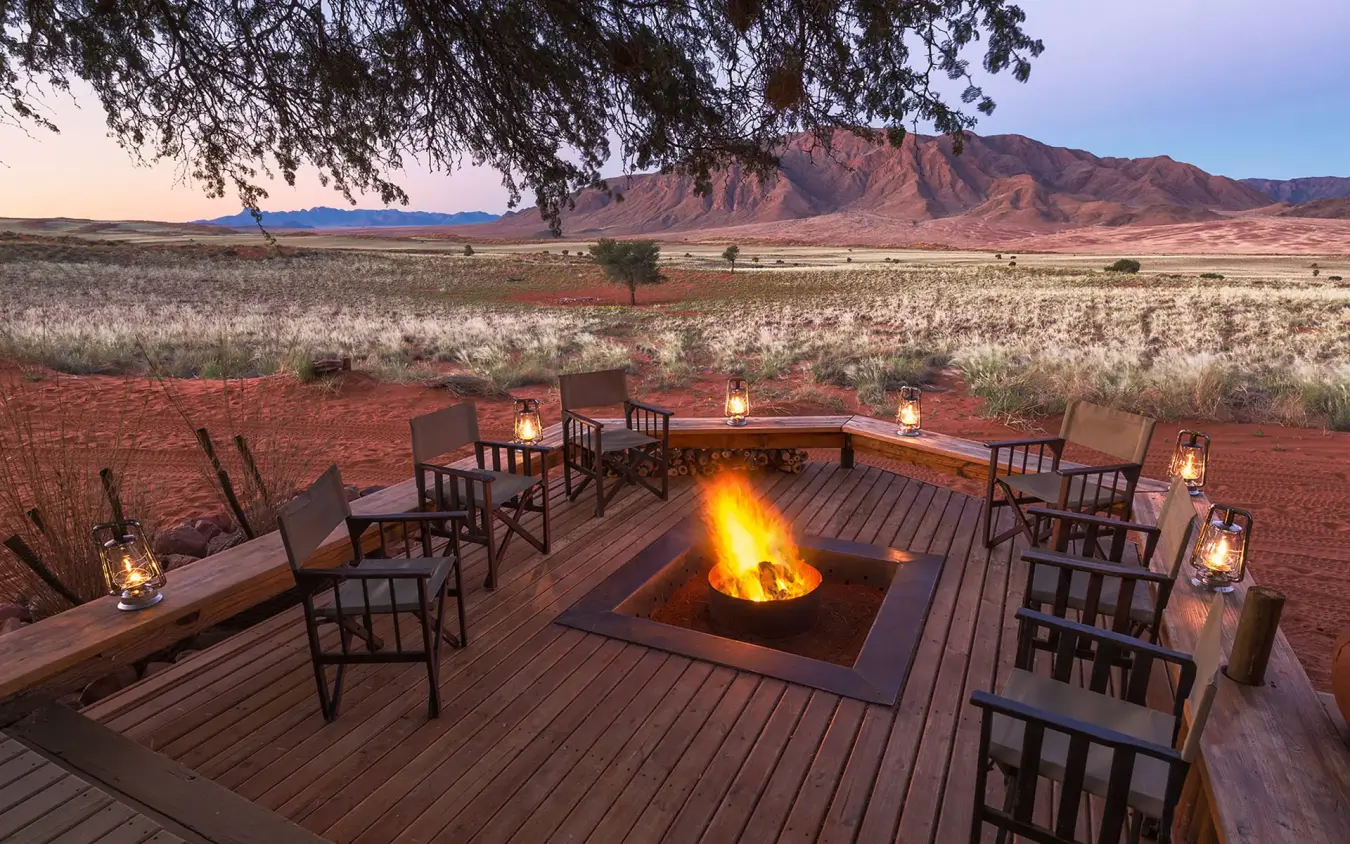
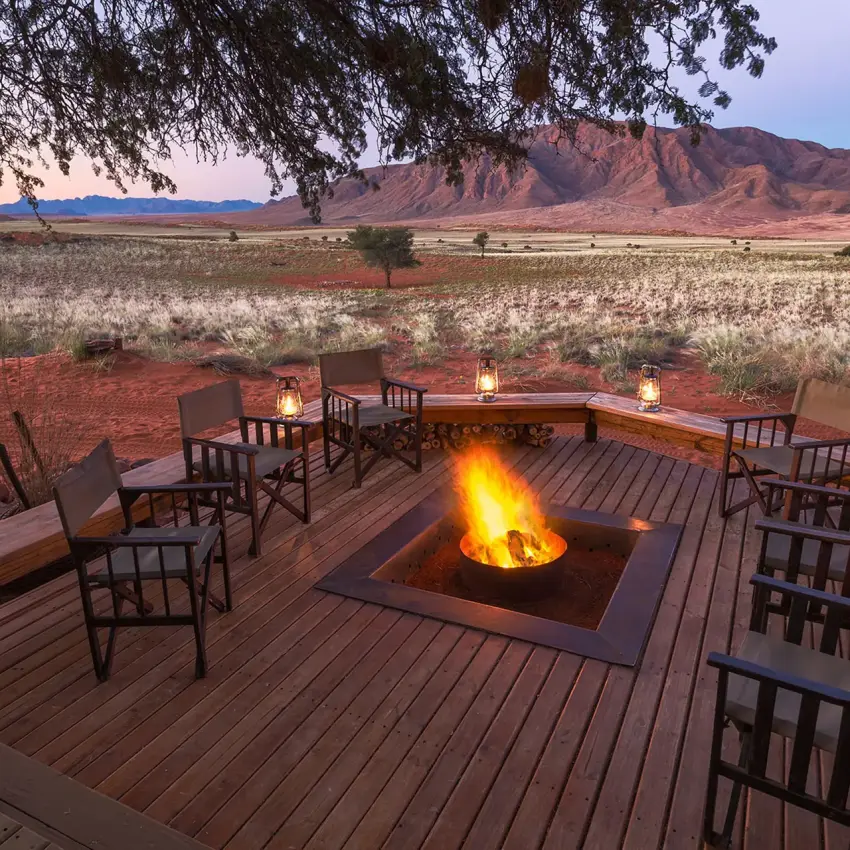
Evening fire pit with seating overlooking desert landscape, Wolwedans Dune Camp, NamibRand Private Reserve, Namibia

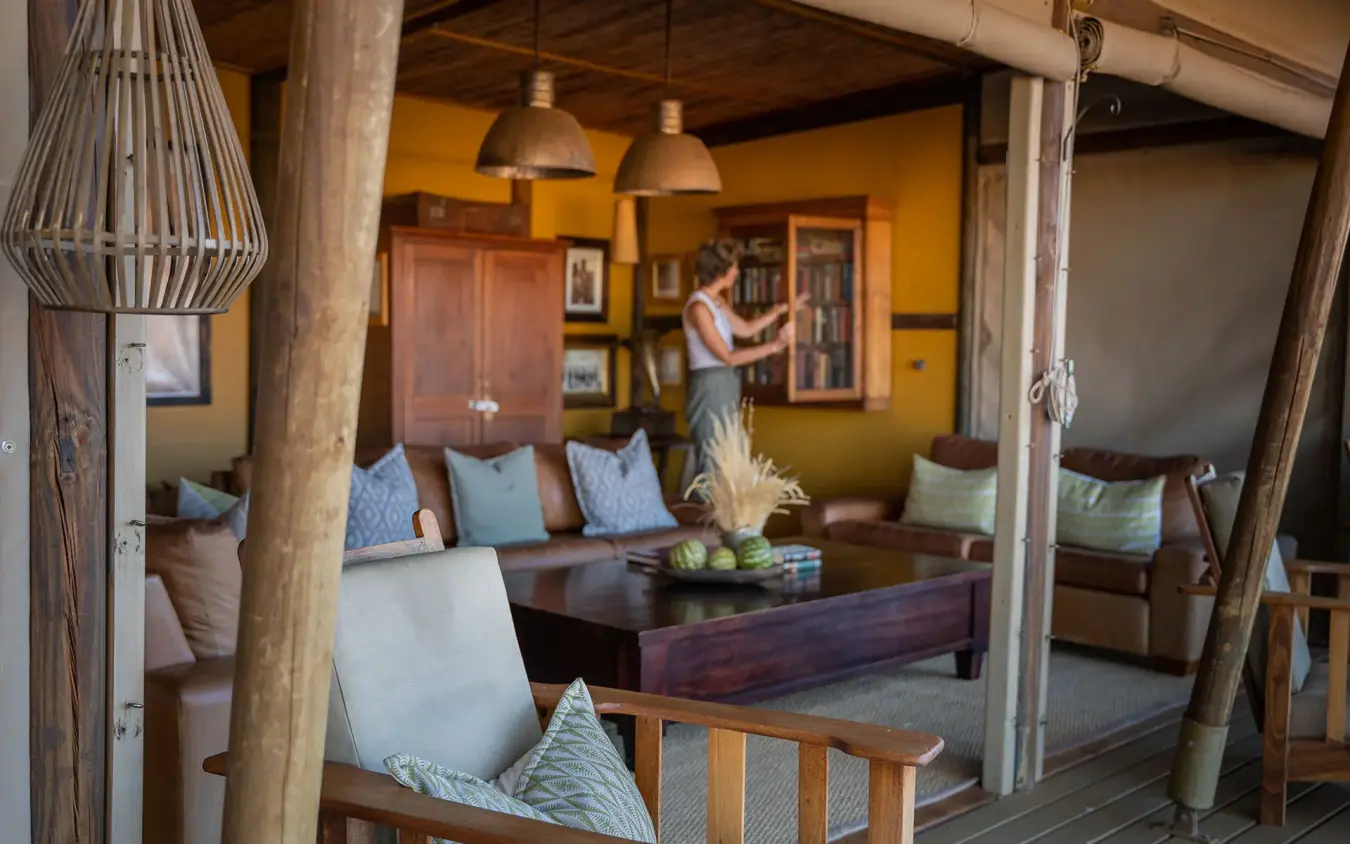
Albi Brückner founded Wolwedans in 1995 with his son Stephan, buying up former livestock farms across the NamibRand and pulling down their fences so that desert-adapted wildlife could move freely again. Stephan runs the collection now, one that built its reputation on sustainability long before the industry made a standard claim of it. That thinking shows in the fabric of the place: Dune Camp is wood and canvas on raised platforms, solar-powered, with no air conditioning and, by design, light enough to be dismantled and removed without a trace.

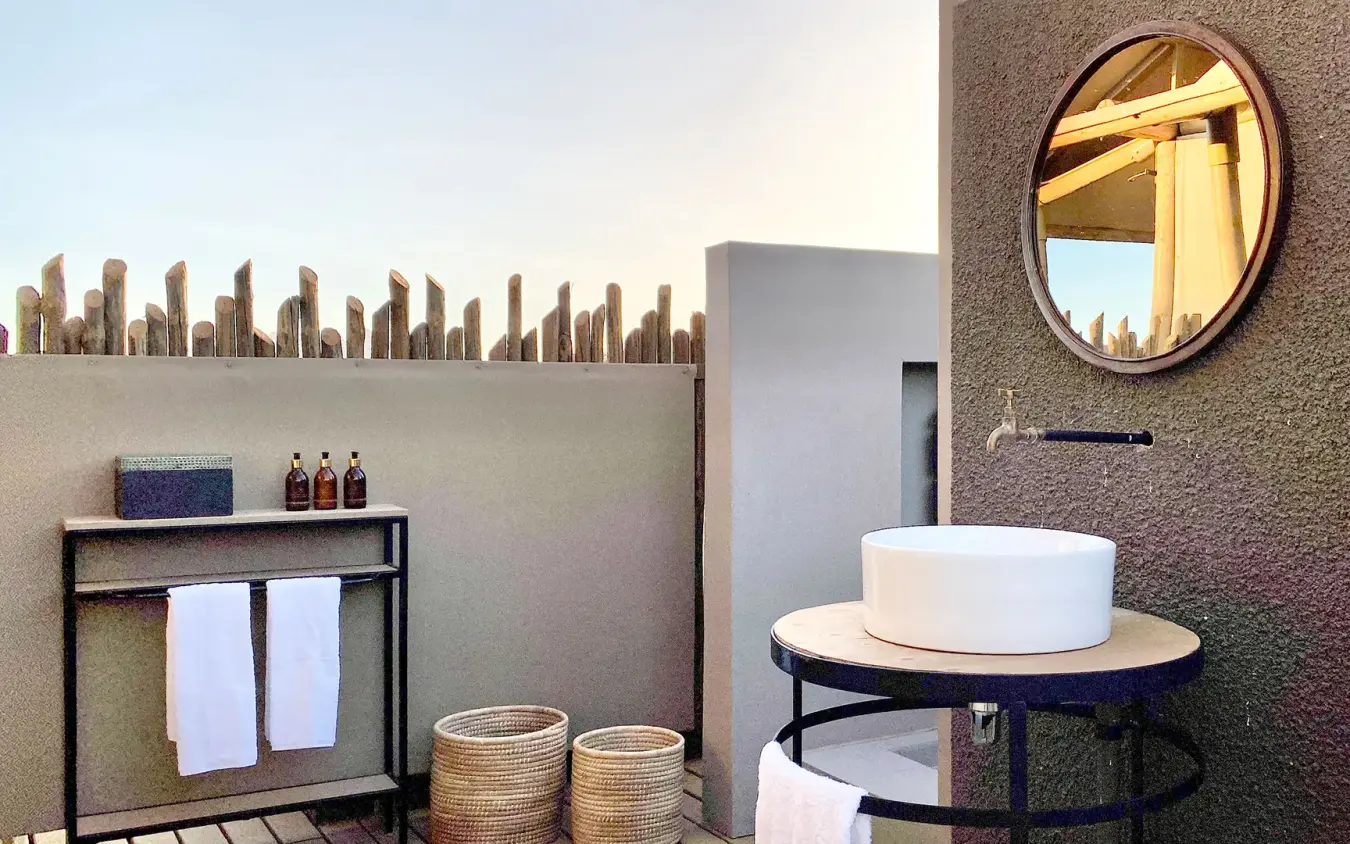
Bathrooms are en suite, with twin sinks, a flush toilet and a shower

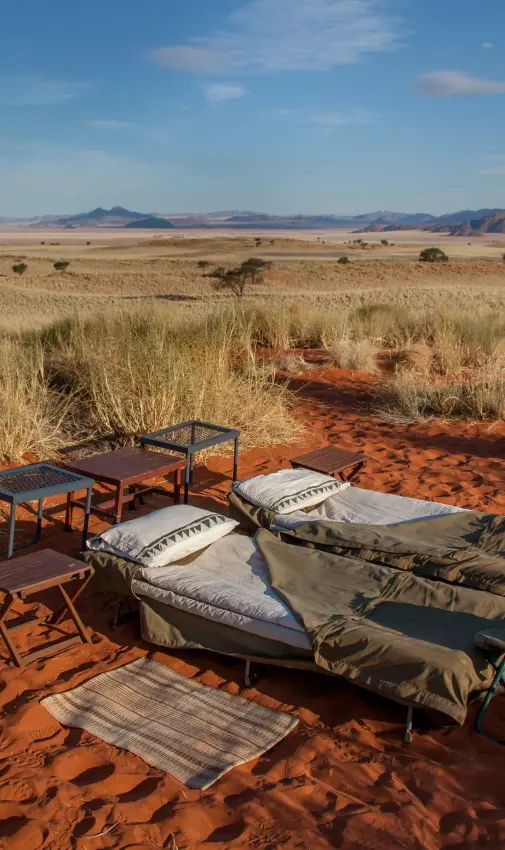
Each of the six tented rooms stands on its own wooden deck behind canvas blinds that roll up to the desert air or drop against the cold. Bathrooms are en suite, with twin sinks, a flush toilet and a shower. For those who would rather sleep under open sky than canvas, a designated sleep-out setup makes it possible, while the two-bedroom family suite sits a short walk from the main building and keeps its own lounge for a family or two couples travelling together.

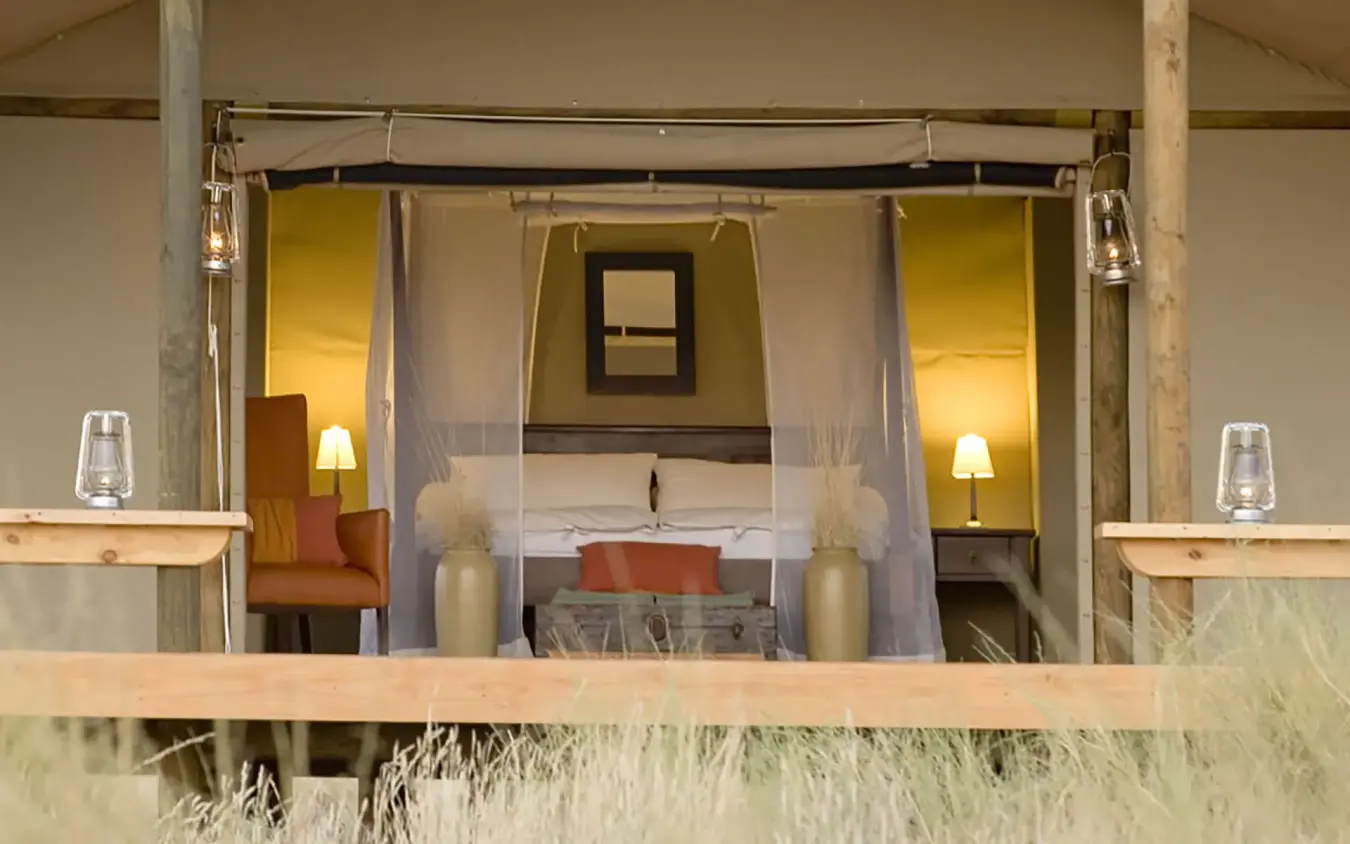
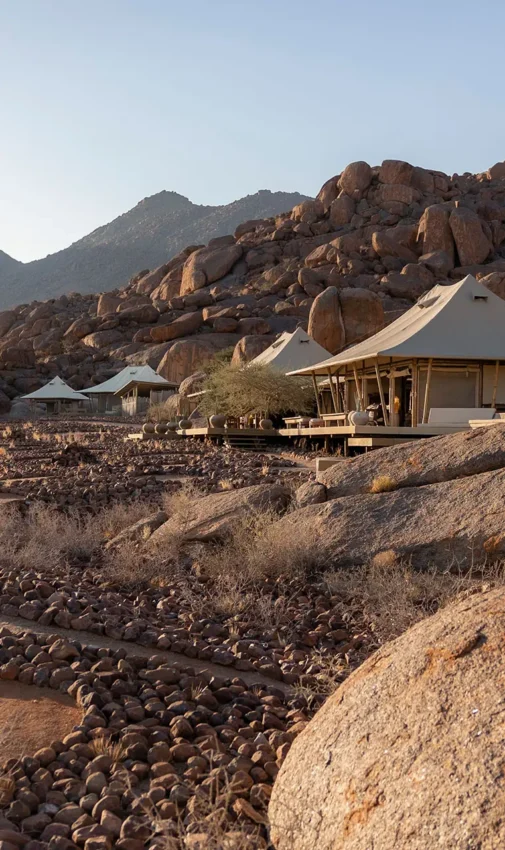
Canvas tent bedroom with wooden deck and desert sunset light, Wolwedans Dune Camp, NamibRand Private Reserve, Namibia 01

accommodation

Six Tented Rooms Plus Family Suite

Six tented rooms on raised wooden decks, plus one two-bedroom family suite a short walk from the main building. Each room has an en-suite bathroom with twin sinks, flush toilet and shower, canvas blinds, and a private deck; some decks are large enough for the bed to be moved outside for sleeping under the stars.

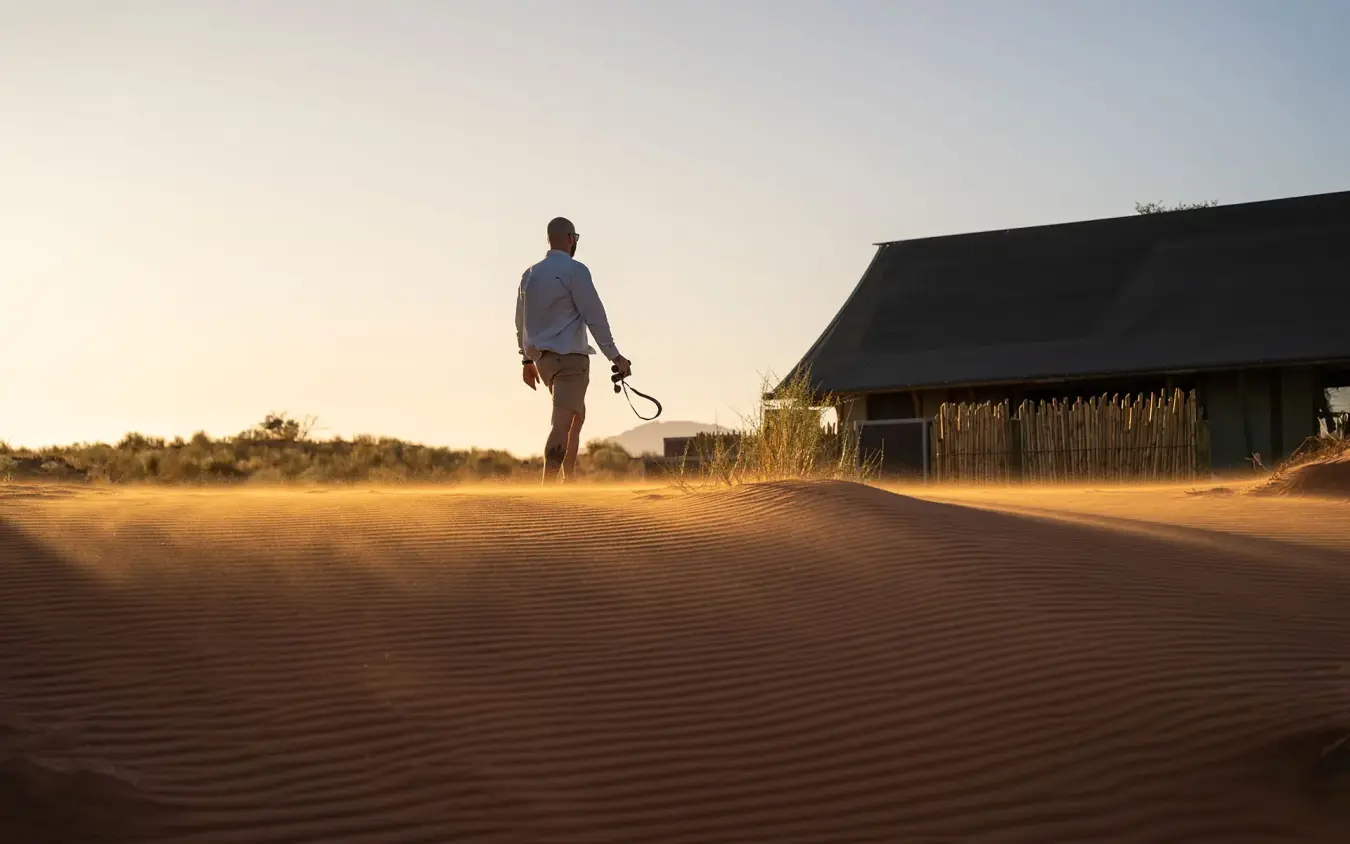
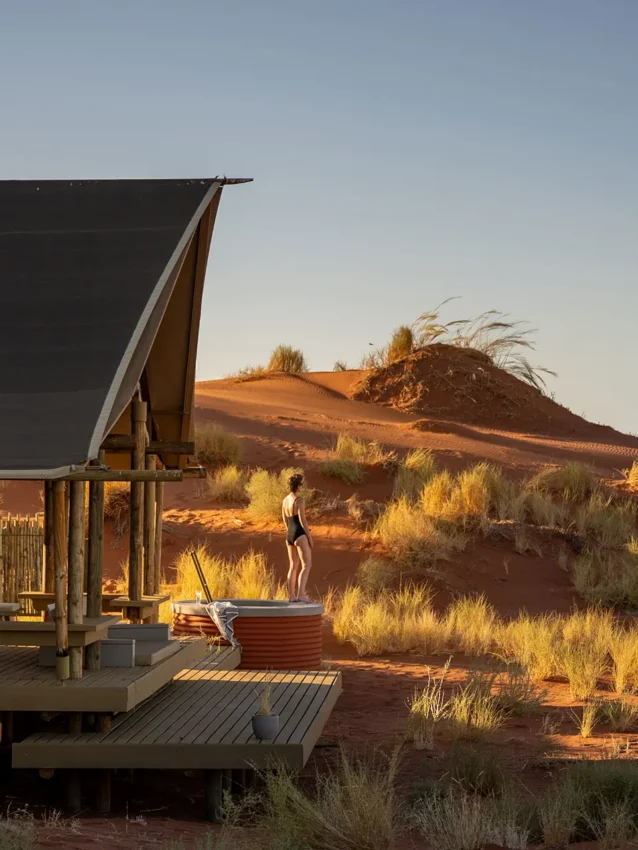
Guest walking across red sand dunes near lodge building, Wolwedans Dune Camp, NamibRand Private Reserve, Namibia 02

activities

Desert Drives, Walks, and Flights

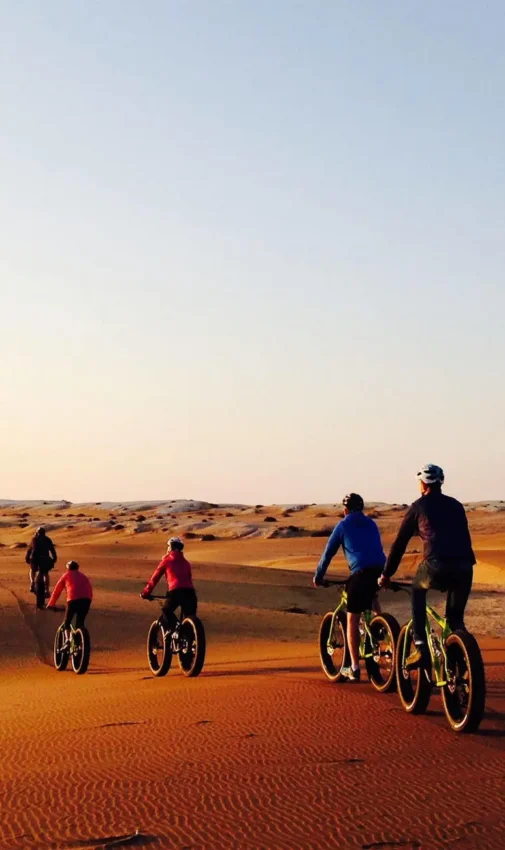
Guided scenic drives, San-led walking safaris, horse riding and electric mountain biking cover the NamibRand Nature Reserve on the ground; hot air ballooning and scenic flights cover it from above. A signature solitude experience and a "Heart & Home" village visit round out a stay built around silence, dark skies and desert ecology rather than conventional game drives.

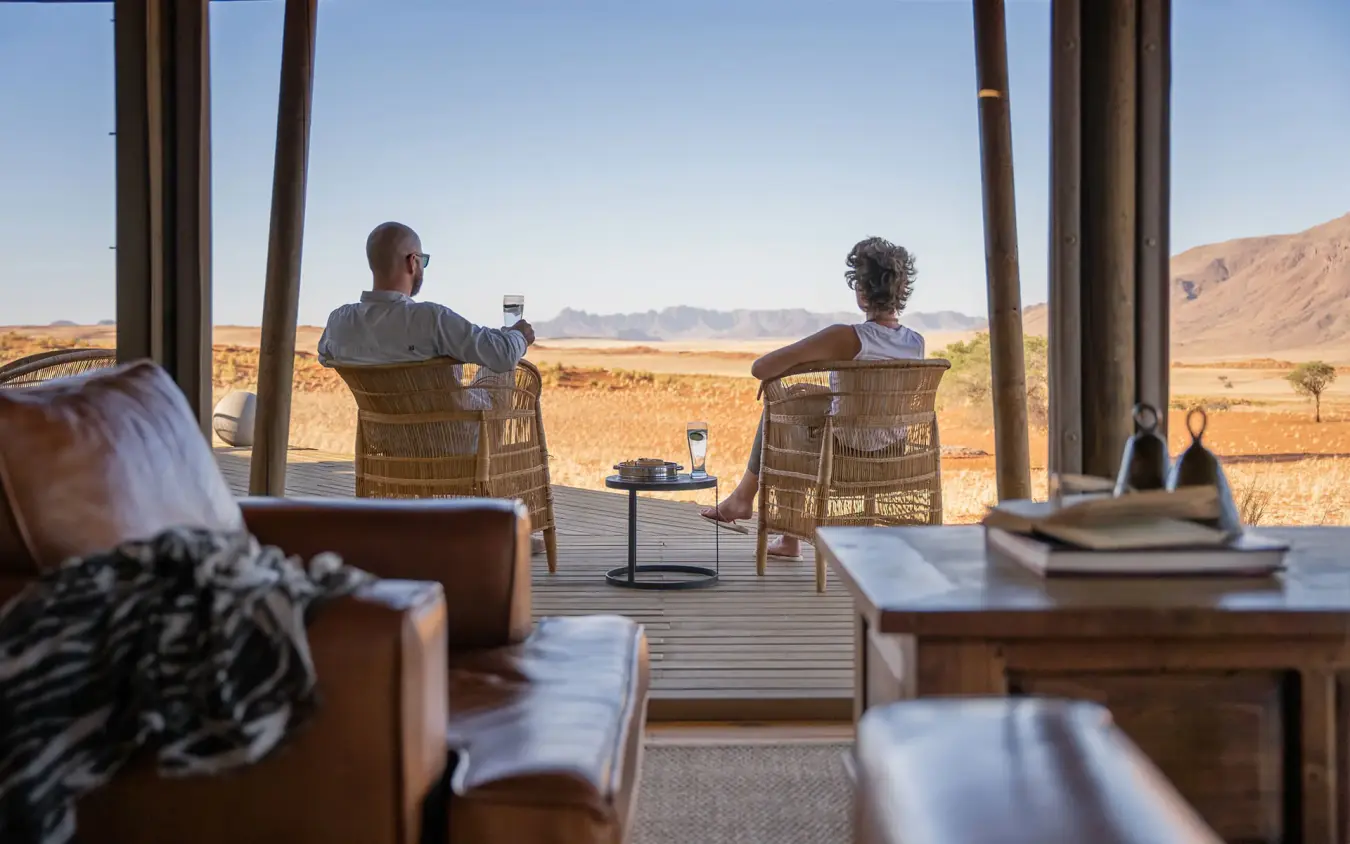
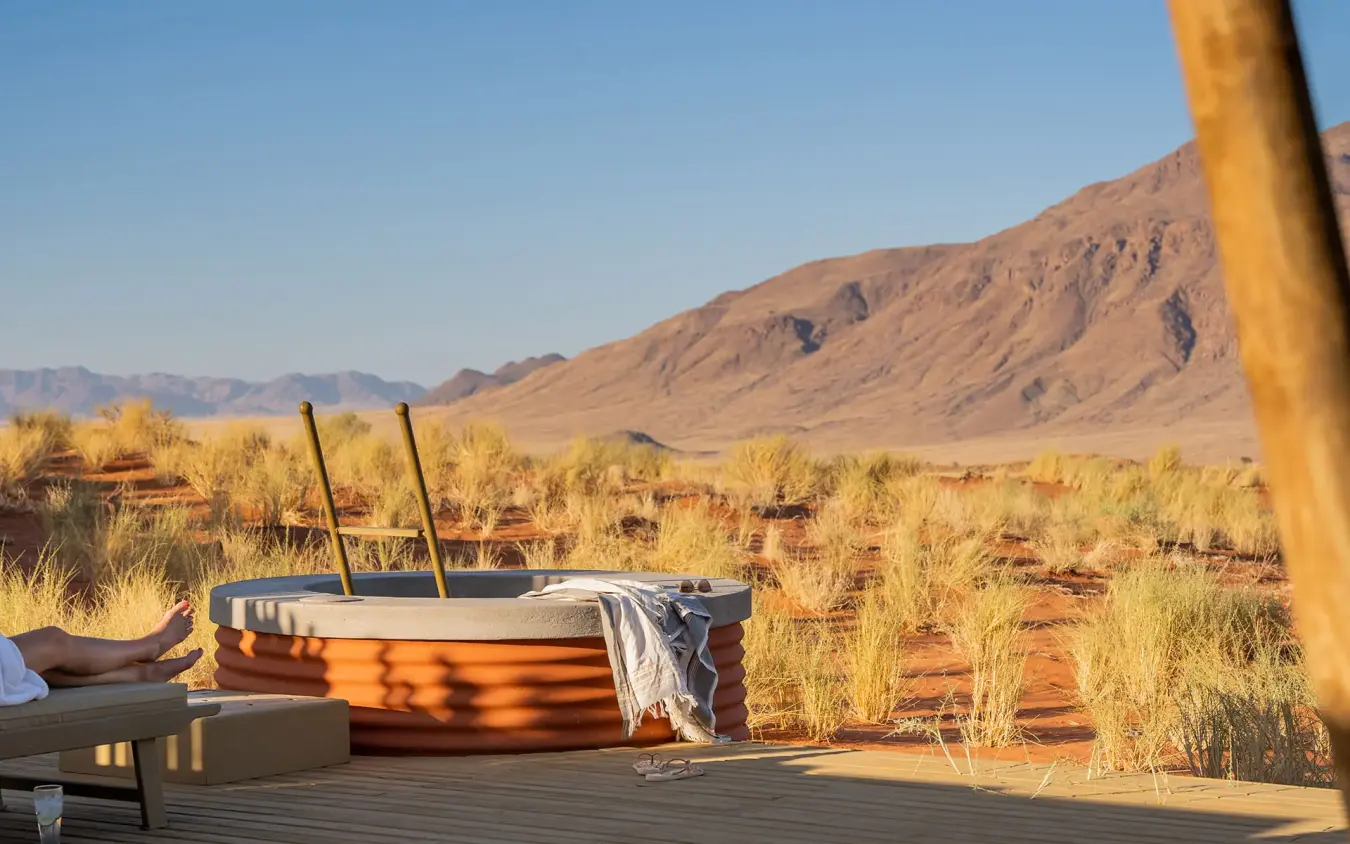
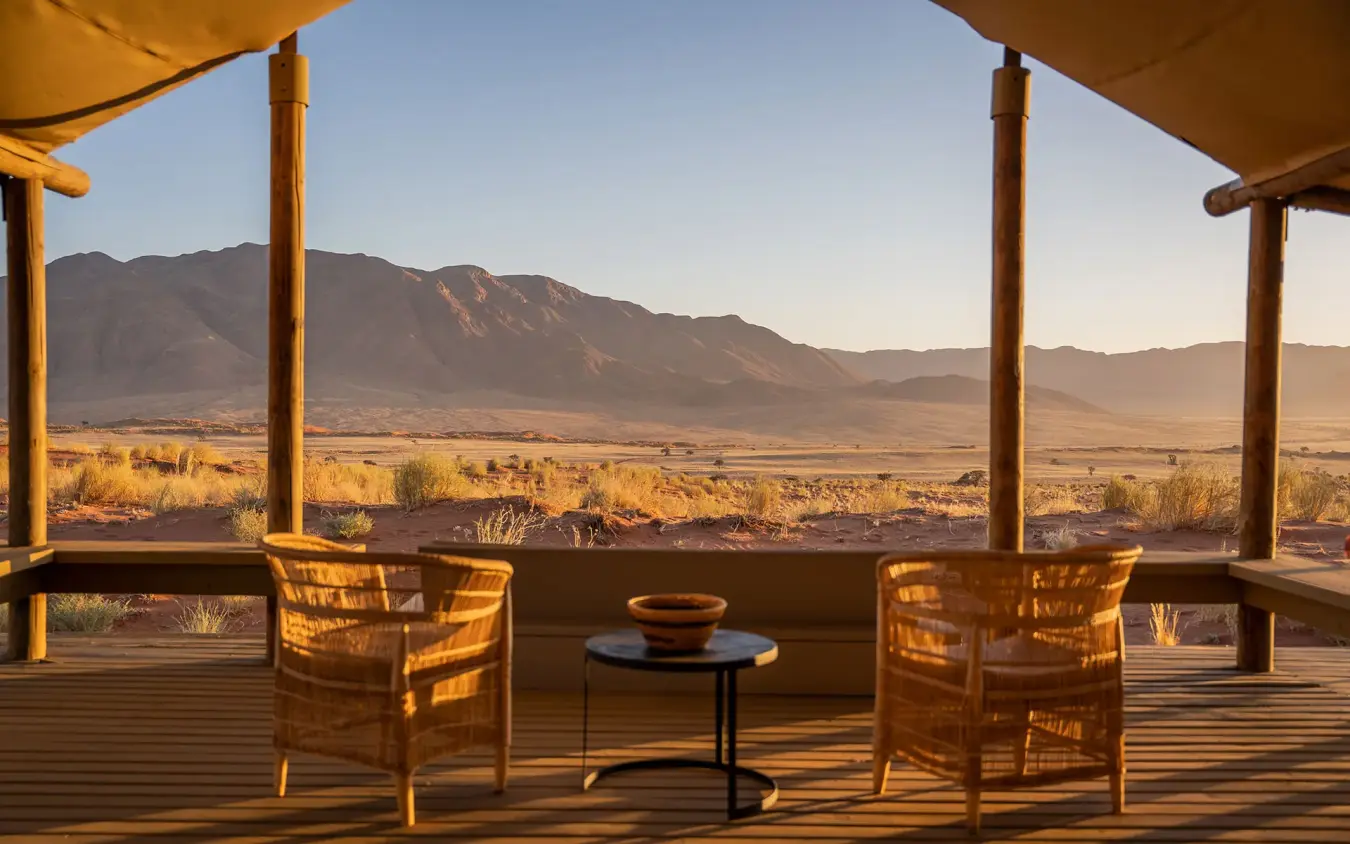
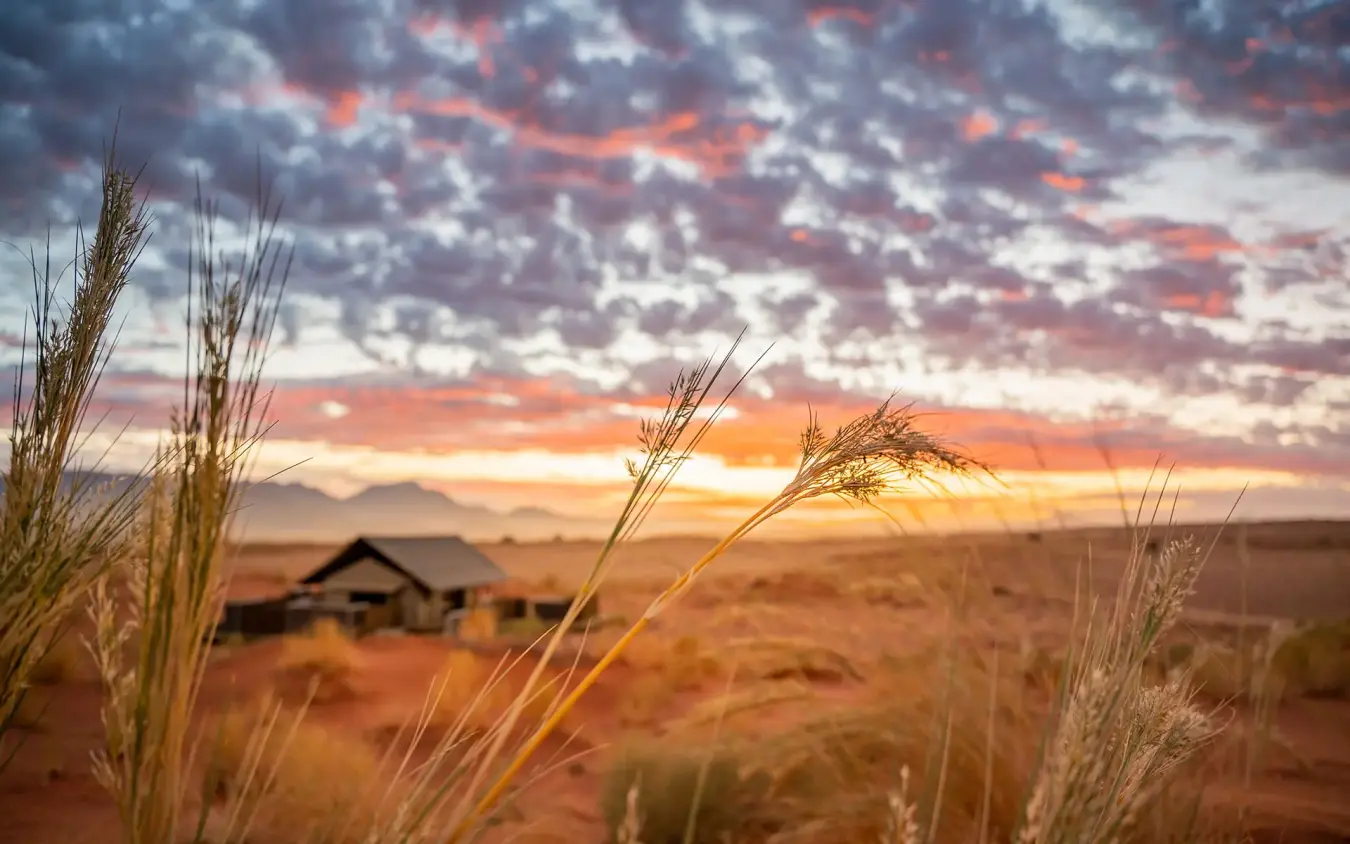
Wooden deck overlooking desert landscape at sunset, Wolwedans Dune Camp, NamibRand Private Reserve, Namibia 03

conservation

250 Trained Hospitality Professionals

The Wolwedans Foundation has trained more than 250 Namibians in hospitality, and the reserve contributes sightings data to the Southern African Avi-Faunal Atlas and the Large Carnivore Atlas of Namibia. Local outreach includes predator-livestock management with neighbouring farms, and conservation levies help fund the running of the NamibRand Nature Reserve.

ready to get started?

Get in touch and let’s start the conversation. An initial consultation helps us understand what you’re looking for, whether that’s specific experiences, luxury touches, or marking a special occasion, and from there we’ll guide you through what’s possible so you can decide if we’re the right fit.

frequently asked questions

Most people fly in. You land at Windhoek's Hosea Kutako International, then take a light aircraft from Eros airport, about an hour to an hour and a half onto a reserve airstrip, followed by a short drive to camp. The alternative is a self-drive of around five hours from Windhoek, tar giving way to gravel for the last stretch.

We generally suggest flying, so the desert scenery arrives with you and you keep a full day for the reserve rather than the road. If you would like the flight on your own timings, we can arrange a private charter, typically a Cessna Caravan or Pilatus PC-12, direct onto the reserve airstrip. We will confirm the airstrip and transfer timings when we put the trip together.

The Namib Desert around the reserve is considered a malaria-free part of Namibia. It is simply too dry for the mosquitoes that carry malaria, so this is about as low as the risk gets anywhere on the continent.

Health guidance can still shift from year to year, so we suggest a quick word with a travel clinic or your doctor before you travel, especially if your wider trip also takes in the wetter north, along with the usual sensible precautions against bites.

Pack for a big daily temperature swing. Desert days are warm to hot, often into the thirties, while the nights turn cold, and in winter, from June to August, the temperature can drop below freezing after dark.

Layers work best: light, breathable clothes and a hat for the day, then a warm fleece or jacket, gloves and a beanie for early drives, and warm things to sleep in. The clear, dry winter nights are also the finest for the reserve's famous stars, so a warm layer earns its place twice over.

Wolwedans Dune Camp takes children from seven years old, and its two-bedroom family suite sleeps up to four adults and three children between seven and seventeen, with children's beds set off the main tents.

For families with children under seven, Wolwedans has an all-ages camp elsewhere on the reserve, which we are happy to suggest. Tell us the ages and we will match you to the right tent.

Dune Camp asks for a minimum of two nights, and you may arrive on any day. Two nights let the desert settle around you, which is really the point of coming.

There is no fixed circuit to rush through here, so an extra night simply buys more quiet, more time on the dune faces at dawn and dusk, and more of the night sky.

This is desert, not big-game country, and the camp does not pretend otherwise. Oryx and springbok cross the plains below the dune, with zebra, ostrich and the occasional cheetah or leopard, but the real draw is the desert itself, the light on the dunes and a quiet deep enough to hear the wind move sand.

At night the reserve's dark skies take over. As a recognised Dark Sky Reserve the stars read as a solid band overhead, and some decks are built so your bed can be moved outside to sleep beneath them. Come for the silence and the sky rather than a tally of animals.

rated five stars by our clients

other areas in namibia

Elephant with zebras and antelopes at waterhole 01

Etosha National Park

Rocky desert mountains silhouetted under starry night sky 02

Damaraland

Aerial view of desert dunes meeting coastal waves 03

Skeleton Coast

Portrait of a person wearing traditional African beaded jewelry 04

Kunene River

Golden sand dune at sunset with sparse desert vegetation 05

Sossusvlei

Cyclists riding across red sand dunes at sunset, Swakopmund, Namibia 06

Swakopmund

Aerial view of church and city at sunset 07

Windhoek

Elephant herd walking through dusty grassland with scattered trees, Zambezi Region, Namibia 08

Zambezi Region

Planning a journey together

our approach

remote, exclusive
& personal

Every journey starts with a conversation. We take the time to understand your vision before we start planning.

Whether by phone or in person, we work with you directly to shape something that is considered, personal, and expertly delivered.

get in touch
destinations ideas & inspiration our process about us contact us