Lodge

Tok Tokkie Trails

A three-day guided walk through Namibia’s NamibRand Private Reserve, with two nights on open-air beds beneath the Milky Way.

Country: Namibia
Location: Southern NamibRand Reserve, Namib Desert
Sleeps eight under the stars

Namib Dunes on Foot, Beds With No Roof

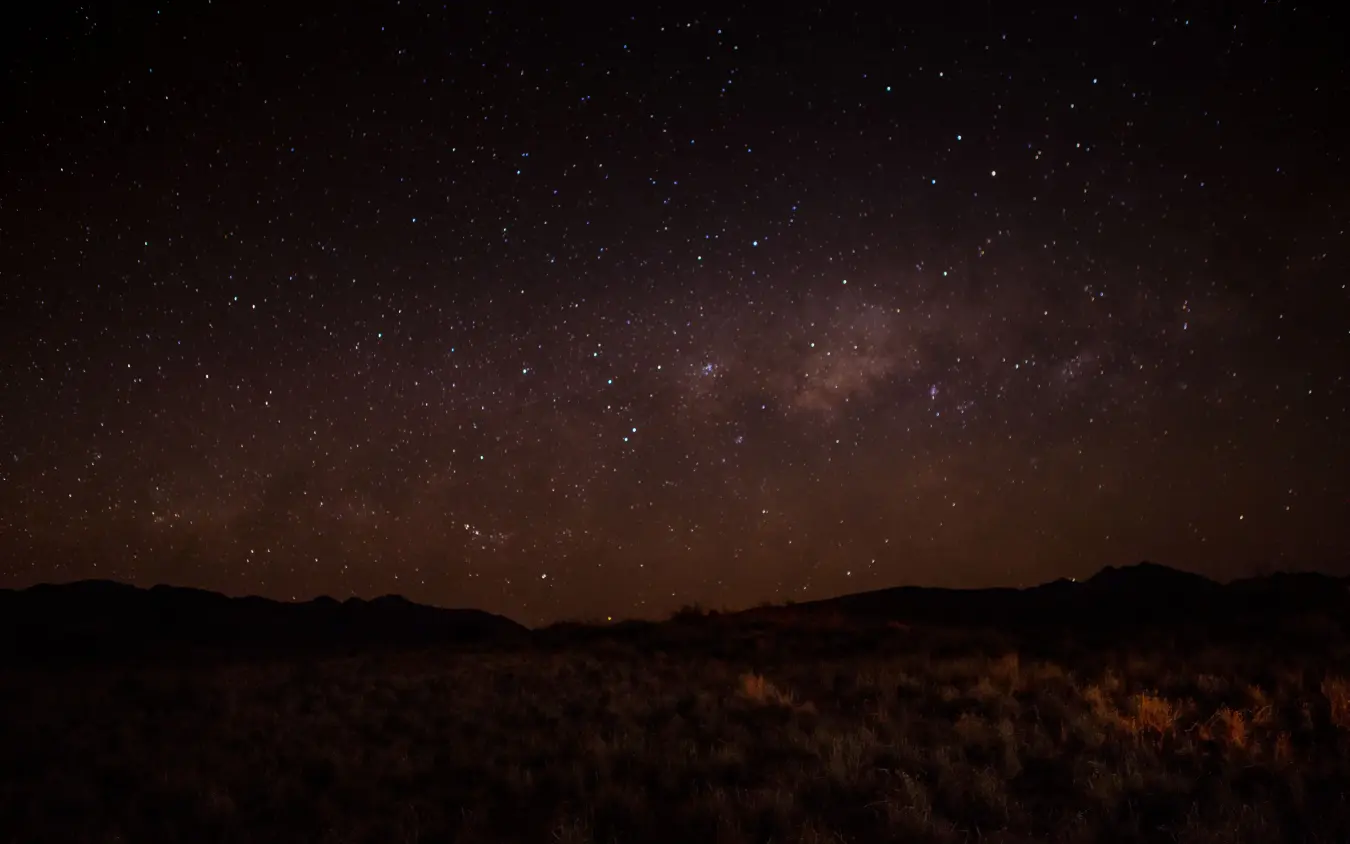
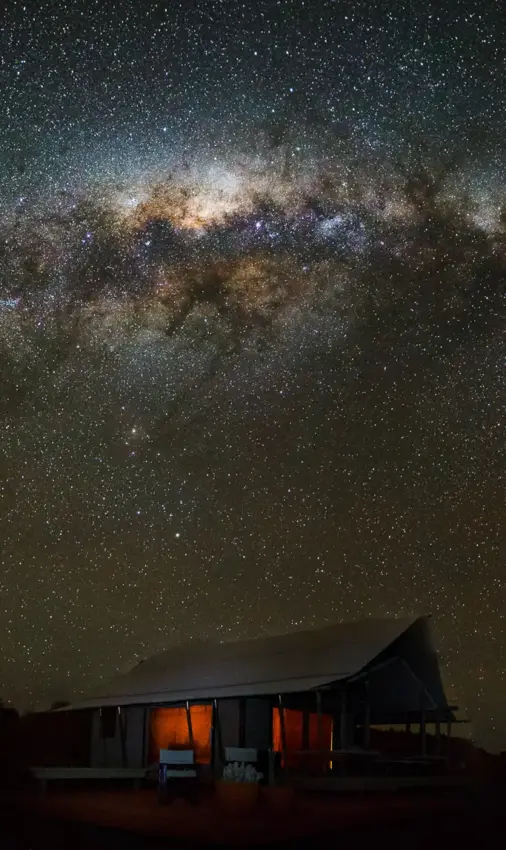
Each day on Tok Tokkie Trails ends at a cleared patch of Namib sand, where a stretcher bed is made up with a duvet and a bedside table set beside it. Overhead, there is the Milky Way where a roof would be. The walk crosses the dunes, gravel plains and inselbergs of Namibia’s NamibRand Private Reserve, roughly 22 kilometres over three days and two nights.

They secured one of five low-impact concessions in the reserve

Marc and Elinor Duerr founded the trail in 1997, having noticed how few walking routes Namibia then had. They secured one of five low-impact concessions in the reserve, then spent years refining the route guests walk today. It begins at an old farmhouse around midday, over a light lunch with the guide, and reaches the first camp as the afternoon cools and the heat lifts off the sand.

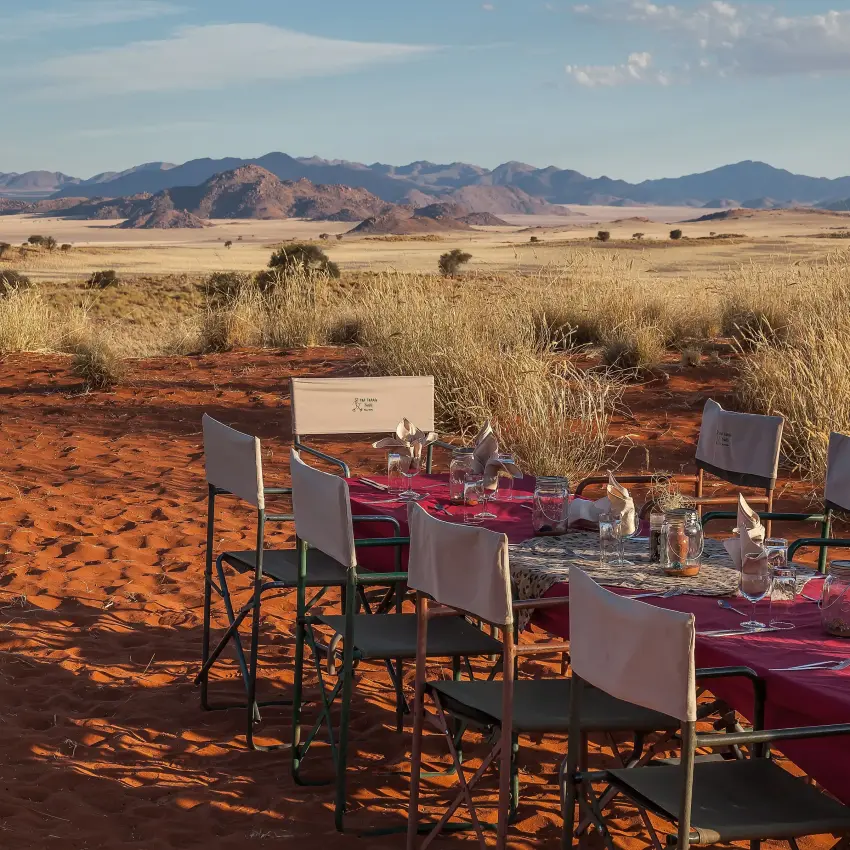
Outdoor dining table set in desert landscape with mountains, Tok Tokkie Trails, NamibRand Private Reserve, Namibia
Guides walking with guests across desert landscape, Tok Tokkie Trails, NamibRand Private Reserve, Namibia

Much of each day is spent looking down, at tracks left in the sand overnight and at how plants and geckos get by on so little water. Oryx, springbok, Hartmann’s mountain zebra and ostrich cross the plains, but a walking pace favours smaller things. It might be a barking gecko, or the tapping tok tokkie beetle that gives the trail its name.

Footsteps on gravel and wind across the dunes are the only sounds.

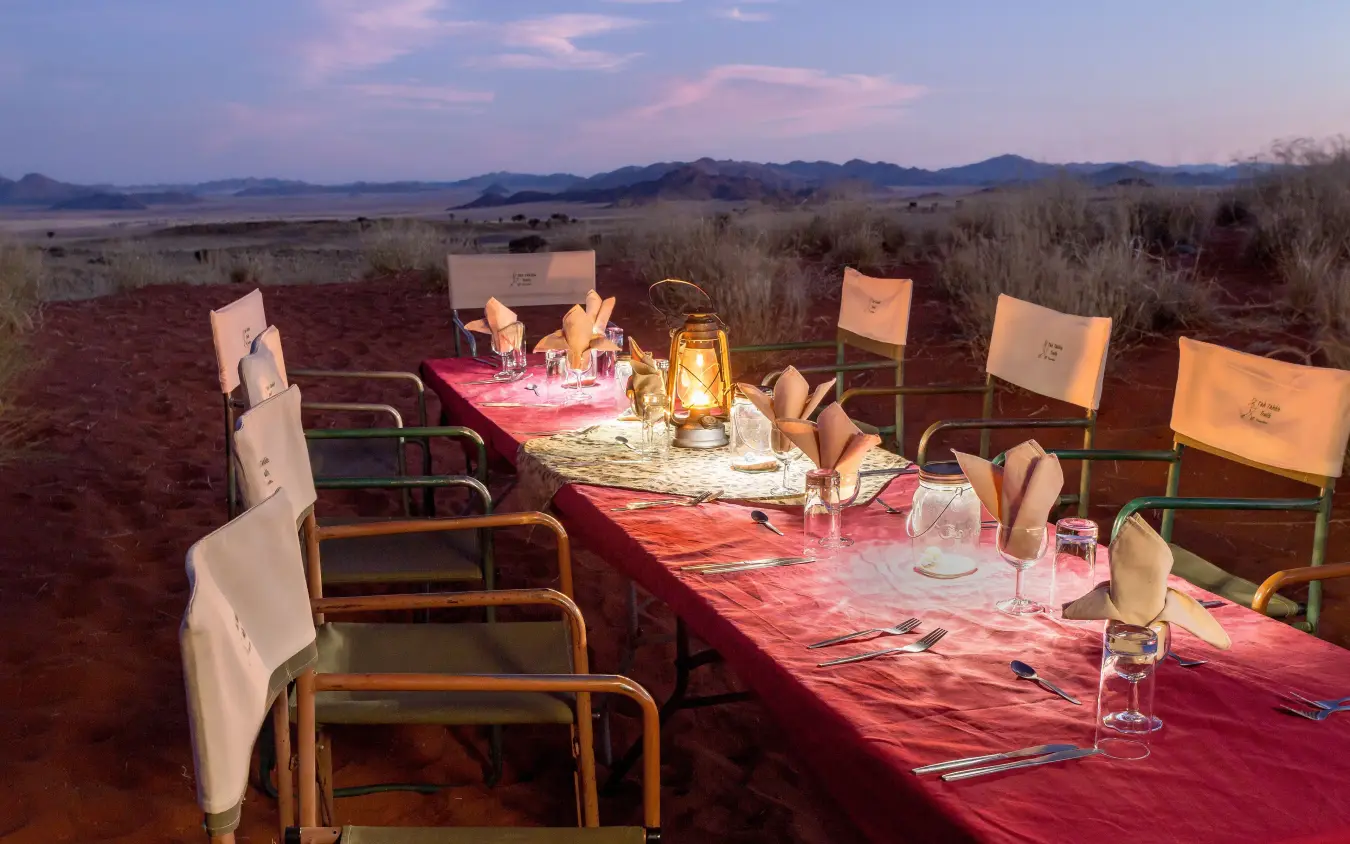
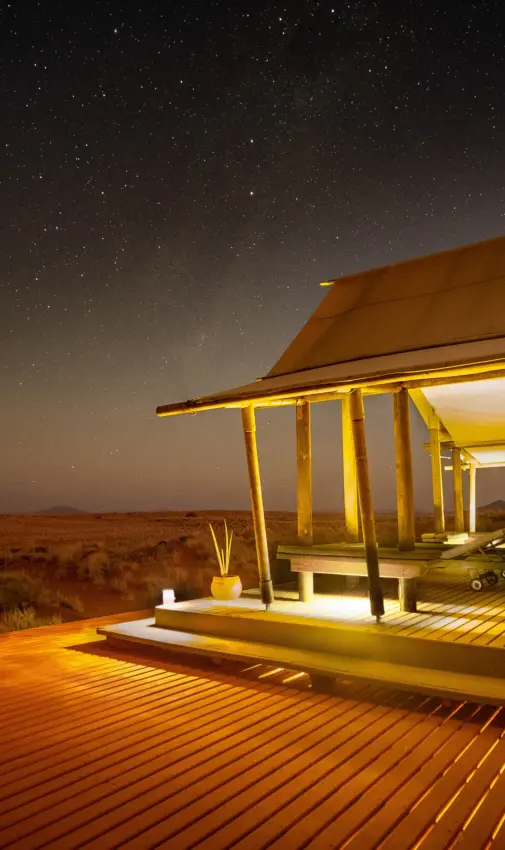
NamibRand is both an International Dark Sky Reserve and a wilderness quiet park. Footsteps on gravel and wind across the dunes are the only sounds. Dinner is three courses at a table laid in the open and lit by lanterns, eaten with the guide and the rest of the group. The beds are set in private spots among the dunes and open to the air, so the duvets matter in the cool hours before dawn.

Bedroll camp setup in arid savanna landscape at dusk, Tok Tokkie Trails, NamibRand Private Reserve, Namibia 01

accommodation

Open-Air Stretcher Beds Among the Dunes

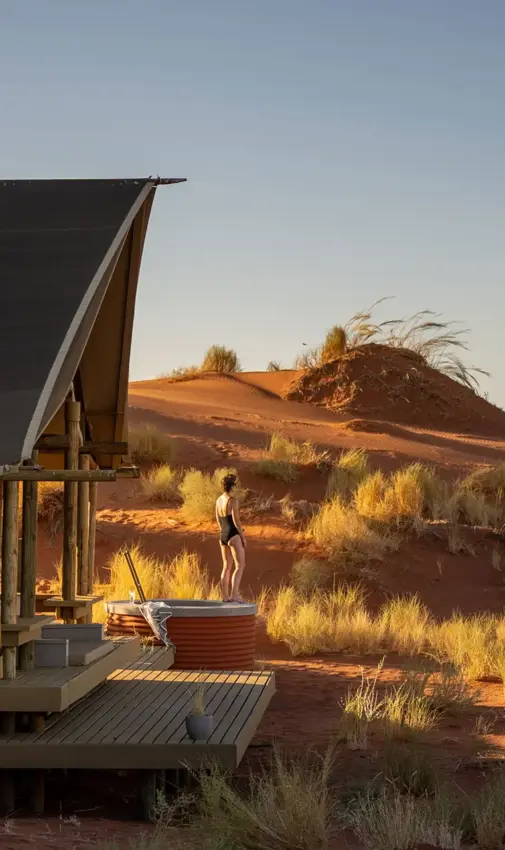
There are no rooms. Groups of up to eight sleep on open-air stretcher beds, each with a foam mattress, duvet, pillows and a bedside table, set in a private patch of desert among the dunes. A bucket shower with hot water on request and a long-drop toilet complete the facilities. Nothing is permanent, and nothing has a roof.

Hikers walking across arid grassland with scattered trees, Tok Tokkie Trails, NamibRand Private Reserve, Namibia 02

activities

22 Kilometres Over Three Days Walking

Walking is the sole activity, roughly 22 kilometres over three days at an easy pace, with four to six hours on foot daily across dunes and plains. Along the way the guides interpret tracks, desert plants, geology and adapted wildlife, and at night they lead the stargazing. The route usually opens with a visit to the NaDEET environmental education centre.

Guide's hands holding ammunition during safari briefing, Tok Tokkie Trails, NamibRand Private Reserve, Namibia 03

conservation

NamibRand Reserve Partners with NaDEET

The Namib Desert Environmental Education Trust, a non-profit within the NamibRand Private Reserve, teaches sustainable living and conservation to Namibians and visitors, and the trail works directly with it. Tok Tokkie holds one of five low-impact concessions here, and keeps to small groups and non-permanent camps.

ready to get started?

Get in touch and let’s start the conversation. An initial consultation helps us understand what you’re looking for, whether that’s specific experiences, luxury touches, or marking a special occasion, and from there we’ll guide you through what’s possible so you can decide if we’re the right fit.

Alternative accommodation in namibrand private reserve

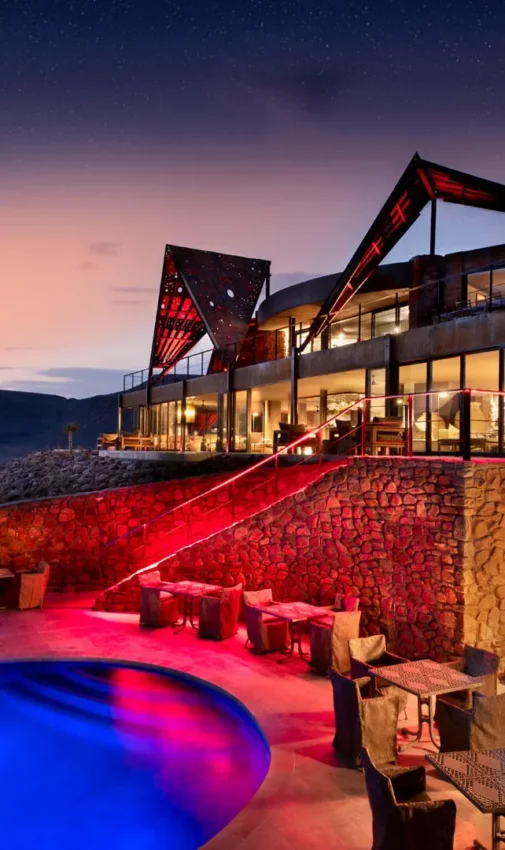
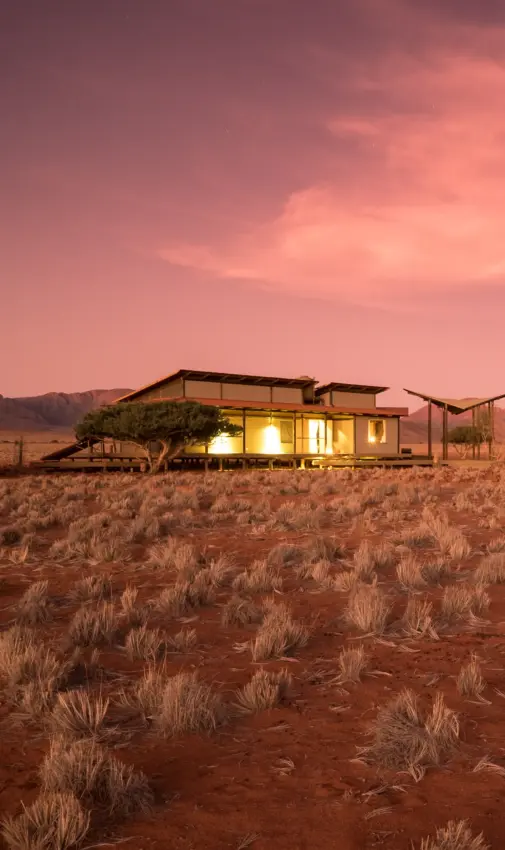
NamibRand Private Reserve carries only a handful of small camps, each held to strict bed-density rules. Styles range from architect-designed desert lodges with chalets opening to the night sky, to luxury tented camps on raised decks. Private houses suit families or small groups, and a dedicated multi-day walking operation sleeps guests under the stars. Design favours low structures, long views and minimal light.

frequently asked questions

You need to reach the NamibRand reserve in time to gather at the trail's farmhouse around midday, as the walking begins that afternoon.

Most guests fly from Windhoek's Eros airport onto a reserve airstrip, about an hour to an hour and a half, or drive roughly five hours from Windhoek on tar then gravel. We can also arrange a private charter, typically a Cessna Caravan or Pilatus PC-12, flown direct to the reserve strip and timed so you arrive well before the walk begins.

The transfer from Windhoek or elsewhere in Namibia to the farmhouse is arranged separately from the trail itself, and we will set it up so you arrive in good time for the start.

The Namib Desert around the reserve is treated as a very low risk part of Namibia, and very low risk is not the same as no risk. It is simply too dry for the mosquitoes that carry malaria, so this is about as low as the risk gets anywhere on the continent.

The UK's official travel health service treats most of Namibia as very low risk all year, and the American CDC takes the same view of the desert and the centre.

We do not make medical recommendations. We are travel planners, not doctors. Which tablets are right for you, whether they suit your own health or anyone else's in the party, and what is appropriate for a child, is a conversation between you and your doctor or a travel clinic.

The practical side we can speak to is not medical: cover arms and legs from late afternoon and keep repellent to hand.

This matters more here than at most places, because you sleep out in the open. Desert days are hot, often into the thirties, while the nights can drop close to or below freezing, so the swing is dramatic.

Bring light, breathable walking clothes and a hat for the day, then genuinely warm layers, a fleece, a hat and warm sleepwear for the cold nights under the stars. Well worn-in walking boots, sun cream and a refillable water bottle complete the essentials.

The minimum age is eight years, and children of eight to fourteen walk at a reduced rate. The trail suits fit, willing older children and teenagers who are happy with several hours of walking a day and two nights sleeping out in the open.

Tell us their ages and how used they are to walking, and we will give you an honest view of whether the trail is right for your family.

It is steady rather than strenuous, around four to six hours a day over roughly twenty-two kilometres across the three days, at an easy pace with long stops to read the tracks, plants and geology. You carry only a daypack with water and a camera, as the back-up team moves your luggage between camps.

Good basic fitness matters, more because of the soft sand, the heat by day and the cold at night than the distance itself. Tell us how much walking you are used to and we will give you a straight answer on whether it suits you.

The trail rate covers:

  • Your guide and back-up crew
  • The transport of your luggage between camps
  • All the camp equipment, from the stretcher beds and bedrolls to the bucket showers
  • Meals across the three days, with breakfasts, a trail lunch and dinners out under the sky
  • Sundowners and limited beer, wine and soft drinks in camp

You need to bring little more than worn-in walking boots, a daypack and a water bottle. The transfer from Windhoek to the starting farmhouse is arranged separately, and we will set that up for you.

rated five stars by our clients

other areas in namibia

NamibRand forms the scenic heart of a Namibia journey that pairs naturally with the dunes of Sossusvlei and Deadvlei in the adjoining Namib-Naukluft National Park to the north. Swakopmund and the Skeleton Coast bring the cool Atlantic fog desert, shifting dunes and shipwrecks. Damaraland adds desert-adapted elephant and the rock engravings of Twyfelfontein, while Etosha further north offers classic game viewing around its great salt pan.
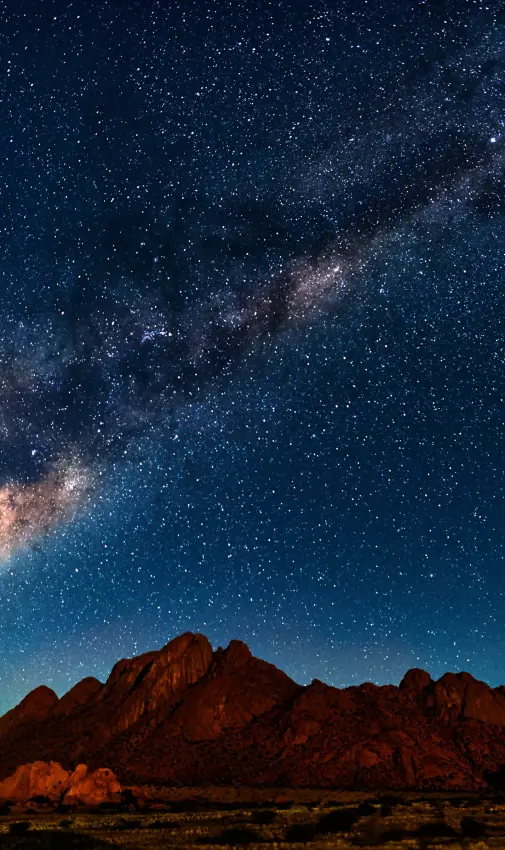
Rocky desert mountains silhouetted under starry night sky 01

Damaraland

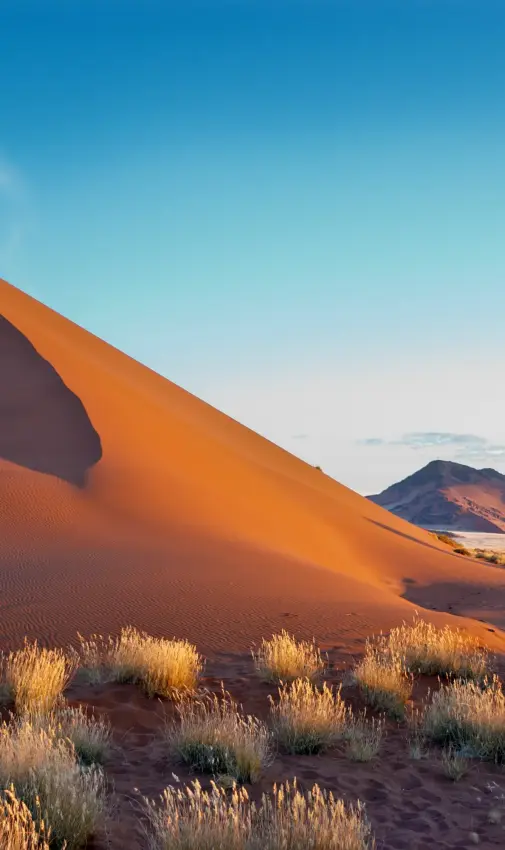
Golden sand dune at sunset with sparse desert vegetation 02

Sossusvlei

Elephant with zebras and antelopes at waterhole 03

Etosha National Park

Aerial view of desert dunes meeting coastal waves 04

Skeleton Coast

Portrait of a person wearing traditional African beaded jewelry 05

Kunene River

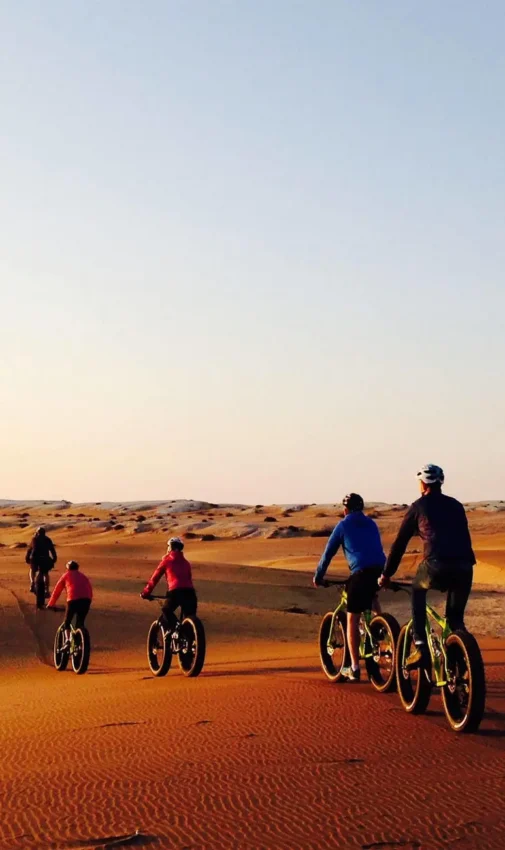
Cyclists riding across red sand dunes at sunset, Swakopmund, Namibia 06

Swakopmund

Elephant herd walking through dusty grassland with scattered trees, Zambezi Region, Namibia 07

Zambezi Region

Aerial view of church and city at sunset 08

Windhoek

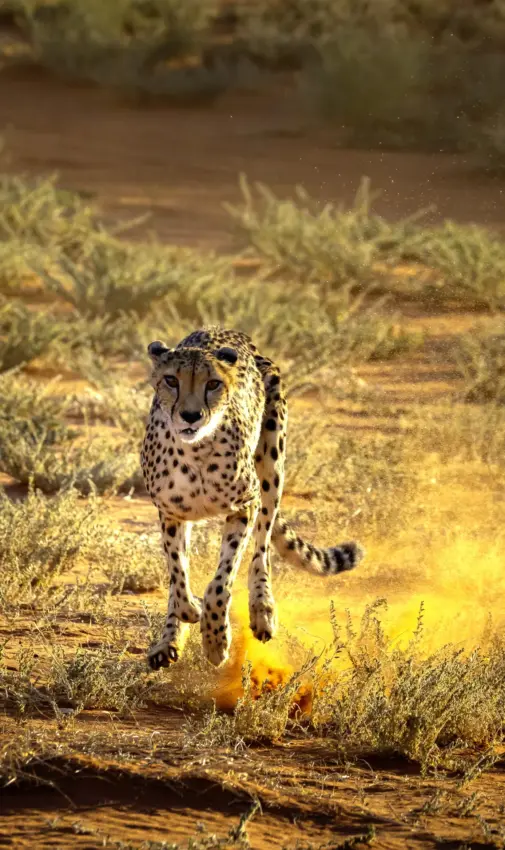
Cheetah running across sandy savanna scrub at sunset, Namibian Kalahari, Namibia 09

Namibian Kalahari

Okonjima Nature Reserve, Namibia 10

Okonjima Nature Reserve

Planning a journey together

our approach

remote, exclusive
& personal

Every journey starts with a conversation. We take the time to understand your vision before we start planning.

Whether by phone or in person, we work with you directly to shape something that is considered, personal, and expertly delivered.

get in touch
destinations ideas & inspiration our process about us contact us