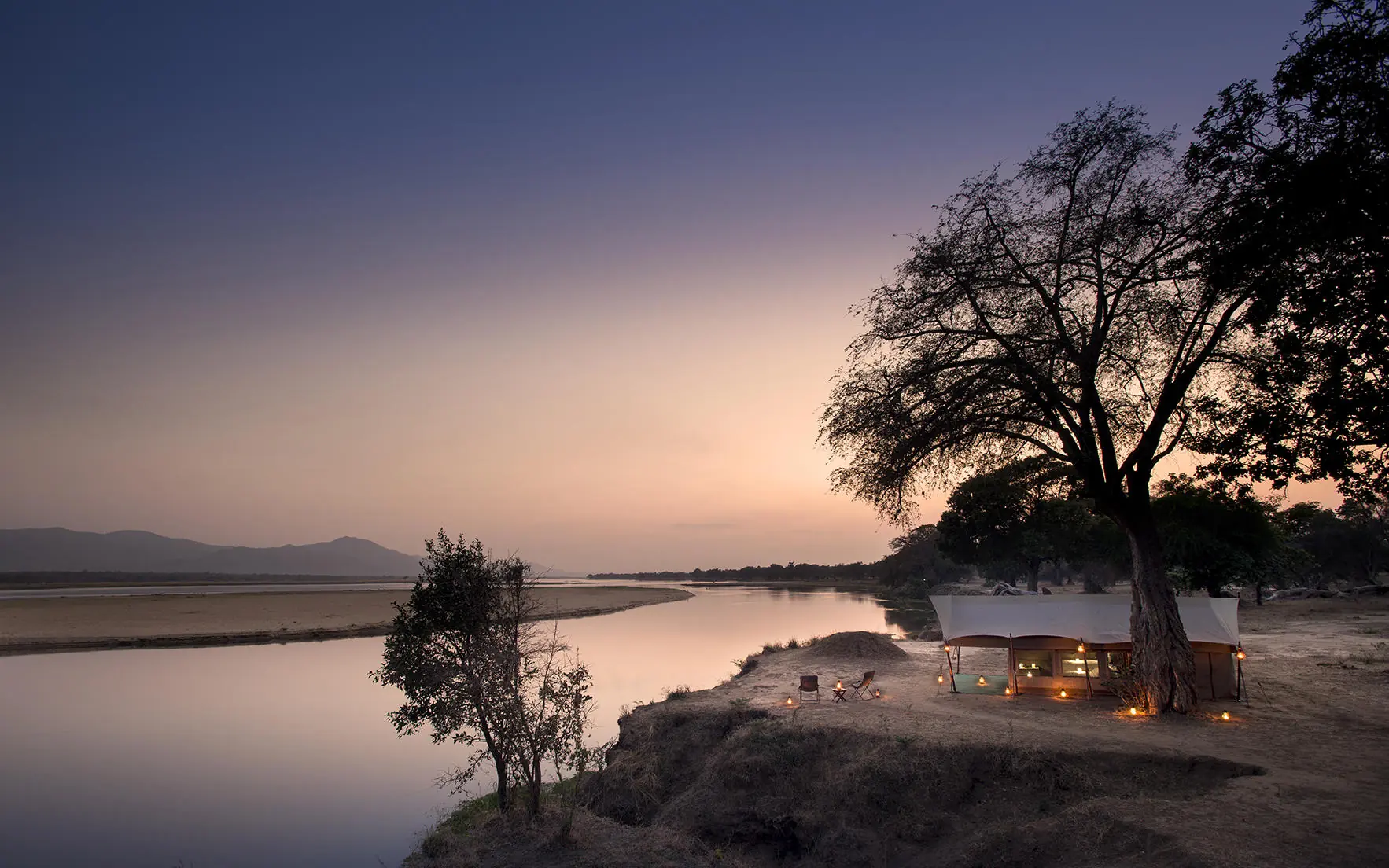
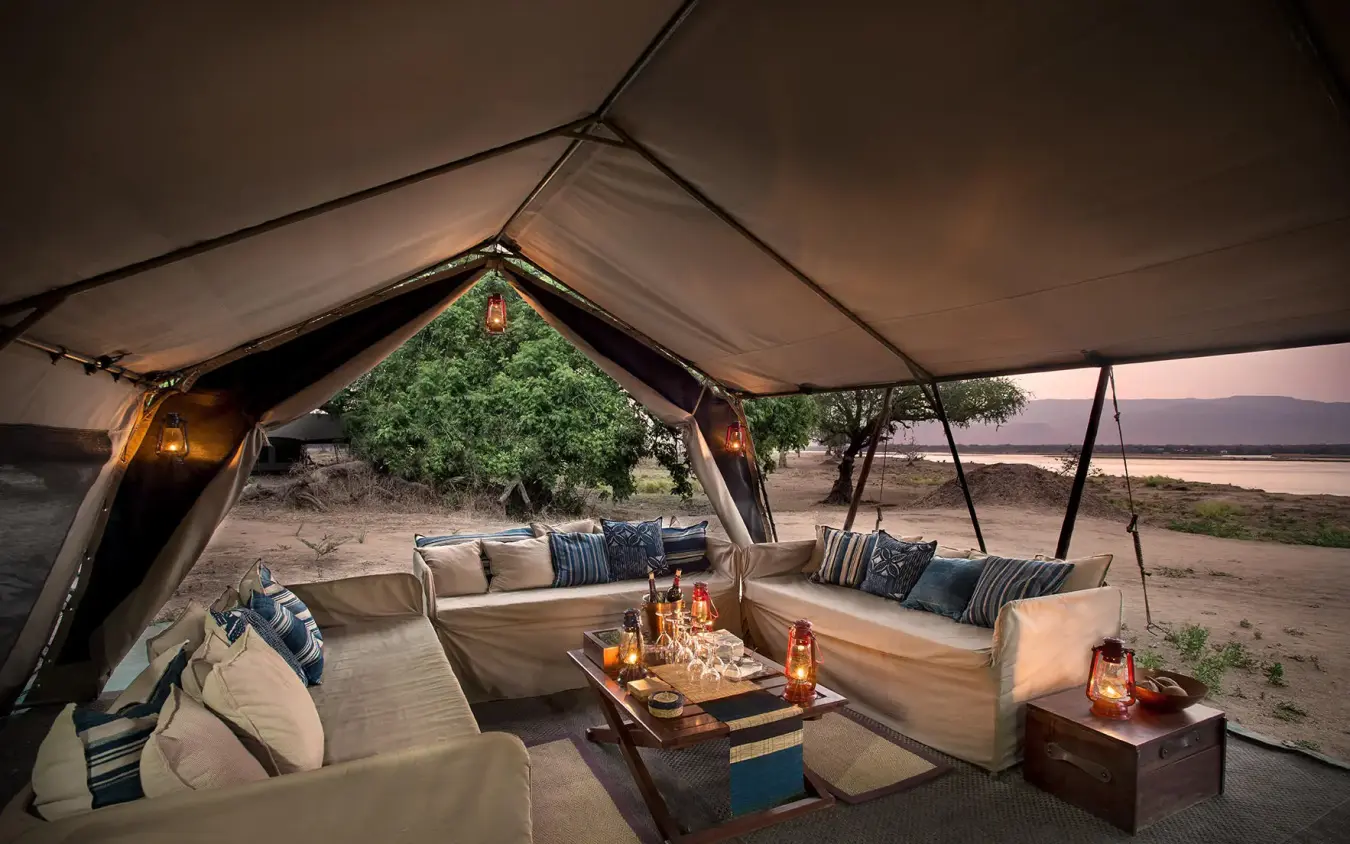
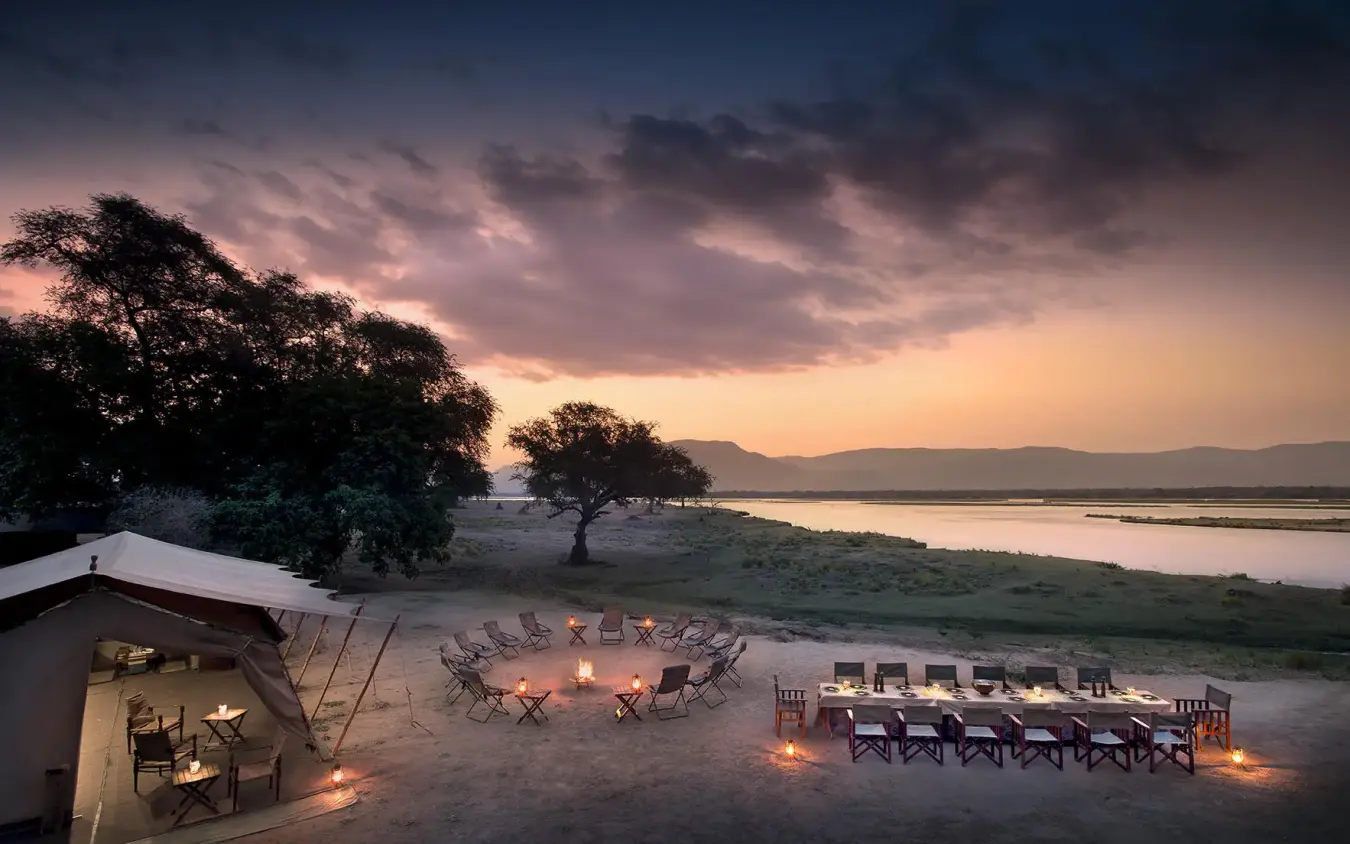
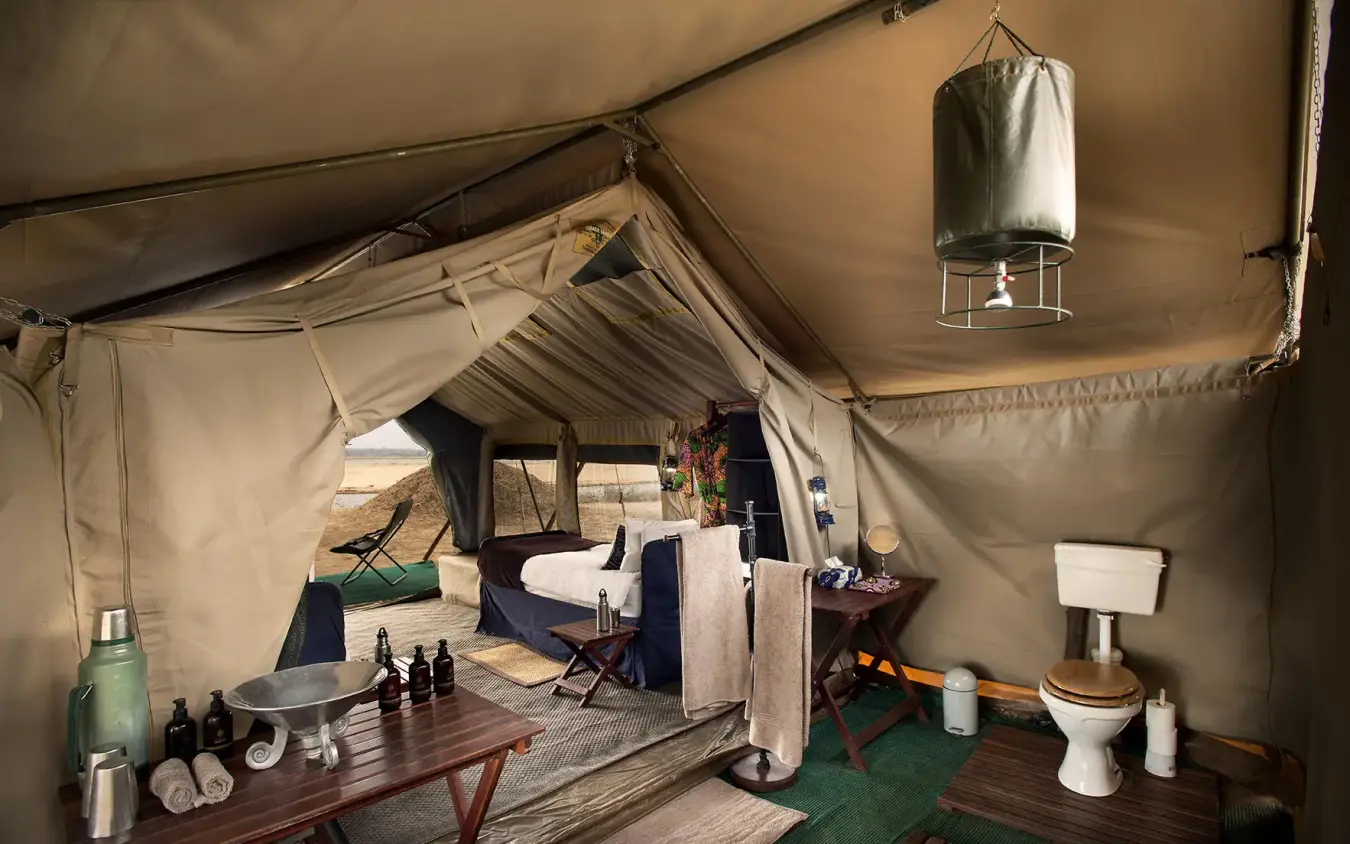
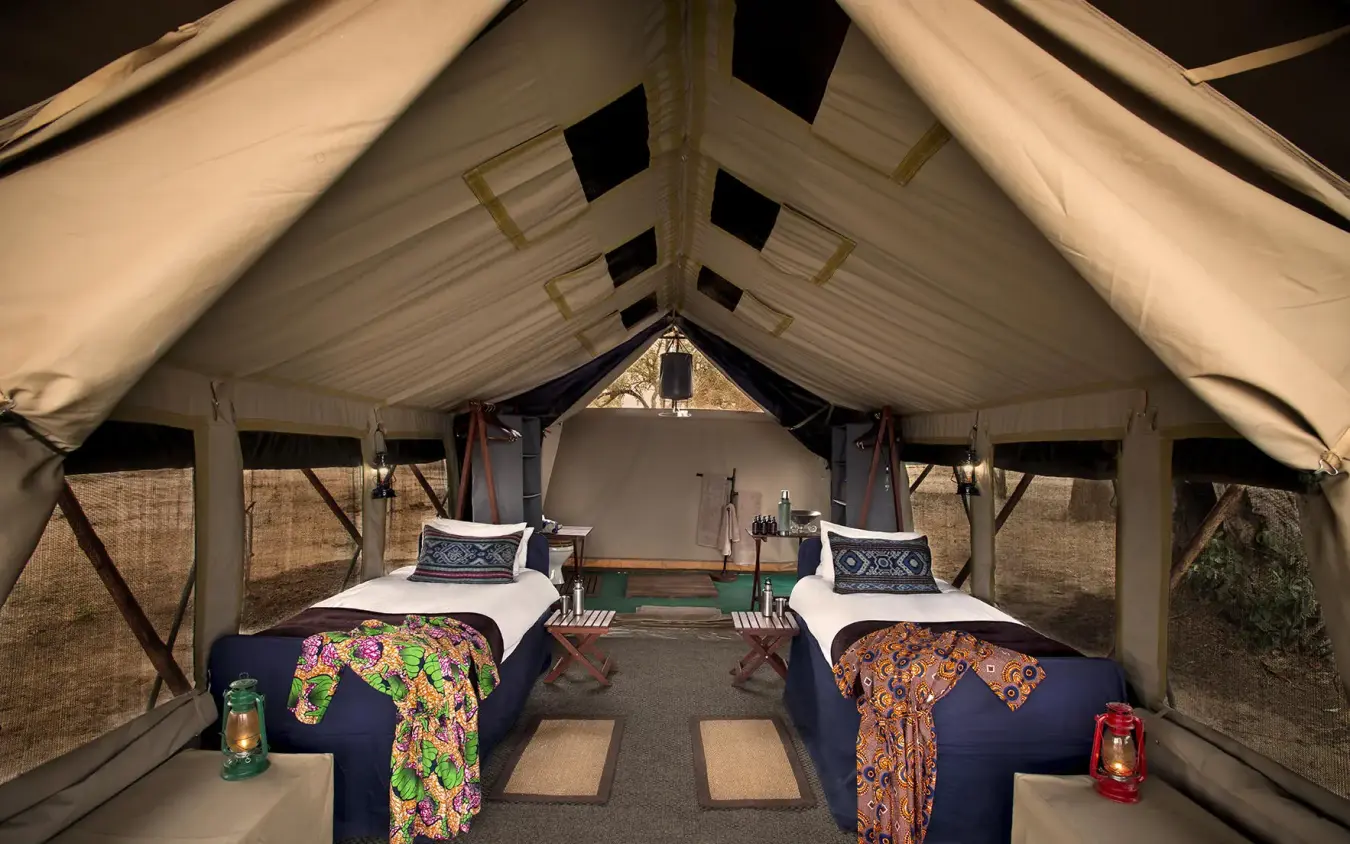
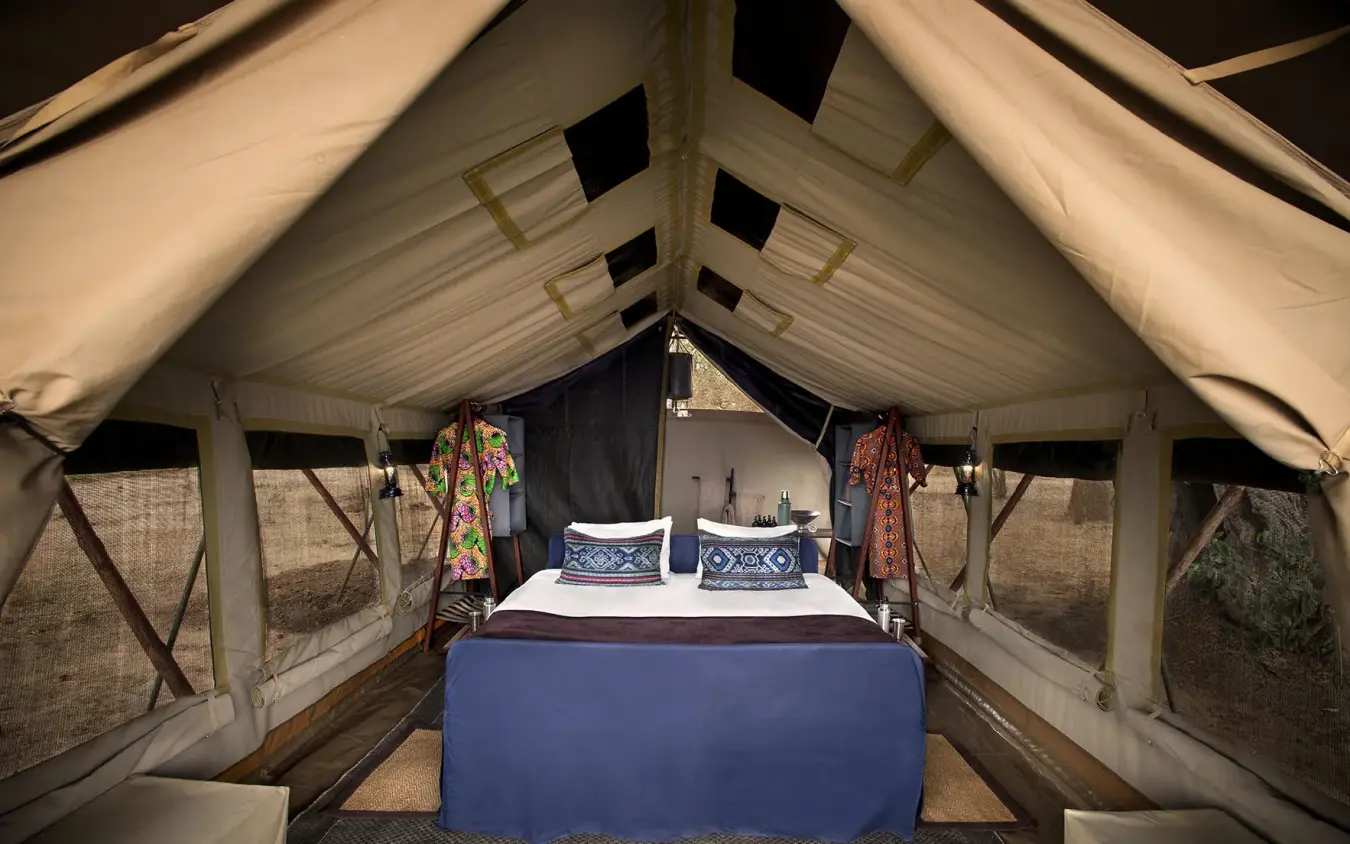
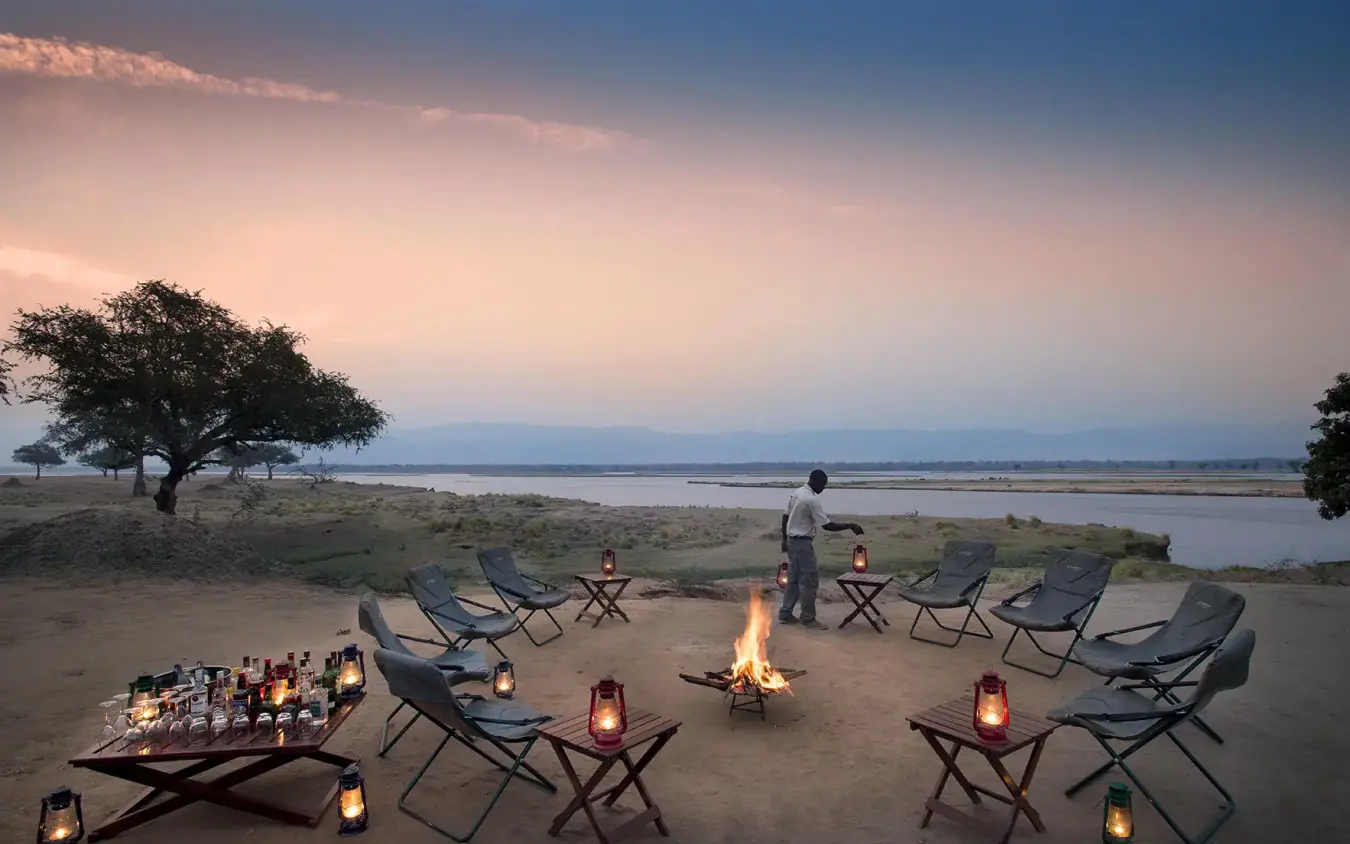
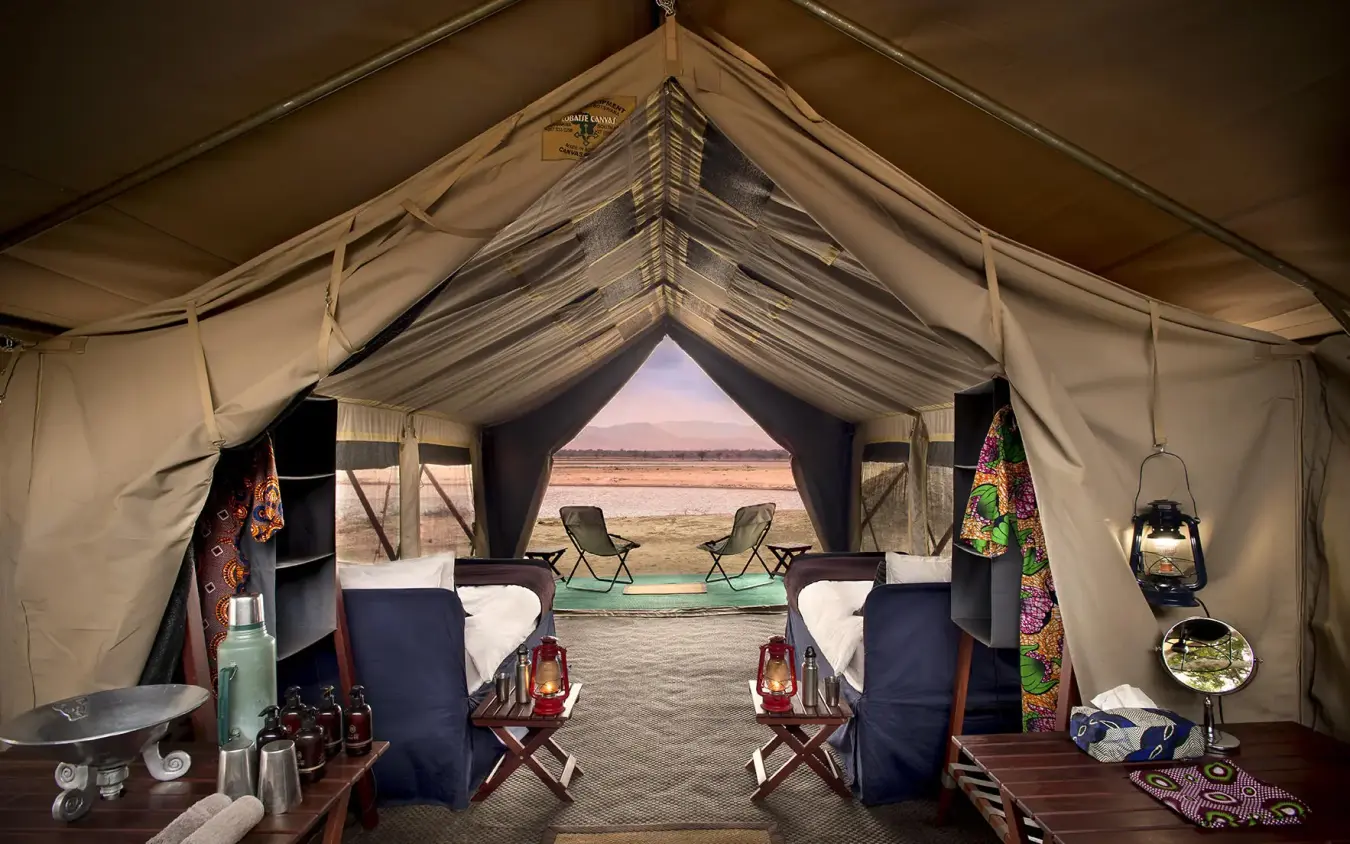
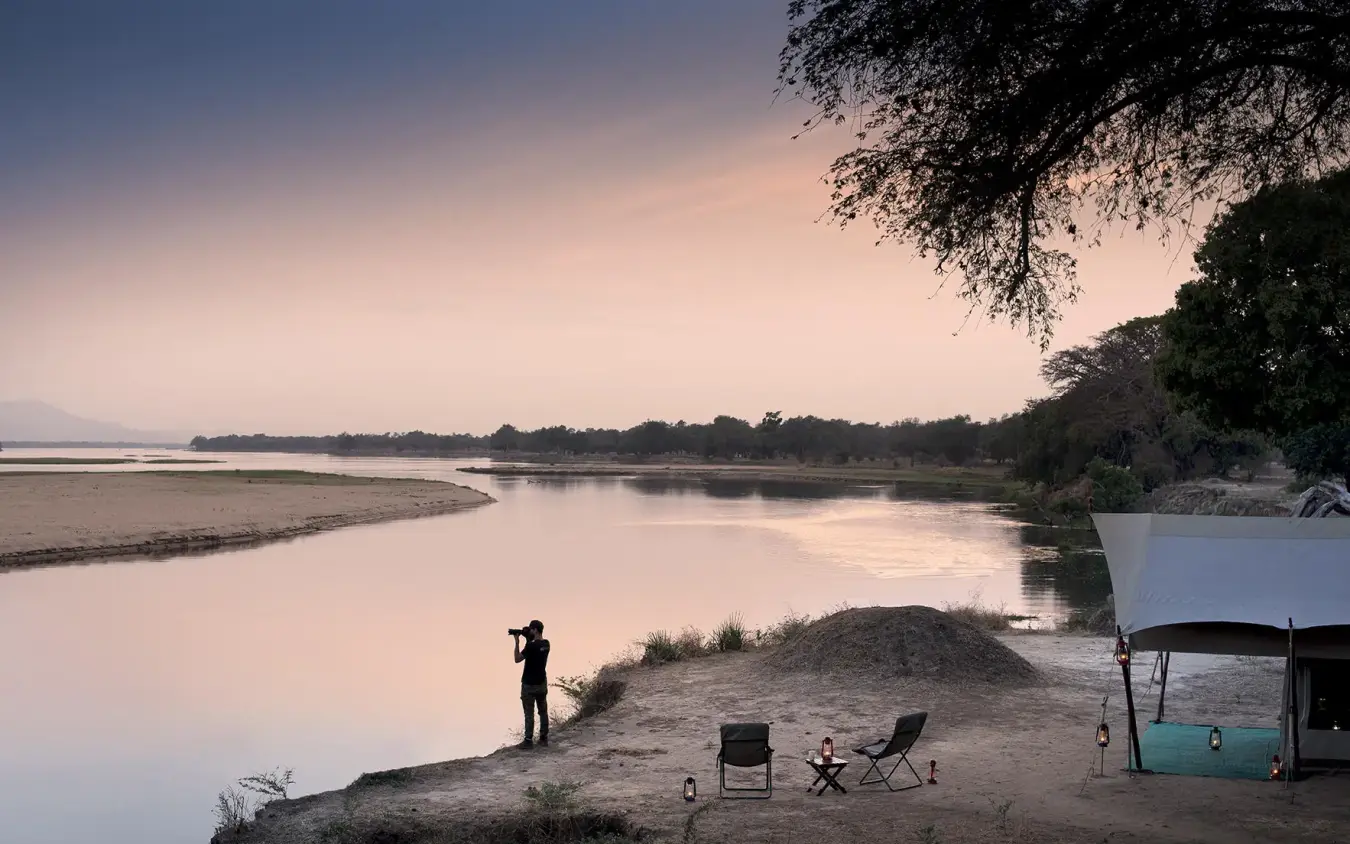
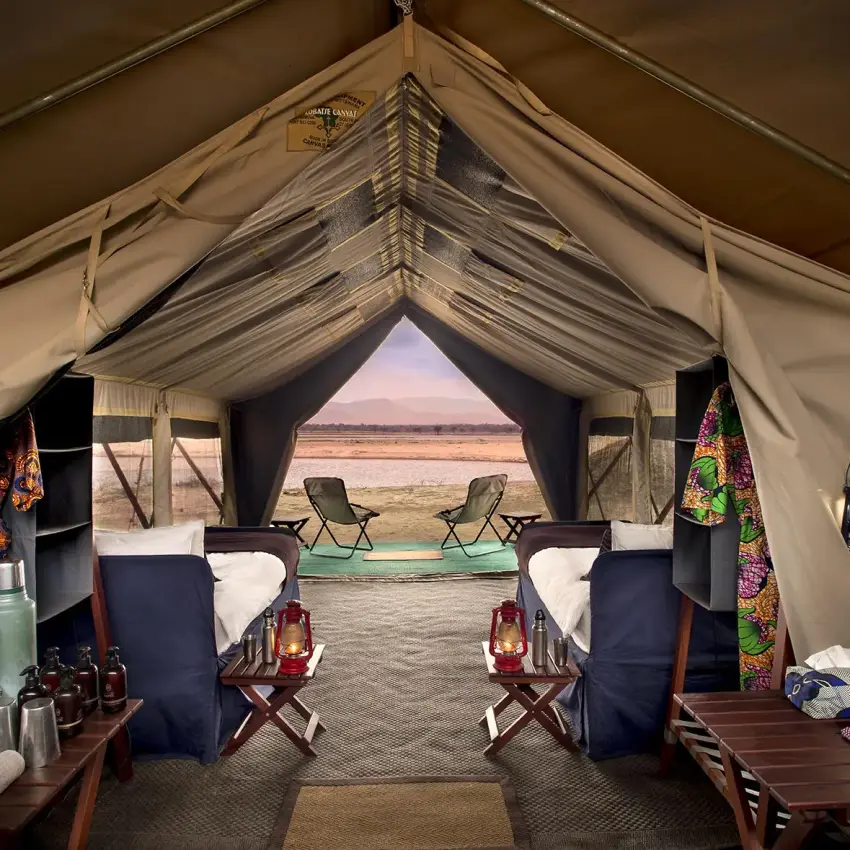
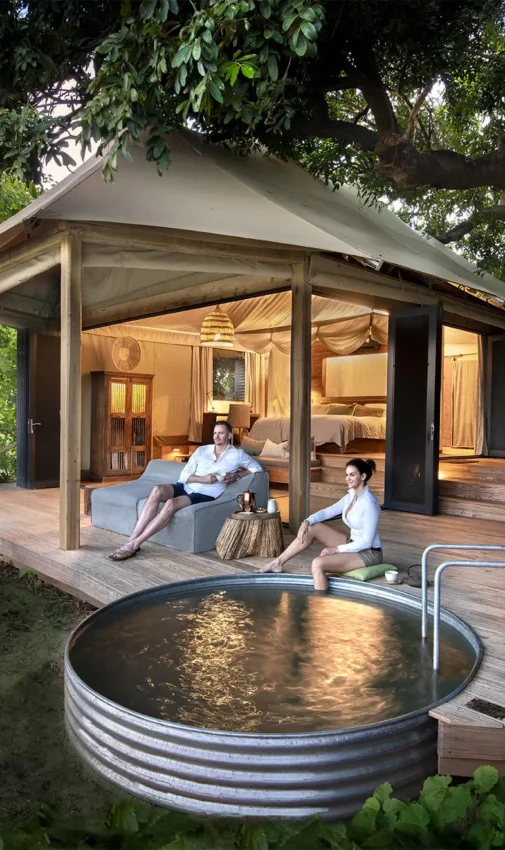
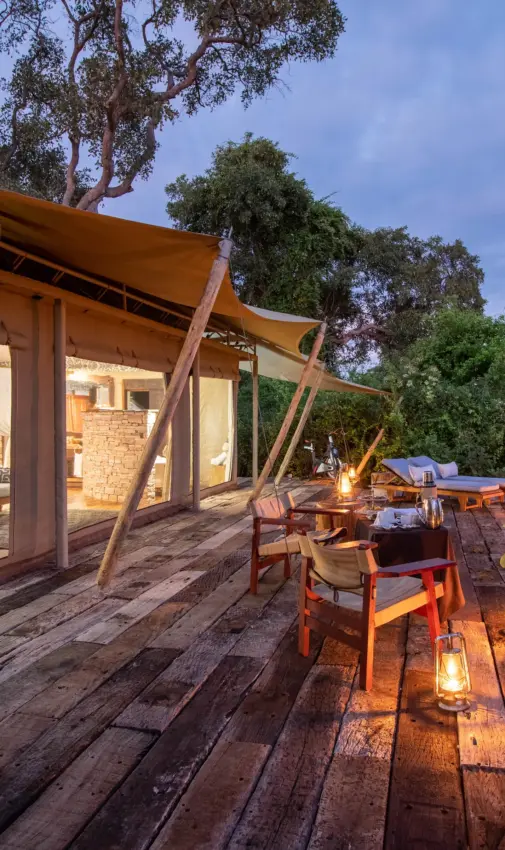
The tents are mini Meru-style canvas, set up with twin or king beds, an en-suite flush toilet and an outdoor hot bucket shower fed by the old expedition method. Floor-to-ceiling mesh windows open each one to the river and the escarpment beyond, and campaign furniture and simple prints lend the interiors an old-school character. Everything runs on solar with a generator held in reserve, powering the 12-volt lighting and the camera charging points, while the shared life of the place gathers at its heart, around a small plunge pool, a lounge, a bar and a fire circle.
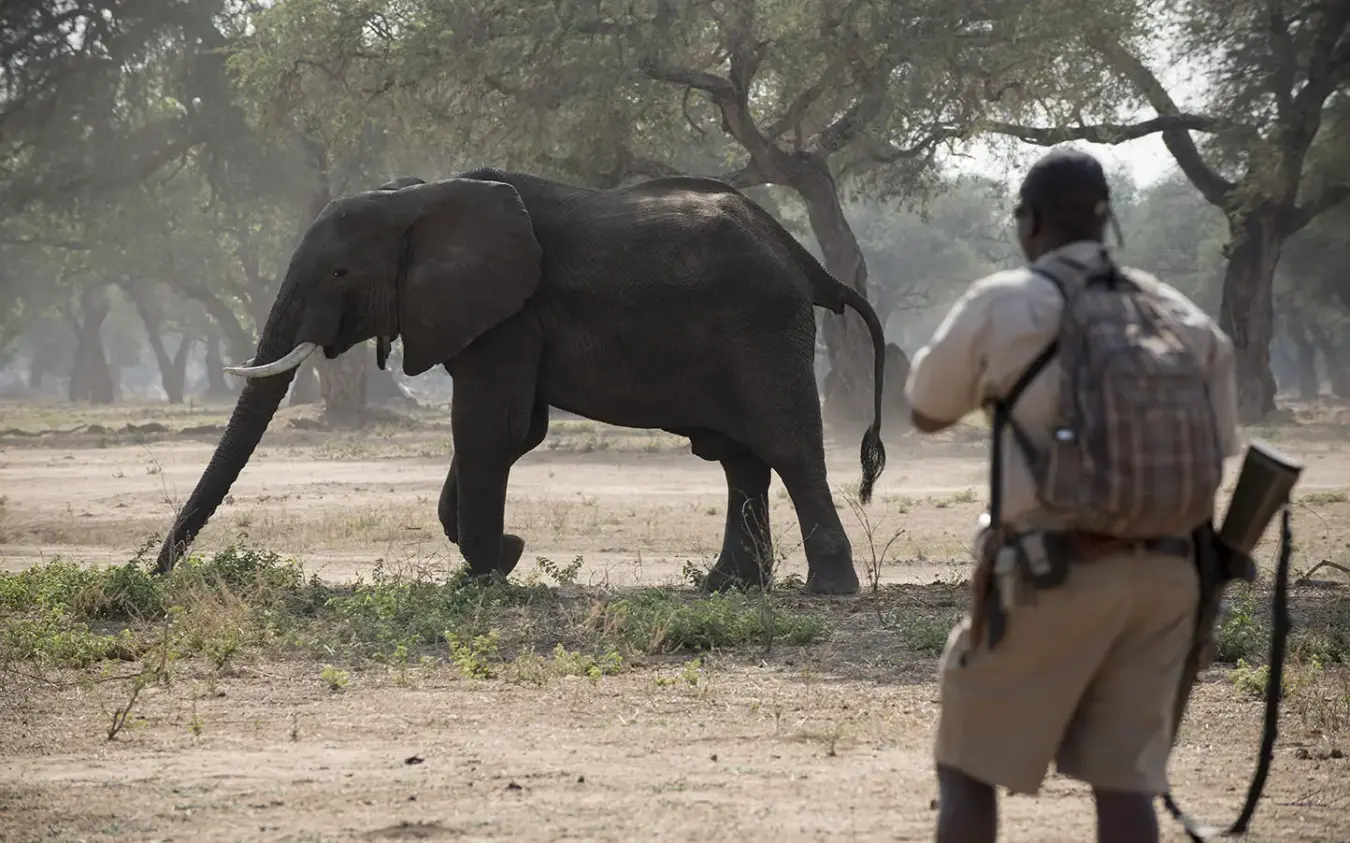
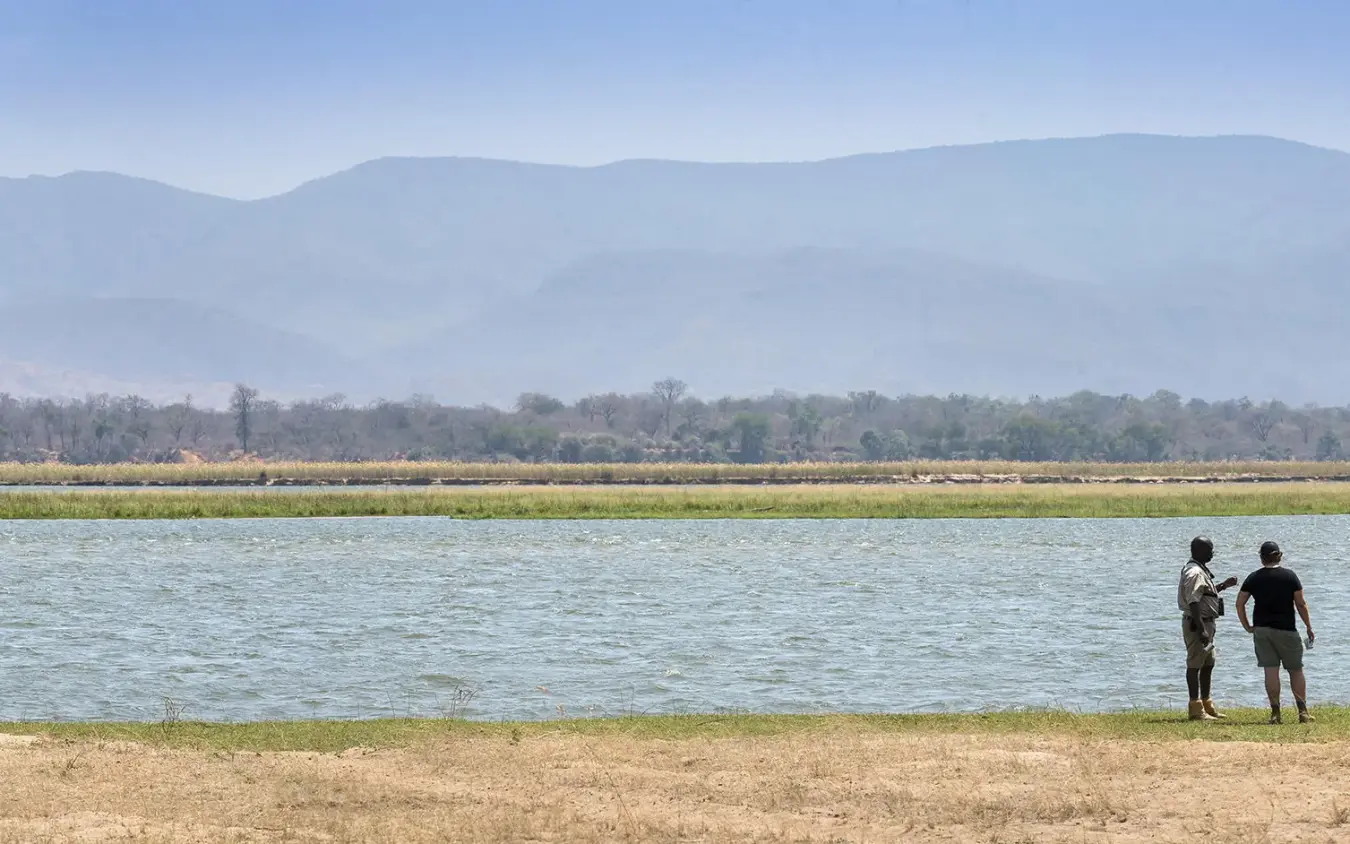
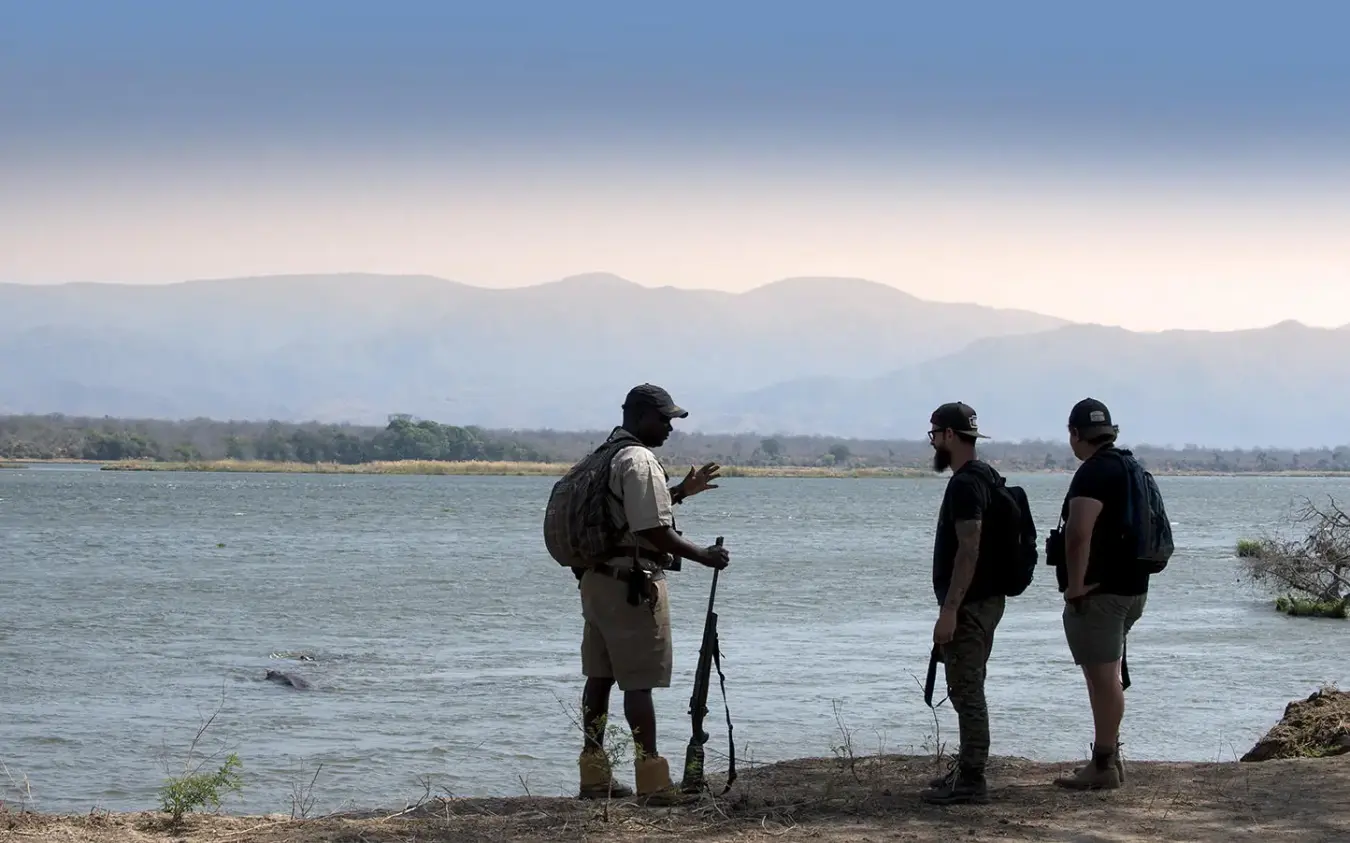
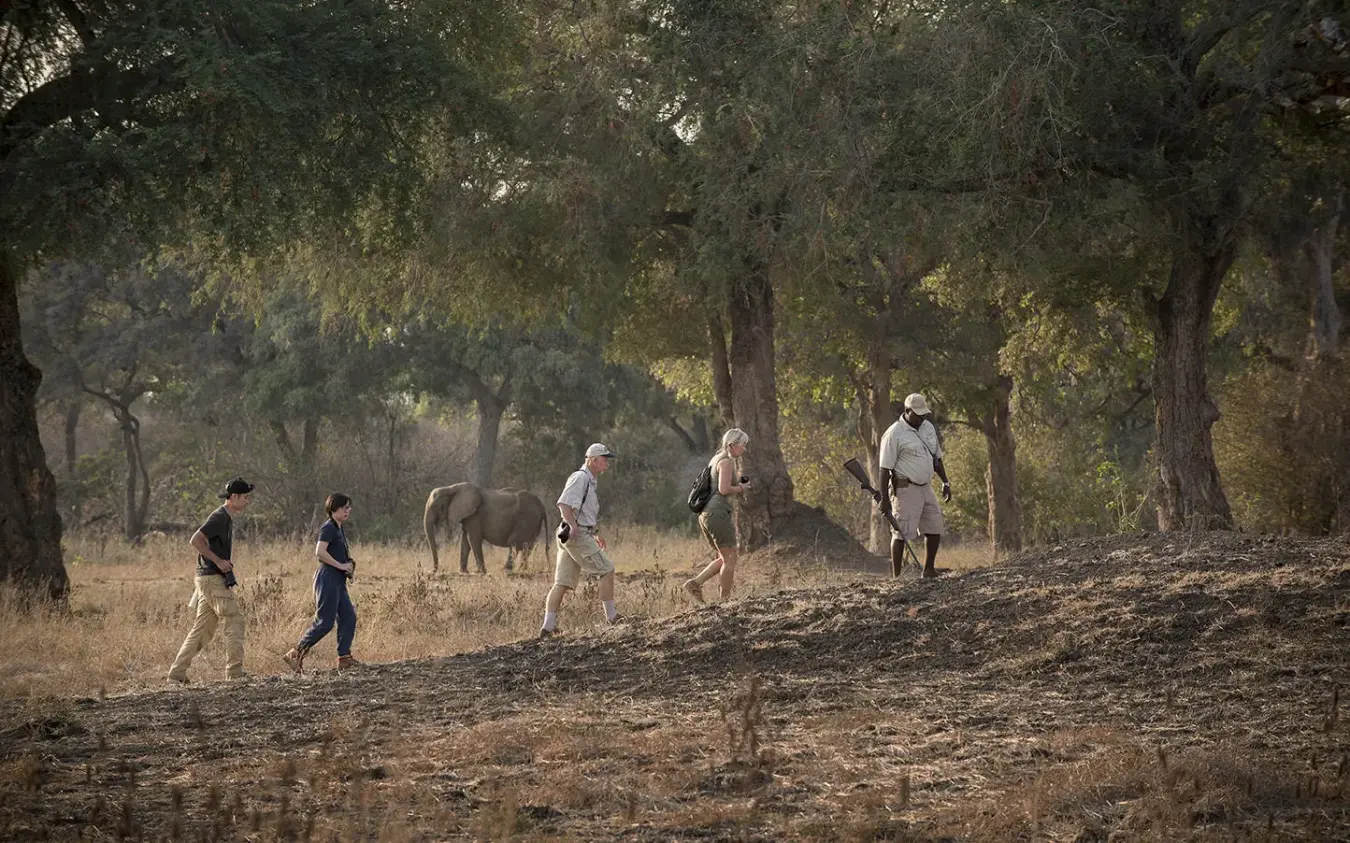
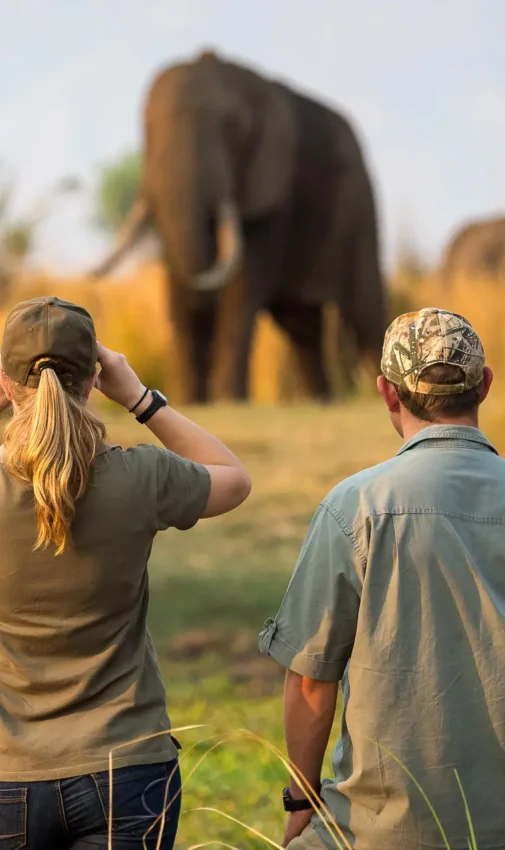
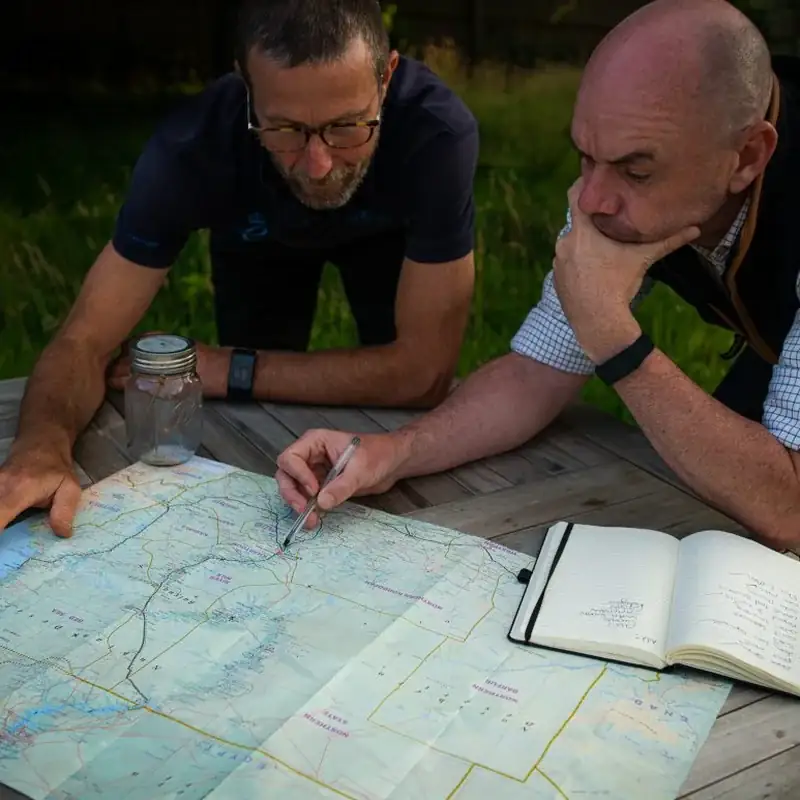
Beks Ndlovu grew up in a village near Hwange National Park and worked as a professional guide before founding African Bush Camps in 2006, opening his first camp at Somalisa in Hwange and growing the company since across Zimbabwe, Botswana and Zambia. The guiding approach set down at that early camp still runs through the days here. Each one is built around what the guides find that morning rather than a fixed itinerary, and the camp is kept small enough that the safari always stays personal.
Each one is built around what the guides find that morning rather than a fixed itinerary
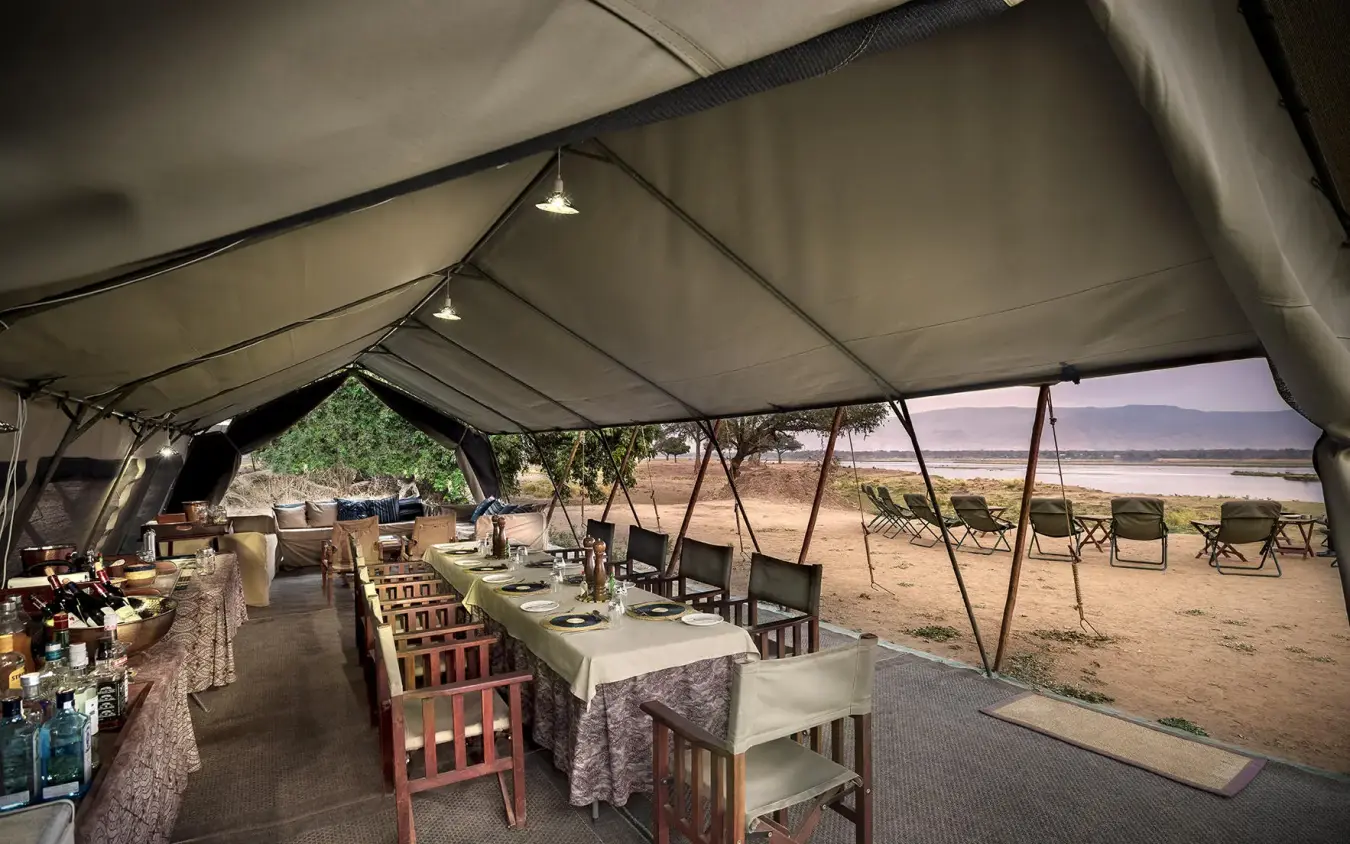
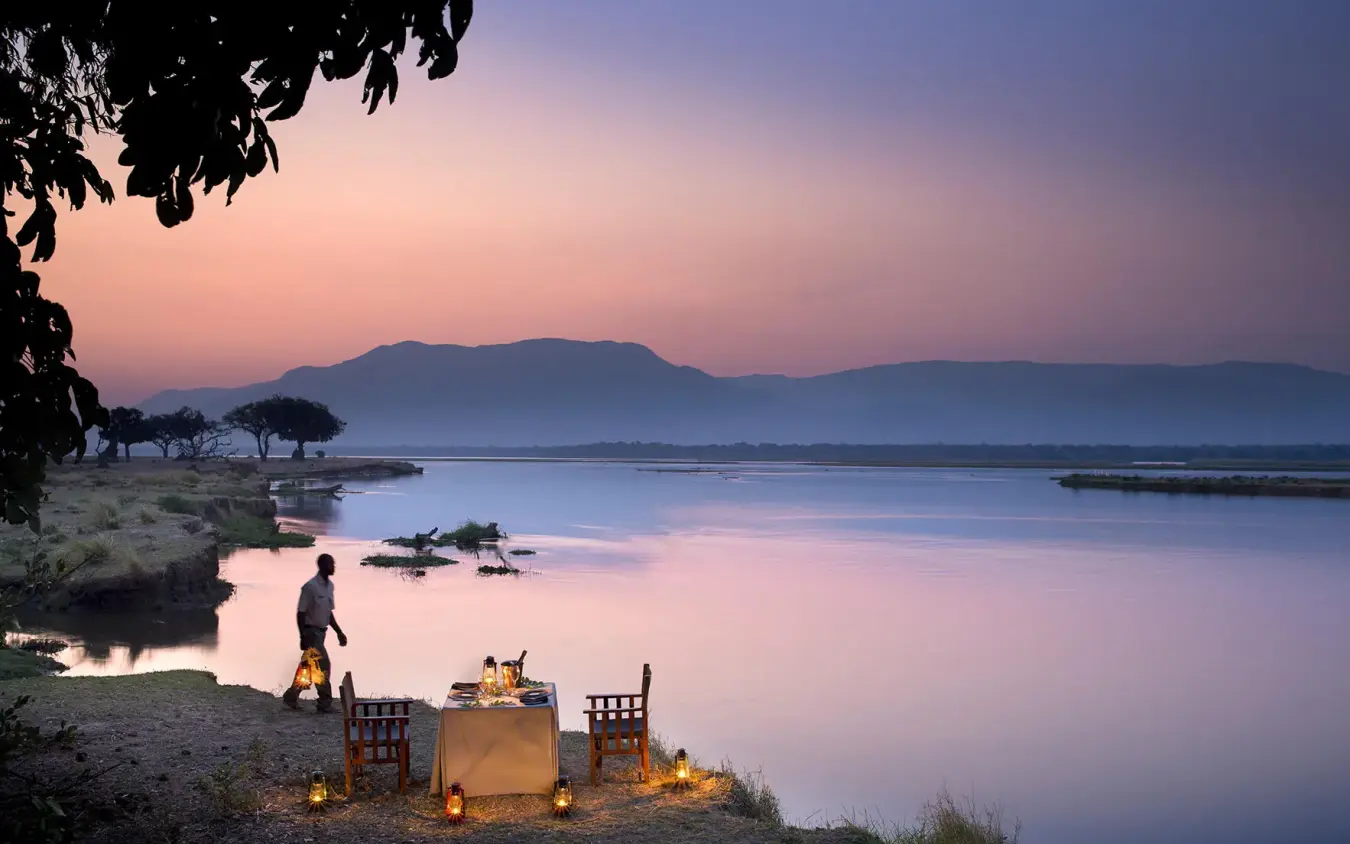
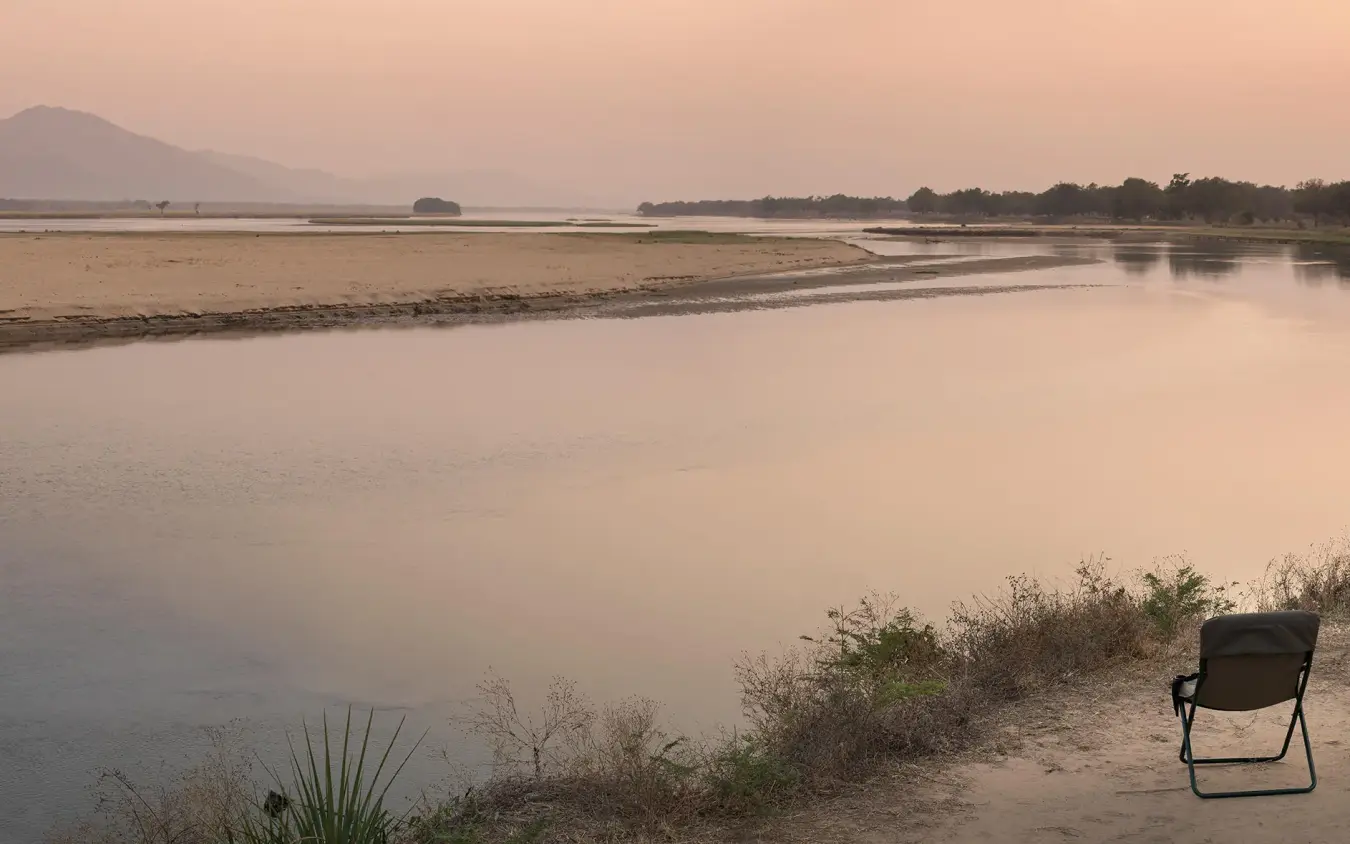
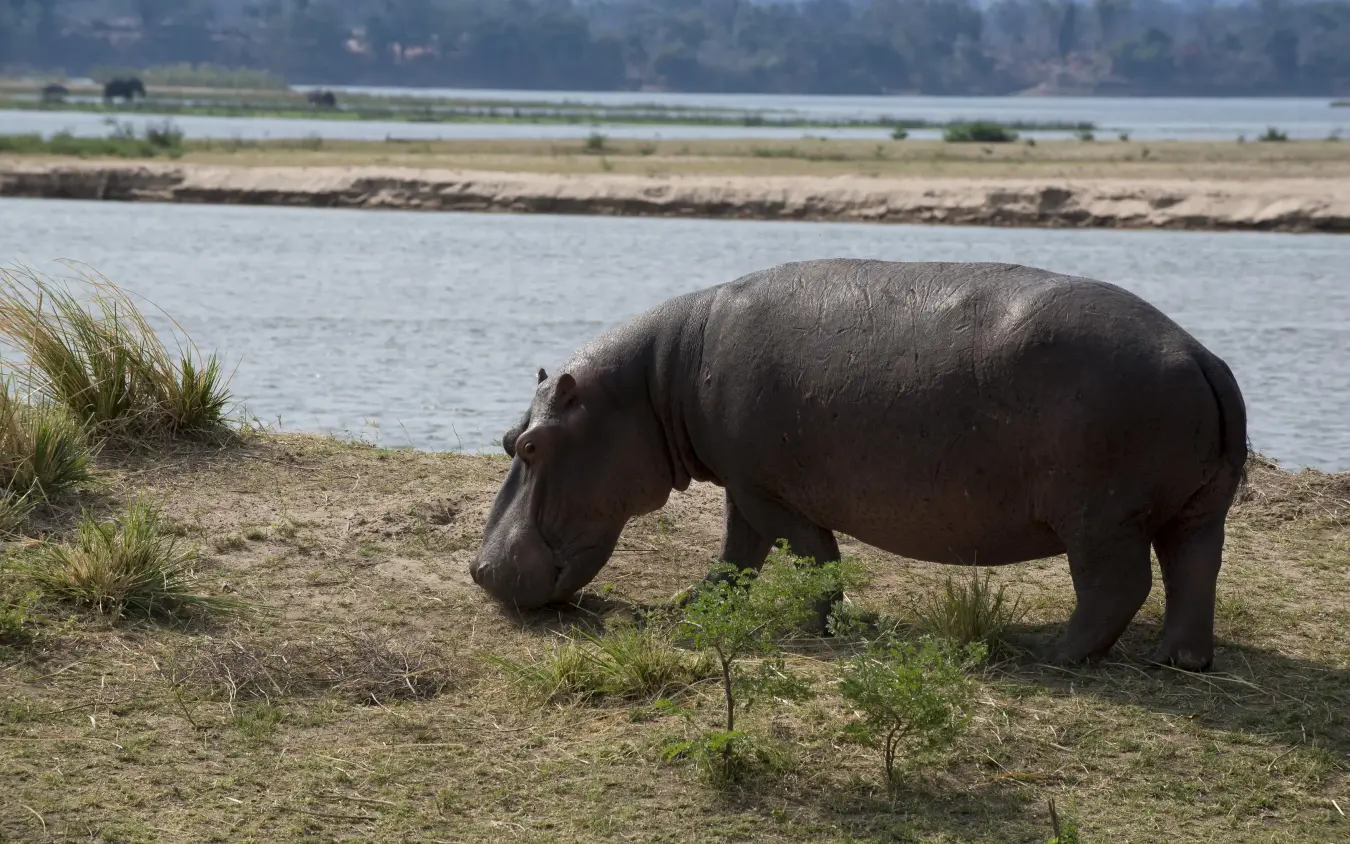
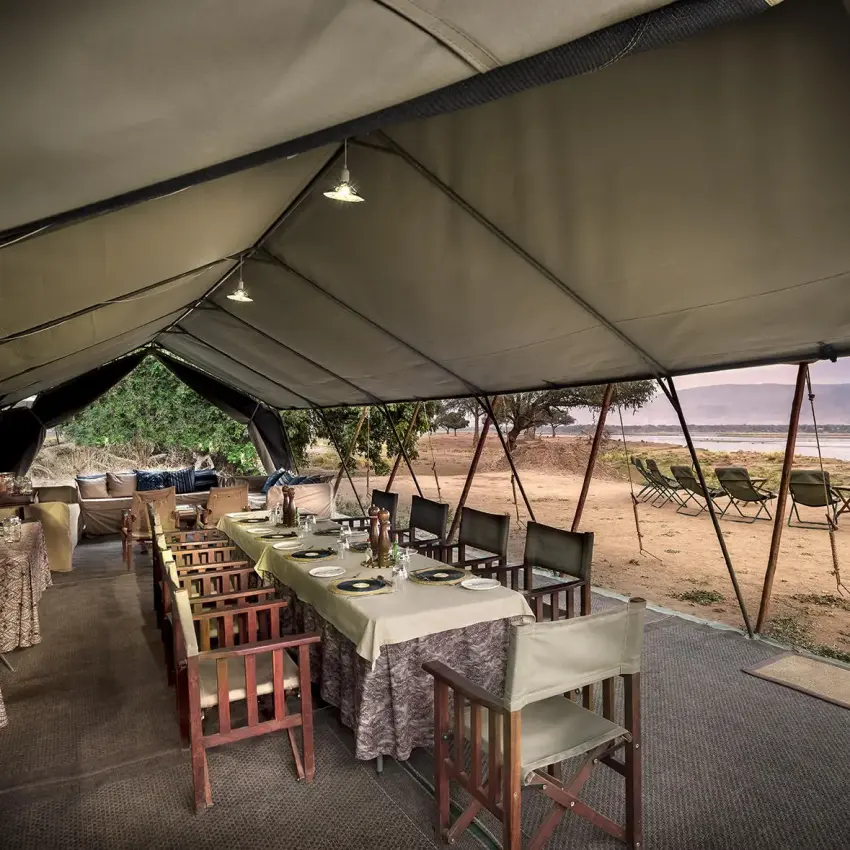
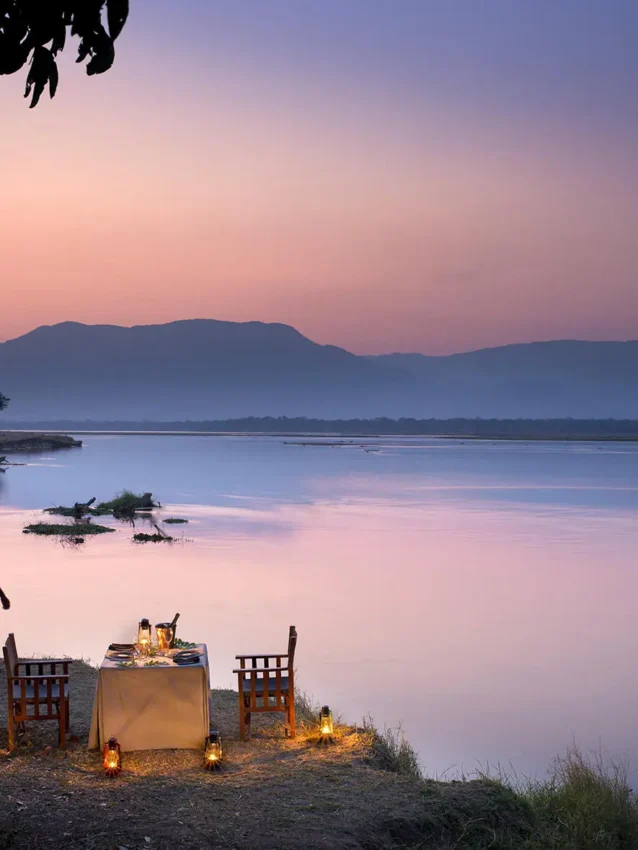
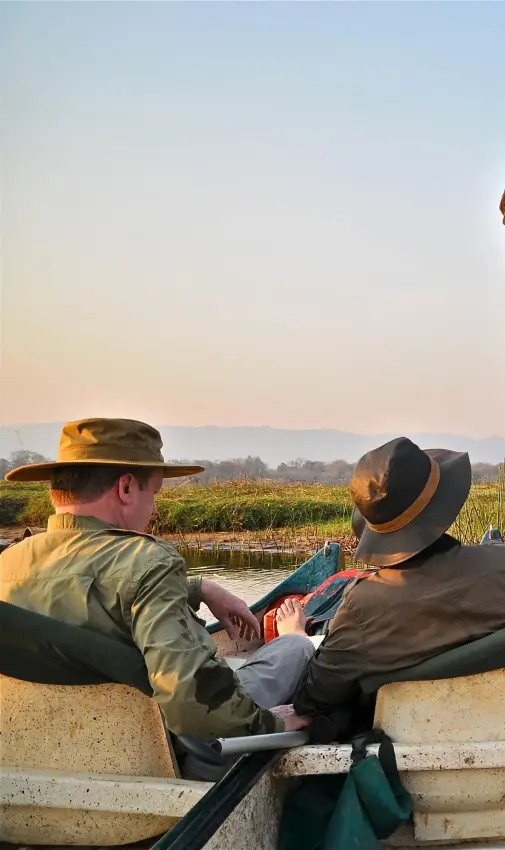
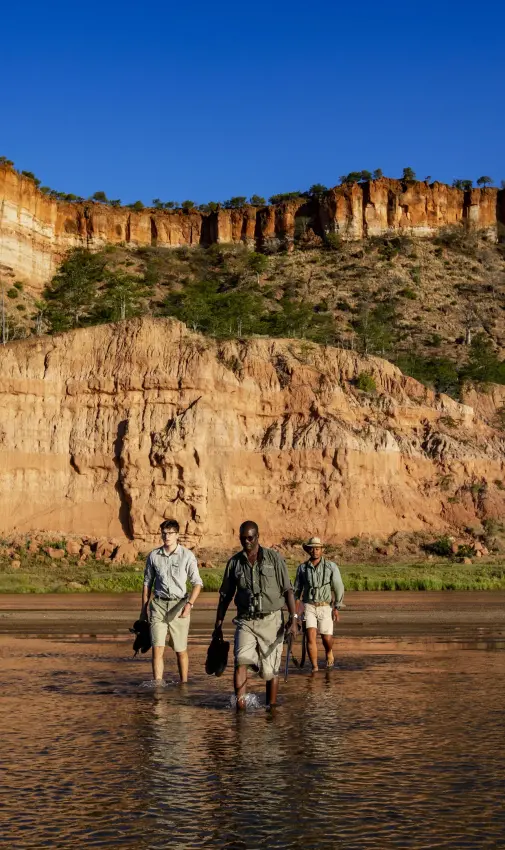
Meals are homely, taken at a communal table in the open-sided mess tent, or set out in the shade of the trees, sometimes on the riverbank as the light drops. Evenings gather around the fire, the river running past in the dark and hippos calling somewhere close. It is the kind of camp where the day ends slowly and no one is in a hurry to leave the flames, with only canvas and gauze between the fire circle and the floodplain beyond. Nothing here stands between you and the country you have come to see.
You reach Mana Pools by light aircraft, and the camp runs through the dry season, roughly May to October, when the river frontage and the inland pools hold the most game. It pairs naturally with Kanga Expeditions, the inland sister camp near Kanga Pan. Set the fertile riverine edge against the game-holding pans of the interior and you have a fuller picture of the park, the same country read from two very different vantage points, a journey that moves from the water to the heart of the woodland.