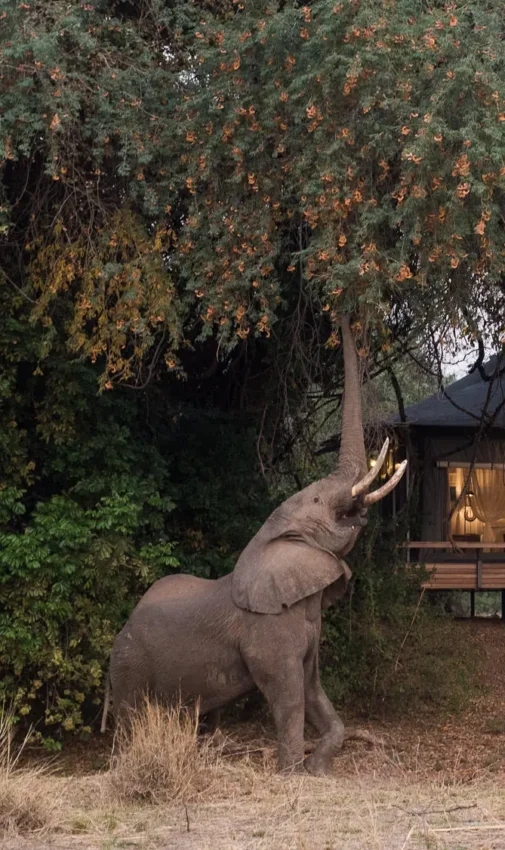
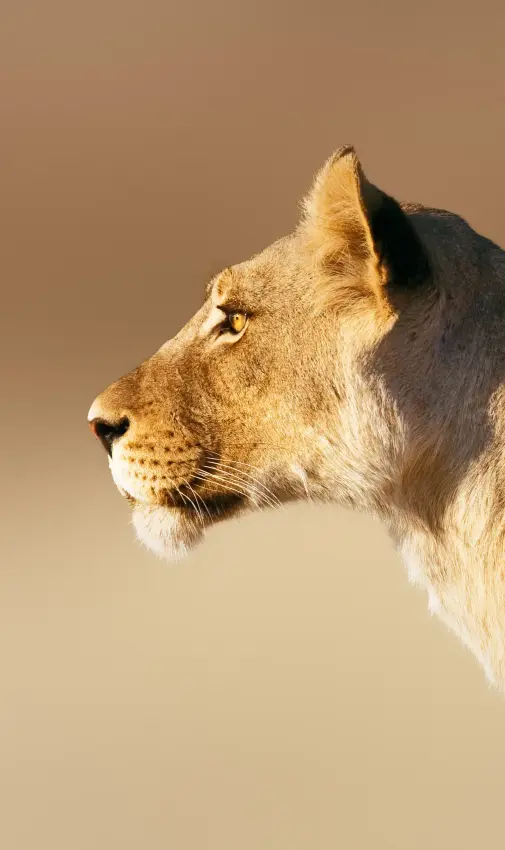
In 2022, 101 elephants in thirteen family herds were trucked roughly 1,000 kilometres north from Save Valley Conservancy into Sapi, 184 impala with them, the matriarchs collared so the herds could be followed. In 2025, seventeen African wild dogs, eight adults and nine pups, were released into the reserve, one litter born on the departure airstrip hours before the flight. Lions, leopards and buffalo herds move through the woodland and the dry riverbeds, with eland, kudu and zebra. The animals still keep their distance, a legacy of the hunting years.
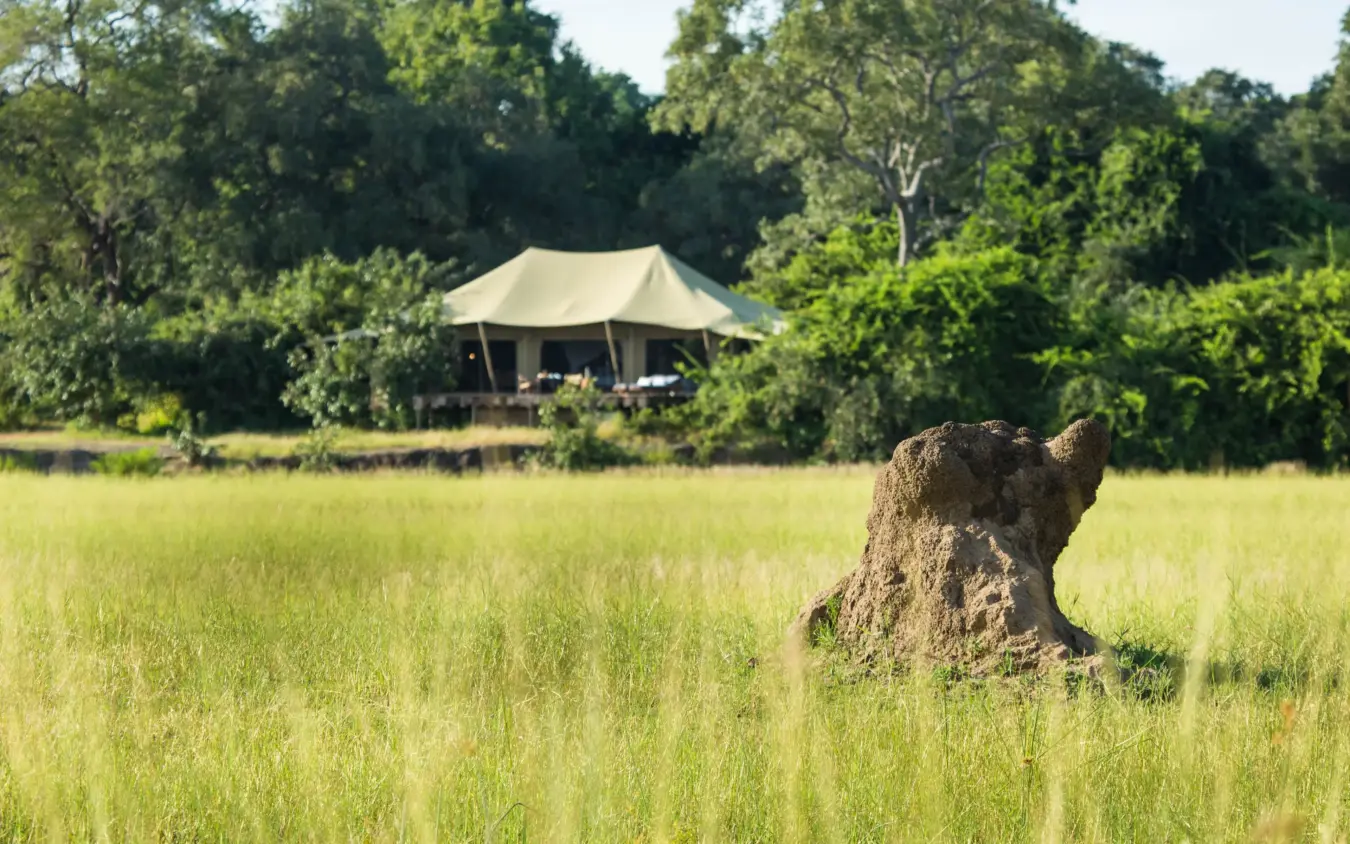
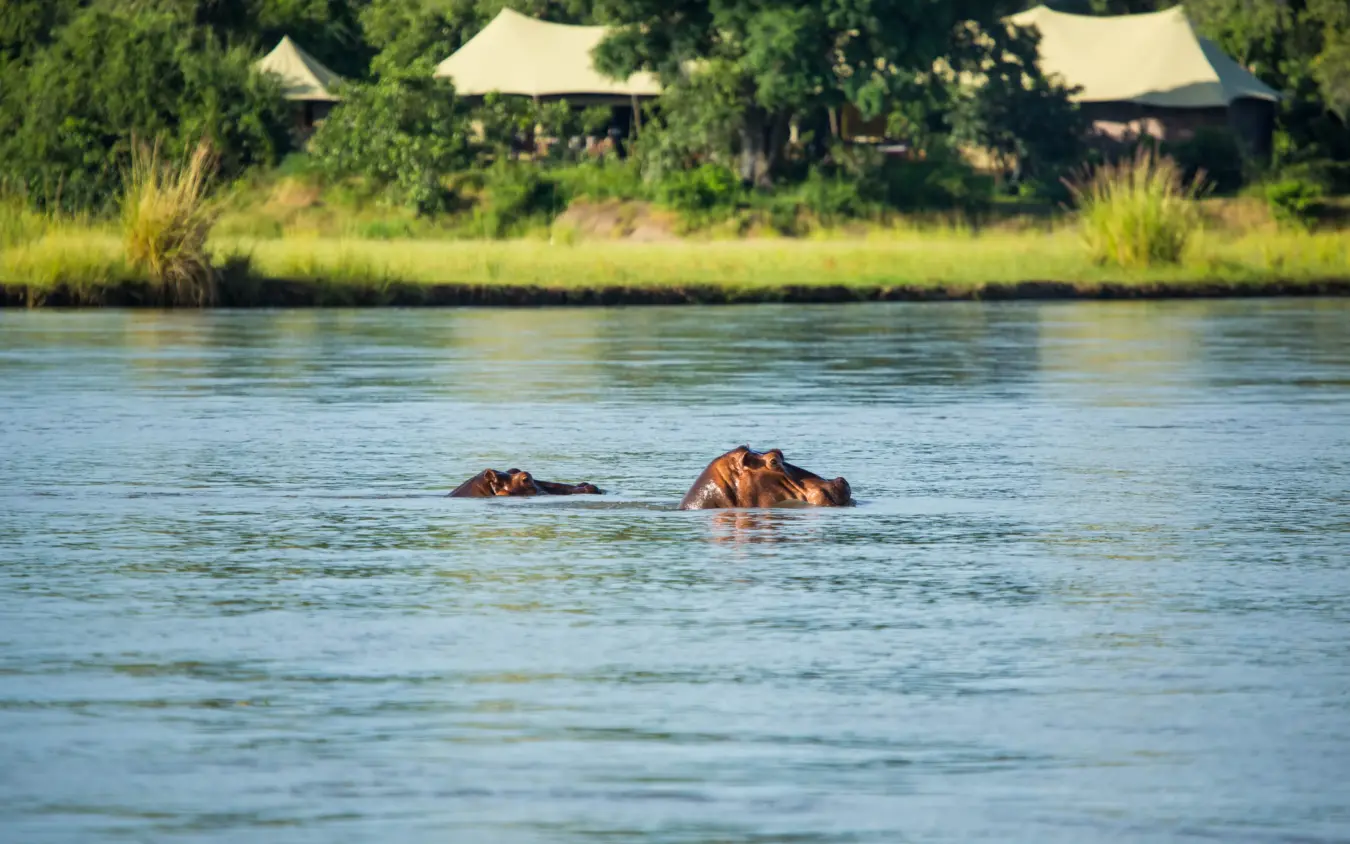
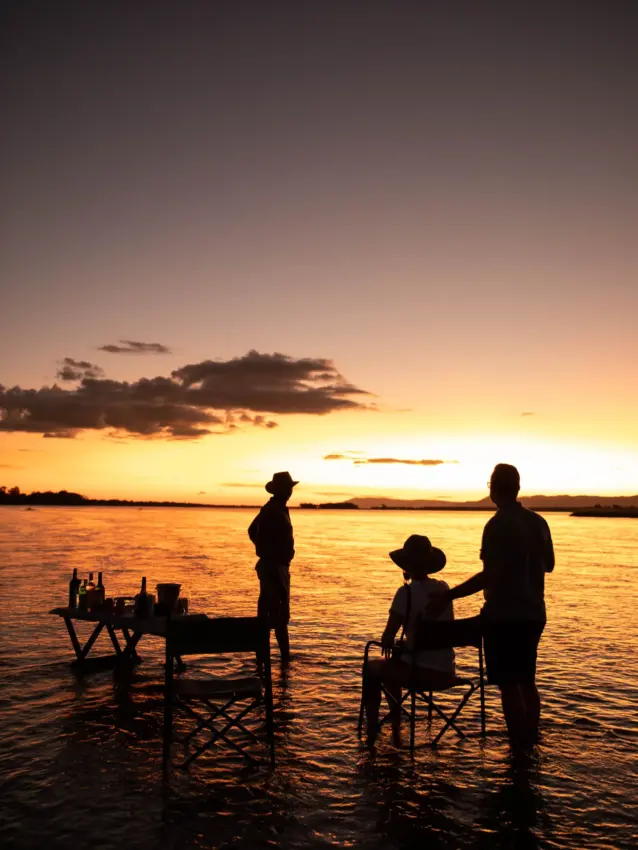
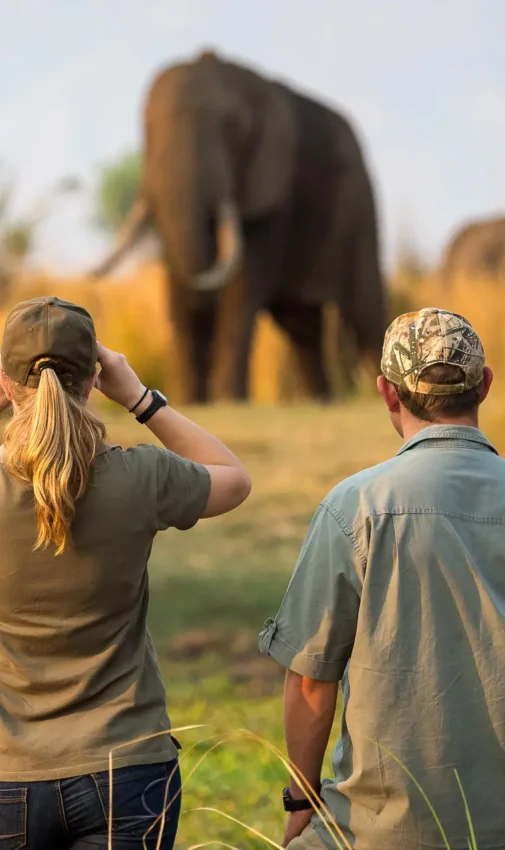
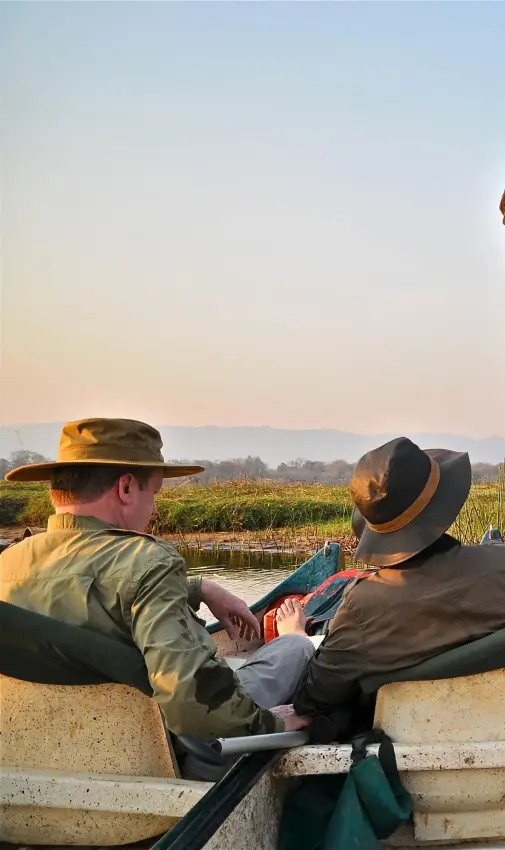
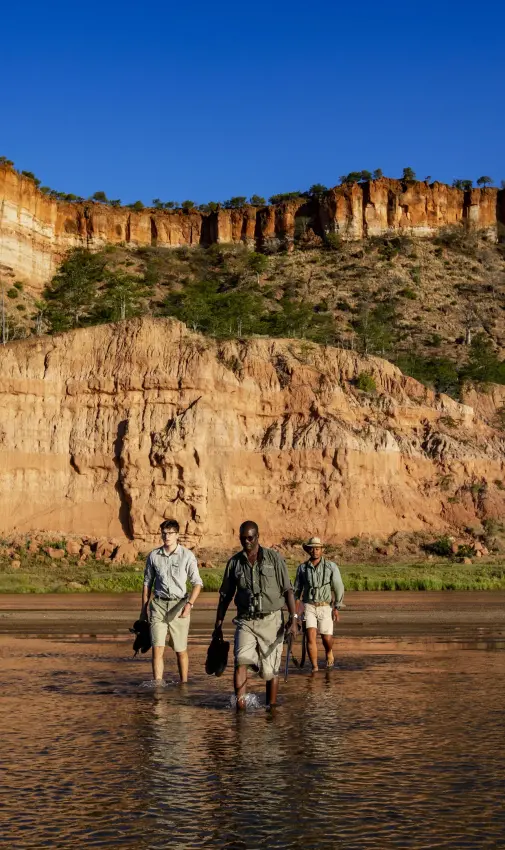
Zimbabwe licenses its professional guides through a long and demanding qualification, and the walking shows it: hours given to tracks, to termite mounds, to the birds working the treeline, then a wide loop downwind of a buffalo herd. The canoes drift past hippo pods and waterbuck grazing the mid-river islands, and lunch is set out on a sandbank in the middle of the river. Boats work the same channels, Zimbabwe on one bank, Zambia on the other. The far shore is Lower Zambezi National Park. Night drives, not permitted inside Mana Pools, turn up genets, civets and bushbabies here.
Breakfast might be eaten on a boat in the early light, lunch on the deck above the plain
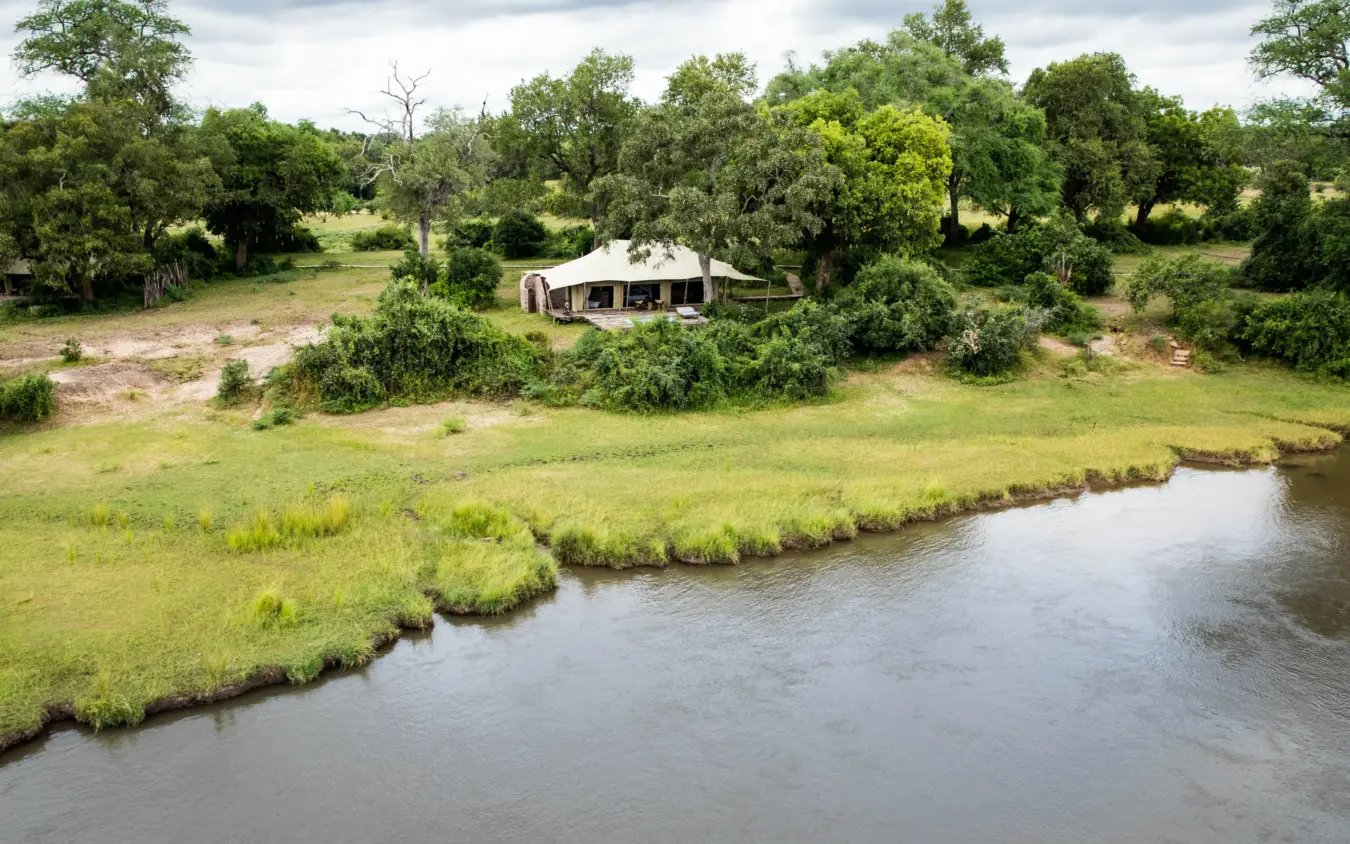
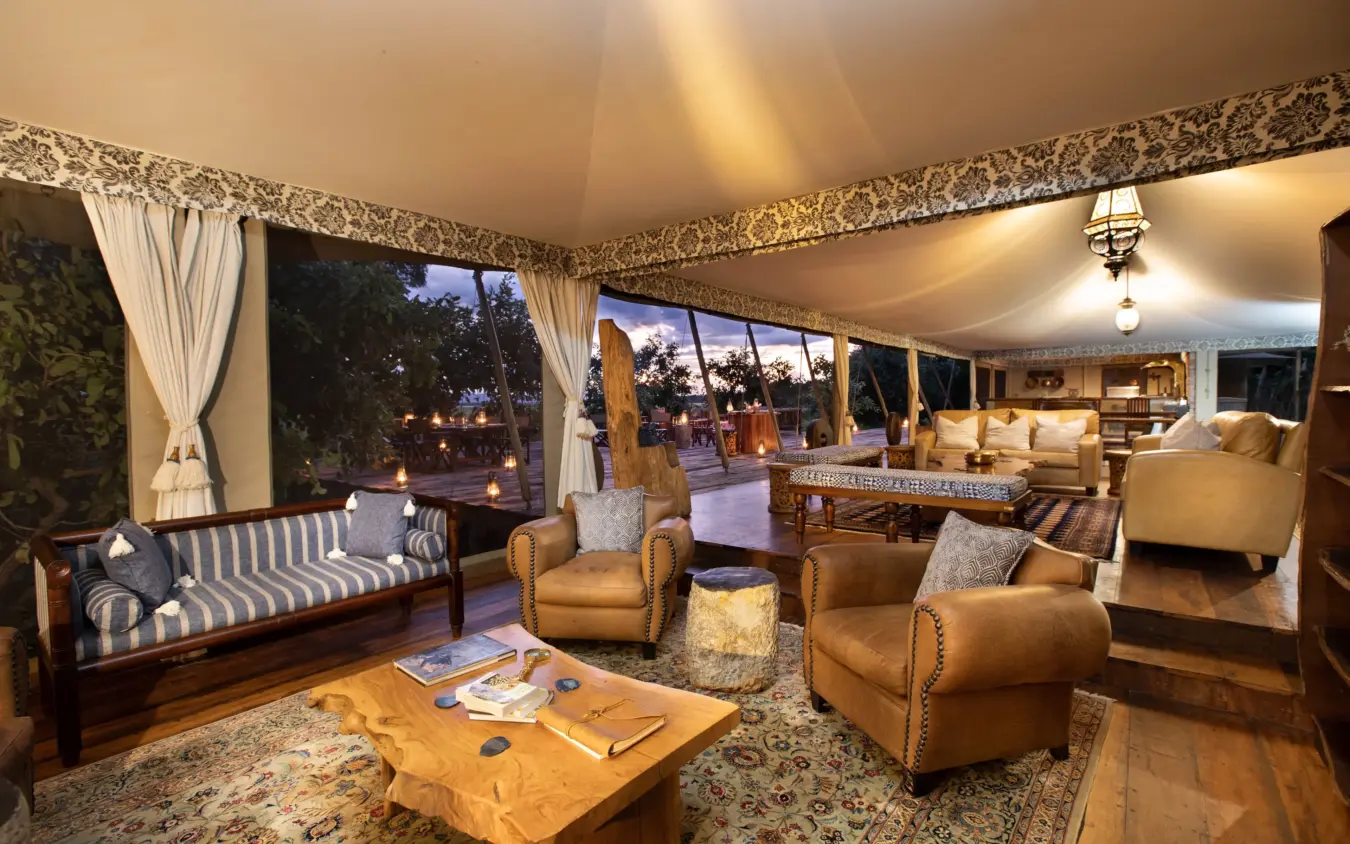
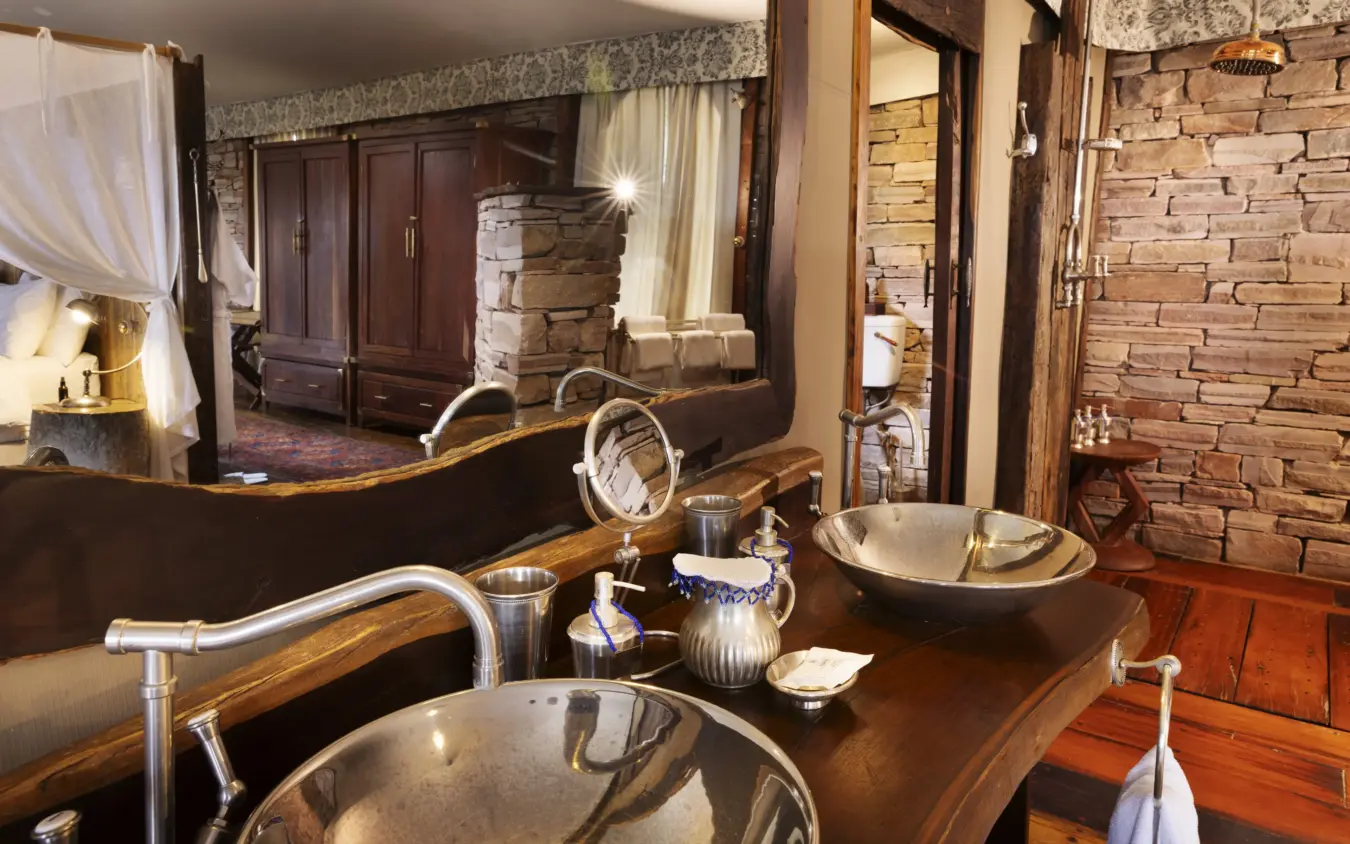
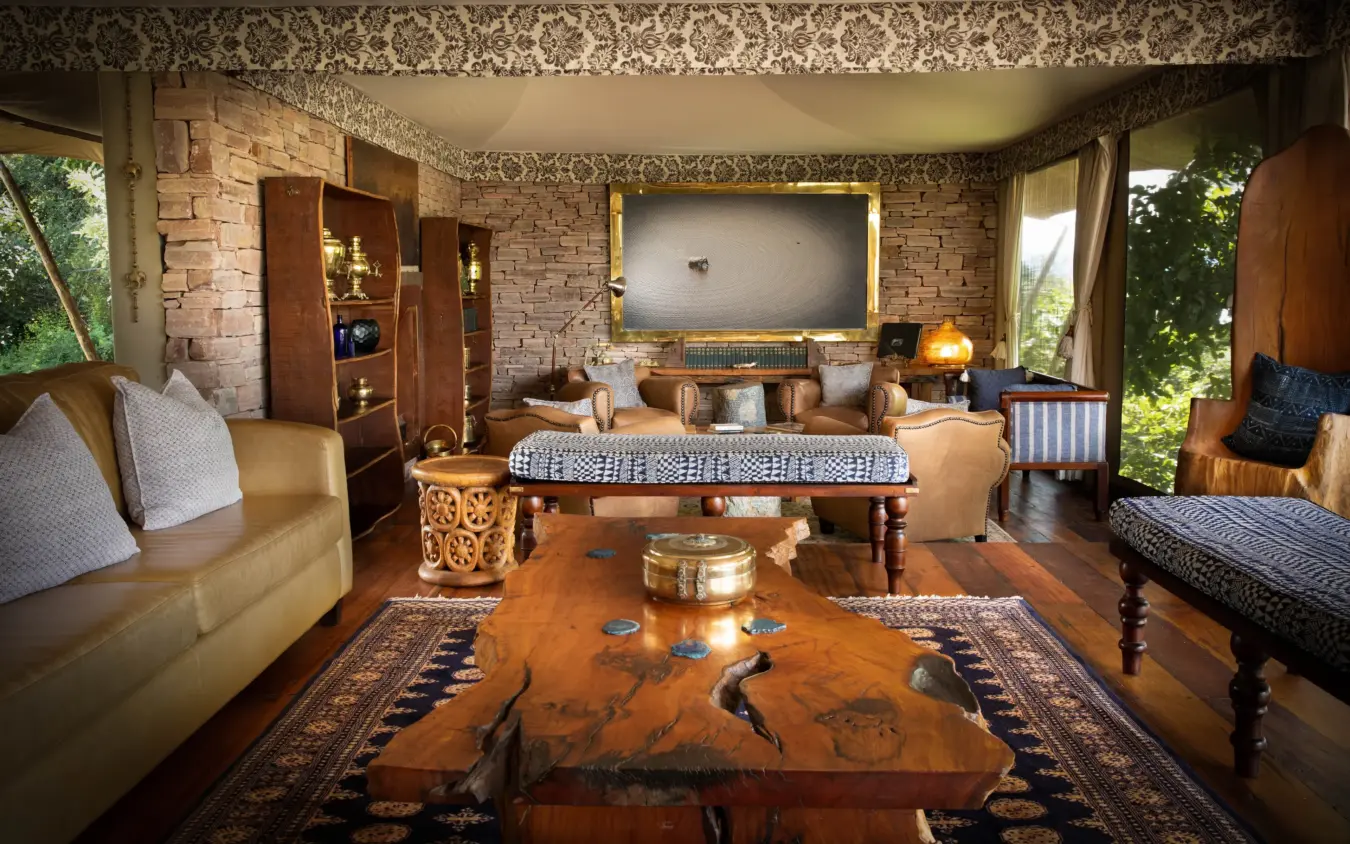
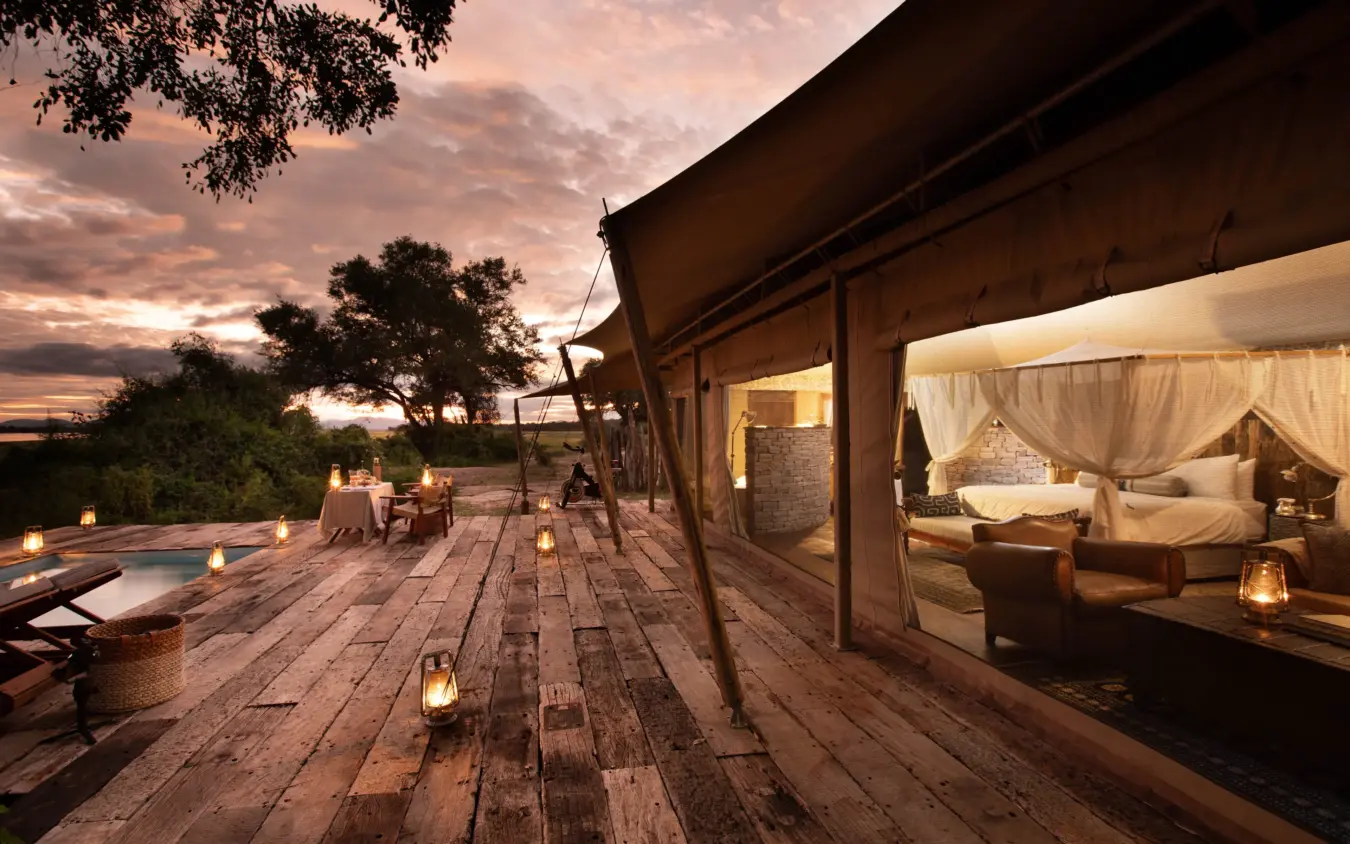
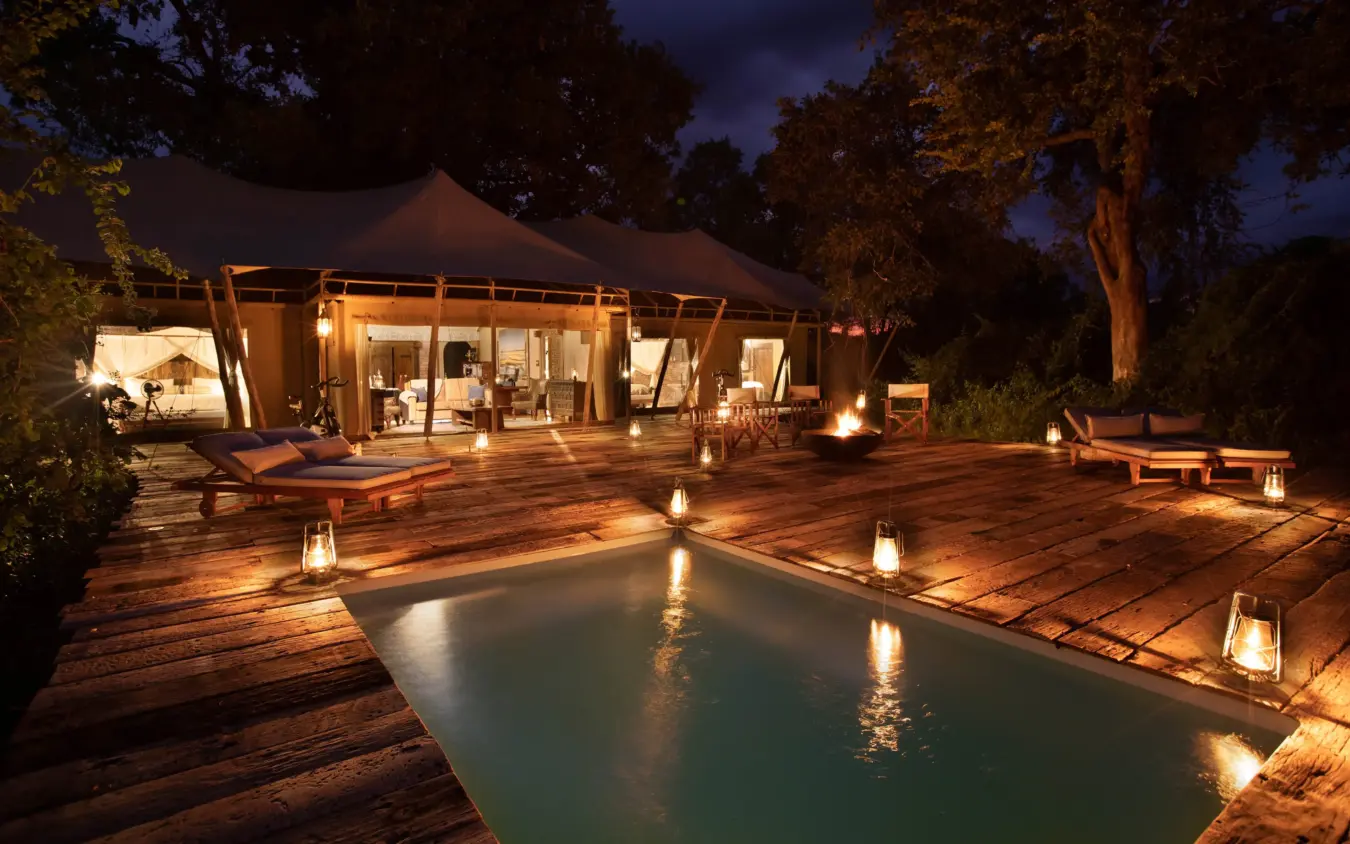
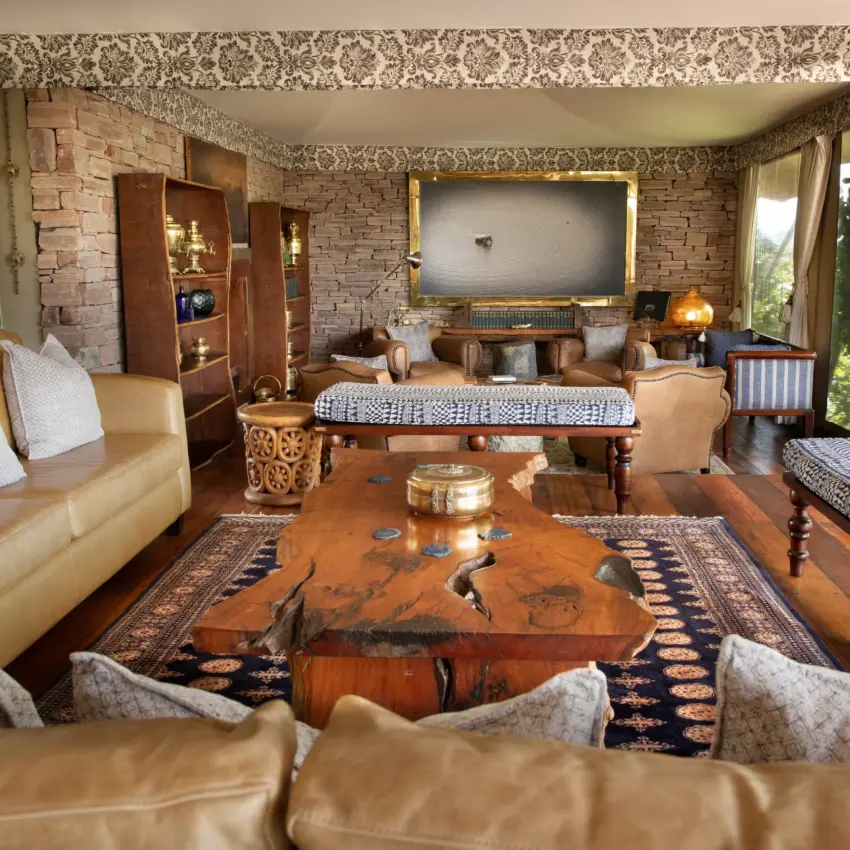
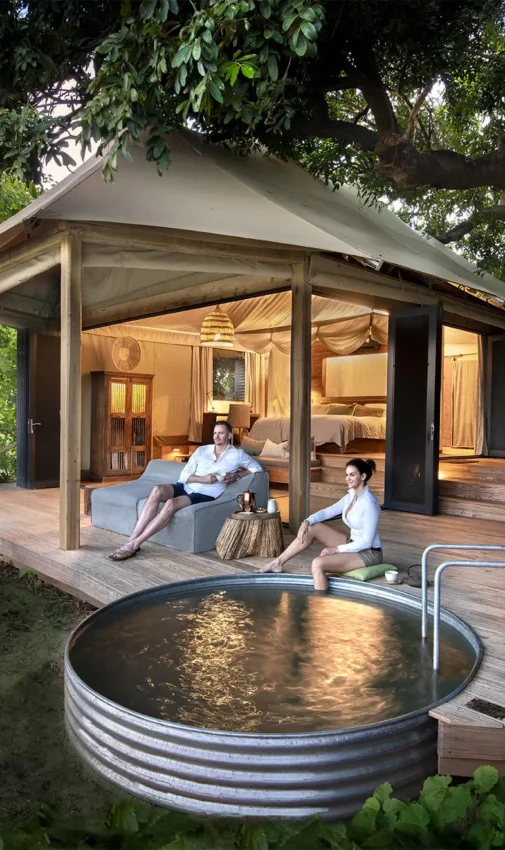
Families take the Zanji Suite, two en-suite tents joined by a shared lounge and dining room with its own kitchen, a separate entrance and a long deck around a plunge pool. It sleeps four adults, or two adults and two children, and comes with a private guide and vehicle, so drive times, walk lengths and boat trips run on the family’s own schedule. Meals can be taken in the suite. Children from six join the scheduled activities, and there is birding, tracking, cooking and art laid on for younger guests.
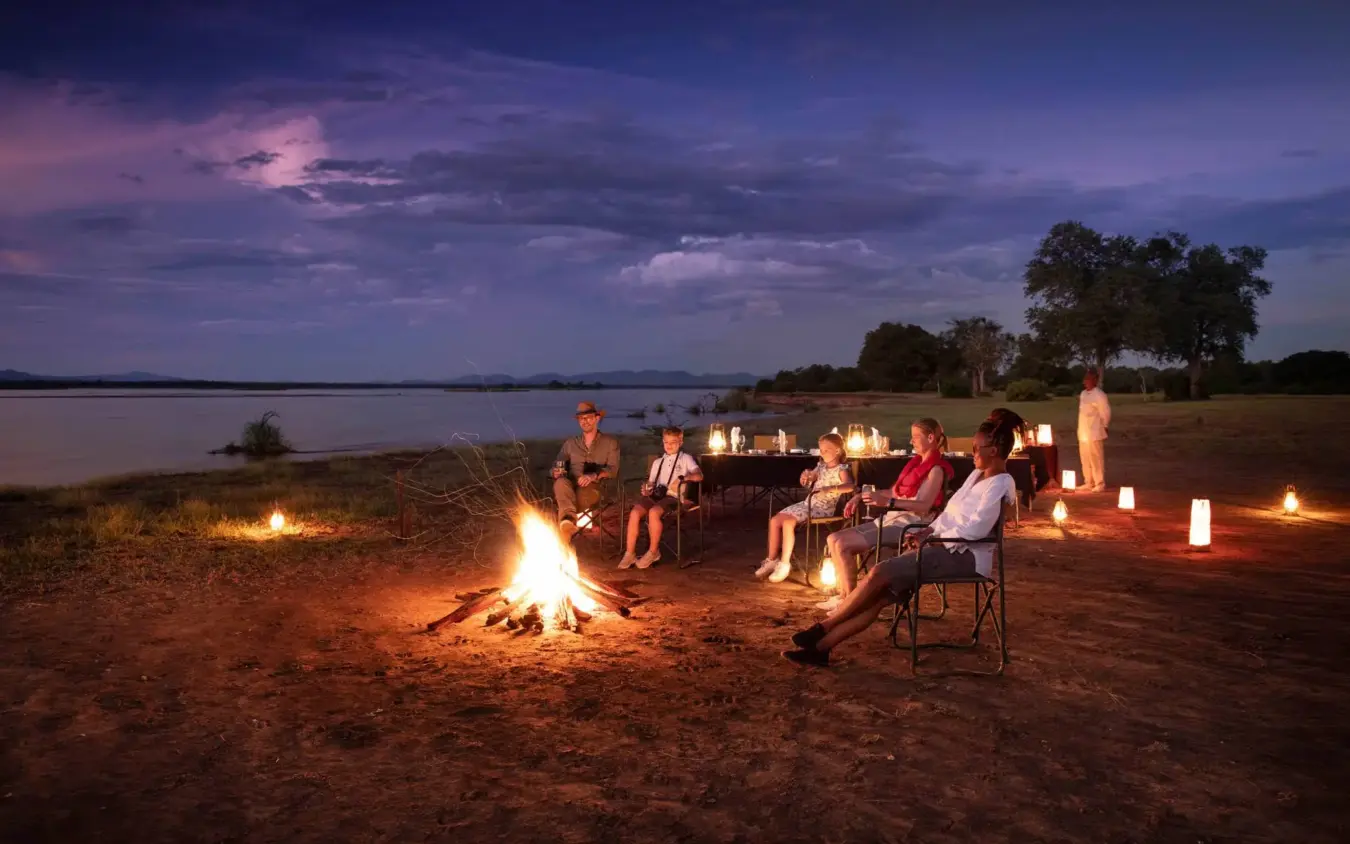
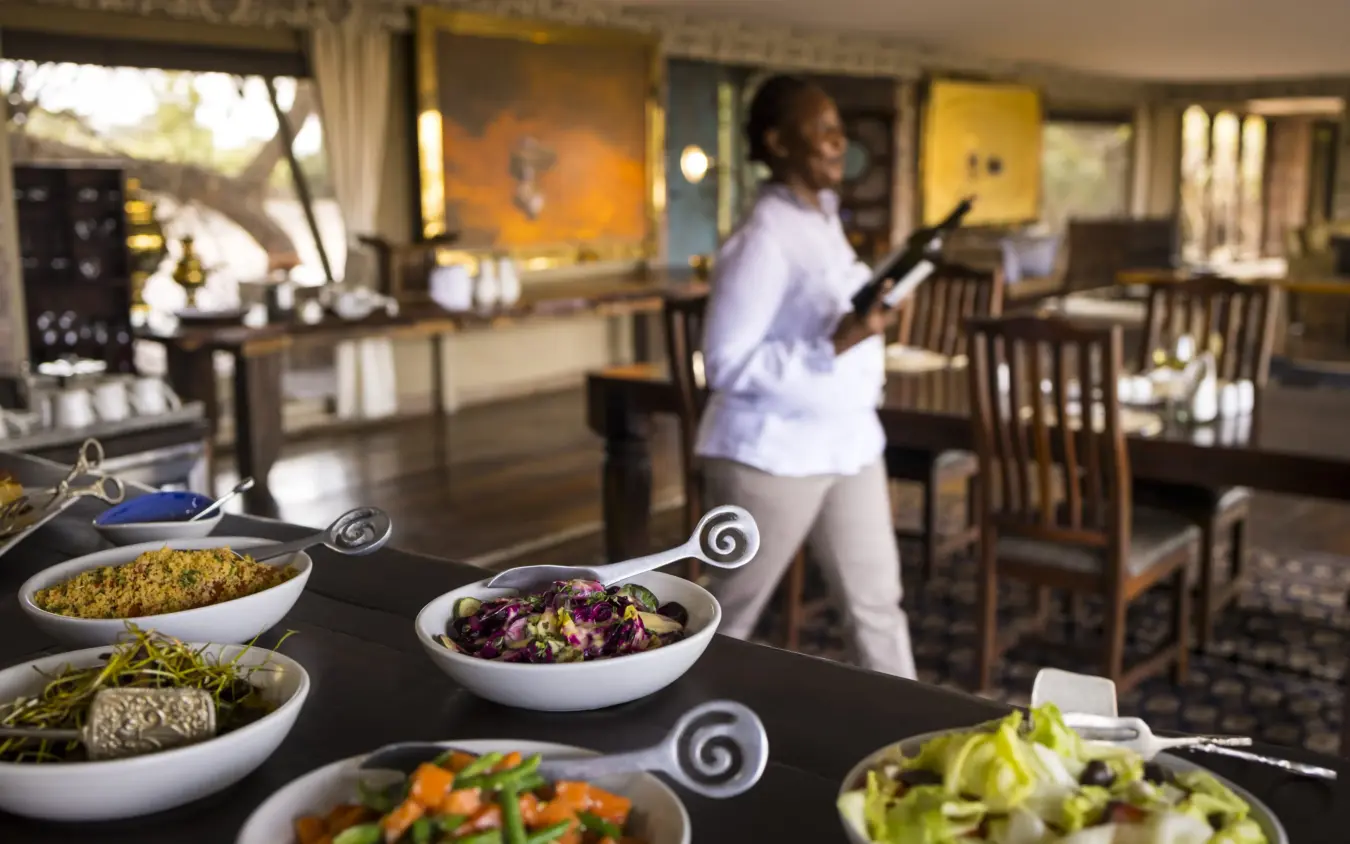
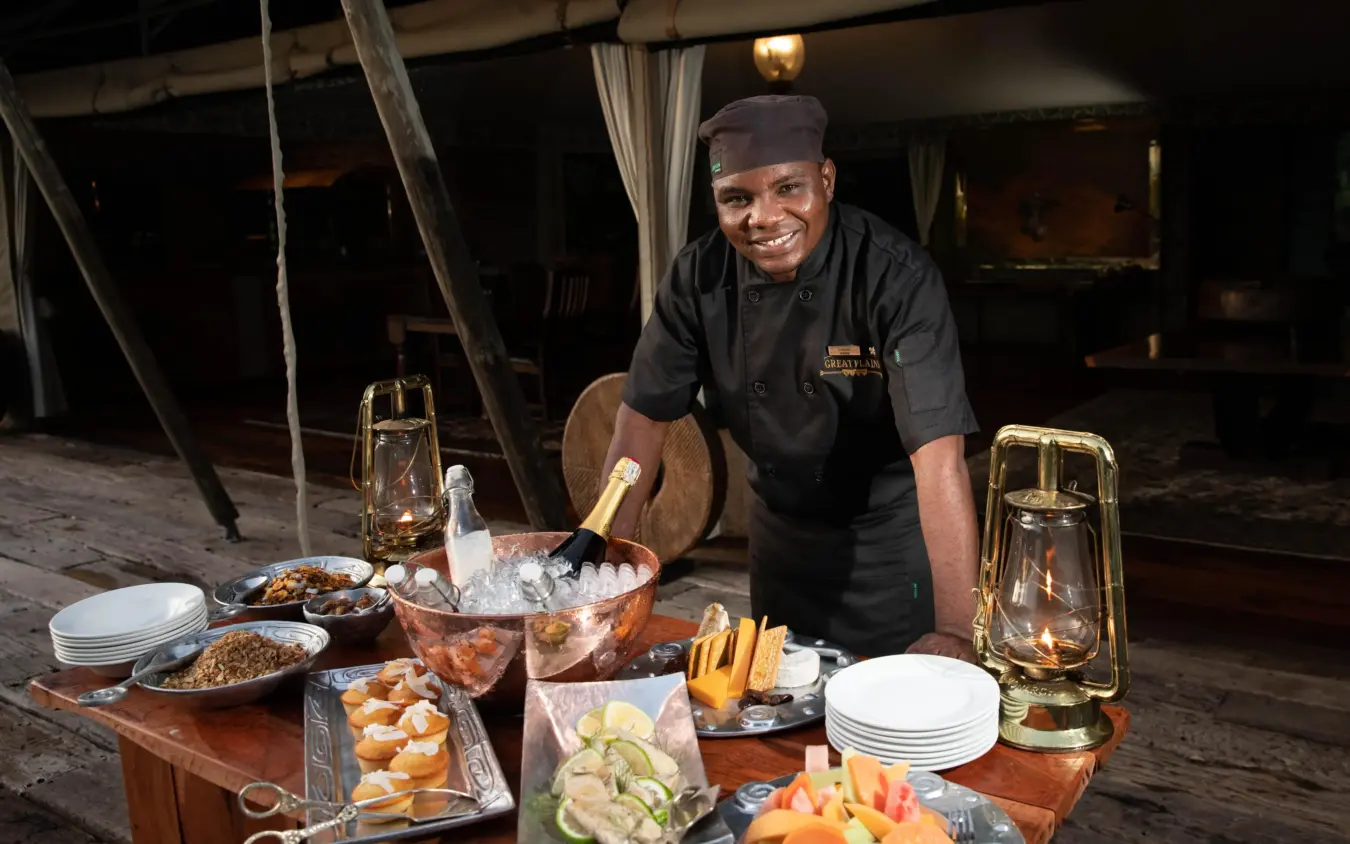
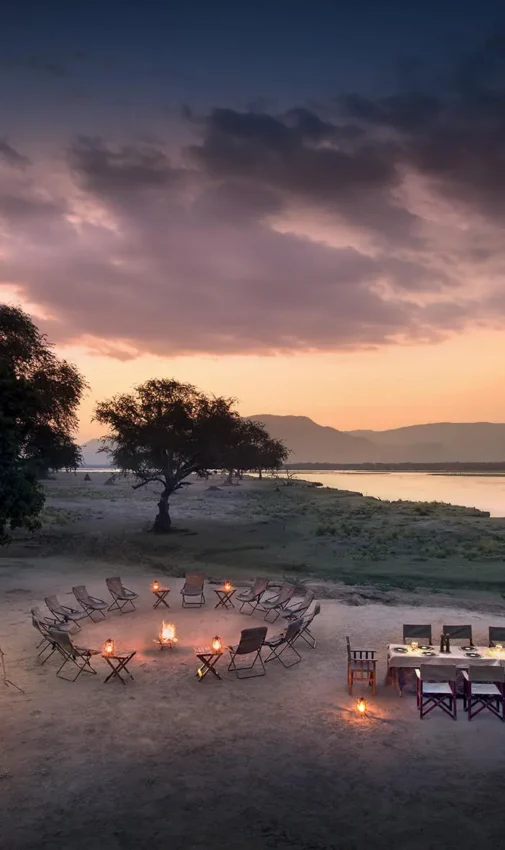
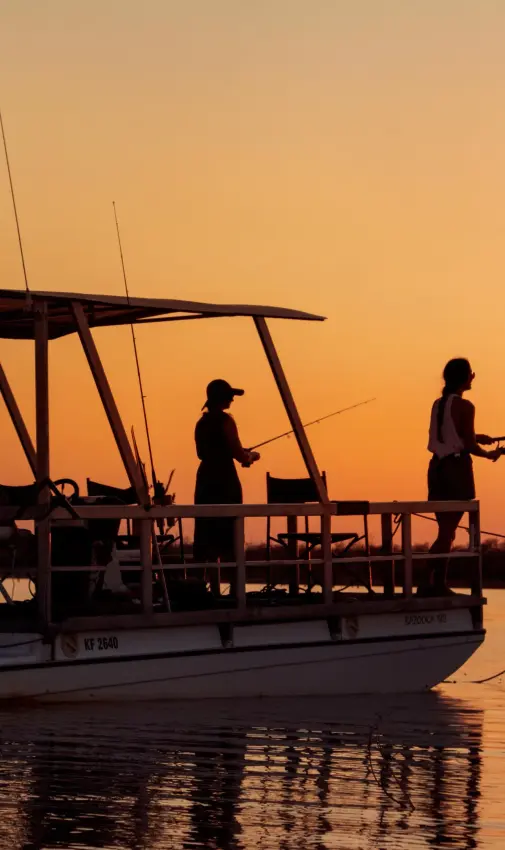
An open kitchen holds the centre of camp, with the wine cellar behind another of the carved doors. Coffee comes around the fire before the first drive. Breakfast might be eaten on a boat in the early light, lunch on the deck above the plain, dinner by oil lamp out on the floodplain with the fire going. Sapi carries a single camp across former hunting ground, and Mana Pools begins where the reserve ends. The Sapi Restoration Initiative funds the monitoring teams that work it, among them an all-female ranger unit.