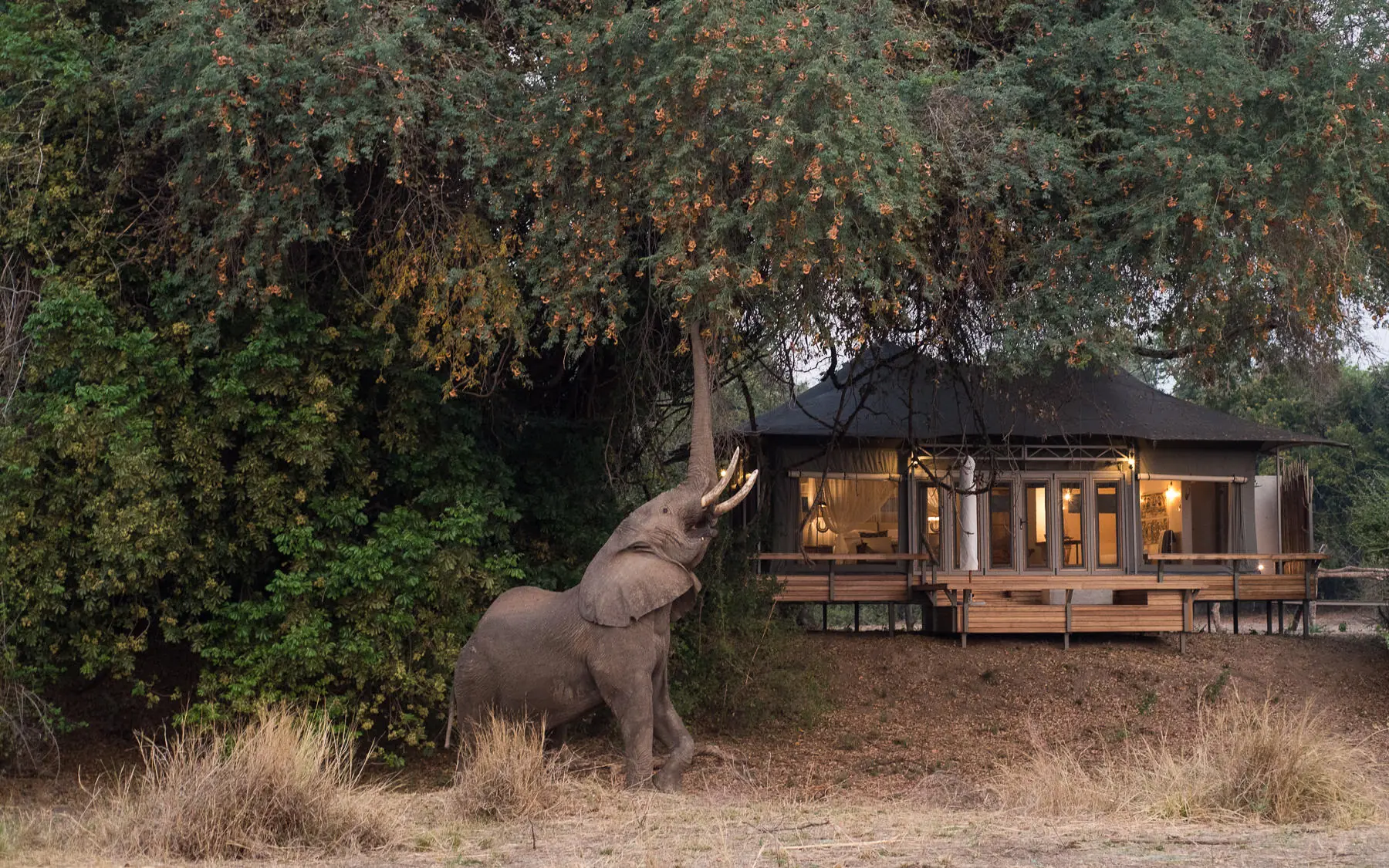
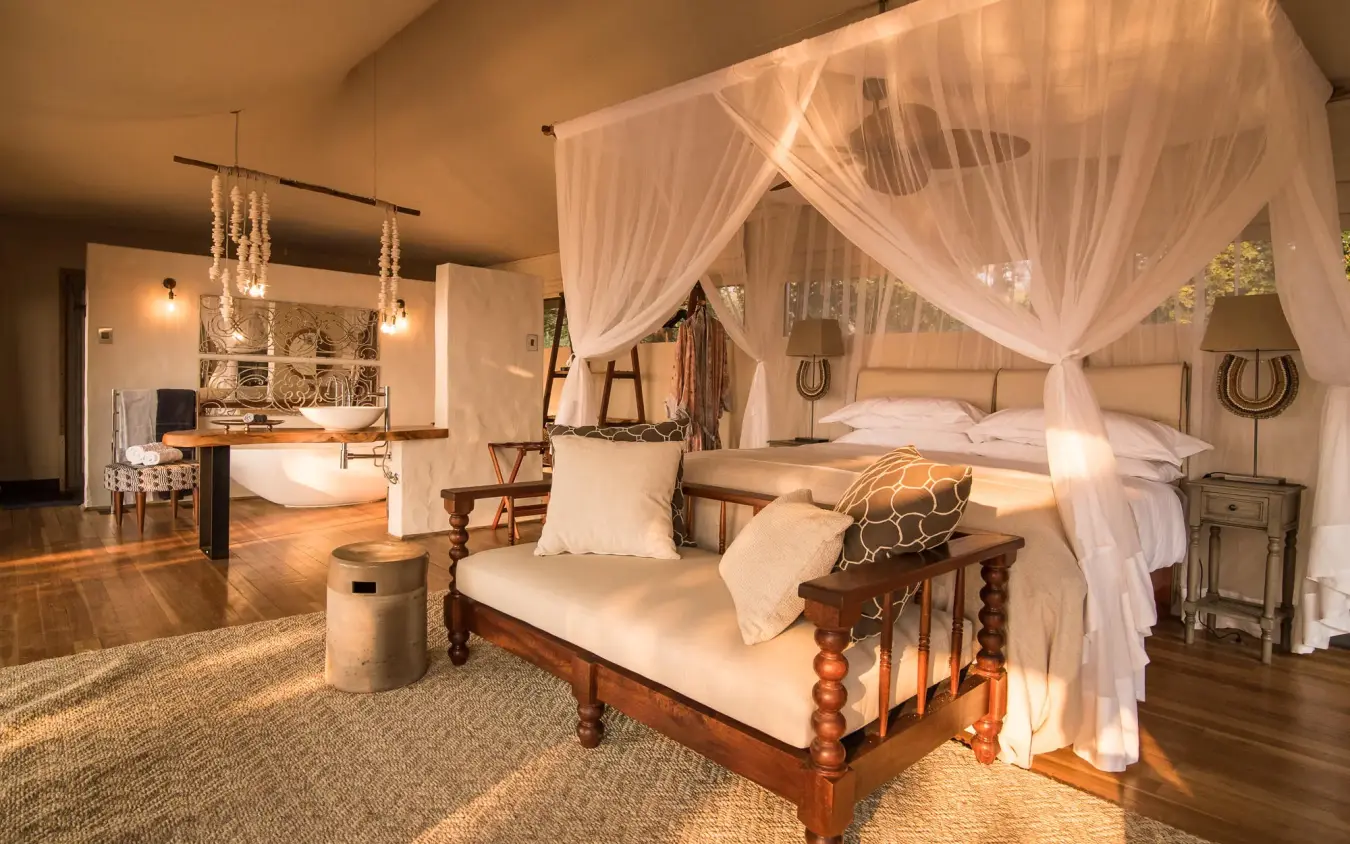
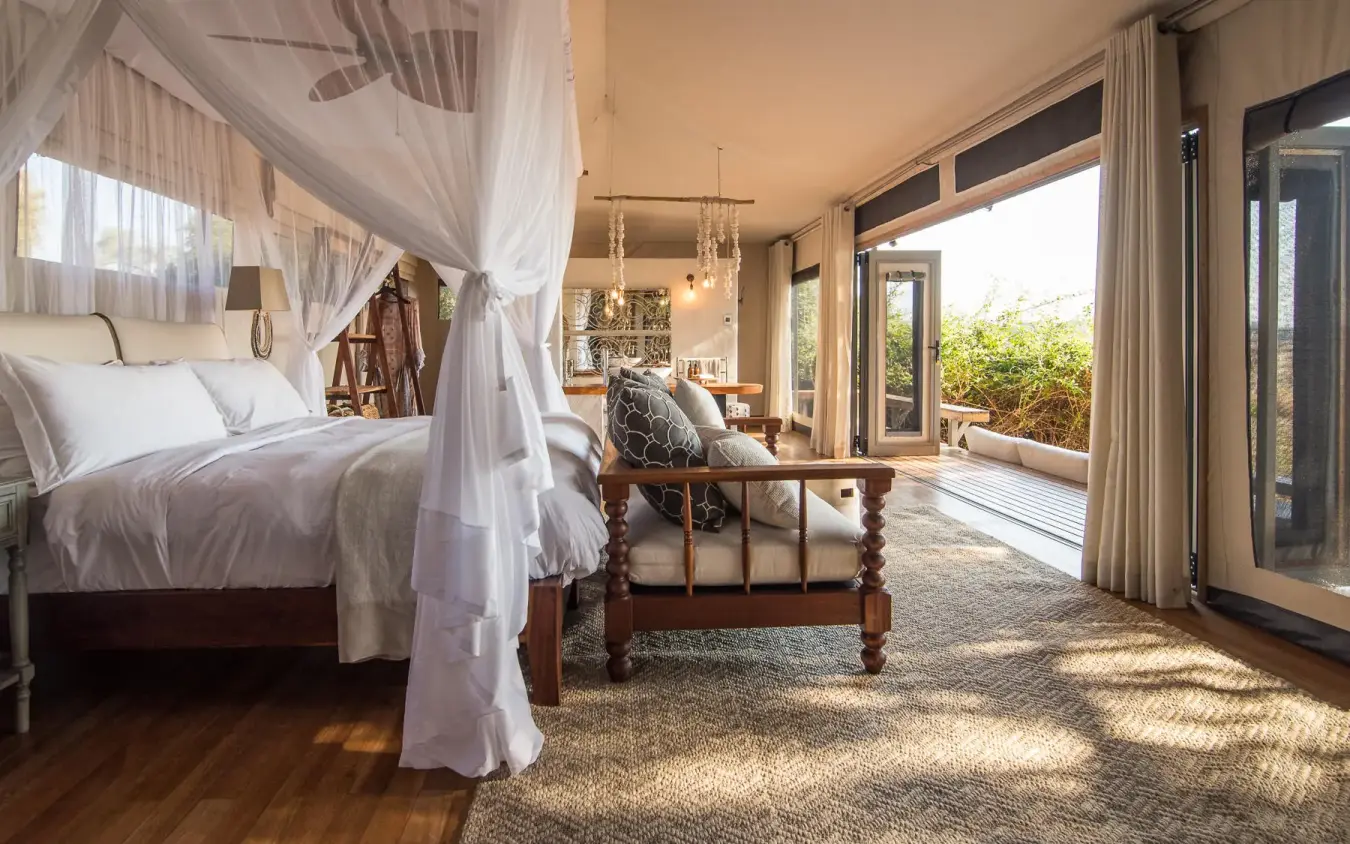
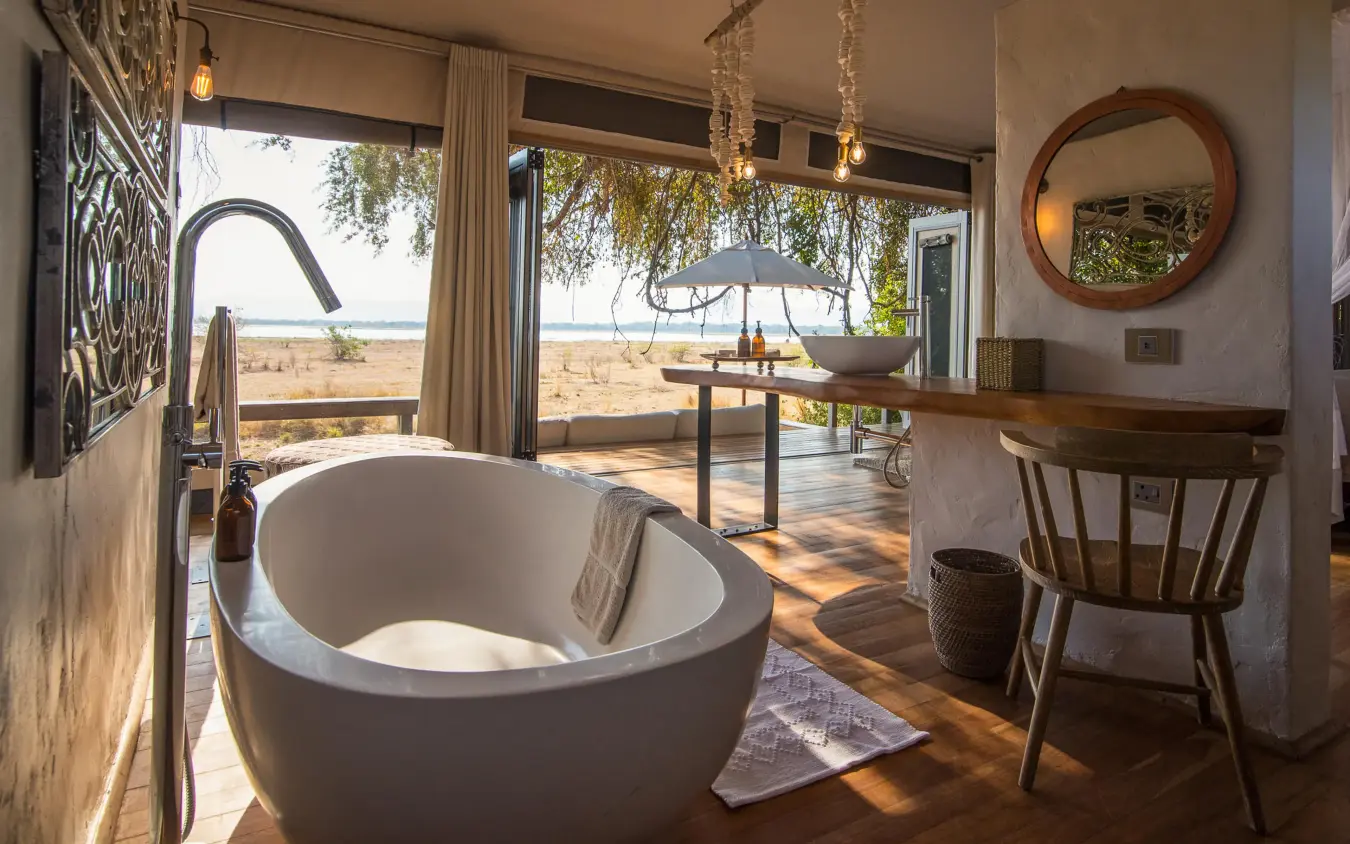
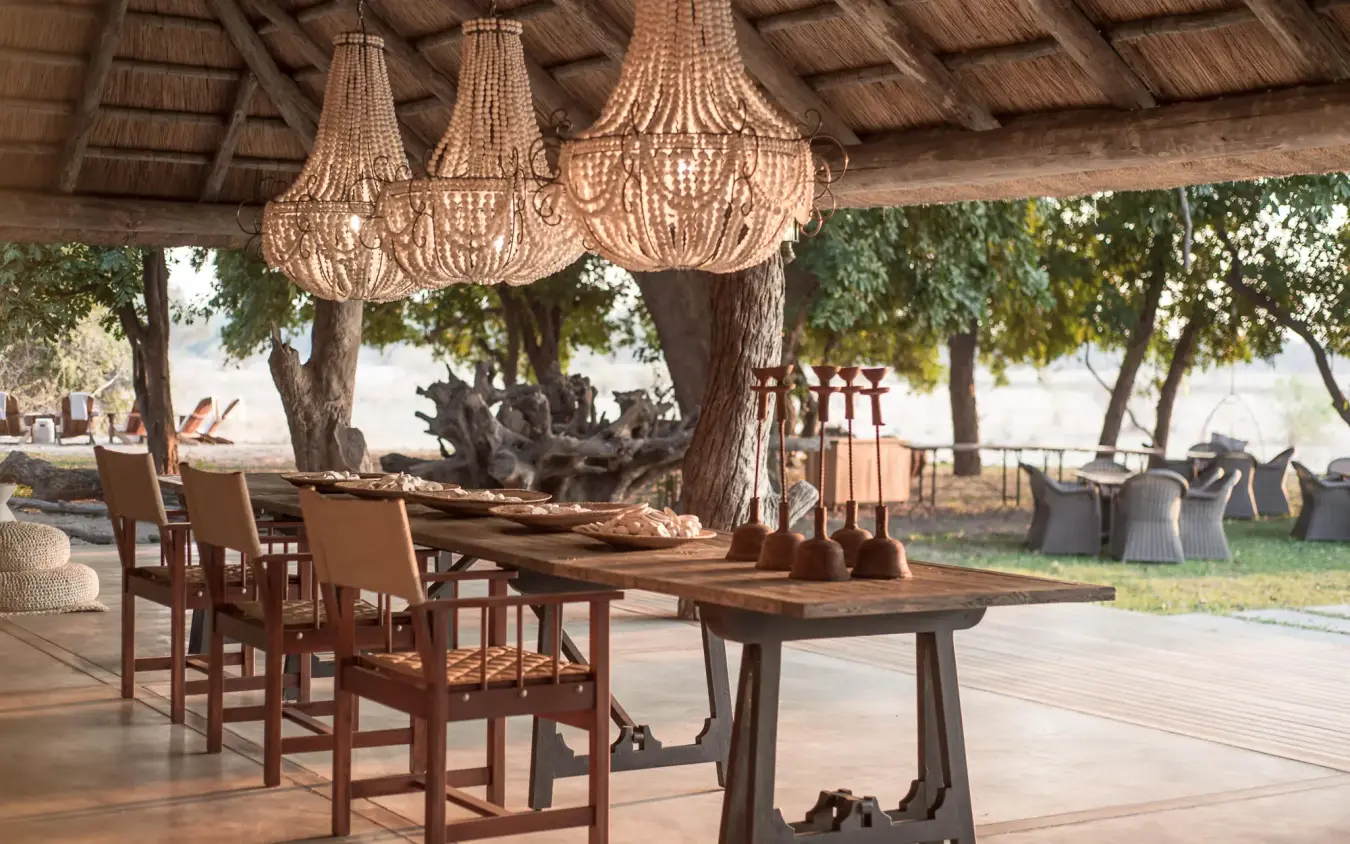
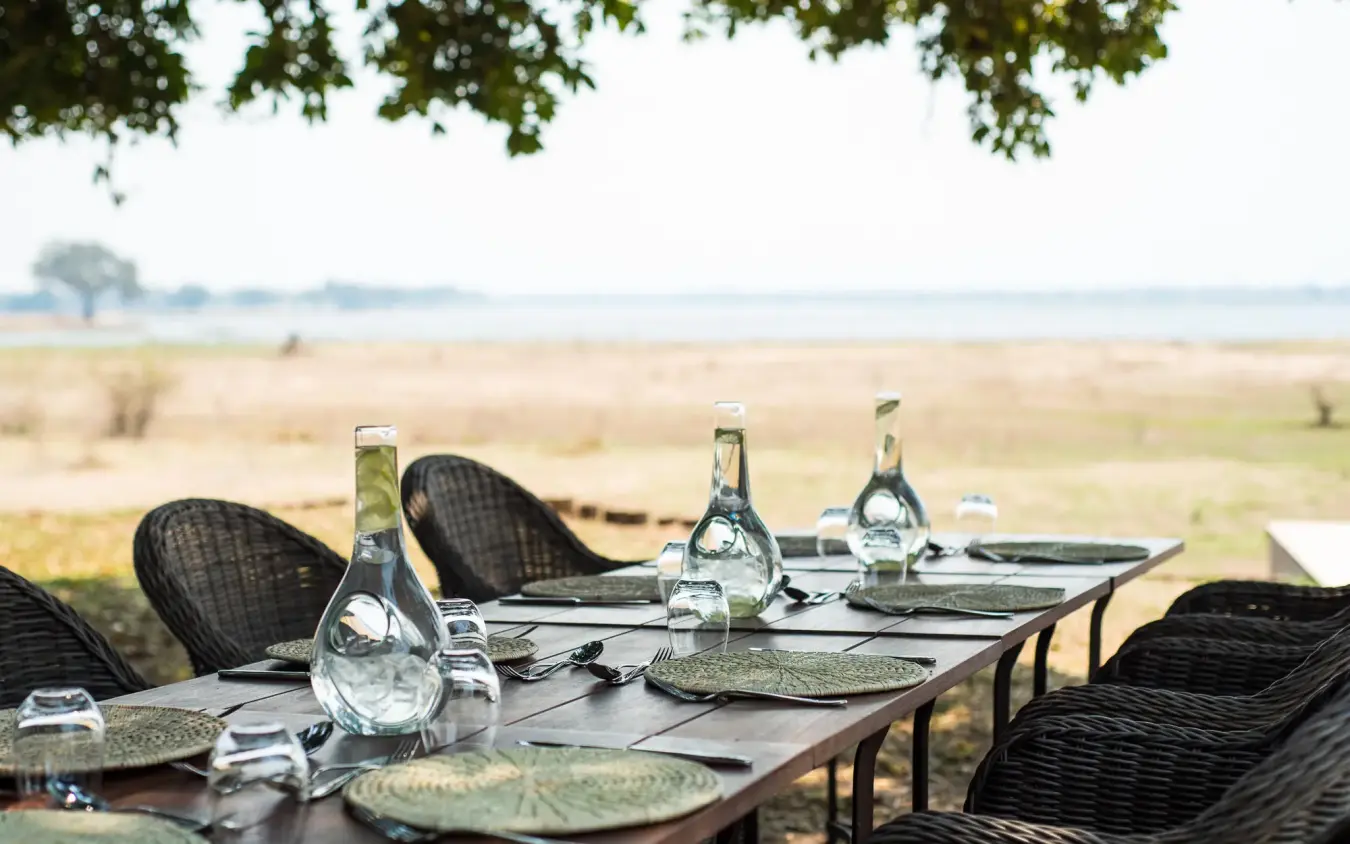
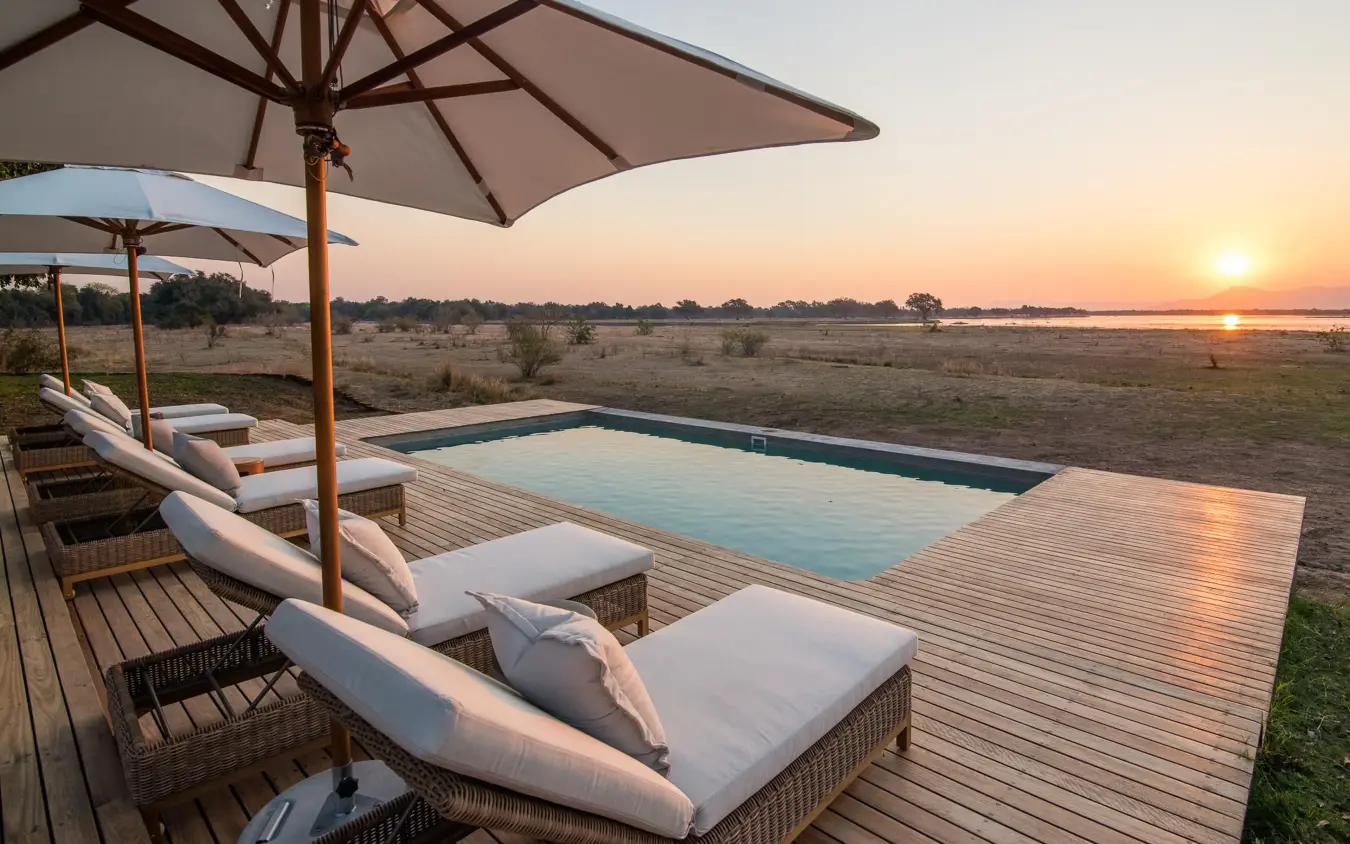
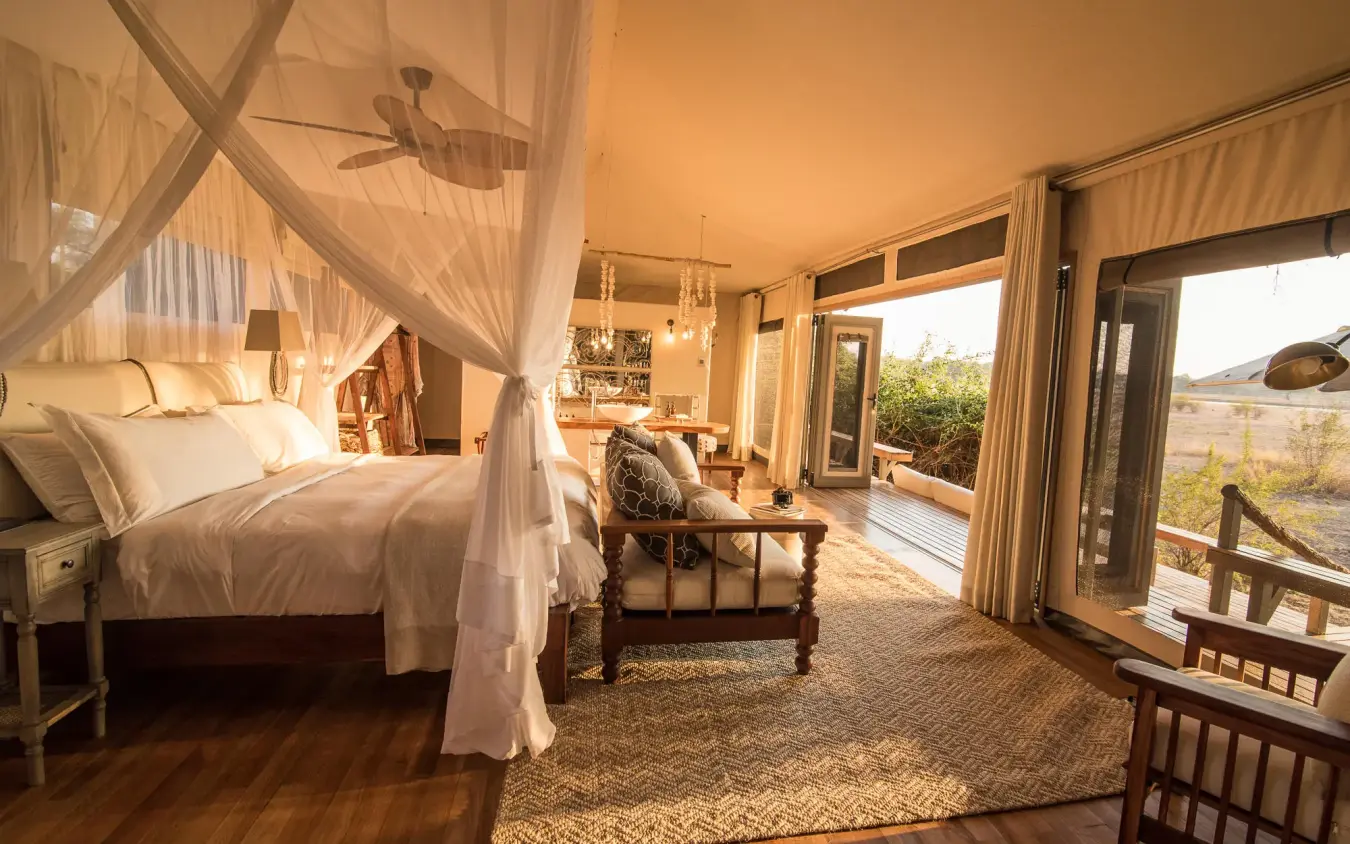
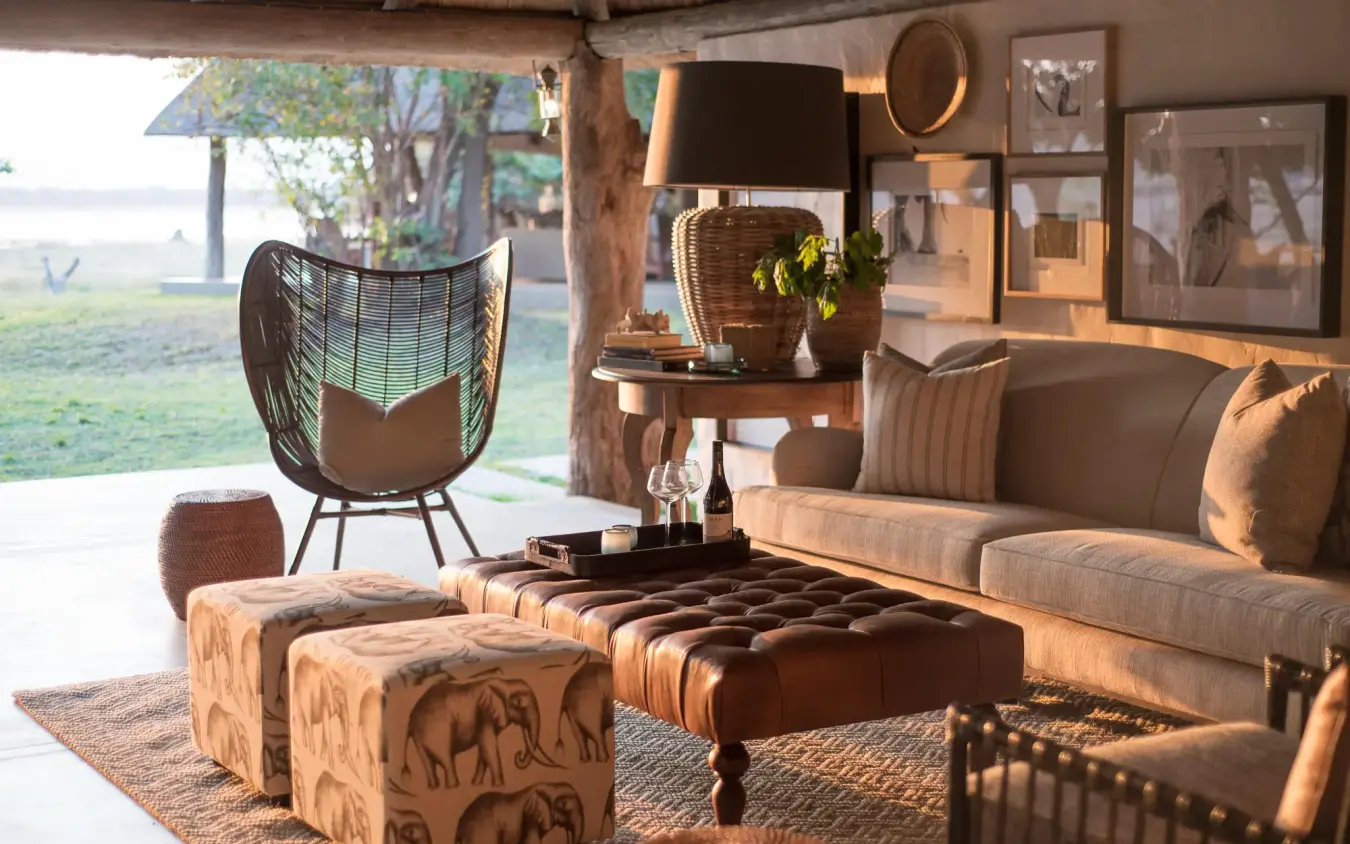
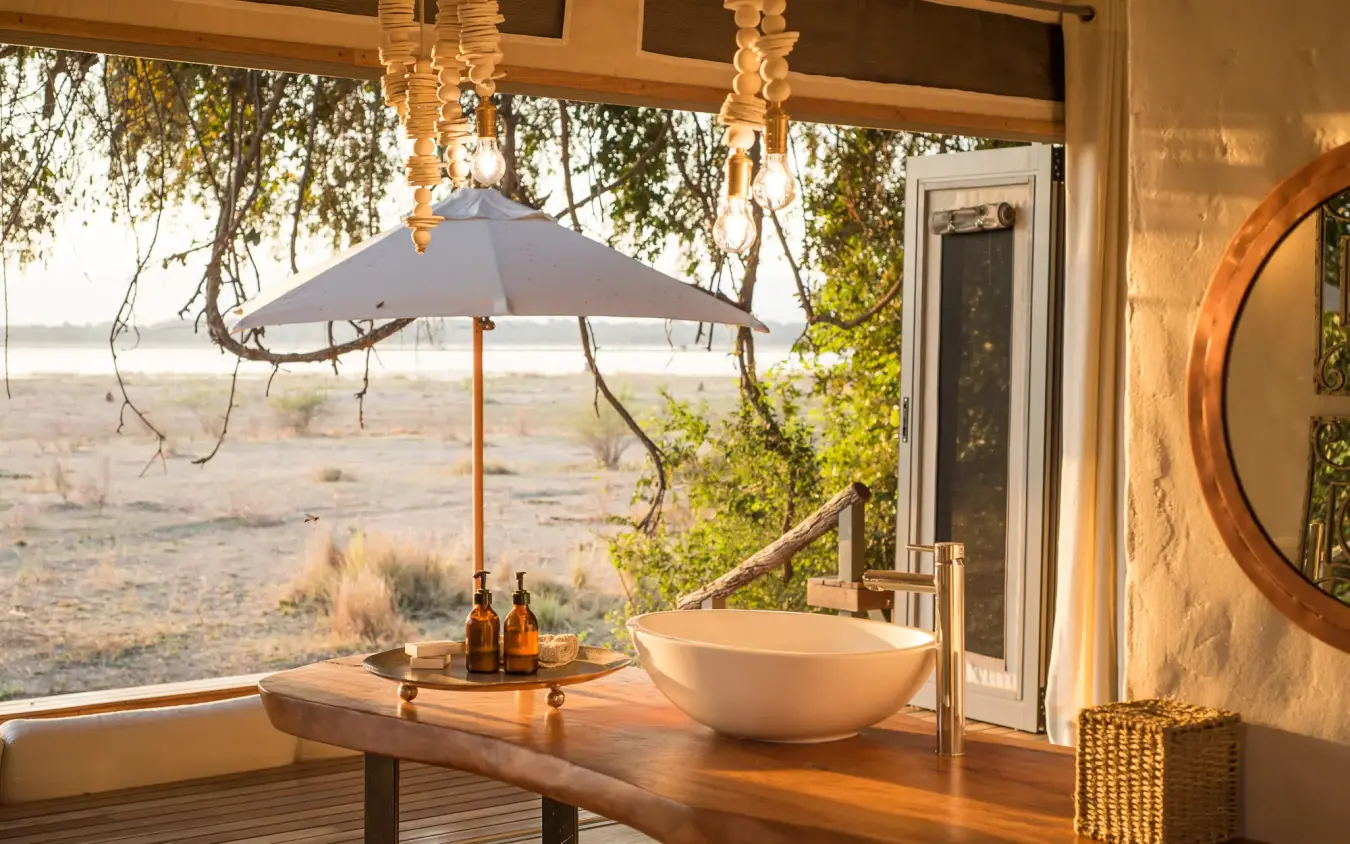
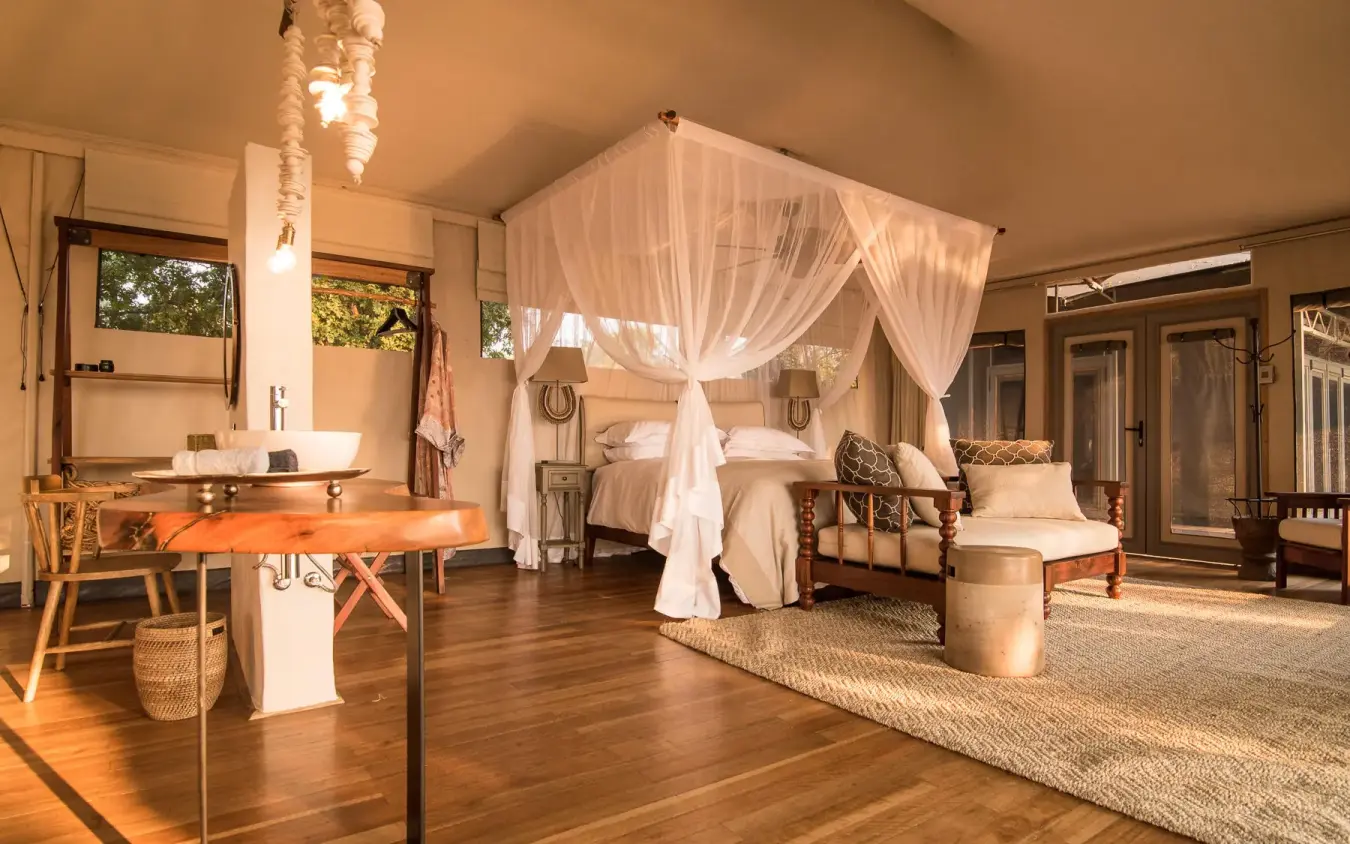
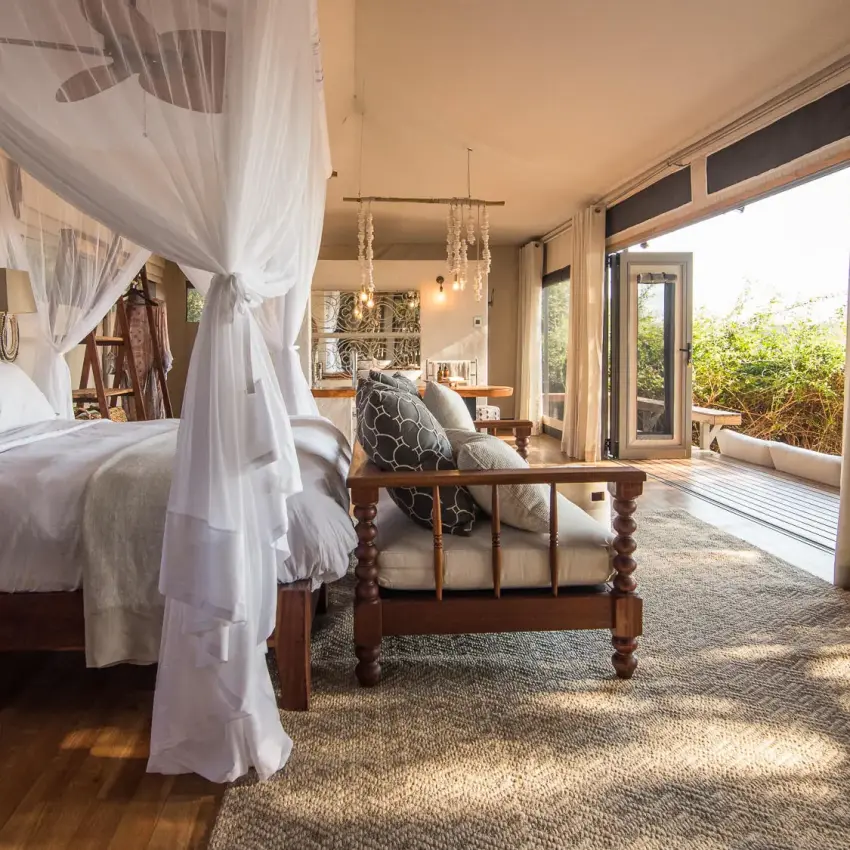
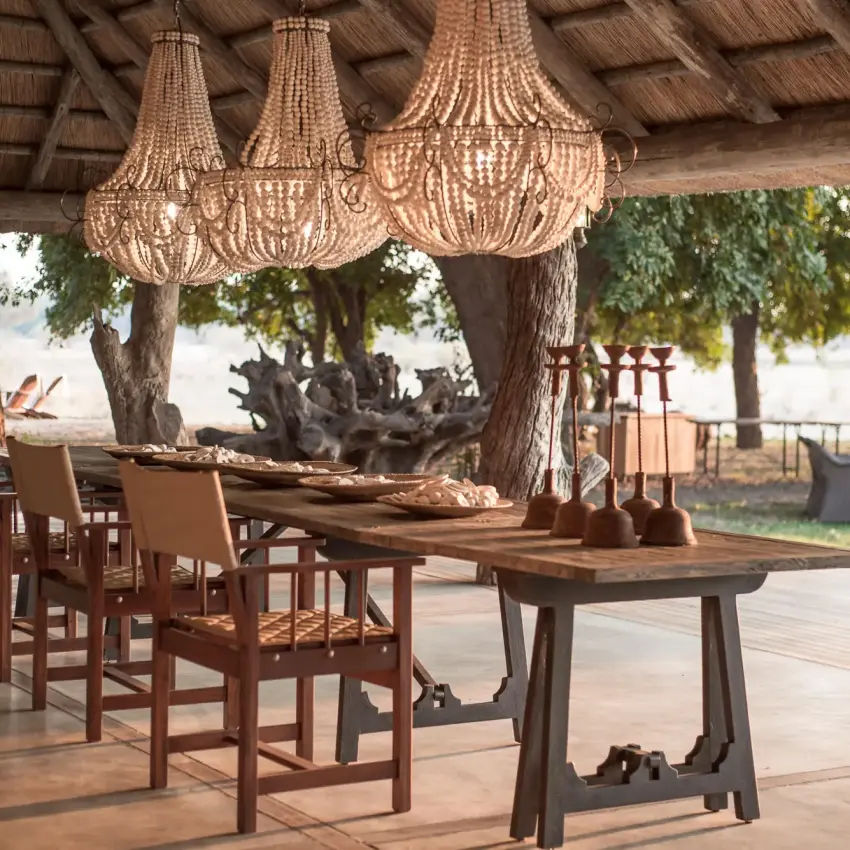
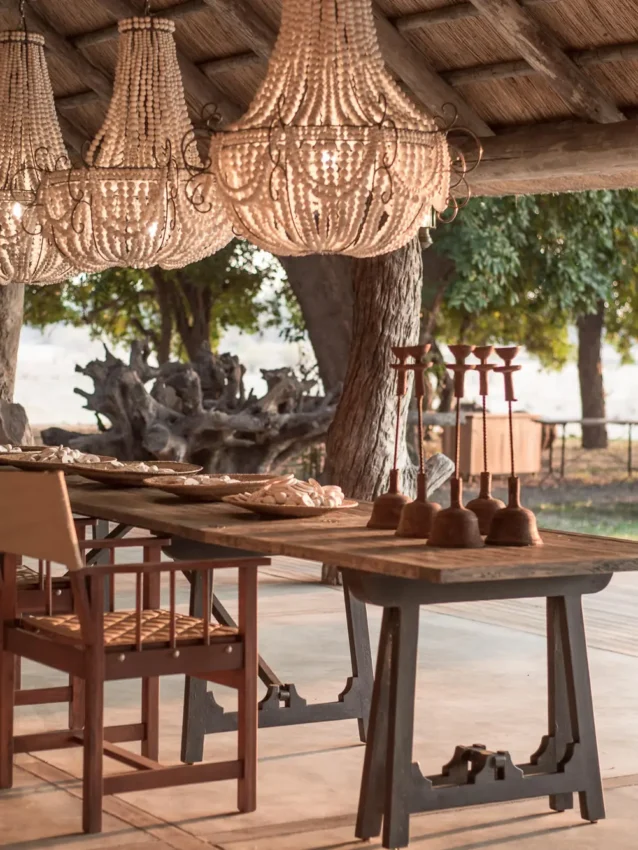
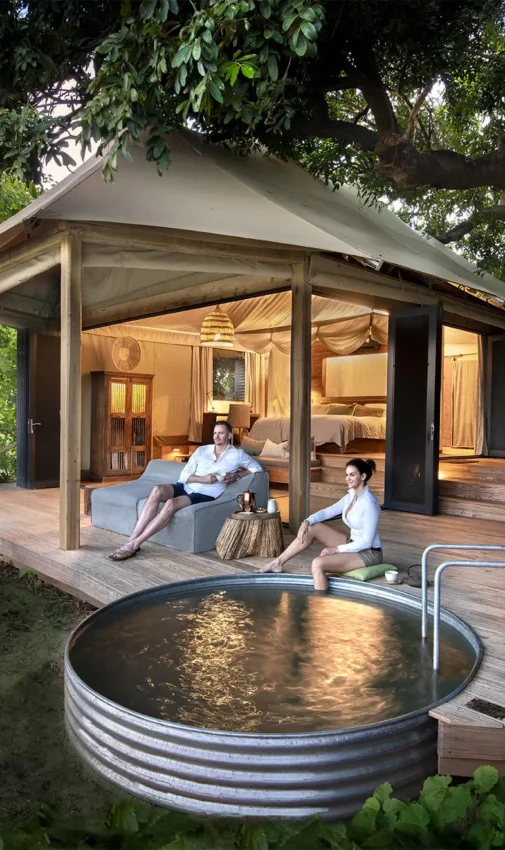
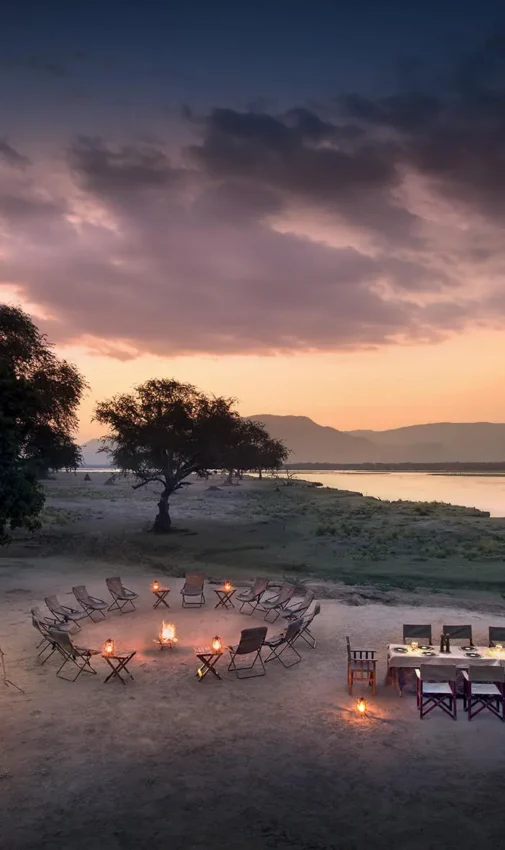
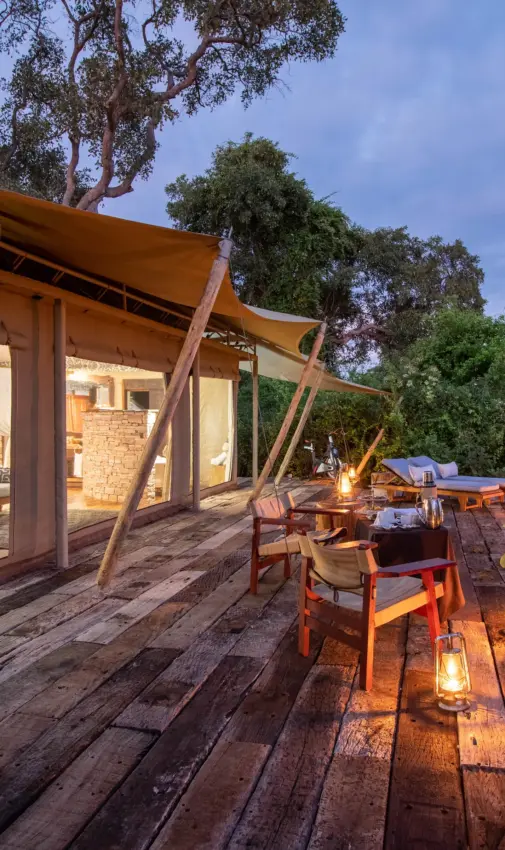
The camp reads as calm and understated, its canvas suites raised on low wooden decks and joined to the main lounge, bar and dining area by pine walkways that let game pass beneath. Inside, soft creams and beiges settle around wooden furniture, and the open fronts give straight onto the floodplain. Each suite comes with a king or twin beds and a bathroom of indoor and outdoor showers. There is a standalone bath, an indoor lounge, and a private veranda set out over the water.
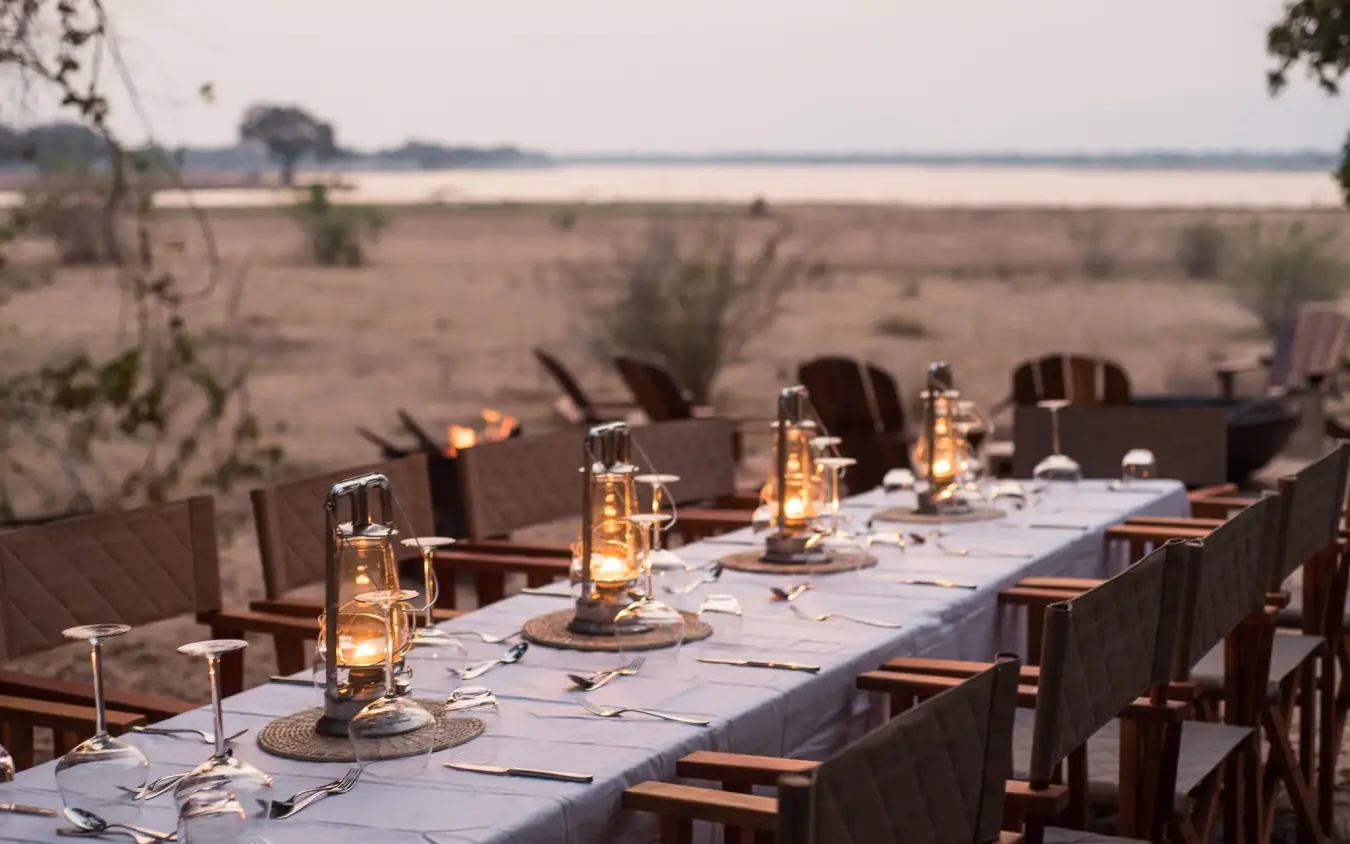
Life centres on the deck, the pool and the fire pit, each placed to keep the floodplain in view. Two of the seven suites are family units, each with a private plunge pool and two adjoining tents gathered around a shared deck. The camp runs from April to mid-November, through the dry season when the albida pods fall and the wildlife draws in tight along the river and its shrinking pans. It is the season that makes this stretch of the Zambezi what it is.
There is a standalone bath, an indoor lounge, and a private veranda set out over the water
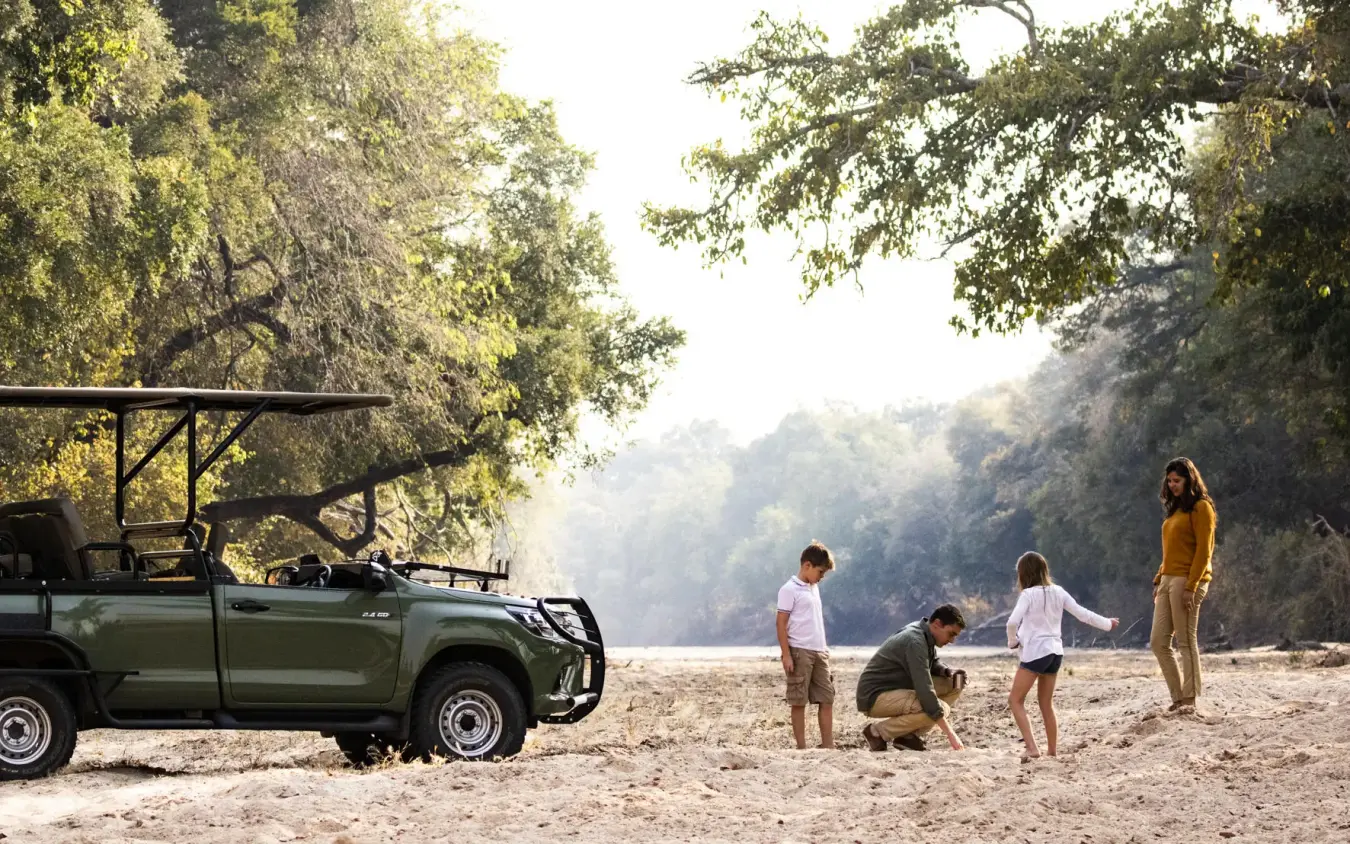
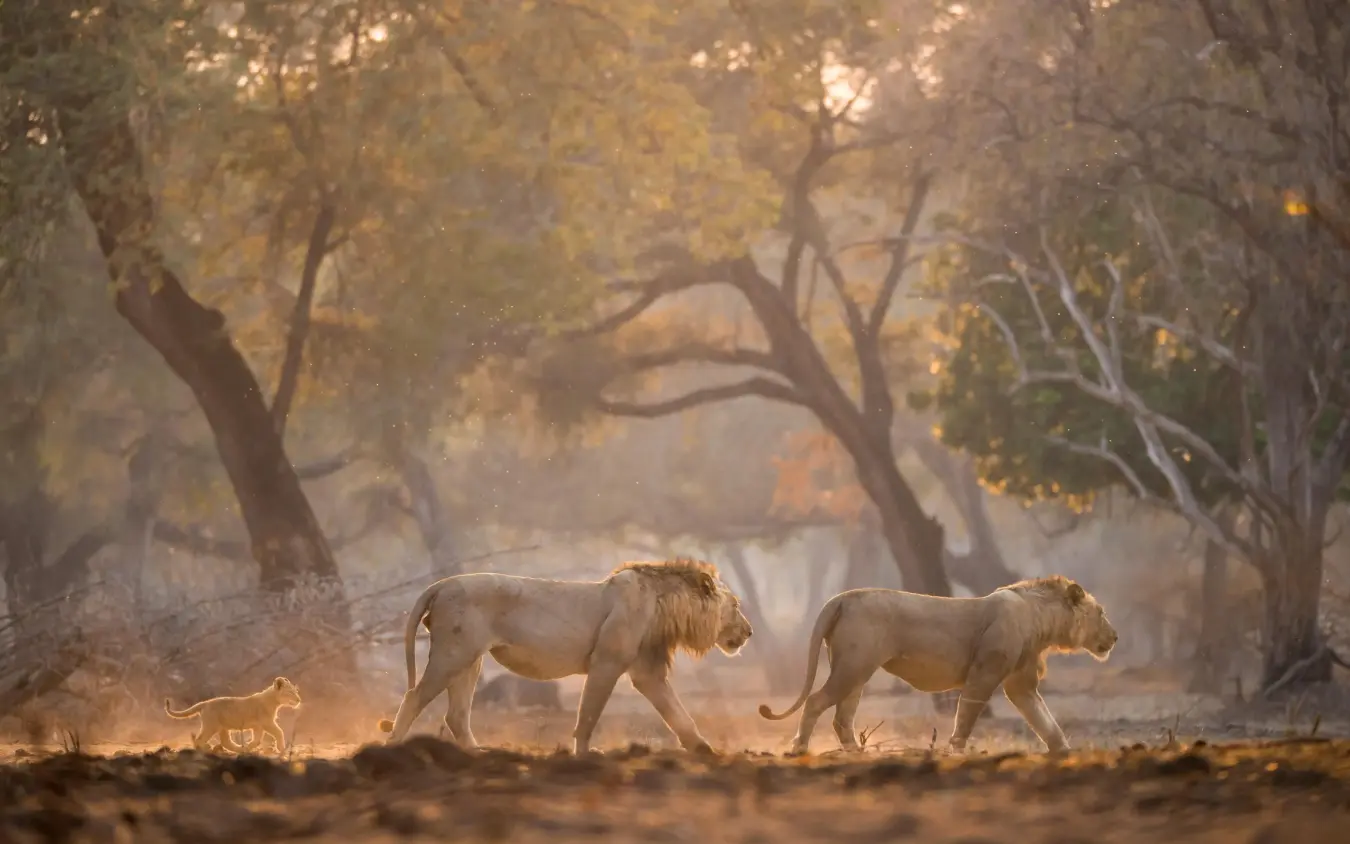
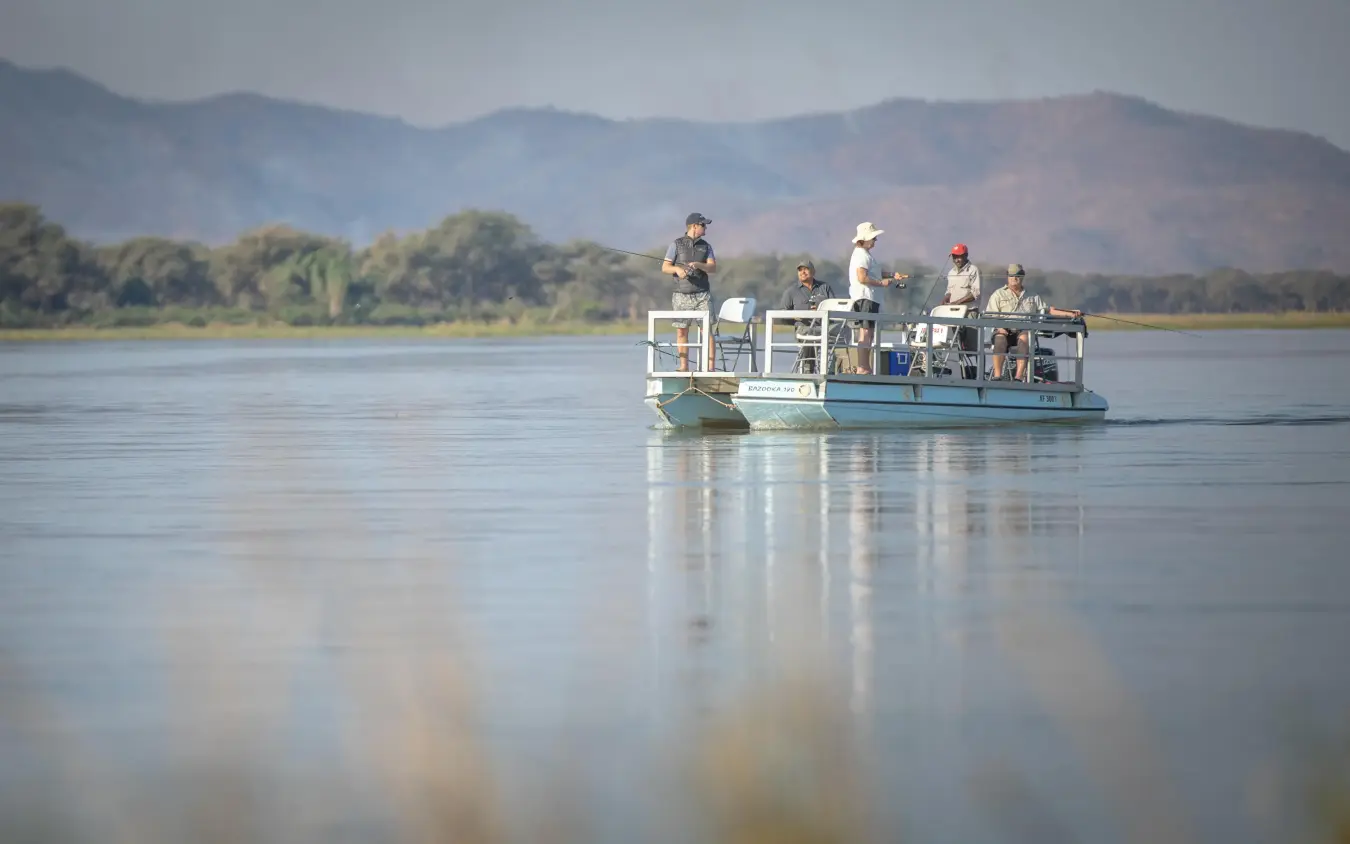
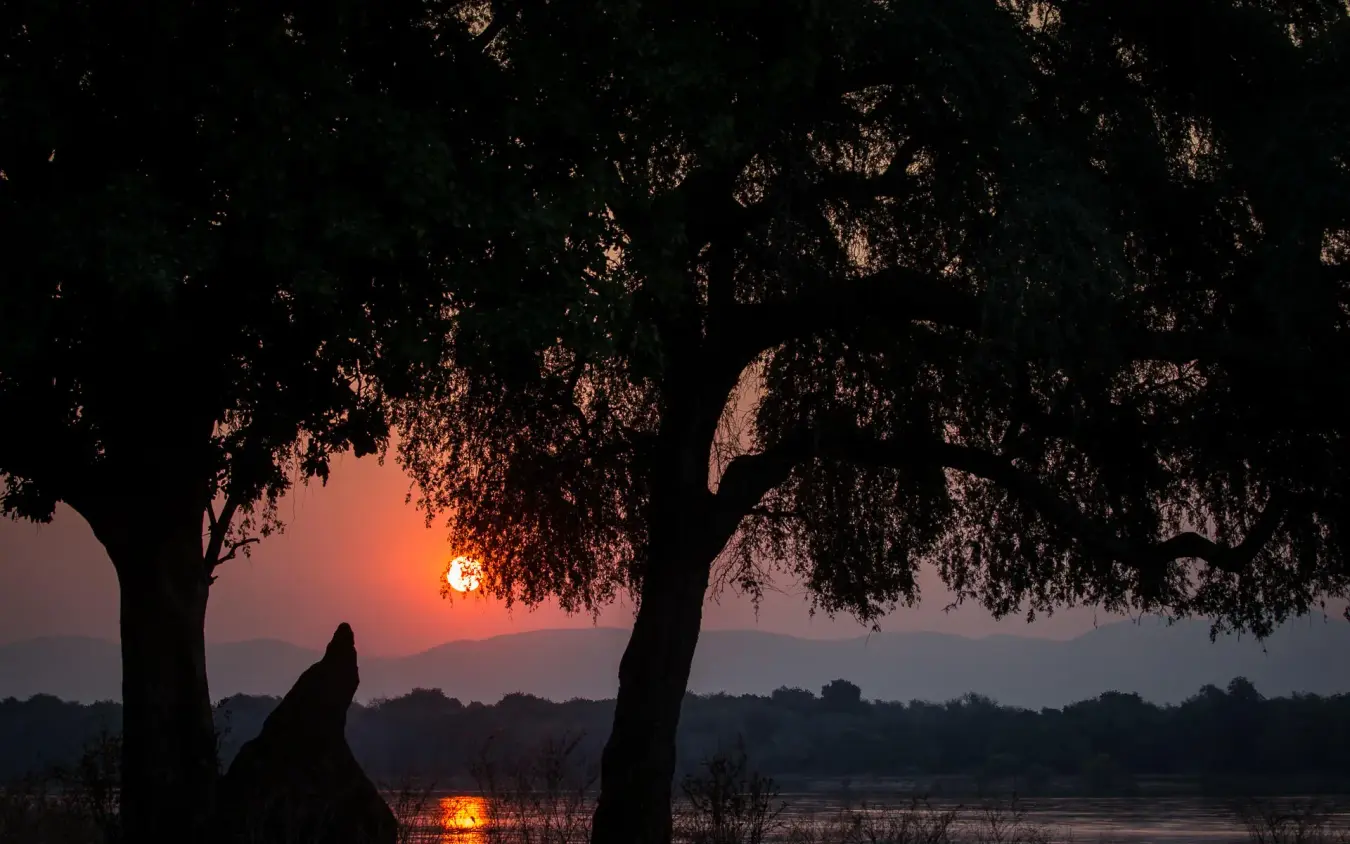
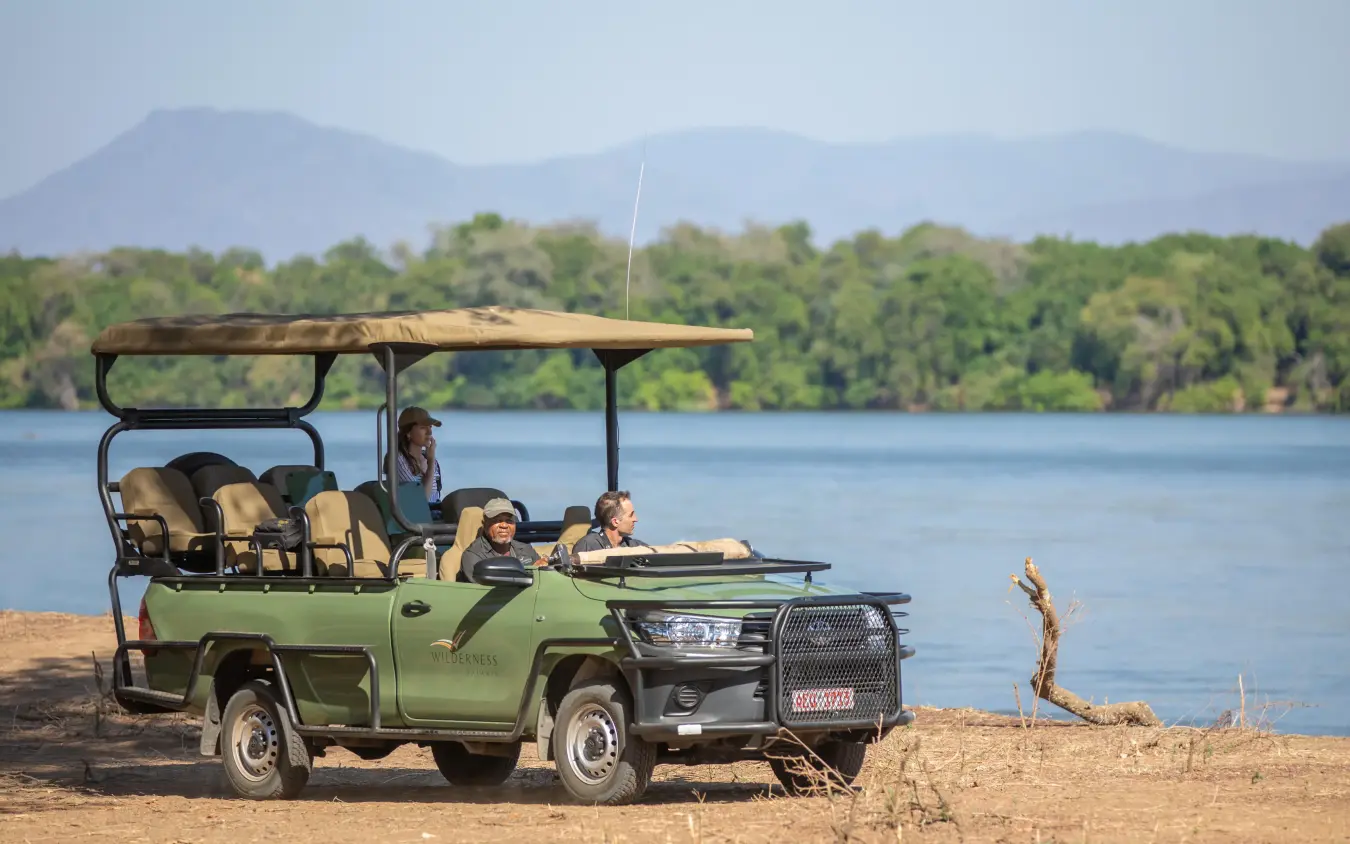
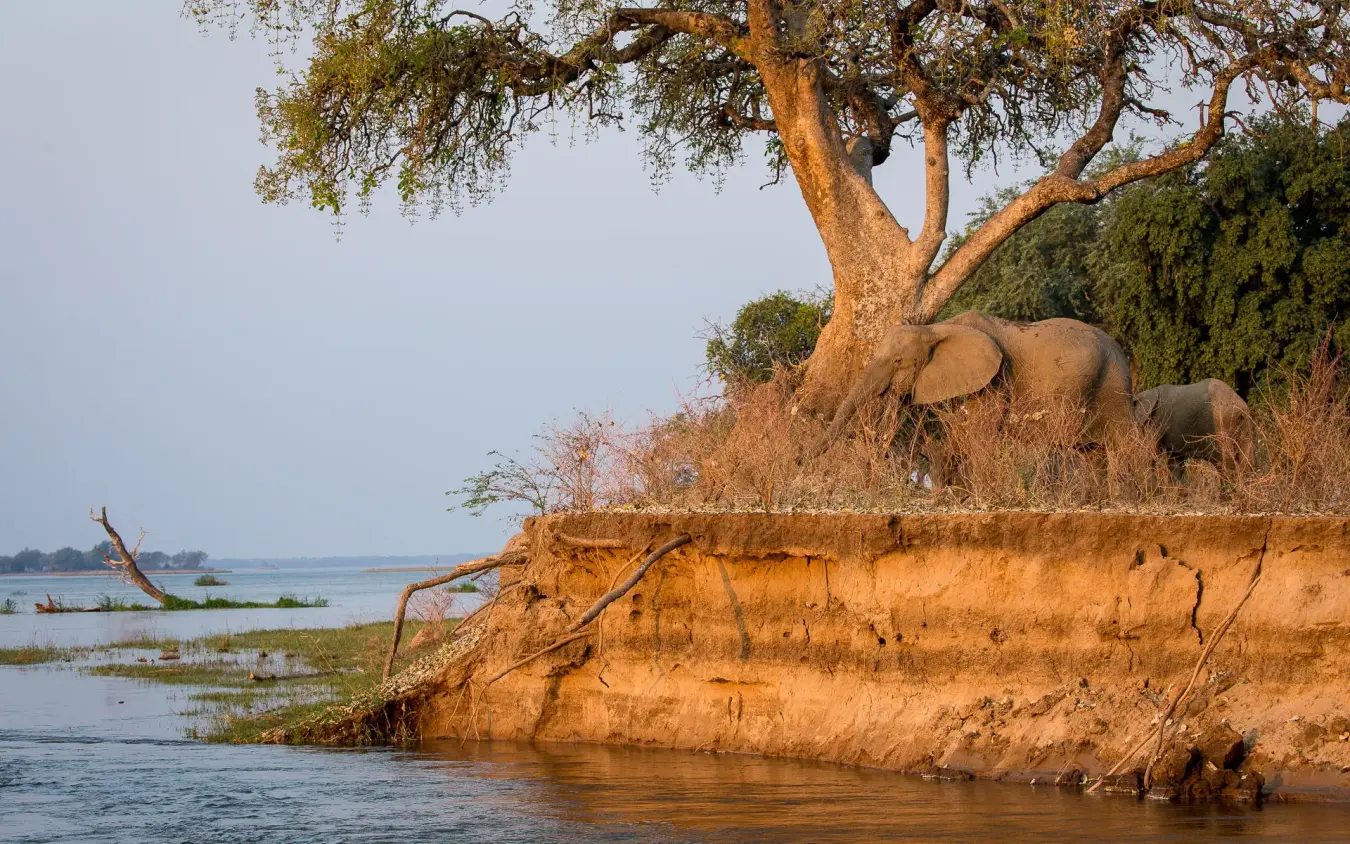
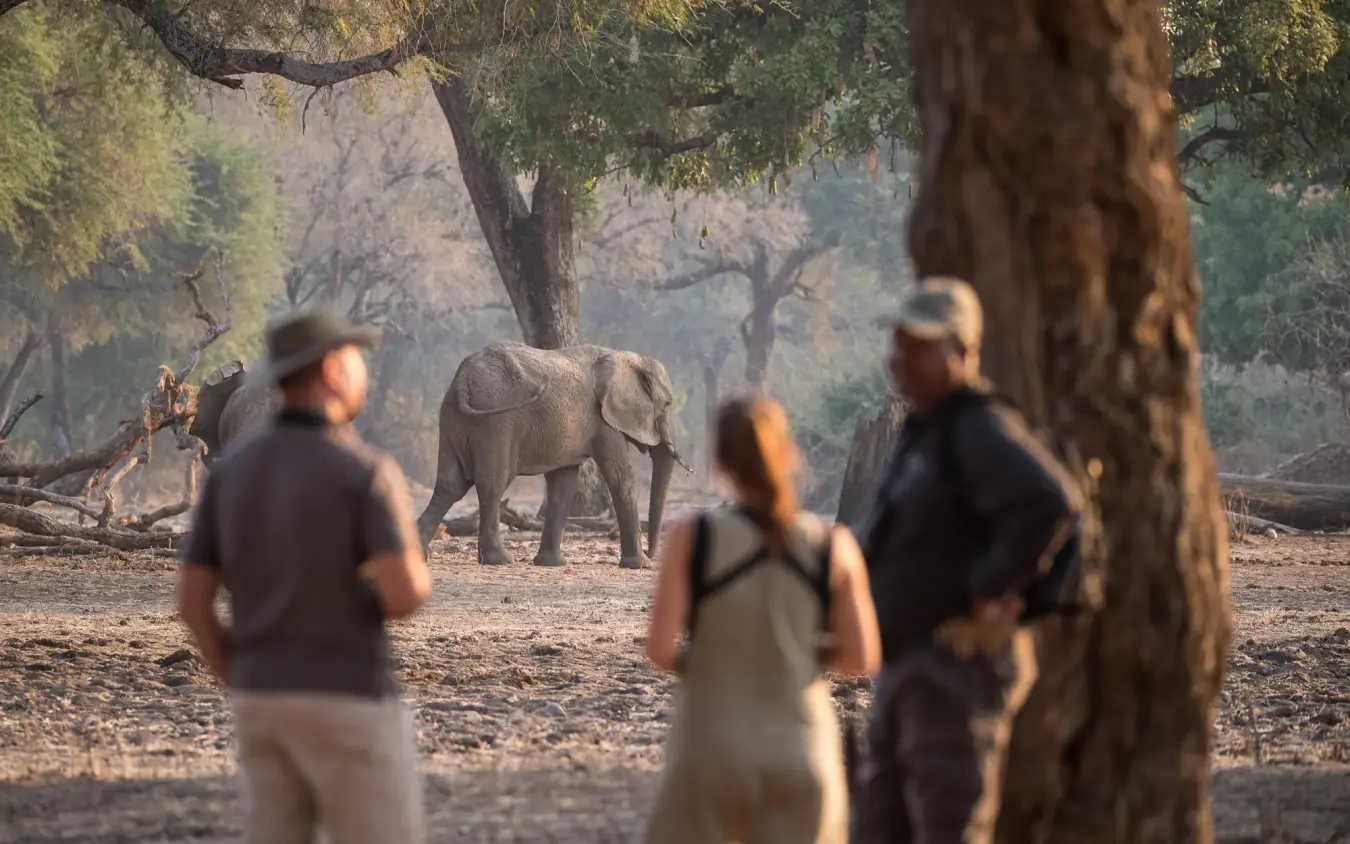
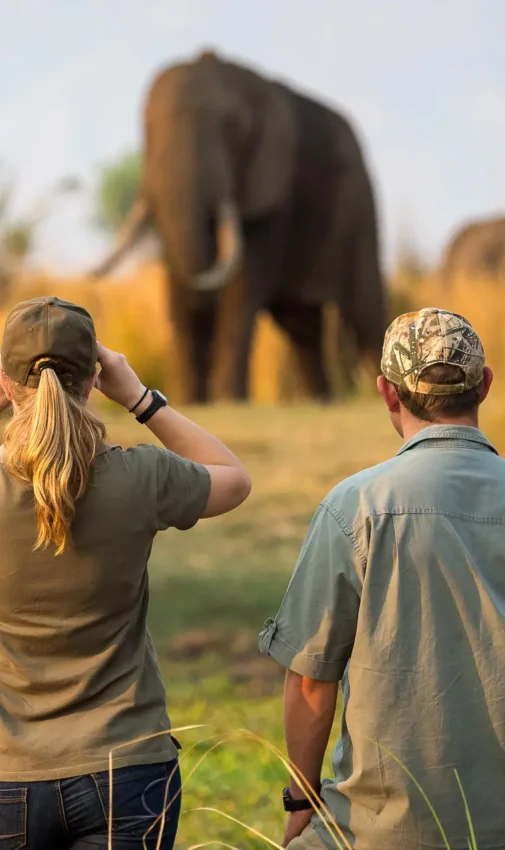
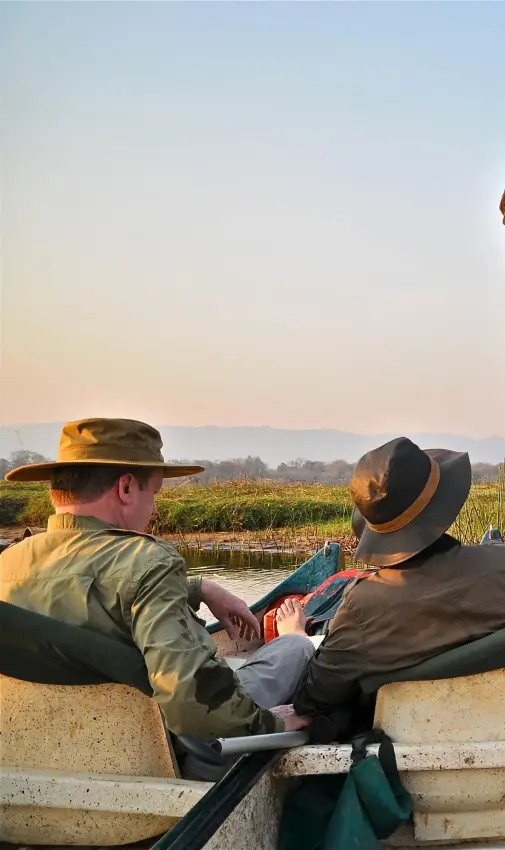
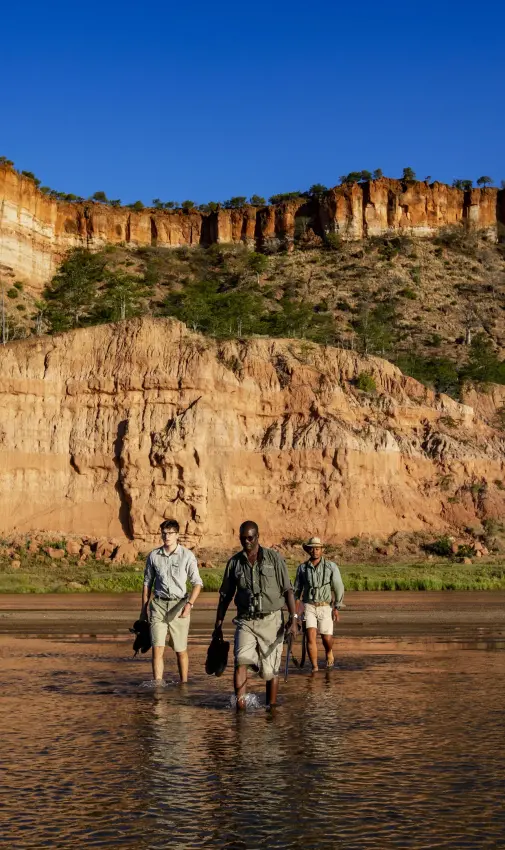
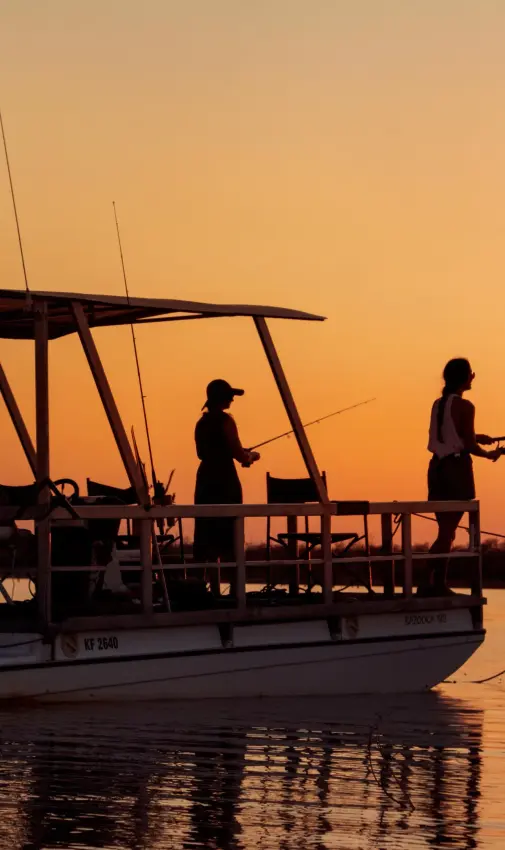
Access is by light aircraft to Chikwenya airstrip, then a short game drive into camp that often lengthens for a sighting. Elephants feed among the trees, hippos grunt through the night, and across the water the escarpment shifts colour as the day turns. Because the concession lies outside the park’s core zoning, guides can run night drives and take boats onto the Zambezi, reaching areas closed to general visitors, among them Chikwenya Island and the lower Sapi.
Beyond the game viewing, the concession works as a private conservation area on Mana Pools’ eastern boundary, carrying protection past the park itself. Chikwenya supports Painted Dog Conservation, an NGO working to protect the region’s endangered wild dogs, down to the bomas used in relocation and reintroduction. Local children take part in an environmental education programme run across the camps. Paired with a camp inside the Mana Pools core, Chikwenya adds the river, the boats and the night drives.