Timing your trip
best time to visit mana pools
A remote stretch of the lower Zambezi where the dry season draws elephant, buffalo and painted dogs to the river, and the bulls famously stand to feed. Best from June to October.
seasonal guide to mana pools
Come between June and October, when the drying bush pulls wildlife back to the Zambezi and the four pools for walking and canoeing among concentrated elephant, buffalo and predators. From August the bulls rise on their hind legs for the albida pods. October is the most concentrated but often tops 40 degrees. The green season is lush and best for migrant birding, though the rains close most camps.
month by month details
January sits in the middle of the wet season, and most camps in Mana Pools are closed. Heavy storms fall through the month, the floodplain greens up and surface water lies everywhere inland.
With water and grazing available away from the Zambezi, animals scatter and the riverfront concentrations of the dry season break up. Black-cotton soils turn the tracks to mud, so even where access is possible it is by air and on foot only.
The birding is good as migrants arrive and the scenery is lush, but for game viewing this is the weakest part of the year, and malaria risk is at its highest.
February is among the wettest months, with the park lush, humid and largely inaccessible by road. Afternoon thunderstorms are frequent and the vegetation is at its thickest.
Plentiful inland water keeps wildlife spread far from the river, and dense bush makes the animals that are present hard to find. Most lodges remain closed and ground travel is unreliable on the saturated soils. It is a rewarding month for birdwatchers and for green-season photography, but not for the classic Mana game viewing or for walking and canoeing.
March marks the tail of the rains, but the bush stays thick and the game stays dispersed. Showers ease through the month and evenings begin to cool, yet pans and streams are still full across the floodplain.
Wildlife remains scattered away from the Zambezi and visibility through the green vegetation is poor. Many camps are still closed or only partly open, and access continues to depend on charter flights. Birding holds up well, but for big-game density this is still a poor month and the dry-season concentrations are weeks away.
April is the turn of the season, dry and pleasant but with wildlife still dispersed across a green landscape. Rain has largely stopped, skies clear and temperatures are comfortable.
Inland water sources remain, so animals have not yet drawn back to the river and the bush is still reasonably thick. Newborns are about and the birding is strong. Camps are reopening and fly-in access is reliable, which makes April a quiet shoulder option with good weather, though the river concentrations and predictable movements that mark the prime months have not arrived.
May is dry and cool, with game viewing improving steadily as the inland pans shrink. Days are warm and clear, nights drop towards 12C, and the worst of the insects has passed.
The floodplain is still fairly green, but with water retreating the wildlife begins to shift back towards the Zambezi and the main pools. Predator activity becomes more visible and walking and canoeing are comfortable. Densities are not yet at the August-to-October level, but for travellers who prefer cooler conditions and fewer people, May is a rewarding shoulder month.
June opens the dry season and the start of Mana Pools' prime game viewing. Seasonal pans dry up, the bush thins and wildlife concentrates along the Zambezi and the four pools.
Nights are cool and days are pleasant, which makes this one of the best months for walking and canoeing before the heat builds. Elephant and buffalo gather at the river, predator sightings sharpen as prey congregates, and the painted dog denning season is typically underway. Insects and malaria risk are low, and the camps are fully open.
July is peak dry-season Mana, with open bush, river-focused wildlife and excellent walking conditions. Mornings and evenings are cool, days are warm but not hot, and visibility through the thinned vegetation is strong.
Limited inland water keeps elephant, buffalo and antelope close to the Zambezi, with lion, painted dogs and hyena following the prey. With dens active and pups beginning to emerge, the chance of a painted dog sighting improves. This is high season, so the better camps fill early and need booking well ahead, but the combination of game, comfort and walking safaris is hard to better.
August brings the densest concentrations along the river and the first of the standing elephants. Most inland water has gone, so animal movements are predictable and the riverbanks are crowded with game.
This is when Mana's bulls rise on their hind legs to reach the albida pods, the behaviour the park is known for, and the southern carmine bee-eaters begin arriving to nest in the riverbanks. Days are warming and the air turns hazy with dust, but humidity stays low and the walking and canoeing are still excellent. It is one of the strongest months of the year for wildlife and photography.
September is arguably the best all-round month, with game packed tightly along the Zambezi. The lack of food and water inland draws almost everything to the river, and visibility through the parched bush is at its best.
The standing elephants are a regular feature, the carmine bee-eater colonies are well established, and the painted dog pups now move with the pack, lifting sighting odds. It is hot and dusty and the leading camps are busy, so booking ahead is essential, but the density of wildlife and the quality of the river scenes are exceptional.
October delivers the most concentrated game of the year, at the cost of extreme heat. Temperatures often climb above 40C and the landscape is parched as the park waits for the rains.
Animals are tied to the remaining water, so predator and prey interactions are frequent and predictable, the standing elephants are at their most photogenic, and the carmine bee-eaters are still active on the banks. Tsetse can be at their most persistent and midday activities are demanding, so this month suits travellers who can handle the heat. For wildlife and photography, the rewards are as high as Mana offers.
November is a month of two halves, with strong early game viewing before the first rains break. The opening weeks stay hot and dry and animals remain close to the river, often at their most concentrated.
When the rains arrive, usually from the middle of the month, the heat eases but fresh growth and scattered water start to pull wildlife away from the Zambezi. Many camps close towards the end of the month as the soils soften, and malaria risk rises with the humidity. Caught early it can be one of the rewarding times to visit, but it is a gamble on timing.
December returns to the wet season, with most camps closed and game dispersed. Afternoon thunderstorms are common, humidity is high and the floodplain turns green again.
Abundant surface water away from the river spreads the wildlife out and ends the dry-season concentrations, while thick vegetation makes spotting hard. Roads become difficult and access narrows to charter flights. The scenery is at its greenest, the migrant birding is excellent and many species have young, but for classic big-game viewing and for walking and canoeing this is a poor month.
Plan your perfect zimbabwe safari
Tell us a little about what you have in mind and one of our specialists will be in touch.
frequently asked questions
August to October, and September is the classic month.
By then the floodplain has dried, the game has drawn in to the river, the walking is easy underfoot and the light through the albida trees is at its finest. The elephant standing on their hind legs for the pods are most often seen in these months.
June and July are excellent too, and cold at dawn.
October is the hottest month of the year here, and also the most concentrated for game.
Roughly November or December to March or April, and the rains are why.
The seasonal camps take down their tents because the floodplain becomes impassable and the dirt airstrips cannot take aircraft. The park itself effectively shuts for the wettest weeks.
The season opens again around April or May, when the plains are still green and the game is only starting to concentrate.
So if your dates fall in the southern summer, Mana is not the place and we will say so plainly.
The dry months, from about May to October.
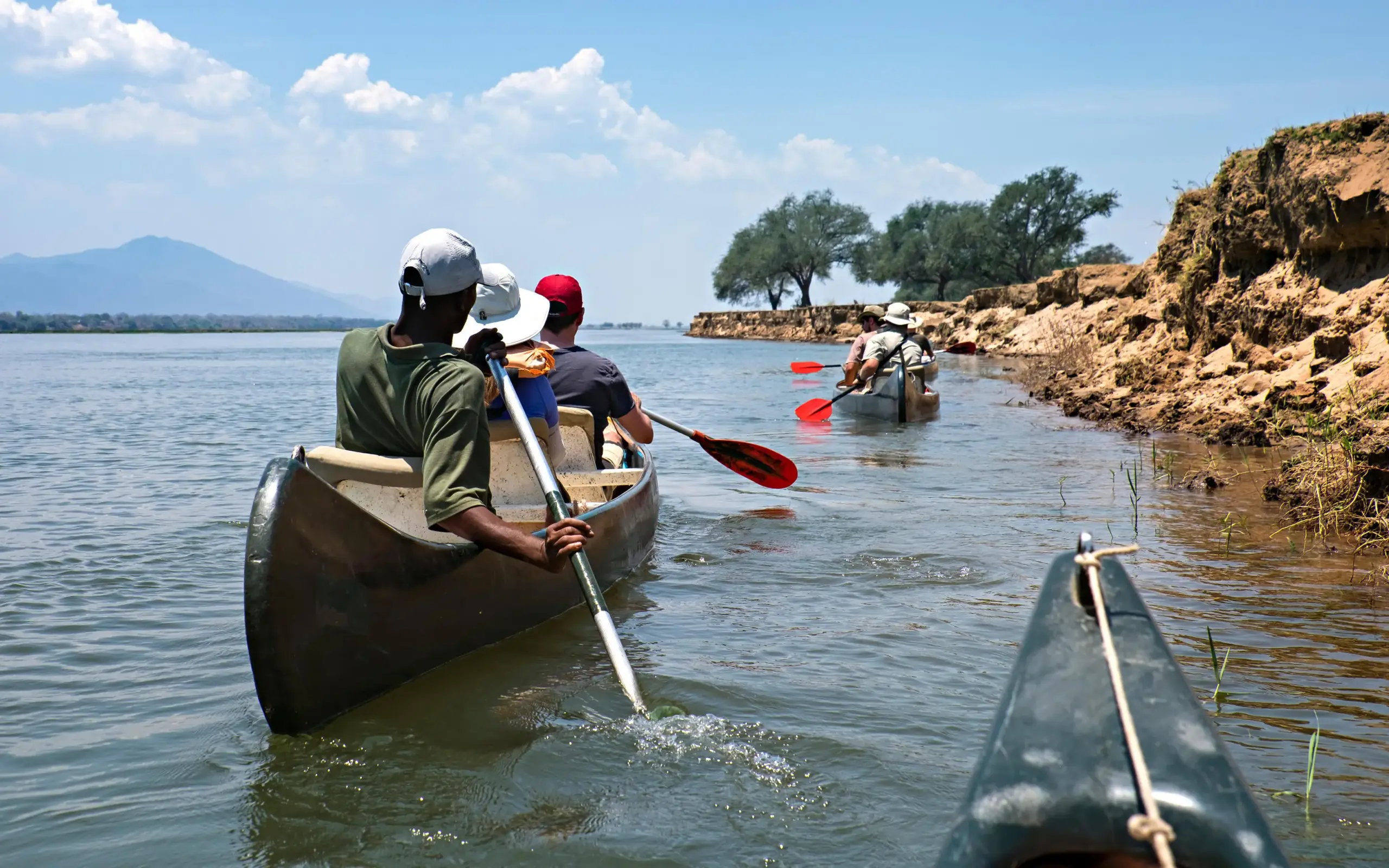
The river is lower and more predictable, the channels are clear and the banks hold the game that makes a paddle worth doing. Cooler mornings in June and July make a long day on the water pleasant.
The minimum age on the main channel is normally sixteen.
We book multi-day canoe trails well ahead, because the good guides and the licensed sections are limited.
Very hot in October, and cold at dawn in June and July.
The valley sits low and holds heat, so October days regularly run into the high thirties and the afternoons are for the shade. Winter mornings are the opposite: genuinely cold in an open vehicle or on an early walk.
The swing is why layers matter more than one heavy coat.
Neutral colours for the walking, closed shoes, and more water than you think you need.
The dry months, and particularly the denning weeks around June to August.
When a pack is denning it stays put, which is the single best chance of watching dogs rather than glimpsing them. The rest of the dry season keeps them near the river with the game.
Denning sites change year to year and no camp can promise them.
Tell us if the dogs are the reason for the trip and we will pick the camp and the guide most likely to deliver.
August and September, and the two work well together.
Mana is at its peak then, and the Falls have dropped enough to show the rock face and open the low-water activities. The flights between them are short.
If you want the Falls at full power instead, come in April or May, and accept that Mana will be greener and its camps only just open.
We would not choose the southern summer for either.
rated five stars by our clients

our approach
remote, exclusive
& personal
Every journey starts with a conversation. We take the time to understand your vision before we start planning.
Whether by phone or in person, we work with you directly to shape something that is considered, personal, and expertly delivered.
Every journey starts with a conversation. We favour a direct, personal approach: understanding your vision before anything else.
Whether by phone or in person, we work with you directly to shape a journey that is both thoughtfully considered and expertly delivered.
Get in touch to start planning yours.