The Hardest Sighting on Safari
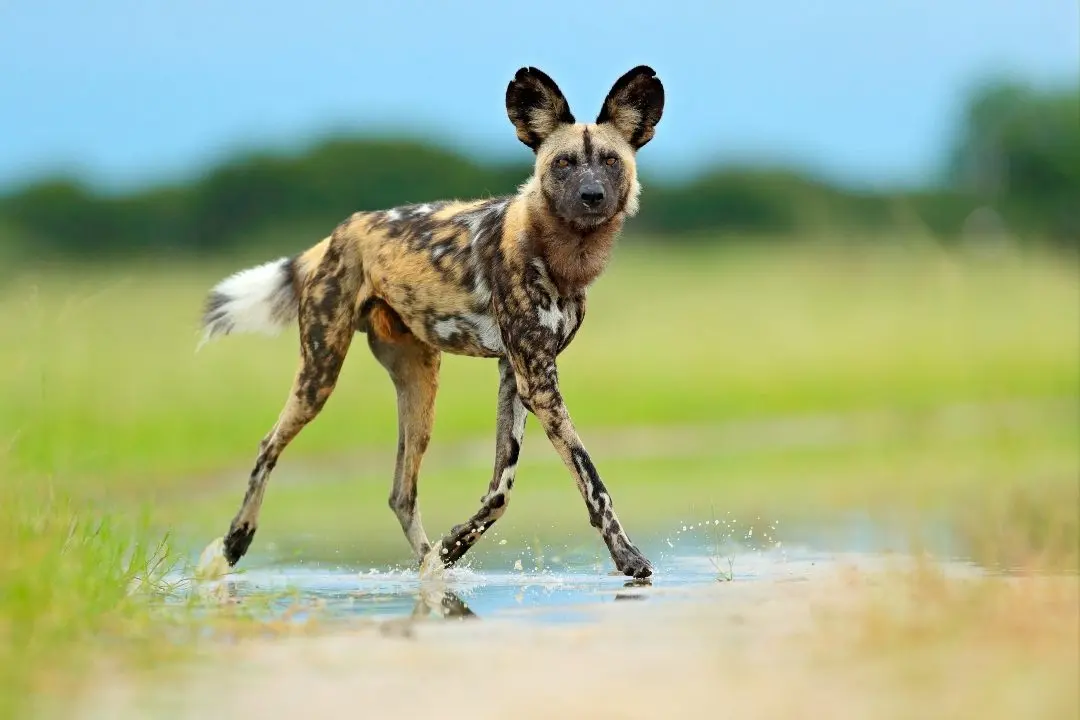
African wild dogs are endangered, wide-ranging and completely indifferent to your itinerary. A pack can cover enormous distances in a morning, their territories dwarf those of lions, and their numbers have been cut down over decades by habitat loss and by diseases like distemper and rabies passed on from domestic dogs. The result is that one of Africa’s most thrilling animals survives in strength in only a handful of regions.
A pack can cover enormous distances in a morning, and their territories dwarf those of lions.
There is one great exception to their unpredictability: the denning season. From roughly May to September in southern Africa, and earlier in East Africa, packs anchor themselves to a den to raise pups, and for those few months the most restless predator on the continent can actually be found in the same place twice. Time your trip to the den months in the right region and the hardest sighting on safari becomes a realistic ambition.

The five strongholds compared; detail on each follows.
| Region | Country | Why here | Best months |
|---|---|---|---|
| Ruaha | Tanzania | One of the most reliable wild dog populations in Africa, in a vast, quiet park. | Jun to Oct |
| Northern Okavango & Linyanti | Botswana | Private concessions (Selinda, Linyanti, Kwando) with prey-rich floodplains. | May to Sep |
| Hwange | Zimbabwe | A critical stronghold; dry-season waterholes concentrate the action. | May to Oct |
| Mana Pools | Zimbabwe | Packs hunting the Zambezi floodplains, often on foot in front of you. | Jun to Oct |
| Laikipia | Kenya | Conservancy model with stable prey and frequent sightings. | Jul to Oct |
Ruaha, Tanzania
Ruaha is one of the most dependable places on the continent to find wild dogs. The park is enormous, a wilderness of miombo woodland, open savannah and rocky escarpment, and the packs are most often found in its central and southern reaches around the Ruaha and Mwagusi rivers, where prey concentrates. In the dry season the whole system tightens around the remaining water, and with it your chances. Ruaha rewards travellers who want their predators without an audience.
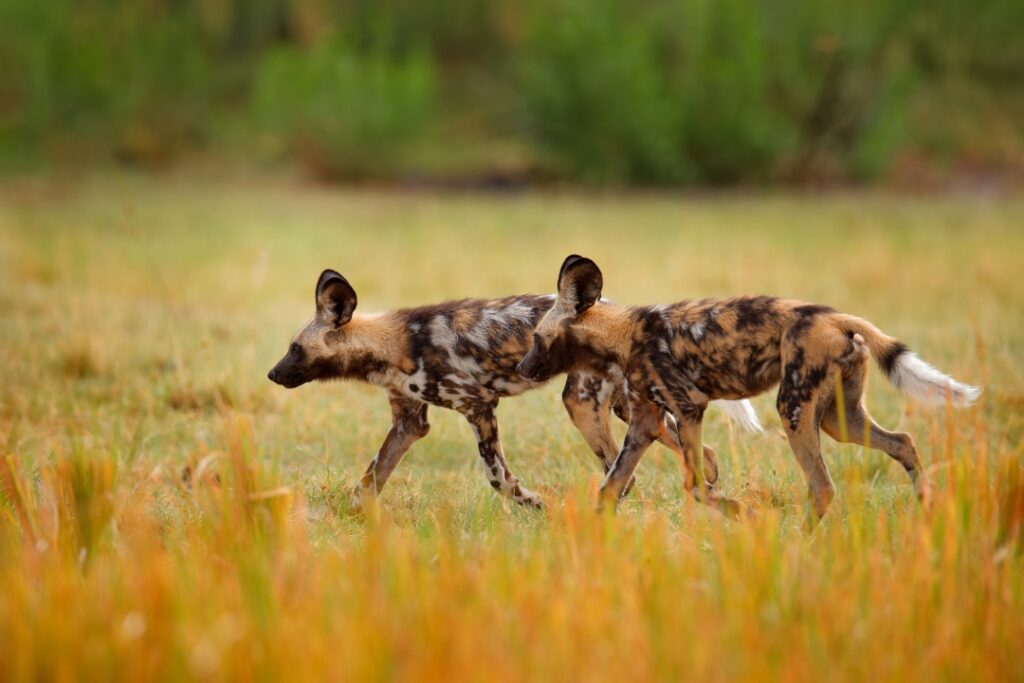
Northern Okavango and Linyanti, Botswana
The private concessions running north from the Delta toward the Linyanti, Selinda, Savuti and Kwando country, hold some of the most watched and photographed packs in Africa. Floodplain, woodland and savannah meet here, impala are everywhere, and because the concessions are private, guides can follow a hunt off-road from start to finish. In the denning months the packs localise and sightings become close to dependable.
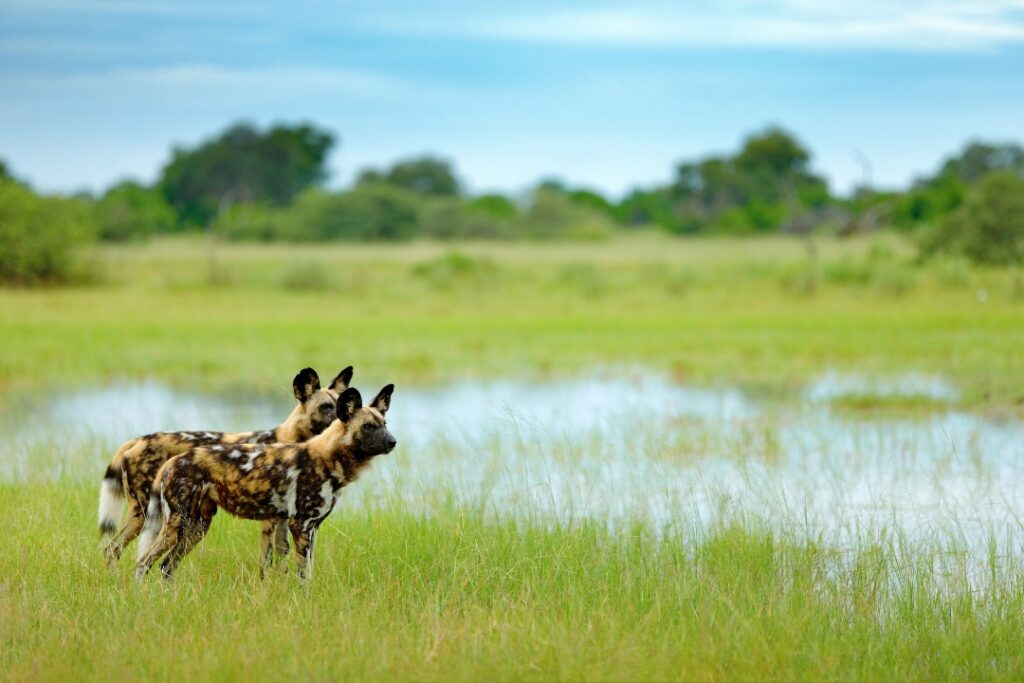
Hwange, Zimbabwe
Hwange has been central to painted dog conservation for decades and remains one of the species’ most important refuges. Sightings cluster in the south and east, around Ngamo Plains and Kennedy Vlei, and the park’s network of waterholes does the work in the dry months, pulling prey and predators into the open. Combine scale, low visitor numbers and Zimbabwe’s guiding standard, and Hwange makes a strong case for itself.
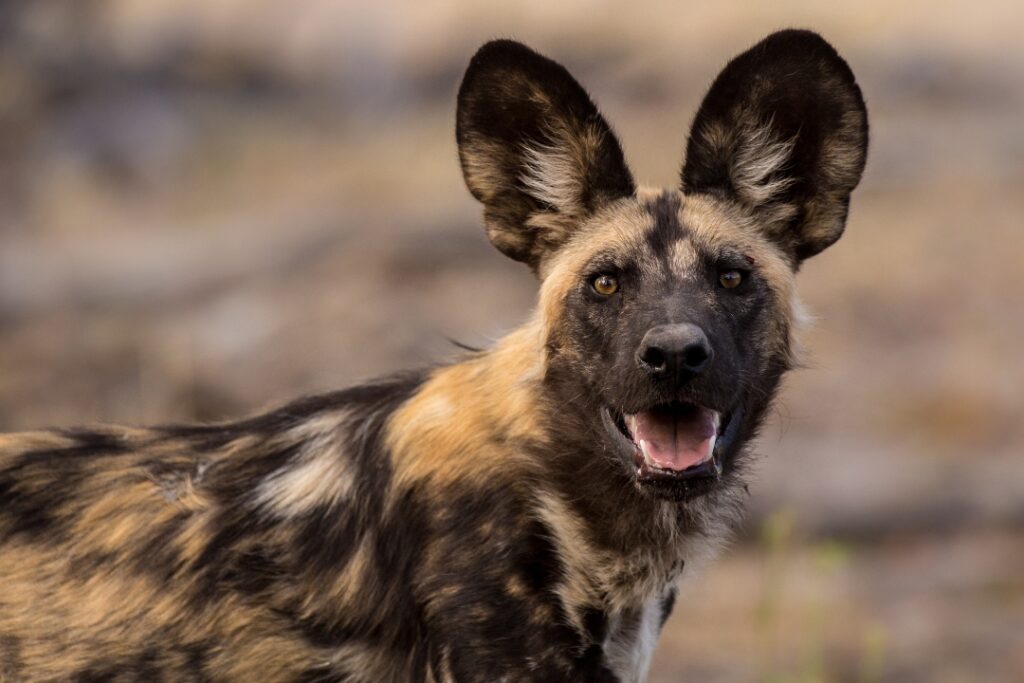
Mana Pools, Zimbabwe
Mana Pools offers the most intimate wild dog encounters in Africa, because here you can be on foot. Packs hunt the open floodplains along the Zambezi, denning in the riverine woodland, and sightings concentrate around areas like Long Pool as the dry season empties the interior. Watching a pack greet, rally and set off to hunt while you stand at a respectful distance in the open is the encounter every wild dog enthusiast eventually wants.
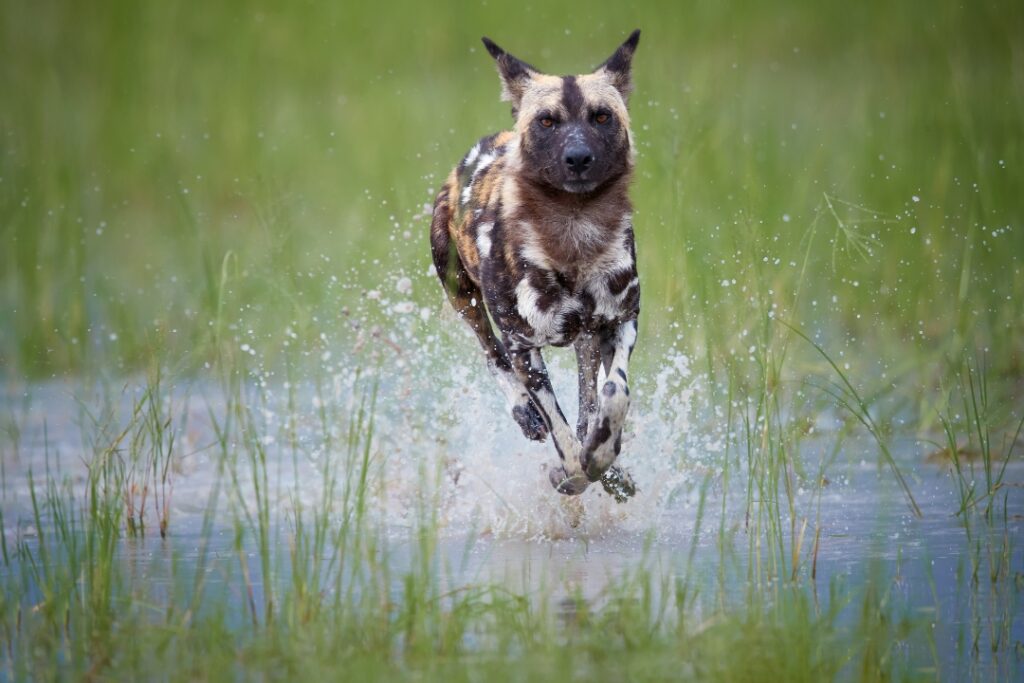
Laikipia, Kenya
Laikipia is East Africa’s best wild dog country, a mosaic of conservancies where community-focused conservation has rebuilt prey populations and taken the pressure off predators. Packs range widely across Ol Pejeta, Loisaba, Ol Jogi and their neighbours, so sightings take local knowledge, early mornings and a guide plugged into the conservancy network. The reward is wild dogs in a landscape you will often have entirely to yourself.
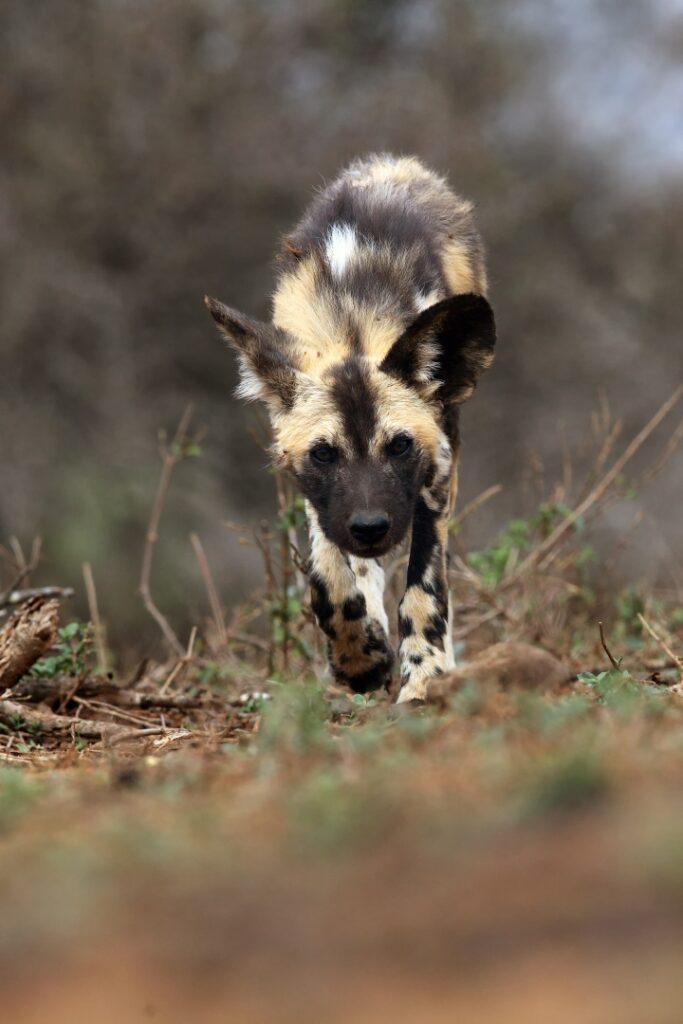
If wild dogs are the animal you most want to see, say so at the start and we will build the trip around the denning months rather than fitting the dogs around everything else. It changes the shape of the itinerary: fewer camps, longer stays, and camps chosen because a pack denned nearby last season, not because the brochure photographs well. That is the honest way to chase this particular animal.
Managing Director
Your next adventure starts with a conversation.
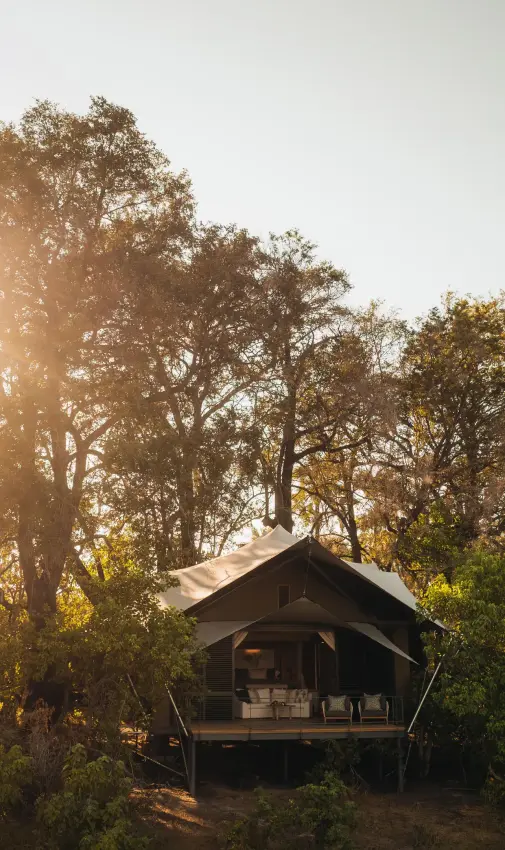
recommended camps and lodges for wild dog country
 01
01

 02
02

 03
03
 04
04
 05
05
 06
06
 07
07
 08
08
 09
09
 10
10

Find out more about our wild dog safaris
Let us know your travel requirements below and one of our specialists will be in touch with you as soon as possible.