The Photographer Who Removes Himself
Will Burrard-Lucas is a UK photographer who first came to Africa as a child and returned with an engineer’s instinct for solving the oldest problem in wildlife photography: the closer you get, the more you change the animal’s behaviour. His answer is to take himself out of the frame. Remote-controlled buggies carry his camera to ground level among predators; camera traps sit for weeks on wild paths, firing only when something extraordinary walks past.
The closer you get, the more you change the animal’s behaviour. His answer is to take himself out of the frame.
The images that come back look like nothing else in the genre: eye-level, intimate, and entirely on the animal’s terms. Four of his projects in particular show what the method can do, and where in Africa it can take you.

Land of Giants: Kenya’s Last Big Tuskers
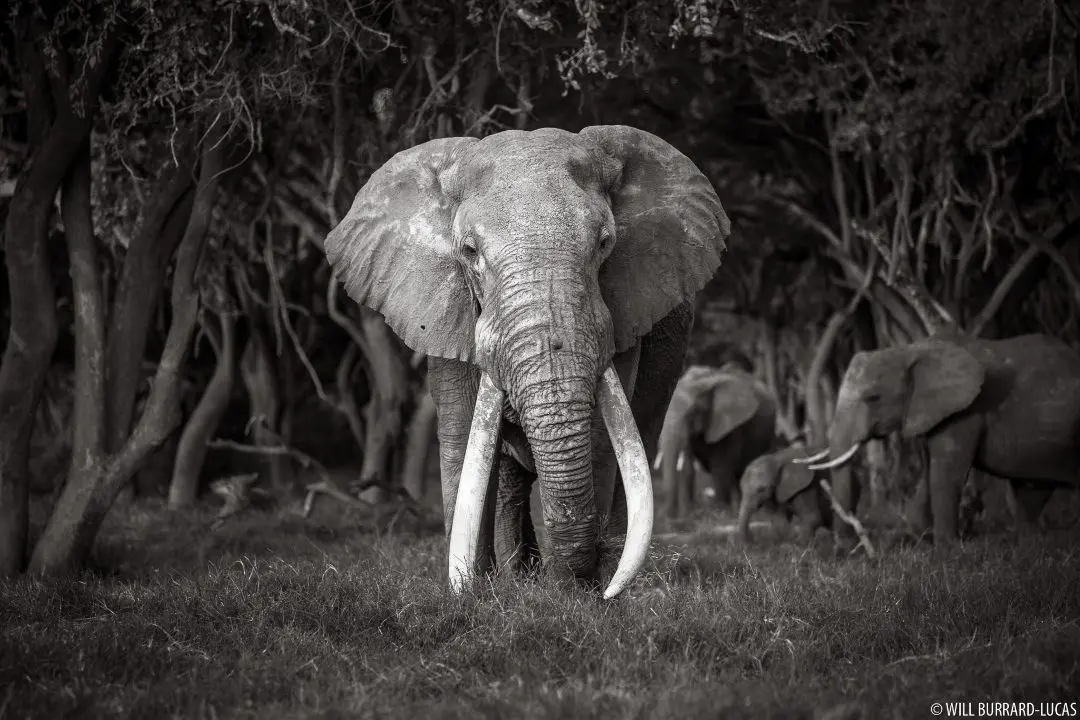
Land of Giants documents Kenya’s elephants, including the extraordinarily rare big tuskers whose ivory reaches the ground. Working with camera traps placed across open country, Burrard-Lucas produced portraits of these animals at close range without a human anywhere near them, monumental, calm and lit like studio work. The project doubled as an argument for Kenya’s role in protecting the last of these giants.
The Black Leopard of Laikipia
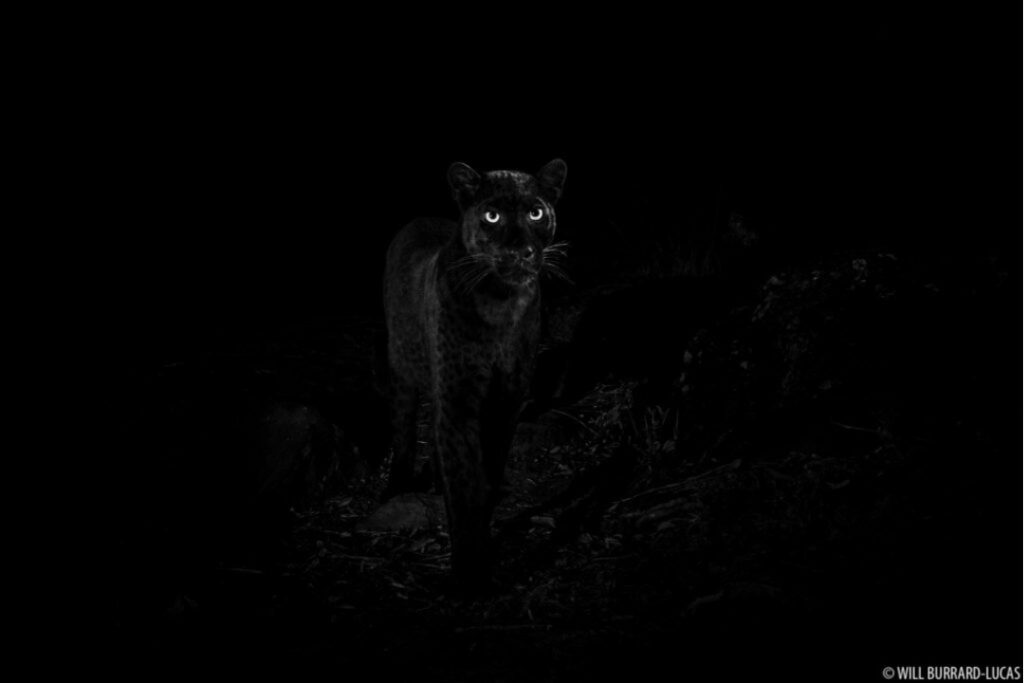
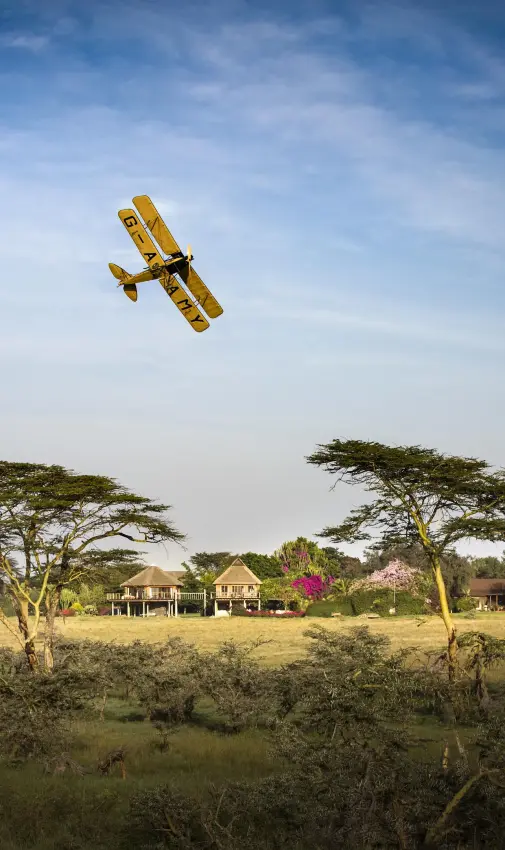
In 2019 his motion-triggered cameras in Laikipia recorded one of the few scientifically documented melanistic leopards in Africa, an animal of rumour photographed under starlight with its eyes burning out of a black frame. The images went around the world. They also made a quieter point: Laikipia’s mosaic of grassland, rock and ranchland is one of Kenya’s most important corridors for elusive predators, and it rewards the patient.
Nocturnal Kenya
His night work turns to the animals most visitors never see: hyenas at their most social, aardvarks, the whole second shift of the African night, photographed under starlight with low-light rigs. On the image below, in his own words:
I used a remote-control buggy to position my camera at ground level so that I could photograph the hyena with the beautiful starry sky behind.
On photographing hyenas after dark

A Year in Zambia
A Year in Zambia followed the Luangwa Valley through a full cycle of flood and dry season, tracking how hippos, elephants and predators reorganise their lives as the water moves. It contains one of his most loved photographs, a pack of wild dogs investigating the camera itself:
The curiosity of the youngsters was aroused, and they approached to investigate the clicking camera, ears focused in on it like satellite dishes.
On the wild dog image below

What I take from Will’s work is a lesson for any safari, photographer or not: the most memorable encounters come when you stop chasing the animal and let the bush come to you. It is why we rate camps that sit still well, with hides, waterholes and guides who understand patience. If photography is the heart of your trip, tell us, because the right camp matters more than the right camera.
Managing Director
Your next adventure starts with a conversation.
recommended camps and lodges in laikipia






Find out more about our African safaris
Let us know your travel requirements below and one of our specialists will be in touch with you as soon as possible.