The Elephants That Stand
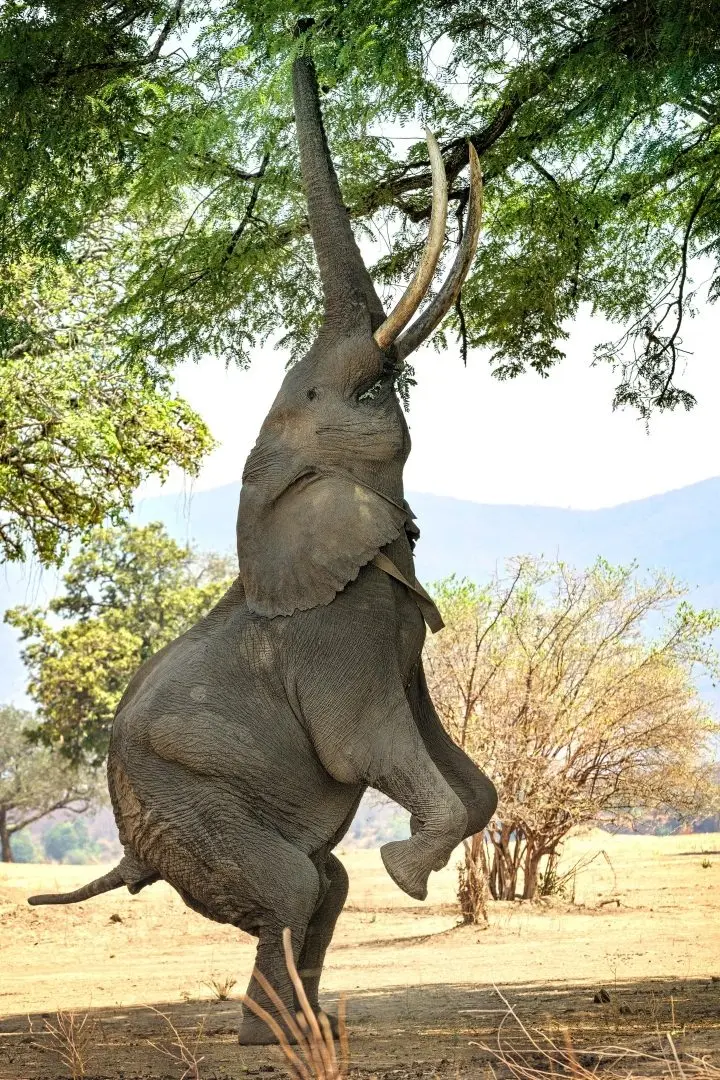
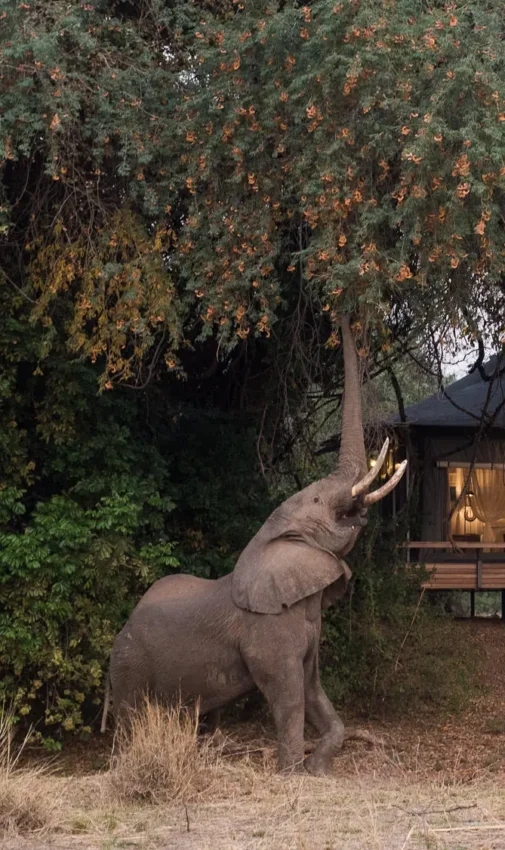
Every wildlife photographer knows the image: a full-grown bull elephant rearing upright like a circus impossibility, trunk stretched into an albida tree for seed pods, hind legs carrying five tonnes. It happens in Mana Pools, and almost nowhere else. A handful of the park’s bulls have learned the trick, and in the dry season you can watch it happen against the backdrop of the Zambezi.
A full-grown bull rearing upright like a circus impossibility, trunk stretched into an albida tree, hind legs carrying five tonnes.
The behaviour is a window into what makes this park special. Mana Pools, named from the Shona word for four, after the four old oxbow pools that hold water through the driest months, is a UNESCO World Heritage Site where the floodplain forest is open, the light falls in shafts through ancient albida and mahogany canopies, and the wildlife is unusually relaxed around people on foot. Nothing about it feels like conventional safari country.

A Park Built for Solitude
The numbers explain the feel of the place. Mana Pools covers 2,200 square kilometres, more ground than Kenya’s Maasai Mara, yet it receives roughly 5,000 to 10,000 visitors a year against the Mara’s 200,000 to 300,000. A short list of small camps, no crowds, and a park authority that has kept tourism deliberately low-impact: the result is that a morning with the elephants is usually a private one.
Guides Who Know Them by Name
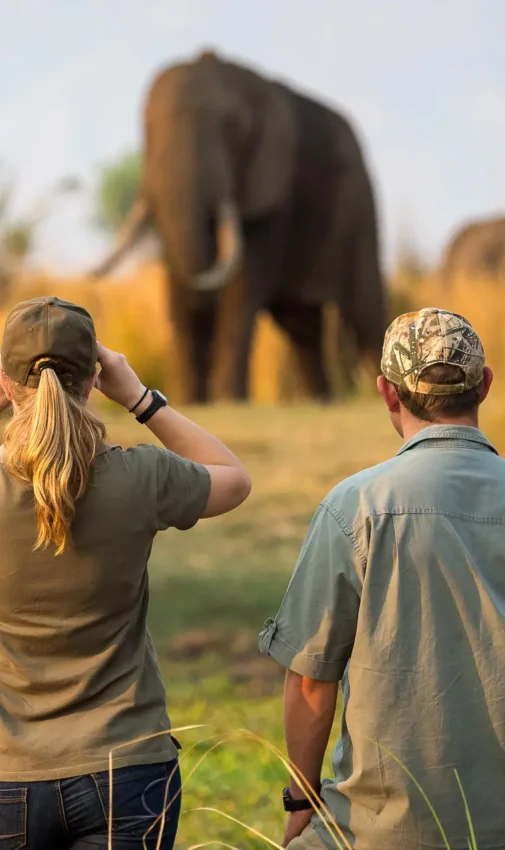
What makes the on-foot encounters possible is a guiding culture with few equals. Zimbabwe’s professional guides are famously hard-qualified, and Mana’s resident specialists, Stretch Ferreira and Nick Murray among them, have spent decades with these elephants and recognise individuals on sight. That familiarity, animal by animal, is what lets a guide read a bull’s mood and position guests close enough to count eyelashes without anyone, elephant included, feeling pressed.

Mana Pools is the park I recommend to people who suspect they have already seen what a safari is. It rearranges your expectations: the vehicle stays behind, the river does the ambient noise, and a wild bull elephant feeds thirty metres from where you stand. Guests come back speaking about it differently from anywhere else we send them.
Managing Director
When to Go

Your next adventure starts with a conversation.
recommended camps and lodges in mana pools

Find out more about our Mana Pools safaris
Let us know your travel requirements below and one of our specialists will be in touch with you as soon as possible.