Why Walk at All?
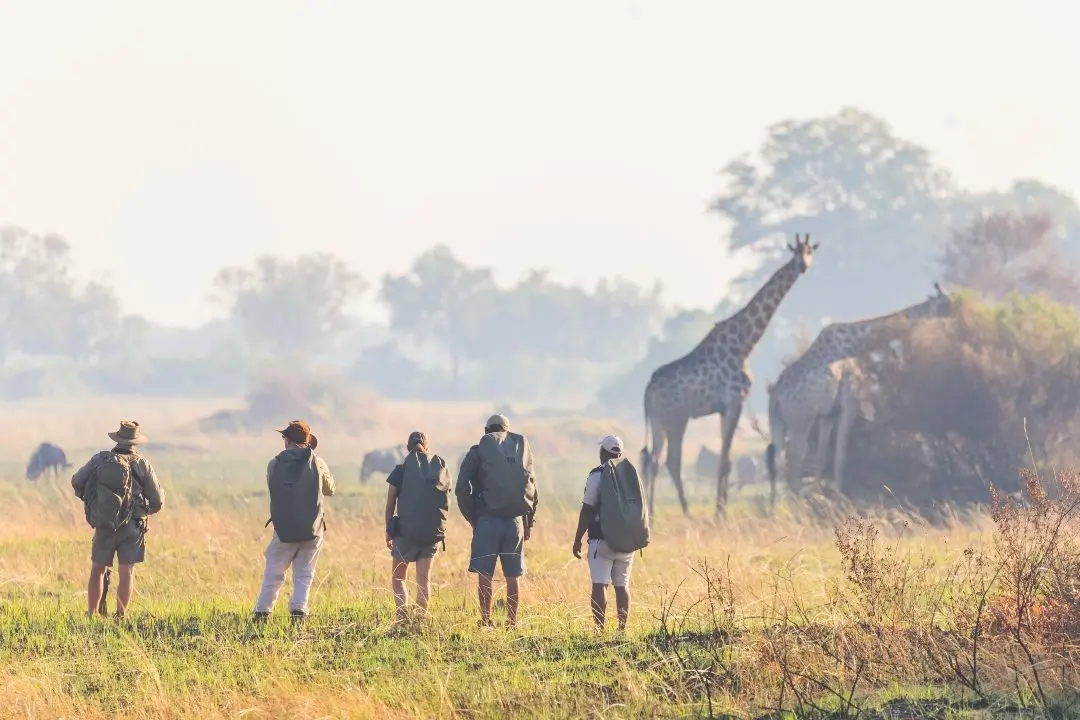
A game drive is built around sightings. A walk is built around attention. Within the first half hour, most guests stop scanning the horizon for elephant and start noticing what is under their feet: the drag mark where a hippo left the water in the night, the difference between a francolin’s alarm call and the ordinary chatter of the bush, the reason the guide keeps checking the wind with a puff of ash from a small pouch. None of it would register from a vehicle seat.
The vehicle shows you more animals; the walk makes you part of the landscape they live in.
That change of attention is the real product. The vehicle shows you more animals; the walk makes you part of the landscape they live in. It is also, counterintuitively, where safety begins. A guide who is reading tracks, wind and alarm calls minute by minute knows what is around the next thicket long before you get there.

I tell guests to think of a walk as changing lenses, not changing risk. You will not get as close to big game on foot, and a good guide will not try to. What you get instead is the bush at eye level: tracks with a story attached, birds you would drive straight past, and the particular quiet that settles over a group when everyone realises the landscape is looking back. One morning on foot changes how people sit in the vehicle for the rest of the trip.
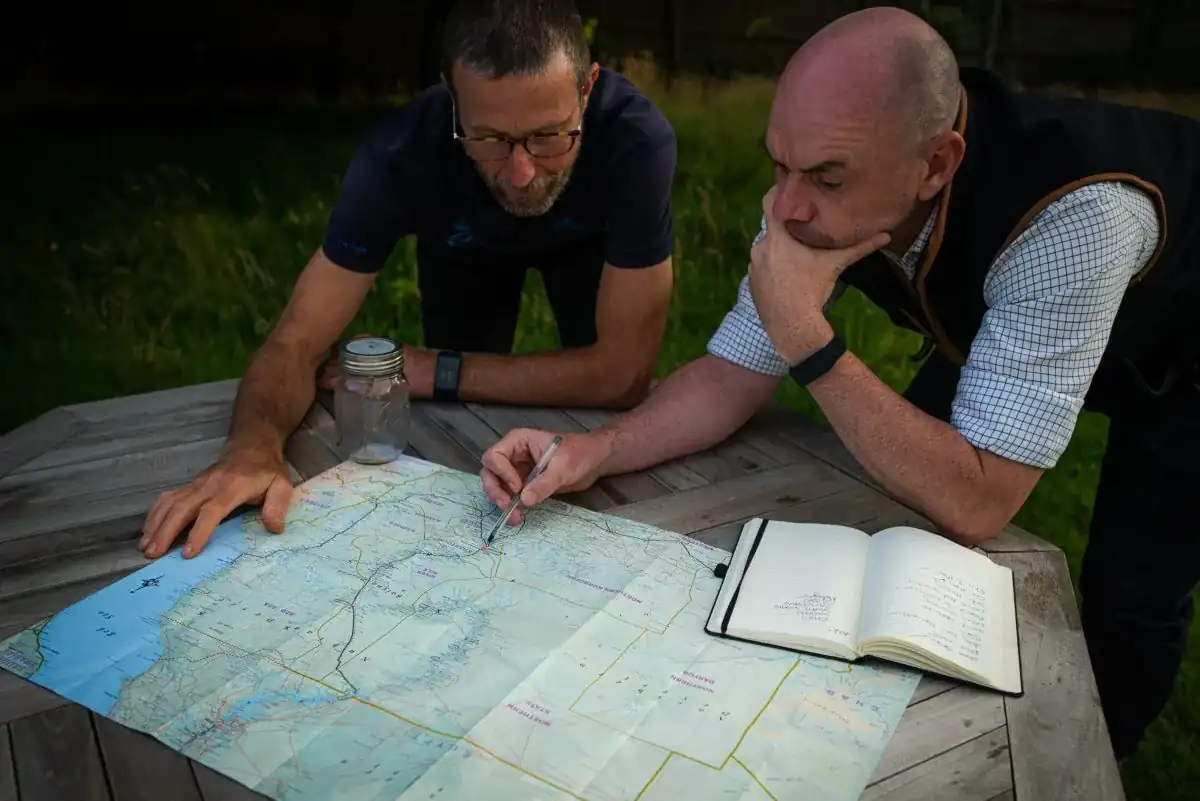
Managing Director
How Guides Keep Walks Safe
The protocols on a professional walk are strikingly consistent across Africa, because they descend from the same tradition. Norman Carr led the first walking safaris in Zambia’s Luangwa Valley in the 1950s, and the code his guides developed is still recognisable today: small groups, usually six guests or fewer, walking in single file behind a licensed guide, often with an armed scout ahead and a second guide watching the rear.
The measure of a fine walking guide is a career in which the rifle stays on the shoulder.
The qualification behind that guide is not a weekend course. Zimbabwe’s full professional guide licence takes years: a written entry exam, an apprenticeship that commonly runs three to four more, a logged record of real experience with dangerous game, shooting proficiency and a final week-long practical examination in the bush. The rifle is a last resort, and the measure of a fine walking guide is a career in which it stays on the shoulder. Positioning, wind and reading animal behaviour early do the real work.
Have There Been Incidents?
Yes, and it would be dishonest to pretend otherwise. There have been incidents involving walkers in recent years, some of them serious, and each deserves to be taken seriously rather than explained away. What rarely follows the headline is reliable detail, so we will not speculate about events where the facts are unclear. It is unfair to the people involved, and it tells you nothing about your own trip.
What should inform your decision is the operation, not the headline. Who leads the walk, and what qualification do they hold? How many guests go out at once? What does the pre-walk briefing cover? An operator with serious answers to those questions is showing you how they think about risk. An operator without them is showing you something too.

Where You Stay on a Walking Safari
Walking safaris come in two forms, and the choice matters more than most people expect.
| Format | How it works | The trade | Suited to |
|---|---|---|---|
| Mobile walking safari | A light fly camp moves ahead of you each day, pitched in country vehicles rarely reach. | Comfort traded for remoteness. | Fit walkers who want full immersion. |
| Lodge-based walking | Daily walks from a permanent camp, returning to a proper bed and hot water. | Remoteness traded for comfort. | First-time walkers, mixed groups, shorter trips. |
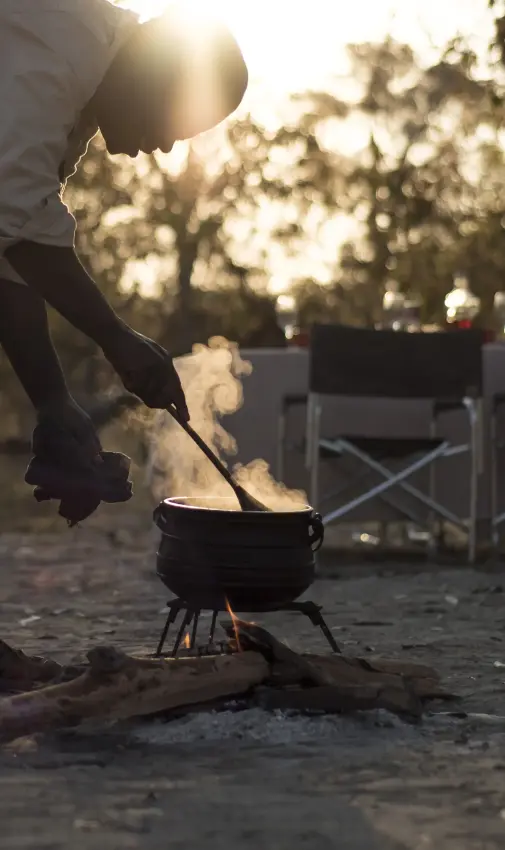
Neither is the lesser option, and the safety planning behind both is the same disciplined work. The camp in the photograph below is the mobile version: canvas, lanterns, a fire, and the same briefing you would get at a lodge.

Where the Walking Is Best
Zambia and Zimbabwe hold the deepest tradition. The Luangwa Valley is where the discipline was invented, and its camps are built around walking rather than treating it as an extra. Zimbabwe offers the same pedigree, with that famously hard-won guide licence behind every walk. Botswana is a different kind of walking: mobile camps moving through the private country of the Okavango Delta, crossing channels on foot and sleeping where the day ends.
Kenya and Tanzania add another dimension. In Laikipia, walks run across private conservancy land, often led with Samburu guides and supported by camels carrying the camp. In Tanzania, operators walk the Serengeti and the crater highlands with Maasai guides whose knowledge of the country is generational. The walking is gentler in character, and the conversation is as much a part of it as the wildlife.
Ask me where to send a first-time walker and I will usually say the Luangwa in the dry season, with a camp that takes its walking seriously, or Laikipia if the trip is Kenyan. Ask me where to send someone who already knows they love it, and the answer is a mobile in Botswana. Nothing I can write here prepares you properly for wading a Delta channel in single file.
Managing Director

The Honest Answer
Are walking safaris safe? Run properly, yes: safe in the way that flying with a serious airline is safe, because the whole system is engineered to prevent the bad day rather than to survive it. No wild country is without risk, and any operator who tells you otherwise should worry you.
Our test is simple. We place walking guests only with operators whose guides we would walk behind ourselves, in areas where walking is the point rather than an add-on. If that is the kind of morning you want inside your safari, tell us, and we will build the trip so the walking earns its place.

Your next adventure starts with a conversation.
recommended camps and lodges for walking safaris
 01
01

 02
02

 03
03

 04
04
 05
05
 06
06
 07
07
 08
08
 09
09
 10
10

 11
11
 12
12
 13
13
Find out more about our walking safaris
Let us know your travel requirements below and one of our specialists will be in touch with you as soon as possible.