

Area
Semliki Valley
Open-woodland chimpanzees and Congo-basin rainforest on Uganda’s Albertine Rift floor, with Lake Albert’s shoebills close by
Size: Toro-Semliki 542 km²; Semuliki NP 220 km²
Key species: Chimpanzee, forest elephant, Uganda kob, shoebill
Habitat: Acacia savannah and lowland rainforest
Woodland chimps below the Rwenzori
Oil palms shade village huts and hornbills call from the ironwood canopy in the Semliki Valley, on the floor of Uganda’s Albertine Rift below the Rwenzori Mountains. Here East African savannah gives way to the easternmost reach of the Ituri Forest, and the Semliki River marks the border with the Democratic Republic of Congo.
Uganda kob and buffalo graze beneath the palms alongside warthog
Borassus palms and acacia woodland cover the Toro-Semliki Wildlife Reserve. Uganda kob and buffalo graze beneath the palms alongside warthog, and both savannah and forest elephants share the ground. Along the Mugiri River, chimpanzees forage across open woodland. To the south-west the trees close in, and Semuliki National Park holds lowland rainforest that survived the last ice age.
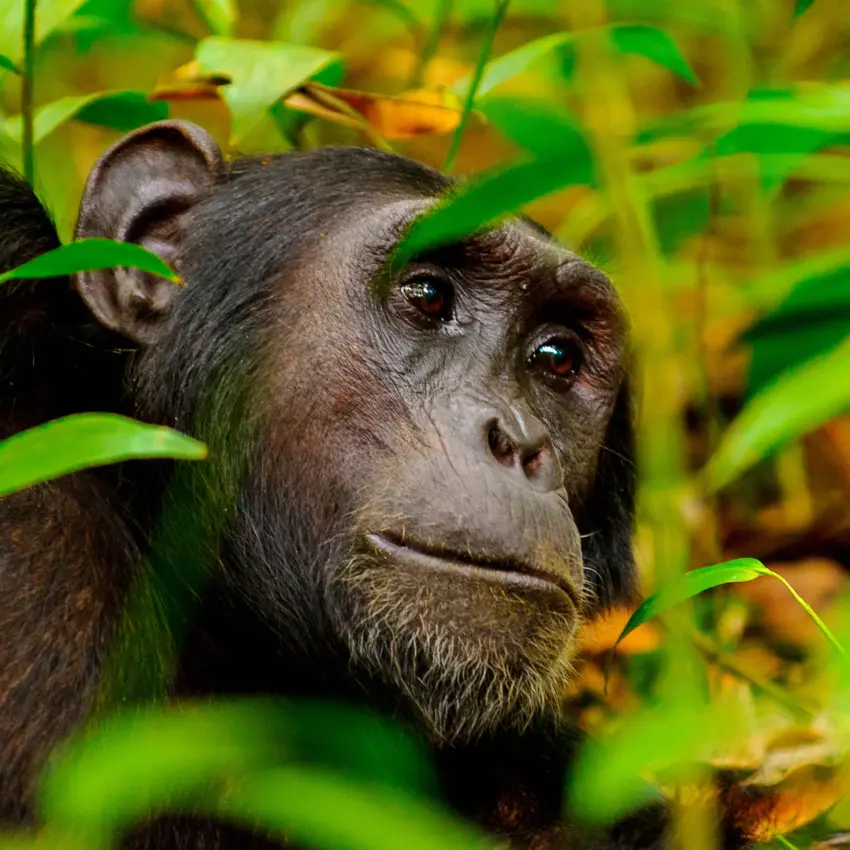
Kevin Hunt of Indiana University began following the Mugiri chimpanzees in 1996. He founded the Semliki Chimpanzee Project to understand what they eat and how they live in dry country. Their range is wide, stretching through riverine forest and escarpment woodland and across the grass between. A walk in their company can leave the trees behind altogether.
At Sempaya, two hot springs steam in a mineral-crusted swamp.
In Semuliki National Park the light drops. Forest elephants and red colobus move through the trees with nine species of duiker. At Sempaya, two hot springs steam in a mineral-crusted swamp. The bird list turns Central African: of 441 recorded species, many are Guinea-Congo forest birds found in no other part of East Africa, among them the lyre-tailed honeyguide and Sassi’s olive greenbul.
Pottery remains scattered through the reserve point to a busier past than its open grassland suggests. Between 1898 and 1915 the valley emptied, its people were moved out, and the land became a game reserve. Later the forest villages inside today’s national park were cleared in turn. Today the Batuku graze their cattle on the flats around Rwebisengo. They are held to descend from the royal army of King Kabalega of Bunyoro-Kitara. Bakonjo farmers grow cassava and bananas, and Batwa families with roots in the Ituri live at the forest margin.
Uganda kob were the main reason the reserve was gazetted, and for a time they were the spectacle. In the 1950s and 1960s, lodge guests watched lions hunt them from the veranda. Then came the Amin years and the 1978-79 war, with poaching close behind, and the herds that had drawn both lions and guests were thinned out. The old lodge burned in the mid-1980s. Recovery began in 1996, when a new tented camp gave Uganda Wildlife Authority rangers the transport and supplies to keep anti-poaching patrols going, season after season.
Papyrus channels thread the marshes, worked by African pygmy geese and blue-headed coucals.
On 3 September 1997 the reserve traded a degraded corner for the Nyabaroga valley, a swap that brought another chimpanzee community inside its boundary. Just outside the reserve to the north lies Lake Albert, and boats leave the fishing town of Ntoroko out onto the water. Papyrus channels thread the marshes, worked by African pygmy geese and blue-headed coucals. Blue-breasted bee-eaters bring colour to the reeds, and it is in these same marshes that shoebills are usually sighted.
The road from Fort Portal leaves the tea estates of the eastern escarpment and drops down to the rift floor. On clear days the Congo’s Blue Mountains line the western skyline, with the Rwenzori glaciers away to the south-west. Down on the reserve’s savannah the bird list runs past 400 species. By day Abyssinian ground hornbills pace through the grass, while black-billed barbets and red-necked falcons fill out the list. After dark, night drives pick out white-tailed mongooses and the shining eyes of bushbabies.

The best time to visit Semliki Valley
Jan
Feb
Mar
Apr
May
Jun
Jul
Aug
Sep
Oct
Nov
Dec
Recommended
Transitional
Challenging conditions
Come June to August or December to February, when tracks stay firm and chimp walks along the Mugiri River are easiest. June to August is the best time for game viewing and flights. The long rains from March to May can flood the low valley flats, while the short rains from September to November bring slippery trails but prime birding.
accommodation in semliki valley
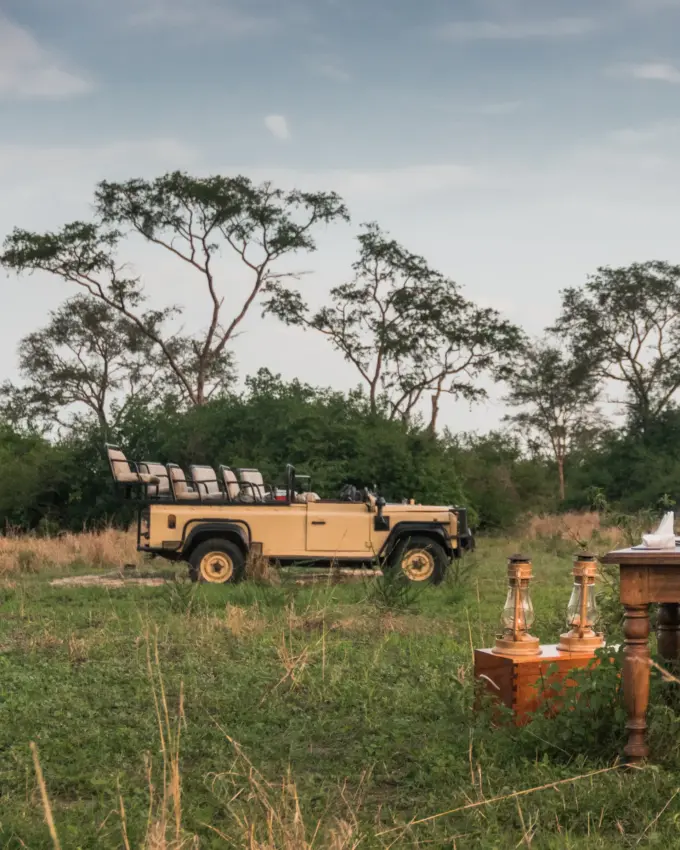
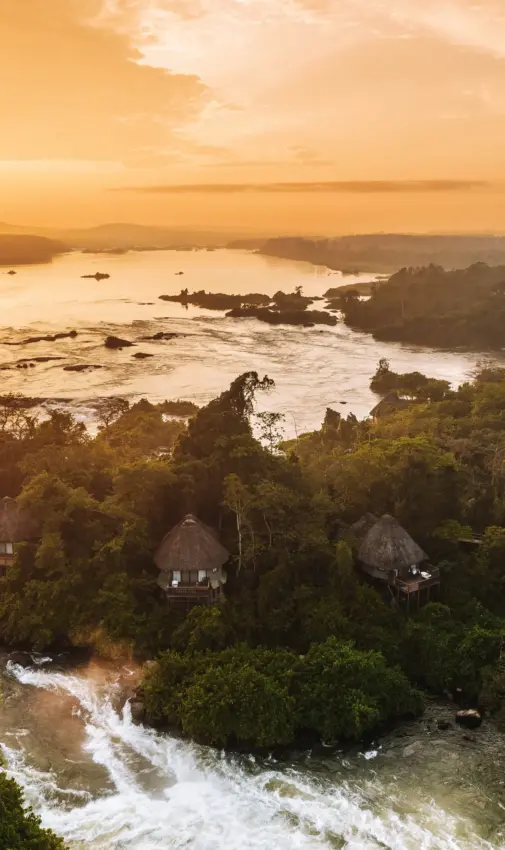
Semliki Safari Lodge lies inside the Toro-Semliki Wildlife Reserve. Its thatched tents stand on raised wooden platforms, each with a veranda and en-suite bathroom. Some face sunrise over the savannah, others sunset over the forest. The stone-and-thatch main building holds the bar and library, and a pool looks out into the trees. Hotels in the hills around Fort Portal offer a cooler base.


activities
Chimp walks, night drives, shoebill boats
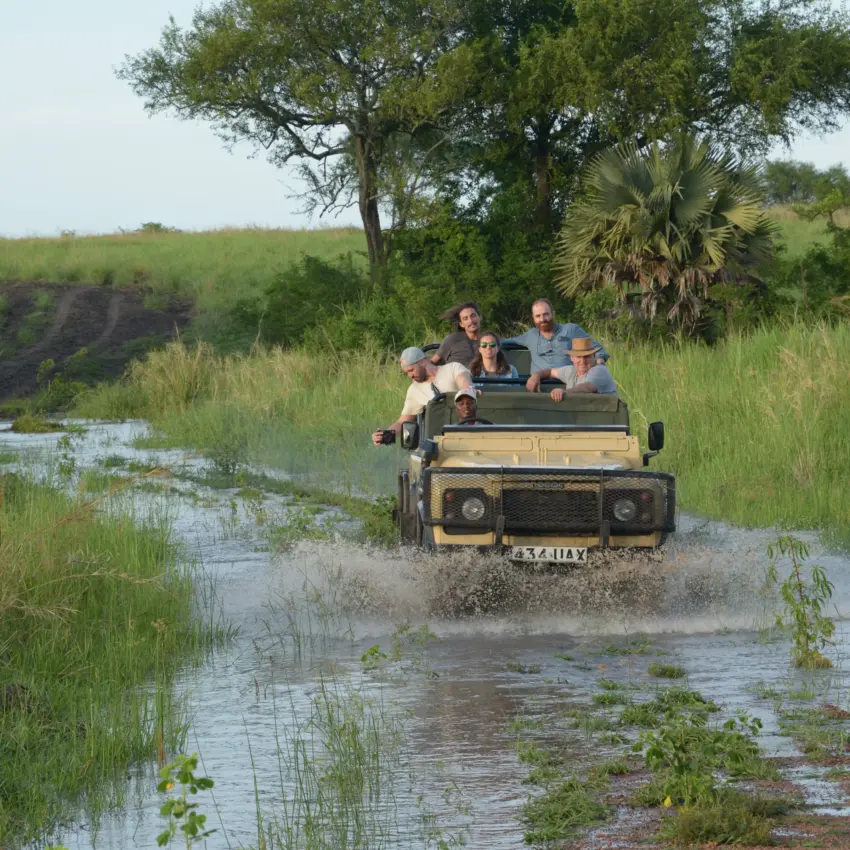
In the Toro-Semliki Wildlife Reserve, guided walks follow the chimpanzees along the Mugiri River, and game drives head out in the morning, in the afternoon and after dark. Boats leave Ntoroko for the shoebill marshes of Lake Albert. In Semuliki National Park, walks lead to the Sempaya hot springs and along the 13 km Kirumia Trail.

conservation
Tracking the Mugiri chimpanzee community
Kevin Hunt of Indiana University founded the Semliki Chimpanzee Project in 1996, and its researchers monitor the Mugiri community daily. Their trails have helped rangers patrol the escarpment against poachers. Kob and predators have returned since the 1990s, though oil exploration on the rift floor and growth at Ntoroko add pressure.

getting around
Charter flights to Semliki airstrip
Charter aircraft fly from Entebbe or Kajjansi to the Semliki airstrip inside the reserve, about three kilometres from the lodge. Kasese airstrip offers a further option, with a road transfer. By road, 4×4 transfers descend the escarpment from Fort Portal, a route that links naturally with Kibale Forest National Park.
other areas in uganda
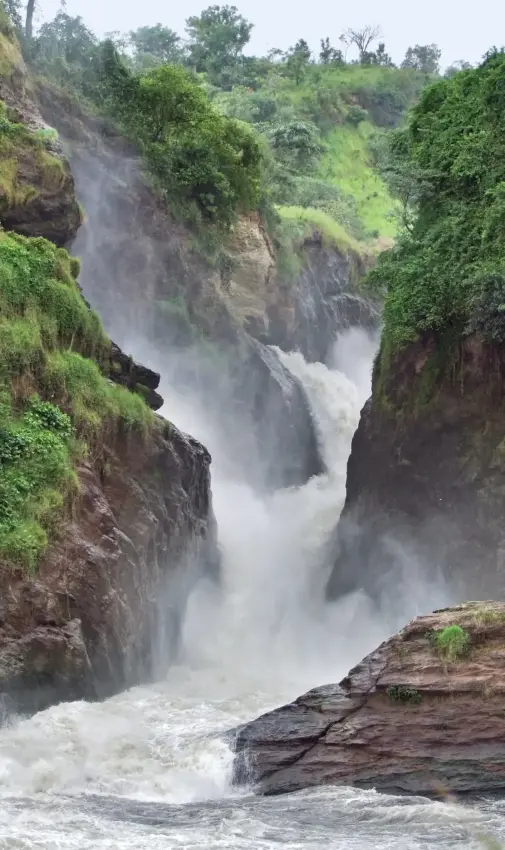
Kibale Forest National Park, near Fort Portal, adds chimpanzees under closed canopy, and following both communities within a few days shows one species living in two habitats. Murchison Falls National Park, at the northern end of Lake Albert, shares the Semliki Valley's open savannah. To the south, Queen Elizabeth National Park shares the reserve's key species, and the Rwenzori Mountains rise toward the glaciers seen from the valley floor.





rated five stars by our clients

our approach
remote, exclusive
& personal
Every journey starts with a conversation. We take the time to understand your vision before we start planning.
Whether by phone or in person, we work with you directly to shape something that is considered, personal, and expertly delivered.
Every journey starts with a conversation. We favour a direct, personal approach: understanding your vision before anything else.
Whether by phone or in person, we work with you directly to shape a journey that is both thoughtfully considered and expertly delivered.
Get in touch to start planning yours.