
Area
Jinja
In eastern Uganda the Victoria Nile slips out of Lake Victoria at Jinja, calm at the source and white water over granite downstream.
Key species: African fish eagle, pied kingfisher, African darter, otter
Habitat: Lake shore, river islands, riverine forest
Location: Northern shore of Lake Victoria, 80 km east of Kampala
Where Lake Victoria becomes the Nile
Speke reached the northern shore of Lake Victoria in 1862, found the Victoria Nile leaving the lake and turning north, and declared it the source of the Nile. Jinja now occupies that shore. At the outlet the river is wide and unhurried, but further downstream it breaks over granite into white water, and the days here divide between those two moods of one river.
Pied and malachite kingfishers fish the shallows off the islands.
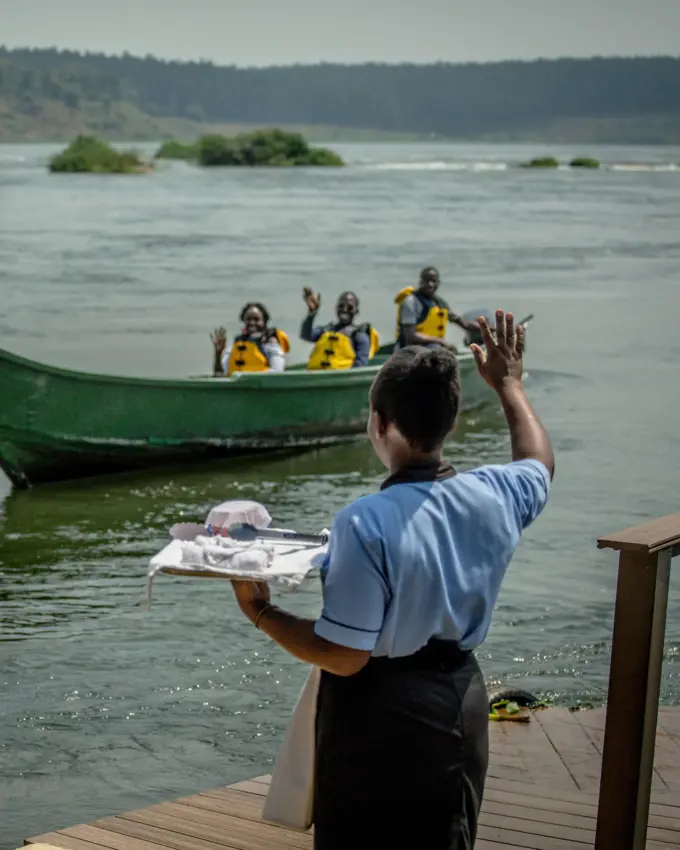
Below the dams, rafts drop through Grade 5 rapids at Itanda and kayakers run the same water with guides, while calmer stretches suit family floats. Quieter days begin with a boat to the source at sunrise, then drift on down the river. Pied and malachite kingfishers fish the shallows off the islands. Monitor lizards lie out on the rocks nearby, and the day ends on a sunset cruise.
Many Uganda safaris open or close in Jinja. After gorilla treks and long game drives, a few days on calm water feel like a deep breath, and a first night here eases arrival after a long-haul flight into Entebbe. The drive from Kampala takes roughly two to three hours, and the Kampala road passes Mabira Forest, a rainforest reserve where red-tailed monkeys move through the canopy.
Great blue turacos clatter through the riverine forest.
Downstream of town, the river islands carry much of the birding, and the mornings are busiest. African fish eagles call from the treetops while darters dry their wings on snags and African openbills work the papyrus edges. Great blue turacos clatter through the riverine forest. Otters surface in the quieter channels, and by evening the light suits the cameras.
Burton was among the first to dispute Speke’s claim, and the doubt is easy to follow. Lake Victoria is itself fed by rivers, the Kagera among them, and streams from Rwanda and Burundi reach the lake before any water leaves it. Even so, this outflow is the conventional source of the Victoria Nile. From a boat at the source, slack lake water can be watched tightening into current. It is a quiet beginning for a river that runs north towards Egypt and the Mediterranean.
Ripon Falls, where the lake first spilled into the river, went under in 1954 when the Owen Falls Dam, now the Nalubaale Power Station, was built. The dam’s electricity brought textile mills and a copper smelter to Jinja. Downstream, Bujagali Falls disappeared beneath a second reservoir, Lake Bujagali, whose flat water now suits kayak lessons and slow birding cruises. Not all the white water was lost. Rafting trips launch below the Bujagali Dam and head for rapids that still run free.
From a boat at the source, slack lake water can be watched tightening into current.
Jinja belongs to Busoga, homeland of the Basoga, whose clans honoured water spirits at the falls. On the far bank is Buganda. The town grew from 1901 as a British administrative post and filled with Gujarati and other Indian merchant families, whose shopfronts, temples and mosques still line the centre. Idi Amin expelled them in 1972, and the factories faltered. At the source, a memorial marks the waters where part of Gandhi’s ashes were scattered.
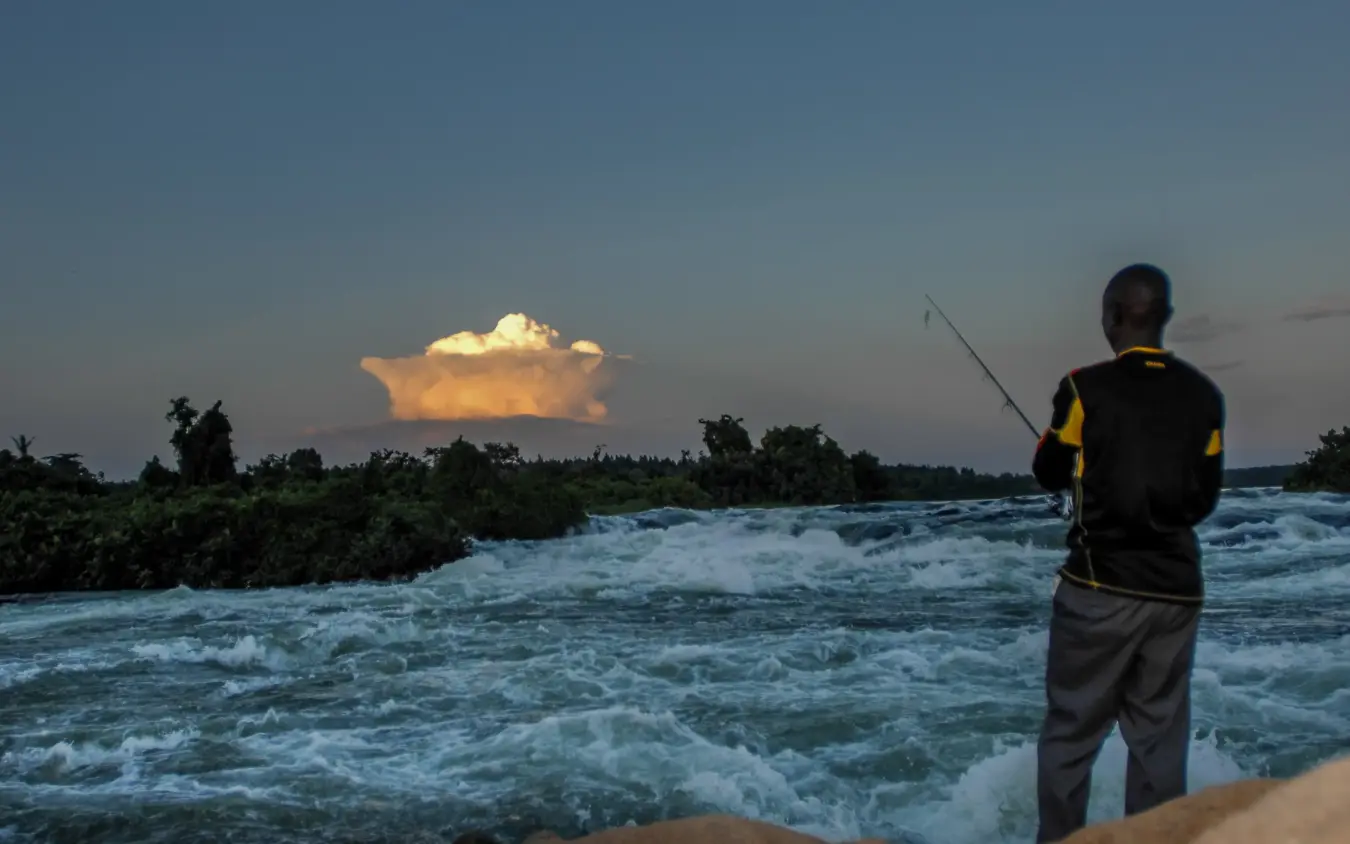
Anglers fish catch-and-release for Nile perch and tilapia on the lake and in the quieter river pools. Paddleboarders trace the channels between islands, and horses carry riders along the riverbank. In the rains the river rises, and experienced paddlers seek out the high water as the rapids grow bigger and more powerful. Motorboats carry visitors out to the source. In the evening, double-decked boats leave the waterfront for sunset on Lake Victoria, where the river’s story begins.
The best time to visit Jinja
Jan
Feb
Mar
Apr
May
Jun
Jul
Aug
Sep
Oct
Nov
Dec
Recommended
Transitional
Challenging conditions
Come June to August or December to February, the drier seasons, for clearer skies on the lake and the most settled rafting. September and October still run well. The long rains of March to May and the short rains late in the year raise the river: experienced paddlers seek out the bigger rapids, while some operators shorten or reroute trips.
accommodation in jinja
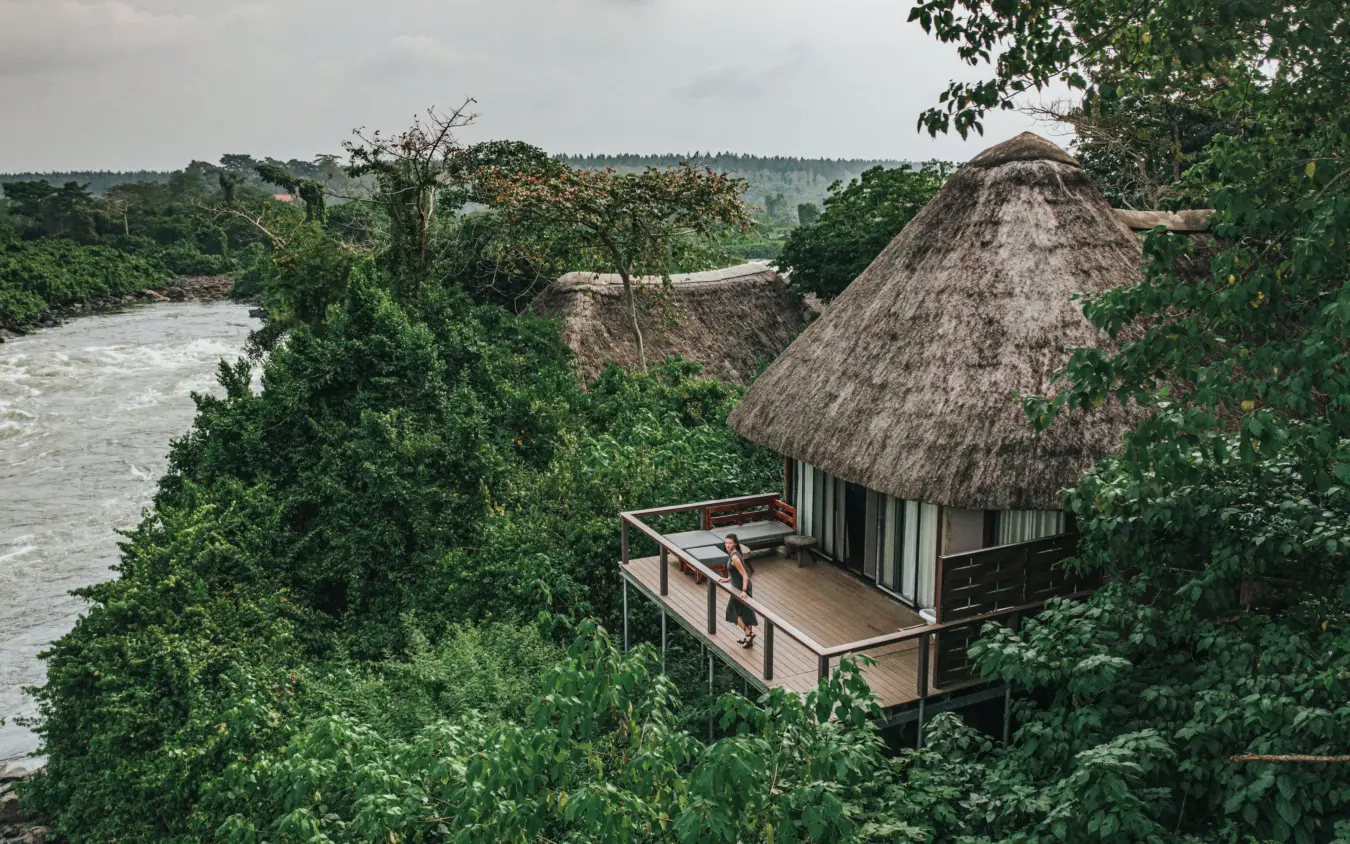
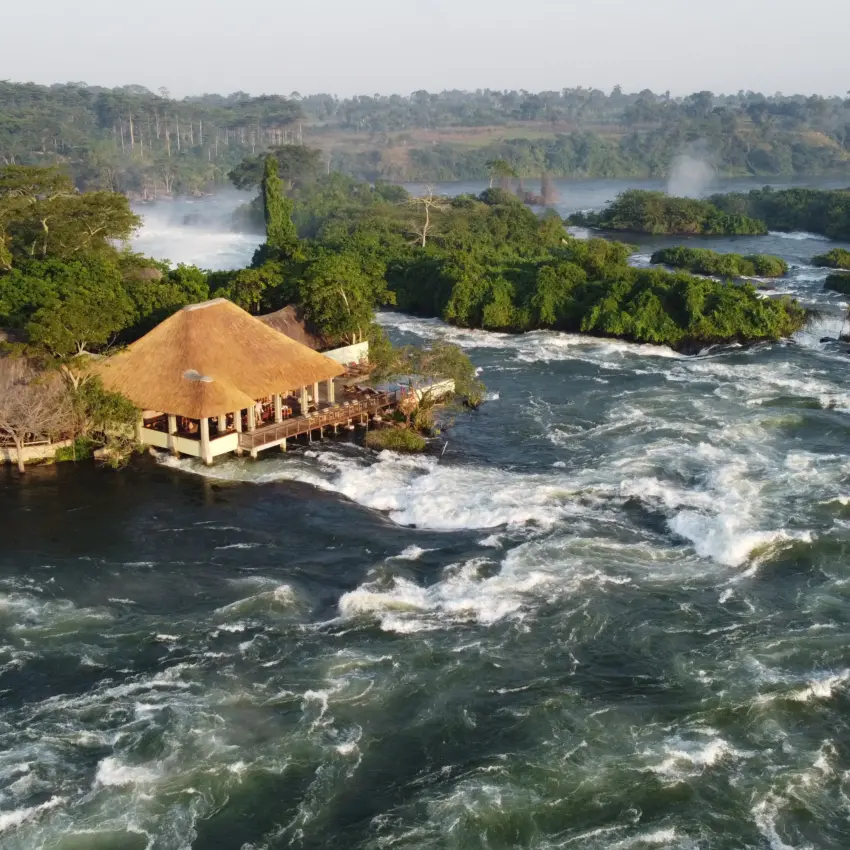
The strongest choices lie downstream of town, on the Nile itself. A private island lodge near Kalagala Falls, reached by boat and run all-inclusive, sets thatched, canvas-walled cottages among the trees, with a restaurant over the water. Boutique guesthouses face the river, and an established family resort sits at Bujagali.


activities
Activities
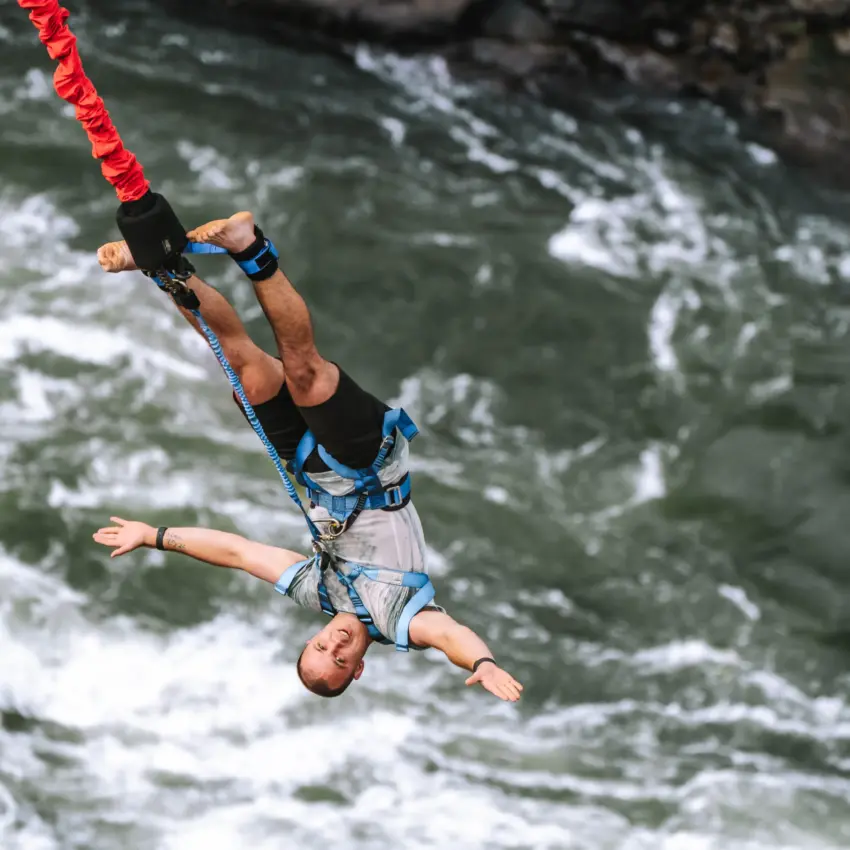
Rafting runs Grade 3 to 5 rapids below the Bujagali Dam, with calmer family floats on gentler sections. Guided kayaking covers both rapids and flat water. Motorboats reach the source from the waterfront, and morning birding cruises work the islands on Lake Bujagali.

conservation
Conservation Projects
Few named wildlife projects work on this stretch of the Nile. Forest reserves cover parts of the riverbanks, and the island lodge keeps its old riverine trees standing. Dams have submerged Ripon and Bujagali Falls, and the rafting depends on the rapids that remain downstream.

getting around
Connectivity and Logistics
International flights land at Entebbe, and no scheduled service continues to Jinja. Guests transfer by private vehicle with a driver-guide, two to three hours from Kampala along the highway east. Departures are timed around Kampala's traffic, which can stretch the drive considerably.
other areas in uganda
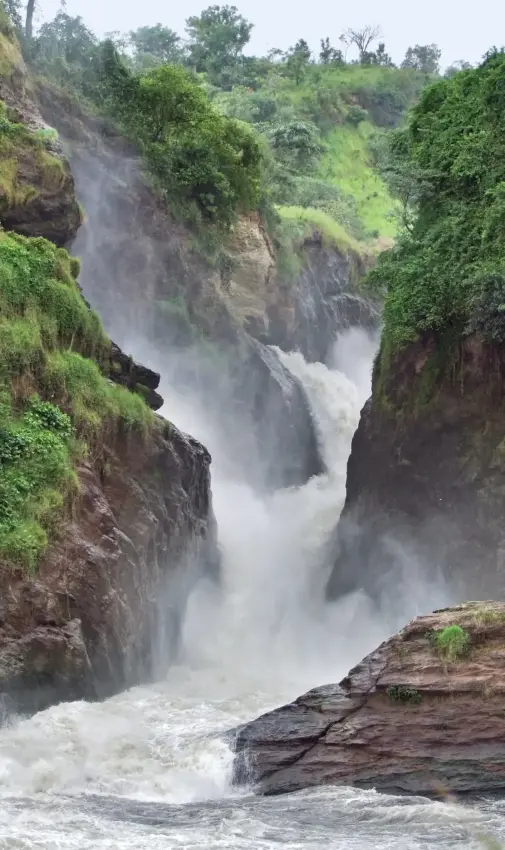
Murchison Falls National Park follows the same river downstream, where the Nile forces through a narrow gorge before reaching Lake Albert. Ziwa Rhino Sanctuary lies on the road north. In the southwest, Bwindi Impenetrable National Park offers mountain gorilla trekking. Kibale Forest is the base for chimpanzee trekking, and Queen Elizabeth National Park adds savannah game, the Kazinga Channel and the tree-climbing lions of Ishasha.





rated five stars by our clients

our approach
remote, exclusive
& personal
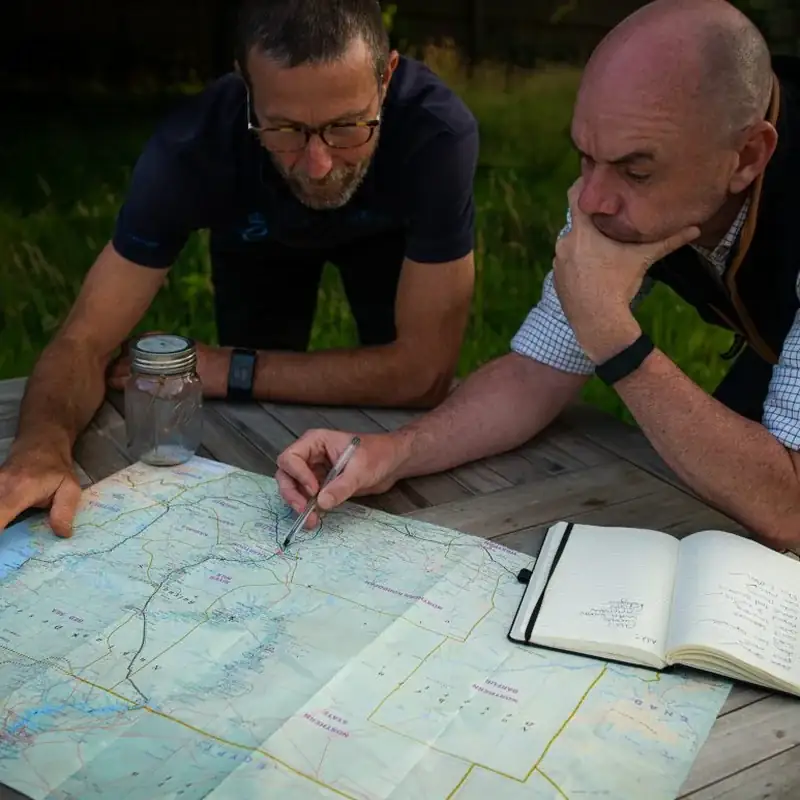
Every journey starts with a conversation. We take the time to understand your vision before we start planning.
Whether by phone or in person, we work with you directly to shape something that is considered, personal, and expertly delivered.
Every journey starts with a conversation. We favour a direct, personal approach: understanding your vision before anything else.
Whether by phone or in person, we work with you directly to shape a journey that is both thoughtfully considered and expertly delivered.
Get in touch to start planning yours.